Sciatica Self-Massage at Home: Tips and Techniques
Sciatica Self-Massage at Home (The El Paso Back Clinic Approach to Safer Relief)
 Sciatica is a nerve irritation pattern, not just a tight muscle. It often feels like burning, aching, tingling, or “electric” pain that can start in the low back or buttock and travel into the thigh, calf, and foot. Many people in El Paso experience sciatica after long hours of sitting, driving, or heavy lifting, or after an old injury that never fully healed. At El Paso Back Clinic, sciatica care is commonly described as integrative—meaning hands-on chiropractic care plus soft-tissue work, rehab, and (when appropriate) decompression strategies to reduce nerve pressure and help the body heal instead of just “chasing symptoms.”
Self-massage can be an effective home tool when done correctly. The goal is to relax the tissues around the irritated nerve pathway—especially the glutes, piriformis, low back muscles, hamstrings, and sometimes the calf—without smashing the nerve itself.
The safety rule that matters most: don’t “dig into” the sciatic nerve
If you press directly on the most “zappy” spot, you can flare symptoms. Instead, aim for gentle, targeted pressure that feels like a controlled release.
Use the “hurts good” rule:
-
Keep pressure 0–3 out of 10 (mild to moderate discomfort)
-
Avoid 4–10 out of 10 (too aggressive)
-
If symptoms worsen, stop right away and reduce pressure next time
Tools that work well at home
You do not need expensive equipment. These basic tools are enough for most people:
-
Tennis ball (beginner-friendly pressure)
-
Foam roller (great for slow myofascial release)
-
Two tennis balls taped together or in a sock (to work beside the spine more safely)
-
Heat pack (before or after)
Many sciatica massage guides recommend simple tools like tennis balls and foam rollers because they help you reach deep glute and hip muscles without overworking your hands.
Step-by-step: a simple self-massage routine for sciatica relief
Start with heat (optional, but helpful)
Apply heat to the lower back or glutes for 10–15 minutes. Heat can help muscles relax, so you do not need to apply as much pressure during a massage.
Tip: Heat should feel soothing, not scorching.
Trigger point release for the glutes and piriformis (tennis ball)
This is one of the most helpful self-massage steps because the piriformis and nearby glute muscles can tighten and irritate the sciatic nerve pathway.
How to do it:
-
Sit on the floor (or a firm bed) and place a tennis ball under one buttock.
-
Lean your weight into the ball until you find a tender “knot.”
-
Hold steady pressure for 20–45 seconds while breathing slowly.
-
Move the ball 1–2 inches and repeat on 2–4 spots.
Keep it safe:
-
If pain becomes sharp, numbness increases, or symptoms travel farther down the leg, stop immediately.
Low back muscle release (two tennis balls—NOT on the spine)
At El Paso Back Clinic, massage and soft-tissue work are considered a key part of sciatica treatment because relaxing tight tissues can reduce pressure on irritated structures.
A safe home approach is to use two tennis balls so that pressure is applied beside the spine.
How to do it:
-
Tape two tennis balls together (or place them in a sock).
-
Lie on your back with knees bent.
-
Place the balls on either side of the spine, not on the bone.
-
Make tiny shifts and pauses—no fast rolling.
-
Work for 1–2 minutes, then rest.
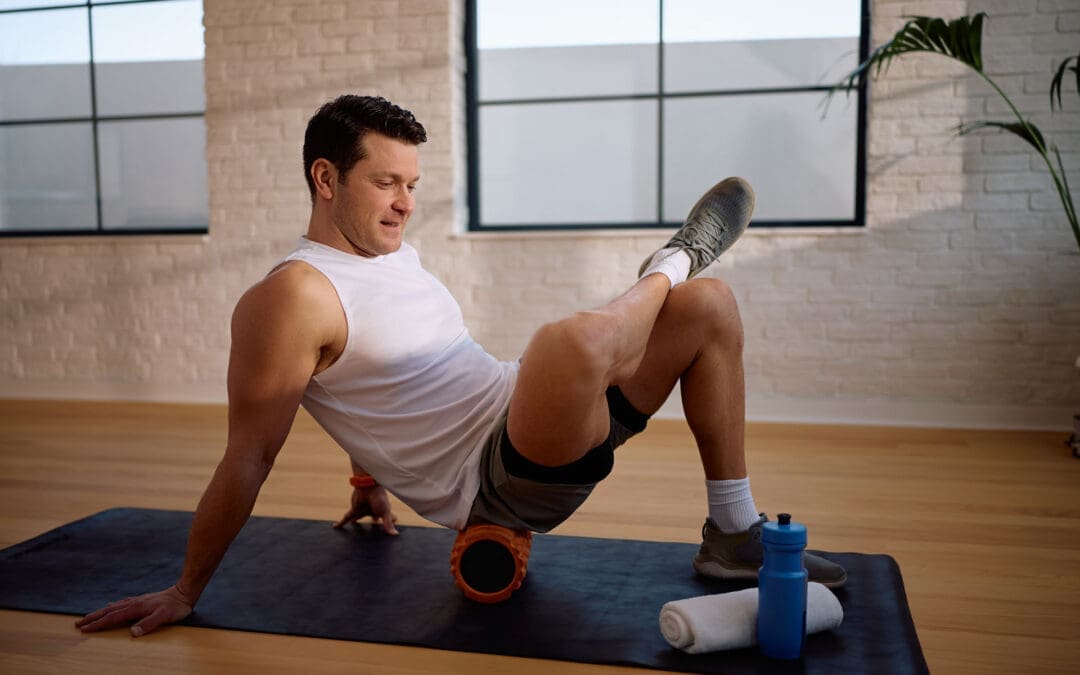
Myofascial release for hamstrings (foam roller)
If your hamstrings are tight, they can “pull” on the pelvis and keep the low back and hip region tense. Slow foam rolling is often described as a form of self-myofascial release that warms and loosens tissue over time.
How to do it:
-
Sit with the roller under the back of your thigh.
-
Roll slowly and pause on tight spots for 20–30 seconds.
-
Don’t chase pain—stay in the 0–3/10 range.
Calf massage for referred pain (hands or roller)
Some sciatica patterns show up strongly in the calf or foot. Gentle calf work may help reduce guarding and improve comfort.
How to do it:
-
Use your hands to squeeze and glide from ankle toward knee.
-
Pause on a tender spot and breathe.
-
Keep pressure light to moderate.
What to avoid (so you don’t flare symptoms)
-
Heavy pressure on the “electric” pain spot
-
Fast rolling over the lower back or buttocks
-
Long sessions that leave you sore for 1–2 days
-
Pressing on the bone (spine, sacrum ridge, hip bone)
If you feel worse after self-massage, your body is telling you the dose was too high. Reduce pressure and shorten the next session.
Why chiropractic + massage often works better than either alone
Self-massage can help relieve muscle tension, but some cases of sciatica also involve spinal joint restriction, disc irritation, or nerve root pressure. That is why integrative chiropractic care is often paired with soft-tissue work.
On El Paso Back Clinic, sciatica care is described as focusing on addressing sources of pain (not only masking it), and the clinic also highlights combining chiropractic adjustments with therapeutic massage and non-surgical decompression options.
Common integrative components include:
-
Targeted chiropractic adjustments to improve motion and reduce irritation
-
Myofascial release/therapeutic massage to reduce spasms and improve circulation
-
Non-surgical spinal decompression (when appropriate) to reduce pressure on discs/nerve roots
Clinical observations from Dr. Alexander Jimenez
Across sciatica-focused education on the clinic’s site, the recurring theme is that lasting relief often improves when care addresses both sides of the problem:
-
tissue tension (glutes/piriformis/low back tightness), and
-
spinal mechanics (how joints/discs and nerve pathways are loading under stress).
When to stop home care and get evaluated quickly
Get urgent medical evaluation if you have:
-
New or worsening leg weakness
-
Loss of bowel or bladder control
-
Numbness in the saddle area
-
Severe pain with fever, unexplained weight loss, or major trauma
These may indicate a condition requiring immediate care beyond self-massage.
Reference
-
American Massage Therapy Association. (n.d.). Massage therapy for sciatic nerve pain. https://www.amtamassage.org/publications/massage-today/massage-sciatic-nerve-pain/
-
Chicago Pain Control. (n.d.). How to massage sciatica to reduce leg pain fast. https://www.chicagopaincontrol.com/blog/massage-sciatica-to-reduce-leg-pain-fast
-
El Paso Back Clinic. (n.d.). Spinal decompression institute. https://elpasobackclinic.com/spinal-decompression-institute/
-
El Paso Back Clinic. (n.d.). Sciatica pain treatment in El Paso, TX chiropractic care. https://elpasobackclinic.com/sciatica-pain-treatment/
-
El Paso Back Clinic. (n.d.). Sciatica massage: Reducing pain & inflammation naturally. https://elpasobackclinic.com/sciatica-massage-el-paso-back-clinic/
-
El Paso Back Clinic. (2025). Natural sciatica healing solutions for pain relief. https://elpasobackclinic.com/natural-sciatica-healing-solutions-for-pain-relief/
-
Harvard Health Publishing. (2025, November 21). Got a pinched nerve? Strategies and treatments for pain relief. https://www.health.harvard.edu/diseases-and-conditions/got-a-pinched-nerve-strategies-and-treatments-for-pain-relief
-
Harley Street Specialist Hospital. (2023, July 12). 10 massage techniques for sciatica pain relief. https://hssh.health/blog/10-massage-techniques-for-sciatica-pain-relief/
-
Healthline. (2021, March 10). Self-massage and stretches for piriformis syndrome. https://www.healthline.com/health/piriformis-massage
-
Spine-health. (n.d.). Massage to reduce buttock muscle pain from piriformis syndrome. https://www.spine-health.com/blog/massage-to-reduce-buttock-muscle-pain-from-piriformis-syndrome