Intercostal muscles are the muscles within the rib cage, commonly called the intercostals, which connect the ribs and make up the chest wall. An intercostal muscle strain refers to an injury between two or more ribs. If these muscles become overstretched, restricted, or suffer damage, it can cause inflammation and significant pain in the middle and upper back. Intercostal muscle strain is a common injury in athletes and physically demanding jobs. Chiropractic care and massage therapy can realign the vertebrae with the ribs and loosen and relax the muscles to increase circulation and restore mobility and function.
Intercostal Muscle Strain
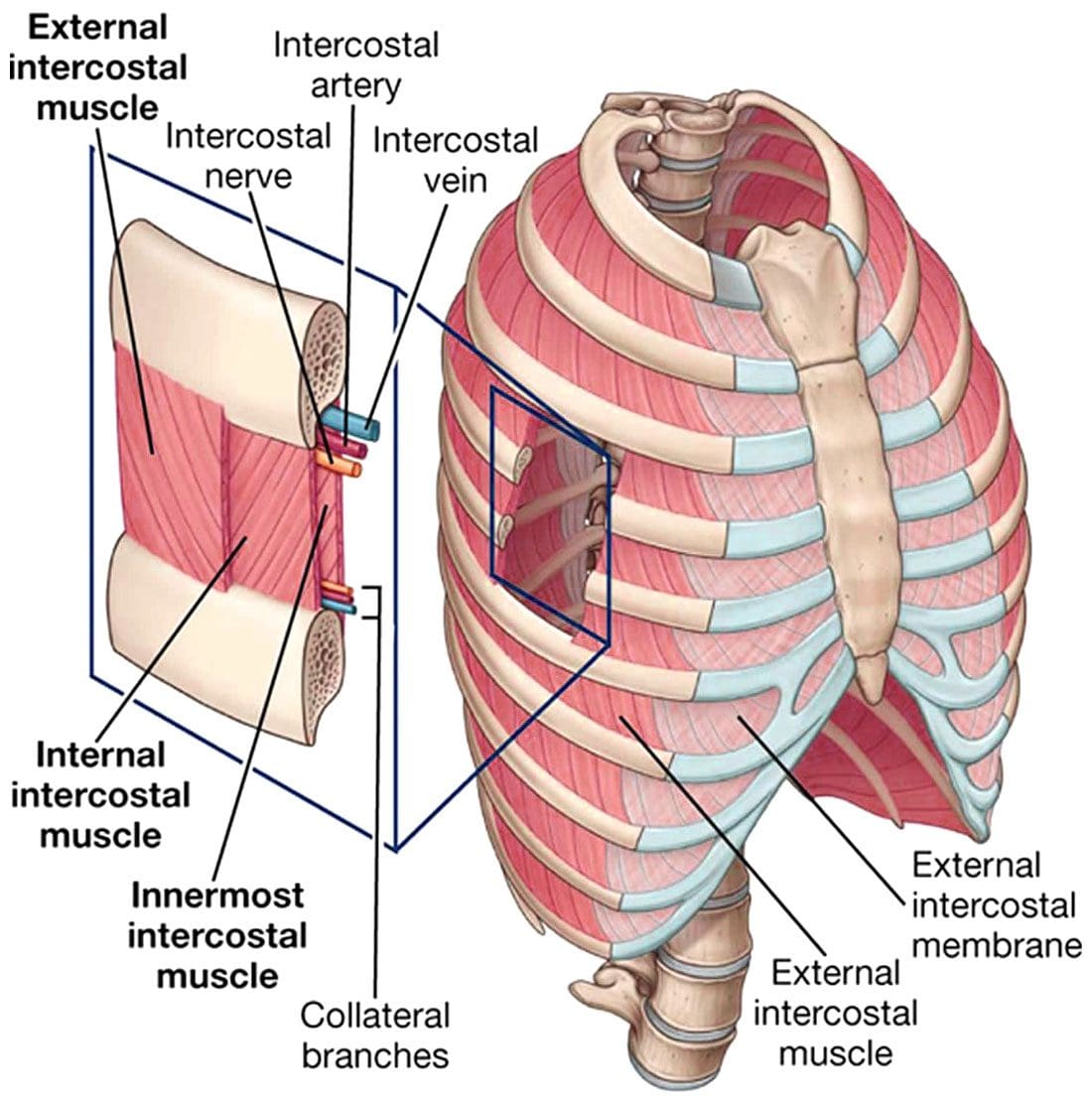
The intercostal muscles have different layers attached to the ribs to help build the chest wall and assist in breathing. There are 11 intercostal muscles on each side of the rib cage. Each set is located between connected ribs in the upper and mid-back and consists of the following:
External
These are the outermost intercostals, responsible for expanding the chest during breathing to help inhale air and allow full deep breaths.
The external intercostals originate at the lower edge of a rib and run diagonally to attach to the upper edge of the rib below.
They are found in the rib cage’s back, sides, and front.
Internal
These sit directly underneath the externals and help collapse the chest during breathing to exhale.
The muscle fibers run perpendicular to the external intercostals, moving diagonally from front to back along the ribs, and are in the entire rib cage.
Innermost
These sit directly underneath, run parallel to the internal intercostals, and run from the back of the rib cage to each side.
The veins, arteries, and nerves lie between the internal and innermost intercostals.
When an intercostal muscle gets twisted, overused, or stretched too far, it can tear, causing muscle strain. Often radiating pain along the rib cage is experienced that extends to the back.
Causes
An intercostal muscle strain often occurs as the result of an injury or overexertion of the muscles. Common causes include:
Trauma to the rib cage, such as from a fall or automobile collision.
Impact trauma from sports or physical activities.
Over twisting the torso beyond its normal range of motion from lifting weights, sports, yoga postures, or dance positions.
Repeatedly reaching overhead for work or tasks like cleaning or painting.
Lifting heavy objects above shoulder height.
Repetitive torso movements.
A sudden increase in physical activity that the body is not used to can also lead to intercostal muscle strain.
This can happen when a lack of conditioning or unhealthy postures weaken muscles.
Symptoms
The signs and symptoms can vary, depending on the severity and cause. Symptoms can include:
Intercostal muscle spasms.
Mobility difficulties.
Inflammation, swelling, and sensitivity in the affected area.
Stiffness and tension, causing upper back pain.
Upper back and rib pain.
Tenderness in the area between the ribs.
Muscle rigidity when bending or twisting the upper body.
Gradual worsening pain after repetitive movements.
Worsening pain when coughing, sneezing, or breathing in deeply.
Severe and sudden pain, particularly if caused by direct trauma to the chest or back.
Chiropractic
Diagnosis involves the individual’s medical history and a physical exam to check for movement limitations and assess affected and sensitive areas. Once the inflammation is reduced, chiropractic and physical therapy will focus on the following:
Pain relief treatment.
Breathing exercises.
Posture training.
Stretching under supervision.
Strengthing exercises.
Most cases fully heal within 6 to 8 weeks.
Rib Muscle Injury
References
De Troyer, A et al. “Mechanics of intercostal space and actions of external and internal intercostal muscles.” The Journal of clinical investigation vol. 75,3 (1985): 850-7. doi:10.1172/JCI111782
Lord, Michael J, and William G Carson Jr. “Multiple Rib Stress Fractures.” The Physician and sports medicine vol. 21,5 (1993): 80-91. doi:10.1080/00913847.1993.11947575
Morrison W. What is an intercostal muscle strain? Medical News Today. Jan 2020
Page P. Current Concepts in Muscle Stretching for Exercise and Rehabilitation. International Journal of Sports Physical Therapy. 2012;7(1):109-119.
Park, Kyung-hee, et al. “Difference in selective muscle activity of thoracic erector spinae during prone trunk extension exercise in subjects with slouched thoracic posture.” PM & R: the Journal of Injury, Function, and Rehabilitation vol. 7,5 (2015): 479-84. doi:10.1016/j.pmrj.2014.10.004
Tran H. Causes of Intercostal Muscle Strain. Spine-health. October 2017
Yoo, Won-Gyu. “Effect of a combined thoracic and backward lifting exercise on the thoracic kyphosis angle and intercostal muscle pain.” Journal of physical therapy science vol. 29,8 (2017): 1481-1482. doi:10.1589/jpts.29.1481
Yoo, Won-Gyu. “Effect of thoracic stretching, thoracic extension exercise and exercises for cervical and scapular posture on thoracic kyphosis angle and upper thoracic pain.” Journal of physical therapy science vol. 25,11 (2013): 1509-10. doi:10.1589/jpts.25.1509
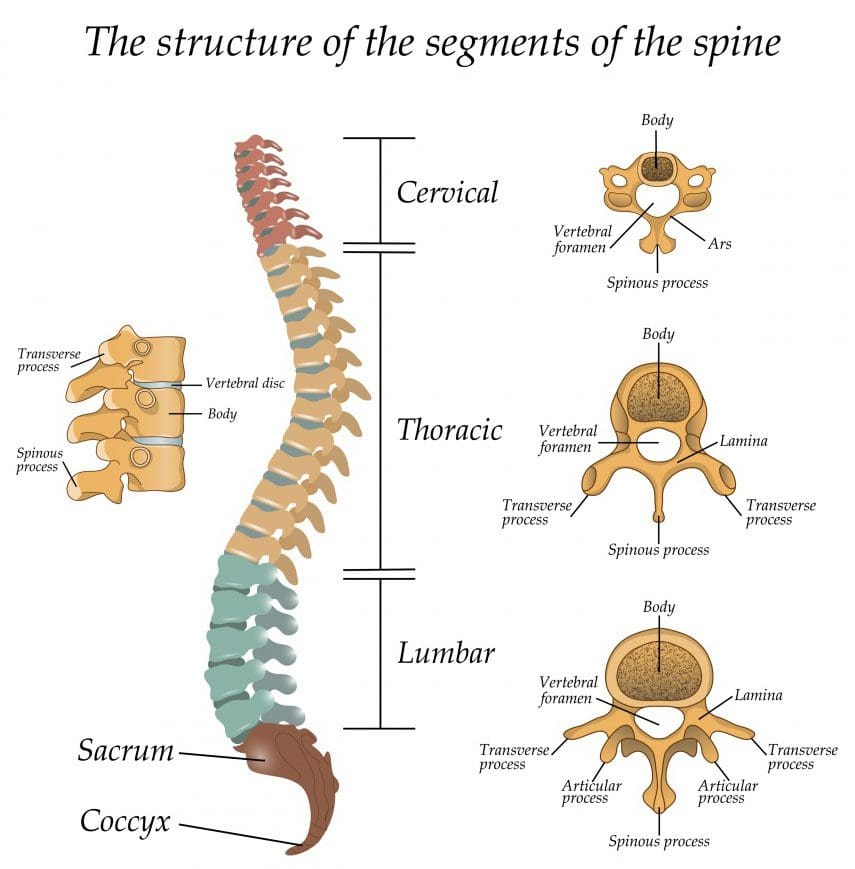
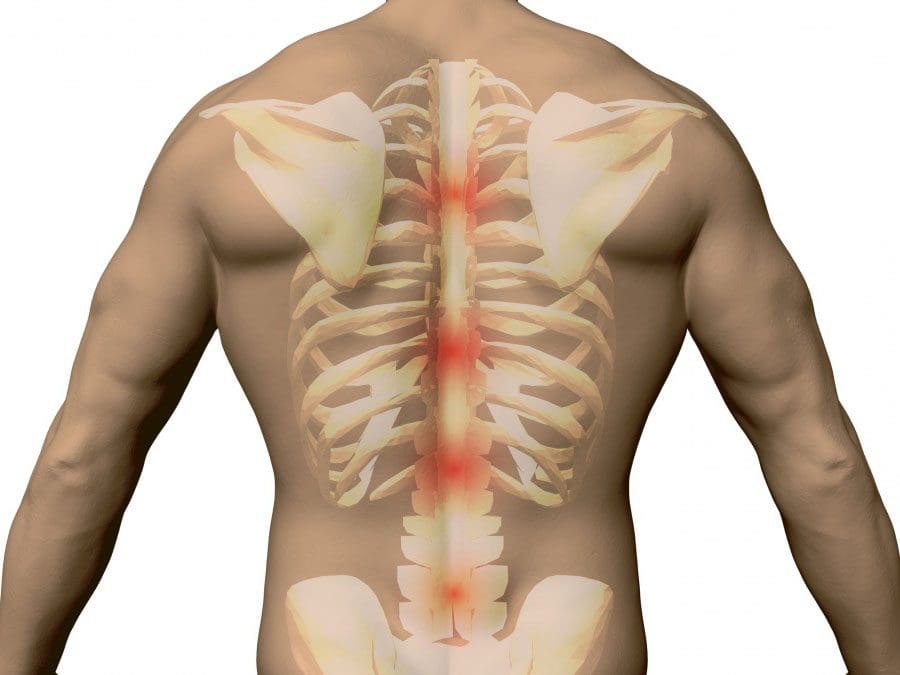
The thoracic spine known as the middle back starts below the cervical or neck spine at around the level of the shoulders. It continues down to the first level of the low back or lumbar spine. There are twelve vertebrae, numbered T1-T12 top to bottom, and it is these vertebrae that make up the thoracic spine. When seen from the side, a normal forward curve can be seen.
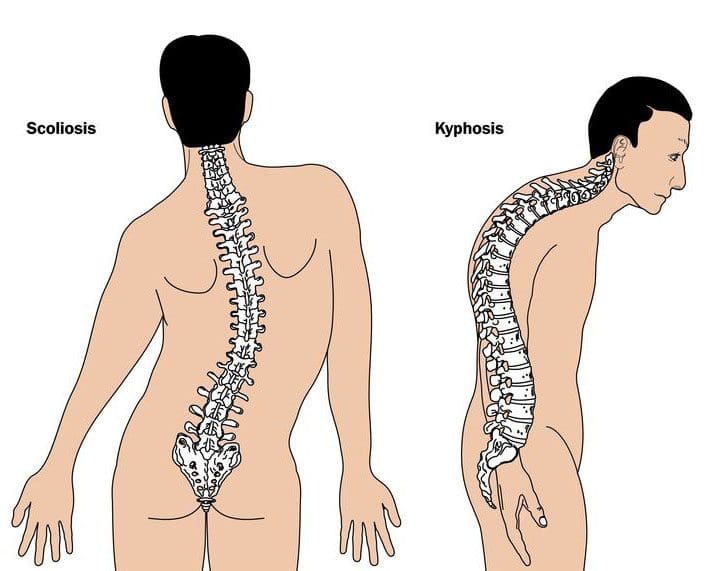
The ribs are attached to the thoracic spine�s vertebrae making this region of the spine strong and stable. However, this area has less range-of-motion than the neck region. Because of its location, the thoracic spine deals less with injury/s than other areas of the spine. But it is the most common area for fractures from osteoporosis. Scoliosis and abnormal kyphosis are also thoracic spine disorders.
Getting to know the body’s spine and how it functions can help individuals have a better and thorough understanding of possible causes to upper and middle back pain, a doctor�s diagnosis, and the reasons for how simple lifestyle changes/choices can keep the middle back, as well as, the rest of the spine healthy.
Thoracic Support
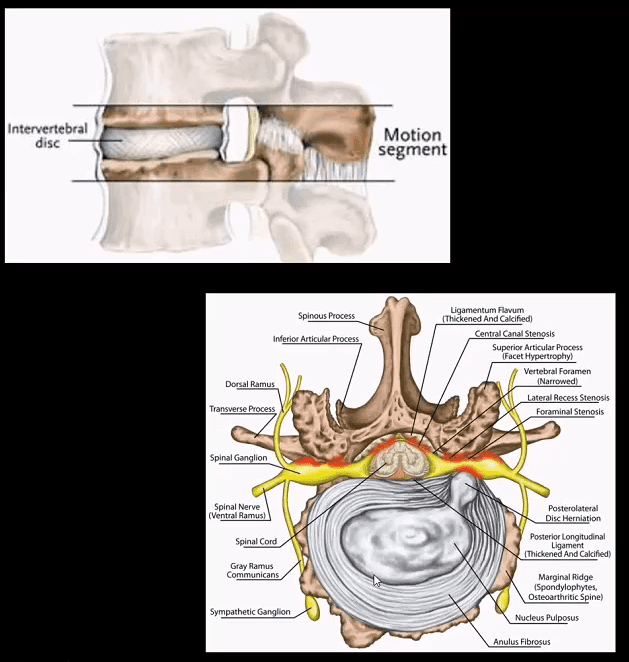
The thoracic spine gives support to the torso, chest and provides an attachment point for each of the rib bones, minus the two at the bottom. The vertebral bodies are rounded with bony arches that project from the back of each and form a hollow protective space for the spinal cord. Facet joints are paired at the back of each and allow for limited movement.
Intervertebral Discs
There is a fibrous pad called an intervertebral disc that is held in place by the endplates between each level�s upper and lower vertebral bodies. Each disc acts like a spacer creating disc height/space between the upper and lower vertebrae. This space opens nerve passageways called a foramen or neural foramina at both sides. Nerve roots branch off the spinal cord and exit the canal through the neural foramina.
Soft Support Structures Limited Movement/s
The entire spinal column consists of:
Ligaments
Tendons
Muscles
These soft tissues attach to the bones, the discs, and work together to stabilize the midback when resting and when in motion. Ligaments are the strong bands of tissue that connect/protect the vertebrae, discs, provide stability, and help with excessive movement. Muscles hold the body upright and allow spinal flexion which is bending forward, extension bending backward, and rotation twisting from side to side. And the tendons are fibrous tissues that attach the muscle/s to the bone.
Nerves Role
The twelve pairs of nerve rootlets that branch off the cord through the neural foramen are to supply and generate sensation/feeling along with function/movement to the body. These nerves provide nutrients to the midback and chest area and relay signals between the brain and major organs, including:
Lungs
Heart
Liver
Small intestine
Spinal Disorders
Osteoporosis raises the chances of a thoracic fracture. A vertebral compression fracture can cause one or more bodies of bone to flatten or become wedge-shaped creating spinal cord/nerve compression. Sudden and severe back pain can be associated with vertebral compression fractures.
Scoliosis is an abnormal side to side curvature of the spine and is well known to develop in the thoracic spine causing deformity.
Abnormal kyphosis means the forward curvature has become extreme. The appearance of a kyphotic deformity can be seen as a hump.
Metastatic cancer where it travels from the chest, or lung causing spinal tumor/s that can develop and potentially lead to structural deterioration
Thoracic disc herniations are not common because of the middle back’s strength and stability created by the ribcage.
Spine Maintenance
Talk with your doctor, chiropractor, spine specialist about stretches and exercises that will work for your specific situation to strengthen the core, and middle back musculature. This will help significantly with injury prevention during flexion, extension, and rotation.
The scope of our information is limited to chiropractic, musculoskeletal, physical medicines, wellness, and sensitive health issues and/or functional medicine articles, topics, and discussions. We use functional health & wellness protocols to treat and support care for injuries or disorders of the musculoskeletal system. Our posts, topics, subjects, and insights cover clinical matters, issues, and topics that relate and support directly or indirectly our clinical scope of practice.*
Our office has made a reasonable attempt to provide supportive citations and has identified the relevant research study or studies supporting our posts. We also make copies of supporting research studies available to the board and or the public upon request. We understand that we cover matters that require an additional explanation as to how it may assist in a particular care plan or treatment protocol; therefore, to further discuss the subject matter above, please feel free to ask Dr. Alex Jimenez or contact us at 915-850-0900. The provider(s) Licensed in Texas& New Mexico*
IFM's Find A Practitioner tool is the largest referral network in Functional Medicine, created to help patients locate Functional Medicine practitioners anywhere in the world. IFM Certified Practitioners are listed first in the search results, given their extensive education in Functional Medicine