
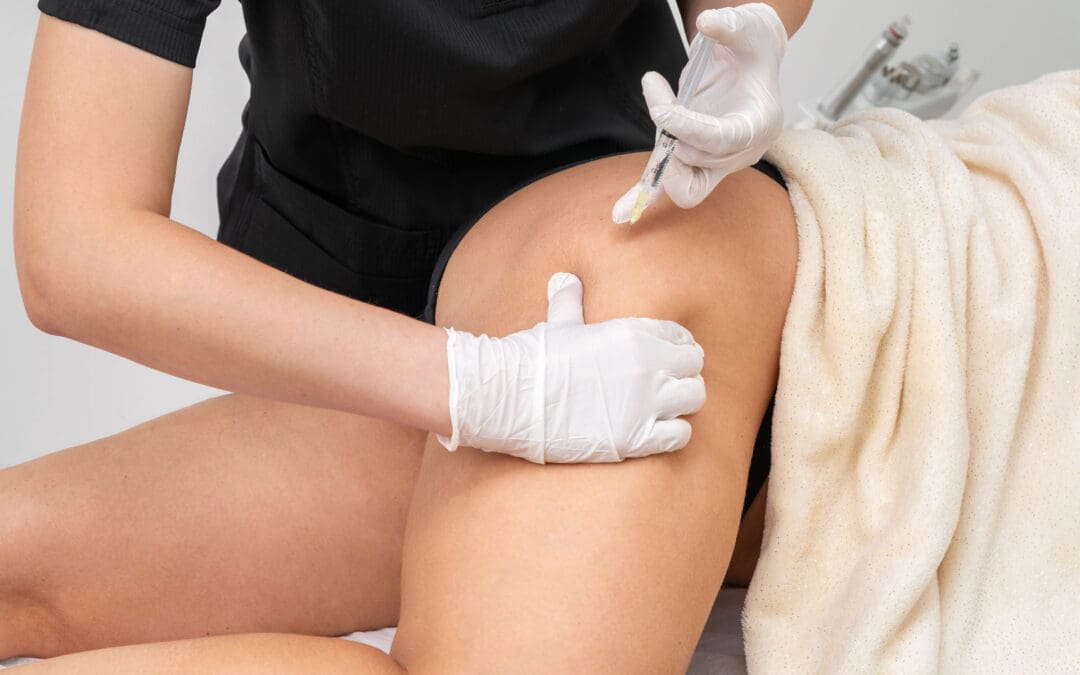
Hip Injuries in Motor Vehicle Accidents: Symptoms and Recovery
Hip Injuries in Motor Vehicle Accidents: Understanding the Trauma and Finding Healing
Car accidents send powerful forces through the body in seconds. The hips often absorb much of that energy because they connect the legs to the pelvis and spine. Even when the crash does not look severe, hip injuries can appear right away or develop days later. These injuries range from bone fractures and dislocations to tears in soft tissues such as cartilage and muscle.
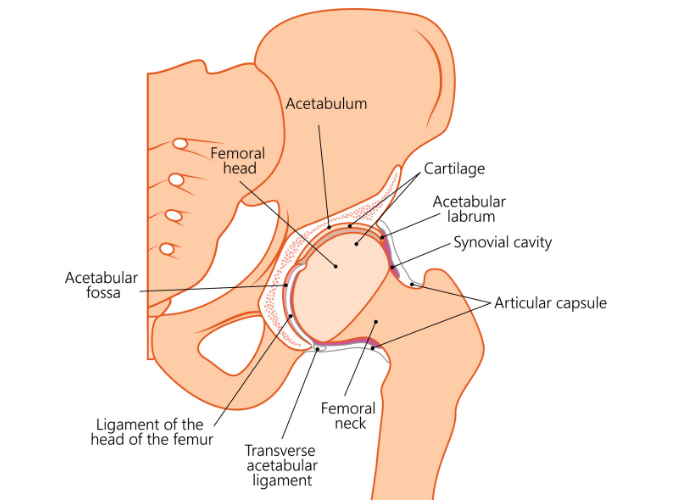
The hip works as a ball-and-socket joint. The ball is the rounded top of the thigh bone. The socket is a deep cup in the pelvis. Strong ligaments and muscles, along with a ring of special cartilage called the labrum, keep the joint stable and smooth. It takes considerable force to damage this sturdy setup. That is why hip problems after a crash are often serious and need careful attention.
Understanding what can happen helps you know when to seek care and what options are available for recovery.
Common Hip Injuries from Motor Vehicle Accidents
The exact injury often depends on body position at impact. Legs braced, knees hitting the dashboard, or side forces from a T-bone crash all create different patterns of damage.
Hip Dislocation
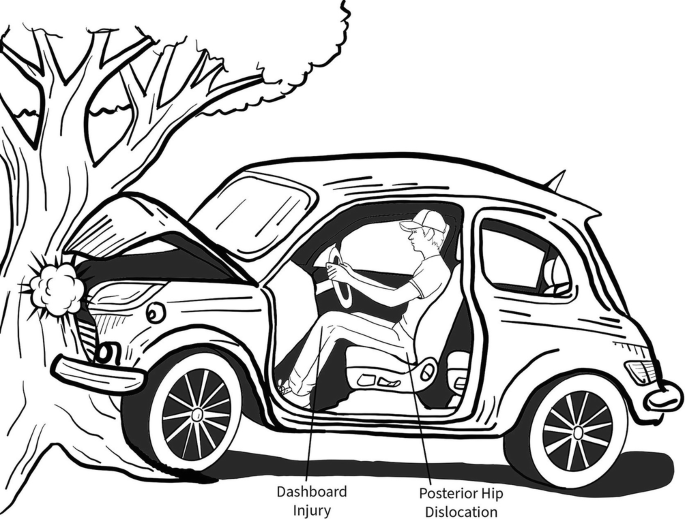
A classic dashboard injury happens in head-on crashes. The knee slams forward into the dashboard. This drives the thigh bone backward and pops the ball out of the socket. This is called a posterior hip dislocation. It causes immediate, severe pain. The leg may look shorter or rotated. You usually cannot put weight on it (American Academy of Orthopaedic Surgeons, n.d.).
Quick medical help is needed to put the joint back in place. Even after reduction, the labrum, ligaments, or blood supply to the ball can be damaged. Some people later face arthritis or bone death in the ball if blood flow is interrupted.
Acetabular Fractures
The socket itself can crack or shatter. High-energy dashboard hits or side impacts drive the ball forcefully into the cup. These breaks change the smooth surface the ball glides on. Many need surgery to restore the socket shape so the joint moves correctly again (OrthoInfo – AAOS, n.d.).
Femoral Head Fractures
The ball on top of the thigh bone can crack, crush, or break into pieces. This often occurs with a dislocation from the same dashboard force. The ball shears against the socket rim as it pops out or gets driven back in. These injuries raise the risk of long-term joint problems.
Labral Tears
The labrum is the cartilage rim that deepens the socket and helps seal joint fluid. A sudden dislocation, twist, or even strong bracing against the floor or seatbelt can tear it. People experience groin pain, clicking or catching, or a sensation that the hip gives way. Pain often worsens with sitting, walking, or twisting (Mayo Clinic, n.d.).
Muscle Strains, Sprains, and Soft Tissue Damage
Not every injury breaks a bone. Violent jerking or bracing can strain the hip flexor muscles or sprain ligaments around the joint. Seatbelt pressure or direct impact can inflame the bursa (a fluid-filled sac) on the side of the hip, causing trochanteric bursitis. These bring pain with movement, swelling, stiffness, and weakness. They heal more slowly when walking patterns are avoided due to pain (High Mountain Orthopedics, n.d.).
Why These Injuries Matter Long-Term
The hip joint is deep and well-protected, but damage here can affect walking, standing, and balance. Untreated dislocations or fractures can lead to arthritis years later. Labral tears and chronic muscle imbalance change how you move and stress the low back, knees, and opposite hip. Early care reduces these risks.
Doctors diagnose with physical exams plus imaging. X-rays show bone position and breaks. CT scans give detailed fracture pictures. MRI reveals labral tears, muscle damage, and soft tissue injury.
How Integrative Chiropractic Care Supports Recovery
Many hip injuries, especially soft-tissue and labral problems, or those requiring support after initial bone care, respond well to non-surgical approaches. An integrative chiropractic clinic combines hands-on structural work with regenerative therapies that use your body’s own healing tools. The goal is to reduce inflammation, repair tissue, and restore smooth movement without surgery when possible.
Chiropractic adjustments gently realign the pelvis, spine, and hip. This improves joint motion, eases tight muscles, and reduces nerve irritation. Better alignment helps blood flow and healing signals reach the injured area more effectively.
Regenerative therapies add biological support:
- PRP (Platelet-Rich Plasma): A small amount of your blood is spun to concentrate platelets rich in growth factors. The concentrate is injected into the hip area to signal repair in tendons, ligaments, the labrum, and cartilage while calming inflammation.
- PFP (Platelet-Fibrin Products): Similar to PRP but includes fibrin for slower, longer release of healing factors. This gives sustained support during recovery.
- MFAT (Microfragmented Adipose Tissue): A tiny amount of your fat tissue is processed into micro pieces containing healing cells and natural cushioning material. It is injected to support regeneration and provide padding in the joint or around damaged tissues.
These injections are often guided by ultrasound for accuracy. When paired with chiropractic adjustments, they address both structure and biology. Adjustments keep the joint moving correctly so new tissue forms in the right pattern. Regenerative support reduces pain and swelling, so adjustments work better and last longer (Health Coach Clinic, n.d.).
Patients often notice gradual improvement over weeks as tissues rebuild. Many regain mobility and return to daily activities with less pain and lower risk of future problems.
The Collaborative Care Team
At Injury Medical Clinic PA in El Paso, Texas, care is built on teamwork. Dr. Alexander Jimenez, DC, APRN, FNP-BC, CFMP, IFMCP, ATN, CCST, brings extensive experience treating personal injury and motor vehicle accident cases. His clinical observations show that patients with hip trauma from crashes often achieve better long-term function and less chronic pain when structural corrections and regenerative support are started early. He focuses on whole-person recovery, including rehabilitation exercises and addressing posture or gait changes that develop after an accident.
Dr. Maria Guadalupe Cardenas, MD, board-certified in Internal Medicine with more than 40 years of experience, serves as Medical Director and Collaborative Physician. She provides medical oversight for the practice. This includes reviewing complex cases, ensuring safety for regenerative procedures and injections, managing any underlying medical factors that affect healing, and collaborating on care plans. This MD-DC partnership is common in quality integrative and injury clinics. It combines precise medical direction with specialized chiropractic and regenerative expertise.
The broader team integrates functional medicine, rehabilitation, and personal injury support. This multidisciplinary setup helps patients heal thoroughly by addressing root causes rather than only symptoms.
What to Expect on the Road to Healing
Recovery time depends on the type and severity of the injury. Simple strains may improve in a few weeks with adjustments and guided movement. Labral tears or post-reduction care often take several months. Regenerative injections typically show progressive benefits over 4 to 12 weeks. The focus stays on restoring comfortable movement, strength, and daily function.
Early attention matters. Waiting can allow scar tissue or changed movement patterns to set in, making later recovery harder. A thorough evaluation helps create a clear plan tailored to your injury and goals.
Moving Forward After a Crash
Hip injuries from motor vehicle accidents do not have to mean ongoing pain or major surgery. Many people regain good function through integrative care that works with the body’s natural healing abilities—proper alignment, regenerative signals from your tissues, and expert guidance every step of the way.
If hip pain continues after a car accident, consider a clinic experienced in these injuries and equipped with both structural and regenerative options. In El Paso, the team at Injury Medical Clinic PA provides this comprehensive approach. Knowing what happened to your hip is the first step toward restoring your mobility and quality of life.
References
American Academy of Orthopaedic Surgeons. (n.d.). Hip dislocation. OrthoInfo.
Health Coach Clinic. (n.d.). Chiropractic and regenerative medicine approaches for pain relief.
High Mountain Orthopedics. (n.d.). 3 hip injuries common after a motor vehicle accident.
Mayo Clinic. (n.d.). Hip labral tear – Symptoms and causes.
OrthoInfo – AAOS. (n.d.). Acetabular fractures.
StatPearls. (n.d.). Posterior hip dislocation. NCBI Bookshelf.









