Proper posture is necessary to maintain overall well being, while incorrect posture can lead to serious spine problems. In the modern day, individual’s sit for extended periods of time, whether its for work or for leisure time. Although you may not be aware, �we take throughout this time period can tremendously influence our overall health and wellness. Posture is the position in which people hold their body when sitting or standing. Although the body can take a specific posture according to what feels comfortable or how the individual’s attitude is expressed,
It�s been embedded into our culture that sitting tall while holding your head high reveals health, poise, and professionalism from each individual who practices proper posture, but besides visually looking well, good posture is essential because it keeps us healthy from within.
How Proper Posture Affects The Body
When an individual maintains the muscles and other tissues supporting the structure of the neck and back remain strong while the spine preserves its natural and healthy alignment. Studies have previously concluded that good posture can help you have more energy, less stress, as well as prevent fatigue. As a matter of fact, good posture is crucial if you want to maintain an ideal physical fitness. Ultimately, a proper posture is a sign of good health.
If you have bad posture, not only will it create spine complications along with pain and discomfort in the present, but gradually, incorrect posture can have negative effects later in life if not corrected in time.
The Effects Of Incorrect Posture
One of the most distinguished negative effects associated among individuals with incorrect posture includes a change in the spinal curve. The spine is naturally designed to have a slight S-shaped curvature, however, after an extended period of time practicing incorrect posture when sitting or standing, the spine is put under a tremendous amount of pressure. This occurs because the spine is repeatedly being forced into an unnatural position. The altered spinal curve can not only lead to chronic pain and discomfort, but it can impede the spine from naturally absorbing shock as well as maintain proper balance.
Also, studies have found that sitting all day with bad posture can impact the digestive organs. Poor posture can actually compress the digestive organs and restrict them from functioning to their full potential. As a result, the body�s normal digestive process can be greatly slowed down, affecting the individual�s metabolism. Over time, long-term compression of the digestive organs can severely debilitate the body�s ability to consume and process food. You may ultimately face life-altering metabolic issues if the incorrect posture is not corrected.
Both an Australian study on poor posture and life expectancy and an English study on poor posture and sitting concluded that individuals who consistently sit using back posture have an increased risk of developing cardiovascular complications. Another study found that individuals who sit most of the day had an increased chance of 147% in developing cardiovascular disease. Additionally, sitting for extended periods of time prevents the body from getting the necessary circulation it needs, leading to the formation of varicose veins, veins that have become enlarged and twisted. This issue is particularly common in women.
The Importance of Maintaining Correct Posture
Many people who maintain poor posture may suffer from chronic back pain and spending enough time sitting with bad posture can eventually cause disc degeneration. These complications are often diagnosed back to posture problems due to the extra stress that has been put on the spine.
Overall, incorrect posture impacts much more than the way you look. Once you�ve become aware of your own body�s posture, its important to take the time to stand up and move throughout your day, sitting up straight with your shoulders back and your spine straight as well as make sure to visit your chiropractor for regular adjustments. Taking a moment in your life to do these things can not only help you have a better posture, but it can also prevent you from dealing with numerous health complications in the future.
With an incorrect posture, the structure and function of the spine can be greatly affected, leading to issues and other serious complications if left uncorrected for an extended period of time. Because the spine is ultimately essential towards the balance and support of the body, it’s important to seek medical care as soon as possible to avoid complications related to an incorrect posture.
For more information, please feel free to ask Dr. Jimenez or contact us at 915-850-0900 .
By Dr. Alex Jimenez
Additional Topics: Low Back Pain After Auto Injury
After being involved in an automobile accident, the sheer force of the impact can cause damage or injury to the body, primarily to the structures surrounding the spine. An auto collision can ultimately affect the bones, muscles, tendons, ligaments and other tissues surrounding the spine, commonly the lumbar region of the spine, causing symptoms such as low back pain. Sciatica is a common set of symptoms after an automobile accident, which may require immediate medical attention to determine its source and follow through with treatment.
Low back pain is a common symptom reported among the majority of the population. Generally caused by direct trauma from an injury or as a result of an aggravated condition, low back pain can greatly restrict an individual’s daily activities, affecting their overall physical as well as mental performance. Although there’s a variety of factors which can lead to back pain along the lumbar area of the spine, an incorrect sitting posture over an extended period of time has been known to be one of the leading causes for this well-known symptom.
Sitting is one of the most difficult positions for the body to maintain. Improper sitting postures�for prolonged periods of time while hunched over in a chair can build excessive pressure on the spine and affect the blood circulation in the legs. For an individual that spends their workdays sitting down, the long term result of an improper posture can greatly alter the individual�s overall health.
Proper Posture While Sitting
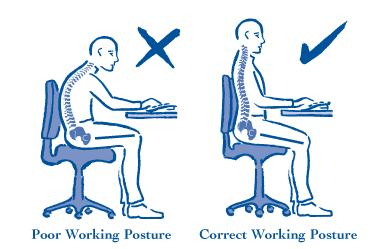
Sitting for extended periods of time while hunching over a desk can cause discomfort, numbness and spine misalignment over time if the improper sitting posture is not corrected. Holding the body upright can also further increase pressure and tension in muscles, ligaments, joints, and other tissues surrounding the spine. A sedentary lifestyle where the individual doesn�t take frequent breaks throughout their workday to stand and stretch can gradually lead to cardiovascular disease due to the decreased blood flow, tightened hip flexors, shortened hamstrings, pinched nerves and many other physical injuries and/or conditions in the long run.
How Chiropractic Differs from Traditional Care
Aches and pains on the body, particularly around the spine, herniated discs, nerve complications and painful joints are direct results of working while in improper sitting postures for prolonged hours of the day. When you’re in a seated position, a lot of pressure is being placed directly on the spine and its surrounding structures. Our bodies were designed to stand upright and maintaining a seated position can be physically stressful.
“The weight is distributed while in a standing position,” explained Kelly McGonigal, Ph.D., a health psychologist at Stanford University and a leading expert in neck and back pain, �That’s not the case with sitting. McGonigal added, “When you sit, you distort the natural curve of the spine, which means your back muscles have to do something to hold your back in shape because you’re no longer using the natural curves of the spine to lift yourself up against gravity.”
Approximately 80 percent of individuals in the United States alone may experience some form of chronic pain in their lifetime. Ultimately, working on a sitting position for extended periods of time per day is putting a tremendous mental and physical stress on our bodies.
Correcting Posture
Maintaining good posture when sitting helps preserve the three natural curves of a healthy spine; the cervical curvature, the thoracic curvature, and the lumbar curvature. The normal curvatures of the spine should form a slight S-shape. An excessive curve in the spine could suggest a possible underlying condition and may present symptoms of pain and discomfort, among other uncomfortable symptoms.
The key to maintaining a proper posture is to avoid slouching by sitting up straight as well as sitting all the way back in your chair. Additionally, the chair should be tucked in close to the desk. Placing a pillow or cushion directly behind your lower back area, or the lumbar spine, can help sustain good posture by providing enough support and allowing the spine to naturally curve inward. Furthermore, it�s also recommended to stand and stretch about every 20 minutes to give your body a break from long held positions, release pressure that is being built up on the spine and restore the body�s regular circulation by pushing the blood out of your legs. Doing this consistently throughout your day can prevent the muscles, ligaments and other tissues of the body from getting strained. Simple stretches at your desk, such as twisting, turning the head from side-to-side and chin tucks upward towards the ceiling can also help. These movements will ultimately help to relieve an individual�s chronic pain as well as restore an individual�s health progressively over time and improve their overall well-being.
Sitting is one of the most difficult positions for the body to maintain. Sitting for prolonged periods of time while hunched over in a chair can build excessive pressure on the spine and affect the blood circulation in the legs. For an individual that spends their workdays sitting down, the long term result of an improper posture can greatly alter the individual�s overall health.
While for many individuals sitting behind a desk for a prolonged period of time each day is an inevitable and often necessary part of their lifestyle, practicing a proper posture as well as seeking the proper care once the symptoms of low back pain manifest can change the effect of the issue. Chiropractic care as well as physical therapy and other forms of treatment, are available to the public to help reduce their painful symptoms and restore their original functionality. The spine is one of the body’s most important structures and it’s essential to maintain its health to achieve overall wellness.
For more information, please feel free to ask Dr. Jimenez or contact us at 915-850-0900 .
Your body is designed to work well and take care of itself, as long as you take care of it. In part, this means eating a balanced diet, exercising regularly, and getting the right amount of sleep. But sometimes you do need outside help to keep your body working at peak efficiency. Chiropractic care serves as an excellent example. Your chiropractic visits�do more than crack your back. Your treatment sessions can help improve your overall body structure and health.
1. Better Posture
If you work in an office or over a machine during the day, you likely develop a slump in your workplace. Your back starts to curve, your shoulders droop forward, and soon you start feeling a bit of an ache to your torso at the end of every day. If you let it go for long, you soon discover you don�t stand or sit as tall as you used to. You can almost feel your body deteriorate around you, from your spine out to your arms and legs.
Chiropractic care helps head this off at the pass. You stretch your body out and stretch and straighten your�back. The small curves that start to set in on you unfurl, and you soon feel your whole body relaxing as a result. The treatment soon has you standing taller, working more comfortably and moving into your evening feeling stronger than ever.
2. Better Body Movement
As you stand straighter and move through your day with your back set more correctly, you begin to see the benefits extend into other areas. One is your overall range of motion. A straighter, better aligned back gives your arms and legs a better base from which to move. You can move more comfortably and freely through your day and your whole body responds, adjusting to your centered, realigned core.�Your body is meant to be flexible;�designed to bounce back and recover quickly and freely from exertion.
Stiffness in the center stifles this natural state throughout the body and chiropractic care brings you back to where you should remain. Instead of movements beginning out of place, you can move your arms and legs with a fuller range of motion. Your body no longer fights itself for you to move. Everything flows in concert, and you feel better with every step and arm swing.
Football & Chiropractic
3. Greater Strength
Beyond flexibility, you also generate strength from your core. Personal trainers and fitness gurus explain this theory from their perspective of toning stomach and back muscles- and they are correct. However,�strength runs deeper than even the muscle groups, extending to your skeletal structure underneath it all. Your spinal column and hips underlie and support the movements you make at a basic, foundational level. When your spine is misaligned, the system of bones and muscles cannot create and work in the harmony with which they were designed to act.
A chiropractic alignment returns the natural order and base of your strength. It allows your vertebrae to work together, each bone supporting and adding to the strength of the next. The result? A body working as one powerful unit, creating and building strength from the center, rather than relying on a less complete support system. You work less to do more, and have more power to use when you need to use it.
�A Healthier You
4. More Effective Nervous System
The body needs a straight, free spine for more than just physical support. Your spine protects the spinal cord, the center (with your brain) from which all communication through your nervous system emanates. If the bones contract or move out of place, that communication system works less efficiently. You cannot react as quickly or respond as well to the world around you.
A chiropractic realignment helps return your body to peak functional capacity. The nerves no longer get pinched off or otherwise interrupted in the process of moving impulses and stimuli though the body. Your senses sharpen and work better, resulting in an improved reaction time. Your internal safety systems and mechanisms work better, and your whole body functions more smoothly. You start to heal yourself more quickly, from physical aches and pains to infections because your signaling mechanisms and pathways are more clear. You can respond to issues inside your body more quickly, and fight off issues more readily.
Whole Body Wellness
5. Pain Relief
In the midst of all of this, some of the symptoms that may initially drive you to a chiropractor can start to diminish. Pain does not come directly when you are not aligned properly. The body has a remarkable tolerance to small changes, and at times,�big changes. This generally works to your advantage, but it has the downside of masking smaller problems and concerns until they become bigger ones. Your body starts to cover up alignment issues with shifts in posture and resilience. By the time you feel the discomfort, you have likely shifted dramatically out of place.
Because of this, expecting immediate relief from chiropractic treatment may be setting yourself up for disappointment. You sometimes do feel instantaneous improvement, but the more likely scenario is to feel your physical symptoms gradually improve. With the help from your body, time heals. Maintaining your body to help�it do its job more effectively goes a long way toward making your life more comfortable.
Your body can do amazing things for you if you let it. Unfortunately, the stress and the wear and tear we put it through over time can diminish its effectiveness in handling everyday experiences and events. When you take the time and effort to maintain your physical condition, you free your body up to do the things it was meant to do: support, protect, and take care of itself. We are remarkable beings, designed to achieve incredible things both mentally and physically.�Chiropractic care�helps you maintain your body, as a support system and a base for everything else that you do.
Sometimes you need outside help to keep your body working at peak efficiency. Chiropractic care serves as an excellent example. Chiropractic �does more than crack your back and treatment can help improve your overall body structure and health.
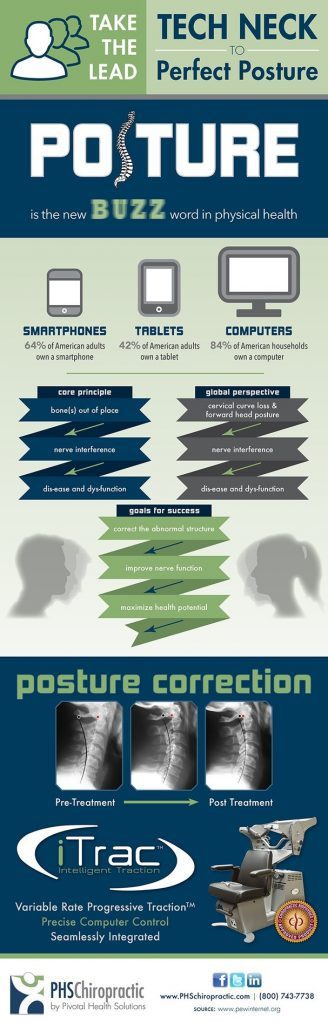
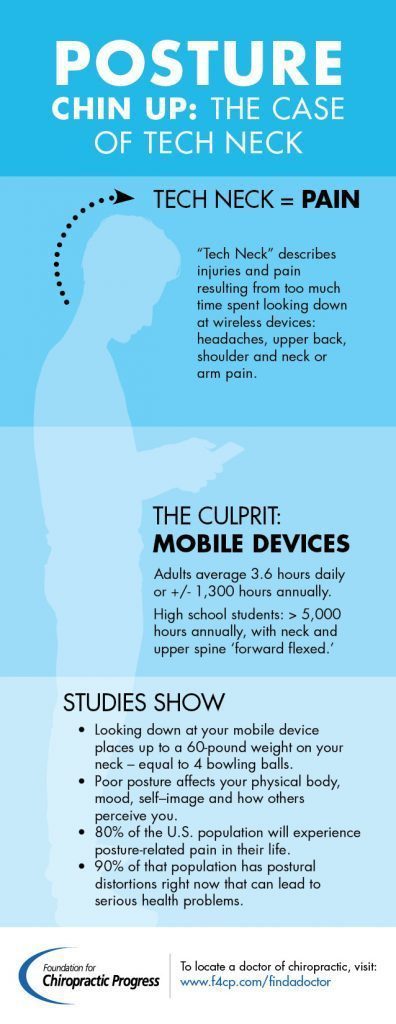
It�s obvious that Posture has become the new buzzword surrounding physical health and wellbeing over the past few years. We don�t have to look very far to understand why. Though there are many potential causes for poor posture, there�s no doubt the most widespread cause of our current posture dilemma is a direct result of our obsession with and our dependence on mobile devices. Tablets, smartphones and other technologies are not only a luxury but a necessity in our day-to-day lives.
It�s nearly impossible to avoid the onslaught of news articles and video segments cautioning the public of the harmful effects of long-term mobile device use on spinal health. As a result, our patients (and potential patients) are becoming increasingly aware of this issue as well.
This is great awareness, right?
The media is doing the hard work for us by effectively and efficiently reaching millions of people currently affected �by this epidemic. Arming them with information and questions they need to ask their healthcare providers in order to work towards finding a solution to their problem.
Perfect. That�s us, right?
Now, all we have to do is deliver the correct treatment regimen and the patient walks out of our office with perfect posture, a smile and the quality of life they�ve always dreamed of. Well� Not so fast�
Where do I go from here? Spinal function or spinal structure?
Unfortunately, like most of you are probably thinking at this very moment, it�s not that simple. But, why not? Shouldn�t it be? At one point in our careers, likely as na�ve chiropractic students in our first few trimesters, fixing spines was the ideal we were all hoping to achieve when we became doctors. Then, something changed.
Let�s reflect for a moment on the core principle our great profession is built upon;
bone(s) out of place ? nerve interference ? dis-ease and dys-function
From a global spinal perspective, it looks like this;
cervical curve loss & forward head posture ? nerve interference
? dis-ease and dys-function
As a young student this principle offered our analytical minds an objective means of measuring our success as a future spine care specialist;
correct the abnormal structure ? improve nerve function ? maximize health potential
Unfortunately, we were never taught how to correct abnormal structure and as we continued through the �clinical� trimesters in school we heard less and less about the importance of spinal structure and the overwhelming focus began to land on spinal function. Confused, conflicted, yet anxiously awaiting our release into the real world, we then began to put less and less importance on spinal structure as well and we carried that philosophy with us to our clinical practices. Likely thinking, structural spinal correction was merely for theoretical discussion and not practical application in a clinical setting.
Herein lies a major conflict. The very principle we were taught as the foundation of our careers is now something most of us have been encouraged to disregard because it�s too difficult to achieve, it�s too time consuming, it�s not possible, etc., etc.
Putting more focus towards structural spinal correction is the way forward.
Fortunately for our patients and ourselves, the structure dictates function principle is still very alive and well within us and I believe the latest advancements in traction technology will allow us to incorporate this principle with each of our patients like never before.
Throughout the next 10 months I, along with a few special guest contributors, will be engaging and challenging doctors around the world to take the lead in their communities to begin changing people�s lives by integrating cervical curve remodeling and posture correction into their existing treatment protocols.
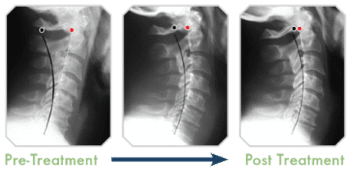
We will be using a variety of information disseminating platforms such as blogs, infographics and ebooks to share case studies. Also, treatment protocols and latest advancements in cervical spine remodeling devices will be put in place to demonstrate how quickly and easily cervical curve remodeling and posture correction can be integrated into your existing clinic(s).
We care about posture. We care about quality of life.
Our goal is to create a collaborative, productive discussion. We are taking the lead and fighting this posture epidemic in the communities we serve. I encourage you to reach out and share your questions and ideas with us.
By Dr. Alex Jimenez
Doctors of Chiropractic Offer Tips for Good Posture
Proper Posture has become a passing thing that is�no longer paid attention to. However, through proper posture people would not be in�pain or in some form of disablement. The time has come to bring proper posture awareness.
Dr. Eric Goodman is the creator of Foundation Training, a highly effective protocol. Foundation Training focuses on body weight exercises that integrate as many muscles as possible to strengthen and elongate your core and posterior chain � which includes all the muscles that connect to your pelvis, whether above or below it � thereby alleviating many chronic pain issues.
The protocol has evolved over the years, and I�ve interviewed Goodman twice before, in 2013 and the most recent two years ago in 2014, covering various updates.
Goodman, who is trained as a chiropractor, is a pioneer in the world of structural biomechanics. His program teaches you to optimize your posture, thereby decreasing bodily pain and your risk of exercise injury.
�The idea is really simple. Our body is made to help itself. As long as we can get the muscles to align it properly, our breathing patterns to align properly, our pelvic muscles to be more stabilized, our posture will involuntarily become stronger,� he explains.
�My education is in chiropractic. I�m licensed in Colorado and California, but I only really see patients if they need an adjustment for some reason that they can�t do the poses.�
Why Foundation Training?
While in chiropractic school, Goodman developed severe low back pain. His doctors suggested surgery, which he wisely rejected. Instead, his own pain set him on the path of discovering a long-term solution, which ultimately resulted in Foundation Training.
�My passive care was good. I was getting chiropractic care. I was being stretched. I was being massaged and worked on. But I wasn�t strengthening my spine myself. That�s the difference that I made,� he explains.
�I don�t think that I will ever negate chiropractic, because I love chiropractic. I love the ability and capacity to align the body, align the nervous system and create a very good environment for different process to occur.
[But] if you�re going to get your neck adjusted, I want your neck to stay long and strong afterwards, because that�s what�s going to stop you from having that same adjustment again a week later.�
While obsessively studying anatomy, alignment and exercise in an effort to resolve his back pain, Goodman began to notice that he, and many other people who were in pain, could not move the way the body was designed to move, and this was causing a degenerative effect � and those who were moving properly were able to regenerate and increase strength, while reducing injury and pain.
�I was in chiropractic school. I really understood the body well. I decided that this is going to become an obsession. I�m going to figure this out. I can�t become a doctor, have patients come to me that are asking for my advice on an injury that I have that I can�t fix. It�s not OK.
So, over the course of about four years, I did that. I became very obsessed. I used my anatomy knowledge. I used my understanding of exercise.
I was a personal trainer actually long before a chiropractor. Foundation Training is what I came up with. It�s what I do for myself every single day, and it�s what I�ve been extraordinarily fortunate to teach to thousands of people at this point.�
The secret to Foundation Training lies in its simplicity: no gyms, no specialized equipment and no complicated stretches. By incorporating a series of powerful movements into your daily routine, you can move better, breathe better and get back to using your body the way nature intended.
Addressing Back Pain
Low back pain is a very common problem, and the most common reason why people seek out Foundation Training. In the video below, Goodman demonstrates a back extension exercise that is particularly helpful for back pain relief.
The premise is simple. By strengthening the muscles in your back, they will keep your spine properly braced through all the movements you do as you go about your day-to-day life.
Overall, about 7 out of 10 people who learn Foundation Training do so to address back pain, 2 out of 10 seek to improve their sports performance and the remaining 10 percent typically seek to address knee pain, neck pain, jaw pain, plantar fasciitis, carpal tunnel and other chronic pain.
How to Get Started With Foundation Training
In addition to their latest book, �True to Form,� Foundation Training offers a variety of ways to get the benefits of their system, including their free videos on their website at www.FoundationTraining.com.
Foundation Training also offers certification for clinicians, practitioners, trainers and instructors who are looking to share this groundbreaking and highly effective protocol with their clients and patients.
�There are probably more people using our free videos to get well than using our DVDs and books,� he says. �That�s awesome. That�s why we have free videos.
Our latest book, �True to Form,� is our illustrative process of bringing Foundation Training into your everyday activities � brushing your teeth, waking up from bed, reaching into the refrigerator, whatever, how to apply very simple movement patterns that make you stronger while you do that.
Then if you want to really get into it, we have DVDs and we have a new streaming website. If you�re really into it � come to our workshop or certification. If you come to our workshop and you decide you want to go through a certification, we take the amount of money you paid on the workshop, 100 percent of it, off the cost of the certification.�
While millions of people have gotten started through the free Foundation Training videos, the optimal way to get the most out of Foundation Training is the comprehensive step-by-step program offered on their website or a certified Foundation Training instructor.
The Importance of Posture for Ease of Movement and Health
As noted by Goodman, �Posture is a beautiful thing, except when it�s messed up.� Indeed, while I see many people walking the beach during my daily walks, poor posture is the norm, with hunching being one of the most prevalent posture problems. Indeed, �standing tall� is so basic yet most have forgotten how to do it. When you stand tall, your muscles actually work more effectively.
�We naturally adapt towards our chosen method of absorbing gravity � �Our muscles absorb force � Whether they�re contracting or expanding, they are absorbing or providing force. If you take the opportunity of gravity � this ever-present weight of your own body � and simply provide 5 percent more energy in absorbing it, 5 percent more conscious effort throughout the day, it�s going to change your life forever. It�s going to have people reacting to you differently. It�s going to have you reacting to things like anxiety differently. You�re going to feel the difference of a closed airway and an open airway.
You�re going to feel the tightness of your jaw from the head traveling to forward, contracting the back of your neck when you�re in a bad posture � You start interacting with people like a confident human being interacts.�
Patience and Practice
Most people have poor posture these days. Besides chronic peering down on your smartphone or tablet and excessive sitting, which encourages poor posture unless you�re paying careful and active attention to your body at all times, we�ve also been taught certain posture strategies that actually worsen posture rather than improve it.
Pulling your shoulders back to straighten your posture is one example. As noted by Goodman, this is a �compartmentalized correction� at a place that�s not actually causing the problem. More than anything else, the places that cause the problems in posture are the upper and lower ends of your spine.
A very basic explanation is that your upper and lower spine should be pulling away from each other, not compressing or falling toward each other. So the back and top of your head needs to be pulling away from your tailbone, straight up and neither forward nor backward.
As for how long it might take to correct your posture, it clearly depends on your individual and specific circumstances: how long you�ve had poor posture, how much time you dedicate to corrective exercises and the extent of your postural problems.
�It may be a matter of weeks to months. I believe for some people it may be a year [to complete] the whole process. [But] they�re going to be feeling better along the way. They�re going to notice incremental changes. They�re going to see that their body is supporting itself better steadily. They�re thinking about it less. They�re feeling less pain. They�re feeling better posture. That�s when the real changes start to happen. But there�s no set timeline.�
Walking 101
Walking is foundational for optimal health, and walking with good posture can really maximize your benefits. Your choice of footwear can have a significant influence here. When walking in sneakers or heels, your heel is raised higher than your toes. This in turn makes your arch tighter, which completely alters your range of motion. So, to start, walk barefoot or find a pair of zero-drop shoes.
The rationale behind walking barefoot has to do with plantar flexion, the shortening of the muscles on the back of your ankle and the lengthening of the muscles at the front of your ankle and shin. When walking barefoot, you alter the way the back of your body absorbs force for the better.
Dorsiflexing is a tremendously important piece of walking. This is where you�re lifting the top of your foot toward your shin. When you�re walking with plantar flexion (due to wearing heels), you rarely dorsiflex, thereby contracting and shortening the muscles of your shin.
�That�s Step 1, making sure that there is good dorsiflexion in every step,� Goodman says. �Literally lift the top toes away from the ground. Lift the balls of the feet away from the ground and try to spread your feet a little bit. That will allow your hips to follow a much more natural range of motion. As your feet dorsiflex, it triggers these muscles of the inside and outside of your legs.
Those muscles have internal rotation capacity and external rotation capacity. Both of which are very important for walking � The ability of the adductors, the medial hamstring, the muscles of the inner part of the thigh, the inner upper part of the thigh, to contract during a walk, to spin that hip a little bit more neutral towards straight ahead �
Long story short, range of motion of the hips is so significant to walking. That range of motion is limited most frequently in people at the feet with plantar flexion, excessive plantar flexion or excessive external rotation.�
Head Posture While Walking
The other piece of the puzzle is the location of your head. Most people walk as if they�re sniffing their way forward, head leading the rest of the body. A more natural posture is to lift your chest upward, which allows your shoulders to lift and your chin to retract more or less automatically. So think: �Chest up, chin back.� Initially, this may feel and even look a bit awkward, but you�ll notice it�s a significantly more powerful way to walk, allowing you to engage more muscles.
�If you simply focus on chin back, chest up, shoulders big, broad, not backing down but out � if you focus on that � you�re going to be walking very different. You�re going to experience this really rhythmic counterbalance in your walk. When the right foot comes forward, the shoulder comes forward on the opposite side.
It�s just these nice little muscular glutes, hamstrings, calves, adductors across the body to the opposite shoulder and pec � So many muscles involved. It�s the SCMs that are very important as well to keep that chin back, chest up function happen.�
Preventing iPhone Neck and Dowager�s Hump
The chest up, chin back posture will not only make you look better, but proper posture may also help prevent osteoporosis and significantly reduce your risk of developing a dowager�s hump, which tends to be quite common among the elderly, and women in particular.
This forward slumped posture tends to be related to chronic improper posturing that worsens over time, eventually leading to the development of rigid intractable calcifications. The beginning of the progression of the dowager�s hump is typically the loss of thoracic extension.
�I think the lack of movement and stagnation in bone leads to calcification and typical degenerative changes. Degenerative changes along with spine make it less mobile � It supports it because the muscles aren�t, the discs aren�t. It puts very rigid support structures in place.
Now, can you imagine 20, 50 years from now, when it�s 60 or 70 years after cellphones and iPads came around, the dowager�s humps, we can start calling them the iPad hump � The younger you are, the more capacity you have to be plastic, to engage your body�s natural tendency to respond to stimulus in such a fashion that will get better and better at doing the thing you�re asking it to do.
If you�re often asking it to look down at your phone, please often ask it to lift your chest up, to pull your chin back and to just stand very firm on the ground. Just look at your phone while keeping your chin back and chest up.�
According to Goodman, even if you�ve already started to develop a slight hump, chances are you�ll be able to significantly improve your alignment provided your spine has not yet calcified. Exceptions might be if you have ankylosing spondylitis (AS) or diffuse idiopathic skeletal hyperostosis (DISH). Naturally, the younger you are, the more room for improvement there is.
One important aspect of Foundation Training is what Goodman refers to as compression breathing. With his breathing protocol, you literally re-educate the muscles surrounding your axial skeleton, the spine of your rib cage, teaching them to be in a state of expansion rather than contraction. You�ll find a demonstration of this technique in the video above, followed by another founder exercise.
�[This breathing technique] is something that�s always going to set our work aside from everything else. Not better. Not worse. Different. It�s an accessory,� Goodman says.
�Decompression breathing, which can be taken and applied to any movement, any exercise, any activity � will do more for your spine, more for your chest and neck, more for your dowager�s hump � than anything else I can possibly teach you. The unique thing about it is our specific protocol of learning how to engage the diaphragm more appropriately by drastically strengthening the muscles that surround the rib cage.�
Here�s a quick summary of the compression breathing exercise demonstrated above:
Position your feet so that the OUTSIDE of your feet are parallel. This will make it appear as though you�re standing slightly pigeon-toed
Pull your chin back and lift your chest
Place your thumbs at the bottom of your rib cage, and your pinkies on your pelvic bone
With each breath, your aim is to increase the distance between your thumb and pinky fingers, as well as increase the width of your upper back. This occurs as you elongate the back of your rib cage. Each inhalation expands your rib cage, and each exhalation will keep the abdomen extended and tight. So each in-breath fills up your rib cage, and each out-breath maintains the height and width of your rib cage
Repeat five to 10 rounds with three to four breaths per round
More Information
You have many options when it comes to learning Foundation Training. You can start by reading through or listening to my previous interviews with Goodman, �How Foundation Training Can Help You Maximize Strength and Freedom of Movement� and �New and Revised Foundation Training Exercises Add Even Greater Health Benefits.�
For free video demonstrations and tutorials, be sure to check out FoundationTraining.com and the free videos they have available at their site. For even more in-depth information, pick up Goodman�s latest book, �True to Form: How to Use Foundation Training for Sustained Pain Relief and Everyday Fitness.� Join Foundation Training Connect or check out their free resources at FoundationTraining.com/free-resources.
Just remember, the key is to actually DO the exercises. Just reading about them or watching a video will do you no good. The good news is, even if you�re wheel-chair bound, you can perform the compression breathing exercises, which will, at bare minimum, help you breathe better.
�I have a friend that is [in a wheelchair] and we do some of those workouts. He�s a very good guy from Oklahoma City, but had a very tragic accident. I really hope I get to spend some more time with that guy and see what we can do just based on breathing,� Goodman says.
Foundation Training is a�program that teaches you to optimize your posture. By getting the muscles, breathing patterns, and pelvic muscles to be aligned properly and more stabilized, our posture will involuntarily become stronger,� decreasing bodily pain and risk of injury.
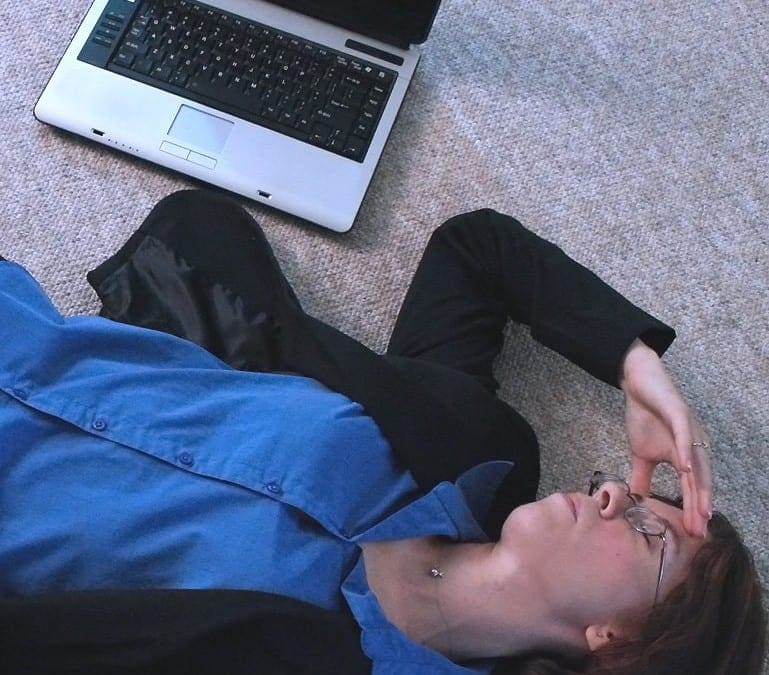
There are a wide variety of factors which can cause headaches. The most common reason for headaches, especially tension headaches, is muscle tension and tightness. The frequent tightness which occurs during a headache can be experienced all over the head and neck, feeling almost as though there is a rubber band around the head, according to reports of many individuals. The tension and tightening of the muscles is largely due to poor posture where the muscles are trying to adapt to the constraints which are being placed on them. Poor posture over time leads to shortening of the muscles and irritation of the structures surrounding the spine, particularly the spinal discs. It�s this specific shortening of the tissues that causes the rubber band feeling on the head, or tension headaches. Most often, this form of pain and discomfort is felt at the base of the skull. The longer the individual sits in an improper position, the longer the tension and tightness of the muscles will last and worsen, causing longer lasting and worse headaches.
woman-headache-office-el-paso-tx
The difficulty with improper postures is that they are mostly involuntary in their movements. If you are an individual who stresses frequently, it�s not uncommon for the shoulders to rise up to their ears. The person may not even realize they�re practicing this posture until they take a deep breath and relax, an action many take longer to realize. The shoulders may have been up for a majority of the day, meaning the muscles were being overworked in an inappropriate position, and chances are the individual won�t correct their posture until the headache has started.
Dr. Alex Jimenez D.C.,C.C.S.T�s insight:
After a long day of work, returning home with head pain�is an undesirable situation for many. People believe�that the reason behind their headaches at the end of the day is due to circumstances which are out of their control; work, bills, etc. But, as a matter of fact, from the way people sit at work and the way they hold their phone to the way people type on their computer, improper posture can greatly contributes to headaches. For more information, please feel free to ask Dr. Jimenez or contact us at (915) 850-0900.
IFM's Find A Practitioner tool is the largest referral network in Functional Medicine, created to help patients locate Functional Medicine practitioners anywhere in the world. IFM Certified Practitioners are listed first in the search results, given their extensive education in Functional Medicine








 Head Posture While Walking