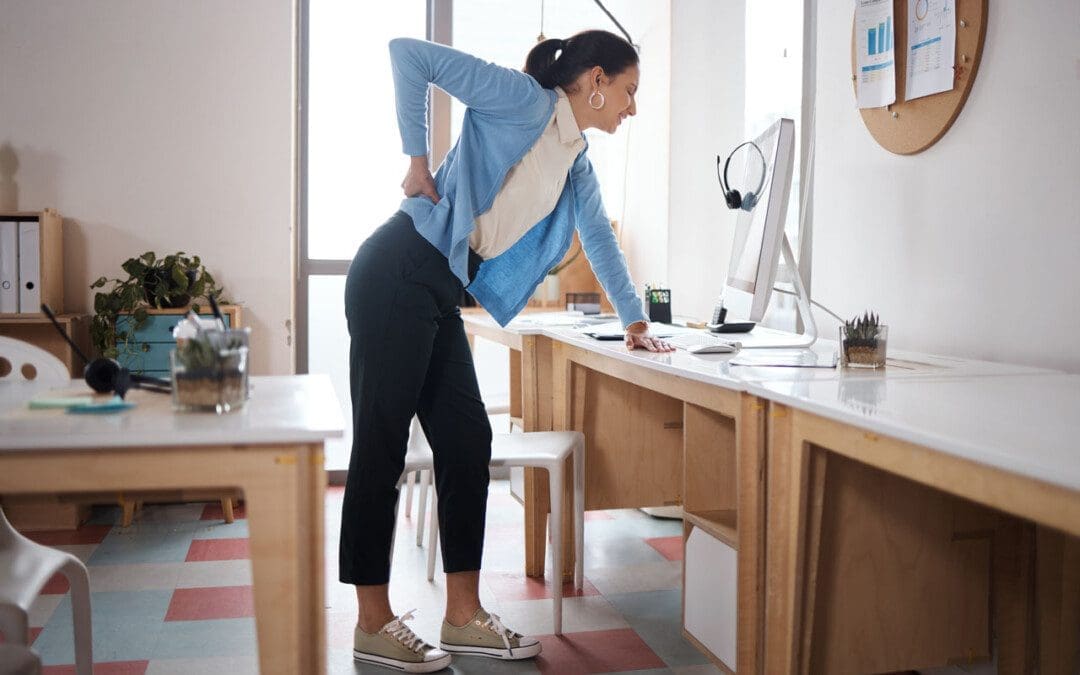
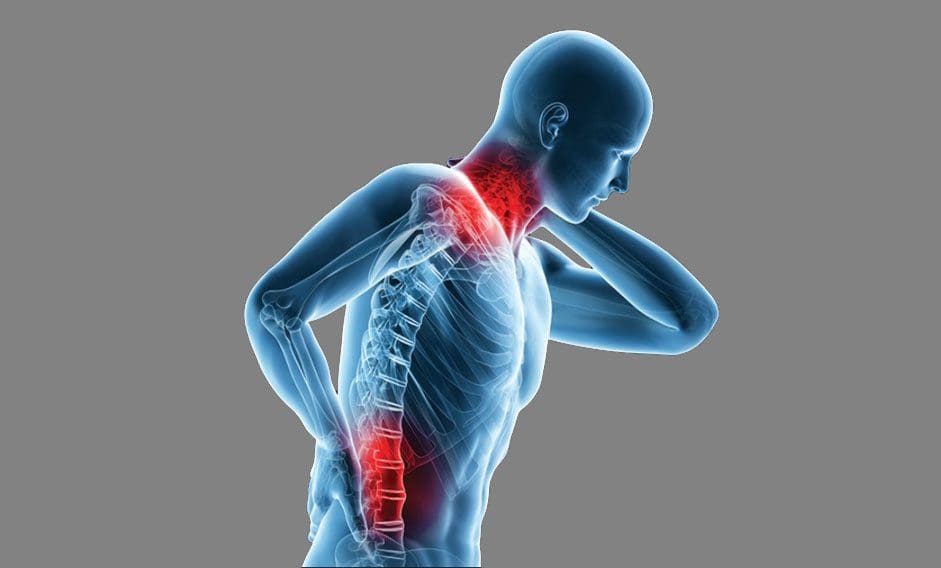
Many individuals attribute to some degree, their neck or back pain to unhealthy posture. Can knowing the causes and underlying factors help guide lifestyle adjustments and seeking medical rehabilitative treatment?
Unhealthy Posture Causes
Numerous factors can cause individuals to practice unhealthy postures regularly.
Unhealthy posture can also be brought on by an injury, illness, or genetics.
A combination of these factors is also common.
Practicing healthy posture is a form of exercise where the muscles support the skeleton in stable and efficient alignment that is present in stillness and movement.
Injury and Muscle Guarding
After an injury, muscles can spasm to protect the body and help stabilize injuries and protect against further injury.
However, movements become limited and can lead to pain symptoms.
Prolonged muscle spasms lead to weakened muscles over time.
The imbalance between muscles guarding the injury and those still operating normally can lead to posture problems.
Musculoskeletal treatment with massage, chiropractic, and physical therapy can help restore optimal functioning.
Muscle Tension and Weakness
If certain muscle groups become weak or tense, posture can be affected, and pain symptoms can develop.
Muscle weakness or tension can develop when individuals hold a prolonged position day after day or when performing routine tasks and chores in a way that places tension on the muscles or uses them in an unbalanced way.
Postural retraining and physical therapy adjustments can help strengthen the muscles and relieve pain symptoms.
Daily Habits
As individuals find ways to accommodate muscle spasms, weakness, tension, and/or imbalances, the mind and body can forget and abandon healthy posture.
The body then begins compensating using alternate, awkward, and counterproductive muscle contractions and stretching that compromise body and spinal alignment.
Use of Technology
Technology – whether sitting at a desk/workstation, using a tablet or cell phone, or working with several devices can gradually shift the body out of alignment. (Parisa Nejati, et al., 2015)
Individuals constantly looking down at their phone may develop a text neck, a condition in which the neck is held in flexion or forward tilting too long, which can lead to pain.
Mental Attitude and Stress
Individuals under stress or are experiencing stressful situations can begin to have posture problems. (Shwetha Nair et al., 2015)
Stress can contribute to over-contracting muscles, which can cause muscle tension, shallow breathing, posture problems, and pain symptoms.
Being aware of body position and correcting and adjusting posture can help to counteract stress. (Shwetha Nair et al., 2015)
Wearing down the outside or inside of the shoes faster from things like weight-bearing habits will imbalance kinetic forces that translate up the ankle, knee, hip, and lower back leading to pain symptoms in any or all of these joints.
Heredity and Genetics
Sometimes the cause is hereditary.
For example, Scheuermann’s disease is a condition in which adolescent males develop a pronounced kyphosis curve in the thoracic spine. (Nemours. KidsHealth. 2022)
Consult Injury Medical Chiropractic and Functional Medicine Clinic for an evaluation, and let us help you by developing a personalized treatment and rehabilitation program.
The Path To Healing
References
Czaprowski, D., Stoliński, Ł., Tyrakowski, M., Kozinoga, M., & Kotwicki, T. (2018). Non-structural misalignments of body posture in the sagittal plane. Scoliosis and spinal disorders, 13, 6. https://doi.org/10.1186/s13013-018-0151-5
Nejati, P., Lotfian, S., Moezy, A., & Nejati, M. (2015). The study of correlation between forward head posture and neck pain in Iranian office workers. International journal of occupational medicine and environmental health, 28(2), 295–303. https://doi.org/10.13075/ijomeh.1896.00352
Nair, S., Sagar, M., Sollers, J., 3rd, Consedine, N., & Broadbent, E. (2015). Do slumped and upright postures affect stress responses? A randomized trial. Health psychology : official journal of the Division of Health Psychology, American Psychological Association, 34(6), 632–641. https://doi.org/10.1037/hea0000146
Silva, A. M., de Siqueira, G. R., & da Silva, G. A. (2013). Implications of high-heeled shoes on body posture of adolescents. Revista paulista de pediatria : orgao oficial da Sociedade de Pediatria de Sao Paulo, 31(2), 265–271. https://doi.org/10.1590/s0103-05822013000200020
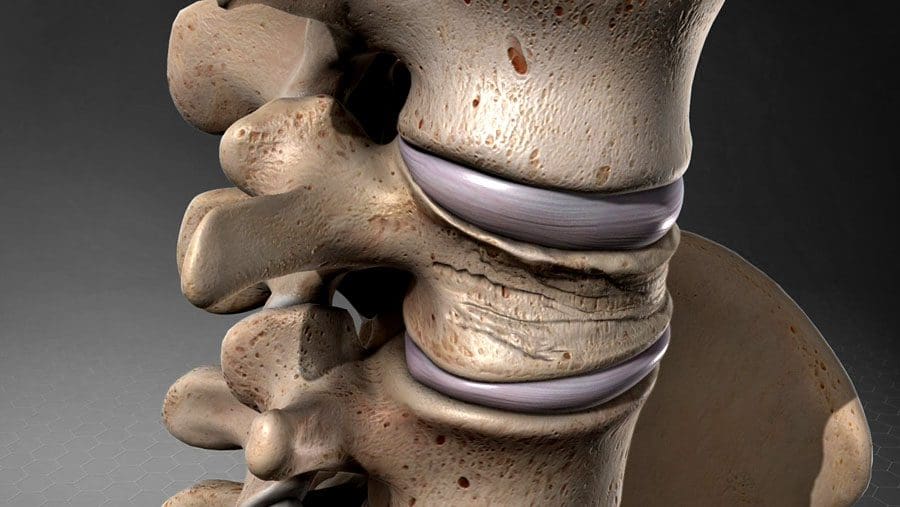
Sometimes the bones or vertebrae of the spine can crack and collapse under their weight. This is known as a compression fracture, vertebral compression fracture, or VCF. There are almost 1 million compression fractures every year, usually because the bones become weakened and crack under the weight of the vertebrae above them. These fractures can cause spinal weakness affect posture and the ability to stand up straight. They are often the cause for individuals to hunch over, also called kyphosis.
Compression Fracture
Compression fractures are small breaks or cracks in the vertebrae. The breaks occur in the vertebral body, the thick rounded part on the front of each vertebra. These fractures cause the spine to weaken and collapse. With time, these fractures affect posture as the spine curves forward. The fractures are often found in the middle/thoracic spine in the lower area. They often result from osteoporosis but can also happen after a trauma like an automobile accident, work, sports injury, or a tumor on the spine.
Symptoms
Compression fracture symptoms range from mild to severe or no symptoms. Many individuals can stand or walk without pain. They are often discovered when X-rays are taken for another condition. Symptoms include:
Back pain can come on suddenly and last for a significant time, often diagnosed as chronic back pain.
It usually develops between the shoulders and the lower back.
The pain and discomfort decrease when lying down and worsen when standing or walking.
Decreased mobility or flexibility in the spine. Individuals are unable to twist or bend.
Hunched over appearance, known as dowager’s hump or hunchback.
Loss of height from the vertebrae compression and the spine curving.
Pinched nerves
Nerve damage can cause tingling, numbness, and difficulty walking.
Loss of bladder or bowel control with severe, untreated fractures.
Individuals At Risk
Individuals who have had a compression fracture are more likely to have another one.
Women over 50 have a higher risk due to osteoporosis.
With age, the risk increases for men and women.
Diagnosis
A doctor will perform an examination and ask about symptoms. The exam will include:
Checking spinal alignment.
Posture analysis.
Gently palpates different areas of the back to identify the source of pain.
Examine for signs of nerve damage that include numbness, tingling, or muscle weakness.
A doctor will order imaging studies to examine the backbones, muscles, and soft tissues. Imaging studies include:
CT scan, X-ray, or MRI of the spine.
DEXA scan is a type of X-ray that measures bone loss bone density.
A myelogram is a procedure used along with imaging studies. A contrast dye is injected into the spine before the scan making the images easier to see.
Compression fracture treatment focuses on relieving pain, stabilizing the vertebrae, and ongoing fracture prevention. Treatment depends on the severity of the fracture and the individual’s overall health. Treatment can include:
Pain Medication
A doctor can recommend over-the-counter non-steroidal anti-inflammatory medication.
A doctor may prescribe muscle relaxers or prescription medication.
Follow instructions carefully when taking medications.
Back Brace
A special type of back brace helps to support the vertebrae.
The brace can also relieve pain by reducing how much the spine moves.
Strengthening Meds
Medications known as bisphosphonates can help slow down bone loss, stabilize the bones and prevent fractures.
This minimally invasive procedure relieves pain, stabilizes the bones, and improves mobility.
During vertebroplasty, the doctor inserts a needle in the vertebra and injects bone cement.
During kyphoplasty, the doctor inserts an inflatable device that they fill with cement.
Both are outpatient procedures allowing the individual to go home the same day.
Individuals over 65 or that have osteoporosis or a history of cancer are recommended to see their doctor. Individuals who present with sudden back pain that doesn’t get better after a day or two are advised to see a doctor and evaluate for back pain so the doctor can determine the cause and develop a treatment plan.
Body Composition
Vitamin D To Build Muscle
Skeletal Muscle Mass decreases as the body ages, primarily due to decreased physical activity. Vitamin D has been reported to influence muscle quality. This could be helpful for adults as they age. Muscle loss diminishes functional performance on activities that require strength and coordination. When this loss of muscle mass becomes significant, it becomes a condition known as sarcopenia. Treatments include:
All were found to slow down muscle loss and help regain muscle mass and strength.
Vitamin D supplementation is effective, especially in older adults whose blood levels are low.
References
American Academy of Orthopaedic Surgeons. Osteoporosis and Spinal Fractures. (https://orthoinfo.aaos.org/en/diseases–conditions/osteoporosis-and-spinal-fractures/) Accessed 10/25/2021.
American Association of Neurological Surgeons. Vertebral Compression Fractures. (https://www.aans.org/en/Patients/Neurosurgical-Conditions-and-Treatments/Vertebral-Compression-Fractures) Accessed 10/25/2021.
Bischoff-Ferrari, H A et al. “Vitamin D receptor expression in human muscle tissue decreases with age.” Journal of bone and mineral research: the official journal of the American Society for Bone and Mineral Research vol. 19,2 (2004): 265-9. doi:10.1359/jbmr.2004.19.2.265
Donnally III CJ, DiPompeo CM, Varacallo M. Vertebral Compression Fractures. [Updated 2021 Nov 21]. In: StatPearls [Internet]. Treasure Island (FL): StatPearls Publishing; 2022 Jan-. Available from: https://www.ncbi.nlm.nih.gov/books/NBK448171/
Hassan-Smith, Zaki K et al. “25-hydroxyvitamin D3, and 1,25-dihydroxyvitamin D3 exert distinct effects on human skeletal muscle function and gene expression.” PloS one vol. 12,2 e0170665. 15 Feb. 2017, doi:10.1371/journal.pone.0170665
McCarthy, Jason, and Amy Davis. “Diagnosis and Management of Vertebral Compression Fractures.” American family physician vol. 94,1 (2016): 44-50.
IFM's Find A Practitioner tool is the largest referral network in Functional Medicine, created to help patients locate Functional Medicine practitioners anywhere in the world. IFM Certified Practitioners are listed first in the search results, given their extensive education in Functional Medicine