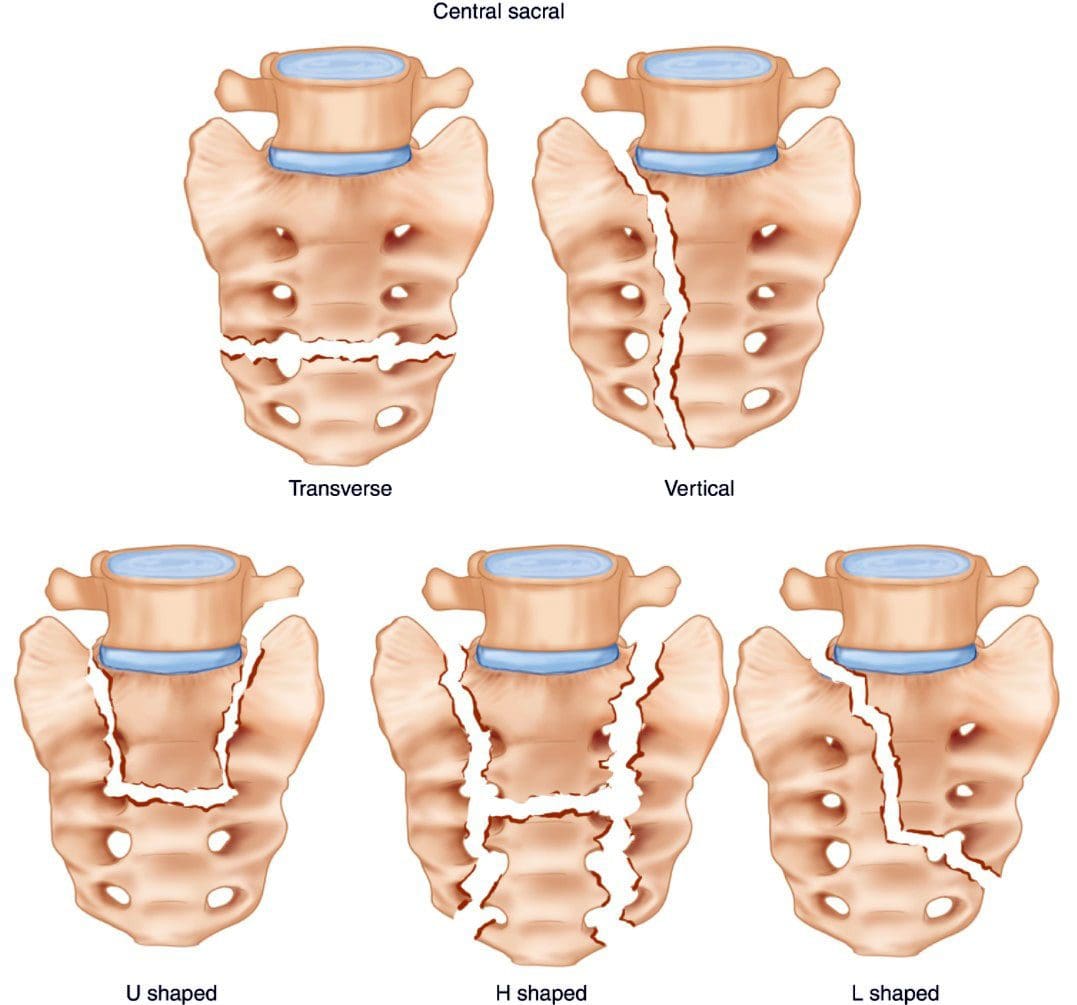
For older individuals, experiencing frequent low back pain could turn out to be a sacral fracture. They tend to occur in individuals over the age of 60 often because there has been a degree of bone loss. Sacral fractures tend not to be the first thing doctors think of when low back pain symptoms are presenting. They are often not picked up on X-rays and are either not diagnosed early enough to take steps or not diagnosed at all. However, they are common.
Sacrum
The sacrum is shaped like a triangle and comprises five segments fused into one large bone. It sits at the base of the spine, between the two halves of the pelvis, connecting the spine to the lower half of the body. It stabilizes the body when walking, sitting, or standing. The nerves in the lower spine control the bowels bladder and provide sensation to the region.
The two dimples that can be seen on individuals’ backs are where the sacrum joins the hipbones or the sacroiliac joint.
The point where the low back joins the sacrum can develop discomfort, soreness, and pain.
This area experiences stress from bending, twisting, reaching, lifting, carrying during physical activities or sitting for long periods.
Sacral Fracture
Most sacral fractures result from trauma, like slips, falls, and automobile accidents. Stress fractures that happen without a specific injury are also called insufficiency fractures.
Types of Sacral Fractures
Low-energy fractures usually happen to older individuals with weak bones due to osteoporosis.
An individual trips on something, lands hard on their butt, lifts a heavy object awkwardly, or over-exerts themselves from some physical activity.
Then persistent back or buttock pain begins to present.
The pain is often centered in the lower back, the hips, and butt.
It is more than just back achiness.
The individual goes to the doctor, and X-rays are ordered.
A lot of the time, these fractures are missed on X-rays.
The doctor may diagnose a sprain, but the pain symptoms do not improve.
Sometimes there is no apparent cause for the pain.
It can be misdiagnosed as a lower back compression fracture or urinary tract infection.
High-energy fractures are due to trauma and are more common among the young.
The individual sustains injuries from an auto accident, has fallen from a significant height, or suffers a sports injury.
It results in severe pain.
A woman who has just had a baby and gone through some bone loss because of the pregnancy can experience a sacral stress fracture.
For individuals that have been to a doctor and had an X-ray that reveals no fracture, and there is no improvement after 5 to 7 days, it is recommended to schedule another appointment and ask for a CAT scan or MRI, which is highly effective at finding a sacral fracture.
Treatment
Treatment consists of resting the bone but still being safely active in most cases.
Medication is prescribed for pain relief.
Many individuals have been found to do well with anti-inflammatory medications, topical medications, and lidocaine patches.
Older individuals may be recommended to use a walker during the treatment/healing process.
Depending on the severity, crutches may be recommended.
Engaging in regular exercise is not recommended, but too much bed rest is also not recommended.
Too much rest may not allow the injury to heal correctly, worsen the injury, and/or cause new injuries.
Chiropractic and physical therapy are not recommended to let the sacrum naturally heal.
After the pain subsides, chiropractic and physical therapy can be implemented to maintain agility and flexibility and strengthen the pelvic and core muscles.
In some cases, if the bone does not heal correctly or some other issue, sacroplasty could be recommended. This is a minimally invasive procedure that injects bone cement into the fracture. It offers quick and long-lasting pain relief with a low percentage of complications. It is considered low risk and can be done by an interventional radiologist or spine surgeon.
Prevention
To minimize the risk of a sacral fracture, it is highly recommended to maintain bone strength. This consists of:
Try to keep moving with different exercise stretches, or take a lap around the building.
References
Gibbs, Wende Nocton, and Amish Doshi. “Sacral Fractures and Sacroplasty.” Neuroimaging clinics of North America vol. 29,4 (2019): 515-527. doi:10.1016/j.nic.2019.07.003
Holmes, Michael W R, et al. “Evaluating Abdominal and Lower-Back Muscle Activity While Performing Core Exercises on a Stability Ball and a Dynamic Office Chair.” Human factors vol. 57,7 (2015): 1149-61. doi:10.1177/0018720815593184
Santolini, Emmanuele et al. “Sacral fractures: issues, challenges, solutions.” EFORT open reviews vol. 5,5 299-311. 5 May. 2020, doi:10.1302/2058-5241.5.190064
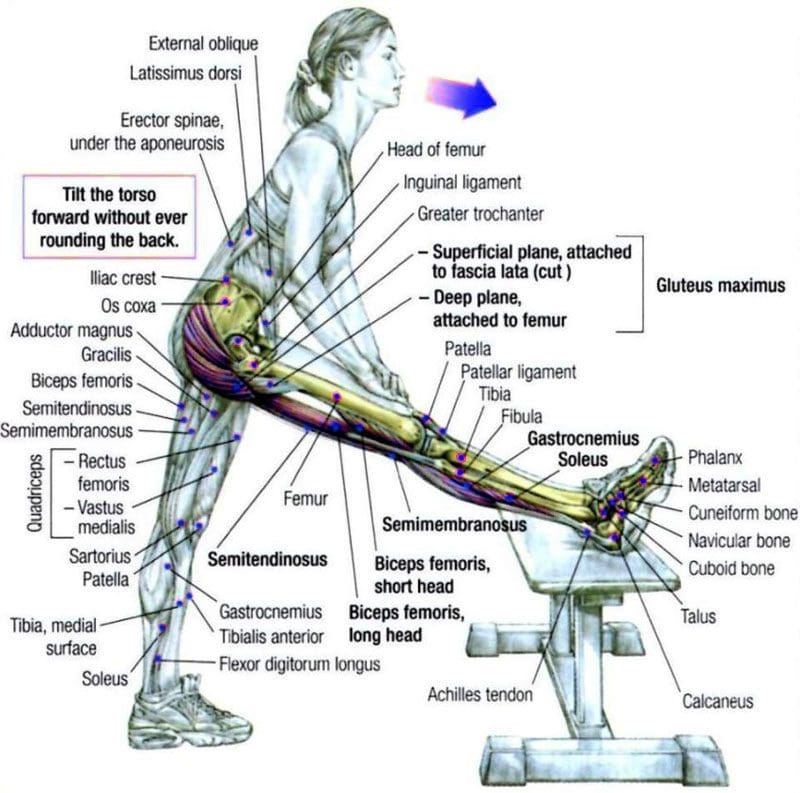
Stretching Fundamentals: Stretching benefits the body by keeping the muscles flexible, strong, healthy, and able to maintain optimal physical performance. As with any other discipline stretching correctly requires using the proper form, correct technique, and practicing regularly. The angles need to be accurate; the body has to move at the right speed and maintain correct posture. The focus should be moving the joint as little as possible as the muscle/s stretch and elongate.
Stretching Fundamentals
Stretching should become a daily activity that turns into a healthy habit. The muscles need frequent maintenance from daily/nightly bending, twisting, reaching, carrying, and lifting work. This is especially true for individuals dealing with constant soreness, aches, pains, and problems with tight, tense, and stressed-out muscles. When the body is stressed, heart rate increases, and individuals tend to tighten up. Stretching benefits include:
Stress relief.
Increased muscle blood flow.
Increased body flexibility.
Helps joints move through their full range of motion.
Improves performance in physical activities.
Decreases soreness, aches, and pains.
Injury prevention.
Improves posture.
Improves sleep.
Preps the body for exercise and activities.
Improves mental health.
Human nature is to take the path of least resistance, which makes the body feel flexible and comfortable. This is a common reason individuals consider stretching unnecessary or too painful to engage in. However,stretching fundamentals need to be maintained as stretching carelessly or poorly can negatively affect other muscles and joints and worsen injuries/conditions.
Guidelines
To stretch safely, it is recommended to do a proper warm-up, stretch slowly, working the right muscles and joints. The guidelines make stretching safer, more effective, and increase body awareness.
Warm-Up
Warming the muscles increases blood flow.
Warming up muscles before physical activity/workout is crucial for preventing injuries and maximizing effectiveness.
Dynamic stretching involves moving into and out of positions through a full range of motion rather than holding a stretch for a prolonged period.
Dynamic stretches are recommended to be held for 2-3 seconds for 4-6 repetitions.
Take It Slow
Stretching out too fast can make the body think that the muscle is about to get torn or injured.
To protect the muscle, it contracts, preventing it from reaching the full stretch.
This is why the correct technique needs to be observed.
A couple of degrees in the wrong direction can mean the difference between a healthy stretch and pulling a joint capsule causing injury.
Body Composition
Muscle Recovery
When engaged in physical activity, exercise, or working, microscopic tears are happening to muscle cells. Because of the body’s stress and fatigue, hormone and enzyme levels fluctuate, and inflammation increases. This helps in fat loss, increases metabolism, increases strength and muscle growth. However, these benefits only happen with proper recovery. Different types of recovery include:
Immediate Recovery
These are the quick moments’ in-between physical movements.
For example, the time between each stride when jogging.
Short-Term Recovery
This is the time between activities or sets of exercises.
For example, the rest periods between doing a heavy job or sprint intervals.
Training Recovery
This is the time between when one workout or job ends, and the next begins.
There is no one size fits all, as everyone’s body is different; it is recommended to consult with a trainer or fitness expert and experiment with what feels right.
For some individuals, 24 hours is enough.
For others, it can take 48 or 72 hours to feel fully recovered.
Other factors that affect recovery are:
Age
Fitness level
Work/exercise intensity
Diet
Sleep
References
Behm, David G, and Anis Chaouachi. “A review of the acute effects of static and dynamic stretching on performance.” European Journal of applied physiology vol. 111,11 (2011): 2633-51. doi:10.1007/s00421-011-1879-2
Freitas, S R et al. “Stretching Effects: High-intensity & Moderate-duration vs. Low-intensity & Long-duration.” International journal of sports medicine vol. 37,3 (2016): 239-44. doi:10.1055/s-0035-1548946
Hotta, Kazuki et al. “Daily muscle stretching enhances blood flow, endothelial function, capillarity, vascular volume and connectivity in aged skeletal muscle.” The Journal of physiology vol. 596,10 (2018): 1903-1917. doi:10.1113/JP275459
Kataura, Satoshi et al. “Acute Effects of the Different Intensity of Static Stretching on Flexibility and Isometric Muscle Force.” Journal of strength and conditioning research vol. 31,12 (2017): 3403-3410. doi:10.1519/JSC.0000000000001752
Squat exercises are highly effective, as they strengthen the back and core muscles, helping the prevention of injury. They can be done anywhere with or without equipment like weights and resistance bands and can be part of an aerobic workout. Squatting requires following proper form and posture. Using the improper form, adding too much weight too soon, overdoing it without enough recovery time can cause soreness, back pain, and injury. Having muscle soreness after performing squats is expected; however, if symptoms like chronic soreness, tingling, numbness, or sharp aches that come and go, begin to appear, it is recommended to consult a medical trainer, chiropractor, doctor, or spine specialist to evaluate the symptoms, and if necessary develop a treatment plan, as well as a prevention plan to continue exercising safely.
Squat Exercises
Squatting is a highly beneficial form of exercise. Athletes, trainers, coaches, and individuals just staying healthy use the technique as a part of their training and workouts. This is because squatting increases core muscle strength, increasing body power. Squat exercises benefits include:
Increased Flexibility
Improved strength and a range of motion allow the body to move flawlessly in various directions with minimal effort.
Increased Core Strength
All major muscles work together during a squat.
This increases muscle stabilization, maintains body balance, increasing core strength.
Injury Prevention
Squats work all leg muscles simultaneously, synchronizing the body.
This increases body stability decreasing the risk of injury.
Back Pain and Potential Injury
The spine is exposed and unprotected during a squat. This is where back pain and injury can happen. Potential causes include:
Priming each muscle is recommended. This could be:
Starting with glute work.
Then planks to activate the core.
Finish off with stretching and range of motion exercises.
A personal trainer can assist in creating a customized workout routine.
Starting Position
The feet should always face forward to protect the hips and knees when beginning a squat.
If the feet face at an angle, the form can be impacted, leading to back pain or collapsing arches.
Spinal Alignment
Maintaining a straight-ahead or upward gaze, which increases center awareness during squat exercises, can prevent the body from leaning forward and placing stress on the spine.
Only squat as far as possible, making sure to feel in control and maintain the form.
Squatting too deep can cause muscle strain leading to pain.
Focus on form, as it is more important than depth.
Joint mobility
Ankle mobility and stability are essential to balance and control.
If the ankle is compromised, the feet could lift off the floor, forcing the body to compensate, leading to strain and potential injuries.
Barbell back squats are more advanced and, if done incorrectly, can cause injury.
A chiropractor or physical therapist will be able to evaluate spinal health, exercise form, and advise if there is an issue.
Body Composition
Achieve Health and Fitness Goals By Doing What You Enjoy
Don’t engage in workouts or fitness programs that make you miserable. Do workouts/activities that you enjoy and have fun doing. Exercise for the love of the body, keeping it healthy and in shape, not because there is a feeling of obligation.
Individuals who don’t like lifting weights try using resistance bands or bodyweight exercises.
The same goes for nutrition. Don’t base diet and supplement choices on misperceptions about health.
References
Calatayud, Joaquín et al. “Tolerability and Muscle Activity of Core Muscle Exercises in Chronic Low-back Pain.” International journal of environmental research and public health vol. 16,19 3509. 20 Sep. 2019, doi:10.3390/ijerph16193509
Clark, Dave R et al. “Muscle activation in the loaded free barbell squat: a brief review.” Journal of strength and conditioning research vol. 26,4 (2012): 1169-78. doi:10.1519/JSC.0b013e31822d533d
Cortell-Tormo, Juan M et al. “Effects of functional resistance training on fitness and quality of life in females with chronic nonspecific low-back pain.” Journal of back and musculoskeletal rehabilitation vol. 31,1 (2018): 95-105. doi:10.3233/BMR-169684
Donnelly, David V et al. “The effect of the direction of gaze on the kinematics of the squat exercise.” Journal of strength and conditioning research vol. 20,1 (2006): 145-50. doi:10.1519/R-16434.1
Zawadka, Magdalena et al. “Altered squat movement pattern in patients with chronic low back pain.” Annals of agricultural and environmental medicine: AAEM vol. 28,1 (2021): 158-162. doi:10.26444/aaem/117708
Post spine surgery physical therapy or PT is the next phase after a discectomy, laminectomy, fusion, etc., to gain optimal mobility and ease the transition for a full recovery. A chiropractor and physical therapist team will help with proper muscle training and activation, pain and inflammation relief, postural training, exercises, stretches, and educate the individual on an anti-inflammatory diet. Physical therapy post spine surgery reduces:
Scar tissue
Inflammation
Muscle weakness
Muscle tightness
Joint stiffness
The therapy also identifies and treats any issues that caused or contributed to the spinal damage/injury. A study found physical therapy to improve postoperative ambulation, pain, disability, and decreased surgical complications.
Post Spine Surgery Physical Therapy Goals
Physical therapy goals are to return the individual to full function before chronic pain or injury. These include:
Decrease pain and stress around the surgical site.
Loosen and stretch the muscles surrounding the surgical site.
Strengthen the back and neck muscles.
Stabilize the back and neck muscles.
Learn to move around safely.
Prepare for everyday physical activities like standing up or sitting down, lifting, and carrying objects.
Improve posture.
The therapy team will develop a customized treatment/rehabilitation plan as well as post-surgical recovery at home to help the individual and family to understand what to expect, including psychological factors like not wanting to perform the exercises or stretches to avoid pain, frustration, anger, depression, and wanting to give up. However, individuals can maximize the benefits to ensure an optimal outcome before surgery by pre-conditioning identifying structural and functional issues contributing to the injury.
Physical Therapy Involves
Therapy can be done at home, in a hospital or rehab setting, or at a chiropractic/physical therapy clinic. Therapists use:
A physical therapy session can last 45 minutes to an hour. It’s essential to discuss hopes and expectations post-surgery and after the therapy has finished. The therapists will explain the healing process, the treatment progression, and any questions a patient may have. Understanding the treatment process will help the individual want to engage in the treatment plan. The therapist team will also interface with the surgeon to prevent adverse outcomes.
Optimal Health
The physical therapy team will help the individual feel better with each session and stay motivated. Having a solid relationship with the therapy team makes it easier to share goals, worries, and challenges that the team can adapt to as progress is made. To gain the most from the therapy:
Try working with a therapist that the surgeon recommends can be helpful as they already have a working relationship.
Keep communication open between the surgeon and team.
Adhere to any precautions and restrictions set by the surgeon and therapy team.
Maintain recommended exercises at home between sessions.
Ease into activity and avoid overexertion.
Post spine surgery physical therapy helps accelerate the healing process and serves to help individuals regain their quality of life.
Body Composition
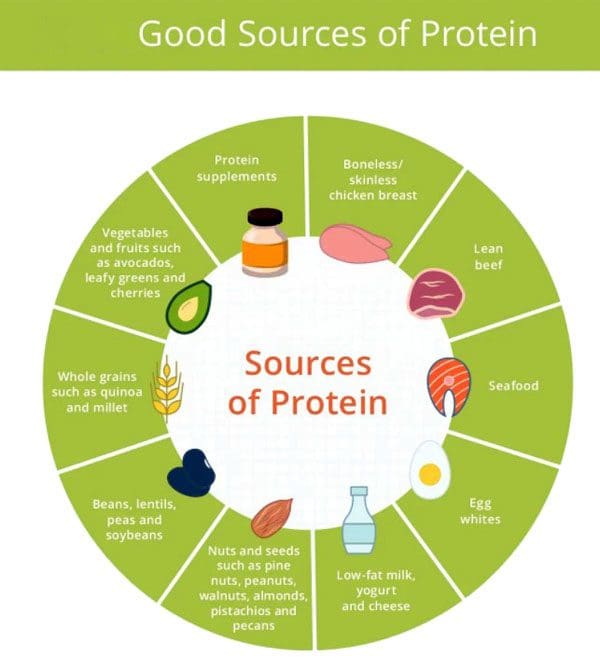
Power Of Protein
Protein is an essential component of muscle development, bone density, muscle mass, and lean tissue when building a healthy body. Protein is necessary for all the body’s physiological functions.
References
Adogwa, Owoicho et al. “Assessing the effectiveness of routine use of postoperative in-patient physical therapy services.” Journal of spine surgery (Hong Kong) vol. 3,2 (2017): 149-154. doi:10.21037/jss.2017.04.03
Atlas, S J, and R A Deyo. “Evaluating and managing acute low back pain in the primary care setting.” Journal of general internal medicine vol. 16,2 (2001): 120-31. doi:10.1111/j.1525-1497.2001.91141.x
Gellhorn, Alfred Campbell et al. “Management patterns in acute low back pain: the role of physical therapy.” Spine vol. 37,9 (2012): 775-82. doi:10.1097/BRS.0b013e3181d79a09
Jack, Kirsten et al. “Barriers to treatment adherence in physiotherapy outpatient clinics: a systematic review.” Manual therapy vol. 15,3 (2010): 220-8. doi:10.1016/j.math.2009.12.004
Lindbäck, Yvonne et al. “PREPARE: Pre-surgery physiotherapy for patients with degenerative lumbar spine disorder: a randomized controlled trial protocol.” BMC musculoskeletal disorders vol. 17 270. 11 Jul. 2016, doi:10.1186/s12891-016-1126-4
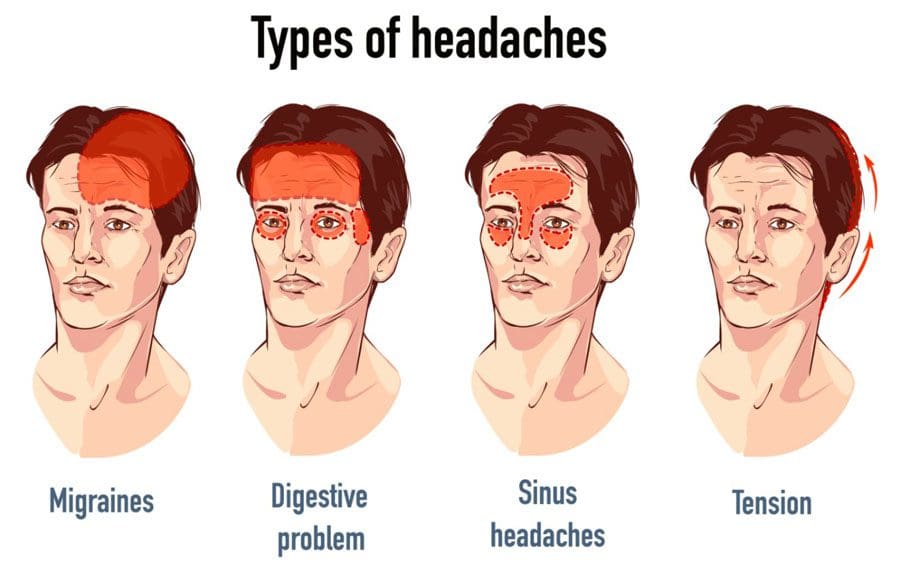
The most common form of pain is the headache. Whether dealing with a mild, dull ache, severe throbbing, or painful tension along the scalp and neck, headaches can disrupt and get in the way of everyday life. Over-the-counter pain medications can offer temporary relief, but they don’t get to the root and solve the cause. Chiropractic is a safe and effective treatment option that will bring head pain relief and treat what is causing the headache/s.
Triggers
Individuals engage in more sedentary activities, and more hours spent in one fixed position combined with poor posture can increase joint irritation and muscle tension in the neck, upper back, and scalp. Headaches can have a variety of causes or triggers. These can include:
Stress is the most common trigger
Muscle tension
Insomnia
Environmental stimuli – noises, lights, smells
Dehydration
Weather changes
Foods
Blood sugar changes
Excessive exercise
Most Common Types
There are two main categories: primary and secondary headaches.
Primary headaches
Primary headaches are when the headache itself is the main problem and is not a symptom of underlying diseases or conditions. These include:
Headache pain comes from interacting signals in the brain, blood vessels, and nerves. A mechanism activates specific nerves that affect the muscles and blood vessels, sending pain signals back to the brain. If any of the following is occurring it is recommended to contact a doctor, headache specialist, or chiropractor.
Three or more headaches a week.
Headaches that get worse or don’t go away.
Having to take a pain reliever every day or almost every day.
Need more than 2-3 doses of over-the-counter medications a week to relieve symptoms.
Headaches triggered by strenuous activity, hard work/exertion, bending, coughing.
What time of day/night the headache usually occurs?
How long does the headache last?
Where the pain is located?
Type of pain – throbbing, comes and goes, dull aching, one-sided, etc.
Does the headache come on suddenly without warning or slowly progress?
Are there other symptoms like weakness, nausea, sensitivity to light or noise, decreased appetite, changes in attitude or behavior?
Chiropractic
A chiropractor will assess, diagnose, conduct a physical examination to determine the cause and develop a personalized treatment plan to alleviate the pain and help to manage and prevent headaches. Treatment approaches include:
A combination of chiropractic manipulative therapy.
Activate trigger points to release tension and allow for optimal nerve and blood circulation.
Active and passive exercises.
Massage.
Health coaching.
Body Composition
Water
Most of the body is made up of water with the percentage of body composition that is water changing based on individual functional needs. Essential functions of water include:
Help to build/repair almost every cell in the body.
Regulating body temperature through sweating and respiration.
Energy from carbohydrates and proteins is transported by water through the blood.
Assists in the removal of metabolic waste through urination.
Acts as a shock absorber to protect the brain and spinal cord.
Creates saliva/fluids to lubricate the joints.
The amount of water in the body depends on various factors that include:
The most common water comes from lean body mass. This includes blood, organs, and muscle. Major body organs’ water content:
Lungs – 83%
Muscles and kidneys – 79%
Brain and heart – 73%
Skin – 64%
Bones – 31%
References
Bryans, Roland et al. “Evidence-based guidelines for the chiropractic treatment of adults with headache.” Journal of manipulative and physiological therapeutics vol. 34,5 (2011): 274-89. doi:10.1016/j.jmpt.2011.04.008
Tyagi, Alok. “New daily persistent headache.” Annals of Indian Academy of Neurology vol. 15,Suppl 1 (2012): S62-5. doi:10.4103/0972-2327.100011
Improving posture can be challenging. Poor posture is often the source of various musculoskeletal issues like chronic pain throughout the body. Poor posture can be so ingrained in the brain that it becomes an unconscious positioning reflex that feels right but could be worsening spinal, hip, and leg problems. The Alexander Technique could be a treatment option that could help long-term.
Alexander Technique
The approach focuses on learning mind-body awareness. It is an educational process to teach individuals to become aware of their body positioning and change unhealthy posture/movement habits into healthy ones. The objective is learning to utilize sufficient levels of muscle tension for everyday activities, like sitting, standing up, and walking in a healthy way to maintain optimal health of the musculoskeletal system.
The theory is that less tension minimizes wear and tear on the muscles and structures of the spine vulnerable to compression.
The fundamental goal of the Alexander Technique is to undo all the unhealthy tension habits to decompress the spine and retrain the mind and body to approach movement and body positioning in a new and healthy way.
Teachings
The technique can be done in a class setting or one-on-one teaching because everyone’s postural and movement habits are unique. A teacher helps identify the tension-inducing postures and educates the individual on how to correct them. Human touch is an integral part of the Alexander Technique. Using their hands gently to adjust the individual to a proper upright position, a teacher helps release pressure from the head, neck, shoulders, and upper back. The individual learns to release the tension throughout their body. The Alexander Technique is a type of hands-on therapy; it is not manipulation or massage. It uses a light touch with no risk of injury to the spine, allowing anyone to participate. However, individuals must be willing to participate/engage in the process to get the benefits. Most individuals can tell if it’s right for them during the first lesson.A typical program teaches:
Staying alert to the body’s warning of tension and compression.
Tension Build Up
Individuals usually don’t even realize they’re constantly placing pressure on their spine from unhealthy postural habits, building up muscular tension they never knew they created. For example, unhealthy neck position habits include:
Pushing the head forward
Slumping over
Pinning the shoulders back
These postures generate/build pressure and tension that radiates outward and down to the large muscles of the spine.
Habitual downward pressure can pull and change the spine’s shape, leading to degenerative forms of spinal deformity in severe cases.
When the tension is released, the neck and body begin to stand upright comfortably, without pulling down or pulling back.
Frederick Matthias Alexander
Developed the technique in the 1890s to help his muscle tension problems affecting his acting career. When performing, he would stiffen his neck and pull his head back and up, building tension that caused him to tighten his throat and lose his voice. He did not know he was doing this until he performed in front of a mirror and saw his awkward positioning. He realized this and retrained himself to pose naturally, stay relaxed, and be aware of any tension building in the muscles to release it immediately. Alexander Technique educators/practitioners practice all over the world. The American Society for the Alexander Technique or AmSAT website has a Find A Teacher Tool that connects individuals to AmSAT-approved teachers.
Body Composition
Practicing Mindfulness
Developing a mindfulness practice can help identify triggers of negative behavior or thoughts. Just like diet and exercise, practicing mindfulness is unique to everyone. It is recommended to try different things like:
Journaling is another way to tune into oneself. Grab a pen and paper, a computer, tablet, or phone, and take a few minutes to write every day.
Write one thing that makes you happy.
One thing you want to improve.
One goal you want to accomplish that day or that week.
Mindful music listening can help reduce stress by allowing the individual to focus their attention when their mind is going in all directions.
Instead of turning to the news or email when waking up, grab a cup of coffee or tea and listen to a favorite podcast or music.
Put the phone away and listen to your mind and self.
Try to meditate in the morning when waking up. This helps set the day’s goals/plans. Goal-setting mindfulness has been shown to reduce stress levels and anxiety. However, if the morning is not possible then at night before bed can be used to reflect on the day’s activities, what went well, what didn’t, how to improve something, whatever the case, the point is to make time for yourself to reflect, set goals, and develop a plan to achieve those goals.
References
Becker, Jordan J et al. “Preliminary evidence for feasibility, efficacy, and mechanisms of Alexander technique group classes for chronic neck pain.” Complementary therapies in medicine vol. 39 (2018): 80-86. doi:10.1016/j.ctim.2018.05.012
Cacciatore et al., Improvement in automatic postural coordination following Alexander technique lessons in a person with low back pain. Physical Therapy Journal, 2005; 85:565-578. Accessed January 5, 2011
Chin, Brian et al. “Psychological mechanisms driving stress resilience in mindfulness training: A randomized controlled trial.” Health psychology: official journal of the Division of Health Psychology, American Psychological Association vol. 38,8 (2019): 759-768. doi:10.1037/hea0000763
Little P, Lewith G, Webley F, et al. Randomised controlled trial of Alexander technique lessons, exercise, and massage (ATEAM) for chronic and recurrent back pain. The BMJ. 2008;337:a884. doi: https://doi.org/10.1136/bmj.a884.
Paolucci, Teresa et al. “Chronic low back pain and postural rehabilitation exercise: a literature review.” Journal of pain research vol. 12 95-107. December 20 2018, doi:10.2147/JPR.S171729
Musculoskeletal Nutrition: Musculoskeletal conditions are non-communicable conditions/disorders and are the most common conditions that chiropractors and physiotherapists treat. Unhealthy lifestyle practices like smoking, an unhealthy diet, and little to no exercise or physical activity impact musculoskeletal disorders and remain the most common causes of physical disability and pain. Musculoskeletal conditions include:
Back pain
Carpal Tunnel Syndrome
Tendonitis – inflammation of the fibrous tissues that connect the muscles to the bones.
Rheumatoid Arthritis
Osteoarthritis
Bone Fractures
Fibromyalgia
A lack of proper nutrients increases the risk for bone, muscle, and joint disease. A proper diet combined with strengthening and stretching will help with injury recovery and help prevent disorders, injury, and pain. For example, inadequate consumption of calcium and vitamin D intake can lead to osteoporosis. Both nutrients are necessary for musculoskeletal health. Calcium helps build bone tissue, and vitamin D promotes calcium absorption.
Musculoskeletal Nutrition
Even physically active and healthy individuals’ can go through inadequate nutrition intake, increasing the risk of injury from its effect/s on rehabilitation and recovery. There are mechanisms to insufficient nutrient intake that can lead to muscle injury.
Intense training causes skeletal muscle breakdown that can worsen from poor dietary protein intake.
Not hydrating the body can compromise blood flow to working muscles, increasing the risk for injury and other health issues.
Hydration influences the amount and composition of joint fluid and helps maintain articular cartilage.
Deficiencies in nutrients like:
Potassium
Iron
Zinc
Magnesium
Chromium
Copper
Vitamins
The lack of micronutrients and their role in bone and muscle metabolism increases the risk for injury and the development of musculoskeletal conditions.
Overall Health
Connective tissue holds the body’s bones and muscles together and is essential for joint integrity. Athletes and individuals with physically demanding jobs and lifestyles need to take care of their connective tissues to prevent degradation, injuries, and joint conditions, like arthritis and tendon injuries. It is recommended to have a diet that is:
Achieving optimal health requires all-around healthy lifestyle choices and musculoskeletal nutrition.
Body Composition
Superfoods
Many nutrient-rich foods can be incorporated into an individual’s diet to improve overall well-being.Superfoods are high in antioxidants and contain vast amounts of vitamins and minerals. A superfood is a food rich in compounds that are beneficial to an individual’s health. These compounds include:
Phytochemicals – include antioxidants like polyphenols that provide anti-inflammatory properties.
Fiber
Omega-3 fatty acids
Superfoods are recognized by national nutrition guidelines as Powerhouse Fruits and Vegetables or PFV. Antioxidants reduce free radicals and prevent and repair damage caused by oxidative stress. Oxidative stress occurs when free radicals accumulate in the body and can lead to chronic and degenerative illnesses like arthritis, cardiovascular disease, and cancer. A diet rich in antioxidants can expedite recovery time from injury, illness, and physical activity/exercise-induced stress.
Anthocyanins are a type of polyphenol that become antioxidants that help reduce the incidence of chronic disease. They are different types of pigments found in plants, giving fruits and vegetables their vibrant colors. These include:
Black beans
Berries
Cherries
Pomegranates
Peaches
Eggplant
Purple sweet potatoes
A diet rich in anthocyanins can reduce oxidative stress and inflammation, help prevent cardiovascular disease, and control and prevent diabetes.
References
Craddock, Joel C, et al. “Vegetarian and Omnivorous Nutrition – Comparing Physical Performance.” International journal of sports nutrition and exercise metabolism vol. 26,3 (2016): 212-20. doi:10.1123/ijsnem.2015-0231
Mendonça, Carolina Rodrigues et al. “Effects of Nutritional Interventions in the Control of Musculoskeletal Pain: An Integrative Review.” Nutrients vol. 12,10 3075. 9 Oct. 2020, doi:10.3390/nu12103075
Sale, Craig, and Kirsty Jayne Elliott-Sale. “Nutrition and Athlete Bone Health.” Sports medicine (Auckland, N.Z.) vol. 49,Suppl 2 (2019): 139-151. doi:10.1007/s40279-019-01161-2
Slavin, Joanne L, and Beate Lloyd. “Health benefits of fruits and vegetables.” Advances in nutrition (Bethesda, Md.) vol. 3,4 506-16. 1 Jul. 2012, doi:10.3945/an.112.002154
Tucker, K L et al. “Potassium, magnesium, and fruit and vegetable intakes are associated with greater bone mineral density in elderly men and women.” The American journal of clinical nutrition vol. 69,4 (1999): 727-36. doi:10.1093/ajcn/69.4.727
IFM's Find A Practitioner tool is the largest referral network in Functional Medicine, created to help patients locate Functional Medicine practitioners anywhere in the world. IFM Certified Practitioners are listed first in the search results, given their extensive education in Functional Medicine