Sciatica is a collection of symptoms characterized by pain, discomfort, tingling and burning sensations, and numbness which often extends from the low back, down the buttocks and thighs, into the knee and the foot. Sciatica is caused by the compression of the sciatic nerve, the largest and longest nerve in the human body. Sciatic nerve pain can develop due to an injury and/or aggravated condition. Patients diagnosed with sciatica describe their symptoms and how these affected their daily lives. Dr. Alex Jimenez and his staff have provided pain relief to many patients experiencing sciatica. Chiropractic care can help restore the original alignment of the spine to help improve sciatica. Dr. Alex Jimenez is the non-surgical choice for a variety of health issues, including sciatica, or sciatic nerve pain.
Sciatica Pain Rehabilitation
We are blessed to present to you�El Paso�s Premier Wellness & Injury Care Clinic.
As El Paso�s Chiropractic Rehabilitation Clinic & Integrated Medicine Center,�we passionately are focused on treating patients after frustrating injuries and chronic pain syndromes. We focus on improving your ability through flexibility, mobility and agility programs tailored for all age groups and disabilities.
If you have enjoyed this video and we have helped you in any way, please feel free to subscribe and recommend�us.
Mike Melgoza is an active individual who depends on effective chiropractic care and rehabilitation for his back pain. Mike describes how Dr. Alex Jimenez’s strength and power is a fundamental element in the way he treats his injuries and aggravated conditions. Mike Melgoza highly recommends Dr. Alex Jimenez as the non-surgical choice for back pain. Due to his ability to effectively treat his patients. Mike concludes by describing how Dr. Alex Jimenez’s love and knowledge for chiropractic care can handle a variety of health issues.�
Strong Chiropractor
We are blessed to present to you�El Paso�s Premier Wellness & Injury Care Clinic.
As El Paso�s Chiropractic Rehabilitation Clinic & Integrated Medicine Center,�we passionately are focused on treating patients after frustrating injuries and chronic pain syndromes. We focus on improving your ability through flexibility, mobility and agility programs tailored for all age groups and disabilities.
If you have enjoyed this video and we have helped you in any way, please feel free to subscribe and recommend�us.
If you are one of the seven out of 10 Americans who have back pain, you are probably looking for relief. What you probably aren�t looking for are injections or pills with harmful side effects. Your doctor may have told you that exercise is a great way to relieve pain naturally, but you aren�t sure where to start or even what activity is best.
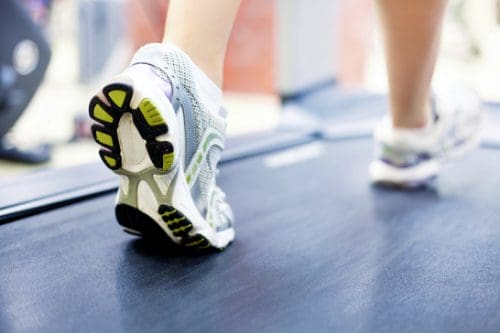
Running and walking are both good exercises, but they aren�t for everyone. Some back pain patients can run with no problem with others have significant trouble. So, which is better for back pain sufferers? The answer might surprise you.
Benefits of running
When it comes to health benefits, running and walking, don�t differ much. Both help to decrease your risk of developing heart disease, diabetes, and hypertension as well as lower your cholesterol.
Running also has the added benefit of increasing the bone that connects the femur head to the shaft, substantially strengthening the hips and helping to prevent hip fractures. Both running and walking burn calories, facilitate weight loss and can help to make you healthier. However, one activity is a lot harder on the back, so if you have chronic back pain, there are some things you should know.
How running affects the back
Running puts repetitive impact and stress on the back. If you have a problem with your lower back, running can exacerbate it or lead to additional issues like sciatica.
You can experience back muscle spasms, muscular strain, and other centralized lower back pain. If you have disc problems, the high impact nature of running can make put a lot of stress on your spine and make your disc problems worse.
How walking benefits back pain sufferers
Walking is a much lower impact activity than running. Although some back problems can be made worse by walking, that is relatively rare.
Most back pain is relieved with walking, and you can enjoy other great benefits as well. By adopting a regular walking routine, you will strengthen your hips, legs, ankles, and feet as well as your core.
This helps to provide better stability for your spine. It also helps to increase circulation in the spinal structures, draining toxins, and pumping nutrients into the surrounding soft tissues.
Pain often restricts mobility. Walking helps to improve range of motion and flexibility. You will find that your posture improves as well as your mood. A stronger body and increased flexibility help to prevent injury.
Walking at least three times a week for at least 15 minutes is great for overall wellness and a strong body. Combine it with a healthy diet and stress relief techniques, and you will look, feel, and move better � and your pain will be easier to manage.
Make walking work
When you start your walking program, don�t push too hard too fast. Go at your own pace and start slow. If you have a higher fitness level, you may want to try speed walking. After a five-minute warm-up, walk as fast as you can for about 8 minutes then slow to a moderate pace for two minutes to cool down.
You can also engage your core muscles by using several techniques. Walk on an incline or using walking poles are excellent for strengthening the core. Pulling your abdominals in toward your spine while you walk is also a great move.
Running is beneficial for your health, but it isn�t for everyone. Walking is a far better choice for most patients with lower back pain. You may even find that your pain is alleviated altogether so get out there and get moving.
A common health problem frequently treated by Dr. Alex Jimenez, sciatica is a collection of symptoms caused by the compression or impingement of the sciatic nerve, the most prominent and longest nerve in the human body. The most common symptoms of sciatica include low back pain, hip pain, and pain which extends from the buttocks down into the feet. Dr. Alex Jimenez and his team have helped many individuals achieve pain relief out of their sciatica symptoms by using various treatment methods and techniques, teaching them about their health issues. Dr. Alex Jimenez is your non-surgical pick for sciatic nerve pain.
Sciatica Treatment
We are blessed to present to you�El Paso�s Premier Wellness & Injury Care Clinic.
As El Paso�s Chiropractic Rehabilitation Clinic & Integrated Medicine Center,�we passionately are focused on treating patients after frustrating injuries and chronic pain syndromes. We focus on improving your ability through flexibility, mobility and agility programs tailored for all age groups and disabilities.
If you have enjoyed this video and we have helped you in any way, please feel free to subscribe and recommend�us.
The human body is an intricate machine; everything is connected in one way or another. This means that when one part is not functioning as it should, it can throw everything out of balance. The relationship between the feet, back, and hips is significant, so when there is a problem with feet, it can cause pain in those areas. Fallen arches are�a foot problem that is a prevalent cause of lower back pain. However, many people who have fallen arches don�t even realize that they have an issue.
What are Fallen Arches?
There are more than 100 ligaments and muscles in the foot that stabilize the bones and keep everything in the proper position. Ligaments prevent joints from extending beyond their intended limits. They contain elastin which allows them to act much like a rubber band, stretching with movement or flexion then returning to their regular length when the joint returns to its resting position.
There are a�variety of things that can happen that cause those ligaments to stretch, causing them to lose their ability to support the foot as they should. This can lead to pes planus (flat feet), also known as fallen arches.
Most people don�t realize that there are three arches in the foot, not just one: lateral, medial, and anterior. They act as shock absorbers for the body. When they don�t function as they should, don�t absorb the shock of movement and activity, it puts added wear and tear on the body. While foot, knee, hip, and back pain is common with fallen arches, it also is a major cause of impaired functioning of the lower extremities. It can also lead to balance problems.
Causes of Fallen Arches
The primary cause of fallen arches is improper footwear. Shoes that do not adequately support your foot and arch can lead to structural problems.
Other causes of fallen arches include:
Tendons in the foot that are torn or stretched
Certain health conditions including
Rheumatoid arthritis
Pregnancy
Diabetes
Obesity
Aging
Structural abnormalities that are present from birth
Inflammation, deformity, or damage of the posterior tibial tendon that runs from the middle of the arch to the lower leg, running along the ankle
Nerve issues
Bones that are dislocated or broken
Recognizing the symptoms of fallen arches and knowing that you have a problem can help to prevent the pain but can also arrest further damage to the foot.
Do you have Fallen Arches?
While many people with fallen arches experience no symptoms or problems, others do. If you experience any of these symptoms of flat feet, it should prompt a visit to your doctor.
Pain in the foot, knee, leg, hip, or lower back
Feet that easily get tired
Difficulty with balance
Swelling on the bottom of the foot
Pain or achiness in the foot, particularly in the heel or arch
Certain movements. such as standing on tiptoe, are difficult
There is a quick, simple test that you can do at home to see if you have fallen arches:
Wet your feet
Stand on a flat, hard surface, such as a floor or concrete pad (you need to be able to see your footprint) or walk in soft soil or sand
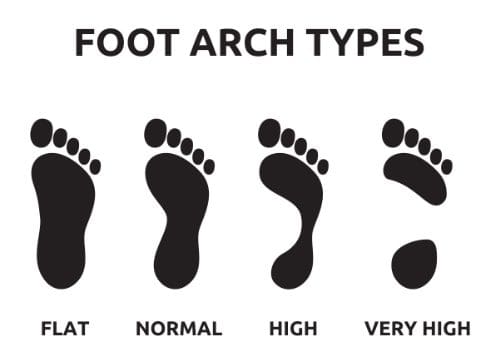
Look at your footprints. If you see a print that shows the heel and ball of your foot with a thin, curved imprint running along the outside, then your foot structure is normal. If you can see the print of your entire foot, then you probably have fallen arches.
The problem with fallen arches is that the damage cannot be reversed once it begins. However, the progression can be stopped with proper treatment.
What are the Treatments for Fallen Arches?
The treatment for fallen arches depends on the cause and severity of the condition. If it isn�t causing pain or other problems, the doctor may elect to do nothing.
However, if there are pain or mobility issues present, treatments may include bracing, prescribing NSAIDs for pain and inflammation, and even surgery in some cases of torn tendons or broken bones. An increasingly popular treatment for fallen arches is chiropractic care. This natural, non-invasive therapy treats the whole body so that it addresses the cause of the condition as well as associated risk factors and helps patients manage the pain, significantly improving their quality of life.
Edgar M. Reyes works for the town of El Paso, TX. Recommended by one of his spouse’s friends, Mr. Reyes was motivated to visit Dr. Alex Jimenez, chiropractor, to obtain treatment for his sciatic nerve pain symptoms. Edgar Reyes fought to walk due to his sciatica before seeing Dr. Jimenez, but as a result of the chiropractic care he’s received, Mr. Reyes was able to walk again. Edgar M. Reyes highly recommends Dr. Alex Jimenez as the non-surgical pick for sciatic nerve pain treatment, among other health issues.
Sciatica Nerve Pain
The primary objective of sciatica therapy is to relieve pain in the thighs�and lower back pain. This may be achieved via many different methods, including through the use of drugs/medications and physical therapy. Chiropractic care may also help treat sciatica. Doctors of Chiropractic (DC) or chiropractors, regularly cure sciatica. Sciatica is characterized by pain that originates from the lumbar spine which then travels into one or both legs. Nerve pain varies in frequency and intensity; moderate, severe and intermittent or continuous.
We are blessed to present to you�El Paso�s Premier Wellness & Injury Care Clinic.
As El Paso�s Chiropractic Rehabilitation Clinic & Integrated Medicine Center,�we passionately are focused on treating patients after frustrating injuries and chronic pain syndromes. We focus on improving your ability through flexibility, mobility and agility programs tailored for all age groups and disabilities.
If you have enjoyed this video and we have helped you in any way, please feel free to subscribe and recommend�us.
If you are like most people, at some point in your life, you will experience back pain � if you haven�t already. The American Chiropractic Association estimates that around 80% of the population suffers from back pain, has suffered from back pain, or at some point in the future will suffer from back pain. That puts you in good company.
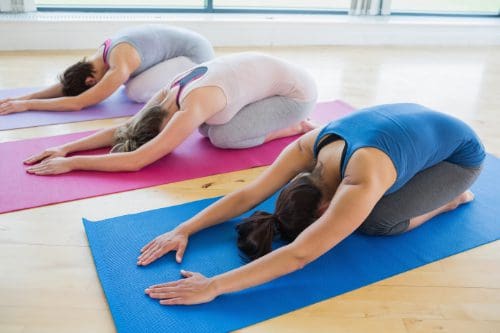
It also means that you have a better than average chance of falling into that 80%, so the smart thing to do is take steps not to prevent it. One powerful preventative measure against back pain is stretching. Try these four stretches to help your back pain.
Forward Bend
Stand with your feet shoulder width apart and your knees soft (not locked). Take a deep breath and as you exhale, bend forward at the waist, hands out as if you are reaching for the floor. When you feel a little stretching in your hamstrings (the backs of your legs), stop and hold that position for two or three breaths. If you can�t reach the floor, that is OK, don�t force it. If you need extra stability, you can use a chair to hold on to for balance. Repeat this movement seven to ten times.
Cat and Camel
This stretch is typically done on the floor, but if you don�t think you can safely get back up, you can stand and hold on to a chair. On the floor, get on your hands and knees with your back straight. If using a chair, stand with your feet shoulder width apart and your knees soft. Bend slowly and place your palms in the seat of the chair so that your back is parallel to the floor. Keep it straight.
Begin by arching your back up as high as you can. Hold for two or three breaths. Return to the starting position, then let it sway down toward the floor and hold for two or three breaths. Return to the starting position. Do this five to seven times.
Back Extension
Lie on your stomach on the floor or bed with your hand’s palm down near your face. Slowly push up with your arms, keeping your head level with your shoulders, until you are on your elbows. Hold for three or four breaths.
If you can push all the way up so that you are on your hands, that will give you a deeper stretch. You can also hold it for a little longer. Just remember to keep the movements slow and gentle to avoid injury.
If you are not able to safely get on the floor, you can stand with your feet several inches from a wall. Place both of your hands on the wall and bring your upper body toward them, letting your pelvis naturally follow. Gently push against the wall with your hands, pushing your upper body away from the wall. You can also do this with a chair if you need extra support. Repeat five to seven times.
Hip Flex and Stretch
Get on your hands and knees on the floor or bed. Slowly move your body back so that your bottom is over your heels. Keep your hips straight as you extend your arms in front of you. Drop your head between your arms and hold the stretch for three to five breaths.
If you can�t get on your hands and knees, sit in a chair with your feet flat on the floor in front of you, hip-width apart. Extend your arms in front of you and reach forward. Lean forward slightly until you feel the stretch.
You can also place your hands on your knees for support while you sit in a chair and bend at the waist, slowly rounding out your back over your thighs. Hold the stretch for three to five breaths then return to your upright position. Do this seven to ten times.
Before you begin any new exercise or stretching regimen, talk to your doctor or chiropractor to make sure you aren�t doing something that could exacerbate your problem. For the most part, stretching is very therapeutic and beneficial, but some injuries and conditions can be made worse.
It is well worth taking the extra time to talk with your doctor and perhaps even show him or her the movements. This will also allow them to correct any form problems you may have or recommend any modifications that will help you get the most out of your stretches.
IFM's Find A Practitioner tool is the largest referral network in Functional Medicine, created to help patients locate Functional Medicine practitioners anywhere in the world. IFM Certified Practitioners are listed first in the search results, given their extensive education in Functional Medicine