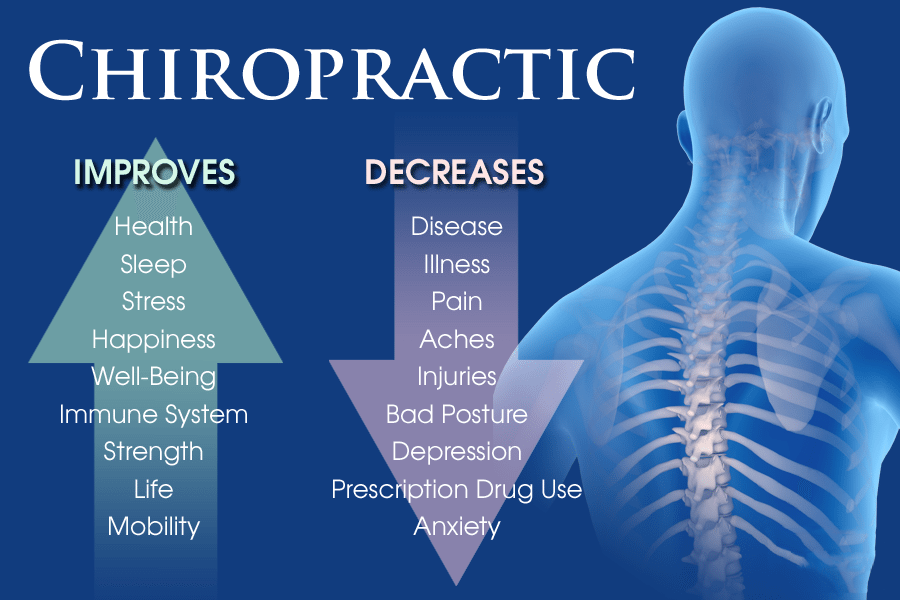
Arlington, Va.–People suffering from back pain should consider first trying chiropractic services and other non-drug therapies in light of a new research review that found common over-the-counter and prescription pain medications have limited effectiveness for back pain and raise the risk of side-effects, according to the American Chiropractic Association (ACA).
The review, published this month in Annals of the Rheumatic Diseases, examined 35 randomized, placebo-controlled trials, encompassing 6,000 patients, to determine the effectiveness and safety of non-steroidal anti-inflammatory drugs (NSAIDs) for spinal pain. The authors of the report found that NSAIDs provided �clinically unimportant effects� when compared with patients who received only a placebo. Meanwhile, those who used NSAIDs had a 2.5 times greater risk of experiencing gastrointestinal disorders.
�At present, there are no simple analgesics that provide clinically important effects for spinal pain over placebo,� the authors noted.
The news about NSAIDs follows reports last year that prescription opioids also have limited effectiveness for back pain�one of the most common causes of disability worldwide.
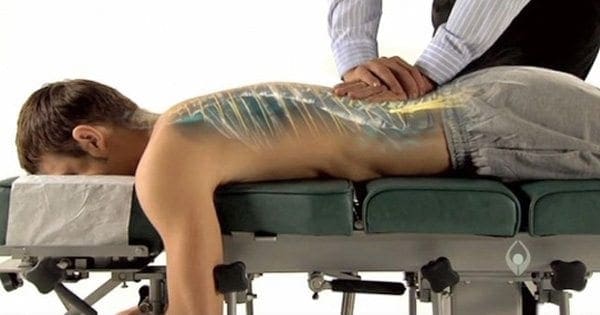
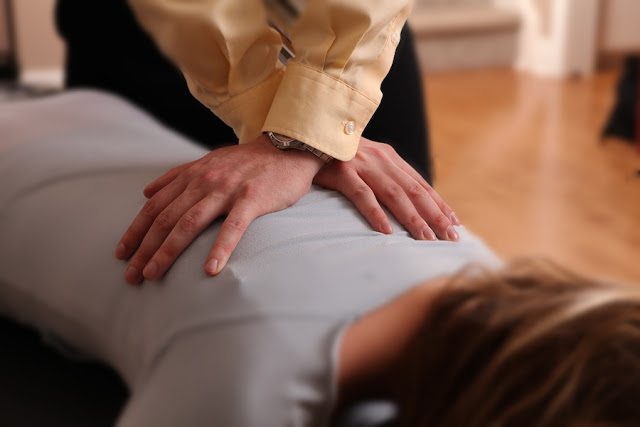
�The American Chiropractic Association urges people to try non-drug approaches to back pain relief first, before resorting to over the counter or prescription medications,� said ACA President David Herd, DC. �In addition to spinal manipulation, chiropractors can offer a range of non-drug therapies for back pain and recommend exercises and important lifestyle changes to help prevent future back pain and injury.�
According to a 2016 Gallup survey, more than 35 million people visit a chiropractor annually.
About the American Chiropractic Association
The American Chiropractic Association (ACA) is the largest professional association in the United States representing doctors of chiropractic. ACA promotes the highest standards of ethics and patient care, contributing to the health and well-being of millions of chiropractic patients. Visit us at www.acatoday.org to find an ACA chiropractor near you.
NSAIDs: Non-Steroidal Anti-Inflammatory Drugs
Every day, an estimated 30 million people worldwide take a non-steroidal anti-inflammatory medication, or NSAID.
These versatile medications, available in over-the-counter and prescription strength, treat both pain and inflammation. Inflammation is a contributing factor in most back pain conditions, so reducing inflammation is important to alleviate the pain.
Mild or moderate back pain, tenderness, inflammation, and stiffness
Activity-related pain or discomfort (e.g. pain that follows sports or activities such as housework, shoveling snow, or other exertion)
Pain related to muscle strain in the low back and elsewhere
Neck stiffness related to muscle, ligament, or tendon strains or damage
Osteoarthritis joint pain
Rheumatoid arthritis
Ankylosing spondylitis
A number of other forms of arthritis pain
This article provides information on how non-steroidal anti-inflammatory medications can be helpful against back, neck, and other pain, as well as several potential risks and complications to be considered.
Most Common Types of NSAIDs:
NSAIDs comprise a large class of drugs that act by hampering body substances called prostaglandins, which trigger feelings of pain, giving NSAIDs fever-reducing, pain-relieving, and anti-inflammatory properties. There are many types of non-prescription (over-the-counter) and prescription NSAIDs. The four NSAIDs most often used to treat many types of back and neck pain are:
Aspirin (brand names include Bayer, Bufferin, and Ecotrin, St. Joseph)
Ibuprofen (Advil, Motrin)
Naproxen (Aleve, Anaprox DS, Naprosyn)
Celecoxib (Celebrex)
Other Forms of NSAIDs:
In addition to the above, NSAIDs come in forms other than those taken by mouth. For example:
Ketorolac can be given as an intravenous, intramuscular, or intranasal drug, making it useful after surgery or if the patient cannot eat.
Diclofenac is available topically as a gel (Voltaren), patch (Flector), or solution (Pennsaid). The medication is applied directly to the area of pain. Topical forms reduce gastrointestinal and other potential side effects of NSAIDs.
Taking NSAIDs continuously, rather than just at the onset of pain, helps build up the body�s anti-inflammatory blood level, resulting in a better healing environment in the affected area. The efficacy is markedly lower if NSAIDs are taken only when experiencing pain.
Checking with the doctor. Because NSAIDs have risks and complications, it is important to keep the doctor informed. People taking NSAIDs for long periods are advised to see the doctor regularly so any side effects can be monitored. In some cases, a change in medication may be required.
Using as little as possible. The U.S. Food and Drug Administration advises that the lowest effective dose of NSAIDs be used, and then for only as long as necessary.
Combining with acetaminophen. NSAIDs and the pain relief medication acetaminophen (e.g. brand name Tylenol) work differently, so sometimes doctors recommend taking both medications. This often offers better pain relief than taking one type of pain medication. Some people find it also helps lessen the pain as one dose wears off, alternating between the two�for example, taking a dose of ibuprofen, then 3 hours later taking a dose of acetaminophen.
Any adverse reactions from taking an NSAID, or any other medication, should be reported to the doctor without delay.
When NSAIDs Are Not Advised
People having a lumbar fusion surgery are typically advised not to take NSAIDs for at least 3 months after surgery due to concerns about the impact NSAIDs may have on bone healing.
Many doctors also tell patients to stop using NSAIDs prior to other types of surgery because the medication poses an increased risk of bleeding.
Low Vitamin D Linked to Increased Headache Risk
News Bite: Vitamin D may be a component factor in headache a new study demonstrates.
More research is adding to the literature of a link between vitamin D deficiency and headaches, at least for men living in colder climates.
Data from 2600 middle-aged men from Finland who participated in the Kuopio Ischemic Heart Disease (KIHD) Risk Factor Study showed that those with the lowest levels of serum 25-hydroxyvitamin D (25[OH]D) were more than twice as likely to report having chronic headaches as those who had the highest vitamin D levels. In addition, reports of chronic headache were significantly more frequent in months other than the summer months (June through September).
The investigators note that although past studies have examined the link between vitamin D and headaches, the results have been �inconclusive� because many included small sample populations. When the KIHD study originally started, men in this part of Finland had the highest prevalence of heart disease in the world, and it was looking at risk factors for cardiovascular disease.
During the baseline examinations, questionnaires asked the participants to report headache status during the previous 12 months. �Frequent headache� was defined as a daily or weekly occurrence � and was reported by 9.6% of the full group.
Also at baseline, fasting venous blood samples were collected during morning hours and 25(OH)D concentrations were measured.
Interestingly, the mean concentration of serum 25(OH)D for the study group was 43.4 nmol/L, which is below the 50-nmol/L threshold generally considered to be a marker of vitamin D deficiency. In fact, 67.9% of the group had levels that were less than 50 nmol/L.
Every day, an estimated 30 million people worldwide take a non-steroidal anti-inflammatory medication, or NSAID.
These versatile medications, available in over-the-counter and prescription strength, treat both pain and inflammation.��The American Chiropractic Association urges people to try non-drug approaches to back pain relief first, before resorting to over the counter or prescription medications.� For Answers to any questions you may have please call Dr. Jimenez at�915-850-0900
6 Tweaks For Posture & See What Happens To Back Pain
Your Guide for Getting Rid of Pain With Super-Easy Posture-Tweaking Moves
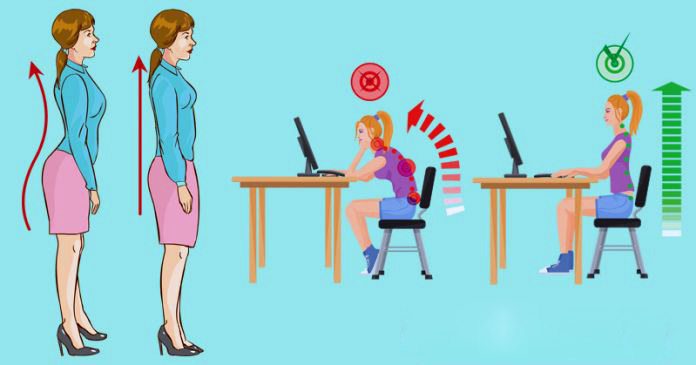
A lot of us have aches and pains that have become so much a part of our daily lives that we�ve learned to live with them (if not accept them). The problem is that all these small aches and pains, such as lower back and neck issues, are derived from posture mistakes.
We�re NOT pointing any fingers here; we all make posture mistakes on a daily basis without even realizing it. Sure, an Epsom Salt Bath Soak might clear up the problem temporarily, but if you keep on making the same posture mistake, guess who�ll be knocking on your door again soon?
In this post, we�ll be highlighting some common posture mistakes, and then we�ll be giving you tips on how to fix those mistakes. We�ll even throw in some advice on how to posture-check yourself, just to help keep you on the right track. All of our recommendations take 30 seconds or less, and we�re kind of sure that you�ll find them as useful as we do.
6 Common Posture Problems (& How To Fix Them!)
1. Not Sitting Up in a Chair
Most of us slouch in our chairs, which is why most of us experience some form of lower back pain during one stage or another of our lives.
How to Fix It
Make sure you sit up properly in your chair. Make sure you do exercises that strengthen the back and core muscles, which will further support your posture while sitting in a chair.
2. Standing With Your Butt Outwards
People that have a pronounced curve in their lower backs and folks that tend to stand with their bottom stuck out may develop (or already suffer from) hyper-lordosis.
This posture problem looks like a classic picture of Donald Duck. Conditions such as pregnancy and carrying too much belly fat exacerbate this problem.
How to Fix It
Make sure you do thigh stretches and hip flexor exercises � you can also do some core training, as well as exercises that strengthen the buttocks.
It�s crucial that you learn to stand upright, almost as if having a string tied to your head which pulls you upward. This will help get rid of your back pain.
3. Having Your Back Flat While Standing
Folks that tuck their pelvises in and straighten out their lower backs (instead of having a naturally curved posture) tend to stoop forward while standing.
This increases their chances of developing back pains that extend all the way from their upper to their lower backs. They�ll also have a hard time standing around for extended periods of time.
How to Fix It
Core strengthening exercises along with those that focus on strengthening the buttocks, neck, back, and shoulder muscles should be done to help correct this very common posture problem.
4. Leaning on the Right or Left Leg
While it might feel super comfy, leaning on either one of your legs while standing is a habit that could be causing you a lot of pain.
That�s because instead of using your buttocks or core muscle groups to keep you up, you�re relying on your hip and your lower back, and putting too much strain on this area causes pain.
How to Fix It
The best way to fix this common problem is to focus on the idea of distributing your weight on both of your legs as you stand. You can try exercises such as bridges and plank poses to help strengthen your muscles and get rid of any posture-related pains which you may be experiencing.
5. The Common Hunchback
Most of us know this posture problem as �the phone pose.� It�s the pose we all seem to adopt when we�re glued to our smartphones, putting a strain on our necks and backs while we check what�s new.
This leads to problems such as a rounded upper back, causing severe pain in the upper back and the shoulders.
How to Fix It
Make sure you�re doing a lot of exercises that�ll strengthen your shoulders, neck, and, of course, your upper back.
6. The Chin-Out Pose
Another name for this posture problem is the �PC screen stare.� You�ve all seen it, heck you may even be doing it right this moment! We�re talking about the people who sit too low beneath their PC screens and stick their chins out to compensate.
How to Fix It
Your sitting habits will have to be addressed and corrected if you want to get rid of the back pain that comes paired with the chin-out posture problem. Make sure you�re adjusting your seat height, and focus on keeping your head straight and upright while using the computer.
Final Thoughts
In our modern world, it�s pretty hard not to fall victim to one of these common posture pitfalls and the pain associated with them. The good news is that now you know what these common mistakes are, and how they can quickly and easily be corrected.
We hope that this post has been helpful in guiding you through the process of alleviating the pains that derive from poor posture, and that you�re a little more aware of where, why, and how to avoid these innocent yet painful mistakes.
Tips for Improving Posture and Ergonomics
Over time, poor posture may be caused by habits from everyday activities such as sitting in office chairs, staring at the computer, cradling a cell phone, carrying a purse over same shoulder, driving, prolonged standing, caring for small children, or even sleeping.
Poor posture can easily become second nature, causing and aggravating episodes of back and neck pain and damaging spinal structures. Fortunately, the main factors affecting posture and ergonomics are completely within one’s ability to control and are not difficult to change.
The following guidelines suggest several ways to improve posture and ergonomics, especially for people who work sitting in an office chair for most of the day.
Identify The Warning Signs Of Back Pain Caused by Poor Ergonomics & Posture
Back pain may be the result of poor ergonomics and posture if the back pain is worse at certain times of day or week (such as after a long day of sitting in an office chair in front of a computer, but not during the weekends); pain that starts in the neck and moves downwards into the upper back, lower back, and extremities; pain that goes away after switching positions; sudden back pain that is experienced with a new job, a new office chair, or a new car; and/or back pain that comes and goes for months.
Keep The Body In Alignment While Sitting & While Standing
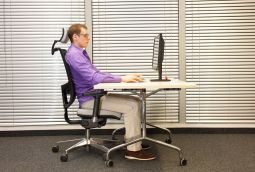
When standing, distribute body weight evenly to the front, back, and sides of the feet. While sitting in an office chair, take advantage of the chair’s features. Sit up straight and align the ears, shoulders, and hips in one vertical line. Any prolonged sitting position, even a good one, can be tiring. Shifting forward to the edge of the seat with a straight back can alternate with sitting back against the support of the office chair to ease the work of back muscles.
Some people benefit from a naturally balanced posture that is achieved by sitting on a balance ball; in this posture the pelvis is rocked gently forward increasing the lumbar curve which naturally shifts the shoulders back (similar to sitting on the edge of a chair seat).
Also be aware of and avoid unbalanced postures such as crossing legs unevenly while sitting, leaning to one side, hunching the shoulders forward, or tilting the head.
Get Up & Move
As muscles tire, slouching, slumping, and other poor postures become more likely; this in turn puts extra pressure on the neck and back. In order to maintain a relaxed yet supported posture, change positions frequently. One way is to take a break from sitting in an office chair every half hour for two minutes in order to stretch, stand, or walk.
Use Posture-Friendly Props & Ergonomic Office Chairs When Sitting
Supportive ergonomic “props” can help to take the strain and load off of the spine.�Ergonomic office chairs or chairs with an adjustable back support can be used at work.
Footrests, portable lumbar back supports, or even a towel or small pillow can be used while sitting in an office chair, on soft furniture and while driving.
Using purses, bags, and backpacks that are designed to minimize back strain can also influence good posture.
Proper corrective eyewear, positioning computer screens to your natural, resting eye position can also help to avoid leaning or straining the neck with the head tilted forward.
Increase Awareness Of Posture & Ergonomics In Everyday Settings
Becoming aware of posture and ergonomics at work, at home, and at play is a vital step towards instilling good posture and ergonomic techniques. This includes making conscious connections between episodes of back pain and specific situations where poor posture or ergonomics may be the root cause of the pain.
Building on the prior page, the following five points highlight important ways to improve posture in the workplace, helping to reduce back and neck pain and stiffness.
Exercise To Help Prevent Injury & Promote Good Posture
Regular exercise such as walking, swimming, or bicycling will help the body stay aerobically conditioned, while specific strengthening exercises will help the muscles surrounding the back to stay strong. These benefits of exercise promote good posture, which will, in turn, further help to condition muscles and prevent injury.
There are also specific exercises that will help maintain good posture. In particular, a balance of core muscle and back muscle strength is essential to help support the upper body and maintain good posture.
Avoid regularly wearing high-heeled shoes, which can affect the body�s center of gravity and induce compensatory alignment of the entire body, thus negatively affecting back support and posture.
When standing for long periods of time, propping a leg up on a foot rest, wearing supportive shoe orthotics, or placing a rubber mat on the floor can improve comfort.
Simply walking, lifting heavy materials, holding a telephone, and typing are all moving activities that require attention to ergonomics and posture. It is important to maintain good posture even while moving to avoid injury, walking tall with shoulders back for example.
Back injuries are especially common while twisting and/or lifting and often occur because of awkward movement and control of the upper body weight alone.
Create A Ergonomic Physical Environment & Workspace
It does require a small investment of time to personalize the workspace, home, and car, but the payoff will be well worth it. Undue strain will be placed on the structures of the spine unless the office chair, desk, keyboard, and computer screen, etc. are correctly positioned.
It’s much easier and less time consuming to correct everyday ergonomics and minimize back or neck pain than to add doctor visits and corrective therapies for debilitating pain conditions.
Remember that it is important to maintain an overall relaxed posture. Avoid restricting movements by clenching muscles or adopting an unnatural, stiff posture. For individuals who already have some back or neck pain, it’s a natural tendency to limit movements to avoid provoking increased pain.
However, unless there is a fracture or other serious problem, the structures in the spine are designed for movement and any limitation in motion over a long period of time creates more pain and a downward cycle of less motion and more pain.
Aches and pains have become a part of our daily lives that we�ve learned to live with them (if not accept them). The problem is that all these small aches and pains, such as lower back and neck issues, are derived from posture mistakes.�For Answers to any questions you may have please call Dr. Jimenez at�915-850-0900
Exercise is an important part of a healthy lifestyle, and sports are one approach many people choose to use to get their exercise.
For people with back pain, sports can still be a viable option if they pay attention to their back.
For others who participate in sports, knowing the type of strain various sports place on the back may help prevent a back injury.
This article gives specific information about sports injuries and back pain from bicycling, weight lifting, running, swimming, skiing, golf, and tennis.
Types of Sports-Related Back Injuries
In any sport, injuries to any part of the spine are possible, as well as injuries to the soft tissue and fascia that help comprise the makeup of the body. Up to 20% of all injuries that occur in sports involve an injury to the lower back or neck.
Lower Back Injury
The lower back is subject to a great deal of strain in many sports. Sports that use repetitive impact (e.g., running), a twisting motion (e.g. golf), or weight loading at the end of a range-of-motion (e.g., weightlifting) commonly cause damage to the lower back.
Neck Injury
The neck is most commonly injured in sports that involve contact (e.g., football), which place the cervical spine (neck) at risk of injury.
Upper Back Injury
The thoracic spine (mid portion of the spine at the level of the rib cage) is less likely to be injured because it is relatively immobile and has extra support. Injuries seen here can involve rib fracture and intercostal neuralgia as well as intercostal muscle strains in sports that involve rotation of the torso (e.g. weight training with rotation), swimming, golf, tennis, and even skiing.
Stretching and Warm-Up Prior to Exercise
While static stretching prior to any type of exercise used to be recommended, a number of studies in recent years have shown that stretching the muscles prior to exercise is not needed. A number of studies have shown that it does not help prevent injury, and likely does no harm either.1,2,3
For every sport, a thorough warm-up should be completed before starting to play. The warm-up will target the muscles used in that sport, but it should also prepare the back for the stresses to come.
The warm-up used should be specific to the sport to be played. A typical warm-up should include:
Increase circulation gradually by doing some easy movement (such as walking) to increase blood circulation to the muscles and ligaments of the back
Stretch the lower and upper back and related muscles, including hamstrings and quadriceps
Start slowly with the sport movements (e.g. swing the golf club, serve the ball)
Work with a Professional to Prevent or Manage Back Injury
There are professionals or instructors in almost every sport who are willing to share their expertise. Ideally, someone with this type of expertise can teach the correct form for a new sport or help develop and keep the proper technique for a current sport.
Before starting to work with any sports or exercise professional, it is advisable to inquire about his or her credentials. In general, if the individual is certified by the National Strength and Conditioning Association (NSCA), he or she should be up to date on the latest evidence related to stretching, exercise routines for specific sports, and additional information designed to benefit your personal routine.
Mets’ Infield, Chiropractor Is The Most Important Position
There are many ways to describe the Mets� projected starting infield of David Wright, Asdrubal Cabrera, Neil Walker and Lucas Duda. But two weeks ago, as Mets Manager Terry Collins discussed how he would handle their playing time, he provided a telling answer while rattling off the positions.
�We�ve got a bad back, bad back, bad knee and a bad back,� Collins said, referring to Wright, Walker, Cabrera and Duda.
The 2017 Mets, for all of their potential and talent, cannot ignore a significant question mark: health. Aside from the arm-related injuries of the pitching staff, the condition of the spines of three key infielders will hover over the team all season.
Wright, the long-tenured third baseman, has played only 75 games during the past two seasons; part of the reason was neck surgery in June, but mostly it is because of spinal stenosis, a chronic condition. Walker, the second baseman, had surgery to repair a herniated disk in his lower back in September. And Duda, the power-hitting first baseman, missed four months last season because of a stress fracture in his lower back.
All three reported to spring training relatively healthy; in Wright�s case, fusion surgery on a herniated disk in his neck had healed. But only two days into the exhibition schedule, the Mets have suffered a setback.
After experiencing what he said was a pain-free off-season, Duda reported feeling spasms in his back late last week. The pressure had an adverse effect on his hips, and he received a cortisone shot on each side Friday.
�So we�ll take a few days now instead of two weeks down the road,� Duda said. �Just being cautious.�
That should be the Mets� motto all year.
Although baseball players put repeated strain on their core when pitching or swinging, they do not suffer more back injuries than athletes in sports that entail more forceful impact, such as football or hockey, said Dr. Andrew C. Hecht, the chief of spine surgery for Mount Sinai Health System, who wrote a soon-to-be-released book on spine injuries in athletes.
�What happens when you have a few on one particular team is that it highlights it,� Hecht said.
Walker�s injury was the simplest. He first felt discomfort in his lower back and tingling in his leg late during the 2012 season, which he thought was caused by the sport�s day-to-day rigors. Some back pain recurred in the years that followed, but never to the degree that it did last season, when he said he also experienced numbness in his leg and foot.
Sign Up for the Sports Newsletter
Get the big sports news, highlights and analysis from Times journalists, with distinctive takes on games and some behind-the-scenes surprises, delivered to your inbox every week.
Hecht, who is not involved in the treatment of these Mets players, said lumbar disk herniation like Walker�s is �as common as common can be.� Surgery to repair the injury involves removing only the part of the herniated disk that is pinching the nerve and causing the pain, Hecht said.
Walker, 31, said he completed his physical therapy in less than three months and went through normal off-season workouts. Although he is healthy now, Walker said that he has a regimen of daily exercises and stretches to keep his back in good shape.
Despite the back ailment last season, Walker still hit .282, with 23 home runs and a career-high .823 on-base-plus-slugging percentage. The Mets felt confident enough in his recovery that they gave him a one-year, $17.2 million qualifying offer. Walker accepted, and the sides have talked about a contract extension.
Duda�s injury, a vertebral crack, is another common back ailment in athletes, Hecht said. The usual treatment is rest and rehabilitation.
Before his recent flare-up of back spasms, Duda, 31, said he, too, was regularly doing exercises to support his back. Until last week, there was reason to be optimistic about Duda�s outlook because, after missing 107 games last season, he returned in September to play eight games.
Still, as a precaution, right fielder Jay Bruce took ground balls at first base during workouts on Sunday. Jose Reyes and Wilmer Flores are options to back up Walker; Cabrera, the infielder with the balky knee last season; and Wright.
Wright�s stenosis, a narrowing of the canal in the spinal cord that can lead to chronic stiffness and pain, is the most complicated ailment. Hecht said the condition was rare among younger athletes, and while Wright is only 34, he is entering his 14th major league season.
Wright said doctors have told him his condition was the �perfect storm� of three factors. He was born with a narrow spinal canal, Wright said, explaining, �Ideally, you�d want a little more space so that those nerves don�t get pinched.� Wright also sustained a vertebral fracture years ago, which, along with the wear and tear of playing so much baseball, has contributed to his injury.
Wright had neck surgery in June, for an injury that he said was unrelated to his spinal stenosis, which was diagnosed in May 2015. After rest and rehabilitation, he returned to the field in August 2015, but he often required hours of stretching and preparation to play. That kind of maintenance is expected to continue for the rest of his career.
While expectations of how much Wright can play will be tempered again this season, he can try to limit the effects of spinal stenosis. Compared with last year, Wright said, he has a better idea of how to manage his back in spring training, even though he is still building up his arm strength after his neck surgery.
�I know the routine and the process,� he said. �I understand my body a little bit better.�
In any sport, injuries to any part of the spine are possible, as well as injuries to the soft tissue and fascia that help comprise the makeup of the body. Up to 20% of all injuries that occur in sports involve an injury to the lower back or neck.�For Answers to any questions you may have please call Dr. Jimenez at
Text neck is the term used to describe the neck pain and damage sustained from looking down at your cell phone, tablet, or other wireless devices too frequently and for too long.
Children & Teens Especially At Risk For Suffering Symptoms Of Text Neck.
Recently, a patient came in to my practice complaining of severe upper back pain. He woke up and was experiencing severe, acute, upper back muscle strain. I told him I believe the pain is due to the hours he was spending hunched over his cell phone. Diagnosis: Text neck.
This posture of bending your neck to look down does not occur only when texting. For years, we’ve all looked down to read. The problem with texting is that it adds one more activity that causes us to look down�and people tend to do it for much longer periods. It is especially concerning because young, growing children could possibly cause permanent damage to their cervical spines that could lead to lifelong neck pain.
Poor neck posture of all kinds, not just from texting, can lead to strain or sprain.
How Common Is Text Neck?
A recent study shows that 79% of the population between the ages 18 and 44 have their cell phones with them almost all the time�with only 2 hours of their waking day spent without their cell phone on hand.1
First, prevention is key. Here are several pieces of advice for preventing the development or advancement of text neck:
Hold your cell phone at eye level as much as possible. The same holds true for all screens�laptops and tablets should also be positioned so the screen is at eye level and you don’t have to bend your head forward or look down to view it.
Take frequent breaks from your phone and laptop throughout the day. For example, set a timer or alarm that reminds you to get up and walk around every 20 to 30 minutes.
If you work in an office, make sure your screen is set up so that when you look at it you are looking forward, with your head positioned squarely in line with your shoulders and spine.
The bottom line is to avoid looking down with your head bent forward for extended periods throughout the day. Spend a whole day being mindful of your posture�is your head bent forward when you drive? When you watch TV? Any prolonged period when your head is looking down is a time when you are putting excessive strain on your neck.
Keeping the neck straight and your phone at eye level can help prevent text neck.
Rehabilitation Is Important
Many people don’t know this, but you need to have strong core muscles�the abdominal and lower back muscles�to support your upper body, including your neck. Your core muscles usually do not get enough exercise during normal daily activities, so you need to do specific exercises to target these muscles.
You also need strong and flexible muscles the neck to minimize strain on your cervical spine and help support the weight of your head. Again, your neck will not get sufficient stretching and strengthening during normal daily activities, so it is best to learn specific neck exercises with the help of a health professional.
Some people will also benefit from a more comprehensive treatment plan, such as a combination of manual adjustments, massage therapy, and cold laser therapy.
Chiropractic Leads the Charge Against �Text Neck Syndrome�
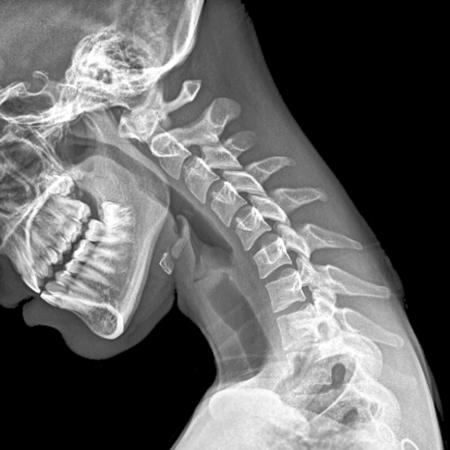
( Los Angeles Times) Dr. Dean Fishman, a chiropractor in Florida, was examining an X-ray of a 17-year-old patient�s neck in 2009 when he noticed something unusual. The ghostly image of her vertebral column showed a reversal of the curvature that normally appears in the cervical spine � a degenerative state he�d most often seen in middle-aged people who had spent several decades of their life in poor posture.
�That�s when I looked over at the patient,� Fishman says. She was slumped in her chair, head tilted downward, madly typing away on her cellphone. When he mentioned to the patient�s mother that the girl�s posture could be causing her headaches, he got what he describes as an �emotional response.� It seemed the teen spent much of her life in that position. Right then, Fishman says, �I knew I was on to something.�
The flexed neck can put strain on cervical disks. (Zephyr / Getty Images/Brand X)
He theorized that prolonged periods of tilting her head downward to peer into her mobile device had created excessive strain on the cervical spine, causing a repetitive stress injury that ultimately led to spinal degeneration. He began looking through all the recent X-rays he had of young people � many of whom had come in for neck pain or headaches � and he saw the same thing: signs of premature degeneration.
Fishman coined the term �text neck� to describe the condition and founded the Text Neck Institute (text-neck.com), a place where people can go for information, prevention and treatment.
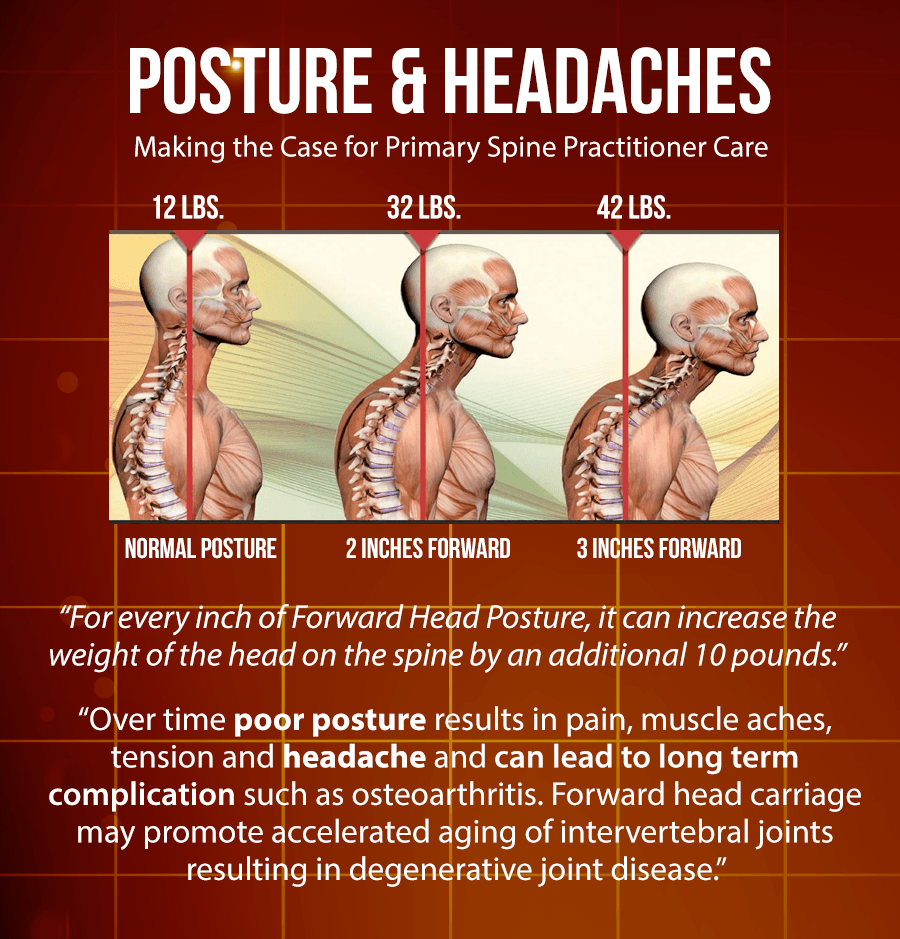
�The head in neutral has a normal weight� of 10 to 12 pounds, says Fishman, explaining that neutral position is ears over shoulders with shoulder blades pulled back. �If you start to tilt your head forward, with gravity and the distance from neutral, the weight starts to increase.�
A recent study in the journal Surgical Technology International quantified the problem: As the head tilts forward 15 degrees from neutral, the forces on the cervical spine and supporting musculature increase to 27 pounds. As the tilt increases, the forces increase to 40 pounds at 30 degrees, 49 pounds at 45 degrees and 60 pounds at 60 degrees.
�When your head tilts forward, you�re loading the front of the disks,� says Dr. Kenneth Hansraj, study author and chief of spine surgery at New York Spine Surgery & Rehabilitation Medicine. Though the study didn�t look at long-term effects of this position, Hansraj says that, after seeing approximately 30,000 spinal surgery patients, he�s witnessed �the way the neck falls apart.�
He explains, �When you�re eccentrically loading the spine, you�re going to get cracks in the disks, slipped disks or herniated disks. This leads to stenosis or blockage of the spine.�
In addition, Fishman says, text-neck posture can lead to pinched nerves, arthritis, bone spurs and muscular deformations. �The head and shoulder blades act like a seesaw. When the head goes forward, the shoulder blades will flare out � and the muscles start to change over time.�
Much like tennis elbow doesn�t occur only in people who play tennis, text neck isn�t exclusive to people who compulsively send text messages. Hansraj says people in high-risk careers include dentists, architects and welders, whose heavy helmets make them especially vulnerable. He adds that many daily activities involve tilting the head down, but they differ from mobile-device use in intensity and propensity.
I�ve noticed a LOT of adolescents slumped over their phone sitting in the passenger seat of their parent�s cars�.there will be a whole range of physical and emotional problems that result from this behavior, believe these printed words! See you in the future!
�Washing dishes is something nobody enjoys, so you do it quickly. And while your head is forward, it�s probably tilted at 30 or 40 degrees,� he says. People tend to change position periodically while reading a book, and they glance up frequently while holding an infant. But mobile devices are typically held with the neck flexed forward at 60 degrees or greater, and many users, particularly teens, use them compulsively. The study reports that people spend an average of two to four hours a day with their heads tilted at a sharp angle over their smartphones, amounting to 700 to 1,400 hours a year.
To remedy the problem, Hansraj has a simple message: �Keep your head up.� While texting or scrolling, people should raise their mobile devices closer to their line of sight. The Text Neck Institute has developed the Text Neck Indicator, an interactive app that alerts users when their smartphones are held at an angle that puts them at risk for text neck ($2.99, available for Android; in development for iPhone).
Fishman also recommends that people take frequent breaks while using their mobile devices, as well as do exercises that strengthen muscles behind the neck and between the shoulder blades in order to increase endurance for holding the device properly.
He adds, �I�m an avid technology user � and I use it in the proper posture.�
Exercises To Ease The Strain Of �Text Neck�
If you�re not mindful of your body alignment, engaging with mobile devices for long periods of time can wreak havoc on your spine. This behavior can result in muscle strain, a straightening of the normal curvature of the cervical spine, disk compression, slipped disks, pinched nerves and arthritis. Here are some exercises that can help prevent and relieve �text neck�:
Neck Stretches
Increasing the range of motion in the neck keeps the cervical spine flexible and helps maintain its normal curvature. Gentle stretches relieve neck tension as well as lengthen muscles that may have shortened due to chronic poor posture.
First, relax your shoulders and nod your head �yes� and �no� slowly a few times. Then, holding one arm behind your back, grasp the side of your head with your opposite hand and press gently, tilting your head to the side until you feel a gentle stretch. Hold for 20 seconds. Next, tilt your chin up and hold for 20 seconds; tilt your chin down and hold for 20 seconds. Repeat on the other side.
Chest Opener
Expanding the chest muscles helps to counteract slumped posture.
Stand in a doorway with your arms held out from the body like a T, forearms resting on each doorjamb at a 90-degree angle to upper arms. Next, lean your body forward through the doorway, leading with your sternum until you feel a gentle stretch across your chest. Hold for 20 seconds. Now move your arms up the door jamb so they are positioned like a V and repeat the forward stretch, again holding for 20 seconds.
Shoulder, Upper Back & Neck Muscle Strengtheners
Strong muscles in the back of the neck and between the shoulder blades will support proper posture, preventing muscle strain and spinal degeneration. With more strength, you will be able to comfortably hold your mobile device in your line of sight without having to bend your neck forward and hunch over. Here are two exercises that help strengthen these postural support muscles:
Wall Angels
If you�ve ever made snow angels, you can use a similar movement to strengthen your shoulder muscles while standing against a wall. First, stand with your heels, back and head resting against a wall. Hold arms perpendicular to the body with the forearms pointing upward at a 90-degree angle to your upper arms. Press your shoulder blades back and down. Keeping your arms bent at a 90-degree angle, move them slowly overhead without letting them lift from the wall. Next, move arms slowly down until your upper arms touch the sides of your body. (Forearms are still perpendicular to upper arms, and shoulder blades are still locked down.) Do 12 repetitions.
Sky Diver
Lying face-down on a mat or other firm, comfortable surface, hold your arms straight over your head at an angle so your body forms the shape of a Y. Lift your upper torso from the mid-back, leading with your sternum and keeping your chin down so your neck is aligned with your spine. Hold for 30 seconds, then release. Next, still lying face-down, hold your arms straight out to the sides so your body forms the shape of a T. Rotate your arms so your thumbs are pointing skyward. Once again, lift your upper torso from the mid-back, leading with your sternum and keeping your chin down. While maintaining the upper body lift, pinch your shoulder blades together as you slowly lift and lower your arms for 12 repetitions.
Text neck is the term used to describe the neck pain and damage sustained from looking down at your cell phone, tablet, or other wireless devices too frequently and for too long.��For Answers to any questions you may have please call Dr. Jimenez at�915-850-0900
Neck pain that is not caused by whiplash or other trauma has a postural component as part of the underlying problem. Sitting atop the body, the health of the neck is subject to the �curvature of the spine below and the position of the head above.
See Chronic Neck Pain: What Condition Is Causing My Neck Pain?
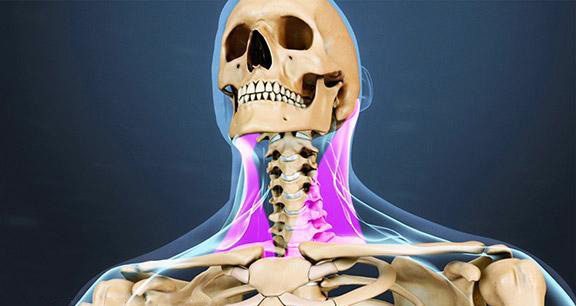
The neck muscle pain can be caused by the following neck muscles becoming tight:Scalene muscles (three pairs of muscles that help rotate the neck)
Suboccipital muscles (four pairs of muscles used to rotate the head)
Pectoralis minor muscles (a pair of thin triangular muscles at the upper part of the chest)
Subscapularis muscles (a pair of large triangular muscles near each shoulder joint)
Levator scapulae muscles (a pair of muscles located at the back and side of the neck).
If the alignment of the head and spine is not optimal, the neck can be predisposed to injury and/or the degenerative effects of wear and tear over time.
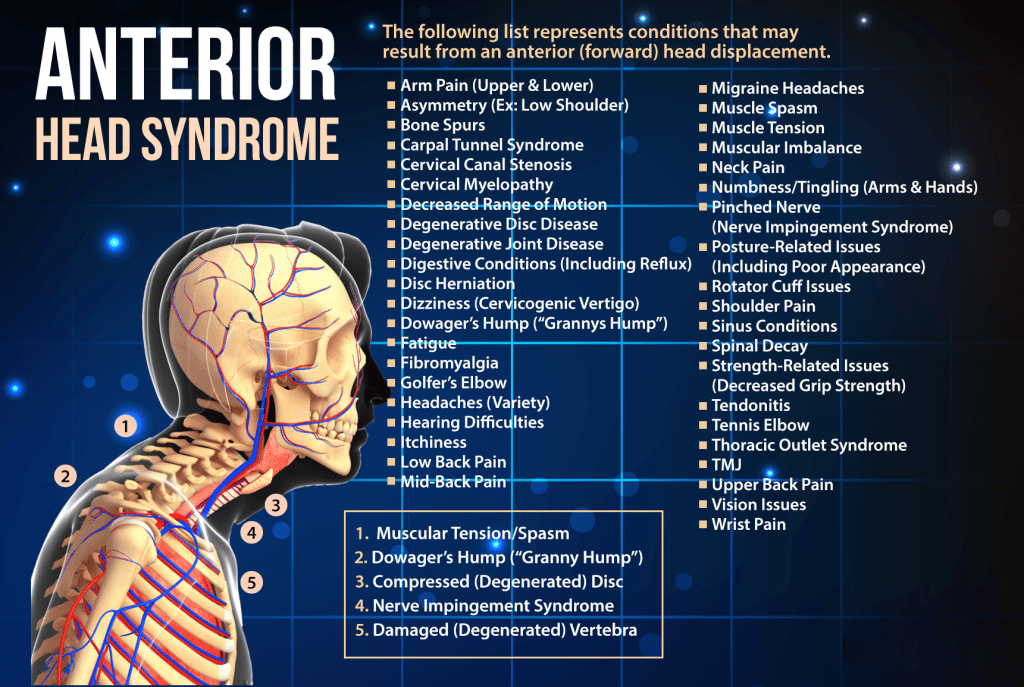
The most common condition that contributes to neck pain is forward head and shoulder posture.
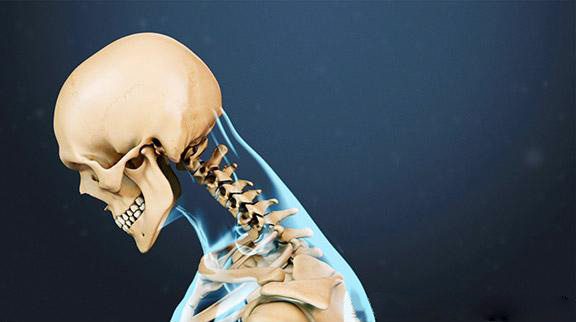
Forward head posture is when the neck slants forward placing the head in front of the shoulders.
This head position leads to several problems:
The forward pull of the weight of the head puts undue stress on the vertebrae of the lower �neck, contributing to degenerative disc disease and other degenerative neck problems.
Similarly, this posture causes the muscles of the upper back to continually overwork to counterbalance the pull of gravity on the forward head.
This position is often accompanied by forward shoulders and a rounded upper back, which not only feeds into the neck problem but can also cause shoulder pain.
The more time spent with a forward head posture, �the more likely it is that one will develop neck and shoulder problems.
Poor Posture Effects On the Lower Cervical Vertebrae
The part of the neck that is particularly vulnerable to forward head posture is the lower part of the neck, just above the shoulders.
See Cervical Spine Anatomy and Neck Pain
The lower cervical vertebrae (C5 and C6) may slightly slide or shear forward relative to one another as a result of the persistent pull of gravity on a forward head. This shear force can be a problem for patients with jobs that require them to look down or forward all day, such as pharmacists who spend many hours counting pills or data entry workers who look at a computer screen.
Prolonged shearing of the vertebrae from forward head posture eventually irritates the small facet joints in the neck as well as the ligaments and soft tissues.
This irritation can result in neck pain that radiates down to the shoulder blades and upper back, potentially causing a variety of conditions, including:
Trigger points in the muscles, which are points of exquisite tenderness that are painful to touch, along with limited range of motion
Disc degeneration problems, which may potentially lead to cervical degenerative disc disease, cervical osteoarthritis, or a cervical herniated disc.
BRAIN BASED POSTURAL CORRECTION
The neurologic system controls and coordinates all other systems of the body? What system provides the physical framework for all other systems of the body to resist gravity and function within our environment? The Posture System. These intricate systems work together to control and coordinate all experiences and actions throughout our lives.
Postural Neurology is defined as the network of neural impulses to support proper functional alignment of the Posture System. The purpose of Postural Neurology is to develop plasticity of proper structural alignment through brain based treatment protocols.
Why implement Postural Neurology into your practice? Quite simply, every musculoskeletal problem is at some level a neurologic problem. Neurology dictates movement, structure, and the function of your Posture System, overseeing and refining every single movement that you do on a daily basis.
It is an outdated system of healthcare to look at one part of the body, the site of injury or pain, and make assumptions about that person�s health and ability to function.
Identifying the area of injured tissue, then creating a rehabilitation plan around that injuryis less than adequate. The new system is all about function and whole posture patterns.
Segmental Rehabilitation & Brain Based Postural Correction
If the patient says �I hurt here,� or you test a weak muscle �here.� It does not mean that the problem lives �here.� This is simply information telling us that there is pain or dysfunction that is being expressed in that end organ. There is absolutely no indication that the problem is in that tissue. The noxious stimulus being interpreted by the brain is nothing more than a sensory input. The weak muscular output is nothing more than an insufficient motor plan.
This is the difference between segmental and brain based thinking. Segmental healthcare professionals do not see beyond the �hurt� or �weak� segment, oblivious to compensation patterns that are dampening function in the rest of the body.
Compartmentalized thinking is not adequate for a system as dynamically developed and as functionally managed as the human body. It simply won�t cut it.
This guide introduces you to the Neurology of the Posture System, so you can understand the functional output of the brain and how it contributes to upright postural design.
Motor Cortex:�
The primary motor cortex is located in the frontal lobe of the brain.
The frontal lobe is the center of human development including executive decision-making, language, and problem-solving.
Located within the Motor cortex is the Motor Homonculus. The Motor Homonculus is a map of motor output for each part of your human anatomy. Within this map, the amount of cortex devoted to any given body region is proportional to how richly innervated that region is, not to the body region�s physical size. Areas of the body with greater or more complex sensory or motor connections
are represented as larger in the homunculus such as the hands, lips, and the face.
The primary motor cortex receives signals from the pre-motor cortex to make a movement.
The primary motor cortex then sends the information to make that movement from the cortex down the spinal cord to the skeletal muscle of that body region.
Motor movement occurs contralaterally, meaning that your left motor cortex controls movement on the right side of your body. Your right motor cortex controls movement on the left side of your body. Every action occurs in this fashion, in response to a descending signal from the brain to the body.
Is the Motor Cortex important to Posture?
The motor cortex controls motor function. The Posture System is never actually �static,� we are dynamic beings who are always in motion. The motor cortex is constantly making small movements (even minute movements) necessary to prevent falling over, and to interact within our environment. Optimal dynamic posture begins in the motor cortex and is regulated by the cerebellum.
Can I check for weakness of the Motor Cortex?�
You can check for weakness�of motor output by performing muscle tests. If a muscle on the left side is weak,
this is information to do further muscle tests to confirm for weakness of the right motor cortex.
�Sensory Cortex:
The somatosensory cortex of the parietal lobe is the center for
sensation. This is where you perceive your world and how you process all of the tactile and
proprioceptive information received from your external environment.
Just as the motor cortex is a map whose arrangement gives preference to the highly innervated parts of the body, so does the sensory homunculus. The sensory homunculus is the primary mechanism of cortical processing for sensoryinformation originating at body surfaces and other tissues.
Is the Sensory Cortex important to Posture?
The sensory cortex is very important for posture because the sensory cortex lights up with activation from novel stimuli such as proprioceptive signals and mechanoreceptor feedback
from complex movements. Lack of movement is the worst thing for your sensory cortex. In fact, with lack of stimulation to an area of the sensory cortex, the sensory map �blurs� together with less representation of that body part in the brain.
For example, when patients present an injured knee and they have worn a brace that limits their range of motion. This limited motor output of the knee results in less tactile and proprioceptive
feedback from the knee, the brain then thinks that the knee is �less important� and blurring of the cortical representation of the hip and ankle will begin to occur over the knee.
Less awareness of our body leads to poor activation and neglect of that area. To keep your patients healthy, keep them moving and activating all joints of the body.
Can I check for weakness of the Sensory Cortex?
You can check for dysfunction of the sensory cortex by performing sensory tests such as light touch,
vibration, temperature, painful stimuli, and joint position. If the patient presents with decreased sensory recognition, the contralateral sensory cortex is weak.
Meaning, that if the left side of the body cannot detect tactile sensation, this is a weakness of the right sensory cortex.
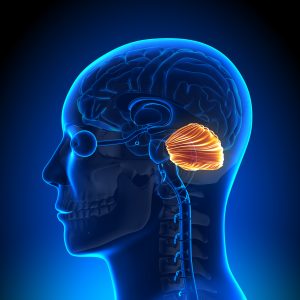
Cerebellum:
The cerebellum works in conjunction with the contralateral motor
cortex to coordinate fine movements. The cerebellum is an �inhibitor,� it reduces any extra or unnecessary motor movements to perform the desired action as accurately as possible.
The cerebellum receives input from sensory systems of the spinal cord and from other parts of the brain, and integrates these inputs to fine-tune motor activity, providing feedback to the motor cortex of how movements can be smoother and more precise. When patients have deficits of the cerebellum
they have excess movement, such as a tremor or a wide stance because they can�t balance with their feet together. Their equilibrium and ability to perform controlled motor movements is compromised.
Is the Cerebellum important to Posture?�
The cerebellum coordinates all movement, to more
precisely regulate fine movements. Proper cerebellar output means that the patient can perform their intended movement without recruiting other muscles. They are on target and on point with coordinated functions of the Posture System. Cerebellar deficits on the other hand affect the patient�s posture, they have compromised postural stability and uncoordinated dynamic postures.
Can I check for weakness of the Cerebellum?
You can check for cerebellar weakness by performing a Romberg�s test. Have the patient stand with their feet together, close their eyes, and see if they sway to one side. The patient will sway toward the side of cerebellar dysfunction.
Brainstem:
The brainstem is the center of postural control. The brainstem is made up of the midbrain, the pons, and the medulla and is the house of the nuclei of 10 of 12 of Cranial Nerves.
Each of the cranial nerves provides important sensory and motor functions for the body. Of particular importance to the Posture System are the visual and vestibular nuclei that reside in the brainstem.
The visual system controls your orientation in space, literally how you see the world. Visual fibers descend to the cervical spine controlling head posture. Visual deficits result in forward head posture, lateral head tilt, and head rotation.
The vestibular system controls balance and extension. Flexor dominant posture is weak posture; upright extended posture is healthy and optimal for better function. This system is of utmost importance for upright postural stabilization and balance.
The brainstem also controls involuntary systems of your autonomicnervous system that regulate life-sustaining processes such as breathing, heart rate, sexual function, and digestion. Plus, the brainstem modulates postural tone, and inhibits flexion toward gravity.
Is the Brainstem important to Posture?
This is the primary control center of postural stabilization! The brainstem inhibits flexion, and in conjunction with the vestibular system activates extension. Descending fibers from the cranial nerve nuclei of the eyes control your head posture, and the ability to keep your eyes parallel to the horizon during dynamic movement.
Understanding the brainstem is an important connection for all posture professionals. Your posture depends upon the functional output of the brainstem.
Can I check for weakness of the Brainstem?
Checking posture provides valuable insight into the function of the brainstem. Noted flexion of the Posture System or head posture distortion patterns indicates that there is weakness of the brainstem.
The Cranial Nerves also provide valuable insight of the function of the brainstem. Dysfunction of the cranial nerves means that there is ipsilateral weakness of the brainstem.
Spinal Pathways:�
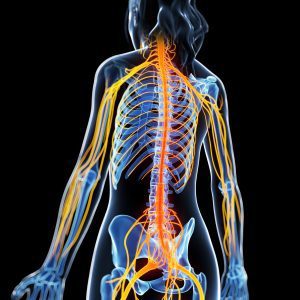
The spinal chord and its pathways are the communication system to and from the brain and the body. The descending motor pathways stimulate movement and postural control. The ascending sensory pathways carry information of sensation to be processed and �understood� in the brain.
The brain and the body are in constant communication to perform efficient movements, to stabilize without falling, and to detect signals from the environment that require a response. Sensorimotor integration happens in your spine, this is the communication highway of the nervous system.
Are the Spinal Pathways important to Posture?
The pathways are invaluable to your postural design. Pathways from the motor cortex send information to create dynamic movements,�and pathways from the brainstem descend to stabilize your postural tone. Ascending pathways from the body to the brain ignite the sensory homunculus for perception, and carry information from the primary sensors of your body for proprioception, vision, hearing, touch, smell, taste, etc.
Can I check for weakness of the Spinal Pathways?
There are many different pathways. When you understand the function of that pathway you can design a test for it. For example, the corticospinal tract descends from the motor cortex to the spine
to create motor output. Dysfunction of this pathway would present as weakness on muscle tests.
The spinothalamic tract is an ascending tract from the spine to the thalamus that recognizes stimuli associated with pain and temperature. To test this tract you would test sensory integration of hot, cold, and painful stimuli.
Neck pain that is not caused by whiplash or other trauma has a postural component as part of the underlying problem. Sitting atop the body, the health of the neck is subject to the �curvature of the spine below and the position of the head above.�For Answers to any questions you may have please call Dr. Jimenez at�915-850-0900
How a chiropractic adjustment works: A displaced or luxated vertebra is when the joint surfaces are completely separated. Subluxation is a partial or incomplete separation: one in which the articulating surfaces remain in partial contact. This latter condition is so often referred to and known by chiropractors as sub-luxation.
The relationship existing between bones and nerves are so nicely adjusted that anyone of the 200 bones, more especially those of the vertebral column, cannot be displaced ever so little without impinging upon adjacent nerves. Pressure on nerves excites, agitates, creates an excess of molecular vibration, whose effects, when local, are known as inflammation, when general, as fever.
A subluxation does not restrain or liberate vital energy. Vital energy is expressed in functional activity. A subluxation may impinge against nerves, the transmitting channel may increase or decrease the momentum of impulses, not energy.
�According to BJ Palmer, a subluxation represents a displaced bone that’s impinged on a nerve, which interferes with the transmission of vital nerve energy (or, more specifically, �mental impulses.�)�
For over hundred years, chiropractors have explained chiropractic medicine by teaching patients and the medical community that bones compress which irritate spinal nerves. The ensuing nervous system dysfunctions have negative effects on the function of peripheral nervous systems, central nervous systems and patients� overall ability to maintain homeostasis.
Essentially, they go into states of dis-ease.� These discussions were in large part due to the teachings of D.D. Palmer and B.J. Palmer as previously cited. Based on the results rendered in chiropractic offices across the country and in a patient-driven model of success, the general consensus in both private practice and chiropractic academia had been to maintain status quo and simply teach what has worked in the absence of conclusive evidence, particularly in light of a lack of serious governmental funding and support for chiropractic research.� In addition, dogma has also created blinders for many, as evidence evolves to further chiropractic and its understanding, application and expansion.
Research has been published and has begun to verify D.D. and B.J. Palmer�s hypotheses were correct. While clarifying the specific physiological mechanisms related to chiropractic�s ability to alleviate pain.� As a result of initially studying pain mechanisms, contemporary research has also begun to set the foundation for understanding why chiropractic works with systemic and autonomic dysfunction and potential disease treatment through the adjustment � central nervous system connection.
It is the understanding of that connection with pain that is helping people to begin to understand the full impact of the chiropractic spinal adjustment and render the evidence to help more get well.
CENTRAL NERVOUS SYSTEM & PAIN REDUCTION
Reductions in pain sensitivity, or hypoalgesia, after spinal manipulative therapy or a chiropractic adjustment may point to a mechanism related to the central nervous system processing of pain.�These findings indicate that a chiropractic spinal adjustment affects the dorsal horns at the root levels which are located in the central nervous system.
This is the beginning of the �big picture� since once we identify the mechanism by which we can positively influence the central nervous system, we can then study that process and its effects in much more depth.
One question asked, does a chiropractic adjustment cause a general response of pain sensitivity or if the response is specific to the area where adjustment is applied? For example, changes in pain sensitivity over the cervical facets following a cervical spine SMT would indicate a local and specific effect while changes in pain sensitivity in the lumbar facets following a cervical spine SMT would suggest a general effect.�
We observed a favorable change for increased PPT [pressure pain threshold] when measured at remote anatomical sites and a similar, but non-significant change at local anatomical sites. These findings lend support to a possible general effect of SMT beyond the effect expected at the local region of SMT application.
The adjustment mechanism is theorized to result from both spinal cord mediated mechanisms and the brain. A recent model of the mechanisms of manual therapy suggests changes in pain related to SMT result from an interaction of neurophysiological responses related to the peripheral nervous system and the central nervous system at the spinal and supraspinal level.
This demonstrates that�chiropractic adjustment influences the peripheral nervous system and the central nervous system.
ACTIVATION OF BRAIN & DESCENDING NERVE PATHWAYS BEYOND AREAS TREATED
CHIROPRACTIC ADJUSTMENT VS. SPINAL MOBILIZATION
Manual therapy has clinically shown to boost pressure pain thresholds (i.e., decrease sensitivity) in both symptomatic and asymptomatic subjects. Cervical spinal manipulation has been shown to result in unilateral as well as bilateral mechanical hypoalgesia.
Compared with no manual therapy, oscillatory spinal manual therapy at T12 and L4 produced significantly higher paraspinal pain thresholds at T6, L1, and L3 in individuals with rheumatoid arthritis.
The immediate and widespread hypoalgesia associated with manual therapy treatments has been attributed to alterations in peripheral and/or central pain processing including activation of descending pain inhibitory systems.
Manual therapy triggers the central nervous system which affects areas around those being treated.�Clinical studies show spinal manipulation or an adjustment alters the central processing of mechanical stimuli. This is proven by an increased pressure pain threshold and decreased pain sensitivity in asymptomatic and symptomatic subjects following manipulation.
The thalamus also regulates states of sleep and wakefulness which plays a major role in regulating arousal, the level of awareness, and activity (Thalamus�http://en.wikipedia.org/wiki/Thalamus).
Therefore, a�chiropractic adjustment reduces pain through the thalamus. �In addition, with current knowledge of chiropractic adjustment effecting the thalamus, we can begin to offer an explanation of how the first historically reported chiropractic adjustment by D.D. Palmer helped Harvey Lilard regain his hearing.
CHIROPRACTIC REDUCES PAIN IN MULTIPLE REGIONS DUE TO LOCAL AND CNS STIMULATION
Significant changes were observed on sensory parameters, supporting the hypothesis of centrally mediated effects of a single adjustment. This suggests that the�chiropractic spinal adjustment affects the nociceptors and the mechanoreceptors at the joint level causing central modulation of an effect at the cord and/or brain level(s) and pain reductions in multiple areas as a result.
AN ADJUSTMENT WILL CREATE HIGHER FUNCTION IN CORTICAL AREAS
MT or manual therapy/chiropractic adjustment reduce pain intensity and pain sensitivity. it is reasonable to assume that the underlying therapeutic effect of MT is likely to include a higher cortical component.
In other words, thoracic adjustments produced direct and measureable effects on the central nervous system across multiple regions, which in the case of the responsible for the processing of emotion (cingulate cortex, aka limbic cortex) are regarding the insular cortex which also responsible for regulating emotion as well has homeostasis.
The motor cortex is involved in the planning and execution of voluntary movements, the amygdala�s primary function is memory and decision making (also part of the limbic system), the somatosensory cortex is involved in processing the sense of touch (remember the homunculus) and, finally, the periaqueductal gray is responsible for descending pain modulation (the brain regulating the processing of painful stimuli).
Periaqueductal Gray � � � Ascending and descending spinothalamtic tracts carrying pain and temperature fibers
The global effects of a chiropractic adjustment simply put, the processing of pain may be modulated or regulated from an external force without the use of pharmacy or surgery? Pain is deeply tied to the most primitive regions of the central nervous system and it appears (as chiropractors have observed clinically for 116 years) that therapeutically speaking, we can have an influence on these higher centers with little or no side-effects.
Chiropractic spinal adjustments create functional changes in multiple regions of the brain. In addition, this has far reaching effects in setting the foundation for understanding how the adjustment works in systemic and possibly autonomic changes by being able to measure and reproduce functional changes within the brain as direct sequellae.
MUSCLE IMPAIRMENT CREATES CNS ALTERATIONS & THE�NECESSITY FOR BOTH SHORT-TERM & LONG-TERM�CHIROPRACTIC CARE
ADJUSTMENTS WORK � SPINAL MOBILIZATION DOES NOT
What this means is that there are observable changes in the function of the central nervous system seen in patients with musculoskeletal conditions.� That is something that chiropractors have observed clinically and shows the medical necessity for chiropractic care for both short and long term management as well as in the prevention of pain syndromes.
Evidence suggests that muscle damage occurs early in spinal complaints, and that such muscle damage does not automatically resolve even when pain symptoms improve. This has led some authors to suggest that the deficits in proprioception and motor control, rather than the pain itself, may be the main factors defining the clinical picture and chronicity of various chronic pain conditions.
This evidence suggests that chiropractic manipulation may have a positive neuromodulatory effect on the central nervous system, and this may play a role in the effect it has in the treatment of neck pain.
When the input signal is no longer encoded as a result of joint dysfunction and altered afferent input, the cerebellum must adjust to new encodings that dictate the body schema and affect proper execution of the motor task.
The significance is that it suggests that chiropractic adjustments improve neck dysfunction, and through plasty changes in the cerebellum, there is resultant motor learning and increased function.
CONCLUSION
Chiropractic adjustments influence the peripheral nervous system and the central nervous system. In the central nervous system, chiropractic spinal adjustments reduce pain by effecting the thalamus and descending central pain pathways.
The areas of the brain affected by chiropractic adjustments effect the following functions: emotions, learning, motivation, memory, consciousness, homeostasis, perception, motor control, self-awareness, cognitive function, voluntary movements, decision making, touch, temperature, pain of the skin- epithelial tissue-skeletal muscles-bones-internal organs and cardiovascular system.
For over hundred years, chiropractors have explained chiropractic medicine by teaching patients and the medical community that bones compress which irritate spinal nerves. People have begun�to understand the full impact of the chiropractic spinal adjustment and render the evidence to help more people get well.
The natural curve of the spine is reinforced by correct posture. Posture not only influences how you look but helps you breathe, improves concentration, supports vital organ function and stimulates overall well-being.
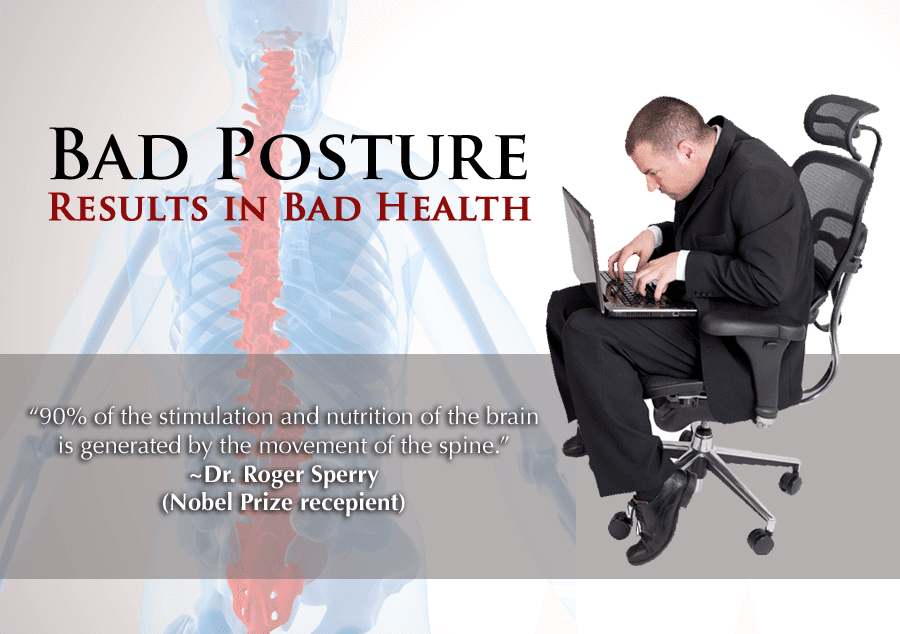
Ignoring harmful postural habits leads to illness, discomfort and pain, and increases the risk for pathogenesis of disease in the body. �You can improve your posture and nervous system function and improve your quality of life significantly.
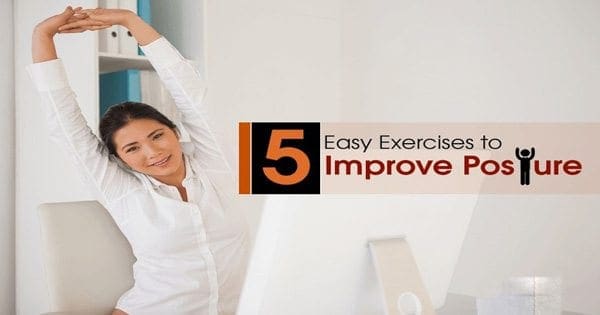
At the bottom of this article, you will discover a video and narrative for�5 exercises that will help you correct defects and optimize your posture in minutes each day. �Much like we brush and floss our teeth for dental health, we need to work on our posture each and every day!
Spinal Curve Dictates Health
The body was built with a curve in the spine to provide support and balance to the musculoskeletal system. It is essential for preventing deformation to bones, joints, muscles and tendons. Correct posture protects against disc degeneration that can lead to inflammatory conditions and disease. It is also critical for protecting the central nervous system.
Postural experts�understand that poor posture weakens the body�s ability to defend itself against infectious and chronic diseases. �They also view poor posture as a marker for the presence of chronic illness. �Today, many posture focused doctors such as chiropractors advocate for health measures in schools to educate students about correct posture techniques to reduce the current posture epidemic brought on by modern technologies such as cell phones that force us into a forward head shift.
Doctors refer to the natural curve of the neck as the �arch of life.� This arch should have a 40-45 degree curve. �As the arch reduces it becomes unstable and results in a forward head shift, which depending upon the severity can add up to 30 pounds of additional weight on the spinal discs, ligaments and tendons.
This postural issue causes major stress on the�musculoskeletal system. Loss of the spine�s natural curve inhibits normal physiological and nervous system functions.� The ability to protect the brain stem and support the communication of nerve impulses throughout the body becomes suppressed.
Effects of Subluxation
Unfortunately, we are a modern age characterized by reoccurring activities that creates stress on the supporting spinal column. Slouching, crossing legs, cell phone use, and incorrect ergonomic practices at home, school and work causes poor posture. This leads to the abnormal curvature of the spine�and abnormal stress on the nervous system, which is known as subluxation.
Subluxation interferes with nerve impulses and can manifest in numerous physical symptoms.
Examples include:
Neuropathy
Back pain or neck pain
Chronic pain common in the hips, joints, lower back, pelvis and knees
Irritation of a specific area such as arm pain
Weakened immune system
Organ dysfunction
Inability to move or exercise normally
Dizziness and loss of balance
Loss of bladder or bowel control
Autoimmune conditions
Headaches�and migraines
Fatigue
Although our very own chronic habits lead to forward head posture, the spine is also susceptible to trauma from birth, regular physical activities from exercise and sports, as well as accidental injury from car accidents and falls.
Depending on the type of injury and which nerve pathways of the spine become disrupted, spinal subluxations�can increase the risk for weakened immunity and lowered quality of life.
Dangers of Forward Head Posture
Vanity is of least concern when it comes to the problems associated with forward head posture. As the head shifts forward, the thoracic spine moves and the weakening of the shoulder blades causes slouching and the appearance of hunchback. These harmful effects trigger the descent downward of vital organs in the chest. There is a decrease in lung capacity, a reduced flow of oxygen into the diaphragm and a lower�rate of oxygen reaching the cells.
A reduction in circulating oxygen in the body poses serious health threats. Oxygen is essential for survival because it maintains homeostatic functions including hormone balance, supports blood flow, protects the body from chronic disease and cancer, fuels nutrient absorption and protects the health and healing of cells, tissues and organs.
Studies have shown that forward head posture is an indication of poor health and is reported to cause the impairment of simple activities including walking or sitting comfortably. It is likely that physical limitations of the body marked by poor posture accelerate the aging process and increases inflammation. This is a result of the body�s inability to manage stress and tissue trauma appropriately.
Other evidence supports that the correction of forward head posture:
Alleviates symptoms of respiratory complications such as asthma
Increases breathing and lung oxygenation essential for physical fitness
Strengthens abdominal muscles
Restores enlarged tonsils
Improves glandular function in the head and neck
Improvements from Chiropractic Care:
Chiropractic adjustments�can help compensate for postural abnormalities leading to an improvement in the health of the spine and the whole body. Research performed by Dr. Morningstar and Dr. Jockers found that chiropractic adjustments and rehabilitation exercises lead to the correction of forward head posture and cervical lordosis and restored pulmonary function.
Findings of the study also suggests that chiropractic care can improve the function of the autonomic nervous system by relieving tension that hinders the vital communication between the brain and body.
Corrective care chiropractors are able to identify abnormal features of the spine using x-rays, postural pictures, nerve scans and various technologies. Doctors then develop a specific care plan used to treat each individual�s concern focusing on chiropractic adjustments and rehabilitative techniques like the 5 exercises that follow.
5 Exercises:
In 30 to 90 days you can improve posture, breathe better, boost oxygenation throughout your body and alleviate tension and pain. Performing each of the following exercises for 1 minute twice a day will boost your body�s total healing potential, reduce your risk of developing degenerative disease and help you to thrive in life.
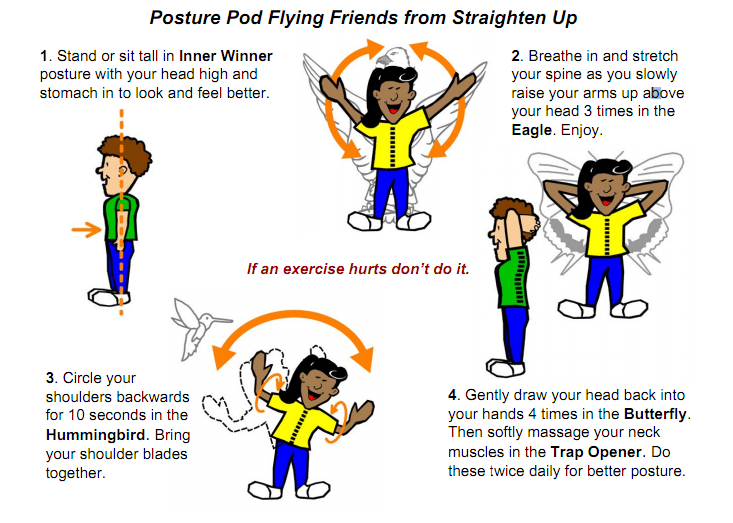
1) �Hummingbird:
Remove the slouch from poor posture and realign the head with the spine by practicing the hummingbird. This exercise strengthens the muscles between the shoulder blades, improves muscle fibers around the thoracic spinal column, opens up pectoral muscles and lifts the rib cage.
Instructions for Exercise:
Lift arms so that they are parallel to the floor.
Bend elbows and face palms forward to form a 90 degree angle between the bicep and forearm.
Rotate arms backwards in a circular movement while squeezing shoulder blades together.
Repeat for 1 minute.
2) �The Eagle:
With this exercise imagine opening up your arms just like an eagle spreads its wings. Stretching your arms overhead will open up the lungs. This boosts oxygen intake to stimulate tissue regeneration in the body and increase blood flow.
Instructions for Exercise:
Stand with feet shoulder-width apart.
Start with arms lowered and adjacent to sides.
Simultaneously lift arms above the head,
Pause for a moment; and
Lower arms back down to sides in a slow and controlled movement.
Repeat for 1 minute.
3) �Butterfly:
The butterfly is an extraordinary exercise to correct forward head posture. Performing this exercise regularly targets muscles in the neck and shoulders that give rise to chronic neck pain.
Instructions for Exercise:
Focus on lifting chest toward the ceiling.
Bring hands back against head so that thumbs point down. *Optional: If reduced flexibility hinders your ability to lift arms and hands behind head, perform exercise standing flat against a wall. You can also align back of head against car seat.
Use about 10% of strength to push head backward while keeping head straight.
Pause for approximately 10 seconds.
Relax and repeat for 1 minute.
4) �Chin Tuck:
An opposing exercise to the butterfly is the chin tuck. This exercise provides balance to the opposite core muscles in the neck by strengthening the deep neck flexors. Performing the chin tuck helps balance the head and neck reducing the occurrence of forward head shift.
Instructions for Exercise:
Focus on lifting chest toward the ceiling.
Maintain head position with ears over the neck.
Place 1 hand on forehead; and
Gently push forward with about 10% of strength (muscles in neck should contract and head should appear immobile).
Repeat for 1 minute.
5) �Trap Opener:
The trapezius muscles stabilize the shoulder blades providing support for head and neck movement. Habitual forward head posture pulls and weakens the shoulder blades which consequently also relocates the ribcage.
Unlike the previous four exercise, the trap opener is a favorite amongst patients and is not intended to stretch or strengthen the trap muscles. Rather, perform this exercise to release stress from the trapezius muscles and get rid of the so called �monkey� on your back.
Instructions for Exercise:
Relax shoulders.
Drop the chin towards the chest.
Roll head slightly to the right side.
Use right hand to massage trapezius muscles on the upper left side of the back.
Repeat exercise for opposite side.
Perform for 1 minute.
Summary:
Don�t ignore the signs of poor posture that can impact your ability to sleep restfully at night or concentrate clearly during the day. Poor posture has devastating effects on the body that can only be treated with mindful practices. Utilize these 5 exercises to improve your posture and reap its benefits reflected in overall health and well being.
Incorrect�postural habits lead to illness, discomfort, pain, and increases the risk for pathogenesis of disease in the body. �You can improve your posture, nervous system function and improve your quality of life significantly. Correct Posture not only influences how you look but helps you breathe, improves concentration, supports vital organ function and stimulates overall well-being. For Answers to any questions you may have please call Dr. Jimenez at 915-850-0900
IFM's Find A Practitioner tool is the largest referral network in Functional Medicine, created to help patients locate Functional Medicine practitioners anywhere in the world. IFM Certified Practitioners are listed first in the search results, given their extensive education in Functional Medicine