The chest in the upper half of the body comprises various structures that each have a job to keep the body functioning. The chest has different large muscles surrounding the ribcage and helps protect the vital organs that allow the host to breathe. The essential organs protected by the ribcage and the chest muscles include the heart and the lungs. These two organs aid the chest with blood circulation, breathing, and digestion to keep the body moving and functional. When injuries or chronic conditions begin to affect the chest, it can cause the muscles surrounding the ribcage to contract and tighten, causing the heart and lungs to work harder and causing various issues to affect the body. This can lead to chronic symptoms in the chest and affect a person’s life. Today’s article looks at the pectoralis major muscle in the chest, how trigger point pain is associated with chest pain, and how to manage trigger points in the chest. We refer patients to certified providers who specialize in chest pain therapies to aid many people suffering from trigger point pain affecting the pectoralis major muscles. We brief patients by referring them to our associated medical providers based on their examination when appropriate. We indicate that education is a great solution to asking our providers profound and complex questions at the patient’s request. Dr. Alex Jimenez, D.C., takes note of this information as an educational service only. Disclaimer
The Pectoralis Major Muscles In The Chest
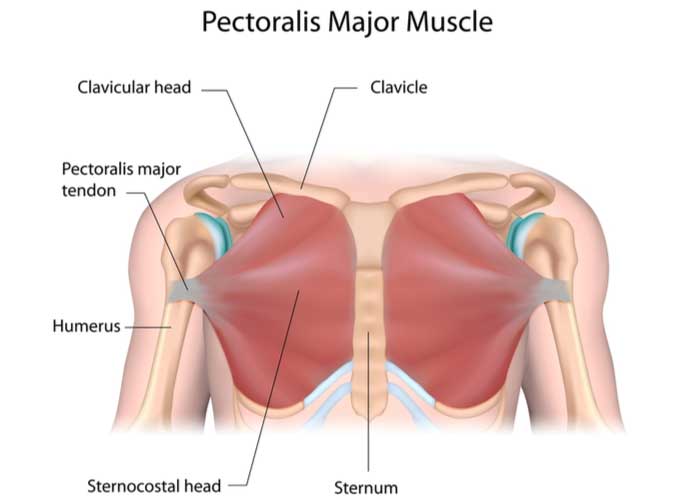
Have you been experiencing unexplainable chest pains that mimic heart issues? Do you feel muscle stiffness near your clavicle? Or do your chest muscles feel tenser and sorer than usual? Many of these issues affecting the chest could result from trigger points associating with the chest along the pectoralis major muscles. The pectoralis major is the superior and largest muscle in the chest wall’s front area. This muscle looks like a thick fan that surrounds the clavicle and works with the chest and arms to provide mobility and power to the upper body. Studies reveal that the pectoralis major muscle plays an important role in upper limb movements. To that point, it can help with the adduction and medial rotation of the arm, according to the book by Dr. Travell, M.D. “Myofascial Pain and Dysfunction,” the pectoralis muscle works with the rest of the chest muscles while being assisted by the teres major and minor muscles, the anterior and posterior deltoid muscles, the subscapularis muscles, and the tricep muscles. The pectoralis major muscles can also be affected by multiple issues affecting the chest and the rest of the upper half of the body.
Trigger Point Pain Associated With The Chest
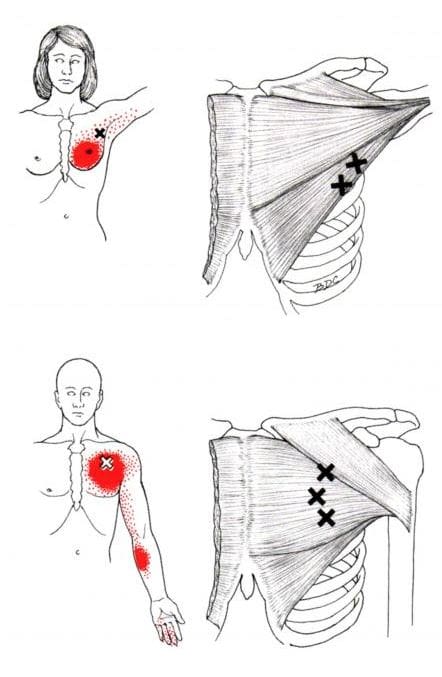
When the pectoralis major muscles are affected by various issues, they can mimic other chronic conditions that are causing referred pain in different body areas. This is known as trigger point pain, and it can cause overlapping risk profiles on the pectoralis major muscles that can affect the chest. Trigger points are slightly difficult to diagnose as many factors, like repetitive motions or lifting heavy objects, can cause the affected muscles to develop tiny knots along the muscle fibers and cause pain-like symptoms. Many people with chest pains often complain that something is affecting their heart as they place their hands on their chest and gently rub the affected area. However, when their doctors examine them, the issue is not their hearts but their chest muscles. Studies reveal that trigger points affecting the affected muscle can mimic issues like cardiovascular dysfunction in the heart. To that point, active trigger points in the pectoralis major muscle can cause somato-visceral pain to the heart, mimicking cardiovascular issues like paroxysmal arrhythmia. It can also cause visceral-somatic pain where the heart suffers from cardiovascular problems affecting the pectoralis major muscles.
Trigger Point Therapy On The Pectoralis Major-Video
Have you been dealing with chest pains that cause you to hunch over? Does your chest seem to feel tight when you stretch? Or have your chest muscles feel tender to the touch? These pain symptoms are caused by trigger points affecting the pectoralis muscles. Trigger points are generated when a person overuses their muscles from daily activities or succumbs to muscle injuries that cause referred pain in different body areas. So trigger points affecting the pectoralis major muscle may cause chest pains. The video above explains the pectoralis muscles and where the trigger points are located that cause referred pain to the shoulders and the rest of the upper half of the body. Trigger points associated with the chest along the pectoralis major muscles can be treatable through various treatments and techniques that can reduce the symptoms and prevent trigger points from forming along the affected muscle in the future.
Ways To Manage Trigger Points On The Chest
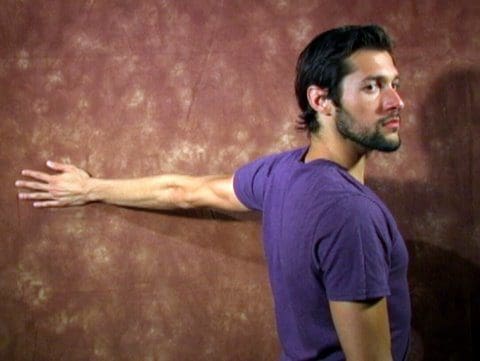
When trigger points affect the pectoralis major muscles, they can invoke chest pain-like symptoms that resemble a cardiovascular disorder. Fortunately, pain specialists like chiropractors, massage therapists, and physiotherapists can utilize various techniques to help reduce the pain caused by trigger points. Studies reveal that when local and referred pain affects the pectoralis major muscle, multiple massage treatments targeting the trigger points can help alleviate the symptoms causing chest pains. Another way people can manage trigger points is by stretching the pectoralis major muscle to relieve tension and soreness in the chest. Incorporating various stretching techniques to alleviate chest pain can help loosen up the stiff muscles and warm them up before a vigorous workout. This allows the pectoralis muscles to provide optimal output on a person’s health and wellness.
Conclusion
The pectoralis major is a thick fan-shaped muscle located on the chest. This muscle works with the shoulders and upper half of the body while protecting the heart and the lungs from various injuries and chronic conditions. When these muscles become affected by injuries or chronic conditions, they can develop trigger points along the chest, causing referred pain to the pectoralis major muscles. This can lead to somato-visceral and visceral-somatic pain symptoms in the chest and make many individuals miserable. Luckily pain specialists who can help manage trigger points along the affected muscle utilize various techniques to reduce the symptoms and prevent trigger points from forming in the affected muscle again. This allows the individual to continue with their daily activities without worrying about chest pains.
References
Haładaj, Robert, et al. “Anatomical Variations of the Pectoralis Major Muscle: Notes on Their Impact on Pectoral Nerve Innervation Patterns and Discussion on Their Clinical Relevance.” BioMed Research International, Hindawi, 2 Apr. 2019, https://www.ncbi.nlm.nih.gov/pmc/articles/PMC6466946/.
Moraska, Albert F, et al. “Responsiveness of Myofascial Trigger Points to Single and Multiple Trigger Point Release Massages: A Randomized, Placebo Controlled Trial.” American Journal of Physical Medicine & Rehabilitation, U.S. National Library of Medicine, Sept. 2017, https://www.ncbi.nlm.nih.gov/pmc/articles/PMC5561477/.
Simons, David G. “Cardiology and Myofascial Trigger Points: Janet G. Travell’s Contribution.” Texas Heart Institute Journal, U.S. National Library of Medicine, 2003, https://www.ncbi.nlm.nih.gov/pmc/articles/PMC152827/.
Solari, Francesca, and Bracken Burns. “Anatomy, Thorax, Pectoralis Major Major.” In: StatPearls [Internet]. Treasure Island (FL), StatPearls Publishing, 26 July 2021, https://www.ncbi.nlm.nih.gov/books/NBK525991/.
Travell, J. G., et al. Myofascial Pain and Dysfunction: The Trigger Point Manual: Vol. 1:Upper Half of Body. Williams & Wilkins, 1999.
Nerves control muscle fibers. Muscle twitching is an involuntary contraction of the muscle fibers. When individuals play sports/work out vigorously or for a long time, they may experience muscle twitching and can often see and/or feel the twitches happening. The most worked-out muscles are likely to twitch, which includes the biceps, thighs, and calves, but twitches can occur in any muscle. Chiropractic care, massage therapy, and functional medicine can help relax the muscles, improve circulation, restore function, and train individuals to prevent future episodes.
Muscle Twitching
A muscle twitch often occurs after intense physical activity or a hard workout because the muscle or muscles have been overworked, and there is hyper-excitability of the nerve/s that makes the muscle/s continue to contract.
A muscle twitch that can be seen is called fasciculation.
A muscle twitch that cannot be seen is called fibrillation.
If there is pain or the twitching is prolonged, it is a muscle spasm.
Causes
The most common causes include the following:
Intense exercise and rigorous physical activity build up lactic acid in the muscles.
Dehydration is a very common factor for shaky muscles.
Vitamin D and calcium deficiencies could cause muscle spasms in the hand, calves, and eyelids.
Using caffeinated products to increase physical performance.
Not enough or a lack of healthy sleep.
Anxiety or stress.
Certain medications like estrogen and corticosteroids.
Nicotine and tobacco use.
Physical Activity/Exercise
Intense exercise and physical activity can cause muscle fatigue.
Muscle fatigue triggers twitching and cramping in overworked muscle fibers.
Electrolytes play a role in muscle contraction.
Electrolyte loss and imbalances within muscle fibers through sweating can lead to twitching.
Dehydration
Muscle mass comprises 75% water.
Water carries nutrients and minerals to muscles to support function.
Not being properly hydrated can cause twitching and cramping.
Vitamin D Deficiency
Nerves need vitamin D to relay messages to and from the brain to the body’s muscles.
A vitamin D deficiency can cause muscle weakness and twitching.
Lack of sleep can affect neurotransmitter function.
A common site of fasciculation tiredness occurs in the eyelids.
Anxiety and Stress
Experiencing psychological stress or high anxiety levels can cause excess muscle tension.
This can lead to muscle twitching.
Muscle fasciculation caused by stress can occur anywhere in the body.
Certain Medications
Certain medications can lead to involuntary muscle twitching.
The reaction can be a side effect due to interactions with other medications.
Individuals should discuss side effects and medication interactions with their doctor when taking a new medication.
Chiropractic Care
Chiropractors are experts on the musculoskeletal system and have many techniques to treat muscle fasciculation and spasms. It often depends on the cause/s, and specific treatment varies on a case-by-case basis. Common chiropractic treatments include:
Massage therapy
Heat and ice therapy
Manual manipulation
Joint adjustments
Ultrasound
Stretches to keep the muscles flexible
Exercises to strengthen the muscles
Nutritional recommendations
Fasciculation
References
Bergeron, Michael F.. Muscle Cramps during Exercise-Is It Fatigue or Electrolyte Deficit?. Current Sports Medicine Reports July 2008 – Volume 7 – Issue 4 – p S50-S55 doi: 10.1249/JSR.0b013e31817f476a
Gragossian A, Bashir K, Friede R. Hypomagnesemia. [Updated 2022 May 15]. In: StatPearls [Internet]. Treasure Island (F.L.): StatPearls Publishing; 2022 Jan-. Available from: https://www.ncbi.nlm.nih.gov/books/NBK500003/
Küçükali, Cem Ismail, et al. “Peripheral nerve hyperexcitability syndromes.” Reviews in the neurosciences vol. 26,2 (2015): 239-51. doi:10.1515/revneuro-2014-0066
Maughan, Ronald J, and Susan M Shirreffs. “Muscle Cramping During Exercise: Causes, Solutions, and Questions Remaining.” Sports medicine (Auckland, N.Z.) vol. 49, Suppl 2 (2019): 115-124. doi:10.1007/s40279-019-01162-1
Miller, Kevin C et al. “Exercise-associated muscle cramps: causes, treatment, and prevention.” Sports health vol. 2,4 (2010): 279-83. doi:10.1177/1941738109357299
Riebl, Shaun K, and Brenda M Davy. “The Hydration Equation: Update on Water Balance and Cognitive Performance.” ACSM’s health & fitness journal vol. 17,6 (2013): 21-28. doi:10.1249/FIT.0b013e3182a9570f
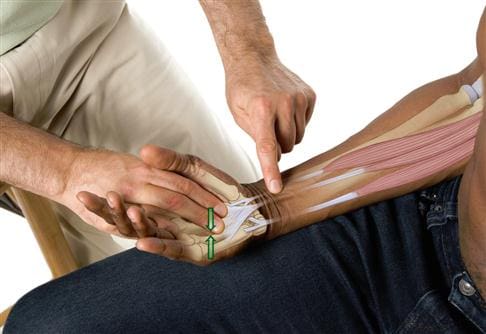
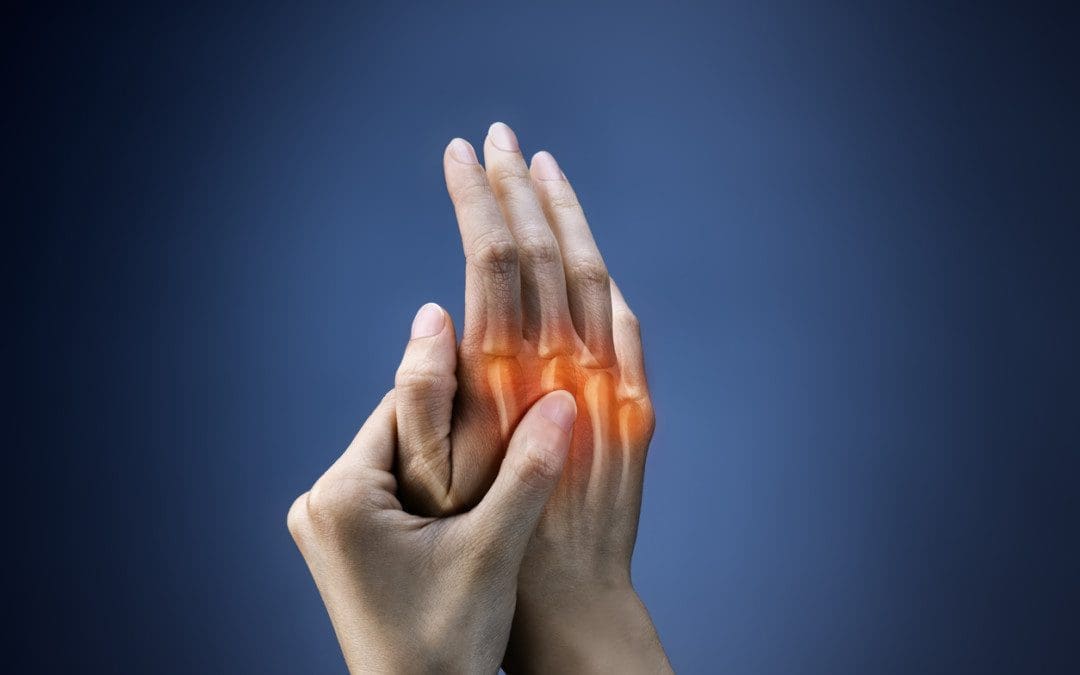
The hands are the main show when it comes to the body. They can be expressive when a person is talking, they can carry items from place to place, and when it comes to sports, they have excellent grip strength. The various muscles, tendons, nerve roots, and ligaments surround the joints to provide functionality and mobility to each finger digit. The hands also have a great relationship with the wrist and forearms because the muscles in the forearms travel down to the hands to provide mobility, flexion, and extension to the fingers. However, when the muscles become overused from repetitive motions, it can lead to the development of pain overlapping other conditions that can affect the wrist and hands. To that point, trigger points can develop over time to invoke pain in the affected muscles and cause referred pain to affect the hands. Today’s article looks at one of the muscles known as the palmaris longus, how trigger points affect the hand muscles, and various techniques to manage trigger points along the palmaris longus muscle. We refer patients to certified providers specializing in hand and wrist pain therapies to provide aid to individuals suffering from trigger point pain associated with the palmaris longus muscles located on the hand. We also guide and inform our patients by referring them to our associated medical providers based on their examination when appropriate. We established that education is a great solution to asking our providers profound questions the patient requests. Dr. Jimenez DC takes note of this information as an educational service only. Disclaimer
What Is The Palmaris Longus Muscle?
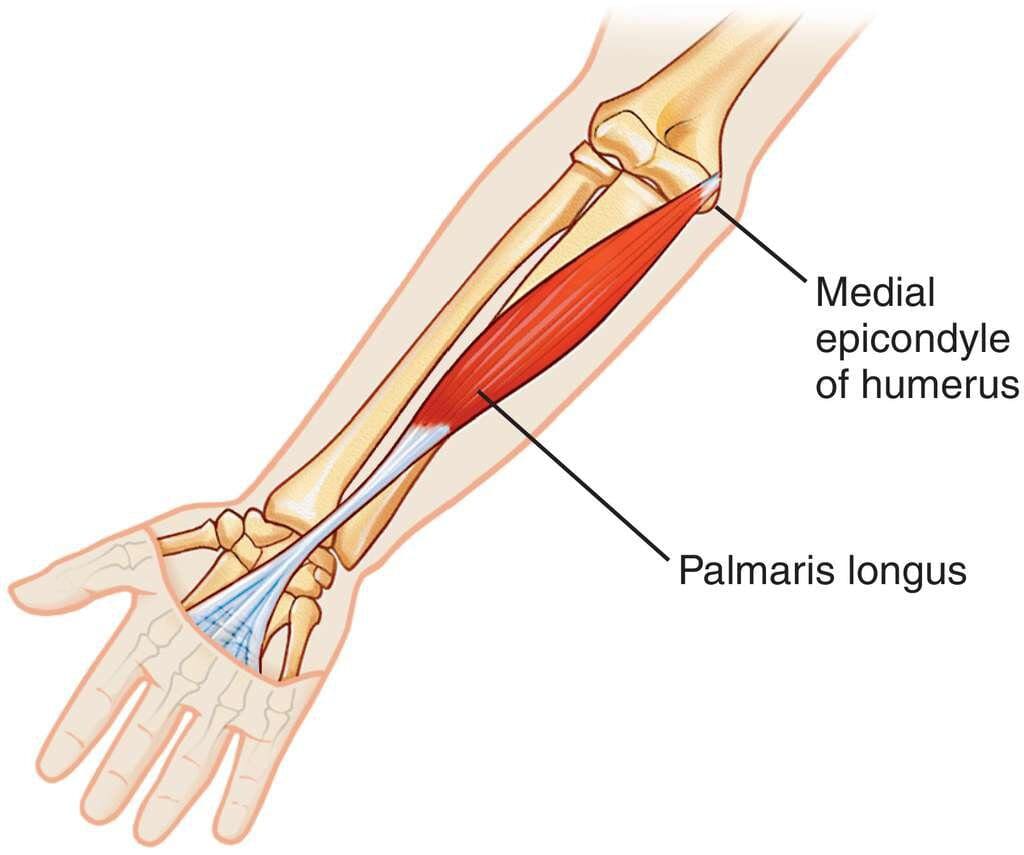
Have you been dealing with numbness in the palm of your hands? Have you been experiencing issues holding items for an extended period? Or do your wrist and forearm ache constantly? If you have been experiencing these overlapping issues, it could be the development of trigger points along the palmaris longus muscle. The palmaris longus is a small muscle located on the front of the forearms and extends down from the wrist to meet with the rest of the muscles and tendons of the hands. The palmaris longus also connects to the roof of the carpal tunnel bones, where the median nerves and digital flexors tendons reside and provide movement. According to Dr. Janet G. Travell, M.D.’s book, “Myofascial Pain and Dysfunction: The Trigger Point Manual,” the palmaris longus muscle function is to flex the hands at the wrist while being able to tense the palmar fascia. Studies reveal that the palmaris longus muscle flexes the wrist weakly as an accessory muscle and abducts the thumb for mobility. This muscle is also prone to injuries as it can develop pain-like symptoms along the wrist and the palm of the hands.
How Trigger Points Affect The Hand Muscles?
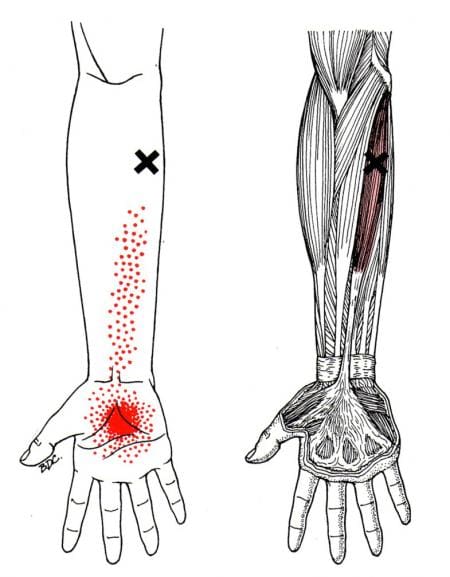
When the palmaris longus muscle succumbs to injuries, it can develop chronic issues that can cause pain in the wrist and hands. One of the chronic issues that can affect the hand muscles and the rest of the forearms is trigger points. Trigger points can lead to the development of referred pain along the forearms, wrists, and hands. To that point, trigger points can mimic overlapping chronic conditions along the affected muscle area. So when trigger points begin to affect the palmaris longus muscle, the pain-like symptoms can mimic carpal tunnel syndrome. Now studies reveal that the palmaris longus muscle is connected to the median nerve and the pathophysiology of carpal tunnel syndrome is more likely to interplay between anatomic and systemic factors. This causes the median nerve root to become compressed, thus causing pressure and pain to the hands. To that point, trigger points in the palmaris longus muscle may be activated by direct trauma. Some examples that can cause the development of trigger points are:
Gripping tools too tightly
Leaning on a cane
Holding a tennis racket at the end of the handle
Falling and landing on the hands
Many of these actions can result from overusing and causing issues in the palmaris longus muscle, leading to unwanted pain and muscle injury symptoms.
Trigger Points On The Palmaris Longus-Video
Are you experiencing any numbing sensations in the palm of your hands? What about feeling the symptoms of carpal tunnel syndrome along your wrist? Or have you experienced aches and pain along your forearms? Some of these symptoms correlate with the development of trigger points along the palmaris longus muscle. The palmaris is a small muscle in front of the forearms and travels down to the wrist to connect with the rest of the muscle tendons of the hands. When traumatic events begin to affect and injure the palmaris longus, it can develop trigger points and cause pain to radiate down to the wrists and hands. The video above explains where the palmaris longus muscle is located and how trigger points activate pain-like symptoms that mimic chronic conditions like carpal tunnel syndrome. Studies reveal that when the median nerve (which is connected with the palmaris longus muscle) is being entrapped, causing trigger points to mimic carpal tunnel syndrome symptoms. Alas, all is not lost, as there are various techniques that many people can utilize to relieve pain from the palmaris longus muscle and manage trigger points from developing further.
Various Techniques For Managing Trigger Points On The Hand Muscles
When it comes to managing trigger points on the hand muscles and palmaris longus muscle, many people will incorporate various remedies to reduce the pain-induced inflammation on the affected muscle and manage trigger points from causing more issues in the affected muscles. Treatments like massaging the forearm to the hands can help release trigger points from the palmaris longus muscle. Granted, there will be involuntary twitching, but the results prevent future trigger points from forming the muscle. Another technique is placing a heating pad on the forearm to relax the tense muscles and reduce pain. And finally, gentle stretches and reducing a tight grip can prevent hyperirritability on the palmaris longus muscle and strengthen the muscles that are connected with the palmaris longus muscle.
Conclusion
Regarding the body, the hands have a very important function as they provide grip strength and have a great relationship to the wrist and forearms. The palmaris longus muscle is a small band in front of the forearms and connects to the various muscles and tendons of the wrists and hands. When traumatic injuries affect the palmaris longus muscle, it can develop trigger points correlating with carpal tunnel symptoms. When trigger points affect the palmaris longus muscle, it can cause symptoms of pain and numbness in the wrist and hands, causing a person to lose their grip strength. Thankfully, various techniques to manage and treat trigger points can reduce the pain quality on the forearms and wrist while bringing the grip strength back to the hands.
References
Boltuch, Andrew D, et al. “The Palmaris Longus and Its Association with Carpal Tunnel Syndrome.” Journal of Wrist Surgery, Thieme Medical Publishers, Inc., Dec. 2020, https://www.ncbi.nlm.nih.gov/pmc/articles/PMC7708024/.
Cooper, David W, and Bracken Burns. “Anatomy, Shoulder and Upper Limb, Hand Palmaris Tendon.” In: StatPearls [Internet]. Treasure Island (FL), StatPearls Publishing, 3 Sept. 2021, https://www.ncbi.nlm.nih.gov/books/NBK519516/.
Ioannis, Dimitriou, et al. “Palmaris Longus Muscle’s Prevalence in Different Nations and Interesting Anatomical Variations: Review of the Literature.” Journal of Clinical Medicine Research, Elmer Press, Nov. 2015, https://www.ncbi.nlm.nih.gov/pmc/articles/PMC4596262/.
Meder, Marek A, et al. “Reliability of the Infraspinatus Test in Carpal Tunnel Syndrome: A Clinical Study.” Journal of Clinical and Diagnostic Research : JCDR, JCDR Research and Publications (P) Limited, May 2017, https://www.ncbi.nlm.nih.gov/pmc/articles/PMC5483796/.
Travell, J. G., et al. Myofascial Pain and Dysfunction: The Trigger Point Manual: Vol. 1:Upper Half of Body. Williams & Wilkins, 1999.
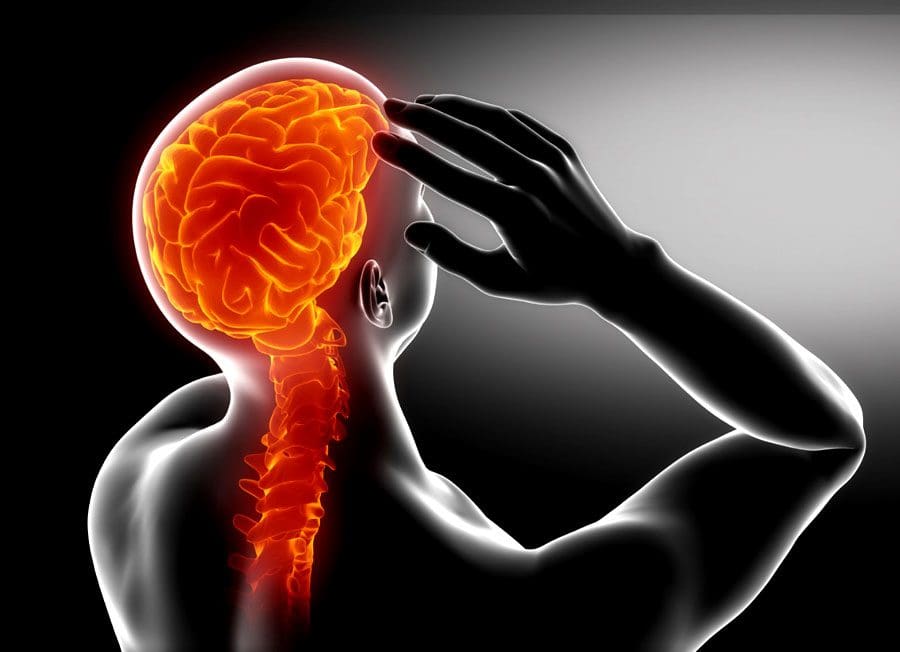
Headaches are a common condition that most experience and can differ greatly regarding type, severity, location, and frequency. Headaches range from mild discomfort to constant dull or sharp pressure and severe throbbing pain. A headache chiropractor, through therapeutic massage, decompression, and adjustments, alleviates the headaches, whether tension, migraine, or cluster, releasing the tension and restoring normal function.
Headache Chiropractor
Ninety-five percent of headaches are primary headaches caused by overactivity, muscle tension, or problems with pain-sensitive structures in the head. These are not a symptom of an underlying disease and include tension, migraine, or cluster headaches. The other 5 percent of headaches are secondaryand are caused by an underlying condition, infection, or physical issue. Headaches have various causes or triggers. These include:
Long hours driving
Stress
Insomnia
Blood sugar changes
Foods
Smells
Noises
Lights
Excessive exercise or physical activity
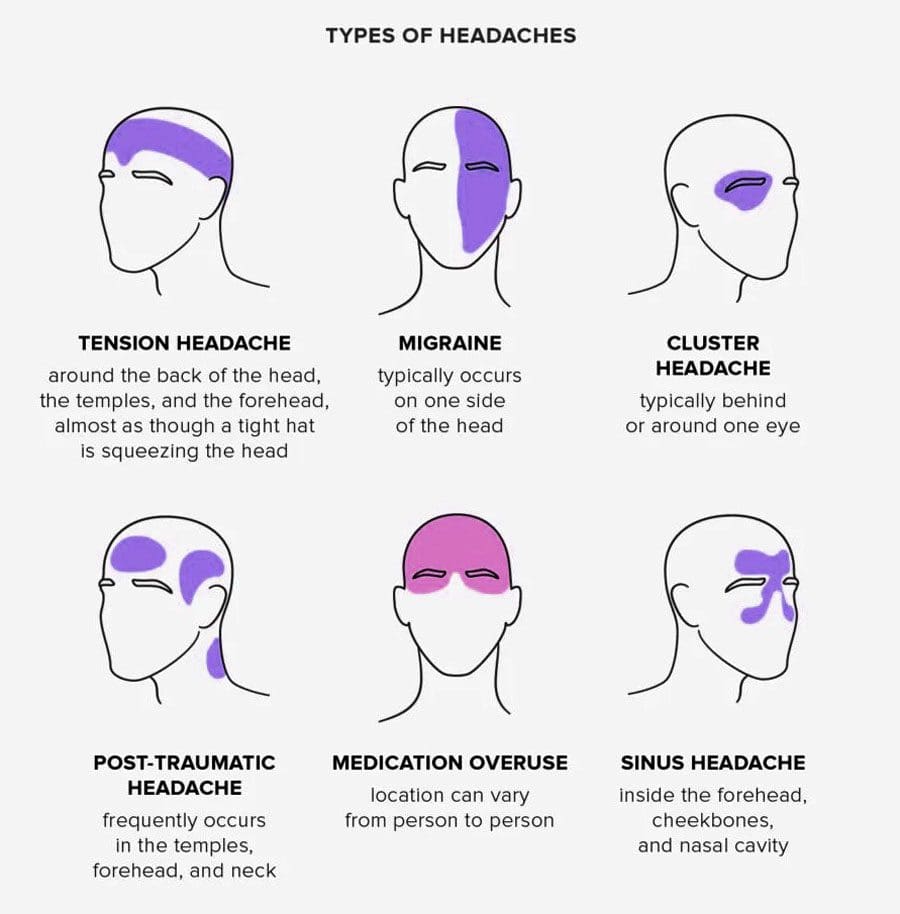
Individuals spend more hours in one fixed position or posture, like sitting in front of a computer or standing at a workstation. This can increase joint irritation and muscle tension in the upper back, neck, and scalp, causing achiness and discomfort that builds up to throbbing soreness. The headache’s location and the discomfort experienced can indicate the type of headache.
Chiropractic Care
Chiropractors are experts in the neuromusculoskeletal system. Research shows that a headache chiropractor can adjust the spine’s alignment to improve spinal function, release and relax the tense muscles, and alleviate nervous system stress helping decrease the intensity and frequency. Treatment includes:
The Injury Medical Chiropractic and Functional Medicine Teamwill develop a personalized treatment plan for the individual’s specific condition and needs.
Migraine Treatment
References
Biondi, David M. “Physical treatments for headache: a structured review.” Headache vol. 45,6 (2005): 738-46. doi:10.1111/j.1526-4610.2005.05141.x
Bronfort, G et al. “Efficacy of spinal manipulation for chronic headache: a systematic review.” Journal of manipulative and physiological therapeutics vol. 24,7 (2001): 457-66.
Bryans, Roland, et al. “Evidence-based guidelines for the chiropractic treatment of adults with headache.” Journal of manipulative and physiological therapeutics vol. 34,5 (2011): 274-89. doi:10.1016/j.jmpt.2011.04.008
Côté, Pierre, et al. “Non-pharmacological management of persistent headaches associated with neck pain: A clinical practice guideline from the Ontario Protocol for traffic injury management (OPTIMa) collaboration.” European journal of pain (London, England) vol. 23,6 (2019): 1051-1070. doi:10.1002/ejp.1374
One of the many muscles that help stabilize the shoulders and provide movement when the arms are in motion. The tricep muscles are one of the most underrated muscles that many people don’t seem to take care of when working out. The other muscles in the upper arms and shoulders are more likely to be worked on when it comes to being physically active. The deltoids, biceps, and brachialis muscles are some of the muscles that get much more attention when working on shoulder mobility. Still, the triceps provide the functionality to the shoulders as well. When the shoulders or the upper arms are injured and develop pain-like symptoms in the muscle groups, it can develop trigger points along the affected muscle. Today’s article looks at the tricep muscles, how trigger points affect them, and ways to manage trigger points along the tricep muscles. We refer patients to certified providers who specialize in arm pain treatments to aid individuals suffering from trigger points associated with the tricep muscles along the upper arms and elbows. We also guide and inform our patients by referring them to our associated medical providers based on their examination when appropriate. We established that education is a great solution to asking our providers profound questions the patient requests. Dr. Jimenez DC takes note of this information as an educational service only. Disclaimer
What Do The Tricep Muscles Do?
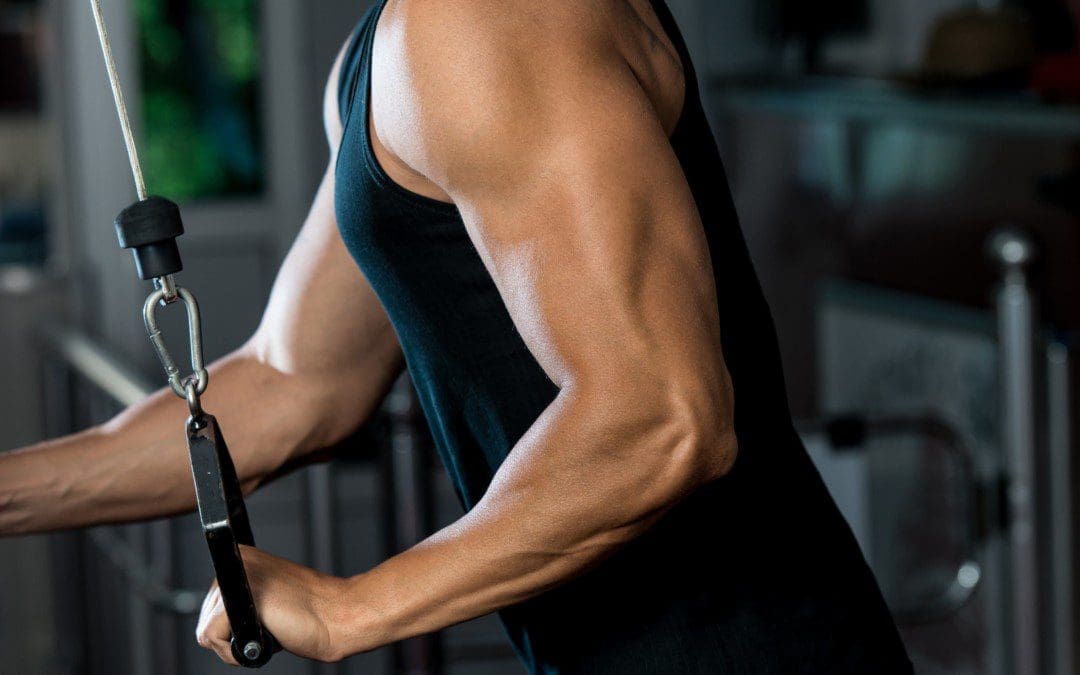
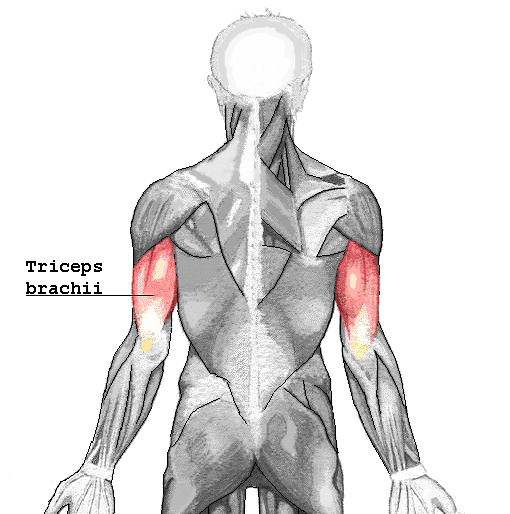
Do you experience pain underneath your forearm? How about feeling a dull ache on your elbows? Or do you feel a numbing sensation on your ring and pinky fingers? Individuals experiencing these symptoms in their arms could potentially develop trigger points along their tricep muscles. The tricep muscles are located under the upper arm and are a large, thick horseshoe-shaped muscle at the end of the arm. As stated earlier, the tricep muscles are one of the most underrated muscles in the arm that no one tends to work on during a workout, so they can be easily overlooked. However, the tricep muscles help in providing stability to the shoulders and help strengthen the arms. One of the main functions the triceps offer is that they allow the extension of the elbow joints. Studies reveal that the three head tendons that make up the triceps can influence elbow extension torque. The three heads of the triceps have different patterns of force when it comes to various activities during different shoulder evaluations. To that point, multiple combinations of the shoulder and elbows at different angles can affect the tricep’s shoulder extensions. Since many individuals don’t work on their triceps often, it can potentially develop issues that can make this underrated muscle weak.
How Trigger Points Affect The Tricep Muscles?
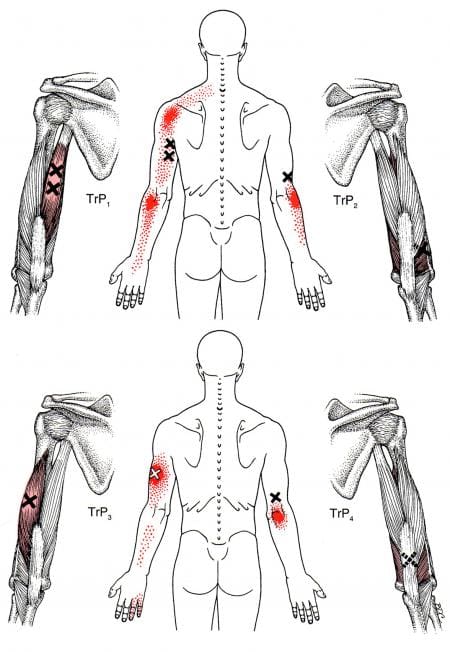
When the triceps don’t get worked on during a workout, it can lead to muscle weakness when doing pushups or when someone suffers from an injury with direct trauma in the elbows. When the tricep muscles become affected, it can lead to chronic conditions that are associated with myofascial pain or trigger points. Trigger points in the triceps can be formed when there are restrictions in extending the elbow joints. Studies reveal that when the triceps become overloaded from overusing the forearms from normal activities, it could potentially lead to tricep tendon rupture. To that point, which leads to the development of trigger points to invoke pain in the triceps and elbow joint. According to Dr. Janet Travell, M.D., trigger points associated with the tricep muscles could potentially involve referred pain in the vicinity of the elbow joints. What this refers to is that trigger points can mimic other chronic conditions so in this case, referred pain caused by trigger points associated with the tricep muscles can be mistakenly attributed to arthritis on the elbow joints. All is not lost, as there are ways to manage trigger points affecting the tricep muscles.
Treating Trigger Points On The Triceps- Video
Have you been experiencing pain in your shoulders, elbows, and hands? Do you have limited mobility when extending your elbows? Or do you notice that your triceps are weaker than normal? If you have been dealing with any of these symptoms, it could be due to trigger points associated with the tricep muscles that are causing referred pain to the upper arms and elbows. The triceps in the upper arms is one of the most underrated muscles people tend to overlook. When individuals begin to succumb to injuries that affect their triceps, it can lead to the development of trigger points along the muscle fibers in the tricep muscles. Trigger points can occur in the tricep muscles due to overusing the forearm muscles, causing stress in the elbow joint and the muscle itself. When the trigger points become active, it can lead to limited mobility to the elbow joint, causing the individual thinks they are developing arthritis when it is the trigger points causing the referred pain. There are ways that many people can manage trigger points associated with the elbows along the triceps to relieve the pain from the muscle. The video above shows where the active trigger points are located and how to release them through palpations and massage. Treating the trigger points along the tricep muscles allows many individuals to regain mobility in their elbows and upper arms.
Managing Trigger Points Along The Triceps
As stated earlier, the triceps are the underrated muscle that people tend to forget. When the tricep muscles succumb to trigger points, it can lead to referred pain along the elbow joints, causing pain-like symptoms affecting the elbow’s mobility function. When this happens to the upper arms, there are various ways to strengthen the tricep muscles and manage trigger points from developing in the future. Incorporating exercises targeting the tricep muscles can help improve mobility to the elbows and shoulders. If a person is playing sports like tennis, they can opt for a lighter racket and have a more lightweight grip on the handle. Suppose a person is in pain from their triceps. In that case, however, studies reveal that upper limb rehabilitation can help reduce the pain along the triceps and improve the mobility range caused by pain associated with trigger points. People can continue their daily activities without pain when they utilize these various ways to enhance their triceps’ functionality.
Conclusion
As the most underrated muscle that people tend to forget to work out, the tricep muscle can be overlooked. This large, thick horseshoe-shaped muscle has a job that provides stability to the shoulders and allows an extension to the elbow joints. When individuals don’t work on their tricep muscles, it can lead to muscle weakness and pain-like symptoms that lead to the development of trigger points. Trigger points associated with the tricep muscles can cause referred pain to the elbow joint, making many individuals believe they have arthritis. However, many individuals can regain mobility to their elbows by incorporating exercises targeting the triceps and utilizing treatments to manage trigger points along the muscle fibers. They can do daily activities that require the triceps without pain.
References
Landin, Dennis, et al. “Functions of the Triceps Brachii in Humans: A Review.” Journal of Clinical Medicine Research, Elmer Press, Apr. 2018, https://www.ncbi.nlm.nih.gov/pmc/articles/PMC5827912/.
Lennon, Olive, et al. “Effect of the Triceps Brachii Facilitation Technique on Scapulohumeral Muscle Activation during Reach and Point in a Healthy Population.” Physiotherapy Canada. Physiotherapie Canada, University of Toronto Press, 2019, https://www.ncbi.nlm.nih.gov/pmc/articles/PMC6855346/.
Mangano, Tony, et al. “Chronic Tendonopathy as a Unique Cause of Non Traumatic Triceps Tendon Rupture in a (Risk Factors Free) Bodybuilder: A Case Report.” Journal of Orthopaedic Case Reports, Indian Orthopaedic Research Group, 2015, https://www.ncbi.nlm.nih.gov/pmc/articles/PMC4719357/.
Tiwana, Manpreet S, et al. “Anatomy, Shoulder and Upper Limb, Triceps Muscle.” In: StatPearls [Internet]. Treasure Island (FL), StatPearls Publishing, 6 Aug. 2021, https://www.ncbi.nlm.nih.gov/books/NBK536996/.
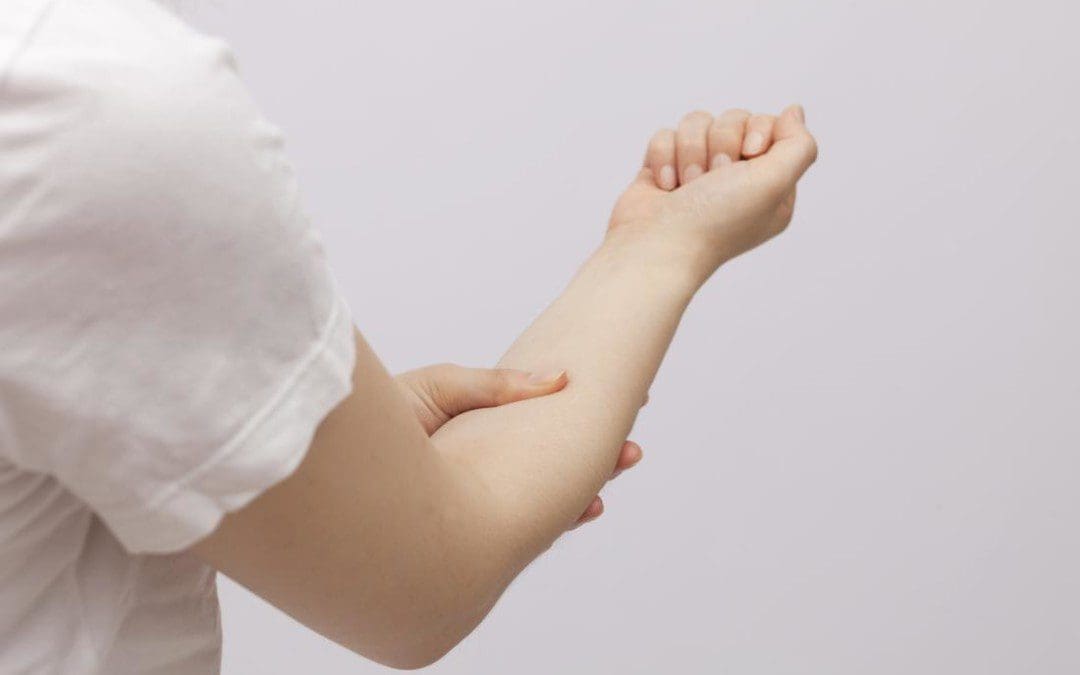
When it comes to the human body in motion, the arms can carry, lift, and move items from one place to another without pain. The arms have different muscles that work together to protect the arm and shoulder joints while providing mobility and movement. One of the muscles that help the arms carry items is the brachialis muscles, which work together with the bicep and tricep muscles. As part of the forearm, it can succumb to various injuries affecting the muscle, tendons, and ligaments. When this happens, referred pain can affect the arm and develop trigger points to overlap chronic conditions that can potentially cause more pain. Today’s article looks at the brachialis muscle’s function, how trigger points affect the muscle, and various ways to manage brachialis trigger points. We refer patients to certified providers who specialize in arm pain treatments to aid individuals suffering from trigger points associated with the brachialis muscles along the upper arms. We also guide and inform our patients by referring them to our associated medical providers based on their examination when appropriate. We established that education is a great solution to asking our providers profound questions the patient requests. Dr. Jimenez DC takes note of this information as an educational service only. Disclaimer
What Is The Brachialis Muscle Function?
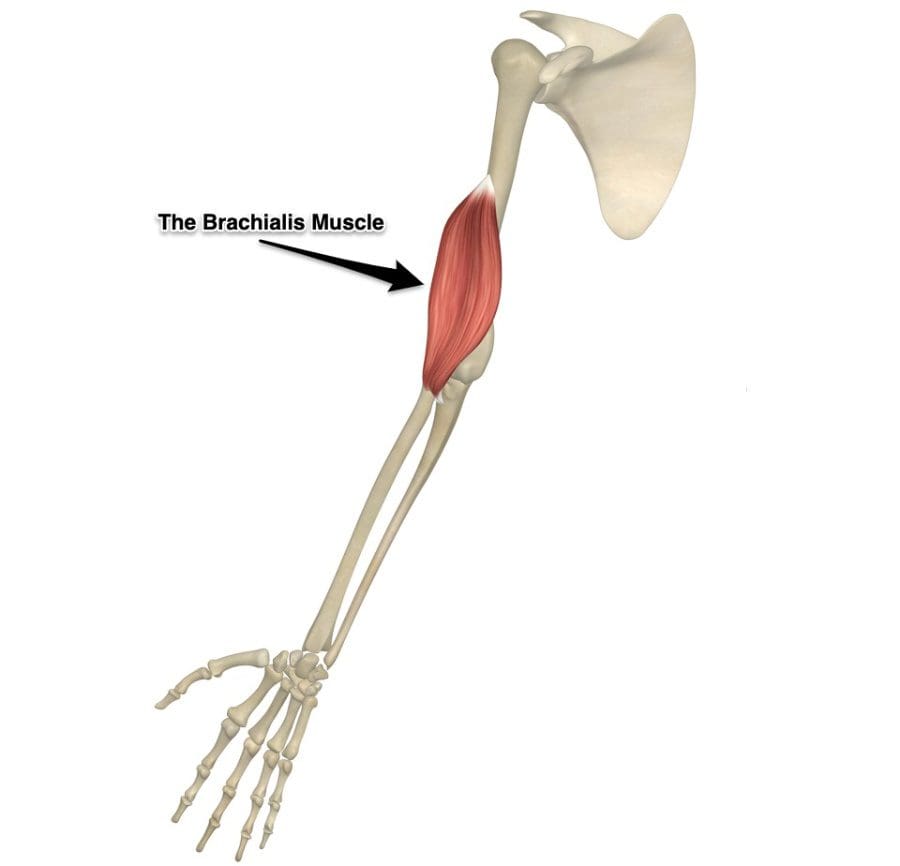
Have you been experiencing muscle strain in your forearms? What about stiffness in your wrist? Or do your arm muscles begin to spasm out of nowhere? Many people who have experienced these pain symptoms might be caused by trigger points associated with the brachialis muscle. The brachialis is an important muscle that flexes the forearm at the elbow. This muscle works with the biceps as it can carry heavy items, like the deltoid, and is the opposite of the tricep muscles. However, it can become overused and succumb to injuries that can invoke pain in the arm muscles, thus leading to the development of trigger points along the brachialis muscle.
How Does Trigger Points Affect The Brachialis Muscle?
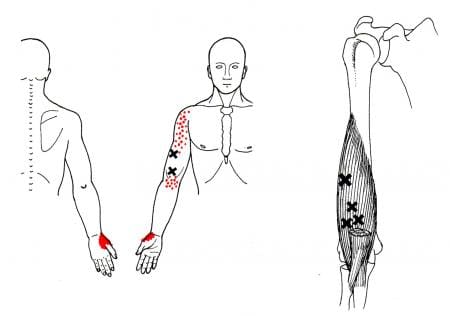
When the brachialis muscle becomes injured, many people will experience pain when flexing their elbows inward or outward. According to Dr. Travell, M.D., these pain symptoms may be due to referred pain and tenderness from brachialis trigger points or radial nerve entrapment. During heaving lifting, the forearm flexion stress overload activates trigger points along the brachialis. Studies reveal that excessive sudden physical stress or repetitive activities may result from a muscle sprain or tear in the brachialis muscle. To that point, these symptoms associated with trigger points can cause overlapping risk profiles that can mask the condition. Some of the conditions that can overlap and activate trigger points include:
Carrying heavy groceries
Holding power tools
Tennis elbow
Playing a string instrument
Studies also reveal that active trigger points along the affected muscle can increase weight coefficients and alter motor control without co-contraction patterns. This is due to trigger points becoming tricky to diagnose and mimic other conditions affecting the arms’ muscle group. Many people with pain-like symptoms associated with trigger points often complain about numbness or deep pain in their arms and hands. To that point, trigger points can also be involved with nerve entrapment in the brachialis muscles.
The Brachialis Trigger Points Release-Video
Have you been experiencing stiffness in your hands and arms? What about muscle spasms near your elbow? Or does constant pain affect your forearm muscles when you bend your arm? Many of these symptoms are associated with trigger points affecting the brachialis muscle that is causing pain in the forearms. Trigger points or myofascial pain syndrome can affect a person’s well-being by impairing their mobility in the affected areas, causing pain, and even reducing their overall sense of life. Trigger points affecting the brachialis muscles can mimic chronic conditions like nerve entrapment that can affect the motor function of the forearm. Luckily, trigger points are treatable, and there are ways to reduce the pain-like symptoms from the affected brachialis muscles. The video above shows how to treat trigger points along the forearm. Incorporating non-invasive treatments to reduce future trigger points to form can reduce the pain symptoms and release the trapped nerves that are causing motor function problems in the arms.
Ways To Manage Brachialis Trigger Points
As stated earlier, trigger points are tricky to diagnose since they can mimic other chronic conditions along the affected muscles. When the affected muscle succumbs to injuries and is not treated, it can develop tiny knots along the taut muscle band fibers known as trigger points over time. To that point, it can cause referred pain-like symptoms along the muscle group. Luckily, treatments can help reduce pain-like symptoms and prevent trigger points from forming along the muscle fibers. Studies reveal that trigger point injections are one of the various treatments that can help reduce pain in the brachialis muscle. With gentle stretching and physical therapy, allow mobility back to the arm. One way to manage brachialis trigger points that many people can use is to place a pillow at the angle of the elbow to prevent the arms from tightening or use a hot pack to relax the forearm muscles to relieve muscle strain and aches. Another way is not to overuse their forearms when playing an instrument or carrying items on their forearms. This can prevent trigger points from forming in the future and reduce pain-like symptoms from affecting the forearms.
Conclusion
The brachialis is the main muscle that is important to the forearms. This large muscle works with the bicep and tricep muscles to help the host carry heavy objects while bending at the elbows. However, like all the muscles in the body, the brachialis muscles can succumb to injuries and develop trigger points along the brachialis muscle fiber bands. Trigger points along the brachialis muscle are associated with pain-like symptoms that can mimic conditions like tennis elbow or nerve entrapment in the forearms. Fortunately, various treatments are utilized by doctors to help many patients dealing with trigger points along the brachialis muscle and can help reduce pain in the forearms. This allows mobility back to the arms and prevents future trigger points from forming.
References
Geri, Tommaso, et al. “Myofascial Trigger Points Alter the Modular Control during the Execution of a Reaching Task: A Pilot Study.” Scientific Reports, Nature Publishing Group UK, 5 Nov. 2019, https://www.ncbi.nlm.nih.gov/pmc/articles/PMC6831581/.
Plantz, Mark A, and Bruno Bordoni. “Anatomy, Shoulder and Upper Limb, Brachialis Muscle.” In: StatPearls [Internet]. Treasure Island (FL), StatPearls Publishing, 22 Feb. 2022, https://www.ncbi.nlm.nih.gov/books/NBK551630/.
Sharma, Pankaj, et al. “Isolated Traumatic Brachialis Muscle Tear: A Case Report and Review of Literature.” Bulletin of Emergency and Trauma, Shiraz University of Medical Sciences, Oct. 2017, https://www.ncbi.nlm.nih.gov/pmc/articles/PMC5694606/.
Suh, Mi Ri, et al. “Ultrasound-Guided Myofascial Trigger Point Injection into Brachialis Muscle for Rotator Cuff Disease Patients with Upper Arm Pain: A Pilot Study.” Annals of Rehabilitation Medicine, Korean Academy of Rehabilitation Medicine, Oct. 2014, https://www.ncbi.nlm.nih.gov/pmc/articles/PMC4221396/.
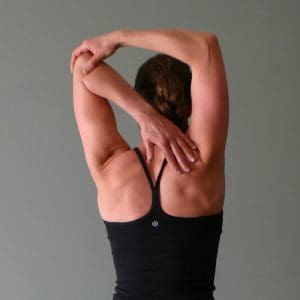
The upper arms allow the individual to move the arms, hands, and fingers, enabling them to do everyday activities without feeling pain or injuries. Different muscles in the upper arms allow precise movements, from threading a needle to throwing a ball across the field. These muscles also work with the shoulders, allowing a full range of motion and flexion. One of the muscles that help the upper arms is the bicep brachii, which provide flexion to the arm. However, like all the muscles in the body, they can succumb to pain caused by trigger points. Today’s article looks at the bicep muscles’ function, how trigger points affect the muscles, and how to manage trigger points associated with the bicep muscles. We refer patients to certified providers who specialize in arm pain treatments to aid individuals suffering from trigger points associated with the bicep brachii muscles along the upper arms. We also guide and inform our patients by referring them to our associated medical providers based on their examination when appropriate. We established that education is a great solution to asking our providers profound questions the patient requests. Dr. Jimenez DC takes note of this information as an educational service only. Disclaimer
What Are The Bicep Muscles Function?
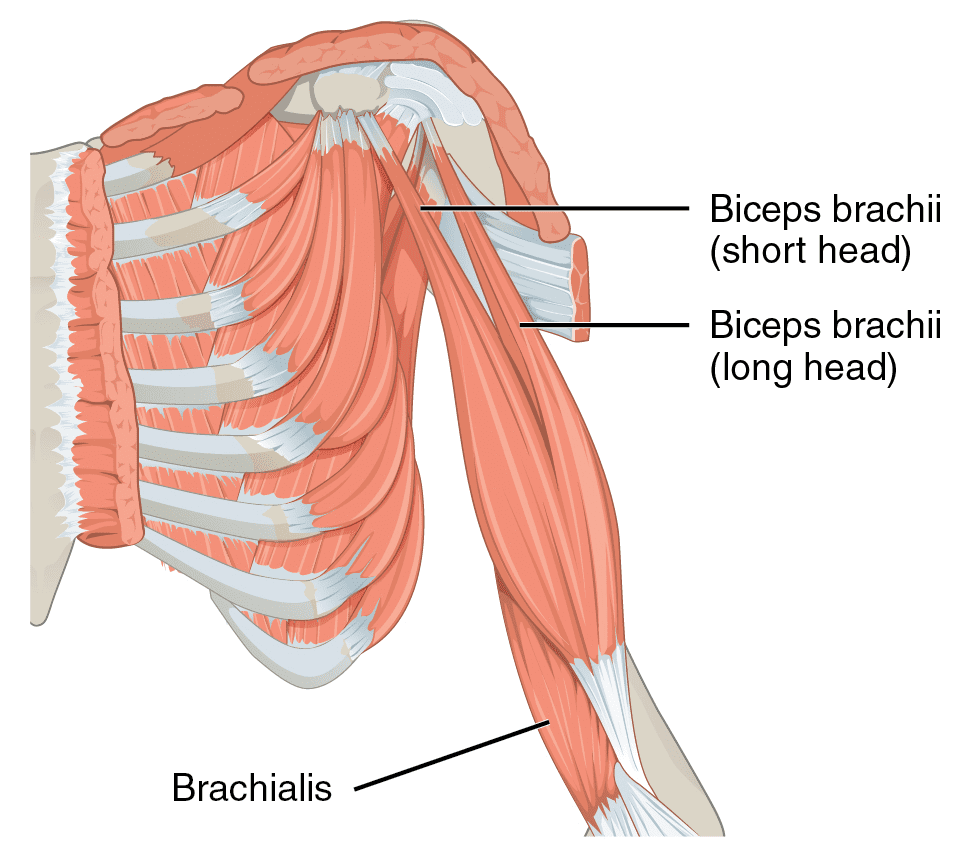
Have you been dealing with radiating pain down to your elbow? Do your upper arm muscle ache when carrying items from place to place? Or have you experienced muscle spasms in your arms and hands? Many people experiencing these symptoms might risk developing trigger points along their bicep muscles. The bicep brachii is a large, thick muscle that covers the joints and is located in the upper arms. The bicep muscle consists of two attachments: the short head (caput breve) and the ling head (caput longum). It works together with the coracobrachialis muscle to support stability to the shoulders.
Studies reveal that these two muscle bands work together to provide multiple actions between the shoulder and elbow joints by being in conjunction with the other muscles. The main function of the bicep muscles is that it is one of the three muscles that can flex the elbow and shoulders. The biceps also allow flexion and supination or outward rotation of the forearms at 90 degrees. This muscle is very important for athletes that require lifting, carrying, or throwing and can make the individual stronger. To that point, the bicep muscle can also succumb to injuries that can cause pain to the upper arms and shoulders.
How Does Trigger Points Affect The Bicep Muscles?
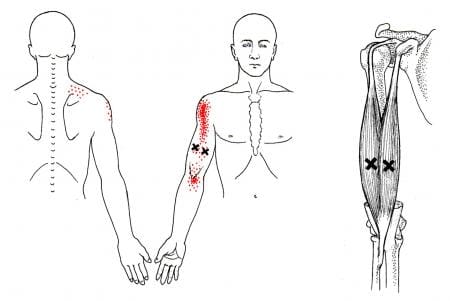
When the bicep muscles succumb to injuries, it can be due to overusing the long head of the bicep muscles and can lead to bicep tendon rupture. When the bicep muscle succumbs to a tendon rupture, it is due to excessive eccentric force that brings the arms to an extension rather than flexion. Other issues affecting the biceps can correlate to rotator cuff pathology and can be associated with being a common source of shoulder pain. Studies reveal that since the bicep is closely associated with the rotator cuff, tendinopathy can form due to repetitive traction, friction, and rotation of the shoulder joints. To that point, it can lead to the development of trigger points along the bicep muscles. Trigger point pain can be complicated to diagnose since it can mimic other chronic conditions. For trigger points to occur along the bicep muscles, pain-like symptoms are caused when the arm is above the shoulder. To that point, it causes symptoms of aches, stiffness, and muscle weakness in the bicep muscles.
Trigger Points Affecting The Bicep Brachii- Video
Have you experienced muscle aches and stiffness when lifting your arms above your shoulders? Do you find difficulty to bend your elbows? Or have you been experiencing radiating pain along the shoulders, arms, and hands? These pain-like symptoms are associated with trigger points along the bicep muscles and can evoke motor dysfunction in the upper arms. The video above gives an overview how trigger points affect the bicep brachii and cause symptoms like “frozen shoulder” to affect the entire arm. Studies reveal that trigger points are the most frequent causes of chronic musculoskeletal pain that causes the muscle tissue to become hyperirritable. Trigger points can also cause referred pain to the affected muscles, causing limited range of motion to the joints. When the bicep muscles are being affected by trigger points, it can cause stress on the muscle and cause hyper-extension to the arm. According to Dr. Travell, M.D., when trigger points affect the bicep brachii muscles and cause referred pain and tenderness on the ball-and-socket joint, the symptoms associated with trigger points are mistaken as a rheumatic joint disease unless the affected bicep is examined for trigger points. Thankfully, there are ways to manage trigger points associated with the bicep muscles to reduce pain in the upper arms.
Managing Trigger Points Associated With The Bicep Muscles
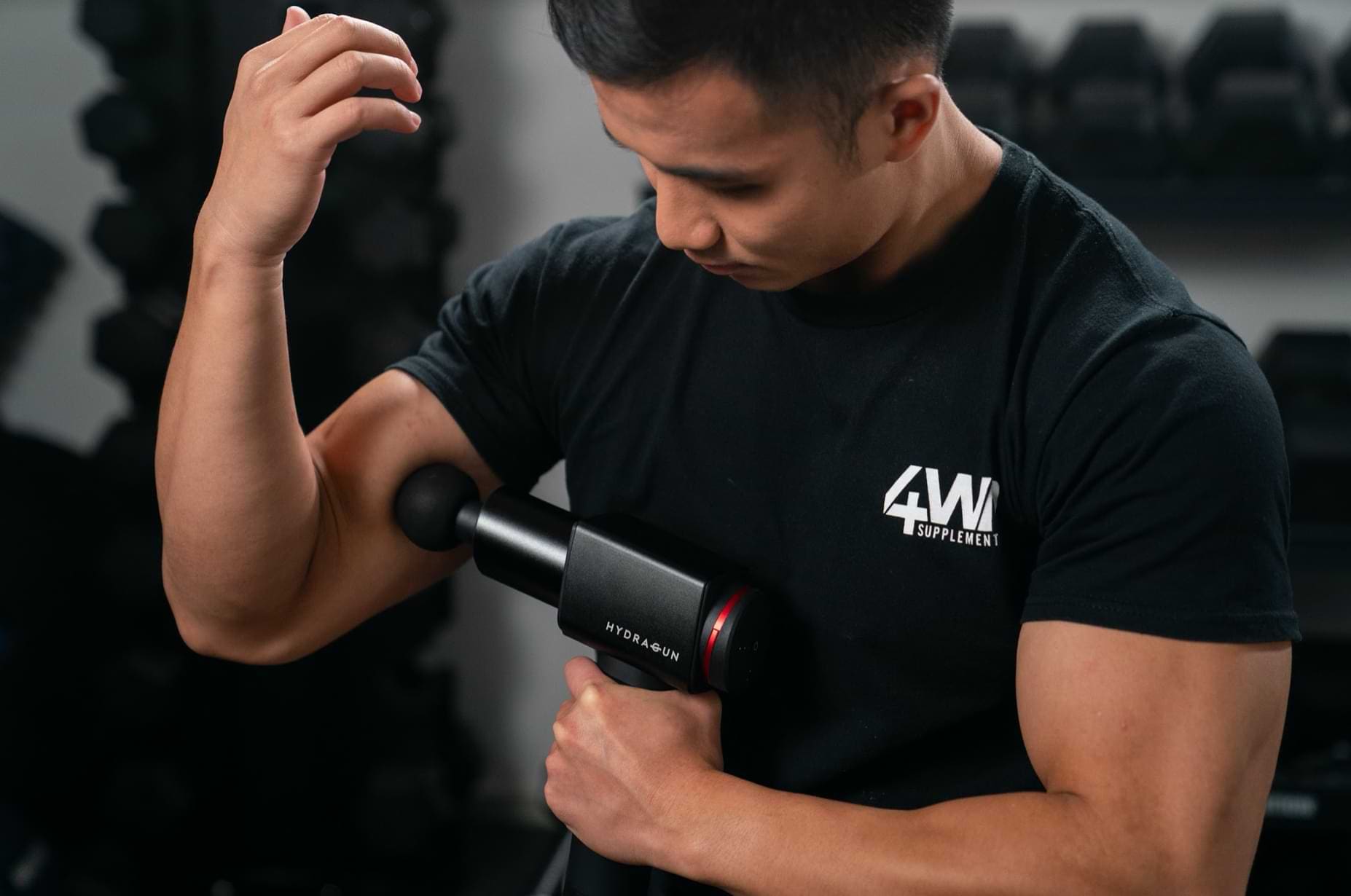
When individuals are suffering from pain along their bicep muscles, it can cause them to be miserable as they cannot participate in various activities that require their arms; when trigger points are formed along the taut muscle band of the bicep muscles, the radiating pain from the shoulder to the elbow, causing stiffness and muscle aches. Fortunately, various techniques can help manage trigger points associated with the bicep muscles. Studies reveal that many people can manage trigger points related to the bicep muscles to reduce shoulder pain by resting, modifying their activities, and seeking more non-invasive treatments to reduce the pain associated with the bicep muscles. Many people can do various arm and shoulder stretches to reduce the stiffness of the bicep muscles. This allows gentle stretching along the upper arm muscles and releases tension through slow, even breathing and prolonged shortening of the bicep muscles.
Conclusion
The bicep has two attachments that provide mobility and are a large thick muscle that covers the upper arm joints. The bicep muscles also work together with the coracobrachialis muscle to help support the shoulders by making them stable. When the bicep muscles become overused and succumb to injuries, they can develop trigger points along the bicep muscles, causing referred pain to the arms and shoulders. When this happens, the muscles become stiff and can become painful when doing simple actions like lifting their arms or playing a sport. When this happens, many individuals become miserable since they can’t participate. Fortunately, various techniques can help reduce the pain symptoms in the arms and prevent future injuries. Gentle stretching and muscle massages can release the trigger points from the bicep muscles and improve arm mobility to the biceps.
References
Akamatsu, Flávia Emi, et al. “Trigger Points: An Anatomical Substratum.” BioMed Research International, Hindawi Publishing Corporation, 2015, https://www.ncbi.nlm.nih.gov/pmc/articles/PMC4355109/.
Landin, Dennis, et al. “Actions of the Biceps Brachii at the Shoulder: A Review.” Journal of Clinical Medicine Research, Elmer Press, Aug. 2017, https://www.ncbi.nlm.nih.gov/pmc/articles/PMC5505302/.
McDevitt, Amy W, et al. “Physical Therapy Interventions for the Management of Biceps Tendinopathy: An International Delphi Study.” International Journal of Sports Physical Therapy, NASMI, 1 June 2022, https://www.ncbi.nlm.nih.gov/pmc/articles/PMC9159730/.
Raney, Elise B, et al. “Pain and the Pathogenesis of Biceps Tendinopathy.” American Journal of Translational Research, e-Century Publishing Corporation, 15 June 2017, https://www.ncbi.nlm.nih.gov/pmc/articles/PMC5489872/.
Tiwana, Manpreet S, et al. “Anatomy, Shoulder and Upper Limb, Biceps Muscle.” In: StatPearls [Internet]. Treasure Island (FL), StatPearls Publishing, 11 Aug. 2021, https://www.ncbi.nlm.nih.gov/books/NBK519538/.
IFM's Find A Practitioner tool is the largest referral network in Functional Medicine, created to help patients locate Functional Medicine practitioners anywhere in the world. IFM Certified Practitioners are listed first in the search results, given their extensive education in Functional Medicine




 Headache Chiropractor