Incorrect manual handling and lifting is a leading cause of workplace injuries. Can health and safety training help reduce injuries and lost workdays?
Correct Manual Lifting Technique
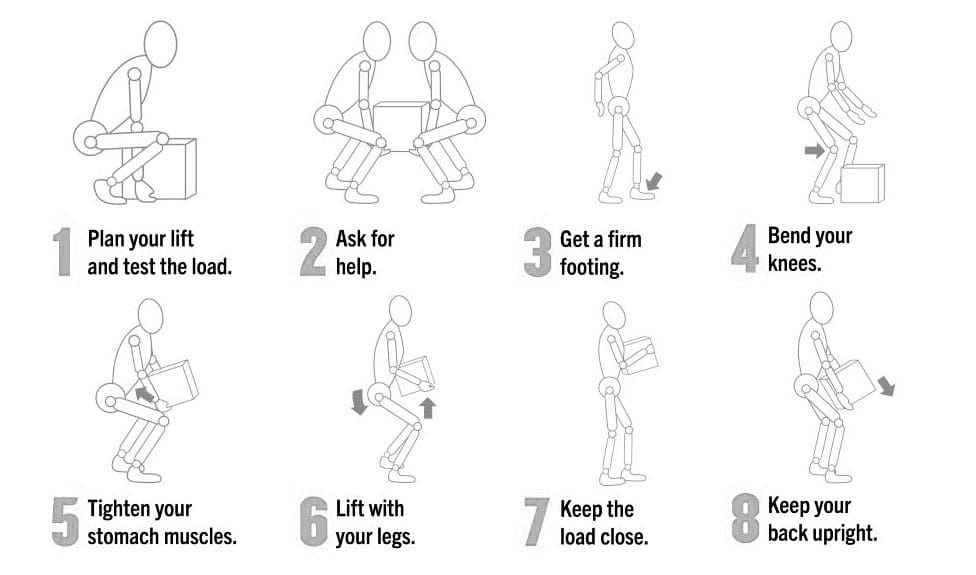
Manually lifting objects using incorrect techniques can lead to acute back injuries, herniated discs, sciatica, and long-term issues like increased risk of reinjury, body misalignment, and chronic back pain. Individuals can prevent spinal disc compression and/or lower back muscle strain by learning to use correct manual lifting techniques. (CDC. The National Institute for Occupational Safety and Health (NIOSH). 2007)
Lifting Guide
Individuals can protect their backs and prevent injury by following simple steps when lifting objects.
Support Base
Ensure there is a healthy support base from which to lift.
Keep feet shoulder-width apart with one foot slightly in front of the other.
Ask For Help
If coworkers or colleagues are available, ask for assistance.
If the load is too heavy, ask for help lifting and moving the object/s.
Use Mechanical Assistant Devices
Use hand trucks, dollies, or pushcarts whenever possible for uneven and heavy loads.
Squat To Lift Object
Bend at the hips and knees only, not the back.
Put one knee on the ground to ensure stability before lifting.
Check Posture
Looking straight ahead, maintain posture upright with the chest out, shoulders back, and lower back slightly arched.
Lift Slowly
Lift with the knees and hips only, gradually straightening the lower back.
Load Positioning
Once upright, hold the load close to the body around the stomach.
Move and Maintain Alertness
Always take small steps.
Maintain alertness as to where you are going.
Keep the shoulders square with the hips when changing directions to avoid twisting and losing or shifting balance.
Rest
If you are fatigued, set the load/object down and rest for a few minutes until you can fully engage in the task.
Squat To Set Object Down
Squat with the knees and hips and set the load down slowly.
Avoid quickly rising and jerking movements, and allow the legs, hips, and back muscles to reset.
Planning and Tips
Lifting anything heavy takes planning to prevent muscle spasms, back strain, and other musculoskeletal injuries. Considerations to keep in mind:
Make a Plan Before Lifting
Knowing what object/s are being lifted and where they are going will prevent individuals from making awkward movements while holding and carrying something heavy.
Set and clear a path.
If lifting something with another person, ensure both agree and understand the plan.
Lift Close to The Body
Individuals are stronger and more stable lifters if the object is held close to their body rather than at the end of their reach.
Make sure there is a firm hold on the object.
It is easier to maintain balance close to the body.
Maintain Feet Shoulder-Width Apart
Keep the feet about shoulder-width apart.
Having a solid base of support is important while lifting.
Placing the feet too close together will cause instability while placing them too far apart will hinder movement.
Take short steps.
Visualize The Motions Involved and Practice The Motions Before Lifting
Think about the motion before lifting.
Practice the lifting motion before lifting the object.
Focus on keeping the spine straight.
Raise and lower to the ground by bending the knees.
Avoid bending at the waist or hips.
Tighten the Stomach Muscles
Tightening the abdominal muscles will hold the back in a healthy lifting position and help prevent excessive force on the spine.
Lift With the Legs
The legs are stronger than the back muscles, so let the leg strength do the work.
Lower yourself to the ground by bending the knees, not the back.
Keep Eyes Up
Looking slightly upwards will help maintain a better spine position and help keep the back straight.
Avoid Twisting or Bending
Face in the direction you are walking.
Stop, take small steps, and continue walking if turning is required.
Back Belts
It has become common for many who work in jobs requiring manual lifting to wear back belts or support. However, research does not show that they decrease the risk of a lifting injury. (CDC and The National Institute for Occupational Safety and Health, 2023) Instead, it is recommended that the belt be thought of as a reminder of where the back muscles are positioned to keep the individual aligned, combined with the correct lifting techniques.
Injury Medical Chiropractic and Functional Medicine Clinic
Training the body and maintaining its optimal health for correct manual lifting techniques requires daily efforts through practice, conscious position corrections, and ergonomics. Injury Medical Chiropractic and Functional Medicine Clinic works with primary healthcare providers and specialists to develop an optimal health and wellness solution. We focus on what works for you to relieve pain, restore function, and prevent injury. Regarding musculoskeletal pain, specialists like chiropractors, acupuncturists, and massage therapists can help mitigate the pain through spinal adjustments that help the body realign itself. They can also work with other medical professionals to integrate a treatment plan to resolve musculoskeletal issues.
Chiropractic Care For Injury Recovery
References
CDC. The National Institute for Occupational Safety and Health (NIOSH). (2007). Ergonomic Guidelines for Manual Material Handling. (No. 2007-131). Retrieved from https://www.cdc.gov/niosh/docs/2007-131/pdfs/2007-131.pdf
CDC. The National Institute for Occupational Safety and Health (NIOSH) (2023). Back Belts – Do They Prevent Injury? (No. 94-127). Retrieved from https://www.cdc.gov/niosh/docs/94-127/
For individuals who are feeling back pain, neck pain, or shoulder pain, can using postural techniques help decrease pain and develop strategies to maintain correct posture?
Maintaining Correct Posture
Exercise and postural correction are two of the most important strategies to manage pain. (Robin McKenzie, the great spine guru PT, (May S. and Donelson R. 2008) However, it is not easy to maintain correct posture as the day progresses. While working or driving, most of us forget to be mindful of our posture; we slip back into unhealthy habits of sitting slouched, to the side, forward, etc, which often leads to continued pain and movement limitations. Studies on postural correction and its effect on overall back or neck pain levels are limited. (Lederman E. 2011) However, some studies show that a forward-head posture increases stress and load on the neck. (Hansraj K. K. 2014) If an individual has pain that improves with sitting upright, perhaps checking posture as the day progresses could be beneficial. There are ways to start changing posture and maintain the change. First, visit a physical therapist, spine specialist, or chiropractor to learn how to sit or stand to manage posture problems. They can teach individuals how to attain healthy posture and manage their condition. These strategies can then be used to maintain correct posture.
Lumbar Support
A lumbar roll/support is one of the simplest ways to attain and maintain a healthy sitting posture. These specialized pillows can help maintain the forward curve in the lower back. Maintaining the lumbar lordosis curve is essential for keeping stress off the back muscles, joints, and discs. Lumbar support pillows can be found in various stores, office supply stores, or purchased online. A physical therapist PT can help train individuals to use a lumbar roll properly.
Utilize the Slouch Overcorrect Exercise
The slouch overcorrect exercise is a simple maneuver for training the body to find and maintain its neutral position. It involves slowly shifting from a slouched position to an overcorrected postural position. Once posture is overcorrected, a slight relaxation from a fully erect posture will return to sitting properly. Practicing this exercise daily can help train the body to feel the muscles, listen to the body, and maintain proper posture. The muscles have memory, and the more often the body is placed in optimal posture, the muscles memorize their healthy, pain-free positioning.
Kinesiology Tape
Kinesiology tape is a flexible cotton adhesive that facilitates muscle contractions and inhibits muscle spasms and pain. (Han J. T. et al., 2015) Using the tape is a simple way to help facilitate the postural support muscles. The tape can be applied to the middle trapezius and rhomboid muscles to help support the shoulder blades and spine. Kinesiology tape for postural control also gently pulls on the muscles when slouching to remind the individual to sit up or stand straight.
Scapular Stabilization Exercises
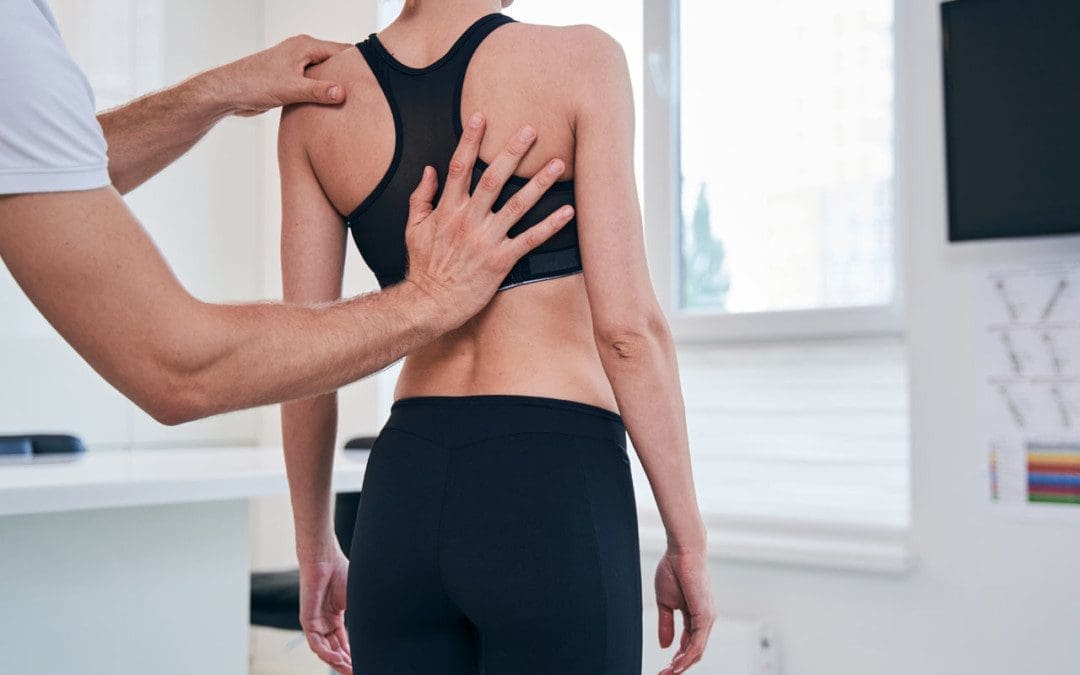
A physical therapist or chiropractor can help improve posture through targeted exercises. Strengthening the muscles attached to the shoulder blades can help individuals better control their posture. (Shiravi S. et al., 2019) Exercises like the prone T, I, or Y can help improve the muscles’ neuromuscular recruitment to maintain correct posture.
Use an Alarm
Setting an alarm while working can help train the body to maintain correct posture. Most of us sit at a computer, desk, or workstation with proper posture, but depending on what we’re working on, we eventually slouch, lean to the side, or have a forward head posture. Pretty much all computers and phones have an alarm setting or app. Use the alarm or timer to go off every 20 to 30 minutes. When the alarm rings, look at your posture to recognize what you’re doing, get up and move around to stretch the body, sit and readjust, reset the alarm, and continue working. As you get better at maintaining appropriate posture, you won’t need the alarm anymore, and readjusting will become automatic.
Chiropractic Team
Sitting and standing with unhealthy posture can significantly cause back, neck, and shoulder pain. By visiting a chiropractic and physical therapy team and learning to attain and maintain correct posture, you can quickly relieve pain, resolve musculoskeletal issues, and prevent future pain symptoms. Injury Medical Chiropractic and Functional Medicine Clinic works with primary healthcare providers and specialists to develop a personalized care plan for each patient through an integrated approach to treating injuries and chronic pain syndromes, improving flexibility, mobility, and agility programs to relieve pain and help return to normal and optimal function. If other treatments are needed, Dr. Jimenez has teamed up with top surgeons, clinical specialists, medical researchers, and rehabilitation providers to provide the most effective treatments.
Scapular Winging In-Depth
References
May, S., & Donelson, R. (2008). Evidence-informed management of chronic low back pain with the McKenzie method. The spine journal : official journal of the North American Spine Society, 8(1), 134–141. https://doi.org/10.1016/j.spinee.2007.10.017
Lederman E. (2011). The fall of the postural-structural-biomechanical model in manual and physical therapies: exemplified by lower back pain. Journal of bodywork and movement therapies, 15(2), 131–138. https://doi.org/10.1016/j.jbmt.2011.01.011
Hansraj K. K. (2014). Assessment of stresses in the cervical spine caused by posture and position of the head. Surgical technology international, 25, 277–279.
Han, J. T., Lee, J. H., & Yoon, C. H. (2015). The mechanical effect of kinesiology tape on rounded shoulder posture in seated male workers: a single-blinded randomized controlled pilot study. Physiotherapy theory and practice, 31(2), 120–125. https://doi.org/10.3109/09593985.2014.960054
Shiravi, S., Letafatkar, A., Bertozzi, L., Pillastrini, P., & Khaleghi Tazji, M. (2019). Efficacy of Abdominal Control Feedback and Scapula Stabilization Exercises in Participants With Forward Head, Round Shoulder Postures and Neck Movement Impairment. Sports health, 11(3), 272–279. https://doi.org/10.1177/1941738119835223
For individuals wanting to improve core stability, can using the right size exercise or stability ball help improve workouts and achieve goals?
Exercise Stability Ball
An exercise ball, stability ball, or Swiss ball is a piece of fitness equipment used in gyms, Pilates and yoga studios, and HIIT classes. (American Council on Exercise. 2014) It is inflated with air to supplement bodyweight workouts or improve posture and balance. It can also be used as a chair. They add a core stability challenge to almost any exercise (American Council on Exercise, N.D.) Getting the appropriate exercise ball size and firmness for your body and purpose will ensure an optimal workout.
Size
The exercise ball size should be proportional to individual height.
Individuals should be able to sit on the ball with their legs at a 90-degree angle or slightly more, but not less.
The thighs should be parallel to the ground or angled slightly down.
With the feet flat on the floor and the spine straight, not leaning forward, backward, or sideways, the knees should be even with or slightly lower than the hips.
Getting the right exercise ball for weight is also important. Individuals who are heavy for their height may need a larger ball to keep the knees and legs at the correct angle. It is recommended to check the weight rating of the ball, its durability, and its high burst resistance before buying.
Inflation
Individuals want a little give on the ball’s surface for exercise. When sitting on the exercise stability ball, body weight should create a little seat and provide more stability. More importantly, it allows sitting evenly on the ball, which is essential for exercising with proper spinal alignment. (Rafael F. Escamilla et al., 2016) Inflation is a matter of preference, but the more inflated the ball is, the more difficult it will be to balance the body, whether sitting or in other positions. It is recommended not to over-inflate the ball at the risk of bursting. The ball may require reinflation occasionally, so many are sold with a small pump for this purpose.
Exercises and Stretches
Exercise balls are highly versatile, inexpensive, and easy-to-use workout tools. They are beneficial for improving core strength and stability. Ways to be used include:
Target exercises for core activation and strengthening.
At Injury Medical Chiropractic and Functional Medicine Clinic, we focus on what works for you and strive to create fitness and better the body through research methods and total wellness programs. These natural programs use the body’s ability to achieve improvement goals and athletes can condition themselves to excel in their sport through proper fitness and nutrition. Our providers use an integrated approach to create personalized programs, often including Functional Medicine, Acupuncture, Electro-Acupuncture, and Sports Medicine principles.
Home Exercises For Pain Relief
References
American Council on Exercise. Sabrena Jo. (2014). Core-strengthening Stability Ball Workout. ACE Fitness® & Healthy Lifestyle Blog. https://www.acefitness.org/resources/pros/expert-articles/5123/core-strengthening-stability-ball-workout/
American Council on Exercise. (N.D.). Exercise Database & Library. Featured Exercises from ACE. Stability Ball. Healthy Living Blog. https://www.acefitness.org/resources/everyone/exercise-library/equipment/stability-ball/
American Council on Exercise. (2001). Strengthen your abdominals with stability balls. Healthy Living Blog. https://acewebcontent.azureedge.net/assets/education-resources/lifestyle/fitfacts/pdfs/fitfacts/itemid_129.pdf
Escamilla, R. F., Lewis, C., Pecson, A., Imamura, R., & Andrews, J. R. (2016). Muscle Activation Among Supine, Prone, and Side Position Exercises With and Without a Swiss Ball. Sports health, 8(4), 372–379. https://doi.org/10.1177/1941738116653931
Can improving breathing patterns help further fitness and optimize overall health for individuals who walk for exercise?
Improve Breathing and Walking
Exercising is a moment in which breathing can quicken and become labored if not done correctly. There is a proper way to breathe when exercising, especially when walking or speed walking. Breathing incorrectly causes rapid fatigue and exhaustion. Controlling the flow of one’s breath improves endurance and cardiovascular health, and it can also amplify metabolism, mood, and energy levels. (Hsiu-Chin Teng et al., 2018) Known as diaphragmatic breathing, it is used for those with reduced lung capacity, like individuals with chronic obstructive pulmonary disease/COPD. The practice improves lung capacity and is a recommended way to help relieve stress.
Physiology
During exercise, the oxygen inhaled converts the calories consumed into energy that fuels the body. This process is referred to as metabolism.
When the oxygen supply exceeds the body’s oxygen needs, the body is in an aerobic state. This means there is plenty of oxygen to fuel physical activity/exercise as there are calories to burn.
If the oxygen supply falls short of the body’s oxygen needs, the body falls into an anaerobic state.
Deprived of oxygen, the body turns to stored fuel in the muscles, known as glycogen.
This delivers a powerful burst of energy, but the fuel is quickly spent and fatigue and exhaustion soon follow.
Increasing airflow in and out of the lungs can prevent early exhaustion and help the body burn calories more effectively. (Your lungs and exercise. Breathe 2016)
Improved Breathing Benefits
Optimal breathing starts in infancy. When a baby breathes, their belly rises and falls. This facilitates respiration by pushing and pulling the diaphragm – the muscle that separates the lungs and abdominal cavity. When the baby inhales, the belly extends, pulling the diaphragm downward and allowing the lungs to fill with air. When the baby exhales, the belly draws in, pressing the diaphragm upward and forcing air out. As the body ages and the capacity of the lungs increases, individuals shift from belly-breathing to chest-breathing. Chest breathing involves the chest wall muscles with little use of the diaphragm. Chest breathing usually provides enough air for everyday activity but does not fill the lungs.
This is why individuals resort to mouth-breathing or gasping when the oxygen supply is limited. Even those in decent physical shape may be inadvertently undermining efforts by sucking in their stomach to look thinner, depriving themselves of complete inhalations and exhalations. To overcome this, individuals need to re-train their bodies to activate the abdominal muscles when walking. Belly or diaphragmatic breathing can extend the duration of exercise while strengthening the core muscles. (Nelson, Nicole 2012) By increasing core stability, individuals can better support the spine and maintain a healthy posture when walking. This stabilizes the hips, knees, upper back, and shoulders, making the body less prone to strain, instability, and fatigue from unhealthy posture. (Tomas K. Tong et al., 2014)
Breathing Correctly
The inhalation draws the belly out, pulls the diaphragm down, and inflates the lungs. Simultaneously, it extends the ribcage and lengthens the lower spine. This forces the shoulders and collarbone backward, further opening the chest. Exhaling does the reverse.
Walking
Start by inhaling and exhaling through the nose, ensuring that the inhalation duration matches the exhalation duration. When picking up the pace, individuals can resort to mouth-breathing, maintaining the same inhalation/exhalation rhythm. At no time should breathing be held in. Learning diaphragmatic breathing takes time, but the following steps can be a starting point:
Inhale by inflating the belly fully on a count of five.
Allow the lungs to fill, drawing the shoulders back as this happens.
Exhale by pulling the belly button toward the spine on a count of five.
Use the diaphragm to press the air out of the lungs, keeping the spine erect.
Repeat.
If unable to maintain a count of five, individuals can shorten the count or slow the pace of the walk. Individuals in good shape may be able to extend the count. Initially, diaphragmatic breathing may not come naturally, but it will become automatic with practice. Stop and place the hands over the head if short of breath when walking. Breathe in and out deeply and evenly until breathing returns to normal.
Unlocking Wellness
References
Teng, H. C., Yeh, M. L., & Wang, M. H. (2018). Walking with controlled breathing improves exercise tolerance, anxiety, and quality of life in heart failure patients: A randomized controlled trial. European journal of cardiovascular nursing, 17(8), 717–727. https://doi.org/10.1177/1474515118778453
Your lungs and exercise. (2016). Breathe (Sheffield, England), 12(1), 97–100. https://doi.org/10.1183/20734735.ELF121
Tong, T. K., Wu, S., Nie, J., Baker, J. S., & Lin, H. (2014). The occurrence of core muscle fatigue during high-intensity running exercise and its limitation to performance: the role of respiratory work. Journal of sports science & medicine, 13(2), 244–251.
Nelson, Nicole MS, LMT. (2012). Diaphragmatic Breathing: The Foundation of Core Stability. Strength and Conditioning Journal 34(5):p 34-40, October 2012. | DOI: 10.1519/SSC.0b013e31826ddc07
Posture is how we hold our bodies while standing, sitting, or lying down. A healthy posture is the correct alignment of the body supported by the right amount of muscle tension. Our everyday movements and activities affect the body’s alignment. A postural imbalance can impact the body’s health in various ways. It can cause:
General soreness
Back pain
Muscular pain
Fatigue
Digestive problems
Poor self-esteem
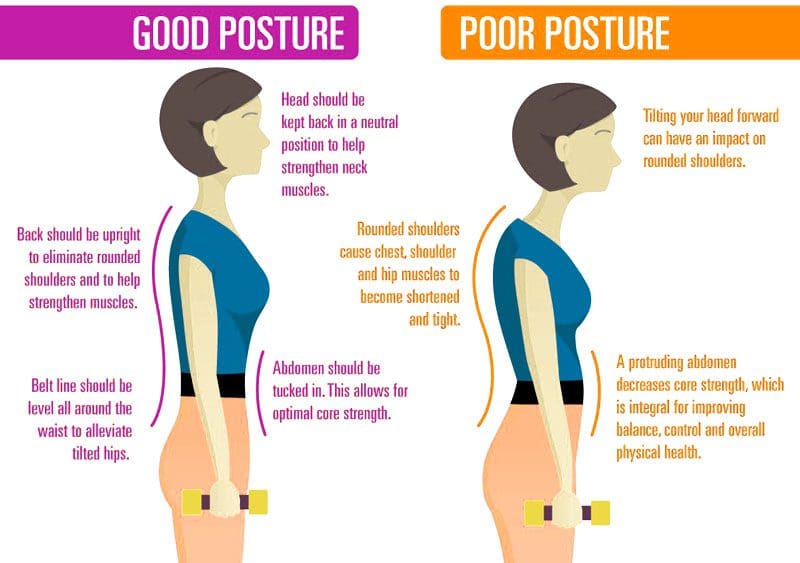
Unhealthy posture can increase the risk of spinal dysfunction, joint degeneration, stress joints, and muscles, resulting in permanent damage if left untreated. The best way to prevent postural imbalances is to be aware of the causes utilize proper ergonomic and movement strategies that can help avoid these problems. As the everyday bad habits, behaviors, and activities are understood, it is much easier to prevent and correct them.
Everyday Posture Is Important
Specific muscles maintain the body’s posture, so we don’t have to think about it and constantly adjust. Muscle groups, including the hamstrings and large back muscles, are essential in maintaining healthy positions. When the muscles function correctly, the postural muscles prevent gravity from pushing the body forward. Postural muscles also maintain balance when moving. A healthy posture reduces strain on the supporting muscles and ligaments during everyday movement and weight-bearing activities. Engaging in healthy posture helps:
Keep the bones and joints in correct alignment so that the muscles function correctly.
Decrease the abnormal wearing of joints resulting in degenerative arthritis and joint pain.
Reduce the stress on the ligaments holding the spinal joints together, preventing injury.
Allow muscles to work more efficiently.
The body exert less energy.
Prevent muscle fatigue and muscle pain.
Prevent muscle strain and overuse disorders.
Unhealthy Posture
Unhealthy posture results when the body sits or stands with the spine in an abnormal position. When an individual practices unhealthy posture over a long period, it progressively leads to muscles and ligaments becoming elongated and weak, while others become short and tight. This creates a physical imbalance that leads to postural abnormalities like:
Individuals can begin to develop unhealthy habits that negatively impact their posture, like walking with their head looking towards the ground. This shifts the body out of alignment.
Sitting For Too Long
Spending too much time sitting even with the correct posture will impact the spine and muscles. It weakens the muscles, ligaments, and abdominals.
Weight
Carrying extra weight can force the spine into an awkward position. This is true for individuals with pot bellies, as it pulls the lower back forward, increasing the risk of lumbar lordosis.
Unhealthy Diet
If the spine does not have access to the vitamins and nutrients it needs, it can struggle to maintain its strength and flexibility. It is also more difficult for the body to repair damage to the spine’s muscles and ligaments.
Clothing and Footwear
Clothing and footwear can impact posture.
High heels, poor-fitting shoes, saggy jeans, large belts, heavy jackets, and other items can force the spine into an unnatural position.
These are fine to wear for short periods but avoid wearing them day in and day out.
Treatment
Chiropractors specialize in issues affecting the spine, especially posture. They can:
Perform a postural examination involving a complete assessment of the musculoskeletal system to identify any joint misalignments and issues that affect soft tissue.
Perform adjustments of misaligned joints using various techniques.
Recommend stretches to loosen/lengthen tight muscles and strengthen weak ones, leading to improvements. A chiropractor will develop an effective stretching regimen to target the correct muscles.
Individuals who sit for extended periods, don’t exercise and don’t watch their diet can experience insulin resistance. Insulin resistance happens when insulin cannot transport excess blood sugar out of the blood and into the muscles. One study found that women who sat for eight hours a day had a higher chance of developing diabetes. Individuals with diabetes tend to have more fat within their bodies, particularly visceral fat, increasing insulin resistance potential. Individuals with diabetes experience a faster loss of muscle mass as they age, further intensifying symptoms and deterioration of body composition.
References
Feldman, Anatol G. “The Relationship Between Postural and Movement Stability.” Advances in experimental medicine and biology vol. 957 (2016): 105-120. doi:10.1007/978-3-319-47313-0_6
Jaromi, Melinda et al. “Treatment and ergonomics training of work-related lower back pain and body posture problems for nurses.” Journal of clinical nursing vol. 21,11-12 (2012): 1776-84. doi:10.1111/j.1365-2702.2012.04089.x
Jung, Suk Hwa et al. “Visceral Fat Mass Has Stronger Associations with Diabetes and Prediabetes than Other Anthropometric Obesity Indicators among Korean Adults.” Yonsei medical journal vol. 57,3 (2016): 674-80. doi:10.3349/ymj.2016.57.3.674
Pope, Malcolm H et al. “Spine ergonomics.” Annual review of biomedical engineering vol. 4 (2002): 49-68. doi:10.1146/annurev.bioeng.4.092101.122107
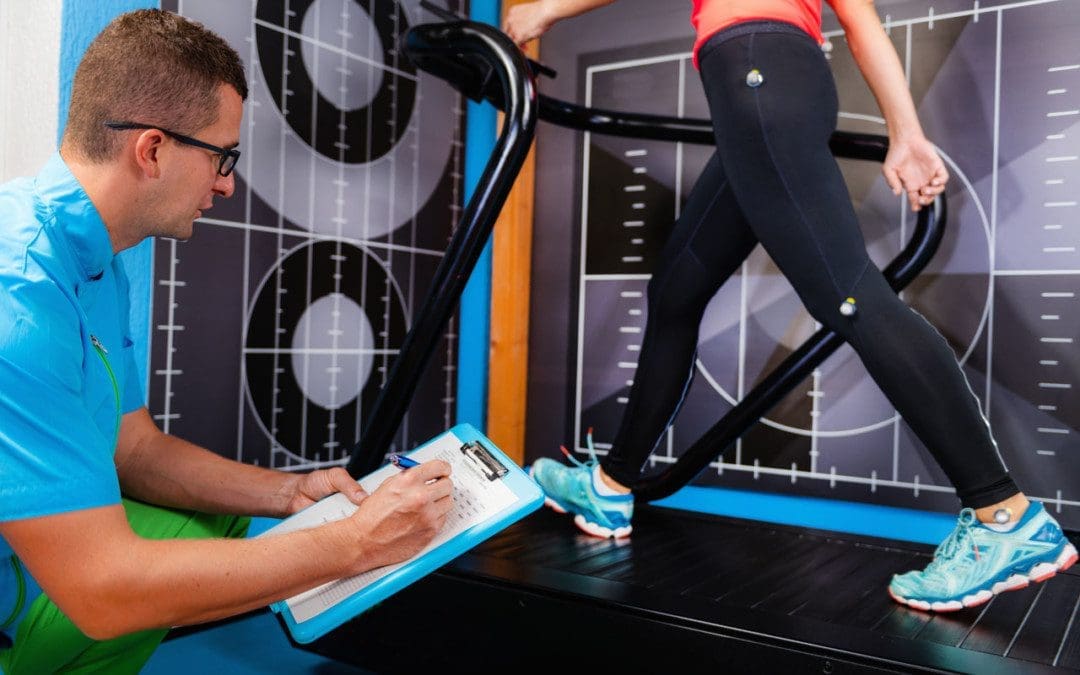
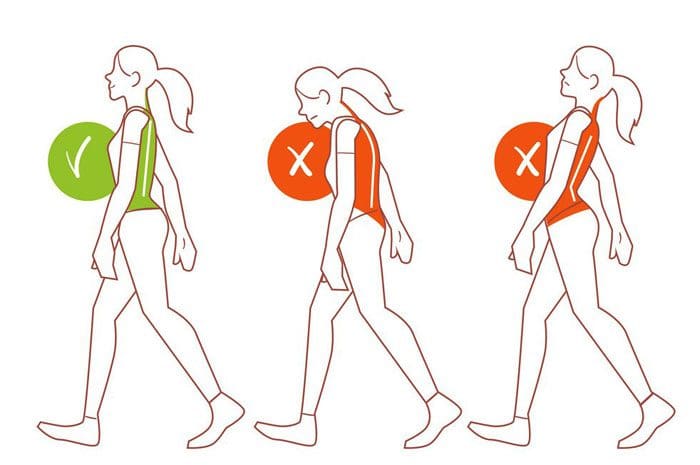
Most individuals don’t think about how they walk or whether they are walking with the correct posture. Knowing how to walk with the proper technique and posture can help:
Ensure the bones and joints maintain proper alignment.
Decrease abnormal wear and tear on the joints, muscles, and ligaments from awkward positions.
Prevent neck, back, hip, and leg pain.
Reduce muscle aches and fatigue.
Reduce injury risk.
Improve balance, stability, and mobility.
Walking with the correct technique and posture is not complicated but requires individuals to stay aware of standing and moving.
Correct Posture
Walking is a physical activity that involves the whole body. It helps to focus on each part of the body to understand how to walk correctly fully.
Head-Up
Focus on standing straight with the chin parallel to the ground and ears aligned above the shoulders.
Imagine the head being pulled gently upwards by an invisible string attached to the sky/ceiling.
This can help prevent dropping the head into the chest while walking.
Maintain eyes forward and gaze.
Focus on an area about 10 to 20 feet ahead when walking.
Straighten and Extend the Spine
Focus on extending the spine while walking.
Avoid slouching, hunching, or leaning forward. This stresses the back muscles.
Relaxed Shoulders Down and Back
The shoulders have a role with posture and technique. Shoulders that are tense or hunched forward can strain the muscles and joints in the shoulders, upper back, and neck. When walking, perform the following:
Raise the shoulders as high as they will go in a shrugging motion, then let them fall and relax.
Shoulder shrugs will help relieve tightness or tension.
This places the shoulders in a natural position that allows for easy arm movement.
Keep the shoulders loose and relaxed.
Shoulder shrugs while walking can help ensure that the shoulders are relaxed and in the correct position.
Swing the Arms
Walking correctly can be helped by gently swinging the arms back and forth at the sides.
Make sure to swing the arms from the shoulders, not from the elbows.
Do not swing the arms across the body.
Do not swing the arms up too high.
Keep them around the midsection, not around the chest.
Engage the Body’s Core
The core muscles have an essential role and help the body move with ease.
To prevent injury or overuse wear and tear on the muscles and joints, it is recommended to avoid the following:
Looking down too frequently
Looking down at the ground or phone too much places unnecessary strain on the neck.
Do not take long strides
The power comes from pushing off of the rear leg.
Overstriding places stress on the lower leg joints.
Rolling or swinging the hips
The hips should stay as level as possible.
Slouching
This will help avoid back and shoulder strain.
Wearing the wrong shoes
Wear the right shoes when walking for more than a few minutes.
Shoes should fit comfortably.
Provide arch and heel support.
Well-cushioned to absorb the shock of the feet hitting the ground.
Benefits of Correct Posture
The physical and mental benefits of proper posture and optimal walking technique include:
Alleviation of muscle and joint pain
Walking properly will avoid placing unnecessary stress and strain on the muscles, ligaments, and joints.
Increased energy
Walking with incorrect/awkward posture can wear out the muscles faster, whereas walking with proper form helps conserve energy.
Improved breathing
Walking with the shoulders back allows the lungs to fill and expand fully. This makes breathing more manageable and efficient.
Improved circulation
When the body is properly aligned and moving correctly, it’s easier for the blood to circulate throughout the body.
Digestion improvement
When the internal organs are not compressed from awkward postures, the body digests food more efficiently and increases blood flow to the digestive tract.
Enhanced core strength
The abdominal muscles gain strength and power from walking correctly.
Reduced headaches
Keeping the head straight, not bending forward, can help reduce neck strain, leading to reduced headaches.
Improved balance
Correct posture improves balance and less prone to falling.
Correct gait and posture are not complicated but do take some practice to develop healthy habits. For any issues with gait or back problems, talk to a doctor, physical therapist, or chiropractor about technique improvement.
Body Composition
Ten-Thousand Steps Speed and Distance
Before deciding to put in the walking distance and time, speed also needs to be considered. Calories burned from walking depend on the intensity, or speed, of the walk. The average walking speed is about 3 miles per hour and the number of calories burned depends on walking speed.
A leisure 30-minute walk at two mph yields a burn of 102 calories
Moderate intensity of 3.5 mph in the same 30-minute walk increases to burn 157 calories.
The faster the pace, the greater the heart rate.
The more calories are burned covering the same distance.
However, reaching 10,000 steps can almost entirely be irrelevant if not careful with a stable caloric intake.
References
Buldt, Andrew K et al. “The relationship between foot posture and lower limb kinematics during walking: A systematic review.” Gait & posture vol. 38,3 (2013): 363-72. doi:10.1016/j.gaitpost.2013.01.010
Common posture mistakes and fixes. (2019). nhs.uk/live-well/exercise/common-posture-mistakes-and-fixes/
The cost of being on your toes. (2010). Archive.unews.utah.edu/news_releases/the-cost-of-being-on-your-toes/
Hackford, Jessie et al. “The effects of walking posture on affective and physiological states during stress.” Journal of behavior therapy and experimental psychiatry vol. 62 (2019): 80-87. doi:10.1016/j.jbtep.2018.09.004
Perfecting your walking technique. (n.d.). health.harvard.edu/exercise-and-fitness/perfecting-your-walking-technique
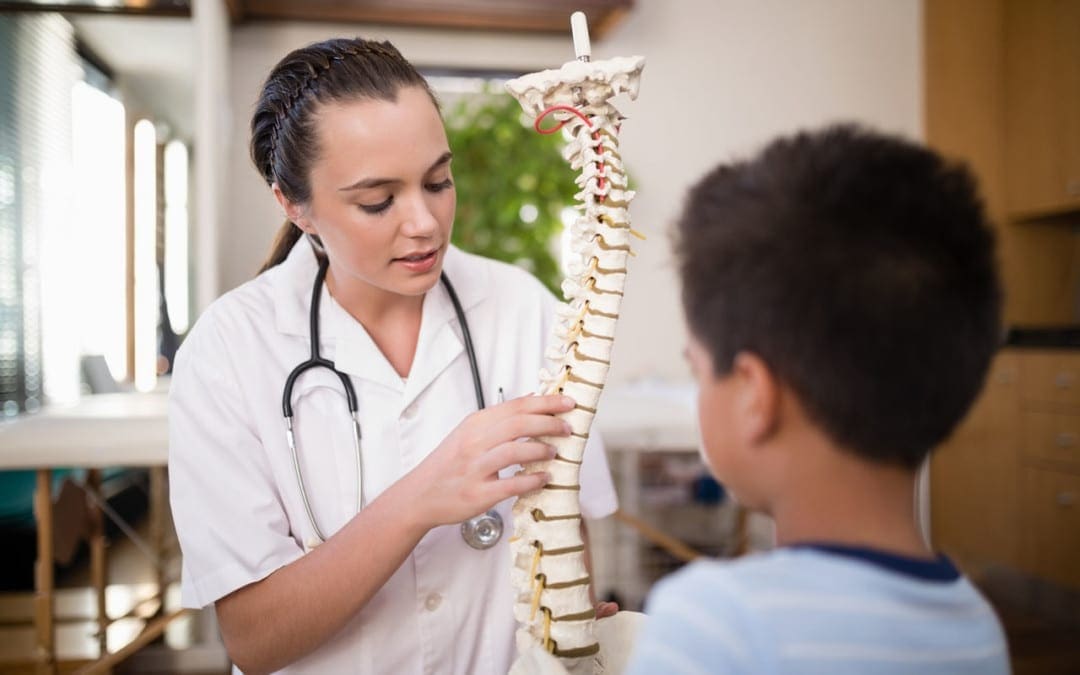
Understanding your spine, the way it works and moves is critical to finding the right back pain treatment when back pain or injury creeps in.
People don’t really think about their spines until back pain rears its ugly head. The spine is not one continuous structure that extends from the neck to the tailbone. It is an intricate, complex group of several structures.
Some understanding of the spine can help individuals make informed decisions before getting involved in activities that can cause a spinal injury.
Anatomy
The spine is made up of 24 vertebrae, these are the bones stacked on top of each other and forms the spinal column.
The spinal cord passes through the vertebrae that acts as a protective frame.
The spinal column surrounds the spinal cord like an electrical cord. It protects the nerves that run from the brain, through the spinal column and out to the rest of the body.
The spinal cord is the highway of nerves that carry the brain’s signals to the rest of the body, allowing the ability to move the arms and legs, etc.
The soft, spongy shock absorbers in between the vertebrae are the intervertebral discs.
They keep the vertebrae separated so smooth function and movement is possible.
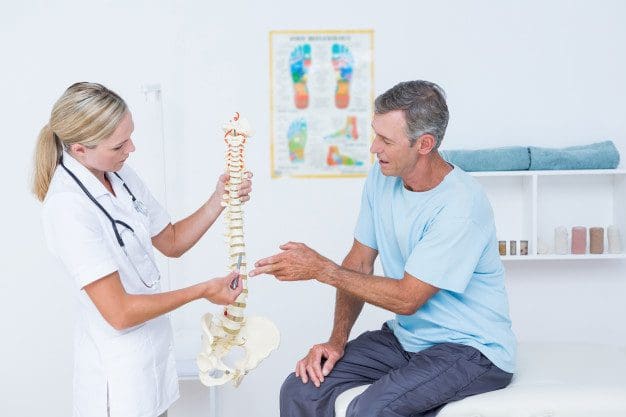
Because the spine is such a complicated network of bones, discs, muscles, nerves, and ligaments, getting to the bottom of exactly what�s wrong when back pain sets in can be a complicated process. This is where having some knowledge of your spine can help a doctor or chiropractor figure out what’s going on and then developing the best treatment plan possible.
Time
Dealing with time can be a tricky issue when suffering from back pain.
When only soreness, stiffness and muscle stress occur every so often then time can be the best medicine, as rest is all that is needed for the swelling to go down.
But when the pain does not go away with rest and is getting worse, waiting for evaluation is not an option.
Imagine all of those complex structures in the spine as dominos in a row.
If one domino/disc falls or slips pressure is placed on all the other dominos/discs to work harder to support the failing structure. But they can only do this for so long until the other discs or other areas of the body begin to fail.
Left untreated will eventually cause the failure of other structures of the body.
Strong Spine
It was designed to support the entire body combined with the additional weight that we carry.
It deserves care and respect.
Unfortunately, it is not made of titanium and is susceptible to injury.
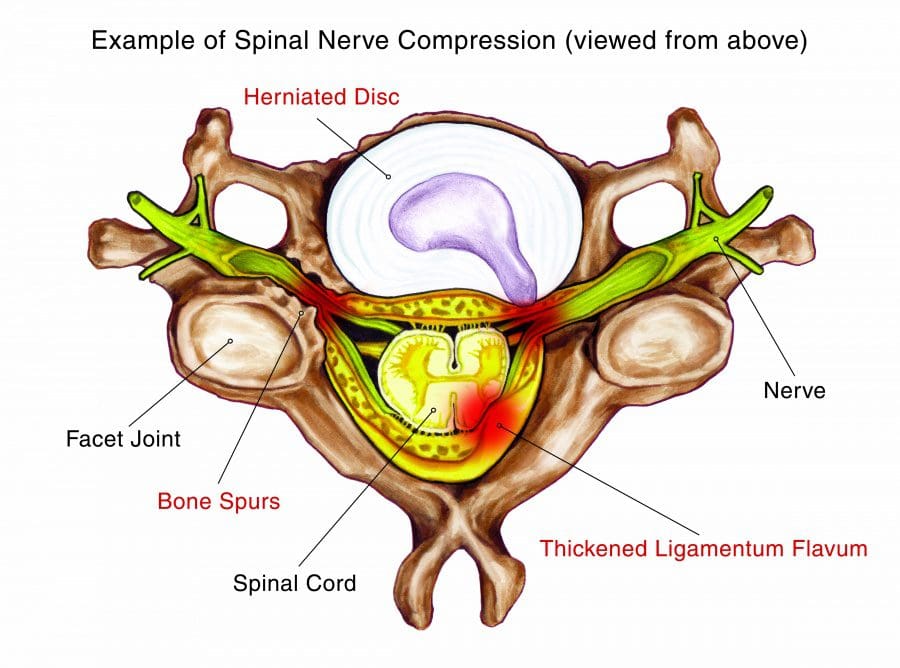
Spinal Nerve Compression
When a spinal nerve gets compressed, entrapped, or pinched it becomes inflamed and pain sets in. In the illustration of a neck spine segment, many different disorders are causing the�nerve�compression in this instance:
Herniated disc
Thickened ligament
Bone spurs called osteophytes
Making sure to pay close attention to your spine will safeguard it. So spend some time to understand how your spine operates.� Looking at some basic yoga for back poses can be a great start to understand how your spine functions.
What is Yoga?
In its purest form,�it is an ascetic and spiritual discipline that comes from Hindu culture. It involves simple meditation, breath control, and performing body postures.
While an ancient practice long used for spiritual and emotional healing as well as physical wellness, yoga has been adopted in western culture and widely accepted as a form of fitness as well as a therapeutic practice used for relaxation and overall good health. It focuses on inward healing with outward results.
Proven Reduced Back Pain with *FOOT ORTHOTICS* | El Paso, Tx
Kent S. Greenawalt, President, and CEO of Foot Levelers discuss how custom foot orthotics can help reduce back pain, low back pain, and sciatica. In a recent research study published by the American Congress of Rehabilitation Medicine (ACRM), researchers demonstrated that Foot Levelers custom foot orthotics help considerably reduce back pain and several of its associated health issues.
The research study also demonstrated that Foot Levelers custom foot orthotics and chiropractic care help tremendously reduce low back pain and sciatica. Foot Levelers custom foot orthotics and chiropractic care helped improve the patient’s overall health and wellness. Dr. Jimenez is a chiropractor in El Paso, TX who can help provide these benefits through the utilization of chiropractic care and Foot Levelers custom foot orthotics, among other treatments.
NCBI Resources
The spine is a complex structure. Understand that the spine is also surrounded by fibrous and muscular supporting structures, intervertebral discs, the spinal cord and nerve roots, and blood vessels. An injury such as a back sprain or strain caused by improperly lifting and twisting simultaneously can often be a cause for back pain. Chiropractic care is a well-known, alternative treatment option utilized to prevent, diagnose and treat a variety of injuries and conditions associated with the spine, primarily subluxations or spinal misalignments.
IFM's Find A Practitioner tool is the largest referral network in Functional Medicine, created to help patients locate Functional Medicine practitioners anywhere in the world. IFM Certified Practitioners are listed first in the search results, given their extensive education in Functional Medicine