Back pain usually comes from lifting an object the wrong way or awkwardly moving the body, injuring the spinal structures or muscles. However, sometimes it could be signs/symptoms of a more serious medical condition. The back pain could be caused by:
How to know when the root cause of back pain is from something else in the body? There are two types of pain that pain specialists look at. These are visceral pain and somatic pain. Visceral pain comes from damage or injury to the organs or organ tissues. This internal pain can radiate to the spine from conditions like:
Pancreatitis
Ulcerative colitis
Crohn’s disease
Gall stones
Cancers
Kidney pain
Urinary tract infections
Somatic pain is injury or damage to the muscles, skin, and soft tissues. It can be caused by:
Regular wear and tear
Aging
Injury
Sedentary lifestyle
However, visceral pain can cause somatic/bodily pain to flare up. The stress the body is going through because of the medical condition can cause inflammation.
Kidney Infections and Stones
The kidneys are located in the rear of the body toward the middle of the back. The kidneys:
Filter waste products from the body
Regulate bodily fluids
Perform other vital functions.
Kidney infections and kidney stones can easily mimic a sprain or strain in the back. Infections or stones can also present with other symptoms like:
Side and groin pain could accompany the back pain.
The pain does not go away after shifting positions or lying down.
Urinary Tract Infection UTI
Upper urinary tract infections in the kidneys or ureters can cause back pain. Upper UTIs happen when a lower UTI in the bladder or urethra goes unnoticed or does not respond to antibiotic treatment. Infections can occur at any age, with women and older men being more susceptible. The pain usually presents in the lower back and groin area. Other possible symptoms include:
Pain in the back, sides of the lower abdomen between the lower ribs and hips.
Fever
Vomiting
Frequent urination in small amounts
Burning during urination
Strong urge to urinate
Foul-smelling urine
Cloudy urine
Fatigue.
The pain can feel like:
Cramping pain
Pressure
Soreness
Pancreatitis
Pancreatitis is inflammation of the pancreas, the long flat organ located in the upper abdomen behind the stomach. It assists digestion and sugar management. The American Pancreatic Associationreports acute pancreatitis can make individuals feel sick with moderate to severe abdominal pain that can radiate to the back and often worsens after eating. The pain is felt in the upper to middle back. Other possible symptoms include:
Abdominal pain that radiates to the back
Abdominal pain after eating
Fever
Nausea
Vomiting
Tenderness in the abdomen
The pain can feel like a pulled muscle or joint pain that increases and decreases at first and then strengthens after eating or lying down.
Inflammatory Bowel Diseases IBD
Ulcerative colitis and Crohn’s disease are inflammatory bowel diseases not to be confused with irritable bowel syndrome.
Ulcerative colitis affects the colon.
Inflamed intestinal areas characterize Crohn’s disease.
Both can cause spreading back pain.
A study found 25% of individuals with IBD have chronic back pain. Other possible symptoms include:
The pain can feel mild or severe, like a cramp in the lower abdomen around the low back. It can present in cycles as a flare-up, then goes away. It’s essential to read the body’s warning signs and not push through the pain or ignore it. If any back pain goes on for more than a week, consult a doctor or chiropractor for a thorough examination. A pain specialist could be recommended if there is chronic back pain from a severe medical condition. A primary doctor or specialist helps keep the medical condition in check, while a pain specialist and/or chiropractor can alleviate chronic musculoskeletal pain from inflammation, irritation, and overstimulated nerves.
Body Composition
Personalized Lifestyle Medicine
Personalized lifestyle medicine develops customized treatment/health plans to fit the individual. It includes:
Research on how the body works as an integrated system.
Combines new technology approaches in medicine.
The relationship between nutrients and gene expression.
Life and behavioral sciences.
Nutrigenomics testing helps individuals understand the influence of dietary components on their genes, which can help prevent the development of certain chronic diseases.
References
American Pancreatic Association (Pancreapedia). (2015). Pathogenesis and Treatment of Pain in Chronic Pancreatitis. https://pancreapedia.org/reviews/pathogenesis-and-treatment-of-pain-in-chronic-pancreatitis
American College of Rheumatology. (2019). The U.S. Prevalence of Inflammatory Bowel Disease and Associated Axial Pain: Data from the National Health & Nutrition Examination Survey (NHANES). https://acrabstracts.org/abstract/the-us-prevalence-of-inflammatory-bowel-disease-and-associated-axial-pain-data-from-the-national-health-nutrition-examination-survey-nhanes/
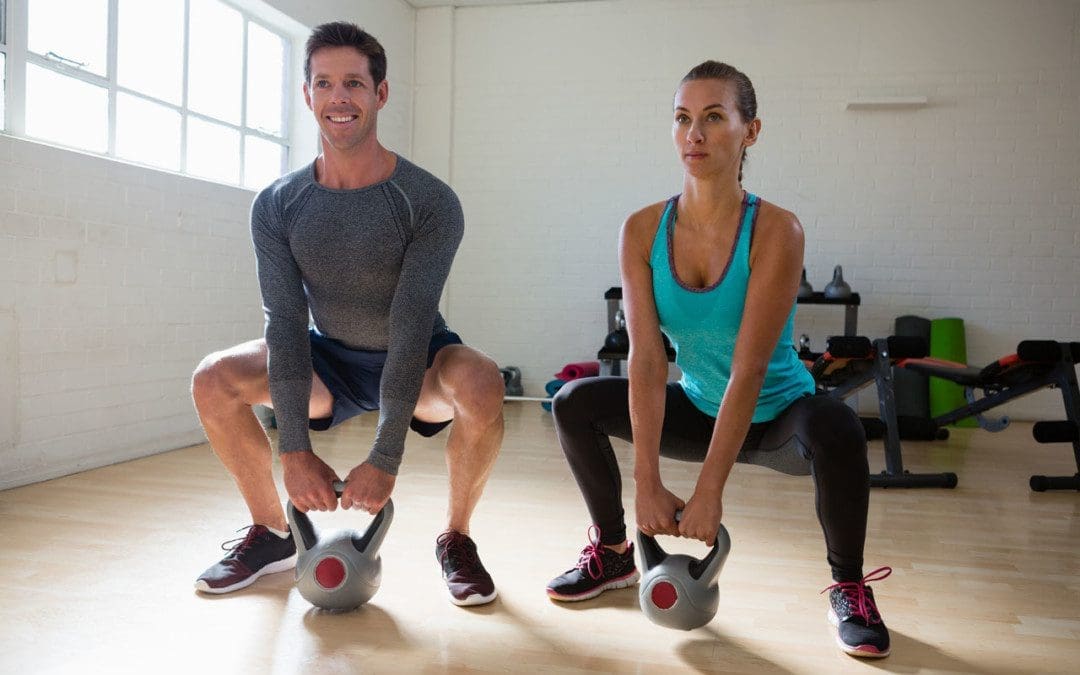
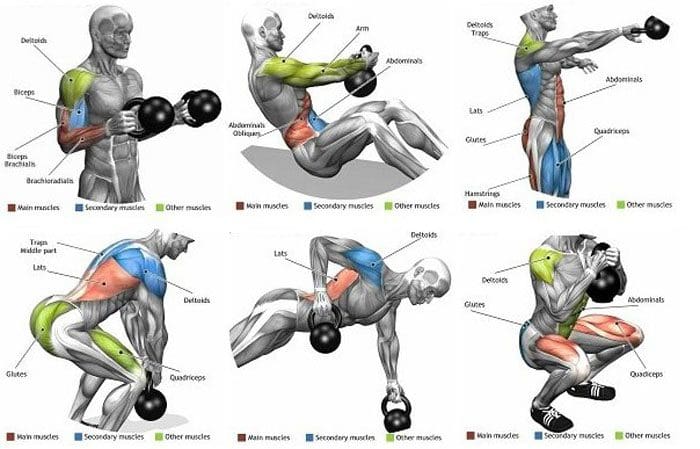
Kettlebell training for the back muscles and back pain prevention can be part of a recommended treatment plan. When experiencing low back pain, many sports medicine experts recommend kettlebell exercise to strengthen the core and posterior chain. However, if not used correctly, kettlebell exercises can worsen back pain.
Kettlebell
They are made of cast iron or steel and are named for resembling a tea kettle with an oversized handle. They can be used in one and two-handed movements.
Exercises and Movements for Back Pain
For individuals that are not experiencing back pain, kettlebell training can be excellent for maintenance and injury prevention. They strengthen the core and back muscles.
The kettlebell swing is an essential exercise and is one of the most important exercises when dealing with back pain issues.
A kettlebell is placed on the floor about 12 inches in front while standing with the feet a little wider than hip-distance.
The hips become the hinge.
Extend the arms down to the bell and grip it.
Begin swinging it up and down through the legs and then upward and outward to chest level.
The shoulders are to stay relaxed.
The hips are used to thrust and create momentum to swing the kettlebell.
Keep the spine neutral throughout the exercise to prevent injury.
The arms are to hold the bell only.
Don’t swing with the arms or shoulders, but push through with the hips.
The exercise can be swung up over the head but is not recommended for those with back pain.
Benefits
They are portable and don’t require a lot of space.
With kettlebells, an individual can train more easily than with barbells.
Kettlebell workouts provide strength training and cardiovascular fitness.
Once the proper technique is learned, individuals can set up a regular regimen at home.
Proper Form and Mistakes
Proper form is crucial. The primary movement most individuals have difficulty with is getting the proper hinging motion at the hip. Most individuals flex at the lower back and place increased pressure on the discs. Proper hip hinge motion means:
Keeping the low back straight
Flexing at the hip
Pushing back out with the buttocks when performing the swing motion.
When done correctly, an individual should be able to stop at any stage and hold that position.
Posture Form Tips
Form issues with kettlebells include:
Hip Hinge
When picking up the kettlebell, remember to hip hinge instead of squatting to maintain the back in a neutral position.
Drive the hips back in the same way when sitting down on a low chair.
Arching the back
If the pelvis is tilted too far forward, the back arches a lot.
This can narrow where the nerves leave the spine in the low back.
Keep the abdominals tight to prevent the pelvis from tilting forward.
Using the incorrect weight can also cause problems; this could be going too heavy or too light.
Too heavy increases the risk of straining the body and back.
A kettlebell that is too light does not provide the correct resistance to strengthen the muscles.
Another common mistake is overtraining. Specifically, individuals over 50 whose bodies don’t recover as quickly.
Individuals over 50 are recommended to spread out the workout days with more than one rest day.
Common Injuries
Proper training before working with kettlebells is highly recommended, especially for those already dealing with back pain. Individuals are encouraged to work with a physical therapist, sports chiropractor, or personal trainer who can teach proper techniques and specific exercises, observe the individual’s process, and make corrections. Improper technique can lead to:
Muscle strains.
Muscle spasms.
Compressed or pinched nerves.
Added stress to pre-existing low back conditions.
Impact injuries to the wrist and forearm.
Body Composition
Exercise Ball Pikes
Exercise ball pikes are an advanced total body workout. Muscle groups worked out include:
Deep abdominals
Hip abductors
Quadriceps
Deltoids
Scapula stabilizers
Pectoralis major/minor
To do the exercise:
Start in a pushup position with the arms on the floor in front.
Lift the legs, so the tops of the feet rest on the exercise/stability ball.
Knees should be bent to start the movement.
Extend the legs out as straight as possible.
Hold the position for a few seconds.
Return to the starting position.
References
Common Injuries Associated with Kettlebells: ACSM’s Health & Fitness Journal (March/April 2017) “Managing Risks of Training with Kettlebells to Achieve Optimum Benefits.” https://journals.lww.com/acsm healthfitness/Fulltext/2017/03000/MANAGING_RISKS_OF_TRAINING_WITH_KETTLEBELLS_TO.6.aspx
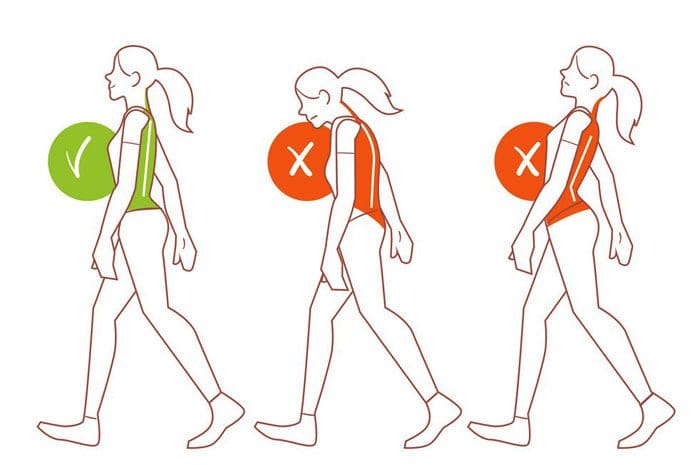
Most individuals don’t think about how they walk or whether they are walking with the correct posture. Knowing how to walk with the proper technique and posture can help:
Ensure the bones and joints maintain proper alignment.
Decrease abnormal wear and tear on the joints, muscles, and ligaments from awkward positions.
Prevent neck, back, hip, and leg pain.
Reduce muscle aches and fatigue.
Reduce injury risk.
Improve balance, stability, and mobility.
Walking with the correct technique and posture is not complicated but requires individuals to stay aware of standing and moving.
Correct Posture
Walking is a physical activity that involves the whole body. It helps to focus on each part of the body to understand how to walk correctly fully.
Head-Up
Focus on standing straight with the chin parallel to the ground and ears aligned above the shoulders.
Imagine the head being pulled gently upwards by an invisible string attached to the sky/ceiling.
This can help prevent dropping the head into the chest while walking.
Maintain eyes forward and gaze.
Focus on an area about 10 to 20 feet ahead when walking.
Straighten and Extend the Spine
Focus on extending the spine while walking.
Avoid slouching, hunching, or leaning forward. This stresses the back muscles.
Relaxed Shoulders Down and Back
The shoulders have a role with posture and technique. Shoulders that are tense or hunched forward can strain the muscles and joints in the shoulders, upper back, and neck. When walking, perform the following:
Raise the shoulders as high as they will go in a shrugging motion, then let them fall and relax.
Shoulder shrugs will help relieve tightness or tension.
This places the shoulders in a natural position that allows for easy arm movement.
Keep the shoulders loose and relaxed.
Shoulder shrugs while walking can help ensure that the shoulders are relaxed and in the correct position.
Swing the Arms
Walking correctly can be helped by gently swinging the arms back and forth at the sides.
Make sure to swing the arms from the shoulders, not from the elbows.
Do not swing the arms across the body.
Do not swing the arms up too high.
Keep them around the midsection, not around the chest.
Engage the Body’s Core
The core muscles have an essential role and help the body move with ease.
To prevent injury or overuse wear and tear on the muscles and joints, it is recommended to avoid the following:
Looking down too frequently
Looking down at the ground or phone too much places unnecessary strain on the neck.
Do not take long strides
The power comes from pushing off of the rear leg.
Overstriding places stress on the lower leg joints.
Rolling or swinging the hips
The hips should stay as level as possible.
Slouching
This will help avoid back and shoulder strain.
Wearing the wrong shoes
Wear the right shoes when walking for more than a few minutes.
Shoes should fit comfortably.
Provide arch and heel support.
Well-cushioned to absorb the shock of the feet hitting the ground.
Benefits of Correct Posture
The physical and mental benefits of proper posture and optimal walking technique include:
Alleviation of muscle and joint pain
Walking properly will avoid placing unnecessary stress and strain on the muscles, ligaments, and joints.
Increased energy
Walking with incorrect/awkward posture can wear out the muscles faster, whereas walking with proper form helps conserve energy.
Improved breathing
Walking with the shoulders back allows the lungs to fill and expand fully. This makes breathing more manageable and efficient.
Improved circulation
When the body is properly aligned and moving correctly, it’s easier for the blood to circulate throughout the body.
Digestion improvement
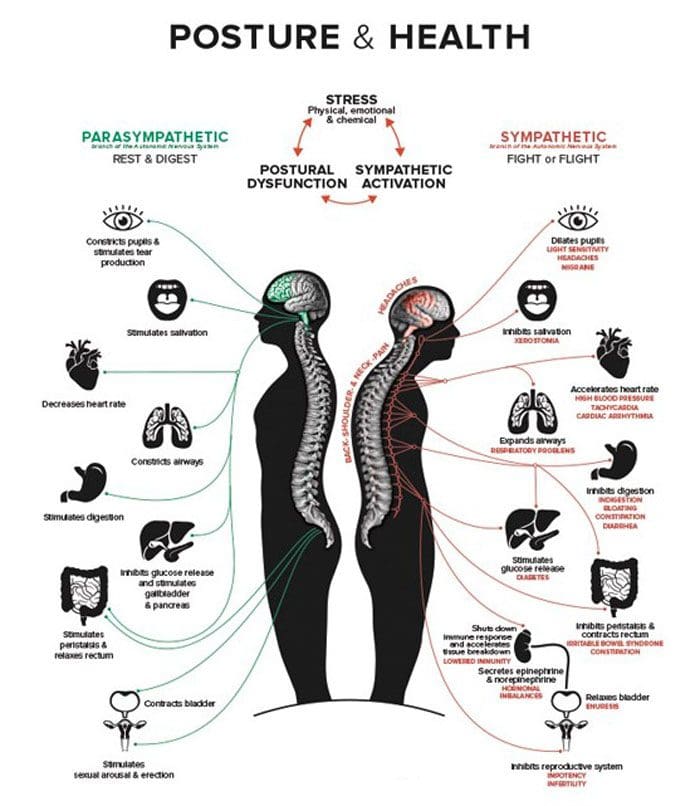
When the internal organs are not compressed from awkward postures, the body digests food more efficiently and increases blood flow to the digestive tract.
Enhanced core strength
The abdominal muscles gain strength and power from walking correctly.
Reduced headaches
Keeping the head straight, not bending forward, can help reduce neck strain, leading to reduced headaches.
Improved balance
Correct posture improves balance and less prone to falling.
Correct gait and posture are not complicated but do take some practice to develop healthy habits. For any issues with gait or back problems, talk to a doctor, physical therapist, or chiropractor about technique improvement.
Body Composition
Ten-Thousand Steps Speed and Distance
Before deciding to put in the walking distance and time, speed also needs to be considered. Calories burned from walking depend on the intensity, or speed, of the walk. The average walking speed is about 3 miles per hour and the number of calories burned depends on walking speed.
A leisure 30-minute walk at two mph yields a burn of 102 calories
Moderate intensity of 3.5 mph in the same 30-minute walk increases to burn 157 calories.
The faster the pace, the greater the heart rate.
The more calories are burned covering the same distance.
However, reaching 10,000 steps can almost entirely be irrelevant if not careful with a stable caloric intake.
References
Buldt, Andrew K et al. “The relationship between foot posture and lower limb kinematics during walking: A systematic review.” Gait & posture vol. 38,3 (2013): 363-72. doi:10.1016/j.gaitpost.2013.01.010
Common posture mistakes and fixes. (2019). nhs.uk/live-well/exercise/common-posture-mistakes-and-fixes/
The cost of being on your toes. (2010). Archive.unews.utah.edu/news_releases/the-cost-of-being-on-your-toes/
Hackford, Jessie et al. “The effects of walking posture on affective and physiological states during stress.” Journal of behavior therapy and experimental psychiatry vol. 62 (2019): 80-87. doi:10.1016/j.jbtep.2018.09.004
Perfecting your walking technique. (n.d.). health.harvard.edu/exercise-and-fitness/perfecting-your-walking-technique
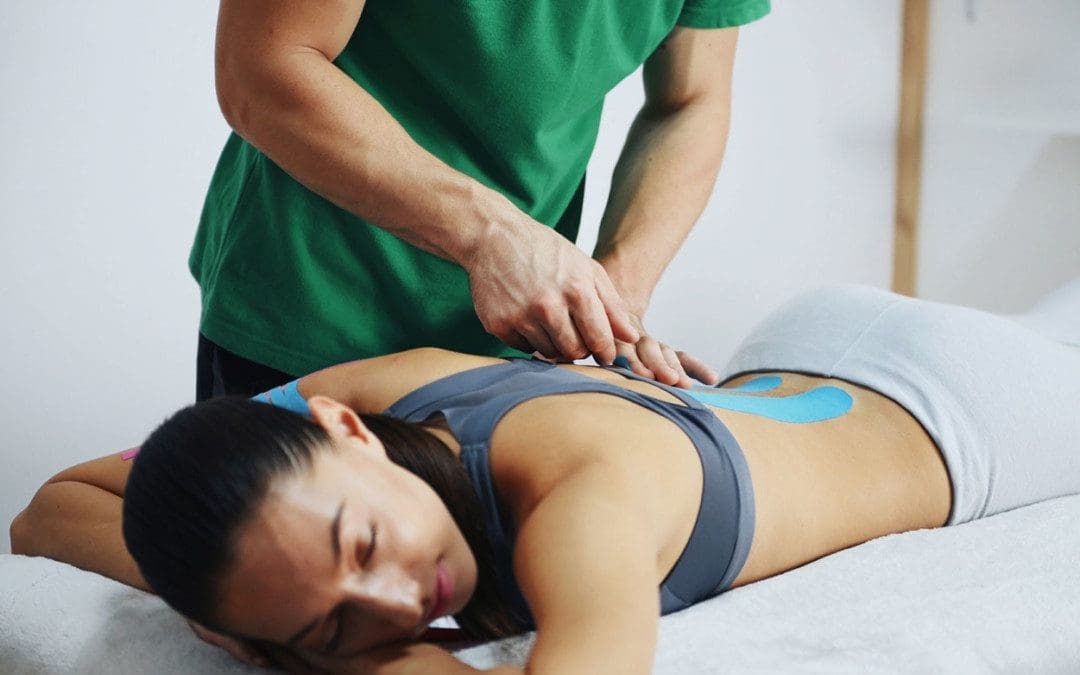
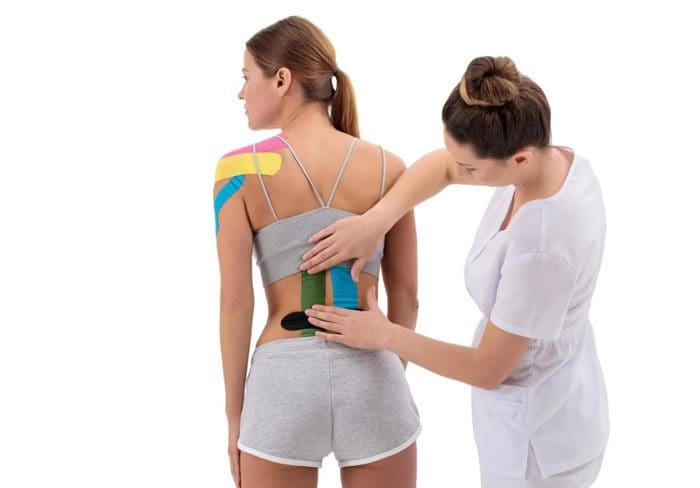
We see it on all types of athletes nowadays. They are wearing tape that looks like it’s for an injury. It is for injuries, but it can also be used as a preventative measure to avoid injuries. It is known as Kinesiology, Kinesio, KT, and elastic tape. It reduces swelling, increases mobility, and expedites recovery. It can be beneficial with back soreness/pain.
Tape
When it comes to Kinesio tape for back pain, medical professionals reported the tape is most effective when incorporated with other pain treatments. A study found that taping various areas of the body safely relieved knee pain and reduced the need for pharmacological treatment for knee osteoarthritis. It is applied to the body to support a joint, improve circulation, or provide proprioception feedback to the brain. The tape can help increase awareness of a specific painful area, reminding the individual to maintain proper posture and not move in a way that causes pain. Online videos can teach how to tape a particular area of the body. Examples include:
Each joint and muscle requires various tapings or different patterns and directions. Applying the tape to body areas that an individual can reach and access, like the knee and ankle, can be simple. But it can be a challenge to apply it to the shoulder or back. This is when a physical therapist, chiropractor, medical clinician, partner, family member, or friend can help with the application. Kinesiology tape is designed to adhere for an average of three to four days, even when bathing.
Benefits
Kinesio taping for low back pain with help should be done in a shortened muscle position, meaning the person helping should apply the tape while the person experiencing back pain stands up straight. The taping can be two stripes going up and down, or it can be done with strips fanning out towards the buttocks. This gives support to the spine/back muscles and decreases pain.
Recovery and Prevention
Recovery from a spine condition or injury prevention, kinesiology tape can be used without any risk. It can help reduce pain, improve circulation, and provide muscle support. For a minor sprain or strain, the tape could help on its own. But for an individual experiencing severe back pain, it is recommended to seek professional medical care along with a stretching and strengthening regimen. The tape is recommended to be used as part of a complete treatment plan.
Body Composition
Five-Day Training Plan
The idea of training five times a week can be pretty intimidating. This is not about pushing yourself to your breaking point Monday through Friday. The objective of working out this frequently is about exercising normally, not like a professional athlete. That’s why many individuals divide up the areas they work out each day. Particular attention is given to one muscle group or system, letting the others rest and recover. This workout strategy is called a split and is favored by the bodybuilding community. Five-day splits are utilized to target different major muscle group/s every day. A standard training plan includes:
This is just one of the many programs that trainers, athletes, and fitness individuals have developed. Some individuals replace shoulders day with cardio; some do abs every day; it depends on what fitness goal the individual is going for.
References
Journal of Bodywork and Movement Therapies. (April 2016) “Kinesio taping for chronic low back pain: A systematic review” https://pubmed.ncbi.nlm.nih.gov/27634093/
Therapeutic Advances in Musculoskeletal Disease. (August 2019) “The effectiveness of Kinesio Taping® for pain management in knee osteoarthritis: a randomized, double-blind, controlled clinical trial” https://journals.sagepub.com/doi/full/10.1177/1759720X19869135
What are the potential benefits for back pain?: Asian Journal of Sports Medicine. (June 2015) “Low Back Pain in Athletes” https://www.ncbi.nlm.nih.gov/pmc/articles/PMC4592766/
Posture exercises: It is easy to get into the bad habit of poor/improper posture, especially at work where an individual gets into a groove and continues without thinking about their posture. Not until discomfort and pain begin to present do individuals start thinking about what is causing the issues. This usually includes:
Back pain
Shoulder pain
Neck pain
Tight/Compressed spine
They don’t realize that all these issues are brought on by prolonged sitting and practicing improper posture. Individuals that practice proper posture:
Sleep better
Move better
Have reduced to no aches and pains
Digestion improves
Organ function improves
Have better overall health
Being aware of proper posture is the first step in being able to maintain it. When you feel the spine starting to curve, shoulders hunching, or the back sway, stop and take a moment to reposition the body back into proper alignment.
Seated Posture
Proper posture means sitting, standing, or walking in a position with little to no strain on the body’s muscles and ligaments. Good seated position means:
Sitting with the back straight and shoulders back.
Having all of the natural curves of the spine in alignment.
Keeping the knees bent at a right angle with the feet flat on the floor.
The weight is distributed evenly to both hips.
Keep the arms at 90 degrees to the torso, using the armrests or on a desk.
When looking at a computer monitor, keep it at a position where you are looking straightforward.
Use a chair with lower back support.
Even when sitting with good posture, it’s important to avoid sitting in the same position for more than 30 minutes.
Regularly stand up, walk around, and stretch out.
Posture Exercises
Posture exercises will help to strengthen the back, neck, and shoulders. They also help as a reminder for maintaining good posture throughout the day.
Shoulder Lift and Release
When sitting down for long periods, individuals tend to develop hunched shoulders. It is caused by an imbalance of muscles in the neck and upper back. Specific muscles in the neck, specifically the pectoralis major and minor, become shortened and tight. The other muscles in the upper back, the trapezius,latissimus dorsi, and rhomboids, weaken and stretch out. These muscles can be stimulated by stretching throughout the day.
Sit in your chair with your feet flat on the floor and spine straight.
Pull the shoulders up towards the ceiling.
Hold them there for three to five seconds.
Let the shoulders drop.
It is recommended to repeat 5 to 6 times every hour.
Shoulder rolls
Another exercise for avoiding rounded/hunched shoulders.
Sit in your chair with your feet flat on the floor and spine straight.
Take a breath in.
Lift the shoulders towards the ears.
Move the shoulders back.
Squeeze the shoulder blades together.
On the exhale, finish the rotation by dropping the shoulders back to a neutral position.
Repeat 5 to 6 times every hour.
The exercise can be done in the opposite direction.
Neck rolls
Forward head posture, aka text neck, can develop. Neck rolls are recommended throughout the day.
Lean your head towards the right shoulder.
Relax the neck and let your head roll towards your chest.
Continue rolling your head towards the left and up and around back to the starting position.
Perform at least 3-4 neck rolls every few hours.
Repeat the exercise and change direction.
Trapezius stretch
The trapezius is a major muscle group in the upper-middle section of the back and the neck. The trapezius is responsible for moving the shoulder blades and extending the neck. Stretching these muscles regularly will help maintain good posture.
Sit in your chair with the spine straight and feet flat on the ground.
Place the right hand over the top of your head.
Gently pull your head towards the right shoulder.
Perform one to three times for each side.
Hold the pose for 30 to 60 seconds.
Arm rotations
This exercise can help maintain back and shoulder alignment. This can be performed sitting or standing.
Stretch out the arms to the sides with palms facing downward.
While keeping the spine straight, move the arms in small circles.
Perform ten repetitions rotating the arms forward, then backward.
Perform 3-4 sets.
Doing these posture exercises at your workstation regularly will help improve and maintain proper posture and minimize the risk of back, neck, and shoulder pain.
Body Composition
Fitness for Long-Term Health
Muscle building isn’t only for bodybuilders and athletes. Everyone can benefit from building their Lean Body Mass for long-term health. It is crucial to monitor Lean Body Mass changes by having body composition measured. Body composition analysis divides the body’s weight into various components.
Fat Mass
Lean Body Mass
Basal Metabolic Rate
This will give a clearer picture of overall fitness and health.
Building Lean Body Mass is an investment in the body’s future. The more LBM that is built, the more is in reserve when the body needs it. But before adding protein shakes and resistance workouts to the daily regimen, there needs to be a plan. The first step to building healthy lean body mass is to measure how much there is with a body composition analysis.
References
Biswas A, Oh PI, Faulkner GE, et al. Sedentary Time and Its Association With Risk for Disease Incidence, Mortality, and Hospitalization in Adults. Ann Intern Med. 2015;162:123-132. doi:10.7326/M14-1651. Accessed January 7, 2017.
Ergonomics for Prolonged Sitting. UCLA Spine Center Web site. http://spinecenter.ucla.edu/ergonomics-prolonged-sitting. Accessed January 7, 2017.
Florido R, Michos E. Sitting Disease: Moving Your Way to a Healthier Heart. U.S. News & World Report. http://health.usnews.com/health-news/patient-advice/articles/2015/09/14/sitting-disease-moving-your-way-to-a-healthier-heart. Published September 14, 2015. Accessed January 7, 2017.
Fortner, Miles O et al. “Treating ‘slouchy’ (hyperkyphosis) posture with chiropractic biophysics®: a case report utilizing a multimodal mirror image® rehabilitation program.” Journal of physical therapy science vol. 29,8 (2017): 1475-1480. doi:10.1589/jpts.29.1475
Levine JA. What are the risks of sitting too much? Mayo Clinic Web site. http://www.mayoclinic.org/healthy-lifestyle/adult-health/expert-answers/sitting/faq-20058005. Published September 4, 2015. Accessed January 7, 2017.
O’Connor B. Sitting Disease: The New Health Epidemic. The Chopra Center Web site. http://www.chopra.com/articles/sitting-disease-the-new-health-epidemic. Accessed January 7, 2017.
Wolfe, Robert R. “The underappreciated role of muscle in health and disease.” The American journal of clinical nutrition vol. 84,3 (2006): 475-82. doi:10.1093/ajcn/84.3.475
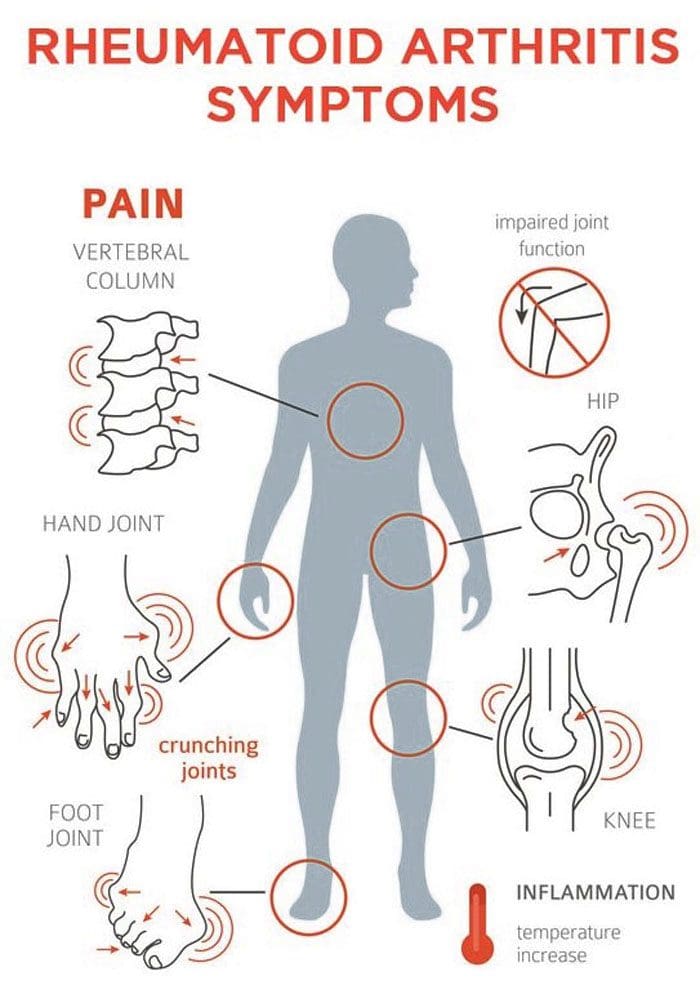
Managing rheumatoid arthritis is an ongoing balancing act. Flare-ups can still present despite following the rheumatologist’s lifestyle instructions, proper medication use, and a well-maintained RA plan. Monitoring daily activities can help minimize the chances of experiencing episodes.
Rheumatoid Arthritis Flare-Ups
A rheumatoid arthritis flare-up is a short-term escalation of arthritis symptoms. A flare-up can go away within a day or can persist for several weeks or months. A flare-up usually involves joint stiffness and pain but can also present as any symptoms worsening. If the flare-up is severe, it can affect the ability to perform regular everyday activities.
Symptoms
Symptoms can vary, and not every person experiences the same. Most individuals describe flare-ups with a sudden increase in:
Pain
Stiffness
Swelling
Limited joint mobility
Fatigue
Symptoms that feel like the flu.
Frequency and severity can also vary.
Back Pain Symptoms
Rheumatoid arthritis can affect many joints. It is the inflammation of a joint’s synovial membrane. These include the facet joints in the spine. The most commonplace in the spine affected by rheumatoid arthritis is the upper neck, around the base of the skull. The joints at the top of the neck get inflamed and can become unstable or form abnormal tissue that sticks out and compress the spinal cord.
Triggers
Several potential flare-up triggers include:
Stress
Not getting enough sleep
Medication changes
Injury
Excessive physical activity and/or exercise
Repetitive overuse injury
Smoking
Spinal infections
Airborne toxins can also be a trigger to a flare-up. Substances include chemicals like household cleaners. Switching to organic and environmentally safe cleaners can help. Airborne toxins are a concern in densely populated cities and areas that experience air pollution and smog. To minimize risks, staying indoors during times of poor air quality is recommended.
However, flare-ups can happen without an identifiable trigger. Certain foods can increase inflammation and could contribute to a flare-up, including:
Avoiding these foods and following a diet that has been developed to prevent symptoms will help significantly. The objective is to learn to identify an RA flare-up to moderate activities accordingly.
Prevention
Managing any chronic medical condition is challenging, especially when trying to predict when a flare-up will happen. There is not a foolproof strategy for prevention, but advice that can help minimize the risks of an RA flare-up.
Understand that the disease can change over time. This means changes in medications and the need for multi-approach treatment. Learning healthy self-care techniques will go a long way in managing symptoms.
Body Composition
Antioxidants protection
Metabolic processes, like energy production, and environmental pollution, can result in free radical production. These are highly reactive molecules that can damage the body’s cells and lead to oxidative stress. This can develop into a disease, including heart disease. The body has natural protective mechanisms to neutralize free radical molecules, including glutathione, which is the body’s top antioxidant. If glutathione becomes depleted because of increased free radicals, the body switches to dietary antioxidants from food as a secondary defense.
Pham-Huy, Lien Ai et al. “Free radicals, antioxidants in disease and health.” International Journal of biomedical science: IJBS vol. 4,2 (2008): 89-96.
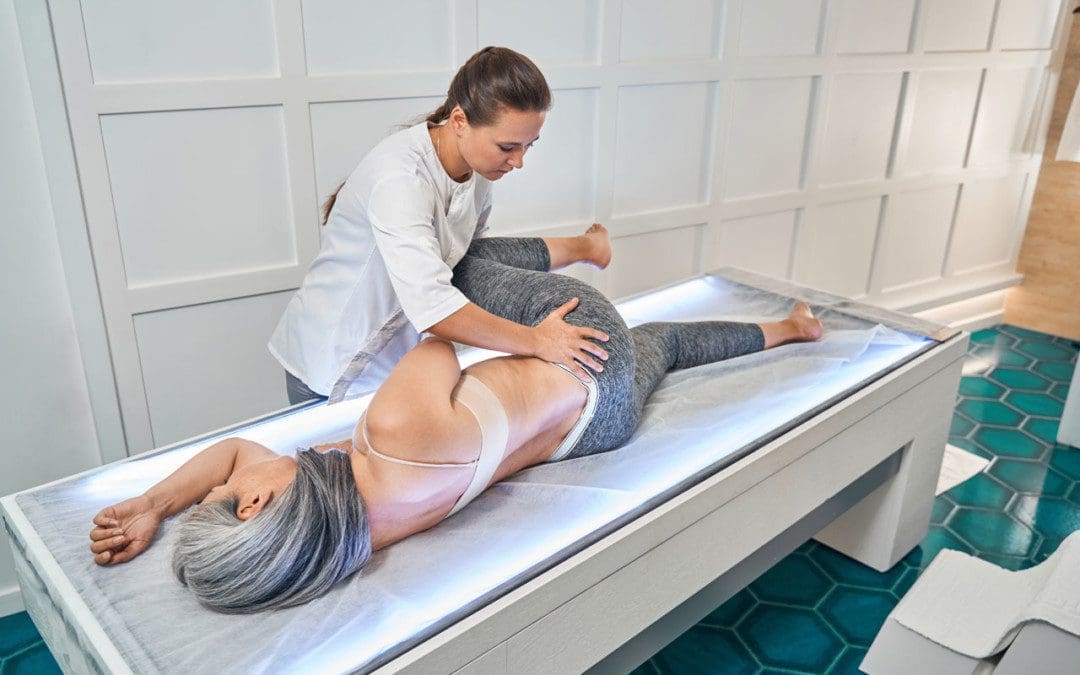
Chiropractic treatment/care is a recommended pain relief option for musculoskeletal automobile, sports, personal – injuries, strains, sprains, pain, and rehabilitation. An initial chiropractic examination is similar to a standard examination administered by health care providers. What an individual can expect at their first consultation includes:
Some chiropractors offer individuals an initial interview over a video conference and/or phone call. It is focused on discussion with topics like the chiropractors:
The initial in-office clinical exam generally includes:
Patient History and Symptoms
The patient will be asked to fill out forms that can also be filled out online before the visit, saving a patient time if they so choose. This provides background information about symptoms and conditions in preparation for the in-person chiropractic consultation. Questions include:
Did the pain start as a result of an auto, sports, personal, work injury?
How did the pain start – activities, sports, work, etc.?
When did the pain start – a few days, weeks, months, years?
Where is the pain located?
Does the pain spread out to other areas?
Is the pain dull, sharp, burning, or throbbing?
Does the pain come and go, or is it constant?
What activities or body positions make it better and/or worse?
Patients are also asked to provide information on pre-existing medical conditions, family medical history if necessary, prior injuries, and previous and current treatments provided by other medical professionals.
Physical Examination
A chiropractic examination includes:
Reflexes
Respiration
Blood pressure
Pulse
Certain orthopedic and neurological tests can also be used. These include:
Range of motion
Neurological integrity
Muscle strength
Muscle tone
Walking gait
Posture analysis
Diagnostic Studies
Based on the medical history and physical exam results, diagnostic studies could help reveal pathologies and identify structural abnormalities to diagnose more accurately. X-rays are the most commonly used during an initial chiropractic exam and are used to:
Diagnose recent trauma
Diagnose bone fractures
Study spinal deformities
An MRI scan is recommended for soft tissue damage like a herniated disc, torn muscle/s, or nerve compression.
Patient Diagnosis after the Chiropractic Exam
All the findings from the medical history, physical exam, and diagnostic tests help the chiropractor form a diagnosis. Once the diagnosis is established, the chiropractor will discuss personalized treatment options.
Body Composition
Heart Disease
Many factors can contribute to heart disease, and research has pointed to inflammation caused by obesity as one of the most significant factors to its development. The main contributor is cytokines produced by excess body fat. Cytokinescause inflammation in the walls of the arteries causing damage and increasing pressure. Blood pressure is the force of blood pushing against the walls of the vessels. High blood pressure means that the heart is not pumping blood effectively, and the heart begins to enlarge. An enlarged heart is a significant risk factor that can lead to heart failure if interventions are not taken to repair the damage.
References
Jenkins HJ, Downie AS, French SD. Current evidence for spinal x-ray use in the chiropractic profession. Chiropr Man Therap. 2018; 26:48.
Wang, Zhaoxia, and Tomohiro Nakayama. “Inflammation, a link between obesity and cardiovascular disease.” Mediators of inflammation vol. 2010 (2010): 535918. doi:10.1155/2010/535918
Weeks, William B et al. “Public Perceptions of Doctors of Chiropractic: Results of a National Survey and Examination of Variation According to Respondents’ Likelihood to Use Chiropractic, Experience With Chiropractic, and Chiropractic Supply in Local Health Care Markets.” Journal of manipulative and physiological therapeutics vol. 38,8 (2015): 533-44. doi:10.1016/j.jmpt.2015.08.001
IFM's Find A Practitioner tool is the largest referral network in Functional Medicine, created to help patients locate Functional Medicine practitioners anywhere in the world. IFM Certified Practitioners are listed first in the search results, given their extensive education in Functional Medicine