

Repeated Small Bends: Understanding Spinal Loading
Why Repeated Small Bends Can Bother Your Back More Than One Heavy Lift
Abstract
Repeated small bends for packages, cables, laundry, or drawers can irritate the lower back more than one controlled heavy lift. This article explains cumulative spinal loading, how fatigue and reach distance change forces on the discs and ligaments, and why limited hip mobility and trunk endurance shift more work onto the lumbar spine. It outlines a chiropractic assessment process, progressive hip and trunk conditioning, practical task changes, and a plan to build bending tolerance safely rather than avoid spinal flexion. The goal is better function for Amazon associates, data center technicians, parents, warehouse workers, and desk professionals.
Maria finishes her Amazon shift without a single heavy box. She reaches into totes and bends for packages dozens of times an hour. By the time she gets home, her low back feels tight. At home, she loads the washer and picks up toys. One controlled lift earlier never bothered her as much. The pattern shows up in data center technicians, parents, warehouse workers, and desk professionals who repeatedly bend for cables, laundry, tools, or drawers.
The idea that only heavy objects matter misses how the spine handles repeated work. A single well-executed lift is one event. One hundred lighter bends spread the work across tired muscles, changing angles, and longer reaches. The tissues never fully recover between cycles, so the result can feel different—and sometimes worse.
The Myth of the Heavy Object
Advice to “lift with your legs” and “never bend your back” protects against sudden overload. It does not fully describe repeated bending for hours. Research shows both the size of each force and the number of cycles matter. High-frequency moderate loads still contribute substantially to total spinal stress (Coenen et al., 2012).
A controlled heavy lift usually uses a planned technique and finishes before fatigue sets in. Repeated light bends are hurried, done at the end of a reach, and performed after the trunk muscles have already worked. The spine sees a different pattern of compression, shear, and bending moment.
What Cumulative Loading Means for Your Spine
Each bend compresses and bends the lumbar discs and ligaments. When erector spinae muscles fatigue, they allow more lumbar flexion. Volunteers who lifted a 10 kg weight 100 times showed increased peak lumbar flexion and a 36 percent rise in estimated bending moment by the end of the task (Dolan & Adams, 1998).
Fatigue failure studies reinforce the point. Motion segments cyclically loaded to simulate lifting a 9 kg weight failed after far fewer cycles as torso flexion increased. Neutral posture allowed thousands of cycles; 45 degrees of flexion reduced survival to a few hundred cycles on average (Gallagher et al., 2005). Spinal posture during bending changes tissue tolerance.
Fatigue and Creep
As back muscles tire, the spine relies more on passive tissues. Repeated flexion produces creep—a slow increase in flexibility. After 20 minutes of sustained flexion, peak flexion rose by about 5.5 degrees, and full stiffness recovery took longer than the loading period (McGill & Brown, 1992). Short rests do not always fully reset the tissues. Residual creep can leave the spine more flexible for the next cycle.
Reach Distance and the Moment Arm
How far the hands are from the body matters as much as the weight. Holding a package at arm’s length multiplies the lumbar bending moment even if the package is light. Reaching into a rack, tote, or across a bed lengthens the lever arm. Bringing the object closer or raising the work surface shortens that distance and reduces demand.
How Hips and Trunk Endurance Share the Work
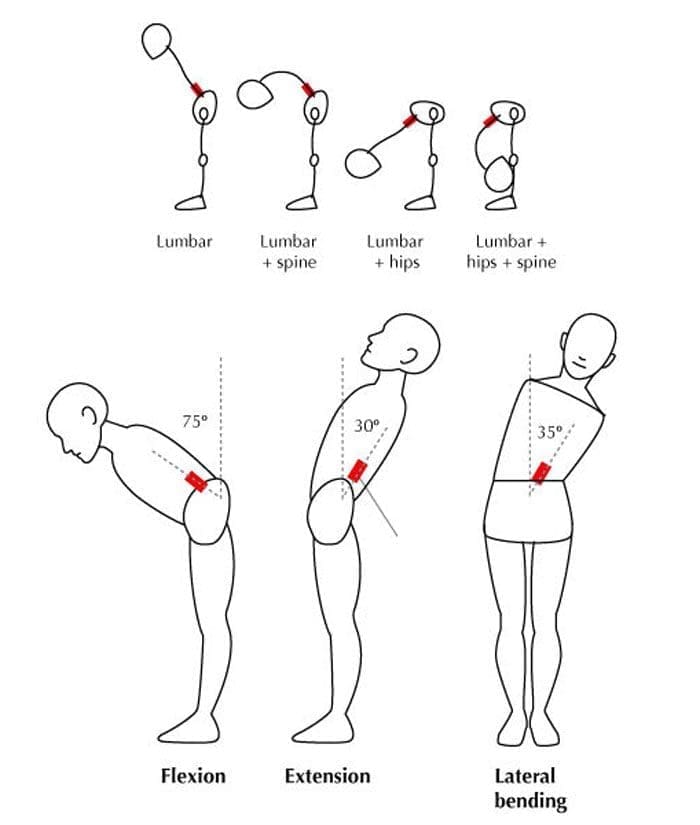
The lumbar spine favors stability; the hips handle large ranges of flexion. Limited hip mobility forces earlier and deeper lumbar flexion. Over dozens of bends, this shifts cumulative load onto the discs and ligaments.
Trunk endurance matters as much as peak strength. Someone who can deadlift once may still fatigue during 40 minutes of light bending if deep stabilizers and hip extensors lack endurance. Building that capacity protects the spine later in the shift.
Chiropractic Assessment: Finding the Real Pattern
A thorough evaluation at El Paso Back Clinic looks beyond the single heavy lift. Dr. Alex Jimenez, DC, APRN, FNP-BC, CFMP, IFMCP, and the team examine how the patient moves during the tasks that bother them. Assessment covers lumbar and hip range of motion, hip-hinge ability with a relatively neutral lumbar spine, trunk and hip endurance, control during repeated bending, and postural habits. The evaluation promptly identifies red-flag signs that require imaging or referral.
The evaluation identifies limited hip mobility, poor trunk endurance, excessive reach distance, residual stiffness, or a combination. Medical Director Dr. Maria Guadalupe Cardenas, MD, provides collaborative oversight, interpreting structural findings alongside medical factors when needed. Accurate diagnosis lets treatment address the real pattern. Beneficence guides the process: coordinated care improves safety, function, and recovery.
Low Back Pain Chiropractic Care | El Paso, TX
Building Bending Tolerance Instead of Avoiding Flexion
Fear of spinal flexion can create its own problems. Avoiding all bending leads to deconditioning. The tissues that are never loaded gradually lose capacity. A better approach is to restore control and then gradually reintroduce bending under conditions the spine can tolerate.
Chiropractic care restores restricted joint motion and reduces protective guarding. Adjustments and soft-tissue work free the hips and thoracic spine so the lumbar spine compensates less. Once motion improves, focus shifts to endurance work that matches real tasks:
- Hip-hinge practice with light loads held close to the body
- Controlled step-ups or partial squats that train the hips to share work
- Timed trunk endurance holds in positions that match the job
- Progressive increases in the number of bends per set, starting well below the threshold that produces next-day stiffness
The plan matches the job. An Amazon associate who bends 200 times per shift needs a different progression from a parent who bends mainly after a desk day. Progress is measured by how the back feels during and after the real task. Non-invasive options reduce risks of surgical complications or heavy medication dependence.
Practical Task Modifications for Daily Work and Home
While capacity builds, small changes reduce the total load the spine sees each day:
- Bring packages, cables, or laundry closer before lifting or lowering them.
- Use a low stool or kneel for tasks that would otherwise require deep lumbar flexion.
- Alternate sides and change stance so one pattern does not dominate.
- Take brief standing or walking breaks after longer periods of repeated bending.
- Raise frequently used items so the average bend is shallower.
- For parents, place a sturdy surface at hip height for folding or packing.
These changes reduce peak moments and high-flexion cycles while improving capacity. Patients remain the informed decision-makers, choosing modifications that fit their shift and family schedule.
The Multidisciplinary Path Forward
Integrative care at Injury Medical Clinic PA combines chiropractic structural work with medical oversight from Dr. Cardenas. Dr. Jimenez’s dual licensure supports coordinated attention to mechanical alignment and contributing factors. The emphasis remains on non-invasive strategies that restore function and reduce the need for surgery. Many patients with excellent group insurance coverage find coordinated care covered when it addresses documented functional limits.
If repeated bending has become the part of your day you dread, a focused assessment can clarify the drivers and how to rebuild tolerance safely. Call 915-850-0900 or visit the clinic in El Paso. The aim is to keep the spine working for the tasks you actually do.
References
Coenen, P., Kingma, I., Boot, C. R. L., Bongers, P. M., & van Dieën, J. H. (2012). The contribution of load magnitude and number of load cycles to cumulative low-back load estimations: A study based on in-vitro compression data. Clinical Biomechanics, 27(9), 871–877.
Dolan, P., & Adams, M. A. (1998). Repetitive lifting tasks fatigue the back muscles and increase the bending moment acting on the lumbar spine. Journal of Biomechanics, 31(8), 713–721.
Gallagher, S., Marras, W. S., Litsky, A. S., & Burr, D. (2005). Torso flexion loads and the fatigue failure of human lumbosacral motion segments. Spine, 30(20), 2265–2273.
McGill, S. M., & Brown, S. (1992). Creep response of the lumbar spine to prolonged full flexion. Clinical Biomechanics, 7(1), 43–46.









