Individuals trying to get and stay in shape can find it difficult to get a regular workout. Can jumping rope help when there is no time?
Jumping Rope
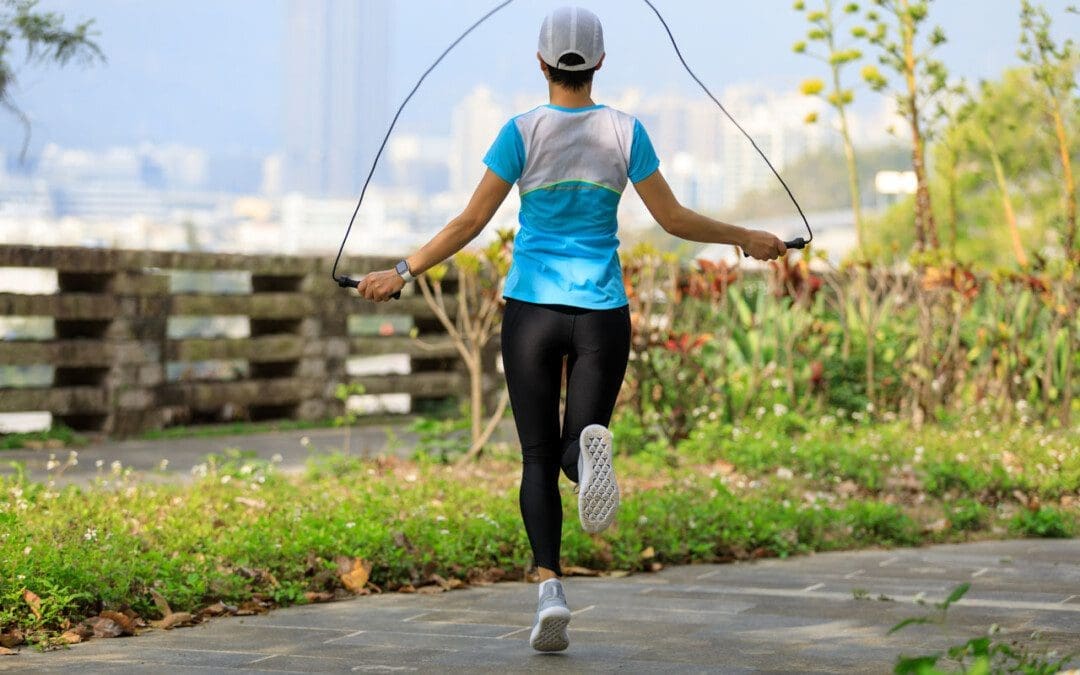
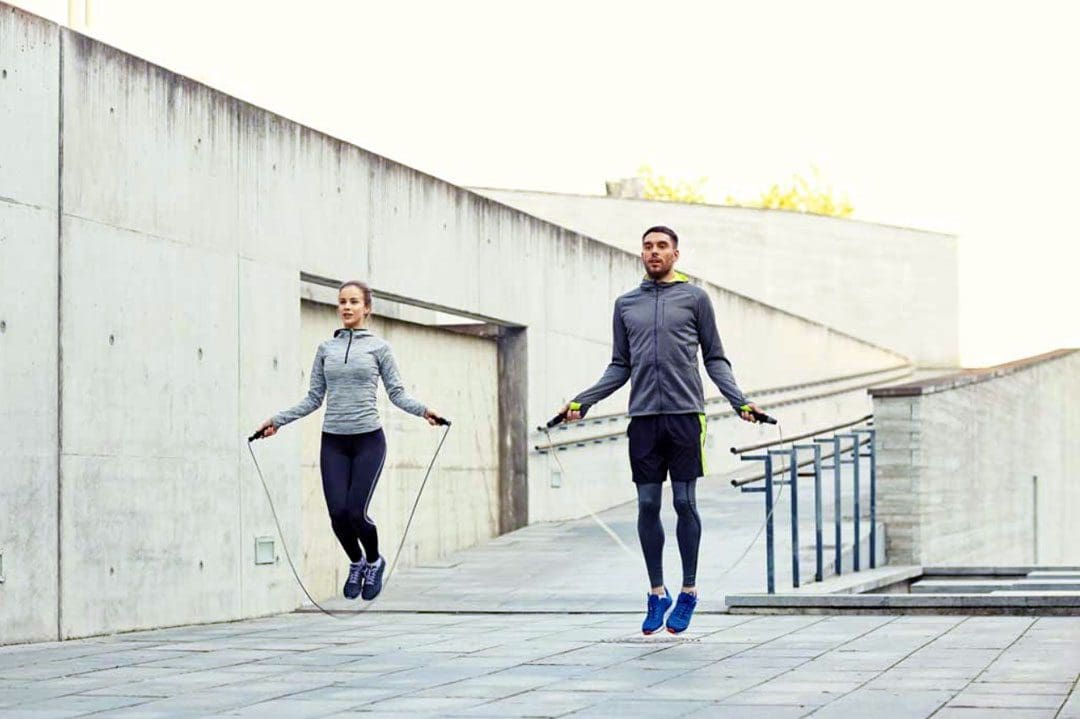
Jumping rope can be a highly cost-effective exercise to incorporate high-intensity cardiovascular fitness into a workout routine. It is inexpensive, efficient, and done properly can improve cardiovascular health, improve balance and agility, increase muscular strength and endurance, and burn calories. (Athos Trecroci, et al., 2015)
Jumping rope can be utilized in interval training to keep the heart rate elevated and allow the muscles to rest in between weight lifting and other intense exercises.
A jump rope can be used when traveling as its portability makes it a top piece of workout gear.
It can be combined with bodyweight exercises for a dependable and portable exercise routine.
Benefits
Jumping rope is a medium-impact exercise with benefits that include:
Improves balance, agility, and coordination
Builds stamina and foot speed for coordination, agility, and quick reflexes.
Variations include one-leg jumping and double unders or with each jump, the rope goes around twice to add difficulty.
Builds Fitness Fast
Burns calories
Depending on skill level and jumping rate, individuals can burn 10 to 15 calories a minute by jumping rope.
Faster rope jumping can burn calories similar to running.
Precautions
For individuals who have high blood pressure, jumping rope may not be recommended. The downward arm position can reduce blood circulation back to the heart which can further increase blood pressure. Studies have shown that jumping at a moderate intensity is beneficial for individuals who are pre-hypertensive. (Lisa Baumgartner, et al., 2020) Individuals with hypertension and/or a heart condition, are recommended to discuss the potential risks with their doctor before beginning a new exercise routine.
Choosing a Rope
Jump ropes are available and made from various materials and come with different handles.
Some of these materials help jump ropes spin faster with a smooth motion.
Some options have a swivel action between the cords and handles.
The rope you buy should be comfortable to hold and have a smooth spin.
Weighted jump ropes can help develop upper body muscle tone and endurance. (D. Ozer, et al., 2011) These ropes are not for beginners and are not necessary for an agility workout.
For individuals who want a weighted rope, be sure the weight is in the rope and not the handles to prevent straining the wrists, elbows, and/or shoulders.
Size the rope by standing on the center of the rope
Pull the handles up along the sides of the body.
For beginners, the handles should just reach the armpits.
As the individual’s skills and fitness develop, the rope can be shortened.
A shorter rope spins faster, forcing more jumps.
Technique
Following proper technique will ensure a more safe and effective workout.
Start slowly.
The proper jumping form keeps the shoulders relaxed, elbows in, and slightly bent.
There should be very few upper-body movements.
The majority of the turning power and motion come from the wrists, not the arms.
During jumping, keep the knees slightly bent.
Bounce softly.
The feet should leave the floor just enough to allow the rope to pass.
Land softly on the balls of the feet to avoid knee injuries.
It is not recommended to jump high and/or land hard.
Jump on a surface that is smooth and free of obstacles.
Wood, a sports court, or a rubberized mat are recommended.
Warming Up
Before beginning jumping rope, do a light, 5 to 10-minute warm-up.
This can include walking or jogging in place, or slow-paced jumping.
Increase Time and Intensity Gradually
The exercise can be relatively intense and high-level.
Start slowly and increase gradually.
An individual might try three 30-second sets at the end of a routine workout for the first week.
Depending upon fitness level, individuals may feel nothing or some slight soreness in the calf muscles.
This can help determine how much to do for the next jump rope session.
Gradually increase the number of sets, or the duration, over several weeks until the body can go for about ten minutes of continuous jumping.
One way is to jump after each weight-lifting set or other circuit exercise – like adding jumping for 30 to 90 seconds in between exercise sets.
Both feet slightly lift off from the ground and land together.
Alternate foot jump
This uses a skipping step.
This allows landing more prominently on one foot after each spin.
Running step
A slight jog is incorporated while jumping.
High step
A moderate pace with a high knee raise increases intensity.
Rope jumping is a great addition to an interval training or cross-training routine that creates an efficient whole-body workout that incorporates both cardiovascular endurance and muscular strength.
Overcoming ACL Injury
References
Trecroci, A., Cavaggioni, L., Caccia, R., & Alberti, G. (2015). Jump Rope Training: Balance and Motor Coordination in Preadolescent Soccer Players. Journal of sports science & medicine, 14(4), 792–798.
Baumgartner, L., Weberruß, H., Oberhoffer-Fritz, R., & Schulz, T. (2020). Vascular Structure and Function in Children and Adolescents: What Impact Do Physical Activity, Health-Related Physical Fitness, and Exercise Have?. Frontiers in pediatrics, 8, 103. https://doi.org/10.3389/fped.2020.00103
Ozer, D., Duzgun, I., Baltaci, G., Karacan, S., & Colakoglu, F. (2011). The effects of rope or weighted rope jump training on strength, coordination and proprioception in adolescent female volleyball players. The Journal of sports medicine and physical fitness, 51(2), 211–219.
Van Hooren, B., & Peake, J. M. (2018). Do We Need a Cool-Down After Exercise? A Narrative Review of the Psychophysiological Effects and the Effects on Performance, Injuries and the Long-Term Adaptive Response. Sports medicine (Auckland, N.Z.), 48(7), 1575–1595. https://doi.org/10.1007/s40279-018-0916-2
A big part of sports is avoiding and preventing injuries, as injury prevention is far better than rehabilitation and recovery. This is where prehabilitation comes in. Prehabilitation is a personalized, constantly evolving, and developing strengthening exercise program. The program aims to provide sports-specific targeted exercises and activities to maintain athletes’ physical abilities and mental preparedness for their sport. The first step is for an athletic trainer, sports chiropractor, and physical therapist to examine the individual.
Prehabilitation
Everybody is different when it comes to developing an effective prehabilitation program. Every individual’s program should be progressive and re-evaluated to adapt and adjust to the athlete’s needs. The first step is learning to prevent injuries and following basic injury prevention protocols. Knowing what to do when the body sustains an injury, like home treatment and when it’s time to see a doctor.
Athletes
Athletes of all levels are recommended to incorporate a prehabilitation program into their training. As athletes engage in their sport, their bodies adjust to the physical demands of practicing, playing, and training. Imbalances can happen naturally with normal activity but become more pronounced with each practice, game, and training session and often are the cause of injury. The repetitive movements and regular stresses can cause neuromusculoskeletal symptoms to present. This includes:
Tightness of muscle groups.
Pain and discomfort symptoms.
Stabilization issues.
Strength imbalances.
Program
A chiropractic therapist will measure the individual’s range of motion and strength, biomechanics, evaluate medical history, and present health status. Individuals with an injury or a condition can also benefit from prehabilitation.
Each program is personalized and will address total body balance, sports-specific needs, and weaknesses.
The exercises will balance strength, coordination, range of motion, and stabilization.
The premise is looking at and comparing movements from left to right, front to back, and upper to lower body.
Activities can be subtle, focused exercises or a complex movement sequence to stabilize or improve a specific skill.
Programs focus on strengthening and stabilizing the core, abdominals, hips, and back.
Instability is common and often presents from a lack of core training, as athletes tend to focus on what parts of the body their specific sport utilizes, leaving the core without a regular training routine.
A prehabilitation program has to be constantly updated to adjust to the individual’s progress.
Tools like foam rollers, balance boards, weights, and exercise balls are used.
Training
Prehabilitation should start before any acute or chronic injury occurs, but often it takes a few injuries for individuals to decide to get into a prehabilitation program. Depending on an athlete’s training cycle, prehabilitation can be incorporated into practice or as an independent workout and become part of an athlete’s training routine. A session can include the following:
Warm-up and cool-down exercises.
Exercises to perform while resting or waiting during practice.
A targeted workout on specific weaknesses.
A complete workout for days off or active rest days.
Mini workouts for when traveling and recovery days.
For athletes, feeling challenged and motivated can be the difference between success and failure. Working with a trainer, sports chiropractor, and therapists who know sports, understand athletic needs, and communicate well, will contribute to a successful prehabilitation program.
Improving Athletic Performance
References
Durrand, James et al. “Prehabilitation.” Clinical medicine (London, England) vol. 19,6 (2019): 458-464. doi:10.7861/clinmed.2019-0257
Giesche, Florian, et al. “Evidence for the effects of prehabilitation before ACL-reconstruction on return to sport-related and self-reported knee function: A systematic review.” PloS one vol. 15,10 e0240192. 28 Oct. 2020, doi:10.1371/journal.pone.0240192
Halloway S, Buchholz SW, Wilbur J, Schoeny ME. Prehabilitation Interventions for Older Adults: An Integrative Review. Western Journal of Nursing Research. 2015;37(1):103-123. doi:10.1177/0193945914551006
Smith-Ryan, Abbie E et al. “Nutritional Considerations and Strategies to Facilitate Injury Recovery and Rehabilitation.” Journal of athletic training vol. 55,9 (2020): 918-930. doi:10.4085/1062-6050-550-19
Vincent, Heather K, and Kevin R Vincent. “Rehabilitation and Prehabilitation for Upper Extremity in Throwing Sports: Emphasis on Lacrosse.” Current sports medicine reports vol. 18,6 (2019): 229-238. doi:10.1249/JSR.0000000000000606
Vincent, Heather K et al. “Injury Prevention, Safe Training Techniques, Rehabilitation, and Return to Sport in Trail Runners.” Arthroscopy, sports medicine, and rehabilitation vol. 4,1 e151-e162. 28 Jan. 2022, doi:10.1016/j.asmr.2021.09.032
Pretty much everyone experiences a muscle cramp at some point. A muscle cramp is an involuntarily contracted muscle that does not relax, similar to a spasm, but a cramp lasts longer and is usually a forcible contraction. During a cramp, the muscles tighten without voluntary input from the brain and over-tighten. They can last anywhere from a few seconds to an hour or longer. They can be prevented through adequate nutrition and hydration, attention to safety when engaged in physical activity or exercise, and attention to posture and ergonomics. Injury Medical Chiropractic and Functional Medicine Clinic can develop personalized treatment plans for individuals experiencing musculoskeletal issues.
Muscle Cramp
Muscle cramps can occur in any muscle. The cramp may involve a portion of a muscle, the entire muscle, or several muscles that function together. A muscle or a few tissue fibers that involuntarily contracts is in a spasm. If the spasm is forcefully sustained, it turns into a cramp. They can cause a noticeable and/or hardening of the involved muscle/s. They can be experienced as mild twitches or can be excruciatingly painful. Some can involve the simultaneous contraction of muscles that normally move body parts in opposite directions. It is not uncommon for a cramp to flare up multiple times until it finally stops.
Causes
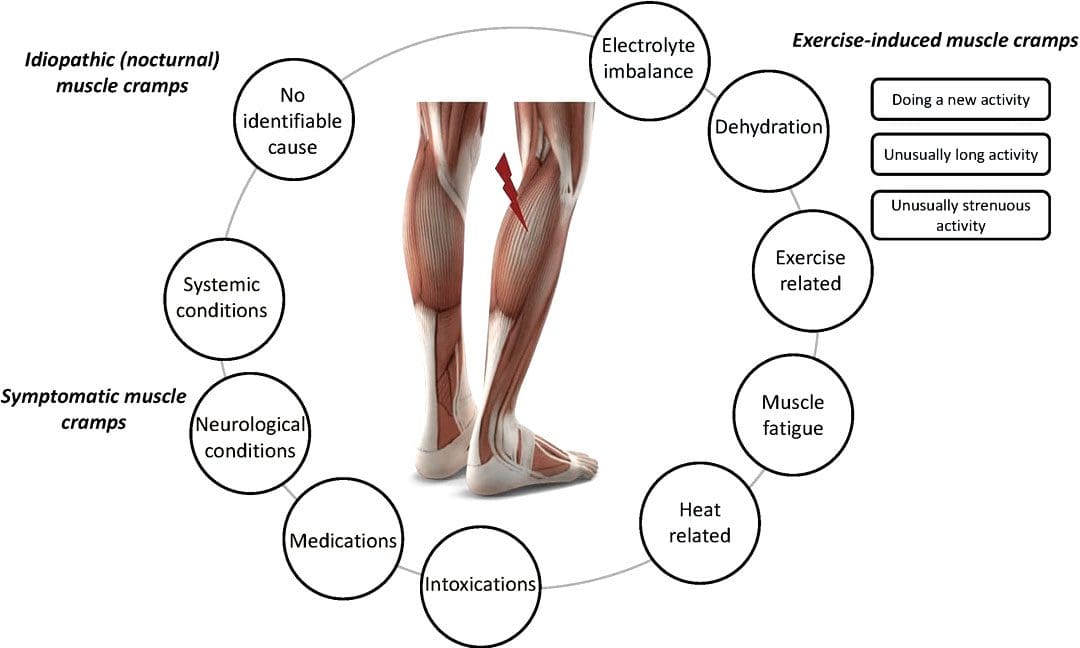
They can occur during physical activity, exercise, rest, or night, depending on the cause. There are various causes that, include:
Most times, they are not a cause for alarm; however, depending on the individual, their age, type of physical activity, and medical history, cramps could indicate a more serious underlying problem such as a thyroid disorder, liver cirrhosis, atherosclerosis, ALS, or a problem or condition of the spine or spinal nerves.
Muscles Involved
The muscles involved can indicate the mechanism and cause.
If the cramp is triggered by fatigue, a drop in muscle glycogen, dehydration, or an electrolyte imbalance, it’s most frequently to the calf muscles, feet, or back of the thigh/hamstring muscles.
This is typically due to a combination of fatigue and dehydration.
If it is triggered by nerve irritation, like a spinal disc injury, cramps tend to present in the forearm, hand, calf, and foot, depending on whether the disc injury is in the neck or lower back.
If there is a joint sprain in the neck, mid-back, or lower back, the cramp will present where the injury is and around the surrounding muscles.
A calf cramp happens when lying down because the foot points down, shortening the calf muscles.
A shortened muscle is more likely to go into spasm, especially if it is exhausted from activities and if the body is dehydrated, which is pretty common.
For two muscles that work together performing the same movement, called agonists, and the one muscle is weaker, the secondary muscle has to work harder, often going into a spasm or cramp from the added stress.
For example, if the buttock/gluteal muscles are weak, the hamstrings eventually spasm when exhausted.
Chiropractic
First, the cause needs to be identified through medical history and examination. There can be an underlying nerve irritation and interference, restricting the muscle or muscle group, which needs to be dealt with for the therapy to be effective. Chiropractic care, combined with therapeutic stretching and massage therapy, can:
Relieve muscle cramping
Improve blood circulation
Increase muscle movement
Improve musculoskeletal function
All help to diminish and prevent muscle cramping.
Adjustments will restore proper alignment and restore nerve communication. These treatments help to release toxins, loosen and relax the muscle tissues, and provide relief.
Say Goodbye to Pain With Chiropractic
References
Blyton, Fiona, et al. “Non-drug therapies for lower limb muscle cramps.” The Cochrane Database of systematic reviews vol. 1,1 CD008496. 18 Jan. 2012, doi:10.1002/14651858.CD008496.pub2
FIELDS, A. “Leg cramps.” California Medicine vol. 92,3 (1960): 204-6.
Garrison, Scott R et al. “Magnesium for skeletal muscle cramps.” The Cochrane Database of systematic reviews vol. 9,9 CD009402. 21 Sep. 2020, doi:10.1002/14651858.CD009402.pub3
Katzberg, Hans D. “Case Studies in Management of Muscle Cramps.” Neurologic clinics vol. 38,3 (2020): 679-696. doi:10.1016/j.ncl.2020.03.011
Miller, Kevin C et al. “An Evidence-Based Review of the Pathophysiology, Treatment, and Prevention of Exercise-Associated Muscle Cramps.” Journal of athletic training vol. 57,1 (2022): 5-15. doi:10.4085/1062-6050-0696.20
Miller, Timothy M, and Robert B Layzer. “Muscle cramps.” Muscle & nerve vol. 32,4 (2005): 431-42. doi:10.1002/mus.20341
Mountain and trail biking is a fun way to exercise. Mountain biking requires total body/core strength, explosive power, balance, endurance, and agility to maneuver the bike, build speed, and absorb the rough bumps and terrain. But it also means that certain muscles get overused, causing overcompensation in the body that can lead to musculoskeletal problems and conditions. Strength, cardiovascular, and cross-fit can benefit mountain biking training for improved performance, safer and more confident riding, and injury prevention.
Mountain Biking Training
A few of the benefits of training are:
Increasing bone density.
Improving joint health.
Correcting imbalances and unhealthy posture.
Weight loss.
Aging muscle loss prevention.
Maintaining body posture centered on the bike requires core strength to perform the movements when moving the body backward and forwards, side to side, and pushing up and down when different obstacles pop up. The exercises’ objective is to work various body parts simultaneously and diagonally, like the movements used on the bike.
General Overview of Mountain Biking Training
Build strength – Target the quads, hamstrings, and abdominal muscles to power pedaling strokes.
Increase endurance – Avoid getting fatigued early because of weakened legs and aerobic performance.
Improve mountain bike skills – Ride faster and more efficiently by improving bike handling and technical skills.
Example Training Week
The terrain determines the intensity, but the same basic principles apply to mountain biking training as other endurance sports. Here’s a training example for a beginner that can be adjusted to the rider’s needs:
Monday
Stretching and training the muscles to relax prevent becoming stiff or cramping up during rides.
Cornering is a critical skill that should never stop being practiced and improved.
Cornering Drills
Pick a corner on a local trail and ride through it until mastered.
Focus on riding smoothly through the corner, and speed will generate.
As confidence builds in the corners, do the same on the opposite side.
Straighten Out
Ride to the furthest outside edge when approaching the turn.
Initiate the turn just before the sharpest point of the corner.
Stick to the furthest outside point of the corner when riding out of the corner.
Brake Before The Corner
Braking in the corner can cause the tires to slide out of control, causing a slip-and-fall accident.
Look through the turn as the bike follows where the eyes look.
Don’t stare at the front wheel, which could lead to a falling or flipping accident.
Eventually, riders can handle this technique, but it’s too advanced for beginners.
Smooth Ride
Beginners can be amazed at how much terrain bikes can ride over and through. Modern mountain bike suspension and tire systems can handle it. However, using the correct technique is essential to get through or around the obstacles and avoid crashes.
Stay aware of the surroundings.
Keep the body loose when approaching obstacles.
Decide how to overcome the obstacle – ride over, pop/raise the wheels, jump, or ride around.
Maintain confidence.
When riding over the obstacle, maintain an even balance on the pedals and keep the buttocks slightly off the saddle.
Keep arms and legs loose and let the body absorb the shock of the obstacle.
Trust the suspension and tires.
Ensure enough speed is generated to go over it and that it won’t stop the bike and cause a fall.
Some rough trail areas can require added strength to hold the bike steady.
Braking
There is no need to squeeze the brake handles with extreme force.
Extreme braking, especially the front, will likely lead to a flip or crash.
The brakes are made to stop with minimal force.
Beginners are recommended to learn to use a light touch when braking.
Improvement will follow with each riding session.
Foundation
References
Arriel, Rhaí André, et al. “Current Perspectives of Cross-Country Mountain Biking: Physiological and Mechanical Aspects, Evolution of Bikes, Accidents, and Injuries.” International journal of environmental research and public health vol. 19,19 12552. 1 Oct. 2022, doi:10.3390/ijerph191912552
Inoue, Allan, et al. “Effects of Sprint versus High-Intensity Aerobic Interval Training on Cross-Country Mountain Biking Performance: A Randomized Controlled Trial.” PloS one vol. 11,1 e0145298. 20 Jan. 2016, doi:10.1371/journal.pone.0145298
Kronisch, Robert L, and Ronald P Pfeiffer. “Mountain biking injuries: an update.” Sports medicine (Auckland, N.Z.) vol. 32,8 (2002): 523-37. doi:10.2165/00007256-200232080-00004
Muyor, J M, and M Zabala. “Road Cycling and Mountain Biking Produce Adaptations on the Spine and Hamstring Extensibility.” International Journal of sports medicine vol. 37,1 (2016): 43-9. doi:10.1055/s-0035-1555861
Ranchordas, Mayur K. “Nutrition for adventure racing.” Sports medicine (Auckland, N.Z.) vol. 42,11 (2012): 915-27. doi:10.1007/BF03262303
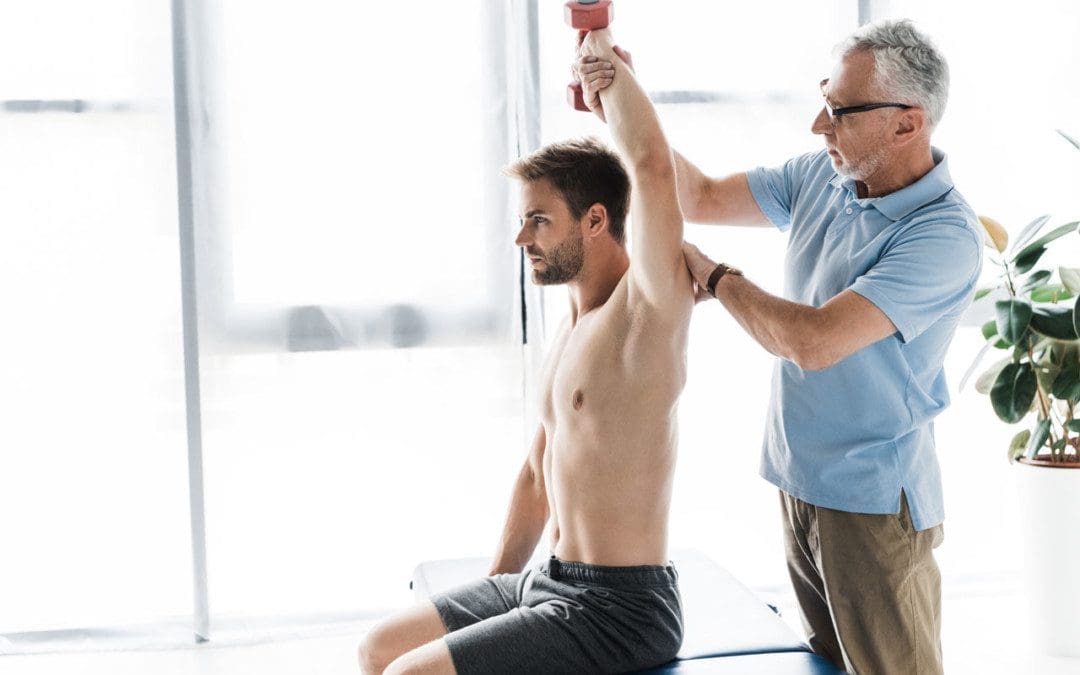
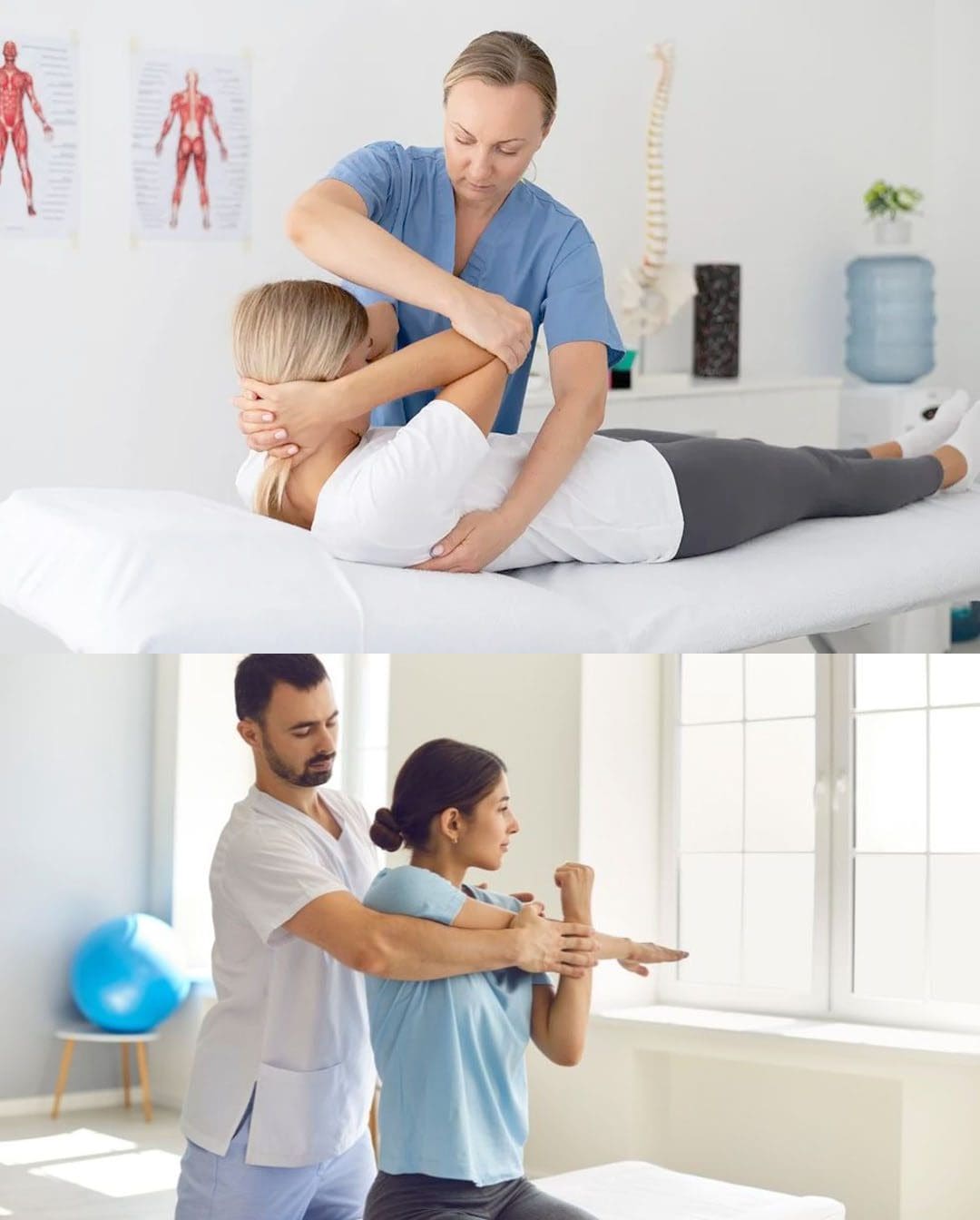
Agility is the ability to accelerate, decelerate, stabilize, and quickly change directions with proper form and posture. Everyone, athletes and non-athletes, use agility every day. This can be maneuvering around objects during a jog, shifting movements or positions when walking through a crowd, reaching toward the highest shelf, or carrying things upstairs. These controlled reactions require a balance of coordination, speed, stamina, and strength. Injury Medical Chiropractic and Functional Medicine Clinic can provide agility enhancement through adjustments, massage, and decompression to relax the body, strengthen the muscles, and improve circulation and nerve function.
Agility Enhancement
Individuals need skill and control to react to a stimulus or movement. Agility requires muscular coordination, efficiency, and cohesiveness between the upper and lower body. Agility and reaction time are two components of neuromusculoskeletal health that work together. Agility enhancement can improve cognitive ability, power production, and physical performance. Agility enhancement improves overall physical skills, including:
Balance
Stability
Coordination
Body Control
Cognition
Recovery time
Chiropractic Care
Chiropractic improves agility neurologically through improved circulation and energy flow in the nervous system.
Injury Treatment and Prevention
Agility enhancement can help with injury prevention, as agility training increases control, balance, and flexibility. It teaches the correct body placement while moving to protect the knees, shoulders, and lower back. It also helps to strengthen the muscles and improve the resiliency of the connective tissue allowing them to shorten and lengthen rapidly. This helps prevent injuries and relieves pain and stiffness associated with muscle overuse.
Stiffness often occurs from the overuse of muscles.
Stiffness reduces flexibility, increasing the risk of injury and affecting movement and physical capabilities.
Stiffness can even occur from changes in everyday routines.
Chiropractic prevents the muscles from tensing up, reducing stiffness and increasing your range of motion.
Chiropractic helps strengthen the musculoskeletal system, which makes it easier to maintain normal balance.
Chiropractic can strengthen the muscles by making the muscle fibers more excitable, contributing to quicker reaction time.
We create rehabilitation and strength and conditioning treatment plans that are individualized for each individual. This program entails the following:
Posture, mobility, and performance education for improved movement.
Health and nutritional recommendations.
Our treatment programs are designed to improve each individual’s whole body health and decrease the risk of injury.
Improve Balance And Agility
References
Ali, Kamran, et al. “Comparison of Complex Versus Contrast Training on Steroid Hormones and Sports Performance in Male Soccer Players.” Journal of chiropractic medicine vol. 18,2 (2019): 131-138. doi:10.1016/j.jcm.2018.12.001
Järvinen, Tero A H, et al. “Muscle injuries: optimizing recovery.” Best practice & research. Clinical rheumatology vol. 21,2 (2007): 317-31. doi:10.1016/j.berh.2006.12.004
Lennemann, Lynette M et al. “The influence of agility training on physiological and cognitive performance.” Journal of strength and conditioning research vol. 27,12 (2013): 3300-9. doi:10.1519/JSC.0b013e31828ddf06
Miners, Andrew L. “Chiropractic treatment and the enhancement of sports performance: a narrative literature review.” The Journal of the Canadian Chiropractic Association vol. 54,4 (2010): 210-21.
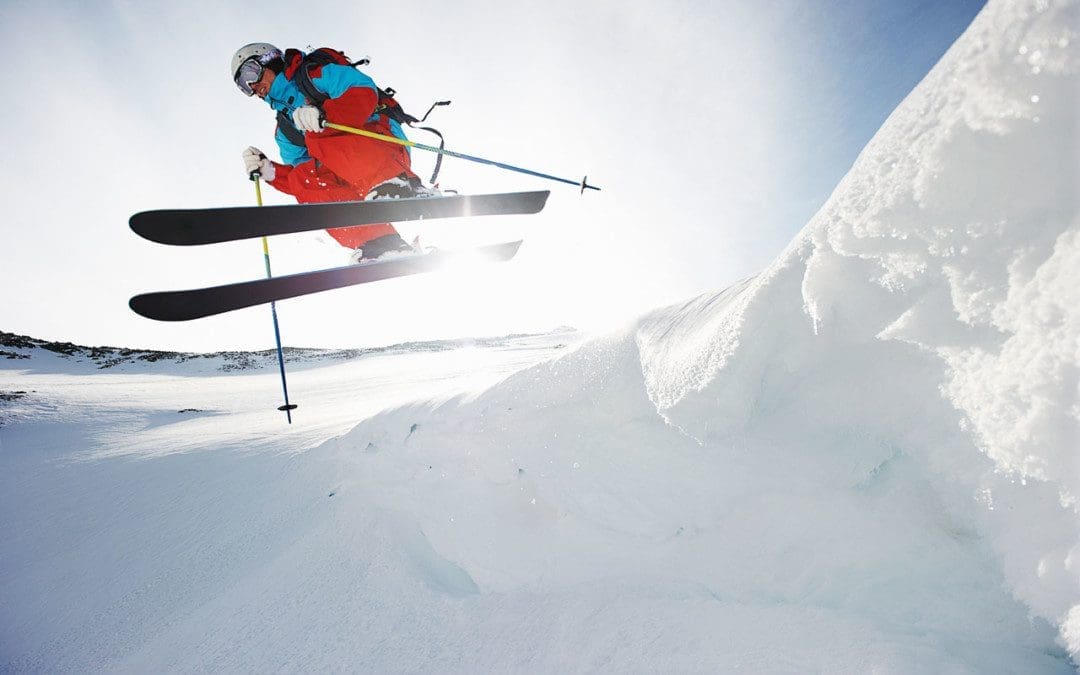
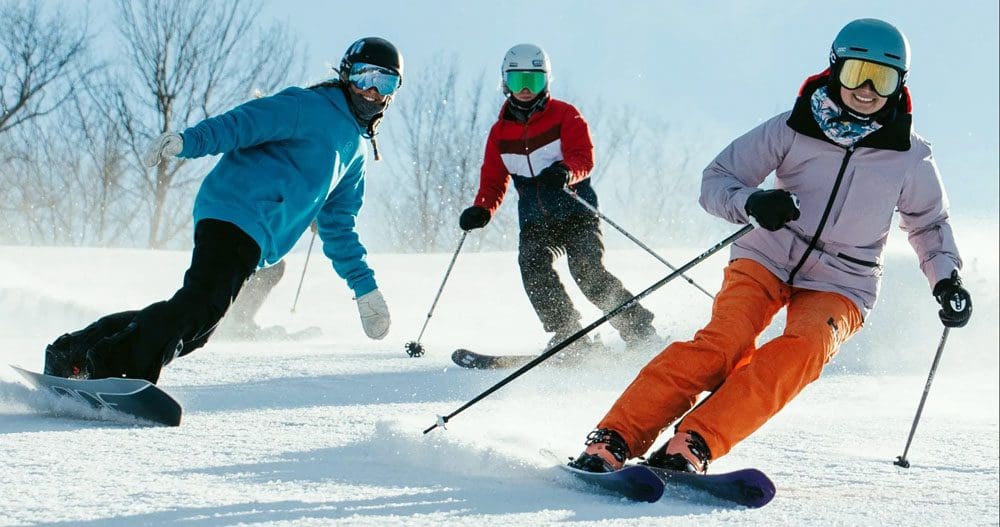
Skiing sports require balance, strength, endurance, and muscle power. It is recommended to start training for ski season about eight to twelve weeks before heading to the slopes. However, any amount of training is better than no training; as long as you stay consistent and focus on exercises that enhance skiing or snowboarding, even a few weeks of fitness training can make a difference. A ski conditioning workout can help you ski better, stay out longer, prevent injuries, and have more fun.
Skiing
Before beginning any training plan, check with your doctor or a certified training professional. The recommended strategy is a cardio and strength workout routine that trains and strengthens the lower-body muscles, including the quads, hamstrings, and glutes. This will improve mobility and balance to help control the skis better and support body parts like the knees, which are more prone to skiing injuries.
General Overview of Training
Increase Muscle Power
Strengthen the quads, glutes, hamstrings, and hips.
Posture and Balance
Train the core and the muscles around the hips, which helps provide stability.
Increase Endurance
Condition the body to handle vigorous conditions.
Increase Cardiovascular Function
Cardiovascular activities include running, biking, or interval training to strengthen the lungs and heart.
Training Schedule
Starting
With skiing, you’ll need a combination of cardio and strength training and enhanced aerobic fitness for the higher altitude.
Individuals are encouraged to start around six to eight weeks before ski season because it takes around that amount of time to experience the benefits.
The muscles need time to recover and repair themselves between sessions.
As aforementioned, you can still exercise even if you have missed the training window.
Pick an enjoyable activity: jogging, biking, and high-intensity interval training/HITT.
The goal should be 30 minutes of cardio activity 2-3 times a week to prepare the heart and lungs for downhill runs.
Recommended workouts for getting into ski shape:
Elliptical trainer – The elliptical trainer is highly recommended for ski training, as it mimics the same upper-body and lower-body movements used in Nordic skiing.
This could be a short session on a treadmill, jumping jacks, or a quick jog.
Guidelines as you progress through the workout:
Inhale during initial exertion, and exhale as you return to the starting position.
Maintain breathing patterns during faster exercises.
Rest at the end of each exercise.
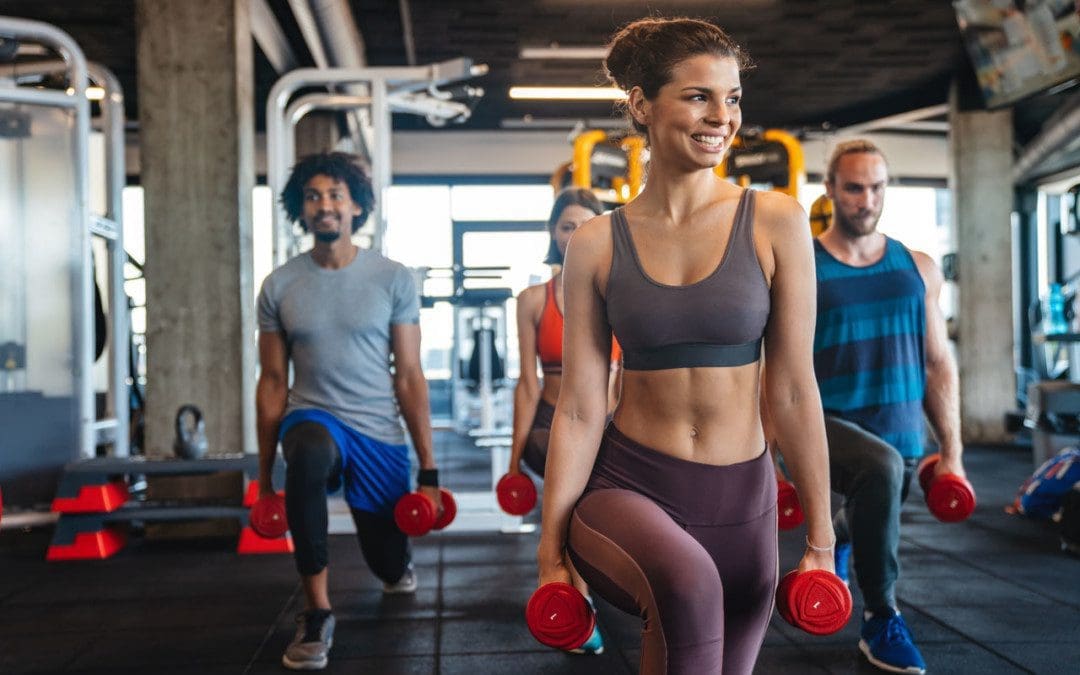
Walking Lunge with Rotation Exercise
This exercise works the glutes, quads, hamstrings, and abdominals and improves core rotation.
Stand with your feet slightly apart.
Step one foot forward into a lunge.
As you step forward, rotate your body to the side in the direction of your lead knee.
Arms should be at chest height, slightly elevated from the sides.
Drive up and through your forward leg to take the next lunge.
Repeat ten times on each side for a total of 20.
Tips and modifications:
If you don’t have enough space, you can stay in one spot and alternate lunging.
Make it easier by keeping the back leg straight.
Make sure that your knees do not go inward.
Stay in a straight line with your foot and hip.
Lateral Ski Jump Exercise
This power exercise prepares for the explosive ski movements and energy bursts needed to control the descent.
Stand with your feet hip-width apart and knees slightly bent, balancing on one leg.
Jump to the side, landing on the other leg.
Think about landing softly with your knee slightly bent.
Jump to the other side, landing softly on the other leg.
Swing the arms sideways across your body like a speed skater.
Repeat 15 on each side.
Tips and modifications:
Make smaller jumps to the side
Move slower
Touch your toe to the ground instead of keeping it off the floor.
Chop Exercise
This exercise will strengthen the core to initiate turns using the core rather than the arms or shoulders and help prevent lower back pain.
Use a resistance band that you can secure slightly above the shoulders.
Stand sideways to where the band is anchored.
Position yourself so that you can reach up evenly with your shoulder to grab the free end of the band with both hands.
Your knees should be slightly bent.
Pull the band down across your body while turning your body.
Think about the trunk doing most of the work for this exercise, not the arms and shoulders.
Keep your arms as straight as you can as you pull the band down
The arms should act as guides, with the obliques and back muscles generating the pulling and rotating power.
Do this 15 times, then repeat facing the other way.
Rest for 90 seconds before moving on to the next exercise.
Tips and modifications:
Adjust the band resistance level by shortening it to increase resistance or lengthening it to ease resistance.
The goal is to feel tired at the end of the reps but not so exhausted that you struggle to finish.
Hip Roll Exercise
This exercise strengthens the muscles of the hips, including the glutes, to help prevent knee pain. There’s a direct relationship between hip strength and knee control. When hip strength is weak, the knees tend to shift inward.
Stand on your left leg.
Lean your body forward at the hips, keeping the back straight.
Lift your right leg back behind you, slightly off the ground.
Rotate or roll your hip away from your standing foot.
Maintain the body in a straight line as you roll your hips back.
Repeat 10-15 times on each side.
Tips and modifications:
If balancing is difficult, hold on to the back of a chair or keep your toes on the ground.
Whether you’re going alpine or Nordic skiing, these are just a few exercises designed to help all types and levels of recreational skiers and snowboarders. Always check with your doctor before starting any exercise routine, and it is recommended to consult a ski instructor or personal trainer for more comprehensive and intense workouts.
Ski Team Workout
References
Laskowski, E R. “Snow skiing.” Physical medicine and rehabilitation clinics of North America vol. 10,1 (1999): 189-211.
Nagle, Kyle B. “Cross-Country Skiing Injuries and Training Methods.” Current sports medicine reports vol. 14,6 (2015): 442-7. doi:10.1249/JSR.0000000000000205
Steadman, J R et al. “Training for Alpine skiing.” Clinical orthopedics and related research,216 (1987): 34-8.
Therell, Terese, et al. “Effects of Core Strength Training on Skiing Economy in Elite Junior Cross-Country Skiers.” Research quarterly for exercise and sport vol. 93,3 (2022): 608-614. doi:10.1080/02701367.2021.1887441
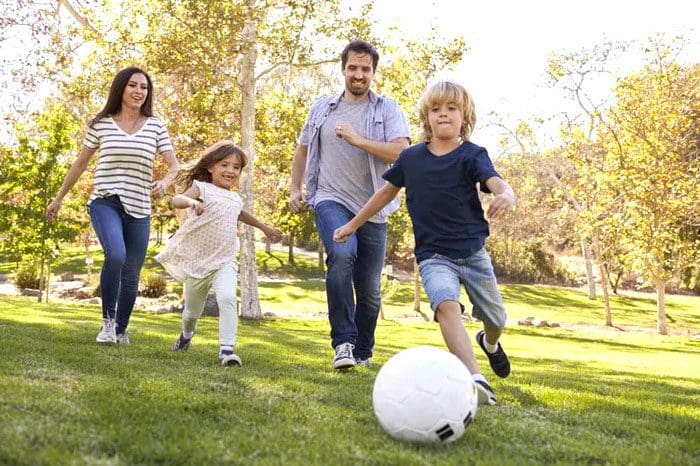
Many individuals are trying to get fit and stay active through physical activity and exercise. Getting back to a previous fitness routine is an achievable and realistic goal. Fitness means having the energy and strength to perform physical activity and the body feeling as good as possible. Getting fit improves total health. But it does not require training like an athlete. Just walking for a half-hour every day can help individuals reach an adequate fitness level that helps them feel better and increase energy levels.
Benefits of Getting Fit
Getting the body fit and in shape:
Increases endurance
Increases muscle strength
Delivers oxygen and nutrients to tissues
Improves cardiovascular health
Helps release toxins
Improves overall energy levels
Improves sleep
Handle stress better
Being fit allows the body to work harder without as much work, the mind is better focused, the body burns more calories, even when at rest, and proper weight is maintained. Fitness reduces the risk of falls, heart attack, diabetes, high blood pressure, and certain cancers.
How Much Physical Activity Is Needed?
Experts say the goal should be one, or a combination, of these:
Moderate aerobic activity, like brisk walking, for at least 2½ hours a week.
It is up to the individual how many days to exercise, but it is best to be active at least three days a week.
Activity is recommended at least 10 minutes at a time. For example, an individual could:
Take a 10-minute walk three times a day, five days a week.
Take a half-hour walk three days a week.
On the other four days, take a 15-minute walk.
Take a 45-minute walk every other day.
Vigorous exercise is recommended at least three days a week for at least 10 minutes at a time. This activity makes the body breathe harder and increases heart rate. More vigorous activities, like running, could be included for at least one hour a week. This can be spread out 75 minutes, whichever way is more convenient for the individual. For example, an individual could:
Run for 25 minutes 3 times a week.
Run for 15 minutes 5 times a week.
Children as young as preschool age need activity as well. Encourage children ages 6 to 17 to engage in moderate to vigorous exercise for at least 1 hour every day.
Types of Physical Activity
Aerobic fitness
This makes the body breathe faster and makes the heart work harder.
Activities include walking, running, cycling, and swimming.
It is also known as cardio or cardiovascular training.
Muscle fitness
Muscle strength means building stronger muscles and increasing the length of time they can be used.
Activities like weight lifting, push-ups, squats, and resistance bands can improve muscular fitness.
Flexibility
Flexibility is the ability to move the joints and muscles through their full range of motion.
Moderate physical activity is safe for most individuals, but it’s recommended to talk to a doctor before engaging in physical activity/exercise. To help get started:
Make physical activity part of everyday
Make a regular habit of using stairs, not elevators, and walking, bicycling to do errands near home.
Start walking
Walking is a great fitness activity that most individuals can do.
Make it a habit to take a daily walk with family, friends, coworkers, or pets.
Find a workout partner
Working out with a partner can make exercising more enjoyable.
Find fun activities that you can stick with
Vary activities, so they don’t become boring and monotonous.
Use a calorie-burning application to determine how many calories are burned during exercise and daily activities.
Body Composition
Damaged Collagen
There are several reasons the body’s collagen production can slow down or become less efficient. The quality of the collagen made can decrease as well. Environmental factors can be avoided to protect collagen production; however, damage from disease and natural processes is inevitable. Aging is the most common cause of decreased natural collagen. As the body ages, collagen production and quality decrease. This leads to thinner, more fragile skin and achy joints. Certain chronic diseases like lupus and rheumatoid arthritis cause collagen deficiency, leading to issues that include:
UV exposure can accelerate the average rate of collagen damage that comes with aging.
UV exposure damage can also play a role in certain skin cancers.
Excessive sugar and fat intake increases inflammation and decreases protein synthesis.
References
American College of Sports Medicine, et al. (2009). Position stand: Exercise and physical activity for older adults. Medicine and Science in Sports and Exercise, 41(7): 1510–1530.
Anspaugh DJ, et al. (2011). Building muscular strength and endurance. Wellness: Concepts and Applications, 8th ed., pp. 111–137. New York: McGraw-Hill.
Centers for Disease Control and Prevention (2004). Strength training among adults aged 65 or older. MMWR, 53(2): 25–28.
U.S. Department of Health and Human Services (2008). 2008 Physical Activity Guidelines for Americans (ODPHP Publication No. U0036). Washington, DC: U.S. Government Printing Office. Available online: http://www.health.gov/paguidelines/guidelines/default.aspx.
Williams MA, et al. (2007). Resistance exercise in individuals with and without cardiovascular disease: 2007 update: A scientific statement from the American Heart Association Council on Clinical Cardiology and Council on Nutrition, Physical Activity, and Metabolism. Circulation, 116(5): 572–584.
IFM's Find A Practitioner tool is the largest referral network in Functional Medicine, created to help patients locate Functional Medicine practitioners anywhere in the world. IFM Certified Practitioners are listed first in the search results, given their extensive education in Functional Medicine

 Agility Enhancement