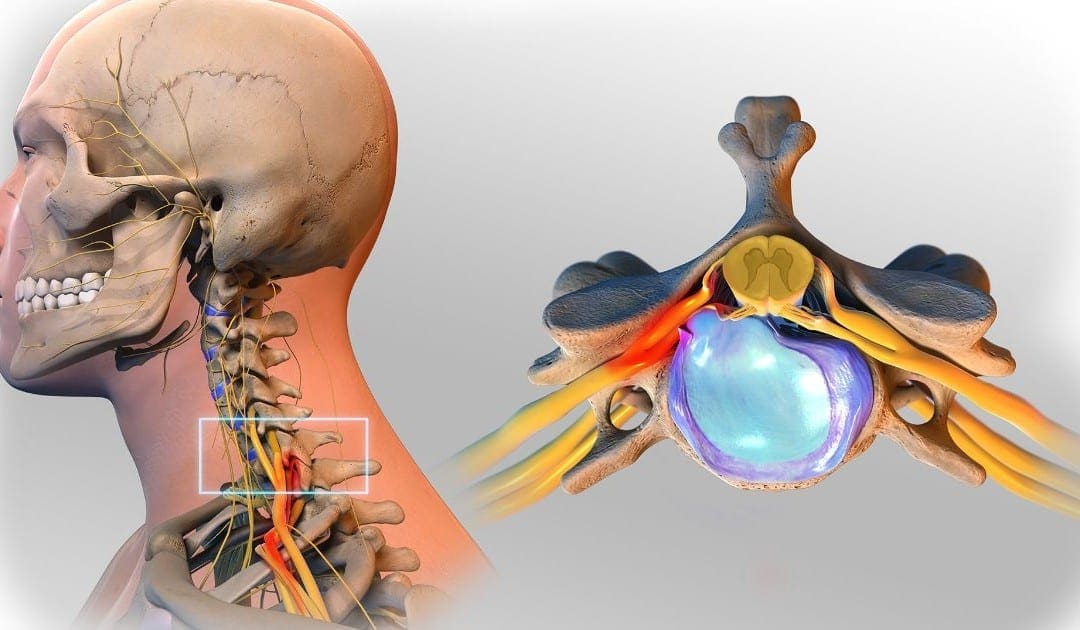
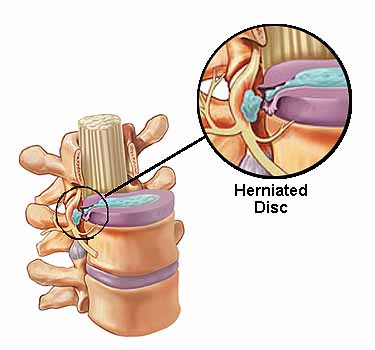
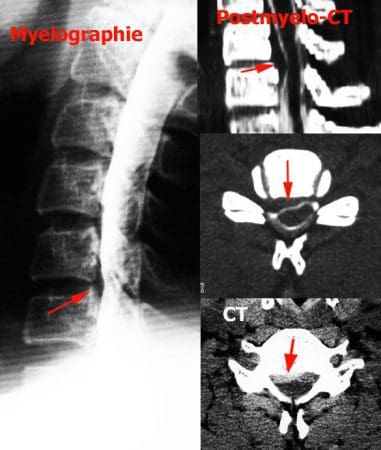
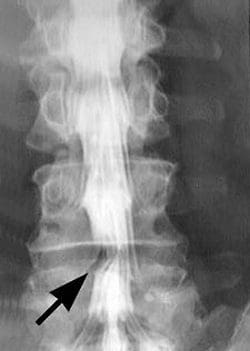
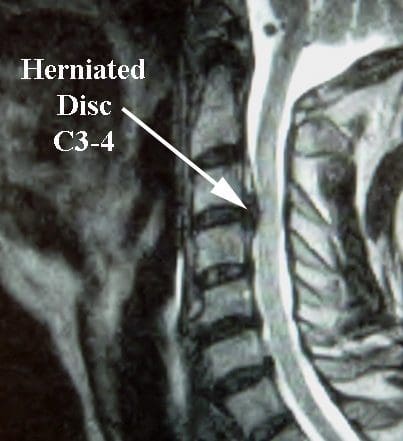
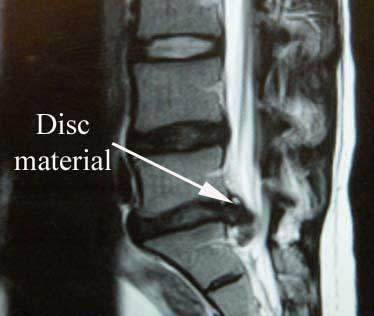
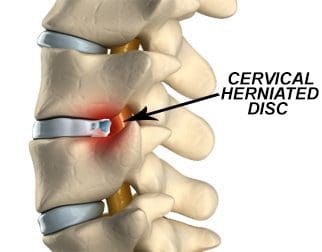
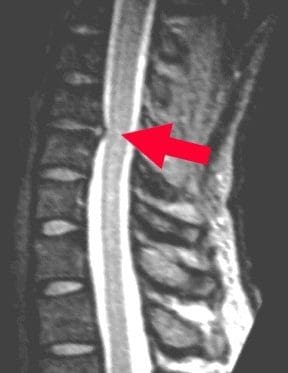
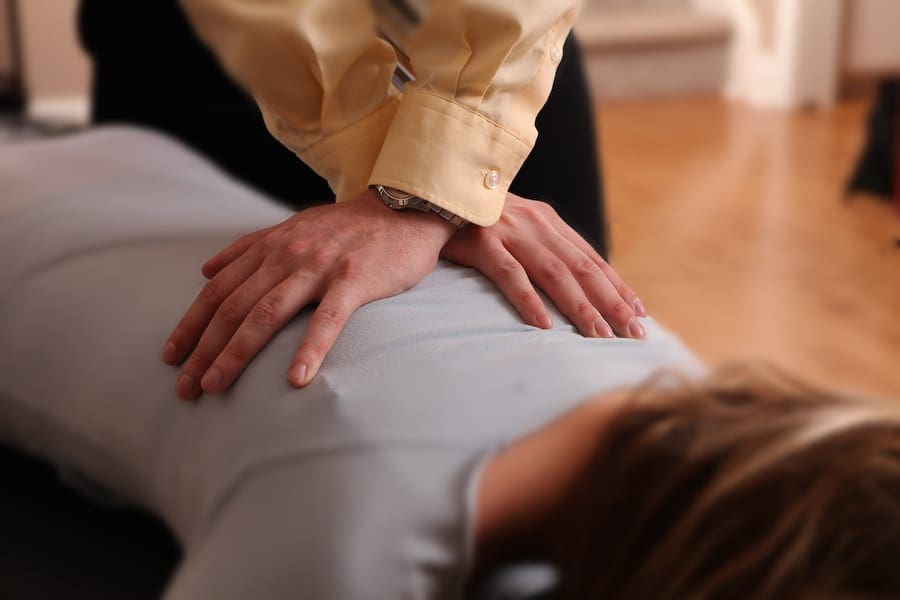
Herniation of the nucleus pulposus, abbreviated as HNP, occurs when the nucleus pulposus, frequently described to have a gel-like substance, breaks through the anulus fibrosus, the tire-like structure of the intervertebral disc which acts as a spinal shock absorber.
A herniated disc occurs most frequently in the lumbar region of the backbone or spine, particularly at the L4-L5 and L5-S1 levels (L = Lumbar and S = Sacral). This is primarily because the lumbar spine generally carries the majority of the body’s weight. Since the elasticity and water content of the nucleus decreases with age through the natural process of degeneration, individuals between the ages of 30 and 50 often seem to be �more vulnerable to disc herniation.
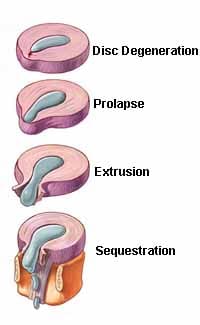
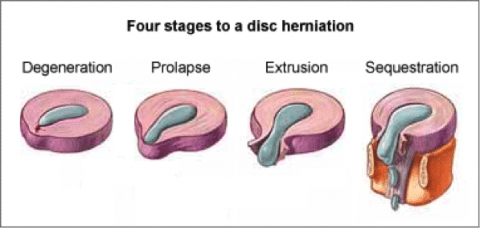
The progression of a herniation of the nucleus pulposus, best known as a herniated disc, can vary and typically occurs gradually over time. There are four stages: (1) disc protrusion (2) prolapsed disk (3) disc extrusion (4) sequestered disc. Stages 1 and 2 are known as incomplete disc herniations, or as a disc bulge, where 3 and 4 are known as complete disc herniations, ruptured discs or herniated discs. Pain may be combined with some radiculopathy, which means deficit. The deficit might include sensory alterations, such as tingling sensations and/or numbness, or motor changes, such as weakness and/or �weight loss. Nerve compression resulting from added pressure, compression or impingement of the spinal nerves due to the substance from the herniated disc is often what causes these changes.
Progression of Herniated Disc
The extremities affected by herniated discs are dependent upon the vertebral level at which they occur in. Consider the following examples:
Cervical – Pain, discomfort and other symptoms in the throat, shoulders, and arms.
Thoracic – Symptoms radiate into the chest.
Lumbar – Symptoms extend into the buttocks, thighs, legs and feet. Sciatica is common.
Cauda Equina Syndrome is serious disorder requiring immediate surgical intervention which occurs from from a disc herniation. The symptoms include bilateral leg pain, reduction of perianal sensation (rectum), paralysis of the bladder, and weakness of the anal sphincter.
Analysis of Herniated Discs
The backbone is analyzed with the patient standing and laying down. Because of muscle spasm, a loss of normal spinal curvature may be noted. Radicular pain, described as inflammation of a spinal nerve, may increase if pressure is placed on the affected spinal segment.
A Lasegue test, also known as Straight-leg Raising Test, is often performed to determine the extent of the herniated disc and its manifested symptoms. To perform this test, the patient lies down, the knee is extended, and the hip is flexed. If pain is aggravated or produced, it is an indication the lower lumbosacral nerve roots may be inflamed.
Other neurological tests are performed to ascertain loss of sensation and/or engine function. Reflexes are noted as these changes may indicate the location of the herniation.
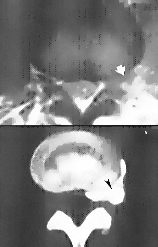
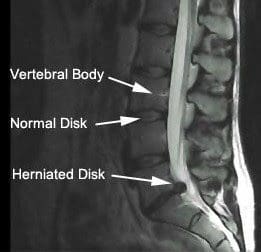
Radiographs can be helpful to determine the presence of a herniated disc, but Computed Axial Tomography (CAT) or Magnetic Resonance Imaging (MRI) provides more detail. The MRI is the best method allowing the physician to find the soft spinal tissues that are unseen in other imaging procedures.
Evidence of HNP
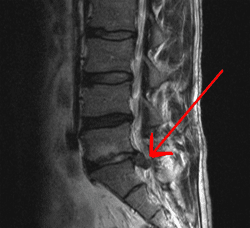
The findings in the examination and evaluations, such as the one below, are compared to earn a diagnosis. This includes ascertaining the precise location of the herniation so treatment options can be reviewed with the patient.
The scope of our information is limited to chiropractic and spinal injuries and conditions. To discuss options on the subject matter, please feel free to ask Dr. Jimenez or contact us at 915-850-0900 .�
By Dr. Alex Jimenez
Additional Topics: Sciatica
Lower back pain is one of the most commonly reported symptoms among the general population. Sciatica, is well-known group of symptoms, including lower back pain, numbness and tingling sensations, which often describe the source of an individual’s lumbar spine issues. Sciatica can be due to a variety of injuries and/or conditions, such as spinal misalignment, or subluxation, disc herniation and even spinal degeneration.
Herniated lumbar discs, although considered common, can be very debilitating and disabling. While it may be impossible to prevent disc herniations, understanding the mechanism of injury and implementing that knowledge can cut the odds of developing this unpleasant injury. A range of factors may promote lumbar disc damage or injury. The mechanism of injury for herniated discs often involves flexion, compression and twisting of the lumbar spine.
Mechanism of Injury: Herniated Discs
The lumbar spine’s discs are specialized connective tissue structures which function as shock absorbers between the spinal bones or vertebrae of the spine. Intervertebral discs are springy in nature due to a moist, jelly-like center portion known as the nucleus pulposus. The nucleus pulposus is contained and surrounded by a more layered, fibrous tissue that makes up what is known as the annulus fibrosis. Herniated discs or ruptured discs occur when harm to the annulus fibrosis causes the nucleus pulposus material to escape its boundaries and protrude outward in the disc.
Flexion
Where lumbar disc herniations occur regularly in a normal setting, these aren’t easily reproduced in a research setting. It is notable that in scientific research studies, where disc herniations were created in animal or human lumbar spine specimens, most demanded a small amount of spine flexion. Because of this, Stuart McGill, Ph.D., author of the book “Low Back Disorders,” concludes that repeated or prolonged spine flexion will be the primary mechanism leading to lumbar disc herniation. In a lab setting, McGill and other scientific doctors found that the way they could produce herniated disc injuries was to place weight, or a weight, onto the spine while bending into flexion. These circumstances are consistent with what could happen with repetitive lifting activities where the spine is flexed forward.
Compression
A research presented in 2001 in the journal “Clinical Biomechanics” demonstrated a link between compression of the spinal joints, technically known as vertical loading, and disc herniation. Even though the analysis used spinal sections taken from the necks of pigs, the researchers tried to replicate loading patterns common to the lumbar spines of humans. In the scientific study, severe and more frequent cases of herniated discs resulted when compression forces on the spinal bones had been increased. However, compression forces were essential to cause damage or injury such as disc herniations, that were subjected to repetitions of forward and backward bending. The authors reasoned that flexion and extension moves likely play a larger part than compression alone in inducing disc herniations. To put it differently, the spine can resist compression forces, such as lifting, when in a vertical position. Including a load whilst bending forward and backward though, may quickly spell difficulty for the individual.
Twisting
Another study published in 2010 in “Cinical Biomechanics” analyzed the role of axial torque, or twisting, in disc herniation. Using an animal model, the researchers discovered that disc herniation was not caused by twisting that was isolated. However, twisting did damage the annulus fibrosis. With damage to the annulus, the discs were more vulnerable to rupture or herniation when subjected to flexion movements. This implies that if the mechanism of injury of a disc herniation is flexion, these may be contributed to by damage brought on by twisting weakened discs.
Occupational Factors
A study published in 1987 in the “Journal of Chronic Diseases” examined the risk of lumbar herniated discs associated with occupation. The researchers noted that the risk for this condition is greater among men in blue-collar jobs in contrast to those in white collar jobs. This relates to increased lifting and bending activities among blue-collar workers when compared with white-collar employees. The writers noted less variation by occupational groups among women. The risk of lumbar disc herniations, however, was greater among women who described their work as strenuous. An additional finding that may relate to the spinal flexion mechanism of injury is that the risk of lumbar disc herniations is high among individuals whose work entails driving an automobile. Sitting while driving places the lumbar spine in a sustained posture of slight flexion.
Diagnosis for Herniated Discs
Lower back pain and symptoms associated with sciatica, are common manifestations resulting from lumbar spine disc herniation. Healthcare professionals, including chiropractors who specialize in sciatica, can help diagnose herniated discs as well as help determine the source of the individual’s symptoms. A spine specialist may provide the patient with or direct them to a clinic to have x-rays, MRI’s or CT scans to properly determine the presence of a herniated disc. Seeking immediate medical attention is essential towards the patient’s recovery.
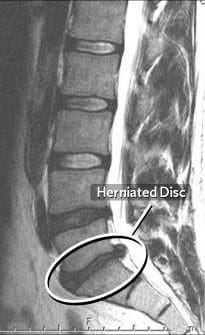
MRI of a Lumbar Herniated Disc
The scope of our information is limited to chiropractic and spinal injuries and conditions. To discuss options on the subject matter, please feel free to ask Dr. Jimenez or contact us at 915-850-0900 .�
By Dr. Alex Jimenez
Additional Topics: Sciatica
Lower back pain is one of the most commonly reported symptoms among the general population. Sciatica, is well-known group of symptoms, including lower back pain, numbness and tingling sensations, which often describe the source of an individual’s lumbar spine issues. Sciatica can be due to a variety of injuries and/or conditions, such as spinal misalignment, or subluxation, disc herniation and even spinal degeneration.
Sometimes called a ruptured or slipped disc, your lower back pain often occurs due to a herniated disc in the lumbar spine. In fact, it’s one of the most common causes of low back pain, in addition to sciatica.
Between 60 and 80 percent of people will experience back pain at least once throughout their lifetime. A high proportion of these individuals will have low back and leg pain brought on by a herniated disc.
Most people feel better with just a few weeks or months of non-surgical treatment though a disc can sometimes be very debilitating. Surgical therapy can also help alleviate discomfort and disc pain if symptoms are not resolved.
Nonsurgical Treatment of Herniated Discs
After the first injury, the doctor may recommend cold treatment and drugs.
During the first 24 to 48 hours, cold treatment helps to reduce pain by decreasing blood flow, muscle soreness, and swelling. Never use ice or cold directly to skin; instead wrap item or the ice pack in a towel and then apply for more than 15 minutes.
Medications may include an anti-inflammatory to lessen swelling, a muscle relaxant to calm anxiety, and a pain-killer to relieve intense but alleviate pain (severe pain).
Mild to moderate pain may be treated with anti inflammatory anti inflammatory drugs (NSAIDs). These work by relieving pain and swelling.
Please discuss use with your physician.
Usually heat treatment can be applied. Blood circulation increases to heat and relax soft tissues. Higher blood flow will help to flush out toxins that may accumulate in tissues as a consequence of muscle spasm and intervertebral disc injury. Never use heat directly to skin ( just like chilly); rather, wrap the heat source in a thick towel for no longer than 20 minutes.
Spinal Injection
Leg weakness is developing, or if leg pain is intense, the doctor may prescribe an anabolic steroid injection. Anti-inflammatory medication is put by an epidural steroid injection into the space near the nerves on your lumbar spine. Before beginning this therapy you need to discuss this option with your doctor and ask.
Physical Therapy
The doctor may recommend physical therapy. The doctor’s orders are transmitted to the physical therapist by prescription. Physical treatment includes a mixture of treatments to reduce pain and improve flexibility. Heat and ice therapy stretching, and grip are a few examples, but your therapist may work together to develop the best treatment plan for the pain and symptoms.
Surgical Treatment of a Lumbar Herniated Disc
If symptoms does not relieve spine surgery is known as. Persistent pain, leg fatigue, or lack of function requires additional evaluation. Rarely, does a lumbar herniated disc cause bowel/bladder incontinence or groin/genital numbness, which demands immediate medical attention.
In case surgery is recommended, constantly ask what outcomes you can expect and the goal of the surgery. You have to understand all details of what’s being advocated, and do not hesitate to get a second opinion. Surgery is a big decision, so you odn’t wish to rush in to it.
To alleviate nerve pressure and leg pain, surgery generally involves a discectomy (elimination of all or part of the intervertebral disc).
In addition, by removing some of the bone covering the nerve the surgeon may need to access the herniated disc. This procedure is called a laminotomy.
These processes can be done using minimally invasive methods. Minimally invasive spine surgery doesn’t require large incisions, but instead uses apparatus like endoscope and a microscope during the surgery and tiny specialized instruments and cuts.
Can You Prevent a Lumbar Herniated Disc?
Earlier we advised you that a cause of a lumbar disc is aging, and that can’t be avoided by us. Does that mean that you can not do anything to prevent a lumbar herniated disc?
Of course not. There are numerous factors which are also to take care of your spine, and within your hands, observe your posture, do not smoke, make healthy food choices, exercise, and use body mechanics, especially whenever you’re lifting something.
They’re usually healthy actions you can take to try and prevent lower back pain, although doing all of those things won’t ensure that you never get a lumbar herniated disc.
The scope of our information is limited to chiropractic and spinal injuries and conditions. To discuss options on the subject matter, please feel free to ask Dr. Jimenez or contact us at 915-850-0900 .�
By Dr. Alex Jimenez
Additional Topics: Sciatica
Lower back pain is one of the most commonly reported symptoms among the general population. Sciatica, is well-known group of symptoms, including lower back pain, numbness and tingling sensations, which often describe the source of an individual’s lumbar spine issues. Sciatica can be due to a variety of injuries and/or conditions, such as spinal misalignment, or subluxation, disc herniation and even spinal degeneration.
A common cause of lower leg and back pain is a ruptured disc or herniated disc. Symptoms of a herniated disc may include muscle spasm or cramping sharp or dull pain, sciatica, and leg weakness or loss of leg work. Sneezing, coughing, or bending intensify the pain.
Rarely, bowel or bladder control is lost, and when this happens, seek medical attention at once.
Sciatica is a symptom often associated with a lumbar herniated disc. Stress on one or several nerves that contribute to the sciatic nerve can lead to pain, burning, tingling, and numbness that extends from the buttocks into the leg and into the foot. Normally one side (left or right) is affected.
Anatomy of Lumbar Spine Discs
First, a brief overview of spinal anatomy so that you can better understand the way the lumbar herniated disc may lead to lower back pain and leg pain.
In between each of the 5 lumbar vertebrae (bones) is a disc, a tough, fibrous shock-absorbing pad. Endplates line the endings of every vertebra and help hold discs in place. Every disc includes a tire-like outer ring (annulus fibrosus) that encases a gel-like material (nucleus pulposus).
Disc herniation occurs when the annulus fibrous breaks open or cracks, permitting the nucleus pulposus to escape. Though you may have heard it be called a ruptured disc or even a bulging disc, this is called a herniated nucleus pulposus or herniated disc.
When a disc herniates, it can press on the spinal cord or spinal nerves. All along your spine, nerves are branching off from the spinal cord and travelling to various parts of your body. The nerves pass through small passageways between the vertebrae and discs, so if a herniated disc presses into that passageway, it can compress (or “pinch”) the nerve. This can result in the pain associated with herniated discs. (In the case below, you can observe a close-up look at a herniated disc pressing on a spinal nerve.)
Lumbar Herniated Disc Risk Factors
Many factors can increase the risk for disc herniation, including:
Lifestyle choices like tobacco use, lack of regular exercise, and insufficient nourishment significantly contribute to inadequate disc health.
As the body ages, natural chemical modifications cause discs to slowly dry out, which can impact disc strength and resiliency. To put it differently, the aging process can make your discs less capable of absorbing the shock from the body’s movements, which is one of their most important jobs.
Poor posture combined with the habitual use of incorrect body mechanics stresses the lumbar spine and influences its usual ability to take the bulk of the body’s weight.
Combine these factors with the eeffects from daily wear and tear, injury, incorrect lifting, or twisting and it is simple to comprehend why a disc may herniate. For example, lifting something incorrectly may lead to disc pressure.
Disc Herniation Phases
A herniation may develop suddenly or slowly over weeks or months. The four phases to a herniated disc are:
1) Disc Degeneration: Chemical modifications related to aging causes discs to weaken, but with no herniation.
2) Prolapse: The form or position of the disc changes with a few small impingement into the spinal canal and/or spinal nerves. This stage is also referred to as a bulging disc or a disc that was protruding.
3) Extrusion: The gel-like nucleus pulposus breaks through the tire-like wall (annulus fibrosus) but remains within the disc.
4) Sequestration or Sequestered Disc: The nucleus pulposus fractures throughout the annulus fibrosus and can then go outside the intervertebral disc.
Lumbar Herniated Disc Diagnosis
Lately, not every herniated disc causes symptoms. Some people discover they have a ruptured disc or herniated disc after an x-ray for an unrelated reason.
Most of the time, the symptoms, notably the pain, prompt the patient to seek medical attention. The trip with the doctor includes a physical exam and neurological exam. He or she will examine your medical history, and inquire about what remedies you have tried for pain relief and what symptoms you’ve experienced.
An x-ray may be needed to rule out other causes of back pain like osteoarthritis (spondylosis) or spondylolisthesis. A CT or MRI scan verifies the extent and location of disc damage.These imaging tests can show the soft tissues (including the disc).
Sometimes a myelogram is essential. In that evaluation, you will receive an injection of a dye; the dye will appear on a CT scan, so allowing your physician to readily see problem areas.
The scope of our information is limited to chiropractic and spinal injuries and conditions. To discuss options on the subject matter, please feel free to ask Dr. Jimenez or contact us at 915-850-0900 .�
By Dr. Alex Jimenez
Additional Topics: Sciatica
Lower back pain is one of the most commonly reported symptoms among the general population. Sciatica, is well-known group of symptoms, including lower back pain, numbness and tingling sensations, which often describe the source of an individual’s lumbar spine issues. Sciatica can be due to a variety of injuries and/or conditions, such as spinal misalignment, or subluxation, disc herniation and even spinal degeneration.
Various injuries can be caused by automobile crashes. One of the most frequent car accidents is the collision in which a vehicle is hit from behind. If you have been in these events you may be receiving neck pain therapy for a accident called whiplash that occurs when an occupant of this vehicle is thrust forth and back.
This injury may cause a herniated disc in the cervical (neck) area, in addition to a variety of other symptoms. A whiplash injury can include neurological impairment in mobility, joint aches, problems with concentration and chronic pain. Besides damaging the delicate tissues (muscles, tendons, and ligaments) that maintain the neck, it may also harm the cervical spine (the neck region of the backbone), inducing a herniated disc in the neck. The herniation can compress the nearby nerves, causing pain. Symptoms of a herniated disc in the neck may include tingling, numbness, and muscle weakness.
Pain from Previously Existing Conditions
In a study published in the journal Spine, doctors found that disabling pain in the back following whiplash may be due to a previously disc in the spine. These conditions may present no symptoms that are apparent before the accident. The researchers further concluded that pain was successfully treated following microdiscectomies for these discs.
Symptoms from whiplash injuries cannot be necessarily resolved with neck pain treatment, and can be tricky to diagnose since the pain lower back and even in the shoulder region can radiate to other regions of the body. It can be especially challenging for the physician when symptoms are vague and non-localized.
When the natural reactions of the body don’t operate properly, injuries occur. In the normal state, a C-shape is maintained by the cervical spine. On an S-shape as the portion extends and the upper portion of this area flexes, the individual’s cervical spine takes upon impact from behind. This phenomenon risks herniating a disc or tearing a ligament. If the human body’s protective response is working correctly, it will recognize the impact and signal the cervical muscles and make a supportive scaffold for the cervical spine and ligaments.
Although pain can heal on its own it may often require therapy. A treatment program for a herniated disc in the neck may consist of anti-inflammatory pain medication, rest, and physical therapy. With these conservative treatments, the symptoms generally improve over time. But if imaging tests find out that the damaged disc is compressing nearby nerves and/or the spinal cord, or if symptoms persist despite the treatment, neck surgery may be considered.
There are a few things you can do in order to stop whiplash injuries requiring neck pain treatment and increased risk for pain . These include maintaining fitness and good posture. You can start focusing on those goals.
The scope of our information is limited to chiropractic and spinal injuries and conditions. To discuss options on the subject matter, please feel free to ask Dr. Jimenez or contact us at 915-850-0900 .�
By Dr. Alex Jimenez
Additional Topics: Automobile Accident Injuries
Whiplash, among other automobile accident injuries, are frequently reported by victims of an auto collision, regardless of the severity and grade of the accident. The sheer force of an impact can cause damage or injury to the cervical spine, as well as to the rest of the spine. Whiplash is generally the result of an abrupt, back-and-forth jolt of the head and neck in any direction. Fortunately, a variety of treatments are available to treat automobile accident injuries.
If given the opportunity, a herniated disc can occur as a consequence of trauma and can create a plethora of problematic symptoms which might become chronic pain conditions. Whiplash is most frequently associated with car collisions, but can actually happen from any injurious procedure that snaps the neck forward or back beyond its normal selection of movement.
This informative article will detail the prevalence of herniated discs related to whiplash events. We’ll investigate how whiplash occurs and how the process can enact disc injury in the cervical or upper thoracic spinal regions.
Whiplash Herniated Disc Incidents
Whiplash happens because of abrupt acceleration, or more commonly, sudden deceleration. Inertia is the force which can create harm to the spinal structures and the throat muscles at the neck and back.
The head is a really heavy weight that is supported by the slightly thinner and weaker vertebrae and intervertebral discs in the cervical spine. When inertia is applied to the entire body, the head will snap backwards or forward, causing both and typically hyperflexion or hyperextension. As it whips about causing an assortment of injurious events that are possible, including a herniated disc, this heavy weight places stress on the cervical spine.
Herniated Disc Pain and Discomfort
Whiplash typically occurs from severe trauma, such as an automobile accident, slip and fall, sports injury or act of violence. Any situation which causes the head to jolt abruptly back-and-forth, can cause whiplash.
Whiplash is a condition which sometimes occurs after an accident, but could also take some time to become apparent. The reasons for this time delay response vary, but are commonly linked to three possible causations:
First, it’s the pain relieving quality of adrenaline, which often fills the bodily systems during a crash. This can diminish the severity symptoms which might otherwise be debilitating when they occur. Second, is the psychological nocebo effect of the trauma, which could take some time to infiltrate and to come up within the subconscious mind. Finally, the secondary gain principle enacted by legal action having to do with the accident might causes time delay. It’s no coincidence that people begin to experience pain right around the time they seek professional help.
Whiplash & Herniated Disc Consequences
The vast majority of whiplash complaints are due to muscular injury, not damage to the spinal column. Neck muscle pain can be extremely severe, but is not a significant worry and should resolve with symptomatic treatment.
Extreme trauma or highly focused trauma can cause a bulging disc or even a ruptured disc in the neck or upper back. Symptoms are very likely to be painful for a number of weeks, but should resolve within 2 months, as is typical for practically any disc injury condition with the proper treatment and care.
Other less common effects of severe whiplash might incorporate a change in the natural curvature of the spine, a fractured or shattered vertebra or a torn ligament or tendon.
Whiplash Herniated Disc Guidance
A lot of men and women suffer whiplash traumas on a daily basis. These types of injuries are an inherent part of the fear we have towards spinal damage and are an integral component of litigation. Both of these factors make judging the actual degree of any whiplash neck injury complicated.
Pain is often worsened or perpetuated through psychosomatic or secondary gain factors, instead of structural anatomical problems. It is crucial, as a patient, to look past the psychological and legal implications of your injury and concentrate on your recovery.
The neck, like every other area of the human body, was made to heal, but will only do so in the event that you give it the mental and emotional support and trust it requires.
There isn’t anything more important than your health. Unfortunately, this is a lesson for those who endure a plethora of herniated disc treatments and eventual disc surgery simply to bolster a case that is legal. When the case is over, you might have some money, but is it really worth it to lose your freedom and functionality for the remainder of your life?
The scope of our information is limited to chiropractic and spinal injuries and conditions. To discuss options on the subject matter, please feel free to ask Dr. Jimenez or contact us at 915-850-0900 .�
By Dr. Alex Jimenez
Additional Topics: Automobile Accident Injuries
Whiplash, among other automobile accident injuries, are frequently reported by victims of an auto collision, regardless of the severity and grade of the accident. The sheer force of an impact can cause damage or injury to the cervical spine, as well as to the rest of the spine. Whiplash is generally the result of an abrupt, back-and-forth jolt of the head and neck in any direction. Fortunately, a variety of treatments are available to treat automobile accident injuries.
Title: Spinal Adjustments are Safe in the Presence of Herniated disc with the Absence of Cord Compression
Abstract: The objective was to explore the use of MRI to increase the efficacy and safeness of adjusting the cervical spine in the presence of a disc herniation when there is no evidence of cord compression on MRI.
Introduction: A 30 year old male patient presented to the office on 1/8/14 with injuries from a motor vehicle accident. The motor vehicle accident had occurred 3 weeks prior to his first visit. The patient was the restrained front seat passenger. The car he was travelling in struck another car and the patient�s car was flipped over onto its roof. While the car remained on its roof the patient was able to crawl out and awaited medical attention. The patient was taken by ambulance to the hospital where he was examined and testing was ordered. The patient had multiple CT scans of the head and X-rays of the cervical and lumbar. The CT of the head revealed a nasal fracture and the patient underwent immediate surgery to repair his broken nose.
Safe and Effective Chiropractic Adjustment Study
The patient presented three weeks post-accident with persistent and progressive daily occipital headaches, neck pain into the shoulders bilaterally, upper back pain and lower back pain that radiates into the legs and down into the feet bilaterally. He has swelling at the left anterior knee and bandages around the right elbow and two black eyes.
The patient states that he was having difficulty with regular activities of daily living including walking for more than 15-20 minutes, long periods of standing, more than an hour of sitting, any bending or lifting and any regular daily chores. The patient also states he was having difficulty getting a restful night�s sleep due to the pain. The patient�s visual analog scale rating was 10 out of 10.
History: The patient denied any prior history of neck or back pain. No reported prior injuries or traumas.
Objective Findings: An examination was performed and revealed the following:
Range of Motion:
Cervical Motion Studies:
Flexion: Normal=60 Exam- 25 with pain with spasm
Extension: Normal=50 Exam- 20 with pain with spasm
Left Rotation: Normal=80 Exam- 35 with pain with spasm
Right Rotation: Normal=80 Exam- 35 with pain with spasm
Left Lat. Flex: Norma=-40 Exam- 15 with pain with spasm
Right Lat. Flex: Normal=40 Exam- 15 with pain with spasm
Dorsal-Lumbar Motion Studies:
Flexion: Normal=90 Exam- 35 with pain with spasm
Extension: Normal=30 Exam- 10 with pain with spasm
Left Rotation: Normal=30 Exam- 10 with pain with spasm
Right Rotation: Normal=30 Exam- 5 with pain with spasm
Left Lat. Flex: Normal=20 Exam- 5 with pain with spasm
Right Lat. Flex: Normal=20 Exam- 5 with pain with spasm
Orthopedic Testing
The orthopedic testing revealed the following positive orthopedic tests in the cervical spine: Valsalva�s indicating the presence of a disc at L4-S1 and the lower cervical region, foraminal compression indicating radicular pain in the lower cervical region, Jackson�s compression , shoulder depressor and cervical distraction all indicating pain in the lower cervical region. The lumbar testing revealed a positive Soto-Hall with pain at the L4-S1 level, Kemps positive with pain from L4-S1, Straight Leg raiser with pain at 60 degrees, Milgram�s with pain at the L5-S1 level, Lewin�s with pain at L5-S1, and Nachlas eliciting pain in the L5-S1 region.
Neurological Testing
The neurological exam revealed bilateral upper extremity tingling and numbness into the shoulder on the left and down the right arm into the hand. The lower extremity revealed tingling and numbness into the gluteal�s bilaterally with left sided radicular pain in to the leg into left foot. The pinwheel revealed hypoesthesia at C7 bilaterally and L5 bilaterally dermatome level. The patient was unable to perform the heel-toe walk
The chiropractic motion palpation and static palpation exam revealed findings at C 1,2 , 5, 6, 7 and T 2,3,4,9, 10 and L 3,4,5 as well as the sacrum.
X-Ray Result Study
The hospital had cervical x-rays and a CT of the head on the day of the accident. Thoracic and lumbar studies were needed as a result of the positive testing and the patients history and complaints The x-ray studies revealed a reversed cervical curve and misalignment of the C1,2,5,6,7 and the lumbar studies revealed a mild IVF encroachment at L5-S1 with rotations at L3,4,5.
The results of the exam were reviewed. The patient�s positive orthopedic testing, neurological deficits coupled with the decreased range of motion and positive chiropractic motion and static palpation indicated the necessity to order both cervical[1]and lumbar[2] MRI�s4.
MRI Results
The MRI images were personally reviewed. The cervical MRI revealed a right paracentral disc herniation at the level of C5-6 with impingement on the anterior thecal sac. There is also a C6-7 disc bulge impinging on the anterior thecal sac. The lumbar MRI revealed an L5-S1 disc herniation. There are disc bulges at from L2-L4.
CERVICAL MRI STUDIES
LUMBAR MRI IMAGES
Safe and Effective Treatment Plan
After reviewing the history, examination, prior testing, x-rays, MRI�s and DOBI care paths3 it was determined that chiropractic adjustments6 wereclinically indicated
The patient was placed on a treatment plan of spinal manipulation with modalities including intersegmental traction, electric muscle stimulation and moist heat. Diversified technique was used to adjust the subluxation diagnosed levels of C1,2,5,6,7 and L3,4,5. Although there were herniated and bulging discs present in the cervical and lumbar spine there was no cord compression. Therefore; there was no contraindication to performing a spinal adjustment. As long as there is enough space between the cord and the herniation or bulge then it is generally safe to adjust.5
The patient responded quite favorably to the spinal adjustments and therapies over the course of 6 months of treatments. Initially, the patient was seen three times a week for the first 90 days. The patient demonstrated subjective and objective improvement and his care plan was adjusted accordingly and reduced to two visits per week for the next 90 days of care. His range of motion returned to 90% of normal:
Range of Motion:
Cervical Motion Studies:
Flexion: Normal=60 Exam- 55 with no pain
Extension: Normal=50 Exam- 40 with mild tenderness
Left Rotation: Normal=80 Exam- 75 with mild tenderness
Right Rotation: Normal=80 Exam- 75 with mild tenderness
Left Lat. Flex: Norma=-40 Exam- 35 with no pain
Right Lat. Flex: Normal=40 Exam- 35 with no pain
Dorsal-Lumbar Motion Studies:
Flexion: Normal=90 Exam- 80 with tenderness
Extension: Normal=30 Exam- 25 with tenderness
Left Rotation: Normal=30 Exam- 25 with no pain
Right Rotation: Normal=30 Exam- 25 with no pain
Left Lat. Flex: Normal=20 Exam- 20 with no pain
Right Lat. Flex: Normal=20 Exam- 20 with no pain
The patient had decreased spasm, decreased pain, increased ability to perform ADL�s and his sleep had returned to normal. The patient states that he was no longer having the same difficulties with regular activities of daily living. He was now able to walk for 45 minutes to 1 hour before the lower back pain flared up, he is able to stand for 1-2 hours before the lower back pain begins, he is able to sit for an hour or more before the lower back pain flares up. When the patient bends or lifts he has learned to use his core and lifts less than 20-30 pounds to avoid exacerbating his low back. The patient also states he was no longer having difficulty getting a restful night�s sleep. The patient�s visual analog scale rating was 3 out of 10.
Conclusion
The patient presented 3 weeks post trauma with cervical and lumbar pain as well as headaches. The symptoms were progressing and the pain was radiating into the upper and lower extremities. The history and exam indicated the presence of a herniated disc in the lower lumbar and cervical region. Cervical and lumbar MRI�s were ordered to identify the presence of the herniated disc as well as to determine whether or not the patient should be adjusted. The MRI results of both the cervical and lumbar MRI revealed herniated discs, however, because these discs were not causing cord compression it was safe to adjust the cervical and lumbar spine5.
Competing Interests: There are no competing interests in the writing of this case report.
De-Identification: All of the patient�s data has been removed from this case.
The scope of our information is limited to chiropractic and spinal injuries and conditions. To discuss options on the subject matter, please feel free to ask Dr. Jimenez or contact us at 915-850-0900 .
References
New England Journal of Medicine; Cervical MRI, July 28, 2005, Carette S. and Fehlings M.G.,N Engl J Med 2005; 353:392-399MRI for the lumbar disc, March 14 2013, el Barzouhi A., Vleggeert-Lankamp C.L.A.M., Lycklama � Nijeholt G.J., et al., N Engl J Med 2013; 368:999-1000 http://www.state.nj.us/dobi/pipinfo/carepat1.htm -16.7KB
New England Journal of Medicine; Cervical-Disk HerniationN Engl J Med 1998; 339:852-853September 17, 1998DOI: 10.1056/NEJM199809173391219
Is It Safe to Adjust the Cervical Spine in the Presence of a Herniated Disc? By Donald Murphy, DC, DACAN, Dynamic Chiropractic, June 12, 2000, Vol. 18, Issue 13
Treatment Options for a Herniated Disc; Spine-Health, Article written by:John P. Revord, MD
Additional Topics: Chiropractic Helps Patients Avoid Back Surgery
Back pain is a common symptom which affects or will affect a majority of the population at least once throughout their lifetime. While most back pain cases may resolve on their own, some instances of the pain and discomfort can be attributed to more serious spinal conditions. Fortunately, a variety of treatment options are available for patients before considering spinal surgical interventions. Chiropractic care is a safe and effective, alternative treatment option which helps carefully restore the original health of the spine, reducing or eliminating spinal misalignment which may be causing back pain.
IFM's Find A Practitioner tool is the largest referral network in Functional Medicine, created to help patients locate Functional Medicine practitioners anywhere in the world. IFM Certified Practitioners are listed first in the search results, given their extensive education in Functional Medicine