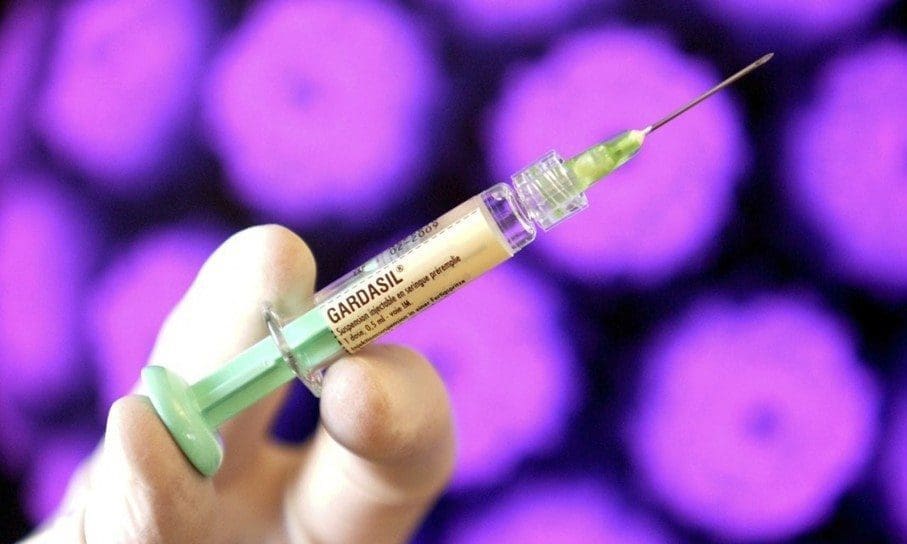
Educating individuals on the latest and most important medical news, Dr. Alex Jimenez, chiropractor, has become aware of some of the adverse effects of medications. Current allegations have demonstrated that HPV vaccines have not been working properly as they were first described to and have in fact been showing adverse side-effects on individuals who’ve used them. The following has been understood by Dr. Jimenez.
Dr. Diane Harper was a leading expert responsible for the Phase II and Phase III safety and effectiveness studies which secured the approval of the human papilloma virus (HPV) vaccines, Gardasil� and Cervarix�. Dr. Harper also authored many of the published, scholarly papers about the vaccines.
She is now the latest in a long string of experts who are pressing the red alert button on the devastating consequences and irrelevancy of these vaccines. Dr. Harper made her surprising confession at the 4th International Conference on Vaccination which took place in Reston, Virginia. Her speech, which was originally intended to promote the benefits of the vaccines, took a 180-degree turn when she chose instead to clean her conscience about the deadly vaccines so she �could sleep at night�. The following is an excerpt from a story by Sarah Cain:
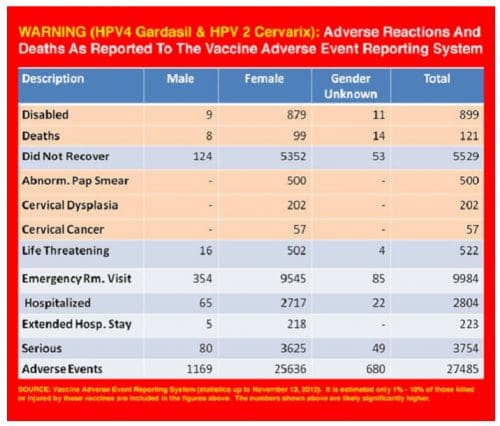
�Dr. Harper explained in her presentation that the cervical cancer risk in the U.S. is already extremely low, and that vaccinations are unlikely to have any effect upon the rate of cervical cancer in the United States. In fact, 70% of all HPV infections resolve themselves without treatment in a year, and the number rises to well over 90% in two years. Harper also mentioned the safety angle. All trials of the vaccines were done on children aged 15 and above, despite them currently being marketed for 9-year-olds. So far, 15,037 girls have reported adverse side effects from Gardasil� alone to the Vaccine Adverse Event Reporting System (VAERS), and this number only reflects parents who underwent the hurdles required for reporting adverse reactions. At the time of writing, 44 girls are officially known to have died from these vaccines. The reported side effects include Guillian Barr� Syndrome (paralysis lasting for years, or permanently � sometimes eventually causing suffocation), lupus, seizures, blood clots, and brain inflammation. Parents are usually not made aware of these risks. Dr. Harper, the vaccine developer, claimed that she was speaking out, so that she might finally be able to sleep at night. �About eight in every ten women who have been sexually active will have HPV at some stage of their life,� Harper says. �Normally there are no symptoms, and in 98 per cent of cases it clears itself. But in those cases where it doesn�t, and isn�t treated, it can lead to pre-cancerous cells which may develop into cervical cancer.��
Although these two vaccines are marketed as protection against cervical cancer, this claim is purely hypothetical. Studies have proven there is no demonstrated relationship between the condition being vaccinated for and the rare cancers that the vaccine might prevent, but it is marketed to do that nonetheless. In fact, there is no actual evidence that the vaccine can prevent any cancer. From the manufacturers own admissions, the vaccine only works on 4 strains out of 40 for a specific venereal disease that dies on its own in a relatively short period, so the chance of it actually helping an individual is about about the same as the chance of her being struck by a meteorite.
Since coming forward with the truth about the devastating consequences of the HPV vaccine, Dr. Harper has been victim of a relentless campaign attempting to discredit the validity of her claims. Harper was even misquoted by British tabloid The Sunday Express which printed a false story loaded with fabricated quotations attributed to Harper. In an interview with The Guardian, Harper makes it very clear about what exactly she said in order to protect herself from a potential lawsuit. In an interview with CBS NEWS, Harper clarifies her position, and once again makes it crystal clear just how devastating this vaccine can be: �If we vaccinate 11 year olds and the protection doesn�t last � we�ve put them at harm from side effects, small but real, for no benefit,� says Dr. Harper. �The benefit to public health is nothing, there is no reduction in cervical cancers, they are just postponed, unless the protection lasts for at least 15 years, and over 70% of all sexually active females of all ages are vaccinated.� She also says that enough serious side effects have been reported after Gardasil use that the vaccine could prove riskier than the cervical cancer it purports to prevent. Cervical cancer is usually entirely curable when detected early through normal Pap screenings.
�The risks of serious adverse events including death reported after Gardasil use in (the JAMA article by CDC�s Dr. Barbara Slade) were 3.4/100,000 doses distributed,�Harper tells CBS NEWS. �The rate of serious adverse events on par with the death rate of cervical cancer. Gardasil has been associated with at least as many serious adverse events as there are deaths from cervical cancer developing each year. Indeed, the risks of vaccination are underreported in Slade�s article, as they are based on a denominator of doses distributed from Merck�s warehouse. Up to a third of those doses may be in refrigerators waiting to be dispensed as the autumn onslaught of vaccine messages is sent home to parents the first day of school. Should the denominator in Dr. Slade�s work be adjusted to account for this, and then divided by three for the number of women who would receive all three doses, the incidence rate of serious adverse events increases up to five fold. How does a parent value that information,� said Harper.
�Parents and women must know that deaths occurred,� Harper tells CBS NEWS. �Not all deaths that have been reported were represented in Dr. Slade�s work, one-third of the death reports were unavailable to the CDC, leaving the parents of the deceased teenagers in despair that the CDC is ignoring the very rare but real occurrences that need not have happened if parents were given information stating that there are real, but small risks of death surrounding the administration of Gardasil.� She also worries that Merck�s aggressive marketing of the vaccine may have given women a false sense of security. �The future expectations women hold because they have received free doses of Gardasil purchased by philanthropic foundations, by public health agencies or covered by insurance is the true threat to cervical cancer in the future. Should women stop Pap screening after vaccination, the cervical cancer rate will actually increase per year. Should women believe this is preventive for all cancers � something never stated, but often inferred by many in the population � a reduction in all health care will compound our current health crisis. Should Gardasil not be effective for more than 15 years, the most costly public health experiment in cancer control will have failed miserably.� Harper notes that her concern for the vaccine�s deadly side effects applies only to women in the Western world. �Of course, in developing countries where there is no safety Pap screening for women repeatedly over their lifetimes, the risks of serious adverse events may be acceptable as the incidence rate of cervical cancer is five to 12 times higher than in the US, dwarfing the risk of death reported after Gardasil.�
The National Vaccine Information Center confirmed�two virologists, Stephen Krahling and Joan Wlochowski have filed a lawsuit against their former employer and vaccine manufacturer Merck. NVIC writes: �The lawsuit alleges that Merck defrauded the U.S. for over 10 years by overstating the MMR vaccine�s effectivenes. The virologists claim in their lawsuit that they �Witnessed firsthand the improper testing and data falseification in which Merck engaged to artificially inflate the vaccine�s efficacy findings.� NVIC president and co-founder, Barbara Loe Fisher, warns of the disturbingly cozy relationship and overwhelming conflict of interest between federal agencies charged with vaccine safety oversight (such as the Centers for Disease Control) and vaccine manufacturers. Merck�s global vaccine sales total more than $20 BILLION A YEAR.
As the world�s pharmaceutical giants continue to be driven less by moral accountability and more by profit and shareholder-driven bottom lines, we are going to see more and more products such as this vaccine which are marketed as �essential to one�s survival.� While some vaccines are indeed essential, such as vaccines for polio and measles, the HPV vaccine is a new beast entirely. To learn more about how pharmaceutical giants are putting profits ahead of ethics you need to watch FRONTLINE�s terrifying new documentary �Hunting The Nightmare Bacteria.�
After taking any specific medication, especially if it’s been prescribed to exert a particular effect, a complete evaluation of the individual is required from time to time to study the full effects of the drug and determine if such is causing undesirable side-effects or the development of dangerous conditions and disorders. HPV vaccines have long been used as a preventive method for the human papilloma virus, however, the recent allegations of the lead developer of the medication have changed the complete spectrum of the effects of the drug.
For more information on this subject matter, please feel free to ask Dr. Jimenez or contact us at 915-850-0900 .
Getting older involves change, both negative and positive, but you can enjoy aging if you understand what�s going on with your body and take steps to maintain your health.
Many different things happen to your body as you age. Your skin, bones, and even brain may start to behave differently. Don’t let the changes that come with old age catch you by surprise.
Here are some of the common ones:
Your bones. Bones can become thinner and more brittle in old age, especially in women, sometimes resulting in the fragile bone condition called osteoporosis. Thinning bones and decreasing bone mass can put you at risk for falls that can easily result in broken bones. Be sure to talk with your physician about what you can do to prevent osteoporosis and falls.
Your heart. While a healthy diet and regular exercise can keep your heart healthy, it may become slightly enlarged, your heart rate may lower, and the walls of the heart may thicken.
Your brain and nervous system. Getting older can cause changes in your reflexes and even your senses. While dementia is not a normal consequence of old age, it is common for people to experience some slight forgetfulness as they get older. Cells in the brain and nerves can be damaged by the formation of plaques and tangles, abnormalities that could eventually lead to dementia.
Your digestive system. As you age, your digestive tract becomes more firm and rigid, and doesn’t contract as often. This change can lead to problems such as constipation, stomach pain, and feelings of nausea; a better diet can help.
Your senses. You may notice that your vision and hearing aren’t quite as sharp as they once were. You may start to lose your sense of taste � flavors may not seem as distinct to you. Your senses of smell and touch may also weaken. Your body is taking longer to react and needs more to stimulate it.
Your teeth. The tough enamel that protects your teeth from decay can start to wear away over the years, leaving you susceptible to cavities. Gum disease is also a concern for older adults. Good dental hygiene can protect your teeth and gums. Dry mouth, which is a common side effect of many medications that seniors take, may also be a problem.
Your skin. With old age, your skin loses its elasticity and may start to sag and wrinkle. However, the more you protected your skin from sun damage and smoking when you were younger, the better your skin will look as you get older. Start protecting your skin now to prevent further damage, as well as skin cancer.
Your sex life. After menopause, when menstruation stops, many women experience physical changes like a loss of vaginal lubrication. Men may experience erectile dysfunction. Fortunately, both problems can be easily treated.
Many bodily changes are a natural part of aging, but they don�t have to slow you down. What�s more, there’s a lot you can do to protect your body and keep it as healthy as possible.
Keys to Aging Well
While maintaining your physical health is important to healthy aging, it�s also key to value the experience and maturity you gain with advancing years. Practicing healthy habits throughout your life is ideal, but it’s never too late reap the benefits of taking good care of yourself, even as you get older.
Here are some healthy aging tips that are good advice at any stage of life:
Stay physically active with regular exercise.
Stay socially active with friends and family and within your community.
Eat a healthy, well-balanced diet � dump the junk food in favor of fiber-rich, low-fat, and low-cholesterol eating.
Don’t neglect yourself: Regular check-ups with your doctor, dentist, and optometrist are even more important now.
Take all medications as directed by your doctor.
Limit alcohol consumption and cut out smoking.
Get the sleep that your body needs.
Finally, taking care of your physical self is vital, but it�s important that you tend to your emotional health as well. Reap the rewards of your long life, and enjoy each and every day. Now is the time to savor good health and happiness.
Natural changes begin to affect the human body as we age, changing an individual’s normal mobility, strength and flexibility. While these gradual changes can begin slowing you down, remaining physically active according to how you feel and are capable of can help keep the body as healthy as possible, and there’s several ways to achieve this.
For more information, please feel free to ask Dr. Jimenez or contact us at 915-850-0900 .
Is it safe for seniors to exercise? According to the American Academy of Family Physicians, almost all elderly individuals can benefit from additional physical activity. Aerobic exercise, stretching and strength training can help with heart health, flexibility, mobility, bone health, immune function, and stamina.
Regular exercise provides a myriad of health benefits, including improvements in blood pressure, diabetes, lipid profile, osteoarthritis, osteoporosis, and neuro-cognitive function.
Regular exercise improves the following:
Immune Function. A healthy, strong body fights off infection and sickness more easily and more quickly. Rather than sapping energy reserves entirely, recovery from an illness will take less of a toll on the body if the person exercises regularly.
Cardio-Respiratory and Cardiovascular Function. Frequent physical activity lowers the risk of heart disease and high blood pressure. If the elderly person has hypertension, exercise will help lower their blood pressure.
Bone Density and Risk of Osteoporosis. Exercise protects against loss in bone mass. Better bone density will reduce the risk of osteoporosis, lower the risk of falling and prevent broken bones. Post-menopausal women can lose as much as 2 percent bone mass each year, and men also lose bone mass as they age. Research done at Tufts University shows that strength training can dramatically reduce this loss, help restore bones, and contribute to better balance and less fractures.
Gastrointestinal Function. Regular exercise helps boost your metabolism and promotes the efficient elimination of waste and encourages digestive health.
Chronic Conditions and Cancer. Physical activity lowers risk of serious conditions such as Alzheimer’s disease and dementia, diabetes, obesity, heart disease, osteoporosis and colon cancer, to name a few. It also helps in the management of high cholesterol and arthritis pain.
A consistent exercise schedule is also associated with decreased mortality and age-related morbidity in older adults. In addition, a study by the Journal of the American Geriatrics Society examined exercise in the elderly and found that training led to improvements in functional reach and balance and reduced the participants’ fear of falling.
Of course, there are some people whose physical abilities are limited by medical conditions or general frailty. These seniors have to go about exercise more carefully than others, but they do not have to dismiss it entirely. With proper instruction and guidance, the elderly can learn activities and exercises that improve mobility and strength. Exercise is even more important for frail individuals since they are the most prone to falling and broken bones.
Try activities in a class setting with proper supervision by a trained professional. Consider swimming or other water exercises that are low-impact and less jarring to the body. The local YMCA or YWCA are good places to start when looking for exercise programs that address special needs.
With the changes the human body goes through with age, its common for individuals to question whether they should keep staying active. Actually, exercise can have a lot of benefits for the elderly. The body will undergo natural wear and tear alterations with time, however, physical activity over time can help maintain overall strength, flexibility and mobility as well as help avoid the development of certain injuries and conditions.
For more information, please feel free to ask Dr. Jimenez or contact us at 915-850-0900 .
Exercise plays a significant part maintaining health and physical fitness. Regular exercise can fight obesity and improve your heart and lungs. As you get older, it becomes especially important to be physically active in order to maintain health and independence. Setting the the four S’s of exercise as daily and weekly goals can yield valuable fitness and longevity benefits.
Strength Exercises
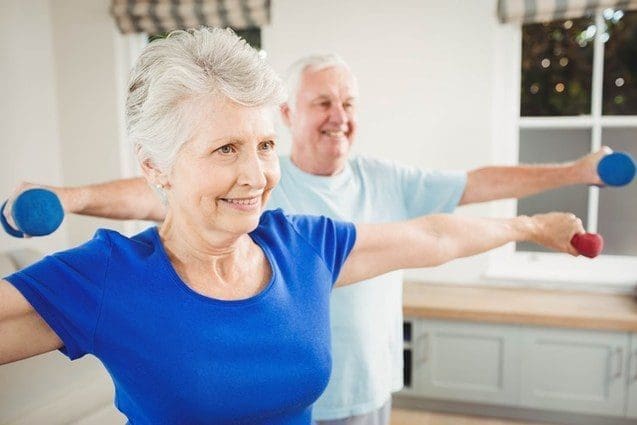
As individuals age, muscle rigidity may occur, as well as loss of muscle tone and even muscle tissue. Strength exercises help rebuild muscle mass. Additionally, they accelerate your metabolism, warding off obesity and diabetes — significant health issues for the elderly.�To strengthen upper arm muscles, try biceps curls using light dumbbells. Sit in an armless chair, slowly bend one elbow and lift the dumbbell toward your chest. Alternate arms for 10 to 15 repetitions. For stronger thigh and hip muscles, simply hold on to the back of a sturdy chair, and march in place.
Stability Exercises
Balance is key to remaining safe and active.�Simple coordination and stability exercises can help prevent falls among older adults. Standing on one foot without wobbling, walking heel to toe across the room or along a line, and standing up from a sitting position without the use of your hands can all improve balance.
Stretching Exercises
As you get older, you lose flexibility and elasticity in your skin and connective tissue. Your muscles tighten, and your joints lose range of motion. Flexible joints and muscles are critical to maintaining an independent lifestyle as you age.� To keep your body limber, spine straighter and lungs working at full capacity, bouncing toe touches, shoulder rolls and stationary jumping jacks may be recommended.
Stamina Exercises
And finally, exercises that increase your stamina support the health of your respiratory and circulatory systems. They help you accomplish your daily tasks, such as climbing stairs, lifting objects and housecleaning as well as aiding in the prevention of such diseases as diabetes, colon cancer, heart disease and stroke. Any activity that increases your heart rate — brisk walking, swimming, dancing — can increase your stamina. Start slowly and increase the intensity of your activity and the length of time you exercise as you become stronger. And always check with your healthcare provider before adding any new exercise to your fitness regimen.
Maintaining overall fitness and wellness is absolutely essential for everyone, including the elderly, and it just might be the key to a fulfilling quality life. For seniors, health can be achieved by remaining active and this can be achieved with several, basic exercises, specially designed for the aging human body. As with any other work-out routine, however, be sure to consult a professional for further instructions.
For more information, please feel free to ask Dr. Jimenez or contact us at 915-850-0900 .
Good physical and mental health can improve your quality of life during your older years. In addition to promoting your independence and keeping your body strong and energized, the American Council on Exercise states that physical activity can also prevent or improve age-related conditions, such as osteoporosis and arthritis, and lowers your risk of injuries and health conditions, such as stroke and heart disease. Paired with good mental health, this combination can add years to life.
Moving the Body
The Centers for Disease Control and Prevention suggests that those who are healthy and 65 or older do 150 minutes of cardio a week. You can, for instance, do 30 minutes of cardio, five days a week. Some exercises an individual can do include walking, bicycling, swimming, water aerobics and dancing. Everyday activities, such as gardening, playing with the grandchildren or cleaning the house can also be part of an active lifestyle.
Strengthening the Body
Working against resistance doesn’t just strengthen your muscles, it also strengthens your bones, reducing your risk of fractures. Your risk of falling reduces as your balance and stability are likely to improve. As you age, you lose muscle tissue, which can slow down your metabolism. Resistance training combats this. The CDC favors strength training on at least two days of the week. They suggest at least one set of eight to 12 repetitions, and if you’re up to it, slowly adding two more sets. Exercise examples include chest presses, biceps curls, overhead presses, lateral raises and knee or wall pushups. Many of these exercises can be done with dumbbells or a resistance band, and while sitting on a chair.
Exercising the Brain
In addition to keeping your body healthy and strong, you should also keep your brain active. As you age, it might take longer to remember things than it did when you were younger. By exercising and challenging your brain, you can stay sharp and prevent memory problems and cognitive decline. Solving crossword puzzles and playing word games can help, as can learning a new skill and switching around daily tasks. You can take a computer class, experiment with different recipes when you cook, take a different route to the grocery store or brush your teeth with your non-dominant hand.
Consult your doctor before starting a new exercise routine to ensure your planned regimen is safe for your physical condition. Always gradually start exercising, and as your fitness improves, slowly increase the duration and intensity. Start your workouts with a five- to 10-minute warm-up to get your blood flowing and prep your body for the work to come. Find activities that you enjoy so you’re more likely to stick to your routine. Your local community center might offer various classes, such as yoga and tai chi, which can help promote your flexibility while you enjoy the company of other health-conscious adults.
As people age, it’s natural for the human body to begin going through wear and tear changes along its functioning structures, occasionally developing into conditions and their respective symptoms. However, maintaining a proper fitness and wellness regimen over time, can help keep individuals active and healthy, improving their quality of life during their older years.
For more information, please feel free to ask Dr. Jimenez or contact us at 915-850-0900 .
Sleep problems are one of the most common complaints among people with fibromyalgia and chronic fatigue syndrome. With both conditions, poor sleep is a major source of intensified symptoms.
Regardless of the number of hours slept, sleep is usually not restorative, meaning that people wake up tired rather than refreshed. This is likely due to an insufficient amount of the deepest and most restorative type of sleep, called delta sleep. When healthy volunteers in a research experiment were deprived of delta sleep, they developed symptoms of fibromyalgia in a few days: fatigue, cognitive difficulties, irritability�and muscle aches.
Other sleep problems include:
Difficulty getting to sleep
Frequent awakenings or waking early
Phase shifting (hard to fall asleep until early morning hours)
Oversleeping (8 to 10 hours is ideal)
Vivid dreams
Feeling “tired but wired”�(feel exhausted but mind is racing)
Restless legs
Periodic leg movements
In addition, many people with CFS and�FM�experience�intensified fatigue, achiness and mental fogginess that lasts one to two hours after rising. In addition to sleep problems due to CFS and FM, a majority of people with the two conditions experience sleep disorders such as sleep apnea and restless legs syndrome.
Addressing sleep problems is a good initial focus for symptom management because treating sleep can both improve quality of life and reduce other symptoms. Sleep management plans usually include a combination of strategies from three categories:
Sleep environment and habits
Medications
Sleep disorders
Sleep Environment and Habits
Most people with CFS/FM can improve their sleep by changing their sleep habits and their sleep environment, matching a solution to a problem. Common problems include:
Irregular hours for going to bed or getting up / no schedule
Noisy environment (including snoring by sleeping partner)
Lack of control over light and temperature
Uncomfortable bed
Tension and worry
Not allowing time to wind down
Eating or drinking caffeinated products too close to bedtime
A starting point for better sleep is to address these and other aspects of your sleep hygiene.
When you’re experiencing symptoms of widespread pain as a result of fibromyalgia, getting a good night’s rest can be difficult. Aside from following through with treatment procedures to manage the pain and discomfort an individual may feel, getting proper sleep can also help reduce the symptoms. Following several of the above recommendations can help those affected with fibromyalgia, achieve a bountiful slumber.
For more information, please feel free to ask Dr. Jimenez or contact us at 915-850-0900 .
Fibromyalgia syndrome (FMS) is a common clinical syndrome of unknown cause characterized by widespread pain and muscle tenderness often accompanied by chronic fatigue, sleep disturbance, and depressed mood.
There are many theories regarding possible causes of FMS, but no universally accepted explanation, making a rational approach to therapy difficult. It is conventionally treated by non-steroidal anti-inflammatory agents and�tricyclic�antidepressant medications. Many patients prefer natural treatments, of which there are many, including aromatherapy, acupuncture, spiritual practices, oral supplementation and dietary modifications. Among these, a particular emphasis is placed on nutritional approaches, including both whole diet therapies and treatments based on isolated nutrients or supplements. This article will discuss nutritional treatments for fibromyalgia, with special attention to an intravenous vitamin-mineral mixture that is currently under investigation.
According to the National Fibromyalgia Research Association, symptoms of fibromyalgia tend to be alleviated when refined sugar, caffeine, alcohol, fried foods, red meat, and highly processed foods are eliminated or kept to a minimum, due to the potential these foods have to irritate muscles and stress the immune system. Many people reportedly benefit from eliminating all sugar in their diets for a month. This can appreciably reduce the craving for sweets, and allows the body to better manage its sugar intake when sugar is added back into the diet. Similarly, reducing caffeine and fried and processed fatty foods can improve cravings for these items in the same way. Eliminating certain food items like these not only contributes to a healthier overall diet and lifestyle, but also allows patients to see if the foods are contributing to their fibromyalgia symptoms.
To evaluate systematically which foods are problematic for fibromyalgia patients, the “Elimination Diet” can be used. Elimination diets focus on the foods most commonly implicated in allergy and other adverse reactions (wheat and other glutinous grains, dairy products, eggs, corn, soy and tofu, peanuts, citrus fruits, yeast and refined sugars, as well as highly processed foods, chemical additives, preservatives, artificial colorings, flavorings, caffeine, and alcohol), removing them singly or in groups. If symptoms improve with elimination of a food, its role in the condition is suggested. The food is then added back to see if symptoms recur. Several such cycles may be required to establish with certainty that a food is implicated in symptom severity, although sometimes it�s obvious right from the start.
In addition to eliminating some potentially troublesome foods, it is important also to supplement the diet with more raw or lightly cooked fruits and vegetables, and use less meat that is high in fat, and more fish or lean poultry. Vegan diets may also help relieve pain, improve quality of sleep, and enhance overall health in fibromyalgia patients. These dietary changes may lead to such positive results because they reduce the inflammatory/oxidative effects of diet, and enhance the anti-inflammatory/anti-oxidant effects.
Many researchers have studied a variety of treatments which could benefit and improve the symptoms of this painful condition, particularly, the benefits of a proper nutrition on individuals with fibromyalgia. For years, researchers have found a connection between nutritional deficiencies and the development of the condition, where certain eating habits may improve the symptoms.
For more information, please feel free to ask Dr. Jimenez or contact us at 915-850-0900 .
IFM's Find A Practitioner tool is the largest referral network in Functional Medicine, created to help patients locate Functional Medicine practitioners anywhere in the world. IFM Certified Practitioners are listed first in the search results, given their extensive education in Functional Medicine