Doctor of Chiropractic, Dr. Alexander Jimenez gives insights into selecting a chiropractor.
One of the most common questions I get asked as a doctor is how do I find a great chiropractor in El Paso?� In some cities there are dozens to choose from and it can be difficult to know if the doctor you are considering is right for you.� This article will help to walk you through the steps that I would use to find a great doctor to take care of me.
Most patients choose their chiropractor based on the look of the outside of the office or how nice their website is.� I agree that a doctor that keeps up their office and that has a great website is probably a good choice, but there�s more to it than that.� Chiropractic is a very diverse profession so there are some deeper questions to ask.
To Know If A Chiropractor Is Right For You Is To Talk To Them
Learn about who they are as a person and why they became a chiropractor.� There are many different styles of adjusting and many different philosophies in the chiropractic field.� When you find a passionate doctor you have found what you�re looking for.
Ultimately you need to find someone that really cares about you and your well being.� A doctor that is going to be focused on your health and that has a plan to get you back on track.� If you feel uncomfortable then do your homework and you�ll find the best choice for you.
If you have been struggling with a health condition and it feels like you�re going around in circles, I encourage you to give us a call today.� If for any reason we feel that we cannot help you we will get you pointed in the right direction.� We are here to be a resource for you in any way that we can.
Today Is A Great Day To Improve Your Health
If you live in El Paso we encourage you to give our team�a call today.� Our friendly staff will setup a time for you to come in and learn about who we are and what we can do for you.
Doctor of Chiropractic, Dr. Alex Jimenez goes through some tips on how to avoid back injuries.
When it comes to avoiding back injuries, your fate is largely in your own hands. It�s true that an unexpected fall or auto accident may cause an injury that�s beyond your control, but a large percentage of back injuries are caused by your own actions, which means you can take measures to prevent them or stop them from getting worse. Here are a few valuable back injury tips from a El Paso chiropractor.
Pay Attention to Your Lifting Technique
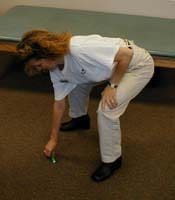
How you lift boxes, laundry baskets, children�s toys, a pair of shoes or just about anything else, has a bearing on the health of your back. When you lift correctly your spine is in the proper alignment and there is no added stress placed on your back. This means you should bend your knees and keep your back as straight as possible when you pick anything up off the floor.
If you have a lot of lifting to do try to place items on a table or chair so there isn�t as much bending required picking it up. Your back is not designed to work like a crane so anytime you use it that way you are putting stress on your back that doesn�t need to be there. Take a balanced stance, lift with your legs and move your feet if you need to change direction while holding the object.
Sensible Body Management
Performing activities with your back health in mind is a great strategy to help you avoid back injuries. That means stretching before any type of physical activity, taking it slow if you have a lot of repetitive lifting to do, and taking breaks to rest and stretch during the activity.
Getting yourself into good physical condition also protects your back and helps to avoid injuries. This includes losing weight in your midsection, and strengthening core muscles, to make lifting and general movement less stressful on your back. Most El Paso chiropractors will also tell you that sleeping on a firm mattress is another way you can nurture your back and prevent injuries.
Don�t Let Injuries Linger
If you end up with a back injury despite your efforts to avoid it, you should seek treatment with a El Paso chiropractor as soon as you can. Spinal misalignment, bulging discs, herniated discs, and other injuries often only get worse if you let them linger. Prompt treatment will restore blood flow to the area, relieve any compressed nerves and get you back to normal in the shortest time possible.
Doctor of Chiropractic, Dr. Alexander Jimenez looks at four ways of reducing back pain.
1. Understand The Way Your Spine Works
The best approach to take care of your spine and prevent back pain is to begin with a superb understanding of how the spine works. By understanding how your backbone works when you’re performing jobs that are day-to-day or moving during your day, you may be able to take care of your spine and keep it working for a long time with fewer problems and less back pain.
2. Incorporate Safe Body Mechanics Into Activities
Use good body mechanics during day-to-day jobs at home and work. What does that mean? Good body mechanics means while you go, keeping your back in a safe posture that is balanced. You can help to prevent back pain and injury, by remembering several easy notions. You should employ your leg and arm muscles when lifting and stooping �not your back muscles. Second, keep your back straight when bending and lifting. And last but not the very least, be sure to bend at your hips and knees, not at your waist.
An example of correctly bending at the hips and knees
3. Exercise On A Regular Basis
Regular care of stuff we possess helps to keep them working efficiently, with less effort and safely. Exactly the same is true of the back.
Exercising on a regular basis really helps to keep up long term to a healthy back.
Regular exercise helps to increase endurance and reduces fatigue.
But Don’t I Get Enough Exercise At Work?
Many people believe their occupations provide enough exercise�specially occupations which are physical and could include manual labor. Regrettably this really isn’t accurate. Individuals need daily exercise to state and strengthen their muscles to perform job tasks safely and efficiently.
Exercise could be fun! There are lots of types of exercise. One method when selecting to start a workout program to ensure success would be to pick some form of exercise that fits into your lifestyle. If exercise is accessible and convenient, you’ll be prone to continue exercising on a longterm basis. As an example, determining to swim daily or do water aerobics without easy use of a pool year round would make success less likely and consistency difficult.
A typical exercise that a lot of people start successfully with is walking. Walking just takes a superb pair of walking shoes, may be done any day of the year, and is usually simple to fit right into a daily program.
Remember, whatever type of exercise you decide on, always start out small (10 minutes vs 60 minutes), and slowly increase your own exercise time. This may help to make sure your success at getting started and sticking with a fitness plan. Add two or one stretching exercises, like a calf stretch, for your routine for one more benefit.
An example of a calf stretch
4. Fuel Your Body With Proper Nutrition
Eating a healthy diet supplies the fuel your body has to make energy. And energy must do work, meaning the jobs we do throughout the day, like work tasks and exercise. Appropriate nutrition also helps to maintain your ideal body weight. Weight management is a great way to restrain stress on the joints in your body, including the spine.
Unsure where to start to understand about proper nutrition and establishing a healthier diet for you personally as well as your lifestyle? Then take a look at Introduction to Nutrition. By integrating these suggestions into your everyday life, you’ll be able to promote a healthier back�and lifestyle�for a long time.
Because degenerative disc disease, or DDD, can weaken the structures of the spine significantly, you might need to focus on strengthening your back, neck, and core muscles to improve the condition. Subsequently, the proper care and treatment for DDD can help support the spine better, which might result in decreased pain. A healthcare professional may often recommend physical therapy to help treat degenerative disc disease.
Physical therapy includes both passive and active treatments. Passive treatments help relax you and your body. They are called passive because these do not require individuals to actively participate in the treatment. If you’re experiencing severe pain, you’ll most likely start with passive treatments while your own body heals and/or recovers from the symptoms of the disorder. However, the goal of physical therapy is to get the patients into treatments that are lively. These are curative exercises that reinforce the body to ensure the spine has better support and structure.
Passive Physical Therapy for DDD
Your physical therapist may give you one of the following passive treatments:
Deep tissue massage: This technique targets chronic muscle tension that could build up through daily life stress and spasms. You could also have spasms or muscle tension due to strains or sprains from sports injuries or other injuries. A physical therapist may utilize direct pressure and friction to release the tension in your soft tissues, such as ligaments, tendons and muscles.
Hot and cold treatments: The physical therapist will switch between cold and hot therapies. Through the use of heat, the physical therapist will achieve an increased blood flow to the target area. More oxygen and nutrients are brought to the affected region as a result of an increased blood circulation. Good circulation is also needed to remove waste by-products developed by muscle spasms.
Cold therapy, also called cryotherapy, slows circulation, helping to reduce inflammation, muscle spasms, and pain. An ice massage or an ice pack can be used to perform cold therapy. Another cryotherapy option is a spray called fluoromethane, which can cool the body’s tissues. A physical therapist may work with you to additionally stretch the muscles that are affected.
Spinal traction: By extending the back, spinal traction works to alleviate pain caused by muscle tightness or compressed nerves. The physical therapist can achieve that manually by using their own body or mechanically with unique machines. Particularly in case your nerve has been pinched by the foramen, the place where the nerve exits the spinal canal, traction may strive. By stretching the spine to readjust the vertebrae, it is believed to help widen the foramen and improve symptoms of DDD.
Active Physical Therapy for DDD
In the active portion of physical therapy, your therapist is going to educate you on various exercises to improve your flexibility, strength, core stability, and range of motion, or how readily your joints move. Your physical therapy program is individualized, taking into consideration history and your well-being. Your exercises might not be acceptable for another individual with degenerative disc disease.
Degenerative disc disease, or DDD, may not entirely “go away” once the individual’s discs have begun to degenerate. You can’t reverse the process and because of that, your physical therapist will help you learn how to work with it and how to limit the pain. You’ll understand body mechanics and how to avoid situations that can aggravate pain and other symptoms.
The specialist will also show you how to correct your posture and integrate ergonomic principles into your daily activities if needed. This is all part of the “self-care” or “self-treatment” aspect of physical therapy: Through physical therapy, you learn good habits and principles that allow you to take better care of the body.
Your physical therapist could also propose a personalized exercise program for you personally. The goals may include: strengthening abdominal and back muscles, increasing muscle endurance (so that your more powerful muscles can work harder longer), and getting your body to carry your weight more proficiently. An exercise program comes with a different bonus�it can assist you to drop some weight. Extra weight can exacerbate pain so your physical therapist can work along with one to establish goals and after that follow through, if you need certainly to lose excess weight.
The scope of our information is limited to chiropractic and spinal injuries and conditions. To discuss options on the subject matter, please feel free to ask Dr. Jimenez or contact us at 915-850-0900 .
By Dr. Alex Jimenez
Additional Topics: Whole Body Wellness
Maintaining overall health and wellness through a balanced nutrition, regular physical activity and proper sleep is essential for your whole body�s well-being. While these are some of the most important contributing factors for staying healthy, seeking care and preventing injuries or the development of conditions through natural alternatives can also guarantee overall health and wellness. Chiropractic care is a safe and effective treatment option utilized by many individuals to ensure whole body wellness.
Doctor of Chiropractic, Dr. Alexander Jimenez looks into Tai Chi for back pain.
Q&A with Tai Chi Specialist Dr. Paul Lam
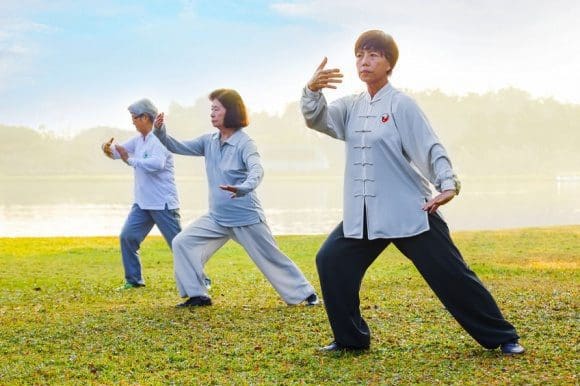
While lots of people take a �no pain, no increase� approach to work out, that�s for handling back and neck pain not always safe or effective. That�s where tai chi comes in. This low-impact, slow moving form of exercise delivers results without the sweat and soreness. Though it�s tender and meditative tai chi promotes strength, flexibility, and balance�the trifecta to get a healthier spine.
In case you have back or neck pain�or you�re looking for methods to prevent it in the first place �tai chi may be worth investigating. To help answer common questions and shed light on lesser-known facts relating to this ancient Chinese mind and body practice, we reached out to Dr. Paul Lam, manager of the Tai Chi for Health Institute in Australia.
Tai Chi Can Help
Q: During your research, what has become the most insightful finding you�ve found about tai chi as it relates to back pain?
A: The most insightful finding in my research concerning tai chi involved the mental impact and the deep stabilizer muscles to back pain.
Ninety percent of men and women have back pain at some period in their own lives, and more than 60 percent of that is continual. I discovered that nearly all individuals with back pain, no matter what the cause, have poor stabilizer muscles. Research has shown that strong stabilizers will prevent back pain and hasten healing.
Reinforcing the stabilizer muscles that are back is quite similar to tai chi training. The main element is an erect pose, exercising the stabilizers through the pelvic floor along with the transverse abdominus muscles, and using abdominal breathing. This really is among the important reasons why tai chi works so well for back pain.
One other insight I�ve discovered involves your head. Anxiety makes pain worse. Oftentimes with the continuing and persistent back pain, the cause of the pain might have gone, but the pain continues. Like a phantom pain, the thoughts�s ingrained custom proceeds to provide pain signals to the brain. Tai chi trains body and the mind, making both integrated and more powerful. It is but one of the utmost effective tools to greatly help with the mental aspects of back pain.
Q: What�s your best advice for somebody who’s apprehensive about beginning tai chi?
A: The reason why they are apprehensive about beginning tai chi, it depends. I can guarantee them it is safe, simple to understand, and proven effective, if people believe tai chi is a martial art and might be overly hard to learn. Millions of people around the globe have learned and profited from it, although the other consideration is the fact that individuals might believe tai chi is too tough to learn.
Q: How do individuals get the most?
A: I advocate people to practice tai chi for 30�40 minutes daily (it may be performed in separate sittings) most days each week. You will gain significant improvement in your quality of life and relief from back pain.
Q: Do you have some success stories that are personal which you can share regarding the benefits of tai chi for back pain?
A: Thousands! But to pick on only one, I�ve comprised a letter below written by a woman named Amatullah from Saudi Arabia.
“In 2009, I ‘d back pain for quite a while. Nothing worked, although I attempted many types of therapy. My friend said, �Try tai chi, it’s a gentle exercise.� Because my back was sore, I refused at first, but I attempted it. It was really surprising to me how people from 35 to 80 years old could do the movements, when I couldn�t. I found to be able to steadfastly keep up their health, some of them had been practicing for up to 35 years. I understood they were much fitter and much more flexible than my parents, therefore I decided to learn it. I practiced in all weather, in the park every day. My back pain vanished and has never return.”
Q: Are there tai chi resources you can recommend?
A: Yes, the Tai Chi for Health Institute web site has many resources, including a summary of accredited educators around the planet.
El Paso, TX. Chiropractor Dr. Alex Jimenez takes a look at chiropractors and�how they can act as an antioxidant through their practice.
The practice of chiropractic truly works on the grounds the work removes blockages to the body�s natural health and healing abilities, although most folks link chiropractors with pain management. This consists of removing pressure from nerves that relay signals from the brain to the organs and systems of the body.
Chiropractic Care Benefits
In 2005, a landmark study published in the Journal of Vertebral Subluxation (JVSR) found evidence that chiropractic care can reduce oxidative stress within the body.
Oxidative stress is the damage occurring when free radicals outnumber the body�s antioxidants. Oxidative stress damages all body cell components: lipids, proteins and DNA.
Oxidative stress plays a job in a whole host of diseases and ailments: Alzheimer�s rheumatoid arthritis, atherosclerosis, chronic fatigue syndrome, diabetes, heart problems, Parkinson�s disease, disease and many others.
Thiols are compounds within the body that act as antioxidants, reacting with free radicals to neutralize them. Serum amounts of thiols report scientists of Biomedical Diagnostic Research, Inc reflect DNA�s ability to mend itself, and can be used to measure aging and disease status.
In a 2003 study published in the Journal of Anti Aging Medicine, the scientists found low serum thiol levels with nine distinct categories of disorder and human disease in people.
The study published in JVSR consisted of 76 participants: one group received short-term chiropractic care; a second group received long term chiropractic care; and the 3rd group received no chiropractic care.
After qualifying for age, gender as well as the usage of nutritional supplements, the participants that received chiropractic care for 2 or more years that were healthy had higher serum thiol levels than people that have disorder. Some of the chiropractic patients had serum thiol levels higher than what is linked with wellness that is ordinary.
Chiropractor Dr. Christopher Kent explained: �Oxidative tension, metabolically creating free radicals, is a broadly accepted theory of how we age and grow ailment.�
�Going through life,� we experience chemical, physical and psychological stress. These pressures change the function of the body’s nervous system. We hypothesized that oxidative stress could affect and DNA repair on a cellular level.�
�Chiropractic care seems to improve the power of the entire body to adapt to anxiety,� concluded Kent.
Correcting your posture does feel difficult and challenging at first because your body has become habitual of sitting or standing in that wrong posture. Here we tell you 5 exercises to help
Postural problems are the common cause of concern these days and the culprits here are desk jobs and our addiction to smartphones. Experts say that correcting your posture does feel difficult and challenging at first because your body has become habitual of sitting or standing in that wrong posture. However, a bit of practice, consistency and determination can facilitate the task and later your body will definitely thank you for this correction. Desk hunch (when you feel pain in your upper back after sitting at a computer all day) and text neck (the neck pain and damage sustained from looking down at your smartphone) are the two most prevalent postural problems these days.
Over time, both these problems contribute to you developing a rounded upper back, which can cause shoulder and upper back stiffness. However, practicing the below-mentioned stretches and workouts can turn your saviour here. The list includes upper back, neck and rear shoulder strengthening exercises, chest stretches and neck posture drills.
Seated rows: This workout emphasises muscles around the back including the lats, the erector spine, rear delts, biceps, and forearm flexors.
Pull-ups: If you are new at this exercise, then using a chin assist machine is the way to practice it. These machines use weight to help you push your bodyweight.
T-Spine Mobility in Child’s Pose: This pose stretches the lower back, tones the abdominal organs, and stimulates digestion and elimination.
Lat Hang: It alleviates the tight lats, pecs, upper back, and opens up the shoulder girdle prior to upper-body pushing or pulling movements.
Prone Y extension: It rotates your shoulders outward, stretches your abdomen, chest, and strengthens your lower back extensor muscles, along with the upper back muscles.
IFM's Find A Practitioner tool is the largest referral network in Functional Medicine, created to help patients locate Functional Medicine practitioners anywhere in the world. IFM Certified Practitioners are listed first in the search results, given their extensive education in Functional Medicine