While we have this time at home, working, teaching, we might be realizing that the chairs we are using are great for kicking back or sitting only for a short while. It could be time for a proper office chair with back support for those with back pain, as well as to help prevent poor posture conditions that can generate back pain.
Here are a few of the top picks for back pain. Experts offer guidance on how to purchase an ergonomic office chair. Author of the book Wellness by Design�is a consumer guide to optimizing your home for physical and mental health. Hopefully, this will aid you as you navigate chairs for back pain.
Posture Importance
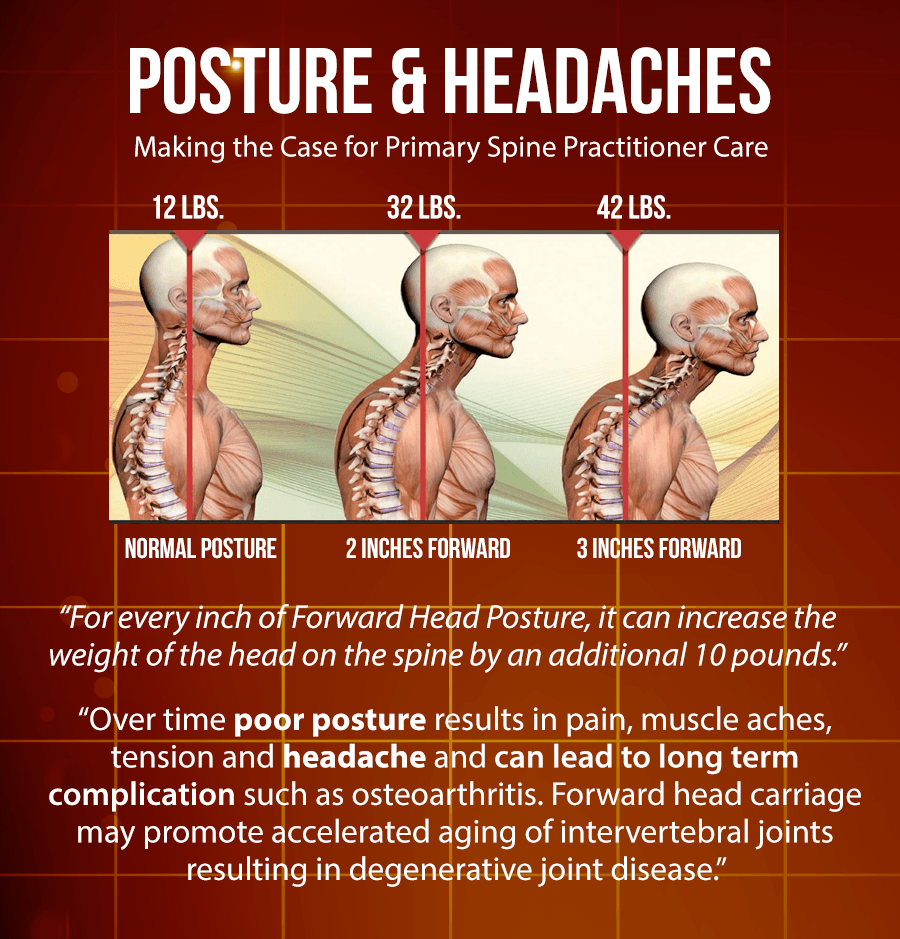
One way proper posture is gained is by walking with a book on your head. That won’t be necessary, as good office chairs that offer back support lend themselves to healthy posture, which helps back pain. Studies confirm that improved ergonomics greatly decreases back pain. Proper posture keeps your body positioned to minimize stress on the muscles, joints, ligaments. Sitting the wrong way for a long time drains you and can cause fatigue, back pain or aching neck after a long day.
What to Look For
When it comes to chairs for back pain you want the best ergonomic office chair for your home. Keep an eye out for these key elements.
Adjustable
This is important, as our bodies are all different and require different settings for optimal posture. A chair should have adjustments for the seat, arms and back. The more adjustability the chair offers in terms of height and angle, the more it can be customized to your body.
Rolls Easy
A chair that rolls easily is one essential component for back pain support and prevention. Easily rolling allows you to stay close to your work, move around the work area comfortably, and optimal visibility. Be sure the construction of the casters is heavy-duty and that it will roll on your floor’s surfaces.
Durability
Durability goes a long way. Established brands with a reputation for high quality shows their confidence in the chair�s ability to serve you long-term. It might be a bit expensive but it�s an investment in health and productivity. The United States Department of Labor offers a how-to guide to create the best ergonomics set up for you. Their guide includes the backrest, seat, armrests and the chair base. Chairs for back pain are focused on the overall comfort of the individual.
The right chair helps position your body so that you don’t activate trigger points and lets you roll smoothly so that you�re consistently working in a more ergonomic fashion.
Best Budget
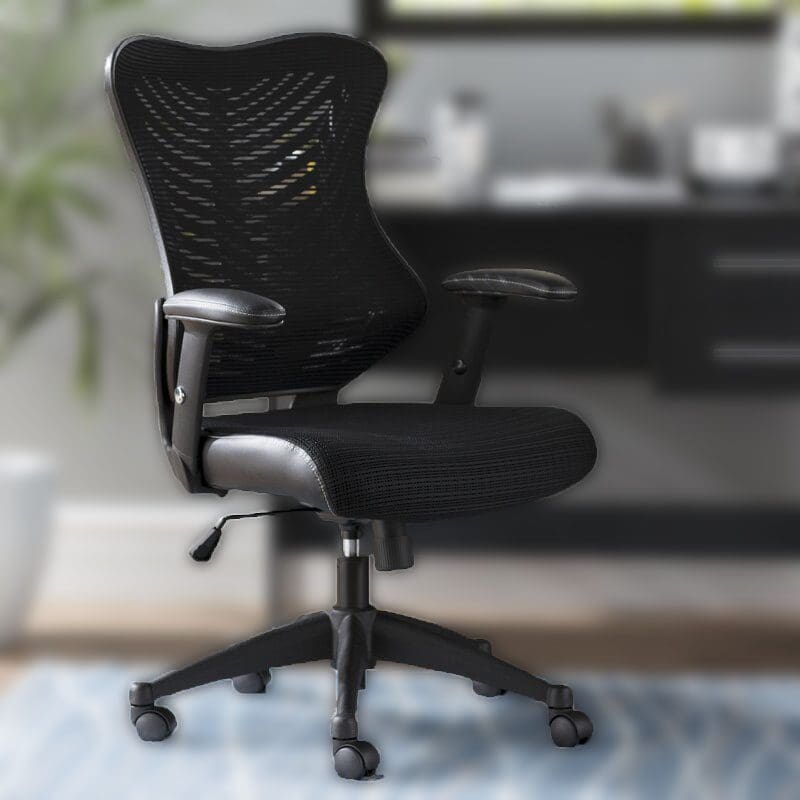
The best chair for a budget was the Zipcode Design Bret Ergonomic Mesh Task Chair, which runs about $159.99 depending on where you shop. This office chair checks off many ergonomic guidelines set by the Department of Labor and is price friendly. The chair has a five-legged sturdy�base, casters that move easily and a backrest that follows the natural curve of the spine.
Best Mid-Range
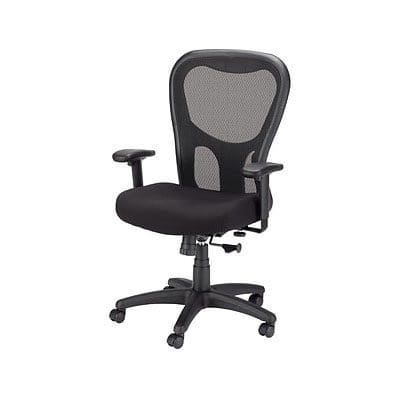
The best mid-range model is the Tempur-Pedic TP9000 Mesh Task Chair, $318.99. The Tempur-Pedic company that makes mattresses have created an office chair that helps the body. It is created with memory foam has straightforward levers that allow you to adjust the armrests and seat easily. Easy-to-clean material is another benefit when working from home.
Best High-end Option
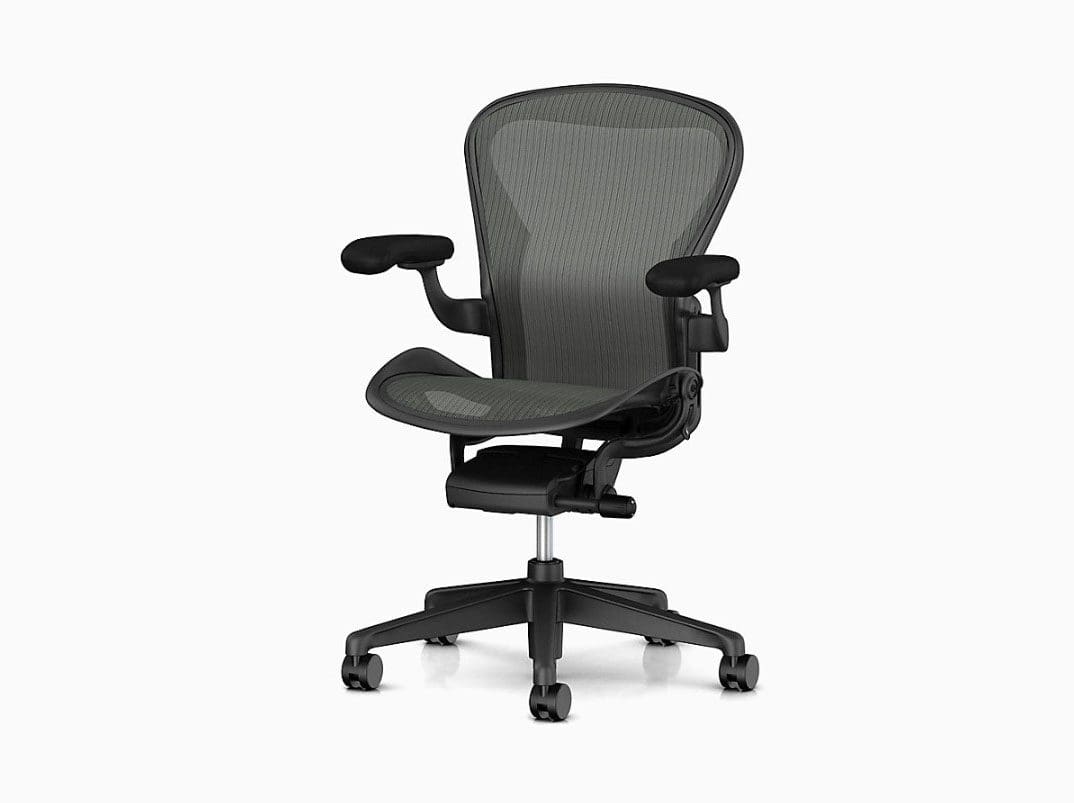
The best high-end model is the Herman Miller Aeron Chair, $1,395. This one is priced pretty high because of its plush ergonomic features. Think of chairs for back pain as an investment for your health and high quality of life. This is a cult-favorite chair that was designed 20 years ago and has sold over 7 million. It is completely customizable, from the chair size, level of back support, preferred tilt and seat angle, custom armrests and custom casters made for your floor type.
Honorable Mention
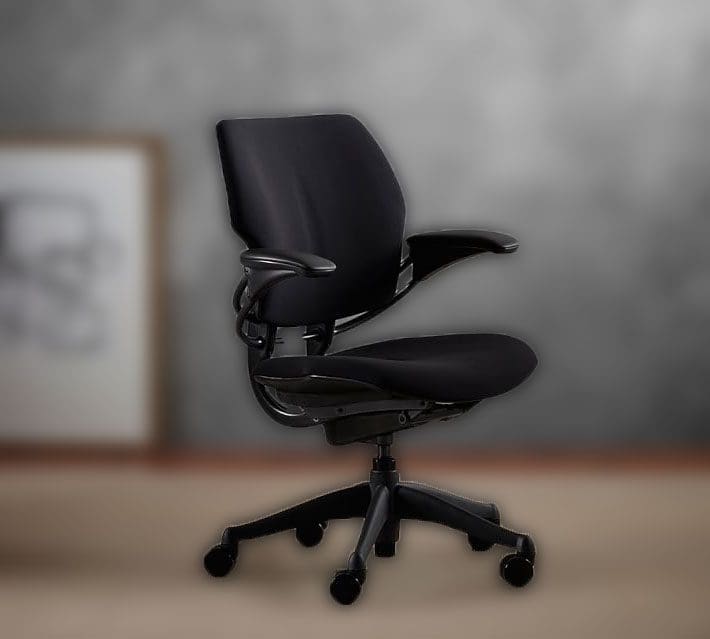
An honorable mention is the Humanscale� Freedom Task Swivel Desk Chair, $1,049.
This is a sleek cutting-edge office chair for back pain. The seat relies on body weight and physics for its ergonomic superiority and checks off the Department of Labor�s recommendations for optimal office chairs. It has adjustable arms, independent-adjustable seat and more.
Fibromyalgia pain is not just physical. Around 30% of individuals experience depression, anxiety, or some form of mood disturbance/swing. Fibromyalgia is still being researched if it causes these conditions or vice versa, but what is clear is that when the mental state gives in to the physical pain, your pain gets worse and worse.
A doctor may recommend a:
Counselor
Psychologist
Psychiatrist
Symptoms are varied and impact an individual’s life in ways that go beyond physical pain. Fatigue alone can be enough to alter lifestyle in a negative way, which affects mood.
Taking control of symptoms usually means taking a multi-disciplinary approach that includes:
Medications
Physical therapy
Psychology
Mental and emotional therapy could be a part of a treatment plan.
Depression and Anxiety Difference
Depression and anxiety are sometimes put in the same category. Symptoms can include depression and anxiety occur at the same time but they are not synonymous disorders. Depression is characterized by chronic sadness. Individuals handle depression, their own way. Some cry or lash out in anger/frustration. Some days are spent in bed, other days/nights are spent eating excessively, as a response to the pain. The most important thing is recognizing the change in behavior. Talk to your doctor or a therapist.
Anxiety is known for feelings of panic, fear, and excessive worry. Individuals feel their heart is racing that can get confused with a heart problem.
Fibromyalgia Depression Connection
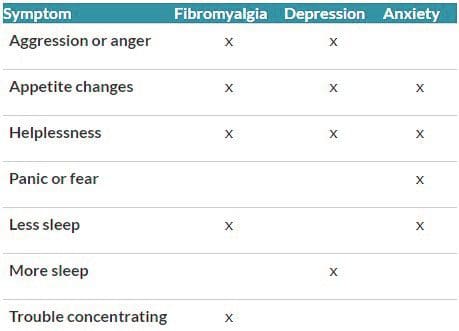
To understand how fibromyalgia relates to depression and anxiety, and see the difference between depression and anxiety, here are some symptoms.
The symbols show symptoms most associated with the disorder. However, it’s possible to experience less sleep than normal if you have depression, but the more common symptom is sleeping more than usual.
Finding a Mental Health Professional
Professionals include:
Licensed professional counselors (PCs)
Psychologists
Psychiatrists
These professionals are trained to diagnose and treat mental/emotional issues. Your doctor can help in figuring out which is best for you.
Licensed professional counselors require a master’s degree in counseling and are approved to diagnose and treat mental and emotional disorders.
Psychologists are considered as a separate group of non-physician mental health professionals. They have a doctorate and are approved to treat emotional problems using therapies like cognitive-behavioral therapy.
Psychiatrists are medical doctors that are licensed to prescribe medications to help depression and anxiety, along with several mental disorders.
Adding the impact this disorder has on a person’s mental and emotional state can seriously damage their quality of life. Recognizing when the pain is not just physical is difficult. Therefore setting up a telemedicine/video conference with a mental health professional could help in dealing with the mental stresses that come with fibromyalgia. Even for those that don’t require medication seeing a mental health professional can be highly beneficial.
You can openlytalk about experiences having to do with fibromyalgia, how it affects your family, etc,� which is therapeutic in itself. Do not hesitate to seek the help of a mental health professional. The focus is to help you feel better, become educated on ways to help yourself and improved quality of life.
Steroid injections into the cervical spine can help with�radiating�neck pain. Neck pain affects people all over the world. Although it is not as common as back pain, neck pain can really take a toll on a person�s quality of life and ability to work.� This comes in the form of:
Sleep problems
Radiating/Spreading pain
Mental health issues and more
Much like back pain neck pain can be hard to treat effectively without identifying the root cause known as the pain generator. If natural treatments like chiropractic aren’t working then injections could be the next phase.
Injections can help with:
Identifying the source/root cause of the pain as a diagnostic
Treats the pain as a therapeutic
The most commonly used are cervical epidural steroid injections,medial branch blocks (MBBs), and facet joint injections. Learn about what they are, what they treat, and the scientific research behind their risks and benefits.
Cervical Epidural Steroid
The phrase cervical epidural steroid injection:
Injection means that medicine is delivered through a needle.
Cervical means the cervical spine, which is the neck.
Epidural means the dura or outer layer of the soft tissue that encases the spinal cord, nerve roots, and cerebrospinal fluid. Epidural means the medicine goes into the space around the dura.
Spine specialists use image guidance with a contrast dye called fluoroscopy ensuring the medicine gets delivered to the proper area.
2 Types
The needle enters the space through a transforaminal approach or interlaminar approach. Words like epidural just refer to where the needle goes. These injections also called nerve root blocks, are performed by entering the epidural space through the opening where the nerve roots branch out. This space is known as the intervertebral foramen.
When it is called a selective nerve root block, this is for cases where multiple nerve roots are being compressed and the injection is being used in a diagnostic purpose to identify which nerve is the pain generator. The needle in an interlaminar epidural injection goes through the opening that exists between two adjacent vertebrae.
Candidates
Cervical epidural steroid injections may be appropriate for someone who has severe neck pain with:
Numbness
Weakness
Altered sensation in the arm, shoulder, or between the shoulder blades
Cervical epidural steroid injections are reserved as a second-line treatment for individuals that have neck pain that does not stop for more than 4 weeks despite conservative treatment like physical therapy, chiropractic, or medical pain management using NSAIDs or acetaminophen.
The source of the pain is usually what determines if injections are appropriate.
With a patient�s:
Past medical and surgical history
Pain history
Physical exam findings
Imaging Results like CT computed tomography scan, MRI magnetic resonance imaging or a nerve test like an EMG�electromyography test all can help in finding the source of the pain.
If a spine specialist thinks the nerve compression was brought on by a disc herniation, spondylolisthesis or the shifting of vertebral levels, scarring, or arthritic conditions is causing the pain, then an injection may be appropriate. If the pain comes from an infection or cancer, then this treatment is unlikely to be recommended.
Potential Benefits
The effects of injections are different for everyone, because of the variables:
The Duration of symptoms
The Cause of symptoms
Any Additional treatment
More than 50% will have at least 50% improvement in their pain for around 4 weeks. Then there are individuals that experience relief, up to 6 months. There are no significant differences in outcomes between the transforaminal and interlaminar approaches.
Overall alleviation from the pain is enhanced/improved when the injections are combined with a full-on treatment plan that includes physical therapy/chiropractic and pain medications.
Possible Risks
Common complications associated with injections are usually minor and temporary. These are:
Headache/s
Facial flushes
Light Headedness
Rash
Pain increase
Extended Numbness
Major complications are rare, but they can happen. These include�infection, paralysis, stroke, and death. However, this happens in less than 1% of individuals undergoing this treatment. These complications are thought to happen from direct spinal cord penetration of the needle, bleeding into the spinal canal, or the medicine inadvertently getting injected into the blood vessels. Surgical groups and facilities have strict guidelines to limit these complications.
This treatment is commonly used, and when done correctly can be a powerful tool in the treatment of persistent, severe neck pain. Everyone is different so if you are considering a cervical epidural spinal injection find a qualified spine specialist or consult with a chiropractor to find out if injections are necessary.
As we have transitioned to the spring season, especially with everything going on, most of us are taking on a DIY project or two along with spring cleaning around the house. You definitely want to avoid back pain and for sure back injury at any cost. The aim is to balance spring cleaning and spine safety while performing out-of-the-ordinary chores. Here is a little what to do’s and don’ts.
Spring Cleaning
What to do
Stand up straight and learn to practice proper posture. Stand in a way where your back is less prone to injury.
No matter what task you are performing, keep your spine in line and constantly check on how you’re standing, reaching and lifting.
Lift with your legs, not with your back. Avoid bending at the waist and straightening out, this is a bad habit and could be a set up for injury. You could slip a disc, tear a muscle, or sustain other injuries to the spine. No matter what you’re lifting, bend your knees and keep your back straight to avoid injury.
Maintain healthy body weight. While cleaning up the house, consider cleaning out the pantry and refrigerator. Carrying too much weight puts added and possibly dangerous pressure on the spine. This could mean that the added weight pulls your spine in all directions because of weak back/core muscles trying to keep the structure in line. Losing excess weight can help ease tension on the back and improve overall health.�
Strengthen the core muscles. Incorporatecore-strengthening exercises into your day. With strong abdominal and back muscles, the core supports your spine, keeping it aligned and healthy.
Get plenty of calcium-rich foods, like low-fat milk and cheese, almonds, black beans, and broccoli. Give your refrigerator a makeover with better foods for spine health. The spine needs healthy muscles to support it. Strong bones mean less risk of a spinal fracture if you suffer a slip and fall accident.
What not to do
Clear the air and stop smoking. Not only is smoking bad for the heart and lungs, but it is also bad for the spine. Nicotine decreases the discs ability to absorb nutrients to maintain the spine’s proper function. Weakening the vertebrae increases the risk of a herniated disc or other spine injury/s. Nicotine interferes with the healing process, meaning that recovery time is slower.
Over exert yourself. Taking on too much or trying to power through without proper breaks can lead to injury, as well as other health problems.
Over-reaching. Trying to clean that out of reach spot overstrains your back, and can definitely lead to injury/strain/sprain.
Use improper equipment. Using the wrong equipment/tool can be dangerous and raises the chance of injury.
Don’t take on large projects without warming up and stretching. When the body’s spine muscles are not used to certain physical activities they can spasm and lead to sprain/strain and back pain.
Don’t put your body in awkward positions when cleaning, etc. Change your posture frequently to keep all the spinal muscles moving and active. If an awkward position presents, stop and find a comfortable position to work from, ensuring spine safety.
Back Pain
All of these words can be used to describe back pain.
Achy
Dull
Excruciating
Sharp
Throbbing
Back pain is a common occurrence and when spring cleaning, if not using proper form and making wise decisions it can exacerbate the pain or create new injuries. The American Chiropractic Association says that back pain is the single leading cause of disability worldwide.
Treatment�
Back pain usually heals on its own. A few days of over-the-counter pain meds, ice, and rest bring the back/spine to normal.�For those that have to deal with the pain after a few weeks’ might want to opt for other solutions. This is true for individuals who experience repeated flare-ups, or chronic lower back pain.�One of the best options is chiropractic.
Chiropractic doesn’t focus only on the symptoms but helps kick in the body’s natural healing abilities. Chiropractors understand the:
Bones
Muscles
Discs
Nerves
They are able to determine the reason for the pain. Once diagnosed they can create a customized treatment plan that can range from compresses, spinal manipulation and exercises that helps heal the area and reduce the pain.
Medication-free solution
The natural healing, restorative approach that chiropractic treatment offers instead of pain meds, which just dull the pain is one of the primary reasons individuals flock to chiropractic. Each individual’s treatment varies according to Spine-Universe. As treatment progresses spinal alignment begins to balance the rest of the body and helps correct the issue causing the pain. Spinal manipulation improves mobility and function.
Chiropractic for back pain
Patients who experience lower back pain obviously never want to deal with it again, but�it can flare up periodically. According to the National Institute of Neurological Disorders and Stroke, roughly 20% of those who suffer from low back pain will eventually deal with it chronically. This can cause frustration, especially when it affects mobility.
Those who choose chiropractic are privy to treatment that:
Reduces pain
Increases healing
Shortens downtime
Lessens chances of recurrence
If over the counter medication and ice packs haven’t worked, it could be time to make an appointment with a licensed chiropractor. Spring is a great time to introduce yourself to new activities to keep you and your family busy and healthy. With some preparation and attention to detail spring cleaning can be productive and safe.
Methods in treating inflammation are the focus of this video. Dr. Alex Jimenez presents a discussion of natural ways to treat inflammatory cascades. Knowing what are the best supplements are presented. This is a safe alternative that is well researched.
If you have enjoyed this video and/or we have helped you in any way
please feel free to subscribe and share us.
Thank You & God Bless.
Dr. Alex Jimenez RN, DC, MSACP, CCST
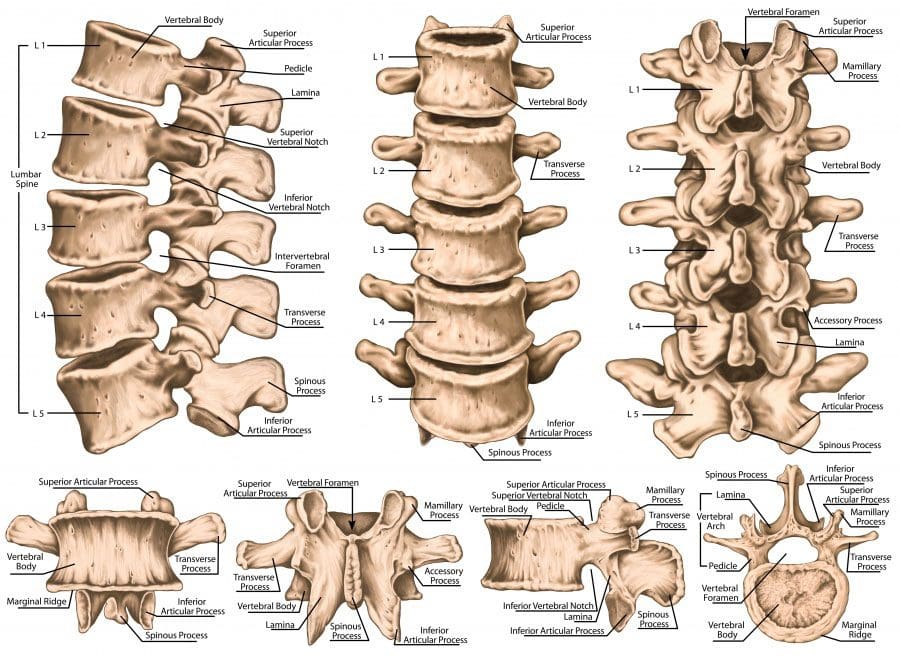
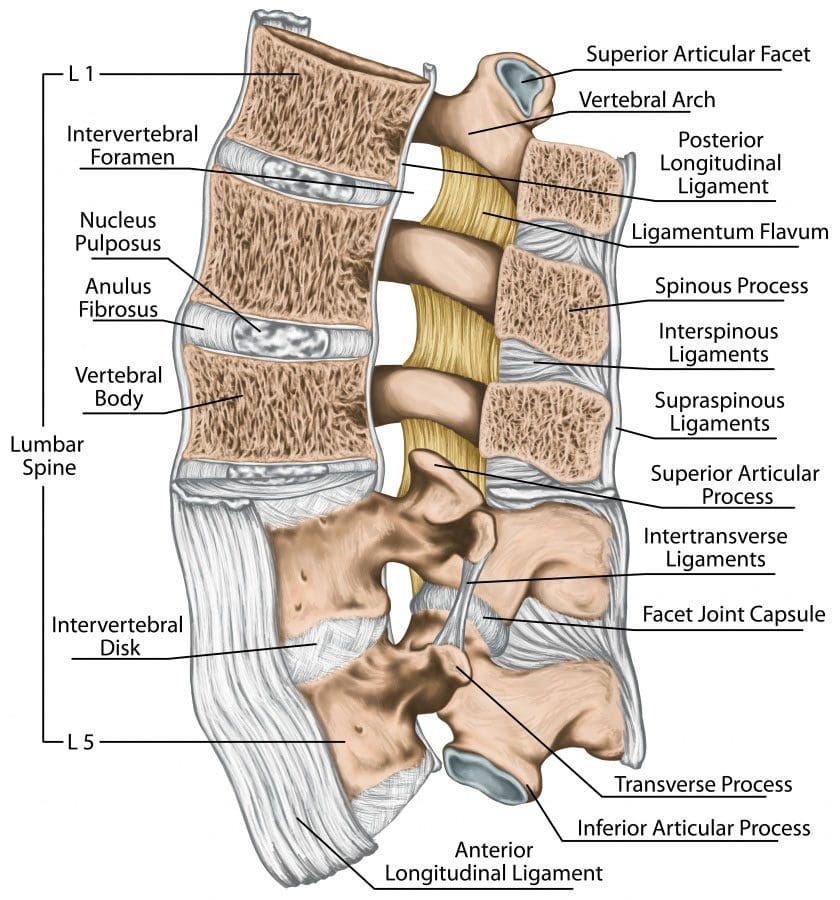
The lumbar spine is the lower back that starts below the last thoracic vertebra T12 and ends at the top of the sacral spine or sacrum S1. Each lumbar spinal level is numbered from top to bottom, L1 to L5, or L6. The low back bodies are larger, and thicker structures of dense bone. From the front or anterior, the vertebral body has a rounded shape.
The posterior bony structure is a different lamina, which is a thin bony plate that shields and protects access to the spinal canal. There are vertebral arches that create the hollow spinal canal for lumbar nerve structures and the cauda equina.
Lumbar Structure Strong Joint Complex
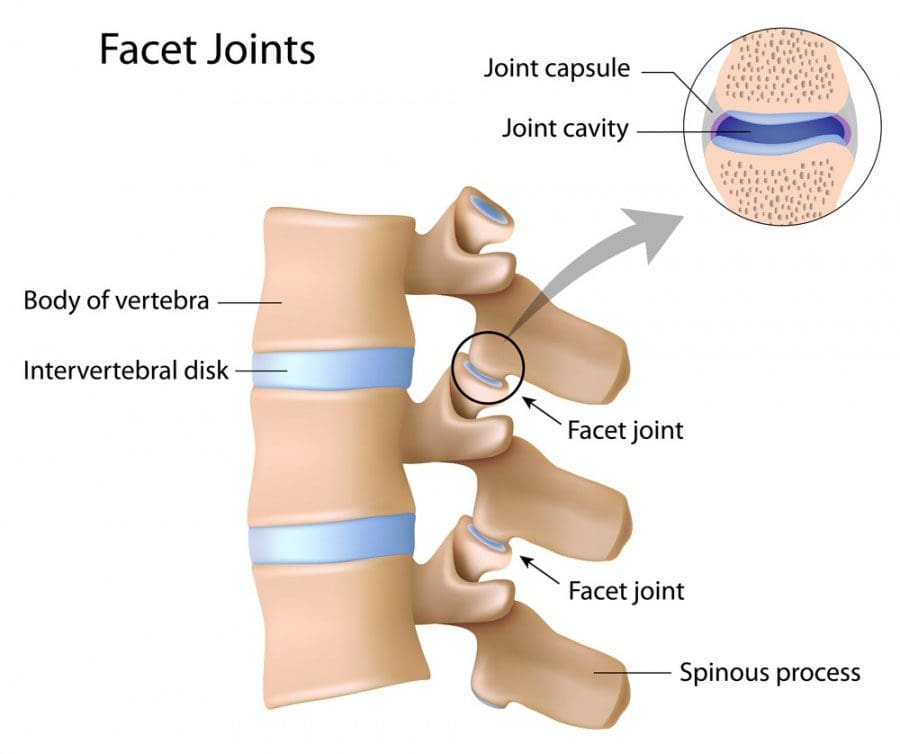
One intervertebral disc together with the facet joints forms a strong joint complex that allows the spine to bend and twist. One pair of facet joints from the top or superior vertebral body connects the lower or inferior set of facet joints. The facet joints are synovial joints, which means they are lined with cartilage and the capsule holds synovial fluid that enables joints to glide during movement. Think of it as hydraulics with smooth fluid motion.
Facet joint syndrome can develop from aging and degenerative spinal changes causing low back pain. The lumbar discs are secured in place by the fibrous endplates of the superior and inferior vertebral bodies.
The jelly/gel center of each disc called the nucleus pulposus is surrounded by the annulus fibrosis, which is a tough layer of fibrocartilage that you can think of as a radial tire.
Discs are integral to the joint complex and function to:
Hold the superior and inferior vertebrae together
Take the weight
Absorb and distribute shock and forces when moving about
Create an open nerve passageway called foramen or neuroforamen
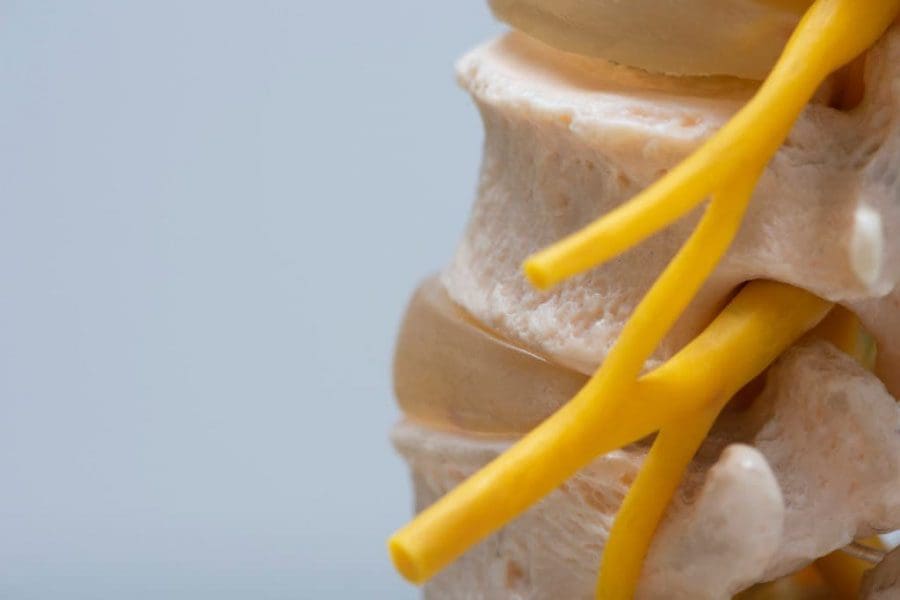
The neuroforaminal spaces on either side of the disc allow nerve roots to exit the spinal canal and leave the column.
Lumbar disc herniation is a common cause of low back pain that can spread out into one or both legs. This is called lumbar radiculopathy. This condition can develop when the nerves are compressed.
Low Back Support
Lumbar Ligaments
Tendons
Muscles
Systems of strong fibrous bands of ligaments hold the vertebrae and discs together and stabilize the spine by helping to prevent over/excessive movements.
The 3 major spinal ligaments are the:
Anterior longitudinal ligament
Posterior longitudinal ligament
Ligamentum flavum.
Spinal tendons attach muscles to the vertebrae and together work to limit excessive movement.
Lumbar Spine Nerves
The spinal cord comes to an end between the first and second lumbar vertebrae(L1-L2). Below this is the remaining nerves that form the cauda equina which is a bundle of nerves that looks like a horse�s tail. These nerves send messages between the brain and the lower body structures, including the:
Large intestine
Bladder
Abdominal muscles
Perineum
Legs
Feet
Protect Your Back
Around 80% of adults will see a doctor for low back pain at some point. Therefore take care of your lumbar spine to help avoid painful, unnecessary wear-and-tear. You can minimize the risk of a low back injury/pain by:
Losing weight. Even a loss of 5 pounds can help reduce back pain.
Strengthening the core/abdominal muscles. The abdominal and low back muscles work together to form a supportive band around the waist and low back. Stronger muscles help stabilize the low back and reduce the risk of injury.
Stopping smoking. Nicotine reduces blood flow to the spine’s structures. This includes the lumbar discs and accelerates age-related degeneration.
Proper posture and proper body mechanics. When lifting objects keep your spine erect and use your legs. Ask for help with heavy objects. The lumbar spine is can bend and twist simultaneously, try to avoid doing this, as it is a perfect setup for a strain or sprain.
Get Rid of Low Back Pain with Custom Foot Orthotics
Headaches can be detrimental to a high quality of life.� Especially, migraine and tension headaches.�Some deal with them on a weekly, or even daily, basis.�They can range from minor to life-changing afflictions. There are various causes, symptoms, and treatment options. The first step in treating headaches is understanding the type of headache it is.
Some people think they have a migraine, when in fact, they are suffering from a tension headache. Tension headaches are more common. But the Migraine Research Foundation found that 1 in 4 U.S. households include someone that suffers from migraines. Determining what type of headache can take some research.
Here are some things to think about to determine if the headache is a migraine or a tension headache.
Headache/s origin
According to the Mayo Clinic, migraines often begin in adolescence or early adulthood. Tension headaches can start at any time in an individual’s life.� An adult just beginning to have recurring headaches means that they are most likely tension headaches.
Where is the pain located
Migraines usually happen on one side of the head. Tension headaches can affect both sides of the head and can produce intense pressure on the forehead. The location of the pain can be a key indicator of the type of headache.
Describe the pain
If it is a dull pain, with pressure, and tenderness around the scalp, this could mean a tension headache. If the pain is throbbing or pulsing pain, it could be a migraine. Both headaches can present intense pain, just different types of pain.
Other symptoms
Migraines often come with symptoms beyond head pain.
Nausea
Light sensitivity
Sound sensitivity
Seeing bright flashing/sparkling lights
A sensation of Pins and needles in one or both arms
Dizziness
Individuals not experiencing any of these symptoms are more than likely dealing with a tension headache.
Functionality
Those with tension headaches can still perform jobs, drive, read, and operate through daily life even though it can be painful and frustrating. Migraines are very different. Lying down in a dark, quiet room with an eye mask on until the headache passes is how many handle their migraines. If the headache disrupts your life it is more than likely a migraine.
Over the counter pain killers
Tension headaches can usually be relieved with over-the-counter pain meds. However,�this type of treatment does not work for migraines. When a migraine shifts into full force, the individual has to go through it. Headaches that respond well to nonprescription pain killers means it’s a tension headache. The majority will at some point deal with a headache.
Although tension headaches are more common that doesn’t rule out the possibility of the headache being a migraine. Just a little insight as to the type of headache that is presenting, and some proactive treatments. No matter the type of headache, if the pain is severe, or starts up after a head injury, seek medical treatment.
IFM's Find A Practitioner tool is the largest referral network in Functional Medicine, created to help patients locate Functional Medicine practitioners anywhere in the world. IFM Certified Practitioners are listed first in the search results, given their extensive education in Functional Medicine