Back Clinic Mobility & Flexibility: The human body retains a natural level to ensure all its structures are functioning properly. The bones, muscles, ligaments, tendons, and other tissues work together to allow a range of movement and maintaining proper fitness and balanced nutrition can help keep the body functioning properly. Great mobility means executing functional movements with no restrictions in the range of motion (ROM).
Remember that flexibility is a mobility component, but extreme flexibility really is not required to perform functional movements. A flexible person can have core strength, balance, or coordination but cannot perform the same functional movements as a person with great mobility. According to Dr. Alex Jimenez’s compilation of articles on mobility and flexibility, individuals who don’t stretch their body often can experience shortened or stiffened muscles, decreasing their ability to move effectively.
If you are like most people, at some point in your life, you will experience back pain � if you haven�t already. The American Chiropractic Association estimates that around 80% of the population suffers from back pain, has suffered from back pain, or at some point in the future will suffer from back pain. That puts you in good company.
It also means that you have a better than average chance of falling into that 80%, so the smart thing to do is take steps not to prevent it. One powerful preventative measure against back pain is stretching. Try these four stretches to help your back pain.
Forward Bend
Stand with your feet shoulder width apart and your knees soft (not locked). Take a deep breath and as you exhale, bend forward at the waist, hands out as if you are reaching for the floor. When you feel a little stretching in your hamstrings (the backs of your legs), stop and hold that position for two or three breaths. If you can�t reach the floor, that is OK, don�t force it. If you need extra stability, you can use a chair to hold on to for balance. Repeat this movement seven to ten times.
Cat and Camel
This stretch is typically done on the floor, but if you don�t think you can safely get back up, you can stand and hold on to a chair. On the floor, get on your hands and knees with your back straight. If using a chair, stand with your feet shoulder width apart and your knees soft. Bend slowly and place your palms in the seat of the chair so that your back is parallel to the floor. Keep it straight.
Begin by arching your back up as high as you can. Hold for two or three breaths. Return to the starting position, then let it sway down toward the floor and hold for two or three breaths. Return to the starting position. Do this five to seven times.
Back Extension
Lie on your stomach on the floor or bed with your hand’s palm down near your face. Slowly push up with your arms, keeping your head level with your shoulders, until you are on your elbows. Hold for three or four breaths.
If you can push all the way up so that you are on your hands, that will give you a deeper stretch. You can also hold it for a little longer. Just remember to keep the movements slow and gentle to avoid injury.
If you are not able to safely get on the floor, you can stand with your feet several inches from a wall. Place both of your hands on the wall and bring your upper body toward them, letting your pelvis naturally follow. Gently push against the wall with your hands, pushing your upper body away from the wall. You can also do this with a chair if you need extra support. Repeat five to seven times.
Hip Flex and Stretch
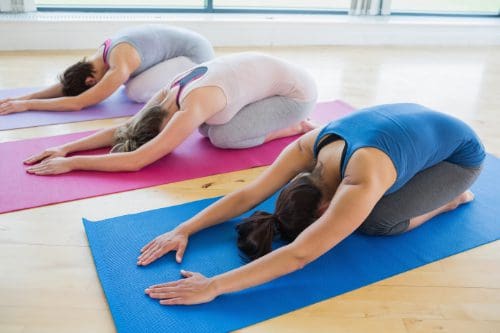
Get on your hands and knees on the floor or bed. Slowly move your body back so that your bottom is over your heels. Keep your hips straight as you extend your arms in front of you. Drop your head between your arms and hold the stretch for three to five breaths.
If you can�t get on your hands and knees, sit in a chair with your feet flat on the floor in front of you, hip-width apart. Extend your arms in front of you and reach forward. Lean forward slightly until you feel the stretch.
You can also place your hands on your knees for support while you sit in a chair and bend at the waist, slowly rounding out your back over your thighs. Hold the stretch for three to five breaths then return to your upright position. Do this seven to ten times.
Before you begin any new exercise or stretching regimen, talk to your doctor or chiropractor to make sure you aren�t doing something that could exacerbate your problem. For the most part, stretching is very therapeutic and beneficial, but some injuries and conditions can be made worse.
It is well worth taking the extra time to talk with your doctor and perhaps even show him or her the movements. This will also allow them to correct any form problems you may have or recommend any modifications that will help you get the most out of your stretches.
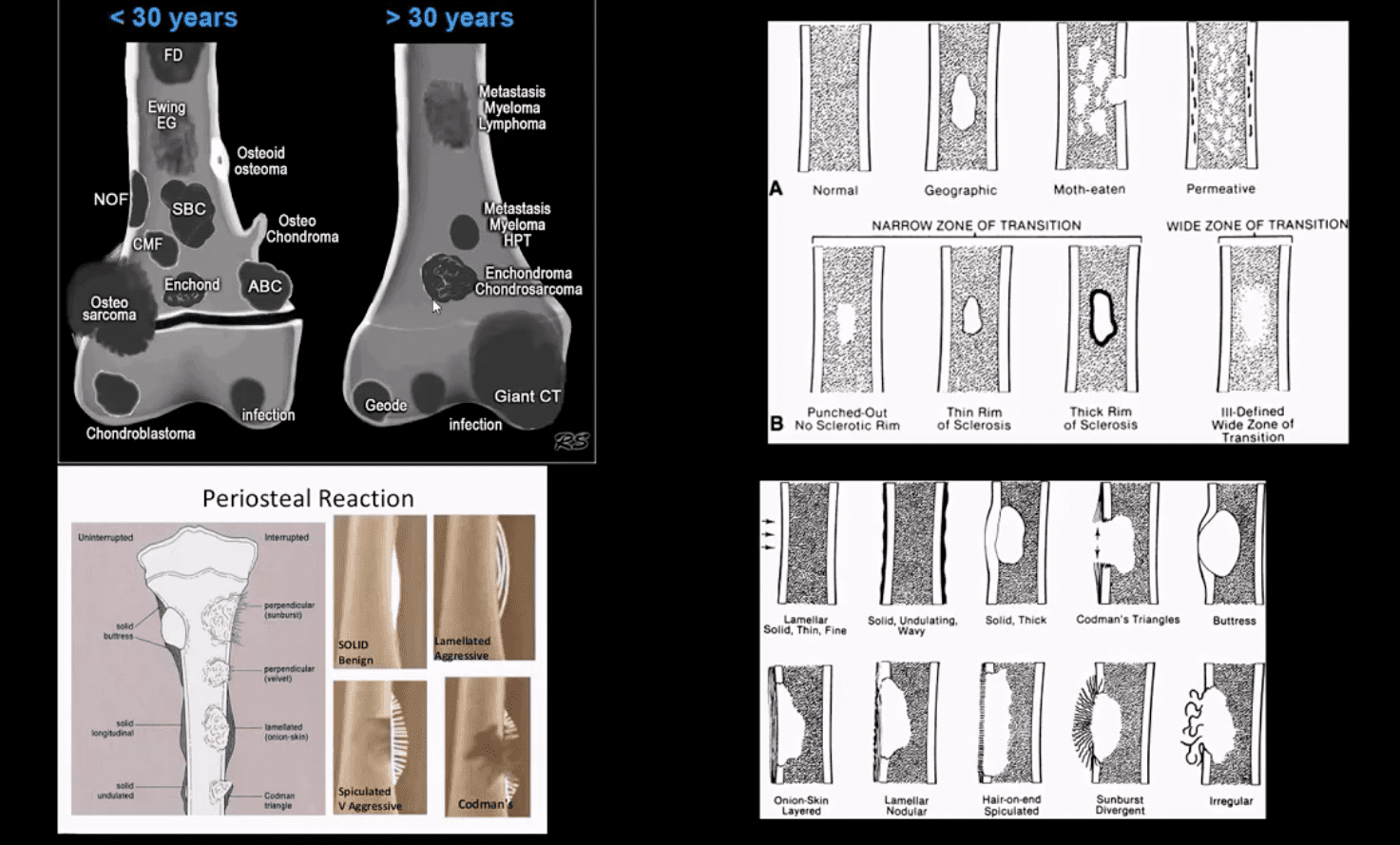
Bone neoplasms and tumor-like conditions affecting the knee can be benign or malignant. Age at Dx is crucial for DDx
In patients <40: Benign bone neoplasms: Osteochondroma, Enchondroma are relatively frequent
Fibrous cortical defect (FCD) & Non-ossifying fibroma (NOF) are particularly frequent in children
Giant cell tumor (GCT) is the m/c benign neoplasm of the knee in patients between 20-40 years of age
Malignant bone neoplasms in <40: m/c Osteosarcoma and 2nd m/c Ewing sarcoma
In patients >40: malignant neoplasms: m/c are secondaries d/t bone metastasis. Primary bone malignancy:�the m/c
Multiple Myeloma (MM). Less frequently:�a 2nd�peak of Osteosarcoma (post-radiation or Paget�s), Fibrosarcoma or Malignant�Fibrous�Histiocytoma�(MFH) of bone.
Clinically: knee pain, pathological fracture
Some tumor-like conditions like FCD/Non-ossifying fibroma are asymptomatic and may regress spontaneously. Occasionally NOF may present with pathologic fracture. N.B. any knee/bone pain in a child/adolescents should be�treated with clinical suspicion and adequately investigated.
Imaging: 1st step: radiography
MRI with T1+C is crucial for lesion characterization/regional extent, staging and pre-operative planning. CT may�help with pathologic Fxs detection. If malignant bone neoplasms considered, CXR/CT, PET-CT to investigate�metastatic spread and staging are important
Imaging Approach Bone Neoplasms
Approach to imaging Dx of bone neoplasms includes age, bone location (epiphysis vs. metaphysis vs. diaphysis), zone of transition surrounding the lesion, periosteal response, type of matrix, permeating or moth-eaten destruction vs. sclerotic, ground-glass, osteoid, cartilaginous matrix, soft tissue invasion, etc.
Key x-radiography features to DDx benign vs. malignant bone neoplasm:
Zone of transition: lesion is geographic with a narrow zone of transition vs. ill-defined wide zone of transition suggesting aggressive bone resorption
What type of bone destruction occurred: soap-bubbly appearance vs. osteolytic vs. osteosclerotic changes
Is there a round-glass matrix? Is there a well-defined rim of the sclerotic border with septations potentially suggesting slow growth and encapsulation like most benign processes.
Periosteal proliferation: solid vs. aggressive spiculated/sunburst/hair-on-end with local soft tissue invasion and Codman triangle (study next slide)
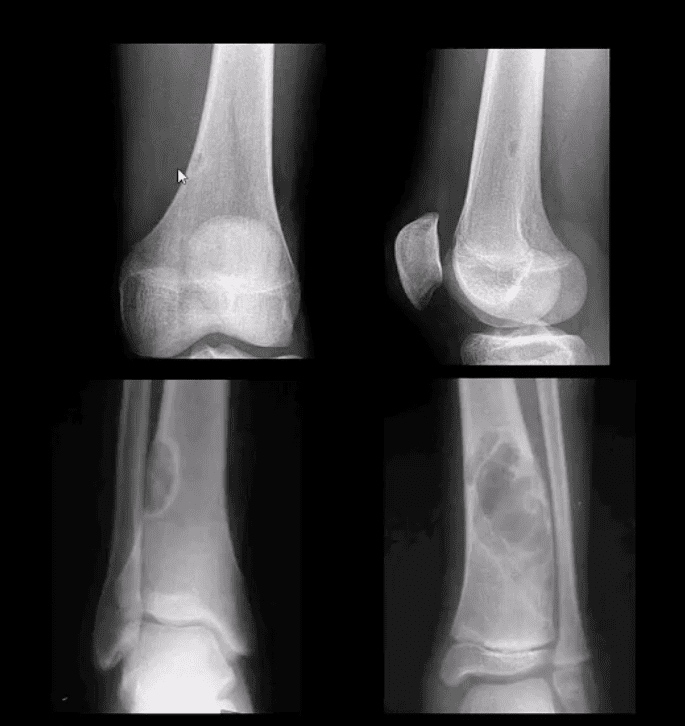
FCD & NOF
FCD & NOF or more appropriately Fibroxanthoma of the bone are benign bone processes that m/c seen in children. DDx based on the size with FCD presenting as <3-cm and NOF >3cm lesion composed of a fibrous heterogeneous matrix. FCD are asymptomatic and may regress in many cases. Some may progress to NOF. Location: identified in the knee region as an eccentric cortical based lesion.
FCD must be DDx from an avulsive irregularity d/t repeated stress along Linea aspera by extensors muscles
Dx: radiography
Management: leave-me-alone lesion. Occasionally NOF may progress and lead to pathologic fracture requiring orthopedic consult
Osteochondroma
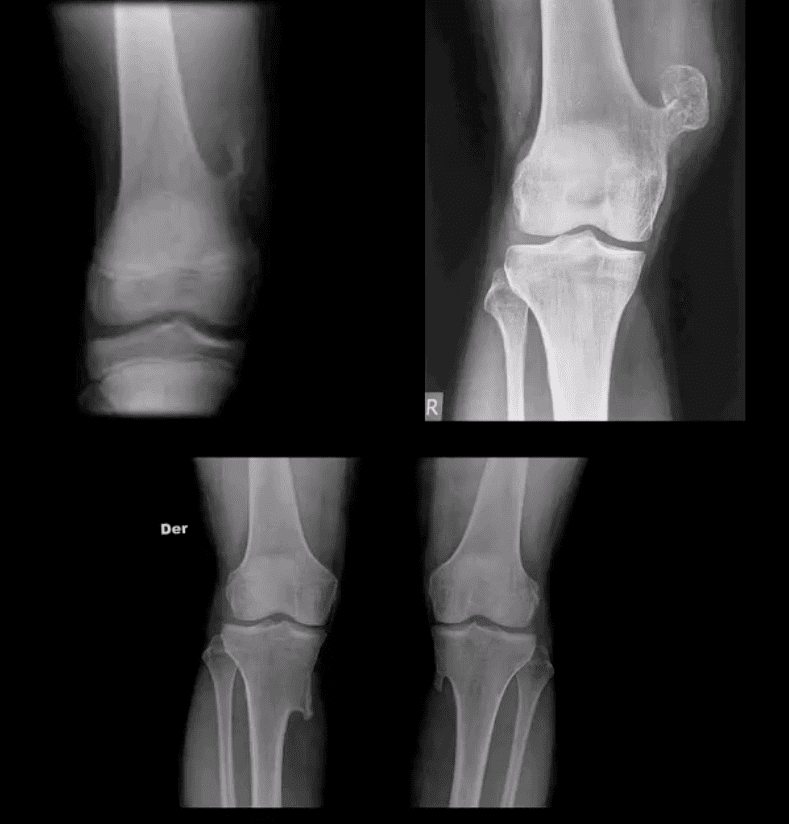
Osteochondroma: m/c benign bone neoplasm. Knee is the m/c location. Contains all bone elements with a cartilaginous cap. Presented as pedunculated or sessile bone exostosis pointing away from the joint.
1% malignant degeneration to chondrosarcoma if solitary lesion and 10-15% in cases of HME
Other complications: fracture (top left image) pseudoaneurysm of the Popliteal artery, adventitious bursa formation
Hereditary Multiple Exostosis (HME)– autosomal dominant process. Presents with multiple osteochondromas (sessile-type dominates). May lead to limb deformities (Madelung deformity, coxa valga) reactive ST pressure, malignant degeneration
Dx: radiography, MRI helps to Dx malignant degeneration to chondrosarcoma by changes in size and activity of cartilaginous cap (>2-cm in adults may manifest malignant degeneration). MRI will also help with Dx of regional complications
HME & Knee Pain
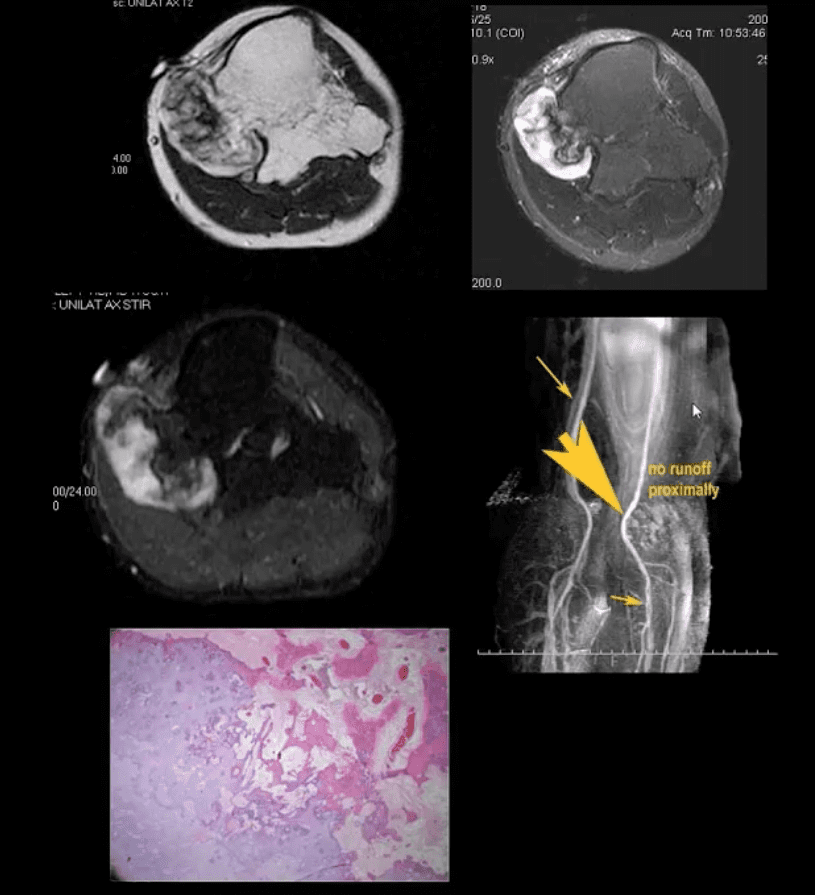
37-y.o male with HME and knee pain. Axial T1, T2 and STIR MRI slices at the popliteal region. Large cartilaginous cap and possible compression of the popliteal artery by osteochondroma. MRA was performed to evaluate popliteal A. pseudoaneurysm (large arrow). Pathology specimen obtained from the cartilaginous cap showed increased cellularity suggestive of malignant degeneration. Operative care was planned
Giant Cell Tumor (GCT) aka Osteoclastoma
GCT- is a relatively common primary benign bone neoplasm. Age 25-40. M>F slightly.
GCT is the M/C benign sacral tumor. In 50% of cases, GCT occurs about the knee.
GCT is histologically benign, but lung Mets may develop esp. if in distal radius and hands, often termed Malignant GCT
<1% unresponsive/recurring GCTs may undergo malignant transformation to high-grade bone sarcoma
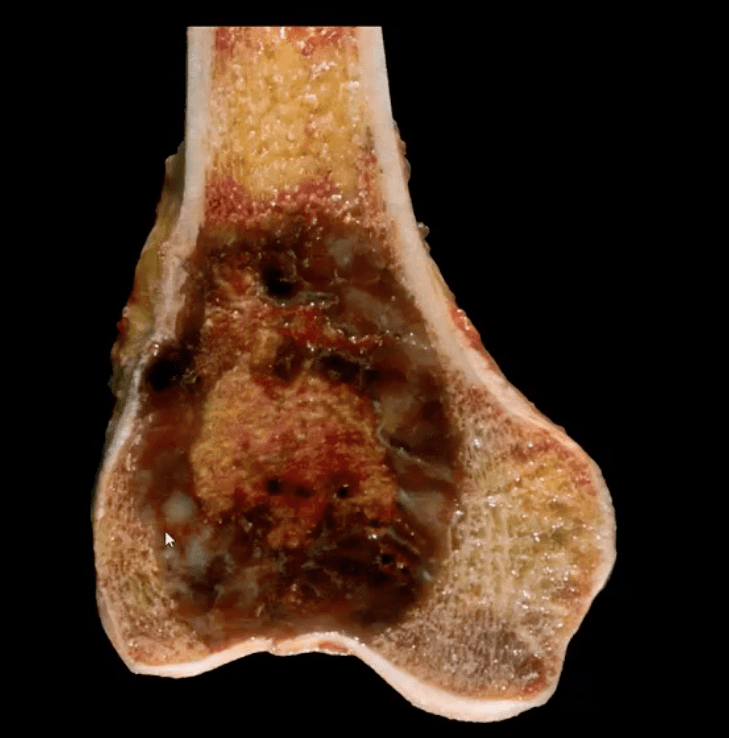
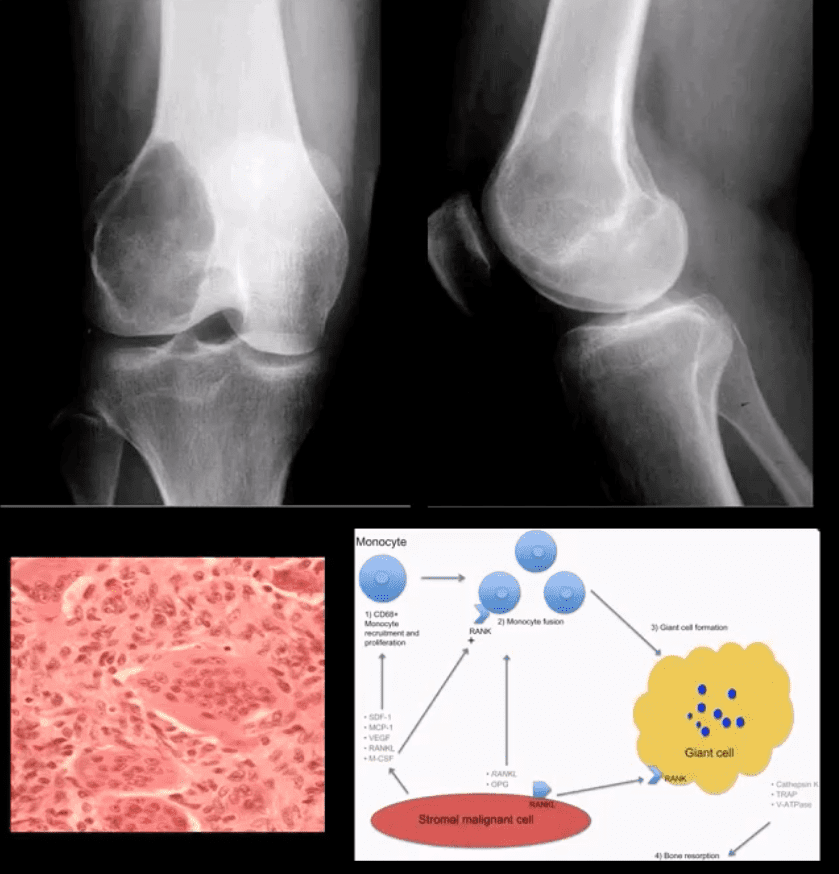
Pathology: histologically composed of osteoclasts-multinucleated giant cells with stromal cells derived from precursors monocyte-macrophage type. Produces cytokines and osteolytic enzymes. GCT may contain blood and associated with secondary Aneurysmal Bone Cyst (ABC)
Clinically: knee pain unresponsive to conservative care. Pathologic Fx may occur
Imaging: always begins with radiography followed by MRI and surgical biopsy that are crucial to Dx.
Rx: operative with curettage and cementing, a surgical appliance may be used if pathological fx present and cortical breach. In more severe cases other options available
Radiologic-Pathologic Dx
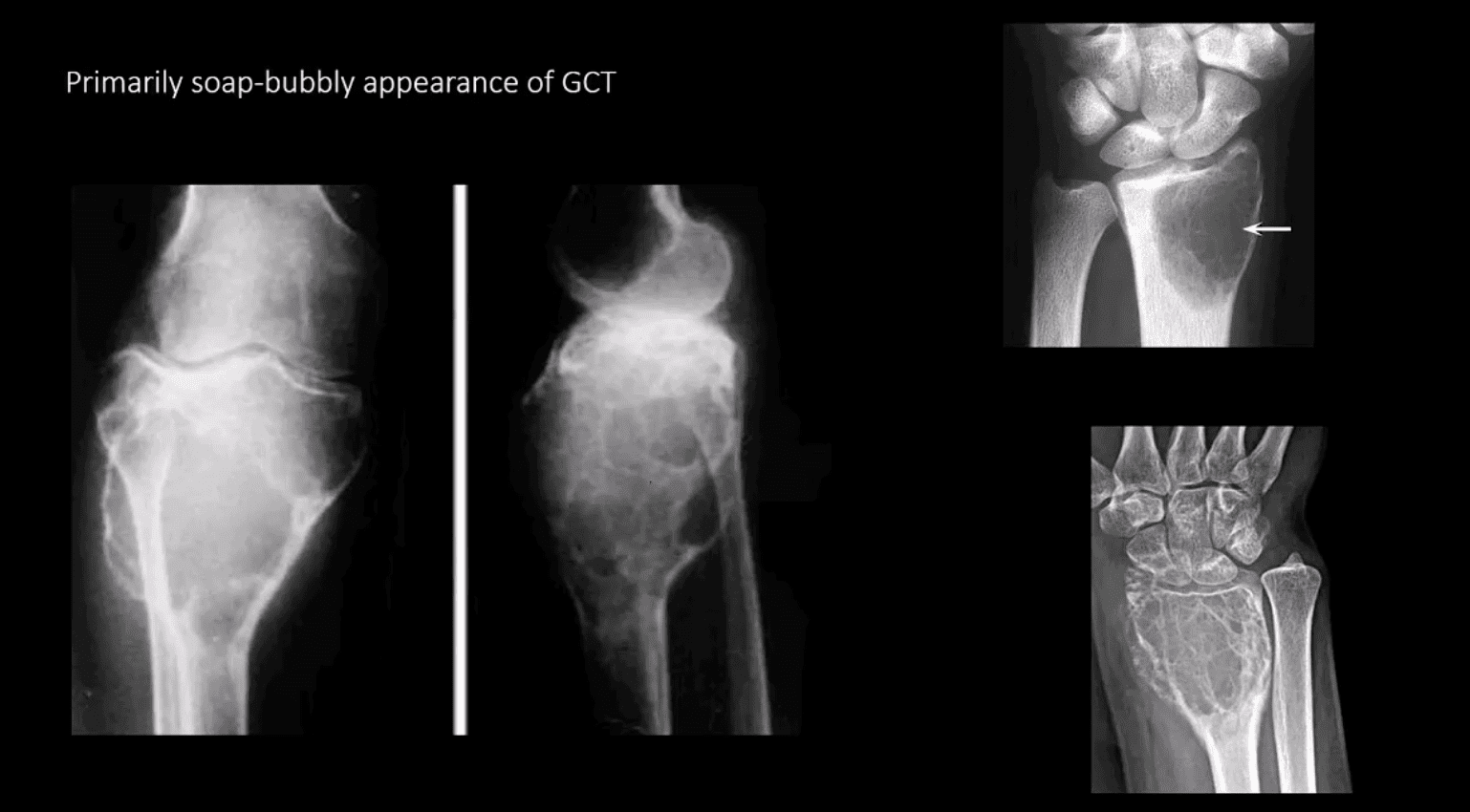
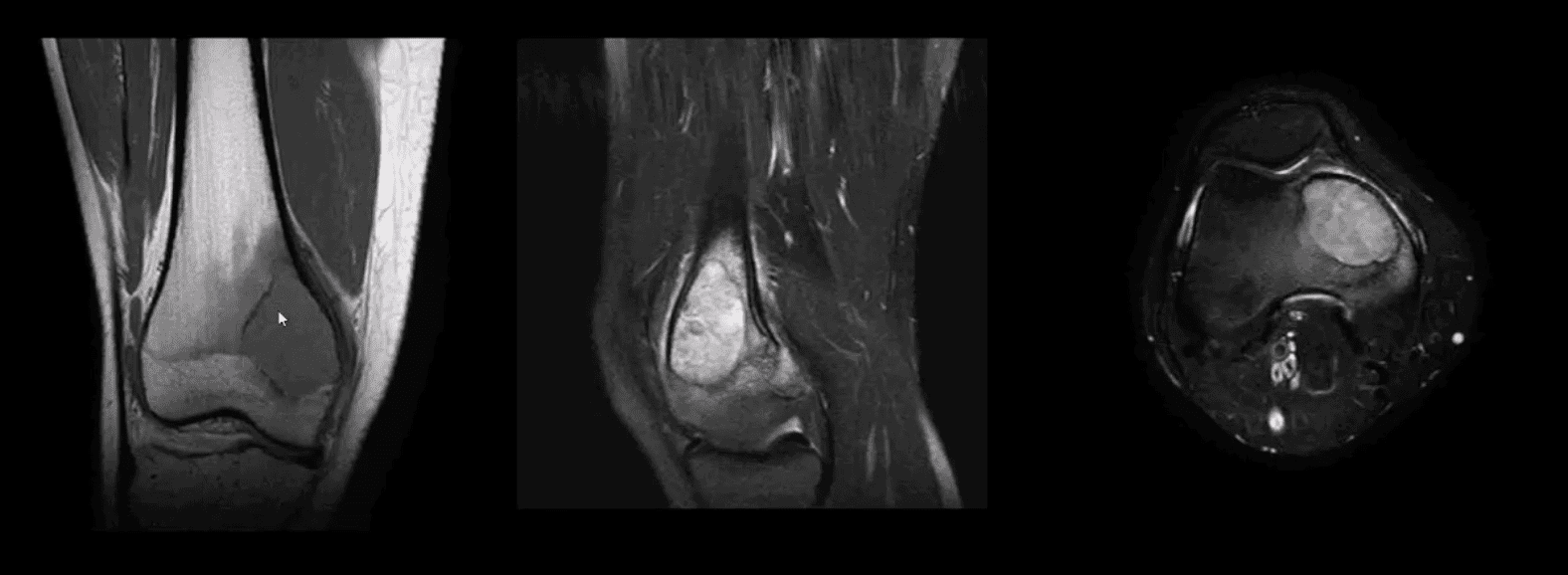
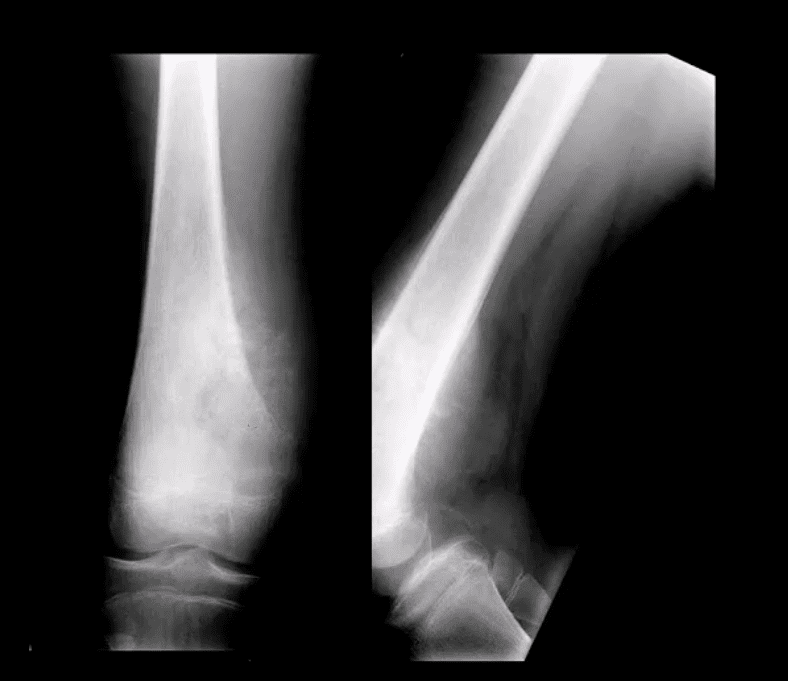
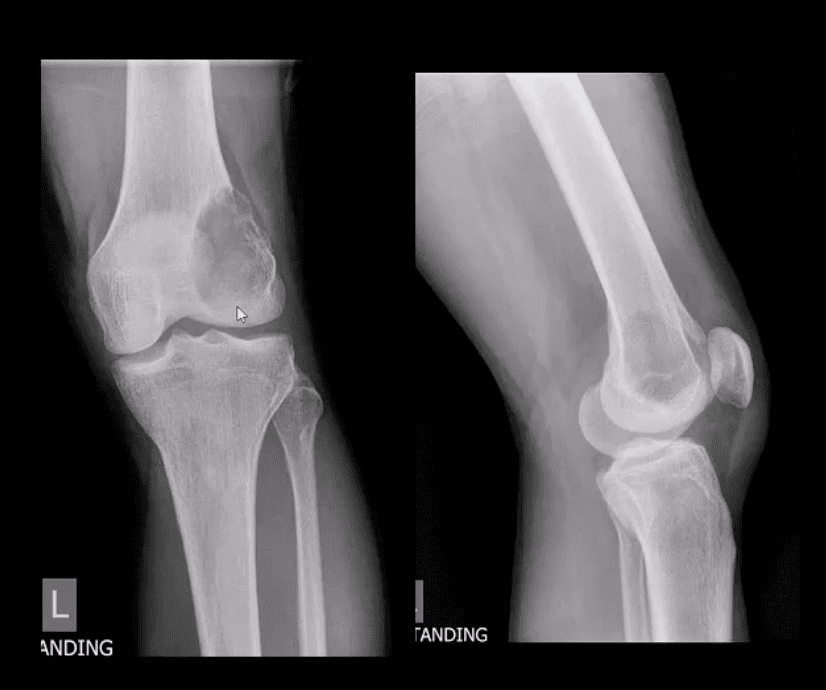
Radiologic-pathologic Dx: osteolytic and soap-bubbly lesion typically involving metaphysis and into epiphysis (classic key feature) with subarticular extension. Zone of transition is generally narrow but occasionally in aggressive lesions wide zone of transition may be seen.
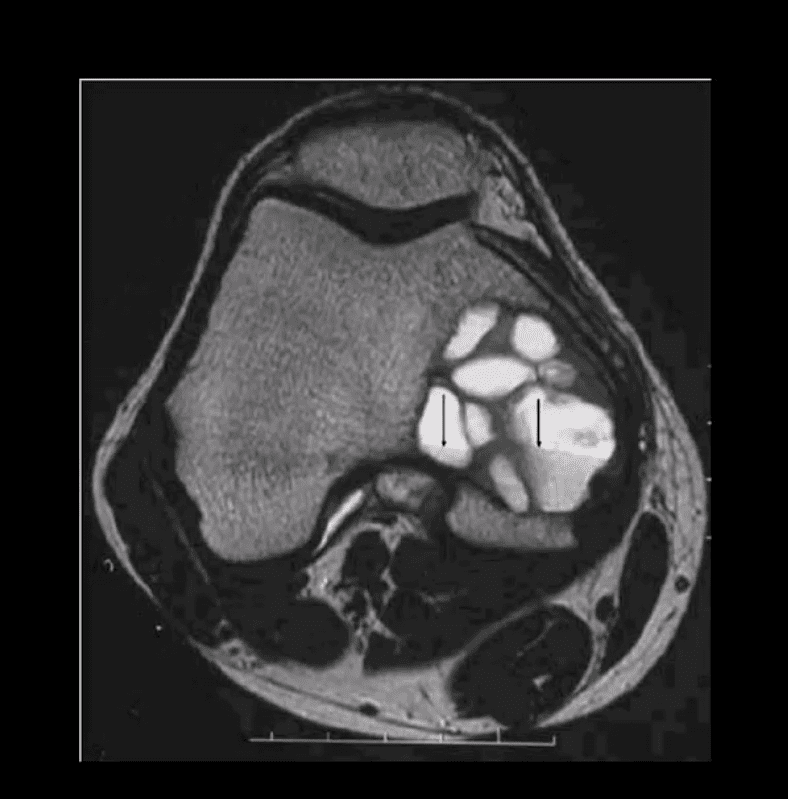
MRI: low T1, highT2/STIR, characteristic fluid-fluid levels noted that are present in GCT and ABC. Histology is crucial to Dx.
DDx: ABC, Brown cell tumor of HPT (osteoclastoma), Telangiectatic Osteosarcoma
Radiological rule: if the physeal growth plate is present Dx of GCT is taken off the list in favor of chondroblastoma and vice versa.
Primarily Soap-Bubbly Appearance of GCT
Coronal, Fat-Sat Sagittal & Axial MRI Slices of GCT
T1 coronal, T2 fat-sat sagittal and T2 axial MRI slices of GCT. Typically: low T1, highT2/STIR and fluid-fluid levels
Characteristic MRI Appearance of GCT
Fluid-fluid levels d/t different composition of blood degradation products
Important DDx: ABC
Malignant Neoplasms About the Knee
In children and very young adults, m/c primary malignant neoplasm is central aka intramedullary (osteogenic) osteosarcoma (OSA). Second peak of OS: >70 y.o d/t Paget�s (1%) and/or post radiation OSA.
The knee is the m/c location of OSA (distal femur, prox. Tibia)
A 2nd m/c malignant pediatric primary is Ewing sarcoma.
In adults >40 y.o. the m/c primary is Multiple Myeloma (MM) or Solitary Plasmacytoma
Overall m/c bone neoplasms in adults d/t bone Mets from lung, breast, prostate, renal cell, thyroid (discussed)
Dx: clinical and radiological with surgical biopsy
Imaging is crucial to Dx. 1st step x-radiography. MRI+ gad C is vital
CT scanning occasionally helps to evaluate pathological fracture
Central (Intramedullary) Osteosarcoma (OSA)
m/c age: 10-20. m/c location: knee, males>females. Increased risk in some
congenital syndromes and mutation of the retinoblastoma gene: Rothmund-Thompson AR syndrome.
Early Dx is important d/t 10-20% present with Lung Mets at Dx. Prognosis depends on stages. Early stages with local bone invasion and no
mets 76% of survival.
Rx: limb salvage procedures preferred with 8-12 weeks of chemo, amputation if encased neurovascular tissue, path Fx, etc.
Imaging: radiography and MRI.
Clinically: bone pain, Inc. Alkaline Phosphatase
Chest CT if lung Mets considered
Classic Rad Features of OSA
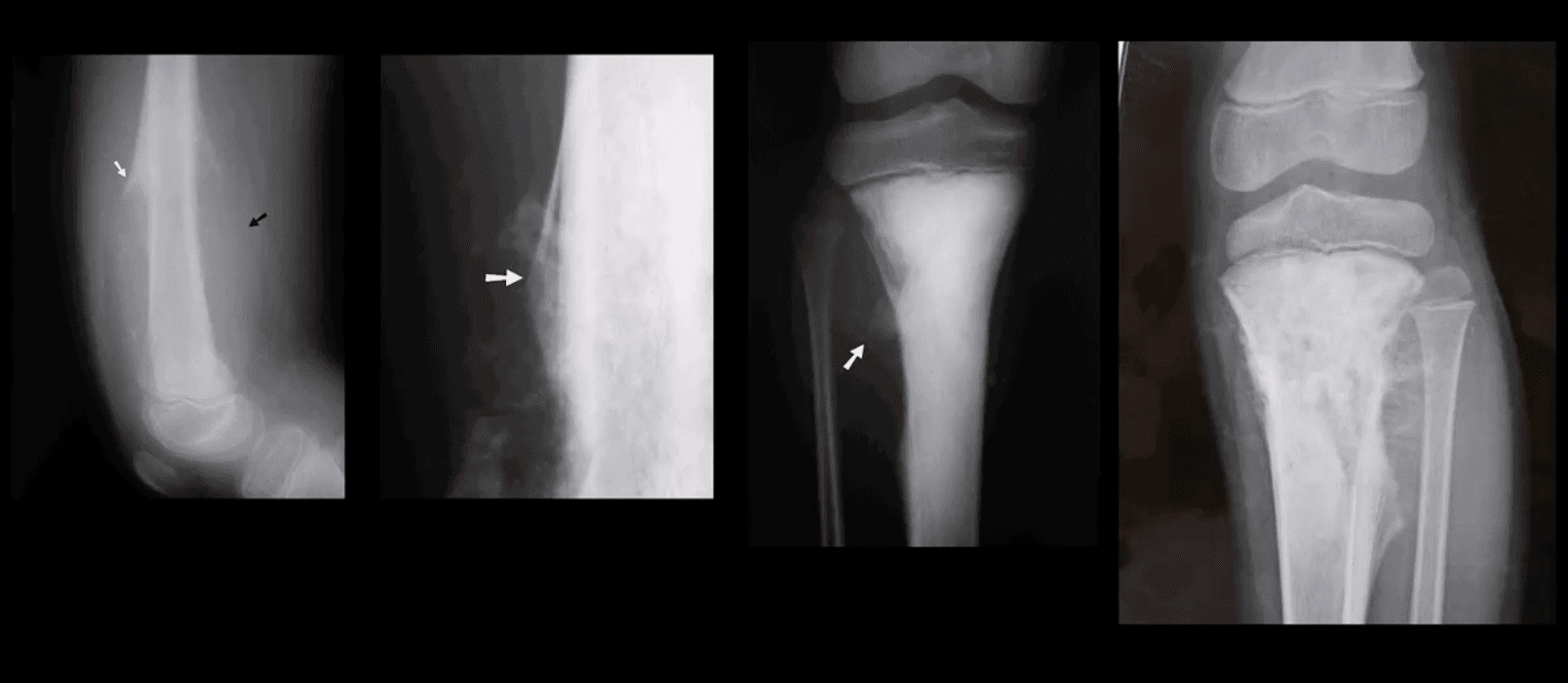
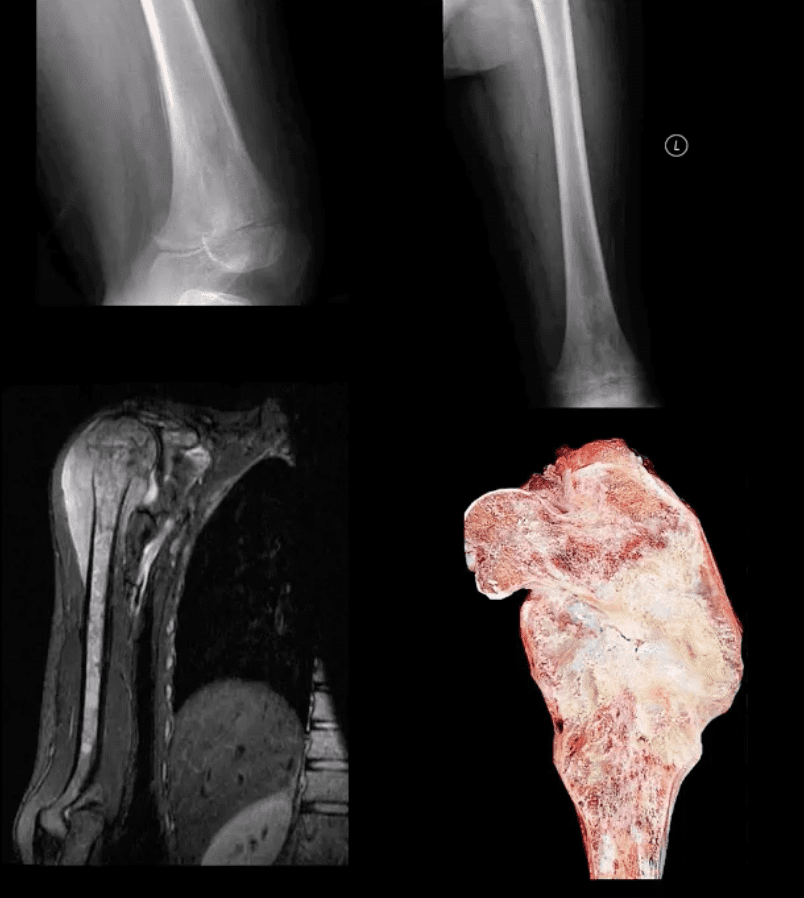
Osteoid forming a sclerotic mass with aggressive hair-on-end/speculated/sun-burst periosteal reaction, Codman’s triangle and soft tissue invasion. Order MRI for staging and extent. Chest CT is crucial for Lung Mets dx.
MRI is Crucial for Dx/Staging
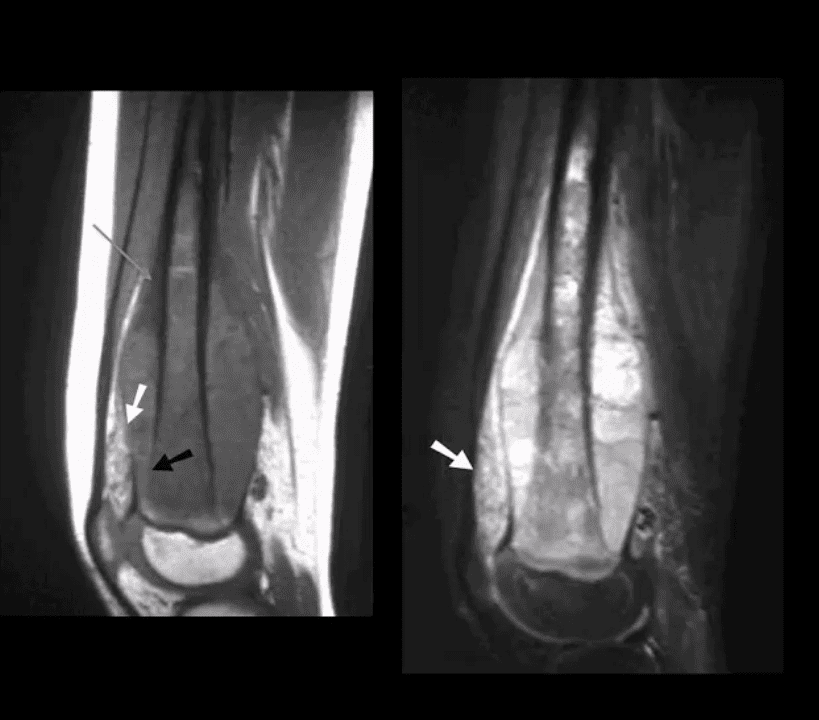
Note sagittal T1 (left) and STIR (right) MR slices: large mass extending from distal femoral metaphysis to remaining shaft. A low signal on T1 and high on STIR d/t marrow invasion with edema, hemorrhaging and tumor invasion. Local ST invasion seen (white arrows). Periosteal lifting and Codman�s triangle (green arrow) are additional signs of aggressive neoplasm.
Note an interesting feature that the epiphysis is spared d/t physeal plate serving temporarily as an additional barrier to the tumor spread.
Ewing Sarcoma
Ewing sarcoma: age: 2-20, uncommon in black patients. 2nd m/c highly malignant bone neoplasm in children that typically arises from medullary cavity (Round cell tumors). Key symptom: bone pain that may mimic infection (ESR/CRP/WBC) Considered PNET Key Rad Dx: aggressive moth-eaten/permeative lucent lesions in the shaft of long bones with sizeable soft tissue invasion/typical onion skin periostitis. May produce saucerisation May affect flat bones. May appear as sclerotic in 33%. Early lung Mets (25-30%) bone-to-bone Mets Poor prognosis if delayed Dx. Imaging steps: 1st step x-rad, MRI is v. important followed by a biopsy. CXR/CT PET-CT Rx: combined rad-chemo, operative.
Note aggressive expansile osteolytic lesion in the distal femur metaphysis into epiphysis. No periosteal reaction present. Following further work up with abdominal and chest CT scanning, Dx of Renal cell carcinoma was established
Distal Mets into lower extremity are more common with lung, renal cell, thyroid and breast CA.
Renal cell and Thyroid will typically present with aggressive osteolytic expansile mass aka �blowout Mets.�
In general, imaging approach should consist of Radiographic knee series, followed by MRI if x-rays are unrewarding
Tc99 Bone scintigraphy is the modality of choice to evaluate metastatic bone disease
Soft Tissue Neoplasms About the Knee
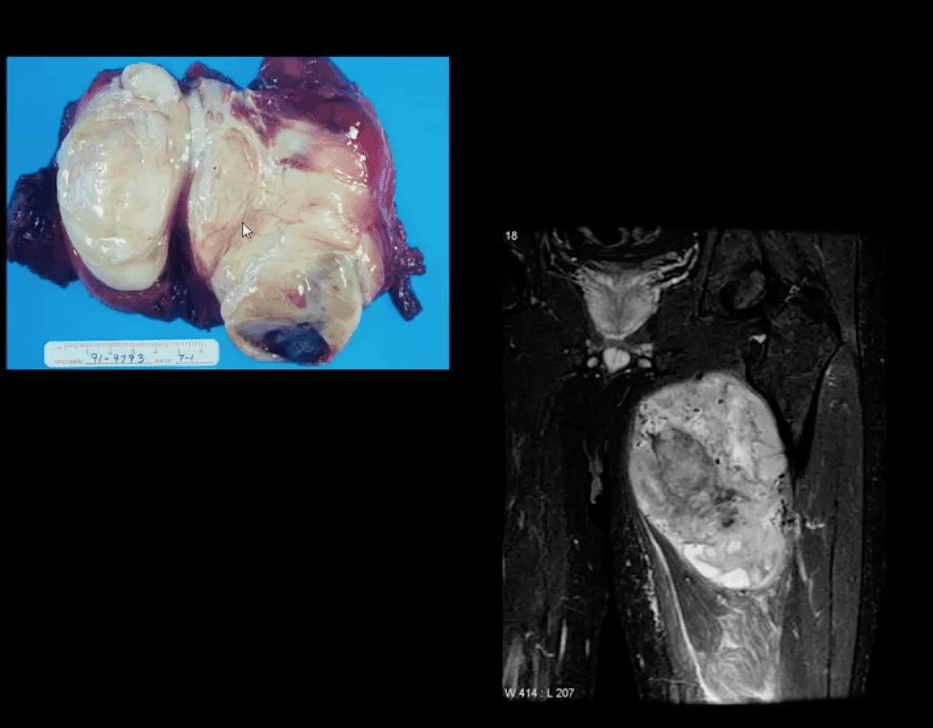
Malignant fibrous histiocytoma (MFH) reclassified as Pleomorphic Undifferentiated Sarcoma (PUS) is the m/c S.T. sarcoma. MFH is aggressive biologically with poor prognosis M>F (1.2:1) 30-80 with a peak in a 6th decade. 25-40% of all adults sarcomas m/c extremities. Retroperitoneum next (worst prognosis d/t late Dx and large growth w/o symptoms) Clinically: painful, hard mass typically about the knee or thigh. Histology: poorly differentiated/undifferentiated malignant fibroblasts, myofibroblasts, and other mesenchymal cells Imaging: MRI is the modality of choice with T1, T2, T1+C. Typically appears as an aggressive heterogeneous mass intermediate to low signal on T1 and high signal on T2 with areas of necrosis and enhancement on T1+C. May appear misleadingly encapsulated w/o true capsule Management: operative with radiation and chemotherapy. Tumor depth is crucial for prognosis. 80% 5-year survival if <5cm deep in ST and 50% if >5-cm deep in ST.
Synovial Sarcoma
Synovial sarcoma: common malignant ST neoplasm esp. in younger patients or older children/adolescents. M/C found in knee area Clinically: can present slowly as a palpable mass in the extremity often ignored d/t slow growth Imaging is the key: radiography may reveal ST. density/mass. Some synovial sarcomas may show calcification and mistaken for Myositis Ossificanse or heterotopic bone formation MRI with T1, T2 and T1+C are Dx modality of choice. Other modalities: US, CT are non-specific DDx: MFH Management: operative, chemo-radiation Prognosis: variable depending on size, invasion, metastasis
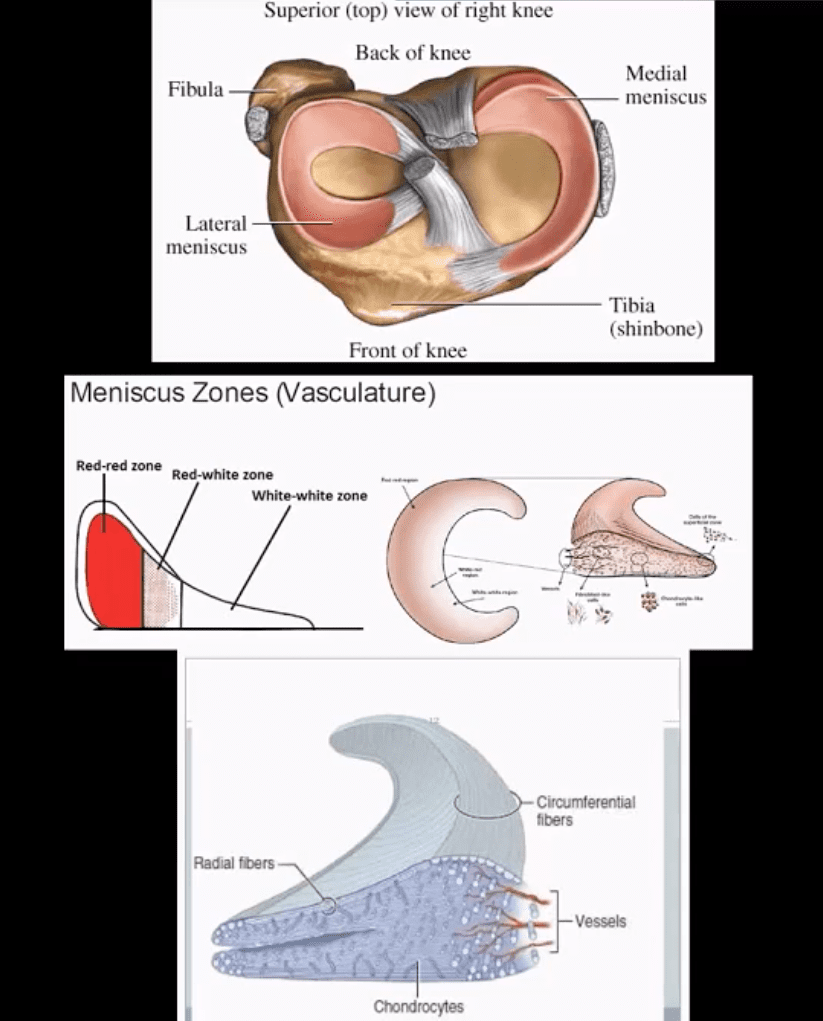
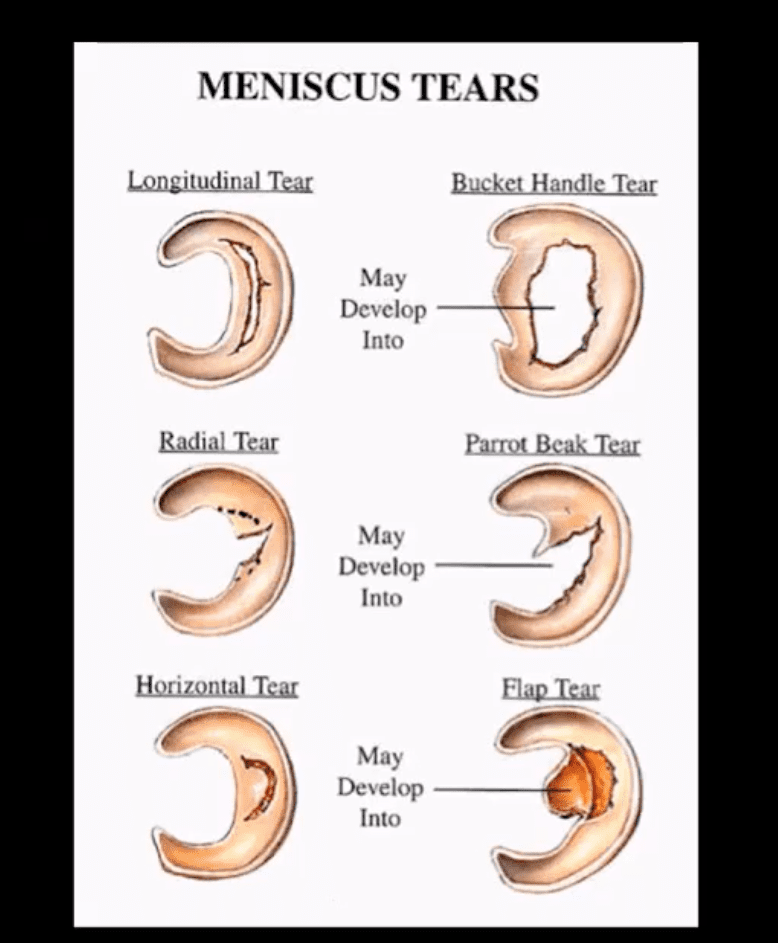
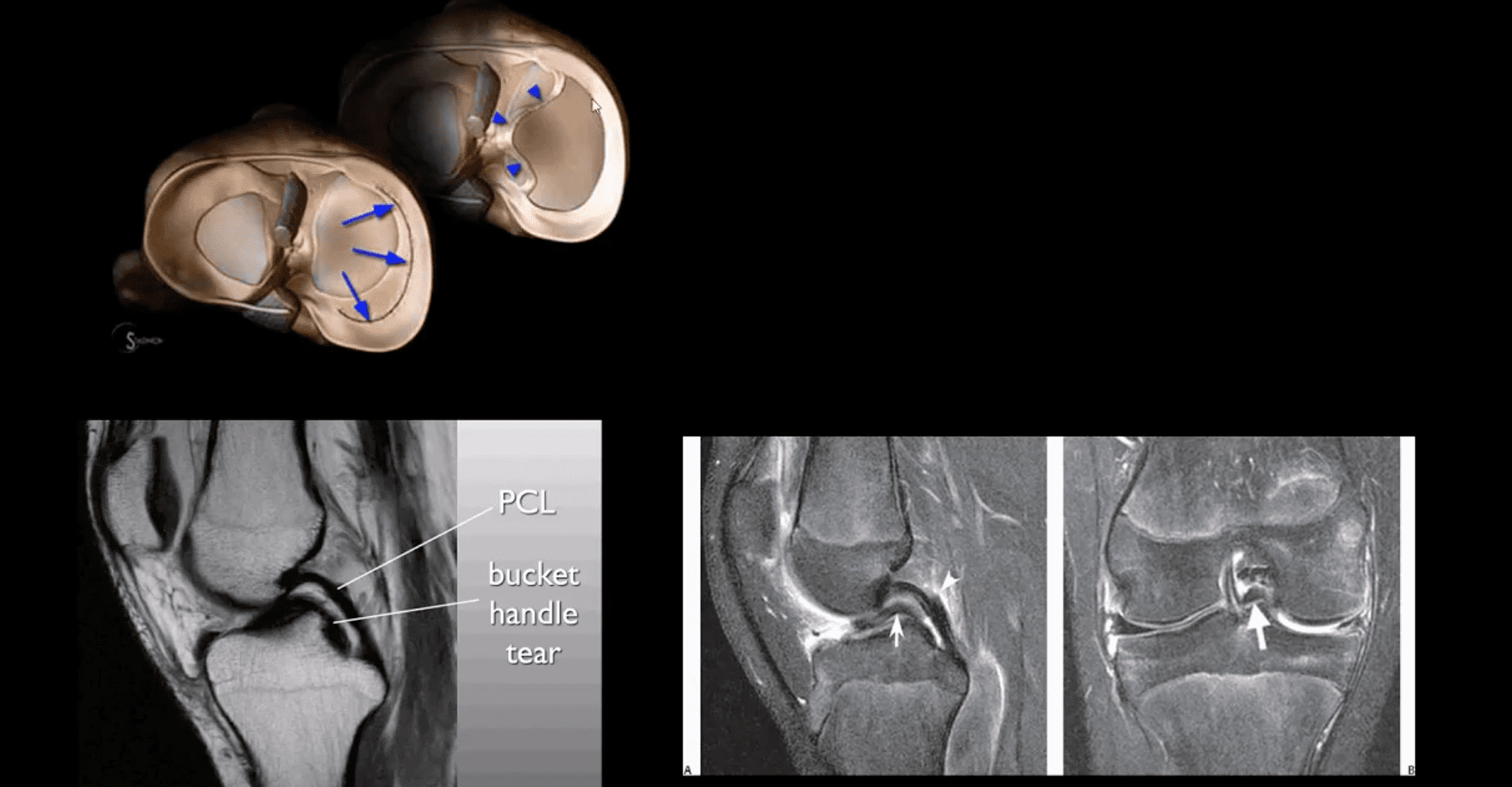
Types, location, and stability of tears are v. important during MRI Dx
Vertical/longitudinal tears especially occur in acute ACL tears. Some longitudinal tears found at the periphery or “red zone” may heal
Bucket handle tear: longitudinal tear in the inner edge that is deep and vertical extending through the long axis and may displace into a notch
Oblique/flap/parrot-beak are complex tears
Radial tear at 90-degree to plateau
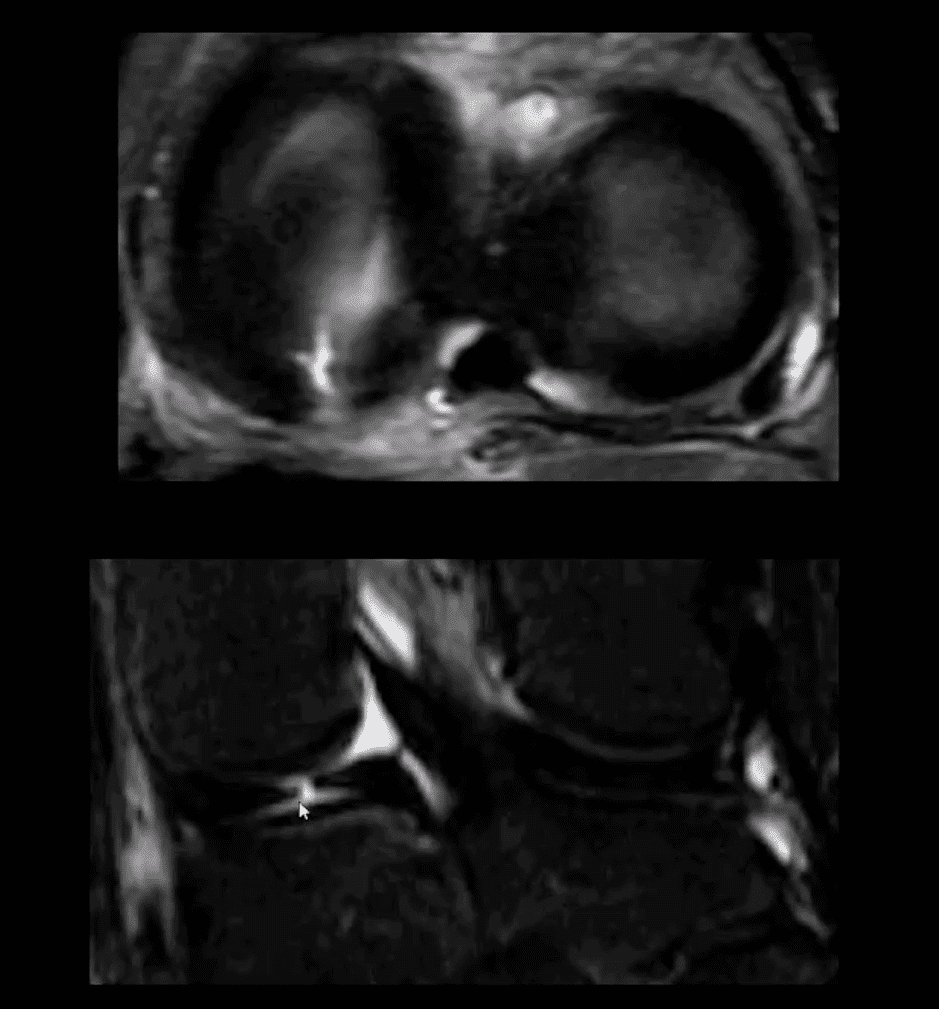
Axial T2
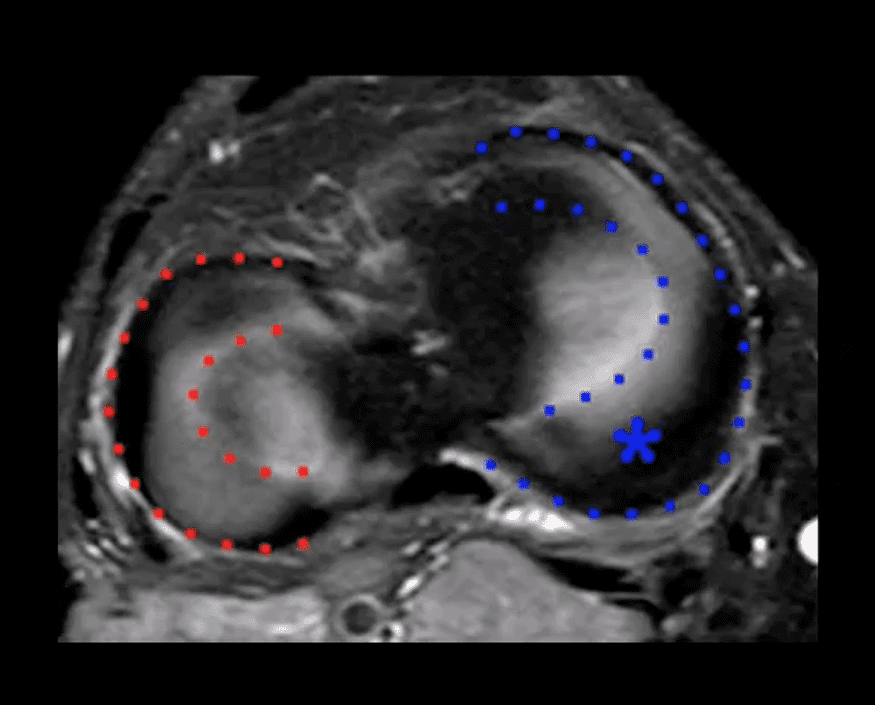
Axial T2 WI fat-sat and coronal STIR slices of the posterior horn of the medial meniscus.
Note a radial tear of the posterior horn of the medial meniscus near the meniscal root. This is potentially an unstable lesion requiring operative care
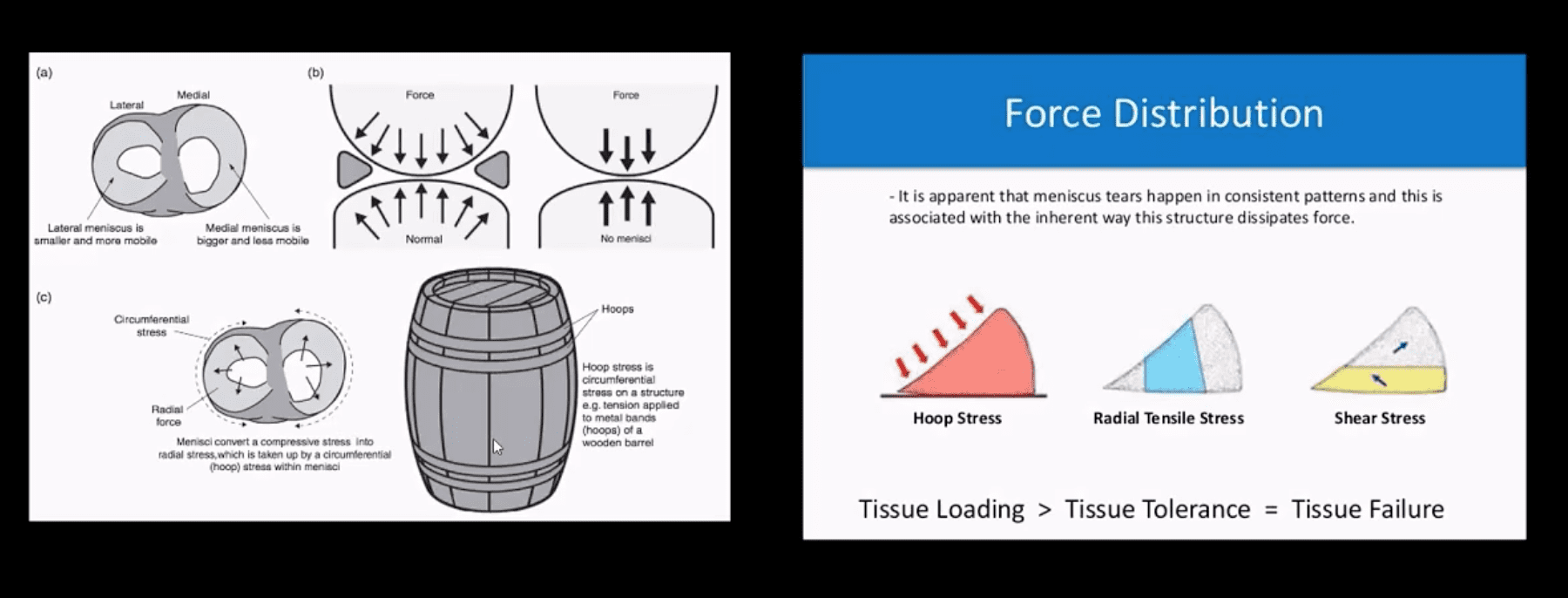
The meniscus, in this case, is unable to provide a “hoop-stress mechanism.”
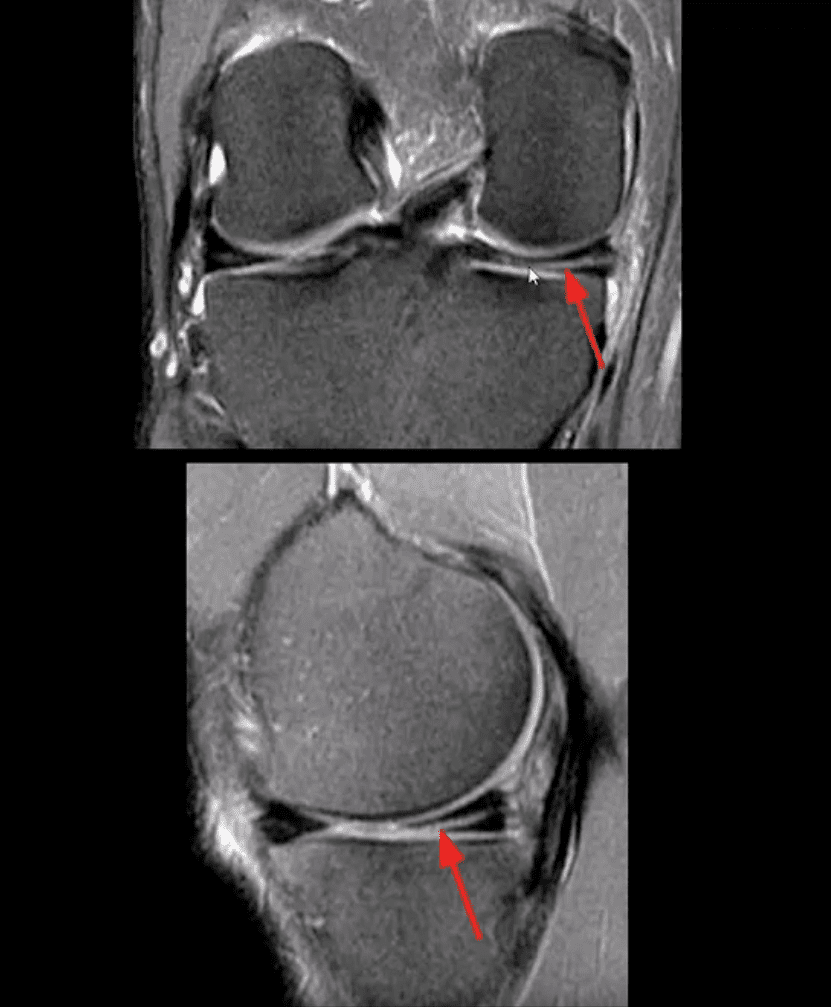
MRI Slices Coronal & Sagittal
Fat-sat coronal and sagittal proton density MRI slices revealing horizontal (cleavage) tear that is more typical in the aged meniscus
In some cases, when this tear does not contain a radial component, it may partially heal obviating the need for operative care
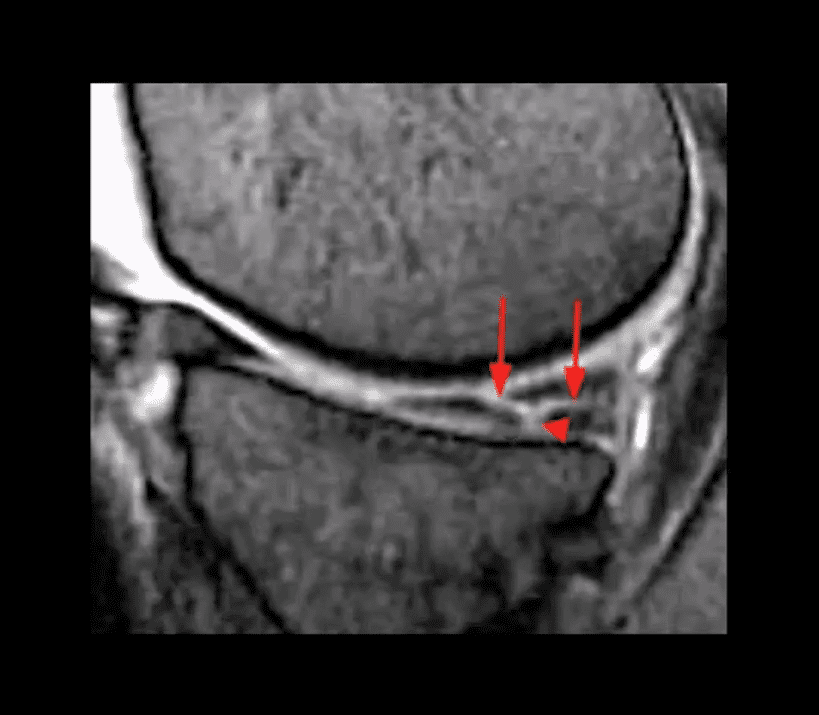
T2 w GRE Sagittal MRI Slice
Complex tear with a horizontal oblique and radial component.
This type of tear is very unstable and in most cases may need operative care
Bucket Handle Tear
Bucket handle tear are m/c in the medial meniscus esp. with acute ACL and MCL tear
MRI signs; double PCL sign on sagittal slices
Absent “bow-tie” sign and others
Most cases require operative care
DDx From Meniscal Degeneration
Occasionally meniscal tears need to be DDx from meniscal degeneration which may also appear bright (high signal) on fluid-sensitive MRI
The simplest rule is that if there is a true meniscal tear aka Grade 3 lesion, it always reaches/extends to the tibial plateau surface
The Role of MSK Ultrasound (US) in Knee Examination
MSK US of the knee permits high resolution and dynamic imaging of primarily superficial anatomy (tendons, bursae, capsular ligaments)
MSK US cannot adequately evaluate cruciate ligaments and the menisci in their entirety
Thus MR imaging remains modality of choice
Potential Pathologies Successfully Evaluated by MSK US
Patellar tendionosis/patellar tendon rupture
Quadriceps tendon tear
Prepatellar bursitis
Infrapatellar bursitis
Pes Anserine bursitis
Popliteal cyst (Baker cyst)
Inflammation/joint effusion with synovial thickening and hyperemia can be imaged with US (e.g., RA) especially with the addition of color power Doppler
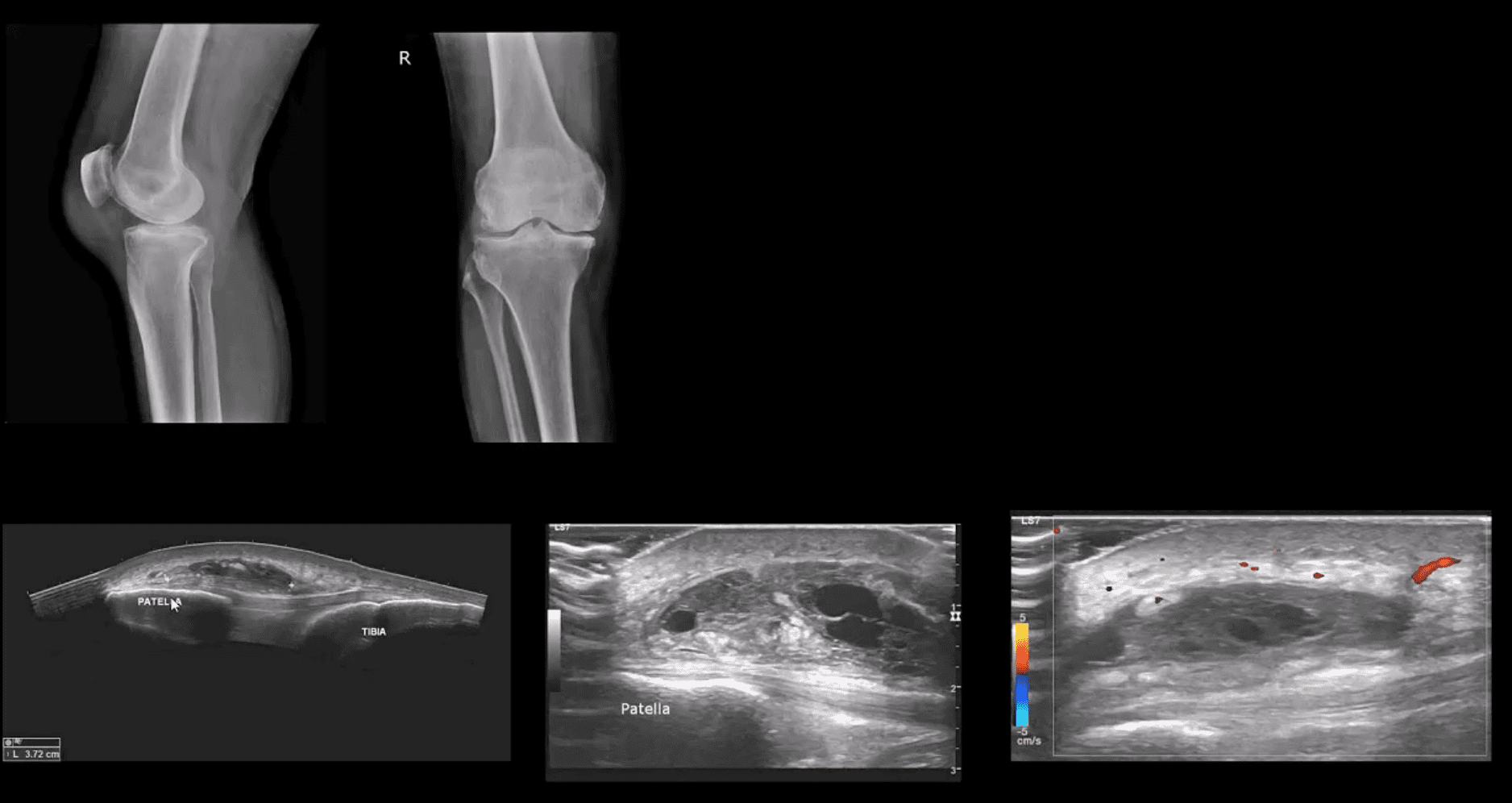
Patient Presented With Atraumatic Knee Pain & Swelling
Radiography revealed sizeable soft tissue density within the superficial pre-patella region along with mild-to-moderate OA
MSK US demonstrated large septated heterogeneous fluid collection with mild positive Doppler activity on the periphery indicating inflammation d/t Dx of Superficial pre-patella bursitis
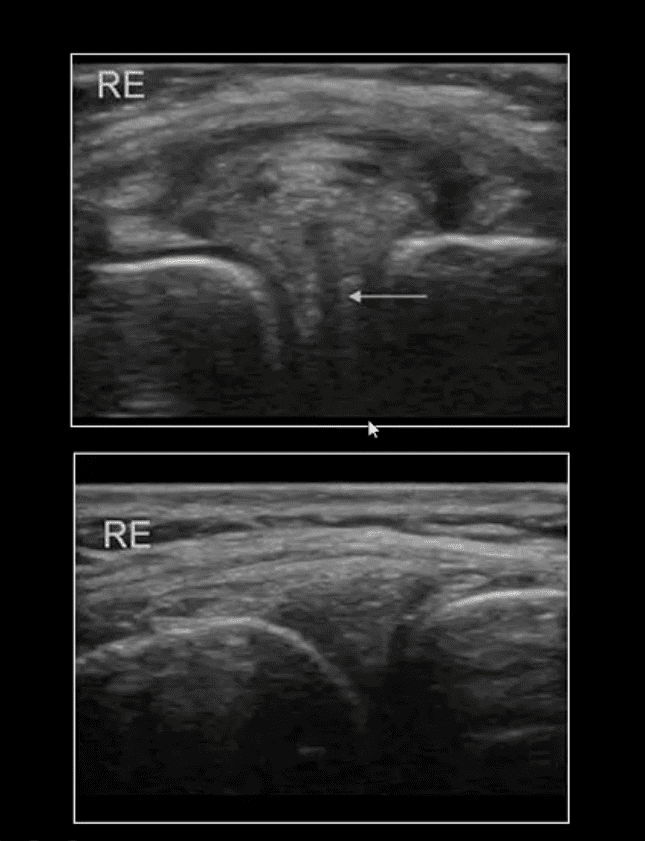
Long Axis US Images
Note normal lateral meniscus and fibers of LCL (above bottom image) compared to
Horizontal degenerative cleavage tear along with protrusion of lateral meniscus and LCL bulging (above top image)
Major limitation: unable to visualize the entire meniscus and the ACL/PCL
MRI referral is suggested
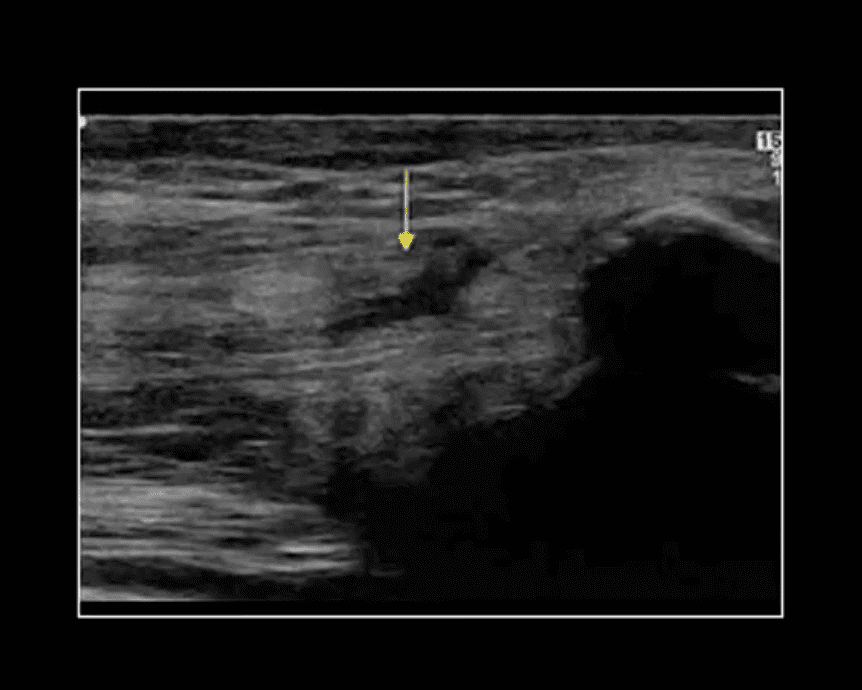
Rupture of Distal Tendon of Quadriceps
Note rupture of distal tendon of the Quadriceps muscle presented as fiber separation and fluid (hypo to anechoic) fluid collection within the substance of the tendon
Advantages of MSK US over MRI to evaluate superficial structures:
Dynamic imaging
Availability
Cost-effective
Patient’s preparation
Disadvantages: limited depth of structures, inability to evaluated bone and cartilage, etc.
Osteochondral Knee Injuries (OI)
osteochondral knee injuries can occur in children 10-15 y.o presented as Osteochondritis Dissecance (OCD) and in mature skeleton m/c following hyperextension and rotation trauma, particularly in ACL tear.
OCD-typically develops from repeated forces in immature bone and affects m/c postero-lateral portion of the medial femoral condyle.
OI in mature bone occurs m/c during ACL tears mainly affecting so-called terminal sulcus of the lateral femoral condyle at the junction of the weight-bearing portion opposed to tibial plateau and the part articulating with the patella
Osteochondral injuries may potentially damage the articular cartilage causing secondary OA. Thus need to be evaluated surgically
Imaging plays an important role and should begin with radiography often followed by MR imaging and orthopedic referral.
OCD Knee
95% associated with some trauma. Other etiology: ischemic bone necrosis especially in adults
Other common location for osteochondral injuries: elbow (capitellum), talus
1st step: radiography may detect osteochondral fragment potentially attached or detached
Location: a posterior-lateral aspect of the medial femoral condyle. Tunnel (intercondylar notch) view is crucial
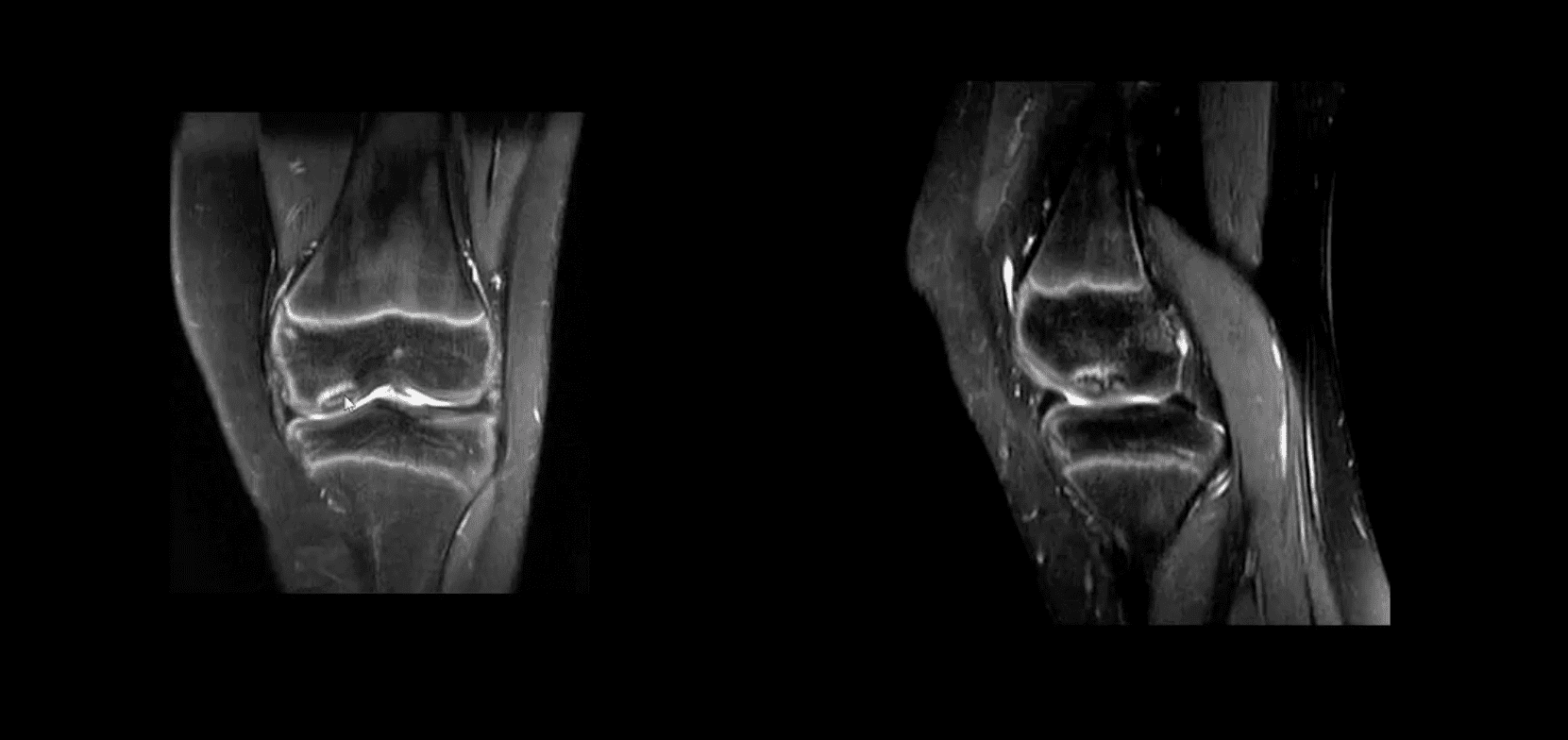
MRI: modality of choice >90% specificity and sensitivity. Crucial for further management. T1-low signal demarcating line with T2 high signal demarcating line that signifies detachment and unlikely healing. Refer to orthopedic surgeon
Management: stable lesion esp. in younger children>off weight-bearing-heals in 50-75%
Unstable lesion and older child or impending physeal closure>operative fixation.
Result from valgus or varus stress with or w/o axial loading
Associated with periarticular soft tissues injury
High-stress injury m/c due to jumps falls and axial loading, often with the splitting of the tibial plateau. Men>women. Patients are in their 30s
Low impact or no trauma in patients with osteoporosis d/t insufficiency fractures
Impaction injury is more common with depression of tibial plateau. Women>men. Patients are in their 70s
Lateral Tibial Plateau Fractures More Common
Functional anatomy plays a significant role
60% of weight bearing is by the medial plateau
The medial plateau is more concave
Lateral plateau is slightly higher and more convex. Valgus stress impacts lateral plateau.
Tibial plateau fractures considered intra-articular and prone to delayed healing, non-union, meniscal injury (m/c lateral) ACL tear, secondary OA. Other complications: compartment syndrome, vascular injury.
Management: operative in many cases especially if >3-mm step-off at the plateau
If medial plateau or bicondylar Fxs present, ORIF will be required.
Imaging Plays A Crucial Role
Begins with x-radiography. X-radiography may not reveal the complexity and extent of this injury.
CT scanning w/o contrast will further delineate fracture complexity and pre-operative planning
MR imaging may be considered to evaluate for internal derangement: meniscal, ACL injuries.
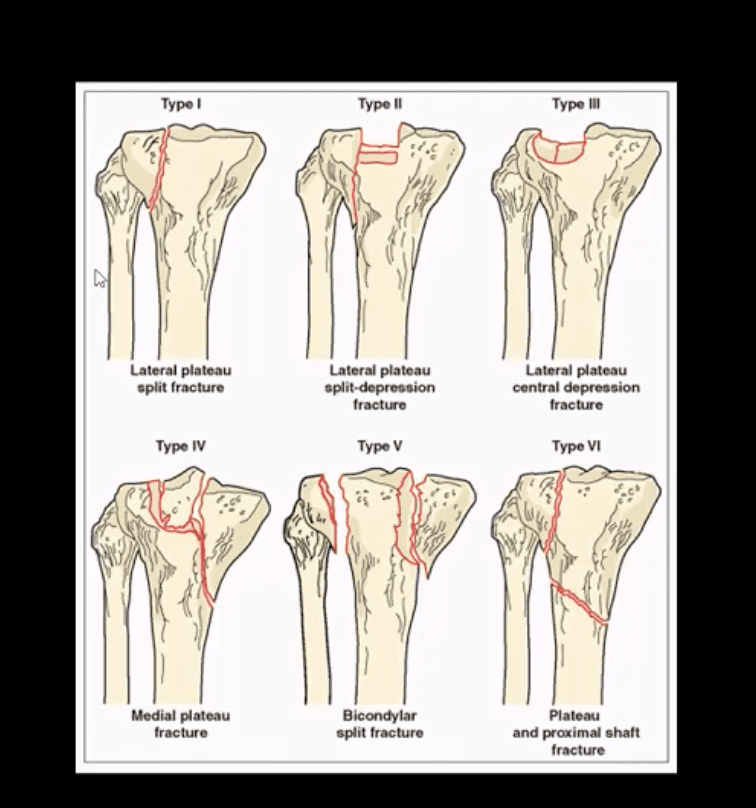
Shatzke classification may help to evaluate the complexity of this injury
Key Diagnostic Sign
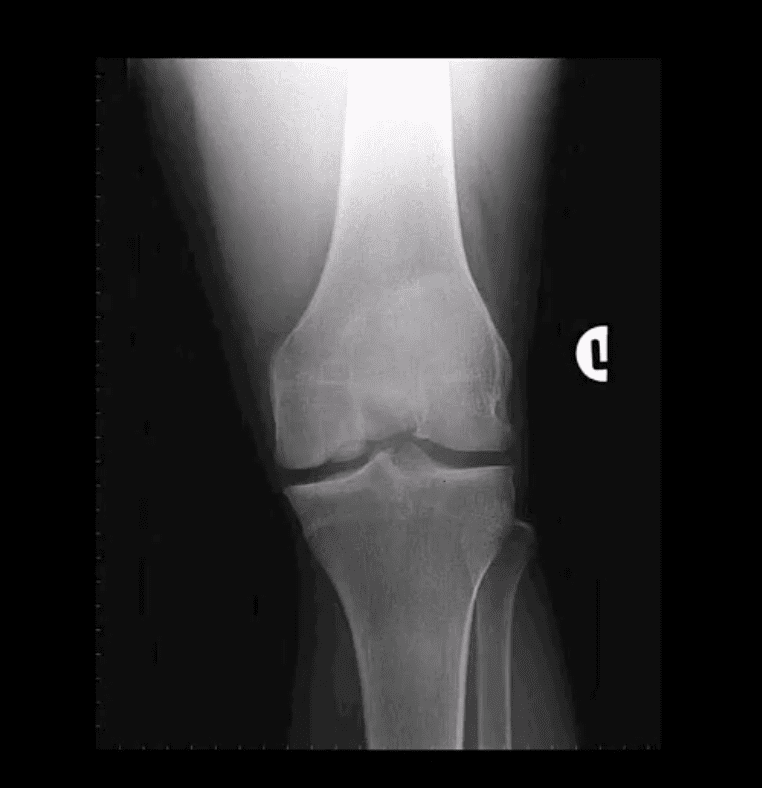
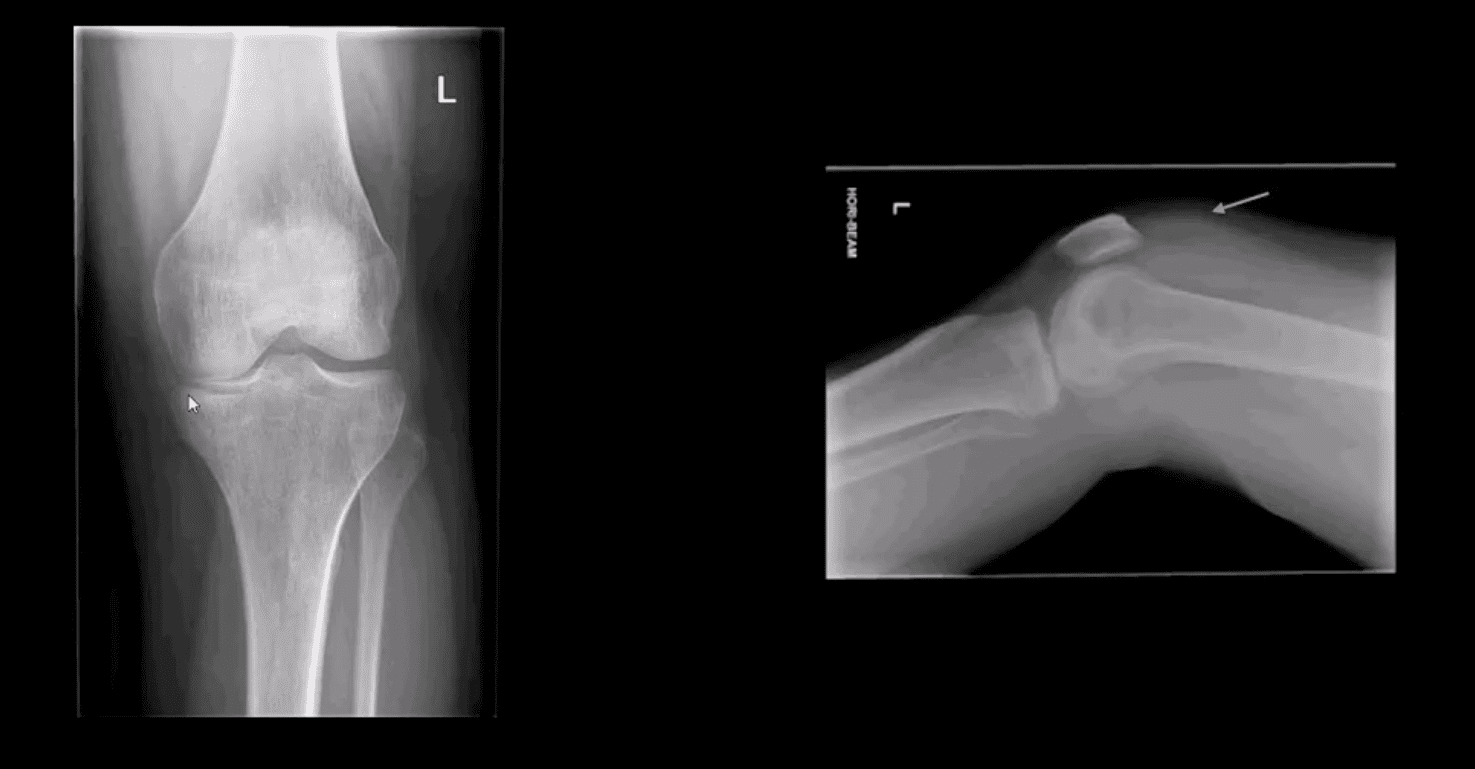
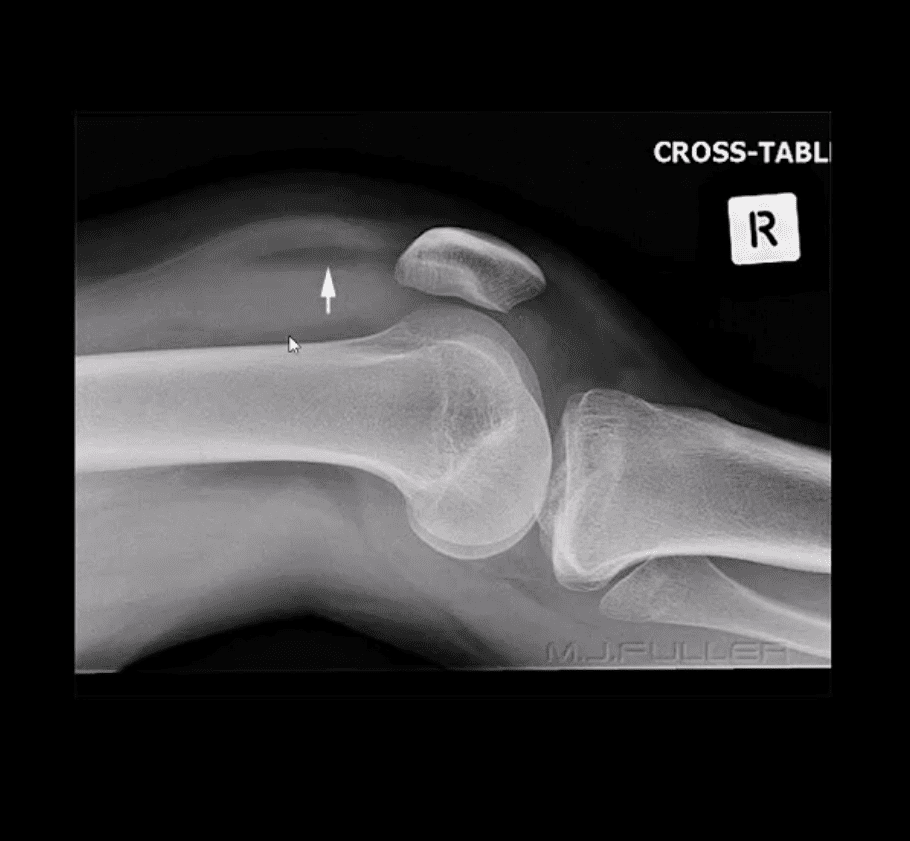
AP and lateral horizontal beam (cross table) left knee radiograph. Note subtle depression of the lateral plateau manifested by the lateral plateau appearing at the same level or lower as the medial. A critical diagnostic sign is the presence of fat-blood-interphase or FBI sign on cross-table lateral (above arrow) indicating intra-articular knee fracture
Lipohemarthorosis aka FBI Sign
Can be detected by radiography, CT or MR imaging
FBI sign is a reliable secondary radiographic sign of intra-articular knee fractures, regardless of how small they are
Mechanism: fracture results with acute hemarthrosis
Hemarthrosis will also occur w/o Fx. However, Fx will result with a fatty marrow being released into the joint cavity. Fat is a less dense medium (lighter) and will appear on the top of the hemorrhage if the patient is held in the supine position for 5-10-minutes before the cross-table radiograph is taken
FBI sign confirms the intra-articular Fx.
ACL/PCL, meniscal tears will not result in FBI sign
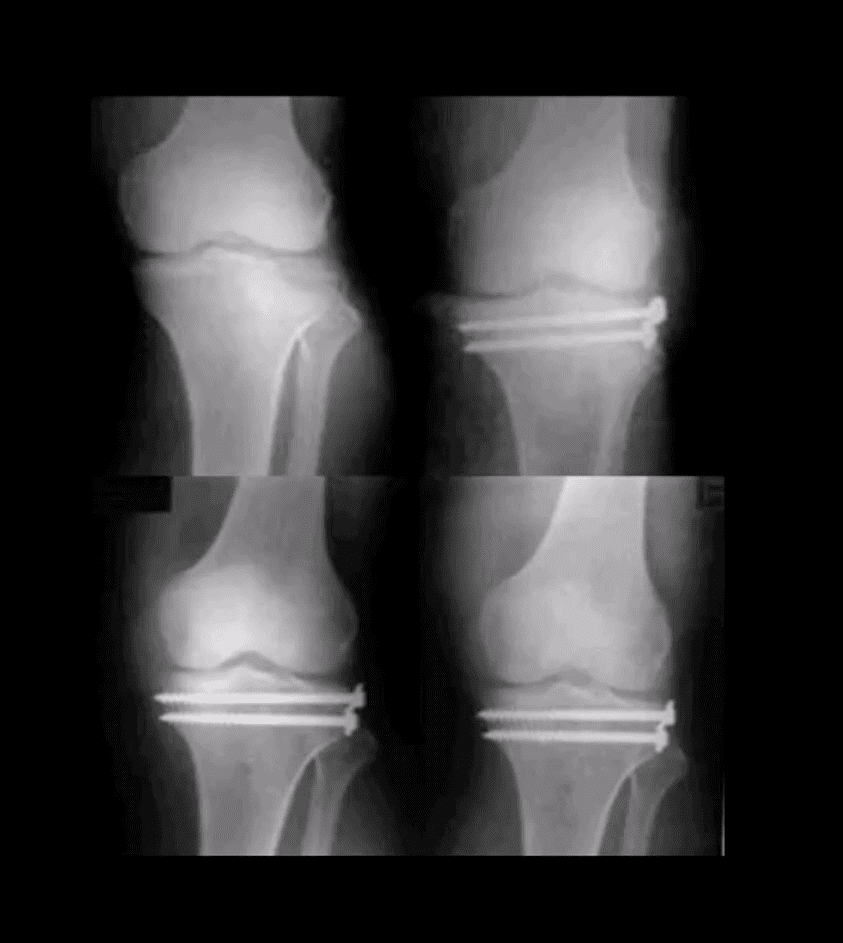
Lateral Tibial Plateau Fx
Lateral tibial plateau Fx that was managed operatively
Most common complication: premature secondary OA
More complex injuries may result in more extensive operative care
Knee Internal Derangement
Acute or chronic injuries of meniscal fibrocartilages and ligamentous restraints
Tears of the ACL and posterior horn of the medial meniscus are the most common
Acute ACL tears, however, often result with a lateral meniscus tear
Acute ACL tear may occur as a combined injury of the ACL, MCL, and medial meniscus
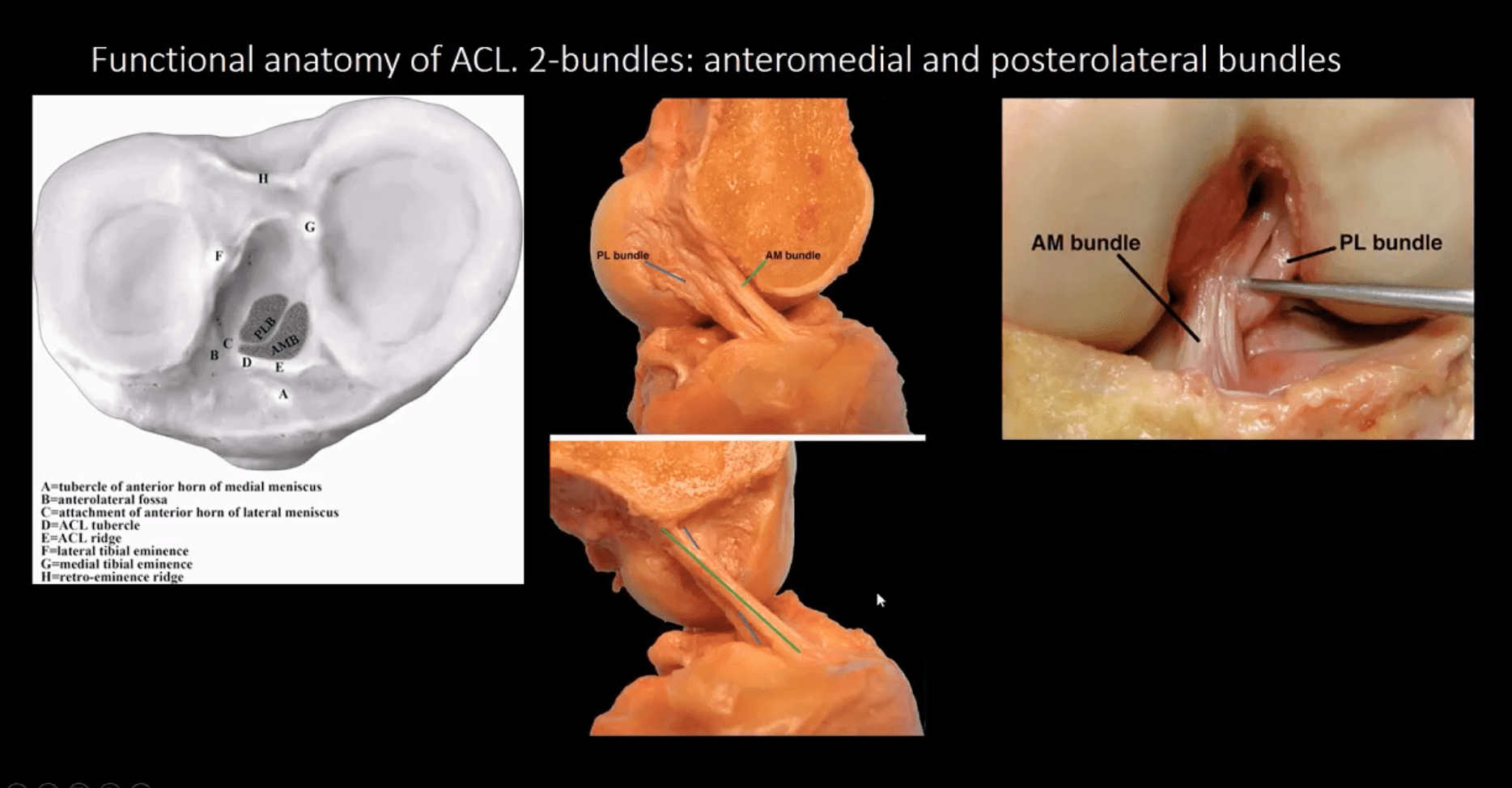
Functional anatomy: ACL prevents anterior displacement of the tibia and secondary varus stress
MCL functions together with ACL in resisting external rotation of the tibia especially when the foot is planted (closed chain position)
MCL is firmly attached to the medial meniscus, explaining the classic triad of ACL, MCL and medial meniscal tear (O’Donahue terrible triad)
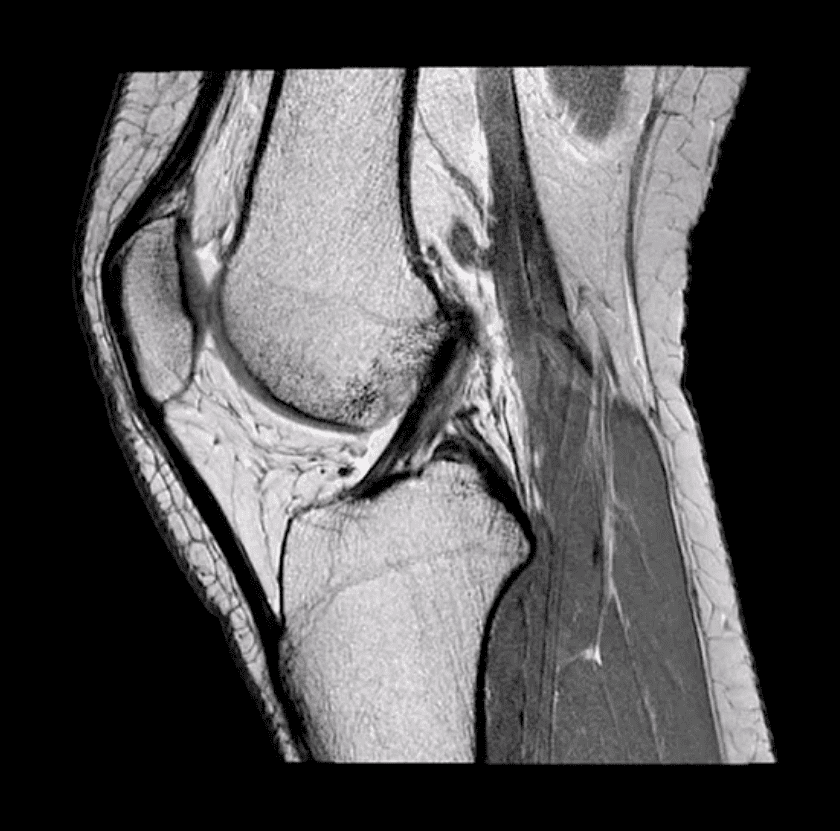
Cruciate ligaments (ACL/PCL) are intra-articular but extra-synovial. Less likely to be torn in closed pack position (full extension). When all articular facets of tibia and femur are in full contact, the ACL/PCL are at least tension and stable
When the knee is flexed 20-30-degrees or more ACL is taut and remains unstable
ACL is a significant mechanoreceptor that feeds the info to CNS about the joint position. Thus the majority of previous ACL tears will lead to some degree of knee instability
Functional Anatomy of ACL
Diagnosis of ACL Tear
Diagnosis of ACL tear requires MR imaging
Concerns exist of not only ligamentous injuries but injuries to the articular cartilage and menisci.
Most vendors will perform at least: one T1 WI in coronal or sagittal planes. Sagittal and coronal Proton-density slices to evaluate cartilaginous structures. Fast spin-echo sagittal, axial and coronal T2 fat-saturated or sagittal and coronal STIR images are crucial to demonstrate edema within the substance of knee ligaments
ACL is aligned along the Blumensaat line or oblique line corresponding the intercondylar roof of Femoral condyles. Lack of such alignment by the ACL is significant for ACL tear
Imaging Dx of Internal Derangement
MRI shows 78-100% sensitivity and 78-100% specificity
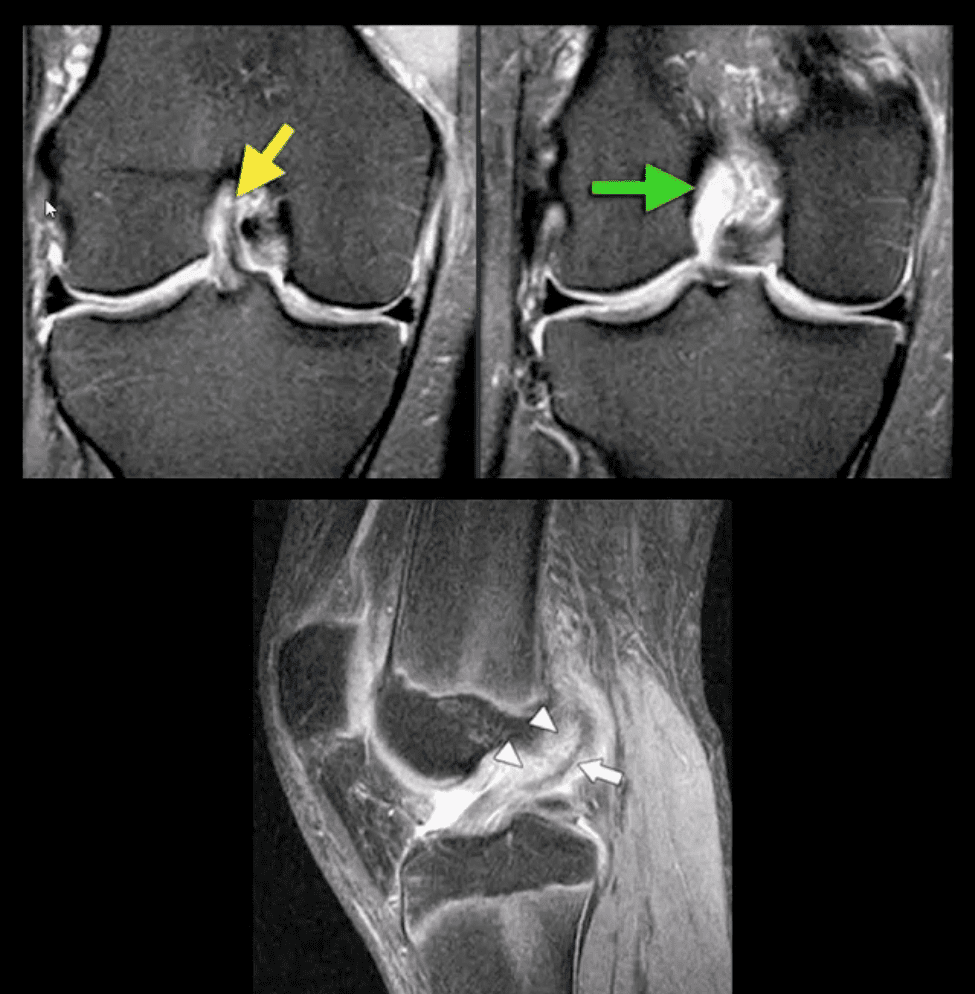
Primary signs of ACL tear: non-visualization of ACL (above green arrow), loss of its axis along the Blumensaat line (above triangle heads), wavy appearance and substance tear (above white arrow) or edema and cloud-like indistinctness (above yellow arrow)
Reliable Secondary Signs of ACL Tear
May be observed on the radiographs and MRI
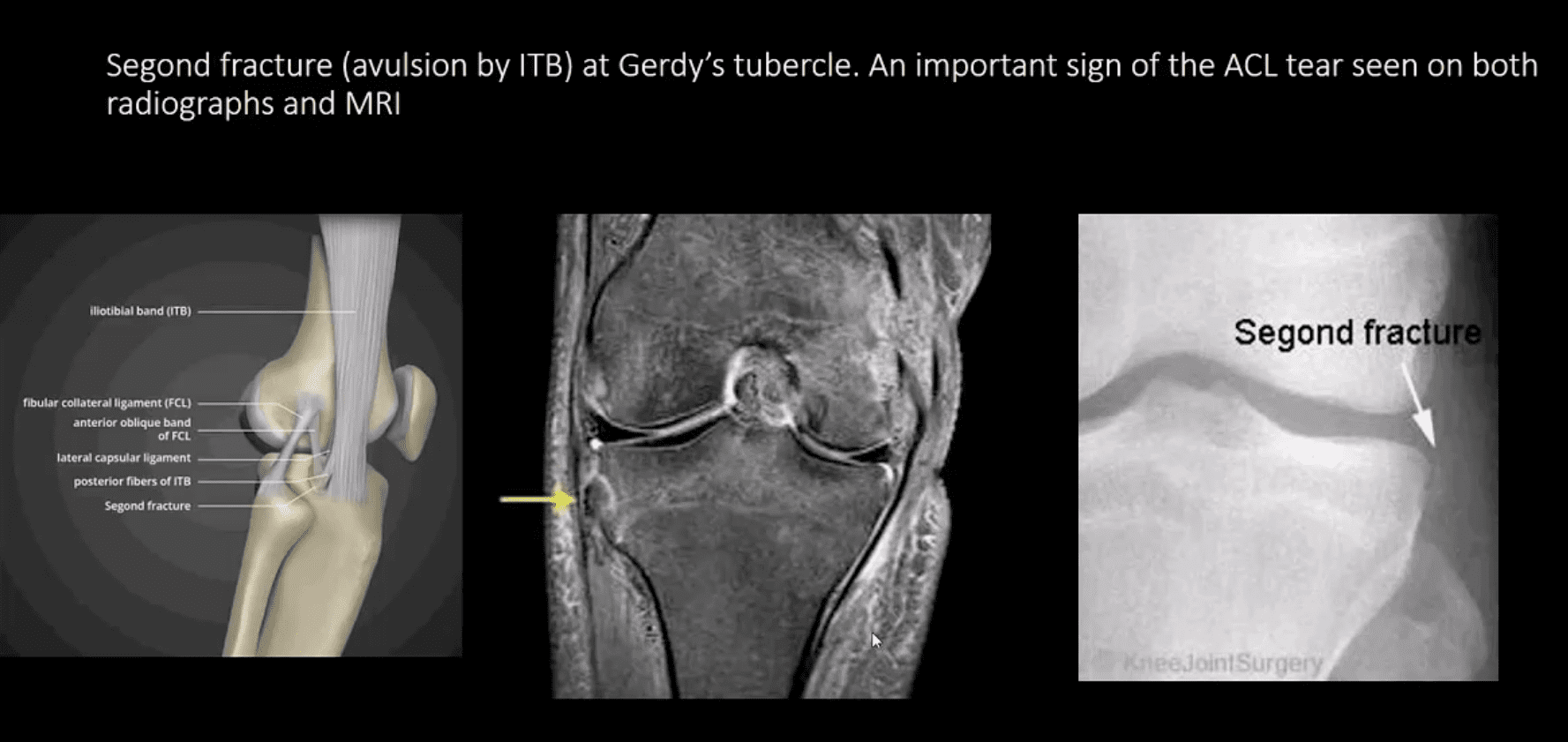
Segond avulsion fracture (80% specificity for ACL tear) (next slide)
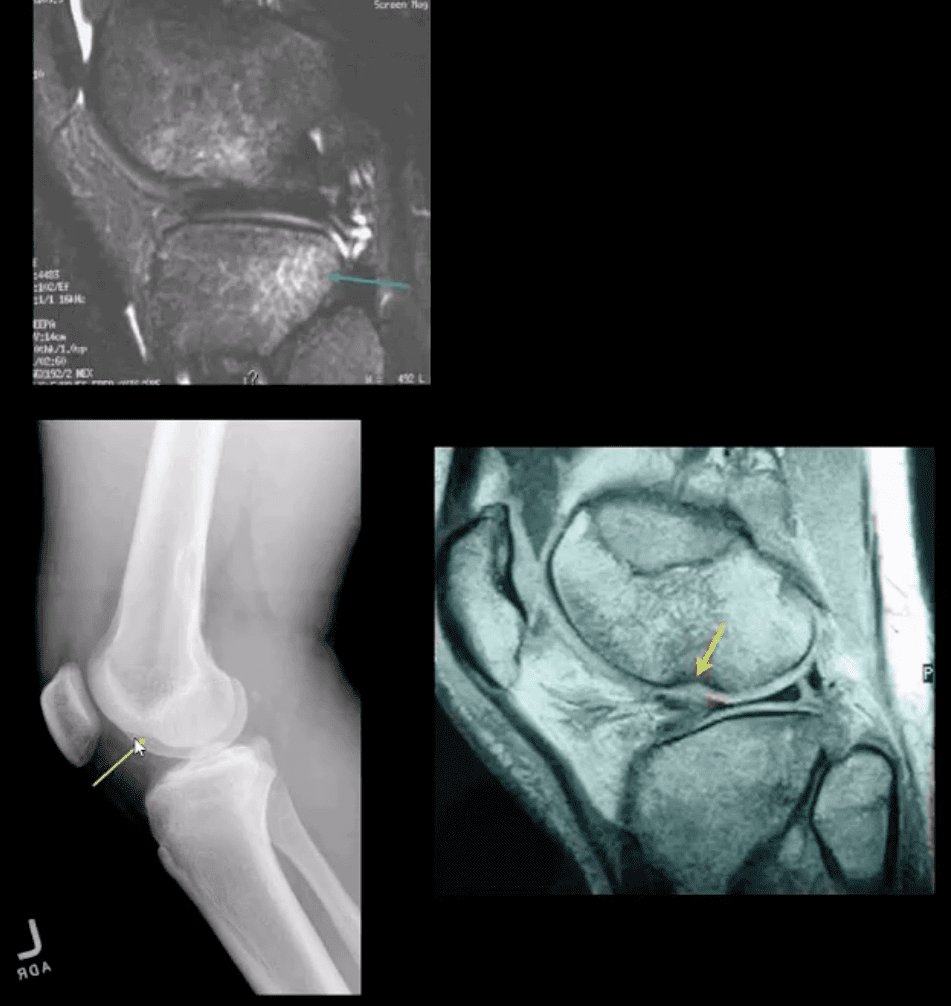
Deep femoral notch sign indicating osteochondral fracture (above bottom images) and
Pivot -shift bone marrow edema in the posterolateral tibial condyle d/t external rotation and often valgus impact by the lateral femoral condyles (above top image)
Segond Fracture (Avulsion by ITB)
Segond fracture at Gerdy’s tubercle. A vital sign of the ACL tear seen on both radiographs and MRI
Management of ACL Tears
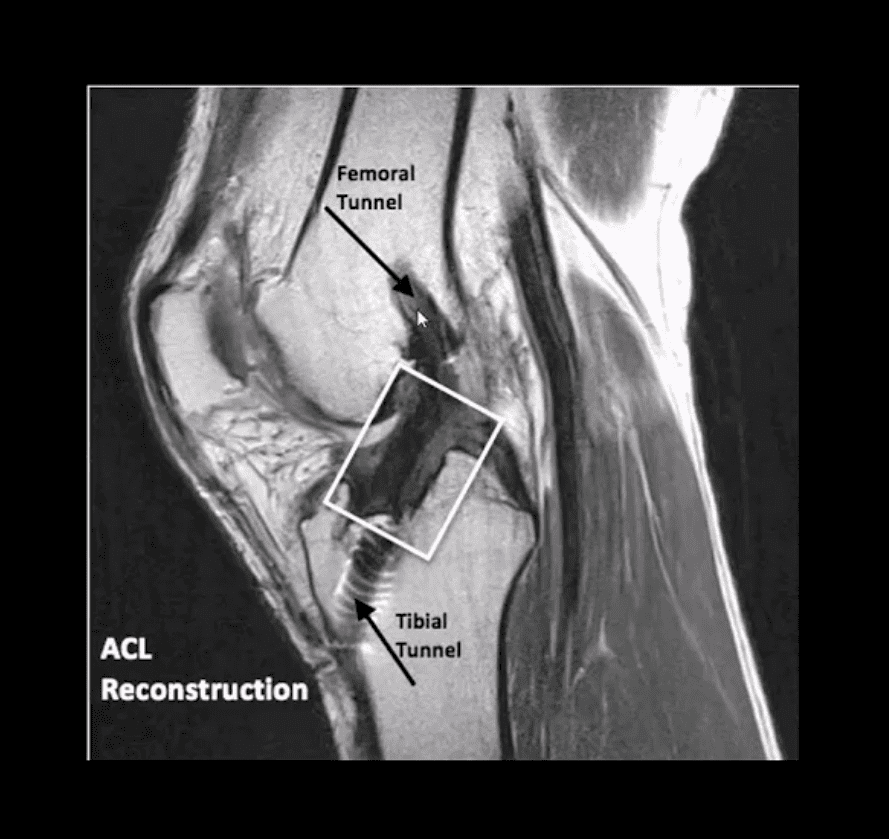
In acute cases, usually operative using cadaveric or autograft (patella ligament or hamstring) ACL reconstruction
Complications: graft tear, instability and premature DJD, joint stiffness d/t lack of postoperative rehab or gaft shortening. More rare, infection, a formation of intraosseous synovial cysts, etc.
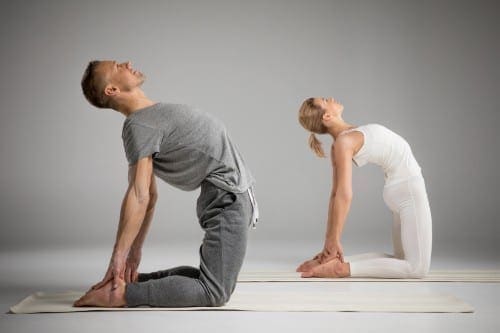
Yoga has long been touted as a healing activity that extends beyond its known fitness benefits. It can help alleviate depression, relieve stress, and decrease anxiety as well as tighten and tone the body.
A 2016 study by Yoga Alliance and Yoga Journal shows that the more than 20 million people who practice yoga spend more than $10 billion on related classes and products. Chiropractors have picked up on the benefits of yoga and are recommending it to their patients. Why, because it helps to improve flexibility as well as spinal health.
Chiropractic and the spine�s role in the body.
Chiropractic is primarily intended to align the spine and balance the body. The spine is the primary support for the body. It houses most of the central nervous system and provides pathways for neural impulses to move throughout the body.
When the spine is out of alignment, it can affect how the central nervous system functions. It can also affect flexibility and even overall mobility as well as cause pain and stiffness.
Chiropractic treatment brings the spine back into alignment. It helps to balance the body and treat injuries as well as help with the changes the aging body experiences.
One of the best-known uses for chiropractic is to treat pain. It is a medication free, non-invasive treatment for chronic pain, sports-related injuries, and even automobile accidents. Many patients had reported finding relief with chiropractic when nothing else worked.
Combining yoga with chiropractic increases the effectiveness of the treatment while strengthening the body and making it better able to respond to it. It is the perfect complement to chiropractic care, and many patients are discovering tremendous health benefits from this winning, healthy combination.
What is Yoga?
In its purest form, it is an ascetic and spiritual discipline that comes from Hindu culture. It involves simple meditation, conscious breathing or breath control, and performing certain body postures.
While an ancient practice long used for spiritual and emotional healing as well as physical wellness, yoga has been adopted in western culture and widely accepted as a form of fitness as well as a therapeutic practice used for relaxation and overall good health. It focuses on inward healing for outward results.
People who regularly practice find they are more centered, handle stress better, and aren�t as likely to experience depression and anxiety. They also are more flexible, have better mobility, and have stronger leaner bodies.
What happens when you combine yoga and chiropractic care?
Because yoga helps to lower blood pressure, decrease stress, and strengthen the body�s core, it is perfect therapy for the chiropractic patient. While chiropractic care is working to align the spine and balance the body, yoga is helping to strengthen the muscles surrounding the spine, providing better support. The numerous health benefits, particularly regarding blood flow and relaxation help to increase chiropractic�s effectiveness as a pain management tool.
Patients who combine yoga and chiropractic will also often find that they see the effects of both treatments much faster than they would if they were only doing one or the other. Both chiropractic and yoga help with balance, flexibility, and mobility, but they come at it from somewhat different approaches. The benefit of this is that it provides a more balanced, well-rounded treatment in these areas as one supports the other.
Yoga also tones and tightens the body, preparing it for much more profound levels of healing, cleansing and releasing the body of tensions that may have been held�in for years. It also works to stretch muscles that have been restricted for years, or even for the patient�s entire life. It prepares the body to accept the full benefits of chiropractic and respond faster and more thoroughly.
Everyone knows that exercise is great for overall wellness, better health, and a healthy body. Many chiropractors will often recommend regular exercise to their patients who need to lose weight, want better mobility, or are seeking relief from depression. Some chiropractors are turning to Pilates to help their patients get stronger, more flexible, and more mobile.
What is Pilates?
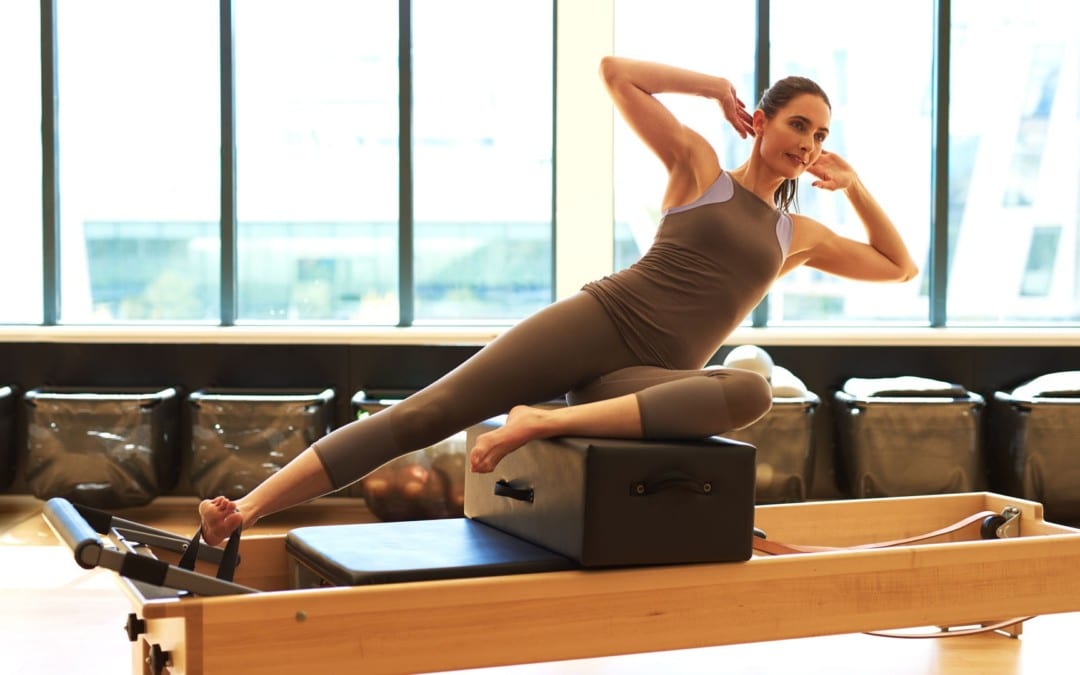
In the early 20th century Joseph Pilates developed the exercise program to help World War I soldiers improve their physical fitness. It was used to rehabilitate patients who had been injured. By incorporating resistance, stretching, and target strengthening exercise, Pilates uses resistance bands, individual machines, and floor work to reshape and rehabilitate the body. Dancers, gymnasts, athletes, and celebrities use Pilates to stay in shape. However, anyone can do it for a healthier, more supple spine.
Care of the spine is at the core of Pilates. By keeping it in a neutral, or natural, position, this exercise can prevent back pain as well as help ease it. When done correctly, Pilates can:
Improve muscle control and movement efficiency through mental focus.
Make you more mindful of your body�s position, specifically, remaining aware of the spine�s position and keeping it neutral
Improve centering and mental focus through special, breathing techniques
Support and improve posture by strengthening the abdominal and back muscles.
Benefits of Pilates for Chiropractic Patients
The benefits of Pilates tremendous, but for chiropractic patients, it is even more so. By regularly incorporating Pilates into your exercise routine, you can enjoy these incredible benefits.
You can adapt Pilates to your fitness level and needs. Whether you are just starting a fitness program or you�ve been working out for years, Pilates can be tailored to your fitness needs and level.
It helps you strengthen your core. The deep muscles of your abdomen, back, and pelvic floor make up the core muscles of your body. Many of the movements focus on these muscles, making a body that is strong and the frame is supported.
Allows you to strengthen your muscles without bulking up. With Pilates your muscles get strong, but it also stretches the muscles so that they are lean and long. You will look toned and tight but not bulky and muscular.
It focuses on whole body fitness. Many types of exercise only work certain parts of the body, but this focuses on entire body fitness. It works every part of the body so that the muscle development is balanced.
It helps to improve your posture. It strengthens your body and helps to keep your spine in proper alignment due to a strong core. As a result, your posture naturally improves. By incorporating it into your exercise routine, you will find yourself standing taller, stronger, and more graceful.
You can become more connected through your mind and body by increased awareness. Pilates engages your mind and increases body awareness. It unites the mind, body, and spirit for complete coordination. Each movement is done with full attention.
It improves your flexibility. Pilates is a gentle but powerful exercise that works to safely stretch the muscles, making them longer, and increasing the range of motion in the joints.
It can protect you from injuries. By strengthening your body, Pilates can help protect you against injury. It conditions your whole body so that your muscles and strength are balanced. This reduces your risk of injury.
You get a natural energy boost. Just like with any exercise, it will give you an energy boost. However, it is increased even more thanks to the focused breathing and increase in circulation stimulating the muscles and spine.
It can help you lose weight and attain a lean, long, healthy body. It tones and strengthens the body, and if you do it regularly, it will reshape you. The body is more muscular and more balanced. It also helps you move with more grace and ease.
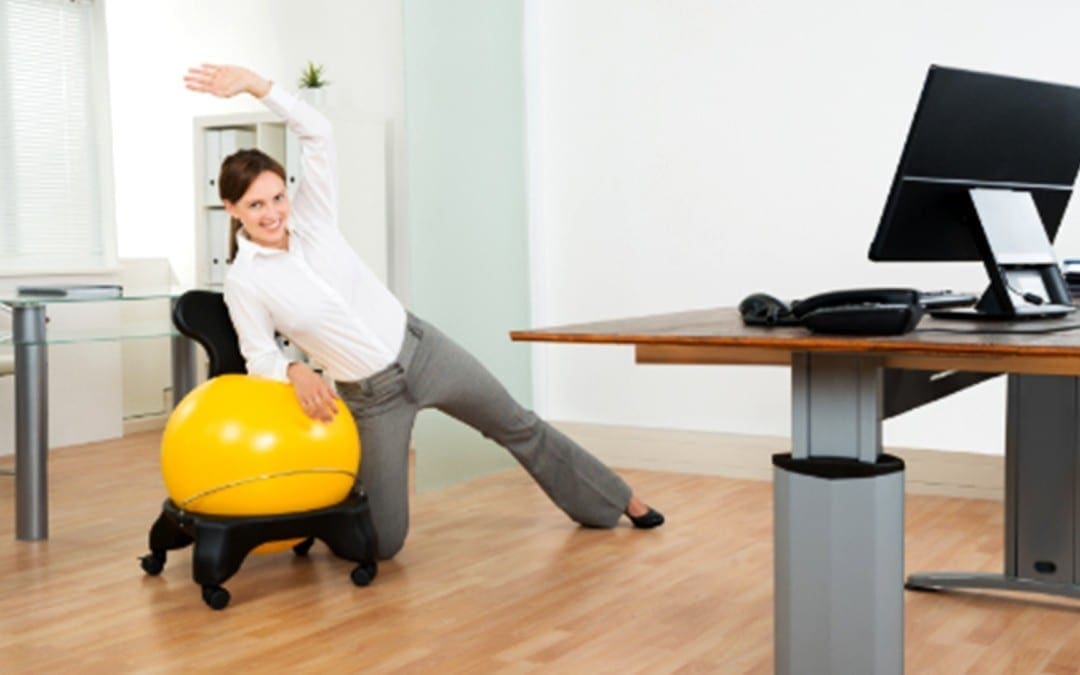
If you sit behind a desk all day with little or no activity, you could be compromising your physical health, mental health, and brain health which could impact your productivity at work. From a physical standpoint, it isn�t healthy to remain in one position for too long. It can lead to various health conditions including diabetes, heart disease, and even cancer. Experts advise movement. By getting up and walking around every hour or so or do exercises at your desk.
Healthy brain function can�be impacted by inactivity if you sit at work without moving for long periods of time your brain could suffer. The lack of activity could cause it to enter into a state of slumber which can lead to a decrease in brain processing speed and short-term memory loss.
It can also impact a person�s ability to learn or retain new information. It is so important to create an organizational culture that encourages moving around as part of their workday.
Create written policies that encourage and advocate movement during work hours. Incorporate moving workstations, moving meetings, flexible scheduling, more breaks when meetings run long, and a movement-friendly dress code.
Provide information and training to all employees and leadership underlining the importance of the policies and explaining the importance of movement as well as what they can do to support the initiative.
Places
Create workspaces that are conducive to movement, adjusting workstations so that they encourage active movement and incorporating dynamic change into current processes and workflows while minimizing the time employees spend sitting.
Seek out software and applications that encourage users to stretch or get up and move while they are working. Make stairwells more accessible and appealing, improve common areas, and promote collaboration that requires moving to various workstations or common areas.
People
Identify employees who are good role models for movement and train them for leadership roles so that they can encourage other employees to move a part of their workday. Train them in the policies regarding movement and task them with helping to create a culture of health and mobility within the organization.
Organize groups to walk during breaks or meet in common areas for light stretching and other types of movement. Sponsor contests and competitions with prizes for employees who achieve set goals.
Permission
Educate all employees and all levels of management or leadership on the benefits of movement and how it can positively impact personal production and performance as well as organizational outcomes. Stress that moving during the work day should become a regular activity and must be welcomed and allowed. Emphasize that it is the task of all employees to make a culture of movement the norm as opposed to the exception.
The benefits of moving around in the workplace extend far beyond healthier employees and increased production. Employees perceive themselves as valuable to the organization and morale is increased. Employee engagement�improves�on the job, and they invest more in their work as opposed to just doing a job. They are happier, empowered, and more productive at work and take more of an active role in business outcomes as well as their health.
Of course, employees will also enjoy individual benefits such as increased blood flow, as well as improved problem solving, better alertness, and enhanced creativity. A workplace that incorporates movement into its culture is a healthier, happier place to work with more robust, and more satisfied employees. You can�t afford to not implement this simple, effective strategy into your own organizational culture.
IFM's Find A Practitioner tool is the largest referral network in Functional Medicine, created to help patients locate Functional Medicine practitioners anywhere in the world. IFM Certified Practitioners are listed first in the search results, given their extensive education in Functional Medicine