Any fitness enthusiast will tell you that what you eat and drink before, during and after a workout plays a key role in how your body performs, recovers and prepares for the next bout of exercise. And whether you�re hitting it hard in the gym, making an effort to add miles to your weekly run, or taking your bike on a long-distance tour, paying attention to when you feed and hydrate your body can be just as important as the workout itself.
The Importance of Post-Workout Nutrition
Post-workout nutrition has three specific purposes: replenish glycogen, decrease protein breakdown and increase protein synthesis. If done correctly, a good post-workout nutrition protocol can help improve recovery, lead to less muscle soreness, increase the body�s ability to build muscle and improve immune function.
If you�ve been around the fitness industry for any length to time, you�re bound to have heard people talking about the �window of opportunity.� What they are referring to is a �window� of time, when your muscles are primed and ready to accept nutrients that stimulate muscle repair, muscle growth, and muscle strength. Sounds serious, right? Well, it really does matter, especially if you want to recover and be ready for your next bout of exercise.
According to Cynthia Sass, RD, CSSD, sports nutritionist and author of Slim Down Now: Shed Pounds and Inches With Pulses-The New Superfood, �Exercise puts stress on your muscles, joints, and bones, and your body uses up nutrients during workouts; so post-workout foods help to put back what you�ve lost, and provide the raw materials needed for repair and healing,� she says. �In fact, it�s the recovery from exercise that really allows you to see results in terms of building strength, endurance, and lean muscle tissue,� adds Sass.
Not recovering properly can leave you weaker as you go into your next workout and up your risk of injury. The minute you end your workout, this window opens. And while the research is varied, some experts say it�s the first 30 minutes that are the most critical, while others claim this window can last up to two hours post-workout. It is during this time that feeding your body the proper nutrients, will help it recover and grow.
What is Post-Workout Nutrition?
Experts recommend that as soon as possible post workout, get carbs and protein into your body. �Ideally, you want to have a recovery meal, snack, or beverage within one hour of the end of the workout,� says Sass. �That�s when your body is primed to use the raw materials from food for repair and healing,� she adds.
Focus on quality carbohydrates to refuel your glycogen stores in preparation for your next workout while taking in protein to help repair and rebuild your muscles. As far as what to eat based on the activity performed, Sass says that different nutrients are not needed for different workouts, rather, different amounts (depending on the length and intensity of the workout) is what matters. �Longer, more intense workouts put more wear and tear on the body, so it makes sense that larger portions are needed to support recovery compared to shorter, less intense training,� she explains.
Sass also says how much you eat after a workout depends on a lot of factors such as: gender, age, height, the length, and intensity of the workout. �But in general, it�s important for more intense workouts to include vegetables, lean protein, good fat, healthy carbs, and natural seasonings, like fresh or dried herbs and spices,� she explains.
And while the options for post-workout meals is endless, Sass has a few favorites she recommends to clients. For people who need a �meal on the go,� a smoothie made with kale, pea protein powder, avocado, fruit, and fresh ginger root, is a great option. And if you�re in the mood for something warm, Sass loves making a stir-fry made with a variety of veggies, organic chicken, sliced almonds, citrus fruit, black rice, ginger, garlic, and chili pepper. But if cold and crisp is what you�re craving, you might want to try a garden salad topped with salmon, avocado, extra virgin olive-oil based vinaigrette made with balsamic and herbs, and white beans, lentils, or chickpeas.
The scope of our information is limited to chiropractic and spinal injuries and conditions. To discuss options on the subject matter, please feel free to ask Dr. Jimenez or contact us at 915-850-0900 .
Additional Topics: Chiropractic and Athletic Performance
Chiropractic care is a popular, alternative treatment option which focuses on the diagnosis, treatment and prevention of injuries and/or conditions associated to the musculoskeletal and nervous system, primarily the spine. Many athletes, and civilians alike, seek chiropractic care to restore their natural health and wellness, however, chiropractic has been demonstrated to benefit athletes by increasing their athletic performance.
American toddlers are more likely to eat french fries than green vegetables on any given day, according to a new national survey on children’s eating habits.
Many young kids also go without any vegetables at all, the survey found.
One in four 6- to 11-month-olds and one in five 1-year-olds had no reported vegetable consumption at all on days they were surveyed, the researchers reported.
“The American Academy of Pediatrics (AAP) recommends vegetable consumption with every meal and snack,” said lead researcher Gandarvaka Miles, a doctoral candidate with the University of North Carolina-Chapel Hill Gillings School of Global Public Health. “On two random days, parents didn’t report any vegetable consumption for these children.”
The survey also found that nearly three out of every five infants aren’t getting any breast milk at all.
These numbers are concerning because kids’ eating patterns develop at a young age, Miles said. Poor eating habits when young can put infants and toddlers on a road to continued poor nutrition into adulthood, she added.
“As we learn more about how dietary habits are established, we are seeing that even as early as infancy, breast milk consumption and consumption of fruits and vegetables can help lay the foundation for healthy eating habits,” Miles said.
She and her colleagues used data from 2005 to 2012 taken from the National Health and Nutrition Examination Survey, conducted by the U.S. Centers for Disease Control and Prevention to track health and diet trends among Americans.
In the survey, mothers were asked to provide a detailed description of what their children ate on two randomly chosen days, Miles said.
About 26 percent of 1-year-olds ate french fries the day before the survey, compared with 7.5 percent who ate dark green vegetables and about 17 percent who ate deep yellow vegetables, according to the results.
The survey also revealed a decline in consumption of healthy fruits and vegetables among 1-year-olds.
The percentage of 1-year-olds eating canned or frozen fruit decreased by more than 10 percent between 2005 and 2012, and consumption of dark green vegetables decreased by more than 50 percent.
Most other vegetable categories also saw a decline in consumption among 1-year-olds — even french fries, which fell from about 32 percent to 26 percent.
The researchers found that nearly 60 percent of infants younger than 6 months did not consume any breast milk. However, they did find that more families are exclusively breast-feeding during the first six months of life, in alignment with AAP recommendations.
It can be difficult to find fresh fruits and vegetables in many parts of the country, said Dr. Annemarie Stroustrup, an associate professor with the Icahn School of Medicine at Mount Sinai in New York City. She was not involved with the study.
“In the wealthier parts of town, you can walk a block and you find a grocery that has a wide variety of fruits and vegetables,” Stroustrup said. “When you go to some of the lower-income neighborhoods, it’s often quite a distance to travel to get somewhere that has a greater variety of fresh foods.”
Toddlers also don’t make it easy on parents, she added.
“Toddlers are not necessarily going to be developmentally ready to try new foods. Toddlers are newness-averse,” Stroustrup said. “You often have to offer a new food to a toddler up to 10 times before that toddler will accept it as something they will eat.”
But it’s important to be diligent and keep trying, both Stroustrup and Miles said.
“Food preferences that we develop begin to be established as early as transition to solid foods, and that usually happens around 6 months for U.S. children,” Miles said.
Stroustrup agreed. “Although your toddler may say they don’t like fruits or vegetables, if you keep offering it, as they enter childhood, they will end up with better eating habits and eventually they will likely accept it,” she said.
Local governments can also take steps to help people improve their children’s eating habits, Stroustrup said.
For example, in New York City the mayor’s office has promoted the institution of farmer’s markets across the city, and supported the acceptance of food stamps at those markets, Stroustrup said. That gives lower-income people a chance to buy healthier foods for their families.
The new study was published online May 1 and appears in the June issue of Pediatrics.
Science and experts alike say high-intensity interval workouts reign as fitness royalty. Touted as a top-notch method for weight loss, improving your VO2 max and even helping you run faster, it�s no wonder this approach to exercise holds such high wellness honors.
Of course, just like any workout you do over and over, the routine can get stale. That is, until you learn the foundation of HIIT workouts and then switch it up every time you go to break a sweat. Allow trainer Adam Rosante, creator of Two Week Transformation and author of Super Smoothie Revolution, to break down the basics so you can turn up the benefits.
�The foundation [of HIIT] is a series of intervals of intense activity, coupled with intervals of less-intense activity or complete rest,� says Rosante. �Beyond buzz, it�s popularity can largely be attributed to its efficiency. HIIT�s a great way to get fit in a short amount of time. But the key is to ensure that the high-intensity intervals are truly performed at your highest intensity.�
How do you know if you�re HIIT-ing it hard enough? Rosante says to go at 80 to 95 percent of your maximum heart rate during the work intervals, and 60 to 65 percent during your rest periods. (To find your max heart rate, just subtract your age from 220. Then take the percentages from there.) If you don�t have a heart rate monitor, push hard enough through the work intervals that you�re sucking wind. You shouldn�t be able to hold a convo, Rosante says.
You can do a HIIT workout with almost any exercise, from plank hip dips to jumping jacks to everyone�s favorite: burpees. That�s because it�s more about intensity than the specific movements, Rosante explains. But to help you narrow down what to do, Rosante says he prefers a mix of moves that force the glutes, quads and hamstrings (the body�s biggest muscles) to work explosively. Some of his go-to�s include jump squats, plyo lunges and sprints.
But don�t stop there. Rosante often alternates between a lower body and upper body move, or a lower body and total body exercise. �The alternation forces your heart to pump blood out to the muscles in a much higher volume, which, naturally, means your heart rate is significantly elevated,� Rosante explains. �When you boost your heart rate like this, you disrupt your metabolic pathways in such a way that they�re scrambling to return to normal long after the workout has ended.� This concept of burning calories even after you stop busting a move � known as excess post-exercise oxygen consumption or EPOC � will blast fat and calories, fast.
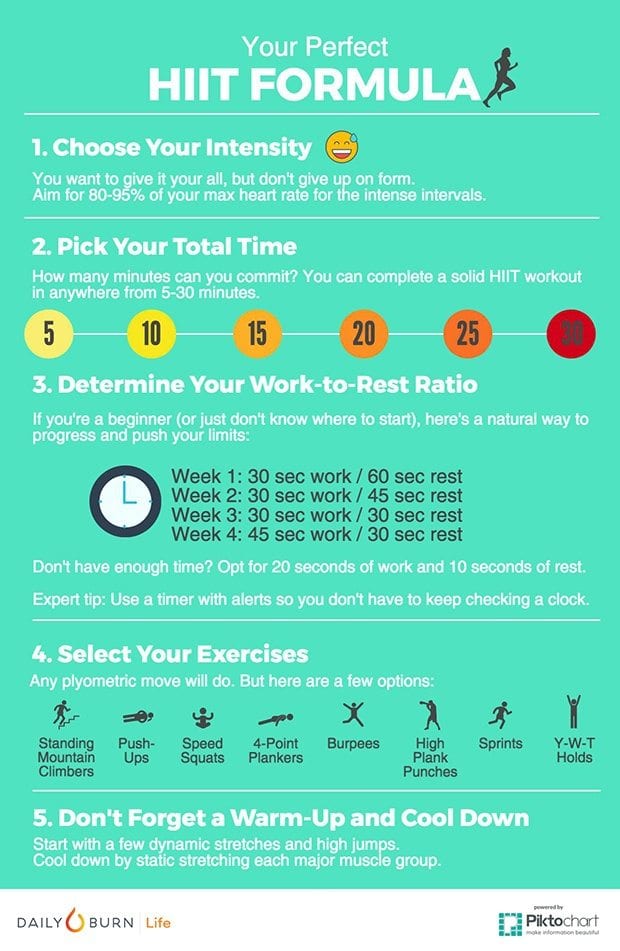
Spike your heart rate, tone your body and break through plateaus with this HIIT formula from Rosante. Start with a goal intensity, then pick an option from each layer. No two workouts have to be the same � but you�ll get sweaty and fit with each round. We�ll call this one smash HIIT.
Infographic: Mallory Creveling / Life by Daily Burn
To warm up before you dive in, do a series of dynamic stretches and a few high jumps. After you HIIT it, cool down with a solid stretch of all major muscle groups. Rosante suggests holding each one for at least 3 to 5 deep breathes.
Standing Mountain Climbers
Start standing, arms bent at your chest, palms facing away from your body. Drive your right knee up toward your chest as you straighten your left arm toward the ceiling. Quickly switch to bring your left knee toward your chest and right hand toward the ceiling. Continue alternating.
Start in a high plank position. Without piking or dropping your hips, bend your elbows and lower your chest to the ground. Then push back up to a plank.
Speed Squats
Start with feet a little wider than hip-distance apart, toes pointed slightly outward. Drive your hips back and butt toward the ground to perform a low squat. Jump back up and bring your feet together. Then jump back into a wide squat position.
4-Point Plankers
Start in a high plank position with feet together. Jump your feet to the left side of your left hand, then hop them back to the plank position. Next, jump your feet to the right side of your right hand, then back to the plank position. Hop your feet between your hands, then back to the plank position. Finally, jump your feet wide, placing one on either side of your hands. Then return to the plank position. Continue jumping to each point, keeping your hands on the ground the whole time.
Start standing. Place your hands on the ground, wrists underneath shoulders and jump your feet back to high plank position. Drop your chest to the ground. Then, without arching your back, push yourself back up and jump your feet back up to your hands. Explode off the ground to perform a hop at the top.
High Plank Punches
Start in a high plank position. Keeping your hips still, punch your right arm out straight in front of you. Then your left. Continue alternating.
Run in place (or on a treadmill or track) as fast as you can, pumping your arms for more power.
Y-W-T Holds
Lie on your stomach, arms straight out in front of you. Lift your legs and arms off the ground, with your arms to a Y position. Hold for a few seconds, then lower back down. Lift your legs and arms off the ground again. This time pull your elbows back and shoulder blades together so your arms form a W. Hold for a few seconds then extend your arms again and lower back down. Lift your legs and arms off the ground another time, this time moving your arms into a T position with elbows straight and arms out to the sides. Lower back down and repeat from the Y.
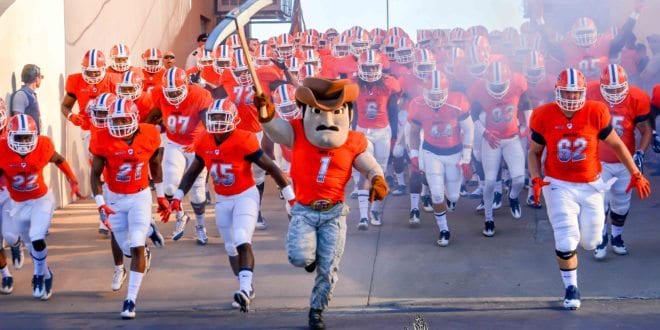
Former Miner Kent Taylor will be heading to San Francisco, for a mini-camp tryout with the 49ers. Taylor is the seventh Miner to be heading to an NFL camp and the second tight end from UTEP.
Taylor transferred to UTEP from Kansas and played in all 12 contests during the 2016 season. The senior added depth to the tight end core catching eight passes for 50 yards.
Taylor hauled in a season-long 19-yard reception on a 3rd-and-8 play that helped lead the Miners’ first touchdown during a 5OT win at UTSA.
Prior to UTEP, Taylor played in 11 games at Kansas and was the leading tight end with 15 catches for 179 yards and a score.
Correcting your posture does feel difficult and challenging at first because your body has become habitual of sitting or standing in that wrong posture. Here we tell you 5 exercises to help
Postural problems are the common cause of concern these days and the culprits here are desk jobs and our addiction to smartphones. Experts say that correcting your posture does feel difficult and challenging at first because your body has become habitual of sitting or standing in that wrong posture. However, a bit of practice, consistency and determination can facilitate the task and later your body will definitely thank you for this correction. Desk hunch (when you feel pain in your upper back after sitting at a computer all day) and text neck (the neck pain and damage sustained from looking down at your smartphone) are the two most prevalent postural problems these days.
Over time, both these problems contribute to you developing a rounded upper back, which can cause shoulder and upper back stiffness. However, practicing the below-mentioned stretches and workouts can turn your saviour here. The list includes upper back, neck and rear shoulder strengthening exercises, chest stretches and neck posture drills.
Seated rows: This workout emphasises muscles around the back including the lats, the erector spine, rear delts, biceps, and forearm flexors.
Pull-ups: If you are new at this exercise, then using a chin assist machine is the way to practice it. These machines use weight to help you push your bodyweight.
T-Spine Mobility in Child’s Pose: This pose stretches the lower back, tones the abdominal organs, and stimulates digestion and elimination.
Lat Hang: It alleviates the tight lats, pecs, upper back, and opens up the shoulder girdle prior to upper-body pushing or pulling movements.
Prone Y extension: It rotates your shoulders outward, stretches your abdomen, chest, and strengthens your lower back extensor muscles, along with the upper back muscles.
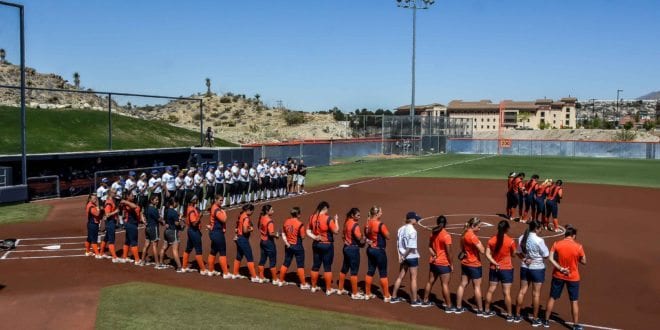
The UTEP softball team will continue its 2017 campaign with a trip to Conference USA West Division foe UAB April 29-30. The Miners (11-31, 5-13 C-USA) are coming off their bye week, while the Blazers (16-29, 7-9 C-USA) are coming off a loss at Middle Tennessee on April 22.
The Miners and Blazers will play a doubleheader starting at 1 p.m. CT/Noon MTon Saturday, while the series finale will be played on Sunday (1 p.m. CT) at Mary Bowers Field.
The weekend series in Birmingham will be the first of six final regular season games leading up to the C-USA Tournament May 10-13 in Hattiesburg, Miss. UTEP will close out the regular season against the defending C-USA Champions Florida Atlantic May 6-7.
MINERS FOLLOWING A BYE WEEK
UTEP is 4-2 the last two seasons following a bye week. In the 2015, following three losses at no. 25 UABMarch 14-15, the Miners responded by winning two of three against Southern Miss in El Paso (March 28-29). Last season, UTEP won two of three at Middle Tennessee (April 16-17). UTEP did not have a bye week in 2014 as it was scheduled to play at Colorado State in a three-game set April 5-6.
POSTSEASON PICTURE
UTEP is currently on the outside looking in the postseason outlook. Marshall (15-3 C-USA East) and LA Tech (13-5 West) have clinched spots while there are six spots remaining for the C-USA Tournament. The top three programs in each division will clinch a spot and the next two schools with the best record will seal the final two spots.
FIU (11-6 East), Florida Atlantic (10-8 East), North Texas (11-10 West) and UAB (7-9 West) are the next best four teams regarding league record, while WKU (10-10) and UTSA (9-12 West) would clinch spots if regular season ended today. Charlotte (7-10 East), Southern Miss (7-13 West), Middle Tennessee (5-11 East) and UTEP round out the list.
LAST SERIES
UTEP lost three contests at LA Tech April 14-15. The Miners fell in a pair of close contests on Friday, 4-2 and 4-0. The Lady Techsters took game three 8-0 in five. Taylor Sargent kept a hot bat as she hit .375 (3-8) with a double and a two-run triple. Kaitlin Ryder hit .333 with a run scored, while Lindsey Sokoloski also hit .333 and did not strikeout during the weekend.
ALL-TIME SERIES VS. UAB
The Blazers are 21-9 all-time against the Miners since May 6, 2006. UTEP has lost its last nine contests against UAB (April 20, 2013-April 24, 2016). UTEP last defeated UAB on April 22, 2012 in El Paso by the score of 7-0. The Miners were swept last season by the Blazers in El Paso. Cortney Smith went 4-for-10 with a pair of home runs and four RBI, while Courtney Clayton hit .545 (6-11) with a long ball and a pair of RBI.
UAB pulled away late in game one with the score knotted at 1-1 through four innings. The Blazers scored five in the fifth, three in the sixth and another run in the seventh to claim victory.
The Miners and Blazers slugged one out in game two as both squads each recorded 12 hits. The Miners took an early 3-0 lead after a Danielle Pearson RBI double and a Smith two-run single in the first frame. After UAB took a 4-3 lead, the Miners would tie the score in the second on a Kaitlin Ryder solo home run. After the Blazers took a 7-5 lead after three frames, Kiki Pepi scored on an error in the fourth that brought the Miners within a run.
But the Blazers used two runs in the seventh to put the game away. The Miners would go on to lose a heartbreaker in the series finale as UAB scored three runs in the seventh to claim a 4-2 victory. Following a run by the Blazers for a 1-0 edge in the fourth, the Miners would score runs in the fifth (Smith solo home run) and the sixth (Hope Moreno RBI single) for a 2-1 advantage.
UTEP is also 2-13 all-time in Birmingham, as the Miners took two of three from the Blazers during the 2009 season.
SCOUTING UAB
The Blazers are coming off a pair of losses, the first to no. 9/10 Washington, 6-0, on April 20 and another to at Middle Tennessee, 3-1, on April 22. UAB and Middle Tennessee were rained out on April 23 and rescheduled the two-game set for May 3 in Murfreesboro.
UAB is 16-29 overall and 7-9 in Conference USA. The Blazers are 8-9 on their home field and 3-2 in their last five home games – won two of three against North Texas (April 14-15), defeated Samford 4-3 [8] (April 18) and fell to Washington.
UAB ranks last in the conference with its .219 batting average, while its 132 runs are the least. UAB ranks eighth in the ERA (3.55) and walked a league-high 188 batters but have struck out 223 (ranked fourth in C-USA). UAB also ranks last in slugging (.314), on-base percentage (.298), hits (258) and RBI (114). The Blazers rank last in fielding percentage (.949) while their errors (73) are the most in the league. UAB has turned 22 plays, the third most in C-USA. Analyse Petree leads the team with a .278 batting average, while Madison Millsaps leads the squad in RBI (17).
Joanna Fallen and Millsaps each lead the team with five home runs apiece; Petree leads in doubles (seven) and Destini England leads the squad in runs (20) and hits (38). Claire Blount (7-10) leads the staff in wins, ERA (2.84), walks (88), innings (138.0) and Ks (114). Blount’s 114 strikeouts rank tied fourth in C-USA. Cara Goodwin (4-11) has a 3.85 ERA in 91.0 frames of work with 37 BBs and 70 Ks.
#TURNUP
UTEP turned three more double plays at LA Tech during Easter Weekend. The Miners lead Conference USA with 27 double plays turned, while they rank second nationally in double plays per game (.64) behind Auburn (.77). Auburn as turned a national-best 36 double plays, while Campbell has turned 29. UT Arlington has been part of 28 double plays, and UTEP and UC Riverside have turned 27 each.
Taylor Sargent andCourtney Clayton have each been part of 12 DPs to rank tied fourth with Florida Atlantic’s Lauren Whitt.Cortney Smith (11) ranks tied seventh with LA Tech’s Katie Smith and Kiki Pepi (10) is tied ninth with three other players.
SECOND MOST DOULBE PLAYS
UTEP’s 27 double plays turned in 2017 is already the second most turned in program history. Last season’s squad turned a program-best 30 double plays. In fact, since Tobin Echo-Hawk arrived to UTEP, the Miners have turned 96 doubles plays in 201 games (.48 per game).
The 2007 squad turned 21, while 19 double plays were turned during the 2005 season. The previous four seasons (2010-13), 46 double plays were turned.
BAT GIRLS
UTEP is hitting .299 to rank fourth in Conference USA and no. 58 nationally, while it would rank the third best average in program history if the season ended today. UTEP hit .307 in 2016 and .303 in 2007. UTEP’s slugging (.415) ranks fifth, while its hits (342) rank sixth. Marshall leads C-USA in batting (.321), while UTSA leads with 396 hits.
UTEP RANKINGS IN C-USA ONLY GAMES
The Miners rank second in batting average (.308) and hits (152) in Conference USA games only behind UTSA (.310 average & 181 hits). UTEP ranks fifth in runs scored (76), on-base percentage (.363), RBI (73) and fourth in total bases (200). UTEP ranks third in slugging (.405). LA Tech leads the way in runs scored (96) and RBI (89).
EXTRA BASE HITS
UTEP tallied a triple and double at LA Tech. The Miners rank fourth in Conference USA with 10 triples and seventh with 49 doubles. The Miners rank third in C-USA and no. 49 nationally with .24 triples per game.
Binghamton leads the nation with .49 triples per game and Florida State leads the nation with 20 triples (.42 per game). Marshall and LA Tech are tied for the lead league with 12 triples and Southern Miss (11) ranks third.
5 IN THE TOP 25
UTEP has five players ranked in the top 25 in Conference USA in batting. Taylor Sargent (.351) ranks 13th,Kaitlin Ryder (.350) ranks 14th, Kiki Pepi (.339) ranks 15th, Cortney Smith (.336) ranks 16th, andCourtney Clayton (.315) ranks no. 25.
UTEP has the most players in the top 25, while Marshall, Charlotte, North Texas and FIU each have three. Middle Tennessee and UTSA each have two. Florida Atlantic, WKU, LA Tech and Southern Miss each have one.
RACKING UP HITS
The Miners have connected on 342 hits, ranking sixth in Conference USA. UTEP’s 17 hits at UTSA (April 1) are tied for the most during the Tobin Echo-Hawk era, as 17 hits were recorded against Incarnate Word on Feb. 11, 2016. The 17 knocks are tied for eighth on the all-time list. Last season, the Miners set a single-season record with 451 knocks.
MORE ON THE HIT PARADE
UTEP has recorded 10-plus hit games 79 times during the Tobin Echo-Hawk era. The previous four seasons, the Miners tallied 10-plus hits in 50 contests. Since Echo-Hawk took the helm at UTEP, the Miners are hitting .298 (1,611-5,415), while the previous four years saw a .268 average (1,462-5,462). The Miners have connected on 15-plus hits in 14 different contests from 2014-17 and eight different times from 2010-13. The most hits recorded the last eight seasons were 24 at Brown on March 3, 2012 – tied most in program history.
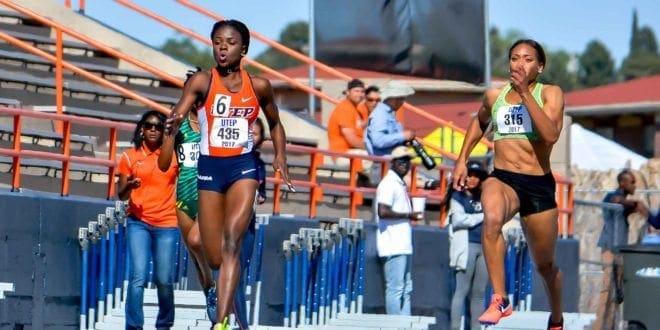
The Miners are westbound for the second time during the outdoor season as they head to Berkley, Calif. for the Brutus Hamilton Challenge. This will be the final competition the Miners will see before the Conference USA Outdoor Championships hosted by UTEP (May11-14).
The historic two-day meet starts Friday9:00 a.m. PT with the men’s hammer throw. Sophomore Karol Koncos will be one of the top competitors in the field. Koncos threw for 63.43m (208-1) last week at the UTEP Invitational. His mark is the third-best his season in C-USA.
Senior Fayon Gonzales and junior Lucia Mokrasova will compete in the women’s javelin set for 5:30 p.m.Gonzales (39.37m) ranks ninth in the league, while Mokrasova holds the number eight spot (39.94m).
The running events will see Daniel Cheruiyot in the 3,000m steeplechase starting at 3:30 p.m. Cheruiyot clocked the fourth-fastest time in conference running a season-best 9:03.31. Antony Kosgei and Evans Kiprono will run at 4:10 p.m. in the 5,000m. Kosgei (14:16.60) ranks fifth in the league.
Gladys Jerotich and Winny Koech will tussle in the women’s 5,000m starting at 3:45 p.m. Koech (16:22.26) ranks first in C-USA.
Saturday’s events will start with the women’s long jump at 10:00 a.m. Tobi Amusan will make her first jump of the outdoor season. Senior Samantha Hall will compete in both the shot put (10:45 a.m.) and discus throw (12:30 p.m.). Hall ranks 12th in the NCAA West Region (54.62m) in the discus throw.
Runners to look out for on the track will be UTEP’s freshman duo Emmanuel Korir and Michael Saruni in the men’s 800m starting at 3:10 p.m. The Kenyan natives have both started their collegiate careers off with a bang.
Korir won the 800m indoor national title and ranks second in the west region. The Kenyan has clocked a blistering 44.67 in the 400m ranking second in the West Region.
Saruni ranks first in the West Region in the 800m after stopping the clock at 1:45.82 winning gold at the Texas Relays. The mid-distance runner ranks ninth in the 400m clocking 45.69 in the 400m in the West Region.
Brandon Moss will compete in the men’s long jump at 11:45 a.m., where he ranks ninth in the league after jumping out to 7.20m (23-7.5) in his first outdoor competition at last week’s UTEP Invitational.
Ada Benjamin will race at 2:05 p.m. in the 400m. Benjamin ranks first in conference with a time of 53.16. Florence Uwakwe will take the track at 2:25 p.m. in the 100m. Uwakwe will race her first short sprint of the outdoor season.
Lilian Koech and Truphena Sum will run in the 800m set for a 3:00 p.m. Koech ranks third in the league with a personal-best 2:05.86.
For live updates and breaking news follow @UTEPTrack on Twitter and uteptrack on Instagram.
IFM's Find A Practitioner tool is the largest referral network in Functional Medicine, created to help patients locate Functional Medicine practitioners anywhere in the world. IFM Certified Practitioners are listed first in the search results, given their extensive education in Functional Medicine