by Dr Alex Jimenez DC, APRN, FNP-BC, CFMP, IFMCP | UTEP (Local) RSS
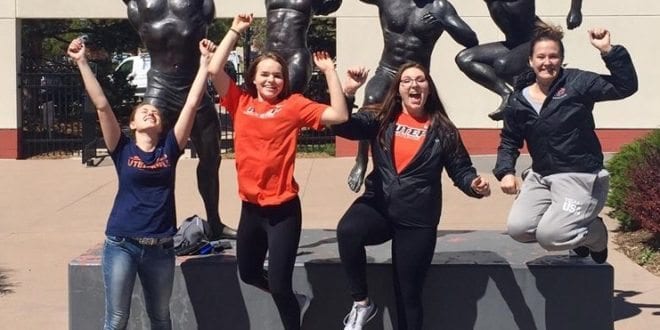
COLORADO SPRINGS, Colo. – UTEP rifle team members Abby Monique (smallbore and air rifle) Mara Rouse, Maranda Nelson and Bailey Powell (air rifle only) recently had an amazing opportunity for growth by being invited to compete at the 2017 USA Shooting National Junior Olympic Shooting Championships at the Olympic Training Center in Colorado Springs, Colorado.
The Miners interacted with and shared the range with some of the best shooters in the sport, including 2016 Rio Olympics Women’s Air Rifle gold medalist Ginny Thrasher.
It marked the first such trip to the event for Rouse while Monique and Powell made their third and Nelson her fourth. The Miners performed admirably, placing three individuals among the top 75 (in a field of nearly 200) in the 10m air rifle.
In order to attend the Junior Olympics, athletes who are under the age of 20 (junior-aged athletes), must compete in a state junior Olympic Shooting championship match and receive an invitation to compete by meeting either an automatic score or win the athlete’s respective state title.
“It was very exciting to have all four of our junior aged athletes qualify and compete at the Junior Olympic Shooting Championships representing UTEP,” UTEP head coach Hannah Muegge said. “I’d like to thank our UTEP parents who came out and supported all of our athletes, in addition to those back home who followed along online. In the collegiate category, we definitely had one of the largest showings at this match. I could not ask for a better support system.”
Powell was exceptional, finishing in 14th place (out of a field of 180) in the 10m air rifle. She was particularly strong on the first day of action with her score (413) placing her eighth heading to the second day.
Monique represented the Orange and Blue in the smallbore. She recorded a score of 1120 to land in the upper-echelon of the field with a 31st-place finish. She also joined Powell in the 10m air rifle, tallying a total score of 804.8 to take 68th place.
Rouse, competing in the 10m air rifle, shot 401.3 in the first day before improving to 402.1 on day two. The total of 803.4 was good enough for 74th.
Nelson was saddled with a rifle malfunction on the first day and had to borrow an air rifle for the second day. Despite the challenges she held her head up high.
Like UTEP Rifle On Facebook
Follow UTEP Rifle On Instagram
by Dr Alex Jimenez DC, APRN, FNP-BC, CFMP, IFMCP | UTEP (Local) RSS
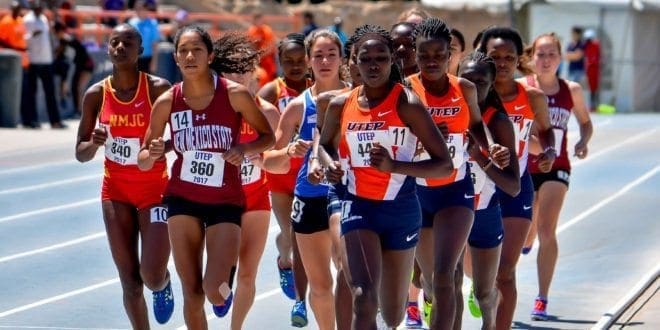
Berkley, Ca. – The UTEP track and field team had four first-place finishes in six different events on day one Friday at the Brutus Hamilton Challenge.
Karol Koncos won the men’s hammer throw tossing 63.35m (207-10). Koncos has thrown over 60m four times this season. Kevin Rincon placed 12th overall with a throw of 45.02m (147-08).
Daniel Cheruiyot took the lead in the 3,000m steeplechase and never looked back stopping the clock at 9:07.17. Antony Kosgei (14:37.21) and Evans Kirpono (15:07.87) finished first and second respectively in the 5,000m run.
Winny Koech took home gold in the women’s 5,000m run leading the race from the start to finish with a time of 16:45.77, followed by teammate Gladys Jerotich with a season-best 17:23.25.
Fayon Gonzales threw 50.11m (164-05) to place fourth in the javelin and placed eighth in the hammer throw with a toss of 37.75m (123-10). Abedola Akomolafe took ninth-place with a toss of 48.96m (160-07), followed by Cierra Chenault in 10th with a personal-best 45.91m (150-07).
Lucia Mokrasova placed fourth in the women’s javelin with a toss of 36.67m (123-07).
The Miners return to action on Saturday with the first field event starting at 10:00 a.m. PT and the first running event starting at 1:20 p.m.
For live updates and breaking news follow @UTEPTrack on Twitter and uteptrack on Instagram.
by Dr Alex Jimenez DC, APRN, FNP-BC, CFMP, IFMCP | UTEP (Local) RSS
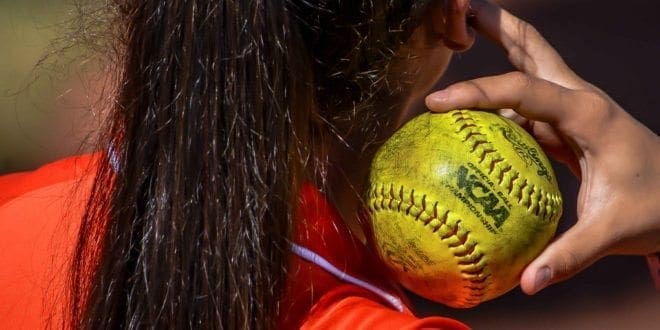
BIRMINGHAM, Al. – Senior Erika Harrawood registered a career-high seven strikeouts in a 3-0 game two loss as UAB pulled away late from UTEP. The Blazers (18-29, 9-9 Conference USA) also defeated the Miners (11-33, 5-15 C-USA) 3-1 in game one Saturday afternoon at Mary Bowers Field.
The series finale will be played on UAB’s Senior Day at noon MT. With the two losses, UTEP is officially eliminated from postseason participation.
UTEP 1, UAB 3
Courtney Clayton knocked in Cortney Smith in the sixth inning to bring the Miners within two runs. Smith led the sixth with a double to left center and would advance to third on a passed ball. With one out, Clayton singled to left field that plated Smith for her 19th RBI of the season. But the UAB defense turned a double play to end the rally.
The Blazers’ leadoff hitter Destini England led the game off with a double to right center. England advanced to third on a sac-bunt by Danii Fernandez and Joanna Fallen reached on a fielder’s choice as England crossed the dish for an early 1-0 lead.
UAB would go on to score two more runs in the third on another Fallen RBI and a Madison Millsaps’ RBI single to make the score 3-0. The Miners, however, turned their 28th double play of the season that left two runners on base to keep the score within striking distance.
Ryder finished 2-for-4, while Lindsey Sokoloski (1-for-3), Smith (1-for-2), Sargent (1-for-3) and Clayton (1-for-2) each tallied knocks. Kaitlin Fifield (2-8) made the start, throwing 3.0 frames with one K. Taylor Grohmann also tossed 3.0 innings, allowing zero hits and striking out one. The two senior hurlers combined for no walks.
UTEP 0, UAB 3
After five scoreless innings and a solid performance from Harrawood, the Blazers scored three runs in the sixth to pull away from the Miners. Pinch hitter Rachel Dunsford singled to lead off the sixth. Pinch runner Katlyn Sides would go one to score the game’s first run with bases loaded.
Another pinch hitter Rian Brown drew a bases-loaded walk to earn the easy RBI. England, who had a hot bat on Saturday, knocked in a pair of runners on a 2-2 pitch. Harrawood would go on to record her seventh K and forced a Fallen groundout to end the frame.
In the seventh with two outs, Cross reached on an error, but Claire Blount would strikeout the last batter to end the contest.
Harrawood (3-12) allowed six hits in 6.0 frames of work and walked four with her career-high seven punch outs. Smith went 2-for-3, while Clayton (1-for-3) and Sargent (1-for-3) each registered hits.

by Dr Alex Jimenez DC, APRN, FNP-BC, CFMP, IFMCP | UTEP (Local) RSS
Berkley Ca. – UTEP’s freshman Emmanuel Korir was just .18 seconds away from the NCAA outdoor record in the 800m after running 1:43.73 at the Brutus Hamilton Challenge Saturday afternoon.
“This is by far the most impressive performance by a freshman. You can tell he has more to a lot left in the tank,” Head coach Mika Laaksonen said. “He is a very special athlete who will continue to surprise everyone watching.”
Korir clocked the second-fastest time in the world this year and set a new school record held by Peter Lemashon (1:45.68) set back in 1978. The talented freshman won the NCAA indoor national title in the 800m and set a world-best 1:14.97 in the 600m earlier this year. Korir notched the second-fastest time in program history in the 400m with a time of 44.67 just eight days ago.
The UTEP track and field team wrapped up the final regular season with 11 first-place finishes in 25 different events. Asa Guevara claimed the top spot with a time of 47.23 in the 400mk, while Carvellion Horn clocked a personal-best 50.31 to finish third.
Brandon Moss in his second competition of the outdoor season notched third-place in the long jump with a mark of 7.32m (24-0.25). James Bias clocked 10.74 in the 100m to garner a third-place showing.
In the men’s mile Jonah Koech (4:02.96) and Cosmas Boit (4:05.43) placed second and fifth respectively.
On the women’s side, Tobi Amusan notched a first-place finish in the long jump with a mark of 5.83m (19-1.50), followed by Tyler Ragin in fifth-place jumping out to 5.51m (18-1).
Samantha Hall threw for 14.06m (46-1.50) in the shot put and 55.17m (181-0) in the discus for a first and second-place showing. Lucia Mokrasova placed third in the shot put tossing for 13.22m (43-4.5), followed by Cierra Chenault with a mark of 11.95m (39-2.5) in eighth-place.
In the women’s 100m hurdles, Rebecca Oshinbanjo notched gold running a season-best 14.00, while Danielle Trought clocked a personal-best 14.33 to finish in third-place. Yanique Bennett (58.57) and Dreshanae Rolle (1:00.19) garnered first and second in the 400m hurdles.
Lilian Koech won the 800m clocking a personal-best 2:04.68 and puts her with the fourth-fastest time in school history. Linda Cheruiyot also ran a personal-best of 4:23.60 in the 1,500m claiming fourth overall.
The Miners will enjoy a week off after competing for three consecutive weeks and will return to action to host the Conference-USA outdoor championships May 11-14.
For live updates and breaking news be sure to follow @UTEPTrack on Twitter and uteptrack on Instagram.
by Dr Alex Jimenez DC, APRN, FNP-BC, CFMP, IFMCP | UTEP (Local) RSS
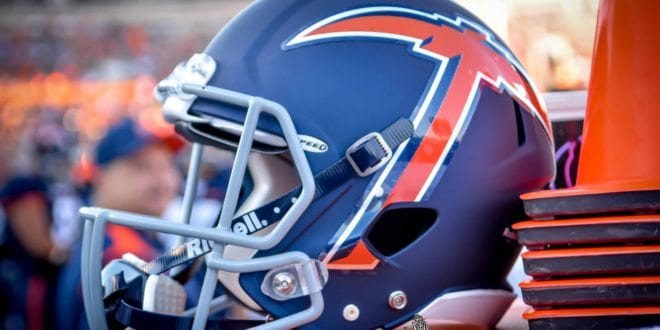
Former Miners Nick Usher, Hayden Plinke, Darrin Laufasa, Cole Freytag and Jerome Daniels will be heading to NFL Camps.
Usher was picked up by the Seattle Seahawks. He was a three-year starter and saw the field in 49 games for the Orange and Blue. Last season, he started all 12 contests and earned All-C-USA honorable mention after leading team in tackles for loss (8.0-41), sacks (5.5-31) and quarterback hurries (five).
The linebacker ranked third on team with 77 tackles (35 solo) and added two pass breakup and a blocked kick. He ranked tied no. 8 in C-USA in total sacks and finished career ranked tied no. 10 with five other Miners in career sacks (12.0). Usher was invited to play in the NFLPA Bowl.
Prior to being a linebacker, Usher played three seasons as a defensive lineman. During his junior campaign, Usher recorded 46 tackles (27s/19a), a career-best 10 tackles for loss, one forced fumble, five quarterback hurries, 3.5 sacks and a blocked kick.
The Seahawks also snagged Plinke. He played two seasons with the Miners, started in 22 games and was on the John Mackey Award watch list both seasons. Plinke started all 12 contests as a senior and earned All-C-USA first team honors after producing a record-setting season.
The tight end stomped and raced past defenders on way to eight receiving touchdowns, the most ever by a UTEP tight end during a single season. Plinke led team in receptions (38) and touchdowns grabs and ranked second in receiving yards (456). He registered a career-long 72-yard touchdown during a season-finale victory against North Texas. Plinke also participated in the NFL combine and the NFLPA Bowl.
Laufasa will be heading to the Cincinnati Bengals. He started 44 games for he Miners at fullback. His blocking efforts helped pave the way for Jones to rush for a single-season program-record 1,773 yards. The team capped 2016 season with a season-high 555 yards of total offense, including a season-best 384 yards rushing (most since 1983) and four scores during a victory against North Texas.
During his junior season, Laufasa recorded 183 rushing yards on 33 attempts (5.5 avg.) and a touchdown. Laufasa rushed for a career-best 85 yards on eight carries (10.6 avg.), including a career-long 66-yard touchdown run during a come-from-behind overtime victory at rival NM State. He tallied a career-best 100 all-purpose yards against the Aggies.
Freytag received a tryout with the Tampa Bay Buccaneers. The El Paso native played for the Miners in 45 games and earned the starting position as a senior. The wide receiver led the team last season in receiving yards (520) and receiving yards per game (43.3), while ranking second in receptions (36) and receiving touchdowns (five).
The El Paso native produced a career-high 95 yards on four receptions while adding a season-long 46-yard touchdown catch during a victory against rival NM State.
Freytag tallied a career-high seven receptions for 84 yards and a nine-yard scoring catch against Old Dominion. He also hauled in a 30-yard touchdown reception, while recording 45 yards on three catches during a season-finale victory against North Texas. Freytag also saw action on special teams for the Miners.
Daniels was invited to a mini-camp tryout with the Pittsburgh Steelers. He was a four-year letter winner that started in 35 games for the Miners.
During his senior campaign, Daniels played on an offensive line that paved the way for Aaron Jones to rush for a single-season program-record 1,773 yards, while Jones also became UTEP’s all-time leading rusher. The Miners averaged 185.5 rushing yards per game and scored 20 touchdowns on the ground.
As a junior, he played on an offensive line that led Conference USA in sacks allowed with only 12. During Daniels sophomore season, he was on an offensive line unit that only surrendered 13 sacks in 13 games (ranked first in Conference USA and eighth nationally).
by Dr Alex Jimenez DC, APRN, FNP-BC, CFMP, IFMCP | UTEP (Local) RSS
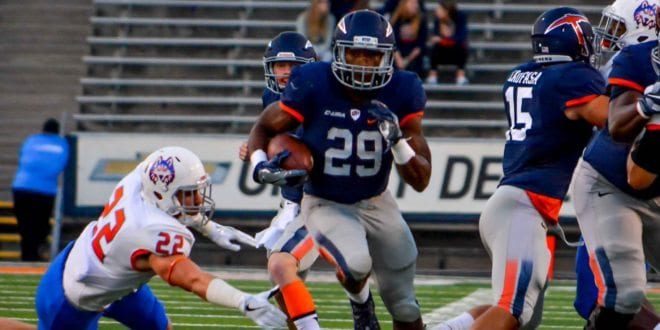
The Green Bay Packers drafted former Miner Aaron Jones on Saturday afternoon. The running back was drafted with the 36th pick in the fifth round (182nd overall).
The last time a Miner was drafted was in 2008 when a trio was selected.
Tackle Oniel Cousins was selected by the Baltimore Ravens (third round, 36th pick, 99th overall), free safety Quintin Demps was chosen by the Philadelphia Eagles (fourth round, 18th pick, 117th overall) and running back Marcus Thomas was picked by the Dallas Cowboys (fifth round, 31st pick, 166th overall).
Aaron Jones set multiple school records during his prolific junior season including earning AP All-American third team and All-Conference USA first team honors. The El Paso native rushed for a single-season school-record 1,773 yards, while climbing his way to the top of the program’s career-rushing list with 4,114 yards, breaking John Harvey’s 28-year old record.
The three-time letter winner averaged 7.7 yards on 229 carries and scored 17 rushing touchdowns (third most in program history). Jones added three more receiving scores, while tallying 2,006 all-purpose yards (fourth best single-season performance in school history).
Jones capped the 2016 campaign with a career-high 301 yards and a career-best four rushing touchdowns against North Texas. Jones’s 301-yard effort is the second most yards rushed in a single contest in UTEP history. He finished the season ranked third in the nation with his 147.8 rushing yards per contest.
by Dr Alex Jimenez DC, APRN, FNP-BC, CFMP, IFMCP | UTEP (Local) RSS
BIRMINGHAM, Al. – UAB (19-29, 10-9 Conference USA) poured on five runs in the first inning to take an early lead against UTEP (11-34, 5-16 C-USA) on its way to a 5-0 victory. The contest was called in the fifth inning after heavy rainfall on Sunday at Mary Bowers Field.
The Blazers jumped on the Miners early when Joanna Fallen put her squad on the board first with a RBI single to right that scored leadoff hitter Destini England. Molli Garcia put two more runs with a single through the left side, while Amy Waters drove in the fifth run on a double to left field.
Cortney Smith and Kiki Pepi led off the fourth with back-to-back singles, while Smith advanced to third and Pepi to second on the throw. But the Miners couldn’t sustain more offense to punch the runners across the home plate.
UTEP recorded five hits on the day as Brianna Red reached base twice (walk in third inning, single in fifth).
Kaitlin Ryder and Lindsey Sokoloski each went 1-for-3. Kaitlin Fifield (2-9) got the start and Erika Harrawood finished the contest, throwing 4.0 frames.
Up Next
UTEP will finish out the 2017 season by hosting defending C-USA champions Florida Atlantic on Senior Weekend (May 6-7). The Miners and Owls will play a doubleheader on Saturday starting at 3 p.m. Sunday’sSenior Day contest will start at 1 p.m.
Seniors Kaitlin Fifield, Taylor Grohmann, Miranda Gutierrez, Erika Harrawood and Kiki Pepi will be honored following the contest. Part of the Senior Day festivities will include the fathers of each senior throwing out the first pitch.