El Paso, TX. Chiropractor Dr. Alex Jimenez takes a look at chiropractors and�how they can act as an antioxidant through their practice.
The practice of chiropractic truly works on the grounds the work removes blockages to the body�s natural health and healing abilities, although most folks link chiropractors with pain management. This consists of removing pressure from nerves that relay signals from the brain to the organs and systems of the body.
Chiropractic Care Benefits
In 2005, a landmark study published in the Journal of Vertebral Subluxation (JVSR) found evidence that chiropractic care can reduce oxidative stress within the body.
Oxidative stress is the damage occurring when free radicals outnumber the body�s antioxidants. Oxidative stress damages all body cell components: lipids, proteins and DNA.
Oxidative stress plays a job in a whole host of diseases and ailments: Alzheimer�s rheumatoid arthritis, atherosclerosis, chronic fatigue syndrome, diabetes, heart problems, Parkinson�s disease, disease and many others.
Thiols are compounds within the body that act as antioxidants, reacting with free radicals to neutralize them. Serum amounts of thiols report scientists of Biomedical Diagnostic Research, Inc reflect DNA�s ability to mend itself, and can be used to measure aging and disease status.
In a 2003 study published in the Journal of Anti Aging Medicine, the scientists found low serum thiol levels with nine distinct categories of disorder and human disease in people.
The study published in JVSR consisted of 76 participants: one group received short-term chiropractic care; a second group received long term chiropractic care; and the 3rd group received no chiropractic care.
After qualifying for age, gender as well as the usage of nutritional supplements, the participants that received chiropractic care for 2 or more years that were healthy had higher serum thiol levels than people that have disorder. Some of the chiropractic patients had serum thiol levels higher than what is linked with wellness that is ordinary.
Chiropractor Dr. Christopher Kent explained: �Oxidative tension, metabolically creating free radicals, is a broadly accepted theory of how we age and grow ailment.�
�Going through life,� we experience chemical, physical and psychological stress. These pressures change the function of the body’s nervous system. We hypothesized that oxidative stress could affect and DNA repair on a cellular level.�
�Chiropractic care seems to improve the power of the entire body to adapt to anxiety,� concluded Kent.
If you�ve never taken a yoga class before, the numerous poses can be pretty intimidating. Downward facing dog, crow pose, cat and cow, wheel, warrior, the list goes on. And if your first experience is in an overflowing class, the instructor likely won�t have a chance to make sure you�re perfectly positioned in each posture.
Granted, yoga is all about going with what feels right for your body. But doing certain poses incorrectly can lead to muscle imbalances and possibly even injuries down the road. And it�s important to note that newbie yogis aren�t the only ones susceptible to mistakes. Even if you�ve been practicing yoga for years, there�may be room for improvement.
Samantha Miller inked a national letter of intent to attend school and compete with the UTEP rifle team beginning with the 2017-18 season, head coach Hannah Muegge revealed Monday.
Miller is the second individual for the 2017 signing class, joining Jessica Boyce.
“As we continue to build our roster for the 2017-18 season, Samantha Miller brings both a good attitude and a high level of motivation to the table,” Muegge said. “She has some great expectations set coming into the program and will help push us to achieve our team goals both on and off the range.”
Miller, understandably so, is thrilled with the chance to become a Miner.
“Being a Miner to me means that I get to continue on in a sport I love and have a passion for,” Miller said. “The best part is I will be with a shooting team that will become family. I will have support behind me all the time, as I will support them. I will have a coach who is there for me to help me with my problems while getting an education for something later in life. I can’t wait to join the Miner family.”
Below is a brief bio on Miller
Samantha Miller competes with the Los Alamos High School Navy Junior Reserve Officers Training Corps (NJROTC)
… garnered the “Distinguished Shooter Badge” in 2016
… part of the Navy National Championship team in both 2015 and 2016
… secured the 2016 overall individual Navy Precision Champion while grabbing runner-up honors in 2017
… took home the 2017 New Mexico overall Precision Champion and the 2016 New Mexico 5A Precision Champion
… qualified for the Junior Olympics in air rifle in 2015, 2016 and 2017 while also doing so for smallbore in 2017
… at the 2017 event she finished 44th in a field of nearly 200 in air rifle while placing 51st in smallbore
… also qualified for American Legion in 2017 … has been shooting for five years
… fell in love with the sport while shooting on the range with her older brother during his senior year of high school
… plans to major in nursing at UTEP … on track to graduate from Los Alamos HS in June.
Kicker Jay Mattox will be heading to the San Francisco 49ers for a minicamp tryout. The Las Vegas, Nv. native is the eighth Miner to receive an invitation to an NFL camp.
Jay Mattox was a four-year starter who played in all 49 games for the Miners. The kicker finished his collegiate career tied no. 1 in program history with 137 career PATs.
Mattox also rates no. 2 in program history with 257 career points (kickers only) and ranked no. 3 with 40 career field goals made. He concluded his senior campaign ranked second on team in points (54) and finished 39-of-40 on PATs. Mattox connected on a career-best 7-for-7 on PATs and tied his career high in points (10).
As a junior, he connected on a career-long 50-yard field goal during a win over Incarnate Word.
During his sophomore season, Mattox took over punting duties and averaged 41.1 yards on 41 punts (1,687 yards), putting nine inside the 20-yard line and booting eight 50-plus yard punts.
Here’s yet another reason to make sure your kids are active: New research shows those with stronger muscles may have better working memory.
Evaluating 79 children between the ages of 9 and 11, scientists said they found that muscle fitness was directly related to a more accurate memory. The results also reinforced established research linking kids’ aerobic fitness to better thinking skills and academic performance.
“There are multiple ways children can derive benefit from exercise … to build healthy bodies as well as healthy minds,” said study co-author Charles Hillman. He’s a professor of psychology and health sciences at Northeastern University in Boston. “We know that kids are becoming increasingly inactive, overweight and unfit,” Hillman added. “So, it’s important to take studies like these … to basically indicate the benefit of physical activity and the importance of it.”
Physical Activity in Children
Only 1 in 3 children in the United States is physically active every day, according to the President’s Council on Fitness, Sports and Nutrition. One contributor is the 7.5 hours per day, on average, that children spend in front of a screen — whether it be TV, video games, computers or the like.
Children taking part in the study completed both aerobic fitness and muscular fitness assessments, including upper body, lower body and core exercises. Additionally, their working memory and academic achievement were measured by various tests.
Hillman and his colleagues found that participants with higher levels of aerobic fitness also scored higher on tests of memory and mathematics. But a new insight was gleaned with the finding that muscle fitness was directly linked to memory performance — though not academic performance. Hillman emphasized that the muscle fitness tests used in the research resembled the kinds of activity kids take part in regularly — not lifting large weights.
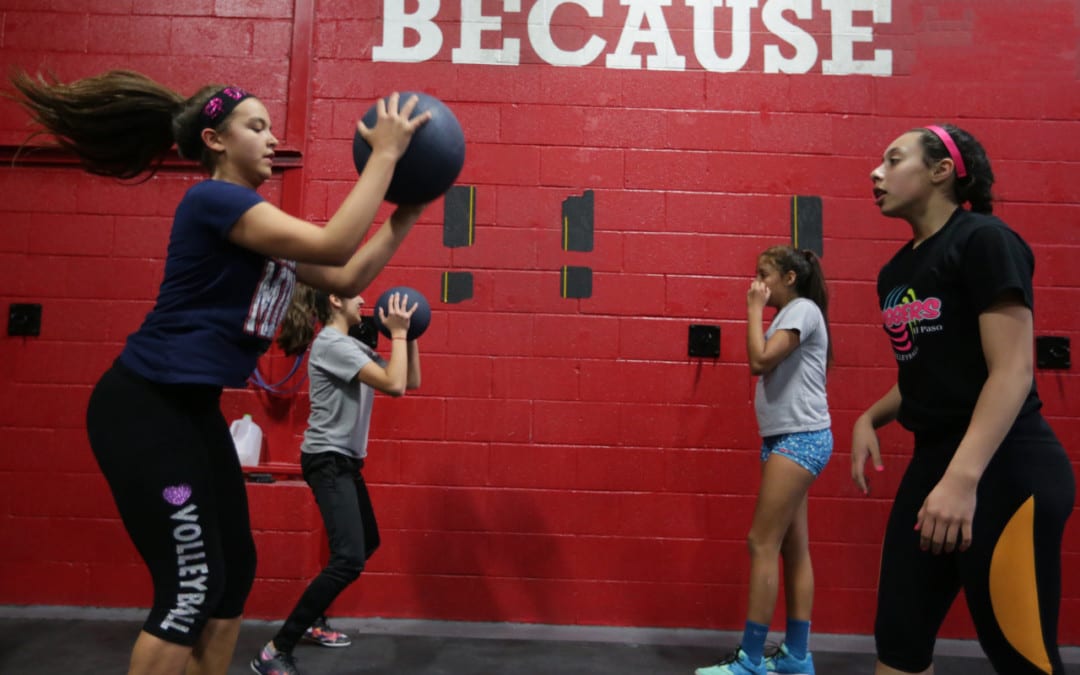
“It wasn’t pure strength the way that running is pure cardio,” Hillman explained, “in the sense that they were doing high volume [repetitions] and low weights. Much was body movement, such as pushups and squats or lifting light medicine balls. We were trying to mimic the way kids would typically be active.”
Working memory in both boys and girls appeared to benefit equally from greater muscle fitness, he noted.
Hillman said scientists aren’t sure how greater muscle fitness would work to enhance memory. Drawing from the results of animal research, he theorized that muscle fitness could help connections develop between brain neurons.
Dr. Bradley Sandella, fellowship director for sports medicine at Christiana Care Health System in Wilmington, Del., said the new findings provided information he could use in his own practice.
“I think we always think about the benefit of physical activity on overall health, but not specifically for cognitive function,” Sandella said. “This is something I can use to motivate students, but also parents of students, to become more physically active. Not only do we know it’s good for physical development, but also that it’s good for cognitive development.”
He cautioned, however, that the study was preliminary and that long-term research is needed to determine any effects of muscle fitness on academic performance. The study also did not prove that stronger muscles caused memory to improve.
The study was published recently in the journal Medicine & Science in Sports & Exercise.
SOURCES: Charles Hillman, Ph.D., professor, psychology and health sciences, Northeastern University, Boston; Bradley Sandella, D.O., fellowship director, sports medicine, Christiana Care Health System, Wilmington, Del.; April 2017 issue, Medicine & Science in Sports & Exercise
The scope of our information is limited to chiropractic and spinal injuries and conditions. To discuss options on the subject matter, please feel free to ask Dr. Jimenez or contact us at 915-850-0900 .
Additional Topics: Whole Body Wellness
Maintaining overall health and wellness through a balanced nutrition, regular physical activity and proper sleep is essential for your whole body�s well-being. While these are some of the most important contributing factors for staying healthy, seeking care and preventing injuries or the development of conditions through natural alternatives can also guarantee overall health and wellness. Chiropractic care is a safe and effective treatment option utilized by many individuals to ensure whole body wellness.
Focusing too much on playing one favorite sport probably isn’t a good idea for kids under 12, researchers report.
That’s because specializing in a single sport seems to increase a child’s risk of injury, researchers say.
“Young athletes should participate in one competitive sport per season, and take at least three months off (non-consecutive) from competition per year,” said the study’s leader, Dr. Neeru Jayanthi. He’s a physician with Emory Sports Medicine and an associate professor of orthopaedics and family medicine at Emory University in Atlanta.
For the study, Jayanthi’s team assessed the risk of sports-related injuries among nearly 1,200 young athletes. After tracking their training schedules over the course of three years, the investigators found that nearly 40 percent of the athletes suffered an injury during the study period.
The findings also showed that injured athletes began specializing in one sport at an average age younger than 12 years. In addition, nearly two-thirds of these athletes in highly specialized sports sustained a repeat injury.
Athletes who didn’t sustain injuries began to focus on one sport when they were older than 12, on average, according to the report.
“While different for each sport, determining a possible age of specialization, as well as other training factors, may help guide young athletes in reducing risk,” Jayanthi said in an Emory news release.
Young athletes who had sports-related injuries during the study period tended to play more year-round sports, played more organized sports each week and were more specialized in specific sports than those who didn’t have an injury, the researchers found.
The study authors advise young athletes to play more than one sport. In addition, they said, younger children shouldn’t train more hours than their age each week.
The study was published online March 16 in the British Journal of Sports Medicine. The findings were also presented Thursday at the International Olympic Committee World Conference on Prevention of Injury and Illness in Sport, in Monaco.
News stories are written and provided by HealthDay and do not reflect federal policy, the views of MedlinePlus, the National Library of Medicine, the National Institutes of Health, or the U.S. Department of Health and Human Services.
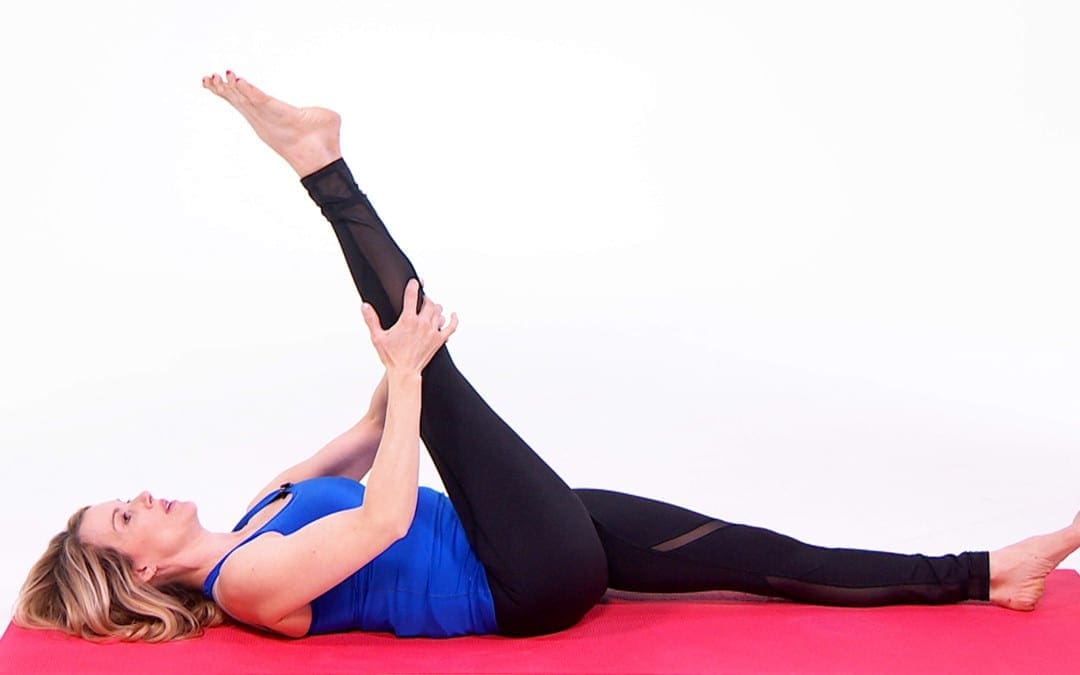
Watch this video and follow along as celebrity instructor and Health contributing editor Kristin McGee guides a 10-minute Pilates workout that�s perfect for beginners and pros alike.
During this sequence, McGee focuses on targeting your abs, especially the transverse abdominals, the deepest layer of muscle in your core. According to McGee, we should lead all of our daily activities from those muscles. They support us, give us good posture, and help us with twisting and movement. Plus, that deep transverse core muscle is what helps make your spine nice and long.
As you do this workout, there are a few crucial things to keep in mind. For starters, tune into your body, and really try to feel the connection both to your pelvic floor muscles and to your transverse abdominals. McGee suggests imagining you�re wearing a wetsuit, and it�s pulling everything in your torso inward.
While your core and pelvic floor should feel tight and engaged, be sure to keep your shoulders soft. It also helps to maintain a slight �C curve� in your spine, which allows your lower abs to be pulled even farther in, helping to activate and tone them.
Finally, use your breath to connect to your pelvic floor muscles and scoop in your abs as you go through each move.
Some of the moves may seem really subtle and simple�but don�t be fooled! This sequence is sure to have your abs aching the next day, in the best kind of way.
IFM's Find A Practitioner tool is the largest referral network in Functional Medicine, created to help patients locate Functional Medicine practitioners anywhere in the world. IFM Certified Practitioners are listed first in the search results, given their extensive education in Functional Medicine