Chiropractor, Dr. Alexander Jimenez summarizes some fascinating injury stories in the combat game…
I was recently on a holiday in Koh Lanta in Thailand and throughout my holiday I visited a Muay Thai training gym for two reasons. Firstly, as I’ve had a fascination with the sport for some time having formerly handled some injuries in some fighters in Australia it was to have a private Muay Thai training session with a few of the boxers. I was that I could use as material. I clarified the purpose of my visit and approached the head coach and discover a few of the interesting injury stories they’d out and he was pleased for me to talk to a few fighters. The following are just two case studies from this fact-finding mission.
The Biker’s Elbow
The initial fighter was a seeing K1 fighter out of Holland who spends six weeks a year in Thailand. He had been a fit and healthy 25-year-old man with a history of prior knee and back injuries; nonetheless, his complaint at this stage was pain on the inside of the right elbow that made grappling through fighting and also lifting weights at the gym hard.
The pain had started only a few days to his recent trip to Thailand and had been present for about five days. It had been focused around the medial epicondyle of the elbow. Any powerful gripping moves whilst flexing the elbow was shown to be debilitating. It had been affecting his coaching as some other work that was grappling was too painful and he was unable to perform any type gym movements such as chin ups and rowing motions. All pushing type movements were asymptomatic.
He whined no preceding elbow pain and refused any trauma to the elbow such as a arm lock-type situation or a hyperextension type injury during training or fighting.
He had been tender to palpate the source of the wrist flexor muscles which start on the elbow along, as well as any forceful wrist extension was uneasy. His elbow felt secure and using a stress test. Strong grip of the hands was painless until he was put to a position of wrist extension that is complete.
With no history of injury and without any changes to his coaching regimen I quizzed him. We exercised that whilst in Thailand he traveled on a scooter — a pastime for thieves to tackle when. He’d spent plenty of time around the sightseeing on the bicycle when he came.
The type of scooter he used was a automatic without equipment shifting the accelerator is on the right side of the bars. The reasoning was because of the continuous wrist extension used to accelerate the scooter at a pronated position, the wrist flexor muscles were put in a position of stretch with constant tension due to the co-contraction of this wrist flexor/extensor group required to do this particular movement. Coupled with this was that the vibration that is constant on the bicycle caused by the movement of the scooter in addition to the frequent pot holes and undulating road typical of Thai roads. The diagnosis was an inflammatory response in the wrist flexor origin.
I made the following suggestions:
1. Regularly extend by putting the hand flat on a table with the wrist turned to supination, the wrist flexors. He was to hold this for 30-second efforts.
2. Soft tissue massage to the wrist flexor muscle group, something he could do in Thailand using the massages on offer.
3. Moderate outrageous wrist flexor exercise working with a 5kg dumbbell using the forearm put on a desk (palm upward) and also to slowly lower the weight into wrist extension and use the flip side to help the concentric lifting. He was to do this
4. Change the hand place on the accelerator. It was suggested he can do three distinct things to achieve this. Primarily he can flare the elbow out broad whilst riding to decrease the amount. He up to this point kept the elbow close in to the body to perform this. Secondly he could occasionally hold the accelerator handle on the end so that he could keep his forearm supination position as this requires radial deviation to quicken the bike. Finally, on stretches of street I invited him undo the grip so he utilized wrist flexion to accelerate the bicycle and to actually supinate his forearm.
5. Rub some topical gel.
Two weeks later, I saw him and he maintained that the elbow pain had entirely subsided.
The Buzzing Thigh
A 30-year-old Thai local fighter had whined a six- month history of a ‘buzzing’ kind pain on the outside of the thigh and in the calf that was ideal region. It’d started after he obtained a hard kick to the back of his right hip. The kick was so strong that he lost function of his right leg at the time and needed a sensation down the thigh into the foot and calf. As this occurred in training, he rested on the leg and stopped and used the Thai concoction of heat and ointments to manage this harm. He returned to coaching a couple of days later and had been involved in a couple of fights after. He felt he had been still practical, but still felt a buzzing sensation every time. He claimed that he managed to perform everything and even blows to the thigh and hip were no longer painful than normal.
On examination he had movement in both hips his internal rotation when lying prone was decreased compared to another side. He was able to squat and perform a single leg pain free. All knee motions and ligament testing demonstrated unremarkable.
What was painful was a slump test on the ideal side and this reproduced the proper- sided throat sensations he experienced with kicking. The pain was made worse with dorsiflexion of the ankle whilst at a slump position.
It was concluded that when he had sustained the blow to the posterior hip, he had bruised the subsequent hematoma and the right piriformis muscle had created fibrosis around the sciatic nerve. Each time he had to stretch into full hip flexion with the knee extended and the foot dorsiflexed to complete a roundhouse kick, he had been effectively stretching the nerve against the port made by the scarring and fibrosis around the guts by the preceding injury to the soft tissues. This would be sufficient to give him a neuropathic-type pain down the leg across the course of the nerve and in the superficial peroneal nerve.
I explained that the way to remove this was to frequently ‘extend’ or move the guts from the vents to try to release the nerve out of any fibrosis. I showed him how to run his own gentle nerve mobilizations as a slide and slide method (neurological wracking) and also how to hold the place on stretch to make a sustained elongation.
He did so sitting on the conclusion of the fighting ring at a full slump position (neck flexed, spine arched into flexion) and he had been to straighten the ideal knee with the foot dorsiflexed until he felt a gentle uncomfortable tug onto the guts (felt like a buzzing down the ideal leg). This was to be achieved to this point of discomfort but not pain. I explained that if he overdid motion and this stretch he could make the issue worse, so I invited him to underdo this and not over do this. He had been to spend five minutes after a warm-up finishing a string of knee extension and release the stretch. After a pause continue this on/off movement for five minutes per day and he was to stretch again.
I didn’t figure out how this solved as this movement would take a few weeks to make a noticeable shiftI can expect that he would have discovered a relief from his signs at some stage in the future.
Various injuries can be caused by automobile crashes. One of the most frequent car accidents is the collision in which a vehicle is hit from behind. If you have been in these events you may be receiving neck pain therapy for a accident called whiplash that occurs when an occupant of this vehicle is thrust forth and back.
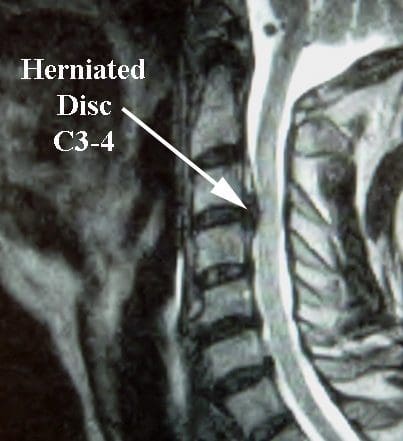
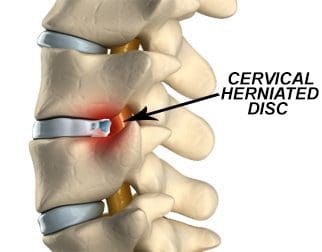
This injury may cause a herniated disc in the cervical (neck) area, in addition to a variety of other symptoms. A whiplash injury can include neurological impairment in mobility, joint aches, problems with concentration and chronic pain. Besides damaging the delicate tissues (muscles, tendons, and ligaments) that maintain the neck, it may also harm the cervical spine (the neck region of the backbone), inducing a herniated disc in the neck. The herniation can compress the nearby nerves, causing pain. Symptoms of a herniated disc in the neck may include tingling, numbness, and muscle weakness.
Pain from Previously Existing Conditions
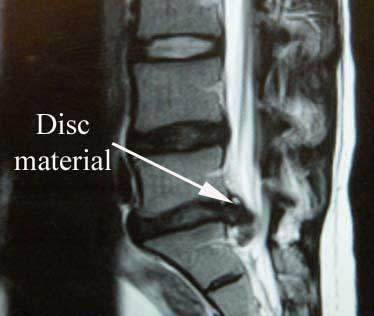
In a study published in the journal Spine, doctors found that disabling pain in the back following whiplash may be due to a previously disc in the spine. These conditions may present no symptoms that are apparent before the accident. The researchers further concluded that pain was successfully treated following microdiscectomies for these discs.
Symptoms from whiplash injuries cannot be necessarily resolved with neck pain treatment, and can be tricky to diagnose since the pain lower back and even in the shoulder region can radiate to other regions of the body. It can be especially challenging for the physician when symptoms are vague and non-localized.
When the natural reactions of the body don’t operate properly, injuries occur. In the normal state, a C-shape is maintained by the cervical spine. On an S-shape as the portion extends and the upper portion of this area flexes, the individual’s cervical spine takes upon impact from behind. This phenomenon risks herniating a disc or tearing a ligament. If the human body’s protective response is working correctly, it will recognize the impact and signal the cervical muscles and make a supportive scaffold for the cervical spine and ligaments.
Although pain can heal on its own it may often require therapy. A treatment program for a herniated disc in the neck may consist of anti-inflammatory pain medication, rest, and physical therapy. With these conservative treatments, the symptoms generally improve over time. But if imaging tests find out that the damaged disc is compressing nearby nerves and/or the spinal cord, or if symptoms persist despite the treatment, neck surgery may be considered.
There are a few things you can do in order to stop whiplash injuries requiring neck pain treatment and increased risk for pain . These include maintaining fitness and good posture. You can start focusing on those goals.
The scope of our information is limited to chiropractic and spinal injuries and conditions. To discuss options on the subject matter, please feel free to ask Dr. Jimenez or contact us at 915-850-0900 .�
By Dr. Alex Jimenez
Additional Topics: Automobile Accident Injuries
Whiplash, among other automobile accident injuries, are frequently reported by victims of an auto collision, regardless of the severity and grade of the accident. The sheer force of an impact can cause damage or injury to the cervical spine, as well as to the rest of the spine. Whiplash is generally the result of an abrupt, back-and-forth jolt of the head and neck in any direction. Fortunately, a variety of treatments are available to treat automobile accident injuries.
Chiropractor, Dr. Alexander Jimenez looks at the way this common injury shows itself.
Introduction
Iliotibial band syndrome (ITBS) between the knee is frequently diagnosed in sport injury clinics. ITBS presents having an incidence rate of around 22% in most lower extremity running-related injuries (1) also has been said to be the second most common complaint amongst distance runners (2). ITBS has been given the expression ‘runner’s knee’.
Trainers like endurance runners who perform flexion and extension combined with loading are subjected to this illness. ITBS presents during the first two or three miles in running with no mechanism of injury, which can make identifying the cause more interesting. With plenty of factors having been considered within the literature, changes are often purported to be a cause of ITBS. But some biomechanical factors have been researched and have been found to have little or no effect in the start of ITBS. Therefore this text’s point would be to examine the biomechanical changes which may induce an individual to the beginning of ITBS. The research published reviewed is largely based on a current systematic review that was published in Physical Therapy in Sport in 2014 (3).
Anatomy & Function
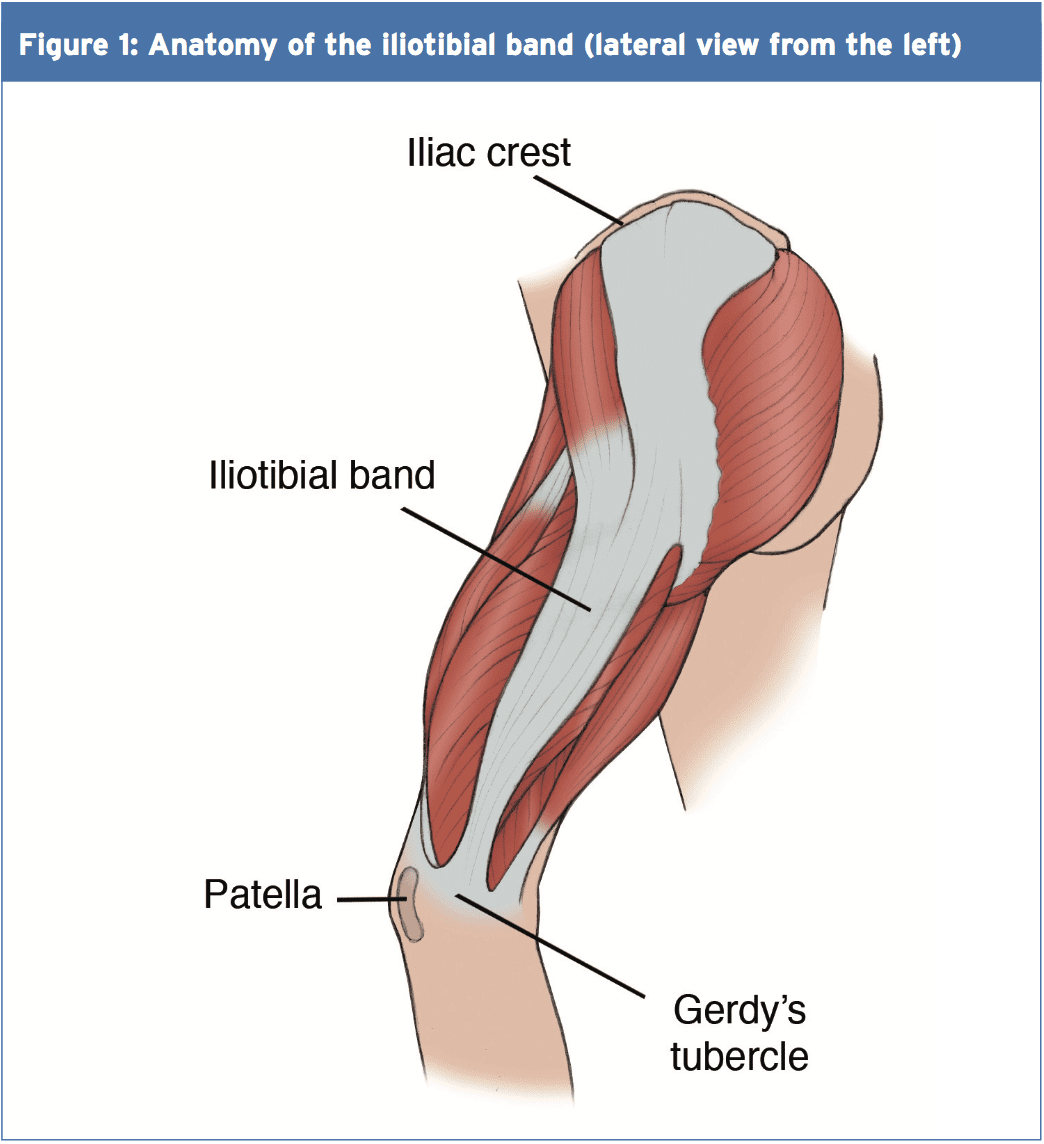
The iliotibial band (ITB) encapsulates the tensor fascia latae (TFL) presenting with both deep and superficial fibre attachments at the pelvis (4). In addition to attaching to the TFL, approximately three-quarters of the gluteus maximus tendon also conjoins with the ITB (4). The ITB courses along the lateral aspect of the hip and passes the greater trochanter. The ITB maintains an attachment on the posterior ridge of the femur whilst attaching itself to the fascia. The ITB has a fixed attachment at the lateral femoral condyle where it then divides into three segments with the first being the lateral patella (3). The remaining two segments cross the knee joint to insert at the head of fibula and most distally at the infrapatellar tubercle also known as Gerdy’s tubercle on the tibia (3). Figure 1 illustrates the location of the ITB.
The ITB passively functions to resist hip adduction, hip internal rotation and internal rotation of the knee in accordance with its attachments at the pelvis, femur and tibia(3). The gluteus maximus functions, through its attachment, to increase stability through the hip and knee complex by increasing the tension of the ITB(4). It is possible to see, based on its attachments at both the knee and hip, how changes could bring about the onset of ITBS.
Studies have proposed that as the knee flexes and extends the ITB ‘slides or flicks’ over the lateral femoral condyle of the knee causing an irritation beneath. This notion was debated by Falvey and colleagues (5), who stated that it was highly unlikely that the ITB would flick or slide over the bone during knee flexion due to it not being a loose structure. But the authors did agree that the impact of compression on the richly innervated fat pad was pain’s cause but by strain of the ITB where pain presents crossing the lateral femoral condyle. Strain rate and strain magnitude were measured in a prospective study involving female runners (6). The results indicated that frequency of strain of the ITB at the lateral femoral condyle was greater that the strain magnitude. This implies that a runner might have the ability to run for a short period but then incur lateral knee pain because of the strain to the ITB.
MRI scans have ascertained the knee flexion angle of 30� elicited the greatest compression of the ITB at the point of heel strike, whereas others have said that maximal compression occurs between 20-30�(2,6). A knee flexion angle at the point of heel strike has been found to be significantly different with 20.6� in ITBS patients compared to 15.3� in the control(7). Downhill running produces a greater knee flexion angle at the point of heel strike eliciting a larger strain load to the ITB and therefore this is often a main precursor to ITBS (6). Although an elevated knee flexion angle at the point of heel strike has been considered to contribute to ITBS, it is essential to examine the lower extremity from the frontal and transverse planes too and not solely from the sagittal plane (2).
Rearfoot Eversion
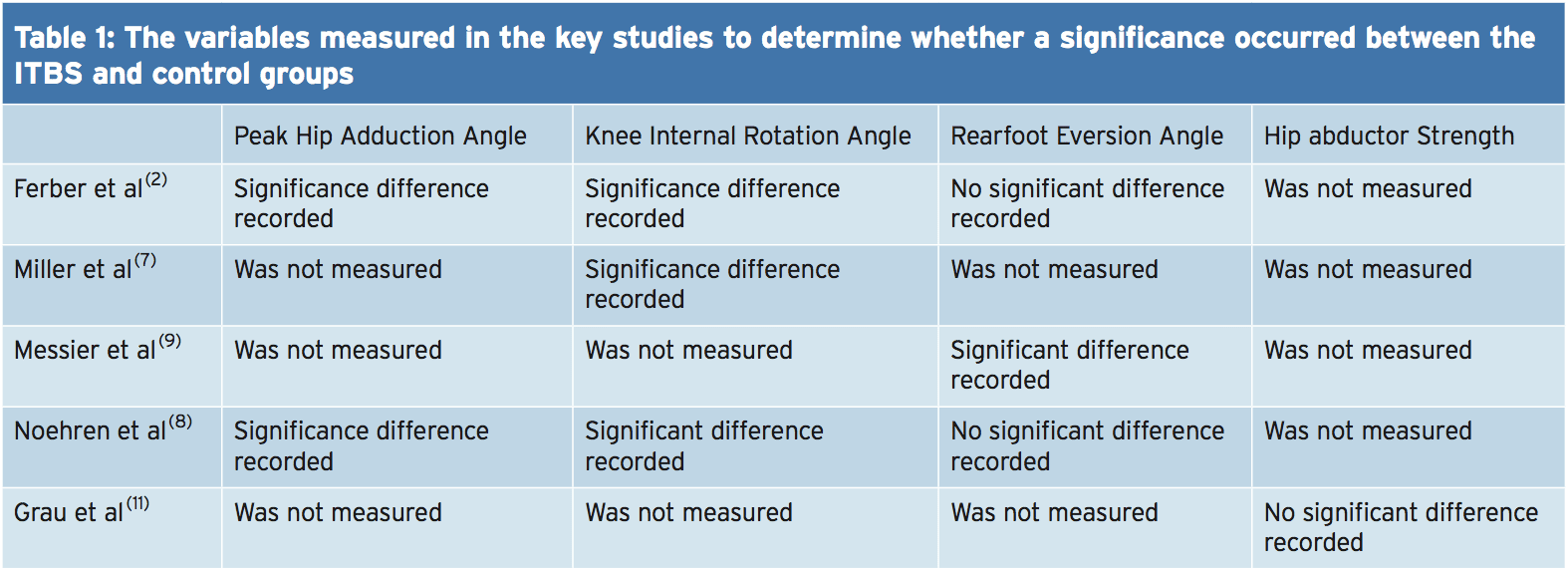
It’s possible to envisage how rear foot eversion could contribute to ITBS causing internal rotation of the tibia resulting at the distal attachment in greater strain of the ITB. In contrast Ferber and colleagues (2) indicated that there was no significant difference in the peak eversion angle of the female subjects, who were previously diagnosed with ITBS but were now symptom free, compared to controls. In a similar study non-significant differences were found between the currently symptomatic ITBS patients and controls for rear foot eversion (8).
Louw & Deary(3) found that ITBS patients sometimes demonstrated decreased eversion angles, accompanied by decreased internal rotation of the knee, at the point of heel strike. Ferber and colleagues (2) noted an increased inversion moment in the ITBS group which was suggested to control and limit the eversion moment. By comparison, currently symptomatic ITBS patients demonstrated a substantial difference compared to a control group with twice the rear foot motion during running (9).
Knee Internal Rotation
Peak internal rotation angle of the knee was found to be significantly greater in the ITBS patients when compared with controls at the point of heel strike (2). This research was supported by other studies who also found a significant effect for increased internal rotation of the knee following a run of moderate intensity to physical exhaustion(7). With excessive rotation comes compression due to increased strain of the ITB at the attachment.
An explanation of increased internal rotation of the knee was attributed to excessive external rotation of the femur perhaps due to shortening of the piriformis, gemellus inferior and superior and the obutrator externus (8). The authors added that excessive rotation at the hip might result from muscular activity of the rotators that were hip being the medius, minimus and the tensor fascia latae. These studies(2,7) were retrospective in design in that they tested healthy runners with a history of ITB pain, whereas(8) was a prospective study of patients with ITBS at the point of testing.
Hip Adduction Angle & Hip Abductor Strength
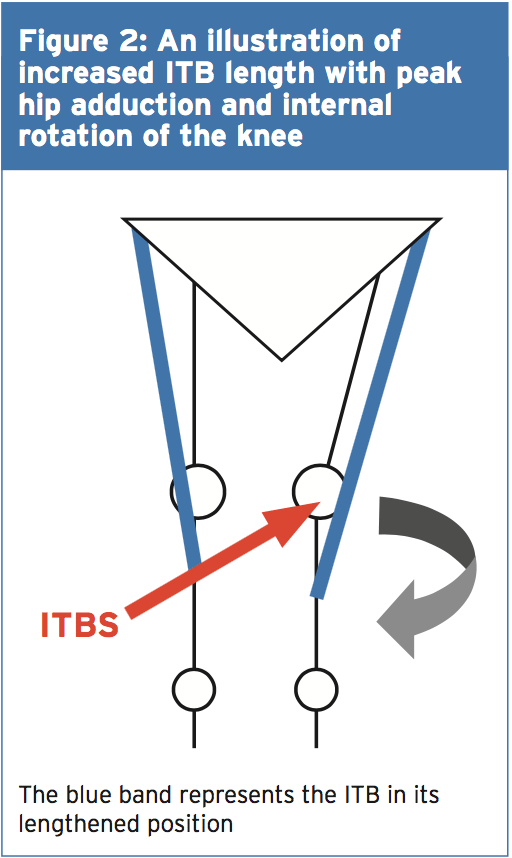
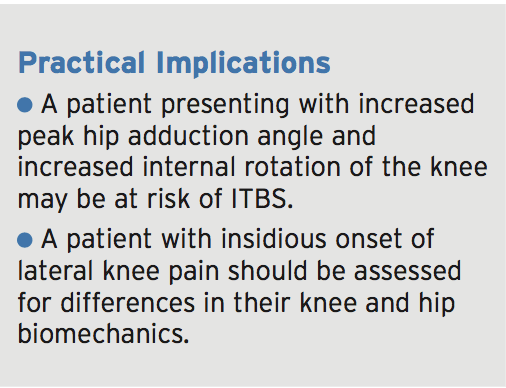
The hip adduction angle during the stance phase has been suggested to be greater. Ferber and colleagues(2) found that the peak hip adduction angle was significantly greater in the ITBS cohort and stated that with 95% confidence. Increased angle results in increased stress to the ITB and consequently increased compression at the lateral femoral condyle when combined with increased internal rotation of the tibia.
Figure 2 illustrates, when peak hip adduction and internal rotation combine, how this may result in increased the compression of the ITB at the lateral femoral condyle. Louw and Deary(3), however, stated that it remained inconclusive whether the peak hip adduction angle was a substantial element. Additional research is therefore required to support Ferber and colleagues'(2) initial findings as this study was a retrospective study carried out on healthy female runners with a history of ITBS.
Hip Abductor Strength
It’s been proposed that an increased peak hip adduction angle may coincide with hip abductor activity involving the gluteus medius in this group. During the stance phase of gait the gluteus medius functions to keep stability. Research has indicated that during stance the adduction forces can exceed three times an individual’s body weight(3). What’s more, it was stated that these forces were beyond the metabolic capacity of the gluteus medius to main pelvic stability during the stance phase using just this muscle alone(3).
Louw and Deary (3) were not able to identify a heightened hip abductor moment in the ITBS patients with increased peak hip adductor angles and suggested that it was more of an issue of timing as opposed to the size of the hip abductors. Louw and Deary (3) stated that the research is yet to examine trunk and pelvic movements in ITBS patients and it is plausible to suggest that biomechanical changes from higher up the kinetic chain has the potential to be a contributing element in ITBS etiology.
A research study of 24 (14 female, 10 male) patients with ITBS undertook a six-week rehabilitation programme to increase the strength of the hip abductors(10). Following six weeks of hip abductor strengthening to running 22 patients reported being pain-free and had returned. The female patients reported an average hip abductor torque increase of 34.9% and the male patients found 51.4% increase. However this study used a hand held dynamometer to measure isometric strength and therefore Fedricson (10) findings should be viewed with caution.
A more recent study assessed the hip abductor strength of currently symptomatic patients with healthy controls in a fixed position(11). The results indicated that no substantial differences occurred for static and dynamic hip abductor strength between the groups. Further research should look into the EMG and strength of the hip abductors in the role of managing ITBS. Table 1 shows of significance in the some of the variables of the studies used in this text.
Rehabilitation programs, following periods of immobilization and during, should include gluteal exercises to provide stability to the leg that is involved. If active exercises for the gluteal muscles are provided in a manner that is secure and effective then this can influence the period of transition from non weight. It’s prudent based on the research provided to date to develop function although research is lacking in terms of quality and volume as to the biomechanical influences on the etiology of ITBS. This guarantees that once load bearing commences that the leg that is involved has the stability and control that is active to keep the beginning of load of the ITB.
Summary
The recent review published by Louw and Deary(3) indicates that much of the research published within the literature depending on the etiology of ITBS is inconclusive. The level of research is relatively low and is based on retrospective trials. The research does indicate that knee biomechanics and abnormal hip is involved in the occurrence of ITBS. The authors ascertain that muscle strength is involved as is foot biomechanics that are abnormal. It is recommended that future research should measure kinematic movements of the hip and knee during downhill running as this is a complaint of ITBS onset.
References
1.Clini J of Sports Med, May 2006,16, (3), 261-268
2.J of Sports Phys Therap, Feb, 2010, 40, 2, 52-58.
3.Phys Therap in Sport, 2014, 15, 64 e75.
4.Surgic and Radiologic Anatomy (Dec) 2004; 26, (6), 433 – 446
5.Scand J of Med & Sci in Sports, Aug 2010, 20 (4), 580-587.
6.Clini Biomech, 2008, 23, 1018-1025.
7.Gait Posture. 2007 Sep, 26 (3), 407-13
8.Clini Biomech, Nov 2007, 22 (9), 951-956.
9.Med Sci in Sport & Ex, 1995, 27, 951-960.
10.Clini J of Sports Med, 2000, 10:169�175.
11. Int J of Sports Med, Jul, 2008, 29 (7), 579-583.
If given the opportunity, a herniated disc can occur as a consequence of trauma and can create a plethora of problematic symptoms which might become chronic pain conditions. Whiplash is most frequently associated with car collisions, but can actually happen from any injurious procedure that snaps the neck forward or back beyond its normal selection of movement.
This informative article will detail the prevalence of herniated discs related to whiplash events. We’ll investigate how whiplash occurs and how the process can enact disc injury in the cervical or upper thoracic spinal regions.
Whiplash Herniated Disc Incidents
Whiplash happens because of abrupt acceleration, or more commonly, sudden deceleration. Inertia is the force which can create harm to the spinal structures and the throat muscles at the neck and back.
The head is a really heavy weight that is supported by the slightly thinner and weaker vertebrae and intervertebral discs in the cervical spine. When inertia is applied to the entire body, the head will snap backwards or forward, causing both and typically hyperflexion or hyperextension. As it whips about causing an assortment of injurious events that are possible, including a herniated disc, this heavy weight places stress on the cervical spine.
Herniated Disc Pain and Discomfort
Whiplash typically occurs from severe trauma, such as an automobile accident, slip and fall, sports injury or act of violence. Any situation which causes the head to jolt abruptly back-and-forth, can cause whiplash.
Whiplash is a condition which sometimes occurs after an accident, but could also take some time to become apparent. The reasons for this time delay response vary, but are commonly linked to three possible causations:
First, it’s the pain relieving quality of adrenaline, which often fills the bodily systems during a crash. This can diminish the severity symptoms which might otherwise be debilitating when they occur. Second, is the psychological nocebo effect of the trauma, which could take some time to infiltrate and to come up within the subconscious mind. Finally, the secondary gain principle enacted by legal action having to do with the accident might causes time delay. It’s no coincidence that people begin to experience pain right around the time they seek professional help.
Whiplash & Herniated Disc Consequences
The vast majority of whiplash complaints are due to muscular injury, not damage to the spinal column. Neck muscle pain can be extremely severe, but is not a significant worry and should resolve with symptomatic treatment.
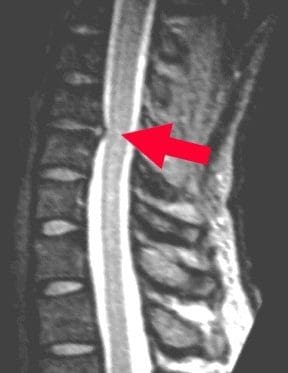
Extreme trauma or highly focused trauma can cause a bulging disc or even a ruptured disc in the neck or upper back. Symptoms are very likely to be painful for a number of weeks, but should resolve within 2 months, as is typical for practically any disc injury condition with the proper treatment and care.
Other less common effects of severe whiplash might incorporate a change in the natural curvature of the spine, a fractured or shattered vertebra or a torn ligament or tendon.
Whiplash Herniated Disc Guidance
A lot of men and women suffer whiplash traumas on a daily basis. These types of injuries are an inherent part of the fear we have towards spinal damage and are an integral component of litigation. Both of these factors make judging the actual degree of any whiplash neck injury complicated.
Pain is often worsened or perpetuated through psychosomatic or secondary gain factors, instead of structural anatomical problems. It is crucial, as a patient, to look past the psychological and legal implications of your injury and concentrate on your recovery.
The neck, like every other area of the human body, was made to heal, but will only do so in the event that you give it the mental and emotional support and trust it requires.
There isn’t anything more important than your health. Unfortunately, this is a lesson for those who endure a plethora of herniated disc treatments and eventual disc surgery simply to bolster a case that is legal. When the case is over, you might have some money, but is it really worth it to lose your freedom and functionality for the remainder of your life?
The scope of our information is limited to chiropractic and spinal injuries and conditions. To discuss options on the subject matter, please feel free to ask Dr. Jimenez or contact us at 915-850-0900 .�
By Dr. Alex Jimenez
Additional Topics: Automobile Accident Injuries
Whiplash, among other automobile accident injuries, are frequently reported by victims of an auto collision, regardless of the severity and grade of the accident. The sheer force of an impact can cause damage or injury to the cervical spine, as well as to the rest of the spine. Whiplash is generally the result of an abrupt, back-and-forth jolt of the head and neck in any direction. Fortunately, a variety of treatments are available to treat automobile accident injuries.
The accident-type most-associated with whiplash is being rear-ended. Let us take a glance at how this kind of accident happens. Most people think that when you could be rear ended, your head flies back. Although that is the logical way to consider the harm (it’s also how I will discuss it most of the time), it is not technically accurate.
Process of Whiplash Injury
When you are rear-ended what happens is that your body is driven out from under your head. Although there is a great deal of soft tissue stretching that occurs in the soft tissues (LIGAMENTS, TENDONS, MUSCLES, and particularly FASCIA) as your body travels forward at a significantly higher velocity than your head; at some point, these “soft tissues” cannot stretch anymore. This is the first point at which microscopic tissue tearing occurs. Realize that this is the beginning of the injury process. The body will be gradually caught up to by the head, and subsequently overshoot it at an extremely accelerated velocity, all in a fraction of a second.
The head is now accelerating forward faster than your entire body. When the body comes to a stop (i.e. your vehicle slams into whatever is in front of it), the head will continue to travel forward. This is actually where the term “whiplash” comes from, and where it occurs. It’s exactly the principle of physics that results in the tip of a bullwhip to ‘crack’ as it breaks the sound barrier. If this type of ‘whipping’ motion occurs in the neck, it can result in a great deal of soft tissue damage and subsequent formation of fibrosis and scar tissue. Additionally, it may lead to a great deal of occult (hidden) brain and nerve system trauma.
When tissue tears, it ordinarily doesn’t tear like we think of things tearing, in half. As a matter of fact, when you take a look at pulled muscles, these are actually pulled, over-stretched, or microscopically torn fascia. Fascia is the thin membrane that tightly surrounds the muscle. Fascial tearing and the subsequent fascial adhesions present a double-edged sword as far as chronic pain is concerned.
Surround your neck with too much scar tissue, and there is no way your neck will move normally as it did before the motor vehicle accident. Unfortunately, degeneration is caused by abnormal motion, and abnormal joint motion is caused by degeneration. Repeat ad infinitum. Whether or not this cycle was launched by an MVA is immaterial at this stage. The process leads to chronic pain. People who are living inside of this vicious cycle know. Same evaluations, same results. If you’ve been involved in an automobile accident and are experiencing neck pain or other symptoms due to suspected cervical spine damage or injury, seek immediate medical attention.
The scope of our information is limited to chiropractic and spinal injuries and conditions. To discuss options on the subject matter, please feel free to ask Dr. Jimenez or contact us at 915-850-0900 .�
By Dr. Alex Jimenez
Additional Topics: Automobile Accident Injuries
Whiplash, among other automobile accident injuries, are frequently reported by victims of an auto collision, regardless of the severity and grade of the accident. The sheer force of an impact can cause damage or injury to the cervical spine, as well as to the rest of the spine. Whiplash is generally the result of an abrupt, back-and-forth jolt of the head and neck in any direction. Fortunately, a variety of treatments are available to treat automobile accident injuries.
Each year in america there are between 6.5 million and 7 million MVA’s affecting many individuals. Of those accidents, about three million involve some kind of bodily injury. About two thirds of these injuries, while not debilitating, are permanent. This means that if you play the odds, you’ll be during the course of your lifetime in 4 or 5 car accidents. They are undoubtedly the major cause although MVA’s are certainly not the sole cause of injuries, such as whiplash.
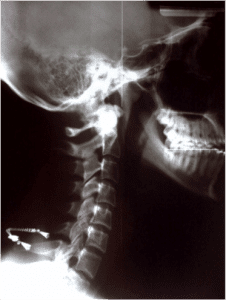
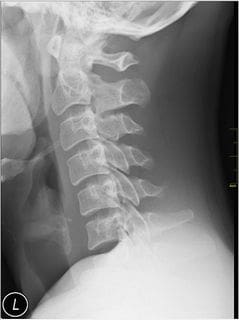
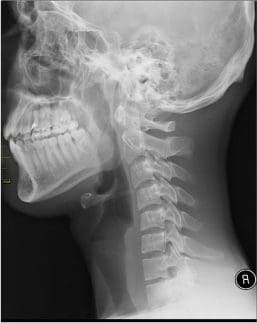
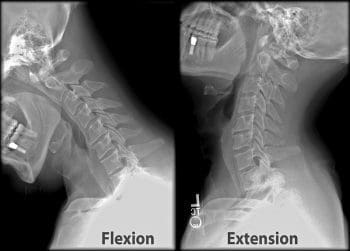
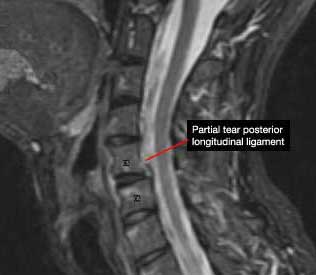
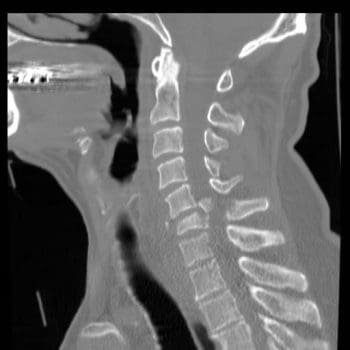
What is the significant whiplash sign we look for as far as imaging is concerned? A simple neutral lateral x-ray of the cervical spine is about as good as anything to demonstrate the extent of damage or injury.
When an individual experiences whiplash, their fascia is often damaged or injured as their head slams backwards. Sooner or later the individual begins to get neck pain, headaches, and a loss of range of motion in their neck. The problem is that a Fascial Adhesion in the SCM may be pulling on their neck. A restriction (Fascial Adhesion) in the SCM is going to pull the head forward.
Normal Cervical Curves
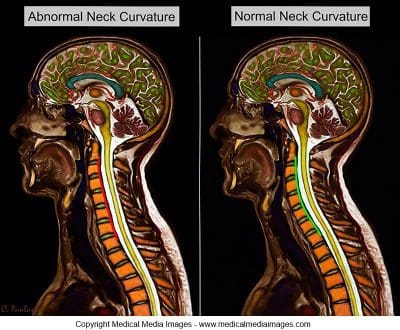
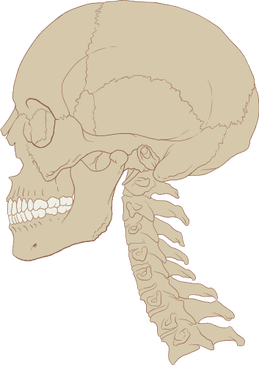
Although you should not have spinal curves that run from 1 side of your body to the other (Scoliosis), it’s absolutely crucial to have the proper spinal curves that run from front to back. The normal front-to-back curve in your neck, should be the same as the front-to-back curve in your low back (lordosis) — the opposite of the curve in your mid back (kyphosis). Normal curves allow for normal motion, they act as shock absorbers. Think for a moment about it. A normal curve will dissipate much of the force, spreading it out like a spring when you walk down the sidewalk.
Abnormal Cervical Curves
Abnormal curves of the cervical spine (neck) come in two forms. You have the loss of cervical lordosis. This is the “Military Neck” you see in the first x-ray. Secondly, you get a complete reversal of the lordotic curve (second x-ray). These are some of the steps on the road to Degenerative Arthritis.
For those of you understanding the nature whiplash injury and the NEW MODEL of Repair and Tissue Healing, this picture of the PLATYSMA MUSCLE should help. The Platysma is a thin muscle that covers the entire front portion of the neck. It is likewise covered in Fascia. This is just one more piece of the puzzle so far as explaining the Chronic Pain people struggle with after a whiplash injury — by imaging which is always negative, pain that is not explained. And like SCM Muscles that are injured, it helps to explain the cervical curves. It pulls, as it restricts, and as it pulls, the head will come. Think that Forward Head Posture is no big deal? THINK AGAIN.
The scope of our information is limited to chiropractic and spinal injuries and conditions. To discuss options on the subject matter, please feel free to ask Dr. Jimenez or contact us at 915-850-0900 .�
By Dr. Alex Jimenez
Additional Topics: Automobile Accident Injuries
Whiplash, among other automobile accident injuries, are frequently reported by victims of an auto collision, regardless of the severity and grade of the accident. The sheer force of an impact can cause damage or injury to the cervical spine, as well as to the rest of the spine. Whiplash is generally the result of an abrupt, back-and-forth jolt of the head and neck in any direction. Fortunately, a variety of treatments are available to treat automobile accident injuries.
Automobile accidents are one of the leading causes of spine injuries and are responsible for more than 40 percent of injuries every year. That is a troubling statistic. Because automobile accidents cannot always be prevented, having the right understanding of spine injuries can allow people to recognize injury and seek proper treatment.
The spine is an intricate structure, but additionally it is delicate. The spine isn’t designed to withstand the harmful effects of an automobile accident. Regrettably, spine and neck injuries are common during auto collisions; the impact damages the muscles and the ligaments in the back, and the facet joints bear the brunt of the force. This could result in injuries, such as compression fractures, disk herniation, whiplash, and spondylolisthesis.
It is essential to be able to spot the symptoms of damage or injury, so if you or someone you love is hurt, its important to understand what steps you should follow for proper care. Some auto accidents may be made worse when the injured individual is moved. You should seek the assistance of a medical professional if you experience back or neck pain following an automobile collision. A muscle strain may heal by itself, but if neck or back pain persists due to a much more serious condition or injury, the affected individual could feel pain for months or years if left untreated.
Identifying Damage or Injury
How do you know if back or neck pain is simply a muscle strain, or even a more significant injury or condition? Until you are evaluated by a healthcare specialist, you likely won’t know for certain, however there are a number of indications that may indicate that aid is needed. A few of the neck and back injuries include:
Whiplash
Whiplash is more common during rear-end collisions, as the force from impact suddenly pushes the head backward, then forward, much like the movement of hammering a whip. Front-end collisions generally do not result in whiplash, as the headrest often stops the motion of the head and neck. Symptoms of whiplash will appear within one day of the crash, and might include stiffness and pain in the neck, headaches which are often at the bottom of the skull, dizziness, blurred vision, and fatigue. Sometimes, an individual with whiplash may experience difficulty concentrating, memory problems, ringing in the ears, difficulty sleeping, and irritability.
Spinal Fractures
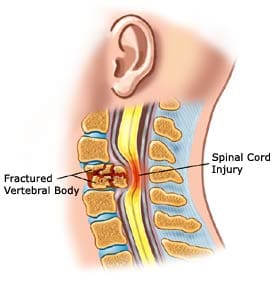
Compression fractures are common in the thoracic and cervical spine (middle and lower back) after a car crash. While the entire body is held in place with a seatbelt, during impact, the body may be thrown forward. This can pull on the vertebrae. As the vertebrae may rarely move, in some cases, spinal fractures may result in spinal cord injuries. Those with spinal cord injuries may experience tingling, numbness, weakness, or loss of bowel and bladder control, although the main symptom of a spinal fracture is mild to severe back pain that interferes with movement. When a fracture is suspected, it is important not to move the injured person; harm could be caused by motion.
Spondylolisthesis
Spondylolisithesis occurs when a vertebra shifts from place because of a stress fracture in bone. The bone that is displaced can press on the nerves or narrow the spinal canal, causing pain, numbness, or weakness in the buttock or leg, and trouble walking. In extreme cases, it may lead to loss of bladder or bowel control. Some people don’t experience symptoms until many years later, or experience no symptoms in any way.
Disc Herniation
Considering that the discs absorb the vast majority of the impact to the spine, it is possible to get a disc to herniate through an automobile crash. A disc is herniated if its tender core pushes through a little crack in the outside of the disc, irritating the nerves. Many people today experience no symptoms, but others might experience leg or arm pain, depending on the location of the herniated disc, and might experience tingling, numbness, or weakness in the region.
What to Do if You’ve Got a Spinal Injury
Should you encounter any back or neck pain at all following a car crash, you should be evaluated by a healthcare professional to rule out any severe injury. But, it is important to get medical care immediately in case you experience tingling, numbness, fatigue, or lack of bowel or bladder control. These are indications of a more serious injury that has to be addressed immediately.
The scope of our information is limited to chiropractic and spinal injuries and conditions. To discuss options on the subject matter, please feel free to ask Dr. Jimenez or contact us at 915-850-0900 .�
By Dr. Alex Jimenez
Additional Topics: Automobile Accident Injuries
Whiplash, among other automobile accident injuries, are frequently reported by victims of an auto collision, regardless of the severity and grade of the accident. The sheer force of an impact can cause damage or injury to the cervical spine, as well as to the rest of the spine. Whiplash is generally the result of an abrupt, back-and-forth jolt of the head and neck in any direction. Fortunately, a variety of treatments are available to treat automobile accident injuries.
IFM's Find A Practitioner tool is the largest referral network in Functional Medicine, created to help patients locate Functional Medicine practitioners anywhere in the world. IFM Certified Practitioners are listed first in the search results, given their extensive education in Functional Medicine