
Contents
Unlocking Tendon Healing: An Inside Look at Percutaneous Tenotomy
Abstract
Chronic tendon pain, or tendinopathy, can be debilitating and significantly affect quality of life. Traditional treatments often provide only temporary relief, leaving patients searching for more definitive solutions. In this educational post, I will explore a groundbreaking, minimally invasive procedure known as percutaneous tenotomy. We will get into the science behind this ultrasound-guided technique, which removes damaged tendon tissue to stimulate the body’s natural healing processes. Specifically, we will examine the two leading methods, Tenex and TenJet, and discuss their applications for conditions like tennis elbow, Achilles tendinopathy, and plantar fasciitis. As we explore the mechanics of this procedure, I will also explain how we at Injury Medical Clinic integrate this advanced medical intervention into our comprehensive, multidisciplinary approach. This includes integrative chiropractic care, functional medicine, and personalized rehabilitation, all under the medical direction of Dr. Maria Guadalupe Cardenas, MD, to ensure our patients achieve optimal, long-lasting recovery.
As a practitioner with dual credentials in chiropractic (DC) and as an advanced practice registered nurse (APRN), I have dedicated my career to bridging gaps between medical disciplines. My goal has always been to find the most effective, evidence-based solutions for my patients. Today, I want to share insights into a fascinating procedure that has revolutionized how we treat chronic tendon pain: percutaneous tenotomy. This technique, once confined to surgical suites, is now a powerful tool accessible in an office setting, offering hope to those suffering from persistent tendinopathies.
At our practice, Injury Medical Clinic, we pride ourselves on a collaborative, integrative model. Our medical director and collaborative physician, Dr. Maria Guadalupe Cardenas, MD, an internist with over 40 years of experience, provides essential medical oversight. This partnership allows us to combine my expertise in chiropractic, functional medicine, and rehabilitation with her deep knowledge of internal medicine. This combination ensures that when we recommend and facilitate a procedure like percutaneous tenotomy, it is part of a holistic and well-managed treatment plan designed for comprehensive healing.
Understanding Chronic Tendinopathy: When Rest Isn’t Enough
Before we explore the solution, let’s understand the problem. Tendinopathy is not simply inflammation, as the term “tendinitis” might suggest. It’s a degenerative condition where the collagen fibers that make up the tendon begin to break down. This often happens with repetitive overuse, which prevents the tendon from healing properly. Instead of organized, strong collagen, the body lays down a disorganized, weak, and painful matrix of scar tissue. This abnormal tissue is metabolically inactive, has a poor blood supply, and doesn’t respond well to conservative treatments like rest, ice, or stretching.
Clinically, I see patients who have been struggling for months, or even years, with conditions such as:
- Tennis Elbow (Lateral Epicondylitis or Extensor Carpi Radialis Brevis Tendinopathy)
- Golfer’s Elbow (Medial Epicondylitis)
- Jumper’s Knee (Patellar Tendinopathy)
- Achilles Tendinopathy
- Plantar Fasciitis (Plantar Fasciopathy)
These individuals often report a cycle of pain, temporary relief, and frustrating recurrence. This is precisely where a more targeted intervention becomes necessary.
Percutaneous Tenotomy: A Minimally Invasive Revolution
Percutaneous tenotomy is a cutting-edge, FDA-approved procedure designed to precisely remove the damaged, degenerative tissue from a tendon under ultrasound guidance. The term “percutaneous” means “through the skin,” highlighting its minimally invasive nature. Unlike open surgery, which requires large incisions and longer recovery times, percutaneous tenotomy is performed through a very small entry point, often requiring just a sterile bandage afterward.
The core principle is simple but powerful: by selectively debriding (removing) the diseased tissue, we create a controlled injury that triggers the body’s natural inflammatory and healing cascade. This process brings fresh blood, growth factors, and specialized cells to the area, encouraging new, healthy tendon tissue to grow.
Leading researchers in musculoskeletal medicine have shown that this targeted debridement is key to breaking the cycle of chronic pain and dysfunction (Knutsen et al., 2023). It’s a precise and elegant solution that addresses the root cause of the problem.
The Two Leading Techniques: Tenex and TenJet
Two primary technologies currently dominate the market for percutaneous tenotomy. While both achieve the same goal, they use different mechanisms.
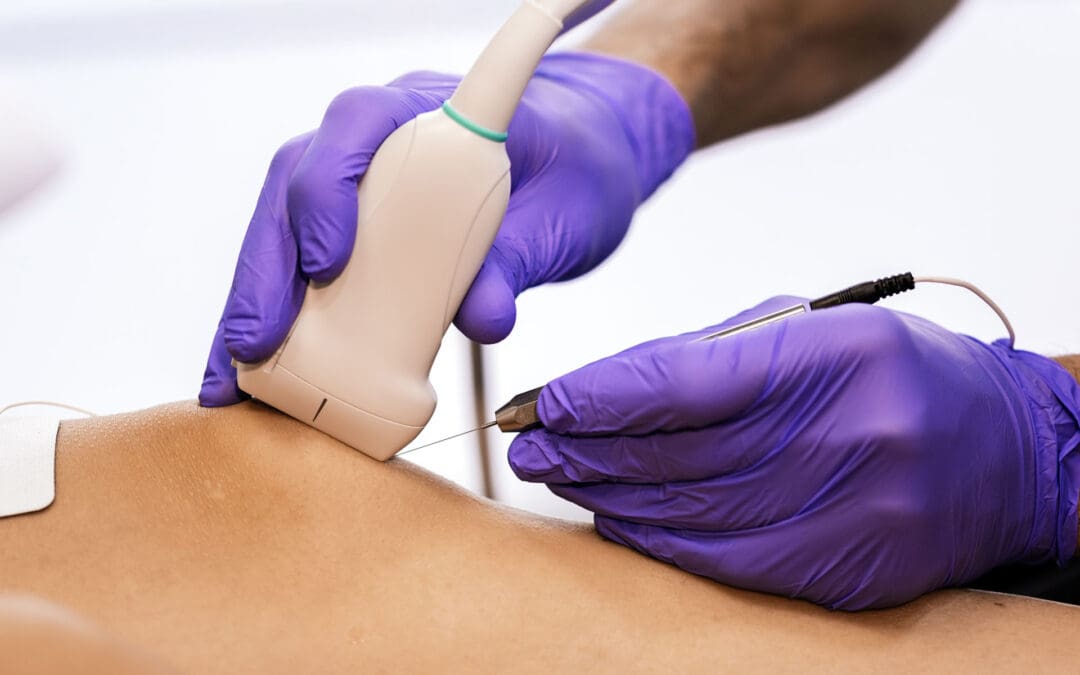
- Tenex Health TX System: This technique relies on phacoemulsification, the same ultrasonic energy used in modern cataract surgery. A specialized handheld instrument uses a small, 18-gauge double-lumen needle. The needle tip vibrates at an ultrasonic frequency, emulsifying (liquefying) the targeted pathologic tissue. At the same time, a second lumen within the needle suctions the emulsified debris out of the body. This is performed in real time under direct ultrasound visualization, ensuring that only damaged tissue is removed while the surrounding healthy tendon is preserved.
- TenJet System: This technology offers an alternative to ultrasonic energy. It uses a high-velocity, pressurized stream of saline to create a “cutting” effect. The focused water jet precisely dissects and removes the degenerated tissue, which is then aspirated away through the same instrument.
In our collaborative network, we often use the Tenex device for its precision and effectiveness. The procedure is typically performed in an office or a minor procedure suite, making it incredibly convenient for patients. A foot pedal controls the device, and the settings are calibrated for the specific tendon and severity of the condition.
A Glimpse into the Procedure: Debriding Tennis Elbow
To help you visualize how the device works, let’s walk through a typical procedure for extensor carpi radialis brevis tendinopathy, commonly known as tennis elbow. This is one of the most common and well-studied applications for percutaneous tenotomy.
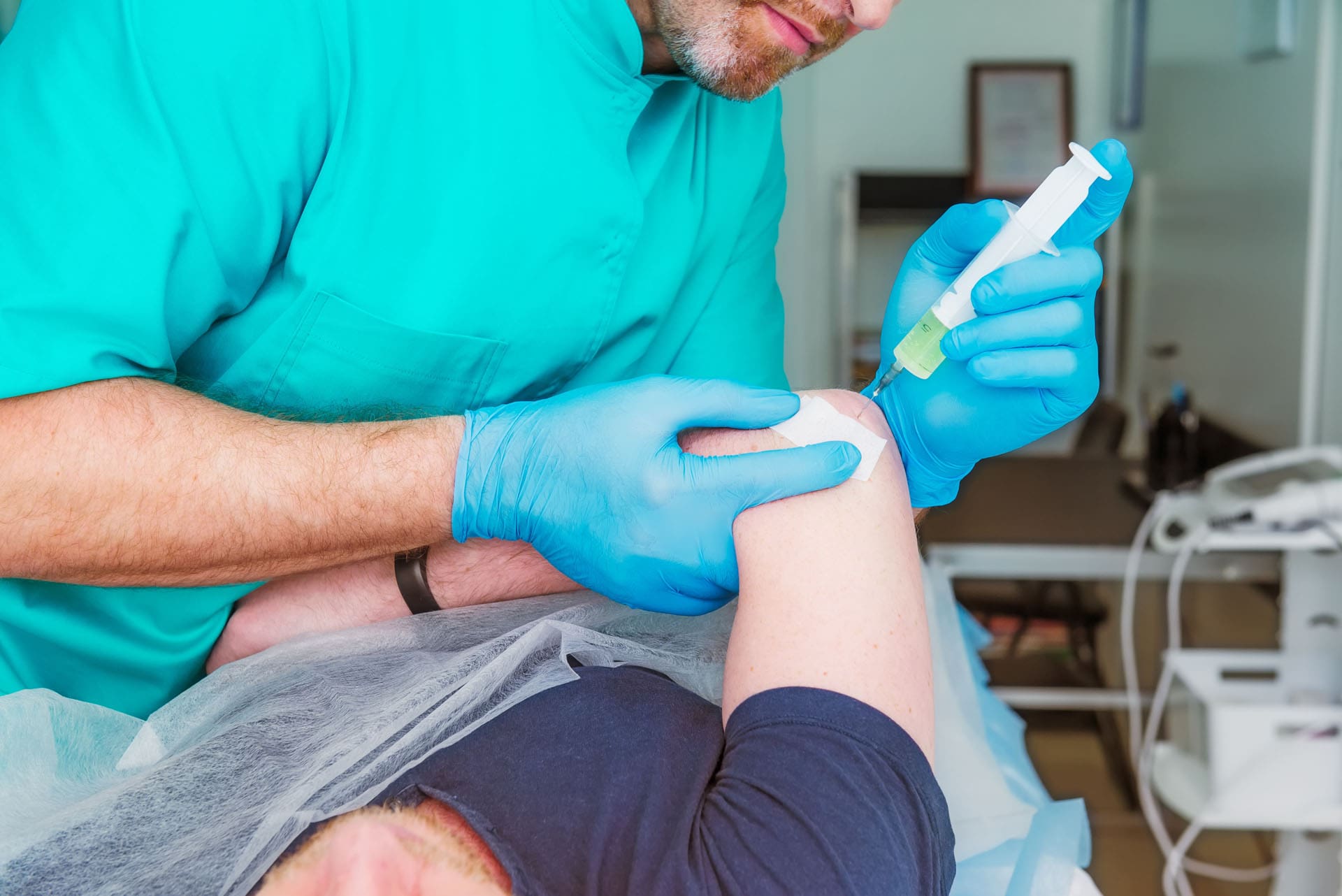
- Preparation and Sterilization: The patient is positioned comfortably, and the area is prepped using a sterile technique. The ultrasound probe itself is covered with a sterile sheath to maintain a clean field. Local anesthetic numbs the area completely, ensuring the procedure is painless.
- Ultrasound Visualization: The first and most critical step is using the ultrasound to identify the exact location and extent of the tendinopathy. The damaged tissue appears distinct on the screen—often hypoechoic (darker) and thickened compared with the bright, organized fibers of a healthy tendon.
- Needle Insertion: Under continuous ultrasound guidance, the provider carefully inserts the Tenex needle through the skin and advances it directly into the degenerated tissue. Real-time imaging lets the provider see the needle tip at all times, ensuring pinpoint accuracy.
- Debridement: The provider activates the device with the foot pedal. The ultrasonic tip begins to vibrate, and the provider moves the needle back and forth through the diseased tissue in a technique similar to fenestration (a needling procedure that promotes bleeding and healing). You can often hear a subtle hum as the device works. The device simultaneously suctioned away the emulsified, unhealthy tissue.
- Completion: The entire “cutting time” is remarkably short, typically ranging from 30 seconds to two minutes. Once the provider has sufficiently debrided the pathologic area, they remove the needle and apply a small bandage.
This removes the source of pain and creates fertile ground for true healing to begin. Studies have demonstrated significant improvements in pain and function following this procedure for various tendinopathies (Seng et al., 2016).
Our Integrative Approach: Beyond the Procedure
At Injury Medical Clinic, performing a procedure like percutaneous tenotomy is just one part of a larger, more comprehensive approach. True and lasting recovery requires a multi-faceted approach that supports the body’s healing journey from every angle. This is where our unique integrative model, supervised by Dr. Cardenas, truly shines.
1. The Role of Integrative Chiropractic Care
As a chiropractor, I focus on the biomechanical integrity of the entire musculoskeletal system. The tendon issue didn’t arise in isolation. It often results from underlying biomechanical faults, postural imbalances, or compensatory movement patterns. My role, both before and after the tenotomy procedure, is to:
- Assess and Correct Joint Dysfunction: I perform specific chiropractic adjustments to the elbow, wrist, shoulder, and even the spine to restore proper joint mechanics. If the joints don’t move correctly, the attached tendons remain under abnormal stress, hindering recovery and increasing the risk of reinjury.
- Address Myofascial Restrictions: Using techniques like Active Release Technique (ART) and Graston Technique, we break down adhesions in the muscles and fascia surrounding the affected tendon. This improves flexibility, reduces muscle tension, and helps the tendon glide smoothly.
- Prescribe Rehabilitative Exercises: After the procedure, a carefully graded exercise program is crucial. We start with gentle range-of-motion exercises and progress to eccentric loading exercises. Eccentric exercises (lengthening the muscle-tendon unit under load) are scientifically proven to stimulate collagen production and help the new tendon fibers align correctly, making them strong and resilient (Alfredson, 2005).
2. Functional Medicine and Nutritional Support
Healing is a metabolically demanding process. As a Certified Functional Medicine Practitioner (CFMP), I consider the biochemical factors that can support or hinder tissue repair. We may assess for and address:
- Systemic Inflammation: Chronic inflammation can impede healing. We recommend anti-inflammatory diets rich in omega-3 fatty acids, antioxidants, and phytonutrients.
- Nutrient Deficiencies: Key nutrients like Vitamin C, zinc, manganese, and certain amino acids (proline, glycine) are essential building blocks for collagen. We may recommend targeted supplementation to ensure the body has the raw materials it needs to build a strong new tendon.
- Gut Health: Emerging research shows a strong link between gut health and systemic inflammation. Optimizing the gut microbiome can profoundly affect the body’s ability to heal.
3. Medical Oversight and Comprehensive Care
Having Dr. Cardenas as our medical director is invaluable. Her internal medicine expertise ensures we consider all aspects of the patient’s health. She provides medical clearance for procedures, manages any co-existing medical conditions (like diabetes or hypertension) that could affect healing, and can prescribe medications for pain management if necessary. This collaborative oversight ensures patient safety and a truly integrated standard of care that addresses the whole person, not just the injured tendon.
A New Era in Tendon Treatment
Percutaneous tenotomy represents a significant leap forward from older, more invasive methods. When skilled providers use it and integrate it into a comprehensive rehabilitation plan, this powerful tool delivers remarkable outcomes. It bridges the gap between failed conservative care and major surgery.
At our clinic, we use the latest evidence-based research to guide our practice. By combining advanced medical procedures like percutaneous tenotomy with the foundational principles of chiropractic care, functional medicine, and targeted rehabilitation, we create a synergistic healing environment. Our goal is to eliminate your pain, restore your function, strengthen your body, and empower you to return to the activities you love, stronger and more resilient than before.
If you have been struggling with chronic tendon pain, know that there are innovative and effective options available. It may be time to explore a more definitive solution that addresses the true source of your condition.
References
Alfredson, H. (2005). The chronic painful Achilles and patellar tendon: Research on basic biology and treatment. Scandinavian Journal of Medicine & Science in Sports, 15(4), 252–259. https://doi.org/10.1111/j.1600-0838.2005.00478.x
Knutsen, E. J., Awan, T. M., & Whaley, J. D. (2023). Percutaneous ultrasonic tenotomy. In StatPearls. StatPearls Publishing. https://www.ncbi.nlm.nih.gov/books/NBK580556/
Seng, K., Mohan, P. C. S., & Koh, J. S. B. (2016). Percutaneous ultrasonic tenotomy for chronic tendinopathies: A systematic review. Journal of Orthopaedic Surgery, 24(1), 92–97. https://doi.org/10.1177/160240021602400120
General Disclaimer, Licenses, and Board Certifications *
Professional Scope of Practice *
The information herein on "Tendon Healing with Percutaneous Tenotomy Overview" is not intended to replace a one-on-one relationship with a qualified health care professional or licensed physician and is not medical advice. We encourage you to make healthcare decisions based on your research and partnership with a qualified healthcare professional.
Blog Information & Scope Discussions
Welcome to El Paso's Premier Wellness and Injury Care Clinic & Wellness Blog, where Dr. Alex Jimenez, DC, FNP-C, a Multi-State board-certified Family Practice Nurse Practitioner (FNP-BC) and Chiropractor (DC), presents insights on how our multidisciplinary team is dedicated to holistic healing and personalized care. Our practice aligns with evidence-based treatment protocols inspired by integrative medicine principles, similar to those on this site and on our family practice-based chiromed.com site, focusing on naturally restoring health for patients of all ages.
Our areas of multidisciplinary practice include Wellness & Nutrition, Chronic Pain, Personal Injury, Auto Accident Care, Work Injuries, Back Injury, Low Back Pain, Neck Pain, Migraine Headaches, Sports Injuries, Severe Sciatica, Scoliosis, Complex Herniated Discs, Fibromyalgia, Chronic Pain, Complex Injuries, Stress Management, Functional Medicine Treatments, and in-scope care protocols.
Our information scope is multidisciplinary, focusing on musculoskeletal and physical medicine; wellness; contributing etiological viscerosomatic disturbances within clinical presentations; associated somato-visceral reflex clinical dynamics; subluxation complexes; sensitive health issues; and functional medicine articles, topics, and discussions.
We provide and present clinical collaboration with specialists from various disciplines. Each specialist is governed by their professional scope of practice and licensure jurisdiction. We use functional health & wellness protocols to treat and support care for musculoskeletal injuries or disorders.
Our videos, posts, topics, and insights address clinical matters and issues that directly or indirectly relate to our clinical scope of practice.
Our office has made a reasonable effort to provide supportive citations and has identified relevant research studies that support our posts. We provide copies of supporting research studies upon request to regulatory boards and the public.
To discuss how these matters can assist in a specific care plan or treatment protocol, please contact Dr. Alex Jimenez, DC, APRN, FNP-BC, or reach out to us at 915-850-0900.
We are here to help you and your family.
Blessings
Dr. Alex Jimenez DC, MSACP, APRN, FNP-BC*, CCST, IFMCP, CFMP, ATN
Email: [email protected]
Multidisciplinary Licensing & Board Certifications:
Licensed as a Doctor of Chiropractic (DC) in Texas & New Mexico*
Chiropractic Licenses:
Texas DC License #: TX5807, Verified: TX5807
New Mexico DC License #: NM-DC2182, Verified: NM-DC2182
Nurse Practitioner Licenses:
Texas APRN License #: 1191402, Verified: 1191402 *
New Mexico CNP License #: 90560, Verified 90560
Florida APRN License #: 11043890, Verified: APRN11043890 *
Colorado License #: C-APN.0105610-C-NP, Verified: C-APN.0105610-C-NP
New York License #: N25929, Verified N25929
Georgia APRN License #: GAA-NP005701
Multi-State Advanced Practice Registered Nurse (APRN*) Texas & Multi-States
Multi-state Compact APRN License by Endorsement (43 States)
Compact Status: Multi-State License: Authorized to Practice in 43 States*
Nursing Licensure Compact: Updated Here
DEA Registration: (Drug Enforcement Agency Registered)
All medical (MDs) and family practice providers (FNP-APRN) are registered and licensed to offer various levels of medication.
Verify Providers Here
License Verification Link: Nursys License Verifier
* Prescriptive Authority Authorized (DEA Registered Providers). Call if Required
Board Certification:
ANCC FNP-BC: Board Certified Nurse Practitioner*
Education:
Graduate with Honors: ICHS: MSN-FNP (Family Nurse Practitioner Program)
Degree Granted. Master's in Family Practice, MSN Diploma (Cum Laude)
Dr. Alex Jimenez, DC, APRN, FNP-BC*, CFMP, IFMCP, ATN, CCST
(Board Certified: Family Practice Nurse Practitioner—Multistate)*
(Licensed Nurse Practitioner & Chiropractor - Multistate)*
Clinical Director
DC & FNP License (Review Above)
Digital Business Card
NPI: 1205907805
Dr. Maria Cardenas, MD
(Board Certified: Internal Medicine)
(Licensed Medical Doctor)
Medical Director, Clinical Director & Collaborative Physician
NPI # 1164426748
MD License #: J2933
Licenses and Board Certifications:
MD: Medical Doctor
DC: Doctor of Chiropractic
APRNP: Advanced Practice Registered Nurse
FNP-BC: Family Practice Specialization (Multi-State Board Certified)
FNP-BC: Family Practice Across Life Span (Neonatal to Geriatrics)
RN: Registered Nurse (Multi-State Compact License)
CFMP: Certified Functional Medicine Provider
MSN-FNP: Master of Science in Family Practice Medicine
MSACP: Master of Science in Advanced Clinical Practice
IFMCP: Institute of Functional Medicine
CCST: Certified Chiropractic Spinal Trauma
ATN: Advanced Translational Neutrogenomics
Family with Primary Care Focus (Family Nurse Practitioner or FNP)
- The Family Nurse Practitioner (FNP) promotes, maintains, and restores health for individuals and families across the lifespan. FNPs also identify health risks, promote wellness, and diagnose and manage acute and chronic illness.
- The FNP focuses on comprehensive primary care, promoting healthy lifestyles for patients across the lifespan in settings such as private practice, physician offices, and community health centers.
Memberships & Associations:
TCA: Texas Chiropractic Association: Member ID: 104311
TNA: Texas Nurse Association: Member ID: 06458222
TNP: Texas Nurse Practitioner Association ID: 2025091511
AANP: American Association of Nurse Practitioners: Member ID: 2198960
ANA: American Nurses Association: Member ID: 06458222 (District TX01)
| Primary Taxonomy | Selected Taxonomy | State | License Number |
|---|---|---|---|
| No | 111N00000X - Chiropractor | NM | DC2182 |
| Yes | 111N00000X - Chiropractor | TX | DC5807 |
| Yes | 363LF0000X - Nurse Practitioner - Family | TX | 1191402 |
| Yes | 363LF0000X - Nurse Practitioner - Family | FL | 11043890 |
| Yes | 363LF0000X - Nurse Practitioner - Family | CO | C-APN.0105610-C-NP |
| Yes | 363LF0000X - Nurse Practitioner - Family | NY | N25929 |
| Yes | 363LF0000X - Nurse Practitioner - Family | NM |
90560 |
| Yes | 363LF0000X - Nurse Practitioner - Family | GA | GAA-NP005701 |
Dr. Alex Jimenez, DC, APRN, FNP-BC*, CFMP, IFMCP, ATN, CCST
(Board Certified: Family Practice Nurse Practitioner—Multistate)*
(Primary Care Across Lifespan—Neonatal / Pediatric / Adult / Geriatrics)
(Licensed Nurse Practitioner & Chiropractor - Multistate)*
Clinical Director
Digital Business Card
NPI: 1205907805
Dr. Maria Cardenas, MD
(Board Certified: Internal Medicine)*
(Licensed Medical Doctor)*
Medical Director, Clinical Director & Collaborative Physician
NPI # 1164426748
MD License #: J2933
📆 Schedule Appointment: Schedule 24/7 (Click Here)









