Backpacks allow us to carry everything we need wherever we go. But as great as backpacks are, the fact is they can cause real damage if they are not carried correctly. It is possible to carry more weight than you should and in ways that are not healthy. From children to the elderly, everyone should know how to properly carry a backpack.
How Not Carrying Properly Can Hurt Your Back
A recent article on NBC News discussed the health concerns that backpacks present, discussing the various studies that have shown the damage they can cause. As the article noted, most everyone uses a backpack at one time or another. They are simply too useful to do otherwise. But research has demonstrated that they can hurt the back significantly, especially in children.
The back injuries that a backpack can cause include:
Disc Injuries
The spine is made up of vertebrae separated by spinal discs. The discs provide cushioning and flexibility in the spine. But the discs in your spine are only capable of carrying so much weight. When a backpack is too heavy, it can lead to disc compression and possibly tearing of the disc.
Carrying a backpack over one shoulder day after day will eventually cause your body to alter its alignment and your muscles to become imbalanced. Muscle imbalances can cause a cascade of problems, including altering the way you walk and increasing wear on your spine.
How to Carry Properly
Backpacks can be used safely, you just need to take the proper steps. These include:
1. Do Not Carry too much weight.
The recommended percentage of your body weight when using a backpack ranges from 10% – 15%. Someone that weighs 100 lbs should carry a backpack weighing no more than 15 lbs. Ideally, you should keep it around 10%. The more you go over the recommended weight, the more risk of injury to your back.
2. Utilize both straps.
Backpacks are designed to be carried using a strap over each shoulder. Using both straps distributes the weight evenly across your shoulders, minimizing the risk of excessive wear or injury.
3. Adjust the straps.
The straps of your backpack should be pulled snug, but not too tight. If your backpack includes a belt or additional straps, use them � especially if you are carrying a lot of weight.
4. Carry only what is needed.
It is easy to accumulate items in your backpack without realizing how much you have. Try to examine what is in your pack on a regular basis to ensure you are only taking what you need.
5. Use roll bags for heavy loads.
If you really need to carry more weight, invest in a bag with wheels. Rolling backpacks or other rolling bags can allow you to carry significantly more weight in comfort and safety.
6. Apply all of the above to your child�s backpack.
If you have one or more children, it is important to train them on how to use backpacks safely � and to check them from time to time.
Enjoy Back Pain Relief
Our chiropractic team is ready to help you get relief from your back pain. If you are suffering from back pain, please contact us to schedule an appointment with an experienced chiropractor.
A large portion of the patients that seek out chiropractic care are suffering from some form of back pain. While chiropractic adjustments and associated therapies can do a lot to ease back pain symptoms and aid in healing, lifestyle changes are also quite important �, particularly weight loss. Excess weight puts increased pressure on the spine, especially the lower back. The more chiropractic patients can near their ideal weight, the easier it becomes to treat and often eliminate the back pain.
The Importance Of Weight Loss
Research shows that obesity makes back pain highly probable.
Research has shown that excess weight and obesity do increase the risk of suffering from low back pain. A meta-analysis of the research on obesity and low back pain found that overweight and obese individuals were most likely to seek care for low back pain, including chronic back pain.
The components of the spine can wear down.
The spine is strong, but it is also delicate. The vertebrae are linked and supported by soft tissues, like discs, ligaments, and tendons.
These soft tissues make it possible to move, flex, twist and turn in a variety of ways, allowing your body to be quite mobile. But these soft tissues are prone to wear and tear.
Even a healthy body will experience wear and tear as it ages. When you add extra weight, though, you increase the wear and tear � and become more susceptible to injuries.
Extra body weight increases damage.
If you have ever carried an object for an extended period of time, like a bag of groceries up and down stairs or a jug of liquid across a parking lot, you know how it can wear you down. While you may feel fine at first, the longer you go, the more tired you become.
Extra body weight is something you carry around with you everywhere you go.
Across the parking lot.
Up the stairs.
Even sitting in a chair.
The structural components of your body, including your joints and the muscles that support them, are constantly forced to handle the extra pressure.
All the extra pressure transfers force through your joints, including your spine. Over time, the force will do damage. Discs will wear out faster, which can lead to degenerative disc disease and back pain.
Injuries become more severe.
The extra weight makes every accident and injury more damaging. Slipping and catching yourself, which may have been okay before, could now pull or tear muscles and tendons. Every time you are in an accident, your body will have a harder time maintaining safe alignment.
Common Injuries Caused by Excess Weight
1. Herniation
A herniated disc occurs when the tough outer layer of the disc is torn, allowing the soft inner layer to protrude. The protrusion can put pressure on nerves in the spine.
2. Pulled tissues.
Excess weight makes it more likely that you will pull or tear muscles, tendons, and ligaments.
Every pound you lose is one less pound your body must carry. The closer you get to your optimal weight, the easier it will be for your body to support your spine. When you get chiropractic adjustments, they will be more likely to remain in place. A healthy weight makes chiropractic care more effective.
If you are suffering from back pain and excess weight, please contact us. Our chiropractic team can help you in your weight loss journey, and we can treat your pain in a way that is both effective and non-invasive.
Fred Foreman is a basketball coach who depends on his overall health and wellness to be able to engage in his everyday responsibilities. As a result, coach Foreman started the 6 Day Detox Program from Xymogen, designed to help renew and enhance the human body’s cleansing and detoxification capabilities.
Fred Foreman discusses his experience with the 6 Day Detox Program, describing the benefits he developed as well as the effort he had to implement, to support his overall health and wellness through the detox. Fred Foreman feels a great sense of fulfillment with the 6 Day Detox Program and he encourages other people, who also wish to improve their well-being, to detox their body. Coach Foreman highly recommends the 6 Day Detox Program as an alternative treatment choice for overall health and wellness.
Injury Medical & Chiropractic Clinic
We are blessed to present to you El Paso�s Premier Wellness & Injury Care Clinic.
As El Paso�s Chiropractic Rehabilitation Clinic & Integrated Medicine Center, we passionately are focused on treating patients after frustrating injuries and chronic pain syndromes. We focus on improving your ability through flexibility, mobility and agility programs tailored for all age groups and disabilities.
We want you to live a life filled with more energy, positive attitude, better sleep, less pain, proper body weight and educated on how to maintain this way of life.
I assure you, I will only accept the best for you�
If you have enjoyed this video and we have helped you in any way, please feel free to subscribe and recommend us.
Heard about fasting? It is defined as, “abstinence from eating.” What this diet has the potential for in medical benefits has increased quite substantially � both in animal and medical research. Inventor of the Fast Mimicking Diet (FMD) Dr. Longo is recognized as a leading expert on longevity and has done intense work in biochemical pathways. In other words the way cells and we as humans age. This diet can change all that!
What’s all the hype about the FMD?
After years of experimenting with FMD in animal models and showing its benefits on metabolism and life span, Dr. Longo�s team analyzed the effects in human clinical trials. One hundred healthy subjects participated�with half of them following the Prolon FMD five days a month for three months, while the other half ate their regular diet.
Increase in stem cell production, (this is a marker for cell regeneration).
This diet works by shifting the body�s metabolism and enhancing the power of cells to help protect against chronic diseases like type 2 diabetes and cardiovascular disease. This idea is beginning to catch on: according to a 2018 survey from the International Food Information Council Foundation, intermittent fasting was last year�s most popular diet. Dr. Longo is now studying if a fast-mimicking diet can improve cancer �outcomes and help prevent the disease.
Dr. Longo addresses the point that the more healthy food an individual chooses, the more one can eat. Individuals can still eat fats like pesto, and starches like pasta. The benefits happen when the individual loads up on produce. This brings in more nutrients, more fiber and the feeling of being more full. Dr. Longo is also working on the ability to train an individual’s body to eat within a 12-hour day, which acts as a quick fast overnight.
Los Angeles, Calif.�July 31, 2018�On July 10,�L-Nutra, Inc.�became the first company to market a product that has been granted a patent by the�United States Patent and Trademark Office (USPTO)�for optimizing human healthspan, the length of time that a person is healthy. This follows a landmark patent issued in 2016 for treating diabetes and multiple patents previously issued for cancer treatment, but this is the first patented protocol to address health and wellness prior to the onset of disease. The patent is for the Fasting Mimicking Diet� (FMD�), discovered and clinically tested by the�laboratory of Valter Longo�and�Keck Hospital�at the University of Southern California (USC), a nutrition technology that is proven to reduce markers for age-related disease as well as promote tissue regeneration. The Fasting Mimicking Diet is one of few nutri-technologies that has undergone extensive scientific research and clinical trials at major universities across the world. Last year, a landmark human trial published in�Science Translational Medicine�demonstrated that ProLon is clinically proven to reduce markers of the body�s aging process, optimize weight, and maintain healthy levels of multiple metabolic markers such as cholesterol, triglyceride, glucose, and CRP (an inflammatory marker). The secret to the Fasting Mimicking Diet relies on the body�s activation of the epigenetic, metabolic, and cellular reprogramming to survive prolonged periods of fasting. Fasting Mimicking Diet Is Awarded First-Ever Patent for Optimizing Human Healthspan
Interested?
Information
Diet Decreases Calorie Intake to 1,100 on Day One
Then Around 800 the Next Four Days
The program is rich in nuts � so not for those with a nut allergy
Nutrients are crucial and are plant-based whole foods:
Nuts
Olives�(note if don’t like olives)
Teas
Soup mixes – which are 80% fat, 10% protein, and 10% carbohydrate.
During the five days fast:
Exercise and Alcohol are prohibited
Coffee is limited to zero or one cup a day
How to Use ProLon FMD
Ready?
What to know. To achieve the published results, one will possibly need to go through three cycles at specific times, where they don’t conflict with family/social events like birthdays, weddings, quinceaneras, etc. After three months some will choose to do the program monthly or every other month for long-term health.
Increased Brain Power Study
Preliminary studies with FMD showed remarkable brain changes
FMD fed to mice four days in a row twice a month:
Extended longevity
Lowered visceral fat
Reduced cancer incidence and
Skin Lesions
Rejuvenated the immune system
Slowed down bone density loss
In old mice, FMD cycles promoted:
Brain growth
Demonstrate improved cognitive performance
It is possible that the best brains may result from the least caloric intake for five days a month
El Paso, TX. Chiropractor, Dr. Alexander Jimenez examines how the Fasting Mimicking diet works. What it does, how to take it and the optimal health benefits.
The Diet Where You Fast With Food!
The 5 DayFasting Mimicking Diet�, or FMD, is the first fasting meal program.
Made from natural ingredients.
Meals are consumed for five days.
The body’s ( cellular pathways) do not recognize the meals as food.
This keeps the body in a fasting mode.
This diet is proven to promote overall health.
Reduce excess fat.
Allows�you freedom.
Scientifically developed and clinically tested at the Longevity Institute at the University of Southern California. Led by Dr. Valter Longo, the USC Longevity Institute unites multidisciplinary aging research approaches to enhance the healthy years of life.
The FMD is the only meal program that provides the body with optimal nourishment, which keeps the body in fasting mode.
�
Take ProLon� What For?
ProLon� is clinically tested, an�easy-to-take 5-day meal program that enhances your health without dramatic lifestyle changes
Pre-Clinical Trials
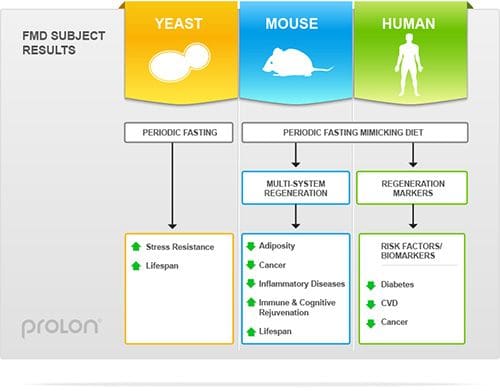
In the first study from the Clinical and Translational Report, yeast deprived of food periodically were shown to have longer life expectancy than yeast fed normally.
The second study involved feeding a group of mice a specialized diet for four days a month.
The diet reduced both caloric intake and protein intake.
The scientists tested markers in the blood of the mice and found that the diet emulated prolonged water-only fasting.
After returning to regular feeding, the mice regained most, but not all of the lost weight.
Differences between the Fasting Mimicking Diet group and the control group include improved metabolism and cognitive function, gradual weight loss, muscle rejuvenation, higher bone density, 40% fewer malignant lymphomas, immune system regeneration, and longer average life expectancy.
A Third Study
There were nineteen participants and nineteen control participants with a broad range of ages (19-75).
Members of both sexes and various races so that the study represented a general cross-section of, adult population.
The individuals in the Fasting Mimicking Diet group were provided with the food they were required to eat during the five days.
Scientists were happy with the compliance level of the diet, and most reported only mild or no negative effects on the fast days.
Results showed that the FMD participants experienced an average:
Individuals diagnosed with serious medical condition or disease unless approved in writing by a physician appropriately trained to treat that condition
Individuals who have been severely weakened by a disease or medical procedure
Individuals who are taking medications which may not be safely consumed with a calorie restricted diet unless authorized in writing by a licensed physician
Individuals with Diabetes (type 1 and type 2), cardiovascular disease and cancer, unless approved in writing by a licensed physician. ProLon� should never be combined with glucose-lowering drugs, such as metformin or insulin
Fasting is prohibited for individuals with particular metabolic diseases, such as those affecting gluconeogenesis.
Individuals with a history of significant cardiac disease, particularly uncompensated congestive heart failure NYHA grade 2 or more or LVEF <40% on any prior assessment
Individuals with a history of syncope (fainting) with calorie restriction or other medical co-morbidities Individuals who have special dietary needs that are incompatible with the ProLon� meal plan
Individuals with liver or kidney disorders that may be affected by very low glucose and protein content of the diet
Chiropractic Weight Loss Treatment
ProLon� is clinically tested, an�easy-to-take 5-day meal program that enhances your health without dramatic lifestyle changes
Pre-Clinical Trials
In the first study from the Clinical and Translational Report, yeast deprived of food periodically were shown to have longer life expectancy than yeast fed normally.
The second study involved feeding a group of mice a specialized diet for four days a month.
The diet reduced both caloric intake and protein intake.
The scientists tested markers in the blood of the mice and found that the diet emulated prolonged water-only fasting.
After returning to regular feeding, the mice regained most, but not all of the lost weight.
Differences between the Fasting Mimicking Diet group and the control group include improved metabolism and cognitive function, gradual weight loss, muscle rejuvenation, higher bone density, 40% fewer malignant lymphomas, immune system regeneration, and longer average life expectancy.
A Third Study
There were nineteen participants and nineteen control participants with a broad range of ages (19-75).
Members of both sexes and various races so that the study represented a general cross-section of, adult population.
The individuals in the Fasting Mimicking Diet group were provided with the food they were required to eat during the five days.
Scientists were happy with the compliance level of the diet, and most reported only mild or no negative effects on the fast days.
Results showed that the FMD participants experienced an average:
Individuals diagnosed with serious medical condition or disease unless approved in writing by a physician appropriately trained to treat that condition
Individuals who have been severely weakened by a disease or medical procedure
Individuals who are taking medications which may not be safely consumed with a calorie restricted diet unless authorized in writing by a licensed physician
Individuals with Diabetes (type 1 and type 2), cardiovascular disease and cancer, unless approved in writing by a licensed physician. ProLon� should never be combined with glucose-lowering drugs, such as metformin or insulin
Fasting is prohibited for individuals with particular metabolic diseases, such as those affecting gluconeogenesis.
Individuals with a history of significant cardiac disease, particularly uncompensated congestive heart failure NYHA grade 2 or more or LVEF <40% on any prior assessment
Individuals with a history of syncope (fainting) with calorie restriction or other medical co-morbidities Individuals who have special dietary needs that are incompatible with the ProLon� meal plan
Individuals with liver or kidney disorders that may be affected by very low glucose and protein content of the diet
Chiropractic Weight Loss Treatment
The ProLon clinical trials protocol included three consecutive cycles of ProLon (5-day only per month over three consecutive months). It is up to the practitioner to decide the best method that he or she would like to use for each patient. It is suggested that for patients who are obese or overweight, to use ProLon for one three cycle protocol, and recommend that you check with your doctor to re-assess and determine if they have met their goals or if more cycles would be helpful. If a patient is not overweight and eats and exercises well, it is suggested to take the product 1-2 times a year.
Caution
Due to the low caloric nature of the ProLon� 5-day meal program, Individuals should not take ProLon� in combination with prescription or non-prescription drugs unless approved by your healthcare professional.
Drink at least 8 cups of water to minimize the risk of dehydration.
Avoid alcohol consumption, strenuous exercise, and exposure to high temperatures (e.g., saunas, spas, Jacuzzi) or cold environments and swimming.
Operate a motor vehicle and heavy machinery with care until it is known how ProLon� may affect you.
Clinical Methodology
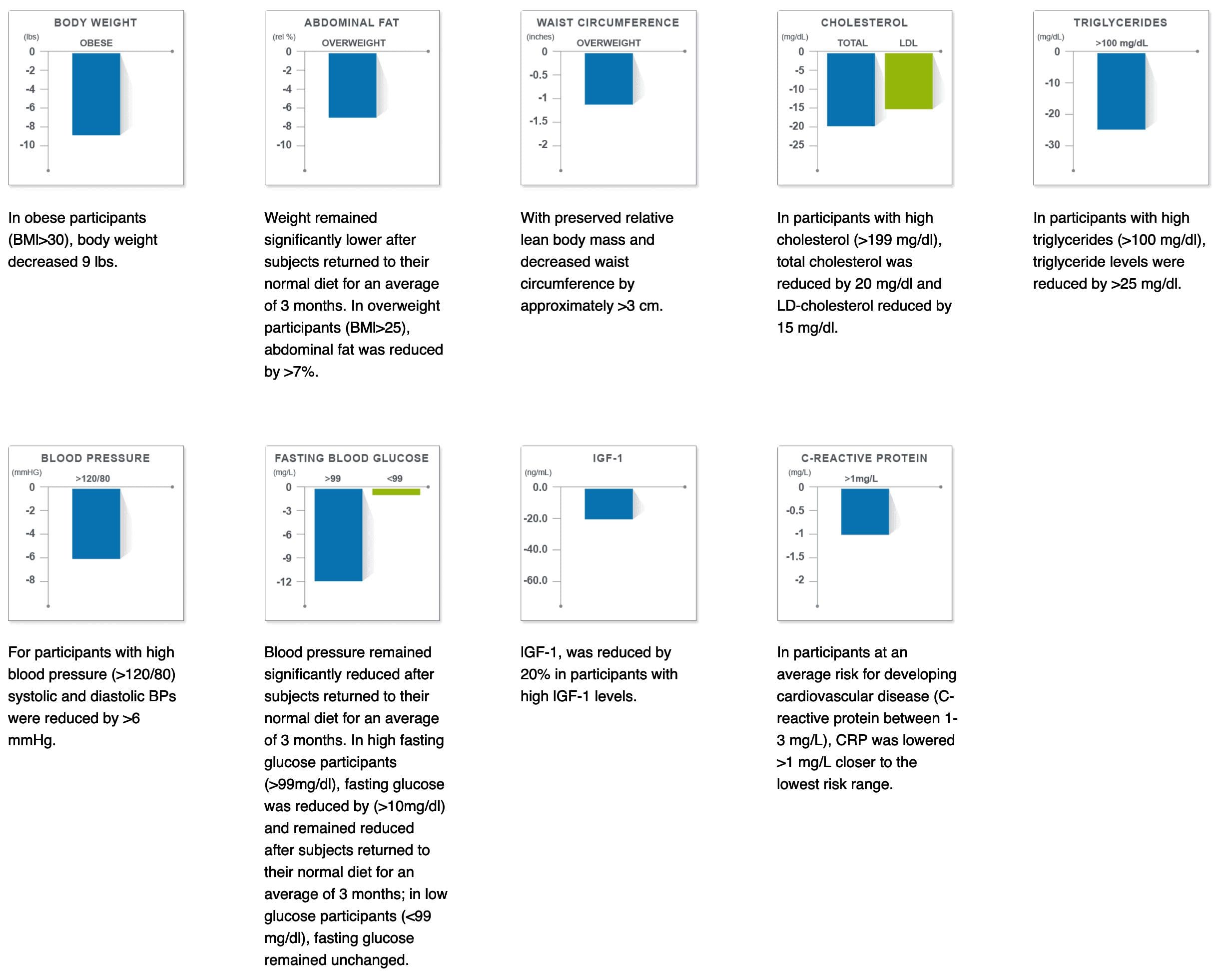
Pre-clinical and clinical studies have proven that periodic fasting, done for several days, is a very powerful intervention that our bodies learned to naturally cope with by protecting and rejuvenating itself. The 5-Day ProLon Fasting Mimicking Diet has been clinically tested and found to promote beneficial effects in a wide variety of conditions ranging from excess weight and fasting blood glucose, to growth factors associated with DNA damage and aging.
A randomized control trial of 100 subjects
71 completed 3 cycles of the ProLon� either in a randomized phase (N=39) or
After being crossed over from a control diet group to the FMD group (N=32)
Control subjects continued with a normal diet.
ProLon� participants consumed the fasting mimicking diet (FMD) for 5 days per month for 3 months.
Measurements were performed prior to the diet (Before) and (During) the recovery period and (After) the 3rd cycle.
�
Clinical Results
Elevated Risk Results
ProLon� is clinically tested, an�easy-to-take 5-day meal program that enhances your health without dramatic lifestyle changes
Pre-Clinical Trials
In the first study from the Clinical and Translational Report, yeast deprived of food periodically were shown to have longer life expectancy than yeast fed normally.
The second study involved feeding a group of mice a specialized diet for four days a month.
The diet reduced both caloric intake and protein intake.
The scientists tested markers in the blood of the mice and found that the diet emulated prolonged water-only fasting.
After returning to regular feeding, the mice regained most, but not all of the lost weight.
Differences between the Fasting Mimicking Diet group and the control group include improved metabolism and cognitive function, gradual weight loss, muscle rejuvenation, higher bone density, 40% fewer malignant lymphomas, immune system regeneration, and longer average life expectancy.
A Third Study
There were nineteen participants and nineteen control participants with a broad range of ages (19-75).
Members of both sexes and various races so that the study represented a general cross-section of, adult population.
The individuals in the Fasting Mimicking Diet group were provided with the food they were required to eat during the five days.
Scientists were happy with the compliance level of the diet, and most reported only mild or no negative effects on the fast days.
Results showed that the FMD participants experienced an average:
Individuals diagnosed with serious medical condition or disease unless approved in writing by a physician appropriately trained to treat that condition
Individuals who have been severely weakened by a disease or medical procedure
Individuals who are taking medications which may not be safely consumed with a calorie restricted diet unless authorized in writing by a licensed physician
Individuals with Diabetes (type 1 and type 2), cardiovascular disease and cancer, unless approved in writing by a licensed physician. ProLon� should never be combined with glucose-lowering drugs, such as metformin or insulin
Fasting is prohibited for individuals with particular metabolic diseases, such as those affecting gluconeogenesis.
Individuals with a history of significant cardiac disease, particularly uncompensated congestive heart failure NYHA grade 2 or more or LVEF <40% on any prior assessment
Individuals with a history of syncope (fainting) with calorie restriction or other medical co-morbidities Individuals who have special dietary needs that are incompatible with the ProLon� meal plan
Individuals with liver or kidney disorders that may be affected by very low glucose and protein content of the diet
Chiropractic Weight Loss Treatment
At the end of the program on Day 6
Liquid foods, such as soups and fruit juices
Light meals: rice, pasta, small portions of fish/meat/legumes
Avoid binge eating
Fast Performance
�
The Expectations?
Individuals taking ProLon� a have reported
Improved energy levels
Less fatigue
Softer and shinier skin
A positive impact on lifestyle
Making healthier choices and eating less
How Often Should Somebody Take The 5-Day ProLon� Diet?
The ProLon clinical trials protocol included three consecutive cycles of ProLon (5-day only per month over three consecutive months). It is up to the practitioner to decide the best method that he or she would like to use for each patient. It is suggested that for patients who are obese or overweight, to use ProLon for one three cycle protocol, and recommend that you check with your doctor to re-assess and determine if they have met their goals or if more cycles would be helpful. If a patient is not overweight and eats and exercises well, it is suggested to take the product 1-2 times a year.
Caution
Due to the low caloric nature of the ProLon� 5-day meal program, Individuals should not take ProLon� in combination with prescription or non-prescription drugs unless approved by your healthcare professional.
Drink at least 8 cups of water to minimize the risk of dehydration.
Avoid alcohol consumption, strenuous exercise, and exposure to high temperatures (e.g., saunas, spas, Jacuzzi) or cold environments and swimming.
Operate a motor vehicle and heavy machinery with care until it is known how ProLon� may affect you.
Clinical Methodology
Pre-clinical and clinical studies have proven that periodic fasting, done for several days, is a very powerful intervention that our bodies learned to naturally cope with by protecting and rejuvenating itself. The 5-Day ProLon Fasting Mimicking Diet has been clinically tested and found to promote beneficial effects in a wide variety of conditions ranging from excess weight and fasting blood glucose, to growth factors associated with DNA damage and aging.
A randomized control trial of 100 subjects
71 completed 3 cycles of the ProLon� either in a randomized phase (N=39) or
After being crossed over from a control diet group to the FMD group (N=32)
Control subjects continued with a normal diet.
ProLon� participants consumed the fasting mimicking diet (FMD) for 5 days per month for 3 months.
Measurements were performed prior to the diet (Before) and (During) the recovery period and (After) the 3rd cycle.
�
Clinical Results
Elevated Risk Results
ProLon� is clinically tested, an�easy-to-take 5-day meal program that enhances your health without dramatic lifestyle changes
Pre-Clinical Trials
In the first study from the Clinical and Translational Report, yeast deprived of food periodically were shown to have longer life expectancy than yeast fed normally.
The second study involved feeding a group of mice a specialized diet for four days a month.
The diet reduced both caloric intake and protein intake.
The scientists tested markers in the blood of the mice and found that the diet emulated prolonged water-only fasting.
After returning to regular feeding, the mice regained most, but not all of the lost weight.
Differences between the Fasting Mimicking Diet group and the control group include improved metabolism and cognitive function, gradual weight loss, muscle rejuvenation, higher bone density, 40% fewer malignant lymphomas, immune system regeneration, and longer average life expectancy.
A Third Study
There were nineteen participants and nineteen control participants with a broad range of ages (19-75).
Members of both sexes and various races so that the study represented a general cross-section of, adult population.
The individuals in the Fasting Mimicking Diet group were provided with the food they were required to eat during the five days.
Scientists were happy with the compliance level of the diet, and most reported only mild or no negative effects on the fast days.
Results showed that the FMD participants experienced an average:
Individuals diagnosed with serious medical condition or disease unless approved in writing by a physician appropriately trained to treat that condition
Individuals who have been severely weakened by a disease or medical procedure
Individuals who are taking medications which may not be safely consumed with a calorie restricted diet unless authorized in writing by a licensed physician
Individuals with Diabetes (type 1 and type 2), cardiovascular disease and cancer, unless approved in writing by a licensed physician. ProLon� should never be combined with glucose-lowering drugs, such as metformin or insulin
Fasting is prohibited for individuals with particular metabolic diseases, such as those affecting gluconeogenesis.
Individuals with a history of significant cardiac disease, particularly uncompensated congestive heart failure NYHA grade 2 or more or LVEF <40% on any prior assessment
Individuals with a history of syncope (fainting) with calorie restriction or other medical co-morbidities Individuals who have special dietary needs that are incompatible with the ProLon� meal plan
Individuals with liver or kidney disorders that may be affected by very low glucose and protein content of the diet
Chiropractic Weight Loss Treatment
Blood glucose
Blood pressure
Cholesterol
Triglycerides
C-reactive proteins
Stem cells Insulin-like growth factor 1 (IGF-1
Meals
The Program Itself
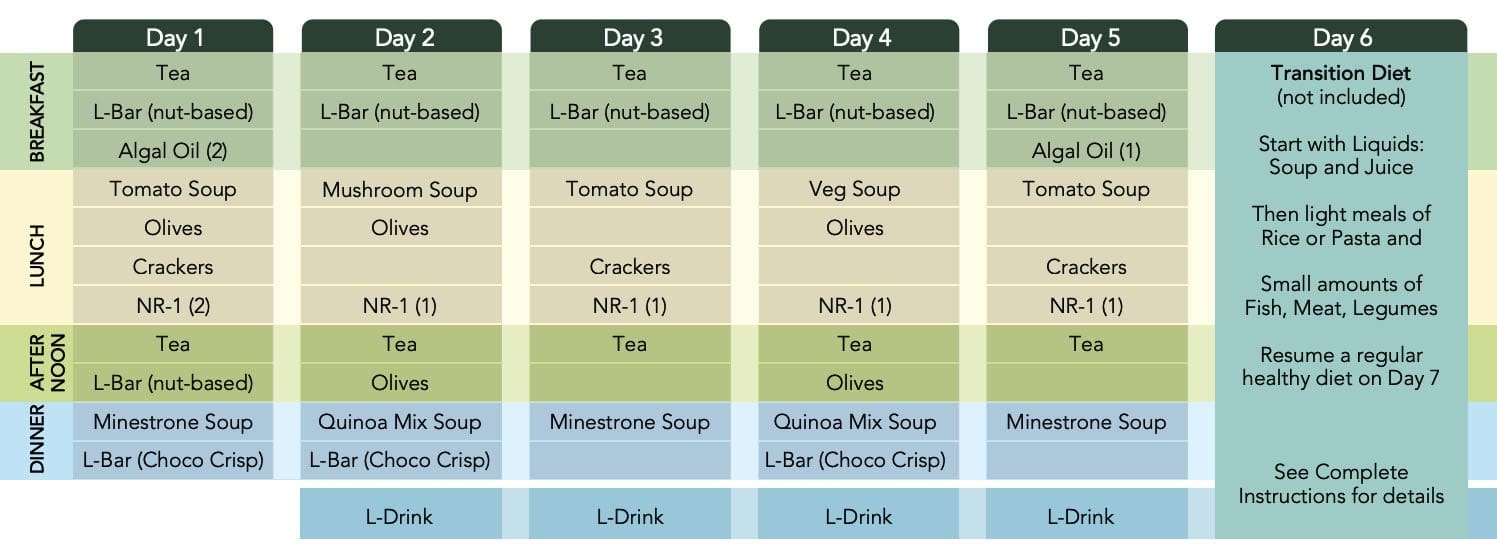
Consume the ProLon� meal program�s components for five consecutive days
Do not consume any additional food/liquid other than water or herbal teas without caffeine or additives
In order to maximize the benefits, you should minimize your consumption of caffeine to 1 cup of coffee or tea without additives or sweeteners per day during the 5-day program.
�
Resume Normal Healthy Diet
At the end of the program on Day 6
Liquid foods, such as soups and fruit juices
Light meals: rice, pasta, small portions of fish/meat/legumes
Avoid binge eating
Fast Performance
�
The Expectations?
Individuals taking ProLon� a have reported
Improved energy levels
Less fatigue
Softer and shinier skin
A positive impact on lifestyle
Making healthier choices and eating less
How Often Should Somebody Take The 5-Day ProLon� Diet?
The ProLon clinical trials protocol included three consecutive cycles of ProLon (5-day only per month over three consecutive months). It is up to the practitioner to decide the best method that he or she would like to use for each patient. It is suggested that for patients who are obese or overweight, to use ProLon for one three cycle protocol, and recommend that you check with your doctor to re-assess and determine if they have met their goals or if more cycles would be helpful. If a patient is not overweight and eats and exercises well, it is suggested to take the product 1-2 times a year.
Caution
Due to the low caloric nature of the ProLon� 5-day meal program, Individuals should not take ProLon� in combination with prescription or non-prescription drugs unless approved by your healthcare professional.
Drink at least 8 cups of water to minimize the risk of dehydration.
Avoid alcohol consumption, strenuous exercise, and exposure to high temperatures (e.g., saunas, spas, Jacuzzi) or cold environments and swimming.
Operate a motor vehicle and heavy machinery with care until it is known how ProLon� may affect you.
Clinical Methodology
Pre-clinical and clinical studies have proven that periodic fasting, done for several days, is a very powerful intervention that our bodies learned to naturally cope with by protecting and rejuvenating itself. The 5-Day ProLon Fasting Mimicking Diet has been clinically tested and found to promote beneficial effects in a wide variety of conditions ranging from excess weight and fasting blood glucose, to growth factors associated with DNA damage and aging.
A randomized control trial of 100 subjects
71 completed 3 cycles of the ProLon� either in a randomized phase (N=39) or
After being crossed over from a control diet group to the FMD group (N=32)
Control subjects continued with a normal diet.
ProLon� participants consumed the fasting mimicking diet (FMD) for 5 days per month for 3 months.
Measurements were performed prior to the diet (Before) and (During) the recovery period and (After) the 3rd cycle.
�
Clinical Results
Elevated Risk Results
ProLon� is clinically tested, an�easy-to-take 5-day meal program that enhances your health without dramatic lifestyle changes
Pre-Clinical Trials
In the first study from the Clinical and Translational Report, yeast deprived of food periodically were shown to have longer life expectancy than yeast fed normally.
The second study involved feeding a group of mice a specialized diet for four days a month.
The diet reduced both caloric intake and protein intake.
The scientists tested markers in the blood of the mice and found that the diet emulated prolonged water-only fasting.
After returning to regular feeding, the mice regained most, but not all of the lost weight.
Differences between the Fasting Mimicking Diet group and the control group include improved metabolism and cognitive function, gradual weight loss, muscle rejuvenation, higher bone density, 40% fewer malignant lymphomas, immune system regeneration, and longer average life expectancy.
A Third Study
There were nineteen participants and nineteen control participants with a broad range of ages (19-75).
Members of both sexes and various races so that the study represented a general cross-section of, adult population.
The individuals in the Fasting Mimicking Diet group were provided with the food they were required to eat during the five days.
Scientists were happy with the compliance level of the diet, and most reported only mild or no negative effects on the fast days.
Results showed that the FMD participants experienced an average:
Individuals diagnosed with serious medical condition or disease unless approved in writing by a physician appropriately trained to treat that condition
Individuals who have been severely weakened by a disease or medical procedure
Individuals who are taking medications which may not be safely consumed with a calorie restricted diet unless authorized in writing by a licensed physician
Individuals with Diabetes (type 1 and type 2), cardiovascular disease and cancer, unless approved in writing by a licensed physician. ProLon� should never be combined with glucose-lowering drugs, such as metformin or insulin
Fasting is prohibited for individuals with particular metabolic diseases, such as those affecting gluconeogenesis.
Individuals with a history of significant cardiac disease, particularly uncompensated congestive heart failure NYHA grade 2 or more or LVEF <40% on any prior assessment
Individuals with a history of syncope (fainting) with calorie restriction or other medical co-morbidities Individuals who have special dietary needs that are incompatible with the ProLon� meal plan
Individuals with liver or kidney disorders that may be affected by very low glucose and protein content of the diet
Chiropractic Weight Loss Treatment
Two decades of scientific discoveries at the University of Southern California.
Nutritional-Tech
All natural, plant-based, high-quality food and supplements
Experience the benefits of fasting, but with natural foods
Conveniently packaged in single-serve portions for each day of the program
ProLon� Can
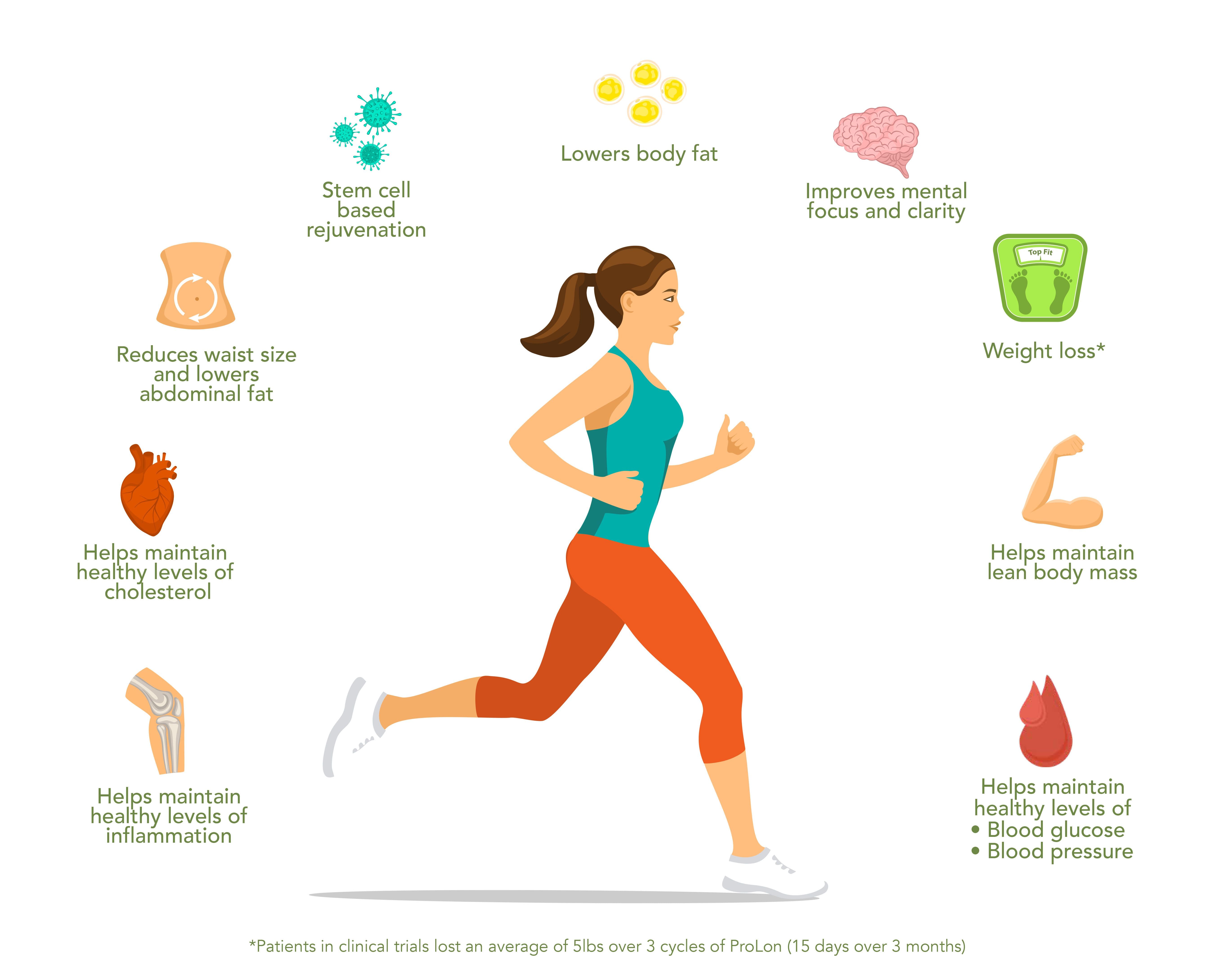
Decrease body fat
Decrease body weight
Preserve lean body mass
60% weight loss maintained 3 months after resuming a normal diet
Maintain Levels
Blood glucose
Blood pressure
Cholesterol
Triglycerides
C-reactive proteins
Stem cells Insulin-like growth factor 1 (IGF-1
Meals
The Program Itself
Consume the ProLon� meal program�s components for five consecutive days
Do not consume any additional food/liquid other than water or herbal teas without caffeine or additives
In order to maximize the benefits, you should minimize your consumption of caffeine to 1 cup of coffee or tea without additives or sweeteners per day during the 5-day program.
�
Resume Normal Healthy Diet
At the end of the program on Day 6
Liquid foods, such as soups and fruit juices
Light meals: rice, pasta, small portions of fish/meat/legumes
Avoid binge eating
Fast Performance
�
The Expectations?
Individuals taking ProLon� a have reported
Improved energy levels
Less fatigue
Softer and shinier skin
A positive impact on lifestyle
Making healthier choices and eating less
How Often Should Somebody Take The 5-Day ProLon� Diet?
The ProLon clinical trials protocol included three consecutive cycles of ProLon (5-day only per month over three consecutive months). It is up to the practitioner to decide the best method that he or she would like to use for each patient. It is suggested that for patients who are obese or overweight, to use ProLon for one three cycle protocol, and recommend that you check with your doctor to re-assess and determine if they have met their goals or if more cycles would be helpful. If a patient is not overweight and eats and exercises well, it is suggested to take the product 1-2 times a year.
Caution
Due to the low caloric nature of the ProLon� 5-day meal program, Individuals should not take ProLon� in combination with prescription or non-prescription drugs unless approved by your healthcare professional.
Drink at least 8 cups of water to minimize the risk of dehydration.
Avoid alcohol consumption, strenuous exercise, and exposure to high temperatures (e.g., saunas, spas, Jacuzzi) or cold environments and swimming.
Operate a motor vehicle and heavy machinery with care until it is known how ProLon� may affect you.
Clinical Methodology
Pre-clinical and clinical studies have proven that periodic fasting, done for several days, is a very powerful intervention that our bodies learned to naturally cope with by protecting and rejuvenating itself. The 5-Day ProLon Fasting Mimicking Diet has been clinically tested and found to promote beneficial effects in a wide variety of conditions ranging from excess weight and fasting blood glucose, to growth factors associated with DNA damage and aging.
A randomized control trial of 100 subjects
71 completed 3 cycles of the ProLon� either in a randomized phase (N=39) or
After being crossed over from a control diet group to the FMD group (N=32)
Control subjects continued with a normal diet.
ProLon� participants consumed the fasting mimicking diet (FMD) for 5 days per month for 3 months.
Measurements were performed prior to the diet (Before) and (During) the recovery period and (After) the 3rd cycle.
�
Clinical Results
Elevated Risk Results
ProLon� is clinically tested, an�easy-to-take 5-day meal program that enhances your health without dramatic lifestyle changes
Pre-Clinical Trials
In the first study from the Clinical and Translational Report, yeast deprived of food periodically were shown to have longer life expectancy than yeast fed normally.
The second study involved feeding a group of mice a specialized diet for four days a month.
The diet reduced both caloric intake and protein intake.
The scientists tested markers in the blood of the mice and found that the diet emulated prolonged water-only fasting.
After returning to regular feeding, the mice regained most, but not all of the lost weight.
Differences between the Fasting Mimicking Diet group and the control group include improved metabolism and cognitive function, gradual weight loss, muscle rejuvenation, higher bone density, 40% fewer malignant lymphomas, immune system regeneration, and longer average life expectancy.
A Third Study
There were nineteen participants and nineteen control participants with a broad range of ages (19-75).
Members of both sexes and various races so that the study represented a general cross-section of, adult population.
The individuals in the Fasting Mimicking Diet group were provided with the food they were required to eat during the five days.
Scientists were happy with the compliance level of the diet, and most reported only mild or no negative effects on the fast days.
Results showed that the FMD participants experienced an average:
Individuals diagnosed with serious medical condition or disease unless approved in writing by a physician appropriately trained to treat that condition
Individuals who have been severely weakened by a disease or medical procedure
Individuals who are taking medications which may not be safely consumed with a calorie restricted diet unless authorized in writing by a licensed physician
Individuals with Diabetes (type 1 and type 2), cardiovascular disease and cancer, unless approved in writing by a licensed physician. ProLon� should never be combined with glucose-lowering drugs, such as metformin or insulin
Fasting is prohibited for individuals with particular metabolic diseases, such as those affecting gluconeogenesis.
Individuals with a history of significant cardiac disease, particularly uncompensated congestive heart failure NYHA grade 2 or more or LVEF <40% on any prior assessment
Individuals with a history of syncope (fainting) with calorie restriction or other medical co-morbidities Individuals who have special dietary needs that are incompatible with the ProLon� meal plan
Individuals with liver or kidney disorders that may be affected by very low glucose and protein content of the diet
Chiropractic Weight Loss Treatment
Two decades of scientific discoveries at the University of Southern California.
Nutritional-Tech
All natural, plant-based, high-quality food and supplements
Experience the benefits of fasting, but with natural foods
Conveniently packaged in single-serve portions for each day of the program
ProLon� Can
Decrease body fat
Decrease body weight
Preserve lean body mass
60% weight loss maintained 3 months after resuming a normal diet
Maintain Levels
Blood glucose
Blood pressure
Cholesterol
Triglycerides
C-reactive proteins
Stem cells Insulin-like growth factor 1 (IGF-1
Meals
The Program Itself
Consume the ProLon� meal program�s components for five consecutive days
Do not consume any additional food/liquid other than water or herbal teas without caffeine or additives
In order to maximize the benefits, you should minimize your consumption of caffeine to 1 cup of coffee or tea without additives or sweeteners per day during the 5-day program.
�
Resume Normal Healthy Diet
At the end of the program on Day 6
Liquid foods, such as soups and fruit juices
Light meals: rice, pasta, small portions of fish/meat/legumes
Avoid binge eating
Fast Performance
�
The Expectations?
Individuals taking ProLon� a have reported
Improved energy levels
Less fatigue
Softer and shinier skin
A positive impact on lifestyle
Making healthier choices and eating less
How Often Should Somebody Take The 5-Day ProLon� Diet?
The ProLon clinical trials protocol included three consecutive cycles of ProLon (5-day only per month over three consecutive months). It is up to the practitioner to decide the best method that he or she would like to use for each patient. It is suggested that for patients who are obese or overweight, to use ProLon for one three cycle protocol, and recommend that you check with your doctor to re-assess and determine if they have met their goals or if more cycles would be helpful. If a patient is not overweight and eats and exercises well, it is suggested to take the product 1-2 times a year.
Caution
Due to the low caloric nature of the ProLon� 5-day meal program, Individuals should not take ProLon� in combination with prescription or non-prescription drugs unless approved by your healthcare professional.
Drink at least 8 cups of water to minimize the risk of dehydration.
Avoid alcohol consumption, strenuous exercise, and exposure to high temperatures (e.g., saunas, spas, Jacuzzi) or cold environments and swimming.
Operate a motor vehicle and heavy machinery with care until it is known how ProLon� may affect you.
Clinical Methodology
Pre-clinical and clinical studies have proven that periodic fasting, done for several days, is a very powerful intervention that our bodies learned to naturally cope with by protecting and rejuvenating itself. The 5-Day ProLon Fasting Mimicking Diet has been clinically tested and found to promote beneficial effects in a wide variety of conditions ranging from excess weight and fasting blood glucose, to growth factors associated with DNA damage and aging.
A randomized control trial of 100 subjects
71 completed 3 cycles of the ProLon� either in a randomized phase (N=39) or
After being crossed over from a control diet group to the FMD group (N=32)
Control subjects continued with a normal diet.
ProLon� participants consumed the fasting mimicking diet (FMD) for 5 days per month for 3 months.
Measurements were performed prior to the diet (Before) and (During) the recovery period and (After) the 3rd cycle.
�
Clinical Results
Elevated Risk Results
ProLon� is clinically tested, an�easy-to-take 5-day meal program that enhances your health without dramatic lifestyle changes
Pre-Clinical Trials
In the first study from the Clinical and Translational Report, yeast deprived of food periodically were shown to have longer life expectancy than yeast fed normally.
The second study involved feeding a group of mice a specialized diet for four days a month.
The diet reduced both caloric intake and protein intake.
The scientists tested markers in the blood of the mice and found that the diet emulated prolonged water-only fasting.
After returning to regular feeding, the mice regained most, but not all of the lost weight.
Differences between the Fasting Mimicking Diet group and the control group include improved metabolism and cognitive function, gradual weight loss, muscle rejuvenation, higher bone density, 40% fewer malignant lymphomas, immune system regeneration, and longer average life expectancy.
A Third Study
There were nineteen participants and nineteen control participants with a broad range of ages (19-75).
Members of both sexes and various races so that the study represented a general cross-section of, adult population.
The individuals in the Fasting Mimicking Diet group were provided with the food they were required to eat during the five days.
Scientists were happy with the compliance level of the diet, and most reported only mild or no negative effects on the fast days.
Results showed that the FMD participants experienced an average:
Individuals diagnosed with serious medical condition or disease unless approved in writing by a physician appropriately trained to treat that condition
Individuals who have been severely weakened by a disease or medical procedure
Individuals who are taking medications which may not be safely consumed with a calorie restricted diet unless authorized in writing by a licensed physician
Individuals with Diabetes (type 1 and type 2), cardiovascular disease and cancer, unless approved in writing by a licensed physician. ProLon� should never be combined with glucose-lowering drugs, such as metformin or insulin
Fasting is prohibited for individuals with particular metabolic diseases, such as those affecting gluconeogenesis.
Individuals with a history of significant cardiac disease, particularly uncompensated congestive heart failure NYHA grade 2 or more or LVEF <40% on any prior assessment
Individuals with a history of syncope (fainting) with calorie restriction or other medical co-morbidities Individuals who have special dietary needs that are incompatible with the ProLon� meal plan
Individuals with liver or kidney disorders that may be affected by very low glucose and protein content of the diet
Doctor 0f Chiropractic: Charlie Quiroga found the extra “push” she needed at PUSH Fitness so as to regain her fitness and get back in shape, as well as to improve her overall health and wellbeing. Charlie Quiroga is grateful to the coaches which helped keep her motivated to continue following a healthier lifestyle. Charlie Quiroga has heard the significance of “pushing” herself towards her goals and remaining positive. Charlie Quiroga urges PUSH as the fitness choice that is very best.
Weight Loss Doctor Of Chiropractic
Weight management techniques encircle long-term lifestyle plans that promote healthy eating and daily physical activity. Effective weight management programs consider not just weight reduction but also the maintenance of a healthy body weight with time. Moreover, weight control entails understanding of meaningful procedures to track weight over time and set perfect body weights for different individuals. Weight control doesn’t include things like fad diets that promote quick weight loss. It targets the results that are achieved through weight loss.
We are blessed to present to you�El Paso�s Premier Wellness & Injury Care Clinic.
As El Paso�s Chiropractic Rehabilitation Clinic & Integrated Medicine Center,�we passionately are focused treating patients after frustrating injuries and chronic pain syndromes. We focus on improving your ability through flexibility, mobility and agility programs tailored for all age groups and disabilities.
If you have enjoyed this video and/or we have helped you in any way please feel free to subscribe and share us.
Bernadette Banda informs her compelling weight loss story while she clarifies how much her life has changed since she discovered the right fitness regimen with Dr. Alex Jimenez and Daniel “Danny” Alvarado in PUSH Fitness. PUSH became Bernadette Banda’s life philosophy, where she took it on herself never to give up and to always “push” herself towards any fitness goal she wished to attain. With tremendous gratitude, Bernadette Banda praises Danny’s and all the other coach’s efforts and support to help her become healthy.
Chiropractic Weight Loss Treatment
Intentional weight loss is the decrease in total body mass because of attempts to improve fitness and wellness. Weight loss in people who are overweight or obese can decrease health risks, increase health, and may delay the onset of diabetes. It may decrease pain and increase movement in people with osteoarthritis of the knee. Weight reduction may result in a drop in hypertension. Weight loss occurs when the body is expending more energy in metabolism than it’s swallowing from meals or additional nutrients. It is going to then use stored reserves from fat or muscle, slowly resulting in weight loss.
We are blessed to present to you�El Paso�s Premier Wellness & Injury Care Clinic.
As El Paso�s Chiropractic Rehabilitation Clinic & Integrated Medicine Center,�we passionately are focused treating patients after frustrating injuries and chronic pain syndromes. We focus on improving your ability through flexibility, mobility and agility programs tailored for all age groups and disabilities.
If you have enjoyed this video and/or we have helped you in any way please feel free to subscribe and share us.
IFM's Find A Practitioner tool is the largest referral network in Functional Medicine, created to help patients locate Functional Medicine practitioners anywhere in the world. IFM Certified Practitioners are listed first in the search results, given their extensive education in Functional Medicine