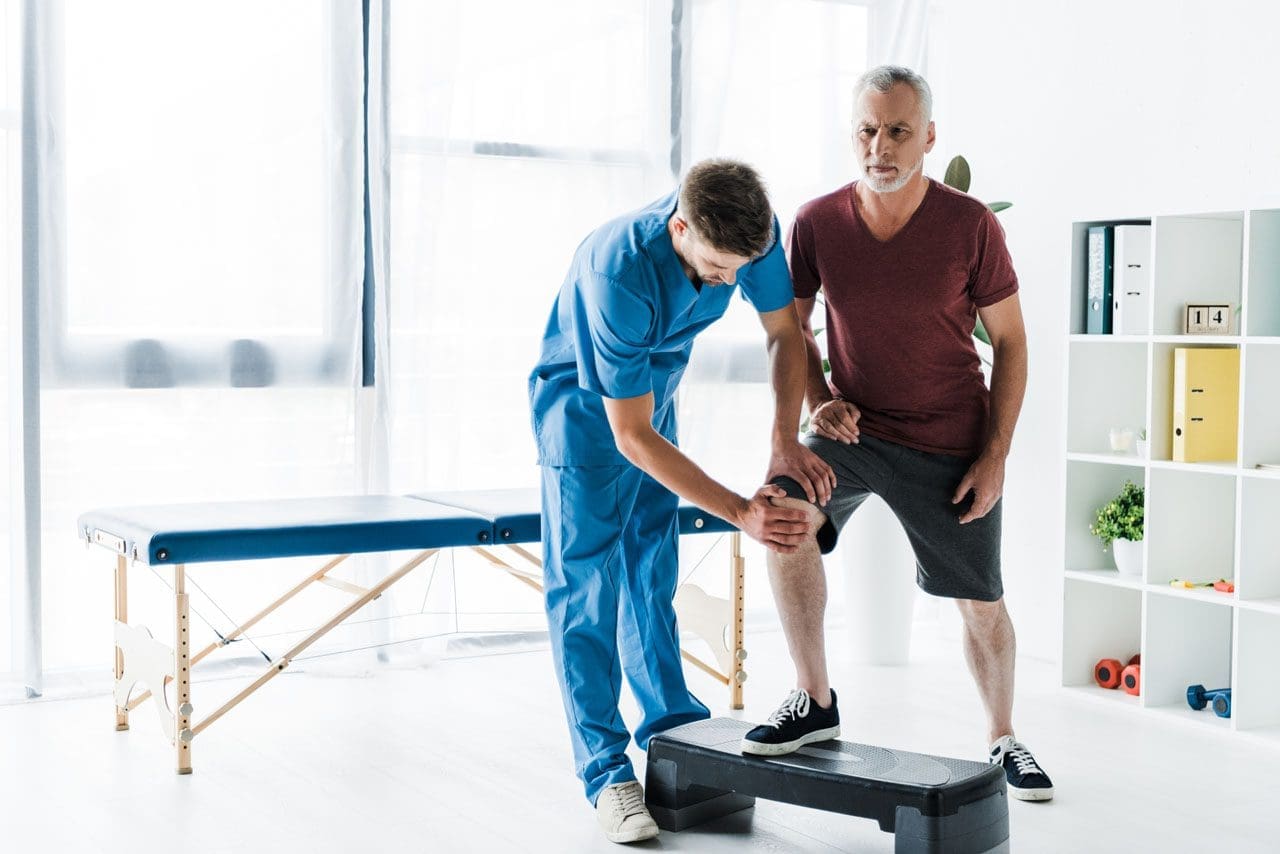
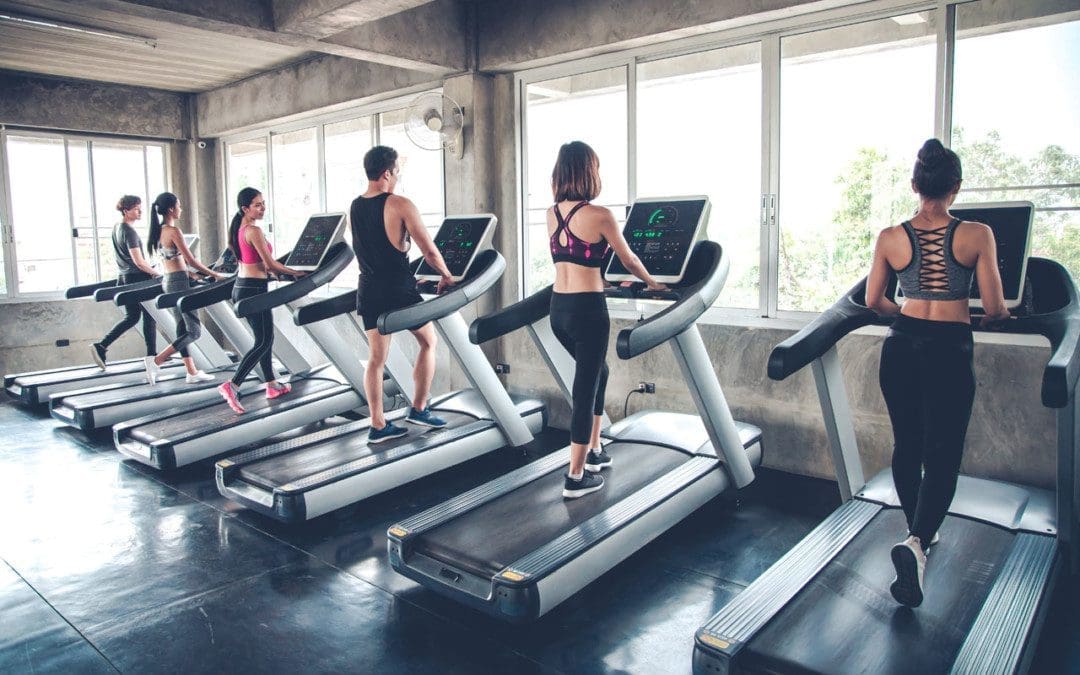
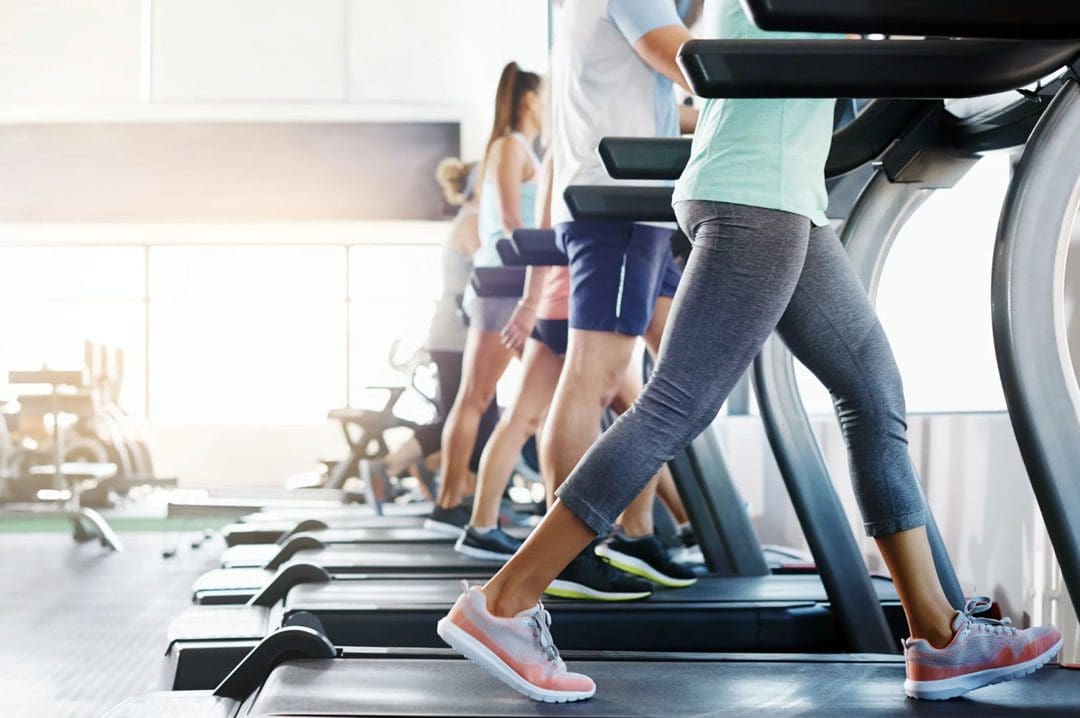
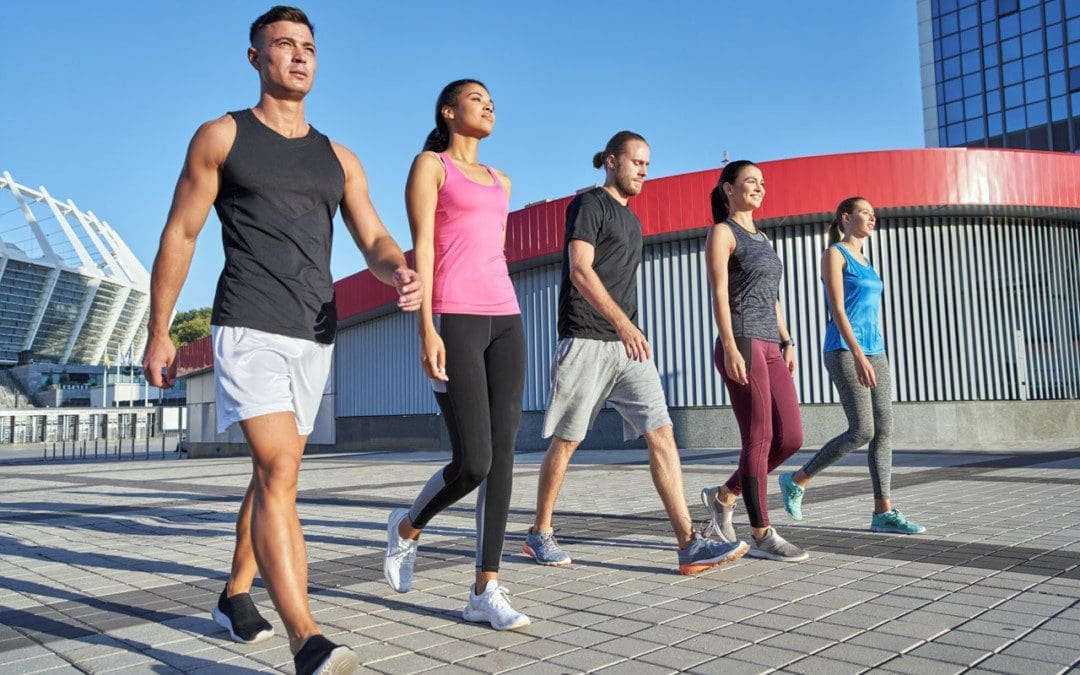
For individuals who have decided to start exercising for fitness and health, walking is a great place to start. Can planning a walking exercise schedule help individuals maintain a fitness routine and improve endurance and speed quicker?
Walking Exercise Planning Schedule
While any amount of walking benefits health, individuals can increase the benefits by walking more per week or by increasing the pace. Brisk walking for 30 minutes per day, totaling 150 minutes per week, is recommended by health experts to decrease risks for heart disease, stroke, diabetes, and other conditions. (Centers for Disease Control and Prevention. 2022)
Individuals with ongoing health conditions should talk to their doctor before starting any new exercise program.
Beginners are encouraged to focus on using proper walking posture and technique to steadily improve strength and endurance.
The increased duration or intensity can help if weight loss is a goal.
Improving diet is also necessary for the best results.
Individuals can build healthy walking habits by tracking walks.
Schedule
Checklist
Individuals can walk outdoors, indoors, or on a treadmill.
Wear proper athletic shoes and clothing.
Check walking posture.
Walk at an easy pace for a couple of minutes before picking up speed.
First Week
An example of what a walking exercise schedule can look like, but it’s advised to consult a professional trainer to develop a personalized fitness plan.
Start with a 15-minute walk at an easy pace.
Walk five days the first week.
Building a healthy habit is the goal, so consistency is important.
Spread out rest days, like making days 3 and 6 rest days.
Weekly goal – 60 to 75 minutes
Second Week
Add five minutes, so the walk time increases gradually.
Or, individuals can extend more on some days, followed by a rest day.
Weekly goal – 80 to 100 minutes
Third Week
Add five more minutes with each session, so the walk increases to 25 minutes.
Weekly goal – 100 to 125 minutes
Fourth Week
Add another five minutes to increase the walk to 30 minutes.
Weekly goal – 120 to 150 minutes
Individuals who find any week to be difficult are suggested to repeat that week instead of adding time until they are able to progress naturally. Once able to walk for 30 minutes at a time comfortably, individuals are ready for a variety of different walking exercise workouts to add intensity and endurance. A weekly walking plan can include:
Longer walks
Higher-intensity walks
Speed-building walks
Beginner Walking Speed
An individual’s objective should be brisk walking to achieve a moderate-intensity workout. This is the intensity that is associated with the most health benefits.
If the speed is slower and the heart rate is lower during the initial weeks, this is normal.
The first goal is to walk for 30 to 60 minutes a day without injury.
Adding speed and intensity gradually.
Staying consistent in regularly walking before trying to walk faster and longer.
Using proper walking posture and arm motion will help in faster walking.
To reduce the risk of injury, gradually increase the length of the walk or pace, only changing one component at a time.
Individuals may consider joining a walking group or club to have others to walk with and an incentive to maintain regular walking.
Home Exercises for Pain Relief
References
Centers for Disease Control and Prevention. (2022). How Much Physical Activity Do Adults Need? Retrieved from https://www.cdc.gov/physicalactivity/basics/adults/index.htm
Centers for Disease Control and Prevention. (2022). Measuring Physical Activity Intensity. Retrieved from https://www.cdc.gov/physicalactivity/basics/measuring/index.html
Centers for Disease Control and Prevention. (2022). Target Heart Rate and Estimated Maximum Heart Rate. Retrieved from https://www.cdc.gov/physicalactivity/basics/measuring/heartrate.htm
Mahmod, S. R., Narayanan, L. T., & Supriyanto, E. (2018). Effects of incremental cardiorespiratory exercise on the speech rate and the estimated exercise intensity using the counting talk test. Journal of physical therapy science, 30(7), 933–937. https://doi.org/10.1589/jpts.30.933
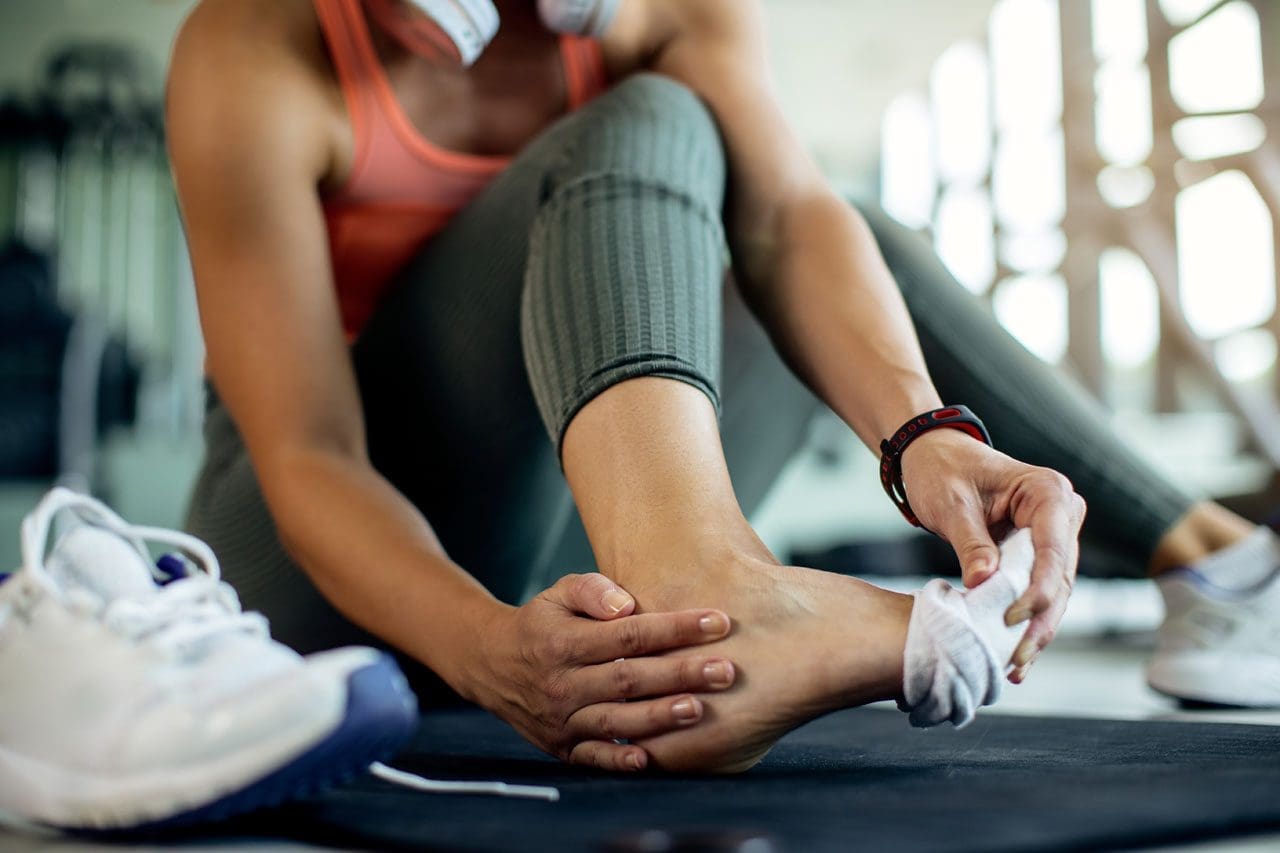
Individuals’ feet will heat up when walking or running; however, burning feet could be a symptom of medical conditions like athlete’s foot or a nerve injury or damage. Can awareness of these symptoms help identify solutions to relieve and heal the underlying condition?
Burning Feet
Walkers and runners often experience heat in their feet. This is natural from the increased circulation, heart rate, warm or hot sidewalks, and pavement. But the feet could experience an abnormal hot or burning sensation. Usually, the overheating is caused by socks and shoes and fatigue after a long workout. The first self-care steps include trying new or specialized footwear and workout adjustments. If burning feet persist or there are signs of infection, tingling, numbness, or pain, individuals should see their healthcare provider. (Mayo Clinic. 2018)
Footwear
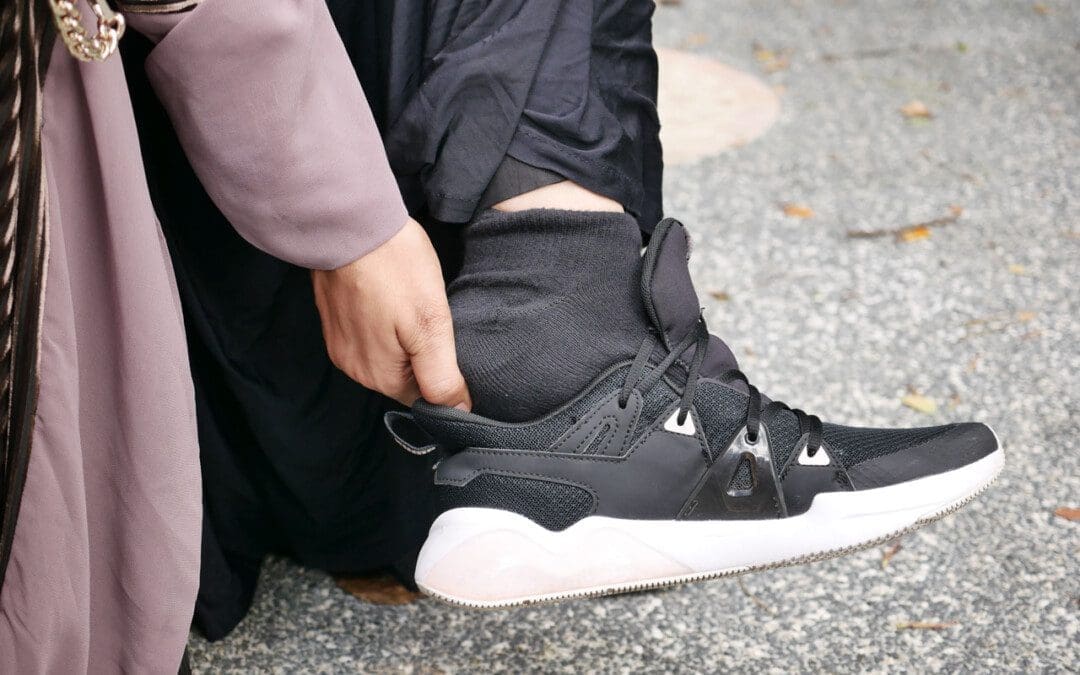
The shoes and how they are worn may be the cause.
First, look at the material of the shoes. They could be shoes and/or insoles that don’t circulate air. They can get hot and sweaty without proper air circulation around the feet.
When choosing running shoes, consider a mesh material that allows airflow to keep the feet cool.
Consider getting fitted for shoes that are the right size, as the feet swell when running or walking.
If the shoes are too small, air can’t circulate, creating more friction between the foot and the shoe.
Shoes that are too large can also contribute to friction as the feet move around too much.
Insoles could also contribute.
Some insoles can make the feet hot, even if the shoes are breathable.
Swap the insoles from another pair of shoes to see if they are contributing, and if so, look into new insoles.
Tips to help prevent hot feet:
Topical Ointments
Use an anti-blister/chafing topical cream to lubricate and protect the feet.
This will reduce friction and prevent blisters.
Lace Properly
Individuals may be lacing the shoes too tight, constricting circulation, or irritating the nerves at the top of the foot.
Individuals should be able to slide one finger under the knot.
Remember that the feet will swell as walking or running commences
Individuals may need to loosen their laces after warming up.
Individuals are recommended to learn lacing techniques that will ensure they are not too tight over the sensitive areas.
Cushioning
Fatigue from long workouts or long days standing/moving can result in burning feet.
Individuals may need added cushioning in the shoes.
Look for work and athletic shoes that have added cushioning.
Shoe Allergies
Individuals may have an allergic reaction or a sensitivity to the fabric, adhesives, dyes, or other chemicals. (Cleveland Clinic. 2023) The chemicals used in production vary for leather compared to fabric and are different by brand and manufacturer.
A shoe material allergy may also result in burning, itching, and swelling.
It’s recommended to note whether symptoms only happen when wearing a specific pair of shoes.
Recommendations are to try different kinds and brands of shoes.
Socks
The sock fabric could be contributing to hot or burning feet. Steps to take can include:
Avoid cotton
Cotton is a natural fiber but is not recommended for walking and running as it holds sweat that can keep the feet wet.
It is recommended to use socks made of Cool-Max and other artificial fibers that wick sweat away and cool them down.
Wool
Wool socks can also cause itching and burning sensations.
Consider athletic socks made from itch-free wool.
Mindfulness
Individuals could be sensitive to other fabrics or dyes in socks.
Take note of which socks cause hot or burning feet symptoms.
Individuals could also be sensitive to laundry products and are recommended to try a different brand or type.
Medical Conditions
In addition to shoes and socks, medical conditions could cause and contribute to symptoms.
Athlete’s Foot
Athlete’s foot is a fungal infection.
Individuals may feel a burning sensation in the affected area.
Typically, it is itchy, red, scaling, or cracking.
Rotate shoes.
The fungus grows in damp places, therefore, it is recommended to rotate shoes to allow them to dry out between workouts.
Wash and dry the feet after walking or running.
Try home and over-the-counter solutions, powders, and remedies to treat athlete’s foot.
Peripheral Neuropathy
Individuals frequently experiencing burning feet apart from when they have been exercising could be due to nerve damage known as peripheral neuropathy. (National Institute of Neurological Disorders and Stroke. 2023) Peripheral neuropathy symptoms include pins and needles, numbness, tickling, tingling, and/or burning sensations.
Examination
Diabetes is one of the most common causes of peripheral neuropathy.
Diabetes can come on at any age.
Individuals need to learn how to protect their feet, as exercise is recommended for diabetes.
Other conditions that can produce peripheral neuropathy include:
Vitamin B-12 deficiency
Alcohol abuse
Circulatory disorders
AIDS
Heavy metal poisoning
Massage and Movement
Massaging the feet also increases circulation.
Exercise such as walking is recommended for peripheral neuropathy as it improves circulation to the feet.
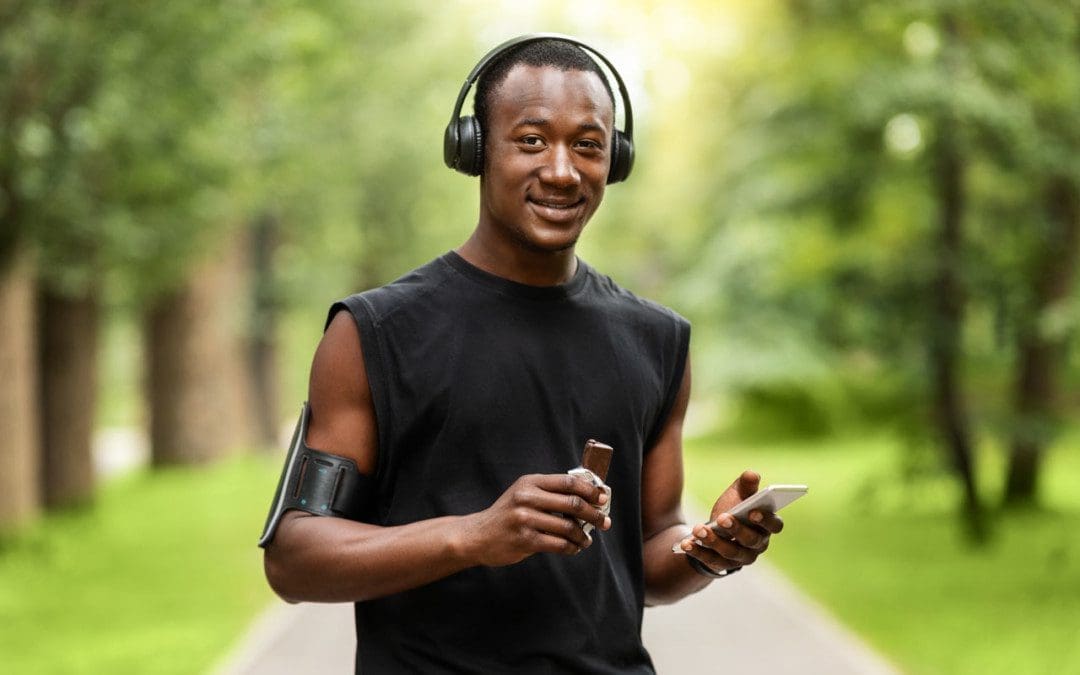
Walking is a great physical exercise activity that requires endurance. When walking for two hours or more, refueling energy stores can be done with portable walking energy snacks. These are foods that can be taken along and eaten while on the move. This includes fruits, vegetables, energy bars, trail mix, energy gels, and sports drinks that can replenish the body. However, depending on when an individual goes for a walk, they need to think about breakfast or lunch nutrition before engaging in the walk. This will help to get the most benefits from the snacks, as well as, what to have after the workout for recovery.
Walking Energy Snacks
Individuals walking for a long time will want a snack – before, during, and after. There are various options to choose from. Individuals may want to experiment with various snack and drink options to find the right balance of carbs, fat, and protein so that the body gets the energy it needs without feeling weighed down or hungry soon after. The ideal walking energy snacks should be healthy, full of energy, and easy to eat on the move.
Fruit Snacks
Fruit snacks are great for the all-natural carbohydrate burst.
Bananas are great for potassium.
Apples, oranges, and raisins are also recommended packable snacks.
For certain individuals, the fiber in some fruits can get digestion moving, requiring a restroom, so plan ahead.
Some individuals can eat fruit regularly but may have an upset stomach during walking, which is why experimentation may be necessary.
Energy Bars
Nutrition bars can provide vitamins and minerals and protein but can be high in calories.
Check the labels to choose the balance of ingredients that’s best for you.
Energy bars offer a healthy combination of carbohydrates, protein, and fat.
They are convenient for a snack when on a walk.
Most products utilize peanuts/other nuts or soy for protein.
Individuals may want to avoid chocolate-covered bars, as they can melt.
Individuals can mix their own, buy in bulk, or pre-packaged.
Trail mix contains nuts for protein, raisins or other dried fruit for carbohydrates, and chocolate or carob for taste.
The salted varieties can help replace electrolytes.
Be aware of portion control, as trail mix is often high in fat and calories.
Energy Gels
Energy gels provide a carbohydrate boost designed for individuals doing endurance events and activities.
Energy gels need to be taken with water for carbohydrate digestion.
There are some that can be taken without water but may not provide as much energy.
For individuals that walk fast and breathe hard, energy gels can be safer than chewing and possibly choking.
Newer brands are trying to be natural and less sweet.
Energy and Sports Drinks
Water is not enough to keep the body hydrated on long walks.
Sports drinks with sugar and salt replenish H2O and electrolyte levels more thoroughly when walking for more than an hour helping to prevent dehydration and hyponatremia/low salt levels.
It is recommended to avoid:
High-caffeine energy drinks in small cans, as they have too much caffeine and not enough hydrating water.
Sports and energy drinks with additives and herbs, which do not help on walks, and look for those with salt and carbohydrate replacement.
Ankle Sprain Recovery
References
Francois, Monique E et al. “’Exercise snacks’ before meals: a novel strategy to improve glycaemic control in individuals with insulin resistance.” Diabetologia vol. 57,7 (2014): 1437-45. doi:10.1007/s00125-014-3244-6
Islam, Hashim, et al. “Exercise Snacks: A Novel Strategy to Improve Cardiometabolic Health.” Exercise and sport sciences review vol. 50,1 (2022): 31-37. doi:10.1249/JES.0000000000000275
Marangoni, Franca, et al. “Snacking in nutrition and health.” International Journal of food sciences and Nutrition vol. 70,8 (2019): 909-923. doi:10.1080/09637486.2019.1595543
McCubbin, Alan J et al. “Sports Dietitians Australia Position Statement: Nutrition for Exercise in Hot Environments.” International Journal of sports nutrition and exercise metabolism vol. 30,1 (2020): 83-98. doi:10.1123/ijsnem.2019-0300
Moore, Daniel R et al. “Walking or body weight squat “activity snacks” increase dietary amino acid utilization for myofibrillar protein synthesis during prolonged sitting.” Journal of applied physiology (Bethesda, Md.: 1985) vol. 133,3 (2022): 777-785. doi:10.1152/japplphysiol.00106.2022
Njike, Valentine Yanchou, et al. “Snack Food, Satiety, and Weight.” Advances in nutrition (Bethesda, Md.) vol. 7,5 866-78. 15 Sep. 2016, doi:10.3945/an.115.009340
Joints are the musculoskeletal areas where two bones connect. The joints have soft tissues around them, like cartilage, tendons, and ligaments. Cartilage is the flexible tissue that covers the ends of the bones at a joint. The tendons are bands between the muscles and bones that connect everything to initiate joint movement. And the ligaments are a kind of bridge that connects the bones of the joints to keep the body stable when in motion. After an injury, the joints need to be worked out, stretched, and massaged to return to proper function and support. A chiropractic personalized rehabilitation program will include exercises that target joint stability.
Joint Injury Rehabilitation
The shoulders, elbows, wrists, knuckles, hips, knees, and ankles are joints. The spine is also made up of joints. The first step for achieving joint stability after a lower-body injury is to assess the joints for:
A physician, chiropractor, or therapist will check the joint and test for weakness or deficits in soft tissues, tendons, ligaments, and cartilage.
Individuals can have conditions, diseases, or injuries that affect the joints, causing dysfunction.
Correcting deficits may require taping, bracing, exercises, or surgery.
Joint stability is attained through specific exercises that target balance, proprioception, range of motion, flexibility, strength, and endurance.
Individuals must participate in their rehabilitation program to fully recover from their injuries.
Proprioception and Neuromuscular Training
Neuromuscular training and proprioception are essential to joint stability.
Neuromuscular control is an unconscious response to joint motions without awareness.
It is how workers or athletes adjust to uneven pavement or shift their weight to stay balanced on an incline or stairs.
Proprioceptionis the ability to sense the body’s orientation in the environment.
It allows body movement and responds without consciously thinking about where the body is in space.
The information signals detect joint position, limb movement, direction, and speed.
A joint with a high level of neuromuscular control and a trained proprioceptive system can respond appropriately to various forces placed upon it during activity, decreasing the risk of injury.
Proprioceptive exercises train joint proprioceptors to adapt before initiating a potentially damaging/injurious movement.
Targeted Training
Specific to the individual’s injury, specific exercises are incorporated to regain/relearn skill sets and reset automatic movement patterns.
Skills training improves the ability to make adjustments quickly and decreases the potential for worsening or creating another injury.
Research has found that individuals who participate in neuromuscular retraining have improved muscular activation and reaction to changes compared to those who do not incorporate retraining exercises.
Trainers and therapists use neuromuscular exercises to prevent and rehabilitate ACL injuries.
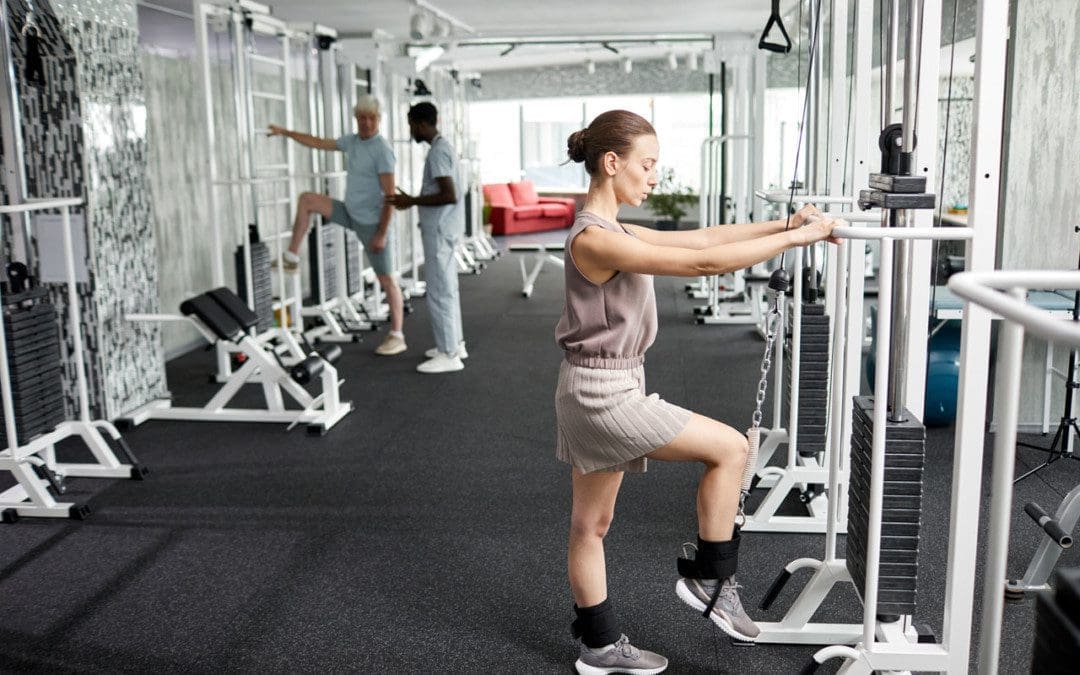
The following example of an exercise rehabilitation program can be used to rehabilitate the lower extremities. The exercises should be done slowly over several weeks. Therapeutic exercises should be combined with an appropriate and gradual range of motion and strengthening program. Individuals should always work with a chiropractor and physical therapist to develop the most suitable program for specific injuries and limitations.
One-Leg Balance
Try to stand on one leg for 10 to 30 seconds.
One-Leg Balance with Eyes Closed
Stand on one leg for 10 to 30 seconds with your eyes closed.
Akbar, Saddam, et al. “Effects of neuromuscular training on athletes’ physical fitness in sports: A systematic review.” Frontiers in physiology vol. 13 939042. 23 Sep. 2022, doi:10.3389/fphys.2022.939042
Borrelli, Joseph Jr et al. “Understanding Articular Cartilage Injury and Potential Treatments.” Journal of orthopedic trauma vol. 33 Suppl 6 (2019): S6-S12. doi:10.1097/BOT.0000000000001472
Cote, Mark P, et al. “Rehabilitation of acromioclavicular joint separations: operative and nonoperative considerations.” Clinics in sports medicine vol. 29,2 (2010): 213-28, vii. doi:10.1016/j.csm.2009.12.002
Jeong, Jiyoung, et al. “Core Strength Training Can Alter Neuromuscular and Biomechanical Risk Factors for Anterior Cruciate Ligament Injury.” The American Journal of sports medicine vol. 49,1 (2021): 183-192. doi:10.1177/0363546520972990
Porschke, Felix, et al. “Return to work after acromioclavicular joint stabilization: a retrospective case-control study.” Journal of orthopedic surgery and Research vol. 14,1 45. 12 Feb. 2019, doi:10.1186/s13018-019-1071-7
Vařeka, I, and R Vařeková. “Kontinuální pasivní pohyb v rehabilitaci kloubů po úrazech a operacích” [Continuous passive motion in joint rehabilitation after injury and surgery]. Acta Chirurgie orthopaedicae et traumatologiae Cechoslovaca vol. 82,3 (2015): 186-91.
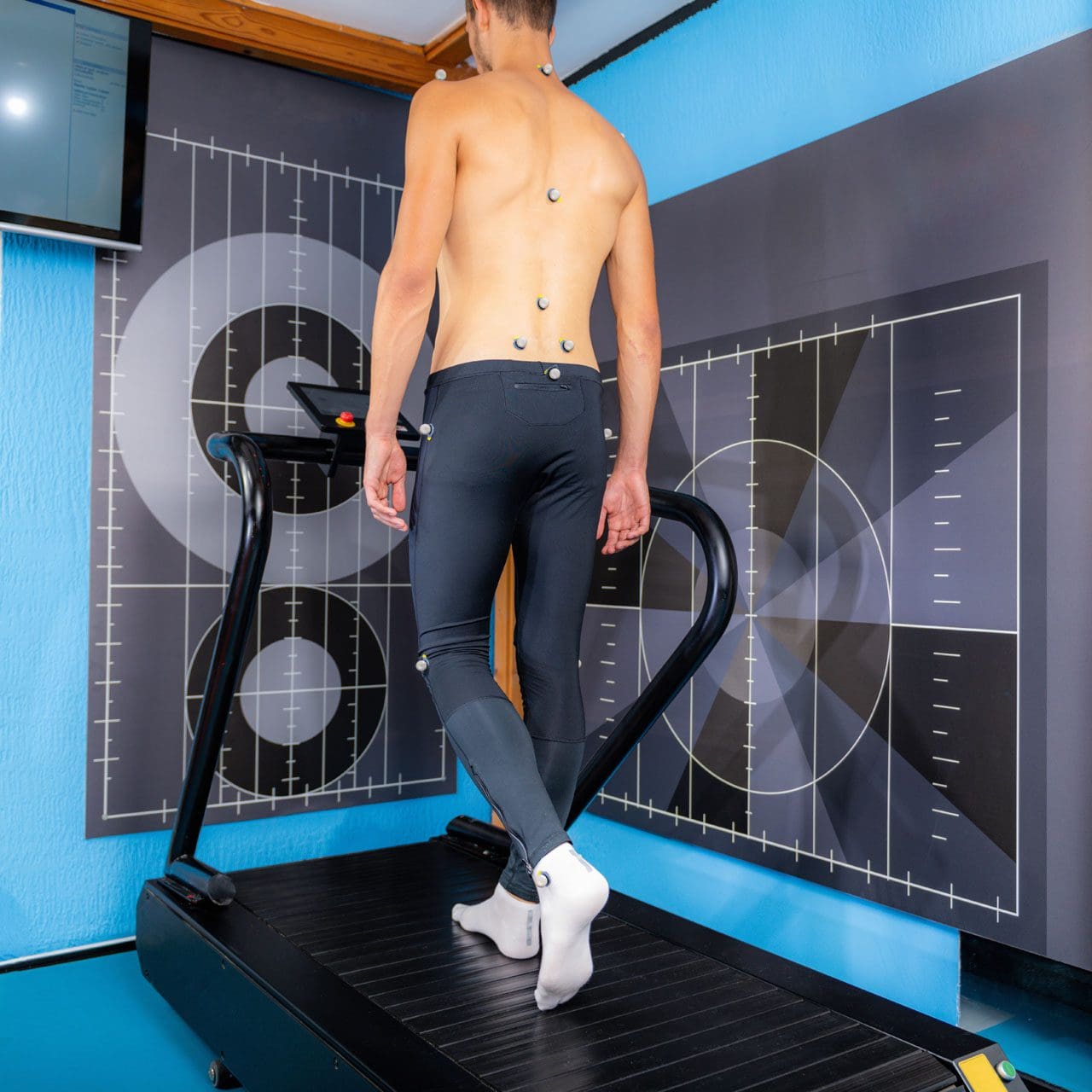
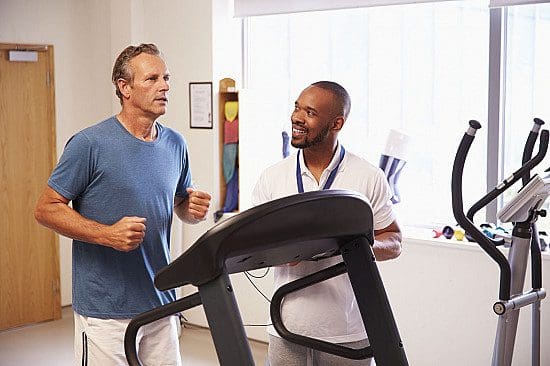
Working out on a treadmill is a great way to get cardiovascular exercise when unable to go outside or to change things up. However, it’s not just about getting on the machine and walking or running. Like anything, proper form and posture are important in preventing injuries. This allows the individual to walk smoother and faster, burn more calories, and get the full benefits. Individuals with a medical condition that impacts posture or makes it difficult to walk on a treadmill should speak to a healthcare provider for recommendations to ensure they can work out without aggravating the condition or putting themselves at risk. There is an option of working with a physical or occupational therapist to address any concerns individuals may have about using a treadmill.
Treadmill Walking Exercise Errors
Safety
A common error is getting on a treadmill with the belt already running. This may seem unnecessary, but many accidents happen when individuals just jump on. To avoid injuries, it is recommended to follow these safety tips.
Make sure the machine is off.
Know where the emergency stop switch is.
Stand next to the base/running deck.
Clip the safety key to your body to stop the treadmill if you slip or stumble.
Start the treadmill and set it to slow speed.
Look at the speed and carefully get onto the moving tread.
Gradually increase the speed once comfortably on board.
Wrong Shoes
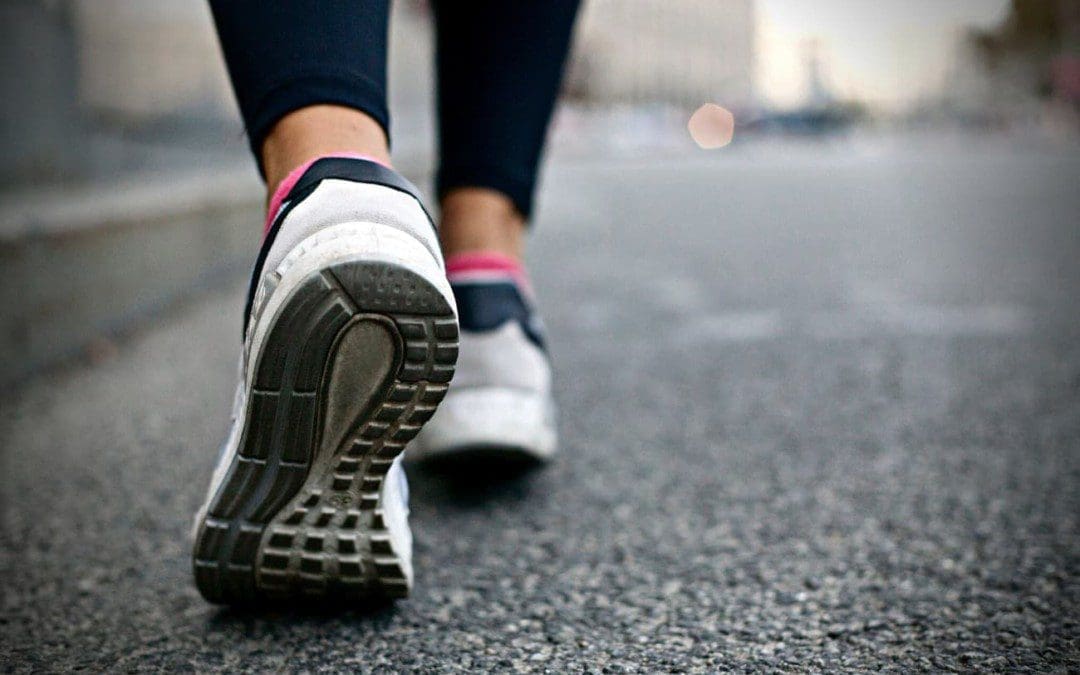
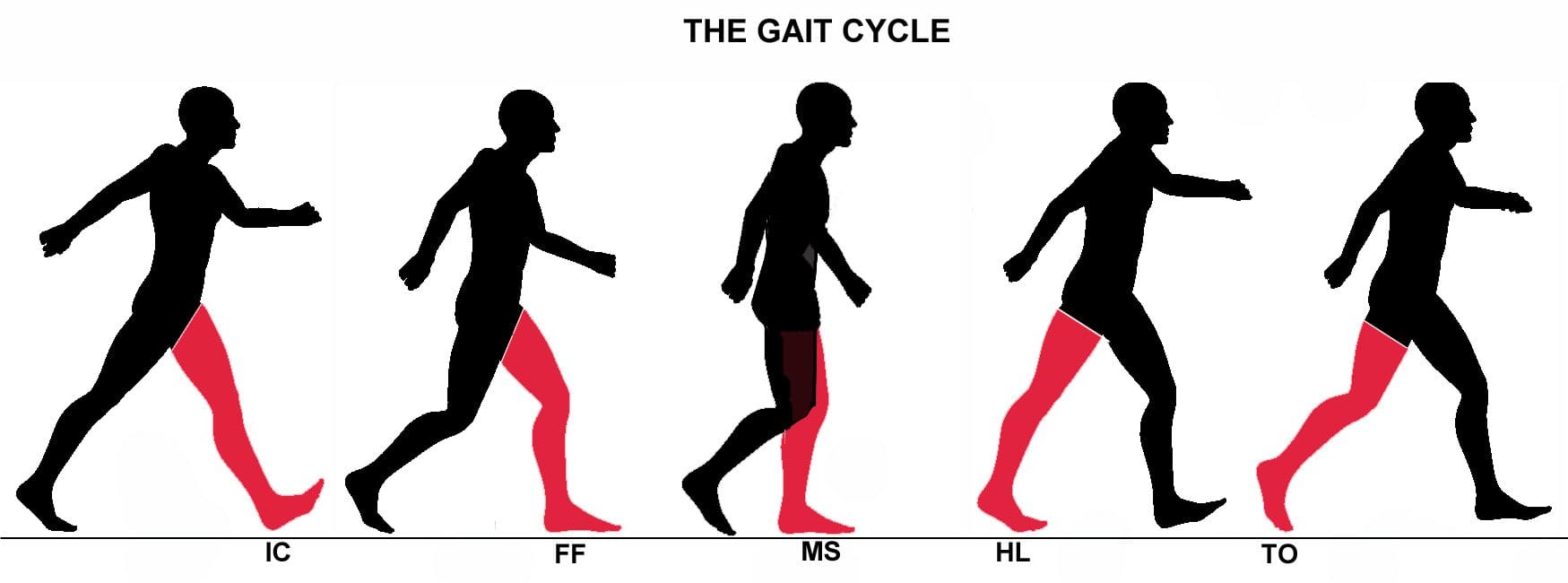
A healthy step is to strike with the heel in front with the forward foot slightly off the surface. The foot then rolls from heel to toe; by the time the toe is on the ground, the individual is halfway into the next step, and the forward foot is now the rear foot and ready for the toes to push off to take the next step.
This sequence is only possible with flexible shoes.
Wearing stiff shoes may not allow for the roll-through.
Stiff shoes force the foot to slap down.
The body and walking stride become a flat-footed stomp.
Take a few minutes during a walking session to think about what the feet are doing.
Ensure they strike with the heel, roll through the step, and the rear foot provides an adequate push-off.
If you cannot do this in your present shoes, then it’s time to look at other flexible walking/running shoes.
Holding The Handrails
The handrails provide stability, but natural walking posture or natural movement involves a healthy stride and arm motion.
Constantly holding onto the handrails doesn’t allow for this motion.
Walking or running at a slower pace is recommended without using the handrails.
Individuals will get a better workout at a slower pace than they would at a faster rate holding on to the rails.
Individuals with a disability or balance issues may need the handrails and should consult a trainer or physical therapist for healthy workout recommendations.
Leaning Forward
Proper walking posture means the body is upright, not leaning forward or backward.
Before stepping onto the treadmill, check and readjust your posture.
Proper arm motion allows the body to go faster and burn more calories.
The swinging motion can help shoulder and neck problems developed from unhealthy postures.
The legs only move as fast as the arms do.
To speed up the legs, speed up the arms.
Going Too Fast
Go only as fast as the body can go while maintaining proper walking posture and form.
If overstriding, leaning forward, or hunching shoulders begin to present, slow down until a comfortable/maintainable speed that allows the body to walk correctly is found.
If the workout doesn’t feel like it’s helping
Individuals with a bad walking form at high speeds may consider adding running intervals.
Running will create quick bursts of higher heart rate and change form.
Running Intervals
Warm up at a slow speed for 3 to 5 minutes.
Increase walking speed to a fast pace that can maintain proper walking form.
Start a jog and increase the speed to match the jogging pace.
Jog for 1 to 3 minutes.
Return to the fast walking pace for 3 to 5 minutes.
Jog for 1 to 3 minutes.
Repeat until the end of the workout.
Finish with 3 to 5 minutes at an easy walking pace to cool down.
Challenge Yourself
When the body has fully adapted to a workout, it’s time to challenge the body to achieve greater fitness and stay motivated. This is where workout variation intensity, duration, frequency, and/or mode come into play.
Intensity
Add intensity by increasing the incline or the speed.
Duration
Increase the time spent on the treadmill.
If spending 30 minutes for several weeks, increase to 45 minutes for at least one weekly session.
After a couple of weeks, increase to 60 minutes.
Frequency
Once the body is used to treadmill walking, try to incorporate a session every day or every other day.
Walk at a brisk pace for 30 to 60 minutes, going for a total of 150 to 300 minutes per week.
Type of Exercise
Try jogging or running.
Alternate using the exercise bike, rowing machine, or stair climber.
Add weight training, circuit training, or anything enjoyable that gets the body moving in different ways.
Set goals and get into the habit of using the treadmill regularly to reap all the benefits. Avoid common treadmill errors, stay safe, and make the most out of walking and running workouts.
Move Better, Live Better
References
Centers for Disease Control and Prevention. Benefits of Physical Activity.
Donlin, Margo C et al. “Adaptive treadmill walking encourages persistent propulsion.” Gait & Posture vol. 93 (2022): 246-251. doi:10.1016/j.gaitpost.2022.02.017
Donlin, Margo C et al. “User-driven treadmill walking promotes healthy step width after stroke.” Gait & Posture vol. 86 (2021): 256-259. doi:10.1016/j.gaitpost.2021.03.031
Hashiba, M. “Transient change in standing posture after linear treadmill locomotion.” The Japanese Journal of Physiology vol. 48,6 (1998): 499-504. doi:10.2170/jjphysiol.48.499
Liang, Junjie et al. “The effect of anti-gravity treadmill training for knee osteoarthritis rehabilitation on joint pain, gait, and EMG: Case report.” Medicine vol. 98,18 (2019): e15386. doi:10.1097/MD.0000000000015386
MacEwen, Brittany T et al. “A systematic review of standing and treadmill desks in the workplace.” Preventive medicine vol. 70 (2015): 50-8. doi:10.1016/j.ypmed.2014.11.011
For individuals with aches and pains after walking, the first thing to check is posture. How an individual holds their body is important in walking effortlessly and comfortably. Improving walking posture will make it easier to breathe and walk farther and faster. Injury Medical Chiropractic and Functional Medicine Clinic can treat back problems, restore mobility, and retrain individuals on achieving and maintaining healthy posture.
Walking Posture
Sitting for extended periods weakens neck and back muscles and decreases spinal mobility, making it more difficult to maintain a healthy walking posture. Improving and maintaining healthy walking posture can go a long way regarding the body’s health.
Benefits
The benefits include:
Strengthened core, back, leg, and buttock muscles.
Improved balance and stability.
Easier breathing.
Increased energy levels.
Improved walking speed, distance, and gait.
Back and hip discomfort symptoms prevention.
Decreased risk of injury and falling.
Set Up Posture
Stand up straight.
Engage the core.
Relax shoulders.
Keep the chin parallel to the ground.
Eyes forward.
Minimize leaning forward or backward.
Spend the first 15 seconds of walking focusing on posture.
Once a rhythm is achieved, periodically check yourself to ensure you stay consistent with proper posture until it becomes normal.
Stand up Straight
Visualize standing tall and straight.
Resist the temptation to slouch or arch the back.
Control Leaning Forward or Back
Leaning strains the back muscles when sitting, standing, and walking.
Leaning slightly forward from the ankles when walking up a hill.
Going downhill, leaning slightly forward, or maintaining a straight back is okay.
Keep Eyes Forward
Avoid looking down.
The focus should be about 20 feet ahead.
Maintaining a forward visual path allows individuals to see anything from the side.
Keep Chin Parallel to the Ground
This reduces strain on the neck and back.
A proper chin position maintains forward focus rather than down.
Shoulders Back and Relaxed
Shrug and allow the shoulders to fall and relax slightly back.
Loosening up the shoulders helps relieve tension and…
Shrug and re-loosen at intervals during the walk to ensure the shoulders stay relaxed.
Engage Core Muscles
The core muscles help resist slouching and leaning.
Keep the stomach pulled in slightly.
Take deep, full breaths to maintain a healthy walking posture.
Maintain Neutral Pelvis
Ensure the hips are not tilting forward or back while walking.
Practice sticking out the buttocks, tucking them in, and finding a natural middle.
The middle is the healthy balance that will keep you from arching the back muscles and spine.
Devices
Resist the urge to engage with the phone or activity monitor while walking and looking down.
Only look when necessary and then mindfully regain posture.
Some activity monitors have vibration alerts to reduce the need to look down.
Utilize earbuds or headphones for making and taking calls and other tasks.
Certain earbuds or headphones allow for voice commands, so you don’t have to look at the phone.
Chiropractic Realignment and Retraining
Maintaining proper posture is a gradual process. A chiropractor can correct years of practicing unhealthy postures like forward head issues or chronic slouching and realign the spine to restore optimal function.
A chiropractic therapy team will work on bones and muscles in specific body regions.
Massage will relax the muscle tissues to restore correct balance.
Chiropractic techniques will realign the neck, spine, hips, and pelvis.
Strengthening and stretching exercises will maintain adjustments.
Posture retraining will teach individuals to stay aware of their spinal position and help create healthy habits.
Regular posture checks, whether at work, school, just walking around doing errands, or exercising, will help the body learn proper positioning until it becomes second nature.
Revitalize and Rebuild
References
Buldt, Andrew K et al. “The relationship between foot posture and plantar pressure during walking in adults: A systematic review.” Gait & Posture vol. 62 (2018): 56-67. doi:10.1016/j.gaitpost.2018.02.026
Hackford, Jessie, et al. “The effects of walking posture on affective and physiological states during stress.” Journal of behavior therapy and experimental psychiatry vol. 62 (2019): 80-87. doi:10.1016/j.jbtep.2018.09.004
Lin, Guohao, et al. “The relationship between forward head posture, postural control, and gait: A systematic review.” Gait & Posture vol. 98 (2022): 316-329. doi:10.1016/j.gaitpost.2022.10.008
Suh, Jee Hyun, et al. “The effect of lumbar stabilization and walking exercises on chronic low back pain: A randomized controlled trial.” Medicine vol. 98,26 (2019): e16173. doi:10.1097/MD.0000000000016173
Woollacott, Marjorie, and Anne Shumway-Cook. “Attention and the control of posture and gait: a review of an emerging area of research.” Gait & Posture vol. 16,1 (2002): 1-14. doi:10.1016/s0966-6362(01)00156-4
Many people don’t often realize that stability and balance are two of the most reliable abilities to keep the body from falling, and it is often taken for granted from the earlier stages, where infants and toddlers are learning to stand upright, to adulthood where we are walking, running or performing any physical activities. Our bodies are complex machines comprised of upper and lower portions that provide balance and stability. The lower half of our bodies helps stabilize and balance the upper half weight and allows us to move around. This is known as gait. However, when the body begins to age naturally or chronic issues begin to affect the muscles and cause an imbalance in the lower half, it can lead to many disorders associated with these imbalances. Today’s articles examine what gait is, how gait disturbances are associated with the body, and how the MET technique improves gait. We provide information about our patients to certified medical providers that offer available therapy techniques like MET (muscle energy techniques) for individuals dealing with chronic conditions associated with gait disturbances that could affect a person’s ability to walk. We encourage each patient appropriately by referring them to our associated medical providers based on their diagnosis results. We accept that education is a spectacular way when asking our providers the most crucial questions at the patient’s acknowledgment. Dr. Alex Jimenez, D.C., assesses this information as an educational service. Disclaimer
What Is Gait?
Have you been dealing with issues when walking for a short or long distance? Do your feet or ankles seem to feel tired or ache when stepping? Or have you been dealing with mobility issues in your hips? Many of these issues are associated with gait and can cause balance disturbances in the body. So what is gait? In the book by Leon Chaitow, N.D, D.O., and Judith Walker DeLany, L.M.T, titled “Clinical Applications of Neuromuscular Techniques,” gait is defined as how you walk and how each lower body section contributes to how you walk. This includes:
Feet
Ankles
Knees
Hips
Spine
The book also mentions how a person progresses from one location to another using muscular action and gravity to make them walk. Two functional units are in a casual relationship contributing to gait: the passenger and locomotor units. The passenger unit consists of the upper extremities, like the head, neck, arms, trunk, and pelvis, to be the center of gravity when moving forward. At the same time, the locomotor unit comprises the pelvis and lower extremities, like the legs, knees, feet, and ankles, to support the weight of the upper extremities and perform structural stability and mobility to make the body move forward.
Gait Disturbances Associated With The Body
So what happens when traumatic factors or natural aging begins to affect the body and causes gait disturbances. Research studies reveal that since gait depends on the interplay of the nervous, musculoskeletal, and cardiorespiratory system which can be influenced by age and other factors that can lead to issues in the lower extremities causing falls and injuries. Many factors can lead to gait disturbances that can affect how a person walks and how it can affect the joints and muscles, which can lead to pain-like symptoms. Additional studies mentioned that gait disorder affects elderly adults, increasing their fall risk and leading to mobility issues in their hips. Muscle shortening and joint health are other issues that can cause gait disturbances in the lower extremities. When the muscles in the lower extremities are tight and weak, it can cause them to be short and be accompanied by joint dysfunction. The health of the joints in the lower extremities depends on the balancing strength of the opposing flexor muscles. When the flexor muscles lose part or all of their function, it can cause the joint to be hyperextended. To that point, it causes abnormal joint stress, corresponding to lower back pain associated with gait disorders affecting a person’s ability to walk and keep their body balanced.
An Overview Of Gait Analysis-Video
Have you been dealing with mobility issues in your joints? Do you find yourself becoming unstable every time you walk? Or do your leg muscles feel tight? If you have been dealing with these issues, it could be due to a gait problem. Many people have different ways of walking; if there are issues, they can be pointed out in an examination. When there is an issue with gait, it can indicate pain and other revealing problems that can affect the entire body. The video above explains the gait cycle and gait analysis of a person’s walk. Gait analysis is often used in a normal examination to evaluate how a person walks, their body mechanics, and muscle activity to provide insight into the issue. A person’s gait can offer many important clues that doctors and pain specialists can see and identify the problem by developing a treatment plan to improve a person’s gait and reduce pain-like symptoms.
How The MET Technique Improves Gait
So many treatment plans can effectively improve balance and gait disorders in the body. Many pain specialists like chiropractors use manual spinal manipulation to re-align the spine to loosen stiff joints that may have contributed to imbalances in the lower extremities. MET (muscle energy technique) and physical therapy can help stretch the tight muscles and strengthen the muscle groups affected. MET and other approaches to improve gait allow many individuals to regain their stamina and adopt new strategies for their posture and movement. These therapy treatments will enable a person to feel more confident and more aware of how they walk while providing muscle strength to the affected muscles to prevent fatigue and decrease the chances of injuries in the future, as studies reveal.
Conclusion
Walking is determined by a person’s gait and how they move in different scenarios. Our bodies are comprised of upper and lower portions that correspond with gait and allow us stability and balance when we are in motion. When various issues like traumatic factors or just normal aging affect the body, the joints and muscles can cause problems with a person’s gait, leading to balance issues and fall injuries. Incorporating treatment plans to improve gait can help prevent future chances of injuries and help stretch and strengthen the affected muscles while loosening up stiff joints. This allows a person to regain their balance and improve stability in their bodies.
References
Baker, Jessica M. “Gait Disorders.” The American Journal of Medicine, U.S. National Library of Medicine, 27 Dec. 2017, https://pubmed.ncbi.nlm.nih.gov/29288631/.
Chaitow, Leon, and Judith Walker DeLany. Clinical Applications of Neuromuscular Techniques. Churchill Livingstone, 2003.
Pirker, Walter, and Regina Katzenschlager. “Gait Disorders in Adults and the Elderly : A Clinical Guide.” Wiener Klinische Wochenschrift, U.S. National Library of Medicine, Feb. 2017, https://www.ncbi.nlm.nih.gov/pmc/articles/PMC5318488/.
Van Abbema, Renske, et al. “What Type, or Combination of Exercise Can Improve Preferred Gait Speed in Older Adults? A Meta-Analysis.” BMC Geriatrics, U.S. National Library of Medicine, 1 July 2015, https://www.ncbi.nlm.nih.gov/pmc/articles/PMC4488060/.
IFM's Find A Practitioner tool is the largest referral network in Functional Medicine, created to help patients locate Functional Medicine practitioners anywhere in the world. IFM Certified Practitioners are listed first in the search results, given their extensive education in Functional Medicine