
ClickCease
+1-915-850-0900 [email protected]
Select Page
Initial Chiropractic Examination

Initial Chiropractic Examination

Chiropractic treatment/care is a recommended pain relief option for musculoskeletal automobile, sports, personal – injuries, strains, sprains, pain, and rehabilitation. An initial chiropractic examination is similar to a standard examination administered by health care providers. What an individual can expect at their first consultation includes:

  • Condition or pain symptoms
  • Medical history
  • Physical examination
  • Initial exams last around 45 minutes or more.
  • Follow-up appointments are shorter.

Initial Chiropractic Examination

Online Conference or Phone Call

Some chiropractors offer individuals an initial interview over a video conference and/or phone call. It is focused on discussion with topics like the chiropractors:

  • Types of insurance taken
  • Cost
  • Types of forms to fill out
  • Philosophy
  • Expertise
  • Specialization areas
  • Approaches
  • Techniques
  • Individual’s preferences

Initial Clinic Visit

The initial in-office clinical exam generally includes:

Patient History and Symptoms

The patient will be asked to fill out forms that can also be filled out online before the visit, saving a patient time if they so choose. This provides background information about symptoms and conditions in preparation for the in-person chiropractic consultation. Questions include:

  • Did the pain start as a result of an auto, sports, personal, work injury?
  • How did the pain start – activities, sports, work, etc.?
  • When did the pain start – a few days, weeks, months, years?
  • Where is the pain located?
  • Does the pain spread out to other areas?
  • Is the pain dull, sharp, burning, or throbbing?
  • Does the pain come and go, or is it constant?
  • What activities or body positions make it better and/or worse?
  • Patients are also asked to provide information on pre-existing medical conditions, family medical history if necessary, prior injuries, and previous and current treatments provided by other medical professionals.

Physical Examination

A chiropractic examination includes:

  • Reflexes
  • Respiration
  • Blood pressure
  • Pulse

Certain orthopedic and neurological tests can also be used. These include:

  • Range of motion
  • Neurological integrity
  • Muscle strength
  • Muscle tone
  • Walking gait
  • Posture analysis

Diagnostic Studies

Based on the medical history and physical exam results, diagnostic studies could help reveal pathologies and identify structural abnormalities to diagnose more accurately. X-rays are the most commonly used during an initial chiropractic exam and are used to:

  • Diagnose recent trauma
  • Diagnose bone fractures
  • Study spinal deformities

An MRI scan is recommended for soft tissue damage like a herniated disc, torn muscle/s, or nerve compression.

Patient Diagnosis after the Chiropractic Exam

All the findings from the medical history, physical exam, and diagnostic tests help the chiropractor form a diagnosis. Once the diagnosis is established, the chiropractor will discuss personalized treatment options.


Body Composition


Heart Disease

Many factors can contribute to heart disease, and research has pointed to inflammation caused by obesity as one of the most significant factors to its development. The main contributor is cytokines produced by excess body fat. Cytokines cause inflammation in the walls of the arteries causing damage and increasing pressure. Blood pressure is the force of blood pushing against the walls of the vessels. High blood pressure means that the heart is not pumping blood effectively, and the heart begins to enlarge. An enlarged heart is a significant risk factor that can lead to heart failure if interventions are not taken to repair the damage.

References

Jenkins HJ, Downie AS, French SD. Current evidence for spinal x-ray use in the chiropractic profession. Chiropr Man Therap. 2018; 26:48.

Wang, Zhaoxia, and Tomohiro Nakayama. “Inflammation, a link between obesity and cardiovascular disease.” Mediators of inflammation vol. 2010 (2010): 535918. doi:10.1155/2010/535918

Weeks, William B et al. “Public Perceptions of Doctors of Chiropractic: Results of a National Survey and Examination of Variation According to Respondents’ Likelihood to Use Chiropractic, Experience With Chiropractic, and Chiropractic Supply in Local Health Care Markets.” Journal of manipulative and physiological therapeutics vol. 38,8 (2015): 533-44. doi:10.1016/j.jmpt.2015.08.001

Romanian Deadlift Vs. Standard Deadlift: Comprehensive Guide

Romanian Deadlift Vs. Standard Deadlift: Comprehensive Guide

By�Kyran Doyle�In�Training

Deadlifts are one of the best strength and mass building exercises that you can perform.

When performing the deadlift you are working more muscles than any other exercise, including the squat.

Deadlifts have many different variations and forms. In this article we are going to focus on the difference between the Romanian Deadlift and standard deadlifts.

There are lots of valid arguments as to which exercise is better in a Romanian Deadlift vs regular deadlift battle.

Keep reading to learn the differences.

Romanian Deadlift Vs. Standard Deadlift

The Romanian Deadlift is one of the most�commonly used among the various deadlift techniques.

In fact a lot of people that think they are performing a deadlift are sometimes actually doing a Romanian Deadlift.

Both the conventional and Romanian Deadlifts are great strength and muscle building exercises.

Even though they are both deadlifts�variations the setup, execution and muscles activated are different.

Here�s a quick video that highlights the differences in form and setup between the two.

Regular Deadlift

As the name suggests the deadlift is a strength training exercise that involves�lifting dead weight.

The regular deadlift is one of the best total body exercises you can do as it works just about every fiber in your body.

The deadlift requires you to lift a weight off the ground�and lower it back down again. Although it may sound simple there is a lot going on in the movement and incorrect form can cause injuries.

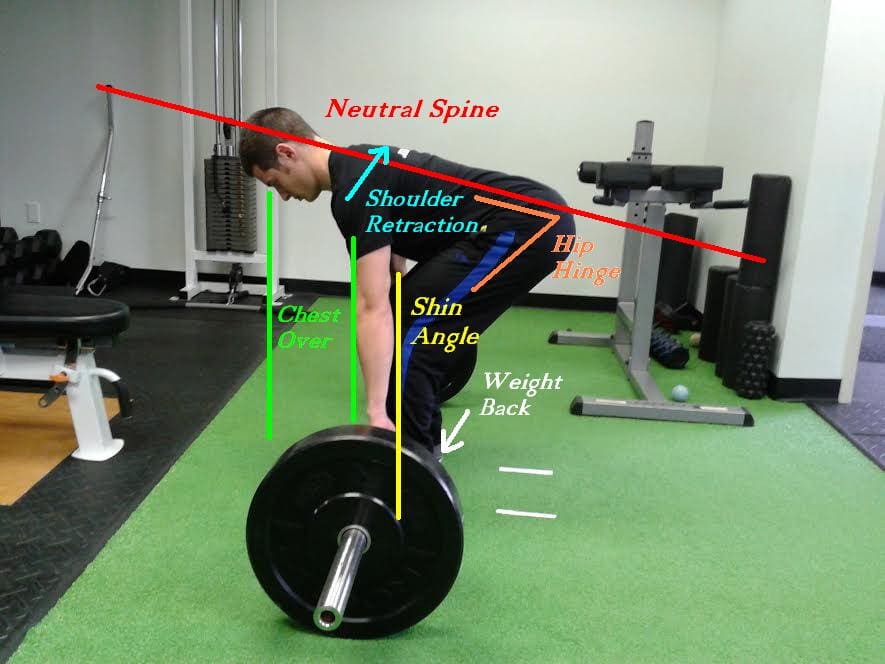
One of the most common causes for injury while deadlifting is rounding the back. Your lower back must stay neutral during the whole movement. Rounding your lower back during heavy deadlifts puts uneven pressure on your spine. Always lift with a neutral lower back, allowing for the natural inward curve of your lower spine.

romanian-deadlift-vs-deadlift 2

Original Image from Stack.com

Don�t try and rush to lift heavier weights. the quickest way to improve your deadlift is through correct form. By pulling more efficiently you can use more muscles and deadlift heavier. So start out practicing correct form and build your way up.

The best way to approach the exercise is to think as if you were leg pressing the floor as opposed to�using your upper body to lift something. This will help you mentally focus on using your legs rather than your back (which can cause rounding) for the exercise.

The �dead� in deadlift stands for dead weight so each rep must start on the floor, from a dead stop. �Deadlifts are different to other exercises like the bench press or squat where the weight starts at the top. The deadlift movement�starts from the bottom and and you pull the weight up then return it to the floor�for one rep.

Here are�Stronglifts�5 steps to proper deadlift form:

  1. Walk to the bar.�Stand with your mid-foot under the bar. Your shins shouldn�t touch it yet. Put your heels hip-width apart, narrower than on Squats. Point�your toes�out 15�.
  2. Grab the bar.�Bend over without bending your legs. Grip the bar narrow, about shoulder-width apart like on the Overhead Press. Your arms must be vertical when looking from the front.
  3. Bend your knees.�Drop into position by bending your knees until your shins touch the bar. Do NOT let the bar move away from your mid-foot. If it moves,�start from scratch with step one.
  4. Lift your chest.�Straighten your back by raising you chest. Do not change your position � keep the bar over your mid-foot, your shins against the bar, and your hips where they are.
  5. Pull.�Take a big breath, hold it and�stand up with the weight. Keep the bar in contact with your legs while you pull. Don�t shrug or lean back at the top.

Lower the bar by moving your hips back while keeping your legs almost straight. Once the bar is past your knees, bend your legs more. The bar will land over your mid-foot, ready for your next rep.

Rest a second between reps while staying in the setup position. Take a deep breath, get tight and pull again. Every rep must start from a dead stop on the floor. Don�t bounce the weight off the floor or you can end up lifting�with�bad form.

read more button

Mastodon