For individuals working at a desk or work station where the majority of the work is done in a sitting position and increases the risk for a variety of health problems, can using a standing desk help prevent musculoskeletal problems and improve short and long-term wellness?
Stand Desks
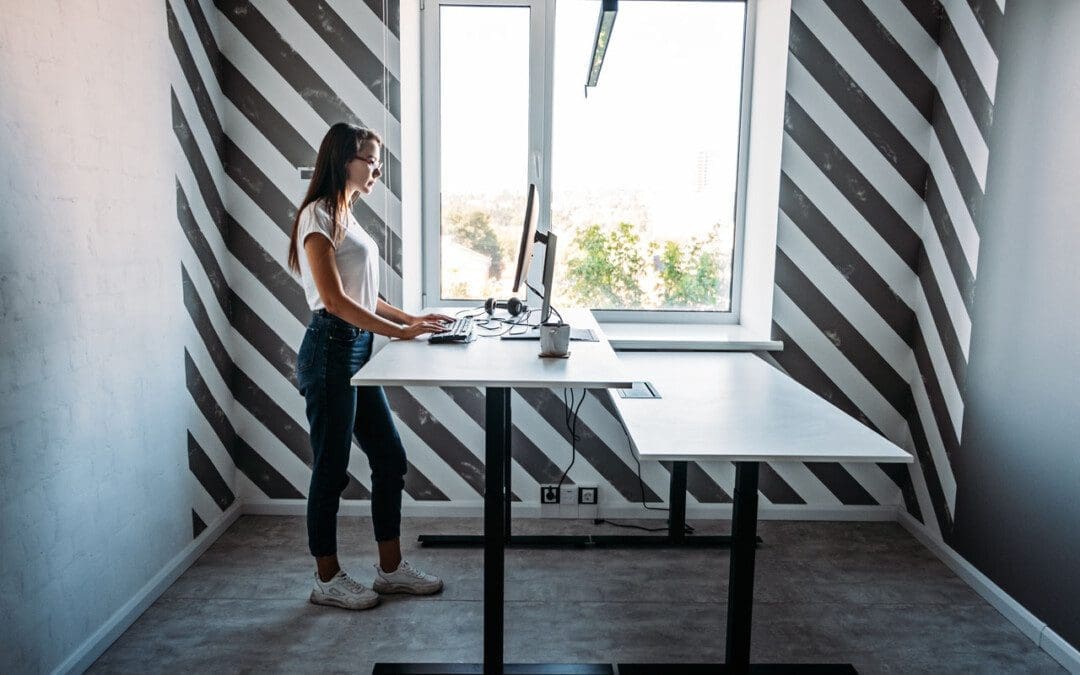
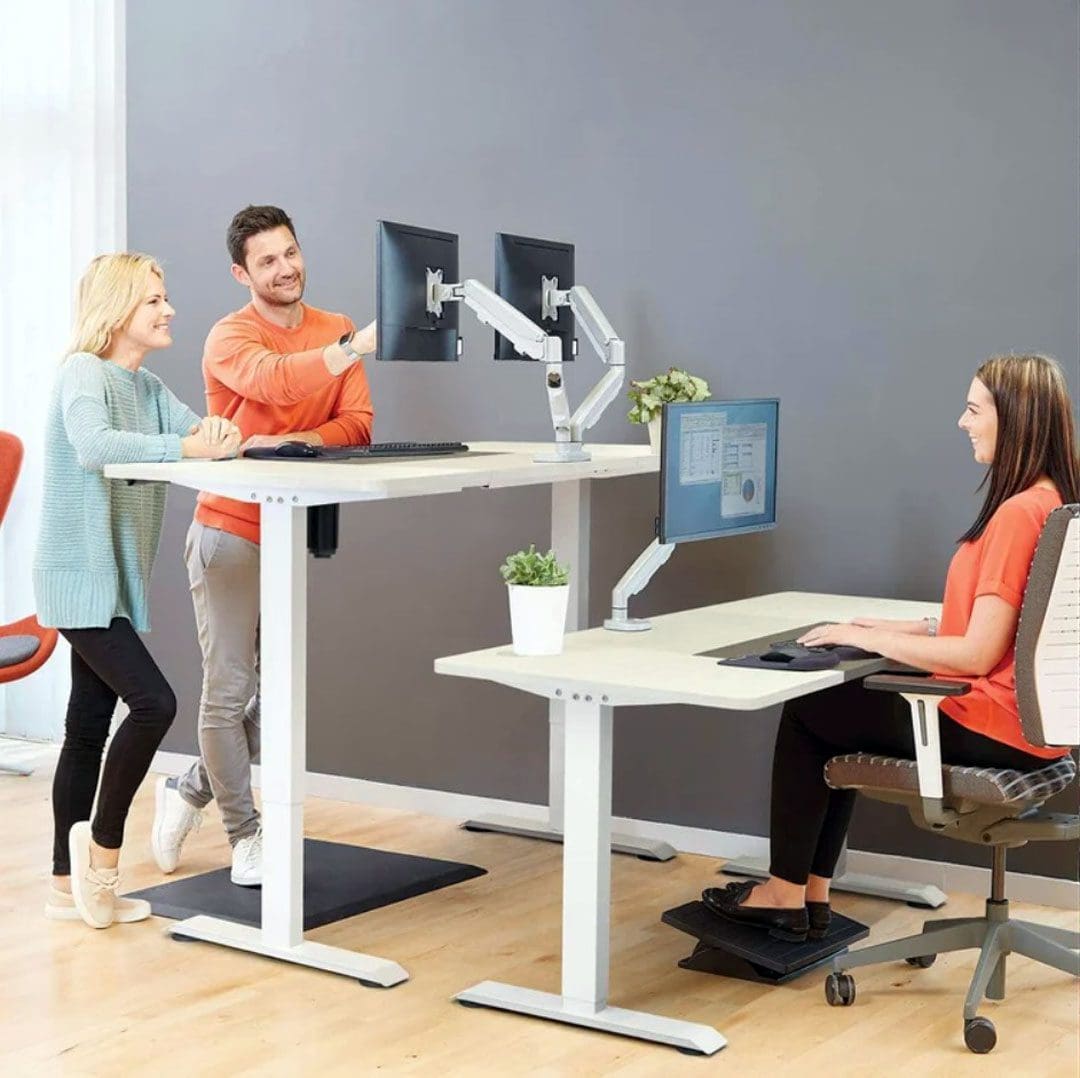
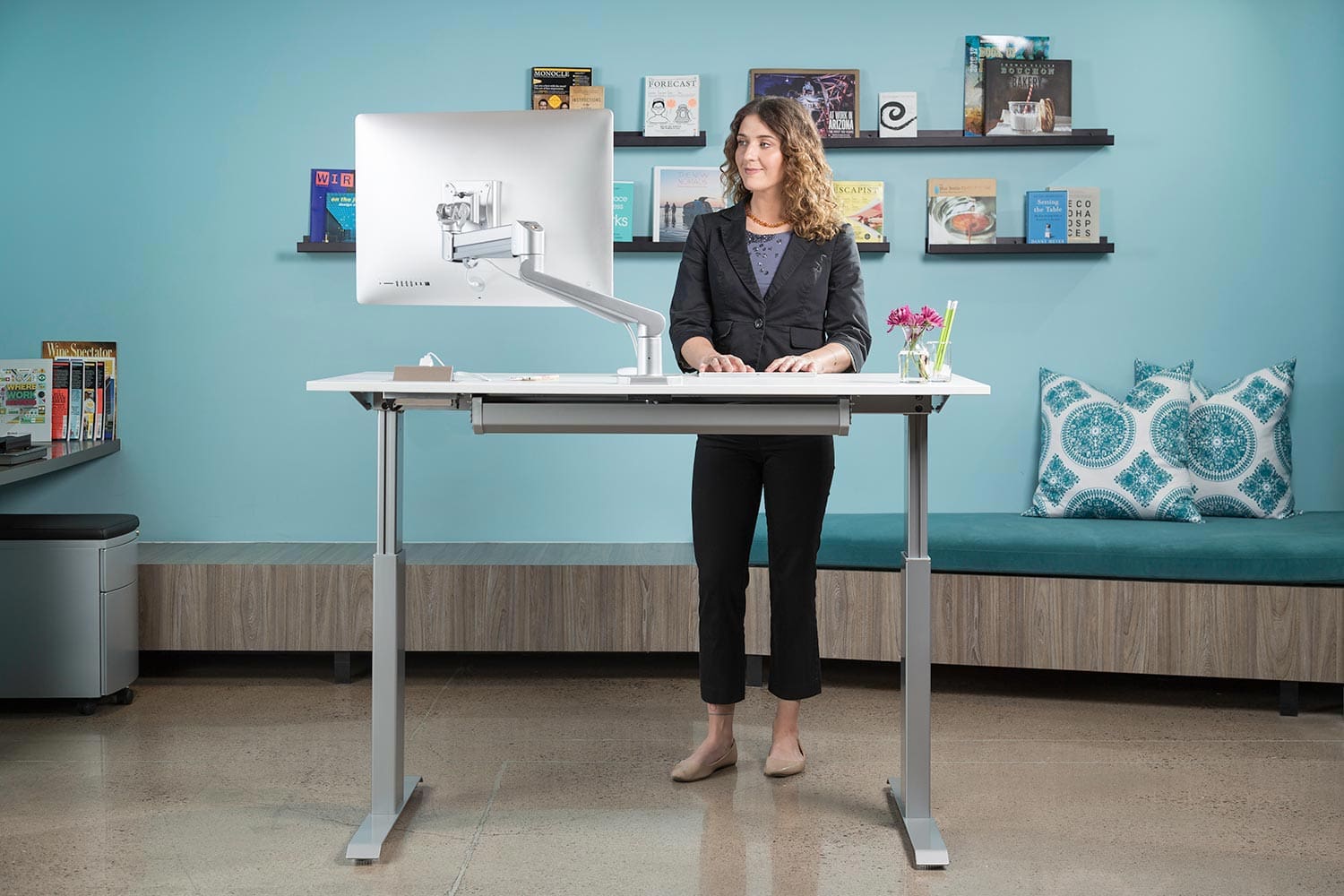
More than 80% of jobs are done in a seated position. Stand desks have proven to help. (Allene L. Gremaud et al., 2018) An adjustable stand desk is intended to be the standing height of an individual. Some desks can be lowered to use while sitting. These desks can improve:
Blood circulation
Back pain
Energy
Focus
Individuals who are less sedentary may experience decreased depression, anxiety, and risk of chronic disease.
Improve Posture and Decrease Back Pain
Sitting for prolonged periods can cause fatigue and physical discomfort. Back pain symptoms and sensations are common, especially when practicing unhealthy postures, already dealing with existing back problems, or using a non-ergonomic desk set-up. Instead of only sitting or standing for the whole workday, alternating between sitting and standing is far healthier. Practicing sitting and standing regularly reduces body fatigue and lower back discomfort. (Alicia A. Thorp et al., 2014) (Grant T. Ognibene et al., 2016)
Increases Energy Levels
Prolonged sitting correlates with fatigue, reduced energy, and productivity. A sit-stand desk can provide benefits like increased productivity levels. Researchers discovered that sit-stand desks could improve the general health and productivity of office workers. Individuals in the study reported:
According to the CDC, six in 10 individuals in the U.S. have at least one chronic disease, like diabetes, heart disease, stroke, or cancer. Chronic disease is the leading cause of death and disability, as well as a leading force of healthcare costs. (Centers for Disease Control and Prevention. 2023) While further research is needed to see if standing desks can reduce the risk of chronic disease, one study looked to quantify the association between sedentary time and the risk of chronic disease or death. Researchers reported that sedentariness for prolonged periods was independently associated with negative health outcomes regardless of physical activity. (Aviroop Biswas et al., 2015)
Improved Mental Focus
Sitting for extended periods slows down blood circulation. This decreased blood flow to the brain lowers cognitive function and increases the risk of neurodegenerative conditions. One study confirmed that healthy individuals who worked in a prolonged sitting position had reduced brain blood flow. The study found that frequent, short walks could help prevent this. (Sophie E. Carter et al., 2018) Standing increases blood and oxygen circulation. This improves cognitive function, which also helps improve focus and concentration.
Depression and Anxiety Reduction
Modern lifestyles typically contain large amounts of sedentary behavior.
However, there is a small amount about the mental health risks of prolonged sedentary behavior. There have been a few studies aimed at improving public understanding. One study focused on a group of older adults, having them self-report sedentary habits that included television, internet, and reading time. This information was compared to their individual scoring on the Centre of Epidemiological Studies Depression scale. (Mark Hamer, Emmanuel Stamatakis. 2014)
The researchers found that certain sedentary behaviors are more harmful to mental health than others.
Television watching, for example, resulted in increased depressive symptoms and decreased cognitive function. (Mark Hamer, Emmanuel Stamatakis. 2014)
Internet use had the opposite effect, decreasing depressive symptoms and increasing cognitive function.
Researchers theorize that the results come from the contrasting environmental and social contexts in which they are happening. (Mark Hamer, Emmanuel Stamatakis. 2014)
Another study looked at the possible correlation between sedentary behavior and anxiety.
Incorporating a standing desk into the workspace can help to reduce the negative effects of sedentary behaviors, leading to improved productivity, improved mental and physical health, and a healthy work environment for individuals who work long hours at a desk or workstation.
Understanding Academic Low Back Pain: Impact and Chiropractic Solutions
References
Gremaud, A. L., Carr, L. J., Simmering, J. E., Evans, N. J., Cremer, J. F., Segre, A. M., Polgreen, L. A., & Polgreen, P. M. (2018). Gamifying Accelerometer Use Increases Physical Activity Levels of Sedentary Office Workers. Journal of the American Heart Association, 7(13), e007735. https://doi.org/10.1161/JAHA.117.007735
Thorp, A. A., Kingwell, B. A., Owen, N., & Dunstan, D. W. (2014). Breaking up workplace sitting time with intermittent standing bouts improves fatigue and musculoskeletal discomfort in overweight/obese office workers. Occupational and environmental medicine, 71(11), 765–771. https://doi.org/10.1136/oemed-2014-102348
Ognibene, G. T., Torres, W., von Eyben, R., & Horst, K. C. (2016). Impact of a Sit-Stand Workstation on Chronic Low Back Pain: Results of a Randomized Trial. Journal of occupational and environmental medicine, 58(3), 287–293. https://doi.org/10.1097/JOM.0000000000000615
Ma, J., Ma, D., Li, Z., & Kim, H. (2021). Effects of a Workplace Sit-Stand Desk Intervention on Health and Productivity. International journal of environmental research and public health, 18(21), 11604. https://doi.org/10.3390/ijerph182111604
Centers for Disease Control and Prevention. Chronic disease.
Biswas, A., Oh, P. I., Faulkner, G. E., Bajaj, R. R., Silver, M. A., Mitchell, M. S., & Alter, D. A. (2015). Sedentary time and its association with risk for disease incidence, mortality, and hospitalization in adults: a systematic review and meta-analysis. Annals of internal medicine, 162(2), 123–132. https://doi.org/10.7326/M14-1651
Carter, S. E., Draijer, R., Holder, S. M., Brown, L., Thijssen, D. H. J., & Hopkins, N. D. (2018). Regular walking breaks prevent the decline in cerebral blood flow associated with prolonged sitting. Journal of applied physiology (Bethesda, Md. : 1985), 125(3), 790–798. https://doi.org/10.1152/japplphysiol.00310.2018
Hamer, M., & Stamatakis, E. (2014). Prospective study of sedentary behavior, risk of depression, and cognitive impairment. Medicine and science in sports and exercise, 46(4), 718–723. https://doi.org/10.1249/MSS.0000000000000156
Teychenne, M., Costigan, S. A., & Parker, K. (2015). The association between sedentary behaviour and risk of anxiety: a systematic review. BMC public health, 15, 513. https://doi.org/10.1186/s12889-015-1843-x
Sit-stand desks are coming around, especially with so many of us working from home. Sitting is not a bad thing, it is just that we do it too much. Whether at home or work, too much-sitting causes health problems, and musculoskeletal problems, which can lead to a chronic back pain condition.
Too much sitting has been compared to smoking, and sitting in front of a computer for hours and hours has led to 85% of workers reporting discomfort/pain/ health issues at work. Fortunately, there is hope for the modern-day office known as the sit-stand desk or a standing office desk. Individuals are rapidly discovering the benefits of this ergonomic tool. �
�
�
� Sit-stand desks encourage workers not to sit as much and stand for a while. This generates a spectrum of spine health benefits that range from reducing pressure on the back to burning a few extra calories just from changing positions. Thinking of investing in an adjustable desk, here are some key things to consider.
�
Get a new sit-stand desk or a unit that sits on top of my desk
This depends on the amount of space that is available. If there is plenty of space, specifically, to spread things out over a large desk area, then it can make sense to invest in a stand-alone sit-stand desk. If the current desk is right for you, then a sit-stand desk put on top of the current desk may be the better option.
�
Height Adjustment
It�s important that the height of the desk can be adjusted. This has to do with different heights for different work tasks. For example, an individual could prefer one height for writing and another height when working/keyboarding on the computer.
If the desk is going to be used by others, then it�s essential that the height can be adjusted to meet the needs of those with different heights and work preferences. The Business and Institutional Furniture Manufacturers Association recommends that the height range be 22.6? to 48.7?. Ultimately the range depends on those using the desk. �
Depth of the desk
Depth is the front-to-back tabletop distance when facing the desk. A good choice is a desk that has a minimum depth of 30?. This allows those who prefer more desk space the ability to spread out the work. However, smaller depths are available.
�
Weight capacity
Sit-stand desks are built to handle the weight of the usual desktop items:
Computer
Monitor/s
Keyboard
Mouse
Speakers
Phone
With heavy items, it’s best to review the weight restrictions of the desk you will be using. Weight restrictions vary, but there are all kinds of desk models to fit your needs. �
�
Desk budget
This depends on your budget, work purposes, and quality. Sit-stand desks can be found in a wide range of prices. Opting for the cheapest desk is not the wisest thing to do. Remember these desks are an investment in the spine and overall health. Consider the quality of the desk and how long it will last along with a warranty to protect you if the desk malfunctions.
�
What to look for
Sit-stand desks come with all kinds of options, in terms of quality and convenience.
�
Noise level:
If a quiet work environment is important, then look into desks that offer a quiet action/transition when switching from sitting to standing and vice versa.
�
Speed:
Some desks can take a long time to switch. Be careful with these because the use of the full functionality can diminish because of the length of time it takes. Look for the quick adjustment type.
�
Manual vs. electrical:
There are some desk models that operate using hand cranks, locking switches, etc. while others use electric/pneumatic lifts to raise and lower the desk with a power button. The method of movement chosen will have a distinct impact on the ease of use, speed, and noise level.
�
Programmable:
Some desks can be programmed with height preferences so they can be set to the desired position and saved.
�
Customization:
If the desk needs to be able to function around privacy screens or specialized office equipment, a one-size-fits-all desk may not be the best option. This is something to consider if the desk needs to fit perfectly in an established environment. �
Keeping the desk in the standing position
Some individuals may feel better standing all day. However, standing for long periods does as much damage to the spine as sitting all day. The best approach is to vary postures over a workday.
After sitting for an hour, get up and move around.
If you�ve been standing for a while, take a break and sit.
That is what sit-stand desks are made for. They are made to promote changing positions throughout the day, which is the best thing for the spine. Be prepared for a transition period. Standing at work can bring some unexpected fatigue if you’re used to sitting all day.
Getting into the flow of working while sitting then standing, then going back can be a bit daunting. The goal is to slowly build up the amount of time standing, switching to a sitting position, and getting comfortable doing it. Things that can help with the transition are to wear supportive shoes or get custom foot orthotics and use an ergonomic foot mat to make the transition more comfortable.
It will be a short-term adjustment period, but the long-term benefits are well worth it. Employers and employees along with their spines will be very thankful.
El Paso, TX. Chiropractor Dr. Alex Jimenez takes a look at sit/stand desks to see if they help with back pain and burn calories.
Regular utilization of sit-stand desks at work can help burn off calories and stop weight gain when coupled with other low-intensity tasks, according to findings from a current study in Occupational Medicine. The sit- stand desks did not increase pain or reduce productivity.
�In fact, other longer-term studies are demonstrating that using a sit-stand desk may actually reduce pain,� clarified lead writer Bethany Barone Gibbs, PhD, FAHA, Assistant Professor of Health and Physical Activity, Clinical, and Translational Science in the Physical Activity and Weight Management Research Center at the University of Pittsburgh.
For patients who have back pain or have lately experienced spinal surgery, the recommendation to stand on and off during the day is very important, commented A. Nick Shamie, MD, Chief of Orthopaedic Spine Surgery and Professor of Orthopaedic Surgery and Neurosurgery at UCLA School of Medicine.
�Sitting down puts significant pressure on disks and the backbone,� Dr. Shamie said. �In addition, the pressure on discs is extremely high when one is seated and bends forward to pick something off of the flooring,� he noted.
The Way The Study Was Performed
For the study, 18 people (9 men, 9 women) performed standardized deskwork at different positions for three independent one-hour sessions: 60 minutes sitting, 60 minutes standing, and 60 minutes spent alternating between sitting and standing for 30 minutes each. Standardized deskwork contained posts that were typing from a magazine, copying definitions from a dictionary, and math exercises. Areas completed experimental sessions in a haphazard order, at least and within four weeks.
All participants were between the ages of 22 and 57 years old, had earned at least a high school degree, and worked sedentary office occupations having an average daily sitting time of 8.8 hours.
Sit-Stand Desks May Burn Off 50-60 Calories Each Day
The research found that if your person stood for thirty minutes during each hour, they might burn 5.5 more calories than they’d have by sitting for the entire hour. Standing for the full hour burned an extra 8.2 calories. Changing evenly between sitting and standing on the course of an 8-hour day�4 hours sitting and 4 hours standing �could burn off as much as 56.9 calories for guys and 48.3 calories for girls.
While the number of calories is comparatively small, it may be sufficient to stop weight gain from working a sedentary job. In reality, the researchers pointed to other studies showing that modest increases in daily activity, the equivalent of burning 100 calories per day, prevents weight gain in most individuals. Routine usage of sit-stand desks could be one of many small tasks that would help weight is maintained by office workers, the researchers noted.
The Advantages Of Sit-Stand Desks
�Sit-stand desks are an easy way to get an increase in energy cost that matches into America�s present office culture. By combining the action of standing for part of the day with other occasional actions�say, electing to walk to the printer farthest away from your work space or selecting to make use of the restroom that�s found a few flights of stairs away�you can attain a significant amount of extra energy cost while at work which could help in weight control,� Dr. Barone Gibbs said.
�It’s essential that we understand standing at work isn�t going to burn off as many calories as choosing a brisk walk or a long term,� Dr. Barone Gibbs said. �However, our findings add to an increasing area of research that demonstrates the advantages of sit-stand desks, including increases in energy and productivity, blood sugar, and lower pain, and potentially blood pressure.�
Folks can certainly go online and also read reviews of the greatest sit-stand desks and how to incorporate them into work setting, Dr. Shamie said. He included that sit-stand desks are simply one part of back care. Eating a healthy diet, sleep, regular exercise, are all factors that play a job in an overall healthy lifestyle and back care, he explained.
IFM's Find A Practitioner tool is the largest referral network in Functional Medicine, created to help patients locate Functional Medicine practitioners anywhere in the world. IFM Certified Practitioners are listed first in the search results, given their extensive education in Functional Medicine