The lumbosacral plexus is located on the posterolateral wall of the lesser pelvis, next to the lumbar spine. A plexus is a network of intersecting nerves that share roots, branches, and functions. The sacral plexus is a network that emerges from the lower part of the spine. The plexus then embeds itself into the psoas major muscle and emerges in the pelvis. These nerves provide motor control to and receive sensory information from portions of the pelvis and leg. Sacral nerve discomfort symptoms, numbness, or other sensations and pain can be caused by an injury, especially if the nerve roots are compressed, tangled, rubbing, and irritated. This can cause symptoms like back pain, pain in the back and sides of the legs, sensory issues affecting the groin and buttocks, and bladder or bowel problems. Injury Medical Chiropractic and Functional Medicine Clinic can develop a personalized treatment plan to relieve symptoms, release the nerves, relax the muscles, and restore function.
Sacral Plexus
Anatomy
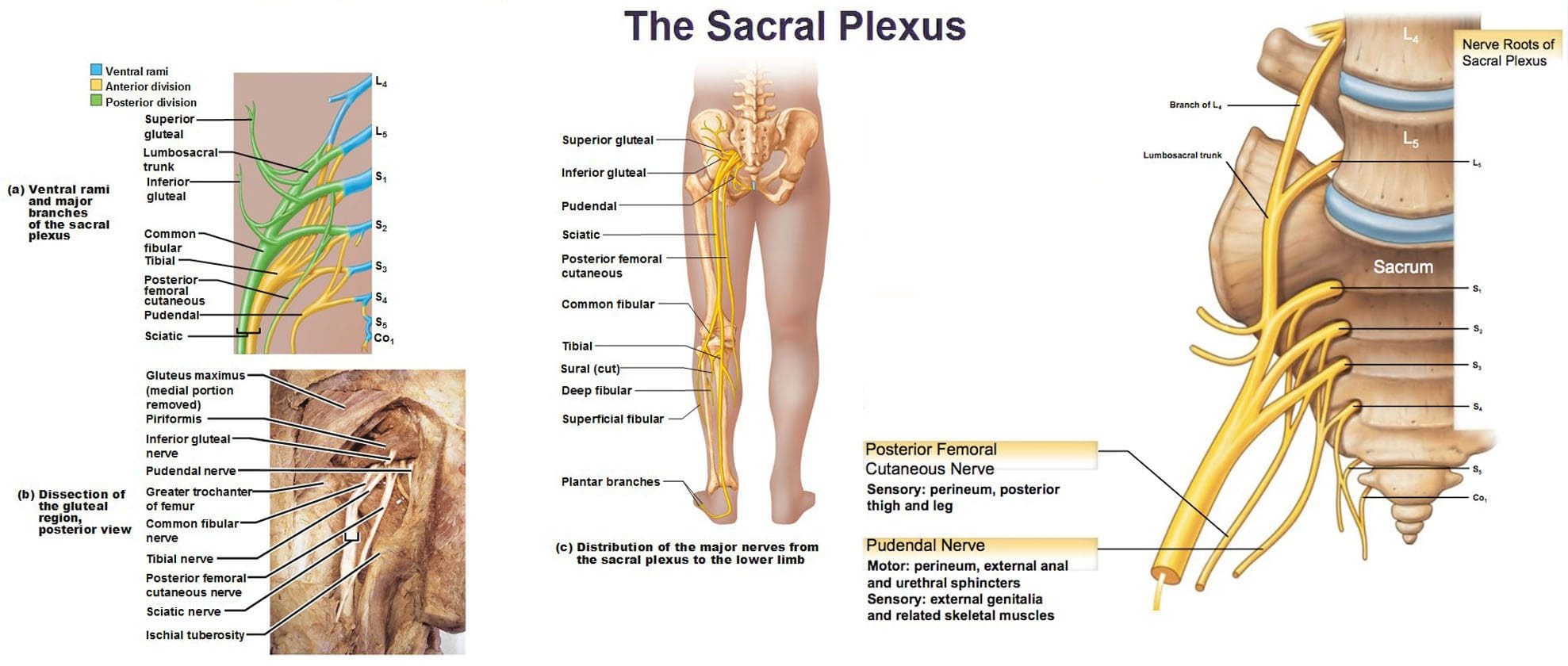
The sacral plexus is formed by the lumbar spinal nerves, L4 and L5, and sacral nerves S1 through S4.
Several combinations of these spinal nerves merge together and then divide into the branches of the sacral plexus.
Everybody has two sacral plexi – plural of plexus – one on the right side and left side that is symmetrical in structure and function.
Structure
There are several plexi throughout the body. The sacral plexus covers a large area of the body in terms of motor and sensory nerve function.
Spinal nerves L4 and L5 make up the lumbosacral trunk, and the anterior rami of sacral spinal nerves S1, S2, S3, and S4 join the lumbosacral trunk to form the sacral plexus.
Anterior rami are the branches of the nerve that are towards the front of the spinal cord/front of the body.
At each spinal level, an anterior motor root and a posterior sensory root join to form a spinal nerve.
Each spinal nerve then divides into an anterior – ventral – and a posterior – dorsal – rami portion.
Each can have motor and/or sensory functions.
The sacral plexus divides into several nerve branches, which include:
Superior gluteal nerve – L4, L5, and S1.
Inferior gluteal nerve – L5, S1, and S2.
The sciatic nerve – is the largest nerve of the sacral plexus and among the largest nerves in the body – L4, L5, S1, S2, and S3
The common fibular nerve – L4 through S2, and tibial nerves – L4 through S3 are branches of the sciatic nerve.
Posterior femoral cutaneous nerve – S1, S2, and S3.
Pudendal nerve – S2, S3, and S4.
The nerve to the quadratus femoris muscle is formed by L4, L5, and S1.
The obturator internus muscle nerve – L5, S1, and S2.
The piriformis muscle nerve – S1 and S2.
Function
The sacral plexus has substantial functions throughout the pelvis and legs. The branches provide nerve stimulation to several muscles. The sacral plexus nerve branches also receive sensory messages from the skin, joints, and structures of the pelvis and legs.
Motor
Motor nerves of the sacral plexus receive signals from the brain that travel down the column of the spine, out to the motor nerve branches of the sacral plexus to stimulate muscle contraction and movement. Motor nerves of the sacral plexus include:
Superior Gluteal Nerve
This nerve provides stimulation to the gluteus minimus, gluteus medius, and tensor fascia lata, which are muscles that help move the hip away from the center of the body.
Inferior Gluteal Nerve
This nerve provides stimulation to the gluteus maximus, the large muscle that moves the hip laterally.
Sciatic Nerve
The sciatic nerve has a tibial portion and a common fibular portion, which have motor and sensory functions.
The tibial portion stimulates the inner part of the thigh and activates muscles in the back of the leg and the sole of the foot.
The common fibular portion of the sciatic nerve stimulates and moves the thigh and knee.
The common fibular nerve stimulates muscles in the front and sides of the legs and extends the toes to straighten them out.
Pudendal Nerve
The pudendal nerve also has sensory functions that stimulate the muscles of the urethral sphincter to control urination and the muscles of the anal sphincter to control defecation.
The nerve to the quadratus femoris stimulates the muscle to move the thigh.
The nerve to the obturator internus muscle stimulates the muscle to rotate the hips and stabilize the body when walking.
The nerve to the piriformis muscle stimulates the muscle to move the thigh away from the body.
Conditions
The sacral plexus, or areas of the plexus, can be affected by disease, traumatic injury, or cancer. Because the nerve network has many branches and portions, symptoms can be confusing. Individuals may experience sensory loss or pain in regions in the pelvis and leg, with or without muscle weakness. Conditions that affect the sacral plexus include:
Injury
A traumatic injury of the pelvis can stretch, tear, or harm the sacral plexus nerves.
Bleeding can inflame and compress the nerves, causing malfunction.
Neuropathy
Nerve impairment can affect the sacral plexus or parts of it.
Neuropathy can come from:
Diabetes
Vitamin B12 deficiency
Certain medications – chemotherapeutic meds
Toxins like lead
Alcohol
Metabolic illnesses
Infection
An infection of the spine or the pelvic region can spread to the sacral plexus nerves or produce an abscess, causing symptoms of nerve impairment, pain, tenderness, and sensations around the infected region.
Cancer
Cancer developing in the pelvis or spreading to the pelvis from somewhere else can compress or infect the sacral plexus nerves.
Treatment of the Underlying Medical Condition
Rehabilitation begins with the treatment of the underlying medical condition causing the nerve problems.
Cancer treatment – surgery, chemotherapy, and/or radiation.
Antibiotic treatment for infections.
Neuropathy treatment can be complicated because the cause may be unclear, and an individual can experience several causes of neuropathy simultaneously.
Major pelvic trauma like a vehicle collision can take months, especially if there are multiple bone fractures.
Motor and Sensory Recovery
Sensory problems can interfere with walking, standing, and sitting.
Adapting to sensory deficits is an important part of treatment, rehabilitation, and recovery.
Chiropractic, decompression, massage, and physical therapy can relieve symptoms, restore strength, function, and motor control.
Sciatica Secrets Revealed
References
Dujardin, Franck et al. “Extended anterolateral transiliac approach to the sacral plexus.” Orthopaedics & traumatology, surgery & research: OTSR vol. 106,5 (2020): 841-844. doi:10.1016/j.otsr.2020.04.011
Eggleton JS, Cunha B. Anatomy, Abdomen and Pelvis, Pelvic Outlet. [Updated 2022 Aug 22]. In: StatPearls [Internet]. Treasure Island (FL): StatPearls Publishing; 2023 Jan-. Available from: https://www.ncbi.nlm.nih.gov/books/NBK557602/
Garozzo, Debora et al. “In lumbosacral plexus injuries can we identify indicators that predict spontaneous recovery or the need for surgical treatment? Results from a clinical study on 72 patients.” Journal of brachial plexus and peripheral nerve injury vol. 9,1 1. 11 Jan. 2014, doi:10.1186/1749-7221-9-1
Gasparotti R, Shah L. Brachial and Lumbosacral Plexus and Peripheral Nerves. 2020 Feb 15. In: Hodler J, Kubik-Huch RA, von Schulthess GK, editors. Diseases of the Brain, Head and Neck, Spine 2020–2023: Diagnostic Imaging [Internet]. Cham (CH): Springer; 2020. Chapter 20. Available from: https://www.ncbi.nlm.nih.gov/books/NBK554335/ doi: 10.1007/978-3-030-38490-6_20
Norderval, Stig, et al. “Sacral nerve stimulation.” Tidsskrift for den Norske laegeforening : tidsskrift for praktisk medicin, ny raekke vol. 131,12 (2011): 1190-3. doi:10.4045/tidsskr.10.1417
Neufeld, Ethan A et al. “MR Imaging of the Lumbosacral Plexus: A Review of Techniques and Pathologies.” Journal of Neuroimaging: official journal of the American Society of Neuroimaging vol. 25,5 (2015): 691-703. doi:10.1111/jon.12253
Staff, Nathan P, and Anthony J Windebank. “Peripheral neuropathy due to vitamin deficiency, toxins, and medications.” Continuum (Minneapolis, Minn.) vol. 20,5 Peripheral Nervous System Disorders (2014): 1293-306. doi:10.1212/01.CON.0000455880.06675.5a
Yin, Gang, et al. “Obturator Nerve Transfer to the Branch of the Tibial Nerve Innervating the Gastrocnemius Muscle for the Treatment of Sacral Plexus Nerve Injury.” Neurosurgery vol. 78,4 (2016): 546-51. doi:10.1227/NEU.0000000000001166
For older individuals, experiencing frequent low back pain could turn out to be a sacral fracture. They tend to occur in individuals over the age of 60 often because there has been a degree of bone loss. Sacral fractures tend not to be the first thing doctors think of when low back pain symptoms are presenting. They are often not picked up on X-rays and are either not diagnosed early enough to take steps or not diagnosed at all. However, they are common.
Sacrum
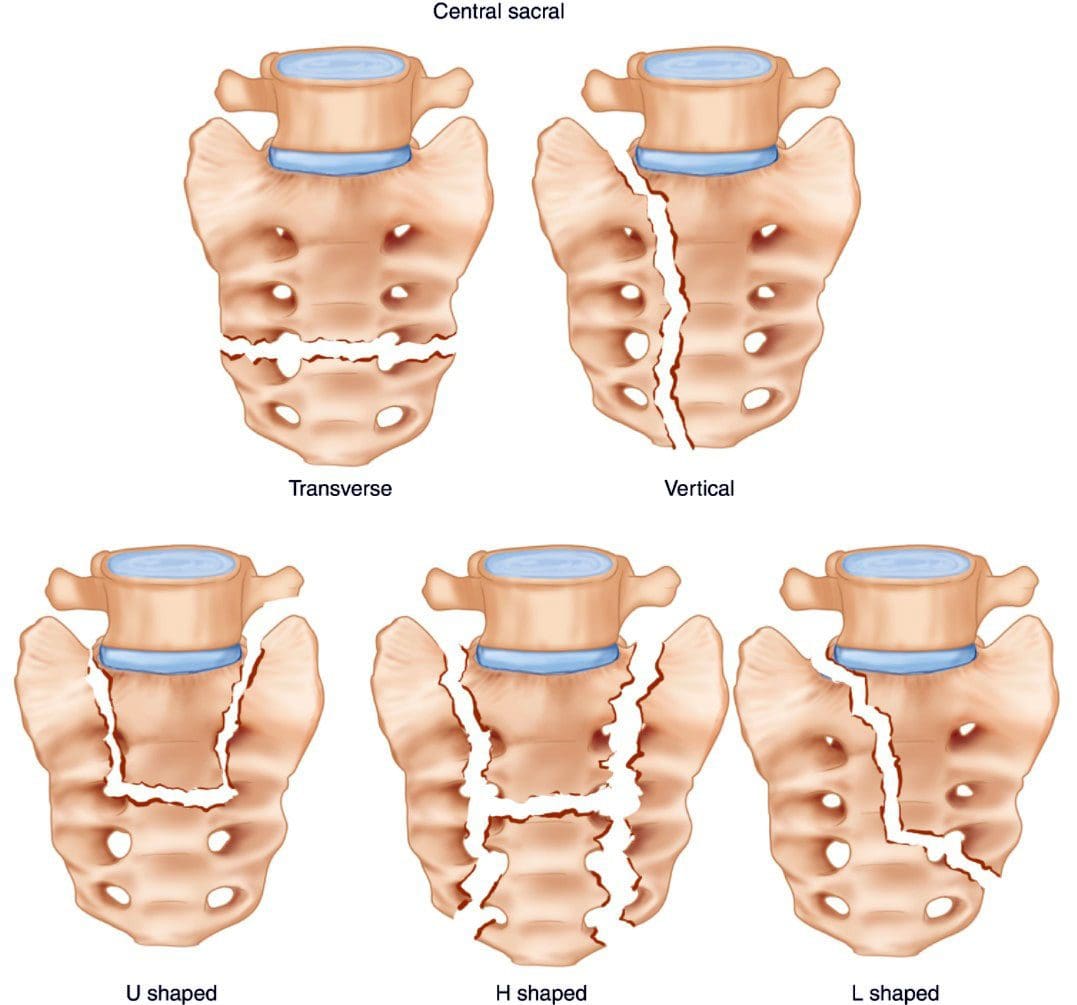
The sacrum is shaped like a triangle and comprises five segments fused into one large bone. It sits at the base of the spine, between the two halves of the pelvis, connecting the spine to the lower half of the body. It stabilizes the body when walking, sitting, or standing. The nerves in the lower spine control the bowels bladder and provide sensation to the region.
The two dimples that can be seen on individuals’ backs are where the sacrum joins the hipbones or the sacroiliac joint.
The point where the low back joins the sacrum can develop discomfort, soreness, and pain.
This area experiences stress from bending, twisting, reaching, lifting, carrying during physical activities or sitting for long periods.
Sacral Fracture
Most sacral fractures result from trauma, like slips, falls, and automobile accidents. Stress fractures that happen without a specific injury are also called insufficiency fractures.
Types of Sacral Fractures
Low-energy fractures usually happen to older individuals with weak bones due to osteoporosis.
An individual trips on something, lands hard on their butt, lifts a heavy object awkwardly, or over-exerts themselves from some physical activity.
Then persistent back or buttock pain begins to present.
The pain is often centered in the lower back, the hips, and butt.
It is more than just back achiness.
The individual goes to the doctor, and X-rays are ordered.
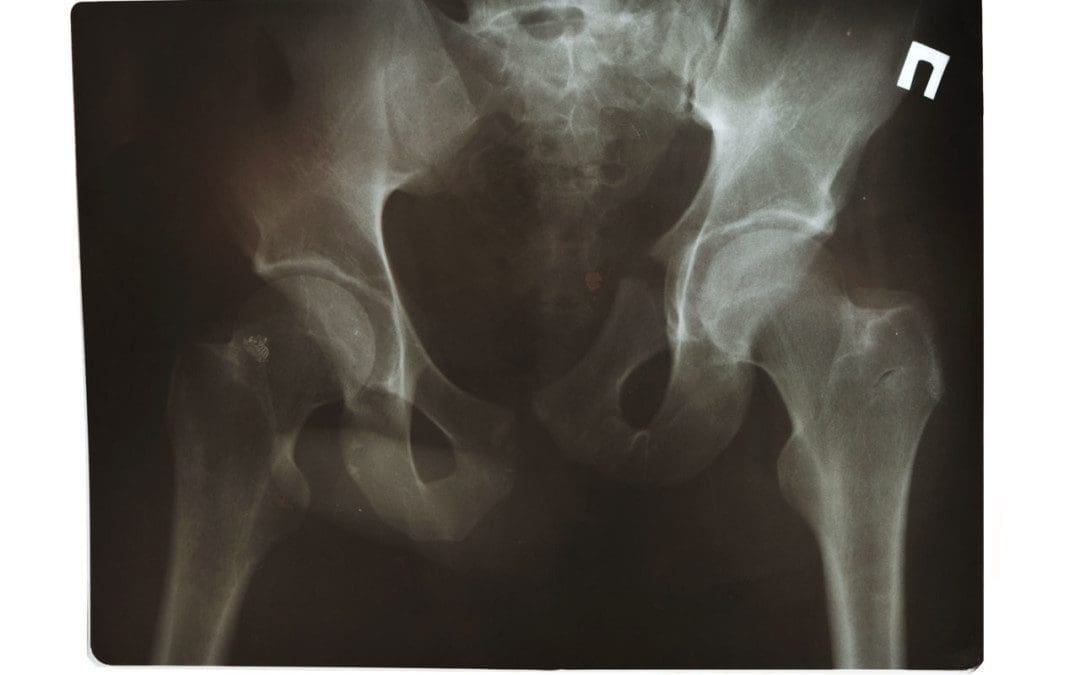
A lot of the time, these fractures are missed on X-rays.
The doctor may diagnose a sprain, but the pain symptoms do not improve.
Sometimes there is no apparent cause for the pain.
It can be misdiagnosed as a lower back compression fracture or urinary tract infection.
High-energy fractures are due to trauma and are more common among the young.
The individual sustains injuries from an auto accident, has fallen from a significant height, or suffers a sports injury.
It results in severe pain.
A woman who has just had a baby and gone through some bone loss because of the pregnancy can experience a sacral stress fracture.
For individuals that have been to a doctor and had an X-ray that reveals no fracture, and there is no improvement after 5 to 7 days, it is recommended to schedule another appointment and ask for a CAT scan or MRI, which is highly effective at finding a sacral fracture.
Treatment
Treatment consists of resting the bone but still being safely active in most cases.
Medication is prescribed for pain relief.
Many individuals have been found to do well with anti-inflammatory medications, topical medications, and lidocaine patches.
Older individuals may be recommended to use a walker during the treatment/healing process.
Depending on the severity, crutches may be recommended.
Engaging in regular exercise is not recommended, but too much bed rest is also not recommended.
Too much rest may not allow the injury to heal correctly, worsen the injury, and/or cause new injuries.
Chiropractic and physical therapy are not recommended to let the sacrum naturally heal.
After the pain subsides, chiropractic and physical therapy can be implemented to maintain agility and flexibility and strengthen the pelvic and core muscles.
In some cases, if the bone does not heal correctly or some other issue, sacroplasty could be recommended. This is a minimally invasive procedure that injects bone cement into the fracture. It offers quick and long-lasting pain relief with a low percentage of complications. It is considered low risk and can be done by an interventional radiologist or spine surgeon.
Prevention
To minimize the risk of a sacral fracture, it is highly recommended to maintain bone strength. This consists of:
Try to keep moving with different exercise stretches, or take a lap around the building.
References
Gibbs, Wende Nocton, and Amish Doshi. “Sacral Fractures and Sacroplasty.” Neuroimaging clinics of North America vol. 29,4 (2019): 515-527. doi:10.1016/j.nic.2019.07.003
Holmes, Michael W R, et al. “Evaluating Abdominal and Lower-Back Muscle Activity While Performing Core Exercises on a Stability Ball and a Dynamic Office Chair.” Human factors vol. 57,7 (2015): 1149-61. doi:10.1177/0018720815593184
Santolini, Emmanuele et al. “Sacral fractures: issues, challenges, solutions.” EFORT open reviews vol. 5,5 299-311. 5 May. 2020, doi:10.1302/2058-5241.5.190064
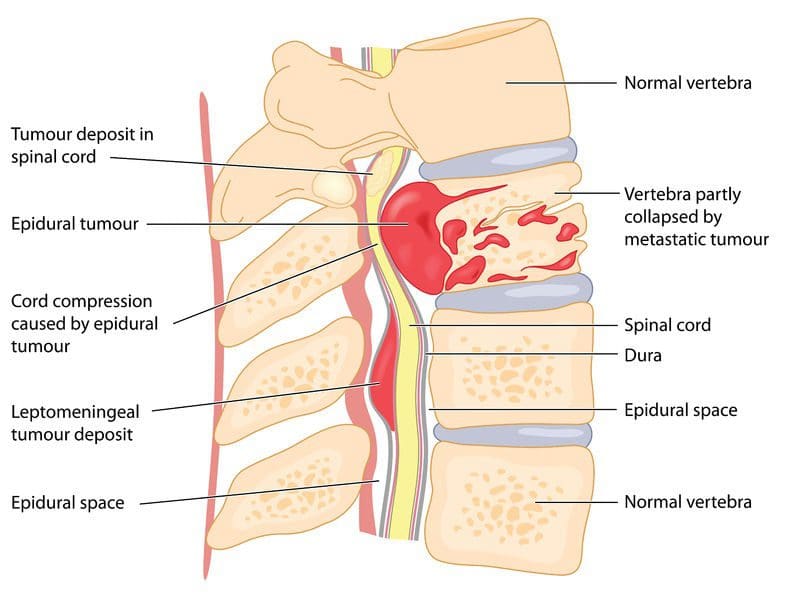
A spinal tumor is an abnormal mass of tissue either inside the spine or outside. It is also called a neoplasm meaning a new abnormal growth. They can develop in the bone, spread to other parts of the spine, or outside the spine, like the lungs and chest. Tumor cells can multiply slowly or very rapidly. Tumors are either cancerous or non-cancerous. They can develop anywhere in the spine:
Cervical - neck
Thoracic - mid-back
Lumbar - low-back
Sacral - sacrum
It is not uncommon for spinal tumors to develop out of a tumor from the individual's breast, lung, kidney, prostate, or another area of the body that has spread out.
Symptoms
Whether cancerous or not, spinal tumors can cause a variety of symptoms, including:
Pain not related to an injury or physical activity.
Pain in the back or neck that presents suddenly, quickly worsens, especially at night. This can be an indicator of a spinal tumor.
Pain that radiates to other parts of the body, like the arms, hands, legs, and feet.
The pain continues even when resting.
Muscle weakness or loss of sensation, especially in the legs, arms, or chest.
Difficulty walking
Abnormal curvature of the spine not from poor posture
Paralysis
Loss of bladder or bowel control
Lowered sensitivity to heat and cold
An individual could have a dominating symptom/s or a combination.
Causes
As previously mentioned these tumors can originally develop in another part of the body and then metastasize to the spine. These types of tumors are secondary tumors. Research scientists are still trying to figure out what exactly causesprimary tumors that originate in the spine. One theory believes genetics plays a role.
Early diagnosis
The most common symptom of a spinal tumor is pain. Examinations and diagnostic tests will be conducted both physical and neurological. A doctor or specialist needs to see and evaluate the spine. This is essential in diagnosing a potential tumor. A doctor could also order:
CT scan
MRI
PET scan - Positron Emission Tomography
Myelogram if there are symptoms of spinal cord compression
If the imaging reveals a tumor, a biopsy could be performed. A sample of tissue will be examined under a microscope to see if the tumor is cancerous or not. If the tumor is cancerous, the biopsy will show the type of cancer and determine the stage of the disease. Depending on the tumor type and location, other tests/procedures could be recommended.
Treatment
There are many factors that go into creating an optimal treatment plan. This includes whether the tumor is cancerous or not, size, location, and symptoms. Types of treatment:
Observe and wait as small non-cancerous tumors that are not growing or impinging/pinching other spinal structures could only need to be monitored for changes.
Surgery
Radiation treatment
Stereotactic radiosurgeryworks by delivering a high dose of radiation specifically targeted at the tumor
Chemotherapy
Chiropractor Personal Injury Attorney Recommended
Dr. Alex Jimenez�s Blog Post Disclaimer
The scope of our information is limited to chiropractic, musculoskeletal, physical medicines, wellness, and sensitive health issues and/or functional medicine articles, topics, and discussions. We use functional health & wellness protocols to treat and support care for injuries or disorders of the musculoskeletal system. Our posts, topics, subjects, and insights cover clinical matters, issues, and topics that relate and support directly or indirectly our clinical scope of practice.*
Our office has made a reasonable attempt to provide supportive citations and has identified the relevant research study or studies supporting our posts. We make copies of supporting research studies available to the board and or the public upon request. We understand that we cover matters that require an additional explanation as to how it may assist in a particular care plan or treatment protocol; to further discuss the subject matter above, please feel free to ask Dr. Alex Jimenez or contact us at 915-850-0900. The provider(s) Licensed in Texas& New Mexico*
IFM's Find A Practitioner tool is the largest referral network in Functional Medicine, created to help patients locate Functional Medicine practitioners anywhere in the world. IFM Certified Practitioners are listed first in the search results, given their extensive education in Functional Medicine