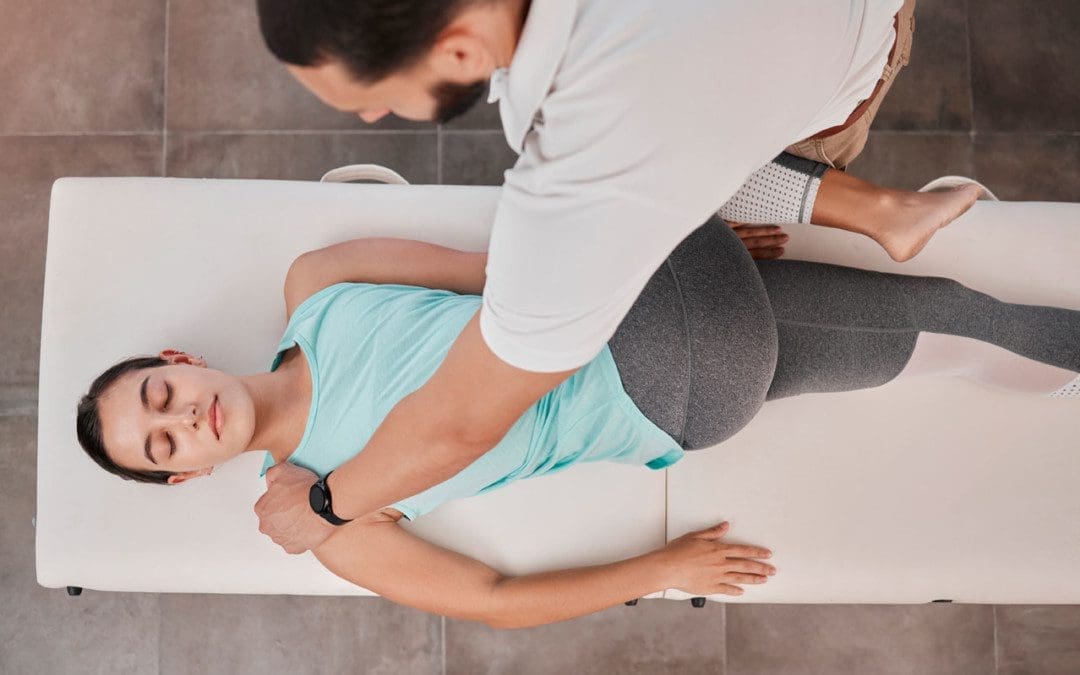
Nerve irritation occurs when the nerves exiting the spine become irritated and sensitized. Also known as nerve gliding restriction, it is a condition whereby a nerve becomes irritated by inflamed swelling of structures close to the nerve, such as joints, ligaments, muscles, or discs, that have sustained an accumulative strain which results in swelling and inflammation. A thorough chiropractic assessment and examination can diagnose the extent of the irritation and develop a personalized treatment plan.
Nerve Irritation
When swelling and inflammation interfere with the nerve root, the nerve transmits signals to the brain to let it know there is a threat. The brain interprets these signals and creates a protective response to avoid worsening the damage to the nerve. The protective reactions vary from person to person but can include the following:
Muscle tightness and guarding
Aching sensation
Cramping
Radiating discomfort or pain
Pins and needles
Tingling
Numbness
Nerve root irritation also inhibits the body from recovering as fast as it should.
Nerve irritation is not to be confused with nerve root compression or radiculopathy. This is when the nerve becomes compressed/pinched, resulting in the loss of its functions like muscle strength and sensation. Sometimes individuals with nerve irritation can also experience increased neural tension. The nerves adapt to the mechanical loads placed on them through regular movements. Restrictions to neural mobility can cause symptoms to worsen along the pathway and distribution of the nerve.
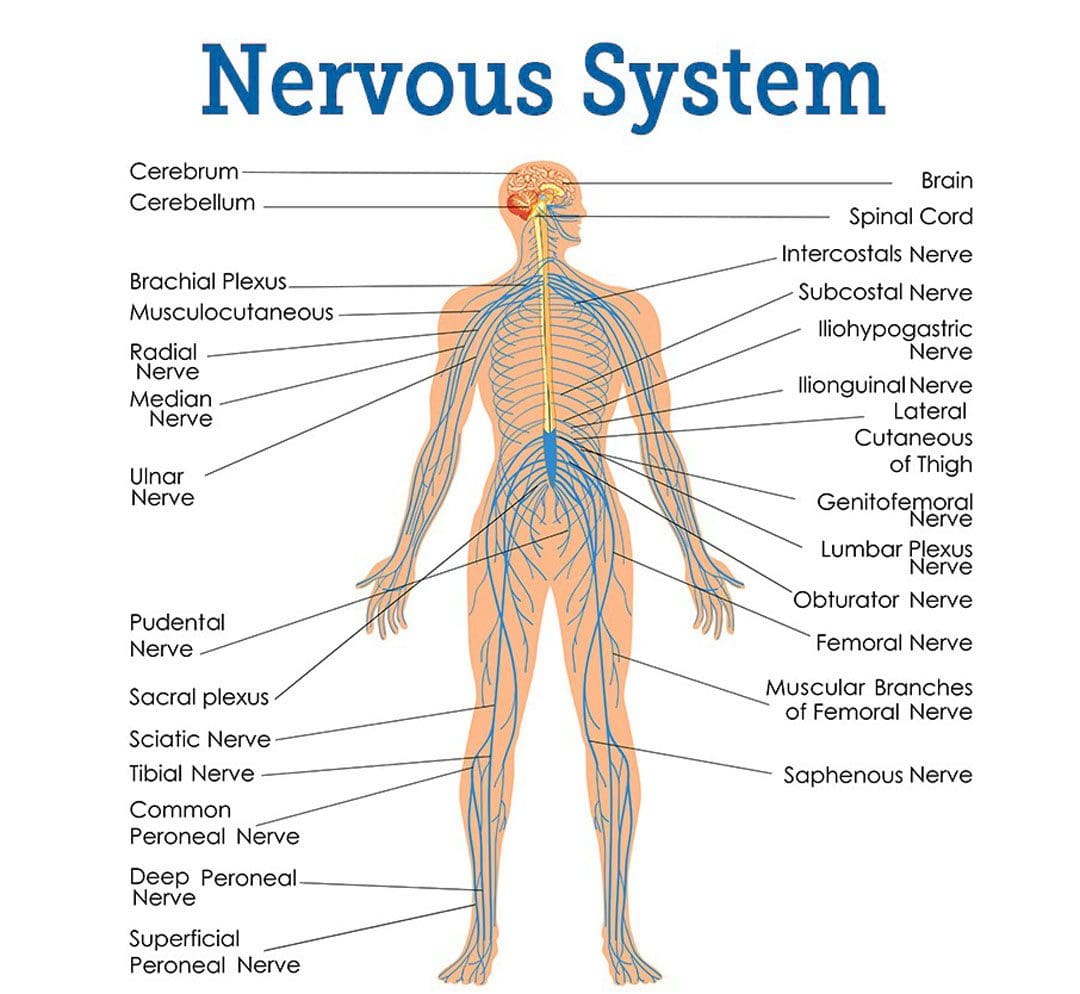
The nervous system consists of the brain, spine, and nerve branches.
The branches, similar to electrical cables, cannot stretch.
Tension is generated when straightening out body areas, creating a pull and gliding of the nerve to the spinal cord.
When nerve irritation occurs, signals are sent to protect the body, brain, spine, and branches.
Causes
Most commonly, nerve irritation occurs when a structure adjacent to the nerve; this could be a joint, ligament, and/or muscle that accumulates strain and becomes dysfunctional, swollen, inflamed, and/or spasms resulting from protective guarding.
Mild nerve irritation can include accumulated strain from postural overload and swelling from a minor tear in an adjacent ligament.
Often nothing shows as a problem on an MRI scan.
Severe nerve irritation can include disc herniation and shows up on an MRI scan; surgery could be required in some cases.
Symptoms
Stiffness
Tightness
Aches
Pains
Persist even after days of rest, stretching, targeted exercises, avoiding movements, etc.
Stretching feels good at first, but the pain returns or worsens a few hours later or the next day.
The irritation blocks the effective recovery of muscle, joint, tendon, and ligament discomfort symptoms.
Chiropractic Care
Treatment involves various therapies and strengthening the supporting structures while relaxing and releasing tight structures to avoid recurring injuries. Chiropractic care realigns the spine, corrects joints that have shifted out of place, helps to regulate the nervous system’s function, and relieves irritation and inflammation. Whether in the form of an adjustment, traction, or guided exercise, all systems in the body are moved closer to a balanced state. This includes the:
Nervous system
Immune system
Respiratory system
Circulatory system
Endocrine system
Skeletal system
All help support the body’s self-healing process and increase the nervous system’s function.
The chiropractic team will guide the patient through the rehabilitation process to get back to full strength.
Peroneal Nerve Irritation
References
Ellis, Richard F, and Wayne A Hing. “Neural mobilization: a systematic review of randomized controlled trials with an analysis of therapeutic efficacy.” The Journal of manual & manipulative therapy vol. 16,1 (2008): 8-22. doi:10.1179/106698108790818594
Gibson, William, et al. “Transcutaneous electrical nerve stimulation (TENS) for neuropathic pain in adults.” The Cochrane database of systematic reviews vol. 9,9 CD011976. 14 Sep. 2017, doi:10.1002/14651858.CD011976.pub2
O’Shea, Simone D et al. “Peripheral muscle strength training in COPD: a systematic review.” Chest vol. 126,3 (2004): 903-14. doi:10.1378/chest.126.3.903
Rozmaryn, L M et al. “Nerve and tendon gliding exercises and the conservative management of carpal tunnel syndrome.” Journal of hand therapy: official Journal of the American Society of Hand Therapists vol. 11,3 (1998): 171-9. doi:10.1016/s0894-1130(98)80035-5
Sipko, Tomasz, et al. “Mobility of cervical spine and postural equilibrium in patients with spinal overload syndrome.” Ortopedia, traumatologia, rehabilitacja vol. 9,2 (2007): 141-8.
Occlusion training involves restricting the flow of blood to a muscle group while training. That is why it is also commonly called �blood flow restriction training.�
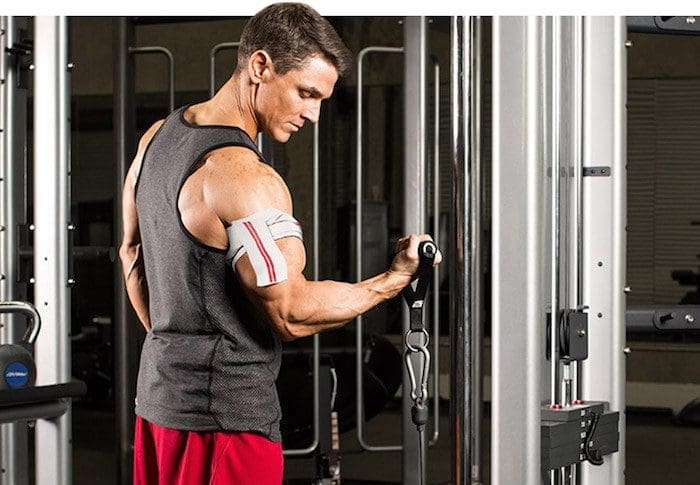
Basically you take a wrap or band and apply it to the top of your limb.
The aim of this�isn�t�to completely cut off circulation to the area as that is dangerous and painful.
This means that you aren�t restricting arterial flow to the area, but you are restricting the venous return from the muscles.
Arteries are what takes the blood from your heart to your muscles and it is then returned to your heart through a system of veins.
Restricting the blood flow back to your heart causes a pooling of the blood in the area that you are working.
This is what occlusion training uses to create an�anabolic effect�on your muscles.�
HOW DOES OCCLUSION TRAINING WORK?
The bloodstream is the network that connects the muscles in your body, providing oxygen and nutrients and carrying away waste products
Muscles require a steady flow of blood to operate.
That is why we aren�t cutting off the flow to the muscle, we are only slowing the rate at which the blood releases from it.
When performing any kind of resistance training your body directs more blood to your muscles performing the exercise.
The reason you get a �pump� when working out is that the speed at which your body is pumping blood into your muscles is faster than the amount of blood going out of them.
Your pump reduces when you rest between your sets as more blood is released from your muscle groups.
Blood flow restriction training prolongs and intensifies your pump.
This is done by placing wraps in one of two places during your working sets.
You wrap above your bicep for movements that involve your bicep�s, triceps, forearms, and even chest and back can benefit from this.
While wrapping in this position it makes sense that it would benefit your arms but how does it help your chest and back?
There is no possible way that you can restrict blood flow to your chest and back because of the positions they are located in.
However wrapping your arm allows you to pre-fatigue your arms and as a result chest and back exercises that you perform are going to require more involvement from those muscles rather than your biceps or triceps.
Wrap your upper thigh for movements that involve your quads, hamstrings, glutes and calves.
Building Muscle With Occlusion Training
During training you have two�types of muscle�that are responsible for all muscle growth in the gym.
Fast twitch fibers and slow twitch fibers.
Slow twitch muscle fibers are smaller muscle fibers and generate less power and strength than fast twitch fibers. However slow twitch fibers fatigue slower and can sustain activity for longer.
Fast twitch fibers are larger muscle fibers, generate more power and strength and have the most potential for growth.
Fast twitch fibers are recruited last during contractions and mostly don�t use oxygen. Slow twitch fibers on the other hand use oxygen and are recruited first in the movement.
This means that by restricting the blood flow to a muscle group you are pre-fatiguing the slow twitch fibers and forcing the fast twitch fibers to take control even when you�re using low weights.
Occlusion training seems to�trick your body�into thinking you are lifting heavy weights. This means you can get very�similar benefits�of heavy training by using 20-30% of your 1 rep max.
There are two main factors that lead to muscle growth during training. These are:
Metabolic Stress
Cellular Swelling
Metabolic Stress
When you�re working out your body is burning energy. As your body chews through its fuel stores, metabolic by-product accumulates in your muscles.
Metabolic by-products act as an anabolic signal, telling your body to increase size and strength.
Under normal training most of these by-products would be washed out by blood flow.
Occlusion training keeps them near the muscle helping to increase the anabolic effect that the by-products have on the muscles.�
Cellular Swelling
During resistance training your cells expand and fill with fluid and nutrients. This is known as cellular swelling and has also been shown to be an anabolic�signal for muscle growth.
Occlusion training isn�t a better option than heavy training, but that said it is a nice supplement.
Regularly pushing your muscles to the point of failure or at least close to it (1-2 reps) is an important factor of increasing your strength and muscle mass.
Occlusion training allows you to replicate this without putting anywhere near as much strain on your joints, ligaments and tendons as you would to get the same result from lifting heavy.
This means that you can do more volume without the risk of�overtraining.
Here are a couple of scenarios where this could be really beneficial for you:
If you suffer from joint issues
If you�re travelling and only have access to hotel weights
If you�re injured or have nagging aches and pains.
In short your body might not always feel up to another heavy training day. Occlusion training can be a great way to get a good workout in and help you maintain muscle mass.�
How To Do Blood Flow Restriction Training
As I mentioned earlier you only ever wrap yourself at the top of your biceps and the top of your thighs.
Elastic knee wraps, medical tourniquets and exercise band �are good options to use for your wraps.
Here�s two videos explaining how to wrap your arms and legs
Blood flow restriction training works best when with isolation exercises. If you are going to do compound movements do them at the start of your workout and save the blood flow restricted exercises for the end.
Layne Norton recommends performing lifts at 20%-30% of your 1rm for 20-30 reps of the first set and then the next three sets at 10-15 reps. Have a 30 second rest between sets before going again.
You want to keep the cuffs on your limbs for the entire 4 sets and then release them at the end.
If you�re in pain before the exercise starts that�s a good sign that your wraps are too tight.
Also if you can�t complete the prescribed sets either the wraps are too tight or the weight is too heavy.�
Conclusion
Blood flow restriction training has been getting a lot of hype lately.
While it isn�t better than regular strength training, it is a good supplement for it and can be beneficial when used in conjunction with your regular training.
This is more of an advanced training technique so if you are just starting out lifting it probably won�t give you any more benefits than your normal heavy training.
If you�re an advanced lifter, are injured, or don�t have access to heavier weights than this training technique could benefit you.
IFM's Find A Practitioner tool is the largest referral network in Functional Medicine, created to help patients locate Functional Medicine practitioners anywhere in the world. IFM Certified Practitioners are listed first in the search results, given their extensive education in Functional Medicine