For individuals practicing a low-carbohydrate eating style or want to try an alternative flour, can incorporating almond flour help in their wellness journey?
Almond Flour
Almond flour and almond meal are gluten-free alternatives to wheat products in certain recipes. They are made by grinding almonds and can be bought prepared or made at home with a food processor or grinder. The flour is higher in protein and lower in starch than other gluten-free flour.
Almond Flour and Almond Meal
The flour is made with blanched almonds, meaning the skin has been removed. Almond meal is made with whole or blanched almonds. The consistency for both is more like corn meal than wheat flour. They can usually be used interchangeably, although using the blanched flour will produce a more refined, less grainy result. Superfine almond flour is great for baking cakes but is difficult to make at home. It can be found at grocery stores or ordered online.
Carbohydrates and Calories
A half cup of commercially prepared flour contains about:
The glycemic index of almond flour is less than 1, which means it should have little effect on raising blood glucose levels.
The high glycemic index of whole wheat flour is 71, and rice flour is 98.
Using Almond Flour
It is recommended for making gluten-free quick bread recipes, such as gluten-free:
Muffins
Pumpkin bread
Pancakes
Some cake recipes
Individuals are recommended to start with a recipe already adapted for almond flour and then make their own. A cup of wheat flour weighs around 3 ounces, while a cup of almond flour weighs almost 4 ounces. This will make a significant difference in baked goods. The flour is beneficial for adding nutrients to foods.
Almond Meal
Almond meal can be cooked as polenta or grits such as shrimp and grits.
Cookies can be made gluten-free with almond meal.
Almond meal biscuits can be made, but pay attention to the recipe.
Almond meal can be used to bread fish and other fried foods, but it must be taken care of so as not to burn.
Almond meal is not recommended for breads that require true dough with a developed gluten structure, like wheat flour.
More eggs are needed when baking with almond meal to provide the structure gluten in flour creates.
Adapting recipes to substitute almond meal for wheat flour can be a challenge that requires plenty of trial and error.
Sensitivities
Almonds are a tree nut, one of the eight most common food allergies. (Anaphylaxis UK. 2023) While peanuts are not tree nuts, many with peanut allergies can also have an almond allergy.
Making Your Own
It can be made in a blender or food processor.
Care must be taken not to grind it too long, or it will become almond butter, which can also be used.
Add a little at a time and pulse until it is ground into meal.
Store unused flour immediately in the refrigerator or freezer because it will go rancid quickly if left out.
Almonds are shelf-stable, and almond flour is not, so it is recommended that you grind only what is needed for the recipe.
Store Bought
Most health food stores sell almond flour, and more supermarkets are stocking it as it has become a popular gluten-free product. Packaged flour and meal will also go rancid after opening and should be kept in the refrigerator or freezer after opening.
Integrative Medicine
References
USDA FoodData Central. (2019). Almond Flour. Retrieved from https://fdc.nal.usda.gov/fdc-app.html#/food-details/603980/nutrients
Anaphylaxis UK. (2023). Allergy Factsheets (Anaphylaxis UK A brighter future for people with serious allergies, Issue. https://www.anaphylaxis.org.uk/factsheets/
Atkinson, F. S., Brand-Miller, J. C., Foster-Powell, K., Buyken, A. E., & Goletzke, J. (2021). International tables of glycemic index and glycemic load values 2021: a systematic review. The American journal of clinical nutrition, 114(5), 1625–1632. https://doi.org/10.1093/ajcn/nqab233
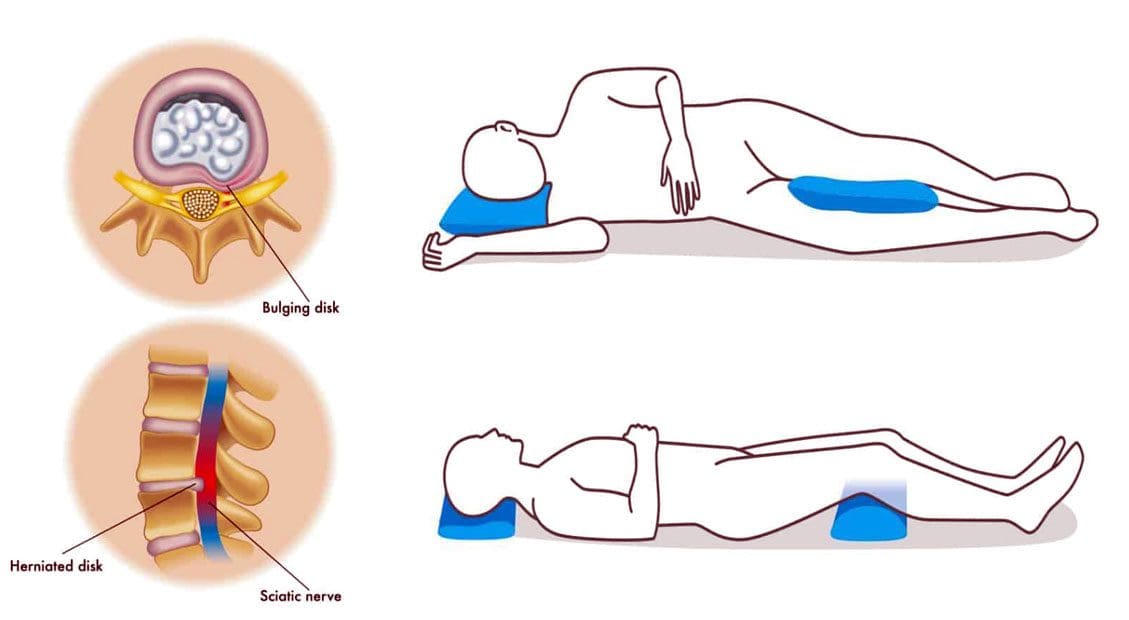
For individuals with back pain, can sleeping with a pillow between or under their knees help bring relief during sleep?
Sleep With A Pillow Between The Legs
Healthcare providers may recommend that individuals with back pain due to pregnancy or conditions like a herniated disc and sciatica sleep with a pillow between their legs. Sleeping with a pillow between the legs may help relieve back and hip pain, as the position helps maintain pelvis and spinal alignment. Proper spinal alignment can help relieve back stress and pain.
The Benefits
Some potential benefits of sleeping with a pillow between the knees.
Reduce Back and Hip Pain
When sleeping on the side, the spine, shoulders, and hips may twist to maintain the position because the center of gravity is elevated, causing instability. (Gustavo Desouzart et al., 2015) Placing a pillow between the knees may help maintain stability and reduce back and hip pain. (Gustavo Desouzart et al., 2015) The pillow neutralizes the position of the pelvis by slightly elevating the leg on top. This decreases the pressure on the lower back and hip joints, which may help reduce pain and allow for improved sleep.
Reduce Sciatica Symptoms
Sciatica nerve pain travels from the lower back down one leg due to a compressed spinal nerve root in the lower back. (American Academy of Orthopaedic Surgeons, 2021) Sleeping with a pillow between the knees may help reduce symptoms and sensations. A pillow between the legs can help prevent twisting the back, rotating the spine, or tilting the pelvis during sleep.
Reduce Herniated Disc Symptoms
A herniated disc can pressure the spinal nerves, leading to pain and numbness. (Penn Medicine. 2024) Sleeping on the side can worsen herniated disc pain; however, placing a pillow between the knees keeps the pelvis in neutral alignment and prevents spinal rotation. Sleeping on the back with a pillow under the knees can also help reduce pressure on the disc. (University of Central Florida. N.D.)
Improve Posture
Maintaining healthy posture while sitting or standing is important to neuromusculoskeletal health and injury prevention. Proper alignment during sleep can help improve posture (Doug Cary et al., 2021). According to one study, individuals spend more than half of their time sleeping in a side-lying posture. (Eivind Schjelderup Skarpsno et al., 2017) Sleeping on the side with the top leg frequently falls forward, bringing the pelvis into a forward tilt that places added pressure on the hips and spine connective tissues. This position disrupts the body’s natural alignment. (Doug Cary et al., 2021) Placing a pillow between the knees improves sleeping posture by lifting the top leg and prevents forward shifting. (University of Rochester Medical Center. 2024)
Increased weight leads to increased pressure on joints.
Significant change in the center of gravity.
Hormonal changes make connective tissues more lax.
Pregnant women with hip or back pain are often recommended to sleep with a pillow between their knees to relieve pain and discomfort. Doctors agree that lying on the left side is the best sleep position during the second and third trimesters. This position ensures optimal blood flow for the mother and baby and helps kidney function. (Standford Medicine, 2024) Placing a pillow between the knees can help reduce the pressure on the joints and also help maintain the left-side lying position. (O’Brien LM, Warland J. 2015) (Standford Medicine, 2024) Larger maternity pillows supporting the abdomen and lower back can provide more comfort.
Consult a healthcare provider about sleeping with a pillow between the knees to see if it is right for you.
What Causes Disc Herniation?
References
Desouzart, G., Matos, R., Melo, F., & Filgueiras, E. (2015). Effects of sleeping position on back pain in physically active seniors: A controlled pilot study. Work (Reading, Mass.), 53(2), 235–240. https://doi.org/10.3233/WOR-152243
American Academy of Orthopaedic Surgeons. (2021). Sciatica. OrthoInfo. https://orthoinfo.aaos.org/en/diseases–conditions/sciatica
Penn Medicine. (2024). Herniated disc disorders. Penn Medicine. https://www.pennmedicine.org/for-patients-and-visitors/patient-information/conditions-treated-a-to-z/herniated-disc-disorders
University of Central Florida. (N.D.). The best sleeping position for lower back pain (and the worst). UFC Health Services. https://ucfhealth.com/our-services/lifestyle-medicine/best-sleeping-position-for-lower-back-pain/
Cary, D., Jacques, A., & Briffa, K. (2021). Examining relationships between sleep posture, waking spinal symptoms and quality of sleep: A cross sectional study. PloS one, 16(11), e0260582. https://doi.org/10.1371/journal.pone.0260582
Skarpsno, E. S., Mork, P. J., Nilsen, T. I. L., & Holtermann, A. (2017). Sleep positions and nocturnal body movements based on free-living accelerometer recordings: association with demographics, lifestyle, and insomnia symptoms. Nature and science of sleep, 9, 267–275. https://doi.org/10.2147/NSS.S145777
University of Rochester Medical Center. (2024). Good sleeping posture helps your back. Health Encyclopedia. https://www.urmc.rochester.edu/encyclopedia/content.aspx?ContentTypeID=1&ContentID=4460
Casagrande, D., Gugala, Z., Clark, S. M., & Lindsey, R. W. (2015). Low Back Pain and Pelvic Girdle Pain in Pregnancy. The Journal of the American Academy of Orthopaedic Surgeons, 23(9), 539–549. https://doi.org/10.5435/JAAOS-D-14-00248
Standford Medicine. (2024). Sleeping positions during pregnancy. Standford Medicine Children’s Health. https://www.stanfordchildrens.org/en/topic/default?id=sleeping-positions-during-pregnancy-85-P01238
O’Brien, L.M., Warland, J. (2015). Maternal sleep position: what do we know where do we go? BMC Pregnancy Childbirth, 15, Article A4 (2015). https://doi.org/doi:10.1186/1471-2393-15-S1-A4
For individuals dealing with digestive issues or bowel disorders, can adding peppermint to a nutrition plan help manage symptoms and digestion?
Peppermint
First grown in England, peppermint’s medicinal properties were soon recognized and are cultivated today in Europe and Northern Africa.
How It Is Used
Peppermint oil can be taken as a tea or in capsule form.
Consult a physician or licensed healthcare professional to determine the proper dosage for the capsule form.
For Irritable Bowel Syndrome
Peppermint is taken as a tea to treat general digestive problems. It is known to reduce the production of gas in the intestine. Today, researchers recognize peppermint as effective for irritable bowel syndrome when used in oil form. (N. Alammar et al., 2019) Peppermint oil has been approved for use by IBS patients in Germany. However, the FDA has not approved peppermint and oil to treat any condition, but it has listed peppermint and the oil as generally safe. (ScienceDirect, 2024)
Peppermint extract may increase serum levels of these medications.
It is recommended to discuss medication interactions with a healthcare provider before starting supplements if taking any of these medications.
Pregnancy
Peppermint is not recommended for use during pregnancy or by nursing individuals.
It is unknown if it could affect a developing fetus.
It is unknown if it can affect a nursing baby.
How To Use The Herb
It is not that common, but some individuals are allergic to peppermint. Peppermint oil should never be applied to the face or around mucous membranes (National Center for Complementary and Integrative Health. 2020). Using more than one form, such as tea and oil, is not recommended because it could lead to side effects.
Because the FDA does not regulate supplements like peppermint and others, their contents may be varied.
Supplements may contain harmful ingredients or not contain the active ingredient at all.
This is why seeking reputable brands and informing an individual’s healthcare team of what is being taken is highly recommended.
It has the potential to worsen certain conditions and should not be used by:
Peppermint was used to treat colic in infants but is not recommended today.
The menthol in the tea may cause infants and small children to choke.
Chamomile could be a possible alternative. Consult a healthcare provider to see if it is safe.
Beyond Adjustments: Chiropractic and Integrative Healthcare
References
Alammar, N., Wang, L., Saberi, B., Nanavati, J., Holtmann, G., Shinohara, R. T., & Mullin, G. E. (2019). The impact of peppermint oil on the irritable bowel syndrome: a meta-analysis of the pooled clinical data. BMC complementary and alternative medicine, 19(1), 21. https://doi.org/10.1186/s12906-018-2409-0
Agbabiaka, T. B., Spencer, N. H., Khanom, S., & Goodman, C. (2018). Prevalence of drug-herb and drug-supplement interactions in older adults: a cross-sectional survey. The British journal of general practice : the journal of the Royal College of General Practitioners, 68(675), e711–e717. https://doi.org/10.3399/bjgp18X699101
Kligler, B., & Chaudhary, S. (2007). Peppermint oil. American family physician, 75(7), 1027–1030.
National Center for Complementary and Integrative Health. (2020). Peppermint oil. Retrieved from https://www.nccih.nih.gov/health/peppermint-oil#safety
Cash, B. D., Epstein, M. S., & Shah, S. M. (2016). A Novel Delivery System of Peppermint Oil Is an Effective Therapy for Irritable Bowel Syndrome Symptoms. Digestive diseases and sciences, 61(2), 560–571. https://doi.org/10.1007/s10620-015-3858-7
Khanna, R., MacDonald, J. K., & Levesque, B. G. (2014). Peppermint oil for the treatment of irritable bowel syndrome: a systematic review and meta-analysis. Journal of clinical gastroenterology, 48(6), 505–512. https://doi.org/10.1097/MCG.0b013e3182a88357
Those experiencing neck pain, stiffness, headache, shoulder and back pain may suffer from a whiplash injury. Can knowing whiplash signs and symptoms help individuals recognize the injury and help healthcare providers develop an effective treatment plan?
Whiplash Signs and Symptoms
Whiplash is a neck injury that typically occurs after a motor vehicle collision or accident but can happen with any injury that rapidly whips the neck forward and backward. It is a mild to moderate injury of the neck muscles. Common whiplash signs and symptoms include:
Some individuals can develop chronic pain and headaches.
The symptoms and treatment depend on the severity of the injury. Treatment can include over-the-counter pain medicines, ice and heat therapy, chiropractic, physical therapy, and stretching exercises.
Frequent Signs and Symptoms
The sudden whipping movement of the head can affect several structures within the neck. These structures include:
Muscles
Bones
Joints
Tendons
Ligaments
Intervertebral discs
Blood vessels
Nerves.
Any or all of these can be affected by a whiplash injury. (MedlinePlus, 2017)
Statistics
Whiplash is a neck sprain that occurs from a fast neck-jerking motion. Whiplash injuries account for more than half of vehicle traffic collision injuries. (Michele Sterling, 2014) Even with a minor injury, the most frequent symptoms include: (Nobuhiro Tanaka et al., 2018)
Neck pain
Next stiffness
Neck tenderness
Limited range of motion of the neck
Individuals can develop neck discomfort and pain shortly after an injury; however, the more intense pain and stiffness typically do not occur right after the injury. Symptoms tend to worsen the next day or 24 hours later. (Nobuhiro Tanaka et al., 2018)
Beginning Symptoms
Researchers have found that approximately more than half of individuals with whiplash develop symptoms within six hours of the injury. Around 90% develop symptoms within 24 hours, and 100% develop symptoms within 72 hours. (Nobuhiro Tanaka et al., 2018)
Whiplash vs. Traumatic Cervical Spine Injury
Whiplash describes a mild to moderate neck injury without significant skeletal or neurological symptoms. Significant neck injuries can lead to fractures and dislocations of the spine that can affect the nerves and spinal cord. Once an individual develops neurological problems associated with a neck injury, the diagnosis changes from whiplash to traumatic cervical spine injury. These differences can be confusing as they are on the same spectrum. To better understand the severity of a neck sprain, the Quebec classification system divides neck injury into the following grades (Nobuhiro Tanaka et al., 2018)
Grade 0
This means there are no neck symptoms or physical examination signs.
Grade 1
There is neck pain and stiffness.
Very few findings from the physical examination.
Grade 2
Indicates neck pain and stiffness
Neck tenderness
Decreased mobility or neck range of motion on physical examination.
Grade 3
Involves muscle pain and stiffness.
Neurologic symptoms include:
Numbness
Tingling
Weakness in the arms
Decreased reflexes
Grade 4
Involves a fracture or dislocation of the bones of the spinal column.
Other Symptoms
Other whiplash signs and symptoms that can be associated with the injury but are less common or only occur with a severe injury include (Nobuhiro Tanaka et al., 2018)
Tension headache
Jaw pain
Sleep problems
Migraine headache
Difficulty concentrating
Reading difficulties
Blurred vision
Dizziness
Driving difficulties
Rare Symptoms
Individuals with severe injuries can develop rare symptoms that often indicate traumatic cervical spine injury and include: (Nobuhiro Tanaka et al., 2018)
Amnesia
Tremor
Voice changes
Torticollis – painful muscle spasms that keep the head turned to one side.
Bleeding in the brain
Complications
Most individual generally recover from their symptoms within a few weeks to a few months. (Michele Sterling, 2014) However, whiplash complications can occur, especially with severe grade 3 or grade 4 injuries. The most common complications of a whiplash injury include chronic/long-term pain and headaches. (Michele Sterling, 2014) Traumatic cervical spine injury can affect the spinal cord and be associated with chronic neurological problems, including numbness, weakness, and difficulty walking. (Luc van Den Hauwe et al., 2020)
Treatment
The pain is typically more severe the next day than after the injury. Whiplash musculoskeletal injury treatment depends on whether it is an acute injury or the individual has developed chronic neck pain and stiffness.
Acute pain can be treated with over-the-counter medicines like Tylenol and Advil, which effectively treat the pain.
Advil is a nonsteroidal anti-inflammatory that can be taken with the pain reliever Tylenol, which works in different ways.
The mainstay of treatment is encouraging regular activity with stretching and exercise. (Michele Sterling, 2014)
Physical therapy uses various range of motion exercises to strengthen the neck muscles and relieve the pain.
Chiropractic adjustments and non-surgical decompression can help realign and nourish the spine.
Acupuncture can cause the body to release natural hormones that provide pain relief, help relax the soft tissues, increase circulation, and reduce inflammation. The cervical spine can return to alignment when the soft tissues are no longer inflamed and spasming. (Tae-Woong Moon et al., 2014)
Neck Injuries
References
Medicine, J. H. (2024). Whiplash Injury. https://www.hopkinsmedicine.org/health/conditions-and-diseases/whiplash-injury
MedlinePlus. (2017). Neck Injuries and Disorders. Retrieved from https://medlineplus.gov/neckinjuriesanddisorders.html#cat_95
Sterling M. (2014). Physiotherapy management of whiplash-associated disorders (WAD). Journal of physiotherapy, 60(1), 5–12. https://doi.org/10.1016/j.jphys.2013.12.004
Tanaka, N., Atesok, K., Nakanishi, K., Kamei, N., Nakamae, T., Kotaka, S., & Adachi, N. (2018). Pathology and Treatment of Traumatic Cervical Spine Syndrome: Whiplash Injury. Advances in orthopedics, 2018, 4765050. https://doi.org/10.1155/2018/4765050
van Den Hauwe L, Sundgren PC, Flanders AE. (2020). Spinal Trauma and Spinal Cord Injury (SCI). In: Hodler J, Kubik-Huch RA, von Schulthess GK, editors. Diseases of the Brain, Head and Neck, Spine 2020–2023: Diagnostic Imaging [Internet]. Cham (CH): Springer; 2020. Chapter 19. Available from: https://www.ncbi.nlm.nih.gov/books/NBK554330/ doi: 10.1007/978-3-030-38490-6_19
Moon, T. W., Posadzki, P., Choi, T. Y., Park, T. Y., Kim, H. J., Lee, M. S., & Ernst, E. (2014). Acupuncture for treating whiplash associated disorder: a systematic review of randomised clinical trials. Evidence-based complementary and alternative medicine : eCAM, 2014, 870271. https://doi.org/10.1155/2014/870271
Can improving breathing patterns help further fitness and optimize overall health for individuals who walk for exercise?
Improve Breathing and Walking
Exercising is a moment in which breathing can quicken and become labored if not done correctly. There is a proper way to breathe when exercising, especially when walking or speed walking. Breathing incorrectly causes rapid fatigue and exhaustion. Controlling the flow of one’s breath improves endurance and cardiovascular health, and it can also amplify metabolism, mood, and energy levels. (Hsiu-Chin Teng et al., 2018) Known as diaphragmatic breathing, it is used for those with reduced lung capacity, like individuals with chronic obstructive pulmonary disease/COPD. The practice improves lung capacity and is a recommended way to help relieve stress.
Physiology
During exercise, the oxygen inhaled converts the calories consumed into energy that fuels the body. This process is referred to as metabolism.
When the oxygen supply exceeds the body’s oxygen needs, the body is in an aerobic state. This means there is plenty of oxygen to fuel physical activity/exercise as there are calories to burn.
If the oxygen supply falls short of the body’s oxygen needs, the body falls into an anaerobic state.
Deprived of oxygen, the body turns to stored fuel in the muscles, known as glycogen.
This delivers a powerful burst of energy, but the fuel is quickly spent and fatigue and exhaustion soon follow.
Increasing airflow in and out of the lungs can prevent early exhaustion and help the body burn calories more effectively. (Your lungs and exercise. Breathe 2016)
Improved Breathing Benefits
Optimal breathing starts in infancy. When a baby breathes, their belly rises and falls. This facilitates respiration by pushing and pulling the diaphragm – the muscle that separates the lungs and abdominal cavity. When the baby inhales, the belly extends, pulling the diaphragm downward and allowing the lungs to fill with air. When the baby exhales, the belly draws in, pressing the diaphragm upward and forcing air out. As the body ages and the capacity of the lungs increases, individuals shift from belly-breathing to chest-breathing. Chest breathing involves the chest wall muscles with little use of the diaphragm. Chest breathing usually provides enough air for everyday activity but does not fill the lungs.
This is why individuals resort to mouth-breathing or gasping when the oxygen supply is limited. Even those in decent physical shape may be inadvertently undermining efforts by sucking in their stomach to look thinner, depriving themselves of complete inhalations and exhalations. To overcome this, individuals need to re-train their bodies to activate the abdominal muscles when walking. Belly or diaphragmatic breathing can extend the duration of exercise while strengthening the core muscles. (Nelson, Nicole 2012) By increasing core stability, individuals can better support the spine and maintain a healthy posture when walking. This stabilizes the hips, knees, upper back, and shoulders, making the body less prone to strain, instability, and fatigue from unhealthy posture. (Tomas K. Tong et al., 2014)
Breathing Correctly
The inhalation draws the belly out, pulls the diaphragm down, and inflates the lungs. Simultaneously, it extends the ribcage and lengthens the lower spine. This forces the shoulders and collarbone backward, further opening the chest. Exhaling does the reverse.
Walking
Start by inhaling and exhaling through the nose, ensuring that the inhalation duration matches the exhalation duration. When picking up the pace, individuals can resort to mouth-breathing, maintaining the same inhalation/exhalation rhythm. At no time should breathing be held in. Learning diaphragmatic breathing takes time, but the following steps can be a starting point:
Inhale by inflating the belly fully on a count of five.
Allow the lungs to fill, drawing the shoulders back as this happens.
Exhale by pulling the belly button toward the spine on a count of five.
Use the diaphragm to press the air out of the lungs, keeping the spine erect.
Repeat.
If unable to maintain a count of five, individuals can shorten the count or slow the pace of the walk. Individuals in good shape may be able to extend the count. Initially, diaphragmatic breathing may not come naturally, but it will become automatic with practice. Stop and place the hands over the head if short of breath when walking. Breathe in and out deeply and evenly until breathing returns to normal.
Unlocking Wellness
References
Teng, H. C., Yeh, M. L., & Wang, M. H. (2018). Walking with controlled breathing improves exercise tolerance, anxiety, and quality of life in heart failure patients: A randomized controlled trial. European journal of cardiovascular nursing, 17(8), 717–727. https://doi.org/10.1177/1474515118778453
Your lungs and exercise. (2016). Breathe (Sheffield, England), 12(1), 97–100. https://doi.org/10.1183/20734735.ELF121
Tong, T. K., Wu, S., Nie, J., Baker, J. S., & Lin, H. (2014). The occurrence of core muscle fatigue during high-intensity running exercise and its limitation to performance: the role of respiratory work. Journal of sports science & medicine, 13(2), 244–251.
Nelson, Nicole MS, LMT. (2012). Diaphragmatic Breathing: The Foundation of Core Stability. Strength and Conditioning Journal 34(5):p 34-40, October 2012. | DOI: 10.1519/SSC.0b013e31826ddc07
For individuals living with cyclical or chronic endometriosis symptoms, can incorporating support therapies help in disease management?
Support Therapies
Endometriosis is a disorder in which tissue similar to the uterine lining begins to grow outside the uterus where it does not belong. Endometriosis support therapies involve a comprehensive approach to treatment. It involves non-invasive treatments to help manage symptoms that can include:
A physical therapist uses various pressures, stretching, and/or trigger point release. This helps: (Sylvia Mechsner, 2022)
Release muscle tension
Lower cortisol – stress hormone
Improve circulation
Release endorphins – the body’s natural painkillers
Medications
Nonsteroidal anti-inflammatory drugs or NSAIDs and hormonal contraceptives – birth control are the first line of treatment. Advil and Motrin are over-the-counter NSAIDs. If those don’t manage pain effectively, a healthcare provider may recommend prescription NSAIDs. (Sylvia Mechsner, 2022) Hormonal suppression agents or estrogen modulators are a second line of treatment for endometriosis and can include: (Christian M. Becker et al., 2022)
Hormonal contraceptives suppress or regulate periods. They are effective for management, but not everyone can take them because of medical history, side effects, or fertility disorders and conditions. (Mert Ilhan et al., 2019) A healthcare provider can recommend alternative support therapies.
Transcutaneous Electrical Nerve Stimulation
A transcutaneous electrical nerve stimulation utilizes a battery-operated device that delivers low-voltage electrical stimulation to nerve fibers through electrodes placed on the skin.
Sessions are usually 15 to 30 minutes and work by disrupting pain signals. (Sylvia Mechsner, 2022)
Acupuncture
Acupuncture is a therapy in which a practitioner inserts thin needles into specific acupoints on the body to promote the flow of energy and alleviate pain. (Nora Giese et al., 2023)
Chiropractic
Chiropractic care focuses on spinal adjustments and alignment to enhance nervous system function, help alleviate pelvic discomfort and nerve pain – sciatica – and improve overall well-being. (Robert J. Trager et al., 2021)
Non-surgical decompression could be recommended to gently stretch the spine, relieve pressure, and flood the spine with added nutrients.
Movement Medicine: Chiropractic Care
References
Mansfield, C., Lenobel, D., McCracken, K., Hewitt, G., & Appiah, L. C. (2022). Impact of Pelvic Floor Physical Therapy on Function in Adolescents and Young Adults with Biopsy-Confirmed Endometriosis at a Tertiary Children’s Hospital: A Case Series. Journal of pediatric and adolescent gynecology, 35(6), 722–727. https://doi.org/10.1016/j.jpag.2022.07.004
Mechsner S. (2022). Endometriosis, an Ongoing Pain-Step-by-Step Treatment. Journal of clinical medicine, 11(2), 467. https://doi.org/10.3390/jcm11020467
Ilhan, M., Gürağaç Dereli, F. T., & Akkol, E. K. (2019). Novel Drug Targets with Traditional Herbal Medicines for Overcoming Endometriosis. Current drug delivery, 16(5), 386–399. https://doi.org/10.2174/1567201816666181227112421
Becker, C. M., Bokor, A., Heikinheimo, O., Horne, A., Jansen, F., Kiesel, L., King, K., Kvaskoff, M., Nap, A., Petersen, K., Saridogan, E., Tomassetti, C., van Hanegem, N., Vulliemoz, N., Vermeulen, N., & ESHRE Endometriosis Guideline Group (2022). ESHRE guideline: endometriosis. Human reproduction open, 2022(2), hoac009. https://doi.org/10.1093/hropen/hoac009
Endometriosis Foundation of America. (2015). Seeking a doctor: finding the right endometriosis specialist. https://www.endofound.org/preparing-to-see-a-doctor
Pereira, A., Herrero-Trujillano, M., Vaquero, G., Fuentes, L., Gonzalez, S., Mendiola, A., & Perez-Medina, T. (2022). Clinical Management of Chronic Pelvic Pain in Endometriosis Unresponsive to Conventional Therapy. Journal of personalized medicine, 12(1), 101. https://doi.org/10.3390/jpm12010101
Giese, N., Kwon, K. K., & Armour, M. (2023). Acupuncture for endometriosis: A systematic review and meta-analysis. Integrative medicine research, 12(4), 101003. https://doi.org/10.1016/j.imr.2023.101003
Trager, R.J., Prosak, S.E., Leonard, K.A. et al. (2021). Diagnosis and management of sciatic endometriosis at the greater sciatic foramen: a case report. SN Comprehensive Clinical Medicine, 3. https://doi.org/doi:10.1007/s42399-021-00941-0
Can using egg substitutes or replacements be safe for individuals with an egg allergy?
Substitutes and Replacements
Individuals should not assume either is safe unless they carefully read the label.
Egg substitutes may contain eggs.
Egg replacement products may be egg-free.
Look for alternatives labeled vegan or egg-free to ensure there are none.
Substitutes May Contain Eggs
Liquid egg substitutes in grocery store dairy aisles are made from eggs. The following all contain eggs and are not safe for individuals with egg allergies:
Generic liquid egg substitutes in cartons
Egg Beaters
Powdered egg white products
Replacements Are Safe Alternatives
Special replacement products that do not contain eggs are available.
They are labeled vegan egg substitutes.
They are usually sold in powdered form.
They are useful for baking.
They cannot be used as a replacement for eggs in foods like a quiche.
Always check the ingredients on the label before purchasing a product sold as a substitute or replacement to ensure it is completely free.
These products may also contain soy, dairy, or other food allergens.
Vegan – contains no animal products, which includes eggs and dairy.
Vegetarian – may contain eggs as they are not meat but an animal product.
Unaware of Foods With Eggs
Stay aware of eggs hidden in other food products, such as cakes, breads, pastries, noodles, crackers, and cereals.
The federal Food Allergen Labeling and Consumer Protection Act requires that all packaged food products that contain eggs as an ingredient must list the word egg on the label. (U.S. Food & Drug Administration. 2022)
Other ingredients that indicate eggs are in the product include:
Angioedema – swelling of the lips, tongue, or face.
Airway symptoms – wheezing, coughing, or a runny nose.
Gastrointestinal symptoms – nausea, stomach pain, diarrhea or vomiting.
Severe reactions – such as anaphylaxis, can cause multiple organ system failure.
Anaphylaxis is an emergency and requires immediate medical treatment.
A Guide For Food Allergies, Hypersensitivity and Intolerances
References
U.S. Food & Drug Administration. (2022). Food Allergen Labeling and Consumer Protection Act (FALCPA). Retrieved from https://www.fda.gov/food/food-allergensgluten-free-guidance-documents-regulatory-information/food-allergen-labeling-and-consumer-protection-act-2004-falcpa
Tan, J. W., & Joshi, P. (2014). Egg allergy: an update. Journal of paediatrics and child health, 50(1), 11–15. https://doi.org/10.1111/jpc.12408
IFM's Find A Practitioner tool is the largest referral network in Functional Medicine, created to help patients locate Functional Medicine practitioners anywhere in the world. IFM Certified Practitioners are listed first in the search results, given their extensive education in Functional Medicine