Today, more than ever, individuals are less physically active and sitting down for more extended periods causing the gluteus muscles to be used less and weaken. Weak, inactive, or tightening glutes can cause instability in the lower spine, the hips, and the pelvis to shift out of alignment. This leads to low back and buttock pain. The pain is constantly dull, aching, pulsating, then when moving, getting up, it throbs and stings. Gluteal strengthening exercises can strengthen the muscles and alleviate the pain.
Gluteal Strengthening
Every individual has a unique physiology. The body develops asymmetrically as the individual favors one side or area of the body over another. This can cause imbalances in the muscular system, leading to awkward positioning that causes pain. The muscle groups that support the lower back consist of the:
Core muscles
The gluteal muscle group includes:
Gluteus Maximus
Gluteus medius
Gluteus minimus
Pelvis muscles
Hamstrings
Quadriceps
In some cases, the development or lack of level of an individual’s upper back strength can also affect the amount of strain on the lower back.
Gluteal Strengthening Difference
Many joints connect in this area that can have functional problems. The muscles within the lower back need:
Stretching allows the body to enhance the limits of its flexibility and mobility. Most of the stretches are involve the hip joint, as this is one of the most effective ways to loosen the gluteal regions. It’s essential to warm the muscles slightly with a light activity while stretching them to elongate naturally.
Seated Figure 4 Stretch
Sitting in a chair.
Cross the right leg over the left.
With the right ankle resting on the left knee.
It should resemble the number 4.
Bend forward at the hip, placing slight pressure onto the left leg.
Hold this stretch for ten-twenty seconds.
Stretch the other side.
Placing the left foot on the right knee.
Repeat this three times.
Downward Dog
This yoga pose engages all the muscles along the back. With the glutes at the top in this position, it forces them to activate, allowing them to stretch fully.
Hold this pose and focus the attention on the glutes.
Squats naturally engage the glutes. This is a variation on a squat that focuses on developing gluteal strength.
Stand with the back facing the wall.
Place a Swiss stability ball between the wall and the back.
Lean back into the ball for balance.
Lower the torso until the knees reach 90 degrees.
Return to standing.
Repeat for ten reps.
Do three sets.
Body Composition
Analysis An Effective Tool
Opportunities to increase physical activity lead individuals in a positive direction. The most common reason for reducing and stopping healthy changes is a lack of motivation and feedback. Strategies that provide immediate feedback are essential to:
Monitor progress for establishing a baseline.
Set appropriate and attainable goals.
Track changes over time.
Ensure success.
Monitoring changes with a simple weight scale or Body Mass Index calculator provides limited ability to accurately track changes that only highlight weight changes and not track progress in muscle gain or fat loss. In less than 45 seconds, the InBody Test provides doctors, trainers, and physical therapists with easy-to-understand, accurate and objective measurements to evaluate body composition that includes:
Assessing muscle distribution.
Target areas weakened by condition or injury.
Identify muscle and fat imbalances in each area of the body.
Monitor changes to determine the efficacy of the treatment plan, exercise program, and diet plan to ensure long-term success.
References
Akuthota, Venu et al. “Core stability exercise principles.” Current sports medicine reports vol. 7,1 (2008): 39-44. doi:10.1097/01.CSMR.0000308663.13278.69
Distefano, Lindsay J et al. “Gluteal muscle activation during common therapeutic exercises.” The Journal of orthopedic and sports physical therapy vol. 39,7 (2009): 532-40. doi:10.2519/jospt.2009.2796
Glaviano, Neal R et al. “Gluteal muscle inhibition: Consequences of patellofemoral pain?.” Medical hypotheses vol. 126 (2019): 9-14. doi:10.1016/j.mehy.2019.02.046
Jeong, Ui-Cheol et al. “The effects of gluteus muscle strengthening exercise and lumbar stabilization exercise on lumbar muscle strength and balance in chronic low back pain patients.” Journal of physical therapy science vol. 27,12 (2015): 3813-6. doi:10.1589/jpts.27.3813
Macadam, Paul et al. “AN EXAMINATION OF THE GLUTEAL MUSCLE ACTIVITY ASSOCIATED WITH DYNAMIC HIP ABDUCTION AND HIP EXTERNAL ROTATION EXERCISE: A SYSTEMATIC REVIEW.” International Journal of sports physical therapy vol. 10,5 (2015): 573-91.
Sciatica or Aneurysm? Knowing how a missed diagnosis could be potentially fatal if not diagnosed accurately could be a deadly mistake! Doctors must not fall for a sciatica diagnosis when a possibly fatal iliac artery aneurysm lies looming and progressing.
Sciatica or Aneurysm
An example is a patient who visited an emergency clinic after a few weeks for a non-painful pulsing mass on the buttock. There was no:
Trauma
Injury
Back pain
Leg pain
Prior presentations of pain or sciatica issues
A physical examination found a small pulsing mass on the right buttock. Palpation around the site found no issues with the sensory and motor nerves.
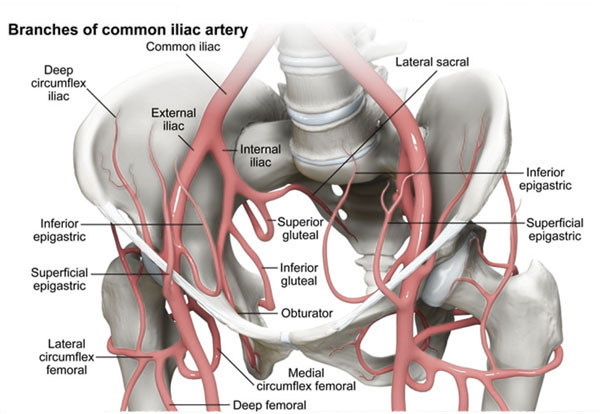
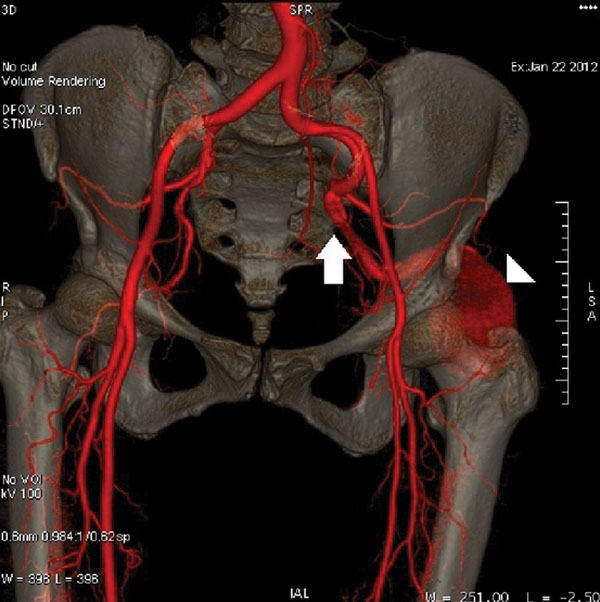
An ultrasound scan of the affected area revealed a developing aneurysm. This was followed by a CT scan of the abdomen along with the pelvis using a contrast dye found the aneurysm developing from the left internal iliac artery. If the mass was not present a doctor could easily diagnose sciatica or persistent sciatic artery. If the iliac artery presents with pulsating lesions is a tip-off that a vascular issue could be impinging on the sciatic nerve. Vascular surgery was discussed with the patient. Surgery was necessary, and the patient underwent sciatic aneurysm repair. The patient was discharged without any complications.
Persistent Sciatic Artery
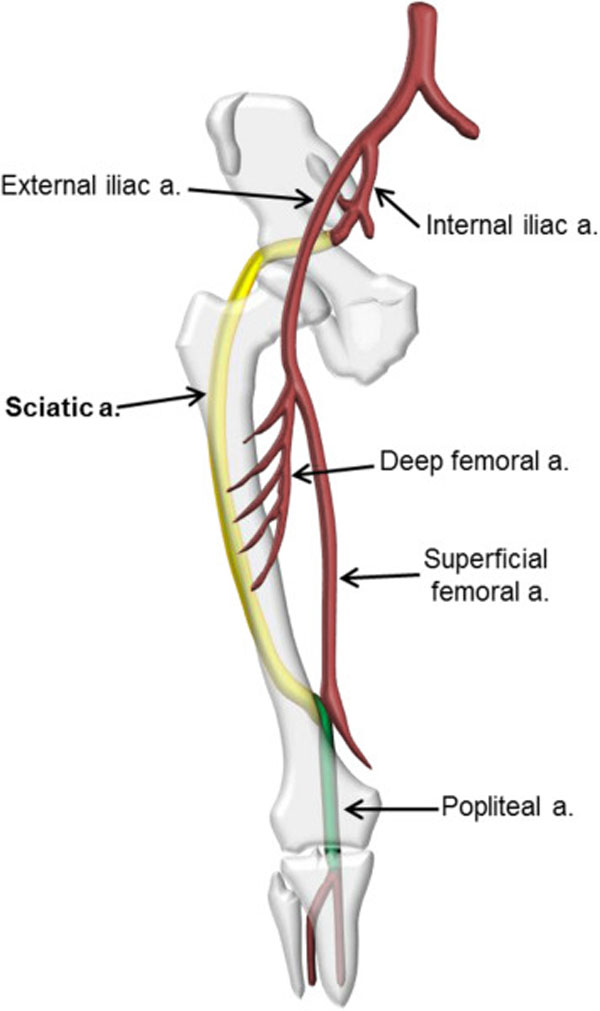
This is a very rare congenital vascular condition. The sciatic artery runs along the sciatic nerve and functions as the major blood supply to the lower extremities. During human embryo development, the femoral artery begins to form while the sciatic arteries start to return to a less developed state. The process continues until the femoral artery takes over as the major blood supply, with only bits of the sciatic artery left.
Persistent sciatic artery can happen either from the sciatic artery not returning to its original size or during normal development the femoral artery developing properly. Most cases of persistent sciatic artery go unknown and are usually detected from another examination for another ailment. Aneurysms often develop based on the arteries/vessel's tendency for minor trauma/injury when sitting or some form of pressure is applied on the site. Complications include:
Vascular Conditions In The Leg/s That Can Present As Sciatica
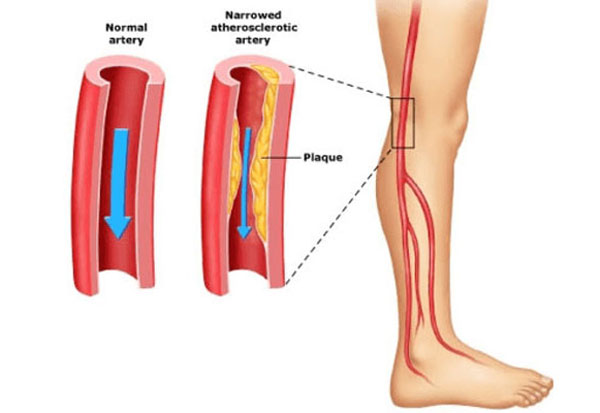
The legs' blood vessels can get infected, bulged, ruptured, or blocked. This can cause sciatica symptoms, like leg pain, weakness, tingling, and numbness. Severe cases could require medical emergency surgery to save the affected limb.
Acute Limb Ischemia
This condition occurs from a decrease or loss of blood supply to the legs. If there is leg pain, it could feel similar to sciatica pain. However, symptoms can progress rapidly and become severe. That's when it is not sciatica. Acute limb ischemia present one or more of the following symptoms:
Pain and/or numbness in the leg while walking and when resting
Severe pain at night
Sleep problems
Pain relief when sitting on a chair with the feet hanging down
Feet and ankles become swollen
A pale color and lowered skin temperature over the toes and feet when compared to the legs
Acute limb ischemia can develop from an aneurysm, blood clot, or from the thickening of the vessel walls. Treatment should be prompt in order to preserve leg function. Differentiation diagnosis between vascular and other causes like spinal problems that can cause leg pain. A doctor may perform an Ankle/Brachial Index which is a comparison of blood flow in the arms versus the legs. This can be critical in determining if there is vascular insufficiency.
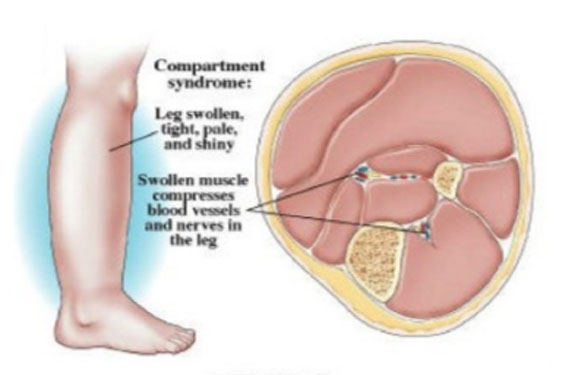
Acute Compartment Syndrome
This places increased pressure in the muscle tissues of the leg. It can lead to loss of blood supply in and around the affected area. The sciatic nerve can also get compressed from the increased pressure in the buttock, thigh, or leg. The condition can cause pain, numbness, and weakness in the buttock, thigh, and leg. Individuals have also reported an unusual/altered sensation in the web of the great toe. This is similar to sciatica, as well as one or both legs can be affected. Differentiating symptoms include:
Leg becomes swollen
Pain and tenderness present when touching the leg
A pale color and lowered skin temperature over the leg
Acute compartment syndrome is a serious condition that is considered a medical emergency. It is possible for the condition to cause complete dysfunction of the limb if not addressed in time. There are risk factors that increase the chances of developing limb ischemia or compartment syndrome. These are:
Diabetes
Heart conditions
High cholesterol
Smoking
History of having the condition can also cause a recurrence. This can be from an injury or poor health.
Kidney stones, renal failure, or cysts in the kidney can also cause back and leg pain. Other symptoms can include blood in the urine or difficulty urinating. Any sign of distressing symptoms that present with sciatica can indicate the need for medical attention. This is to check for the possibility of a serious underlying condition or medical emergency. Medical emergencies that are treated in time can help preserve the tissue/s, restore function, and save an individual�s life.
It is essential for a chiropractor or physical therapist to be familiar with diagnosing in a way that will help identify sciatica or aneurysm in individuals presenting with musculoskeletal issues/problems. Knowledge of these risk factors, understanding how to screen for non-musculoskeletal symptoms, basic competence in palpation, and how to interpret findings will help discover sciatica or aneurysm if it is there and begin timely treatment. And if it is not there then a sciatica treatment plan can be developed before it worsens.
Sciatic Nerve Pain
Dr. Alex Jimenez�s Blog Post Disclaimer
The scope of our information is limited to chiropractic, musculoskeletal, physical medicines, wellness, and sensitive health issues and/or functional medicine articles, topics, and discussions. We use functional health & wellness protocols to treat and support care for injuries or disorders of the musculoskeletal system. Our posts, topics, subjects, and insights cover clinical matters, issues, and topics that relate and support directly or indirectly our clinical scope of practice.*
Our office has made a reasonable attempt to provide supportive citations and has identified the relevant research study or studies supporting our posts. We also make copies of supporting research studies available to the board and or the public upon request. We understand that we cover matters that require an additional explanation as to how it may assist in a particular care plan or treatment protocol; therefore, to further discuss the subject matter above, please feel free to ask Dr. Alex Jimenez or contact us at 915-850-0900. The provider(s) Licensed in Texas& New Mexico*
References
Javdanfar A, Celentano C. Sciatic artery aneurysm. West J Emerg Med. 2010;11(5):516-517.
IFM's Find A Practitioner tool is the largest referral network in Functional Medicine, created to help patients locate Functional Medicine practitioners anywhere in the world. IFM Certified Practitioners are listed first in the search results, given their extensive education in Functional Medicine