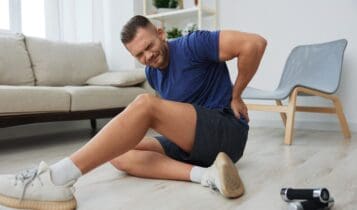
For individuals who injure their neck or back, the muscles may spasm or seize up, making it difficult to get through the day, exercises, physical activities, etc. Can skeletal muscle relaxers help relieve pain and reduce frequency?
Back Spasms Muscle Relaxers
Back muscle spasms are common back pain that feels like a sudden tightness or contraction in the back muscles. They can range from minor twinges to severe pain.
Causes
Poor posture: Sitting or standing with bad posture can strain the back muscles.
Overuse: Picking something up, bending, or lifting can cause a spasm.
Dehydration: Not drinking enough water can cause electrolyte imbalances, leading to spasms.
Underlying conditions: A herniated disc or degenerative disc disease can cause back spasms.
Muscle imbalances: Weak muscles or muscles that are too tight can cause spasms.
Treatments
Home treatments: You can apply heat or ice, take over-the-counter pain medication, try gentle stretching, or massage the area.
Exercise: Improve your back’s strength and flexibility with exercise or physical therapy.
Hydration and nutrition: Drink enough water and eat foods rich in magnesium and calcium.
Chiropractic Adjustments: These can realign the spine to the correct position and muscles to relax.
Non-surgical Decompression: Decompression of the spine will allow more blood and nutrients to heal painful areas.
Skeletal Muscle Relaxers
A healthcare provider may prescribe skeletal muscle relaxers. These medications are not available over the counter and must be prescribed by a healthcare provider.
Skeletal muscle relaxers will probably cause drowsiness.
Individuals should not drive, operate heavy machinery, or engage in other physical activities while taking back spasm muscle relaxers.
Skeletal muscle relaxers are not recommended for 65 or older because safer, effective alternatives exist.
Also, women who are pregnant or breastfeeding should not take these medications.
Discuss these issues with your healthcare provider.
Carisoprodol
Carisoprodol is available generically and as Soma and Vanadom brands. It works by suppressing nerve impulses located in the brain and spinal cord. Healthcare providers prescribe this medication in combination with physical therapy for the healing release of any muscle spasm and management of musculoskeletal injuries and/or pain. (Witenko C. et al., 2014) It’s not about having to continue taking the medication to feel better but more as a jump start to help with the physical therapy program.
Back muscle spasms are a perfect example of a condition that may benefit from carisoprodol in the short term.
Carisoprodol can be habit-forming.
Be sure to talk to a healthcare provider before suddenly going off this medication.
Carisoprodol can cause side effects that may impair thinking or reactions.
Inform your healthcare provider of any drug allergies, kidney disease, or liver disease, or if you get seizures.
Cyclobenzaprine
Cyclobenzaprine is available as Amrix and in generic form. Like other muscle relaxers, cyclobenzaprine may cause dizziness or drowsiness. The sedation effects are how it works on painful, tension-filled muscles. Cyclobenzaprine is used together with physical therapy to treat skeletal muscle-related conditions and/or injuries, especially when pain or spasm is involved. When used in conjunction with physical therapy, it can help expedite recovery.
Cyclobenzaprine is chemically related to tricyclic antidepressants.
Although it is considered a derivative of the tricyclic antidepressant class, it does not pose the same risk to liver health.
According to the National Institutes of Health, reasons not to take this medication include having a thyroid disorder, heart block, congestive heart failure, a heart rhythm disorder, or having recently had a heart attack. (Witenko C. et al., 2014)
Metaxalone
Skelaxin is the brand name for metaxalone. As with the other muscle relaxers, metaxalone is used in combination with physical therapy and rest when muscles get too tight. (Witenko C. et al., 2014) It works by suppressing nerve impulses in the brain and spinal cord. In addition to older individuals and pregnant women, metaxalone is usually not prescribed for those with kidney disease, liver disease, seizures, or blood disorders.
Injury Medical Chiropractic and Functional Medicine Clinic
Back spasms: Muscle relaxers could help individuals, along with a personalized physical therapy treatment program. Injury Medical Chiropractic and Functional Medicine Clinic works with primary healthcare providers and specialists to build optimal health and wellness solutions. We focus on what works for you to relieve pain, restore function, prevent injury, and mitigate issues through adjustments that help the body realign itself. They can also work with other medical professionals to integrate a treatment plan to resolve musculoskeletal problems.
Thoracic Spine Pain
References
Witenko, C., Moorman-Li, R., Motycka, C., Duane, K., Hincapie-Castillo, J., Leonard, P., & Valaer, C. (2014). Considerations for the appropriate use of skeletal muscle relaxants for the management of acute low back pain. P & T: a peer-reviewed journal for formulary management, 39(6), 427–435.
Zacny, J. P., Paice, J. A., & Coalson, D. W. (2012). Subjective and psychomotor effects of carisoprodol in combination with oxycodone in healthy volunteers. Drug and alcohol dependence, 120(1-3), 229–232. https://doi.org/10.1016/j.drugalcdep.2011.07.006
For individuals looking to improve their fitness health, can a fitness assessment test identify potential areas and help evaluate overall health and physical status?
Fitness Assessment
A fitness test, also known as a fitness assessment, helps evaluate an individual’s overall and physical health. It comprises a series of exercises to design an appropriate exercise program for general health and fitness. (National Strength and Conditioning Association. 2017) Fitness assessment testing benefits include:
Identifying areas that need improvement.
Assisting professionals in understanding what types of exercise are safest and most effective.
Helping measure fitness progress over time.
Allowing for an individualized plan that can help prevent injuries and maintain the body’s overall health.
An assessment can comprise a wide range of tests, including:
Body composition tests.
Cardiovascular stress tests.
Endurance tests.
Range of motion tests.
They are meant to ensure the individual won’t be at risk of injury and provide the trainer with the insights needed to establish clear and effective fitness goals. Individuals who wonder whether fitness testing would benefit them should consult their healthcare provider.
General Health
Before starting a fitness program, it is important to inform the trainer of individual medical history and get the necessary approval from a primary healthcare provider. (Harvard Health Publishing. Harvard Medical School. 2012) Fitness specialists usually use one or more screening tools to help determine individual baseline health.
This may include obtaining vital sign measurements like height and weight, resting heart rate/RHR, and resting blood pressure/RBP. Many trainers will also use a physical activity readiness questionnaire/PAR-Q comprising questions about general health. (National Academy of Sports Medicine. 2020) Among the questions, individuals may be asked about the medications being taken, any problems with dizziness or pain, or medical conditions that may impair their ability to exercise.
Body Composition
Body composition describes total body weight components, including muscles, bones, and fat. The most common methods for estimating body composition include:
Bioelectrical Impedance Analysis – BIA
During BIA, electrical signals are sent from electrodes through the soles of the feet to the abdomen to estimate body composition. (Doylestown Health. 2024)
These measurements use calipers to estimate the amount of body fat in a fold of skin.
Cardiovascular Endurance
Cardiovascular endurance testing, also known as stress testing, measures how efficiently the heart and lungs work to supply oxygen and energy to the body during physical activity. (UC Davis Health, 2024) The three most common tests used include:
12-minute Run Tests
Twelve-minute run tests are performed on a treadmill, and an individual’s pre-exercise heart and respiration rates are compared with post-exercise heart and respiration rates.
Exercise Stress
Exercise stress testing is performed on a treadmill or stationary bike.
It involves using a heart monitor and blood pressure cuff to measure vital signs during exercise.
VO2 Max Testing
Performed on a treadmill or stationary bike.
V02 max testing uses a breathing device to measure the maximum rate of oxygen consumption during physical activity (UC Davis Health, 2024)
Some trainers will incorporate exercises like sit-ups or push-ups to measure response to specific exercises.
These baseline results can be used later to see if health and fitness levels have improved.
Strength and Endurance
Muscle endurance testing measures the length of time a muscle group can contract and release before it fatigues. Strength testing measures the maximal amount of force a muscle group can exert. (American Council on Exercise, Jiminez C., 2018) The exercises used include:
The push-up test.
Core strength and stability test.
Sometimes, a trainer will use a metronome to measure how long the individual can keep up with the rhythm. The results are then compared to individuals of the same age group and sex to establish a baseline level. Strength and endurance tests are valuable as they help the trainer spot which muscle groups are stronger, vulnerable, and need focused attention. (Heyward, V. H., Gibson, A. L. 2014).
Flexibility
Measuring the flexibility of joints is vital in determining whether individuals have postural imbalances, foot instability, or limitations in range of motion. (Pate R, Oria M, Pillsbury L, 2012)
Shoulder Flexibility
Shoulder flexibility testing evaluates the flexibility and mobility of the shoulder joint.
It is performed by using one hand to reach behind the neck, between the shoulders, and the other hand to reach behind the back, toward the shoulders, to measure how far apart the hands are. (Baumgartner TA, PhD, Jackson AS, PhD et al., 2015)
Fitness assessment testing has various benefits. It can help trainers design a personalized workout program, help individuals identify fitness areas that need improvement, measure progress, and add intensity and endurance to their routine, which can help prevent injuries and help maintain overall health. We focus on what works for you and strive to better the body through researched methods and total wellness programs. These natural programs use the body’s ability to achieve improvement goals. Ask a healthcare professional or fitness professional for guidance if you need advice.
PUSH Fitness
References
National Strength and Conditioning Association. (2017). Purposes of assessment. https://www.nsca.com/education/articles/kinetic-select/purposes-of-assessment/
Harvard Health Publishing. Harvard Medical School. (2012). Do you need to see a doctor before starting your exercise program? HealthBeat. https://www.health.harvard.edu/healthbeat/do-you-need-to-see-a-doctor-before-starting-your-exercise-program
National Academy of Sports Medicine. (2020). PAR-Q-+ The Physical Activity Readiness Questionnaire for Everyone. https://www.nasm.org/docs/pdf/parqplus-2020.pdf?sfvrsn=401bf1af_24
Doylestown Health. (2024). Bio-Electrical Impedance Analysis (BIA)-Body Mass Analysis. https://www.doylestownhealth.org/service-lines/nutrition#maintabbed-content-tab-2BDAD9F8-F379-403C-8C9C-75D7BFA6E596-1-1
National Heart, Lung, and Blood Institute. U.S. Department of Health and Human Services. (N.D.). Calculate your body mass index. Retrieved from https://www.nhlbi.nih.gov/health/educational/lose_wt/BMI/bmicalc.htm
UC Davis Health. (2024). VO2max and Aerobic Fitness. https://health.ucdavis.edu/sports-medicine/resources/vo2description
American Council on Exercise. Jiminez C. (2018). Understanding 1-RM and Predicted 1-RM Assessments. ACE Fitness. https://www.acefitness.org/fitness-certifications/ace-answers/exam-preparation-blog/2894/understanding-1-rm-and-predicted-1-rm-assessments/
Heyward, V. H., Gibson, A. L. (2014). Advanced Fitness Assessment and Exercise Prescription. United Kingdom: Human Kinetics. https://www.google.com/books/edition/Advanced_Fitness_Assessment_and_Exercise/PkdoAwAAQBAJhl=en&gbpv=1&dq=Strength+and+endurance+tests+muscle+groups+are+stronger+and+weaker&pg=PA173&printsec=frontcover#v=onepage&q=Strength%20and%20endurance%20tests%20muscle%20groups%20are%20stronger%20and%20weaker&f=false
Pate R, Oria M, Pillsbury L, (Eds). (2012). Health-related fitness measures for youth: Flexibility. In R. Pate, M. Oria, & L. Pillsbury (Eds.), Fitness Measures and Health Outcomes in Youth. https://doi.org/10.17226/13483
Baumgartner, T. A., Jackson, A. S., Mahar, M. T., Rowe, D. A. (2015). Measurement for Evaluation in Kinesiology. United States: Jones & Bartlett Learning. https://www.google.com/books/edition/Measurement_for_Evaluation_in_Kinesiolog/_oCHCgAAQBAJ?hl=en&gbpv=1&dq=Measurement+for+Evaluation+in+Kinesiology+(9th+Edition).&printsec=frontcover#v=onepage&q&f=false
American Council of Exercise. Metcalf A. (2014). How to improve flexibility and maintain it. ACE Fitness. https://www.acefitness.org/resources/everyone/blog/3761/how-to-improve-flexibility-and-maintain-it/
Dr. Alex Jimenez, El Paso chiropractor, has helped hundreds of his patients recover from injuries and/or conditions after being involved in an automobile accident or other unfortunate incident. From the first step of treatment to recommending and guiding people to the most suitable and qualified healthcare providers and legal representatives, Dr. Jimenez has supported many patients into recovery.
Find a doctor or hospital in Texas quickly and easily using the Blue Cross Blue Shield of Texas Provider Finder. Search for a doctor by name, location or specialty to find a doctor in your area to meet your health care needs.
When you need to find a doctor, take the time to research your options. Follow the steps to help find the doctor that meets your needs.
Make a List of Potential Doctors
Start with the network. Health plans like HMOs and PPOs use a certain group of doctors and health care professionals. This is called a provider network. Before you see a doctor, search Provider Finder� for doctors in your provider network. Register or log in to Blue Access for Members, our secure member website, for a personalized search experience based on your health plan and network.
Ask your family and friends for doctor references.
Check local resources. Check with local hospitals to see if they have a referral service. If you’re moving to a new area, ask your current doctor to help you find a qualified doctor near your new home.
Research and Narrow Your List
Ask questions. Contact the doctors on your list and ask for information about their background. Some of these questions might include:
What is the doctor’s training and education?
How long has he or she been in practice?
What is the doctor’s age and gender? (If important to you)
Is the doctor board-certified? (This requires specialty training.)
Check for complaints. Contact your state’s department of insurance and see if the doctors you are considering have had complaints filed against them.
Go online. Search online for articles and reports about the doctors you are considering.
Meet Your Doctor(s)
Meet and greet. Once you’ve narrowed your list to a handful of doctors, set up appointments so you can get to know the candidates. Bring a list of questions and be prepared to discuss any concerns. Some offices charge a small fee for a meet and greet, but it could be well worth it.
Make your choice. By now you should have a pretty good idea of your prime candidate. Save your research, just in case you decide to switch doctors later. But, if you’ve done everything outlined here, chances are you’ve found the right doctor for you!
After being involved in an unfortunate accident which causes injury or aggravates a previous condition, finding the best health provider in the region is important. Blue Cross Blue Shield has made every effort to effectively appoint individuals to the best, most appropriate doctors and hospitals, to ensure the patient finds the finest care they deserve and restore their health.
For more information on the subject matter, please feel free to ask Dr. Jimenez or contact us at 915-850-0900 .
IFM's Find A Practitioner tool is the largest referral network in Functional Medicine, created to help patients locate Functional Medicine practitioners anywhere in the world. IFM Certified Practitioners are listed first in the search results, given their extensive education in Functional Medicine