There are more benefits to gardening than blossoming flowers and fresh produce. It’s also an opportunity to stay active while enjoying the outdoors.
With thousands of people getting treated in emergency rooms for gardening-related injuries, the American Academy of Orthopaedic Surgeons (AAOS) wants to ensure that outdoor gardeners are practicing safety first.
Research from the National Electronic Injury Surveillance System (NEISS) shows the following results for individuals treated in hospital emergency rooms in 2015:
Approximately 64,595 were treated for injuries related to hand garden tools
More than 92,000 for lawn and gardening equipment
More than 20,000 for trimmers and small power garden tools
Although equipment contributes to a significant number of injuries, they aren’t the sole cause of gardening injuries. Poor posture and body positions while gardening can lead to muscle and tendon injuries.
Expert Advice to Avoid Injury
“While gardening helps to relieve mental stress, many people underestimate the physical stress your body can endure during this activity,” said orthopaedic spine surgeon Raj Rao, MD. The constant bending, reaching and squatting involved could result in injuries to the lower back and knees, therefore it’s important to be mindful of your body’s position while gardening to avoid aches and strains.”
The AAOS recommends the following gardening safety tips, and urges gardeners to share them with family and friends.
Loosen your joints and muscles before gardening with simple stretches.
Take breaks. Do not stay in one position for too long. Switch positions often to avoid overworking one part of the body.
To avoid injuring your back when lifting heavy objects, position yourself close to the object you want to lift. Separate your feet shoulder-width apart to give yourself a solid base of support. Then bend at the knees, tighten your stomach muscles and lift with your leg muscles as you stand up. If an object is too heavy or is an awkward shape, do not try to lift it by yourself. Get help.
Protect your back and knees from strain by sitting on a garden stool when possible to help relieve pressure on your spine and knees.
Consider having a vertical garden, wall planters or hanging plant baskets to avoid the repetitive back bending and kneeling positions that’s involved in traditional gardening.
Stay hydrated with fluids, especially if you’re working up a sweat.
Children should not be allowed to play in or near where sharp tools, chemicals or gardening equipment are being used or stored.
Remove stones, toys and other objects from the yard before you start gardening.
Wear protective gloves, sturdy shoes and long pants when working in the garden to protect against insect bites and injuries from stepping on sharp objects, or cuts from handling sharp tools.
Familiarize yourself with the plants that are in your garden. If you identify poisonous plants or trees, ensure you keep young children away and educate them about the potential risks. If you cannot identify a plant or tree, take a sample to your local garden center for identification.
Keep gardening equipment in good working order. For example, when using a hedge trimmer for the first time in a season, have it serviced to ensure that it is working correctly.
The scope of our information is limited to chiropractic and spinal injuries and conditions. To discuss options on the subject matter, please feel free to ask Dr. Jimenez or contact us at 915-850-0900 .
Additional Topics: Preventing Spinal Degeneration
As we age, it’s natural for the spine, as well as the other complex structures of the spine, to begin degenerating. Without the proper care, however, the overall health and wellness of the spine can develop complications, such as degenerative disc disease, among others, which could potentially lead to back pain and other painful symptoms. Chiropractic care is a common alternative treatment option utilized to maintain and improve spine health.
If getting through life without stress is a goal, it�s possible that expectations have been set a little too high.
While it�s an excellent idea to limit stress as much as possible, it�s next to impossible to eliminate it completely. But is stress really that harmful? Or is it more like poor posture or back pain � an inevitable part of life that is uncomfortable but relatively harmless in most cases?
Actually, these three common ailments can bring about a bit of pain and ill health to life. And it�s also possible that they feed off of each other. If you live in an environment, where stress, bad posture, and back pain are rampant, take a look at how they are connected and what you can do to feel some relief.
Improper Posture Complications
First, it�s important to understand where bad posture originates. Most people have great posture as kids, but it suffers greatly with age. This could be from poor habits, such as excessive TV time or inactivity, or it could be from long commutes and hours spent in desk chairs. Once poor posture is a habit, it pulls on the shoulders, rounds the upper back, and can cause restrictions in the vertebrae of the spine. All of these contribute to pain and discomfort that are hard to correct without assistance.
Posture and Stress
Stress may come about from various places in life including work, family situations, and finances. Once the body is stressed, it tenses. The tighter and more inflexible the body becomes, the more difficult it is to regain a relaxed, proper posture. When combined with a posture that is already suffering, the symptoms that come with either, such as body pain, headaches, and insomnia, can intensify.
The Connection Between Back Pain, Stress and Posture
Tension in the vertebrae, tense joints and muscles, and inflexibility in the body are linked to back pain, naturally. Both poor posture as well as stress can enhance back pain and make it feel stronger and occur more frequently. And without help in the causes of the pain, the three work in a frustrating cycle. Poor posture and stress lead to back pain, and then back pain forces poor posture and more stress.
Solving the Issues
One of the best things to do to alleviate stress and back pain, as well as regain good posture, is to change lifestyle habits. Exercise, strength training, and support devices all work wonders. Another great option is to get regular chiropractic care. Since residents of Houston are unlikely to escape work or long commutes anytime soon, it can feel as though back pain is here to stay, but it doesn�t have to be. Chiropractors can use spinal manipulation to release the tension in the spine and enhance overall health. Need a great place to go? Try The Joint Chiropractic. With walk-in visits and affordable pricing, getting care is easier than ever. There really can be an end to the cycle mentioned above, and it may begin with a quick trip to The Joint today.
The scope of our information is limited to chiropractic and spinal injuries and conditions. To discuss options on the subject matter, please feel free to ask Dr. Jimenez or contact us at 915-850-0900 .
Additional Topics: Preventing Spinal Degeneration
As we age, it’s natural for the spine, as well as the other complex structures of the spine, to begin degenerating. Without the proper care, however, the overall health and wellness of the spine can develop complications, such as degenerative disc disease, among others, which could potentially lead to back pain and other painful symptoms. Chiropractic care is a common alternative treatment option utilized to maintain and improve spine health.
El Paso, TX. Chiropractor Dr. Alex Jimenez looks at sleep posture for back pain.
Whether you got back, neck, or pregnancy pain, your slumber posture makes a big difference in the way you feel each morning.
Great posture is a key to a healthier spine, but posture isn�t just about sitting or standing straight. Your sleep bearing has a significant effect on neck and your back. While some postures allow you to feel refreshed morning, come, others can leave you stiff, sore, and in pain.
Believe neutral, as it pertains to locating the very best sleep pose to your back and neck. Postures that put your spine in a neutral, or direct, alignment place the smallest amount of pressure on your own back and neck. Learn which postures set your back in a neutral state and those who must be prevented below.
The Very Best Sleep Posture For The Back: On Your Own Back
Sleeping in your back is for putting your spine in a neutral alignment, the very best, but only 8% of people sleep in this pose.
A few strategically placed pillows can boost the advantages of back sleep. A little pillow underneath your head and neck (but not your shoulders) will help to keep your back straight. Including a pillow under your knees will provide comfort and much more support, as it encourages your back to preserve its natural curve.
It’s a few drawbacks, though back sleeping is the best on your spine:
It�s not best for individuals with sleep apnea. Back sleeping may create the tongue to obstruct the breathing tube, so those with sleep apnea must not sleep on their backs. Instead, they ought to sleep on their side with legs right.
It�s not best for snorers. Back sleeping can worsen snoring. People who snore should sleep on their side with legs right.
It’s not best for women that are pregnant. Pregnant women who sleep on their backs danger growing a multitude of health issues, from back pain to low blood pressure. Plus, the on-the-back position decreases blood flow to the baby and also the heart. The very best sleep position during pregnancy is sleeping on the side with legs bent.
�
The Next Best Choice: On Your Side With Legs�Straight
For those that snore or have sleep apnea�or in the event you just discover sleeping on your back uncomfortable�side sleeping with your torso and legs is a fantastic choice. That is the perfect sleeping pose for people and snorers with sleep apnea because it keeps your airways open. Adding a tiny pillow between your legs will also help in keeping your back neutral.
In Third: On Your Side With Legs Bent Upwards
Sleeping on your side together with your legs bent upwards�also generally known as the fetal position�is the most typical sleep pose (41% of adults sleep this manner). This posture keeps your neck and upper back, though it�s a popular alternative. The fetal position also promotes an uneven distribution of weight, which can cause tender joints and back pain. You can help reduce your odds of waking up by pulling your knees and maintaining your turning angle up as high as they can go.
While this is the third-best slumber pose for most, sleeping on your side with bent legs is the best sleeping position for women that are pregnant. It supplies the most comfort and safety for a growing abdomen, and sleeping on the left side adds the additional benefits of boosting blood and nutrients to the baby. For additional support, pregnant women may put in a pillow between their bent legs and knees.
The One Sleep Position Everyone Should�Avoid
No matter the sort of pain you might have, whether it�s neck, low back, joint, or related to pregnancy, sleeping on your stomach just isn’t recommended. This posture places the most pressure on joints and your back�s muscles as it flattens the natural curve of your back. Sleeping on your stomach also compels you to turn your neck, which may cause neck and upper back pain.
Getting the sleep you need is much more important while stomach sleeping is better prevented. You are able to calm some pressure off your back by placing a pillow under your pelvis and lower abdomen, and another pillow under your head if stomach sleeping is the sole way you can snooze soundly. In the event the pillow under your head causes pain, remove.
Still Feeling Sleepy?
You struggling to get a great night�s rest, although when you yourself have sleep bearing that is healthful, factors outside your sleep position may be the offender. As an example, environmental disruptions (for example bright lights in your bedroom) or dietary customs (like eating a substantial meal before bed) could be interfering together with your slumber. Learn about some common sleep burglars and how you can combat them in Sensible Sleep Advice to get a Wholesome Spine.
El Paso, TX. Chiropractor Dr. Alex Jimenez looks at stretches for neck pain.
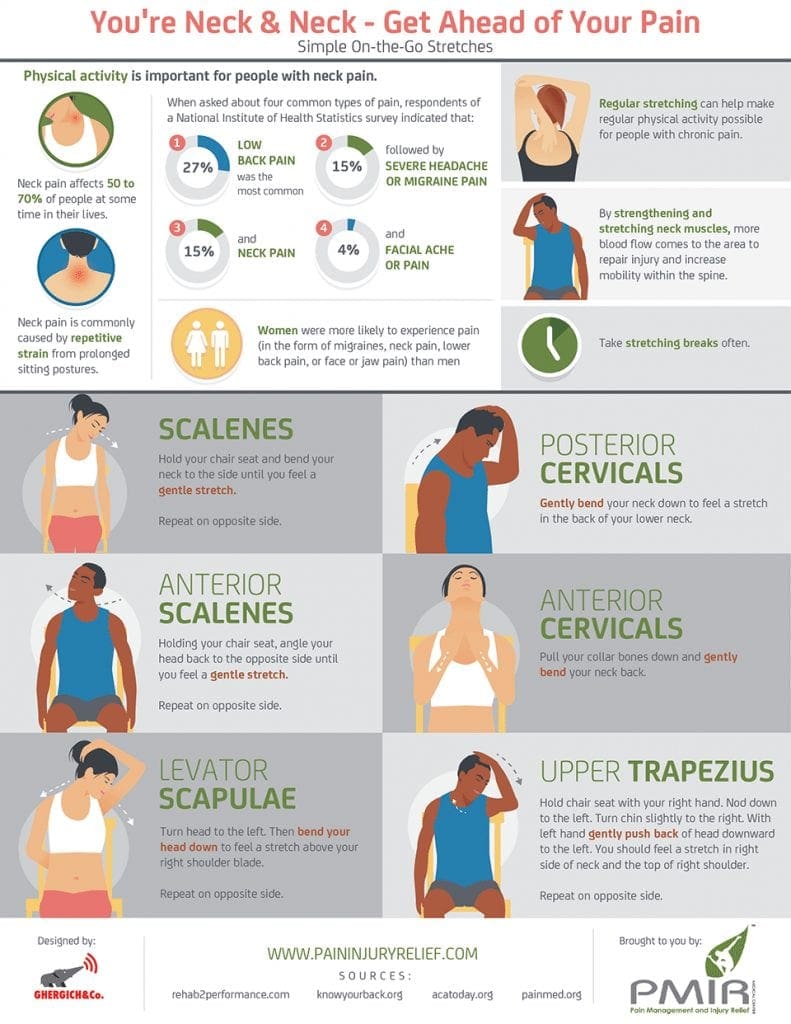
Your neck is one of the hardest working parts of your body.�It is serves us well as a source of strength and balance. When it�s out of whack, your neck can be a source of unending distress. �Let�s face it�today�s use of technology has our necks being put to use in ways it was never intended. �Did you know that looking down at your phone can sometimes exert as much pressure as the equivalent of a 40lb weight?
Unfortunately for the vast majority of people, neck pain will affect them at some point in their lives. Women are more prone to neck pain but men definitely have their fair share as well.
One Of The Reasons Our Necks Pay A Price… We Sit A Lot
Whether it is at home in front of the TV or electronics or at work in front of the computer, our necks get a work out! Distresses on the neck are felt in many ways, including but not limited to: low back pain, severe headache, migraines, or even facial aching and tenderness.
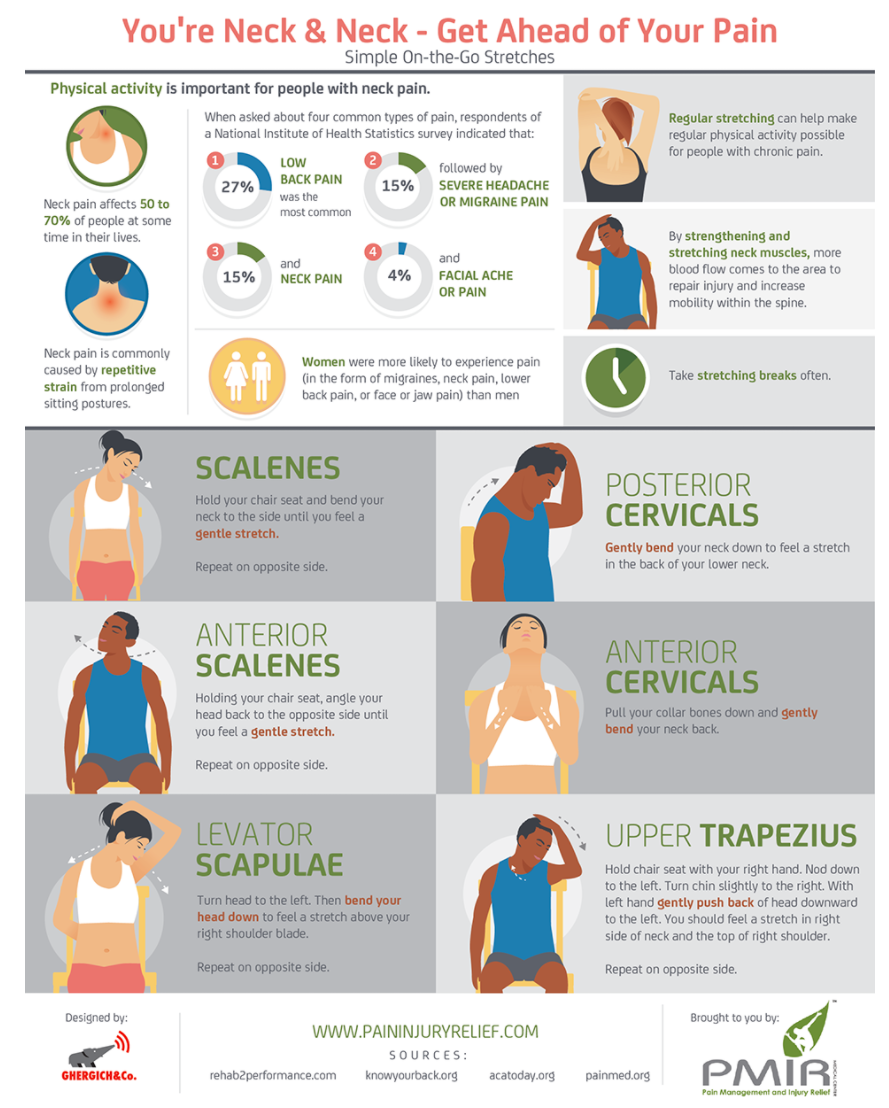
What are some of the gentle ways you can give your neck a break? Good question, we are glad you asked! Thankfully, stretching our neck muscles regularly is easy to do and it can help relieve and prevent neck pain.
El Paso TX. Chiropractor Dr. Alex Jimenez looks at the work environment to see if it is in fact spine friendly.
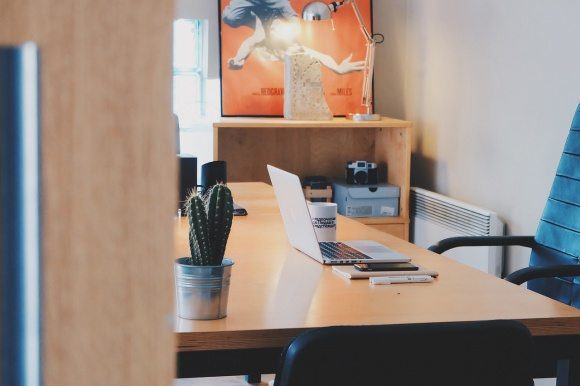
While work can be a pain, it doesn’t have to cause pain. Creating your office work room in order to avoid back and neck strain is easier than you may think. Plus, rethinking your work environment is a fantastic chance to brush up on other healthy work habits as well as your posture.
Here are five ways you are able to design your office together with your back in your mind.
#1. Perfect Your Sitting�Posture
If you’re not sitting right even with the top equipment, your back will suffer. Pay attention to the situation of legs, hands, and your head when sitting. To avoid back pain, make sure to do the following:
Sit erect with your back and shoulders against the trunk of your chair
Consider using a hands free headset to stop shoulder and neck pain
Don’t slouch
Arms should rest on the armrests of your chair to avoid nerve pressure or circulatory difficulties
Keep your feet flat on the flooring�don�t cross your legs
Rest your shoulders while typing
#2. Get A Good�Chair
A good-constructed ergonomic seat to help increase your blood flow, reduce fatigue, stress, and decrease the chance of injury to your own neck and back. Getting the chair that is best is important, which means this is one product which should be tried in the store as opposed to purchasing online so you know before purchasing it, the way that it feels. Make fully sure your office chair has got the following:
A good backrest that provides lumbar support
The capability to recline (Sitting erect at a 90� angle is not good for your spine; a 100-degrees to 110-degrees angle is much better.)
Flexible height (You don�t want the seat to be overly high�your feet must be flat on the floor)
The ability to rotate or swivel, so you can easily�change tasks
#3. Invest In A Desk That Offers More Than Just Storage
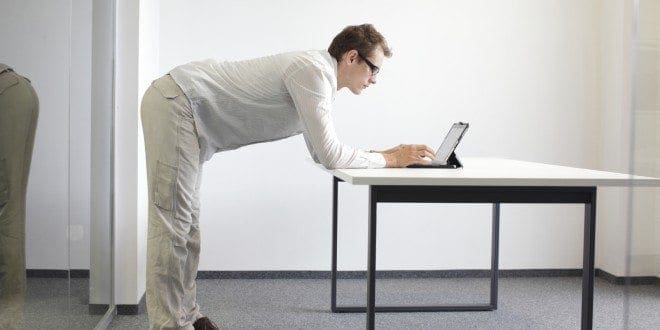
One of the biggest pitfalls of a spine-friendly work routine is staying in one position for a long time. Switching between sitting and standing is the best strategy, and some desks�known as sit-stand desks or sit-to-stand desks � encourage one to mix up your position through the entire workday.
Sit-to-stand desks offer you the choice to work comfortably in both sitting and standing poses�and they been discovered to simply help burn off calories. They come in various price points and styles, and a growing variety of companies are considering this investment to boost workplace wellness.
If you�re looking to boost the ergonomic quality of a traditional desk make sure the desk is:
Secure (not wobbly)
Suitably high (generally 28″ to 30″ above the floor)
Large enough for your computer, with surface space for writing along with other jobs.
Not�so large that you have to over reach to do your work, which could cause excessive stress on the back
#4. Look At Your Computer
Since so much office work is done on computers, wherever your equipment is put can really make a difference when you are at work, in how your back feels. Try the following hints:
Tilt the keyboard down and slightly away from you for better wrist posture
Be sure your mouse is close enough so you can use it with your arms relaxed, and let it be as close to your body as possible
Set the monitor right in front of you at eye level, not off to the side, in order to avoid eye and neck strain. Adjustable monitor stands are available to find an ideal height.
If using a notebook, consider getting an external monitor or keyboard (or both). This enables each of those parts individually to move to develop a comfortable arrangement.
#5.�Take A Break
Not just a coffee break but a spine break. Stretch, take a quick walk, get the blood flowing. It�s simple to get caught up in work jobs and forget that you�ve been sitting or typing for a straight hour. Whether it�s a 15-minute walk or two-minute stretch session, occasional breaks can help revive your muscles, and perhaps you can find feel more productive, too.
You spend lots of time at work�why not take a few extra steps to develop a space that does your back a number of favors in return?
El Paso TX. Chiropractor Dr. Alex Jimenez looks at some exercises that are help�posture.
Prone Shoudler Arcs Can Help Strengthen Upper Back Muscles Which Hold Your Shoulders In Better Posture
By lifting a dowl or light pole up off the floor and moving the shoulder can help strengthen the muscles between the spine and shoulder blade.
Shoulders and shoulder blades which are relaxed and sit back and down instead of hunched up and slouched forward are better for your posture. Good posture can prevent neck pain, shoulder pain and headaches in the future.
Prone Shoulder Arcs
Deep Neck Flexor Training
Call Today!
For further hints and tips on postural care and general healthy living go to ccbrighton.co.uk/videos
�According to a new University of Iowa study, employees with desks that force them to stand at regular intervals stood 60 minutes more per work day than co-workers with regular desks.
Lucas Carr, an assistant professor and member of the Obesity Research and Education Initiative who worked on the study, says sitting 8 hours a day puts workers at risk for cardiovascular disease, high blood pressure and diabetes and becomes more of an issue with each passing year.
�The idea here is to really redesign the work environment, because most of us will be working for anywhere between 20 and 30 years,� says Carr. �So if somebody is sitting for 40 hours a week and for 30 years, you can imagine how those things would build up.�
Carr says doctors now recommend workers take a break from sitting at their desks to get their blood flowing at least once an hour.
He adds re-configuring work spaces could play a big role in fighting the obesity epidemic in the U.S. The study found employees with sit-stand desks burned up to 87 more calories a day and walked an additional six minutes at work than their sitting counterparts.
Carr notes the study focused on workers who had been using sit-stand desks for an average of one-point-eight years. He says, unlike an exercise bike that ends up collecting dust in the garage, workers continued using the new desks even after they had lost their novelty. Carr says if you can�t convince your boss to buy everyone a newfangled desk, there are still ways you can short circuit the negative impacts of sitting all day.
�One thing that I even recommend is for people just to drink more water,� says Carr. �By doing that it�s a natural reminder for you to get up and get away from your desk every 45 or 50 minutes and go to the restroom.�
Carr points out sedentary jobs have risen 83 percent since 1960 and now account for 43 percent of all jobs in the U.S. He says on average office workers sit more than 80 percent of the work day. So the next time your boss asks why you�re not sitting at your desk? �Sorry, doctor�s orders.�
IFM's Find A Practitioner tool is the largest referral network in Functional Medicine, created to help patients locate Functional Medicine practitioners anywhere in the world. IFM Certified Practitioners are listed first in the search results, given their extensive education in Functional Medicine