After a long day of work, it�s not uncommon for people to experience symptoms of pain and discomfort throughout their body. In today�s world, however, everyday activities, such as typing and texting, can often cause more than temporary soreness on the extremities. The repetitive movements of the wrist over time may irritate the surrounding tissues, leading to damage, injury, and even the development of uncomfortable conditions like carpal tunnel syndrome.
What is Carpal Tunnel Syndrome?
Carpal tunnel syndrome is a frequently diagnosed medical condition, characterized by pain, numbness and tingling sensations in the hand and arm. The well-known condition develops when one of the major nerves which runs through the hand, medically referred to as the median nerve, is compressed or impinged as it travels through the carpal tunnel, a narrow passageway within the wrist that is surrounded by rigid tissues, making it minimally capable of stretching or increasing in size.
The median nerve originates from a bundle of nerve roots found in the neck. These roots merge into a single nerve in the arm, where it then travels down the arm and forearm, passing through the carpal tunnel at the wrist and into the hand. This main nerve functions to provide feeling in the thumb and index, middle and ring fingers. The median nerve is also in charge of controlling the muscles around the base of the thumb.
Carpal tunnel syndrome is a common condition which may occur due to a variety of factors. With constant overuse of the hand and wrist, the repeated motions or activities may result to irritation on the tendons in the wrist, causing inflammation and swelling to begin applying pressure against the nerve. Additionally, participating in activities which involve an excessive flexion or extension of the hand and wrist for extended periods of time can also increase pressure on the median nerve. On occasion, hormonal changes brought on by pregnancy can cause swelling. In other cases, the presence of previous conditions like rheumatoid arthritis or diabetes, among other, can also be closely associated with median nerve compression. Furthermore, carpal tunnel syndrome is believed to be caused by hereditary traits. For some people, the carpal tunnel passage may be smaller than average and/or other anatomical differences can in turn change the amount of space between the narrow passageway and the median nerve, leaving people at risk of developing carpal tunnel syndrome. Research shows that women and older individuals have a higher chance of developing this uncomfortable condition.
Fortunately, whether you plan to prevent the development of carpal tunnel syndrome or you�ve been recently diagnosed with the condition, there are several effective treatment options available to relieve the painful symptoms and restore the individuals original hand, wrist and arm function.
Chiropractic and Carpal Tunnel Syndrome
Chiropractic care is one of the most common forms of treatment for carpal tunnel syndrome. Foremost, a doctor of chiropractic, or DC, will evaluate the extent of the condition as well as diagnose the individual to determine any underlying cause behind the condition. After diagnosis, the chiropractor will follow up with an appropriate treatment regimen for the individual, according to their specific needs. Through a series of chiropractic adjustments and manual manipulations, the structures surrounding the hand, wrist and arm can be slowly adjusted to gradually reduce the pressure around the median nerve, ultimately reducing the individual�s symptoms. The chiropractor may also recommend a set of stretches and exercises to carefully restore the individual�s mobility and rehabilitate them back into their original state of well-being.
The repetitive movements of the wrist over time may irritate the surrounding tissues, leading to damage, injury, and even the development of uncomfortable conditions like carpal tunnel syndrome. For more information, please feel free to contact us at (915) 850-0900.
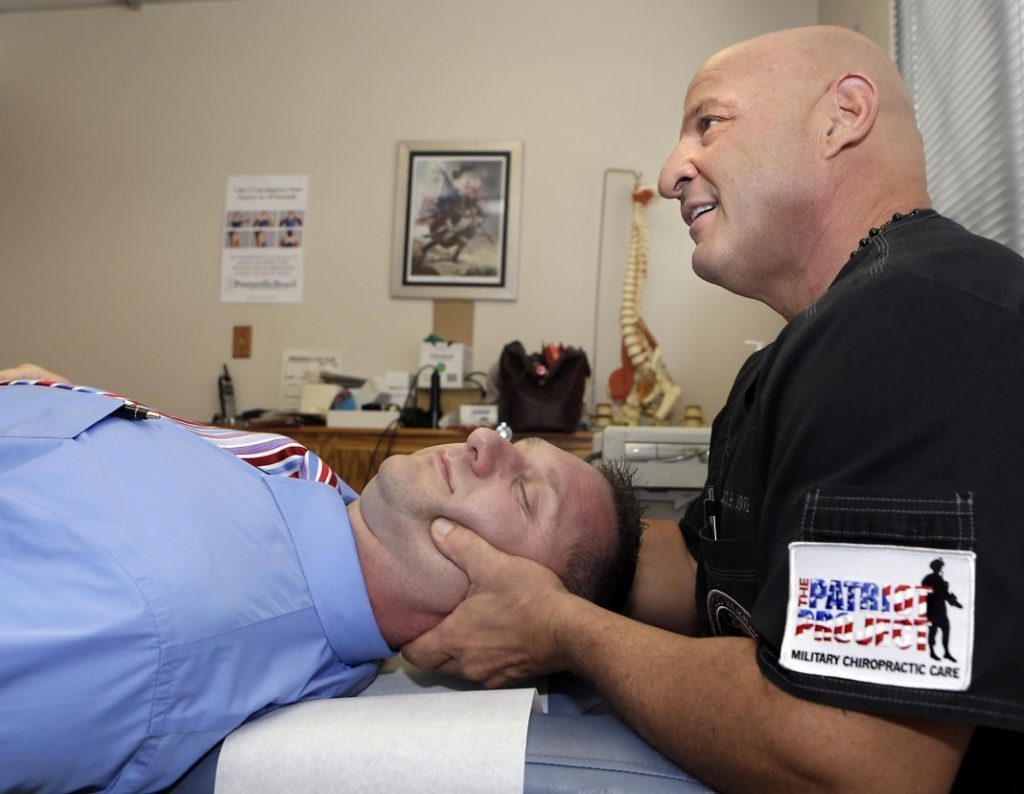
The Patriot Project is a grass roots movement to provide chiropractic care to all Active Military, their Families, Wounded Warriors & All Gold Star Dependents.
The Patriot Project was found by Dr. Tim Novelli, and this inspired organization started after one life changing weekend.
No one tells the story better than the man himself.
It�s a little known fact that chiropractic care is included in veteran�s health benefits, and it�s an underutilized option.�The Patriot Project aims to change this by making chiropractic care readily available to our service members.
With adequate funding, The Patriot Project plans to develop a USO-type chiropractic care tour, visiting military bases at home and around the world, including all active forward operating bases like those in Afghanistan and Iraq.
We are calling on all chiropractors to help by becoming a patriot. �Participating doctors will make time available to�treat at least one armed-service member a week at no�charge. He/she will also help us collect patient testimonials, which will be used to further our cause in Congress.
Mission Statement
-To provide chiropractic care to active military, their families, wounded warriors, and Gold Star Dependents.
-To make full chiropractic benefits in TRICARE care readily available for ALL active duty military, retirees and veterans.
-To have chiropractic physicians commissioned as officers in all armed services.
-To have chiropractic physicians embedded in all forward operating bases of combat.
-To have a Chiropractic Department in every VA hospital and clinic.
-To educate veterans with service related disabilities; they have chiropractic benefit coverage through the Veterans Administration.
Why is The Patriot Project so important?
Military Heroes & Chiropractic
In 2002, President George W. Bush signed Public Law 107-135, legislation that ensured that chiropractic would become a permanent benefit for recipients of veterans� health care services. As a result, chiropractic care was gradually added to more than 30 VA medical centers.
In the remaining 120 VA treatment facilities, however�including those in several major metropolitan areas, the chiropractic care benefit has remained virtually nonexistent.
All veterans with service related disabilities are supposed to have access to chiropractic care; if not at a hospital then in the civilian community. Chiropractic treatment is a standard VA benefit. No VA facility can state that they do not provide these essential health benefits.
Chiropractic physicians are considered specialists with the Veteran Administration and with the Department of Defense, which means the Veteran must request from their PCP an approval for them to receive chiropractic treatment.
Problem #1: Vets DO NOT KNOW they have chiropractic benefits.
Problem #2: There is no listing of chiropractic benefit within the VA HealthCare Benefit section within their website except under ancillary services.
Problem #3: Vets DO NOT KNOW the benefit they can obtain from chiropractic treatment which includes acupuncture.
Problem #4: Vets DO NOT KNOW they can appeal their PCPs denial of their requests for chiropractic treatment.
Problem #5: Armed forces families do not have chiropractic benefits.
Problem #6: Veterans reliance upon medications results in a high probability of developing additional health problems and or even developing life threatening/ending situations.
Some veterans have found their local VA is reluctant to send them for fee-basis care outside the VA facility, and have required they jump through many hoops to get a referral for a Doctor of Chiropractic. This is against VA policy and does not go along with the VA�s own stated mission to be �veteran-centered.�
Many times the VA facility is trying to save money by denying fee-basis care delivered by doctors of chiropractic, even though they spend a great deal on numerous other treatments. VA facilities are unaware that chiropractic treatment can reduce their facilities cost.
Medical literature has revealed that when insurance company limit/reduce chiropractic treatment benefits, their total costs for healthcare, actually increased.
A patient receiving regular chiropractic care experiences reduced hospital admissions, surgeries, and pharmaceutical costs.
Studies indicate that greater chiropractic coverage, despite increased visits to a DC, results in significant net savings in both indirect and direct costs.
Chiropractic care could reduce Medicare costs�both payment for all services and average per claim payment.
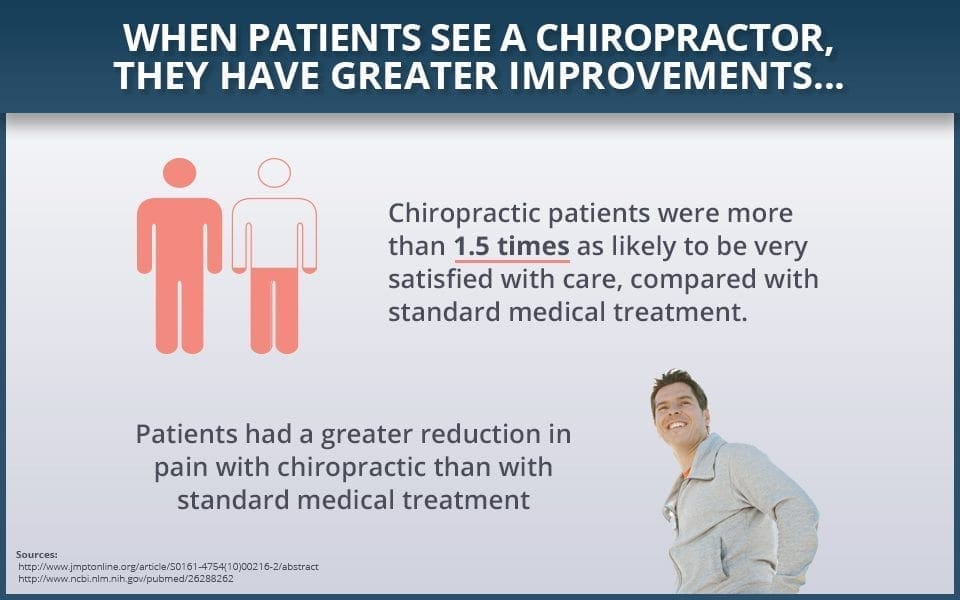
Chiropractic patients typically pay less and are more satisfied with their treatment than MD patients.
Chiropractic care can be used to control health care costs.
Chiropractic patients reach maximum medical improvement sooner than when treated by a medical doctor.
Chiropractic treatment is not an add-on, it is a direct substitution for other treatment.
Conclusion:
Services delivered by doctors of chiropractic are part of the standard VA benefits and no VA facility can say �do not provide� these essential health benefits. Some veterans have found their local VA is reluctant to send them for fee-basis care outside the VA facility, and have required they jump through many hoops to get a referral for a Doctor of Chiropractic. This is against VA policy and does not go along with VA�s own stated mission to be �veteran-centered.�
The Patriot Project is determined to change this, with your help.
To learn more about how you can join and help the Patriot Project, click below
It�s a little known fact that chiropractic care is included in veteran�s health benefits, and it�s an underutilized option.�The Patriot Project aims to change this by making chiropractic care readily available to our service members.
Most people don�t go to a chiropractor for a better sex life, but that extra benefits is a pretty happy accident. �People come in with back pain, but after adjustments, they come back and tell me their sex life is so much better,� says Jason Helfrich, co-founder and CEO of 100% Chiropractic. �It�s no surprise to us�it�s amazing what the body will do when you take away the pressure on the nervous system.�
And what are those amazing feats, exactly?
Let�s start with what a chiropractor really does. Every function in your body is controlled from the nervous system, but when vertebra are off position�known as a subluxation�the nerves traveling between your brain and your muscles can become blocked, compromising your body�s ability to function as it needs to. Every chiropractor�s goal is to remove these subluxations, since they can both cause pain and impede feeling, Helfrich says.
But these fixes help more than just back pain. The lumbar region (your lower back) is a huge hub for the nerves that extend into your reproductive regions. Removing lumbar subluxations can improve nerve flow to your sexual organs, increasing things like blood flow to your clitoris or, for your husband, the penis.
The flow of nerve signals is a two-way street, though, meaning that adjustments also allow your organs to send messages to the brain more easily. This means that you not only do you become physically aroused faster, but your brain also registers that ready-for-action, heightened sense of pleasure more quickly, so you move past the mental obstacles that may be keeping you from orgasming, Helfrich explains.
The other key adjustment area for a better sex life?
Right below your brain stem, around the vertebrae known as C1 and C2. �Libido and fertility require a delicate balance of estrogen, progesterone, and other hormones, many of which are released in the upper cervical and neck area,� he explains. If there are any blockages right out of the brain, the impingement up there will have an effect all the way down.
Even your fertility is affected by the nerves and hormones coming out of the spine, as they control your reproductive cycle.
But beyond all of the physiological benefits of tweaking your spine to perfection, chiropractic adjustments can also simply give your muscles more range of motion. This means you can try previously impossible positions under the sheets.
�We want to improve people�s health, and health is about living life as its intended. Having a great sex life is huge part of that,� Helfrich adds. No arguments here!
Most people don�t go to a chiropractor for a better sex life, but the extra benefit is a pretty happy accident. �People come in with back pain, but after an adjustment, they come back and tell me their sex life is so much better.�
Your body is designed to work well and take care of itself, as long as you take care of it. In part, this means eating a balanced diet, exercising regularly, and getting the right amount of sleep. But sometimes you do need outside help to keep your body working at peak efficiency. Chiropractic care serves as an excellent example. Your chiropractic visits�do more than crack your back. Your treatment sessions can help improve your overall body structure and health.
1. Better Posture
If you work in an office or over a machine during the day, you likely develop a slump in your workplace. Your back starts to curve, your shoulders droop forward, and soon you start feeling a bit of an ache to your torso at the end of every day. If you let it go for long, you soon discover you don�t stand or sit as tall as you used to. You can almost feel your body deteriorate around you, from your spine out to your arms and legs.
Chiropractic care helps head this off at the pass. You stretch your body out and stretch and straighten your�back. The small curves that start to set in on you unfurl, and you soon feel your whole body relaxing as a result. The treatment soon has you standing taller, working more comfortably and moving into your evening feeling stronger than ever.
2. Better Body Movement
As you stand straighter and move through your day with your back set more correctly, you begin to see the benefits extend into other areas. One is your overall range of motion. A straighter, better aligned back gives your arms and legs a better base from which to move. You can move more comfortably and freely through your day and your whole body responds, adjusting to your centered, realigned core.�Your body is meant to be flexible;�designed to bounce back and recover quickly and freely from exertion.
Stiffness in the center stifles this natural state throughout the body and chiropractic care brings you back to where you should remain. Instead of movements beginning out of place, you can move your arms and legs with a fuller range of motion. Your body no longer fights itself for you to move. Everything flows in concert, and you feel better with every step and arm swing.
Football & Chiropractic
3. Greater Strength
Beyond flexibility, you also generate strength from your core. Personal trainers and fitness gurus explain this theory from their perspective of toning stomach and back muscles- and they are correct. However,�strength runs deeper than even the muscle groups, extending to your skeletal structure underneath it all. Your spinal column and hips underlie and support the movements you make at a basic, foundational level. When your spine is misaligned, the system of bones and muscles cannot create and work in the harmony with which they were designed to act.
A chiropractic alignment returns the natural order and base of your strength. It allows your vertebrae to work together, each bone supporting and adding to the strength of the next. The result? A body working as one powerful unit, creating and building strength from the center, rather than relying on a less complete support system. You work less to do more, and have more power to use when you need to use it.
�A Healthier You
4. More Effective Nervous System
The body needs a straight, free spine for more than just physical support. Your spine protects the spinal cord, the center (with your brain) from which all communication through your nervous system emanates. If the bones contract or move out of place, that communication system works less efficiently. You cannot react as quickly or respond as well to the world around you.
A chiropractic realignment helps return your body to peak functional capacity. The nerves no longer get pinched off or otherwise interrupted in the process of moving impulses and stimuli though the body. Your senses sharpen and work better, resulting in an improved reaction time. Your internal safety systems and mechanisms work better, and your whole body functions more smoothly. You start to heal yourself more quickly, from physical aches and pains to infections because your signaling mechanisms and pathways are more clear. You can respond to issues inside your body more quickly, and fight off issues more readily.
Whole Body Wellness
5. Pain Relief
In the midst of all of this, some of the symptoms that may initially drive you to a chiropractor can start to diminish. Pain does not come directly when you are not aligned properly. The body has a remarkable tolerance to small changes, and at times,�big changes. This generally works to your advantage, but it has the downside of masking smaller problems and concerns until they become bigger ones. Your body starts to cover up alignment issues with shifts in posture and resilience. By the time you feel the discomfort, you have likely shifted dramatically out of place.
Because of this, expecting immediate relief from chiropractic treatment may be setting yourself up for disappointment. You sometimes do feel instantaneous improvement, but the more likely scenario is to feel your physical symptoms gradually improve. With the help from your body, time heals. Maintaining your body to help�it do its job more effectively goes a long way toward making your life more comfortable.
Your body can do amazing things for you if you let it. Unfortunately, the stress and the wear and tear we put it through over time can diminish its effectiveness in handling everyday experiences and events. When you take the time and effort to maintain your physical condition, you free your body up to do the things it was meant to do: support, protect, and take care of itself. We are remarkable beings, designed to achieve incredible things both mentally and physically.�Chiropractic care�helps you maintain your body, as a support system and a base for everything else that you do.
Sometimes you need outside help to keep your body working at peak efficiency. Chiropractic care serves as an excellent example. Chiropractic �does more than crack your back and treatment can help improve your overall body structure and health.
Women often seek out chiropractic care during their pregnancies. One of the main reasons for this is that if they are having musculoskeletal pain, their Obstetrician or Midwife generally has very limited options for conventional medical treatment. They are less likely to prescribe medication, which presents an amazing opportunity for us as chiropractors. What initially began as a strange combination of a sports certification and a prenatal/pediatric certification has created a successful and in-demand niche for us. For the most part, I cannot imagine treating prenatal patients without having the sports background. First, most women at some point in their lives have been or currently are an athlete. And second, one of the most common complaints women have during pregnancy is myofascial pain, and who better to treat that than a sports chiropractor? Here are 5 common and easy-to-treat complaints during pregnancy:
One: Pubic Bone Pain
This pain is very common during the second and third trimesters of pregnancy. Women will often describe it as exquisitely tender, worse with rolling over in bed at night, walking or climbing stairs. Conventional medical opinion is that the ligaments during pregnancy are much more relaxed (due to the hormone, relaxin) causing separation of the pubic symphysis and thus inflammation and pain. Sports chiropractors are uniquely qualified to assess this joint, and the common causes of pain can include:
1. Adductor hypertonicity easily addressed with myofascial release or techniques such as Graston, which can be done over leggings or on skin.
2. SI Joint fixation or Pubic Symphysis fixation. While I am generally a diversified adjuster, an activator adjustment to the superior or more-tender pubic rami will go a long way in terms of providing relief. I strongly discourage any audible manipulation of the pubic symphysis.
3.�Kinesiology taping�of a �RockTape Baby Belt� or modified version of this can provide significant relief and is much more comfortable than a pelvic support belt.
4. Using an ice pack for 15 minutes prior to going to bed at night will decrease pain and inflammation while sleeping.
Two: Rib Pain
Rib pain, especially in the lower and floating ribs, is common as the weight of the abdomen is pulling on the oblique abdominal muscles and their attachments at the ribs. Adjusting the ribs at the thoracic spine and incorporating myofascial release or Graston Technique will work quickly (often in just 1 treatment). Finish up with a few strips of kinesiology tape and your patient will feel significantly better.
Three: Upper Abdominal Numbness
Upper abdominal numbness is a common symptom during the later stage of pregnancy. It often presents as numbness but can also be painful and worse with sitting. One of the easiest ways to provide relief is with one simple strip of kinesiology tape over the top of the abdomen directly under the rib cage.
Four: Swelling in the arms and legs
Swelling in the arms and legs is very common and can lead to numbness, tingling or pain. Before beginning treatment, be sure to assess if the swelling in the feet is significant and test for pitting edema which can be a warning sign of preeclampsia. This can be corroborated with a high blood pressure reading and is very dangerous. Two very effective sports techniques for use with lower extremity swelling include 1.�NormaTec PULSE Recovery System�which is not contraindicated in pregnancy. Patients can do a few 20-30 minutes sessions per week to promote circulation and decrease swelling. 2. Kinesiology taping for edema on the ankles.
Five: Lower Back Pain
Lower back pain in pregnancy is very common. Evaluating a pregnant patient prone is very easy if you have pregnancy cushion that sits on top of your table. If you do not, you can evaluate the lower back in the seated or side lying position. Lower back pain can generally be addressed with diversified adjustments (without any rotation as to not stress the abdomen). In addition, the Webster Technique for pregnancy is a valuable tool for assessing and treating lower back pain during all stages of pregnancy. There are also valuable kinesiology tape applications for lower back pain,�RockTape features a pregnancy taping pdf online. In addition, there are no contraindications to using the Graston Technique to address myofascial pain in the lower back.�
Most of the taping techniques discussed above can be done by patients themselves after a one-time demonstration. Have an assistant or patient�s family member take a video of the application for reference at home. Many sports chiropractic techniques can be used very effectively on prenatal patients.
This is one of the most common questions asked by people seeking or considering chiropractic care along with:
�What are the risks?�
�Can I receive spinal adjustments without the chiropractor adjusting my neck?�
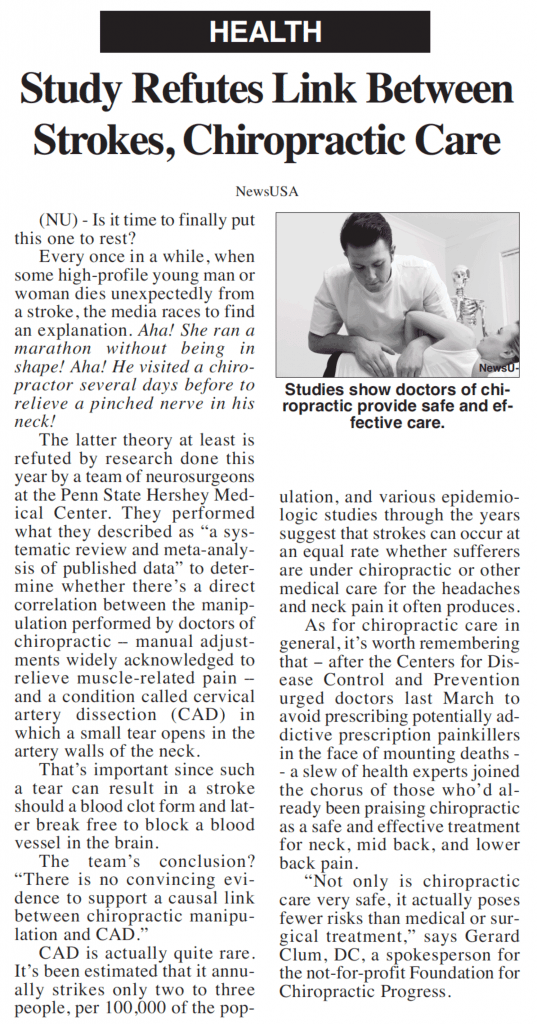
�Do chiropractic adjustments cause arthritis or even strokes?�
With media scrutiny over natural health procedures, specifically chiropractic and cervical adjustments, these are very important and serious questions, especially when one�s health is a priority. As a practicing chiropractor, I welcome the opportunity to address these questions. Chiropractic care is profoundly safe, and this article summarizes the current research, providing answers to these common questions and misconceptions.
Myths vs. Facts
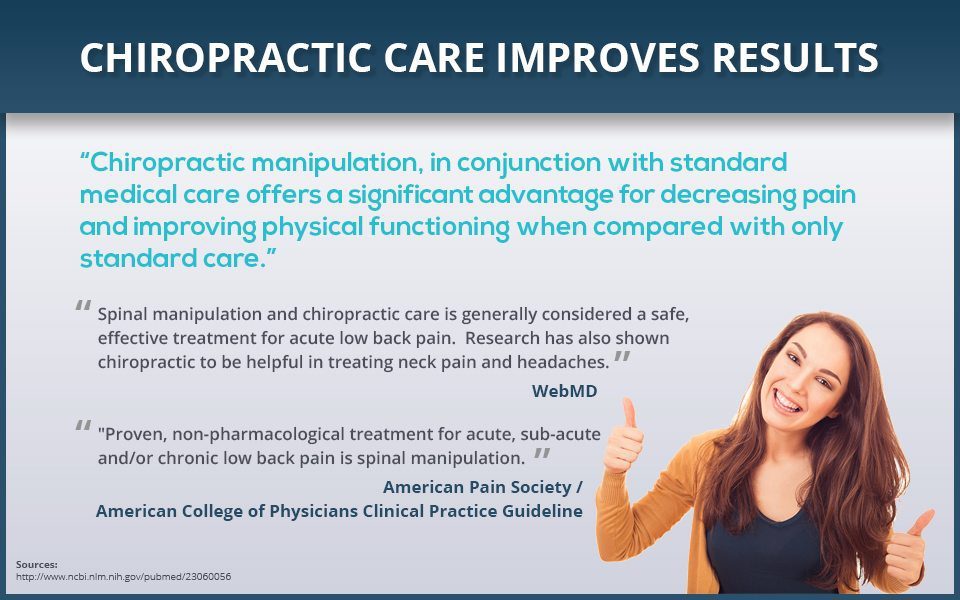
In 1990, when I started working in the chiropractic profession, a common concern that patients had about chiropractic care was that �too many adjustments would cause arthritis.�� Years later, science has affirmed what chiropractors have always seen and known to be true in clinical practice � that in fact chiropractic care is not only one of the most popular forms of care for people with arthritic conditions but one of the most effective.
Unfortunately, for hundreds of years, health care practices have been permeated by folklore, sometimes known as �old wives tales.�� The trend continues today.� A 2010 study of over 1,000 board-certified American pediatricians found that over 75% of the doctors subscribe to at least one known health care myths. These include the myths that eating chocolate causes acne, listening to Mozart will make a baby smarter, and swimming within 30 minutes of eating is not safe.� Many doctors in this study were also found guilty of not knowing the expected protocols for treating burns, healing wounds, administering Aspirin to children, and safely dealing with seizures.
A review of the current literature indicates that frequent or extreme complications of chiropractic care should also be included in the list of the most common medical myths prevalent even in our medical offices.
Chiropractic vs. Traditional Care Preventing Back Pain
Spinal Care vs. Chiropractic Care
The spinal column�s role in overall health cannot be undermined as it houses the brainstem, spinal cord, and central nerve system.� Thus, for optimal health the spinal column must be examined and cared for by a skilled doctor.
Specifically, the foundation of chiropractic care teaches that damage to the spine, and misalignments of the vertebrae (subluxations) create interference in the nerve system, which are therefore reduced and corrected through specific chiropractic adjustments.
On that basis, chiropractic adjustment techniques have historically been rooted in precision and accuracy.� Although there are now many unique chiropractic techniques taught in professional schools and in continuing education, these techniques commonly focus on the evaluation and measurement of subluxation patterns in the spine and the specific protocols used to reduce the areas of misalignment.� In contrast, most other health care practices addressing the spine, never mind non-medical procedures attempted at home, are for the most part, generalized treatments of pain, global mobilizations of joints, and overall tractions of entire regions of the spinal column.
Receiving a specific chiropractic adjustment to reduce a subluxation is immensely different from receiving any form of �treatment� on the spine.� Admittedly, I did not understand this practice in my first 20 years of receiving chiropractic adjustments.� Until I attended chiropractic school and learned the techniques and analyses used in chiropractic science, I thought that chiropractic adjustments were all one-of-the-same.� I can understand how the general public might also construe this misconception � I did and I grew up in a chiropractic family.� Subluxations and adjustments are specific; the more extensive the analysis used by the chiropractor, the more precise the adjustment, and thus the better improvement in the patient�s health.
In my experience, the majority of the �chiropractic horror stories� shared in folklore, and even many of the cases cited by medical research, fall into one of two categories:
(a)��� The case of a the patient receiving care without extensive and correct analysis
(b)�� A person receiving spinal care incorrectly identified as �chiropractic care� administered by someone other than a licensed Doctor of Chiropractic
In fact, a 1995 report in the Journal of Manipulative and Physiological Therapeutics revealed that many �manipulations,� incorrectly attributed to chiropractors, had been rendered by non-chiropractic professionals including GPs, osteopaths, and physiotherapists, and even laypeople including a wife, a Kung-Fu practitioner, a blind masseur, and an Indian barber. Therefore before someone suggests they were hurt or injured by a �chiropractor,� it is imperative to learn more about their experience.� In all likelihood some level of scrutiny was overlooked � or they weren�t seeing a licensed chiropractor at all.
Modern chiropractors use advanced technological analyses such as X-ray, surface electromyography (sEMG), thermography, and digital postural analysis, along with traditional chiropractic methods of motion and static palpation, leg length analysis, and visual postural inspection to make a diagnosis and determine the appropriate adjustment.� Naturally, to use layman�s terminology, if a patient presented to the chiropractor with a low left hip, and the chiropractor adjusted the left hip �even lower,� the patient would get worse.� For this reason, your Doctor of Chiropractic is not only highly trained but expected under every state and provincial law to thoroughly assess your spine and condition prior to making recommendations or giving adjustments.
MRI Scans Show Immediate Benefits of Chiropractic
What about stroke?
Since the 1990s, the most extreme fallacy about chiropractic care is that �adjustments of the cervical spine cause strokes.�� As a practitioner, I am pleased to observe greater inter-professional cooperation between physicians and chiropractors, but I am disappointed by the increasing number of patients who have consulted me following a discussion with their medical doctor and told to �not get their necks adjusted.�
A basic understanding of the origins of chiropractic care, and the critical function, anatomy, and physiology of the central nerve system demonstrates why the suggestion that patients should �not get their necks adjusted� is absurd.� While chiropractors are concerned with the reduction of nerve system stress caused by spinal subluxations throughout the entire spine, one must understand that all spinal nerves first pass through the upper cervical spine.� Therefore, interference to the nerves passing from the brain through the spinal cord to any area of the body could occur either at the associated spinal segment where the peripheral nerve exits the spinal column, or at any place higher, including the upper cervical spine.� Historically, Dr. B.J. Palmer, who developed the modern chiropractic profession, focused the majority of his research and efforts into the reduction of upper cervical spine subluxations, expressing that upper cervical subluxations were the foremost cause of disease and dysfunction compared to other subluxations in the spine.8 Years later, science continues to affirm the importance of upper cervical alignment.� It has been demonstrated that abnormal cervical alignment is a leading cause and an almost universal finding related to not only cervicogenic pain and headaches, but also the development of scoliosis9,10 and even sudden infant death syndrome (SIDS). This awareness of the basic physiology of the nerve system is enough to understand the utmost importance of reducing subluxations in the cervical spine, above all other areas of the nerve system.
The �stroke hypothesis� stems from the theory that the irritation of the vertebral arteries, which pass through the cervical vertebrae, could lead to an ischemic stroke by causing accumulated plaque in the arteries to be dislodged.� As strokes may cause serious, permanent impairments in a person�s health, there has naturally been much interest and research in this topic.
Consider how plaque develops in the arterial system of the body.� Exposure to the known risks of poor diet, alcohol consumption, and smoking over a period of many years may cause molecular plaquing in the arteries, and it is true that when those molecules become dislodged, they can affect the brain, which is known as a stroke.� Unfortunately, your family doctor or your chiropractor can�t prevent this from happening � you would need immediate emergency medical attention in hospital to prevent this from occurring.
Warning signs that a stroke may be about to occur include upper back pain, neck pain, and headaches.� Naturally, people dealing with these symptoms may consult their chiropractor, hoping for a resolution of pain.� Many may also consult their MDs and/or other trusted health care providers.� Unfortunately, such pre-stroke symptoms as back pain, neck pain, and headaches may not explicitly appear to be the early stages of a vascular incident without the �red-flag� accompanying symptoms of blurred vision, dizziness, slurred speech, facial drooping, and lack of coordination.� Therefore, as it is not standard practice for chiropractors or medical physicians to refer every case of back pain or headaches to the emergency room, patients may receive chiropractic or medical intervention without knowing that a stroke is ensuing.
When is a chiropractor or medical doctor negligent?� If a patient visits the doctor�s office with neck pain and headaches while showing the classic signs of stroke (slurred speech, dizziness, poor coordination, etc.), the doctor is obligated to identify this and ensure that a stroke is not about to happen. �If, after examination, a doctor identifies that a stroke may be forthcoming, the doctor must see that the patient receives the necessary immediate medical attention.� Doctors who do not rule out the possibility of an imminent stroke or do not ensure necessary medical attention if a stroke is indeed forthcoming, would indeed be negligent � but this is very far from �causing� the person�s stroke, whether or not any treatment was rendered.
In fact, although a chiropractic adjustment would not slow down the incidence of the stroke, 2008 research shows that it would no more accelerate it than a visit to the medical doctor.� In an article published in SPINE, a multi-disciplinary team of researchers found that while strokes are very rare events in the general public, there was only an increased correlation between chiropractic visits and the occurrence of stroke, due to patients with headaches and neck pain seeking care before their stroke. Notably, the correlation of medical visits and strokes matched that of chiropractic visits and strokes; neither form of care was shown to increase the risk of stroke.� In either case, the unfortunate patient was headed for a vascular incident.� The occurrence of a stroke after a visit to the chiropractor (or the medical doctor) provides no association of cause, only correlation.
Is your chiropractor required to warn you about the possibility of a stroke with a chiropractic adjustment?� Interestingly, Dr. Christopher Kent, who is an attorney, independent researcher, and president of the Foundation for Vertebral Subluxation, has expressed that �such informed consent must be based on appropriate information and since there is no scientific evidence that chiropractic adjustments or neck manipulations actually cause strokes, it is inappropriate to require a doctor to suggest that such a risk exists.� Nevertheless, most state and provincial laws require Doctors of Chiropractic to disclose a remote risk of stroke to their patients, for this is common practice for �material risks� even when the likelihood of occurrence is very small.
Long-term Benefits of Chiropractic Care
Rather than study isolated reports of adverse incidences which may (or may not) occur within one visit to the chiropractor, it is more revealing to measure the long-term benefits of chiropractic care.� Ultimately, studies consistently demonstrate that a healthier spine relates to a healthier person.
Beyond symptomatic relief, a growing number of chiropractors place emphasis on corrective care and spinal hygiene, to maintain and promote the health of the spinal column and nerve system.
Without maintenance of spinal health, we now know through numerous studies that posture misalignment not only affects neurology but also the vascular system.� A 2004 study revealed that older men and women with hyperkyphotic postures have increased rates of death, specifically associated with increased atherosclerosis. With atherosclerosis increasing the incidence of an ischemic stroke, it is only logical for health-conscious individuals trying to prevent strokes to maintain healthy posture through chiropractic care.
Further, whereas a 2005 study showed that the reversal of the normal cervical curvature results in vascular changes in the spinal cord, the maintenance of this proper alignment should be of highest importance to those interested in the prevention of vascular incidents.
Statistically, the incidence rates favour those individuals receiving chiropractic care.� In 1995, the Journal of Manual and Physiological Therapeutics published the risk of fatal stroke associated with chiropractic cervical adjustments.� Although no cause was shown in the article, the correlation is estimated to be 1 in 400,000 or 0.00025%.20 Newer studies suggest the risk may be as low as 1 in 6 million, 0.00002%. Notably, the National Center for Health Statistics indicates the mortality rate from stroke in the general population is more than twice the rate of the most conservative estimates correlating chiropractic.� The risk in the general population is 1 in 175,000 or 0.00057%.
Not only is the risk of death from stroke after a cervical adjustment substantially less than the risk of fatal stroke in the general population, other long-term studies of chiropractic patients have shown:
Improved lung capacity, athletic ability, and vision
Better functional capacity, and reduced relapse of prior disability
Better overall health and greater activity levels
Enhanced DNA repair and enzyme activity; reduced impact of oxidative stress
Fewer hospital visits, reduced pharmaceutical costs, and medical expenditures
Improvement in health, wellness, and quality of life
The Final Verdict: Malpractice Claims
Lastly, as it is always possible that research could be slanted based on who was conducting it, perhaps the best measures of safety are the malpractice insurance costs for chiropractors and the actual frequency and success of claims filed against them.� No one pays closer attention to injury statistics than Malpractice Insurance carriers.
According to the Canadian Medical Protective Association, annual malpractice rates for Ontario medical doctors range from $1,572 for the family physician and $7,332 for the neurologist, to $44,520 for the Obstetrician.30 By comparison, the Canadian Chiropractic Protective Association�s standard rate for chiropractic malpractice insurance is less than $1,300 per year.� Notably, the first-year doctor of chiropractic is extended a new member discount of approximately 50% (as opposed to an increased premium), not reflecting any greater risk for a patient seeing a doctor with less experience.
American rates reflect the inter-professional differences to an even greater degree.� Whereas the U.S. physician could pay $25,000 to $50,000 per year for malpractice coverage, U.S. chiropractors pay annual rates less than $5,000.32,33 The chiropractic profession has a well-established record of safety and efficacy, and the chiropractor�s malpractice insurance rates remain among the lowest across health professions.34 The varying rates are directly related to the risk involved in the doctors� procedures, the claims filed against them, and the likelihood of future lawsuits.
Although they are sensationalized in the media when they do occur, claims against chiropractors are very rare.� Your chiropractor�s office consistently proves itself to be one of the safest health care facilities you can choose for your family.
Moving Forward
Unquestionably, there have been decades of misinterpretations, and unfortunately chiropractic myths have been passed down through generations.� Certainly, professional bias has also played a role in the public�s misunderstanding of the safety and efficacy of chiropractic care.� (The U.S. Court of Appeals determined in 1990 that the American Medical Association had engaged in a �lengthy, systematic, successful and unlawful boycott� designed to restrict cooperation between medical doctors and doctors of chiropractic.)� Fortunately, we are long past that day. �What you would hope to find in the 21st century are cooperative teams of health care professionals working together for your benefit.
My personal recommendation is to seek a chiropractor who not only uses current technology and techniques to analyze and render care to his or her patients, but also is willing to engage in dialogue with your other health care providers.� I recommend the same when choosing an M.D.
With this better understanding of chiropractic myths and the benefits of maintaining a healthy spine, I trust that you can comfortably move forward, integrating chiropractic care into your wellness lifestyle.
CHIROPRACTORS HAVE CLAIMED FOR YEARS THAT WE CAN BE MORE COST-EFFECTIVE. BCBS HAS THE DATABASE THAT WOULD PROVE OUR THESIS, BUT THERE SEEMS TO BE A RELUCTANCE TO ALLOW OUR PROFESSION TO ACCESS THE DATA THAT WOULD PROVE US RIGHT.
In August 1999, Blue Cross/Blue Shield (BCBS) of Kansas presented a study titled �Lumbago Treatment.� This data was made available from a new program installed by BCBS called the McKesson Episode Profiler.
This program gave BCBS the ability to sort data according to specific diagnoses and compared the costs, frequency, and other factors between peer groups.
The data revealed that while less than eight percent of the study group were chiropractors, 38 percent of the patients chose to seek chiropractic care rather that allopathic medicine. This fact indicates that patients desire and are satisfied with the management techniques of the chiropractor.
The study did not include any hospitalization costs for surgery or any fees paid to orthopedists or neurosurgeons for costs associated with surgery. If the data included costs for these procedures, the savings for chiropractic would have been much greater.
When sorted by the average cost per episode, chiropractic is more cost-effective than anesthesiology; neurosurgery; neurology; registered physical therapy; orthopedic reconstructive surgery; physical medicine and rehabilitation; and rheumatology.
The greatest cost-effectiveness of chiropractic is demonstrated when one considers the global cost of allopathic care. The physical therapist can only receive referrals from an allopathic provider. An allopath can only write prescriptions. The allopathic provider primarily orders surgeries, nerve conduction tests MRIs, and CT scans. Hospitalization charges are totally allopathic charges that cannot be associated with chiropractic. When these charges are considered, the tremendous economy of chiropractic management becomes indelibly clear.
The majority of chiropractic charges were associated with the basic office-treatment-related services performed. Eighty-nine percent of the chiropractic charges were for services related to the treatment, while only 45 percent of the family practice costs were related to treatment of the condition. The remainder of the costs were for expensive diagnostics.
Patients who visit the family practice provider have about a 15 percent chance that they will have a MRI or CAT scan. These services cost an average of over $1,000 and provide no treatment, only a diagnosis.
For each 100 episodes, the chiropractor provided 265 modalities. For each 100 episodes, the registered physical therapist provided 885 modalities: over three times as many units of physical therapy provided by RPTs than chiropractors. This is a cost that has to be globally charged to the family practice providers, since patients cannot access RPTs without a referral from a medical doctor.
Registered physical therapists provided 303 office visits per 100 episodes, compared to 255 by the chiropractor. When RPTs are combined with the other allopathic portals, there are 598 office visits per 100 episodes. Therefore, the myth claiming chiropractors treat the patient more than the allopathic portals is obviously just diversionary, and not based on facts.
Patients had a willingness to return to the chiropractor that was 22 percent greater than the combined totals of allopathic portals. This indicates a level of satisfaction that is demonstrated by the patient�s willingness to return, based on results and confidence.
The BCBS lumbago study demonstrates that chiropractic is not only cost-effective but also quality effective. Adding chiropractic services would only decrease the cost to the plan. What is hard to explain is the prejudice against chiropractic in the design of BCBS plans, and their reluctance to push the study and analysis of the data to the next level. It almost seems as though there is a fear that exists in the minds of those in positions of power, preventing them from presenting the cost comparisons with the global cost of allopathic portals to chiropractic. Chiropractors have claimed for years that we can be more cost-effective. BCBS has the database that would prove our thesis, but there seems to be a reluctance to allow our profession to access the data that would prove us right.
I guess the million-dollar questions are �Why?� and �What are they afraid of?� Perhaps it is the fear of knowing how to handle the data once it proved that chiropractic was more cost-effective. Perhaps it is getting past the mindset that adding chiropractic benefits is going to increase reimbursement levels. Perhaps they cannot see that there would not be a cost increase but a cost savings from directing patients to more cost-effective portals. Allowing osteopaths to treat broken arms did not increase the number of fractures; it simply shifted the point of access to treatment. Likewise, allowing patients to freely access chiropractic services would not increase the number of spinal related injuries; it would simply allow the patient access to desired and more cost-effective services.
I imagine that BCBS of Kansas regrets releasing the amount of information they already have. There seems to be a reluctance to push the analysis of the data to the next level. It is now up to the profession to �hold their feet to the fire� and push for more data to support the fact that chiropractic can be more cost-effective.
“Lumbago Study”�reveals 38 percent of patients chose to seek chiropractic care rather that allopathic medicine. This fact shows�that patients desire and are satisfied with management techniques of chiropractic care.
IFM's Find A Practitioner tool is the largest referral network in Functional Medicine, created to help patients locate Functional Medicine practitioners anywhere in the world. IFM Certified Practitioners are listed first in the search results, given their extensive education in Functional Medicine







 Most people don�t go to a