by Dr Alex Jimenez DC, APRN, FNP-BC, CFMP, IFMCP | Chiropractic, Chronic Back Pain, Nerve Injury
Doctor of Chiropractic, Dr. Alexander Jimenez breaks down how pinched nerves cause back and neck pain.
You hear people say it a lot:
�I have a pinched nerve, and wow, it hurts.�
But what exactly is a pinched nerve? How does it cause back pain or neck pain? What are the symptoms of a pinched nerve�beyond pain? And most importantly, what can you do about a pinched nerve? Learn the basics of pinched nerves here.
Pinched Nerves: A Common Cause of Back & Neck Pain
What Is A Nerve?
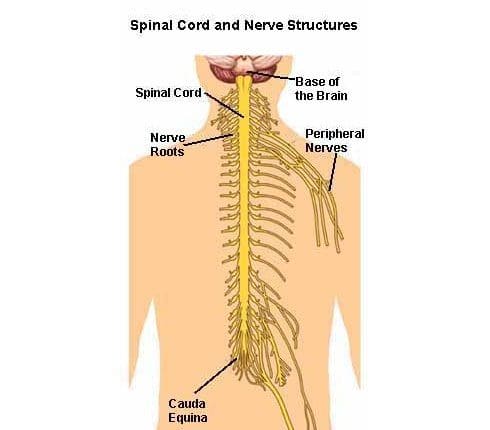
Nerves are your body�s messengers. They transport signals to and from your brain�messages like �Move this toe� or �Ouch, that cactus needle really is sharp.� You have a central nervous system, which is made up of your brain and spinal cord. You also have a peripheral nervous system, which is the system of nerves that branches off the brain and spinal cord.
What Do Nerves Look Like?

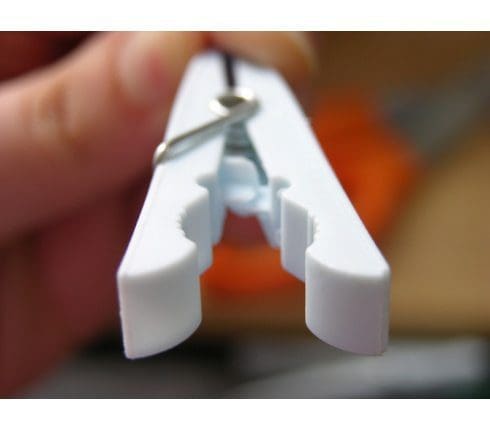
If it helps, think of nerves like a garden hose (except they aren�t green). They have an outside membrane that transports those electrical messages. Inside nerves, there�s a fluid that nourishes and replenishes the outer membrane.
You�re Getting on My Nerves

When a nerve gets pinched, the messages and the nourishing fluid don�t flow quite as well as they should (still helpful to think of a garden hose here). A pinched nerve can start sending the �Ow, pain� message to the brain, and it can also have trouble communicating clear messages, possibly leading to weakness, numbness, or tingling.
What Can Pinch a Nerve?
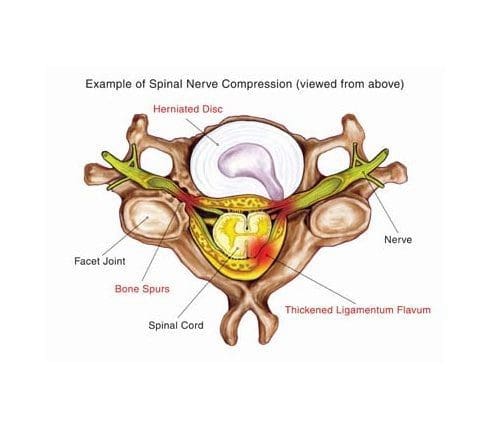
As a nerve exits the spinal canal, it can be pinched by a herniated disc or a bone spur. Bone spurs, also known as osteophytes, are bony bumps that can develop on a spinal joint over time. They can push into the spinal nerve, as you can see in this illustration (red = pain generator, of course).
What Does a Pinched Nerve Feel Like?

A pinched nerve mostly feels like pain. If you have a pinched nerve in your low back, it can cause pain to travel (or radiate, in doctor-speak) down your leg. You may also know that as sciatica. A pinched nerve in the neck can create pain that shoots down your arm. Other symptoms of pinched nerves include muscle spasms, burning, tingling, and a hot/cold sensation.
Now the Good Stuff: Pinched Nerve Treatments

Pinched nerve treatments fall into two categories: what you can do at home (self-care) and what your doctor may prescribe for you.
Pinched Nerve Self-care #1: Heat and Ice

Heat and ice can work wonders on a pinched nerve. Switch between 20 minutes of heat and 20 minutes of ice�and remember that you shouldn�t put the heat and ice packs directly on your skin.
Pinched Nerve Self-care #2: Get a Massage

The muscles around a pinched nerve can become tight, so having a professional massage therapist work the painful area can bring pain relief. You may also consider a handheld massager.
Pinched Nerve Self-care #3: Take a Walk

Let�s say it�s your low back�a pinched nerve in your low back�that�s hurting you. A nice, easy stroll is a good way to stay active and address your pain. Gone are the days of extended bed rest for back pain: doctors now are more likely to recommend you exercise and stretch to help relieve your pain.
When Should You Call a Doctor?

If you try the self-care thing and yet your pinched nerve pain persists, you should consider calling the doctor. If you�ve been in pain for more than a couple of days, schedule an appointment. You should also call the doctor if you experience a very sudden onset of weakness, or if you experience profound numbness. Losing bowel and/or bladder control is also a good reason to call the doctor.
How a Doctor Treats a Pinched Nerve

The doctor will try to diagnose the cause of your pinched nerve, and then the doctor will be able to develop a treatment plan. That plan may include prescription pain medications, physical therapy, or cortisone injections. But keep this in mind: the treatment plan will be specifically tailored for you, and it�s in your best interest to follow it closely.

by Dr Alex Jimenez DC, APRN, FNP-BC, CFMP, IFMCP | Chiropractic, Lower Back Pain, Sciatica
Doctor of Chiropractic, Dr. Alexander Jimenez looks at high heels at what they do to the back.
Ladies, ever wonder why you suffer from regular bouts of lower back pain?� Achy hips?� How about crazy tight leg muscles?� Don�t blame it on your cycling class, or too many squats or, the trainer you only see once or twice a week.� Look down.� Are you wearing high heels?� Bingo!� You�ve heard high heels are bad for you.� But it�s not just because they cause all kinds of pain and trauma to your feet.� High heels are also messing up your physical fitness. �They throw you out of proper postural alignment causing your joints and spine to take on more�wear and tear, which means aches and pains.
Is it possible to still look rockin� and save your joints? �My suggestion is more Athleisure-wear. �I know some fashion hard-liners say, no way will I walk around in yoga pants on a weekday!� But we�ve come a long way since those flare-leg, fold-over yoga pants.
Let�s chat for a moment about the evils of high heels.
First there�s the obvious.� They make your feet hurt.� Blisters, calluses and swelling are par for the course.� And pointy toes, fuhgeddaboutit!� I�m sure they were invented by someone on the Marquis de Sade�s payroll.� Second, they can lead to foot injuries like plantar fasciitis (usually from a bone spur that makes your heels hurt), hammertoes, bunions, and neuromas.� �Then there�s the domino effect.
Not only do high heels make your feet hurt, but problems with the feet can travel up the leg and cause injuries in the back, knees and hips. �Your knees take on extra pressure from the weight being pushed forward onto the balls of the feet. �Walking in this position makes your hip flexors and calf muscles short and tight. �And it doesn�t stop there.� Back problems are incredibly common in women who don�t give up their high heels.
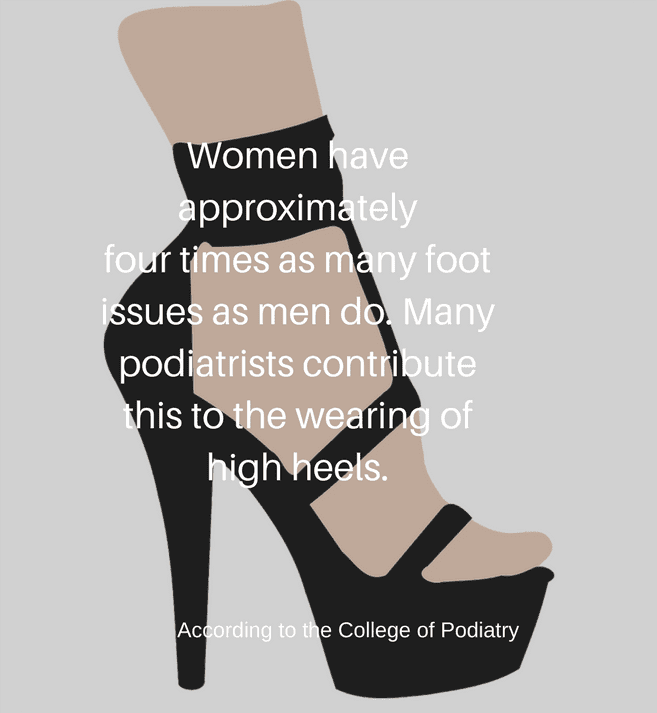
Back Problems are incredibly common in women who don�t give up their high heels
Here�s why:
ext”>
- Postural changes:�The S-curve of your spine has cushiony discs in between the vertebrae that act as a shock absorbers to protect them from stress. Like when you�re bending or jumping. �Wearing heels causes the lower back to arch more than normal because the body weight is pushed forward.� To compensate, the upper body has to lean back to maintain balance.� This puts extra stress on the discs. ��Spending hours with your body in funky alignment can lead to muscle spasms and back pain. �Tight hamstring muscles, which�attach to back of the pelvis and lower back, can also make your back ache.
- Anatomical changes: Wearing high heels on a daily, or very regular basis, over years, can actually cause anatomical changes to your body.� In addition to the extra strain on your back and knees, the calf muscles can also shorten and the tendons can get tighter and thicker.
And It Can Get Even Nastier If You Get One Of These Spine Injuries:
- Spondylolisthesis: it�s a mouthful, but is a common injury that can happen in the lower back from too much hyperextension (arching the back).� It�s when one vertebra slips forward over another.
- Foraminal stenosis: I have this one congenitally and it sucks. This is a spine and nerve issue that occurs when anatomical abnormalities reduce the spaces the nerves travel through as they exit the spinal column.� The spaces are called foramina, and when they get blocked, the nerves get squeezed.� The pain can radiate through the buttocks and down the legs.� Symptoms are shooting pains, numbness, tingling, muscle weakness, spasms and, or cramping.
- Sciatica: �The sciatic nerve is the longest one in the body. �It runs from the bottom of the lumbar spine all the ways down the legs. �When the sciatic nerve gets compressed it causes radiating pain, tingling, numbness and muscle weakness down the leg and can The pain can travel all the way to the bottom of the foot.
What Can You Do? �My Case for Athleisure-Wear To Combat Back Pain

It�s time for stuffy office attire to retire. �Comfy clothes and flat shoes can be very chic. �Have you seen the boards on Pinterest?� Thanks to this hopefully permanent fashion style, my jeans and heels spend more time in my closet than on my body.� Leggings and cute kicks are my go to�s.� Night out?� No prob.� I reach for my sleek workout leggings, a ruched top or off the shoulder top with some high heel sneaks (they�re wedges so not nearly as bad for you). �I also discovered these by Bluprint which I put to the test at 2 huge conventions where I walking and standing for hours on end.� The soles made of memory foam � like those beds!
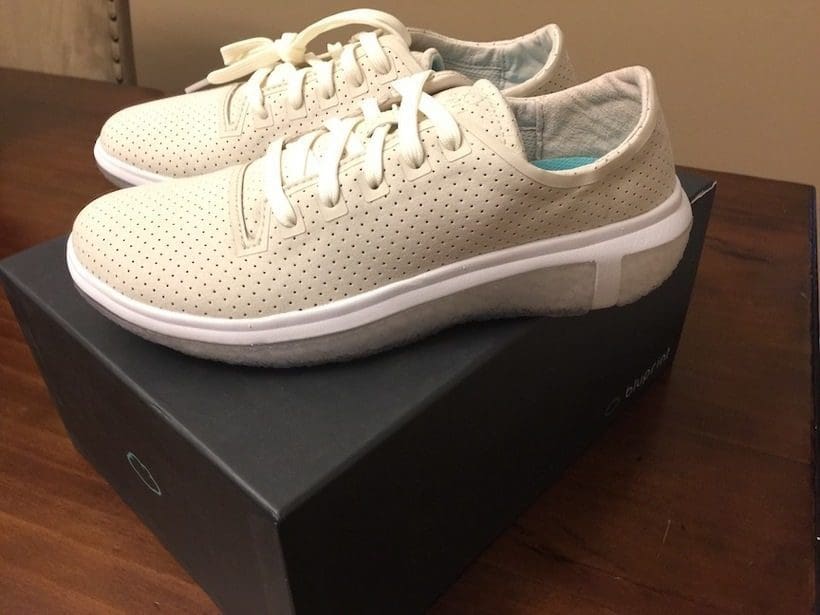
My podiatrist friend, Steven Rosenberg, DPM has been preaching the need for comfy shoes to his female clients for years. �(Fortunately for his practice, not everyone listens!) �Dr. Steve says, wearing shoes designed more for comfort can help you live more pain-free. ��Because comfort shoes are made of�soft cushiony materials�with soft foam innersoles, those are what you should turn to for shopping, walking or standing for long periods of time to avoid�blisters, muscle spasms or arch cramps.� � He also says to check for arch support in your shoes. �If there�s none, you can buy ones to put inside.

Even after reading this, you may still not be willing to give up high heels for good. �Me either.� I still get glammed up once in a while.
Here Are Some Tips For When You Must:
- Wear them for as little time as possible.
- Try to opt for heels around 2� high
- Steer clear of pointy toes.
- Buy shoes with leather insoles to so your foot doesn�t slide.
- Buy arch inserts or use orthotics to support your arches.
- Vary your footwear so you�re not wearing high heels every day.
- Gradual or lower slopes are a little better, go for platforms or wedges instead of stilettos
- Thicker heels are better than spiky heels
- Stretch and strengthen the overworked muscles.
Here�s How:
- Stretch your leg muscles and hip flexors before and after wearing heels.� For the calves, stand on a step and let one heel hang down until you feel a stretch.
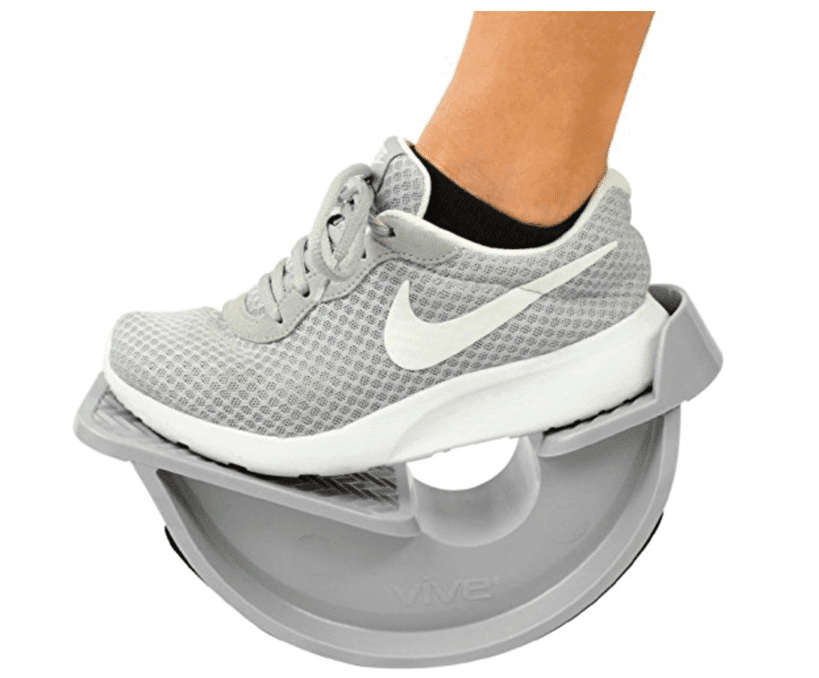
Try this convenient device, the foot rocker by Vive.� It stretches the calf and the sole of the foot relieving pain from plantar fasciitis.
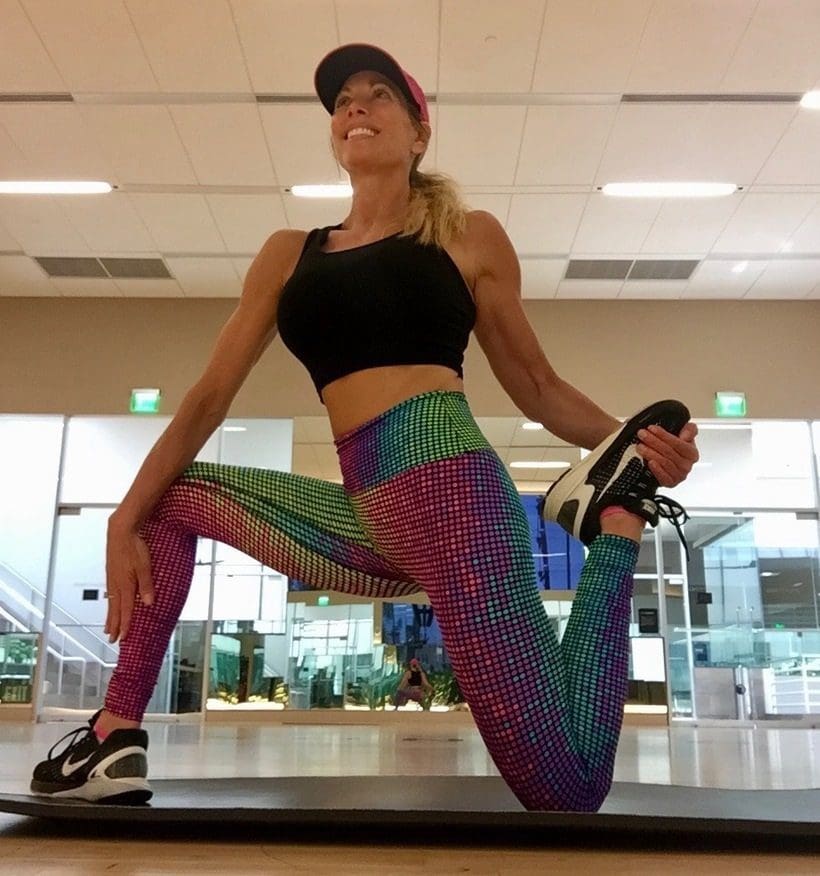
Front of the hip and thigh stretch for before and after wearing high heels
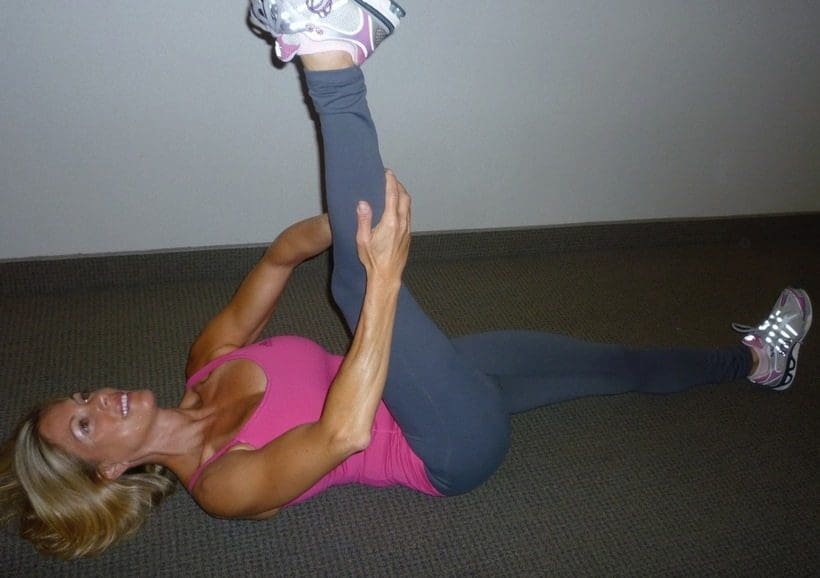
Hamstring stretch for before and after wearing high heels
- Massage and stretch the muscles in the soles of your feet.� Roll your foot on a golf ball before and after wearing heels and, get regular foot massages.
- Strengthen and increase the range of motion in your ankles and feet.� Put a rag on the floor.� Using your foot, write the letters of the alphabet.� Also put a bunch of marbles on the floor.� Pick one or a few of them up using just your foot.� Put them down about 6 inches away without lifting your foot off the floor.� Try that 10 times.� If you don�t have marbles, you can do it with a hand towel.

So next time you�re shopping for shoes, think about your foot fitness first. �Look for fashion that keeps you closer to the ground and that will hopefully keep you farther away from the doctor.

Call Today!

by Dr Alex Jimenez DC, APRN, FNP-BC, CFMP, IFMCP | Athletes, Chronic Back Pain
Doctor of Chiropractic, Dr. Alex Jimenez examines Tiger Woods’ and his latest back surgery.
We have a look at Tiger Woods’ extensive history of injuries during his career. USA TODAY Sports
Tiger Woods Won�t Be Back For Some Time
Woods, that has made just three starts in a couple of years, likely won�t play again this year after he’d his back surgery that is fourth in Texas. The latest procedure alleviated pain in his back and leg, Woods announced on his web site Thursday.
That I’m confident this will relieve my back spasms and pain, and The operation went well,� Woods said in a statement. When fixed, �, I anticipate playing with my kids getting back to a normal life, competing in professional golf and living without the pain I’ve been fighting so long.�
Woods, who also has had four surgeries on his left knee, first had surgery on his back and then had two procedures in the autumn of 2015.
According to his statement, a disc in Woods back seriously narrowed because of causing sciatica, the three surgeries and severe back and leg pain. During the recent operation, the damaged disc was removed and the collapsed disc space was elevated to levels that were regular. The goal is to relieve the pressure on the nerve, the statement said. The procedure was performed by Dr. Richard Guyer of the Centre for Disc Replacement at the Texas Back Institute.
A Look At Tiger Woods’ Injury History
RELATED:
About playing on Champions Tour, Tiger Woods jokes around
Woods, 41, last played in February, where he shot a birdie-free 77 in the very first round before removing. Where he missed the cut his only other start was in the Farmers Insurance Open the week prior.
His only appearance on the golf course in 2016 arrived at the Hero World Challenge in December. While he finished 15th in the 17-man field, he tied for the tournament lead in birdies (24), seemed healthy and upbeat.
Before beginning therapy, he will be resting for several weeks. The recovery interval is usually about half a year. That would mean Woods, a winner of 14 major tournaments and 79 PGA Tour titles, won�t play in any of the four majors for a second straight year. He is now rated No. 788 in the world.
Woods is in good spirits after the surgery, said his agent, Mark Steinberg.
USA TODAY Sports, he believes somewhat that the large weight was lifted off his shoulders,� Steinberg told. �The three previous operations were somewhat temporary repairs. But it got to the point where the pain was more common and this latest surgery was something he had to do.�
Steinberg said Woods decided to take a conservative approach along with his back previously three years with his difficulties. That alternative wasn�t accessible this time.

�This just isn’t a temporary repair,� Steinberg said. � his physicians proposed him that this is the top path to a healthy, energetic lifestyle. He and his children were playing but he was in so much pain.
�Now he �ll possess a healthy life without pain.�
One, Steinberg said, that can include playing golf.
�Entirely,� Steinberg said. �He desires to get out (on the PGA Tour) again.�
Woods� last public appearance ahead of the operation was Tuesday in Hollister, Missouri, where he pronounced he�s designing his first public golf course. The course will probably be called Payne’s Valley in honor of Missouri native Payne Stewart. Woods is a partner on the project with CEO Johnny Morris and Bass Pro Shops founder.
Tiger Woods Stories

Call Today!

by Dr Alex Jimenez DC, APRN, FNP-BC, CFMP, IFMCP | Chiropractic, Chronic Back Pain, Lower Back Pain
Doctor of Chiropractic, Dr. Alexander Jimenez looks at four ways of reducing back pain.
1. Understand The Way Your Spine Works
The best approach to take care of your spine and prevent back pain is to begin with a superb understanding of how the spine works. By understanding how your backbone works when you’re performing jobs that are day-to-day or moving during your day, you may be able to take care of your spine and keep it working for a long time with fewer problems and less back pain.
2. Incorporate Safe Body Mechanics Into Activities
Use good body mechanics during day-to-day jobs at home and work. What does that mean? Good body mechanics means while you go, keeping your back in a safe posture that is balanced. You can help to prevent back pain and injury, by remembering several easy notions. You should employ your leg and arm muscles when lifting and stooping �not your back muscles. Second, keep your back straight when bending and lifting. And last but not the very least, be sure to bend at your hips and knees, not at your waist.
An example of correctly bending at the hips and knees
3. Exercise On A Regular Basis
Regular care of stuff we possess helps to keep them working efficiently, with less effort and safely. Exactly the same is true of the back.
- Exercising on a regular basis really helps to keep up long term to a healthy back.
- Regular exercise helps to increase endurance and reduces fatigue.
But Don’t I Get Enough Exercise At Work?
Many people believe their occupations provide enough exercise�specially occupations which are physical and could include manual labor. Regrettably this really isn’t accurate. Individuals need daily exercise to state and strengthen their muscles to perform job tasks safely and efficiently.
Exercise could be fun! There are lots of types of exercise. One method when selecting to start a workout program to ensure success would be to pick some form of exercise that fits into your lifestyle. If exercise is accessible and convenient, you’ll be prone to continue exercising on a longterm basis. As an example, determining to swim daily or do water aerobics without easy use of a pool year round would make success less likely and consistency difficult.
A typical exercise that a lot of people start successfully with is walking. Walking just takes a superb pair of walking shoes, may be done any day of the year, and is usually simple to fit right into a daily program.
Remember, whatever type of exercise you decide on, always start out small (10 minutes vs 60 minutes), and slowly increase your own exercise time. This may help to make sure your success at getting started and sticking with a fitness plan. Add two or one stretching exercises, like a calf stretch, for your routine for one more benefit.
An example of a calf stretch
4. Fuel Your Body With Proper Nutrition
Eating a healthy diet supplies the fuel your body has to make energy. And energy must do work, meaning the jobs we do throughout the day, like work tasks and exercise. Appropriate nutrition also helps to maintain your ideal body weight. Weight management is a great way to restrain stress on the joints in your body, including the spine.
Unsure where to start to understand about proper nutrition and establishing a healthier diet for you personally as well as your lifestyle? Then take a look at Introduction to Nutrition. By integrating these suggestions into your everyday life, you’ll be able to promote a healthier back�and lifestyle�for a long time.
Call Today!

by Dr Alex Jimenez DC, APRN, FNP-BC, CFMP, IFMCP | Auto Accident Injuries
Cycling is on the rise. Bike shares�are popping up in cities across the country. An increasing number of workers are commuting�on two wheels. And�more folks are pedaling for fresh air and fitness. The number one concern among all of them? Traffic�specifically staying safe when navigating streets busy with cars.
The good news is that a few bits of bike safety knowledge go a long way in keeping you out of harm�s way. Here�s how to avoid common causes of car-bike collisions.
Bike & Rider Visible
When a driver hits a cyclist, the first words out of his mouths are inevitably, �I didn�t see her!� Though the onus is on drivers�to be aware of their surroundings, you can take a few easy steps to make them aware that you�re there. This is especially important in low-light conditions, when accidents are most common. Stats show serious accidents happen most often between 6 p.m. and 9 p.m.
Get daytime running lights. The latest trend in cycling is to run daytime running lights�white in the front and red in the rear�just like motorcycles and many cars. Portable, rechargeable lights like Bontrager�s Ion 100 are intense enough that cars can see you from nearly a quarter mile away.�They also have a flashing mode, which gets the attention of distracted drivers. One study found that the incidence rate of bicycle accidents with personal injury to the rider was 19%�lower for riders using permanent running lights.�Well worth the 40 bucks they cost!
Wear reflective clothing.�It�s easy to blend in with the surroundings when you�re pedaling a skinny bike along the roadside. Create a contrast by wearing �hi-viz� clothing or accent pieces like vests, a helmet, and gloves that make you easier to see. Research shows it can lower your risk of run-ins with cars by 40%. When the light is dim, wear cycling-specific reflective accessories.
Be Predictable
Follow the rules of the road. Flow with (never against) traffic. Obey street signs, traffic signals, and road markings. Hold a straight line as much as possible (obviously skirting around obstacles like potholes and storm grates) and avoid weaving in and out of parked cars. Signal your intentions to turn�simply put your arm out and point�so cars know which direction you�re going.
Mind The Intersections
The majority of accidents happen in intersections. The most common scenario is a car turning right turns into you without seeing you. Other common scenarios include an oncoming car turns left into you as you�re going straight. Or a car simply pulls out into the intersection directly in front or into you. To avoid these, you can do the following:
Ride further left. Riders often hug the edge of the road as far right as possible. But in traffic, especially when you�re moving about the same rate of speed as the cars, it�s safer to move into the lane where you are fully visible. Riding in the lane is also smart when the road is simply too narrow for cars to pass you at a safe distance.
Stay out of the blind spot. When coming to a stop at a traffic light or stop sign, avoid stopping right next to the car to your left. The driver�can�t see you and may turn right into you. Stop behind the car�so you can see its blinkers. If the driver fails to use her blinkers, you’ll also be able to see the car turning before it turns into you.
Be cautious passing on the right. When you�re riding to the right of traffic, especially if you�re in a bike lane, you will likely find yourself occasionally passing cars on the right hand side, especially when traffic is slow. It�s best to avoid passing on the right. But if you do, be vigilant and keep your eye out for intersections, driveways, parking lots, and other places cars may be turning right (or crossing traffic and making a left from the opposite direction), so a driver doesn’t�inadvertently turn right into or in front of you.
Make eye contact. When at an intersection with cars coming in from either side, make eye contact with the drivers to be sure they see you before pulling into the intersection. If they don�t appear to see you, wave an arm to get their attention. (Lights help a lot here, too.)
To get our best wellness advice�delivered to your inbox, sign up for the Healthy Living newsletter
Check our our sister site: Biking Experts to learn more…
Give Yourself A Door Buffer
When riding past parked cars on your right, give yourself ample space to avoid being �doored� by someone opening their car door into traffic. It helps to keep an eye on side view mirrors, as well, since you can see cars that are occupied, where someone may step out without looking.

by Dr Alex Jimenez DC, APRN, FNP-BC, CFMP, IFMCP | Chronic Back Pain, Mind Body and Spirit, Wellness
Doctor of Chiropractic, Dr. Alexander Jimenez looks into Tai Chi for back pain.
Q&A with Tai Chi Specialist Dr. Paul Lam
While lots of people take a �no pain, no increase� approach to work out, that�s for handling back and neck pain not always safe or effective. That�s where tai chi comes in. This low-impact, slow moving form of exercise delivers results without the sweat and soreness. Though it�s tender and meditative tai chi promotes strength, flexibility, and balance�the trifecta to get a healthier spine.
In case you have back or neck pain�or you�re looking for methods to prevent it in the first place �tai chi may be worth investigating. To help answer common questions and shed light on lesser-known facts relating to this ancient Chinese mind and body practice, we reached out to Dr. Paul Lam, manager of the Tai Chi for Health Institute in Australia.
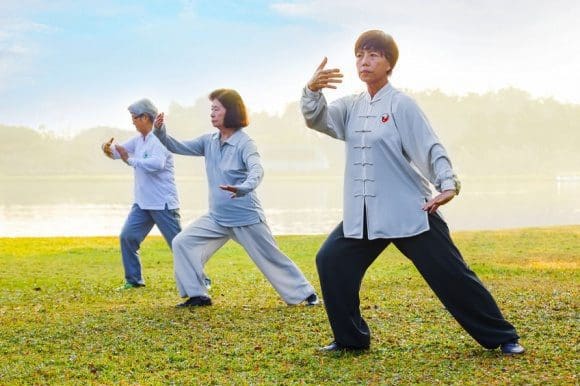
Tai Chi Can Help
Q: During your research, what has become the most insightful finding you�ve found about tai chi as it relates to back pain?
A: The most insightful finding in my research concerning tai chi involved the mental impact and the deep stabilizer muscles to back pain.
Ninety percent of men and women have back pain at some period in their own lives, and more than 60 percent of that is continual. I discovered that nearly all individuals with back pain, no matter what the cause, have poor stabilizer muscles. Research has shown that strong stabilizers will prevent back pain and hasten healing.
Reinforcing the stabilizer muscles that are back is quite similar to tai chi training. The main element is an erect pose, exercising the stabilizers through the pelvic floor along with the transverse abdominus muscles, and using abdominal breathing. This really is among the important reasons why tai chi works so well for back pain.
One other insight I�ve discovered involves your head. Anxiety makes pain worse. Oftentimes with the continuing and persistent back pain, the cause of the pain might have gone, but the pain continues. Like a phantom pain, the thoughts�s ingrained custom proceeds to provide pain signals to the brain. Tai chi trains body and the mind, making both integrated and more powerful. It is but one of the utmost effective tools to greatly help with the mental aspects of back pain.
Q: What�s your best advice for somebody who’s apprehensive about beginning tai chi?
A: The reason why they are apprehensive about beginning tai chi, it depends. I can guarantee them it is safe, simple to understand, and proven effective, if people believe tai chi is a martial art and might be overly hard to learn. Millions of people around the globe have learned and profited from it, although the other consideration is the fact that individuals might believe tai chi is too tough to learn.
Q: How do individuals get the most?
A: I advocate people to practice tai chi for 30�40 minutes daily (it may be performed in separate sittings) most days each week. You will gain significant improvement in your quality of life and relief from back pain.
Q: Do you have some success stories that are personal which you can share regarding the benefits of tai chi for back pain?
A: Thousands! But to pick on only one, I�ve comprised a letter below written by a woman named Amatullah from Saudi Arabia.
“In 2009, I ‘d back pain for quite a while. Nothing worked, although I attempted many types of therapy. My friend said, �Try tai chi, it’s a gentle exercise.� Because my back was sore, I refused at first, but I attempted it. It was really surprising to me how people from 35 to 80 years old could do the movements, when I couldn�t. I found to be able to steadfastly keep up their health, some of them had been practicing for up to 35 years. I understood they were much fitter and much more flexible than my parents, therefore I decided to learn it. I practiced in all weather, in the park every day. My back pain vanished and has never return.”
Q: Are there tai chi resources you can recommend?
A: Yes, the Tai Chi for Health Institute web site has many resources, including a summary of accredited educators around the planet.
Call Today!
by Dr Alex Jimenez DC, APRN, FNP-BC, CFMP, IFMCP | Chiropractic, Spinal Hygiene, Wellness
El Paso, TX. Chiropractor Dr. Alex Jimenez takes a look at chiropractors and�how they can act as an antioxidant through their practice.
The practice of chiropractic truly works on the grounds the work removes blockages to the body�s natural health and healing abilities, although most folks link chiropractors with pain management. This consists of removing pressure from nerves that relay signals from the brain to the organs and systems of the body.
Chiropractic Care Benefits
In 2005, a landmark study published in the Journal of Vertebral Subluxation (JVSR) found evidence that chiropractic care can reduce oxidative stress within the body.
Oxidative stress is the damage occurring when free radicals outnumber the body�s antioxidants. Oxidative stress damages all body cell components: lipids, proteins and DNA.
Oxidative stress plays a job in a whole host of diseases and ailments: Alzheimer�s rheumatoid arthritis, atherosclerosis, chronic fatigue syndrome, diabetes, heart problems, Parkinson�s disease, disease and many others.
Thiols are compounds within the body that act as antioxidants, reacting with free radicals to neutralize them. Serum amounts of thiols report scientists of Biomedical Diagnostic Research, Inc reflect DNA�s ability to mend itself, and can be used to measure aging and disease status.
In a 2003 study published in the Journal of Anti Aging Medicine, the scientists found low serum thiol levels with nine distinct categories of disorder and human disease in people.
The study published in JVSR consisted of 76 participants: one group received short-term chiropractic care; a second group received long term chiropractic care; and the 3rd group received no chiropractic care.
After qualifying for age, gender as well as the usage of nutritional supplements, the participants that received chiropractic care for 2 or more years that were healthy had higher serum thiol levels than people that have disorder. Some of the chiropractic patients had serum thiol levels higher than what is linked with wellness that is ordinary.
Chiropractor Dr. Christopher Kent explained: �Oxidative tension, metabolically creating free radicals, is a broadly accepted theory of how we age and grow ailment.�
�Going through life,� we experience chemical, physical and psychological stress. These pressures change the function of the body’s nervous system. We hypothesized that oxidative stress could affect and DNA repair on a cellular level.�
�Chiropractic care seems to improve the power of the entire body to adapt to anxiety,� concluded Kent.
Call Today!
Sources
Medical News Today (2005)
Journal of Anti-Aging Medicine (2003)
Medical News Today (2010)