Finding the right physical activity that elevates heart rate and maintains it for 30 minutes a day increases the amount of oxygen delivered to the heart, brain, and muscles. Some form of aerobic activity will keep individuals moving in a healthy direction. This benefits the:
Heart
Muscles
Mood
Self-esteem
Amount of energy
It helps to lower:
Blood pressure
Cholesterol
Blood sugar
Body fat
Anxiety
Depression
Fatigue
Finding What Works For You
Doctors and health experts agree that individuals need to perform normal/moderate activity balanced with vigorous/intense activity. Some ideas for both types include:
Sports – soccer, field hockey, tennis, basketball, flag football, volleyball
Hiking
Cycling
Mountain biking
Skating and skateboarding
Horseback riding
House and Yard Work/Chores
Moderate house and yard work exercises:
Sweeping
Vacuuming
Mopping
Washing the car by hand
Sweeping the garage, walkways, sidewalk, or patio
Mowing the lawn
Raking the lawn
Labor intense gardening
Vigorous house and yard work exercises:
Shoveling dirt, rocks, etc
Carrying groceries upstairs
Carrying boxes
Moving furniture
Cleaning and organizing the house
Mix it up
Finding the activities that work for you are important. But mix them up, so you don’t get bored and tired of them. For example, if getting bored with walking, try a light aerobics class, dancing, or something similar.
Try new routes for walking and biking.
Change the room for exercising or stretching.
Exercise at different times, so it doesn’t just become a chore.
Mix up the amount of time exercising. Do a full 30 minute or longer workout one day, then break the workout into smaller 15, 10, 5-minute workouts other days.
Having options allows you to pick and choose what suits your mood and schedule.
Job Physical Activity
If job occupation includes sitting for long periods, try adding short bursts of activity throughout the day:
If the commute permits, walk, jog, or bicycle to work.
Park several blocks away or the furthest in the parking lot to get some walking in.
Use the stairs instead of the elevator for a few floors.
Get coffee or use the bathroom on another floor using the stairs the farthest from the office.
Need to talk to a coworker, take a walk to their office or station instead of e-mail or phone.
Finding breaks to take quick walks and stretch out.
Get Involved In Competition
Competition can motivate individuals as it:
Requires specific and measurable goals to work toward. An example could be training to walk or run a race.
Learning the details of an event and preparing/training can generate or restore the excitement and challenge of the activity.
Instead of entering a competition, an individual can help with organizing and planning. This can provide friendship with other individuals interested in the same activity that can lead to working out together and staying motivated.
CrossFit Training
CrossFit training is a combination of various exercises to work out various muscle groups. CrossFit can be beneficial because:
It prevents boredom by providing a variety of workouts.
It helps maintain balance among various muscle groups.
For example, runners that have powerful leg muscles cross-train to strengthen the upper body.
It reduces the risk of injuries because the combination of exercises allows muscles to recover while working out a different set of muscles.
Whatever the case, it’s all about finding what works for you. But the objective is to keep the body moving to maintain overall health.
Body Composition
Why the brain needs sugar?
The brain needs half of the body’s energy supply because of its complex system. The brain needs glucose for brain cell energy. As neurons cannot store energy, they need a constant fuel supply to function properly. The ability to think, learn and recall information is connected with the body’s glucose levels. When blood glucose levels are low, the ability to think clearly is slowed down as the production of neurotransmitters is reduced, leading to communication disruption. Natural sugars can increase brain health for optimal functioning. When consuming naturally occurring sugar like apples and bananas, sugar is released incrementally into the bloodstream. This maintains energy levels at a steady pace, and the body does not crave more sugar.
References
Berg JM, Tymoczko JL, Stryer L. Biochemistry. 5th edition. New York: W H Freeman; 2002. Section 30.2, Each Organ Has a Unique Metabolic Profile. Available from: https://www.ncbi.nlm.nih.gov/books/NBK22436/
Ainsworth BE, et al. (2011). Compendium of Physical Activities Tracking Guide. Columbia, SC: Prevention Research Center, Norman J. Arnold School of Public Health, University of South Carolina. Available online: http://prevention.sph.sc.edu/tools/compendium.htm.
Low-back, neck, shoulder, hip, leg, and foot pain are all causes of everyday discomfort and a bad mood. Chronic pain exacerbates the discomfort and bad mood times 10. Chiropractic treatment can help realign the spine and alleviate the pain. However, to maintain pain relief, individuals need to make healthy lifestyle adjustments. One of the most important adjustments is eating habits. Those dealing with chronic pain may not realize their diet is contributing to the pain.
At Injury Medical Chiropractic and Functional Medicine Clinic, we have a combined team of chiropractors, physical therapists, a health coach, and a nutritionist to help educate, develop, and support a personalized treatment plan on spinal health, posture, physical activity/exercise, balance, and eating habits.
Salt, Sugar, and Fat Affects the Body
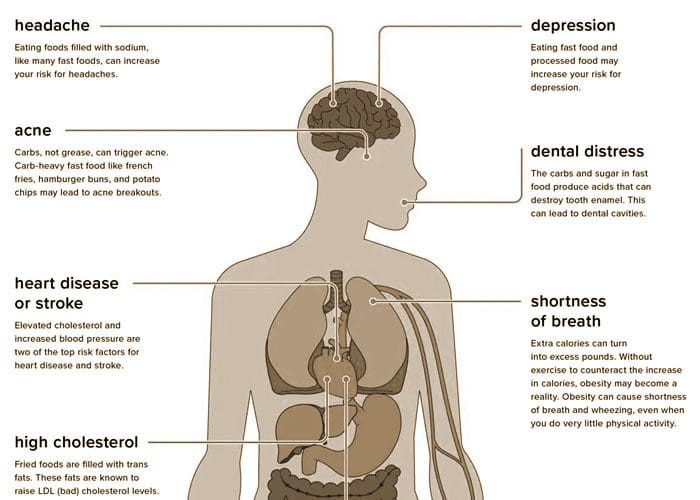
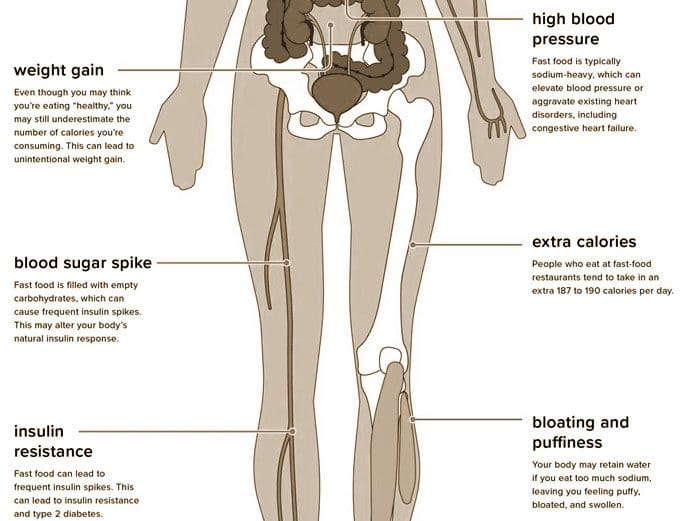
A sedentary lifestyle is a significant contributor to chronic pain, but unhealthy eating habits also play a role. Poor diet adds weight to the body. This stresses the body’s biomechanical structure. It also aggravates inflammation. Too much salt, sugar, and fats ingested through processed foods, fast food, and unhealthy habits affect the body’s regulating systems. They can affect everything from the nervous system, nerves, proper circulation, even the limbic system. The inflammation and stress generate and exacerbate chronic pain symptoms.
Changing unhealthy eating habits is up to the individual.
Individuals can be advised to cut back or cut out unhealthy diet choices; however, it is easier said than done. A doctor, health coach, and nutritionist have no control over what individuals do when they leave the clinic. Individuals themselves can have little control over their own eating habits. Many have an addiction to unhealthy food, which is a disease in itself. To help change poor eating habits, individuals need to be educated on how their eating habits affect the total body and mental health.
Nutrition Discussion
Chronic pain associated with inflammation linked to a poor diet is the first step in the diagnosis and developing an optimal treatment plan. It could be as simple as informing an individual that eating cheeseburgers are causing the inflammation that is hurting their back. However, there is more to it, but individuals are more inclined to avoid the foods causing the inflammation upon hearing a full explanation. Targeting specific foods is the first step in alleviating pain.
The temptation is always there, especially when stress comes into the picture. This is why it is important to have ready-to-go adjustments/alternatives that keep the individual eating healthy, despite the chaos going on around them. A treatment plan will include quick alternatives that can happen instages. An example could be:
Having one cheeseburger and not two.
Having a burger without cheese.
Eating a burger without the buns.
Switching to a plant-based burger.
There are many options to be explored to improve eating habits in small steps.
Willpower also has to be addressed in a controlled and supportive setting. This is where the whole team comes in. Many individuals’ eating habits are part of who they and adjusting them can be an uphill challenge. To educate on:
Having the family or friends eat healthy with them
These are techniques and methods to increase willpower to make healthy changes.
Body Composition
Foods Can Support Body Detoxing
The proper foods can support the body in detoxifying toxins and counter the negative effects like brain fog, neurodegenerative disorders, and chronic pain. The foods help to:
Neutralize oxidative stress
Lower inflammation
Increase immunity
Strengthen the musculoskeletal system
Foods and nutrients that detoxify can be a part of a healthy lifestyle.
References
Bjørklund, Geir et al. “Insights on Nutrients as Analgesics in Chronic Pain.” Current medicinal chemistry vol. 27,37 (2020): 6407-6423. doi:10.2174/0929867326666190712172015
Elma, Ömer et al. “Chronic Musculoskeletal Pain, and Nutrition: Where Are We and Where Are We Heading?.” PM & R: the journal of injury, function, and rehabilitation vol. 12,12 (2020): 1268-1278. doi:10.1002/pmrj.12346
Gómez-Pinilla, Fernando. “Brain foods: the effects of nutrients on brain function.” Nature reviews. Neuroscience vol. 9,7 (2008): 568-78. doi:10.1038/nrn2421
Making small adjustments to achieve a healthy lifestyle is not as difficult/complex as some may think. Here are some golden nutritional recommendations for longevity, and a healthy lifestyle. Understanding these golden suggestions is a first step towards developing and maintaining sustainable changes. Our health coach and nutritionist can develop an optimal customized nutritional program that is focused on teaching individuals how to promote lifelong transformations and become more connected with mind and body.
Vitamins
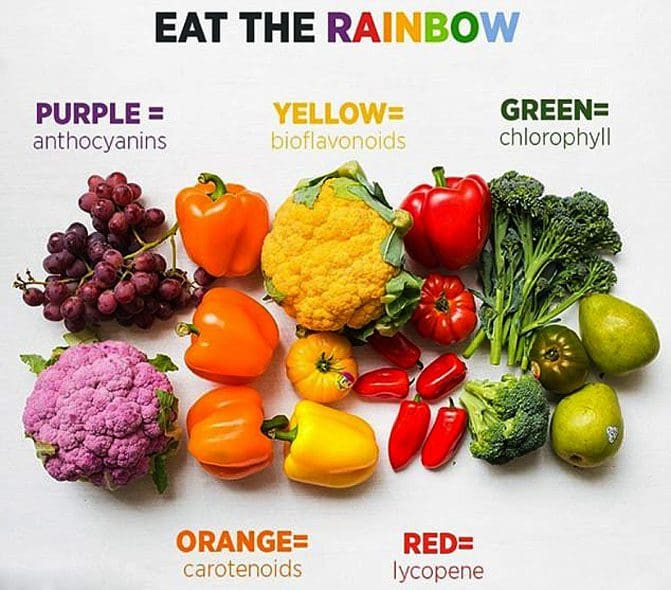
Consume plenty of fruits and vegetables at least six+ portions every day to ensure the body absorbs essential micronutrients, vitamins, minerals, phytochemicals, and fiber. A golden recommendation is to count the fruit and vegetable colors instead of calories. Eating the food rainbow is an ideal way to get a variety of vitamins.
Red foods
These foods contain phytochemicals and help reduce the risk of diabetes and heart disease. These include:
Tomatoes
Red peppers
Red onions
Strawberries
Cherries
Watermelon
Orange and yellow foods
These are packed with Vitamin A and Vitamin C to promote healthy skin and vision.
Pumpkin
Sweet potatoes
Carrots
Lemons
Are all ways to obtain orange and yellow nutrients.
Green foods
These are high in Vitamin K, antioxidants, and folates highly beneficial to bone health. These include:
Kale
Broccoli
Peas
Kiwi
Green grapes
Brussels sprouts
Blue and purple foods
These contain antioxidants that help with heart disease and protect the body’s cells. Included are:
Added sugars and refined flour have none of the essential fiber and micronutrients the body needs to feel full. Whole grains are fiber-rich. This helps increase feeling full and satisfied, which helps block sugar cravings. Go for whole wheat flour instead of refined flour. Limit sugar intake by using the natural sweetness of fruits. Add fruits to meals to increase the sweetness if necessary.
Plenty of Water
Drinking half of an individual’s body weight is essential each day. 10-12 ounces of water before a meal will help increase full satisfaction and make an individual more aware of the body�s hunger cues. Golden suggestion, use a reusable water bottle can help keep track of water intake throughout the day.
12/12 Meal Schedule
Schedule the three main meals within a 12-hour window to avoid snacking throughout the day. The body needs to rest, digest, and reset between meals and overnight.
Stop Eating 3 Hours Before Sleeping
The body’s metabolism starts to slow down around 7-8 p.m. Research shows this timeframe falls in line when the body starts to tire and wind down. Allow the body to rejuvenate cells instead of wasting energy on digesting calories that don’t get burned for energy while sleeping.
Daily Physical Activity
Daily exercise contributes to overall health and longevity. Regular exercise can help in the treatment of chronic illnesses and the prevention of cardiovascular diseases. Every day try to complete 50-60 minutes of low-impact physical activity, and 15-20 minutes of moderate-high intensity cardio. Each week make two of the 20-minute workouts to strength training.
After Workout Snacks
Recovery snacks 15-minutes after a workout will help keep cravings down. These include a healthy carbohydrate, lean protein, and healthy fat. 1-2 hours after a workout have the next balanced meal.
No Devices With Meals
Electronic devices distract from the body’s natural hunger cues. Screens should be put away during meals to pay attention to the food and proper consumption. Watching TV or scrolling through social media has been shown to increase calorie intake.
Plenty of Sleep
Sleep deprivation alters the body’s hormones that control/regulate hunger cues. When the body loses sleep, the body begins to crave more food more often. Even after the body has had the necessary nutrients. A golden recommendation is to develop a relaxing nighttime routine that will enhance the length and quality of sleep. The goal is for 8-10 hours of sleep a night.
Stress Reduction
Incorporate stress-reducing activities into a regular routine. Constant stress on the body can contribute to cardiovascular disease. Activities help take the mind off thoughts, memories, and events that cause stress and worry. These include:
The scope of our information is limited to chiropractic, musculoskeletal, physical medicines, wellness, and sensitive health issues and/or functional medicine articles, topics, and discussions. We use functional health & wellness protocols to treat and support care for injuries or disorders of the musculoskeletal system. Our posts, topics, subjects, and insights cover clinical matters, issues, and topics that relate and support directly or indirectly our clinical scope of practice.*
Our office has made a reasonable attempt to provide supportive citations and has identified the relevant research study or studies supporting our posts. We also make copies of supporting research studies available to the board and or the public upon request. We understand that we cover matters that require an additional explanation as to how it may assist in a particular care plan or treatment protocol; therefore, to further discuss the subject matter above, please feel free to ask Dr. Alex Jimenez or contact us at 915-850-0900. The provider(s) Licensed in Texas& New Mexico*
References
Braude L, Stevenson RJ. Watching television while eating increases energy intake. Examining the mechanisms in female participants. Appetite. 2014;76:9-16. doi:10.1016/j.appet.2014.01.005
Dimsdale JE. Psychological stress and cardiovascular disease. J Am Coll Cardiol. 2008;51(13):1237-1246. doi:10.1016/j.jacc.2007.12.024
Eckel-Mahan K, Sassone-Corsi P. Metabolism, and the circadian clock converge. Physiol Rev. 2013;93(1):107-135. doi:10.1152/physrev.00016.2012
Vina J, Sanchis-Gomar F, Martinez-Bello V, Gomez-Cabrera MC. Exercise acts as a drug; the pharmacological benefits of exercise. Br J Pharmacol. 2012;167(1):1-12. doi:10.1111/j.1476-5381.2012.01970.x
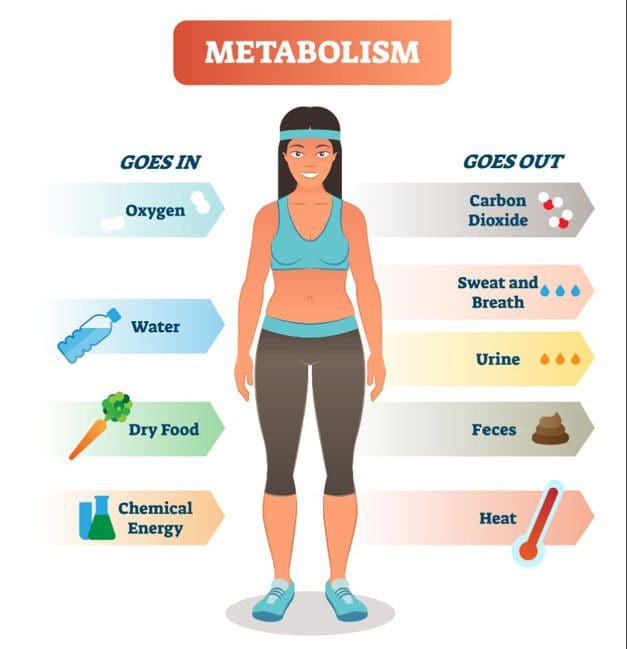
The body’s metabolism along with body composition go hand in hand. The higher the metabolism the faster the body burns calories. The slower the metabolism the longer it takes and leads to fat storage as well as other issues, which include:
Metabolism is linked with weight gain and loss because it is a biological process involved with energy and calories. The process of the body converting food and drink into energy. The process involves the calories in food and drinks that get combined with oxygen to release energy that the body needs to operate.
Body Composition Linked To Body’s Metabolism
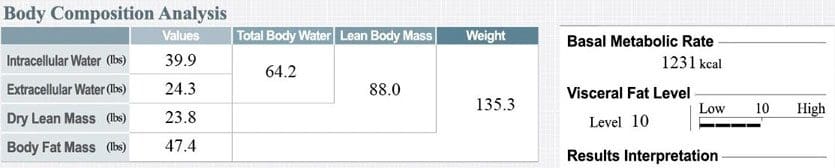
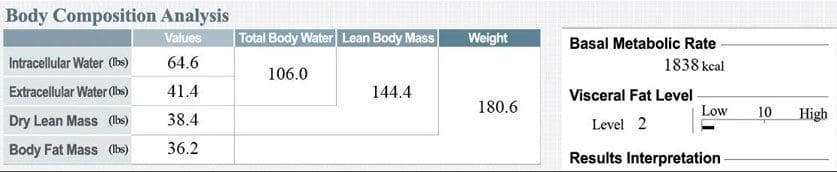
Metabolism varies for every individual. Here are two body composition profiles.
Individual A
Individual B
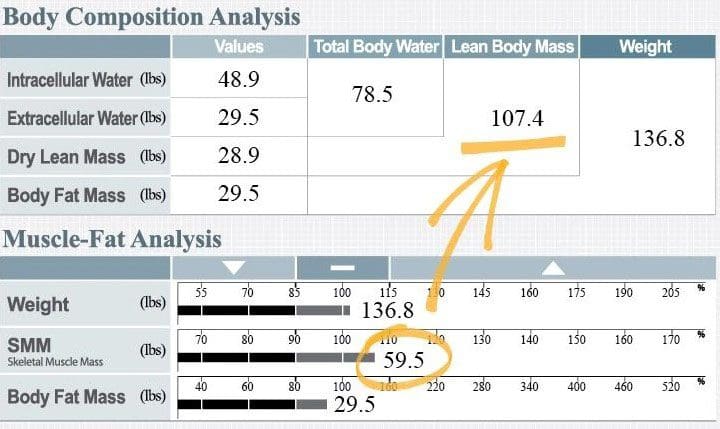
Individual A has a much smaller Basal Metabolic Rate than Individual B. This means individual B needs more calories than individual A to provide the body with the proper energy to function without losing weight. Because the Basal Metabolic Rate is bigger, the metabolism is bigger. The most important factor playing into Basal Metabolic Rate is the amount of Lean Body Mass every individual has.
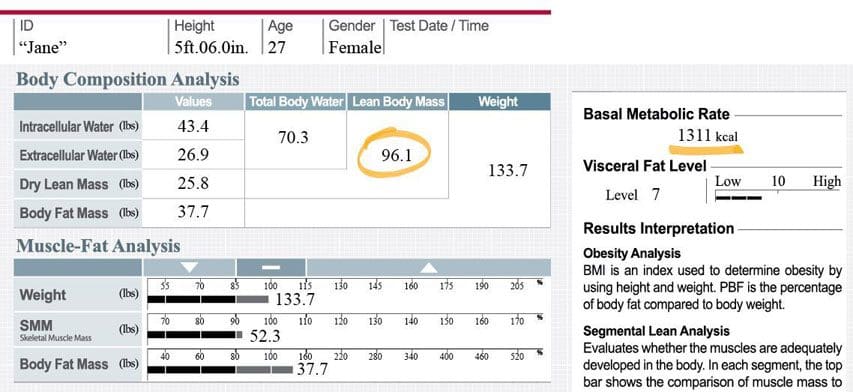
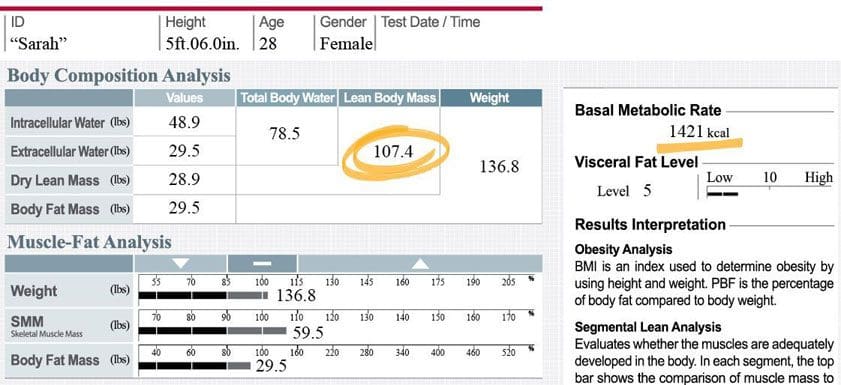
The more Lean Body Mass the greater the Basal Metabolic Rate will be. Strength training for muscle gain will increase lean body mass and is recommended to increase metabolism. For example: Take a look at Jane and Sarah, two individuals who are similar in age, height, weight, and gender.
Jane
Sarah
Despite being similar in age, height, weight, and gender, these two individuals have very different body compositions, as well as have different Basal Metabolic Rates.
Metabolism and Weight Gain
Take a deeper look at slow metabolism. It is not about being fast or slow but weight gain is almost always the result of caloric imbalance that goes on over a period of time. Two major factors are:
An individual’s energy level and how active they are
The thermic effect of food or the energy the body uses when digesting food
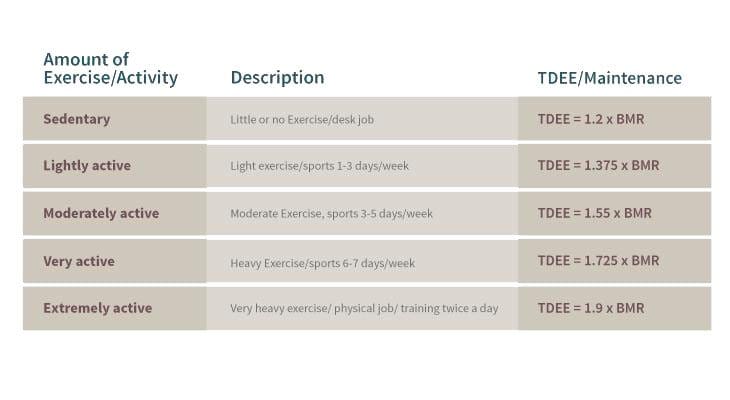
To take a closer look into the body’s metabolism and weight gain, take the two individuals above, Jane and Sarah, and see what could happen in real treatment development that includes diet and exercise. First, the TDEE for Jane and Sarah needs to be estimated, using their BMRs as a guide. Based on their compositions, it’s fair to assume that Jane is involved in less physical activity/exercise than Sarah. So an activity level of sedentary for Jane will be assigned and light activity will be assigned for Sarah.
Using these numbers and multiplying them by the appropriate activity factor, Jane�s TDEE can be estimated to be 1573 calories and Sarah�s 1953 calories, a difference of 380 calories. When activity levels are factored in, the difference in actual caloric needs gets magnified. This is an estimate of the calories Jane and Sarah will need to burn in a day. The nutritionist and/or health coach place both of them on a diet of 1,800 calories a day. This is the estimated calorie intake recommended by the USDA for sedentary women between 26-30 years of age.
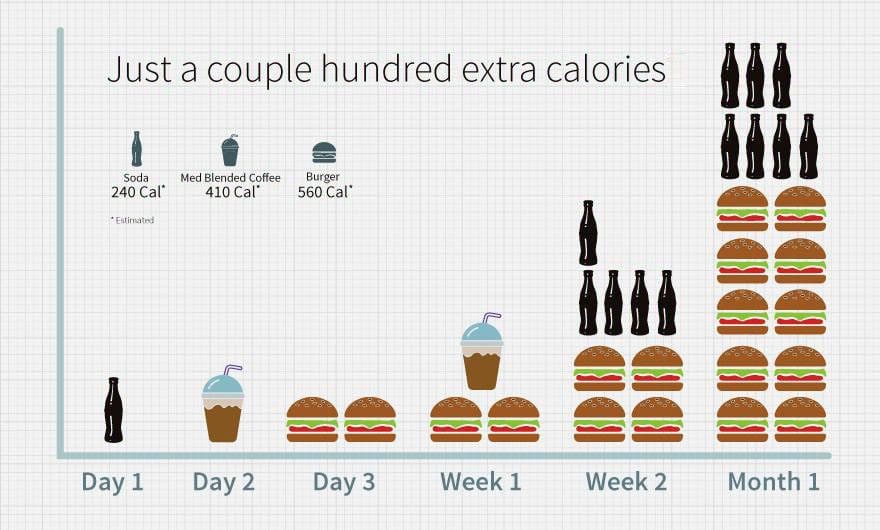
Let’s say they both follow the diet perfectly without any extra, high-calorie snacks/treats. Jane will end each day with a surplus of 227 calories, while Sarah ends each day with a slight calorie deficit of 153 calories a day. When in a calorie surplus taking more calories and living a sedentary lifestyle, weight gain, specifically, fat storage will be experienced. 227 extra calories a day doesn’t seem like a lot, but that is a single soda. However, over time, 227 calories a day becomes 1,589 extra calories a week and 7,037 extra calories a month, which is around 2 pounds of fat gain every month.
So despite the same height, gender, similar weight, and similar ages, the difference between Jane and Sarah is their body compositions. Jane will experience weight gain over time while Sarah might experience some weight loss because of the calorie deficit, even though the diets are the same. This is because each individual’s caloric needs are different and may seem small at first, but increases to significant differences over time.
Making The Body’s Metabolism Work
With the correct exercise and dietary plan, an individual can make their metabolism work for them. Because the body needs more energy to support itself when it has more Lean Body Mass, working to increase Lean Body Mass will increase Basal Metabolic Rate. Avoiding a decrease in metabolism can be done by maintaining the Lean Body Mass that is already present and also means maintaining Skeletal Muscle Mass. Skeletal Muscle Mass is not the same as Lean Body Mass but is the overall largest contributor. It is the muscles that will grow and develop through exercise.
Skeletal Muscle Mass is effectively developed through strength training, resistance exercise, and a healthy diet. This will help maintain Skeletal Muscle Mass. This is especially important as the body ages. Activity levels tend to drop and a healthy diet can become harder to maintain as responsibilities increase. Poor nutrition can lead to loss of Lean Body Mass over time, which leads to a decrease in overall metabolism. Balancing diet and metabolism. The example of Jane shows a well-intentioned dietary plan that does not match the metabolism of the person practicing it.
Even though Jane was told that 1,800 calories are right for her based on age and gender, her metabolism does not require that calorie intake. This will cause weight gain despite any efforts to eat a healthy diet. This is where a health coach and nutritionist come in. The first step is to get the information needed to get the answers by getting an accurate body composition analysis.
InBody Composition
Dr. Alex Jimenez�s Blog Post Disclaimer
The scope of our information is limited to chiropractic, musculoskeletal, physical medicines, wellness, and sensitive health issues and/or functional medicine articles, topics, and discussions. We use functional health & wellness protocols to treat and support care for injuries or disorders of the musculoskeletal system. Our posts, topics, subjects, and insights cover clinical matters, issues, and topics that relate and support directly or indirectly our clinical scope of practice.*
Our office has made a reasonable attempt to provide supportive citations and has identified the relevant research study or studies supporting our posts. We also make copies of supporting research studies available to the board and or the public upon request. We understand that we cover matters that require an additional explanation as to how it may assist in a particular care plan or treatment protocol; therefore, to further discuss the subject matter above, please feel free to ask Dr. Alex Jimenez or contact us at 915-850-0900. The provider(s) Licensed in Texas& New Mexico*
References
Westerterp, Klaas R. �Exercise, energy balance, and body composition.��European journal of clinical nutrition�vol. 72,9 (2018): 1246-1250. doi:10.1038/s41430-018-0180-4
Mazzoccoli, Gianluigi. �Body composition: Where and when.��European journal of radiology�vol. 85,8 (2016): 1456-60. doi:10.1016/j.ejrad.2015.10.020
IFM's Find A Practitioner tool is the largest referral network in Functional Medicine, created to help patients locate Functional Medicine practitioners anywhere in the world. IFM Certified Practitioners are listed first in the search results, given their extensive education in Functional Medicine