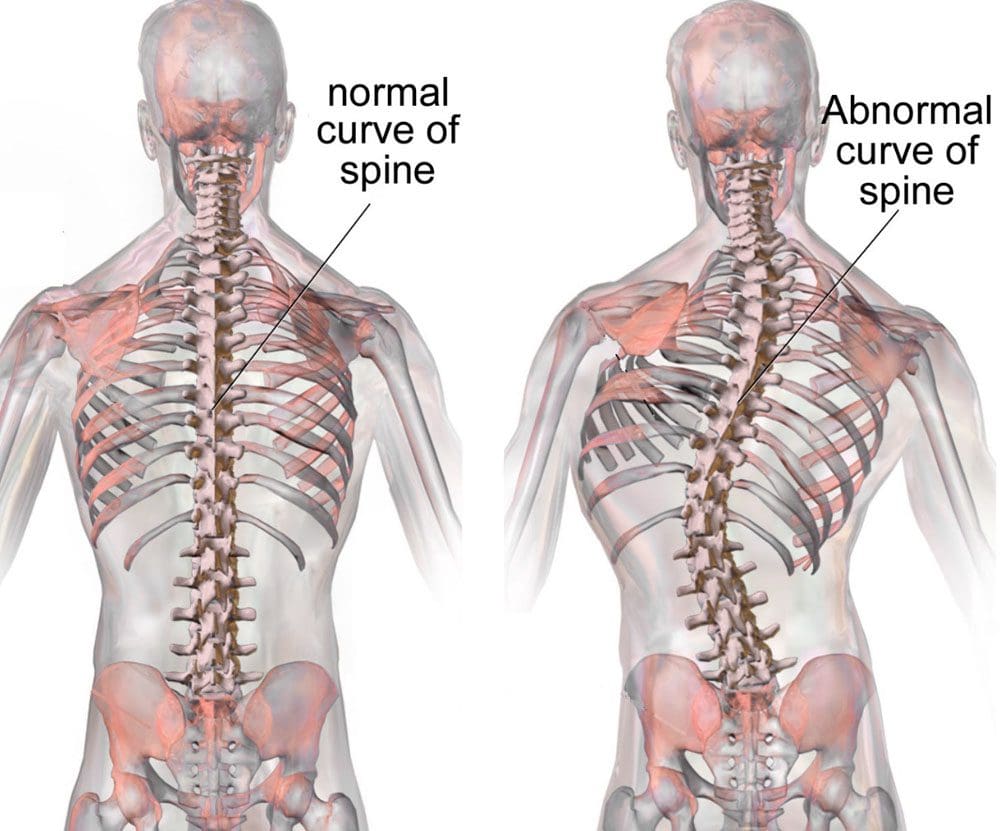
Idiopathic scoliosis means that no cause congenital or neuromuscular that created the spinal deformation has been identified. However, idiopathic scoliosis is the most common type, affecting 2% to 3% of individuals. Individuals diagnosed with an idiopathic disease or condition can be frustrated with more questions than answers, but it can still be treated in adults and kids.
Idiopathic Scoliosis
Congenital Scoliosis
Congenital scoliosis is an abnormal curvature of the spine related to which the patient was born.
Usually, a failure of formation or segmentation during normal development leads to the spinal condition.
Neuromuscular Scoliosis
Individuals with neuromuscular scoliosis are usually born with neurological disorders that contribute to muscular unevenness, often resulting in the development of the condition.
For example, individuals with cerebral palsy are born with muscular unevenness that can contribute to scoliosis development.
Who Is Affected
Anyone can develop scoliosis, but children and adults are divided into separate categories.
Children
Children with this condition are divided into three subcategories:
Adolescents are from 11 onward or when starting puberty, to the point where the skeleton fully matures.
Adults
Idiopathic scoliosis in adults results from undiagnosed or untreated scoliosis in childhood that gradually progressed.
Causes
Research has found a genetic predisposition to developing scoliosis, as it has been found to run in families. Genetic testing has been designed to help determine the risk of developing progressive scoliosis. Theories have been presented about abnormalities that affect the nervous system. These include:
Dysfunctions of the brain stem or equilibrium have been frequently identified in individuals with idiopathic scoliosis.
Other theories suggest skeletal growth abnormalities or hormonal/metabolic dysfunction may contribute to the condition.
However, determining its exact cause remains unknown.
Signs and Symptoms
Here are some things to look out for.
The body leans to one side.
There is an unevenness of the ribcage or hips.
Uneven shoulders.
Shoulder blades may protrude or stick out.
The head is not positioned directly above the pelvis.
Diagnosis
Idiopathic scoliosis curves tend to follow predictable patterns.
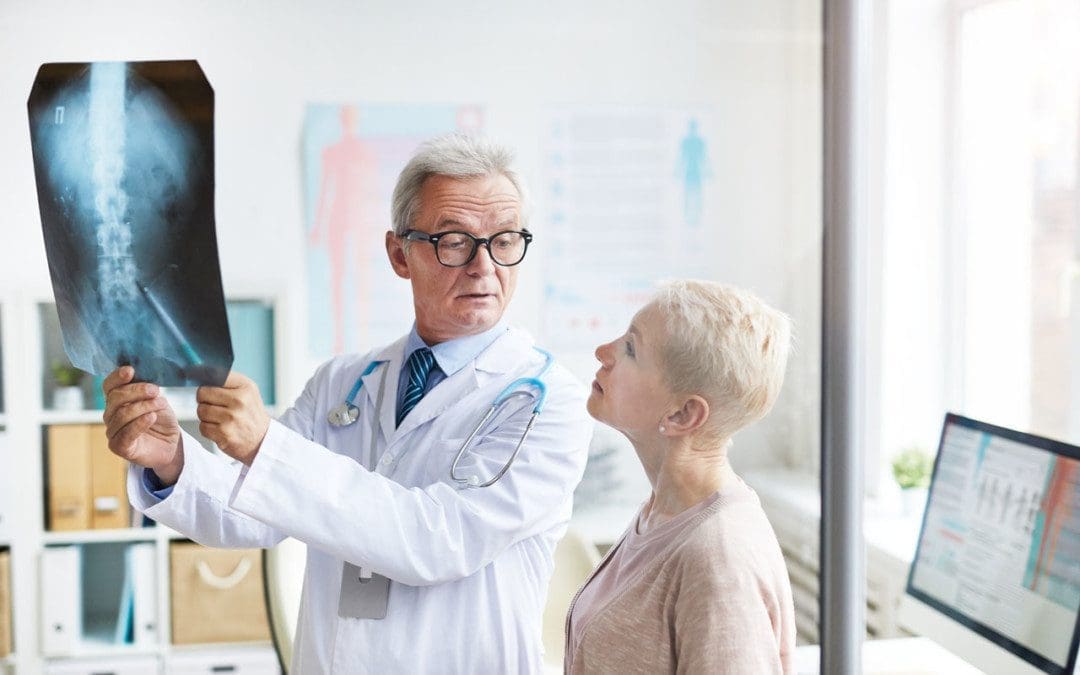
Magnetic resonance images/MRIs of the spine can show evidence of any significant abnormalities. If no other related condition is present to suggest different causes, then the idiopathic scoliosis diagnosis can be made.
Treatment
Treatment depends on the individual’s age and the degree of curvature in the spine.
In many cases, adolescent or juvenile idiopathic scoliosis patients that have a mild curve can be treated with a brace.
Adults could need surgical intervention, such as a fusion surgery where rods and screws are added to realign the spine and relieve the pressure on the nerves.
Chiropractor
References
Burnei, G et al. “Congenital scoliosis: an up-to-date.” Journal of medicine and life vol. 8,3 (2015): 388-97.
Clément, Jean-Luc, et al. “Relationship between thoracic hypokyphosis, lumbar lordosis and sagittal pelvic parameters in adolescent idiopathic scoliosis.” The European spine journal: official publication of the European Spine Society, the European Spinal Deformity Society, and the European Section of the Cervical Spine Research Society vol. 22,11 (2013): 2414-20. doi:10.1007/s00586-013-2852-z
Giampietro, Philip F et al. “Congenital and idiopathic scoliosis: clinical and genetic aspects.” Clinical medicine & research vol. 1,2 (2003): 125-36. doi:10.3121/cmr.1.2.125
“Scoliosis – Symptoms, Diagnosis and Treatment.” https://www.aans.org/Patients/Neurosurgical-Conditions-and-Treatments/Scoliosis
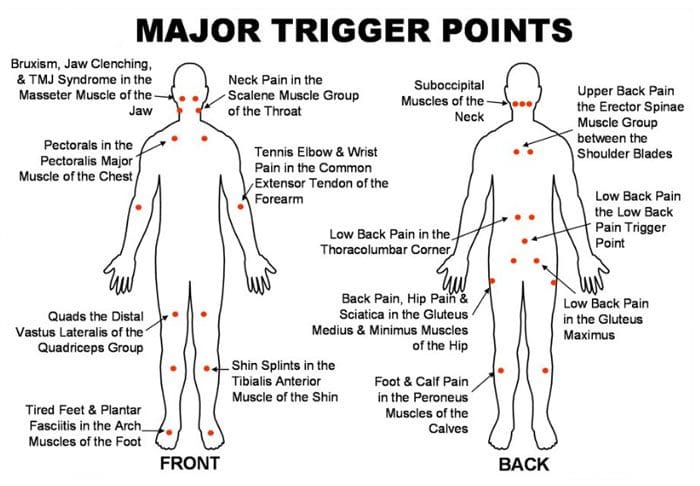
A neuromuscular massage is a form of manual massage used to release strained muscles. Strained areas are also known as trigger points that tend to be the cause of muscular pain symptoms. Trigger points are small areas of the muscle that contract the tissue. The lack of blood and nutrients in these areas causes an inability for the muscles to relax. The area becomes hypersensitive, causing fatigue, weakness, inflammation, and pain. Trigger points can lead to referred pain in which other areas of the body experience sensations of pain, tingling or numbness.
Neuromuscular Massage
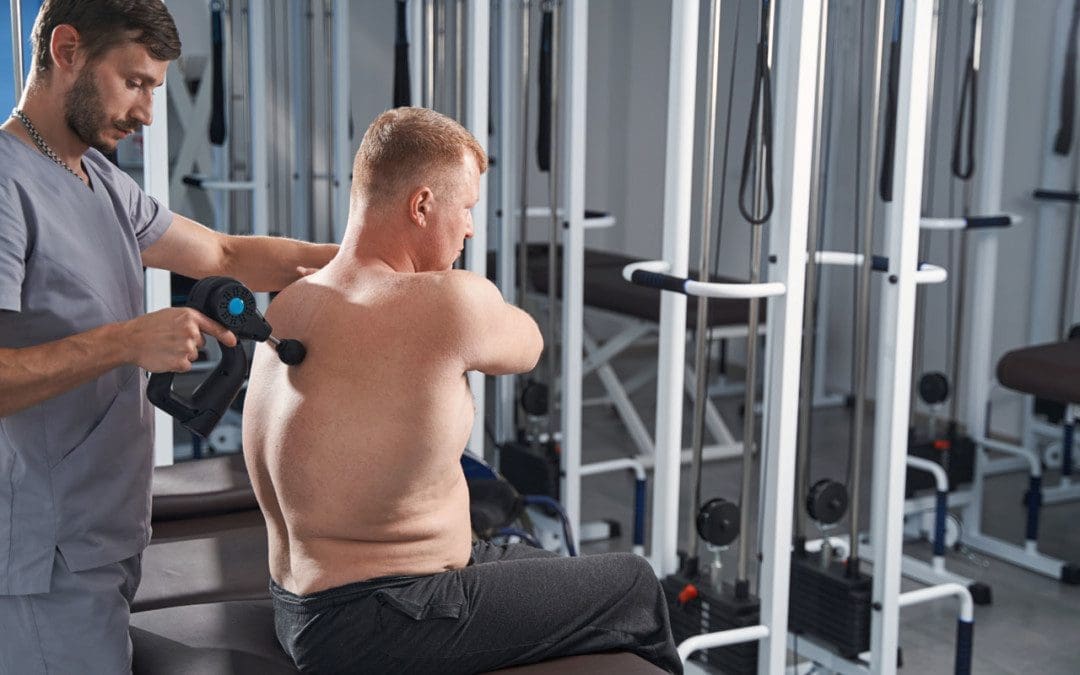
Neuromuscular massage treatment involves applying alternating levels of concentrated pressure on the trigger point/s done through manual and instrument manipulation. Neuromuscular therapy is also called trigger point myotherapy. The American Academy of Pain Management recognizes this form of treatment as an effective treatment for pain caused by soft tissue injury.
Deep Tissue Massage
A deep tissue massage is generally used to address muscle aches and pains and is administered on an on-off basis. Neuromuscular manual therapy techniques are specialized and designed to correct pain and movement dysfunction by treating:
Neuromuscular massage is considered an ongoing treatment.
Massage Reduces Pain
Muscles, when spasming, are painful to the touch. The pain is caused by ischemic muscle tissue. Ischemia means the muscle is lacking proper blood flow because of the spasm. This causes adverse effects because the muscles are not receiving enough blood; the muscles also do not receive enough oxygen.
The lack of oxygen causes the muscles to produce lactic acid.
The lactic acid causes the muscles to feel sore following physical activity.
Neuromuscular massage therapy relaxes the muscles releasing the lactic acid, allowing the muscles to receive enough blood and oxygen. Neuromuscular therapy can feel painful at first, but the pressure of the massage will alleviate the muscle spasm/s. It is crucial to communicate with the chiropractor and massage therapist about the pressure – whether it is too much, too little, feels better, feels worse, etc. Massage therapy pressure should never be overly painful. Individuals often describe the pressure as good pain, where they can feel the difference. Following a neuromuscular massage, the soreness should fade after twenty-four to thirty-six hours. The tight muscles should remain relaxed for four to fourteen days, depending on activities and stress levels.
Massage Treatment
Medical issues and conditions for which neuromuscular massage can treat include:
Tendonitis
Headaches
Temporomandibular joint pain – TMJ disorders
Jaw pain
Carpal tunnel
Upper back pain
Low back pain
Sciatica
Hip pain
Knee pain
Iliotibial band syndrome
Calf cramps
Plantar fasciitis
Neuromuscular Massage Benefits
Individuals who undergo neuromuscular massage therapy can experience the following benefits:
Reduced and/or complete elimination of pain.
Increased blood circulation.
Body toxin release.
Increased flexibility and strength.
Better movement.
Improved posture.
Balanced musculoskeletal and nervous systems.
Increased energy and vitality.
Body Composition
Fatigue
When it comes to getting fit, remember it is a long-distance marathon, not a quick sprint. Whether physical, mental, or a combination, fatigue is a common obstacle for successfully reaching health goals. Physical fitness requires energy:
Energy for work or school.
Energy to set up the gear or get to the gym.
Energy for the workout.
Energy to prepare regular healthy meals.
Combined with the pressures of everyday life can make it a challenge to work out consistently. The objective is to make gradual changes rather than significant immediate changes. This will help prevent/avoid early burnout and help lead to maintaining healthy habits. One tip could be scheduling the workouts and meal prep time for the day or week when most active. For example, knowing that after work or school, the body can’t take a workout and needs to crash at the end of the day, set up the exercise for the morning or afternoon. And once the workouts become a routine, energy levels will improve, allowing for more activity.
References
Bervoets, Diederik C et al. “Massage therapy has short-term benefits for people with common musculoskeletal disorders compared to no treatment: a systematic review.” Journal of physiotherapy vol. 61,3 (2015): 106-16. doi:10.1016/j.jphys.2015.05.018
Field, Tiffany. “Massage therapy research review.” Complementary therapies in clinical practice vol. 24 (2016): 19-31. doi:10.1016/j.ctcp.2016.04.005
Furlan, Andrea D et al. “Massage for low-back pain.” The Cochrane database of systematic reviews,9 CD001929. 1 Sep. 2015, doi:10.1002/14651858.CD001929.pub3
Qaseem, Amir et al. “Noninvasive Treatments for Acute, Subacute, and Chronic Low Back Pain: A Clinical Practice Guideline From the American College of Physicians.” Annals of internal medicine vol. 166,7 (2017): 514-530. doi:10.7326/M16-2367
IFM's Find A Practitioner tool is the largest referral network in Functional Medicine, created to help patients locate Functional Medicine practitioners anywhere in the world. IFM Certified Practitioners are listed first in the search results, given their extensive education in Functional Medicine