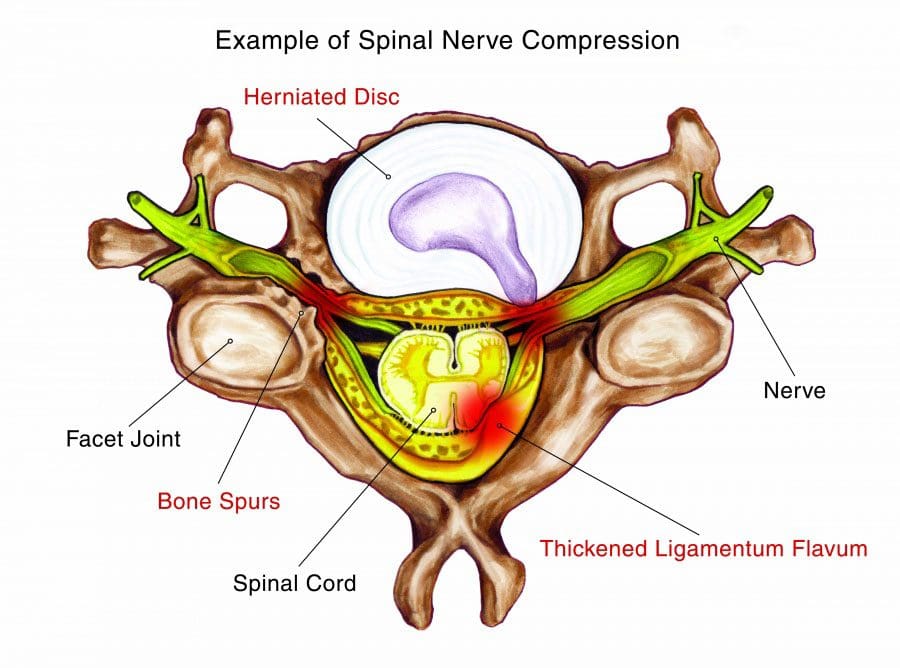
Cervical radiculopathy happens when a pinched nerve in the neck (cervical spine) causes pain.
Radicular pain can extend beyond the neck and radiate down:
The shoulders
Arms
Fingers
This type of nerve compression also causes:
Weakness
Numbness
Tingling
Reflex problems
The neck consists of 8 pairs of nerves that control several motor (strength) and sensory (feel) functions.
The cervical nerve roots at the top send movement and feeling signals to the head and neck, and the nerves at the bottom enable motor and sensory function to the arms and hands.
If one or more of the spinal nerves in the neck gets pinched, it can disturb its ability to function correctly.
This results in radiating pain in the neck and other areas of the body.
This condition can affect anyone but usually affects middle-aged adults.
Men also tend to develop cervical radiculopathy more than women.
Causes
The natural aging process on the spine is what usually causes cervical radiculopathy.
The spine goes through the aging process just like the rest of the body and even more as it is the basis of our structure.
This process can lead to several degenerative spinal disorders, that include:
Cervical spondylosis (osteoarthritis)
Spinal stenosis
Herniated discs
When nerve passageways begin to narrow, intervertebral discs begin to protrude,� and bone spurs, caused by these disorders can put pressure on the nerves in the neck.
The condition can also be caused by a traumatic injury to the neck like whiplash or sports injury.
Rarely is it caused by an infection or spinal tumor.
Symptoms
The primary symptom is pain radiating from the neck down to the:
Shoulders
Arms
Hands
Fingers
The above is an example of sensory function, which is related to feeling.
In addition to sensory symptoms, radiculopathy can also cause motor dysfunction.
Motor dysfunction relates to muscles and movement.
Reflex changes in the neck and upper body and weakness are examples of motor dysfunction.
Diagnosis
A spine specialist/chiropractor has several tools to diagnose cervical radiculopathy.
First and foremost your medical history will be reviewed and then will be:
Asked to describe symptoms
A physical exam will be conducted�to recreate the pain in a controlled manner in the:
Neck
Shoulder
Arms
Example: Spurling�s maneuver, which gently rotates the head, while applying gentle pressure.
Once the information from the medical history and physical exam are done,��imaging tests such as an MRI�may be ordered so they can pinpoint the location of the nerve compression.
MRI scans show the soft tissues in the spine, including the nerves.
The doctor may request a pair of diagnostic tests called electromyogram (EMG) and nerve conduction exam if there are significant upper nerve arm and neck pain.
These tests help understand if there is nerve damage, the cause of the damage and if the symptoms are related to the nerve damage.
EMG and nerve conduction tests are usually performed together to help in the diagnosis.
Emergency Symptoms
Once the spine specialist confirms the diagnosis, they will develop a treatment plan to relieve the nerve compression or prevent it from getting worse.
Most cases are taken care of with non-surgical treatment, however, if the following occurs you should contact your doctor:
Neck pain does not improve with treatment in the time your doctor expects.
Pain worsens regardless of treatment
Or you develop new:
Numbness
Weakness in the
Neck
Arms
Upper body
Develop fever
If you experience symptoms in the lower body like:
Weakness in the leg
Difficulty walking
Lack of bowel/bladder function, then seek medical attention immediately.
These symptoms may indicate cervical myelopathy, a more severe condition.
Cervical myelopathy is the compression of the spinal cord.
When the spinal cord gets compressed, it can generate widespread spine issues and usually requires surgery.
Treatment Cervical Radiculopathy
Like most types of spine pain, a doctor will recommend trying one or more conservative treatments first.
Conservative treatments are nonsurgical means.
It�s important to understand that just because a treatment is considered conservative does not mean it is ineffective.
In fact, it�s quite the opposite. Most people with nerve compression in their neck respond well to conservative therapies.
Though research on the efficacy of conservative treatments for cervical radiculopathy has produced mixed results, findings show that these therapies help eliminate pain and other nerve-related symptoms (like numbness and muscle weakness) in 40-80% of people.
The following are the most common conservative treatments:
Over-the-counter medications, like acetaminophen (Tylenol) or nonsteroidal anti-inflammatory medications(ibuprofen, Motrin)
Prescription medications, like steroids (prednisone), neuropathic agents (gabapentin, pregabalin), and muscle relaxants (baclofen, cyclobenzaprine)
Cervical spinal traction, that can be performed during physical therapy
Avoiding strenuous activity, but don’t avoid all activity, as too much rest can exacerbate the injury and extend the recovery time
These conservative treatments can go on for 6 to 8 weeks. If there is no improvement or it gets worse, then a doctor may want to step you up to the next level.
This may include steroid injections.
Spinal Injections
Cervical epidural steroid injections are considered a second-line treatment for radiculopathy that is not responding to conservative therapy. These injections send a dose of anti-inflammatory medicine into a specific nerve root�s that can relieve pain.
The number of injections differs from patient to patient. A doctor will make recommendations based on the condition and response to the first injection.
If the first injection reduces the pain and symptoms, a second or third injection might not be necessary unless symptoms recur.
If more than one is needed, they are given 3 weeks between each injection.
Injections can help manage pain and inflammation, but cannot strengthen or improve the flexibility of the cervical muscles.
Because of this, a doctor may prescribe physical therapy, chiropractic or an exercise program to condition the neck muscles.
Surgery Considered
When surgery is needed it is considered a last resort option. This is not a guaranteed solution and there are risks and complications.
Different types of surgical approaches are available. These procedures can be performed minimally invasively in a hospital setting or an outpatient surgery center.
Discussing options with a doctor and whether you are a candidate for minimally invasive surgery or not, along with other types of surgery e.g. artificial disc, is a discussion that is different for everybody, as some patients have existing medical conditions that can increase risks and complications.
Anterior cervical discectomy and fusion (ACDF)
This approach is the most widely used surgical approach.
The surgeon makes an incision through the front of the neck and removes the damaged intervertebral disc, fills the empty space with spacers to restore the height and attaches spinal instrumentation (plate, screws) for stabilization.
A bone graft is then packed into and around the body spacers for bone ingrowth and healing.
Posterior cervical foraminotomy
Here, the surgeon accesses one or more levels of the cervical spine with an incision in the back of the neck.
Foraminotomy decompresses the nerve root by removing whatever is compressing the nerve like a bone or soft tissue.
The procedure opens/widens the neural foramen or the nerve passageway where the nerve exits the spinal canal.
Cervical artificial disc replacement (C-ADR)
Here an artificial disc device is implanted in the empty disc space.
C-ADR is like a shock absorber and enables healthy movement the way that an actual disc does.
Conclusion
A compressed nerve in your neck can lead to radiating pain. This pain can make it almost unbearable to do simple tasks, even moving the neck from side to side or just opening a jar. Conservative treatment like chiropractic and exercise can ease the pain of this condition and restore function. Fortunately, surgery is rarely necessary.
El Paso, TX Neck Pain Chiropractic Treatment
Alfonso J. Ramirez now retired, found follow-up treatment with Dr. Alex Jimenez for his neck pain. Mr. Ramirez experienced chronic pain and headaches, but after receiving chiropractic care, he found relief from his symptoms. Ever since that time, Alfonso Ramirez has continued to maintain the alignment of his backbone with Dr. Jimenez. Mr. Ramirez is grateful for the chiropractic care he’s received for his neck pain and for his knee and shoulder pain. Alfonso J. Ramirez recommends Dr. Alex Jimenez as the non-invasive pick for neck pain.
NCBI Resources
Approximately two-thirds of the population being affected by neck pain at any time throughout their lives. Pain that originates in the cervical spine, or upper spine, can be caused by numerous other spinal health issues. Joint disruption in the neck can generate a variety of other common symptoms, which include headaches, head pain, and migraines. Neck pain affects about 5 percent of the global population, according to statistics.
Weighing an average of 10 pounds, the human head is heavier than most people think. The head can put a great deal of pressure on the neck when it is placed in different positions for prolonged periods � especially regularly looking down at your phone.
The damage caused to the neck from time spent staring at mobile screens has been given the name �Text Neck�, and it is a growing problem among not only teens but for everyone.
Regularly Looking Down at Your Phone Is Cause For Neck Injury
Your body is well-designed to bear the weight of your head when you maintain good posture � but tilting your head down to look at your phone is not good posture. In fact, for every inch you move angle your head downward, you double the pressure on your spine.
Looking at your phone can put an extra ten or twenty pounds of pressure on your neck. That would be worth noting even if you only did it occasionally, but most people spend hours looking at their phones throughout the day. That amounts to hours of excessive pressure on the soft tissues that make up your neck � pressure that will inevitably lead to inflammation and discomfort if left unchecked.
According to this article featured in the Washington Post, the pressure you put on your neck by bending and staring at your phone is much like bending your finger back as far as it will go, and then keeping it in that position for approximately an hour. Day after day, such stress is bound to lead to complications.
Resulting Injuries from Text Neck
The strain put on the neck by text neck is enough to cause mild to severe injuries, including:
Sore muscles
Inflamed Tissues
Pinched nerves
Herniated discs
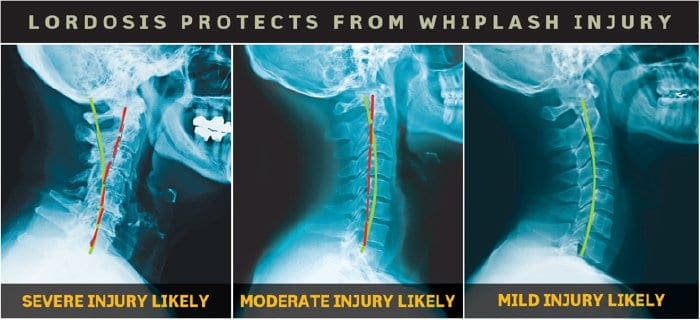
Elimination of the natural curve of the neck
These injuries can cause considerable pain and discomfort and may lead to further health complications. They can lead to neck and back pain that can last for years.
Tips to Avoid Text Neck
Smartphones offer numerous benefits and opportunities for enjoyment, so it is unlikely that most people will stop using them. Luckily, there are things you can do to protect yourself, including:
Work Your Eyes, Not Your Neck
One of the simplest ways to avoid text neck is to look down with your eyes instead of tilting your head down. While it may not be practical to always use this technique, it is certainly useful in many circumstances. Your eyes can tilt down with little effort and can allow you to lessen the tilt of your neck as you use your phone.
Strength Train your Neck & Shoulder Muscles
You will inevitably do some head tilting as you use your phone throughout the day. Strengthening the muscles that support your head is one way to protect your delicate neck tissues and maintain mobility. Simple exercises like turning your head each way repeatedly and using your hands to provide resistance can make your neck much stronger. Your shoulders also provide a lot of support for your neck. Shoulder exercises can increase the stability of your neck as well.
Have an Awareness of Your Head Position
Just maintaining awareness of how your head is tilted as you use your phone can help you avoid excessive tilting. Practice looking at your smartphone with your head upright to remind yourself of what good posture feels like, and pay attention during the times you deviate from good posture.
Chiropractic Treatment
If you are experiencing neck pain from text neck, or from any other type of injury, chiropractic can help. Please contact us now to schedule your appointment and get some relief!
Ms. Hermosillo participates in fitness classes and follows healthy lifestyle habits. She participates in a variety of physical activities to achieve tip-top health. As a result, however, Ms. Hermosillo began to experience neck pain and back pain.
The symptoms were beginning to affect her life both professionally and personally. Ms. Hermosillo heard about local 20+ year El Paso, Texas chiropractor, Dr. Alex Jimenez that brought unbelievable relief of her symptoms! El Paso Back Clinic follows a safe and effective treatment focusing on a variety of health issues associated with the musculoskeletal and nervous systems. Ms. Hermosillo recommends Dr. Jimenez for personalized spine therapy for neck pain, back pain, and other conditions.
El Paso Back Clinic
We are blessed to present to you�El Paso�s Premier Wellness & Injury Care Clinic.
As El Paso�s Chiropractic Rehabilitation Clinic & Integrated Medicine Center,�we passionately are focused on treating patients after frustrating injuries and chronic pain syndromes. We focus on improving your ability through flexibility, mobility and agility programs tailored for all age groups and disabilities.
We want you to live a life filled with more energy, positive attitude, better sleep, less pain, proper body weight and educated on how to maintain this way of life.
Only the best for you!
If you have enjoyed this video and we have helped you in any way, please feel free to subscribe and recommend�us.
Piano players will sit or stand at a piano or keyboard, often in the same position for hours. A clarinet player must keep their head, neck, and jaw in a precise position in order to play properly. A guitarist must sit for long periods while holding the guitar in a certain position while moving their fingers over the frets in a very precise manner.
In other words, musicians put their bodies through some vigorous training. They practice for hours a day and engage their bodies in repetitive motions for long periods of time.
It’s no wonder that many musicians complain of headaches, migraines, carpal tunnel, clicking jaw, numbness in the fingers, and back and neck pain!
Some of this pain can be debilitating and make it more difficult for them to perform their normal activities. Many live with chronic pain.
There was a time when these conditions were considered to be just a part of playing an instrument and the musician would push through the pain. However, many are turning to chiropractic and are enjoying not only a pain-free life but improved performance as well.
The Way Playing an Instrument Affects the Body
Some doctors liken musicians to athletes � instrumental athletes. They do have very similar practices such as practicing for hours a day so that they can perfect their abilities and skills. And like athletes, they also experience certain break downs within the body.
Posture is a common malady as the musician may stand or sit a certain way in order to play their instrument. This prolonged activity can lead to imbalances in the spine, pelvis, and other parts of the body.
When the body is not in balance, it cannot function as it should. Organs are affected and other the body may try to make accommodations for the imbalance which only exacerbates the problem.
This is further compounded each time the musician plays their instrument because by doing so they are consistently underworking and overworking certain muscles. This can lead to further imbalance.
The muscles that are worked, the ones used to play the instrument, get shorter, tighter, and stronger as scar tissue forms. By contrast, the underworked muscle groups stay underdeveloped and get weak. This muscular imbalance puts a great deal of stress on the spine and other joints in the body like the fingers, wrists, and elbows
They may also experience Repetitive Strain Injury or RSI. This condition is often quite painful and is concentrated in the soft tissues, nerves, tendons, and muscles.
These areas may become painful or inflamed when performing repetitive activities, pressing against hard surfaces, vibrations, awkward sustained positions, and forceful exertions. This causes the body to become out of alignment but also impacts the function of the skeletal system, nervous system, and muscular system.
Chiropractic
Chiropractors are very good for musicians because the can assess misalignments in their spine and make adjustments. When proper original alignment is stored to the body, it begins to function properly. This leads to a decrease in pain and other symptoms that may be experienced due to the long hours of playing an instrument.
Musicians also benefit from chiropractic because it can make them better at what they do. When the pain is decreased or eliminated and the other symptoms are relieved, it is easier to play.
When the spine is in proper alignment and the body is balanced, the musician will experience a boost in energy, their muscles will not fatigue as quickly, and their muscles will be more relaxed. With all those benefits, it�s no wonder that chiropractors and musicians make beautiful music together.
Text neck is a very real condition that is caused by staying in a prolonged �texting� position � hunched shoulders and neck tilted forward. As a result, the back, neck, and shoulder muscles become overworked and your spinal structure is actually changed. Many people who spend a lot of time on their mobile devices such as smartphones and tablets, develop this condition (and others including �cellphone elbow� and tendinitis of the wrist and hand) and it can be very painful, even causing mobility problems. More than 95% of Americans have a smartphone or mobile device and most people spend a great deal of time on their devices � it is easy to see how this is a common problem.
What Exactly is Text Neck?
A normal human neck has a slight curve to it that travels along the spine. It is part of the intricate system that supports the head and body. However, a person with text neck will have a straight cervical spine. Their neck will not have that slight curve and that is a problem.
The cause of the absence of the curve is because of the position that the head stays in for such long periods of time. The average adult human head weighs between 10 and 12 pounds. When the head is upright, the neck supports it and the slight curve gives it the stability that it needs.
When you keep your head tilted forward, such as when you are hunched over your smartphone or mobile device, your head is thrust forward instead of sitting over the balanced curve of the cervical spine. The gravitational pull is greatly increased and the neck is already in an unnatural position. This combination places unnatural and damaging stress on your neck. It is like carrying around an additional 60 pounds on your neck.
Symptoms of Text Neck
In the early stages of text neck, a person may feel some tightness in their shoulders, neck, and upper back. This may progress to discomfort in those areas and eventually pain. If left untreated, you can develop pinched nerves and herniated discs.
Your central nervous system begins at the base of your skull, so it extends down your neck and upper back. When you put unnatural pressure on your neck, you are also affecting your nervous system, causing it to malfunction. This can lead to pain throughout your body, stiffness, headaches, low back pain, and problems with your hands and arms.
How to Prevent Text Neck
Text neck is surprisingly easy to prevent. Your first step is awareness. Over two or three days, take some time to be very aware of your body�s position. Carefully examine your posture while you go about all of your daily activities. It is important to remember that text neck is not strictly confined to texting. You can get it any time you have your head bent down for an extended period of time, such as when looking at a laptop screen or even writing for a long time.
The best way to avoid the problem is to keep your devices at eye level. If you have a handheld device, hold it up at the level of your eyes instead of bending your neck to look down. The same goes for your laptop; arrange it so that your screen is at eye level.
Chiropractic for Text Neck
If you are already suffering from the effects of text neck, your chiropractor can help reverse the condition if it hasn�t progressed to disc degeneration (even then he or she can help with associated pain). Regular chiropractic treatments, along with following expert recommendations for screen heights, can help reduce the pain and discomfort. It is smart to address these issues before they become a bigger problem. Your chiropractor can help.
Stretching is often an outstanding complement to chiropractic care. Blood flow to the muscles is increased and it helps lower the risk of injury and improves physical performance. More importantly, stretching is good for the joints, helping them function through their full range of motion. Additionally, some studies show that muscles work and move more effectively when they are stretched regularly. These benefits of stretching make it a great practice to incorporate into your daily routine, especially between chiropractic treatments.
The muscles all along the spine respond well to stretching. However, sometimes it is difficult to manipulate specific muscle groups and get a thorough stretch.
The cervical spine is a prime example. Although the neck turns in so many ways, finding positions that provide an effective stretch are surprisingly difficult.
These three stretches effectively work the muscles through the neck and shoulders�and are simple enough to do at home whether you are between chiropractic appointments or if you wake up with a crick in your neck.
Before You Stretch
If you are under a chiropractor�s care, you should check with him or her before you start a stretching program. This is especially important if you have a neck injury or have a spinal condition that causes deterioration or pain.
When you begin stretching, you may feel a little discomfort, but it is important to note that it should never cause pain or worsen it. If this occurs, or if it just doesn�t feel �right,� you should stop immediately and call your chiropractor.
Neck and Trap Stretch
If standing: Stand up straight with your pelvis slightly tucked (not swayback), feet shoulder�s width apart, knees soft.
If sitting: Sit up straight with your feet flat on the floor.
1. Drop your shoulders and roll them slightly back. Let your arms hang down.
2. Reach behind your back and, with your left hand, grasp your right wrist. If you can�t reach to grasp your wrist, grab your fingers. If you can�t reach your fingers, sit in a straight back chair and put your right arm as far behind you as you can and slide your right hand under your right buttock to provide stability.
3. If clasping your hands behind you, gently pull your arm behind you to the left. If unable to reach behind you, drop your right shoulder.
4. At the same time, tilt your head to the left, bringing your ear to your shoulder but don�t raise your left shoulder. You will feel the stretch all along the right muscles of the neck.
5. Hold the stretch for 15 to 30 seconds.
6. Do the same movement for the left side.
7. Repeat the full move 3 to 5 times.
Gentle Neck Extension
If standing: Stand up straight with your pelvis slightly tucked (not swayback), feet shoulder�s width apart, knees soft, hands relaxed and at your sides.
If sitting: Sit up straight with your feet flat on the floor, hands relaxed and at your sides.
If lying down: Lie flat on the floor. If necessary, put a pillow under your knees to take pressure off of the lower back. Stretch your arms down by your side.
1. Push your shoulders down towards your feet.
2. Tuck your chin to your chest but don�t let your shoulders lift.
3. Slowly raise your chin, feeling the stretch along the front of your neck. Hold the position for 20 to 30 seconds.
4. Return your head to its normal, upright position for 30 seconds. Repeat the entire movement 5 to 7 times.
Stretch for Traps
If standing: Stand up straight with your pelvis slightly tucked (not swayback), feet shoulder�s width apart, knees soft, hands relaxed and at your sides.
If sitting: Sit up straight with your feet flat on the floor, hands relaxed and at your sides.
If lying down: Lie flat on the floor. If necessary, put a pillow under your knees to take pressure off of the lower back. Stretch your arms down by your side.
1. Start with your head in the normal, upright position.
2. Bend your neck to the right side, moving your ear towards your shoulder.
3. Raise your left hand to your head and apply gentle pressure to facilitate the stretch while drawing up your left shoulder. Hold for 20 seconds.
4. Return to your starting position.
5. Repeat the same movement on the right side.
6. Do 3 to 5 sets.
Neck Pain Chiropractic Treatment
XYMOGEN 6 Day Detox Kit
6 Day Detox Kit�is designed to renew and enhance the body�s cleansing and detoxification capabilities. It combines four specially selected XYMOGEN formulations: ColonX�, Drainage�, ProbioMax��Daily DF, and OptiCleanse�GHI. When taken together, as recommended within the 6-Day Detox Guide, these complementary formulas work in concert to encourage the various detox-linked systems and organs of the body to process and eliminate waste and toxins.*
6 Day Detox Kit�includes 1 bottle of OptiCleanse GHI Vanilla Delight, 1 bottle of ColonX 60c, 1 carton of ProbioMax Daily DF 30c, 1 bottle of Drainage 1 fl oz, and 1 20 oz Shaker Bottle.
Gale Grijalva was a victim of a car crash. As a result, she started to experience severe pain symptoms which tremendously affected her ability to perform her regular tasks. Gale Grijalva describes the conditions that resulted in the auto accident as well as how her symptoms that are specific began to manifest after the incident. Gale Grijalva visited Dr. Alex Jimenez, chiropractor, to receive chiropractic care for her car crash injuries and she was grateful to get the pain relief she deserved. Chiropractic care is an effective and secure, alternative treatment option which focuses on the identification, prevention, and treatment of many different injuries and/or conditions. Gale Grijalva highly recommends Dr. Alex Jimenez as the noninvasive choice for car accident injuries and whiplash, among other problems.
Chiropractic Treatment
We are blessed to present to you�El Paso�s Premier Wellness & Injury Care Clinic.
As El Paso�s Chiropractic Rehabilitation Clinic & Integrated Medicine Center,�we passionately are focused on treating patients after frustrating injuries and chronic pain syndromes. We focus on improving your ability through flexibility, mobility and agility programs tailored for all age groups and disabilities.
We want you to live a life that is fulfilled with more energy, positive attitude, better sleep, less pain, proper body weight and educated on how to maintain this way of life. I have made a life of taking care of every one of my patients.
I assure you, I will only accept the best for you�
If you have enjoyed this video and we have helped you in any way, please feel free to subscribe and recommend�us.
IFM's Find A Practitioner tool is the largest referral network in Functional Medicine, created to help patients locate Functional Medicine practitioners anywhere in the world. IFM Certified Practitioners are listed first in the search results, given their extensive education in Functional Medicine