ClickCease
+1-915-850-0900 [email protected]
Select Page
Turmeric Root Side Effects

Turmeric Root Side Effects

Turmeric: Let us ease your mind a bit. As with any dietary supplement, there are right ways to take turmeric root that could best benefit your health. We review things to keep in mind to limit any potential side effects.�

Potential Benefits Of Turmeric Root

The compound that gives turmeric root its signature bright yellow hue is also the compound that packs the potential health benefits punch: curcumin. Curcumin � and therefore turmeric root � is believed to provide some pretty attractive health benefits, including support of joint and muscle comfort, promotion of healthy aging of the brain, support of a healthy digestive tract, and maintenance of healthy cholesterol levels already in the normal range.

But that doesn�t mean that taking 10 turmeric root supplement capsules at once would give you 10 times the potential benefit. Quite the opposite. There are right � and wrong � ways to consume the supplement in an effort to reduce possible side effects.

Avoiding Turmeric Root Side Effects

According to�MentalHealthDaily.com, if you�re supplementing with turmeric root, especially at high doses, it is possible that you may encounter some unwanted side effects at one point or another. The two most common side effects associated are diarrhea and nausea. High on the list of possible side effects are also:

  • Thinning of the blood. Some research shows that curcumin may have anticoagulant effects which can slow blood clotting. If you�re already taking a blood thinner, speak to your doctor about your desire to add a turmeric root supplement, and discontinue use at least two weeks before any surgery.
  • Some estimates indicate that one in four turmeric root users will notice an increase in bloating and passing gas. To reduce the likelihood of experiencing this particular side effect, consider a dose less than 6 grams per day, and avoid taking your supplement on an empty stomach.
  • Low blood sugar. Especially in those with health concerns related to blood glucose, turmeric root supplements may yield this unwanted effect. Some experts believe that the curcumin may even act to amplify pre-existing blood sugar issues.

Less common side effects may also include facial flushing, fever, headaches, skin rash and even low testosterone.

But as with any supplement or medication, remember that the severity and number of side effects you experience is likely subject to a variety of causes and factors. Keep in mind that some individuals may not experience any side effects at all.

the-turmeric-powder-capsule-and-roots-curcumin-on-wooden-plateRecommendations And Dosages

As with all medications and supplements, we encourage you to consult with your healthcare professional before adding a turmeric root supplement to your regimen. He or she can personalize dosing recommendations for you based on your desired outcomes and other factors � like other medications and supplements you are taking. That said,�WebMD.com�offers a few general guidelines for using turmeric and avoiding possible side effects:

  • This root is likely safe when applied to the skin appropriately for up to eight months.
  • It should only be considered as a mouthwash for short-term use.
  • For high cholesterol levels: 1.4 grams of turmeric extract in two divided doses each day for three months has been used for those 15 years or older.

Let�s Get Technical

While there are still many studies to be done and results to be reported, BCM-95 � a highly-absorbent form of curcumin, which is the active ingredient in turmeric root � has been�clinically proven�to help temporarily relieve minor pain. When used at a dosage of 2 grams per day, volunteers participated in the study without any mild adverse reactions. To try BCM-95 out for yourself, we recommend�CuraMed�and other daily supplements from�Terry Naturally. And as always, we�re proud to provide you with free shipping anywhere in the U.S.

byTheresa Groskopp, CNinHealth Challenges,�Health Tips,�Nutrition Supplements

read more button

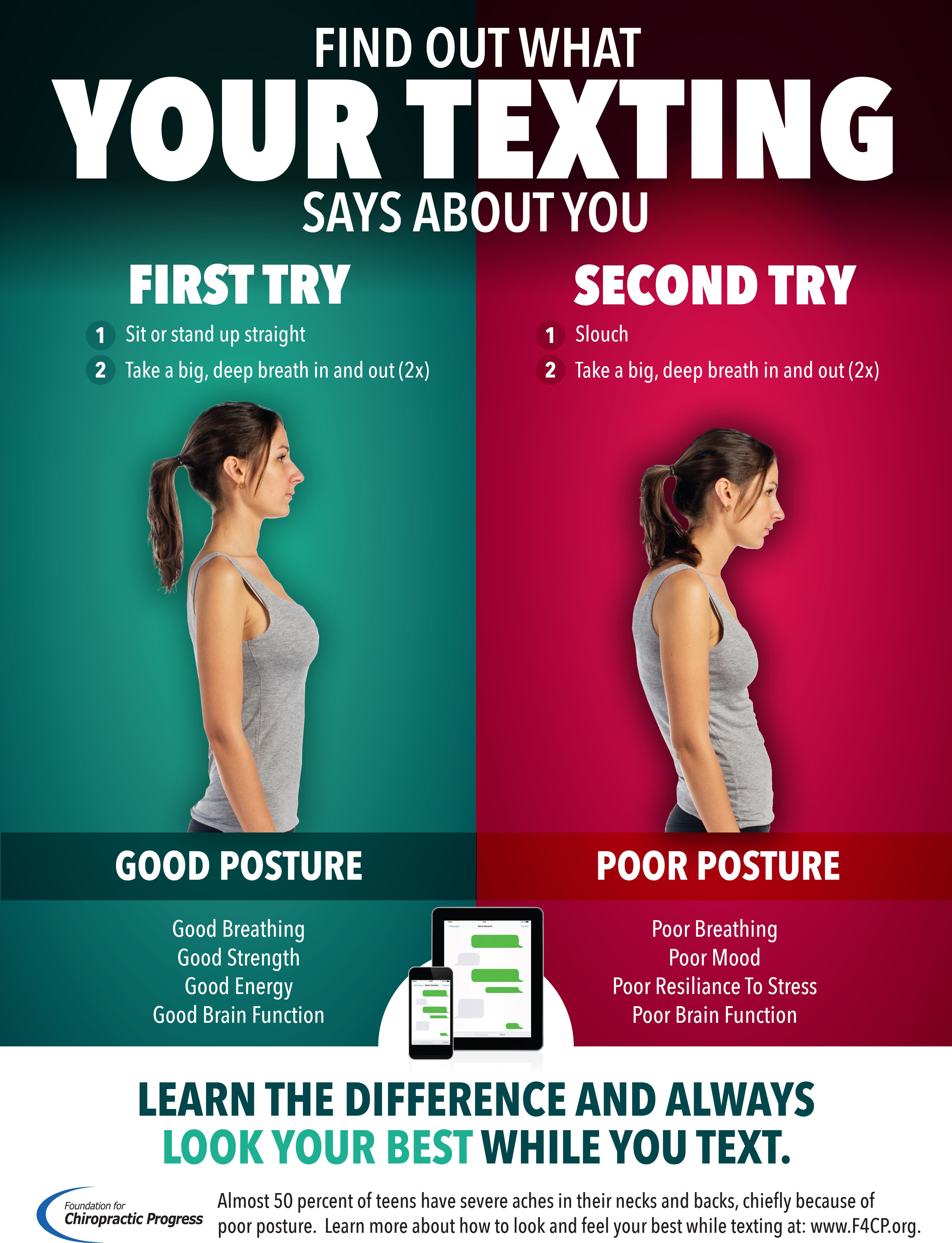
f4cp-posture-poster

Naturopathic Medicine: Safe For Your Family

Naturopathic Medicine: Safe For Your Family

For those millions of Americans with chronic conditions, naturopathic doctors are offering new views and treatment options which are quickly becoming a primary line of care. This popularity has led to license ND’s across the country.

Like chiropractic doctors, naturopathic physicians operate in outpatient, non-emergency centers. Naturopathic doctors work alongside medical doctors.

Combining the wisdom of nature with the rigors of contemporary science, ND’s are highly trained as thorough diagnosticians. Utilizing the body’s inherent ability to restore and maintain health, ND’s treat patients with the least invasive and least toxic treatments. These modalities that are noninvasive and gentle are among the several reasons why naturopathic medicine is safe for you and your family.

little girl at doctors el paso tx _01Naturopathic Physicians Treat Patients Using Noninvasive & Conservative Modalities

Naturopathic physicians specialize in preventative medication and are specialists in clinical nutrition and dietary interventions. They believe diet and lifestyle is the basis to health.

According to some 2014 National Health Report from the Center for Disease Control and Prevention, seven of the top ten leading causes of death are chronic ailments that could have been prevented or delayed, and quality of life could have been improved through lifestyle changes, including proper diet, physical activity, avoidance of tobacco, and other types of risk reduction. Naturopathic doctors help treat chronic diseases including heart disease and cancer, which account for roughly half of all deaths each year.

Research on naturopathic medicine treatments for the prevention of cardiovascular disease and stress reveal that treatments aren’t only safe but effective. The randomized controlled study regarding naturopathic care for anxiety involved the treatment of 75 participants that received nutritional supplements, deep breathing relaxation techniques, dietary counseling, and herbal medicine. According to the analysis, significant differences between groups were observed in mental health, concentration, fatigue, social functioning, energy, and quality of life. The treatments also resulted in no adverse responses in any group.

In addition to nutrition and lifestyle recommendations, naturopathic medicine utilizes other noninvasive modalities such as hydrotherapy, manipulative therapy, botanical medicine, and homeopathy. Every one of these modalities is gentle, safe, effective, and based on nature’s healing power.

Malpractice Claims In Naturopathic Medicine Are Unusual

naturopathic medicine malpractice suit el paso txBecause naturopathic doctors treat their patients via conservative and noninvasive methods, malpractice rates are much lower for naturopathic doctors when compared with conventional doctors. Annual premiums for ND’s are about $3,800 compared to medical doctors with annual premiums of approximately $18,600, based on NCMIC, the largest malpractice insurance coverage for ND’s.

According to 2014 report from the California Naturopathic Doctors Association, because licensure was granted in 2005, nearly 500 practicing naturopathic doctors have a security record that is pristine with no cases of injury. The same report in Washington State says that from 2004-2014, there have only been 25 disciplinary actions against naturopathic doctors in ten years, in comparison to more than 20,000 disciplinary actions for MD’s.

Naturopathic Physicians Are Well Trained

naturopathic medicine el paso txDoctors attend licensed, four-year, on-campus, naturopathic medical colleges in which they study the latest advances in science and natural methods to illness prevention and management. Students gain a comprehensive knowledge of sciences by taking biochemistry, physiology, anatomy, pathology, and pharmacology classes.

Before graduation, students must complete no less than 4,100 hours of course and clinical training, which comprises over 1,200 hours of hands-on, supervised, clinical training. These doctors must also pass board rigorous examinations, to become a licensed practitioner.

ND’s are trained to work in conjunction along with medical physicians. Along with their two years of science coursework students spend 100 hours studying pharmaceuticals . ND’s know how to safely use their treatments integratively with conventional medicine and they understand their limitations.

ND’s Are Trained To Treat A Wide Selection Of Conditions And Populations

naturopathic medicine foot massage el paso txND’s are rigorously trained to practice in a primary care setting in which they experience conditions of all sorts and age groups. A substantial section of an ND’s education is diagnostic training in order that they can treat or refer patients to medical professionals when necessary. This training involves diagnostic tools common in traditional medicine, such as detailed health, disease, prescription medication histories, physical examinations, and lab testing and imaging, according to the American Association of Naturopathic Practitioners.

ND’s consider diet, lifestyle habits and options, exercise history, and also social/emotional factors to evaluate patients’ needs. These approaches often open doors to new and effective treatment choices.

ND’s treat allergies, chronic pain, digestive issues, hormonal imbalances, obesity, respiratory conditions, heart disease, fertility issues, menopause, adrenal fatigue, cancer, fibromyalgia, and chronic fatigue syndrome.

States Are Recognizing And Licensing ND’s

naturopathic license el paso txCurrently 20 states, the District of Columbia and two U.S. territories license naturopathic physicians with three states gaining licensure approval in the last year: Rhode Island, Massachusetts and Pennsylvania. More legislators have started to acknowledge the value of the naturopathic medicine profession that is growing.

“[Naturopathic medicine] has assisted lots of individuals suffering from chronic diseases get relief without chemicals and pharmaceuticals which may have unintended side effects,” Pennsylvania State Reps. Bryan Cutler and Steve Mentzer said in a statement.

New laws create ND licensing boards in each state, requiring that those who set up practice as an ND hold a graduate degree from an accredited naturopathic medical school.�ND’s must also pass national board examinations, which cover therapeutic and diagnostic subjects, fundamental sciences and clinical sciences.

At the NUHS Whole Health Center at Lombard, Ill, medicine doctors offer you a variety of mild and safe treatments such as hydrotherapy, nutritional counseling, homeopathy, botanical medicine, and more.

Vertebrobasilar Stroke, Chiropractic Care & Risks

Vertebrobasilar Stroke, Chiropractic Care & Risks

Results Of A Population-Based Case-Control & Case-Crossover Study

J. David Cassidy, DC, PhD, DrMedSc,*�� Eleanor Boyle, PhD,* Pierre Co�te ?, DC, PhD,*��� Yaohua He, MD, PhD,* Sheilah Hogg-Johnson, PhD,�� Frank L. Silver, MD, FRCPC, and Susan J. Bondy, PhD�

SPINE Volume 33, Number 4S, pp S176 �S183 �2008, Lippincott Williams & Wilkins


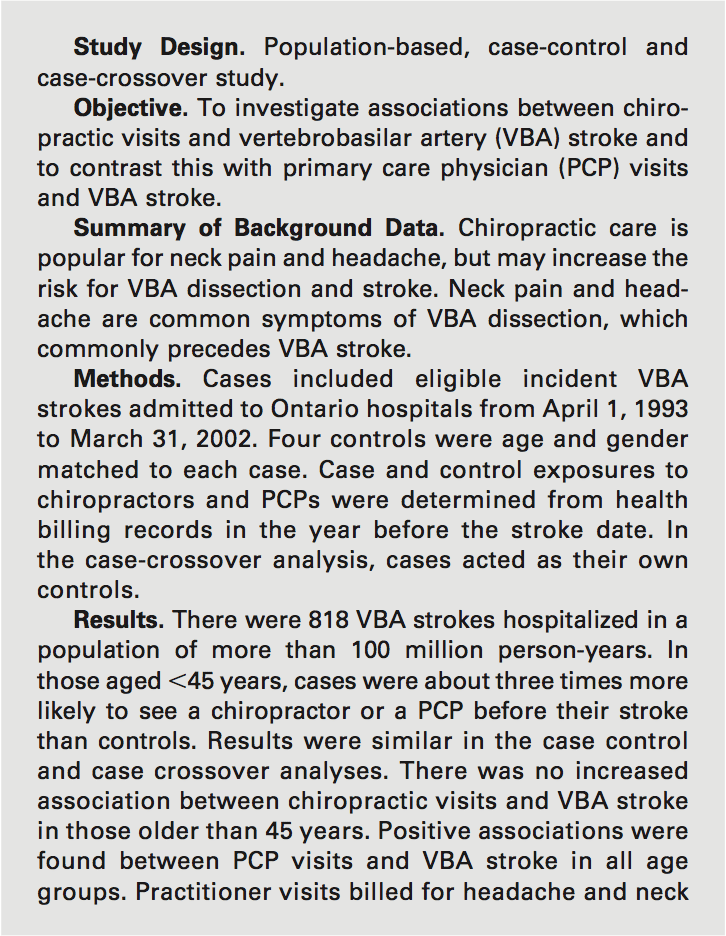
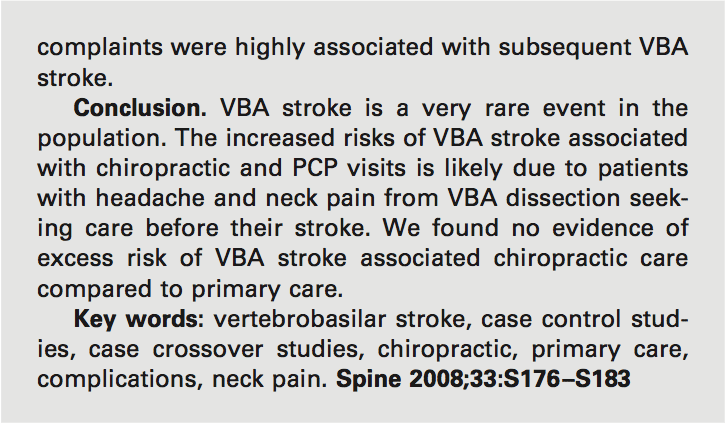
Study.png

Neck pain is a common problem associated with consid- erable comorbidity, disability, and cost to society.1�5 In North America, the clinical management of back pain is provided mainly by medical physicians, physi- cal therapists and chiropractors.6 Approximately 12% of American and Canadian adults seek chiropractic care annually and 80% of these visits result in spinal manipulation.7,8 When compared to those seeking medical care for back pain, Canadian chiropractic pa- tients tend to be younger and have higher socioeco- nomic status and fewer health problems.6,8 In On- tario, the average number of chiropractic visits per episode of care was 10 (median 6) in 1985 through 1991.7 Several systematic reviews and our best- evidence synthesis suggest that manual therapy can benefit neck pain, but the trials are too small to eval- uate the risk of rare complications.9 �13

Two deaths in Canada from vertebral artery dissection and stroke following chiropractic care in the 1990s attracted much media attention and a call by some neurologists to avoid neck manipulation for acute neck pain.14 There have been many published case reports linking neck manipulation to vertebral artery dissection15�and stroke.�The prevailing theory is that extension�and/or rotation of the neck can damage the vertebral artery, particularly within the foramen transversarium at the C1�C2 level. Activities leading to sudden or sustained rotation and extension of the neck have been implicated, included motor vehicle collision, shoulder checking while driving, sports, lifting, working over- head, falls, sneezing, and coughing.16 However, most cases of extracranial vertebral arterial dissection are thought to occur spontaneously, and other factors such as connective tissue disorders, migraine, hyper- tension, infection, levels of plasma homocysteine, vessel abnormalities, atherosclerosis, central venous�catherization, cervical spine surgery, cervical percutaneous nerve blocks, radiation therapy and diagnostic cerebral angiography have been identified as possible risk factors.17�21

The true incidence of vertebrobasilar dissection is un- known, since many cases are probably asymptomatic, or the dissection produces mild symptoms.22 Confirming the diagnosis requires a high index of suspicion and good vascular imaging. The cases that are most likely to be diagnosed are those that result in stroke.19,22 Ischemic stroke occurs when a thrombus develops intraluminally and embolizes to more distal arteries, or less commonly, when the dissection extends distally into the intracranial vertebral artery, obliterating branching vessels.22 The best incidence estimate comes from Olmstead county, where vertebral artery dissection causing stroke affected 0.97 residents per 100,000 population between 1987 and 2003.23

To date there have been two case-control studies of stroke following neck manipulation. Rothwell et al used Ontario health data to compare 582 cases of VBA stroke to 2328 age and sex-matched controls.24 For those aged 45 years, cases were five times more likely than con- trols to have visited a chiropractor within 1 week of VBA stroke. Smith et al studied 51 patients with cervical ar- tery dissection and ischemic stroke or transient ischemic attack (TIA) and compared them to 100 control patients suffering from other strokes not caused by dissections.25 Cases and controls came from two academic stroke cen- ters in the United States and were matched on age and sex. They found no significant association between neck manipulation and ischemic stroke or TIA. However, a subgroup analysis showed that the 25 cases with verte- bral artery dissection were six times more likely to have consulted a chiropractor within 30 days before their stroke than the controls.

Finally, because patients with vertebrobasilar artery dissection commonly present with headache and neck pain,23 it is possible that patients seek chiropractic care for these symptoms and that the subsequent VBA stroke occurs spontaneously, implying that the associ- ation between chiropractic care and VBA stroke is not causal.23,26 Since patients also seek medical care for headache and neck pain, any association between pri- mary care physician (PCP) visits and VBA stroke could be attributed to seeking care for the symptoms of verte- bral artery dissection.

The purpose of this study is to investigate the association between chiropractic care and VBA stroke and compare it to the association between recent PCP care and VBA stroke using two epidemiological designs. Evidence that chiropractic care increases the risk of VBA stroke would be present if the measured association between chiropractic visits and VBA stroke exceeds the association between PCP visits and VBA strokes.

Study Design

We undertook population-based case-control and case- crossover studies. Both designs use the same cases. In the case- control design, we sampled independent control subjects from the same source population as the cases. In the case-crossover design, cases served as their own controls, by sampling control periods before the study exposures.27 This design is most appropriate when a brief exposure (e.g., chiropractic care) causes a transient change in risk (i.e., hazard period) of a rare-onset disease (e.g., VBA stroke). It is well suited to our research questions, since within person comparisons control for unmeasured risk factors by design, rather than by statistical modeling.28 �30 Thus the advantage over the case control design is better control of confounding.

Source Population

The source population included all residents of Ontario (109,020,875 person-years of observation over 9 years) covered by the publicly funded Ontario Health Insurance Plan (OHIP). Available utilization data included hospitalizations with diagnostic coding, and practitioner (physician and chiropractic) utilization as documented by fee-for-service billings accompanied by diagnostic coding. We used two data sources: (1) the Discharge Abstract Database (DAD) from the Canadian Institute for Health Information, which captures hospital separations and ICD codes, and (2) the OHIP Databases for services provided by physicians and chiropractors. These data- bases can be linked from April 1992 onward.

Cases

We included all incident vertebrobasilar occlusion and stenosis strokes (ICD-9433.0 and 433.2) resulting in an acute care hospital admission from April 1, 1993 to March 31, 2002. Codes were chosen in consultation with stroke experts and an epidemiologist who participated in a similar past study (SB).24 Cases that had an acute care hospital admission for any type of stroke (ICD-9433.0, 433.2, 434, 436, 433.1, 433.3, 433.8, 433.9, 430, 431, 432, and 437.1), transient cerebral ischemia (ICD- 9435) or late effects of cerebrovascular diseases (ICD-9438) before their VBA stroke admission or since April 1, 1991 were excluded. Cases residing in long-term care facilities were also excluded. The index date was defined as the hospital admission date for the VBA stroke.

Controls

For the case-control study, four age and sex-matched controls were randomly selected from the Registered Persons Database, which contains a listing of all health card numbers for Ontario. Controls were excluded if they previously had a stroke or were residing in a long-term care facility.

For the case crossover study, four control periods were randomly chosen from the year before the VBA stroke date, using a time-stratified approach.31 The year was divided into disjoint strata with 2 week periods between the strata. For the 1 month hazard period, the disjoint strata were separated by 1 month periods and the five remaining control periods were used in the analyses. We randomly sampled disjoint strata because chiropractic care is often delivered in episodes, and this strategy eliminates overlap bias and bias associated with time trends in the exposure.32

Exposures

All reimbursed ambulatory encounters with chiropractors and PCPs were extracted for the one-year period before the index date from the OHIP database. Neck-related chiropractic visits were identified using diagnostic codes: C01�C06, cervical and cervicothoracic subluxation; C13�C15, multiple site subluxation; C30, cervical sprain/strain; C40, cervical neuritis/ neuralgia; C44, arm neuritis/neuralgia; C50, brachial radiculitis; C51, cervical radiculitis; and C60, headache. For PCP visits, we included community medicine physicians if they submitted ambulatory fee codes to OHIP. Fee codes for group therapy and signing forms were excluded. Headache or neck pain- related PCP visits were identified using the diagnostic codes: ICD-9307, tension headaches; 346, migraine headaches; 722, intervertebral disc disorders; 780, headache, except tension headache and migraine; 729, fibrositis, myositis and muscular rheumatism; and 847, whiplash, sprain/strain and other traumas associated with neck (These codes include other diagnoses, and we list only those relevant to neck pain or headache). There is no limit on the number of reimbursed PCP visits per year. However, there are limits chiropractors, but less than 15% of patients surpass them.24

Statistical Analysis

Conditional logistic regression was used to estimate the asso- ciation between VBA stroke after chiropractor and PCP visits. Separate models were built using different a priori specified hazard periods, stratified by age ( 45 years and 45 years) and by visits with or without head and neck pain related diag- nostic codes. For the chiropractic analysis, the index date was included in the hazard period, since chiropractic treatment might cause immediate stroke and patients would not normally consult a chiropractor after having a stroke. However, the in- dex day was excluded from the PCP analysis, since patients might consult these physicians after experiencing a stroke. We tested different hazard periods, including 1 day, 3 days, 1 week, 2 weeks, and 1 month before the index date. Exposure occurred if any chiropractic or PCP visits were recorded during the des- ignated hazard periods.

We also measured the effect of cumulative numbers of chiropractic and PCP visits in the month before the index date by computing the odds ratio for each incremental visit. These estimates were similarly stratified by age and by diagnostic codes related to headache and/or neck pain. Finally, we conducted analyses to determine if our results were sensitive to chiropractic and PCP visits related to neck complaints and headaches. We report our results as odds ratios (OR) and 95% confidence intervals. Confidence intervals were estimated by accelerated bias corrected bootstraps with 2000 replications using the variance co-variance method.33 All statistical analyses were per- formed using STATA/SE version 9.2.34

Results

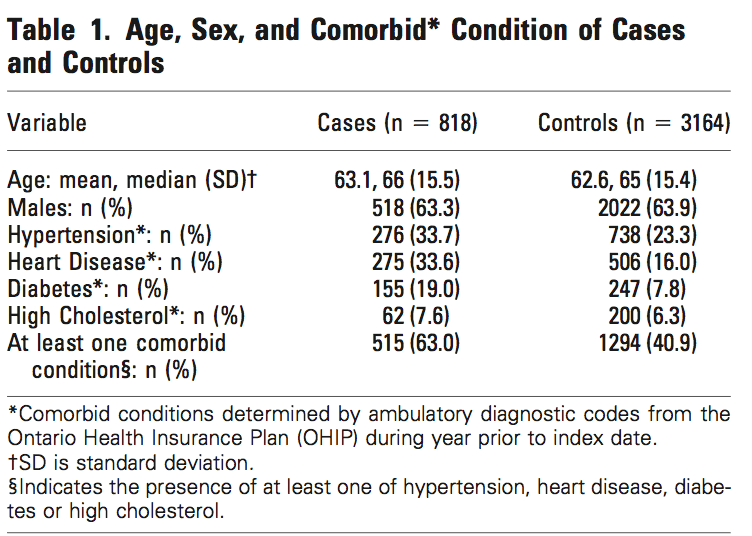
A total of 818 VBA strokes met our inclusion/exclusion criteria over the 9 year inception period. Of the 3272 matched control subjects, 31 were excluded because of prior stroke, one had died before the index date and 76 were receiving long-term care. Thus, 3164 control subjects were matched to the cases. The mean age of cases and controls was 63 years at the index date and 63% were male. Cases had a higher proportion of comorbid conditions (Table 1). Of the 818 stroke cases, 337�(41.2%) were coded as basilar occlusion and stenosis, 443 (54.2%) as vertebral occlusion and stenosis and 38 (4.7%) had both codes.

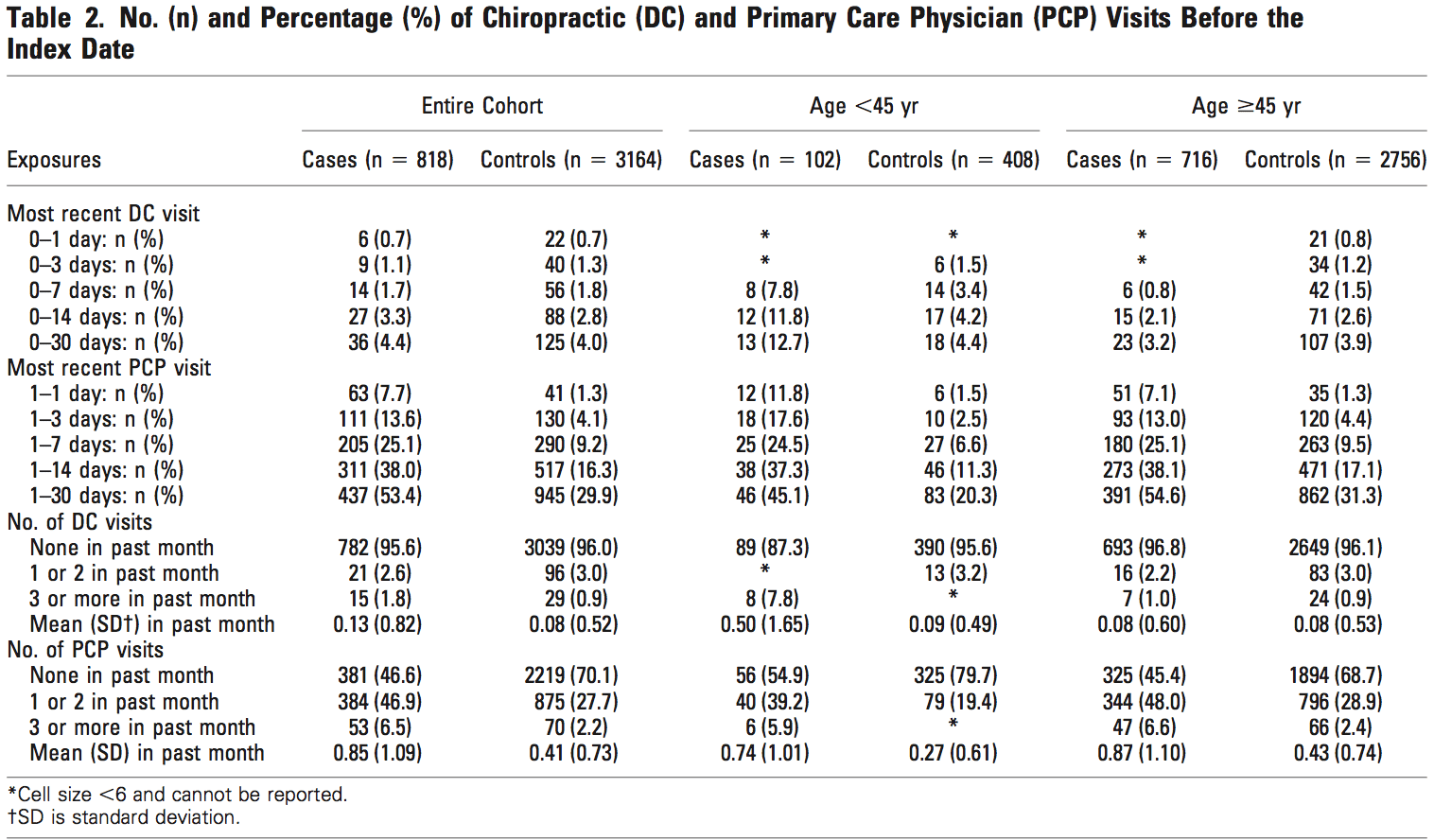
Overall, 4% of cases and controls had visited a chiropractor within 30 days of the index date, while 53% of cases and 30% of controls had visited a PCP within that time (Table 2). For those under 45 years of age, 8 cases (7.8%) had consulted a chiropractor within 7 days of the index date, compared to 14 (3.4%) of controls. For PCPs, 25 cases (24.5%) under 45 years of age had a consultation within 7 days of the index date, com- pared to 27 (6.6%) of controls. With respect to the number of visits within 1 month of the index date, 7.8% of cases under the age of 45 years had three or more chiropractic visits, whereas 5.9% had three or more PCP visits (Table 2).

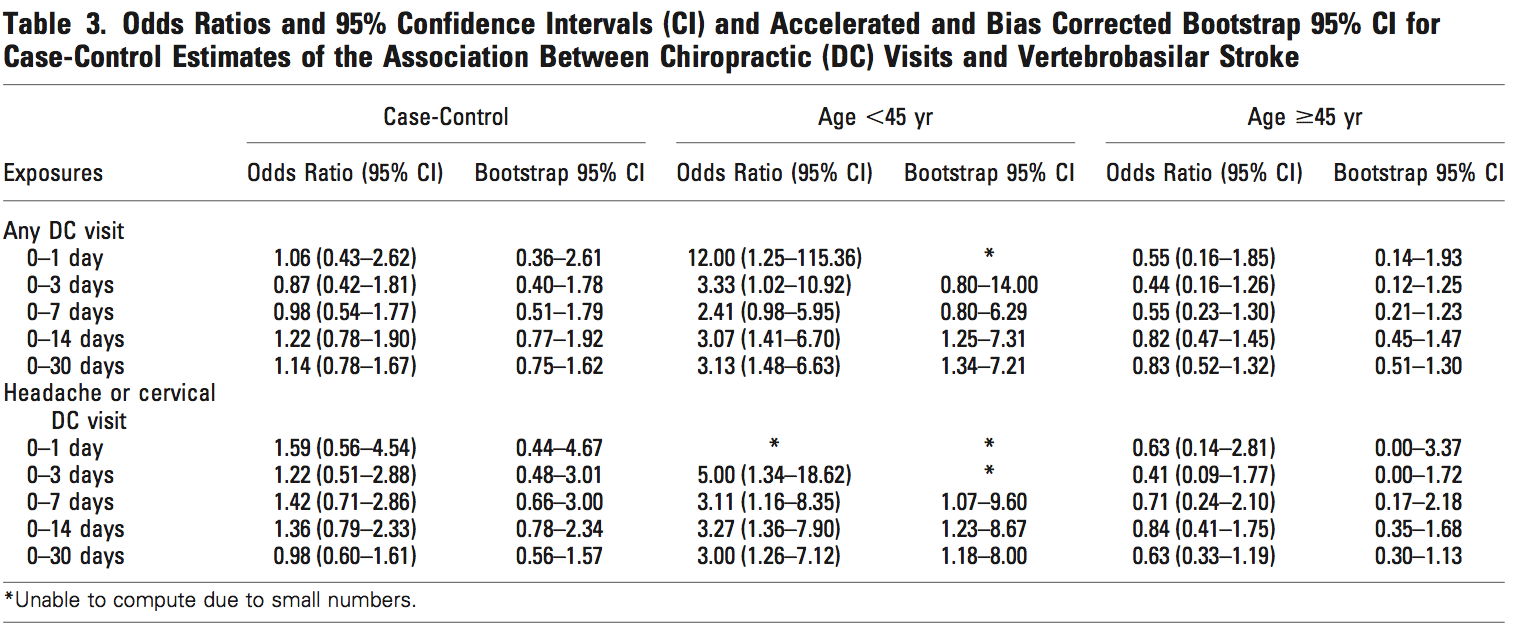
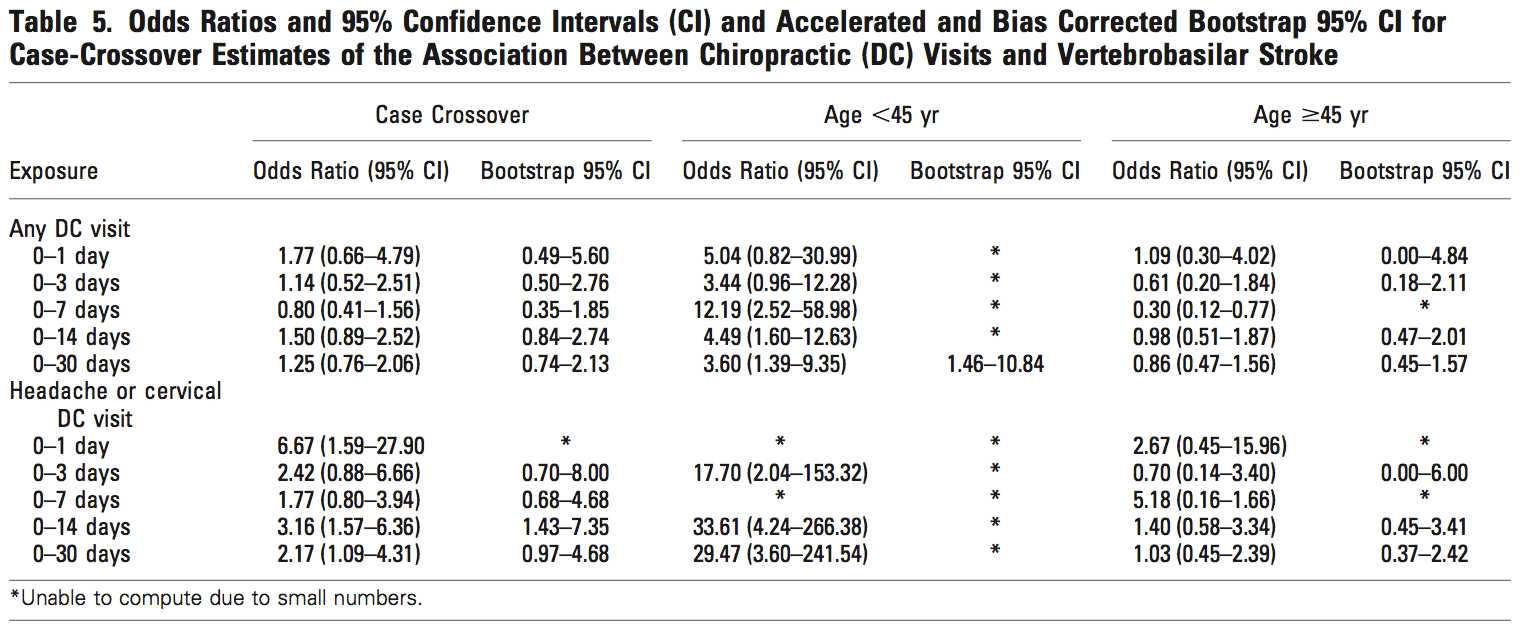
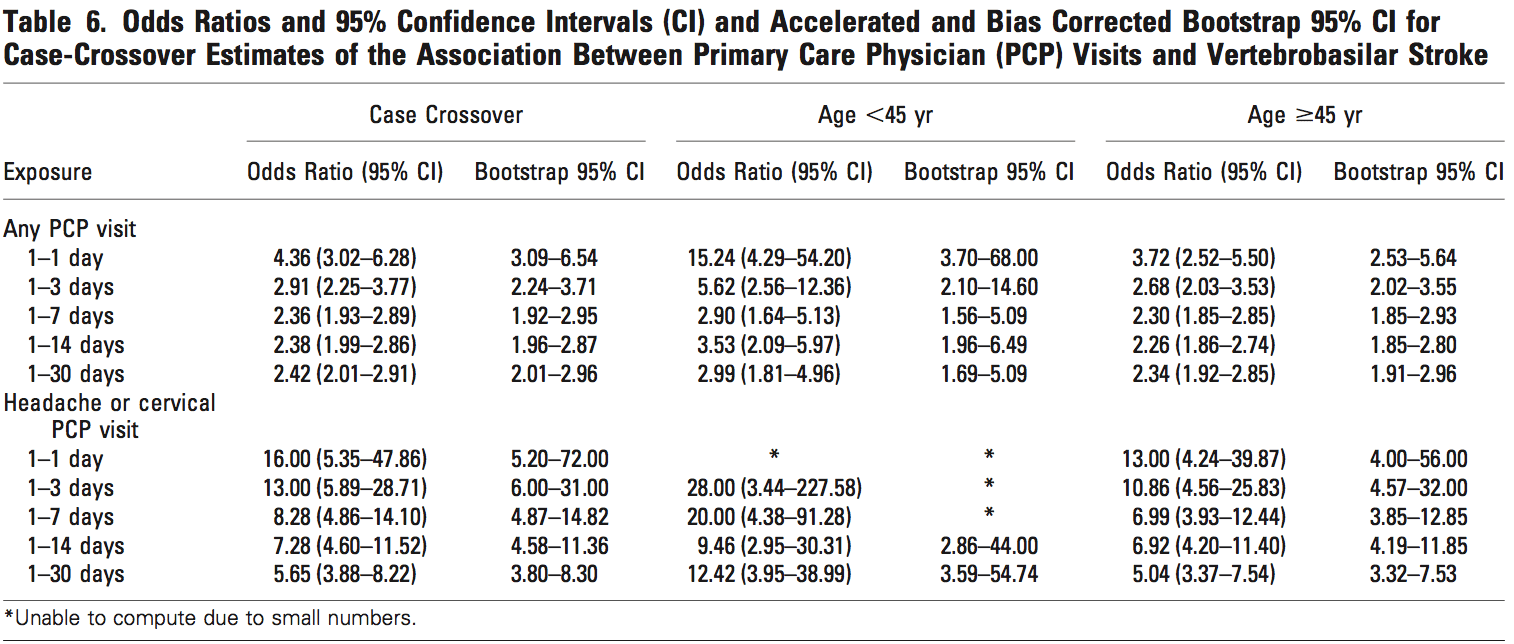
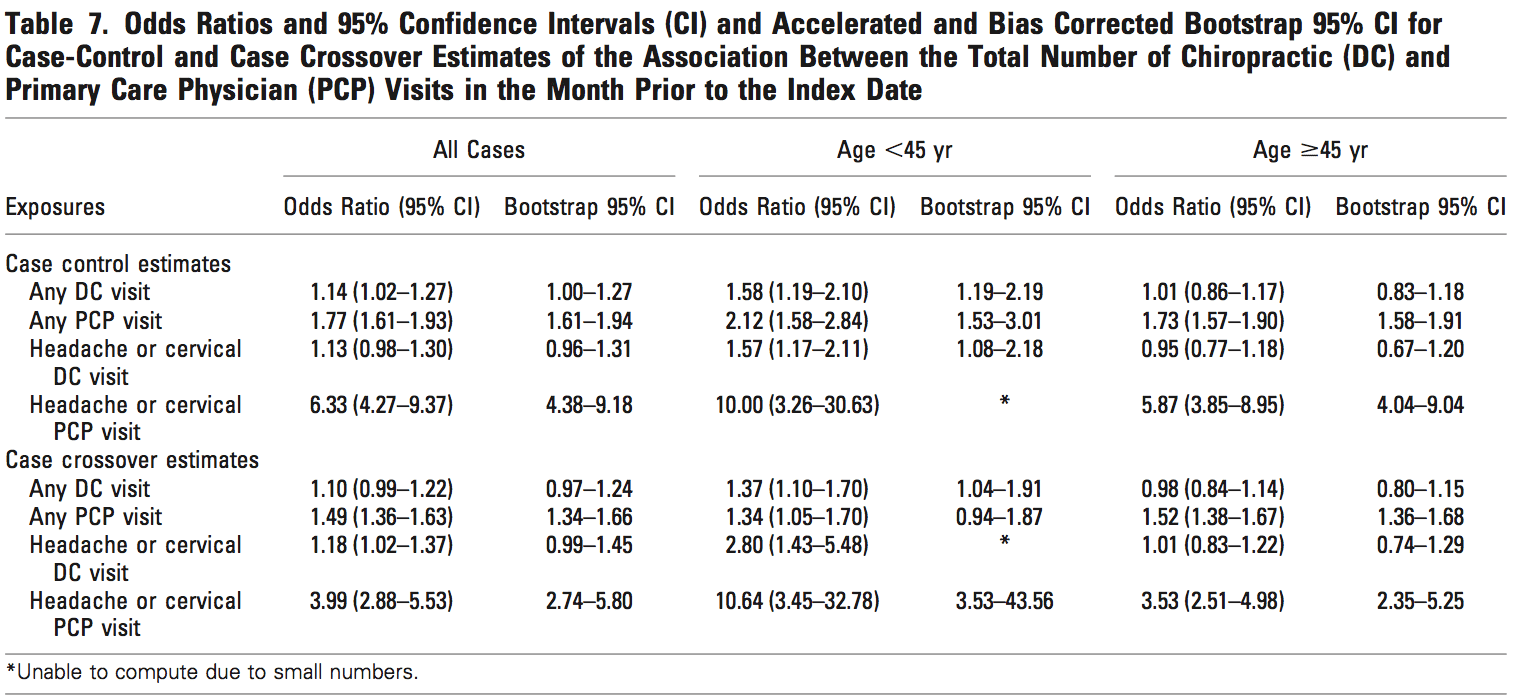
The case control and case crossover analyses gave similar results. (Tables 3�7) Age modified the effect of chiropractic visits on the risk of VBA stroke. For those under 45 years of age, there was an increased association between chiropractic visits and VBA stroke regardless of the hazard period. For those 45 years of age and older, there was no association. Each chiropractic visit in the month before the index date was associated with an in- creased risk of VBA stroke in those under 45 years of age (OR 1.37; 95% CI 1.04�1.91 from the case crossover analysis) (Table 7). We were not able to estimate boot- strap confidence intervals in some cases because of sparse data.

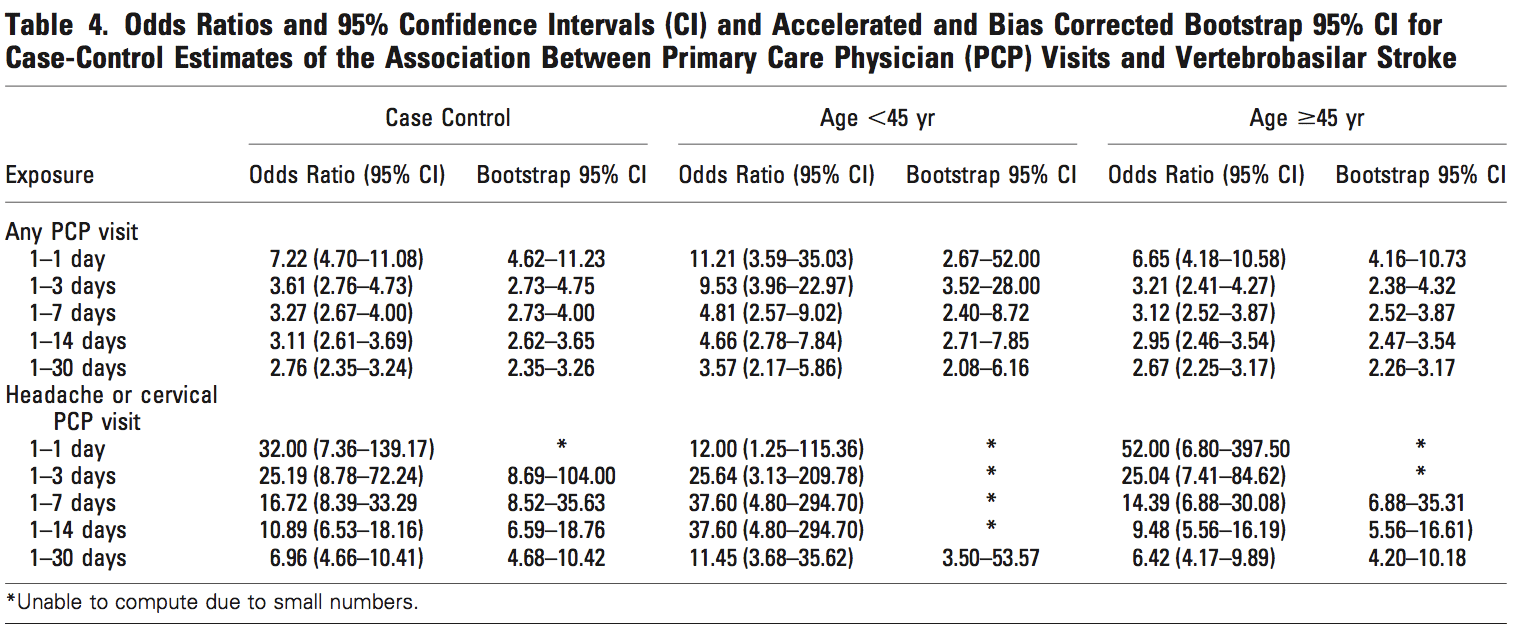
Similarly, we found that visiting a PCP in the month before the index date was associated with an increased risk of VBA stroke regardless of the hazard period, or the age of the subject. Each PCP visit in the month before the stroke was associated with an increased risk of VBA stroke both in those under 45 years of age (OR 1.34; 95% CI 0.94 �1.87 from the case crossover analysis) and 45 years and older (OR 1.52; 95% CI 1.36�1.67 from the case crossover analysis) (Table 7).

Our results were sensitive to chiropractic and PCP visits related to neck complaints and headaches, and we observed sharp increases in the associations when restricting the analyses to these visits (Tables 3�7). Overall,�these associations were more pronounced in the PCP analyses. However, the data are sparse, and we were unable to compute bootstrap confidence intervals in many cases.

Discussion

Our study advances knowledge about the association between chiropractic care and VBA stroke in two respects. First, our case control results agree with past case control studies that found an association between chiropractic care and vertebral artery dissection and VBA stroke.24,25 Second, our case crossover results confirm these findings using a stronger research design with better control of confounding variables. The case-crossover design controls for time independent confounding factors, both known and unknown, which could affect the risk of VBA stroke. This is important since smoking, obesity, undiagnosed hypertension, some connective tis- sue disorders and other important risk factors for dissection and VBA stroke are unlikely to be recorded in ad- ministrative databases.

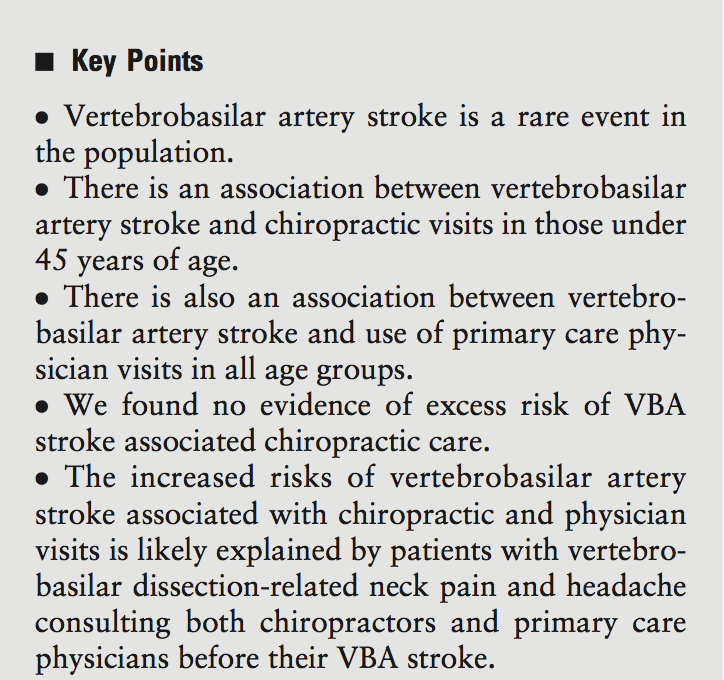
We also found strong associations between PCP visits and subsequent VBA stroke. A plausible explanation for this is that patients with head and neck pain due to vertebral artery dissection seek care for these symptoms, which precede more than 80% of VBA strokes.23 Since it�is unlikely that PCPs cause stroke while caring for these patients, we can assume that the observed association between recent PCP care and VBA stroke represents the background risk associated with patients seeking care for dissection-related symptoms leading to VBA stroke. Be- cause the association between chiropractic visits and VBA stroke is not greater than the association between PCP visits and VBA stroke, there is no excess risk of VBA stroke from chiropractic care.

Our study has several strengths and limitations. The study base includes an entire population over a 9-year period representing 109,020,875 person-years of observation. Despite this, we found only 818 VBA strokes, which limited our ability to compute some estimates and bootstrap confidence intervals. In particular, our age stratified analyses are based on small numbers of ex- posed cases and controls (Table 2). Further stratification by diagnostic codes for headache and neck pain related visits imposed even greater difficulty with these estimates. However, there are few databases that can link�incident VBA strokes with chiropractic and PCP visits in a large enough population to undertake a study of such a rare event.

A major limitation of using health administrative data are misclassification bias, and the possibility of bias in assignment of VBA-related diagnoses, which has previously been raised in this context.24 Liu et al have shown that ICD-9 hospital discharge codes for stroke have a poor positive predictive value when compared to chart review.35 Furthermore, not all VBA strokes are secondary to vertebral artery dissection and administrative databases do not provide the clinical detail to determine the specific cause. To investigate this bias, we did a sensitivity analysis using different positive predictive values for stroke diagnosis (ranging from 0.2 to 0.8). Assuming non differential misclassification of chiropractic and PCP cases, our analysis showed attenuation of the estimates towards the null with lower positive predictive values, but the conclusions did not change (i.e., associations remained positive and significant�data not shown). The�reliability and validity of the codes to classify headache and cervical visits to chiropractors and PCPs is not known.

It is also possible that patients presenting to hospital with neurologic symptoms who have recently seen a chiropractor might be subjected to a more vigorous diagnostic workup focused on VBA stroke (i.e., differential misclassification).36 In this case, the predictive values of the stroke codes would be greater for cases that had seen a chiropractor and our results would underestimate the association between PCP care and VBA stroke.

A major strength of our study is that exposures were measured independently of case definition and handled identically across cases and controls. However, there was some overlap between chiropractic care and PCP care. In the month before their stroke, only 16 (2.0%) of our cases had seen only a chiropractor, while 20 (2.4%) had seen both a chiropractor and PCP, and 417 (51.0%) had�just seen only a PCP. We were not able to run a subgroup analysis on the small number of cases that just saw a chiropractor. However, subgroup analysis on the PCP cases (n 782) that did not visit a chiropractors during the 1 month before their stroke did not change the conclusions (data not shown).

Our results should be interpreted cautiously and placed into clinical perspective. We have not ruled out neck manipulation as a potential cause of some VBA strokes. On the other hand, it is unlikely to be a major cause of these rare events. Our results suggest that the association between chiropractic care and VBA stroke found in previous studies is likely explained by present- ing symptoms attributable to vertebral artery dissection. It might also be possible that chiropractic manipulation, or even simple range of motion examination by any practitioner, could result in a thromboembolic event in a patient with a pre-existing vertebral dissection. Unfortunately, there is no acceptable screening procedure to identify patients with neck pain at risk of VBA stroke.37 These events are so rare and difficult to diagnose that future studies would need to be multi-centered and have unbiased ascertainment of all potential exposures. Given our current state of knowledge, the decision of how to treat patients with neck pain and/or headache should be driven by effectiveness and patient preference.38

Conclusion

Our population-based case-control and case-crossover study shows an association between chiropractic visits and VBA strokes. However, we found a similar association between primary care physician visits and VBA stroke. This suggests that patients with undiagnosed vertebral artery dissection are seeking clinical care for head- ache and neck pain before having a VBA stroke.

Acknowledgments

The authors acknowledge the members of the Decade of the Bone and Joint 2000 �2010 Task Force on Neck Pain and its Associate Disorders for advice about de- signing this study. In particular, they acknowledge the help of Drs. Hal Morgenstern, Eric Hurwitz, Scott Haldeman, Linda Carroll, Gabrielle van der Velde, Lena Holm, Paul Peloso, Margareta Nordin, Jaime Guzman, Eugene Carragee, Rachid Salmi, Alexander Grier, and Mr. Jon Schubert.

References
1. Borghouts JA, Koes BW, Vondeling H, et al. Cost-of-illness of neck pain in The Netherlands in 1996. Pain 1999;80:629�36.
2. Co�te� P, Cassidy JD, Carroll L. The Saskatchewan Health and Back PainSurvey. The prevalence of neck pain and related disability in Saskatchewan adults. Spine 1998;23:1689�98.
3. Co�te� P, Cassidy JD, Carroll L. The factors associated with neck pain and its related disability in the Saskatchewan population. Spine 2000;25:1109�17.
4. Co�te� P, Cassidy JD, Carroll L. Is a lifetime history of neck injury in a trafficcollision associated with prevalent neck pain, headache and depressive symptomatology? Accid Anal Prev 2000;32:151�9.
5. Co�te� P, Cassidy JD, Carroll LJ, et al. The annual incidence and course of neck pain in the general population: a population-based cohort study. Pain 2004; 112:267�73.
6. Co�te� P, Cassidy JD, Carroll L. The treatment of neck and low back pain: who seeks care? who goes where? Med Care 2001;39:956�67.
7. Hurwitz EL, Coulter ID, Adams AH, et al. Use of chiropractic services from 1985 through 1991 in the United States and Canada. Am J Public Health1998;88:771�6.
8. Hurwitz EL, Chiang LM. A comparative analysis of chiropractic and general practitioner patients in North America: findings from the jointCanada/United States Survey of Health, 2002�03. BMC Health Serv Res 2006;6:49.
9. Aker PD, Gross AR, Goldsmith CH, et al. Conservative management of mechanical neck pain: systematic overview and meta-analysis. BMJ 1996; 313:1291�6.
10. Gross AR, Kay T, Hondras M, et al. Manual therapy for mechanical neckdisorders: a systematic review. Man Ther 2002;7:131�49.
11. Hurwitz EL, Aker PD, Adams AH, et al. Manipulation and mobilization of the cervical spine. A systematic review of the literature. Spine 1996;21:1746�59.
12. McClune T, Burton AK, Waddell G. Whiplash associated disorders: a review of the literature to guide patient information and advice. Emerg Med J 2002;19:499�506.
13. Peeters GG, Verhagen AP, de Bie RA, et al. The efficacy of conservative treatment in patients with whiplash injury: a systematic review of clinical trials. Spine 2001;26:E64�E73.
14. Norris JW, Beletsky V, Nadareishvili ZG. Sudden neck movement and cervical artery dissection. The Canadian Stroke Consortium. CMAJ 2000;163:38�40.
15. Ernst E. Manipulation of the cervical spine: a systematic review of case reports of serious adverse events, 1995�2001. Med J Aust 2002;176:376�80.
16. Haldeman S, Kohlbeck FJ, McGregor M. Risk factors and precipitating neckmovements causing vertebrobasilar artery dissection after cervical trauma and spinal manipulation. Spine 1999;24:785�94.
17. Rubinstein SM, Peerdeman SM, van Tulder MW, et al. A systematic reviewof the risk factors for cervical artery dissection. Stroke 2005;36:1575�80.
18. Inamasu J, Guiot BH. Iatrogenic vertebral artery injury. Acta Neurol Scand 2005;112:349�57.
19. Schievink WI. Spontaneous dissection of the carotid and vertebral arteries. N Engl J Med 2001;344:898�906.
20. D�Anglejan-Chatillon J, Ribeiro V, Mas JL, et al. Migraine�a risk factor for dissection of cervical arteries. Headache 1989;29:560�1.
21. Pezzini A, Caso V, Zanferrari C, et al. Arterial hypertension as risk factor for spontaneous cervical artery dissection. A case-control study. J Neurol Neurosurg Psychiatry 2006;77:95�7.
22. Savitz SI, Caplan LR. Vertebrobasilar disease. N Engl J Med 2005;352: 2618�26.
23. Lee VH, Brown RD Jr, Mandrekar JN, et al. Incidence and outcome of cervical artery dissection: a population-based study. Neurology 2006;67: 1809�12.
24. Rothwell DM, Bondy SJ, Williams JI. Chiropractic manipulation and stroke: a population-based case-control study. Stroke 2001;32:1054�60.
25. Smith WS, Johnston SC, Skalabrin EJ, et al. Spinal manipulative therapy is an independent risk factor for vertebral artery dissection. Neurology 2003;60: 1424�8.
26. Arnold M, Bousser MG, Fahrni G, et al. Vertebral artery dissection: presenting findings and predictors of outcome. Stroke 2006;37:2499�503.
27. Maclure M. The case-crossover design: a method for studying transient effects on the risk of acute events. Am J Epidemiol 1991;133:144�53.
28. Kelman CW, Kortt MA, Becker NG, et al. Deep vein thrombosis and air travel: record linkage study. BMJ 2003;327:1072.
29. Mittleman MA, Maclure M, Tofler GH, et al. Triggering of acute myocardial infarction by heavy physical exertion. Protection against triggering by regular exertion. Determinants of Myocardial Infarction Onset Study Investigators.
N Engl J Med 1993;329:1677�83.
30. Redelmeier DA, Tibshirani RJ. Association between cellular-telephone calls and motor vehicle collisions. N Engl J Med 1997;336:453�8.
31. Janes H, Sheppard L, Lumley T. Overlap bias in the case-crossover design, with application to air pollution exposures. Stat Med 2005;24:285�300.
32. Janes H, Sheppard L, Lumley T. Case-crossover analyses of air pollution exposure data: referent selection strategies and their implications for bias. Epidemiology 2005;16:717�26.
33. Efron B, Tibshirani RJ. An Introduction to the Bootstrap. New York: Chapmanand Hall/CRC, 1993.
34. STATA/SE [computer program]. College Station, Tex: Stata Corp, 2006.
35. Liu L, Reeder B, Shuaib A, et al. Validity of stroke diagnosis on hospital discharge records in Saskatchewan, Canada: implications for stroke surveillance. Cerebrovasc Dis 1999;9:224�30.
36. Boyle E, Co�te� P, Grier AR, et al. Examining vertebrobasilar artery stroke in two Canadian provinces. Spine, in press.
37. Co�te� P, Kreitz BG, Cassidy JD, et al. The validity of the extension-rotation test as a clinical screening procedure before neck manipulation: a secondary analysis. J Manip Physiol Therap 1996;159�64.
38. van der Velde G, Hogg-Johnson S, Bayoumi A, et al. Identifying the best treatment among common non-surgical neck pain treatments: a decision analysis. Spine 2008;33(Suppl):S184�S191.

Key words: vertebrobasilar stroke, case control stud- ies, case crossover studies, chiropractic, primary care, complications, neck pain. Spine 2008;33:S176�S183

From the *Centre of Research Expertise for Improved Disability Outcomes (CREIDO), University Health Network Rehabilitation Solutions, Toronto Western Hospital, and the Division of Heath Care and Outcomes Research, Toronto Western Research Institute, Toronto, ON, Canada; �Department of Public Health Sciences, Management and Evaluation, University of Toronto, Toronto, ON, Canada; �Department of Health Policy, Management and Evalua- tion, University of Toronto, Toronto, ON, Canada; �Institute for Work & Health, Toronto, ON, Canada; �University Health Net- work Stroke Program, Toronto Western Hospital, Toronto, ON, Canada; and Division of Neurology, Department of Medicine, Fac- ulty of Medicine, University of Toronto, Toronto, ON, Canada. Supported by Ontario Ministry of Health and Long-term Care. P.C. is supported by the Canadian Institute of Health Research through a New Investigator Award. S.H.-J. is supported by the Institute for Work & Health and the Workplace Safety and Insurance Board of Ontario. The opinions, results, and conclusions are those of the authors and no endorsement by the Ministry is intended or should be inferred.

The manuscript submitted does not contain information about medical device(s)/drug(s).
University Health Network Research Ethics Board Approval number 05-0533-AE.

Address correspondence and reprint requests to J. David Cassidy, DC, PhD, DrMedSc, Toronto Western Hospital, Fell 4-114, 399 Bathurst Street, Toronto, ON, Canada M5T 2S8; E-mail: [email protected]

Reasons A Chiropractor Will Benefit You

Reasons A Chiropractor Will Benefit You

Many people have back pain so often that it starts to become a daily struggle. You don�t have to put up with pain every day.

Share Free Ebook!

TIP! One interesting fact is that good chiropractic care can actually strengthen your immune system. Spine issues can cause problems with the nervous system, which is linked to the immune system.

Many doctors work with alternative therapy. This makes it important that your insurance policy and see what back care therapies are covered. This can improve your health even more effective.

Pay attention to your sleep in order to fix back-related problems.Put a pillow underneath your head and shoulders. Place rolled-up towels underneath your neck and knees to help support the body�s curves. You should also have a mattress that is comfy.

TIP! Don�t think you�re going to get all the care you need from just a single visit to a�chiropractor. While it may make you feel better right away, it will take many sessions to see great improvements.

You should not expect one treatment at the chiropractor to solve all your pain problem. You will probably see some immediate relief; however, but regular visits are required for lasting relief. Stick with whatever regiment your chiropractor�recommends. If you fail to do this, you will end up disappointed with the results.

There are lots of solid reasons as to why a person ought to visit a chiropractor. If your back or neck hurt, you should find a reputable chiropractor right away. Your body will not run correctly if your skeletal structure.

TIP! Don�t be afraid to ask your chiropractor�about discounts; they may offer one the more frequently you visit. Chiropractic treatment usually involves multiple visits.

Ask your chiropractor if there are frequency discounts in their office. Chiropractic treatment usually requires a series of office visits. You may need to visit several times weekly for months to come. It can quickly become quite costly. The doctor�s office may have some sort of discount if you visit a lot so things don�t cost you so much more affordable.

Ask you doctor to recommend a chiropractor. Even if you don�t need a referral, your doctor can suggest a good chiropractor.

TIP! Ask your regular physician if they can refer you to a quality�chiropractor. A referral may not be required, but it helps you find the most qualified, trusted professionals in your local area.

Make a wise decision when searching for a chiropractor. Most chiropractors are honest, but others cannot be trusted. There are actually some of people going to a chiropractor and feeling much worse afterwards. Make sure you�re doing research prior to choosing a chiropractor.

Check out the references of a chiropractor before scheduling an appointment with them. While lots of chiropractors are interested in their patients� health, there are some that attempt to extend treatments beyond what is actually needed. Look at reviews online and get recommendations from your regular doctor.

TIP! Before ever contacting a�chiropractor, ask for references from your doctor or physician. The majority of professional chiropractors are experts in their field who actually care about your health, but there are a few bad eggs in the bunch.

A cervical pillow or roll up a towel and position it beneath your neck when you sleep can really help. They let your head drop down while a regular pillow has your head being pushed forward.

Blood Pressure

TIP! Is high blood pressure something you have? Studies show that vertebrae manipulation is more effective than blood pressure medications. Certain manipulations of the vertebrae can help get your blood pressure regular.

Is your blood pressure something you have? Studies show that vertebrae is as good as using two hypertension medications together. When the vertebrae are manipulated, the blood pressure can be regulated.

Chiropractic care can also help your immune system as well. Your nervous system can malfunction when the bones in your spine are misaligned. Because your nervous system controls tissue, cell and organ function, if it gets impacted it can make your health go wrong. Fixing the issue can get your immune system back to optimal performance.

TIP! Chiropractic care is not just for back and necks, it boosts your immune system as well. Bones that are out of alignment in the spine often interfere with your nervous system�s functioning.

Stay away from chiropractors that want to give you dietary supplements and other products. They are likely charlatans if they offer and cannot be trusted. Nutritionists and doctors are reliable sources for such advice.

It is easy to find a qualified chiropractor in the United States. Chiropractic care makes up the second largest health care profession. It is also happens to be the fastest. On top of that number, as many as 10,000 students or more are learning the practice themselves.

TIP! Do not carry a wallet inside your back pocket. Many men�carry a wallet in their back pocket and don�t understand how it affects their back.

Meet with the chiropractor before scheduling an appointment. A chiropractor can really improve your quality of living. A poorly qualified chiropractor can make matters so much worse. Find a chiropractor you feel comfortable. Be sure you talk with a chiropractor before scheduling treatment.

chiropractic-care.jpg

Avoid slumping when you are sitting or standing in a hunched position for long periods. This strains your back and will give you lower back pain and that�s going to hurt you stand straight. If sitting or standing hunched over is unavoidable, make sure you stretch well and periodically get up from your position.

TIP! Don�t work with a�chiropractor that�s going to try to place you on supplements or homeopathic products that can help to treat disease. If they are selling these items from their offices, they are not entirely trustworthy.

If you do a lot of sit-ups and crunches to build up your core strength, it�s time to find other core exercises, since these are two that often make things worse. The Yoga plank position is a good alternative and can help your back and core.

The thoracic spinal area of your spine is responsible for communication regarding digestion and other stomach functions. You can have problems with things like acid reflux or other irritations when the thoracic area is irritated. Chiropractic care can fix any alignment issues and prevent misalignment of this area to help heal the stomach.

TIP! When you carry around a wallet, don�t put it in the pocket on the back of your pants. You may not believe it, but doing that can strain your lower back.

Don�t be afraid to ask for assistance lifting heavy item. Ask someone else to help or use proper equipment. A dolly that�s good and secure can assist you in moving something. A dolly is a great investment if you are moving heavy things often.

To keep headache pain at bay, you may want to go to your chiropractor or a therapist that can massage the pain out of your body.Tightness in the pain. The temperomandibular joint (TMJ) can suffer from teeth in your sleep. A guard might keep this case.

TIP! Now you can confidently find the�chiropractor who is perfect for you. Many people in the United States and around the world seek chiropractic care today.

It is important to take your time when searching for a good chiropractor. There are tons of chiropractors out there. Once you find the ideal one, shop around for a good price. Call each one and ask for a quote. Make sure that their quote includes all of their services and they are quoting you doesn�t neglect to mention any hidden fees.

You may believe that your use of a smartphone is making your life better. It may actually be hurting your neck though. When you look at the screen, your neck is pulled down, which puts too much weight on the muscles. Use your phone at eye level to avoid this.

TIP! You can get back strain from standing for long periods of time. If you need to stand, do this with one foot on something low every so often to relieve the strain on your lower back.

Clearly, there really is no reason to endure ongoing back pain. You can help yourself through the situation. Try some of the advice here, and you can get relief quickly.

Steroid Shots Offer No Long-Term Relief For Low-Back Pain

Steroid Shots Offer No Long-Term Relief For Low-Back Pain

(HealthDay News) � Chronic lower back pain affects millions of Americans. Many try steroid injections to ease their discomfort, but researchers now say this remedy provides only short-term relief.

In their study, investigators from France focused on 135 patients with back pain seemingly caused by inflammation between the discs and bones (vertebrae) in the lower spine.


The researchers found that a single steroid injection eased pain for one month. After that, however, effectiveness waned. Virtually no difference was seen one year after treatment between patients who did or didn�t get the injection.

�Our results do not support the wide use of an injection of glucocorticoid in alleviating symptoms in the long term in this condition,� said lead researcher Dr. Christelle Nguyen.

The findings are consistent with earlier studies, said Nguyen, an assistant professor of physical medicine and rehabilitation at Paris Descartes University.

Nguyen said she and her colleagues had hoped that targeting local disc inflammation with an anti-inflammatory steroid would help alleviate long-term pain.

To test their theory, they selected patients with chronic lower back pain and signs of disc inflammation on an MRI. On average, participants had suffered from back pain for six years. Half were assigned to a single steroid shot; the other half got no injection.

Patients rated their pain severity before the injection and again one, three, six and 12 months after the treatment.

One month after treatment, 55 percent of those who got the steroid injection experienced less lower back pain, compared with 33 percent of those who weren�t treated.

�However, the groups did not differ for the assessed outcomes 12 months after the injection,� Nguyen said.

For example, patients who did or didn�t received a steroid injection ended up in similar circumstances, with the same incidence of disc inflammation, lower quality of life, more anxiety and depression and continued use of non-narcotic pain pills, she said.

Overall, most patients found the steroid injections tolerable, and would agree to have a second one if necessary, Nguyen said. �We had no specific safety concerns and found no cases of infection, destruction or calcification of the disc 12 months after the injection,� she added.

The results were published March 20 in the Annals of Internal Medicine.

Dr. Byron Schneider, of Vanderbilt University School of Medicine in Nashville, noted there are many different causes of back pain.

In this study, the patients suffered from chronic back pain, he pointed out. �Patients with chronic lower back [pain] probably have more than one cause of their pain, which may be why the good results they found at one month weren�t there a year later,� said Schneider, an assistant professor of physical medicine and rehabilitation.

The study results don�t mean steroid injections should be avoided altogether, he noted.

Patients with a sudden episode of back pain � so-called acute pain � probably don�t need a steroid injection, he said.


Chiropractic Care Boosts Surgery Avoidance

�But if they�re not getting better after a month or two the way we would expect them to, at that point it would be reasonable to discuss the pluses and minuses of a steroid injection,� said Schneider, co-author of an accompanying journal editorial.

Chronic (long-term) back pain is a different situation, he said. Treating chronic back pain means treating the pain itself, but also using cognitive behavior therapy and �pain psychology� to help patients cope with pain, he said.

�For chronic pain, physicians need to address the musculoskeletal reasons that cause the hurt, but also other reasons that patients may be experiencing pain,� Schneider said.

According to the editorial, psychological distress, fear of pain and even low educational levels can affect pain levels.

More information

For more on lower back pain, visit the U.S. National Institute of Neurological Disorders and Stroke.

Chiropractic: Americas Exit Strategy To The Opioid Epidemic

Chiropractic: Americas Exit Strategy To The Opioid Epidemic

The sheer magnitude of America�s prescription opioid abuse epidemic has evoked visceral responses and calls-to-action from public and private sectors. As longtime advocates of drug-free management of acute, subacute and chronic back, neck and neuro-musculoskeletal pain, the chiropractic profession is aligned with these important initiatives and committed to actively participate in solving the prescription opioid addiction crisis.As professionals dedicated to health and well-being, Doctors of Chiropractic (DCs) are educated, trained and positioned�to deliver non-pharmacologic pain management and play a leading role in �America�s Opioid Exit Strategy.�

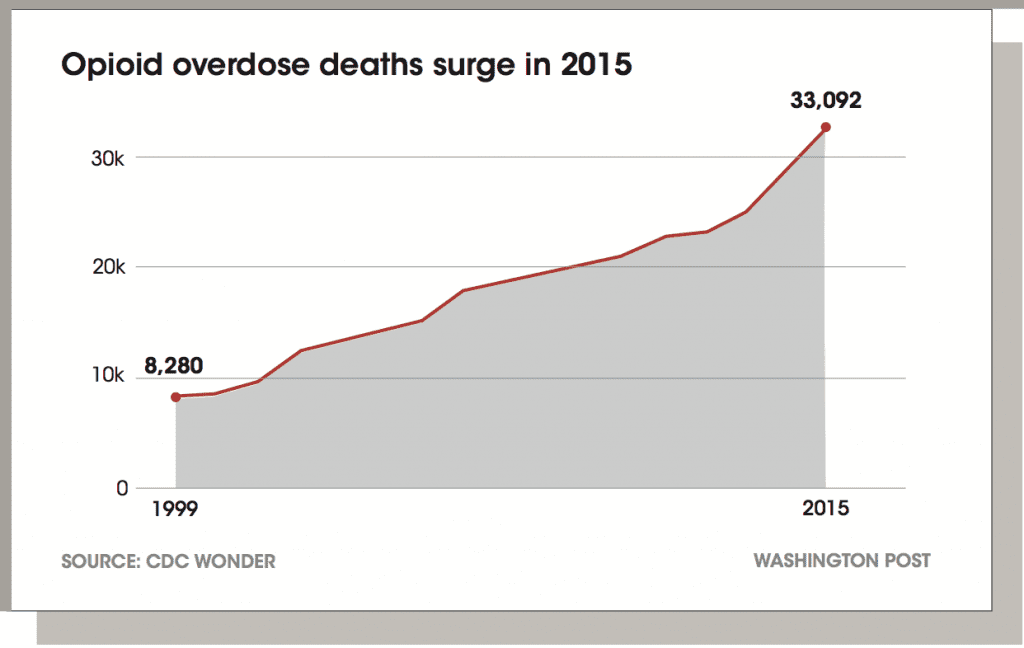
Data released by the Centers for Disease Control and Prevention (CDC) revealed that opioid deaths continued to surge in 2015, surpassing 30,000 for the first time in recent history. CDC Director Tom Frieden said,�The epidemic of deaths involving opioids continues to worsen. Prescription opioid misuse and use of heroin and illicitly manufactured fentanyl are intertwined and deeply troubling problems.�1

The human toll of prescription opioid use, abuse, dependence, overdose and poisoning have rightfully become a national public health concern. Along with the tragic loss of life, it is also creating a monumental burden on our health and related health care costs:

  • Health care costs for opioid abusers are eight times higher than for nonabusers.2
  • A new retrospective cohort study shows a 72 percent increase in hospitalizations related to opioid abuse/dependence from 2002 to 2012. Not surprisingly, inpatient charges more than quadrupled over that time. Previous estimates of the annual excess costs of opioid abuse
    to payers range from approximately $10,000 to $20,000 per patient, imposing a substantial economic burden on payers.3
  • A recent government study puts the economic burden to the U.S. economy at $78.5 billion annually. For this study, CDC researchers analyzed the financial impact to include direct health care costs, lost productivity and costs to the criminal justice system.4

AMERICA�S COMMITMENT TO PRESCRIPTION OPIOID ABUSE: A PAINFUL REALITY CHECK

As a non-pharmacologic approach to effectively address acute, subacute and chronic non- cancer pain, integrative care management answers the needs of individuals nationwide.

With patient access to opioids becoming more restricted through more responsible clinician prescribing and government-mandated reduced production of opioids — and as those who are addicted become empowered to reduce their utilization — people experiencing pain face new, daunting challenges:

  • Without the use of drugs, how will they cope with pain?
  • How can they get referrals and access to drug-free care that will be effective for acute, subacute and chronic pain?
  • How can they ensure that their health care plans and insurance will cover the cost of non- pharmacologic care?

While the chiropractic profession lauds many of the noteworthy announcements and strides to overcome opioid addiction, these recommendations fall short in providing meaningful answers and solutions for those who are suffering from pain.

It is encouraging to see the July 22, 2016 enactment of the Comprehensive Addiction and Recovery Act (P.L. 114-198), the first major federal addiction legislation in 40 years, and the most comprehensive effort undertaken to address the opioid epidemic. It encompasses
all six pillars necessary for such a coordinated response � prevention, treatment, recovery, law enforcement, criminal justice reform and overdose reversal.5 The recent passage of the 21st Century Cures Act included $1 billion for states to use to fight opioid abuse.6 Unfortunately, this legislation has drawn critics who say it is simply a huge de-regulatory giveaway to the pharmaceutical and medical device industry.7

Closer examination of these legislative initiatives points to the absence of programs that address non-pharmacologic options for those fighting drug addiction, notably chiropractic care. When paired with the U.S. Surgeon General�s declaration of war on addiction,8 the government�s designation of �Prescription Opioid and Heroin Epidemic Awareness Week,� 9 and the commitment from 40 prescriber groups to ensure that 540,000 health care providers would complete training on appropriate opioid prescribing within two years,10 these �solutions� appear woefully inadequate to address the challenges of those who need effective, drug- free pain management.

This follow-up discussion to �Chiropractic: A Safer Strategy than Opioids� (June 2016), examines the positive steps as well as the shortcomings of initiatives undertaken from July 2016 – March 2017 to address the opioid crisis. It also assesses the current landscape of opportunities to offer patients, doctors and payers meaningful programs to effectively address acute, subacute and chronic neck, low back and neuro-musculoskeletal pain without the use of painkillers.

The chiropractic profession contends this should be a top priority, and it appears that a growing number of stakeholders are in agreement. In fact, the world�s second-largest pharmaceutical company has agreed to disclose in its marketing material that opioid painkillers might carry a serious risk of addiction, and promised not to promote prescription opioids for unapproved uses, such as long-term back pain.11

Based upon the evidence articulated in this document, it becomes clear that chiropractic care is a key component of �America�s Opioid Exit Strategy� on several levels:

  • �Perform first-line assessment and care for neck, back and neuro-musculoskeletal pain to avoid opiate prescribing from the first onset of pain.
  • �Provide care throughout treatment to mitigate the introduction of drugs.
  • �Offer an effective approach to acute, subacute and chronic pain management that helps addicts achieve a wellness focused, pain-free lifestyle as they reduce their utilization of opioids.

It�s also a compelling opportunity for our health system, commercial and government payers, employers — and most importantly patients — to resolve the issues surrounding pain at lower costs, with improved outcomes and without drugs or surgery.

Further complicating the situation: escalating prices of the opioid OD drug naloxone may threaten efforts to reduce opioid-related deaths across America, warn teams at
Yale University and the Mayo Clinic.13

Naloxone is a drug given to people who overdose on prescription opioids and heroin. If administered in time, it can reverse the toxic and potentially deadly effects of �opioid intoxication.�

The research team called attention to skyrocketing prices for the lifesaving antidote, noting:

  • Hospira (a Pfizer Inc. company) charges $142 for a 10-pack of naloxone — up 129 percent since 2012.
  • Amphastar�s 1 milligram version of naloxone is used off-label as a nasal spray. It�s priced around $40 — a 95 percent increase since September 2014.
  • Newer,easier-to-use formulations are even more expensive — a two-dose package of Evzio (naloxone) costs $4,500, an increase of more than 500 percent over two years.�The challenge is as the
    price goes up for naloxone, it becomes less accessible for patients,� said Ravi Gupta, the study�s lead author.

Government & Regulators Restrict Access To Opioids

In the wake of this firestorm surrounding opioid abuse, and following the dissemination of prescribing guidelines introduced by the CDC, it becomes evident that certain market forces are influencing the battle against opioid addiction and the availability of drugs.

Among the most egregious stakeholders are those in the pharmaceutical sector.There are numerous instances which document their role attempting to thwart many legislative initiatives throughout the country to combat drug abuse.They impose exorbitant costs for life-saving antidotes, and aggressively develop and market the use of more drugs to fight opioid-induced side effects such as constipation. It becomes apparent that many of their answers to opioid addiction are simply more pills.14

The opioid market is worth nearly $10 billion in annual sales, and has expanded to include an unlimited universe of medications aimed at treating secondary effects rather than controlling pain.15 Given the financial incentives to produce, sell and distribute drugs, it�s no wonder that pharmaceutical companies (pharmcos) have a material interest in promoting drug utilization.

This set of behaviors has drawn extensive criticism.

�The root cause of our opiate epidemic has been the over-prescribing of prescription pain medications. Physicians get little to no training related to addiction in general, but particularly around opiate prescriptions. Over the past year, however, you hear more and more physicians admitting �we are part of the problem and can be part of the solution�.�16

—- Michael Botticelli, former White House drug policy director, commonly called the nation�s drug czar.

While physicians have been responding to calls for more responsible prescribing, the drug industry has historically been accused of providing physicians with misleading information regarding the addictive qualities of certain drugs.Appropriate education of prescribers is a key component of necessary change.

For example, when semisynthetic opioids like oxycodone and hydrocodone � found in Percocet and Vicodin respectively � were first approved in the mid�20th century, they were recommended only for managing pain during terminal illnesses such as cancer, or for acute short-term pain, like recovery from surgery, to ensure patients wouldn�t get addicted. But in the 1990s, doctors came under increasing pressure to use opioids to treat the millions of Americans suffering from chronic non-malignant conditions, like back pain and osteoarthritis.

A physician pain specialist helped lead the campaign, claiming prescription opioids were a �gift from nature,� with assurances to his fellow doctors � based on a 1986 study of only 38 patients � that fewer than one percent of long-term users became addicted.17

Today, drug makers may be getting their �wings clipped� with the introduction of new government directives slashing production of popular prescription painkillers. In 2016, the U.S. Drug Enforcement Administration (DEA) finalized a previous order on 2017 production quotas for a variety of Schedule I and II drugs, including addictive narcotics like oxycodone, hydromorphone, codeine and fentanyl. The agency has the authority to set limits on manufacturing under the Controlled Substances Act. The DEA said it is reducing �the amount of almost every Schedule II opiate and opioid medication� by at least 25 percent.18 Some, like hydrocodone, commonly known by brand names like Vicodin or Lortab, will be cut by one-third.

Despite these setbacks, the drug industry continues to launch strong initiatives that fight state- mandated opioid limits. Amid the crisis and regardless of the pressures urging a shift away from opioid use, the makers of prescription painkillers recently adopted a 50-state strategy that includes hundreds of lobbyists and millions in campaign contributions to help kill or weaken measures aimed at stemming the tide of prescription opioids.19

While the drug makers vow they�re combating the addiction problem,The Associated Press
and the Center for Public Integrity found that these manufacturers often employ a statehouse playbook of delay and defend tactics.This includes funding advocacy groups that use the veneer of independence to fight limits on the drugs, such as OxyContin, Vicodin and Fentanyl, a potent, synthetic opioid pain medication with a rapid onset and short duration of action that is estimated to be between 50 and 100 times as potent as morphine.20

In its national update released Dec. 16, 2016 in the Morbidity and Mortality Weekly Report, the CDC reported that more than 300,000 Americans have lost their lives to an opioid overdose since 2000.

As enforcement restricts the availability of prescription opioids, people addicted
to painkillers — such as oxycodone (OxyContin) and morphine — have increasingly turned to — street drugs like heroin.21

These independent sources also found that the drug makers and allied advocacy groups employed an annual average of 1,350 lobbyists in legislative hubs from 2006 through 2015, when opioids� addictive nature came under increasing scrutiny.

�The opioid lobby has been doing everything it can to preserve the status quo of aggressive prescribing.They are reaping enormous profits from aggressive prescribing.�22

Andrew Kolodny, MD, founder, Physicians for Responsible Opioid Prescribing

Undaunted by these interferences, and buoyed by a thirst for profits, pharmcos are now fueling other creative solutions to drive even greater revenues from the sale and distribution of drugs.

It now appears that pharmcos are directing their activities toward medicines known as abuse-deterrent formulations: opioids with physical and/or chemical barriers have built-in properties that make the pills difficult to crush,chew or dissolve.This aims to deter abuse through intranasal and intravenous routes of administration.These drugs ultimately are more lucrative, since they�re protected by patent and do not yet have generic competitors.They cost insurers more than generic opioids without the tamper-resistant technology.23

Skeptics warn that they carry the same risks of addiction as other opioid versions, and the U.S. FDA noted that they don�t prevent the most common form of abuse � swallowing pills whole.

�This is a way that the pharmaceutical industry can evade responsibility, get new patents and continue to pump pills into the system,� said Dr. Anna Lembke, Chief of Addiction Medicine at the Stanford University School of Medicine.24

Drug makers have discovered yet another way to profit from addicts taking high doses of prescription opioid painkillers � the new billion-dollar drug to treat opioid-induced constipation (OIC) rather than controlling pain.

Studies show that constipation afflicts 40-90 percent of opioid patients.Traditionally,doctors advised people to cut down the dosage of their pain meds, take them less often or try non-drug interventions. By promoting OIC as a condition in need of more targeted treatment, the drug industry is creating incentives to maintain painkillers at full strength and add another pill instead.25

Collectively, the subsets of new pharmaceutical submarkets to treat opioid addiction, overdoses, and side effects such as OIC are estimated to be worth at least $1 billion a year in sales.These economics, some experts say, work against efforts to end the epidemic.26

While there is continued pressure to limit the number and scope of opiates for patients, new government statistics reveal that drug overdose deaths continue to surge in the United States, now exceeding the number of deaths caused by motor vehicle accidents.27 Although it is reported that the number of opioid prescriptions has fallen across the U.S. over the past three years, with intermittent data on this decline in states such as West Virginia and Ohio, they still kill more Americans each year than any other drug.

Just over 33,000 (63 percent) of the more than 52,000 fatalities reported in 2015 are linked to the illicit use of prescription painkillers.28 States including Massachusetts, and most recently Virginia, have declared public health emergencies as the number of deaths has escalated.29

Regardless of whether these issues are viewed from the perspective of patients, clinician prescribers, or government regulators, the status quo is clearly not acceptable.

Responsible Prescribing

�My new patient didn�t mention his back pain until the very end of the visit.As he was rising to leave, he asked casually if I could refill his Percocet. I told him I am not a pain or a back specialist and that I generally prescribe muscle relaxants or anti-inflammatory medications for back pain � not opioids, which are addictive and do not really treat the underlying problem.

The patient persisted. He said his prior internist always prescribed it, and the medication also helped his mood. He promised he had its use under control and did not feel he needed to take more and more to achieve the same effect.

I didn�t relent. I offered to refer him to a back specialist instead. It was an uncomfortable end to an otherwise positive visit.

Unfortunately, we doctors are enablers.Too many of us fill those prescriptions for chronic pain. And when we don�t, too many of our patients leave us for other doctors who will. Or worse, they turn to buying heroin on the street.�30

Marc Siegel, MD, FOX NEWS

Clinical prescribers of pain medications are beginning to recognize their responsibilities for increased prescribing vigilance, and are expected to become important advocates for drug-free pain care. More than half of doctors across America are curtailing opioid prescriptions, and nearly 1 in 10 have stopped prescribing the drugs, according to a new nationwide online survey. More than one-third of the respondents said the reduction in prescribing has hurt patients with chronic pain.

The survey, conducted for The Boston Globe by the SERMO physicians social network, offers fresh evidence of the changes in prescribing practices in response to the opioid crisis that has killed thousands in New England and elsewhere around the country.The deaths awakened fears of addiction and accidental overdose, and led to state and federal regulations aimed at reining in excessive prescribing.

Doctors face myriad pressures as they struggle to treat addiction and chronic pain, two complex conditions in which most physicians receive little training.Those responding to the survey gave two main reasons for cutting back: the risks and hassles involved in prescribing opioids, and a better understanding of the drugs� hazards.31

In Wisconsin, the Medical Society says the state�s effort to fight the opioid epidemic is showing results.A new report found about eight million fewer opioids were dispensed between July and September 2016 compared to the same time during the previous year.The Medical Society says it�s doing more to help physicians monitor patients� use of opioids by supporting the release of an enhanced prescription drug monitoring program � or PDMP. Starting in April 2017, doctors will have to access the program while pharmacists will only have 24 hours to enter information instead of seven days.This gives doctors an update in case patients are going from doctor to doctor for more prescriptions.32

Prescription drug monitoring programs (PDMPs), launched in 2013, are state-run electronic databases used to track the prescribing and dispensing of controlled prescription drugs to patients.They are designed to monitor this information for suspected abuse or diversion (i.e., channeling drugs into illegal use), and can give a prescriber or pharmacist critical information regarding a patient�s controlled substance prescription history.This information can help prescribers and pharmacists identify patients at high-risk who would benefit from early interventions.

PDMPs continue to be among the most promising state-level interventions to improve opioid prescribing, inform clinical practice and protect patients at risk.33

Hospital Admissions Due To Heroin, Painkillers Rose 64% 2005-2014

Researchers found misuse of prescription painkillers and street opioids climbed nationwide, related hospital stays jumped from 137 per 100,000 people to 225 per 100,000 in that decade.

States where overdoses required at least 70 percent more hospital beds between 2009 and 2014 were North Carolina, Oregon, South Dakota and Washington.

In 2014, the District of Columbia, Maryland, Massachusetts, New York, Rhode Island and West Virginia each reported rates above 300 per 100,000 people — far above the national average.34

Health Plans Report Limited Prescribing Is Paying Off

According to IMS Health, a global health information and technology firm, the rate of opioid prescribing in the U.S. has dropped since its peak in 2012.The drop is the first that has been reported since the early 1990s, when OxyContin first hit the market and pain became �the fifth vital sign� doctors were encouraged to more aggressively treat.35

However, continued pressure on physician prescribing patterns and opportunities for therapies other than opioids may be paying off. Prescriptions for powerful painkillers dropped significantly among patients covered by Massachusetts� largest insurer after measures were introduced to reduce opioid use.36 The Blue Cross Blue Shield of Massachusetts program serves as an example of a private health insurer collaborating on a public health goal.

In 2012, the insurer � the state�s largest, with 2.8 million members � instituted a program intended to induce doctors and patients to weigh the risks of opioids and consider alternatives.As part of that initiative, first-time opioid prescriptions are limited to 15 days, with a refill allowed for 15 more days. Blue Cross must approve in advance any prescription for longer than a month or for any long-acting opioid such as OxyContin. Pharmacy mail orders for opioids are prohibited.

Doctors and others who prescribe must assess the patient�s risk of abusing drugs and develop a treatment plan that considers options other than opioids. And patients with chronic pain are referred to case managers who advise on therapies other than opioids.

By the end of 2015, the average monthly prescribing rate for opioids decreased almost 15 percent, from 34 per 1,000 members to 29. About 21 million fewer opioid doses were dispensed during the three years covered in the study.37

In another example, Highmark (Pennsylvania) shared data in December 2016 showing that the number of prescriptions for opioids it reimbursed in each of the past three months was lower than in any of the prior nine months. One leading health plan in the state reported that 16 percent of its insured population received at least one opioid prescription in 2016, down from 20 percent in 2015.38 UPMC Health Plan indicated it is using �an algorithm to identify patients who may be at risk for opioid addiction,� and training doctors to use other pain management tools.

Mounting Evidence & Support For Non-Pharmacologic Care For Acute, Subacute & Chronic Back, Neck & Neuro-Musculoskeletal Pain

The earlier sections of this white paper have focused on the continuing and growing problem of opioid use, abuse and addiction. It is essential that this information is understood and appreciated as it clearly calls for a wholesale change in the approach American health care providers and patients bring to the care and management of pain.

No matter what is done to address the use, abuse and addiction associated with opioids it is a fact of life that opioid containing products will continue to be required by individuals suffering severe, intractable and unrelenting pain.This issue is not about the cessation of all opioid use, rather it is about not turning to opioids before they are required, and not until all less onerous approaches to pain management have been exhausted.

We began this discussion with three questions in mind:

  • �Without the use of drugs, how will they cope with pain?
  • How can they get referrals and access to drug-free care that will be effective for both acute, subacute and chronic pain?
  • �How can they ensure that their health care plans and insurance will cover the cost of non- pharmacologic care?

According to new guidelines developed by the American College of Physicians,39 conservative non-drug treatments should be favored over drugs for most back pain. The guidelines are an update that include a review of more than 150 recent studies and conclude that,�For acute and subacute pain, the guidelines recommend non-drug therapies first, such as applying heat, massage, acupuncture, or spinal manipulation, which is often done by a chiropractor.�

The Wall Street Journal

As we have previously noted the CDC, FDA and IOM have all called for the early use of non- pharmacologic approaches to pain and pain management. Unfortunately, beyond asserting the need to move in this direction, little, if any, guidance has been offered to providers, patients and payors on how to accomplish this important transition.

It is a fact that a chasm exists between the worlds of pharmacologic based management of pain, and the non-pharmacologic based management of pain. Medical physicians are not going to suddenly attain knowledge and understanding of practices, procedures and management options that they have never been trained in or exposed to. Similarly, the non-pharmacologic providers addressing pain management do not encounter or understand the barriers that prevent prescribers from directing patients toward non-pharma approaches.These two spheres of healthcare are distinct and separate, and demonstrate little, if any, knowledge about the other.

The first step is to provide resources to prescribers that will detail the indications, effectiveness, efficiency and safety of non-pharmacologic approaches. In particular, the chiropractic profession, through its 70,000 practitioners in the United States, represents a significant and proven non- pharmacologic approach for reducing the need for opioids, opioid-related products and non- opioid pain medications.

Chiropractic, like other complementary health care approaches, suffers from a lack of awareness about its high level of education, credentialing and regulation. In addition, a substantial awareness gap exists among frontline providers in terms of referring patients to chiropractors as part of patient care.

The chiropractic profession and the health care consumer are equally supported by a robust oversight infrastructure.This infrastructure ranges from institutional and programmatic accreditation of chiropractic education by agencies recognized by the U.S. Department of Education to standardize national credentialing examinations and licensure by state agencies and ongoing professional development as a requirement for continued practice in many states.

Typically, after earning a Bachelor of Science, chiropractors follow a four-year curriculum to earn a Doctor of Chiropractic (DC) as a prerequisite to earning the right to independent practice. Chiropractic, medical, osteopathic, dental, optometric and naturopathic education share a similar foundation in the basic sciences, followed by discipline-specific content that focuses on the unique contribution of each provider type. For example, a medical student pursues the study of pharmacology and surgery, while a chiropractic student studies the intricacies of manual approaches to health care and the acquisition of the skills needed to perform spinal adjusting or manipulation.

Chiropractors also pursue specialization in specific areas, such as radiology, through structured residency programs, similar to other disciplines. DCs also pursue focus areas related to various methods of spinal adjusting and related patient management.

For over a century, DCs have studied the relationship between structure, primarily the spine, and function, primarily of the nervous system, and how this interrelationship impacts health and well- being. Due to this emphasis on the spine, chiropractors have become associated with spinal and skeletal pain syndromes, and bring their non-surgical, non-drug rationale to the management of these problems.

DCs are the quintessential example of non-pharmacologic providers of health care with particular expertise in neuro-musculoskeletal conditions.

A Look At The Evidence

While the United States is attempting to deal with its opioid epidemic, our nation is making only limited headway in providing non-pharmacologic approaches to patients with pain.

Over 100 million Americans suffer with chronic pain,40 and an estimated 75 to 85 percent of all Americans will experience some form of back pain during their lifetime. However, 50 percent of
all patients who suffer from an episode of low back pain will have a recurrent episode within one year.41 Surgery has a very limited role in the management of spinal pain, and is only considered appropriate in a handful of cases per hundred patients. Likewise, opioids have very limited utility in the spinal pain environment with the recommended use of these drugs being limited to three days.

Of special relevance, this data relates to the most commonly-reported pain conditions:42

  • When asked about four common types of pain, respondents of a National Institute of Health Statistics survey indicated that low back pain was the most common (27 percent), followed by severe headache or migraine pain (15 percent), neck pain (15 percent) and facial ache or pain (4 percent).
  • Back pain is the leading cause of disability in Americans under 45 years old. More than 26 million Americans between the ages of 20-64 experience frequent back pain.
  • Adults with low back pain are often in worse physical and mental health than people who do not have low back pain: 28 percent of adults with low back pain report limited activity due to a chronic condition, as compared to 10 percent of adults who do not have low back pain. Also, adults reporting low back pain were three times as likely to be in fair or poor health and more than four times as likely to experience serious psychological distress as people without low back pain.

Results of a 2010 study indicate that DCs provide approximately 94 percent of the manipulation services performed in the U.S.,43 with a number of published studies documenting manipulation, along with other drug-free interventions, as effective for the management of neck44 and back pain.45 Most high-quality guidelines target the noninvasive management of nonspecific low back pain and recommend education, staying active/exercising, manual therapy, and paracetamol or NSAIDs as first-line treatments.46

Action Needed

Care pathways and clinical guidelines need to be modified to bring greater attention to the use of non-pharmacologic approaches to pain management. Primary medical care providers must be encouraged to make recommendations or referrals to drug-free resources and appropriate providers, such as DCs, rather than turning to the prescription pad when managing patients who have pain, particularly those with spinal pain. Patients should be educated about non- pharmacologic options for dealing with pain first and foremost, and the dangers of opioids.

For these good intentions to be effective, drug-free pathways will need to be funded by payers in the private sector and government. Government leadership and policy support for introducing innovative reimbursement initiatives by the CMS is a critical step toward allowing health providers to acquire familiarity with non-pharmaceutical approaches.These could frame and stimulate use of evidence-based care options and promote referrals, access to care and reimbursement. By re- engineering these approaches to care to fit the current health care landscape, rather than simply reacting to the opioid crisis by de-emphasizing pain treatment, CMS can better serve patients.

One example: CMS should consider a chronic pain shared-savings program targeting accountable care organizations (ACOs), where success is tied explicitly to patient functional outcomes. Benchmarking against ACO performance measures to determine if care results in savings or losses would allow these organizations to work towards meeting or exceeding quality performance standards � leading to receiving a portion of the savings generated. By incorporating incentives, this type of model would be consistent for more effective integrative intervention for pain.47

Fortunately, progressive thinking is gaining traction in this area. In a January 5, 2017 posting on the CMS Blog, authors wrote that the CMS is focusing on significant programs, including increased use of evidence-based practices for acute and chronic pain management.

�We are working with Medicare and Medicaid beneficiaries, their families and caregivers, health care providers, health insurance plans and states to improve how opioids are prescribed by providers and used by beneficiaries, how opioid use disorder is identified and managed, and how alternative approaches to pain management can be promoted.�48

While we applaud CMS, we feel it is important to point out that this approach begins with a focus on how opioids are prescribed.The focus needs to shift to early applications of non-pharmacologic approaches first and not as a follow-on after the drug path has been established.

Documented Results & Cost Savings

WORKPLACE INJURIES

Back pain is the most common occupational injury in the United States and Canada,49 and represents the most common non-fatal occupational injury, according to the U.S. Bureau of Labor Statistics. Musculoskeletal disorders (MSDs), such as sprains or strains resulting from overexertion in lifting, accounted for 31 percent (356,910 cases) of the total cases for all workers.50

Most recently, Maine Department of Labor data showed injuries to a person�s lumbar region represented 14.3 percent of all injuries reported in 2014, up from 10.7 percent just five years earlier.51 Health care employees have among the highest rates of musculoskeletal injuries for workers, second only to those working in the transportation and warehousing sectors.52

Opiates are not a safe alternative especially when operating heavy machinery, transportation or caring for patients because side effects can alter performance and have tragic outcomes.

Take for example, a 56-year-old nurse at the Maine Medical Center in Portland. She relies on a comprehensive strategy to address her chronic back pain, which originates from having to wear heavy lead aprons when giving radiation treatments, and moving patients and equipment. Her regimen, which includes regularly seeing a chiropractor, exercises, stretches and building up her core muscles, has helped her to control her pain.53

In terms of the value of a �gatekeeper� health care provider for insured workers like this nurse, a study published in Journal of Occupation Rehabilitation (September 17, 2016) cites this factor as
a significant predictor of the duration of the first episode of a worker�s compensation claim. They analyzed a cohort of 5,511 workers, comparing the duration of financial compensation and the occurrence of a second episode of compensation for back pain among patients seen by three types of first health care providers: physicians, chiropractors and physical therapists in the context of workers� compensation.54

When compared with medical doctors, chiropractors were associated with shorter duration of compensation and physical therapists (PT) with longer ones.There was also greater likelihood that PT patients were more likely to seek additional types of care that incurred longer compensation duration.

Additionally, earlier research confirms that on a case adjusted basis 42.7 percent of workers who initially visited a surgeon underwent surgery compared with only 1.5 percent of those who first consulted a chiropractor.55

Medicaid

The National Academy for State Health Policy (NASHP), an independent academy of state health policymakers dedicated to helping states achieve excellence in health policy and practice, recently studied chronic pain management therapies in Medicaid, including policy considerations for non-pharmacological alternatives to opioids. A non-profit and non-partisan organization, NASHP provides a forum for constructive work across branches and agencies of state government on critical health issues.56

SURVEY RESULTS:

�Has your Medicaid agency implemented specific policies or programs to encourage or require alternative pain management strategies in lieu of opioids for acute or chronic non-cancer pain?�

A September 2016 NASHP report states that although most Medicaid agencies cover services that can be used as alternatives to opioids for pain management, significantly fewer states have policies or procedures in place to encourage their use.

Between March and June 2016, NASHP conducted a survey of all 51 Medicaid agencies to determine the extent to which states have implemented specific programs or policies to encourage or require non-opioid therapies for acute or chronic non-cancer pain.They contacted each Medicaid director via email and, in cases of non-response, followed up with Medicaid medical directors. Ultimately, they received responses from 41 states and the District of Columbia.

Because reimbursement is a key incentive to access alternative care, they also note the most recent results of Medicaid agency reimbursement data from The Henry J. Kaiser Family Foundation (KFF):57

� 27 reimbursed chiropractic services;
� 36 reimbursed occupational therapy services;

� 38 reimbursed psychologist services;
� 39 reimbursed physical therapy services.

Among the key findings, researchers found most Medicaid agencies cover services that can be used to treat pain in lieu of opioids, but less than half have taken steps to specifically encourage or require their use. Non-pharmacological therapies commonly used to address pain include physical therapy, cognitive behavioral therapy, and exercise, as well as other services, commonly known as Complementary and Alternative Medicine (CAM), including chiropractic manipulation, acupuncture and massage.

They point out that while the current literature on non-pharmacological alternatives is mixed, there is a growing body of evidence to support the use of alternative services to treat chronic pain. For example, a systematic review suggests lower costs for patients experiencing spine pain who received chiropractic care.58

This finding is substantiated in Rhode Island, where the state�s Section 1115 Demonstration authorizes certain individuals enrolled in Medicaid managed care delivery systems to receive CAM services for chronic pain.59 Rhode Island Medicaid has implemented this benefit through its Communities of Care program, a state initiative designed to reduce unnecessary emergency room utilization. Medicaid managed care enrollees with four or more emergency room visits within a 12-month period are eligible to receive acupuncture, chiropractic or massage therapy services.

The state�s two managed care plans, Neighborhood Health Plan of Rhode Island (NHPRI) and United HealthCare of New England, were responsible for developing participation criteria for their enrollees. For example, NPRHI published clinical practice guidelines for its Ease the Pain program, which specified when CAM services referrals were appropriate. Under NHPRI�s guidelines, qualifying individuals diagnosed with back pain, neck pain, and fibromyalgia can be referred for chiropractic services, acupuncture and massage.

Substantiating the results for CAM, Advanced Medicine Integration Group, L.P. in Rhode Island contracted with the two health plans to identify and manage their Medicaid eligible members suffering from chronic pain through its Integrated Chronic Pain Program (ICPP).The target Medicaid population for this program was the Community of Care (CoC) segment — high utilizers of ER visits and opioids/pharmaceuticals.

The objectives of the ICPP are to reduce pain levels (and opioid use), improve function and overall health outcomes, reduce emergency room costs and, through a holistic approach and behavioral change models, educate members in self-care and accountability.

The design of the program for this patient population features holistic nurse case management with directed use of patient education, community services and CAM modalities, including chiropractic care, acupuncture and massage.

Individuals with chronic pain conditions were identified using proprietary predictive modeling algorithms applied to paid claims data to determine opportunities for reducing chronic pain-related utilization and costs.

Results for enrolled CoC Medicaid members with chronic pain conditions document:

  • �Reduced per member per year (PMPY) total average medical costs by 27 percent
  • �Decreased the average number of ER visits by 61 percent
  • Lowered the number of average total prescriptions by 63 percent
  • �Reduced the average number of opioid scripts by 86 percent

These reductions exceeded by two to three times those reported for a non-enrolled control group of conventionally managed CoC chronic pain patients. Every $1 spent on CAM services and program fees resulted in $2.41 of medical expense savings.

Military

At the time of publication, a study entitled: Assessment of Chiropractic Treatment for Low Back Pain and Smoking Cessation in Military Active Duty Personnel, has completed its clinical trial activities and is currently in the analysis phase. Funded by a four-year grant from the Department of Defense, it is the largest multi-site clinical trial on chiropractic to date, with a total sample size of 750 active- duty military personnel.60

The purpose of this study is to evaluate the effectiveness of chiropractic manipulative therapy for pain management and improved function in active duty service members with low back pain that do not require surgery.The study also measures the impact of a tobacco cessation program delivered to participants allocated to the chiropractic arm.

Low back pain (LBP) is the most common cause of disability worldwide, but it is even more prevalent in active duty military personnel. More than 50 percent of all diagnoses resulting in disability discharges from the military across all branches are due to musculoskeletal conditions. LBP has been characterized as �The Silent Military Threat� because of its negative impact on mission readiness and the degree to which it compromises a fit fighting force. For these reasons, military personnel with LBP need a practical and effective treatment that relieves their pain and allows them to return to duty quickly. It must preserve function and military readiness, address the underlying causes of the episode and protect against re-injury.

This multisite Phase II Clinical Comparative Effectiveness Trial is designed to rigorously compare the outcomes of chiropractic manipulative therapy (CMT) and conventional medical care (CMC) to CMC alone. Chiropractic treatment will include CMT plus ancillary physiotherapeutic interventions. CMC will be delivered following current standards of medical practice at each site. At each of the four participating sites, active military personnel, ages 18 to 50, who present with acute, sub-acute or chronic LBP that does not require surgery will be randomized to one of the two treatment groups.

Outcome measures include the Numerical Rating Scale for pain, the Roland-Morris Low Back Pain and Disability questionnaire, the Back Pain Functional Scale for assessing function, and the Global Improvement questionnaire for patient perception regarding improvement in function. Patient Expectation and Patient Satisfaction questionnaires will be used to examine volunteer expectations toward care and perceptions of that care. Pharmaceutical use and duty status data will also be collected.The Patient Reported Outcomes Measurement Information System (PROMIS-29) will be utilized to compare the general health component and quality of life of the sample at baseline.

Also, because DCs are well positioned to provide information to support tobacco cessation, this clinical trial includes a nested study designed to measure the impact of a tobacco cessation program delivered by a DC.The results will provide critical information regarding the health and mission-support benefits of chiropractic health care delivery for active duty service members in the military.61

This current research was preceded by a pilot study on LBP, conducted at an Army Medical Center in El Paso,Texas, with 91 active-duty military personnel between the ages of 18 and
35.62 Results reported in the journal SPINE showed that 73 percent of those who received standard medical care and chiropractic care rated their improvement as pain �completely gone,��much better� or �moderately better.� In comparison, 17 percent of participants who received only standard medical care rated their improvement this way.These results, as well as other measures of pain and function between the two groups, are considered both clinically and statistically significant.

Recommendations & Next Steps

The opioid crisis has provided a wake-up call for regulators, policy experts, clinicians and payers nationwide. As the support for complementary health techniques builds, interdisciplinary and integrative approaches to chronic pain management are considered best practices.

While the Centers for Disease Control and Prevention�s Guideline validates the need for a shift away from the utilization of opioid prescription painkillers as a frontline treatment option for pain relief, the mention of chiropractic care as a safe, effective and drug-free alternative is omitted.

Instead, CDC recommendations encourage utilization of physical therapy, exercise and over- the-counter (OTC) pain medications prior to prescription opioids for chronic pain.63

�Though the guidelines are voluntary, they could be widely adopted by hospitals, insurers and state and federal health systems.�

CBS News64

The CDC rarely advises physicians on how to prescribe medication — which further adds to the significance of their pronouncements. Many payers and state legislators have already added these findings to their coverage on the use of opioids.

With the likelihood of major players in the industry adopting the well-respected guidelines, it is critical that chiropractic care receives the consideration it deserves.

Chiropractic care has earned a leading role as a pain relief option and is regarded as an important element of the nation�s Opioid Exit Strategy: a drug-free, non-invasive and cost-effective alternative for acute or chronic neck, back and musculoskeletal pain management.

For individuals who may be suddenly �cut-off� from painkillers, chiropractic offers a solution. But access to care will depend upon several important factors:

  • �Pharmaceutical Industry �Re-engineering�: A change toward responsible marketing and physician education.
  • �Physician Referrals to Ensure Access to Chiropractic Care: Physician prescribing of chiropractic care rather than opioids.
  • �Benefit Coverage and Reimbursement for Chiropractic Care: Government and commercial payers as well as plan sponsors have a responsibility to offer patients the option of chiropractic care � and reimburse DCs as participating providers.
  • �Access to Chiropractic Care for Active Military and Veteran Populations: Chiropractic care should be expanded in the Department of Defense and veterans� health care systems.

As a nation, we have all come to recognize that pain is a complex, multifaceted condition that impacts millions of Americans, their families and caregivers. Unfortunately, the lessons learned about long-term opioid therapy for non-cancer pain have been deadly and heartbreaking.We now understand that there is little to no evidence to support their effectiveness for ongoing chronic pain management.

It is now incumbent upon all stakeholders to increasingly explore the appropriateness, efficacy and cost-effectiveness of alternative pain management therapies and embrace these solutions as a realistic opportunity for America�s Opioid Exit Strategy.

End Notes

1 Ingraham, Christopher; Heroin deaths surpass gun homicides for the first time, CDC data shows. Washington Post, December
8, 2016. https://www.washingtonpost.com/news/wonk/wp/2016/12/08/heroin-deaths-surpass-gun-homicides-for-thefirst-time-cdc-data-show/?utm_term=.38c3d6096d4d;
accessed December 8, 2016.
2 Ronan, M. V., & Herzig, S. J. (2016). Hospitalizations Related To Opioid Abuse/Dependence And Associated Serious Infections
Increased Sharply, 2002�12. Health Affairs, 35(5), 832-837. doi:10.1377/hlthaff.2015.1424.
3 J Manag Care Spec Pharm. [Published online January 3, 2017].Academy of Managed Care Pharmacy.
http://www.jmcp.org/doi/pdf/10.18553/jmcp.2017.16265.
4 Dallas, Mary Elizabeth; Opoid Epidemic Costs U.S. $78.5 Billion Annually; HealthDay, September 21, 2016.
https://consumer.healthday.com/bone-and-joint-information-4/opioids-990/opioid-epidemic-costs-u-s-78-5-billion-annually-cdc-714931.html.
5 Comprehensive Addiction and Recovery Act (CARA);
http://www.cadca.org/comprehensive-addiction-and-recovery-act-cara.
6 DeBonis, Mike; 21st Century Cures Act, boosting research and easing drug approvals; Washington Post, December 8, 2016;
https://www.washingtonpost.com/news/powerpost/wp/2016/12/07/congress-passes-21st-century-cures-act-boostingresearch-and-easing-drug-approvals/?utm_term=.53351c0273f5&wpisrc=nl_sb_smartbrief
7 Hiltzik, Michael; The 21st Century Cures Act; LA Times, January 5, 2017. http://www.latimes.com/business/hiltzik/la-fi-hiltzik-
21st-century-20161205-story.html
8 U.S. Surgeon General Declares War on Addiction; Medline Plus, November 17, 2016;
https://medlineplus.gov/news/fullstory_162081.html; accessed December 7, 2016.
9 Obama Administration announces Prescription Opioid and Heroin Epidemic Awareness Week; Proclamation by
President Obama, September 16, 2016. https://www.whitehouse.gov/the-press-office/2016/09/19/fact-sheet-obama-administration-announces-prescription-opioid-and-heroin
10 Obama Administration announces Prescription Opioid and Heroin Epidemic Awareness Week, 2016
11 Shedrofsky, Karma; Drug czar: Doctors, drugmakers share blame for opioid epidemic; USA Today, July 7, 2016; http://
www.usatoday.com/story/news/2016/07/06/drug-czar-doctors-drugmakers-share-blame-opioid-epidemic/86774468/;
accessed January 1, 2017.
12 Pallarito, Karen; Rising Price of Opioid OD Antidote Could Cost Lives: Study; Health Day News, December 8, 2016. https://
consumer.healthday.com/bone-and-joint-information-4/opioids-990/rising-price-of-opioid-od-antidote-could-costlives-717589.html;
accessed December 8, 2016.
13 Gupta, R., Shah, N. D., & Ross, J. S. (2016). The Rising Price of Naloxone � Risks to Efforts to Stem Overdose Deaths. New
England Journal of Medicine, 375(23), 2213-2215. doi:10.1056/nejmp1609578
14 Cha, Ariana Eunjung; The drug industry�s answer to opioid addiction: More pills, October 16, 2016;
https://www.washingtonpost.com/national/the-drug-industrys-answer-to-opioid-addiction-morepills/2016/10/15/181a529c-8ae4-11e6-bff0-d53f592f176e_story.html?utm_term=.1e48b2598deb;

accessed December 8, 2016.
15 Cha, Ariana Eunjung, 2016.
16 Shedrrofsky, Karma, 2016.
17 America�s Painkiller Epidemic, Explained; The Week, February 13, 2016;
http://theweek.com/articles/605224/americas-painkiller-epidemic-explained
18 Wing, Nick; DEA Is Cutting Production Of Prescription Opioids By 25 Percent In 2017; Huffington Post, October 5, 2016;
http://www.huffingtonpost.com/entry/dea-cutting-prescription-opioids_us_57f50078e4b03254526297bd
19 Mulvihill, Geoff, Whyte, Liz Essley, Wieder, Ben; Politics of pain: Drugmakers fought state opioid limits amid crisis; The Center
for Public Inegrity, December 15, 2016. https://www.publicintegrity.org/2016/09/18/20200/politics-pain-drugmakersfought-state-opioid-limits-amid-crisis;
accessed December 20, 2016.
20 Himani, A, Manohar S., Reddy, Gopal N., Supriya, P.; COMPARISON OF EFFICACY OF BUTORPHANOL AND FENTANYL AS INTRATHECAL
ADJUVANT TO BUPIVACAINE, Journal of Evolution of Medical and Dental Sciences;
https://jemds.com/latest-articles.php?at_id=7552; accessed December 31, 2016.
21 CDC: 10 Most Dangerous Drugs Linked to Overdose Deaths, Health Day, December 22, 2016. http://www.empr.com/
news/cdc-10-most-dangerous-drugs-linked-to-overdose-deaths/article/580540/; accessed January 1, 2017.
22 Mulvihill et.al.., 2016.
23 Mulvihill et.al.., 2016.
24 Mulvihill, et. al., 2016.
25 Cha, Ariana Eunjung, 2016.
26 Cha, Ariana Eunjung, 2016.
�2017 Foundation for Chiropractic Progress PAGE 27
27 Centers for Disease Control and Prevention. Web-based Injury Statistics Query and Reporting System (WISQARS). 2014
(http://www.cdc.gov/injury/wisqars/fatal.html).
28 Thompson, Dennis; Drug Overdose Deaths Climb Dramatically in U.S.; HealthDay News, December 20, 2016;
https://consumer.healthday.com/bone-and-joint-information-4/opioids-990/drug-overdose-deaths-climb-dramatically-inu-s-717988.html;
accessed December 23, 2016.
29 Bernstein, Lenny; Crites, Alice, Higham, Scott, and Rich, Steven; Drug industry hired dozens of officials from the DEA as
the agency tried to curb opioid abuse; The Washington Post, December 22, 2016; https://www.washingtonpost.com/
investigations/key-officials-switch-sides-from-dea-to-pharmaceutical-industry/2016/12/22/55d2e938-c07b-11e6-b527-
949c5893595e_story.html.
30 Siegel, Marc, MD; We doctors are enablers: A physician�s take on the opioid epidemic; FOXNews, December 21, 2016;
http://www.foxnews.com/opinion/2016/12/21/doctors-are-enablers-physicians-take-on-opioid-epidemic.html;
accessed January 4, 2017.
31 Freyer, Felice J.; Doctors are cutting opioids, even if it harms patients; Boston Globe, January 3, 2017;
https://www.bostonglobe.com/metro/2017/01/02/doctors-curtail-opioids-but-many-see-harm-pain-patients/z4Ci68TePafcD9AcORs04J/story.html.
32 Blair, Nolan; Doctors prescribing less opioids; ABC WBAY.com, November 2, 2016.
http://wbay.com/2016/11/02/report-finds-decrease-in-opioid-prescriptions/
33 Centers for Disease Control; https://www.cdc.gov/drugoverdose/pdmp/; accessed January 5, 2017.
34 Lord, Rich; Attention to opioids may be curbing doctors prescriptions; Pittsburgh Post-Gazette, December 26, 2016; http://
www.post-gazette.com/news/overdosed/2016/12/26/Attention-to-opioids-may-be-curbing-doctors-prescriptions/stories/201612260013
35 Nuzum, Lydia; Opioid prescriptions in US, WV down for first time in two decades; The Charleston Gazette-Mail, June 6, 2016.
http://www.wvha.org/Media/NewsScan/2016/June/6-6-16-Opioid-prescriptions-in-US,-WV-down-for-fir.aspx
36 Freyer, Felice J.; Opioid prescriptions drop among patients covered by state�s biggest insurer; Boston Globe, October 20,
2016; https://www.bostonglobe.com/metro/2016/10/20/opioid-prescriptions-drop-significantly-among-patients-covered-state-biggest-insurer/06jIYorfogaG2o8Wrhr8ZN/story.html
37 Freyer, Felice J., 2016.
38 U.S. Agency for Healthcare Research and Quality, Opioid Overdoses Burden U.S. Hospitals: Report, HealthDay News, December
15, 2016. https://consumer.healthday.com/public-health-information-30/heroin-news-755/opioid-overdoses-taketoll-on-u-s-hospitals-717872.html;
accessed December 16, 2016.
39 Reddy, S. (2017, February 13). No Drugs for Back Pain, New Guidelines Say. Retrieved from
https://www.wsj.com/articles/no-drugs-for-back-pain-new-guidelines-say-1487024168
40 Institute of Medicine Report from the Committee on Advancing Pain Research, Care, and Education: Relieving Pain in
America, A Blueprint for Transforming Prevention, Care, Education and Research. The National Academies Press, 2011.
http://books.nap.edu/openbook.php?record_id=13172&page=1.
41 American Association of Neurological Surgeons; Low Back Pain, May 2016. http://www.aans.org/Patientpercent20Information/Conditionspercent20andpercent20Treatments/Lowpercent20Backpercent20Pain.aspx
42 American Academy of Pain Medicine; Facts and Figures About Pain;
http://www.painmed.org/PatientCenter/Facts_on_Pain.aspx#refer; accessed January 7, 2017.
43 Daniel C. Cherkin, Robert D. Mootz; Chiropractic in the United States: Training, Practice, and Research, 2010.
Chiropractic in the United States: Training, Practice, and Research�; accessed January 17, 2017.
44 Wong, J. J., Shearer, H. M., Mior, S., Jacobs, C., C�t�, P., Randhawa, K., . . . Taylor-Vaisey, A. (2016). Are manual therapies, passive
physical modalities, or acupuncture effective for the management of patients with whiplash-associated disorders or
neck pain and associated disorders? An update of the Bone and Joint Decade Task Force on Neck Pain and Its Associated
Disorders by the OPTIMa collaboration. The Spine Journal, 16(12), 1598-1630. doi:10.1016/j.spinee.2015.08.024.
45 Spinal Manipulation for Low-Back Pain. (2016, April 20). Retrieved January 17, 2017, from
https://nccih.nih.gov/health/pain/spinemanipulation.htm.
46 Wong, J., C�t�, P., Sutton, D., Randhawa, K., Yu, H., Varatharajan, S., . . . Taylor-Vaisey, A. (2016). Clinical practice guidelines for
the noninvasive management of low back pain: A systematic review by the Ontario Protocol for Traffic Injury Management
(OPTIMa) Collaboration. European Journal of Pain, 21(2), 201-216. doi:10.1002/ejp.931
47 Doctor, Jason, October 4, 2016.
48 Goodrich, Kate, MD; Agrawal, Shantanu, MD; The CMS Blog; Addressing the Opioid Epidemic: Keeping Medicare and Medicaid
Beneficiaries Healthy, January 5, 2017; https://blog.cms.gov/2017/01/05/addressing-the-opioid-epidemic/
49 Deyo RA, Mirza SK, Martin BI. Back pain prevalence and visit rates: estimates from U.S. national surveys, 2002. Spine.
2006;31(23):2724�7. doi:10.1097/01.brs.0000244618.06877.cd
PAGE 28 �2017 Foundation for Chiropractic Progress
CHIROPRACTIC � A KEY TO AMERICA’S OPIOID EXIT STRATEGY
50 Bureau of Labor Statistics; Nonfatal Occupational Injuries and Illnesses Requiring Days Away From Work, 2015,
November 10, 2016; https://www.bls.gov/news.release/osh2.nr0.htm; accessed January 8, 2017.
51 Lawlor, Joe; Back injuries most common type of injuries for workers; Portland Press Herald, October 16, 2016; http://www.
pressherald.com/2016/10/16/back-injuries-most-common-type-of-injuries-for-workers/; accessed 1.8.2017.
52 Lawlor, Joe; 2016.
53 Lawlor, Joe; 2016.
54 Blanchette, MA., Rivard, M., Dionne, C.E. et al. J Occup Rehabil (2016). doi:10.1007/s10926-016-9667-9;
http://link.springer.com/article/10.1007/s10926-016-9667-9.
55 Keeney BJ, et al. Early predictors of lumbar spine surgery after occupational back injury: results from a prospective study
of workers in Washington State. Spine 2013 May 15;38(11):953-64.
6 Dorr, Hannah and Townley, Charles; Chronic Pain Management Therapies in Medicaid: Policy Considerations for Non-Pharmacological
Alternatives to Opioids; National Academy for State Health Policy, September 2, 2016;
http://nashp.org/chronic-pain-management-therapies-medicaid-policy-considerations-non-pharmacological-alternatives-opioids/
57 It is important to note that the KFF data tracks which states allow direct reimbursement to the specific provider type (e.g.,
directly reimbursing a physical therapist for physical therapy services); states that do not directly reimburse these providers
may actually cover the service if billed by another provider (e.g., an institutional setting). For more information, please
see the notes in the following references.
Kaiser Family Foundation. �Medicaid Benefits: Physical Therapy Services.� Retrieved August 24, 2016.
http://kff.org/medicaid/state-indicator/physical-therapy-services/
Kaiser Family Foundation. �Medicaid Benefits: Psychologist Services.� Retrieved August 24, 2016.
http://kff.org/medicaid/state-indicator/psychologist-services/
Kaiser Family Foundation. �Medicaid Benefits: Occupational Therapy Services.� Retrieved August 24, 2016.http://
kff.org/medicaid/state-indicator/occupational-therapy-services/
Kaiser Family Foundation. �Medicaid Benefits: Chiropractor Services.� Retrieved August 24, 2016.
http://kff.org/medicaid/state-indicator/chiropractor-services/
58 Dagenais, S., Brady, O., Haldeman, S., & Manga, P. 2015, October 19. A systematic review comparing the costs of
chiropractic care to other interventions for spine pain in the United States. Retrieved February 08, 2017, from
https://www.ncbi.nlm.nih.gov/pmc/articles/PMC4615617/
59 Neighborhood Health Plan of Rhode Island Clinical Practice Guideline, Complementary and Alternative Medicine (CAM).
December 18, 2014.
60 U.S. National Institutes of Health; Assessment of Chiropractic Treatment for Low Back Pain and Smoking Cessation in Military
Active Duty Personnel; https://clinicaltrials.gov/ct2/show/NCT01692275; accessed January 8, 2017.
61 U.S. National Institutes of Health
62 Goertz, Christine M. DC, PhD, et. al; Adding Chiropractic Manipulative Therapy to Standard Medical Care for Patients With
Acute Low Back Pain: Results of a Pragmatic Randomized Comparative Effectiveness Study; SPINE, Volume 38, Issue 8,
April 15, 2013; http://journals.lww.com/spinejournal/Abstract/2013/04150/Adding_Chiropractic_Manipulative_Therapy_to.2.aspx
63 Dowell D, Haegerich TM, Chou R. CDC Guideline for Prescribing Opioids for Chronic Pain � United States, 2016. MMWR
Recomm Rep 2016;65(No. RR-1):1�49. DOI: http://dx.doi.org/10.15585/mmwr.rr6501e1.
64 CBS News/AP. (2016, March 15). CDC guidelines aim to reduce epidemic of opioid painkiller abuse. Retrieved January 15,
2017, from http://www.cbsnews.com/news/opioid-painkiller-guidelines/.

Foundation For Chiropractic Progress�

BOARD OF DIRECTORS

Kent S. Greenawalt, CEO, Foot Levelers; Chairman of the Board of Directors, F4CP
Mickey G. Burt, DC, Executive Director of Alumni and Development, Palmer College of Chiropractic Gerard W. Clum, DC, Director, The Octagon, Life University
Kristine L. Dowell, Executive Director, Michigan Association of Chiropractors
Joe Doyle, Publisher, Chiropractic Economics
Charles C. Dubois, President/CEO, Standard Process, Inc.
J. Michael Flynn, DC
R. A. Foxworth, DC, FICC, MCS-P, President, ChiroHealthUSA
Arlan W. Fuhr, Chairman/Founder, Activator Methods International Ltd.
Greg Harris, Vice President for University Advancement, Life University
Kray Kibler, CEO, ScripHessco
Thomas M. Klapp, DC, COCSA Representative
Carol Ann Malizia, DC, CAM Integrative Consulting
Fabrizio Mancini, DC, President Emeritus, Parker University
Brian McAulay, DC, PhD
William Meeker, DC, MPH, President, Palmer College of Chiropractic � San Jose Campus
Robert Moberg, CEO, Chirotouch
Donald M. Petersen, Jr., Publisher, MPA Media
Mark Sanna, DC, FICC, ACRB, Level II, President, Breakthrough Coaching
Paul Timko, Vice President/General Manager of U.S. Clinical Business, Performance Health


Ohio Attorney General Sues 5 Pharma Companies In Opioid Epidemic

Ohio Attorney General Sues 5 Pharma Companies In Opioid Epidemic

  • Ohio Attorney General Mike DeWine is suing five makers of opioid painkillers for their role in the state’s opioid epidemic.
  • The five companies named in the suit are Purdue Pharma, Johnson & Johnson, Teva Pharmaceuticals, Endo Health Solutions and Allergan.
  • This is the second suit of its kind brought by a state, after Mississippi.
Ohio attorney general sues 5 pharma companies over their role in the opioid epidemic��

Ohio Attorney General Mike DeWine is suing five makers of opioid painkillers for their role in the state’s opioid epidemic.


The suit, which DeWine said is the second by a U.S. state, after Mississippi, claims the drugmakers violated multiple state laws, including the Ohio Corrupt Practices Act, and committed Medicaid fraud.

Purdue Pharma, Johnson & Johnson and its Janssen Pharmaceuticals unit, Teva Pharmaceuticals and its Cephalon unit, Endo Health Solutions and Allergan are all named in the suit.

“In 2014 alone, pharmaceutical companies spent $168 million through sales reps peddling prescription opioids to win over doctors with smooth pitches and glossy brochures that downplayed the risks” of the medicines,” DeWine said at a press conference Wednesday. Last year, he said, 2.3 million people in Ohio, or about a fifth of the state’s population, were prescribed opioids.

In a statement, a spokesman for Purdue Pharma, which manufactures OxyContin, said the company shares the attorney general’s concerns about the opioid crisis and that it is “committed to working collaboratively to find solutions.”
“OxyContin accounts for less than 2% of the opioid analgesic prescription market nationally, but we are an industry leader in the development of abuse-deterrent technology, advocating for the use of prescription drug monitoring programs and supporting access to Naloxone � all important components for combating the opioid crisis,” he said.

Allergan declined to comment, as did a Teva spokeswoman, who said, “We have not completed review of the complaint.”

J&J’s Janssen unit said the company believed the allegations in the lawsuit were “both legally and factually unfounded.”

“Janssen has acted appropriately, responsibly and in the best interests of patients regarding our opioid pain medications, which are FDA-approved and carry FDA-mandated warnings about the known risks of the medications on every product label,” said Jessica Castles Smith, a Janssen spokeswoman.

Endo officials weren’t immediately available to comment.

The Ohio action follows suits from counties and cities seeking to hold accountable the industry that produces, markets and distributes opioid painkillers. DeWine said the Ohio suit, filed Wednesday morning in Ross County, “would compel these companies to clean up this mess through several remedies,” including an injunction to stop “continued deception and misrepresentation in marketing,” damages paid to the state for money spent on the crisis, and repayment to consumers.

Sales of prescribed opioids � including oxycodone, hydrocodone and methadone � almost quadrupled in the U.S. between 1999 and 2015, according to the Centers for Disease Control and Prevention, contributing to a more than quadrupling of deaths from prescription opioids in that same period. Almost 2 million Americans either abused or were dependent on prescription opioid painkillers in 2014, according to the CDC.

In March, attorneys representing two West Virginia counties filed federal lawsuits against drug distributors, including AmerisourceBergen, McKesson and Cardinal Health, accusing companies of violating West Virginia law and threatening public health for distributing huge amounts of opioids in the state.

The city of Everett, Washington, sued Purdue Pharma earlier this year, accusing the drugmaker of gross negligence and seeking payment for the costs of handling opioid addiction.

And three counties in New York sued pharmaceutical companies including Purdue, Johnson & Johnson, Teva and Endo in February, also seeking damages.

Ohio and West Virginia are among the states hardest hit by the opioid epidemic. The crisis has been named by new Food and Drug Administration Commissioner Dr. Scott Gottlieb as a top priority.

“We understand what we’re taking on: five huge drug companies,” DeWine told reporters Wednesday. “I don’t want to look back 10 years from now and say we should have had the guts to file. � It’s something we have to do.”

Source:

Mastodon