
ClickCease
+1-915-850-0900 [email protected]
Select Page
Jumping Rope: Benefits for Balance, Stamina & Quick Reflexes

Jumping Rope: Benefits for Balance, Stamina & Quick Reflexes

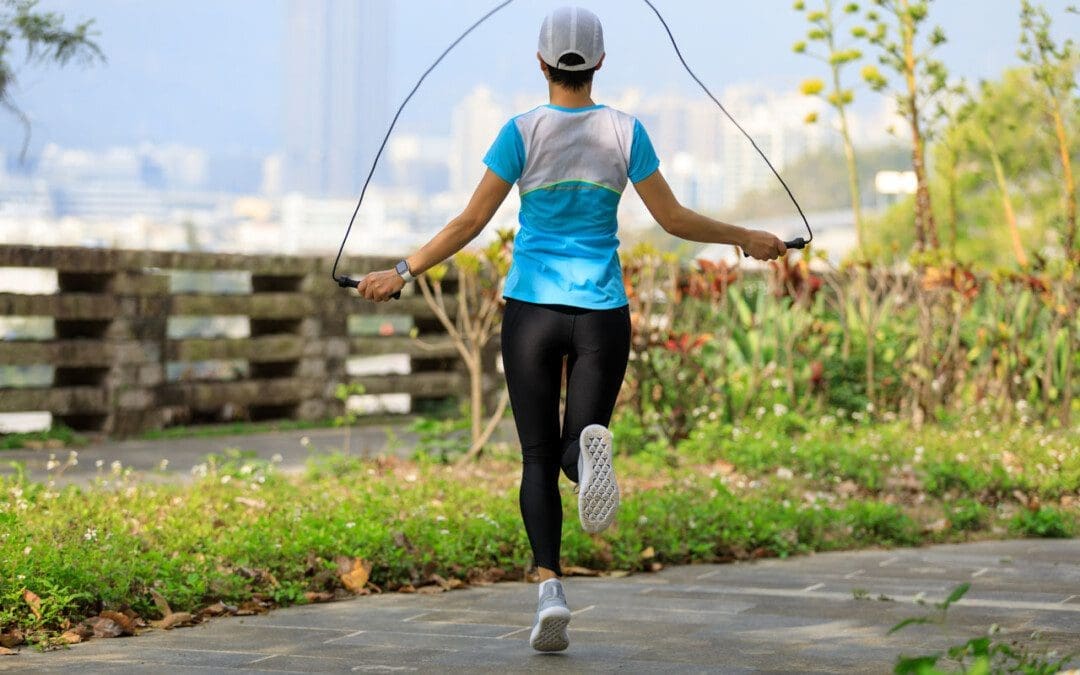
Individuals trying to get and stay in shape can find it difficult to get a regular workout. Can jumping rope help when there is no time?
Jumping Rope: Benefits for Balance, Stamina & Quick Reflexes

Jumping Rope

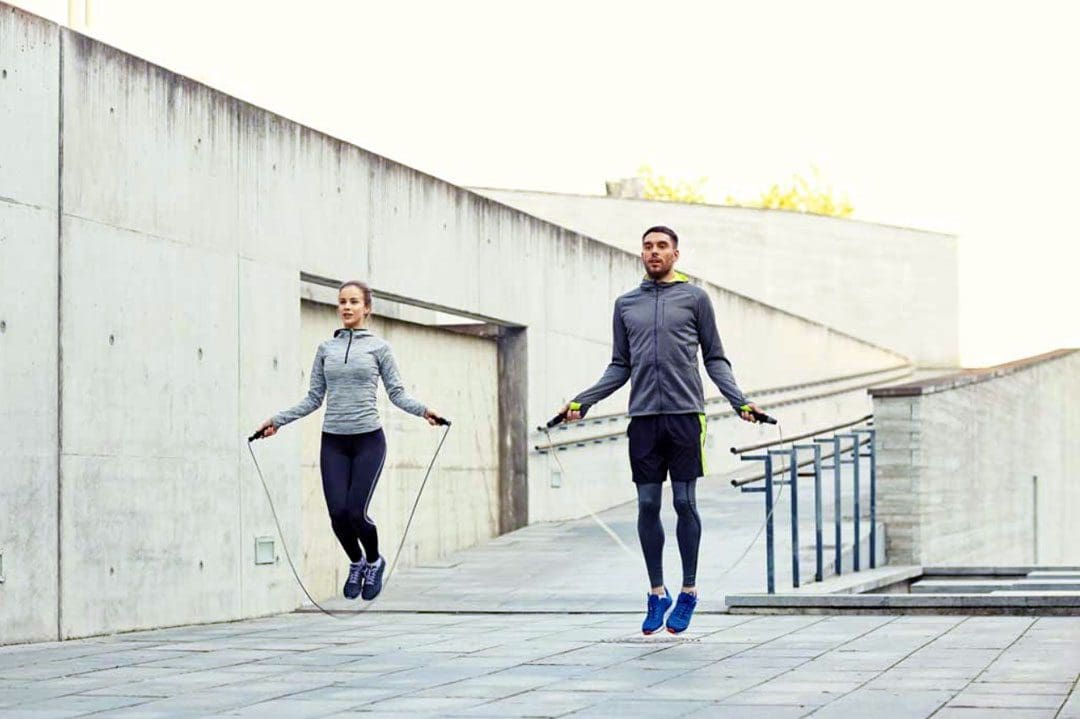
Jumping rope can be a highly cost-effective exercise to incorporate high-intensity cardiovascular fitness into a workout routine. It is inexpensive, efficient, and done properly can improve cardiovascular health, improve balance and agility, increase muscular strength and endurance, and burn calories. (Athos Trecroci, et al., 2015)

  • Jumping rope can be utilized in interval training to keep the heart rate elevated and allow the muscles to rest in between weight lifting and other intense exercises.
  • A jump rope can be used when traveling as its portability makes it a top piece of workout gear.
  • It can be combined with bodyweight exercises for a dependable and portable exercise routine.

Benefits

Jumping rope is a medium-impact exercise with benefits that include:

  1. Improves balance, agility, and coordination
  2. Builds stamina and foot speed for coordination, agility, and quick reflexes.
  3. Variations include one-leg jumping and double unders or with each jump, the rope goes around twice to add difficulty.
  4. Builds Fitness Fast
  5. Burns calories
  • Depending on skill level and jumping rate, individuals can burn 10 to 15 calories a minute by jumping rope.
  • Faster rope jumping can burn calories similar to running.

Precautions

For individuals who have high blood pressure, jumping rope may not be recommended. The downward arm position can reduce blood circulation back to the heart which can further increase blood pressure. Studies have shown that jumping at a moderate intensity is beneficial for individuals who are pre-hypertensive. (Lisa Baumgartner, et al., 2020) Individuals with hypertension and/or a heart condition, are recommended to discuss the potential risks with their doctor before beginning a new exercise routine.

Choosing a Rope

  • Jump ropes are available and made from various materials and come with different handles.
  • Cordless jump ropes are great for working out in limited spaces.
  • Some of these materials help jump ropes spin faster with a smooth motion.
  • Some options have a swivel action between the cords and handles.
  • The rope you buy should be comfortable to hold and have a smooth spin.
  • Weighted jump ropes can help develop upper body muscle tone and endurance. (D. Ozer, et al., 2011) These ropes are not for beginners and are not necessary for an agility workout.
  • For individuals who want a weighted rope, be sure the weight is in the rope and not the handles to prevent straining the wrists, elbows, and/or shoulders.
  1. Size the rope by standing on the center of the rope
  2. Pull the handles up along the sides of the body.
  3. For beginners, the handles should just reach the armpits.
  4. As the individual’s skills and fitness develop, the rope can be shortened.
  5. A shorter rope spins faster, forcing more jumps.

Technique

Following proper technique will ensure a more safe and effective workout.

  • Start slowly.
  • The proper jumping form keeps the shoulders relaxed, elbows in, and slightly bent.
  • There should be very few upper-body movements.
  • The majority of the turning power and motion come from the wrists, not the arms.
  • During jumping, keep the knees slightly bent.
  • Bounce softly.
  • The feet should leave the floor just enough to allow the rope to pass.
  • Land softly on the balls of the feet to avoid knee injuries.
  • It is not recommended to jump high and/or land hard.
  • Jump on a surface that is smooth and free of obstacles.
  • Wood, a sports court, or a rubberized mat are recommended.

Warming Up

  • Before beginning jumping rope, do a light, 5 to 10-minute warm-up.
  • This can include walking or jogging in place, or slow-paced jumping.

Increase Time and Intensity Gradually

The exercise can be relatively intense and high-level.

  • Start slowly and increase gradually.
  • An individual might try three 30-second sets at the end of a routine workout for the first week.
  • Depending upon fitness level, individuals may feel nothing or some slight soreness in the calf muscles.
  • This can help determine how much to do for the next jump rope session.
  • Gradually increase the number of sets, or the duration, over several weeks until the body can go for about ten minutes of continuous jumping.
  • One way is to jump after each weight-lifting set or other circuit exercise – like adding jumping for 30 to 90 seconds in between exercise sets.

Stretch Out After

Sample Workouts

There are variations of workouts. Here are a few:

Double foot jump

  • This is the basic jump.
  • Both feet slightly lift off from the ground and land together.

Alternate foot jump

  • This uses a skipping step.
  • This allows landing more prominently on one foot after each spin.

Running step

  • A slight jog is incorporated while jumping.

High step

  • A moderate pace with a high knee raise increases intensity.

Rope jumping is a great addition to an interval training or cross-training routine that creates an efficient whole-body workout that incorporates both cardiovascular endurance and muscular strength.


Overcoming ACL Injury


References

Trecroci, A., Cavaggioni, L., Caccia, R., & Alberti, G. (2015). Jump Rope Training: Balance and Motor Coordination in Preadolescent Soccer Players. Journal of sports science & medicine, 14(4), 792–798.

Baumgartner, L., Weberruß, H., Oberhoffer-Fritz, R., & Schulz, T. (2020). Vascular Structure and Function in Children and Adolescents: What Impact Do Physical Activity, Health-Related Physical Fitness, and Exercise Have?. Frontiers in pediatrics, 8, 103. https://doi.org/10.3389/fped.2020.00103

Ozer, D., Duzgun, I., Baltaci, G., Karacan, S., & Colakoglu, F. (2011). The effects of rope or weighted rope jump training on strength, coordination and proprioception in adolescent female volleyball players. The Journal of sports medicine and physical fitness, 51(2), 211–219.

Van Hooren, B., & Peake, J. M. (2018). Do We Need a Cool-Down After Exercise? A Narrative Review of the Psychophysiological Effects and the Effects on Performance, Injuries and the Long-Term Adaptive Response. Sports medicine (Auckland, N.Z.), 48(7), 1575–1595. https://doi.org/10.1007/s40279-018-0916-2

Vertical Jump Increase and Improvement

Vertical Jump Increase and Improvement

For athletes, the vertical jump is a skill that can be increased and improved with proper training. To improve jumping abilities for sports like basketball, tennis, volleyball, or track and field events such as the high jump it is necessary to do both strength and power training. Research has found certain key components can help athletes become better at jumping. There are different ways to improve an individual’s vertical jump. Here we go over some of the most effective exercises including plyometrics, and exercises that build strength and power.

Vertical Jump Increase and Improvement

Vertical Jump Increase and Improvement

Jumping is an explosive movement.

  • To jump well, an individual needs a consistent powerful spring.
  • This is achieved by training the explosive/fast-twitch muscle fibers with the ability to shorten and stretch dynamically.
  • Upper body strength is important for creating upward momentum.
  1. Strength exercises involve slow, controlled movements like squats, lunges, and step-ups with weights.
  2. Power exercises involve explosive, quick movements.
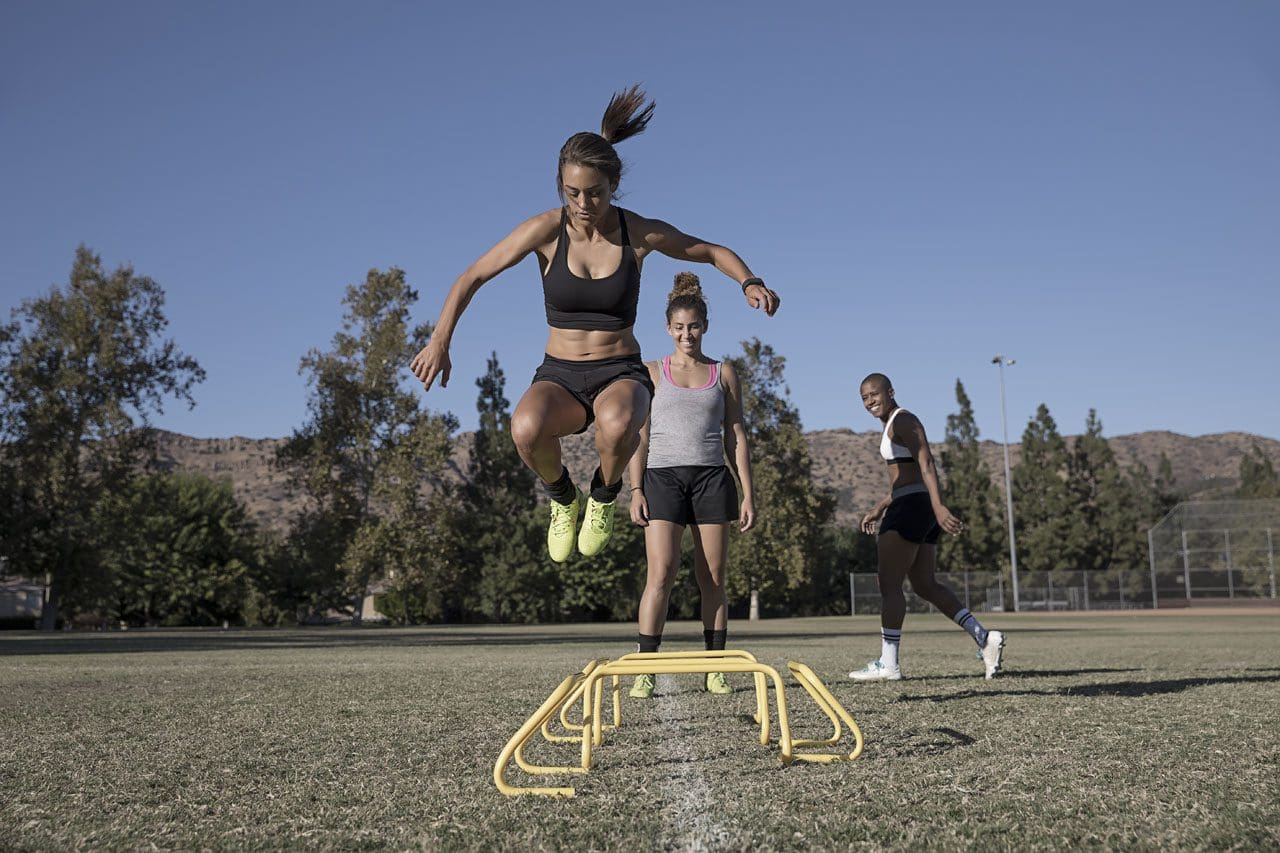
  3. Plyometrics involve explosive hopping, bounding, and jumping drills that combine strength and speed.

Exercises

Plyometrics

  • Common plyometric exercises include hops, jumps, and bounding movements.
  • A popular exercise is jumping off a box and rebounding off the floor then jumping onto another, higher box.
  • Box jumps provide practice for jumping.

Single-Leg Squats

  • Single-leg squats can be done almost anywhere, without equipment.
  • They work the hips, hamstrings, quadriceps, gluteus maximus, and calves.
  • They strengthen the core and increase flexibility.

Full Squats

  • This is a barbell exercise to build strength and power.
  • It is considered one of the best total body exercises.

Weighted Step-Ups

  • The step-up is a recommended all-around exercise that can be done almost anywhere.
  • Not only will it build strength in your quadriceps, but you can also use it as part of a cardio workout.
  • It has a low risk of injury.

Overhead Walking Lunges

  • All that is needed is a weight and room to walk.
  • This exercise builds power, strength, and speed in the legs.
  • Improves core strength.

Stair Running

  • This is a high-intensity workout that builds speed, power, and cardiovascular fitness.
  • It targets the glutes, quads, and calves.

Agility Drills

  • Agility drills can include jumping to improve coordination, speed, power, and specific skills.

Sprints

  • Sprints are quick intense exercises to build muscle and increase performance.
  • Sprints use more muscle groups.

Practice

  • Build strength by performing basic weight training exercises using slow, controlled movements.
  • Build power with faster dynamic movements.
  • Improve movement speed to create power with explosive, quick exercises.
  • Work on form, by incorporating the lead-up to the jump, arm motion, and safe landing technique.
  1. Include time to practice maximum jumping and bring it all together.
  2. Always warm up before jumping or performing drills to keep the joints and body safe.
  3. Athletes jump rope to get the blood circulating and warm up their muscles.
  4. Do several slow, controlled toe raises to prepare the feet and ankles for jumping and landing.
  5. Gradually work up to a full vertical jump, by doing box and squat jumps.

Jumping

  • When finally working on the vertical jump, start with the feet hips-distance apart.
  • If measuring jump height, stand about a foot away from the measuring tape or measuring bar on the side.
  • Start with arms overhead.
  • As you drop into a squat position swing the arms behind the hips.
  • Swing back up to the starting position before going for the full jump.
  • The pre-swing helps build momentum.
  • Land with the knees bent to minimize the impact.

Jumping is a high-impact activity that can take a toll on the knees, hips, ankles, and feet. Be sure to rest the body between hard workouts so the muscles have time to recover, repair, and build up.


Improving Athletic Performance


References

Barnes, Jacque L et al. “Relationship of jumping and agility performance in female volleyball athletes.” Journal of Strength and conditioning research vol. 21,4 (2007): 1192-6. doi:10.1519/R-22416.1

Bezerra, Ewertton DE S et al. “Influence of Trunk Position during Three Lunge Exercises on Muscular Activation in Trained Women.” International journal of exercise science vol. 14,1 202-210. 1 Apr. 2021

Hedlund, Sofia, et al. “Effect of chiropractic manipulation on vertical jump height in young female athletes with talocrural joint dysfunction: a single-blind randomized clinical pilot trial.” Journal of Manipulative and physiological therapeutics vol. 37,2 (2014): 116-23. doi:10.1016/j.jmpt.2013.11.004

Hernández, Sebastian, et al. “Effects of Plyometric Training on Neuromuscular Performance in Youth Basketball Players: A Pilot Study on the Influence of Drill Randomization.” Journal of sports science & medicine vol. 17,3 372-378. 14 Aug. 2018

Karatrantou, Konstantina, et al. “Can sport-specific training affect vertical jumping ability during puberty?.” Biology of sport vol. 36,3 (2019): 217-224. doi:10.5114/biolsport.2019.85455

Markovic, Goran. “Does plyometric training improve vertical jump height? A meta-analytical review.” British Journal of sports medicine vol. 41,6 (2007): 349-55; discussion 355. doi:10.1136/bjsm.2007.035113

McLellan, Christopher P et al. “The role of rate of force development on vertical jump performance.” Journal of Strength and conditioning research vol. 25,2 (2011): 379-85. doi:10.1519/JSC.0b013e3181be305c

Rodríguez-Rosell, David, et al. “Traditional vs. Sport-Specific Vertical Jump Tests: Reliability, Validity, and Relationship With the Legs Strength and Sprint Performance in Adult and Teen Soccer and Basketball Players.” Journal of Strength and conditioning research vol. 31,1 (2017): 196-206. doi:10.1519/JSC.0000000000001476

Vanezis, Athanasios, and Adrian Lees. “A biomechanical analysis of good and poor performers of the vertical jump.” Ergonomics vol. 48,11-14 (2005): 1594-603. doi:10.1080/00140130500101262

Mastodon






