by Dr Alex Jimenez DC, APRN, FNP-BC, CFMP, IFMCP | Anti Aging
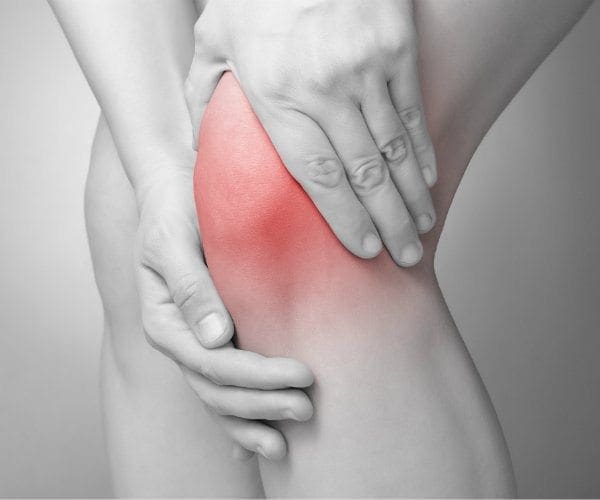
“Keyhole” arthroscopic surgery should rarely be used to repair arthritic knee joints, a panel of international experts says in new clinical guidelines.
Clinical trials have shown that keyhole surgery doesn’t help people suffering from arthritis of the knees any more than mild painkillers, physical therapy or weight loss, said lead author Dr. Reed Siemieniuk. He is a health researcher with McMaster University in Toronto, Canada.
“You can make a pretty strong statement saying that from a long-term perspective, it really doesn’t help at all,” Siemieniuk said. “If they knew all the evidence, almost nobody would choose to have this surgery.”
Keyhole surgery is one of the most common surgical procedures in the world, with more than 2 million performed each year, Siemieniuk said. The United States alone spends about $3 billion a year on the procedure.
The new guidelines — published online May 10 in the BMJ — were issued as part of the journal’s initiative to provide up-to-date recommendations based on the latest evidence. The guidelines make a strong recommendation against arthroscopy for nearly all cases of degenerative knee disease.
This includes osteoarthritis as well as tears of the meniscus, the padding between the two leg bones in the knee, Siemieniuk said.
“With age and with use, the grinding of the two bones together can break down that padding,” he said. “It’s very common to see little rips and tears in that padding in patients with arthritis.”
Siemieniuk and his colleagues noted that a trial published in 2016 showed that surgery was no better than exercise therapy in patients with a meniscus tear.
Despite this and other medical evidence, most guidelines still recommend keyhole surgery for people with meniscus tears, sudden onset of symptoms like pain or swelling, or mild to moderate difficulties with knee movement.
Arthroscopic surgery relies on small incisions through which a tiny camera and miniature instruments are inserted. Doctors can remove or repair damaged tissue without having to cut the knee open.
The American Academy of Orthopaedic Surgeons currently advises against performing arthroscopic surgery in patients with full-fledged knee osteoarthritis, said Dr. Kevin Shea, an academy spokesman.
“Most orthopedic surgeons have dramatically reduced arthroscopic surgery in patients with degenerative arthritis,” Shea said. “Most I know have abandoned it over the last 10 to 15 years.”
However, arthroscopic surgery still can help people with joint movement problems caused by meniscus tears who have not developed moderate or severe knee osteoarthritis, said Shea.
Those patients should be treated first with mild painkillers and exercise therapy, but keyhole surgery should remain an option for them, he added. Shea is a professor of orthopedic surgery at the University of Connecticut.
“Not that long ago, I operated on a 67-year-old retired schoolteacher who’s an avid skier,” Shea said. “She had no arthritis in her knee but a huge meniscus tear that kept locking, catching and popping. Not offering treatment to her would not have been fair.”
Under the BMJ guidelines, patients with meniscus tears should be treated with painkillers and physical therapy, as well as weight loss if they are overweight, Siemieniuk said. Knee replacement surgery is the last treatment option, done once degeneration has progressed to the point where all other therapies don’t work.
There is a financial incentive for doctors and hospitals to perform unnecessary keyhole surgeries, but Siemieniuk said these surgeries also might be prompted by the desire to treat a painful medical condition.
“It’s hard to take away one of the options from people when chronic knee pain and arthritis can be very debilitating,” he said. “And there’s an expectation from patients that by the time they see a surgeon, the surgeon is going to have something to be able to offer them.”
Inertia might also play a role. “It’s a lot easier to introduce a new treatment into clinical care than to de-implement one that we later find out doesn’t work,” Siemieniuk said. “That’s what we’re seeing here.”
Keyhole surgery has its downsides. Recovery can last anywhere from 3 days to 6 weeks, Siemieniuk said, and there is a risk of blood clots or infection in the knee.
Patients should go through a shared decision-making process with their surgeon, questioning whether this surgery would truly help them, he said.
The surgery still can be useful to fix torn ligaments or repair damage caused by severe trauma, Siemieniuk said. But in most cases, he said, given the evidence, insurers “may choose not to fund it, which I think would be appropriate.”

by Dr Alex Jimenez DC, APRN, FNP-BC, CFMP, IFMCP | Diets, Fitness
Warding off the joint pain of gout may be as easy as eating right, a new study suggests.
Gout, a joint disease that causes extreme pain and swelling, is caused by excess uric acid in the blood. It’s the most common form of inflammatory arthritis, and its incidence has risen among Americans over recent decades, Harvard researchers noted.
But the DASH (Dietary Approaches to Stop Hypertension) diet — which is high in fruits and vegetables, and low in salt, sugar and red meat — can lower levels of uric acid in the blood.
The American Heart Association has long supported the DASH regimen as a way to help avoid heart disease.
“Conversely, the [unhealthy] Western diet is associated with a higher risk of gout,” said Dr. Hyon Choi, of Harvard Medical School in Boston, and colleagues. The “Western” diet describes the fatty, salty, sugar-laden fare of many Americans.
One nutritionist wasn’t surprised by the new findings, pointing out that the DASH diet is low in compounds called purines, which break down to form uric acid.
“I can see how the DASH diet may benefit someone with gout,” said Jen Brennan, clinical nutrition manager at Lenox Hill Hospital in New York City. “The DASH diet avoids excessive consumption of red and organ meats known to have high purine levels.”
Brennan added that the DASH diet “also encourages high intake of fruits and vegetables. We want to encourage fluids and vitamin C for these patients to help rid the body of uric acid, and fruits/vegetables can support this.”
In their study, the Harvard researchers analyzed data from more than 44,000 men, aged 40 to 75, who had no prior history of gout. The men provided information about their eating habits every four years between 1986 and 2012.
Over the study period, more than 1,700 of the men developed gout.
During 26 years of follow-up, those who followed the DASH diet — high in fruits, vegetables, legumes, nuts, low-fat dairy products and whole grains, and low in salt, sugary drinks and red and processed meats — were less likely to develop gout than those who ate a typical Western diet, the findings showed.
The Western diet is high in items such as red and processed meats, French fries, refined grains, sweets and desserts.
The study wasn’t designed to prove a cause-and-effect relationship. However, the findings suggest that the DASH diet may provide “an attractive preventive dietary approach for the risk of gout,” the researchers concluded.
Choi’s team noted that many people who have high uric acid levels also have elevated blood pressure, or “hypertension” — another reason to switch to the healthier DASH diet.
According to the study’s lead author, Sharan Rai, of Massachusetts General Hospital, “The diet may also be a good option for patients with gout who have not reached a stage requiring [uric acid]-lowering drugs, or those who prefer to avoid taking drugs.” Rai is with Mass General’s division of rheumatology, allergy and immunology.
“And since the vast majority of patients with gout also have hypertension, following the DASH diet has the potential of ‘killing two birds with one stone,’ addressing both conditions together,” Rai said in a hospital news release.
However, more studies are needed to track the diet’s effectiveness in curbing gout flare-ups, the researchers said.
Dana Angelo White is a registered dietitian at Quinnipiac University in Hamden, Conn. She called the new study “another win for the DASH diet, a sensible plan that emphasizes whole foods and a healthy balance of all major food groups. I’m pleased to see a study that highlights the benefits beyond cardiovascular health. If more people ate this way, we would continue to see decreases in all kinds of chronic illness.”
The study was published online May 9 in the BMJ.
by Dr Alex Jimenez DC, APRN, FNP-BC, CFMP, IFMCP | Sleep Hygiene
Most of us will spend at least 1/3 of our lives sleeping. Strangely, researchers still aren�t entirely sure why our body needs sleep.1 What they have found, however, is that the number of hours of sleep you get each night, combined with your sleeping position, can greatly affect your overall health.
Research conducted by the National Sleep Foundation (NSF) shows that the average adult needs between 7 and 9 hours of sleep each night for maximum health benefits.2 Their research, which involved a systematic review of scientific literature pertaining to health, safety, and performance, also identified certain sleeping postures that can help alleviate or even prevent several common physical ailments, including back pain and sinus infections.
To help sufferers get the relief and rest they need, we�ve compiled a list of 8 sleeping positions designed to help alleviate these common health conditions.
1. Headaches
If you constantly suffer from painful headaches, take a good look at your sleeping position.3 If you sleep with your head in the same position for an extended period of time and/ or twist your neck while you sleep, research shows that you are more likely to wake up with a headache. To prevent this, you may want to surround your head with pillows to prevent any neck twisting. If you can, try to move your head around at least a little during the night.
2. Digestive Issues and Heartburn
If you struggle with digestive issues (like heartburn), do yourself a favor: slightly elevate your head and sleep on your left side. Studies show that elevating your head keeps stomach acid from flowing up into your esophagus, the main cause of heartburn.4 Additionally, since your stomach sits slightly on your left side, sleeping on your left lets gravity assist in digestion.
3. Neck Pain
To reduce your chances of waking up with an aching pain in your neck, give it a little extra support while you sleep. There are two easy ways to do this.5 One, opt for a feather pillow, which easily conforms to your neck�s shape. Two, roll up a small hand towel and place it under your neck for additional support. If the towel�s texture bothers you, tuck it inside your pillowcase.
4. Back Pain
Back pain can be made worse or better based on how you sleep. According to experts, the best position for relief is lying flat on your back.6 At the same time, place a pillow under your knees or put a small, rolled up towel under the curve of your back. However, you should keep in mind that when it comes to back pain, your best option is to sleep in the position that works for you.
5. Sinus Problems
If you�re suffering from a sinus infection, sleep can definitely be a problem. Thankfully, researchers have found that sleeping with your head elevated is most beneficial in this situation.7 This position assists in preventing pools of mucus from building up when your head is down, making it much easier to get the rest and relaxation you need to recover.
6. High Blood Pressure
If you suffer from high blood pressure, also referred to as hypertension, you may be surprised to learn that how you sleep can affect your condition. In fact, researchers have found that sleeping in a face-down positon can help lower blood pressure.8 In a study performed at the Ehime University School of Medicine, participants, overall, saw a significant drop in their blood pressure when lying on their stomach with their face down. One important note: you should always speak with your physician about your condition and potential treatment regimens.
7. Shoulder Pain
If you are suffering from shoulder pain, it�s pretty obvious that you don�t want to sleep on the affected side because this puts unnecessary pressure on your muscles and bones.9 Instead, you have two options. One, you can sleep flat on your back, which is a good solution if both of your shoulders hurt. Two, you can sleep on the side that is pain-free with your legs slightly bent. For added support try tucking a pillow under your knees, or clasping one to your chest.
8. PMS-Related Symptoms
If you are a woman who knows all too well the problematic symptoms of PMS, such as bloating, cramping, or moodiness, sleeping on your back with a pillow under your knees and your arms at your side can seriously alleviate your symptoms.10 Whatever you do, be sure to avoid curling up in a ball or lying on your stomach, as these two positions put too much pressure and weight on your uterus, resulting in increased irritation and cramping.
Now that you know how your sleeping position can benefit your health, it�s time to try them out.
References:
- https://www.theguardian.com/notesandqueries/query/0,5753,-50504,00.html
- https://sleepfoundation.org/press-release/national-sleep-foundation-recommends-new-sleep-times
- https://sleep.org/articles/waking-up-with-headache/
- http://www.livestrong.com/article/69972-sleeping-positions-better-digestion/
- http://www.health.harvard.edu/pain/say-good-night-to-neck-pain
- http://www.webmd.com/back-pain/sleeping-positions-for-people-with-low-back-pain
- http://www.health.harvard.edu/staying-healthy/what-to-do-about-sinusitis
- http://www.flatseats.com/General/sleep_down.htm
- http://www.sports-health.com/blog/your-sleep-position-harming-your-rotator-cuff
- http://www.womenshealthmag.com/health/sleep-positions

by Dr Alex Jimenez DC, APRN, FNP-BC, CFMP, IFMCP | Turmeric
Turmeric is the bright orange spice we often associate with curry or other exotic dishes, but turmeric is also becoming more well known for its health benefits as well. What I didn�t know was that turmeric can not only spice up my food, but it can help relieve everything from depression to an upset stomach. More research is being done every day, but that doesn�t mean we should overlook what we do know now about the health benefits of turmeric.
First, What is Turmeric?
Turmeric is part of the ginger family and is a perennial plant that is usually harvested in tropical climates such as India and China. Like ginger, it is a thick root that is yellow on the outside and an orange on the inside, hence the spice�s well known color. Turmeric is extensively used to flavor food or add color, mainly in curries and mustards.
What are the Health Benefits of Turmeric?
Calm an Upset Stomach and Curb Heartburn
The most well known health benefit of turmeric is to naturally calm an upset stomach. You will see a lot of turmeric teas on the market that claim to do just that. As with an upset stomach, turmeric is known to also help fight inflammation in the body, which can also help to reduce heartburn and indigestion problems.
A couple of good turmeric teas to try: Numi Organic Tea and Traditional Medicinals Organic Turmeric
Also check out my post: 5 Health Benefits of Green Tea for more information.
Ward off Heart Disease and Diabetes
Curcumin, the main compound in turmeric, is what is responsible for many of the health benefits of turmeric. Curcumin is best taken as a supplement to get the maximum health benefit because most turmeric alone only contains 2-5% curcumin. You�d have to eat one heck of a lot of turmeric to get that kind of benefit! The antioxidant and anti-inflammatory properties of curcumin help heart attack patients and those suffering from pre-diabetes. While there is no substitute for conventional therapies, curcumin could be a great supplement to talk to you doctor about.
Fights Cancer
Again, you should always follow the advice of your doctor and follow the traditional route as much as possible. But, for those worried about the disease, adding curcumin into your supplement rotation may be of some help. Curcumin has been shown to interfere with important pathways involved with cancer development and growth. In lab settings, cancer cells were even shown to shrink.
Helps Protects the Brain
Another compound of turmeric, turmerone or ar-turmerone is not as well known or studied as curcumin, but as part of several studies, it has been shown to help the recovery of stem cells in the brain. This can help to improve memory in those suffering from strokes or Alzheimer�s disease.
Please Use Caution
The FDA doesn�t regulate dietary supplements like they do food, so please use caution and talk to your doctor about any supplements you are thinking about taking. You never know how it will interact with any other medications you are taking or how it will interact in your body. That being said, turmeric is a wonderful spice to add to your dishes and can even add a new element of health to your dish!
A couple of my favorites: Nativ Organics and Vitacost Turmeric Extract Curcumin
Spices and Recipes to Try
To get your dose of turmeric, give some of these great recipes a try with the original spice.
Organic turmeric spices I like: Jiva Organics and Simply Organic
Disclaimer: Please note that some of the links in this post are affiliate links and I will earn a commission if you purchase through those links. I recommend these products because they are products that I personally use or companies that I have found trustworthy.
Recipes to Try
Creamy Turmeric Sweet Potato Hummus from Sprinkle of Green
Honey Turmeric Chicken from Rasa Malaysia
Turmeric Cauliflower Rice Pilaf from Paleo Hacks
Golden Glow Pineapple Turmeric Smoothie from Jar of Lemons
5-Ingredient Lemon Turmeric Quinoa from Simply Quinoa
by Dr Alex Jimenez DC, APRN, FNP-BC, CFMP, IFMCP | Posture
Image Source: POPSUGAR Photography / Kathryna Hancock
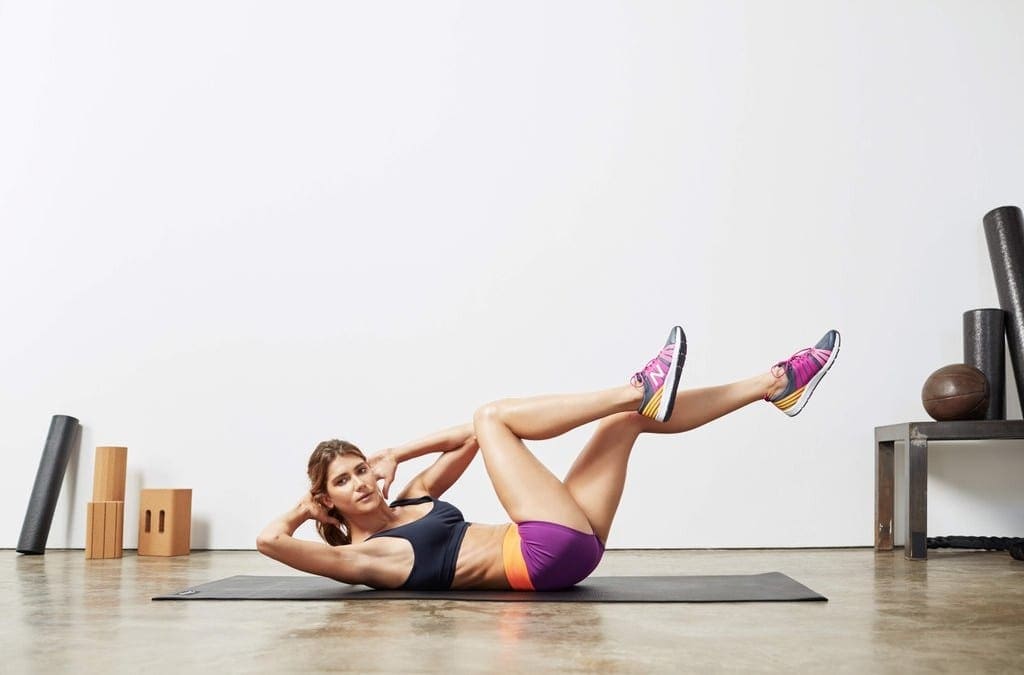
There’s so much to love about a strong midsection � most importantly, it’s essential for a healthy body.
Fact: strengthening the core helps improve posture, prevent everyday injury, and combat chronic back pain, which is all too common if you sit at a desk all day.
Keep in mind that this isn’t a beginner workout. “If you feel your back or hip flexors too much while doing these exercises, it’s an indication that your abs aren’t strong enough to perform them,” he said. In that scenario, you can always reduce the amount of reps, modify the moves, or opt for a more beginner-friendly workout.
The workout: Run through the five-move circuit for a total of three times. Do your best to minimise breaks between each move.
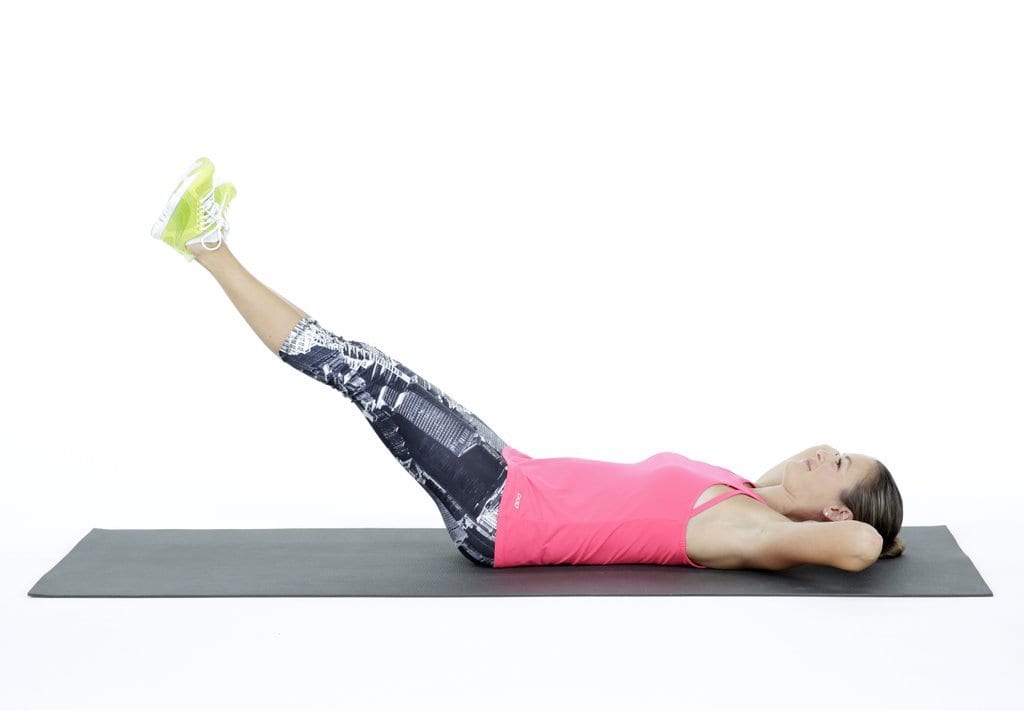
Double Leg Lifts
What�s Your Reaction? Thanks for your reaction Don�t forget to share this with your friends!
Image Source: POPSUGAR Studios
- Lay flat on the ground with your legs extended straight up toward the ceiling. Place your hands underneath the back of your head. For added stability, Austin recommends laying your arms out to your side, allowing the palms to grip the floor much like you would in a push-up position.
- Pressing your lower back into the ground, slowly lower both legs down toward the floor, then slowly raise them back up. If this is too difficult, lower them as much as you can, or lower one leg at a time.
- Complete 10 to 15 reps.
1 / 5
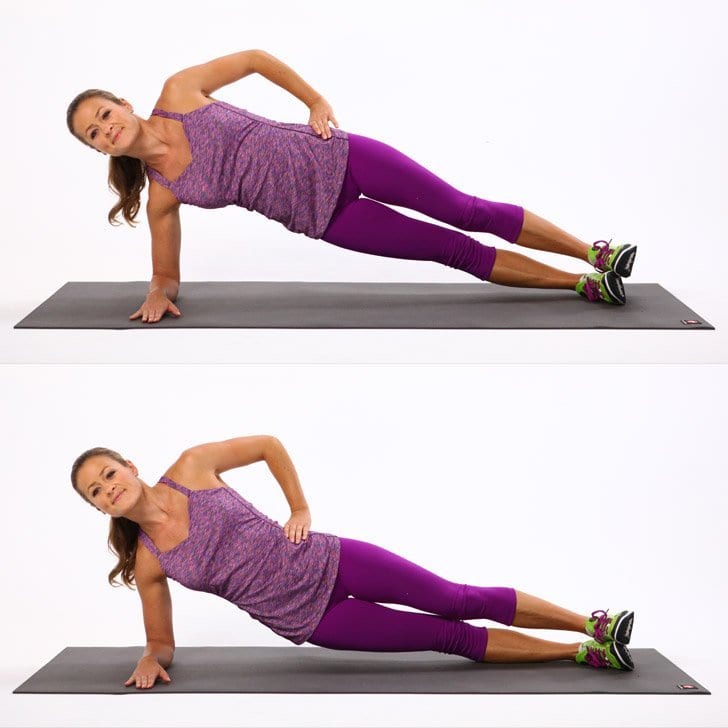
Hip Dips
What�s Your Reaction? Thanks for your reaction Don�t forget to share this with your friends!
Image Source: POPSUGAR Studios
- Begin in a side elbow plank on your right side with straight legs and your feet stacked.
- Inhale and lower your pelvis to the floor, so your right hip hovers just off the floor. Exhale and press up through your right waist to lift your pelvis and return to side plank. Pull your right shoulder blade down your back to stabilize your shoulder.
- Repeat for a total of 10 to 15 reps to complete a set, then switch sides.
2 / 5
V Crunch
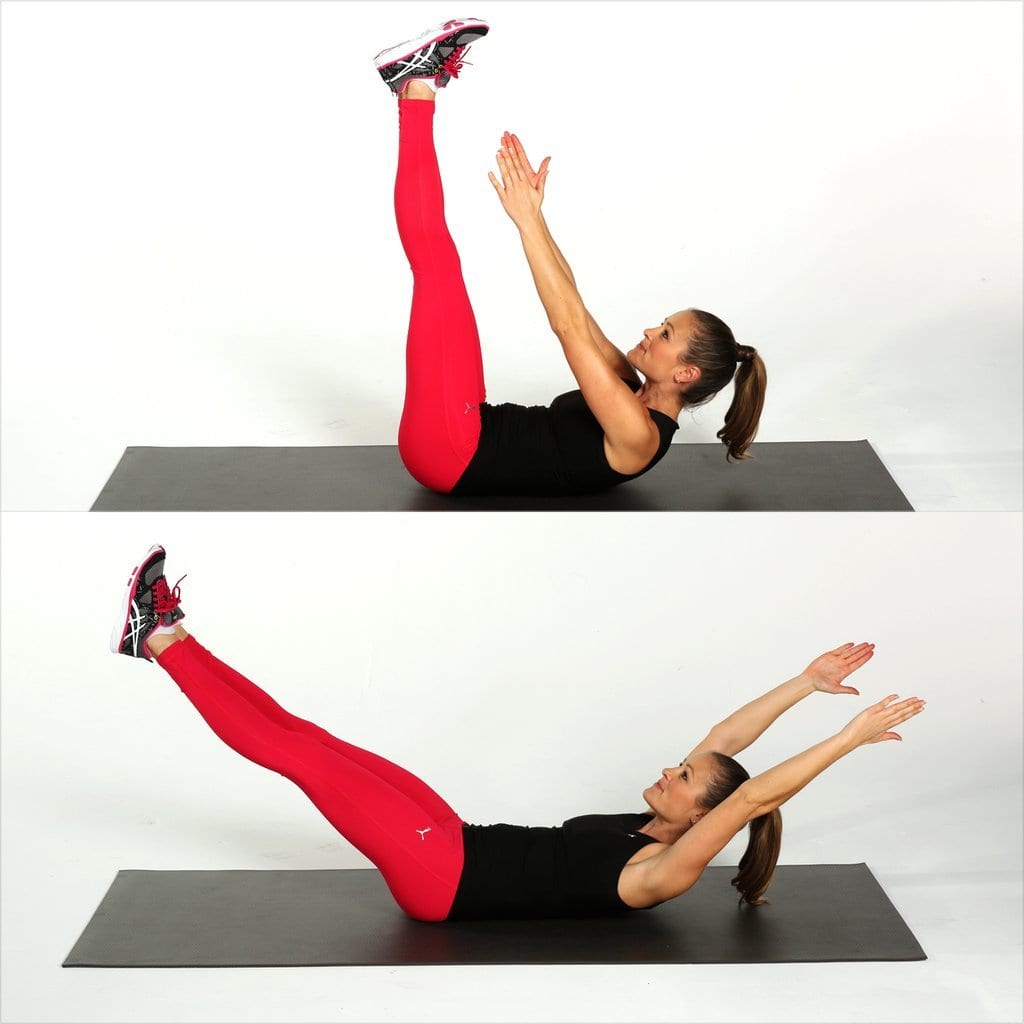
What�s Your Reaction? Thanks for your reaction Don�t forget to share this with your friends!
Image Source: POPSUGAR Studios
- Lying on your back, lift your legs and arms up so they are extended toward the ceiling. Lift your upper back off the floor, reaching your hands toward your feet.
- Lower your legs toward the floor while reaching your arms overhead, keeping your shoulders off the mat and your lower back pressed into the ground.
- Repeat the crunch motion to complete one rep.
- Complete 15 reps.
3 / 5
Alternating Two-Point Plank
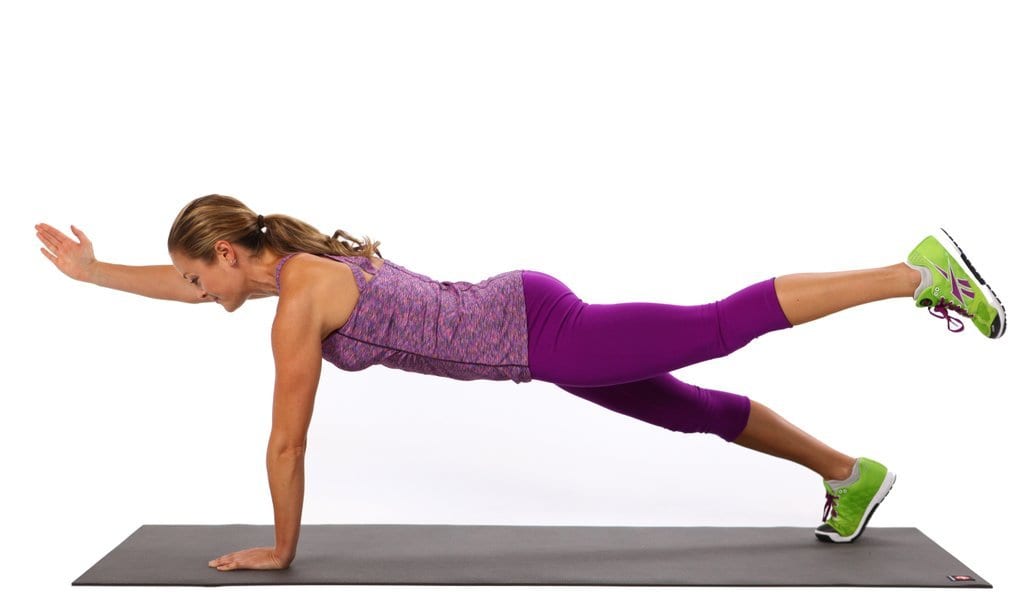
What�s Your Reaction? Thanks for your reaction Don�t forget to share this with your friends!
Image Source: POPSUGAR Studios
- Start in a plank position with your hands directly under your shoulders and your feet in line with your hips. Lift your left leg off the ground so your heel is even with your pelvis.
- Keeping your torso steady, reach your right arm forward. Really brace through your abs by pulling your navel to your spine. Hold this position for about three seconds.
- Return to plank, then switch sides, lifting your right leg off the ground and reaching your left arm forward. Hold for three seconds and return to plank. This is one rep.
- Complete 8 to 10 reps.
4 / 5
Bicycle Crunches
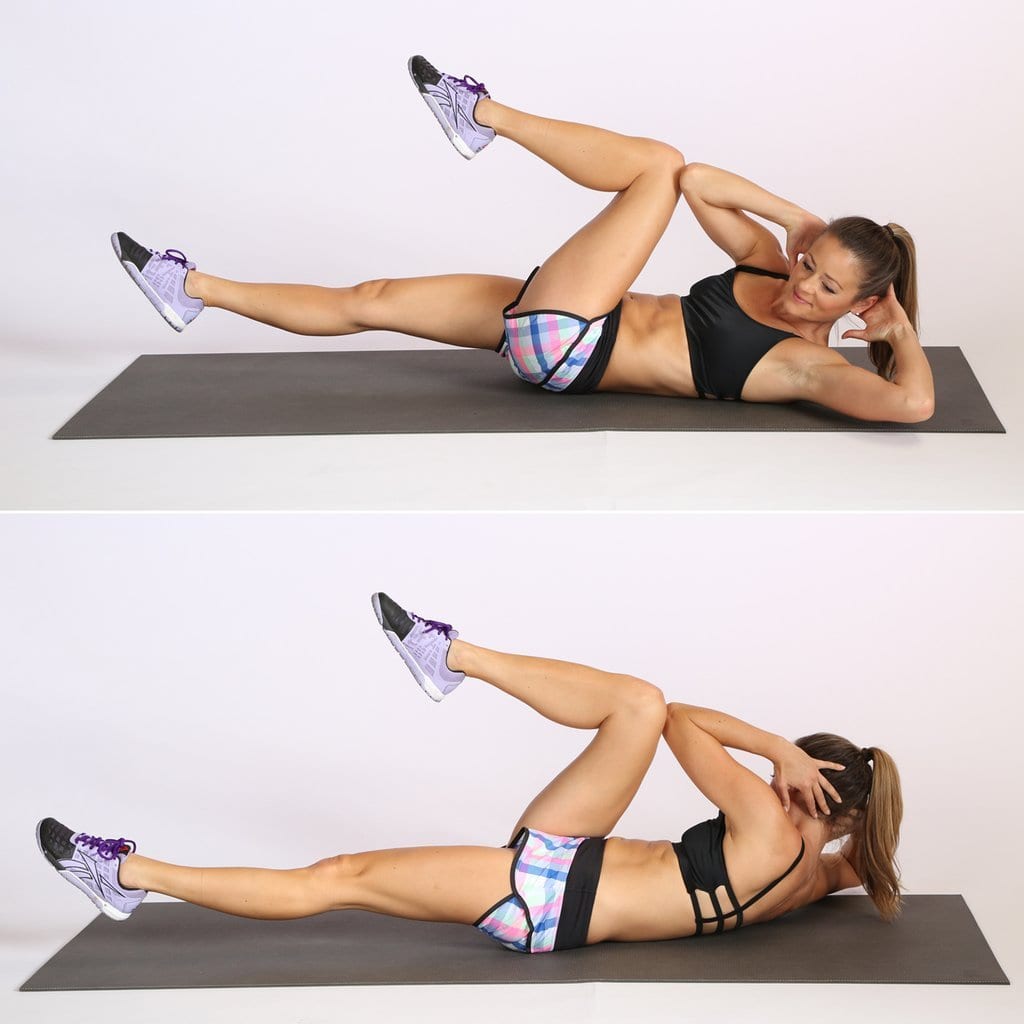
What�s Your Reaction? Thanks for your reaction Don�t forget to share this with your friends!
Image Source: POPSUGAR Studios
- Lie flat on the floor with your lower back pressed to the ground (pull your abs down to also target your deep abs).
- Put your hands behind your head.
- Bring your knees in toward your chest and lift your shoulder blades off the ground, but be sure not to pull on your neck.
- Straighten your right leg out to about a 45-degree angle to the ground while turning your upper body to the left, bringing your right elbow toward the left knee. Make sure your rib cage is moving and not just your elbows.
- Switch sides and do the same motion on the other side to complete one rep (and to create the “peddling” motion).
- Do 15 to 25 reps at a quick pace.
Repeat the circuit for a total of three times.
5 / 5

by Dr Alex Jimenez DC, APRN, FNP-BC, CFMP, IFMCP | Physical Rehabilitation, Sleep Hygiene
There is a growing awareness in the U.S. for childbearing women to seek help in adjusting to their post-baby body. This is not to be confused with the celebrity magazine headlines of �How I Got My Body Back.� The goal is not to return to the same jeans you wore before or to fad diet and slim down to your former self.
Women who bear children can feel the history in their bodies. A cataclysmic journey has taken place: conceiving, carrying, and delivering a human into the world. It is a beautiful experience to be revered and should not leave the woman with any upset about the glory of what she has been able to do. Yet the entire year of making this happen � the three trimesters plus the so-called �fourth trimester� of infancy � does affect the body, sometimes in a way that bewilders or hinders us.
“This is not to be confused with the celebrity magazine headlines of ‘How I Got My Body Back.’ The goal is not to return to the same jeans you wore before or to fad diet and slim down to your former self.” ��Laura Lash
Perhaps because of the nationwide growing practices of yoga and mindfulness, or because Western medicine is opening up to the mind-body connection and the influences of Eastern medicine, we now have women asking for more support in the physical recovery of their bodies after childbearing, not seeking to return to the body they had, but to learn how to improve functionality of their body as it is now. In this article we will hear from a physical therapist, a yoga/Pilates instructor and a bodyworker to learn about common issues and how they can be addressed.
Issues
Nature allows for a graceful advance throughout pregnancy. Week to week with the growth of the baby, a woman�s body has the opportunity to adjust to carrying increased weight. We make modifications in how we sit, carry things, even in the way we get in and out of the car. Sleeping positions are limited and rest can be fitful. After nine-plus months of this accommodation there is the birthing event. The experience varies from person to person but as one of my yoga teachers � cracking a joke about the �will-this-ever-end� mentality � said: �All the babies come out!� And the babies do come out, all with their own unique birth stories. Regardless of the way in which a baby is birthed, it is a huge undertaking for the female body. The mother will then begin to heal herself, at the same time providing nourishment to her newborn, by breast or bottle. The first three months of a child�s life are a precious time for the mother�s mind, body, and emotions. And it can be a challenge to see clearly what the mother�s needs are when the newborn needs constant care. Admittedly, some women require medical attention in their postpartum recovery. More commonly, women are simply trying to get by in the sleepless, incubated state that is new motherhood.
Sheri Baemmert, E-RYT 200, RYT 500, RCYT, RPYT, teacher of Pilates, yoga and Thai yoga bodywork, elaborates on her experience with childbirth: �After I became pregnant with my son, I started to really understand what women experience.� As the teacher in class, Sheri�s demonstrations became different.
�Our bodies are amazing, and after my first home birth I realized preparing for birth is like training for the most intense workout you will ever have. � ��Sheri Baemmert, E-RYT 200, RYT 500, RCYT, RPYT, teacher of Pilates, yoga and Thai yoga bodywork
“As I got bigger and bigger and had to push myself off the floor instead of just hopping up, I understood what books can’t teach … After having a second child, I realized things don�t bounce back the same why they can after the first child. Again, knowledge can come from books, but wisdom comes from experience.�
There are common issues that arise for the postpartum mother. And as previously mentioned, there is a heightened awareness now that women are allowed, even encouraged, to seek help in improving the function of their core/abdominal muscles, pelvic floor (the muscular base of the abdomen supporting the bladder, intestines, and uterus) or any other body area that has been affected, and is perhaps dysfunctioning, after the pregnancy and birth experience.
Stephanie Powell, P.T., a physical therapist with Mayo Clinic Health System, has been working with women on these issues for 11 years, nine of them as a specialist working with the pelvic floor: �I just always encourage women to let their providers know any concerns they have postpartum, even if symptoms �are not a big deal.� Most common postpartum conditions include urinary incontinence (leaking urine), prolapse (when some internal structures such as the rectum, uterus, or bladder can sit lower in the pelvic floor), and reports of back pain (can be low back, mid back, neck, or all three).�
Approaches
At Prajna, a studio in Eau Claire, Sheri offers cues from her yoga and Pilates background to assist women in strengthening their pelvic floors and finding deep core strength. This work is done on Pilates-specific equipment and on a yoga mat with props. She attracts a wide range of clientele: �Basically anyone ready to commit to rebalancing their body. This includes finding subtle strength. We need to be both strong and flexible. We need to be balanced. We need to undo the consequences of our work style, lifestyle, play style. I offer my clients a full body, breath, mind approach to well-being. Some clients spend the first hour learning how to breath again. Others spend time �finding their true deep core.� � Sheri is incredibly understanding about the needs of new moms and is delighted when moms bring their babies along for sessions. She makes sessions physically and logistically accommodating so mothers feels it�s possible to repeatedly attend.
Christopher Hayden, LABT, CAR, a licensed bodyworker, will offer Visceral Manipulation (VM) and other modalities at Tuning Tree, a collective of therapists offering services in a new location on South Barstow Street, beginning in May. In his training with VM, he is �learning how to apply gentle hands-on techniques to the internal organs. This is aimed at improving their function, but can also help your body move and feel better.� In addition to postpartum work, VM can aid in digestive health, relaxation, and better movement throughout the body. �I�m excited to bring this work to clients to not only improve functioning, but also embodied self-awareness that really makes a long-term difference,� Christopher says. �I�m pairing up with Sandra Helpsmeet at the Yoga Center of Eau Claire to incorporate yoga techniques and visualizations with hands-on techniques in workshops and individual sessions.�
If you are most comfortable in a clinic setting, physical therapy may help you understand the shifts you�ve experienced and how to work with your postpartum body.
Timing
While caring for an infant, it can be hard to get a true sense of what your needs are. There is very little alone time to contemplate and focus on yourself, compounded by having very little time to take action on what your needs may be. It often gets to a point of fatigue or breakdown before women can recognize that something needs to change for them. By highlighting what is available to women, we can encourage them to seek help earlier on in the first few months of motherhood so they feel supported and can soldier on.
�Early intervention is key for treatment success, so letting women know that we are here and can help them is vital.� ��Stephanie Powell, P.T., a physical therapist with Mayo Clinic Health System
That said, treatment is possible at any time. Taking into consideration which approach to care may be best for you, you can work on rehabilitation of the body months or years after childbearing.
Stephanie elaborates on the commitment needed: �Timeline can be variable, dependent on severity of symptoms as well as other medical factors. While all therapists have their own approach, generally starting with once-weekly visits to establish tolerance to treatment, changes in symptoms, and assisting with challenges that may affect success. In terms of treating incontinence, we may see patients every two to three weeks to give them time to work on a home program.�
As wonderful as it is to seek and receive professional help, what simple things can you do to make things easier on yourself? Stephanie has more great suggestions: �Can you keep a few pillows near the area you normally feed baby, to keep your arms propped and avoid hunching the upper back? Are you keeping up with your water intake, and taking bathroom breaks regularly to try avoiding urinary tract infections or constipation? It is easy to forget the little things in the postpartum phase.�

by Dr Alex Jimenez DC, APRN, FNP-BC, CFMP, IFMCP | Chiropractic
 By Alan Mozes
HealthDay Reporter
Latest Diet & Weight Management News
TUESDAY, May 9, 2017 (HealthDay News) — A new brain scan study suggests that people whose brains are wired to produce a more muted response to food may ultimately compensate by eating more, thereby raising their risk for obesity.
The new investigation also unearthed possible evidence of a gender divide in the way men and women process the experience of eating. Women’s brains, it appears, may favor a more emotional response to the eating experience, while men are built to focus on how food satisfies the senses.
If so, such brain-wiring differences might explain why women struggle with weight more than men do.
“At this point, these are only speculations which need to be tested in future experiments,” stressed study co-author Arpana Gupta. She is an assistant professor with UCLA’s Ingestive Behavior and Obesity Program in the Center for Neurobiology of Stress and Resilience.
But “considerable sex-related differences have previously been identified in factors driving craving and drug-seeking in substance abuse,” added Gupta.
This latest investigation analyzed brain scans of 86 healthy men and women to “identify the possible role of the brain in the pathophysiology of obesity,” she explained.
In particular, the research team tried to track how eating affected activity patterns of the neurotransmitter dopamine, a so-called “reward” chemical that is critical to the way the brain responds to both satiety (eating) and deprivation (hunger).
The initial finding was that having “a less responsive dopamine system” appears to make both men and women less sensitive to food, and thereby “more prone to food intake in order to compensate for this deficit,” Gupta said.
Translation: People who register a relatively subdued reaction to eating, tend to eat more.
But the really “striking” finding, said Gupta, was an indication that men and women are simply wired differently when it comes to responses to eating.
A woman’s brain seems to draw a significant neurological link between food and the part of the brain that processes emotions, Gupta noted.
Possible proof of that link was seen among obese female participants.
Those women tended to exhibit a relatively muted response to food in brain regions that regulate emotion. That dynamic was not seen among obese men.
In contrast, a man’s brain seems more inclined to link eating to the region that handles things like smell, temperature or taste. And obese men tended to have a relatively amped up response to food in brain regions involved in sensory regulation. That dynamic was not seen among obese women.
As to what might explain why men and women process eating so differently, Gupta said the jury is still out.
“This is a difficult question to answer,” she said, while reiterating that the findings do indicate “a generalized sex difference in the way the reward system functions.”
Lona Sandon, program director in the department of clinical nutrition at the University of Texas Southwestern Medical Center in Dallas, said that the findings are “not necessarily a surprise.”
For example, Sandon noted that in her experience, women are more likely to talk about food cravings and struggle with eating disorders, such as binge eating. In addition, women are “much more likely to talk about how they turn to food to address mood, particularly foods high in sugar or fat,” she added.
What should these women do? Sandon advised getting off the couch.
“Low dopamine levels are associated with depression, which is often compensated for by eating more food,” she said. “But exercise has been shown in several studies to be beneficial for individuals with depression. Exercise can also have positive effects on appetite,” she pointed out.
“So I would suggest that physical activity or exercise might be part of the answer,” Sandon added.
Gupta and her colleagues are scheduled to report their findings Tuesday at the Digestive Disease Week meeting in Chicago. Research presented at meetings should be considered preliminary until published in a peer-reviewed journal.

Copyright � 2017 HealthDay. All rights reserved.
SOURCES: Arpana Gupta, Ph.D., assistant professor, Center for Neurobiology of Stress and Resilience, Ingestive Behavior and Obesity Program, David Geffen School of Medicine, University of California, Los Angeles; Lona Sandon, Ph.D., RDN, LD, program director and assistant professor, department of clinical nutrition, School of Health Professions, University of Texas Southwestern Medical Center, Dallas; May 9, 2017, presentation, Digestive Disease Week, Chicago








