Factors That Cause Musculoskeletal Health Problems
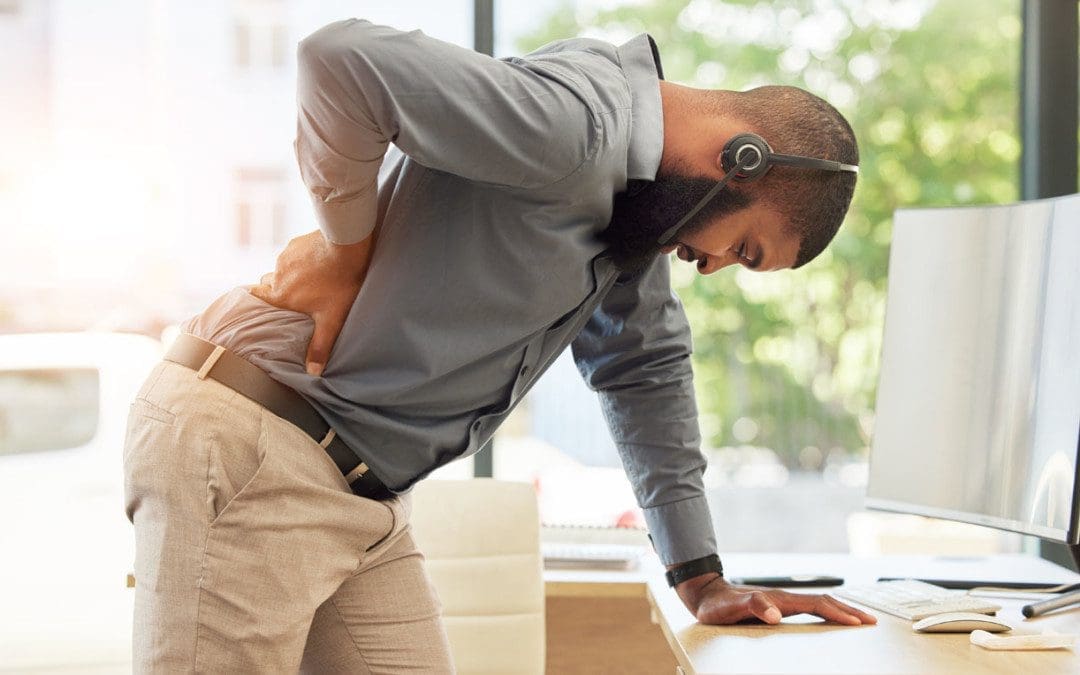
Factors that cause poor, unhealthy posture can be caused by the day-to-day effects of gravity on the body, personal, work, or sports injuries, illness, genetics, or a combination of these factors is also common. This leads to neck and back pain that leads to various musculoskeletal health issues. Achieving consistent healthy posture requires technique and practice. Chiropractic treatment with massage and/or physical therapy can restore muscles to optimal mobility and function.

Factors That Cause Unhealthy Posture
Factors that cause posture problems, like back pain, are often caused by issues with the strength and flexibility ratio between the body’s muscle groups that hold the body upright.
Muscle Guarding
- After sustaining an injury, muscles can spasm to protect the injured and the surrounding area.
- Muscle spasms can help keep injuries stable and protect them from worsening, but they can also limit movements and cause pain symptoms.
- Prolonged muscle spasms can lead to weakened/vulnerable muscles, creating an imbalance between the muscles guarding against the injury and those still working normally.
- This can cause the body posture to shift to compensate.
Muscle Tension
- Muscle weakness or tension can develop when holding a prolonged position day after day or when doing daily tasks/chores in a way that places added stress on the body.
- When certain muscle groups are weak or tense, posture will be affected.
- Aches and pains begin to develop from the awkward positioning and the other muscles that must work overtime.
Unhealthy Habits
- Compensation is when the body can still achieve its movement goal but with compromised and unhealthy alignment.
- As the body compensates and accommodates muscle spasms, weakness, tension, and/or imbalance begin to present.
- When this happens, the body may be forced to use alternate and less efficient muscle contraction and flexion patterns.
Technology
- Using technology or working with several combined devices can slowly shift the body from correct alignment.
- Incessant texting can cause text neck to develop, a condition in which the neck is held in too much flexion, or forward bending, for a prolonged time.
- Discomfort, trigger points, and pain symptoms will develop, leading to further posture problems.
Stress and Mental Health
- Individuals who experience stress regularly and easily are factors that cause posture problems.
- Stress can contribute to shallow breathing or overly-contracted muscles, causing the body to shift out of alignment.
- Adjusting posture can help counter the effects of stress.
Shoes
- Footwear affects posture.
- Heels extend the body’s weight forward, which can cause hip and spinal misalignment.
- Individuals can wear down the outside or inside of their shoes faster because of things like:
- Weight-bearing habits.
- Imbalanced kinetic forces will be translated up the ankle, knee, hip, and lower back.
- This can lead to pain and discomfort in any of these joints.
Genetics
- Sometimes, factors that cause unhealthy posture are hereditary.
- For example, Scheuermann’s disease – a condition in which adolescent boys develop pronounced kyphosis in their thoracic spines.
- It is recommended that the individual work with their primary/specialist healthcare provider in conjunction with a chiropractic specialist team for treatment and management.
Chiropractic treatment can help individuals achieve and maintain proper posture through various massage therapies to release tightness and relax the muscles, decompression to realign the spine, adjustments to realign the body, and postural training through exercises and stretches to develop healthy postural habits.
Quick Patient Intake
References
In, Tae-Sung et al., “Spinal and Pelvic Alignment of Sitting Posture Associated with Smartphone Use in Adolescents with Low Back Pain.” International Journal of Environmental Research and Public Health vol. 18,16 8369. 7 Aug. 2021, doi:10.3390/ijerph18168369
Korakakis, Vasileios, et al. “Physiotherapist perceptions of optimal sitting and standing posture.” Musculoskeletal Science & Practice vol. 39 (2019): 24-31. doi:10.1016/j.msksp.2018.11.004
Mansfield JT, Bennett M. Scheuermann Disease. [Updated 2022 Aug 21]. In: StatPearls [Internet]. Treasure Island (FL): StatPearls Publishing; 2023 Jan-. Available from: https://www.ncbi.nlm.nih.gov/books/NBK499966/
Mingels, Sarah, et al. “Is There Support for the Paradigm ‘Spinal Posture as a Trigger for Episodic Headache’? A Comprehensive Review.” Current pain and headache reports vol. 23,3 17. 4 Mar. 2019, doi:10.1007/s11916-019-0756-2
Mork, Paul Jarle, and Rolf H Westgaard. “Back posture and low back muscle activity in female computer workers: a field study.” Clinical biomechanics (Bristol, Avon) vol. 24,2 (2009): 169-75. doi:10.1016/j.clinbiomech.2008.11.001
Pope, Malcolm H et al. “Spine ergonomics.” Annual review of Biomedical Engineering vol. 4 (2002): 49-68. doi:10.1146/annurev.bioeng.4.092101.122107
Shaghayegh Fard, B et al. “Evaluation of forward head posture in sitting and standing positions.” The European Spine Journal: official publication of the European Spine Society, the European Spinal Deformity Society, and the European Section of the Cervical Spine Research Society vol. 25,11 (2016): 3577-3582. doi:10.1007/s00586-015-4254-x
Tinitali, Sarah, et al. “Sitting Posture During Occupational Driving Causes Low Back Pain; Evidence-Based Position or Dogma? A Systematic Review.” Human Factors vol. 63,1 (2021): 111-123. doi:10.1177/0018720819871730
Wernli, Kevin, et al. “Movement, posture and low back pain. How do they relate? A replicated single-case design in 12 people with persistent, disabling low back pain.” European Journal of Pain (London, England) vol. 24,9 (2020): 1831-1849. doi:10.1002/ejp.1631

 Headache Chiropractor