
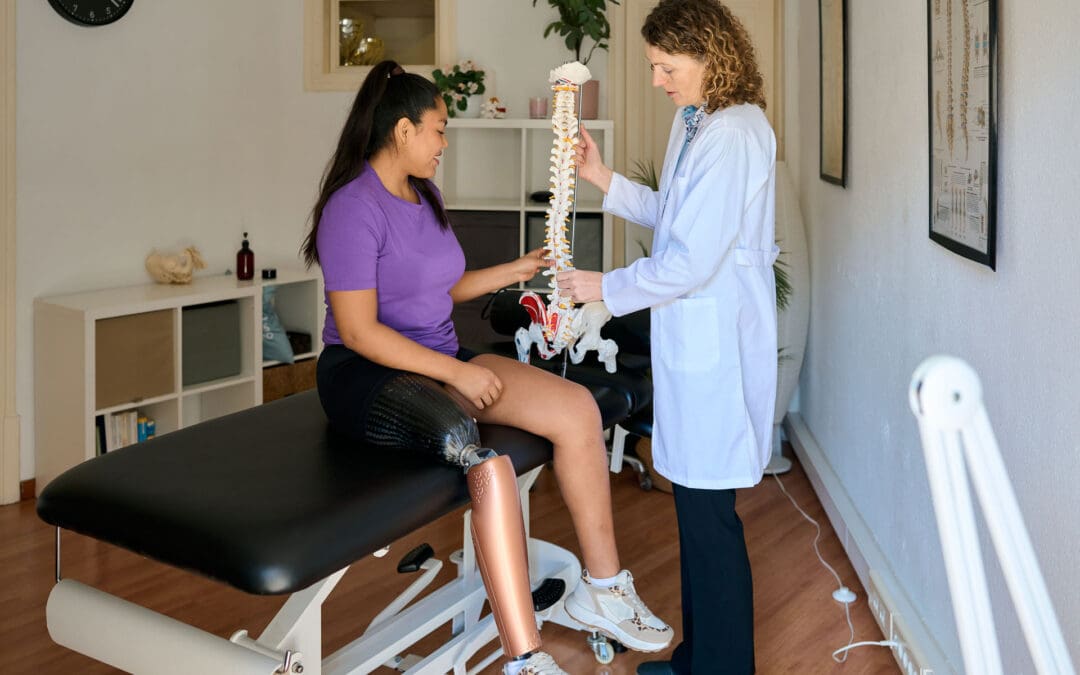
Functional Orthopedics for Spine and Joint Health Insights
Functional Orthopedics for Spine and Joint Health: The Unit Approach to Integrative Care
Abstract
Hello, I’m Dr. Alex Jimenez. In this educational post, we will journey beyond traditional pain management to explore a comprehensive, patient-centered model for treating musculoskeletal conditions. I will introduce the concept of Interventional and Functional Orthopedics, a philosophy that goes beyond simply treating a “pain generator” to address the body’s entire functional unit. We will delve into the latest evidence-based research from leading experts, examining how treating intra-articular (inside the joint), extra-articular (outside the joint), and even intraosseous (inside the bone) structures can lead to superior, long-term outcomes. This discussion will highlight the critical interplay between structure and function, from the microscopic level of cellular health in the subchondral bone to the macroscopic mechanics of how your hip and ankle affect your knee. I’ll also explain how our unique, multidisciplinary practice at Injury Medical Clinic PA integrates cutting-edge chiropractic care, advanced rehabilitation, and medical oversight to restore not just comfort, but true, lasting function.
Our Integrated Approach: A Collaboration for Your Health
At Injury Medical Clinic PA, we believe that the future of healthcare lies in collaboration. That’s why I am proud to announce a significant development for our practice and our community here in El Paso, Texas. I, Dr. Alex Jimenez, am thrilled to be working alongside Dr. Maria Guadalupe Cardenas, MD, who has joined our team as the Medical Director and Collaborative Physician.
Dr. Cardenas is a highly respected internist, Board Certified in Internal Medicine, with an impressive career spanning over 40 years (NPI #1164426749, Texas MD License #J2933). Her extensive experience and deep understanding of internal medicine provide an invaluable layer of medical oversight and diagnostic expertise to our practice.
This multidisciplinary setup allows us to offer a truly integrative model of care. Here’s how our team works together for you:
- Medical Direction (Dr. Cardenas): Provides comprehensive medical evaluations, oversees patient care plans, and manages any underlying medical conditions that could be contributing to musculoskeletal pain. While our focus remains on non-surgical solutions, her expertise ensures that all aspects of your health are considered.
- Chiropractic & Functional Neurology (Dr. Jimenez): I focus on the body’s biomechanical and neurological integrity. Through precise chiropractic adjustments, spinal decompression, and advanced soft tissue therapies, we correct structural misalignments that are often the root cause of pain and dysfunction.
- Functional Medicine & Rehabilitation: We dive deep to understand the “why” behind your condition. This includes advanced diagnostics, nutritional counseling, and personalized rehabilitation programs designed to strengthen weaknesses, improve mobility, and restore proper movement patterns.
- Personal Injury Care: Our integrated team is uniquely equipped to manage the complex needs of patients injured in accidents, providing comprehensive documentation and a coordinated treatment plan that addresses everything from acute spinal injury to long-term rehabilitation.
By combining the structural focus of chiropractic care with the medical oversight of an experienced internist, we ensure a safe, effective, and holistic journey back to health. Our focus at elpasobackclinic.com remains centered on chiropractic and physical rehabilitation, but this collaboration allows us to address the whole person in a way that sets a new standard for patient care.
Beyond the Pain Point: Understanding Interventional Orthopedics
For years, the standard approach to joint pain was to identify the single “thing” causing the pain and treat it. This might mean an injection into a knee joint or therapy focused solely on a sore shoulder. But I ask, is that enough? What if the pain is just a symptom of a much larger, more complex issue?
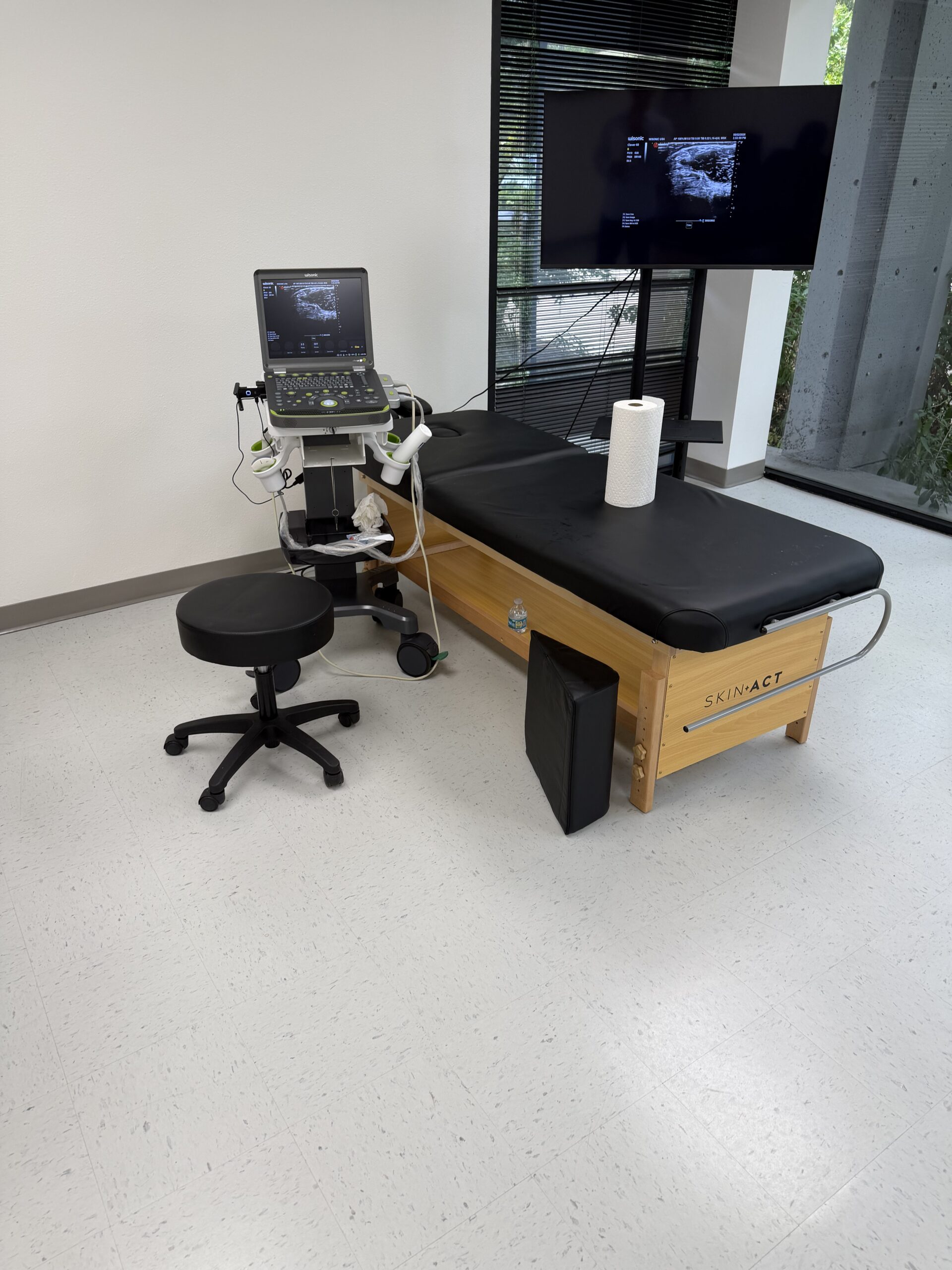
This is where the concept of Interventional Orthopedics comes in. It’s a philosophy that shifts our focus from just treating the pain to understanding and treating the entire system. It means we’re not just “chasing the pain.” Instead, we use advanced imaging guidance, such as musculoskeletal ultrasound and fluoroscopy, to precisely target and treat the specific anatomical structures involved in a person’s unique condition. We look at the whole picture.
But how do we know what to target? How do we build a treatment plan that goes beyond the obvious? This brings us to a philosophy I’ve developed based on my background and clinical experience: Functional Orthopedics.
Functional Orthopedics: The “Why” Behind the “What”
You likely haven’t heard the term Functional Orthopedics before, because it’s a concept I’ve coined to describe my approach. However, the principles behind it are timeless and deeply rooted in well-established medical philosophies. It draws heavily from my training as an osteopathic physician and my background in Physical Medicine and Rehabilitation (PM&R).
The core tenets are:
- The Body is a Unit: No part of the body works in isolation. The foot is connected to the knee, the knee to the hip, the hip to the spine. A problem in one area will inevitably affect others.
- Structure and Function are Interrelated: The way your body is built (structure) dictates how it moves (function), and vice versa. Poor movement patterns can lead to structural damage, and structural problems will compromise function.
- The Body Has Self-Healing Mechanisms: Our bodies possess an incredible, innate ability to heal. Our role as clinicians is to identify and remove the barriers to this process and provide the necessary support to facilitate it.
- Rational Treatment is Based on These Principles: A truly effective treatment plan must honor these truths.
Functional Orthopedics applies these principles by looking for the root causes of a condition. Imagine a tree. The leaves and branches might be the symptoms—the knee pain, the back ache—but the real problem may lie in the roots and the soil. We need to examine all factors that may be involved in optimizing the patient’s biological environment for healing. A crucial part of this is the Functional Unit Approach.
The Functional Unit Approach: Treating the System, Not Just the Joint
The idea of a “functional unit” originated in the surgical literature, specifically in the context of the functional spinal unit. Surgeons recognized that when dealing with the spine, you couldn’t just look at a single vertebra or disc. You had to consider the adjacent vertebrae, the disc between them, the ligaments holding them together, the facet joints that guide their movement, and the muscles that power them. All these components work together as a single unit.
We are now applying this powerful concept to the world of orthopedics and regenerative medicine. Recent research is validating this comprehensive approach.
- Studies on the Spine: Pioneering research has investigated the use of orthobiologics such as Platelet-Rich Plasma (PRP) and Bone Marrow Aspirate Concentrate (BMAC) in the spine. Instead of just injecting one area, researchers treated the entire functional unit: the epidural space, facet joints, stabilizing ligaments, and paraspinal muscles. The results showed more significant and longer-lasting benefits compared to single-target treatments.
- Expanding to the Knee: This principle isn’t limited to the spine. A landmark study looked at patients with knee osteoarthritis. One group received a standard intra-articular (inside the joint) injection. The other group received injections both intra-articularly and into the extra-articular structures—the surrounding ligaments and tendons that stabilize and support the knee. While both groups improved, the group that received the comprehensive treatment reported significantly better outcomes.
This marks a major paradigm shift. For conditions like knee osteoarthritis, we should not just be injecting the joint space. We must also assess and treat the supporting cast of characters—the ligaments, tendons, and muscles that make up the knee’s functional unit. But does it stop there?
The Critical Role of Subchondral Bone: Digging Deeper
For decades, we were taught—and we taught our patients—that osteoarthritis is a disease of cartilage. You’ve likely heard someone say, “My cartilage is gone,” as if that’s the end of the story. While cartilage loss is a feature of osteoarthritis, we now recognize that it does not always equate to pain. The plot thickens when the damage goes deeper.
When cartilage wears away, the underlying bone, known as the subchondral bone, becomes exposed to abnormal stress. This bone is not a dead, inert scaffold; it is a living, dynamic tissue rich with blood vessels, nerves, and even a reservoir of stem cells (pericytes) crucial for healing.
Dr. Philippe Hernigou, a true pioneer in regenerative medicine, conducted groundbreaking research comparing the stem cell populations in bone marrow. He found that as knee osteoarthritis worsens with age, the concentration of healing cells in the subchondral bone of the knee declines dramatically, whereas the concentration at a distant site, such as the pelvis (PSIS), remains relatively stable. This tells us that the local healing environment within the arthritic joint becomes depleted. The bone itself is sick.
This has led to a revolutionary treatment strategy: intraosseous injections, or injections directly into the subchondral bone.
- Evidence for Intraosseous PRP: A recent meta-analysis and a consensus statement we just published for the American Academy of Physical Medicine and Rehabilitation (AAPM&R) have recognized the significant merit of injecting PRP directly into the bone for knee osteoarthritis, particularly in more advanced cases.
- Compelling Data on Bone Marrow: The most robust data, in my opinion, comes from two sister studies on intraosseous bone marrow aspirate concentrate (BMAC).
- In the first study, patients had one knee that had already been replaced and a second knee with severe osteoarthritis. The arthritic knee was treated with an intraosseous BMAC injection. With an average follow-up of 15 years, an astounding 80% of these patients avoided a knee replacement on the treated side. Furthermore, they overwhelmingly preferred their “bone marrow knee” to their artificial one.
- The second study involved patients with severe osteoarthritis in both knees who wanted to avoid surgery. One knee received an intra-articular BMAC injection, while the other received an intraosseous BMAC injection. While both knees improved, the knees treated with the intraosseous injection had a significantly lower rate of eventually needing a knee replacement.
The message is clear: for moderate-to-severe osteoarthritis, the most effective approach must address the entire functional unit—the intra-articular space, the extra-articular soft tissues, and the underlying subchondral bone.
The Art of Diagnosis: How We Decide What to Treat
So, how do we put this all together in the clinic? How do we analyze the complex interplay of forces and decide which structures to treat? This is where a thorough physical examination and a deep understanding of biomechanics become indispensable. It is not just a matter of “poking to see where it hurts.”
Let’s use the knee as an example:
- Varus Stress (Bow-Legged): If a patient presents with a bow-legged posture, the medial (inner) part of their knee is under compressive stress. This might lead to medial knee osteoarthritis or a medial meniscus tear. In addition to treating these compressed structures, we must ask: what is happening on the other side? The lateral collateral ligament (LCL) on the outside of the knee is likely being chronically stretched and weakened. To restore stability to the entire functional unit, we must also address this laxity in the LCL.
- Valgus Stress (Knock-Knees): Conversely, in a patient with knock-knees, the lateral (outer) part of the joint is compressed. But we also need to examine the medial structures, such as the medial collateral ligament (MCL), which may be overstretched and require support.
- Patellofemoral Maltracking: If the kneecap (patella) is being pulled laterally (to the outside), causing pain and cartilage wear, it’s not enough to just treat the cartilage. We must investigate why it’s maltracking. Often, the medial patellofemoral ligament (MPFL), which acts as a tether to prevent lateral movement, becomes lax. Treating and tightening this ligament is key to correcting the underlying mechanical problem.
Looking Proximal and Distal: The Buck Doesn’t Stop at the Knee
Here is the final piece of the puzzle, and it’s one I implore every patient and clinician to consider. If someone develops knee pain, like a meniscus tear or patellofemoral pain, without a specific traumatic injury, does the problem really originate in the knee?
Or should we be looking elsewhere?
- The Hip and Glutes: The gluteal muscles, particularly the gluteus medius, are critical for pelvic and knee stability. Weakness in these muscles is a very common driver of knee pain and faulty movement patterns. As a clinician, I always strength-test these muscles.
- The Ankle and Foot: How a person’s foot strikes the ground reverberates up the entire kinetic chain. Poor foot mechanics, such as overpronation, can cause the tibia to rotate internally, placing abnormal stress on the knee.
- The Lumbar Spine: Is there a subclinical radiculopathy? A subtle nerve irritation in the lower back could be causing weakness in the muscles that control the leg, leading to instability and pain downstream at the knee. We must test for this.
True, long-term success comes not from just treating the joint itself but from identifying and correcting these dysfunctions throughout the kinetic chain. This is what it means to look at the patient as a whole. This is the essence of integrative chiropractic care and functional rehabilitation. By correcting spinal and pelvic alignment, restoring proper nerve function, and strengthening weak links in the chain, we don’t just put a bandage on the problem—we rebuild the foundation for lasting health.
This journey back to our roots in physical diagnosis, combined with the exciting advancements in orthobiologics, allows us to provide truly transformative care. It’s about creating not just a “pain generator” treatment plan, but a “health and function generator” plan for life.
Thank you.
References
- Centeno, C., Sheinkop, M., Dodson, E., Stemper, I., Williams, C., Hyzy, M., Ichim, T., & Freeman, M. (2018). A specific protocol of autologous bone marrow concentrate and platelet products versus exercise therapy for symptomatic knee osteoarthritis: a randomized controlled trial with 2-year follow-up. Journal of Translational Medicine, 16(1), 355.
- Hernigou, P., Bouthors, C., Bastard, C., Flouzat-Lachaniette, C. H., Rouard, H., & Dubory, A. (2021). Subchondral bone stem cells in knee and hip osteoarthritis: the number of passages decreases seeding capacity. International Orthopaedics, 45(10), 2569–2576.
- Pourcho, A. M., Smith, J., Sellon, J. L., & La-Prade, R. F. (2020). Intraosseous and intra-articular injections for knee osteoarthritis: a systematic review of the literature. Arthroscopy, Sports Medicine, and Rehabilitation, 2(2), e153-e160.
- Sánchez, M., Delgado, D., Pompei, O., Pérez, J. C., Sánchez, P., Garate, A., Orive, G., & Padilla, S. (2016). Treating the whole knee for osteoarthritis: combining intraarticular and extraarticular platelet-rich plasma injections. Biomedical Research International, 2016, 5923158.
- Watson, C. J. T., & Lizzio, V. A. (2023). Anatomy, bony pelvis and lower limb, knee. In StatPearls. StatPearls Publishing.









