ClickCease
+1-915-850-0900 [email protected]
Select Page
Running Shoes | How To Choose The Right Type

Running Shoes | How To Choose The Right Type

Running Shoes: Feet are important. By the time the typical American reaches the age of 50, they will have walked 75,000 miles.

Runners put even more miles on their feet, and stress. Your feet are your foundation. A problem with your feet can throw your entire body out of balance. That is why when it comes to running shoes, it is important to find the right type. This guide will help you find the running shoes that are right for you.

Running Shoes

Before You Shop

Know the type of runner you are.

Different types of running require different features in shoes.

Some questions to consider:

  • Do you run or jog?
  • What surface do you run on � asphalt, treadmill, or trails?
  • How far do you run each week?
  • Are you training for a marathon?
  • Are you a competitive sprinter?

Know your body type.

A larger person will not move and run the same way a thin, wiry person does. An overweight person will put more stress on their feet � and shoes.

Know your running style.

The way you run, the motion of your stride and how your foot strikes the ground has great bearing on the type of running shoe you need. When your foot comes in contact with the ground, what hits first? Does the inside of your forefoot hit first? The center of your heel? The outside of your heel? Where your foot first hits is where you really want the cushion.

Know what injuries you may have sustained from running.

Plantar fasciitis, shin splints, tendonitis, and blisters are a few common injuries can be reversed or improved when you wear running shoes that fit properly.

Know the type of arch you have.

Whether you supinate (foot rolls to the outside) or pronate (foot rolls to the inside) is determined, at least in part, by the shape of your arch. While supinators are rare, quite a few people over pronate. This can be the source of injuries due to overuse.

running shoes el paso tx.

When You Shop

Give it the 360-degree test.

When people try on shoes they typically check for fit in the toe box, but look no further than that. When you try on running shoes, you do need to make sure you have adequate space in the toe box, but you also need to check that your entire foot fits on the shoe�s platform.

Give your foot enough space.

The upper should have enough room but should not be loose. It shouldn�t squeeze your foot either though. It should fit well with no pinching or binding.

Shop later in the day.

Throughout the day your feet swell. When you run they also swell so when you shop for shoes, going when your feet are the largest will help ensure that you get the most accurate and more comfortable fit possible.

Bring your old running shoes along when you shop.

Having your old shoes with you when you shop will help the sales person determine what kind of running shoe you need. They can look at the wear on the shoe to see your running patterns and help you find a shoe that works best for you.

Get your foot measured.

As you age your feet actually change; they can expand or flatten. Don�t every assume your shoe size, get your foot measured every time. A comfortable fit is dependent upon wearing the right size shoe. You also need to keep in mind that shoe sizes may differ from brand to brand.

Dress for the run.

When you are shopping for a new pair of running shoes, dress as you would when you run. Don�t show up wearing flip flops or when you are dressed for the office. Definitely don�t show up without socks.

Forget the latest trend or what�s fashionable; think functionality.

There are plenty of sharp looking shoes, but that doesn�t mean they are the right running shoe for you. Go for fit and functionality first and fashion second.

Take them for a test drive.

Once you have settled on a pair or two, try them both on and try them out. Many stores that specialize in running shoes have a treadmill or area where runners can try their shoes. That is the only way you can tell for shoe if the shoe is right for you.

Injury Medical Clinic: Sport Injury Treatments

Whole Body Wellness And Chiropractic In El Paso, TX. | Video

Whole Body Wellness And Chiropractic In El Paso, TX. | Video

Whole Body Wellness: Annually, chiropractors care for more than 30 million Americans, adults and children alike. Doctors of chiropractic are licensed to practice in all 50 states and in many nations around the world.

An increasing list of research studies and reviews has established that the treatment methods and techniques provided by chiropractic physicians are both safe and effective. The evidence strongly supports the natural, whole body wellness and cost-effective approach of chiropractic care for a variety of conditions.

whole body wellness el paso tx.

Share Free Ebook

Chiropractic treatment is included in most health insurance plans, including: major medical plans, worker�s compensation, Medicare, some Medicaid plans, and Blue Cross Blue Shield plans for federal employees, and many others.

Chiropractic is used widely by young and professional athletes to help prevent and treat injuries and/or aggravated conditions as well as to aid them achieve optimal health and whole body wellness. Also commonly utilized by the general population, chiropractic care can help restore an individual�s original well being, increasing their strength, flexibility and mobility as well as decreasing symptoms such as pain, inflammation and discomfort caused by spinal complications. Following up with the chiropractor�s treatment recommendations can also help speed up the individual�s recovery process, helping them return to their everyday lifestyles.

Whole Body Wellness & Chiropractic


Many new patients are unsure about what to expect during their first appointment with a chiropractor. Foremost, a doctor of chiropractic will begin the consultation by taking a patient�s history and then performing a physical examination in order to develop a working diagnosis. Imaging or lab tests, including MRI, CT scans and/or X-rays, may be used to confirm a diagnosis.

The combination of the history, exam, and diagnostic study results will ultimately allow the chiropractor to determine a proper diagnosis for the individual�s injury or condition, which will then allow the healthcare professional to follow up with the best treatment procedures according to their overall health and wellness. If your chiropractor determines you would be more appropriately managed or co-managed by another healthcare professional, he or she will make the proper referral.

Through a process of shared decision-making, you and your chiropractic physician can establish which treatment methods and techniques will be right for you. As part of this process, the chiropractor will explain your injury and/or condition, recommend an appropriate treatment plan and finally, they will review the risks and benefits of all procedures with you.

As with all forms of treatment, time and patience is required to heal an injury or condition and visiting your chiropractor regularly can ensure the process is smooth and effective. Following the healthcare professional�s treatment plan accordingly is the best, most recommended decision you can take as an individual to achieve overall health and wellness.

whole body wellness el paso tx.Choosing A Whole Body Wellness Chiropractor

Ask Family/Friends For A Recommendation

A friend or family member who knows both you and the chiropractor may be able to judge whether your health philosophies and personalities are compatible.

Meet The Doctor

Many chiropractors will agree to a no-cost consultation to determine whether you are a good match. To make this visit as productive as possible, here are a few things to consider:

Does The Practice Focus On Vertebral Subluxation & Wellness?

Physical, biochemical, and psychological stress may result in spinal subluxations that disrupt nerve function and compromise your health. If you�re looking for a wellness chiropractor, it�s essential that this be the focus.

Some chiropractors confine their practice to the mechanical treatment of back and neck pain, and this is something you need to be aware of beforehand.

Does The Doctor Walk The Talk?

If he or she is overweight, looks unhealthy, or does not live a healthy lifestyle, this speaks volumes regarding their commitment to wellness.

Do The Two Of You Click?

Do you like each other? Do you communicate well? Avoid a doctor who seems rushed, talks down to you, or seems disinterested in listening to your concerns.

Does The Doctor Use Objective Assessments Of Nerve Function?

Since your care is not based just on addressing pain, your chiropractor should be using some form of objective assessment of your nerve function, as spinal subluxations can sometimes be asymptomatic.

Non-invasive instruments that measure the electrical activity in your muscles, and/or a thermal scanner that evaluates the function of your autonomic nervous system can be used, for example.

What Treatment Techniques Are Used?

Chiropractic techniques include low-force adjustments by hand, and more forceful adjustments using instruments. Ask which technique would be used on you, and if you have a preference, make sure the doctor is willing to use it.

As mentioned earlier, many chiropractors are also trained in other complementary techniques, so ask what else your doctor may have in their tool bag.

Dr. Alex Jimenez is an El Paso Chiropractor who has been helping people recover from their specific injuries or conditions through the use of chiropractic adjustments and manipulations. With over 27 years of experience, Dr. Jimenez can provide safe and effective care to those in need.

Chiropractic Clinic Extra: Elderly & Geriatric Fitness


Body Composition Evaluation: A Clinical Practice Tool

Body Composition Evaluation: A Clinical Practice Tool

Body Composition: Key Words

  • Fat-free mass
  • Fat mass
  • Undernutrition
  • Bioelectrical impedance analysis
  • Sarcopenic obesity
  • Drug toxicity

Abstract

Undernutrition is insufficiently detected in in- and outpatients, and this is likely to worsen during the next decades. The increased prevalence of obesity together with chronic illnesses associated with fat-free mass (FFM) loss will result in an increased prevalence of sarcopenic obesity. In patients with sarcopenic obesity, weight loss and the body mass index lack accuracy to detect FFM loss. FFM loss is related to increasing mortality, worse clinical outcomes, and impaired quality of life. In sarcopenic obesity and chronic diseases, body composition measurement with dual-energy X-ray absorptiometry, bioelectrical impedance analysis, or computerized tomography quantifies the loss of FFM. It allows tailored nutritional support and disease-specific therapy and reduces the risk of drug toxicity. Body composition evaluation should be integrated into routine clinical practice for the initial assessment and sequential follow-up of nutritional status. It could allow objective, systematic, and early screening of undernutrition and promote the rational and early initiation of optimal nutritional support, thereby contributing to reducing malnutrition-induced morbidity, mortality, worsening of the quality of life, and global health care costs.

Introduction

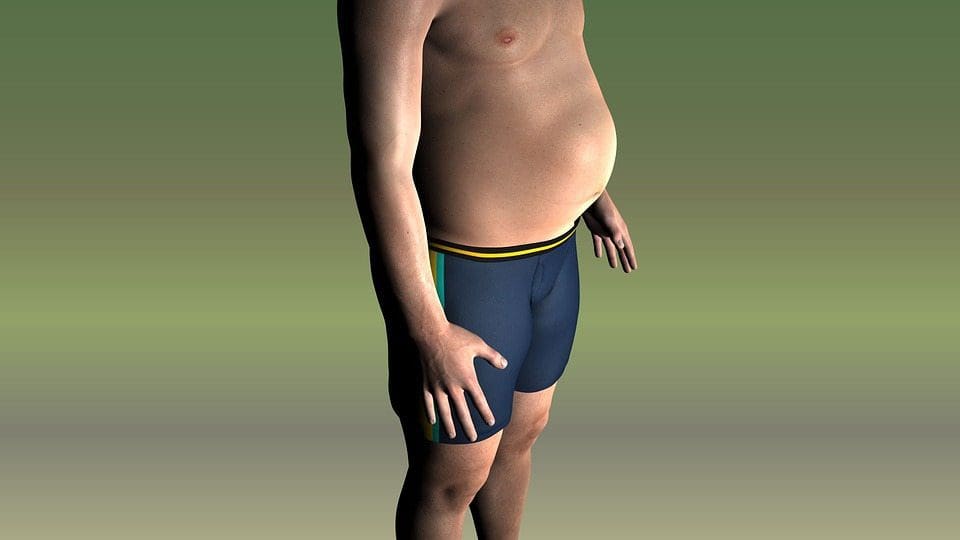
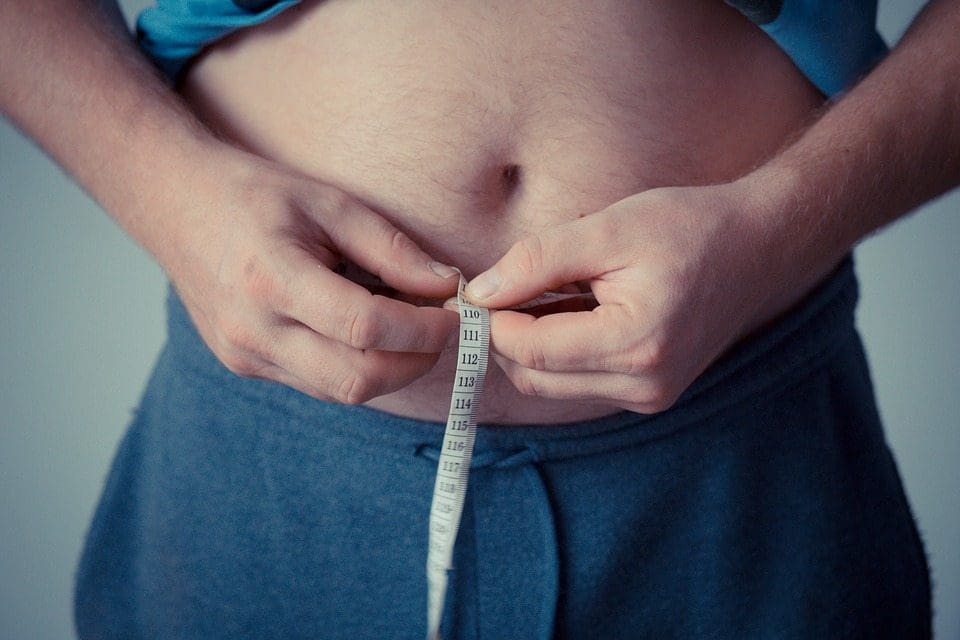
man overweight 3D modelChronic undernutrition is characterized by a progressive reduction of the�fat-free mass (FFM) and fat mass (FM)�and �which has deleterious consequences on health. Undernutrition is insufficiently screened and treated in hospitalized or at-risk patients despite its high prevalence and negative impact on mortality, morbidity, length of stay (LOS), quality of life, and costs [1�4]. The risk of underestimating hospital undernutrition is likely to worsen in the next decades because of the increasing prevalence of overweight, obesity, and chronic diseases and the increased number of elderly subjects. These clinical conditions are associated with FFM loss (sarcopenia). Therefore, an increased number of patients with FFM loss and sarcopenic obesity will be seen in the future.

Sarcopenic obesity is associated with decreased survival and increased therapy toxicity in cancer patients [5�10], whereas FFM loss is related to decreased survival, a negative clinical outcome, increased health care costs [2], and impaired overall health, functional capacities, and quality of life [4�11]. Therefore, the detection and treatment of FFM loss is a major issue of public health and health costs [12].

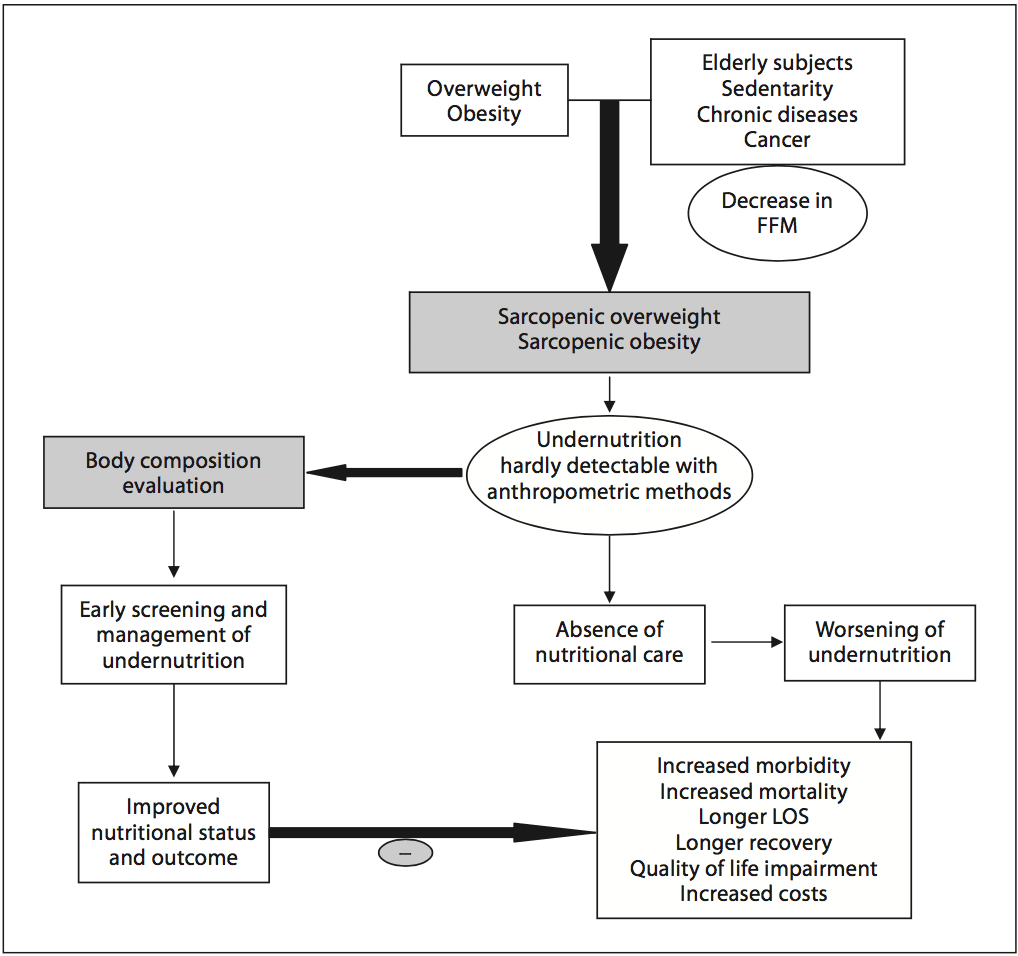
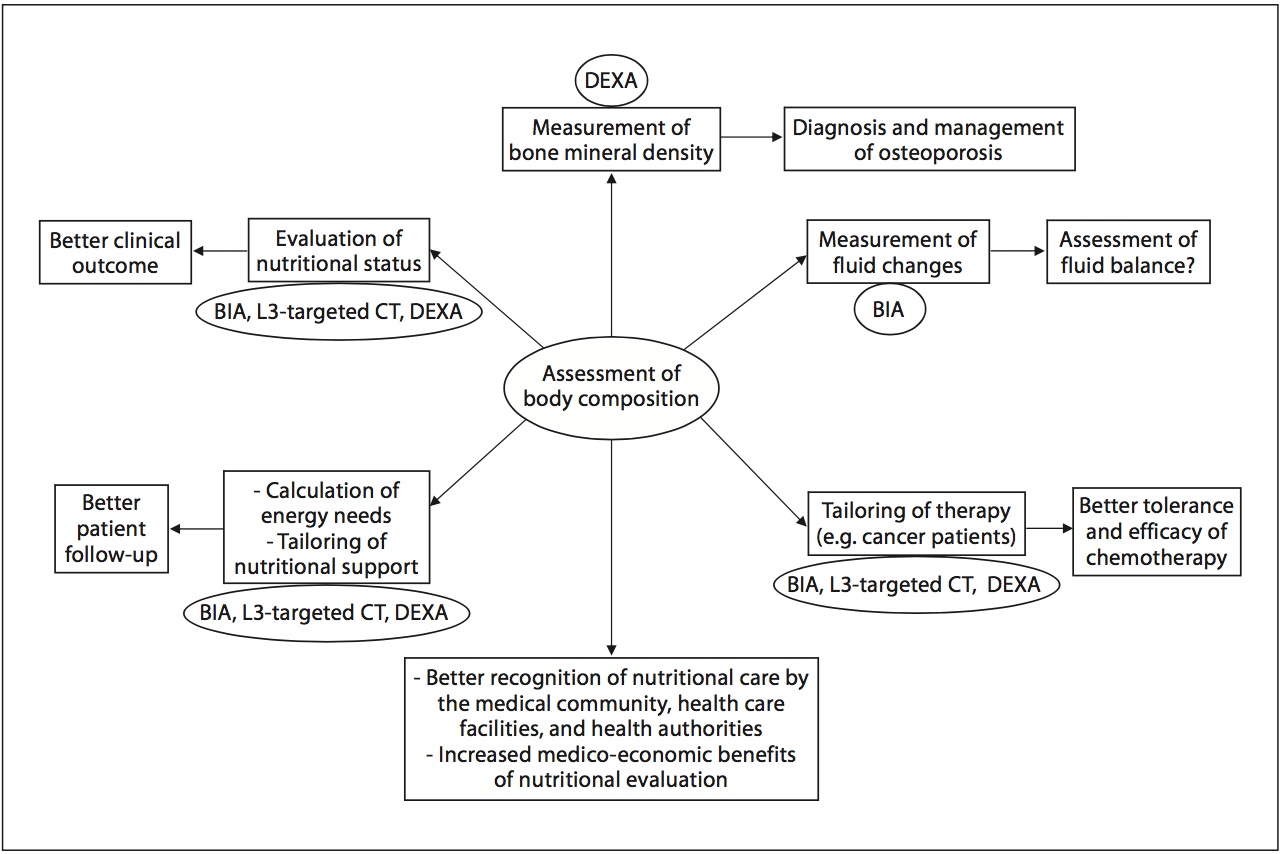
Weight loss and the body mass index (BMI) lack sensitivity to detect FFM loss [13]. In this review, we support the systematic assessment of FFM with a method of body composition evaluation in order to improve the detection, management, and follow-up of undernutrition. Such an approach should in turn reduce the clinical and functional consequences of diseases in the setting of a cost- effective medico-economic approach (fig. 1). We discuss the main applications of body composition evaluation in clinical practice (fig. 2).

body composition fig 1

Fig. 1. Conceptualization of the expected impact of early use of body composition for the screening of fat-free loss and�under-nutrition in sarcopenic overweight and obese subjects. An increased prevalence of overweight and obesity is observed in all Western and emerging countries. Simultaneously, the aging of the population, the reduction of the level of physical activity, and the higher prevalence of chronic dis- eases and cancer increased the number of patients with or at risk of FFM impairment, i.e. sarcopenia. Thus, more patients are presenting with �sarcopenic over- weight or obesity�. In these patients, evaluation of nutritional status using anthropometric methods, i.e. weight loss and calculation of BMI, is not sensitive enough to detect FFM impairment. As a result, undernutrition is not detected, worsens, and negatively impacts morbidity, mortality, LOS, length of recovery, quality of life, and health care costs. On the contrary, in patients with �sarcopenic overweight or obesity�, early screening of undernutrition with a dedicated method of body composition evaluation would allow early initiation of nutritional support and, in turn, improvements of nutritional status and clinical outcome.

Rationale for a New Strategy for the Screening of Undernutrition

Screening of Undernutrition Is Insufficient

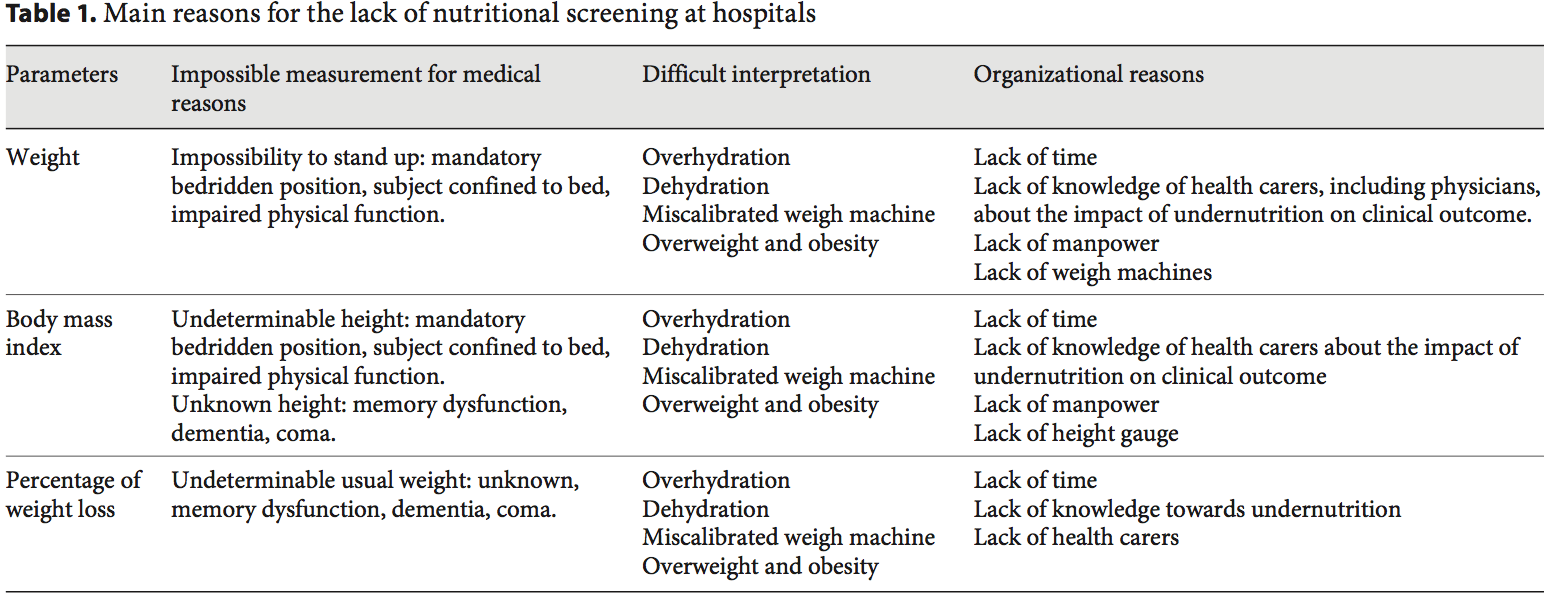
checklistAcademic societies encourage systematic screening of undernutrition at hospital admission and during the hospital stay [14]. The detection of undernutrition is generally based on measurements of weight and height, calculations of BMI, and the percentage of weight loss. Nevertheless, screening of undernutrition is infrequent in hospitalized or nutritionally at-risk ambulatory patients. For example, in France, surveys performed by the French Health Authority [15] indicate that: (i) weight alone, (ii) weight with BMI or percentage of weight loss, and (iii) weight, BMI,�and percentage of weight loss are reported in only 55, 30, and 8% of the hospitalized patients� records, respectively. Several issues, which could be improved by specific educational programs, explain the lack of implementation of nutritional screening in hospitals (table 1). In addition, the accuracy of the clinical screening of undernutrition could be limited at hospital admission. Indeed, patients with undernutrition may have the same BMI as sex- and age- matched healthy controls but a significantly decreased FFM hidden by an expansion of the FM and the total body water which can be measured by bioelectrical impedance analysis (BIA) [13]. This example illustrates that body composition evaluation allows a more accurate identification of FFM loss than body weight loss or BMI decrease. The lack of sensitivity and specificity of weight, BMI, and percentage of weight loss argue for the need for other methods to evaluate the nutritional status.

Changes in Patients� Profiles

patient consulting a doctorIn 2008, twelve and thirty percent of the worldwide adult population was obese or overweight; this is two times higher than in 1980 [16]. The prevalence of overweight and obesity is also increasing in hospitalized patients. A 10-year comparative survey performed in a European hospital showed an increase in patients� BMI, together with a shorter LOS [17]. The BMI increase masks undernutrition and FFM loss at hospital admission. The increased prevalence of obesity in an aging population has led to the recognition of a new nutritional entity: �sarcopenic obesity� [18]. Sarcopenic obesity is characterized by increased FM and reduced FFM with a normal or high body weight. The emergence of the concept of sarcopenic obesity will increase the number of situations associated with a lack of sensitivity of the calculations of BMI and�body weight change for the early detection of FFM loss. This supports a larger use of body composition evaluation for the assessment and follow-up of nutritional status in clinical practice (fig. 1).

body composition fig 2Fig. 2. Current and potential applications of body composition evaluation in clinical practice. The applications are indicated in the boxes, and the body composition methods that could be used for each application are indicated inside the circles. The most used application of body composition evaluation is the measurement of bone mineral density by DEXA for the diagnosis and management of osteoporosis. Although a low FFM is associated with worse clinical outcomes, FFM evaluation is not yet implemented enough in clinical practice. However, by allowing early detection of undernutrition, body composition evaluation could improve the clinical outcome. Body composition evaluation could also be used to follow up nutritional status, calculate energy needs, tailor nutritional support, and assess fluid changes during perioperative period and renal insufficiency. Recent evidence indicates that�a low FFM is associated with a higher toxicity of some chemo- therapy drugs in cancer patients. Thus, by allowing tailoring of the chemotherapy doses to the FFM in cancer patients, body com- position evaluation should improve the tolerance and the efficacy of chemotherapy. BIA, L3-targeted CT, and DEXA could be used for the assessment of nutritional status, the calculation of energy needs, and the tailoring of nutritional support and therapy. Further studies are warranted to validate BIA as an accurate method for fluid balance measurement. By integrating body composition evaluation into the management of different clinical conditions, all of these potential applications would lead to a better recognition of nutritional care by the medical community, the health care facilities, and the health authorities, as well as to an increase in the medico-economic benefits of the nutritional evaluation.

Body Composition Evaluation For The Assessment Of Nutritional Status

Body composition evaluation is a valuable technique to assess nutritional status. Firstly, it gives an evaluation of nutritional status through the assessment of FFM. Secondly, by measuring FFM and phase angle with BIA, it allows evaluation of the disease prognosis and outcome.

body composition table 1

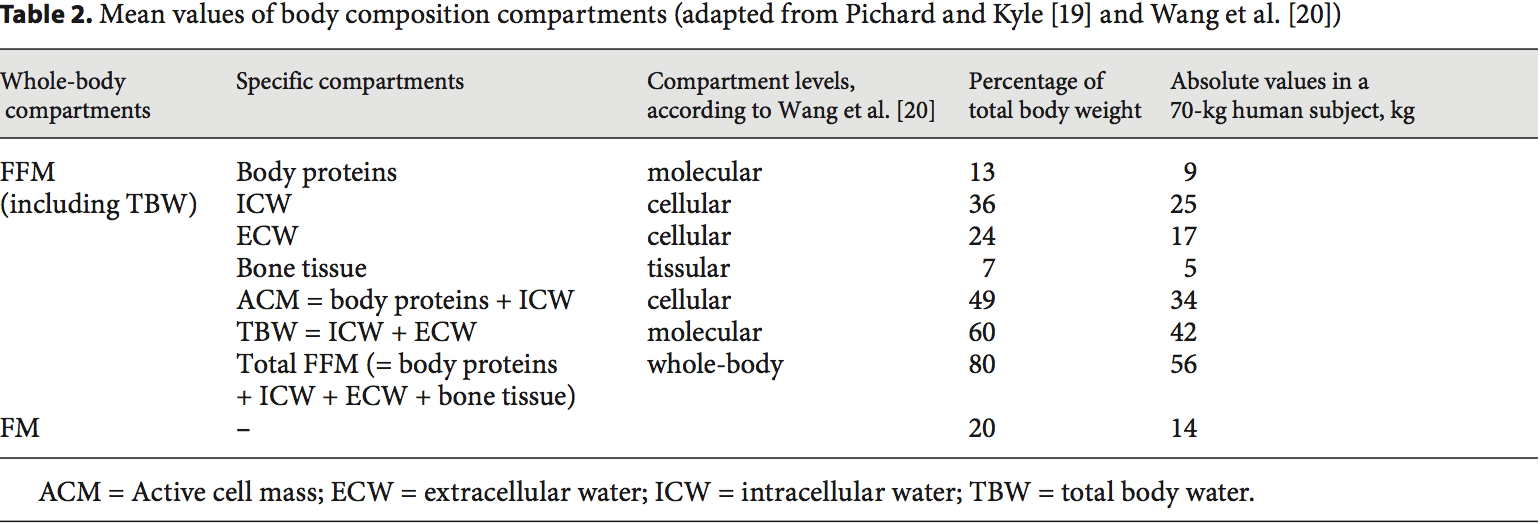
body composition table 2Body Composition Techniques For FFM Measurement

Body composition evaluation allows measurement of the major body compartments: FFM (including bone mineral tissue), FM, and total body water. Table 2 shows indicative values of the body composition of a healthy subject weighing 70 kg. In several clinical situations, i.e. hospital admission, chronic obstructive pulmonary dis- ease (COPD) [21�23], dialysis [24�26], chronic heart failure [27], amyotrophic lateral sclerosis [28], cancer [5, 29], liver transplantation [30], nursing home residence [31], and Alzheimer�s disease [32], changes in body compartments are detected with the techniques of body composition evaluation. At hospital admission, body composition evaluation could be used for the detection of FFM loss and undernutrition. Indeed, FFM and the FFM index (FFMI) [FFM (kg)/height (m2)] measured by BIA are significantly lower in hospitalized patients (n = 995) than in age-, height-, and sex-matched controls (n = 995) [3]. Conversely, clinical tools of nutritional status assessment, such as BMI, subjective global assessment, or mini-nutritional assessment, are not accurate enough to estimate FFM loss and nutritional status [30, 32�34]. In 441 patients with non-small cell lung cancer, FFM loss deter- mined by computerized tomography (CT) was observed in each BMI category [7], and in young adults with all�types of cancer, an increase in FM together with a de- crease in FFM were reported [29]. These findings reveal the lack of sensitivity of BMI to detect FFM loss. More- over, the FFMI is a more sensitive determinant of LOS than a weight loss over 10% or a BMI below 20 [3]. In COPD, the assessment of FFM by BIA is a more sensitive method to detect undernutrition than anthropometry [33, 35]. BIA is also more accurate at assessing nutrition- al status in children with severe neurologic impairment than the measurement of skin fold thickness [36].

Body Composition For The Evaluation Of Prognosis & Clinical Outcome

FFM loss is correlated with survival in different clinical settings [5, 21�28, 37]. In patients with amyotrophic lateral sclerosis, an FM increase, but not an FFM in- crease, measured by BIA, was correlated with survival during the course of the disease [28]. The relation between body composition and mortality has not yet been demonstrated in the intensive care unit. The relation between body composition and mortality has been demonstrated with anthropometric methods, BIA, and CT. Measurement of the mid-arm muscle circumference is an easy tool to diagnose sarcopenia [38]. The mid-arm muscle circumference has been shown to be correlated with survival in patients with cirrhosis [39, 40], HIV infection [41], and COPD in a stronger way than BMI [42]. The relation between FFM loss and mortality has been extensively shown with BIA [21�28, 31, 37], which is the most used method. Recently, very interesting data suggest that CT could evaluate the disease prognosis in relation to muscle wasting. In obese cancer patients, sarcopenia as assessed by CT measurement of the total skeletal muscle cross-sectional area is an independent predictor of the survival of patients with bronchopulmonary [5, 7], gastrointestinal [5], and pancreatic cancers [6]. FFM assessed by measurement of the mid-thigh muscle cross- sectional area by CT is also predictive of mortality in COPD patients with severe chronic respiratory insufficiency [43]. In addition to mortality, a low FFMI at hospital admission is significantly associated with an in- creased LOS [3, 44]. A bicentric controlled population study performed in 1,717 hospitalized patients indicates that both loss of FFM and excess of FM negatively affect the LOS [44]. Patients with sarcopenic obesity are most at risk of increased LOS. This study also found that ex- cess FM reduces the sensitivity of BMI to detect nutritional depletion [44]. Together with the observation that the BMI of hospitalized patients has increased during the last decade [17], these findings suggest that FFM and�FFMI measurement should be used to evaluate nutritional status in hospitalized patients.

BIA measures the phase angle [45]. A low phase angle is related to survival in oncology [46�50], HIV infection/ AIDS [51], amyotrophic lateral sclerosis [52], geriatrics [53], peritoneal dialysis [54], and cirrhosis [55]. The phase angle threshold associated with reduced survival is variable: less than 2.5 degrees in amyotrophic lateral sclerosis patients [52], 3.5 degrees in geriatric patients [53], from less than 1.65 to 5.6 degrees in oncology patients [47�50], and 5.4 degrees in cirrhotic patients [55]. The phase angle is also associated with the severity of lymphopenia in AIDS [56], and with the risk of postoperative complications among gastrointestinal surgical patients [57]. The relation of phase angle with prognosis and disease severity reinforces the interest in using BIA for the clinical management of patients with chronic diseases at high risk of undernutrition and FFM loss.

In summary, FFM loss or a low phase angle is related to mortality in patients with chronic diseases, cancer (in- cluding obesity cancer patients), and elderly patients in long-stay facilities. A low FFM and an increased FM are associated with an increased LOS in adult hospitalized patients. The relation between FFM loss and clinical out- come is clearly shown in patients with sarcopenic obesity. In these patients, as the sensitivity of BMI for detecting FFM loss is strongly reduced, body composition evalua- tion appears to be the method of choice to detect under- nutrition in routine practice. Overall, the association between body composition, phase angle, and clinical outcome reinforces the pertinence of using a body com- position evaluation in clinical practice.

Which Technique Of Body Composition Evaluation Should Be Used For The Assessment Of Nutritional Status?

Numerous methods of body composition evaluation have been developed: anthropometry, including the 4-skinfold method [58], hydrodensitometry [58], in vivo neutron activation analysis [59], anthropogammametry from total body potassium-40 [60], nuclear magnetic resonance [61], dual-energy X-ray absorptiometry (DEXA) [62, 63], BIA [45, 64�66], and more recently CT [7, 43, 67]. DEXA, BIA, and CT appear to be the most convenient methods for clinical practice (fig. 2), while the other methods are reserved for scientific use.

Compared with other techniques of body composition evaluation, the lack of reproducibility and sensitivity of the 4-skinfold method limits its use for the accurate measurement of body composition in clinical practice [33,�34]. However, in patients with cirrhosis [39, 40], COPD [34], and HIV infection [41], measurement of the mid- arm muscle circumference could be used to assess sarcopenia and disease-related prognosis. DEXA allows non- invasive direct measurement of the three major components of body composition. The measurement of bone mineral tissue by DEXA is used in clinical practice for the diagnosis and follow-up of osteoporosis. As the clinical conditions complicated by osteoporosis are often associated with undernutrition, i.e. elderly women, patients with organ insufficiencies, COPD [68], inflammatory bowel diseases, and celiac disease, DEXA could be of the utmost interest for the follow-up of both osteoporosis and nutritional status. However, the combined evaluation of bone mineral density and nutritional status is difficult to implement in clinical practice because the reduced accessibility of DEXA makes it impossible to be performed in all nutritionally at-risk or malnourished patients. The principles and clinical utilization of BIA have been largely described in two ESPEN position papers [45, 66]. BIA is based on the capacity of hydrated tissues to conduct electrical energy. The measurement of total body impedance allows estimation of total body water by assuming that total body water is constant. From total body water, validated equations allow the calculation of FFM and FM [69], which are interpreted according to reference values [70]. BIA is the only technique which allows calculation of the phase angle, which is correlated with the prognosis of various diseases. BIA equations are valid for: COPD [65]; AIDS wasting [71]; heart, lung, and liver transplantation [72]; anorexia nervosa [73] patients, and elderly subjects [74]. However, no BIA-specific equations have been validated in patients with extreme BMI (less than 17 and higher than 33.8) and dehydration or fluid overload [45, 66]. Nevertheless, because of its simplicity, low cost, quickness of use at bedside, and high interoperator reproducibility, BIA appears to be the technique of choice for the systematic and repeated evaluation of FFM in clinical practice, particularly at hospital admission and in chronic diseases. Finally, through written and objective re- ports, the wider use of BIA should allow improvement of the traceability of nutritional evaluation and an increase in the recognition of nutritional care by the health authorities. Recently, several data have suggested that CT images targeted on the 3rd lumbar vertebra (L3) could strongly predict whole-body fat and FFM in cancer patients, as compared with DEXA [7, 67]. Interestingly, the evaluation of body composition by CT presents great practical significance due to its routine use in patient diagnosis, staging, and follow-up. L3-targeted CT images�evaluate FFM by measuring the muscle cross-sectional area from L3 to the iliac crest by use of Hounsfield unit (HU) thresholds (�29 to +150) [5, 7]. The muscles included in the calculation of the muscle cross-sectional area are psoas, paraspinal muscles (erector spinae, quadratus lumborum), and abdominal wall muscles (transversus abdominis, external and internal obliques, rectus ab- dominis) [6]. CT also provided detail on specific muscles, adipose tissues, and organs not provided by DEXA or BIA. L3-targeted CT images could be theoretically per- formed solely, since they result in X-ray exposition similar to that of a chest radiography.

In summary, DEXA, BIA, and L3-targeted CT images could all measure body composition accurately. The technique selection will depend on the clinical context, hard- ware, and knowledge availability. Body composition evaluation by DEXA should be performed in patients having a routine assessment of bone mineral density. Also, analysis of L3-targeted CT is the method of choice for body composition evaluation in cancer patients. Body composition evaluation should also be done for every abdominal CT performed in patients who are nutritionally at risk or undernourished. Because of its simplicity of use, BIA could be widely implemented as a method of body com- position evaluation and follow-up in a great number of hospitalized and ambulatory patients. Future research will aim to determine whether a routine evaluation of body composition would allow early detection of the in- creased FFM catabolism related to critical illness [75].

Body Composition Evaluation For The Calculation Of Energy Needs

vegetable-juicesThe evaluation of FFM could be used for the calculation of energy needs, thus allowing the optimization of nutritional intakes according to nutritional needs. This could be of great interest in specific situations, such as severe neurologic disability, overweight, and obesity. In 61 children with severe neurologic impairment and intellectual disability, an equation integrating body composition had good agreement with the doubly labeled water method. It gave a better estimation of energy expenditure than did the Schofield predictive equation [36]. However, in 9 anorexia nervosa patients with a mean BMI of 13.7, pre- diction formulas of resting energy expenditure including FFM did not allow accurate prediction of the resting energy expenditure measured by indirect calorimetry [76]. In overweight or obese patients, the muscle catabolism in response to inflammation was the same as that observed�in patients with normal BMI. Indeed, despite a higher BMI, the FFM of overweight or obese individuals is similar (or slightly increased) to that of patients with normal BMI. Thus, the use of actual weight for the assessment of the energy needs of obese patients would result in over- feeding and its related complications. Therefore, the ex- perts recommend the use of indirect calorimetry or calculation of the energy needs of overweight or obese patients as follows: 15 kcal/kg actual weight/day or 20�25 kcal/kg ideal weight/day [77, 78], although these predictive formulas could be inaccurate in some clinical conditions [79]. In a US prospective study conducted in 33 ICU medical and surgical ventilated ICU patients, daily measurement of the active cell mass (table 2) by BIA was used to assess the adequacy between energy/protein intakes and needs. In that study, nutritional support with 30 kcal/ kg actual body weight/day energy and 1.5 g/kg/day protein allowed stabilization of the active cell mass [75]. Thus, follow-up of FFM by BIA could help optimize nutritional intakes when indirect calorimetry cannot be performed.

In summary, the measurement of FFM should help ad- just the calculation of energy needs (expressed as kcal/kg FFM) and optimize nutritional support in critical cases other than anorexia nervosa.

Body Composition Evaluation For The Follow-Up & Tailoring Of Nutritional Support

towel different nutritionBody composition evaluation allows a qualitative assessment of body weight variations. The evaluation of body composition may help to document the efficiency of nutritional support during a patient�s follow-up of numerous clinical conditions, such as surgery [59], anorexia nervosa [76, 80], hematopoietic stem cell transplantation [81], COPD [82], ICU [83], lung transplantation [84], ulcerative colitis [59], Crohn�s disease [85], cancer [86, 87], HIV/AIDS [88], and acute stroke in elderly patients [89]. Body composition evaluation could be used for the follow-up of healthy elderly subjects [90]. Body composition evaluation allows characterization of the increase in body mass in terms of FFM and FM [81, 91]. After hematopoietic stem cell transplantation, the increase in BMI is the result of the increase in FM, but not of the increase in FFM [81]. Also, during recovery after an acute illness, weight gain 6 months after ICU discharge could be mostly related to an increase in FM (+7 kg) while FFM only increased by 2 kg; DEXA and air displacement plethysmography were used to measure the FM and FFM [91]. These two examples suggest that body composition evaluation could be helpful to decide the modification and/or the renewal of nutritional support. By identifying the patients gaining weight but reporting no or insufficient FFM, body composition evaluation could contribute to influencing the medical decision of continuing nutrition- al support that would have been stopped in the absence of body composition evaluation.

In summary, body composition evaluation is of the utmost interest for the follow-up of nutritional support and its impact on body compartments.

Body Composition Evaluation For Tailoring Medical Treatments

In clinical situations when weight and BMI do not reflect the FFM, the evaluation of body composition should be used to adapt drug doses to the FFM and/or FM absolute values in every patient. This point has been recently illustrated in oncology patients with sarcopenic obesity. FFM loss was determined by CT as described above. In cancer patients, some therapies could affect body com- position by inducing muscle wasting [92]. In patients with advanced renal cell carcinoma [92], sorafenib induces a significant 8% loss of skeletal muscular mass at 12 months. In turn, muscle wasting in patients with BMI less than 25 was significantly associated with sorafenib toxicity in patients with metastatic renal cancer [8]. In metastatic breast cancer patients receiving capecitabine treatment, and in patients with colorectal cancer receiving 5-fluorouracile, using the convention of dosing per unit of body surface area, FFM loss was the determinant of chemotherapy toxicity [9, 10] and time to tumor progression [10]. In colorectal cancer patients administered 5-fluoruracil, low FFM is a significant predictor of toxicity only in female patients [9]. The variation in toxicity between women and men may be partially explained by the fact that FFM was lower in females. Indeed, FFM rep- resents the distribution volume of most cytotoxic chemo- therapy drugs. In 2,115 cancer patients, the individual variations in FFM could change by up to three times the distribution volume of the chemotherapy drug per body area unit [5]. Thus, administering the same doses of chemotherapy drugs to a patient with a low FFM compared to a patient with a normal FFM would increase the risk of chemotherapy toxicity [5]. These data suggest that FFM loss could have a direct impact on the clinical outcome of cancer patients. Decreasing chemotherapy doses in case of FFM loss could contribute to improving cancer patients� prognosis through the improvement of the tolerance of chemotherapy. These findings justify the systematic evaluation of body composition in all cancer patients in order to detect FFM loss, tailor chemotherapy doses according to FFM values, and then improve the efficacy- tolerance and cost-efficiency ratios of the therapeutic strategies [93]. Body composition evaluation should also be used to tailor the doses of drugs which are calculated based on patients� weight, e.g. corticosteroids, immuno-suppressors (infliximab, azathioprine or methotrexate), or sedatives (propofol).

In summary, measurement of FFM should be implemented in cancer patients treated with chemotherapy. Clinical studies are needed to demonstrate the importance of measuring body composition in patients treated with other medical treatments.

Towards The Implementation Of Body Composition Evaluation In Clinical Practice

When There's No Cure For Your Aching Back E-book Cover

News Letter

hypertension blood pressure pillsThe implementation of body composition evaluation in routine care presents a challenge for the next decades. Indeed the concomitant increases in elderly subjects and patients with chronic diseases and cancer, and in the prevalence of overweight and obesity in the population, will increase the number of patients nutritionally at risk or undernourished, particularly those with sarcopenic obesity. Body composition evaluation should be used to improve the screening of undernutrition in hospitalized patients. The results of body composition should be based on the same principle as BMI calculation, towards the systematic normalization for body height of FFM (FFMI) and FM [FM (kg)/height (m)2 = FM index] [94]. The results could be expressed according to previously de- scribed percentiles of healthy subjects [95, 96]. Body com- position evaluation should be performed at the different stages of the disease, during the course of treatments and the rehabilitation phase. Such repeated evaluations of body composition could allow assessment of the nutritional status, adjusting the calculation of energy needs as kilocalories/kilogram FFM, following the efficacy of nutritional support, and tailoring drug and nutritional therapies. BIA, L3-targeted CT, and DEXA represent the techniques of choice to evaluate body composition in clinical practice (fig. 2). In the setting of cost-effective and pragmatic use, these three techniques should be alternatively chosen. In cancer, undernourished, and nutritionally at-risk patients, an abdominal CT should be completed by the analysis of L3-targeted images for the evaluation of body composition.

In other situations, BIA appears to be the simplest most reproducible and less expensive method, while DEXA, if feasible, remains the reference method for clinical practice. By allowing earlier management of undernutrition, body composition evaluation can contribute to reducing malnutrition-induced morbidity and mortality, improving the quality of life and, as a consequence, increasing the medico-economic benefits (fig. 1). The latter needs to be demonstrated. Moreover, based on a more scientific approach, i.e. allowing for printing reports, objective initial assessment and follow-up of nutritional status, and the adjustment of drug doses, body composition evaluation would contribute to a better recognition of the activities related to nutritional evaluation and care by the medical community, health care facilities, and health authorities (fig. 2).

Conclusion

woman buying fresh organic vegetables

Screening of undernutrition is insufficient to allow for optimal nutrition care. This is in part due to the lack of sensitivity of BMI and weight loss for detecting FFM loss in patients with chronic diseases. Methods of body com- position evaluation allow a quantitative measurement of FFM changes during the course of disease and could be used to detect FFM loss in the setting of an objective, systematic, and early undernutrition screening. FFM loss is closely related to impaired clinical outcomes, survival, and quality of life, as well as increased therapy toxicity in cancer patients. Thus, body composition evaluation should be integrated into clinical practice for the initial assessment, sequential follow-up of nutritional status, and the tailoring of nutritional and disease-specific therapies. Body composition evaluation could contribute to strengthening the role and credibility of nutrition in the global medical management, reducing the negative impact of malnutrition on the clinical outcome and quality of life, thereby increasing the overall medico-economic benefits.

Acknowledgements

R. Thibault and C. Pichard are supported by research grants from the public foundation Nutrition 2000 Plus.

Disclosure Statement

Ronan Thibault and Claude Pichard declare no conflict of interest.


blank
References:

1 Pirlich M, Schutz T, Norman K, Gastell S,
L�bke HJ, Bischoff SC, Bolder U, Frieling
T, G�ldenzoph H, Hahn K, Jauch KW,
Schindler K, Stein J, Volkert D, Weimann A,
Werner H, Wolf C, Z�rcher G, Bauer P, Lochs
H: The German hospital malnutrition study.
Clin Nutr 2006;25:563�572.
2 Amaral TF, Matos LC, Tavares MM, Subtil
A, Martins R, Nazar� M, Sousa Pereira N:
The economic impact of disease-related malnutrition
at hospital admission. Clin Nutr
2007;26:778�784.
3 Pichard C, Kyle UG, Morabia A, Perrier A,
Vermeulen B, Unger P: Nutritional assessment:
lean body mass depletion at hospital
admission is associated with increased
length of stay. Am J Clin Nutr 2004;79:613�
618.
4 Capuano G, Gentile PC, Bianciardi F, Tosti
M, Palladino A, Di Palma M: Prevalence and
influence of malnutrition on quality of life
and performance status in patients with locally
advanced head and neck cancer before
treatment. Support Care Cancer 2010;18:
433�437.
5 Prado CM, Lieffers JR, McCargar LJ, Reiman
T, Sawyer MB, Martin L, Baracos VE: Prevalence
and clinical implications of sarcopenic
obesity in patients with solid tumours of the
respiratory and gastrointestinal tracts: a
population-based study. Lancet Oncol 2008;
9:629�635.
6 Tan BHL, Birdsell LA, Martin L, Baracos VE,
Fearon KC: Sarcopenia in an overweight or
obese patient is an adverse prognostic factor
in pancreatic cancer. Clin Cancer Res 2009;
15:6973�6979.
7 Baracos VE, Reiman T, Mourtzakis M,
Gioulbasanis I, Antoun S: Body composition
in patients with non-small cell lung cancer:
a contemporary view of cancer cachexia
with the use of computed tomography image
analysis. Am J Clin Nutr 2010;91(suppl):
1133S�1137S.
8 Antoun S, Baracos VE, Birdsell L, Escudier
B, Sawyer MB: Low body mass index and sarcopenia
associated with dose-limiting toxicity
of sorafenib in patients with renal cell carcinoma.
Ann Oncol 2010;21:1594�1598
9 Prado CM, Baracos VE, McCargar LJ,
Mourtzakis M, Mulder KE, Reiman T, Butts
CA, Scarfe AG, Sawyer MB: Body composition
as an independent determinant of 5-fluorouracil-based
chemotherapy toxicity. Clin
Cancer Res 2007;13:3264�3268.
10 Prado CM, Baracos VE, McCargar LJ, Reiman
T, Mourtzakis M, Tonkin K, Mackey JR,
Koski S, Pituskin E, Sawyer MB: Sarcopenia
as a determinant of chemotherapy toxicity
and time to tumor progression in metastatic
breast cancer patients receiving capecitabine
treatment. Clin Cancer Res 2009;15:2920�
2926.
11 Hofhuis JG, Spronk PE, van Stel HF, Schrijvers
GJ, Rommes JH, Bakker J: The impact of
critical illness on perceived health-related
quality of life during ICU treatment, hospital
stay, and after hospital discharge: a longterm
follow-up study. Chest 2008;133:377�
385.
12 Guest JF, Panca M, Baeyens JP, de Man F,
Ljungqvist O, Pichard C, Wait S, Wilson L:
Health economic impact of managing patients
following a community-based diagnosis
of malnutrition in the UK. Clin Nutr 2011;
30:422�429.
13 Kyle UG, Morabia A, Slosman DO, Mensi N,
Unger P, Pichard C: Contribution of body
composition to nutritional assessment at
hospital admission in 995 patients: a controlled
population study. Br J Nutr 2001;86:
725�731.
14 Kondrup J, Allison SP, Elia M; Vellas B,
Plauth M: Educational and Clinical Practice
Committee, European Society of Parenteral
and Enteral Nutrition (ESPEN): ESPEN
guidelines for nutrition screening 2002. Clin
Nutr 2003;22:415�421.
15 Haute Autorit� de Sant�: IPAQSS: informations.
2010. http://www.has-sante.fr/portail/
jcms/c_970427/ipaqss-informations.
16 World Health Organization: Obesity and
overweight: fact sheet No. 311. 2011. http://
www.who.int/mediacentre/factsheets/fs311/
en/index.html.
17 Thibault R, Chikhi M, Clerc A, Darmon P,
Chopard P, Picard-Kossovsky M, Genton L,
Pichard C: Assessment of food intake in hospitalised
patients: a 10 year-comparative
study of a prospective hospital survey. Clin
Nutr 2011;30:289�296.
18 Stenholm S, Harris TB, Rantanen T, Visser
M, Kritchevsky SB, Ferrucci L: Sarcopenic
obesity: definition, cause and consequences.
Curr Opin Clin Nutr Metab Care 2008;11:
693�700.
19 Pichard C, Kyle UG: Body composition measurements
during wasting diseases. Curr
Opin Clin Nutr Metab Care 1998;1:357�361.
20 Wang ZM, Pierson RN Jr, Heymsfield SB:
The five-level model: a new approach to organizing
body-composition research. Am J
Clin Nutr 1992;56:19�28.
21 Schols AM, Broekhuizen R, Weling-Scheepers
CA, Wouters EF: Body composition and
mortality in chronic obstructive pulmonary
disease. Am J Clin Nutr 2005;82:53�59.
22 Slinde F, Gronberg A, Engstrom CP, Rossander-Hulthen
L, Larsson S: Body composition
by bioelectrical impedance predicts
mortality in chronic obstructive pulmonary
disease patients. Respir Med 2005;99:1004�
1009.
23 Vestbo J, Prescott E, Almdal T, Dahl M, Nordestgaard
BG, Andersen T, Sorensen TI,
Lange P: Body mass, fat-free body mass, and
prognosis in patients with chronic obstructive
pulmonary disease from a random population
sample: findings from the Copenhagen
City Heart Study. Am J Respir Crit Care
Med 2006;173:79�83.
24 Segall L, Mardare NG, Ungureanu S, Busuioc
M, Nistor I, Enache R, Marian S, Covic A:
Nutritional status evaluation and survival in
haemodialysis patients in one centre from
Romania. Nephrol Dial Transplant 2009;24:
2536�2540.
25 Beddhu S, Pappas LM, Ramkumar N, Samore
M: Effects of body size and body composition
on survival in hemodialysis patients. J
Am Soc Nephrol 2003;14:2366�2372.
26 F�rstenberg A, Davenport A: Assessment
of body composition in peritoneal dialysis
patients using bioelectrical impedance and
dual-energy X-ray absorptiometry. Am J
Nephrol 2011;33:150�156.
27 Futter JE, Cleland JG, Clark AL: Body mass
indices and outcome in patients with chronic
heart failure. Eur J Heart Fail 2011;13:207�
213.
28 Marin B, Desport JC, Kajeu P, Jesus P, Nicolaud
B, Nicol M, Preux PM, Couratier P: Alteration
of nutritional status at diagnosis is
a prognostic factor for survival of amyotrophic
lateral sclerosis patients. J Neurol
Neurosurg Psychiatry 2011;82:628�634.
29 Janiszewski PM, Oeffinger KC, Church TS,
Dunn AL, Eshelman DA, Victor RG, Brooks
S, Turoff AJ, Sinclair E, Murray JC, Bashore
L, Ross R: Abdominal obesity, liver fat, and
muscle composition in survivors of childhood
acute lymphoblastic leukemia. J Clin
Endocrinol Metab 2007;92:3816�3821.
30 Wagner D, Adunka C, Kniepeiss D, Jakoby
E, Schaffellner S, Kandlbauer M, Fahrleitner-Pammer
A, Roller RE, Kornprat P, M�ller
H, Iberer F, Tscheliessnigg KH: Serum albumin,
subjective global assessment, body
mass index and the bioimpedance analysis in
the assessment of malnutrition in patients up
to 15 years after liver transplantation. Clin
Transplant 2011;25:E396�E400.
31 Kimyagarov S, Klid R, Levenkrohn S, Fleissig
Y, Kopel B, Arad M, Adunsky A: Body
mass index (BMI), body composition and
mortality of nursing home elderly residents.
Arch Gerontol Geriatr 2010;51:227�230.
32 Buffa R, Mereu RM, Putzu PF, Floris G,
Marini E: Bioelectrical impedance vector
analysis detects low body cell mass and dehydration
in patients with Alzheimer�s disease.
J Nutr Health Aging 2010;14:823�827.
33 Schols AM, Wouters EF, Soeters PB, Westerterp
KR: Body composition by bioelectricalimpedance
analysis compared with deuterium
dilution and skinfold anthropometry in
patients with chronic obstructive pulmonary
disease. Am J Clin Nutr 1991;53:421�424.
34 Thibault R, Le Gallic E, Picard-Kossovsky
M, Darmaun D, Chambellan A: Assessment
of nutritional status and body composition
in patients with COPD: comparison of several
methods (in French). Rev Mal Respir
2010;27:693�702.
35 Kyle UG, Janssens JP, Rochat T, Raguso CA,
Pichard C: Body composition in patients
with chronic hypercapnic respiratory failure.
Respir Med 2006;100:244�252.
36 Rieken R, van Goudoever JB, Schierbeek H,
Willemsen SP, Calis EA, Tibboel D, Evenhuis
HM, Penning C: Measuring body composition
and energy expenditure in children with
severe neurologic impairment and intellectual
disability. Am J Clin Nutr 2011;94:759�
766
37 Avram MM, Fein PA, Borawski C, Chattopadhyay
J, Matza B: Extracellular mass/body
cell mass ratio is an independent predictor of
survival in peritoneal dialysis patients. Kidney
Int Suppl 2010;117:S37�S40.
38 Frisancho AR: New norms of upper limb fat
and muscle areas for assessment of nutritional
status. Am J Clin Nutr 1981;34:2540�2545.
39 Caregaro L, Alberino F, Amodio P, Merkel C,
Bolognesi M, Angeli P, Gatta A: Malnutrition
in alcoholic and virus-related cirrhosis.
Am J Clin Nutr l996;63:602�609.
40 Alberino F, Gatta A, Amodio P, Merkel C, Di
Pascoli L, Boffo G, Caregaro L: Nutrition and
survival in patients with liver cirrhosis. Nutrition
2001;17:445�450.
41 Liu E, Spiegelman D, Semu H, Hawkins C,
Chalamilla G, Aveika A, Nyamsangia S,
Mehta S, Mtasiwa D, Fawzi W: Nutritional
status and mortality among HIV-infected
patients receiving antiretroviral therapy in
Tanzania. J Infect Dis 2011;204:282�290.
42 Soler-Cataluna JJ, Sanchez-Sanchez L, Martinez-Garcia
MA, Sanchez PR, Salcedo E,
Navarro M: Mid-arm muscle area is a better
predictor of mortality than body mass index
in COPD. Chest 2005;128:2108�2115.
43 Marquis K, Debigar� R, Lacasse Y, LeBlanc P,
Jobin J, Carrier G, Maltais F: Midthigh muscle
cross-sectional area is a better predictor
of mortality than body mass index in patients
with chronic obstructive pulmonary
disease. Am J Respir Crit Care Med 2002;15;
166:809�813.
44 Kyle UG, Pirlich M, Lochs H, Schuetz T, Pichard
C: Increased length of hospital stay in
underweight and overweight patients at hospital
admission: a controlled population
study. Clin Nutr 2005;24:133�142.
45 Kyle UG, Bosaeus I, De Lorenzo AD, Deurenberg
P, Elia M, G�mez JM, Heitmann
BL, Kent-Smith L, Melchior JC, Pirlich M,
Scharfetter H, Schols AM, Pichard C, Composition
of the ESPEN Working Group. Bioelectrical
impedance analysis. 1. Review of
principles and methods. Clin Nutr 2004;23:
1226�1243.
46 Santarpia L, Marra M, Montagnese C, Alfonsi
L, Pasanisi F, Contaldo F: Prognostic
significance of bioelectrical impedance
phase angle in advanced cancer: preliminary
observations. Nutrition 2009;25:930�931.
47 Gupta D, Lammersfeld CA, Vashi PG, King
J, Dahlk SL, Grutsch JF, Lis CG: Bioelectrical
impedance phase angle in clinical practice:
implications for prognosis in stage IIIB and
IV non-small cell lung cancer. BMC Cancer
2009;9:37.
48 Gupta D, Lis CG, Dahlk SL, Vashi PG,
Grutsch JF, Lammersfeld CA: Bioelectrical
impedance phase angle as a prognostic indicator
in advanced pancreatic cancer. Br J
Nutr 2004;92:957�962.
49 Gupta D, Lammersfeld CA, Burrows JL,
Dahlk SL, Vashi PG, Grutsch JF, Hoffman S,
Lis CG: Bioelectrical impedance phase angle
in clinical practice: implications for prognosis
in advanced colorectal cancer. Am J Clin
Nutr 2004;80:1634�1638.
50 Paiva SI, Borges LR, Halpern-Silveira D, Assun��o
MC, Barros AJ, Gonzalez MC: Standardized
phase angle from bioelectrical impedance
analysis as prognostic factor for
survival in patients with cancer. Support
Care Cancer 2010;19:187�192.
51 Schwenk A, Beisenherz A, R�mer K, Kremer
G, Salzberger B, Elia M: Phase angle from
bioelectrical impedance analysis remains an
independent predictive marker in HIV-infected
patients in the era of highly active antiretroviral
treatment. Am J Clin Nutr 2000;
72:496�501.
52 Desport JC, Marin B, Funalot B, Preux PM,
Couratier P: Phase angle is a prognostic factor
for survival in amyotrophic lateral sclerosis.
Amyotroph Lateral Scler 2008;9:273�
278.
53 Wirth R, Volkert D, R�sler A, Sieber CC,
Bauer JM: Bioelectric impedance phase angle
is associated with hospital mortality of
geriatric patients. Arch Gerontol Geriatr
2010;51:290�294.
54 Mushnick R, Fein PA, Mittman N, Goel N,
Chattopadhyay J, Avram MM: Relationship
of bioelectrical impedance parameters to nutrition
and survival in peritoneal dialysis patients.
Kidney Int Suppl 2003;87:S53�S56.
55 Selberg O, Selberg D: Norms and correlates
of bioimpedance phase angle in healthy human
subjects, hospitalized patients, and patients
with liver cirrhosis. Eur J Appl Physiol
2002;86:509�516.
56 Shah S, Whalen C, Kotler DP, Mayanja H,
Namale A, Melikian G, Mugerwa R, Semba
RD: Severity of human immunodeficiency
virus infection is associated with decreased
phase angle, fat mass and body cell mass in
adults with pulmonary tuberculosis infection
in Uganda. J Nutr 2001;131:2843�2847.
57 Barbosa-Silva MC, Barros AJ: Bioelectric impedance
and individual characteristics as
prognostic factors for post-operative complications.
Clin Nutr 2005;24:830�838.
58 Durnin JV, Womersley J: Body fat assessed
from total body density and its estimation
from skinfold thickness: measurements on
481 men and women aged from 16 to 72
years. Br J Nutr 1974;32:77�97.
59 Hill GL: Body composition research: implications
for the practice of clinical nutrition.
JPEN J Parenter Enter Nutr 1992;16:197�218.
60 Pierson RN Jr, Wang J, Thornton JC, Van
Itallie TB, Colt EW: Body potassium by fourpi
40K counting: an anthropometric correction.
Am J Physiol 1984;246:F234�F239.
61 Sohlstr�m A, Forsum E: Changes in total
body fat during the human reproductive cycle
as assessed by magnetic resonance imaging,
body water dilution, and skinfold thickness:
a comparison of methods. Am J Clin
Nutr 1997;66:1315�1322.
62 Leonard CM, Roza MA, Barr RD, Webber
CE: Reproducibility of DXA measurements
of bone mineral density and body composition
in children. Pediatr Radiol 2009;39:148�
154.
63 Genton L, Karsegard VL, Zawadynski S, Kyle
UG, Pichard C, Golay A, Hans DB: Comparison
of body weight and composition measured
by two different dual energy X-ray absorptiometry
devices and three acquisition
modes in obese women. Clin Nutr 2006;25:
428�437.
64 Jaffrin MY: Body composition determination
by bioimpedance: an update. Curr Opin
Clin Nutr Metab Care 2009;12:482�486.
65 Kyle UG, Pichard C, Rochat T, Slosman DO,
Fitting JW, Thiebaud D: New bioelectrical
impedance formula for patients with respiratory
insufficiency: comparison to dual-energy
X-ray absorptiometry. Eur Respir J 1998;
12:960�966.
66 Kyle UG, Bosaeus I, De Lorenzo AD, Deurenberg
P, Elia M, Manuel G�mez J, Lilienthal
Heitmann B, Kent-Smith L, Melchior
JC, Pirlich M, Scharfetter H, Schols AMWJ,
Pichard C, ESPEN: Bioelectrical impedance
analysis. 2. Utilization in clinical practice.
Clin Nutr 2004;23:1430�1453.
67 Mourtzakis M, Prado CM, Lieffers JR, Reiman
T, McCargar LJ, Baracos VE: A practical
and precise approach to quantification of
body composition in cancer patients using
computed tomography images acquired during
routine care. Appl Physiol Nutr Metab
2008;33:997�1006.
68 Bolton CE, Ionescu AA, Shiels KM, Pettit RJ,
Edwards PH, Stone MD, Nixon LS, Evans
WD, Griffiths TL, Shale DJ: Associated loss
of fat-free mass and bone mineral density in
chronic obstructive pulmonary disease. Am
J Respir Crit Care Med 2004;170:1286�1293.
69 Kyle UG, Genton L, Karsegard L, Slosman
DO, Pichard C: Single prediction equation
for bioelectrical impedance analysis in
adults aged 20�94 years. Nutrition 2001;17:
248�253.
70 Kyle UG, Genton L, Slosman DO, Pichard C:
Fat-free and fat mass percentiles in 5,225
healthy subjects aged 15 to 98 years. Nutrition
2001;17(7�8):534�541.
71 Kotler DP, Burastero S, Wang J, Pierson RN
Jr: Prediction of body cell mass, fat-free
mass, and total body water with bioelectrical
impedance analysis: effects of race, sex, and
disease. Am J Clin Nutr 1996;64:489S�497S.
72 Kyle UG, Genton L, Mentha G, Nicod L, Slosman
DO, Pichard C: Reliable bioelectrical
impedance analysis estimate of fat-free mass
in liver, lung, and heart transplant patients.
JPEN J Parenter Enteral Nutr 2001;25:45�51.
73 Mattar L, Godart N, Melchior JC, Falissard
B, Kolta S, Ringuenet D, Vindreau C, Nordon
C, Blanchet C, Pichard C: Underweight
patients with anorexia nervosa: comparison
of bioelectrical impedance analysis using
five equations to dual X-ray absorptiometry.
Clin Nutr 2011, E-pub ahead of print.
74 Genton L, Karsegard VL, Kyle UG, Hans DB,
Michel JP, Pichard C: Comparison of four
bioelectrical impedance analysis formulas in
healthy elderly subjects. Gerontology 2001;
47:315�323.
75 Robert S, Zarowitz BJ, Hyzy R, Eichenhorn
M, Peterson EL, Popovich J Jr: Bioelectrical
impedance assessment of nutritional status
in critically ill patients. Am J Clin Nutr 1993;
57:840�844.
76 Pichard C, Kyle UG, Slosman DO, Penalosa
B: Energy expenditure in anorexia nervosa:
can fat-free mass as measured by bioelectrical
impedance predict energy expenditure in
hospitalized patients? Clin Nutr 1996;15:
109�114.
77 Kreymann KG, Berger MM, Deutz NE, Hiesmayr
M, Jolliet P, Kazandjiev G, Nitenberg
G, van den Berghe G, Wernerman J, DGEM
(German Society for Nutritional Medicine),
Ebner C, Hartl W, Heymann C, Spies C, ESPEN:
ESPEN guidelines on enteral nutrition:
intensive care. Clin Nutr 2006;25:210�223.
78 Singer P, Berger MM, van den Berghe G, Biolo
G, Calder P, Forbes A, Griffiths R, Kreyman
G, Leverve X, Pichard C, ESPEN: ESPEN
guidelines on parenteral nutrition: intensive
care. Clin Nutr 2009;28:387�400.
79 Magnuson B, Peppard A, Auer Flomenhoft
D: Hypocaloric considerations in patients
with potentially hypometabolic disease
states. Nutr Clin Pract 2011;26:253�260.
80 Rigaud D, Boulier A, Tallonneau I, Brindisi
MC, Rozen R: Body fluid retention and body
weight change in anorexia nervosa patients
during refeeding. Clin Nutr 2010;29:749�
755.
81 Kyle UG, Chalandon Y, Miralbell R, Karsegard
VL, Hans D, Trombetti A, Rizzoli R,
Helg C, Pichard C: Longitudinal follow-up of
body composition in hematopoietic stem cell
transplant patients. Bone Marrow Transplant
2005;35:1171�1177.
82 Pison CM, Cano NJ, Cherion C, Caron F,
Court-Fortune I, Antonini M, GonzalezBermejo
J, Meziane L, Molano LC, Janssens
JP, Costes F, Wuyam B, Similowski T, Melloni
B, Hayot M, Augustin J, Tardif C,
Lejeune H, Roth H, Pichard C, the IRAD Investigators:
Multimodal nutritional rehabilitation
improves clinical outcomes of malnourished
patients with chronic respiratory
failure: a controlled randomised trial. Thorax
2011;66:953�960.
83 Pichard C, Kyle U, Chevrolet JC, Jolliet P,
Slosman D, Mensi N, Temler E, Ricou B: Lack
of effects of recombinant growth hormone
on muscle function in patients requiring
prolonged mechanical ventilation: a prospective,
randomized, controlled study. Crit
Care Med 1996;24:403�413.
84 Pichard C, Kyle UG, Jolliet P, Slosman DO,
Rochat T, Nicod L, Romand J, Mensi N,
Chevrolet JC: Treatment of cachexia with recombinant
growth hormone in a patient before
lung transplantation: a case report. Crit
Care Med 1999;27:1639�1642.
85 Leslie WD, Miller N, Rogala L, Bernstein
CN: Body mass and composition affect bone
density in recently diagnosed inflammatory
bowel disease: the Manitoba IBD Cohort
Study. Inflamm Bowel Dis 2009;15:39�46.
86 van der Meij BS, Langius JA, Smit EF,
Spreeuwenberg MD, von Blomberg BM,
Heijboer AC, Paul MA, van Leeuwen PA:
Oral nutritional supplements containing (n-
3) polyunsaturated fatty acids affect the nutritional
status of patients with stage III nonsmall
cell lung cancer during multimodality
treatment. J Nutr 2010;140:1774�1780.
87 Ryan AM, Reynolds JV, Healy L, Byrne M,
Moore J, Brannelly N, McHugh A, McCormack
D, Flood P: Enteral nutrition enriched
with eicosapentaenoic acid (EPA) preserves
lean body mass following esophageal cancer
surgery: results of a double-blinded randomized
controlled trial. Ann Surg 2009;249:
355�363.
88 Ndekha MJ, Oosterhout JJ, Zijlstra EE, Manary
M, Saloojee H, Manary MJ: Supplementary
feeding with either ready-to-use fortified
spread or corn-soy blend in wasted
adults starting antiretroviral therapy in Malawi:
randomised, investigator blinded, controlled
trial. BMJ 2009;338:b1867�b1875.
89 Ha L, Hauge T, Iversen PO: Body composition
in older acute stroke patients after treatment
with individualized, nutritional supplementation
while in hospital. BMC Geriatrics
2010;10:75.
90 Genton L, Karsegard VL, Chevalley T, Kossovsky
MP, Darmon P, Pichard C: Body
composition changes over 9 years in
healthy elderly subjects and impact of physical
activity. Clin Nutr 2011;30:436�442.
91 Reid CL, Murgatroyd PR, Wright A, Menon
DK: Quantification of lean and fat tissue repletion
following critical illness: a case report.
Crit Care 2008;12:R79.
92 Antoun S, Birdsel Ll, Sawyer MB, Venner P,
Escudier B, Baracos VE: Association of skeletal
muscle wasting with treatment with
sorafenib in patients with advanced renal
cell carcinoma: results from a placebo-controlled
study. J Clin Oncol 2010;28:1054�
1060.
93 Prado CM, Antoun S, Sawyer MB, Baracos
VE: Two faces of drug therapy in cancer:
drug-related lean tissue loss and its adverse
consequences to survival and toxicity. Curr
Opin Clin Nutr Metab Care 2011;14:250�
254.
94 Schutz Y, Kyle UG, Pichard C: Fat-free mass
index and fat mass index percentiles in Caucasians
aged 18�98 y. Int J Obes 2002;26:
953�960.
95 Kyle UG, Schutz Y, Dupertuis YM, Pichard
C: Body composition interpretation: contributions
of the fat-free mass index and the
body fat mass index. Nutrition 2003;19:597�
604.
96 Kyle UG, Piccoli A, Pichard C: Body composition
measurements: interpretation finally
made easy for clinical use. Curr Opin Clin
Nutr Metab Care 2003;6:387�393.

Close Accordion
How To Become A Chiropractor

How To Become A Chiropractor

How to Become A Chiropractor

A chiropractor is a doctor who specializes in musculoskeletal and nervous system problems. It is the belief of the chiropractic community that problems in these areas can cause adverse health issues, including lowered resistance to disease, illness, and injury.

Chiropractors manipulate the spine to realign spinal joints in their patients. By doing so, patients are expected to experience optimum health without the assistance of drugs or surgery. Instead, chiropractors expect the body will heal itself once the spine and spinal joints are in proper alignment. Additionally, chiropractors consider and address other lifestyle factors which are commonly recognized as significantly affecting health such as diet, rest, exercise, heredity, and environmental factors. They also make other recommendations for changes which are expected to improve the patient�s overall health.

Chiropractors perform many of the same tasks as other general and specialty doctors. Patient health histories are gathered, physical, neurological, and orthopedic examinations are performed, and various laboratory tests, x-rays, and diagnostic imaging tools are used to diagnose and analyze the patient�s condition. Other forms of treatment may be used or recommended by the chiropractor including ultrasound, massage, heat, water, acupuncture, or electric currents. Prescription drugs and surgery are not part of the services provided by chiropractors. Chiropractors may recommend patients to see other doctors or specialists to address health issues or concerns outside of their area of expertise. Some chiropractors choose to specialize in a certain type of practice, such as orthopedics, neurology, sports injuries, internal disorders, diagnostic imaging, or pediatrics.
The Bureau of Labor Statistics predicts a job growth increase of 17% in the chiropractic field over the next seven years. An increasing public interest in alternative healthcare methods is beneficial to the chiropractic field. The public is seeking healthy living options which do not include prescription medicines or surgery; instead, a substantial number of people are searching for solutions which emphasize healthy lifestyles. The non-invasive procedures provided by chiropractors in answer to their patients health issues and concerns appeals to the segment of the public looking for these types of answers.

SELECTING THE RIGHT CHIROPRACTIC COLLEGE

Chiropractor students should select a college which offers a strong science degree or pre-medical program. Some colleges may have an affiliation with chiropractic training schools, which all future chiropractors must successfully complete. Research chiropractic schools to determine which one you are most interested in attending; this will help you to determine if the school is linked to any of the colleges you are considering. Courses in biology, chemistry, and physics will be important to individuals looking to work in a medical field. Electives may be concentrated in health, fitness, and nutrition. Students should, if given the opportunity, study topics and courses related to kinesiology and sports medicine. Courses in psychology and sociology will also help students to gain a more comprehensive understanding of people and society, better preparing them to serve the public. Additionally, business courses ensure that future professionals understand how to successfully manage a business in the complex healthcare field, as medical professionals must understand finances, medical insurance processing, business laws, business practices, business ethics, and medical records maintenance.

CHIROPRACTIC SCHOOLS

Students must attend chiropractic college in order to enter the profession. Upon completion of the program, students will have earned a doctorate in chiropractic medicine. The Council on Chiropractic Education, or CCE, is the nationally recognized accrediting agency by the United States Secretary of Education which regulates the quality of the curriculum offered at chiropractic colleges. Currently there are 15 CCE accredited chiropractic institutions in the United States. These include, as listed on the CCE website:

Students attend chiropractic college for four years. During this time, students are taught the scientific and academic skills and knowledge required to become experts in the field of chiropractic medicine. The final year is spent in practice, performing the functions of a chiropractic doctor under the supervision of an experienced professional. The curriculum includes intensive study of neuromusculoskeletal conditions, nutritional and holistic health, specialized and focused curriculum in areas of acupuncture and oriental medicine, applied nutrition, and various other disciplines. Students will complete extensive course hours in diagnosis, biochemistry, anatomy, chiropractic technique, and philosophy and ancillary therapeutic procedures.

TAKING THE NATIONAL BOARD EXAM

The National Board Exam for chiropractors is administered by the NBCE. The test is given twice each year. The exam consists of three parts. Part one is 110 multiple choice questions relating to general anatomy, spinal anatomy, physiology, chemistry, pathology, microbiology, and public health. The second part also consists of 110 multiple choice questions, but in the areas of general diagnosis, neuromusculoskeletal diagnosis, diagnostic imaging, and principles of chiropractic, chiropractic practice, and associated clinical sciences. Part three of the test consists of another 110 multiple choice questions and 10 case vignettes covering the areas of diagnosis or clinical impression, clinical laboratory and special studies examination, chiropractic techniques, case management, physical examination, case history, and roentgenologic examination. Each part of the test is timed. Additional specialized testing is offered for applicants who choose to pursue an area of specialization.

LICENSING FOR CHIROPRACTORS

After successful completion of an accredited chiropractic program, graduates will need to obtain a license to practice in their resident state or the state in which they intend to practice. State licensure regulations may vary from state to state. It is important to research your state�s regulations prior to completion of the doctor of chiropractic program to ensure all conditions are met. The Federation of Chiropractic Licensing Boards is a nonprofit organization which provides a link to the licensure information in all states. Locate information for each state through this directory.
The information provided includes licensing fees, renewal requirements, national board testing requirements, security and criminal check requirements, additional certification requirements, continuing education, and malpractice insurance requirements. A link to each state licensing board is also provided.

CONTINUING EDUCATION FOR CHIROPRACTORS

The chiropractic field is experiencing an increase in advancements in technology and knowledge through research and academic exploration. Changing regulations are also an area in which chiropractic doctors will need to remain current. Each state maintains their own continuing education requirements upon which licensing will be contingent. Twenty-four credit hours of continuing education every two years is a common requirement. All programs must be board approved and conducted by approved colleges or chiropractic associations or organizations. Check with your state licensing board to determine if the program has been approved prior to enrollment.

PRACTICING AS A CHIROPRACTOR

After obtaining a doctorate and passing the licensing examination, a new chiropractor has many options ahead of them. Most chiropractors will end up working solo or in a group practice, with about one in three being self-employed. A small group will work in hospitals or physicians� offices. The median pay for Chiropractors in 2016 was $67,520, with the lowest 10 percent earning less than $32,380, and the highest earning more than $141,030. Chiropractors can further increase their salary by building up a strong client base and developing their own practice. Many times, chiropractors will work in the evening or on weekends to accommodate their patients.

DAY TO DAY PRACTICE

Chiropractors will spend a lot of time on their feet as they examine and treat patients. Some of the most important qualities that a chiropractor can have include decision-making, detail-oriented, dexterity, empathy, and interpersonal skills. If the chiropractor is operating his or her own practice, the ability to manage a staff of employees like secretaries and nurses is vital to the success of the practice. An understanding of the current healthcare system is also important, as that will determine what kind of payments a chiropractor may be able to receive, unless they work in a cash-only system. More information can be found in the Occupational Outlook Handbook provided by the BLS.

CHIROPRACTIC SPECIALTIES AND CERTIFICATIONS

Another way for chiropractors to increase their annual earnings or skills would be to specialize in one or more areas. Specializations can help a chiropractor better diagnose and treat chronic illnesses, sports injuries, and/or complex occupational injuries. The American Chiropractic Association and American Board of Chiropractic Specialties (ABCS) lists 14 specialties and provides guidance to maintain standards of chiropractic certification. These include, as listed on the American Chiropractic Association website:

Certifying Body or Bodies Certification Description
American Chiropractic Board of RadiologyDiplomate (DACBR) Chiropractic Diagnostic Imaging (DACBR) Specialist Has additional training in interpreting diagnostic imaging results such as x-rays, CT scans, MRIs, and ultrasounds.
American Chiropractic Rehabilitation BoardDiplomate (DACRB) Chiropractic Physiotherapy and Rehabilitation (DACRB) Specialist Has had extensive postgraduate training in physiologic therapeutics and rehabilitation to better treat injuries that may have resulted from an accident or a sports injury.
American Chiropractic Rehabilitation BoardDiplomate (DACRB) Chiropractic Acupuncture (DABCA) Specialist Treats a wide variety of health conditions that include all body systems and tissues, and focuses special attention on the relationship between the spine, nervous system, and the meridian system.
American Clinical Board of NutritionDiplomate (DACBN)
OR
Chiropractic Board of Clinical NutritionDiplomate (DCBCN)
Chiropractic Nutrition (DACBN/CBCN) Specialist Is trained to encourage and promote a more advanced knowledge and use of nutrition in the practice of chiropractic for the maintenance of health and the prevention of disease.
American Board of Chiropractic InternistsDiplomate (DABCI) Chiropractic Diagnosis and Management of Internal Disorders (DABCI) Specialist Is trained as a holistic primary care physician specializing in modern medical diagnosis, functional medicine, and natural therapeutics.
Academy of Chiropractic Orthopedists Fellow (FACO) Chiropractic Orthopedist (DACO/DABCO) Specialist Has special knowledge of both the normal function and diseases of the bones, joints, capsules, discs, muscles, ligaments, and tendons, as well as their complete neurological components, referred organ systems and contiguous tissues, and is able to diagnose and treat the conditions related to them.
American Chiropractic Neurology BoardDiplomate (DACNB) and sub-specialties:

  • American Chiropractic Academy of Neurology Diplomate (DACAN)
  • American Board of Chiropractic Neurology Diplomate (DABCN)
  • American Board of Electrodiagnostic Specialties Fellow (FABES)
  • American College of Functional Neurology Fellow (FAFCN)
  • American Board of Vestibular Rehabilitation Fellow (FABVR)
  • American Board of Childhood Developmental Disorders Fellow (FABCDD)
  • American Board of Brain Injury & Rehabilitation Fellow (FABBIR)
  • American Board of Neurochemistry & Nutrition Fellow (FABNN)
Chiropractic Clinical Neurologist (DACAN/DACNB) Specialist Is a DC specially trained in the clinical evaluation and treatment of conditions involving the central and peripheral nervous systems.
American Board of Forensic ProfessionalsDiplomate (DABFP) Diplomate of the American Board of Forensic Professionals (DABFP) Performs an orderly analysis, investigation, inquiry, test, inspection, and examination in an attempt to obtain the facts of a case, from which to form an expert opinion.
American Chiropractic Board of Sports Physicians Diplomate (DACBSP)
OR
Certified Chiropractic Sports Physician (CCSP)
Chiropractic Sports Physician (CCSP/DACBSP) Specialist Is trained in chiropractic sports medicine and exercise science in order to treat sports injuries, enhance athletic performance, and promote physical fitness.
American Chiropractic Board of Occupational Health Diplomate (DACBOH) Chiropractic Occupational Health (DACBOH) Specialist A DC trained in health care diagnosis and treatment choices for workplace neuromusculoskeletal injuries who is able to provide a broad range of work-related injury and illness prevention services for employee populations.
American Board of Chiropractic AcupunctureDiplomate (DABCA) Diplomate of the American Board of Chiropractic Acupuncture (DABCA) Dedicated to promoting high standards of competence and preserving the integrity of using acupuncture as an adjunct therapy to chiropractic treatment.
American Board of Chiropractic Pediatrics Diplomate in Clinical Chiropractic Pediatrics (DICCP) Support members who take care of children in their chiropractic practices, and to promote the acceptance and advancement of pediatric chiropractic care.

These specialty �degrees� are given by their corresponding boards, which also maintain the level of expected qualifications and standards of excellency.

Pilates: Strengthen The Body Without Pain

Pilates: Strengthen The Body Without Pain

Chiropractor, Dr. Alexander Jimenez talks about strengthening the body without pain through pilates.

More than 20 years ago in a small walk up studio with hardwood floors that are creaky, several dancers and exercise enthusiasts would join several times for ‘ballet exercise’. In actuality, the motions of Joseph Pilates (Pil-lah-tees) (1880-1967) were in practice. The advantages from his approach removed stress, provided physical and mental balance, and helped to assemble in each individual streamlined and a strong musculature.

Joseph Pilates’ exercise philosophy can help women and men of any age. It’s especially advantageous to individuals who recognize the importance of providing a business support system for the backbone. Its focus is placed by the essence of Pilates on what’s termed the body’s ‘powerhouse.’ Here is the abdominal region, the buttocks, hips and low back – the centre of the body. Pilates works the deep muscles in the body making a powerful centre.

His teachings, “The Art of Contrology” unites mind and body to create a direct connection to the muscles. Each movement that is precise needs mental concentration as well as physical control. The mind and body learn to work together as one harmonious unit. Muscles are stretched and lengthened while building strength through soft, non-impact exercises that, as perfected, are designed to flow in rhythm from one move into the following.

Although, Pilates has been related to odd looking apparatus made up of springs cables and pulleys, or equipment termed the Reformer and also the Cadillac, the foundation is the mat work. Instead of machines and weights, the body uses its own resistance.


pilates_class15444286_m.jpg

The Pilates�Philosophy

The Pilates philosophy incorporates basic principles some of which comprise control and concentration, respiration, and centering.

Concentration and Control includes visualizing the body as movement occurs. Each command that is mental sparks and teaches muscle control that, over time, can become exact. Engram is a medical term used to denote muscle memory, which is stored in the mind ‘s cerebrum. Like learning how to play a musical instrument, diligent practice results in wonderful music. In Pilates, emphasis is positioned on the grade of the motion, not the number of repetitions.

Centering focuses attention on the ‘power station’ – the energy source that flows outward to the extremities of the body. Anatomically, the spinal column is a significant component in the powerhouse. To support the spinal structures, its muscular system (i.e., gluteals, obliques, quadratus, trapezius, scalenes) must be powerful and flexible. Pilates mat work is made to build a strong basis for the entire spinal structure.

Breathing is taking in and expelling air. Breathing properly functions to oxygenate the entire body and cleanse it. Breathing needs complete inhalations and exhalations during the entire length of mat work or exercise when done correctly.

The Advantages Of Pilates

The advantages to be obtained from Pilates are numerous – learn the capability to keep up proper position, which leads to the entire well-being of the body – long, flexible muscles – increased joint range of movement – a flat lean stomach – enhanced circulation and stamina – better dexterity – this and more without pain and soreness often due to conventional forms of exercise.

To realize the numerous benefits Pilates offers does not mean buying clothing or special equipment. All that is needed is a willing disposition to improve the body. The exercises can be performed just about everywhere when completely stretched out the body fits. Many individuals who’ve started Pilates that are in the beginner level state how well they feel after only 8 or 10 sessions.

Check out Brooke Siler’s novel entitled The Pilates Body to find out more about Pilates. This is a superb novel and source for learning the essentials to begin Pilates without attending courses*. The illustrations, photographs and prompts Ms. Siler incorporates make the book easy to use at the mat. The Pilates exercises provided for the beginner, intermediate, and advanced participant are in her novel. Plus, an all-inclusive record of certified Pilates teachers (this is essential!) is provided by the end of her book.

*It is wise to consult with your doctor prior to starting any physical fitness or exercise plan.

Chiropractic: Exercise Best Medicine For Back Injuries

Chiropractic: Exercise Best Medicine For Back Injuries


El Paso, TX. Chiropractor Dr. Alex Jimenez looks at exercise as treatment for back injuries.

Since 1992 Opioid Prescriptions Rose From 112 Million To More Than 249 Million As Of 2015

In 2004, there were enough written opioid prescriptions to ensure every American could have their own bottle. According to studies, a written prescription of a pain-killer should not be used for a back related injury; but rather, exercise is the most effective tool for recovery.


The First &�Foremost Way To Heal & Prevent Further Injury To The Back Is By Simply Moving Around

Vidan Family Chiropractic explains that �what made the body-heals the body.” They suggest exercise such as walking, stretching and yoga instead of requesting an opioid prescription.


Dr. Alex Vidan from Vidan Family Chiropractic joins us more information on the excessive use and prescription of opioids for injuries.


Call Today!


For more information, visit www.drvidan.com.

Alleviate Joint Inflammation With Chiropractic Therapy

Alleviate Joint Inflammation With Chiropractic Therapy

El Paso TX. Chiropractor Dr. Alex Jimenez looks at how chiropractic treatment can help with joint inflammation.

If you are one of the millions of Americans with arthritis, you don�t have to suffer from painful joint inflammation.

Joint swelling is common in different types of arthritis, but arthritis can be managed with chiropractic care.

Arthritis Can Appear�Anywhere�& Symptoms Range From Inflammation, Pain & Stiffness

There Are More Than 100 Different Forms Of Arthritis & All Cause Pain In Different Ways

Arthritis was once considered a common part of the aging process and a signal that it�s time to slow down. However, according to the American Chiropractic Association, recent research and clinical findings show that there is much more to life for arthritis patients than the traditional recommendation of bed rest and medications.

The physical medicine of chiropractic adjustments which help restore the injured tissue strength and elasticity while decreasing the nerve sensitivity. With movement and function restored, excess pressure is not forced onto the joints.

According to Dr. Mike DeCubellis, owner and director of Main Street Chiropractic and Wellness Center in Downers Grove, the most effective therapies to relieve the pain and stiffness of osteoarthritis of the spine is massage therapy, electrical muscle stimulation therapy and ultrasound.

�The goal for each of the therapies is to reduce the pain and inflammation, relax the muscles tension associated with arthritis and increase the joint motion,� DeCubellis said.

Arthritis cannot be cured, but treatment from a chiropractor can prevent the damage created by the arthritis.

If a joint is out of alignment and not functioning properly, the surfaces will begin to make contact. That grinding causes inflammation, which leads to arthritis and – if left untreated – joint damage.

Your chiropractor can help you develop an exercise program that will help restore range of motion and improve flexibility and increase strength.

Call Today!

Source:

Main Street Chiropractic and Wellness Center�www.chiropracticdownersgrove.com

Mastodon