As the “backbone” of the body, the thoracic region of the back has various muscles that help support the ribcage and protect the heart and lungs from injuries. The thoracic spine’s main function is providing respiration and maintaining good posture. However, various habits can cause issues to the muscles in the thoracic spine, which leads to upper back pain and the development of trigger points. One of the thoracic muscles affected by trigger points is the serratus posterior inferior muscle. Today’s article looks at the serratus posterior inferior muscle, how trigger points affect the thoracic region of the back, and how to manage thoracic back pain associated with trigger points. We refer patients to certified providers who provide different techniques in thoracic back pain therapies associated with trigger points to aid many suffering from pain-like symptoms along the serratus posterior inferior muscle along the back. We encourage patients by referring them to our associated medical providers based on their examination when it is appropriate. We designate that education is a great solution to asking our providers profound and complex questions at the patient’s request. Dr. Alex Jimenez, D.C., notes this information as an educational service only. Disclaimer
What Is The Serratus Posterior Inferior Muscle?
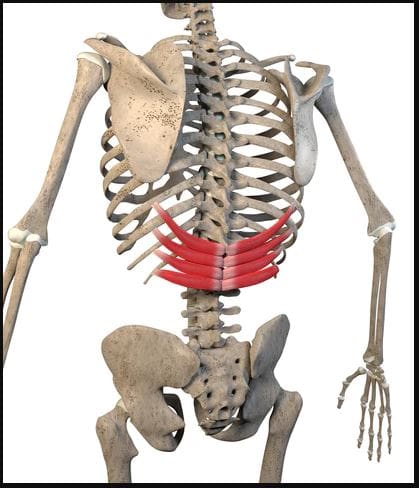
Have you felt aches and pain when bending down to pick something up? What about feeling tenderness near your lower back? Or have you experienced muscle stiffness when stretching? Many of these symptoms are associated with back pain that correlates to overusing the thoracic muscles, which includes the serratus inferior posterior muscles. The serratus posterior muscles (superior and inferior) are accessory breathing muscles as part of the extrinsic muscles. The serratus posterior inferior helps with the chest cavity’s expiration, while the superior help with inspiration. Some of the functionalities that the serratus posterior inferior provides are that in a bilateral action, the inferior works with the superior muscles to reduce the extension of the thoracic vertebrae.
In contrast, the unilateral action for the serratus posterior inferior muscle helps rotate the spine to the opposite sides. Studies reveal that based on the attachment of the serratus, the posterior inferior and superior are generally considered insignificant muscles. Since the serratus posterior muscles help aid respiration to the thoracic region, it can be succumbed to trigger points or myofascial pain syndrome that can affect the thoracic part of the back.
How Trigger Points Affect The Thoracic Region?
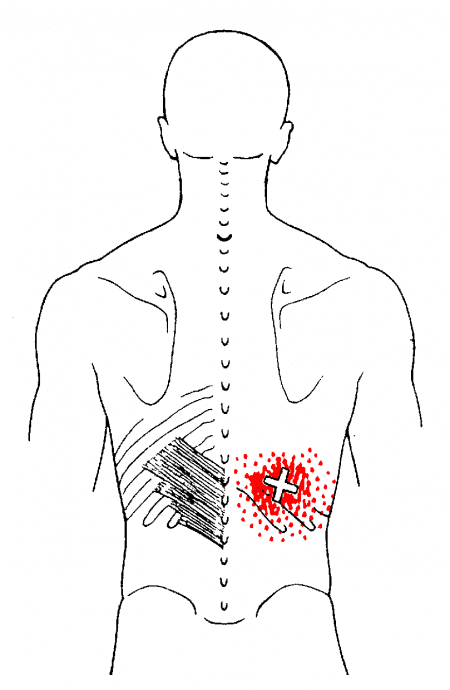
When the serratus posterior muscles in the thoracic region are affected by myofascial pain syndrome or trigger points, it correlates to the various activities the person has been doing that cause muscle strain along the serratus inferior posterior muscle. The book, “Myofascial Pain & Dysfunction” explains that when individuals feel a nagging ache in the lower thoracic region of the back, it correlates to residual backache associated with trigger points. Studies reveal that trigger points or myofascial pain syndrome are musculoskeletal pain disorder that affects one or multiple muscles in the body. Since back pain is common, trigger points can cause hyperirritability in the muscle’s taut band due to various factors that can cause strain on the affected muscle. When it comes to the serratus posterior inferior muscle developing active trigger points, it’s due to overload strain from combined movements like lifting, turning, and reaching for items that can also affect the surrounding muscles in the thoracic region of the back.
Trigger Point Of The Week: Serratus Posterior Inferior- Video
Have you been dealing with pain in your upper back in the thoracic region? Do you experience tenderness or soreness near your ribcage? Or have you felt a twinge of pain when turning your torso? Most of these symptoms are common signs that the thoracic region is affected by trigger points along the serratus posterior inferior muscle. The video explains where the serratus posterior inferior is located while pinpointing where the trigger points are located in the thoracic region of the back. Trigger points associated with thoracic back pain mimic other chronic conditions that can cause muscle tension and strain on the upper back. Studies reveal that latent and active trigger points affecting the upper thoracic area muscles can make many individuals feel more pain than they can tolerate. This can affect how a person functions and can make them feel inadequate. However, it is possible to incorporate a variety of treatments to reduce the pain and manage trigger points from progressing further in the thoracic region of the back.
Managing Thoracic Back Pain Associated With Trigger Points
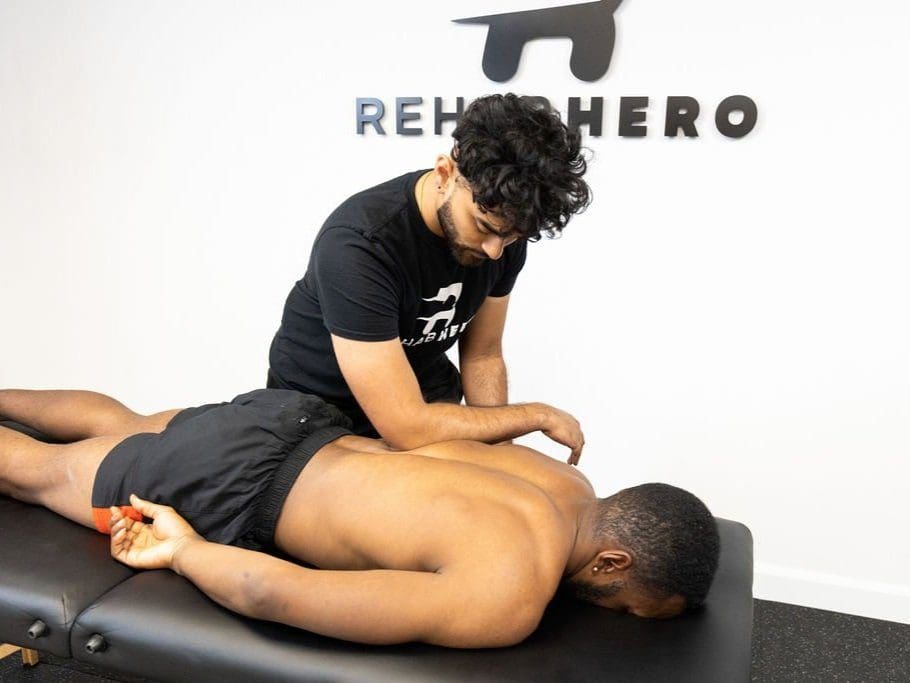
Various treatments are available to reduce the pain affecting the thoracic region of the back and even manage trigger points associated with the serratus posterior inferior muscle. Many individuals often go to a chiropractor to relieve their back pain. Chiropractors utilize their hands and various techniques to manipulate the spine and can even pinpoint where the trigger points affect the multiple muscles in the thoracic region. Chiropractors even work with other pain specialists to devise a treatment procedure to reduce the symptoms while managing thoracic back pain associated with trigger points. Studies reveal that by when pain specialists like chiropractors begin identifying proper treatment strategies for managing thoracic back pain associated with trigger points, it might be able to reduce pain and improve function for many people dealing with thoracic back pain.
Conclusion
The thoracic region of the back has various muscles that help support the ribcage and protect vital organs, which include the heart and the lungs. One of the muscles in the thoracic region is the serratus posterior inferior muscle, an accessory breathing muscle that helps with the chest cavity expiration and helps reduce the extension of the thoracic vertebrae. When the inferior muscle becomes overused by various movements, it can develop trigger points along the inferior muscle, causing thoracic back pain. Trigger points along the serratus inferior posterior muscles can mimic other chronic conditions that can cause symptoms of muscle tension and strain on the upper back. Luckily, various treatments have been available to reduce pain symptoms and manage thoracic back pain associated with trigger points. These treatments can bring back mobility to the thoracic region of the back without the individual being in pain.
References
Chen, Chee Kean, and Abd Jalil Nizar. “Myofascial Pain Syndrome in Chronic Back Pain Patients.” The Korean Journal of Pain, The Korean Pain Society, June 2011, https://www.ncbi.nlm.nih.gov/pmc/articles/PMC3111556/.
Dor, Adi, et al. “Proximal Myofascial Pain in Patients with Distal Complex Regional Pain Syndrome of the Upper Limb.” Journal of Bodywork and Movement Therapies, U.S. National Library of Medicine, July 2019, https://pubmed.ncbi.nlm.nih.gov/31563368/.
Mitchell, Brittney, et al. “Anatomy, Back, Extrinsic Muscles.” In: StatPearls [Internet]. Treasure Island (FL), StatPearls Publishing, 25 Aug. 2022, https://www.ncbi.nlm.nih.gov/books/NBK537216/.
Ortega-Santiago, Ricardo, et al. “Widespread Pressure Pain Sensitivity and Referred Pain from Trigger Points in Patients with Upper Thoracic Spine Pain.” Pain Medicine (Malden, Mass.), U.S. National Library of Medicine, 1 July 2019, https://pubmed.ncbi.nlm.nih.gov/30821833/.
Travell, J. G., et al. Myofascial Pain and Dysfunction: The Trigger Point Manual: Vol. 1:Upper Half of Body. Williams & Wilkins, 1999.
Vilensky , J A, et al. “Serratus Posterior Muscles: Anatomy, Clinical Relevance, and Function.” Clinical Anatomy (New York, N.Y.), U.S. National Library of Medicine, July 2001, https://pubmed.ncbi.nlm.nih.gov/11424195/.
The upper back is part of the thoracic region of the spine, surrounded by various muscles that protect the thoracic joints and help assist with respiratory functionality for the lungs. The upper back muscles consist of the rhomboids and the trapezoid muscles that provide functionality to the scapula or shoulder blades. Other superficial muscles offer assistance to the thoracic spine. The serratus posterior muscle is one of the superficial muscles that helps the thoracic spine and, like all superficial muscles, can succumb to injuries that can lead to the development of overlapping referred pain symptoms known as trigger points. Today’s article focuses on the serratus posterior muscle function in the back, how trigger points are causing upper back pain, and various techniques to manage trigger points in the upper back. We refer patients to certified providers who are diverse in upper back pain therapies to aid many people suffering from myofascial pain syndrome or trigger points associated with the serratus posterior muscle along the upper back. We advised patients by referring them to our associated medical providers based on their examination when appropriate. We indicate that education is a great solution to asking our providers profound and complex questions at the patient’s request. Dr. Alex Jimenez, D.C., notes this information as an educational service only. Disclaimer
The Serratus Posterior Muscle Function In The Back
Have you been dealing with constant upper back pain? Do you feel soreness at the base of your neck? Or are you having difficulty breathing? Most of the symptoms cause pain in the serratus posterior muscles that can lead to the development of myofascial pain syndrome or trigger points along the upper back. The serratus posterior has various roles in the upper back as it is not only part of the extrinsic muscles but also part of the accessory breathing muscle. The serratus posterior muscle helps with inspiration, which causes the chest cavity to expand as it is a superficial muscle attached to the ribs and is less commonly known. Studies show that the serratus posterior muscle is deep within the rhomboid muscles and is superficial. Even though this muscle is superficial when it has been overused through various activities, that can cause hypertrophy in the accessory respiratory muscles. Additional studies reveal that the serratus posterior superior muscle is considered clinically insignificant but has been impaired by myofascial pain syndrome or trigger points that can lead to upper back pain.
Trigger Points Causing Upper Back Pain
As stated earlier, the upper back is part of the thoracic region of the spine, and when various factors begin to affect the body, the back muscles tend to be involved. Studies reveal numerous sources of spinal pain in the thoracic spine. One is a myofascial pain syndrome affecting the serratus posterior muscles causing referred upper back pain. Myofascial pain syndrome or trigger points can be activated when the serratus posterior muscle is overloaded from thoracic respiratory issues like coughing due to pneumonia, asthma, or chronic emphysema. When respiratory problems affect the muscles in the thoracic region of the back, it leads to the development of trigger points, leading to overlapping issues like referred pain, motor dysfunction, and autonomic phenomena. According to Dr. Travell, M.D., in the upper back, trigger points can make the serratus posterior muscle cause overlapping risk profiles along the shoulder blades and have referred pain travel to the hands. This can make many individuals suffer from serious pain-like symptoms, causing them to be miserable.
Releasing Trigger Points Related Tension In The Upper Back-Video
Have you been dealing with respiratory issues causing you to be hunched over constantly? Do you feel soreness or tenderness at the base of your neck? Or are you suffering from upper back pain? These symptoms are associated with trigger points that are affecting the serratus posterior muscles causing upper back pain. Trigger points, or myofascial pain syndrome, is a musculoskeletal disorder that causes tenderness along the affected muscle that causes referred pain to the surrounding muscles in the body. Trigger points associated with the serratus posterior muscles can cause referred pain in the upper back and mimic various chronic conditions. Trigger point pain is difficult to diagnose but can be manageable with treatment. The video above gives examples of how to treat trigger points to relieve tension in the upper back.
Various Techniques To Manage Trigger Points In The Upper Back
When it comes to upper back pain, many individuals will go to pain specialists like massage therapists or chiropractors to relieve any issues affecting the upper back. These pain specialists utilize various techniques like stretching, spinal manipulation, massages, and ischemic compression to alleviate pain and manage trigger points from forming further in the affected muscle. Pain specialists like massage therapists or chiropractors are excellent for locating pain-like symptoms associated with trigger points. Even though treatment can help manage symptoms associated with trigger points, many people can still incorporate these techniques, like deep breathing or correcting their posture, to prevent the upper back muscles from becoming strained and causing more issues than before.
Conclusion
The serratus posterior muscles have various roles in the upper back region of the body. These superficial muscles are extrinsic and accessory breathing muscles that help expand the chest cavity. When multiple issues affect the upper back muscles, like strenuous activities or respiratory problems, it can develop trigger points along the serratus posterior muscles and invoke pain-like symptoms to travel down to the hand, causing mobility issues. Thankfully, various techniques that pain specialists like chiropractors and massage therapists use can help manage trigger points from escalating and can bring upper back mobility to the body once again.
References
Altafulla, Juan J, et al. “An Unusual Back Muscle Identified Bilaterally: Case Report.” Cureus, Cureus, 15 June 2018, https://www.ncbi.nlm.nih.gov/pmc/articles/PMC6093753/.
Briggs, Andrew M, et al. “Thoracic Spine Pain in the General Population: Prevalence, Incidence and Associated Factors in Children, Adolescents and Adults. A Systematic Review.” BMC Musculoskeletal Disorders, BioMed Central, 29 June 2009, https://www.ncbi.nlm.nih.gov/pmc/articles/PMC2720379/.
Mitchell, Brittney, et al. “Anatomy, Back, Extrinsic Muscles.” In: StatPearls [Internet]. Treasure Island (FL), StatPearls Publishing, 4 Aug. 2021, https://www.ncbi.nlm.nih.gov/books/NBK537216/.
Travell, J. G., et al. Myofascial Pain and Dysfunction: The Trigger Point Manual: Vol. 1:Upper Half of Body. Williams & Wilkins, 1999.
Vilensky, J A, et al. “Serratus Posterior Muscles: Anatomy, Clinical Relevance, and Function.” Clinical Anatomy (New York, N.Y.), U.S. National Library of Medicine, July 2001, https://pubmed.ncbi.nlm.nih.gov/11424195/.
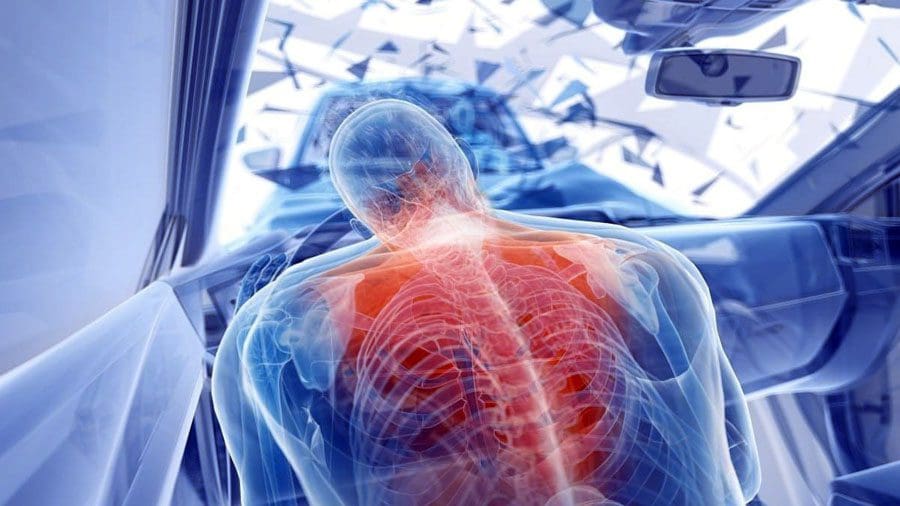
Back injuries from vehicle collisions vary from person to person. Common injuries may include strains, sprains, herniated discs, and fractures, and individuals dealing with certain spinal conditions like spinal stenosis may cause the medical condition to accelerate. Still, the force and physical impact the body absorbs during a crash, no matter how minor the accident or how safe the car is, will cause bodily aches and pains with the potential for other spinal conditions. Chiropractic care, massage, decompression, and traction therapy can relieve symptoms and restore mobility and function.
Back Injuries From Vehicle Collisions
Depending on how the impact affects the spine, problems can present in various areas of the back. The violent motion can sprain, strain, and fracture spinal components. Even minor incidents can impact mobility. Symptoms can stem from inflammation, compressed nerves, or fractures. Any damage can have long-lasting effects on the vertebrae, nerve roots, and back muscles. A vehicle collision can affect the following:
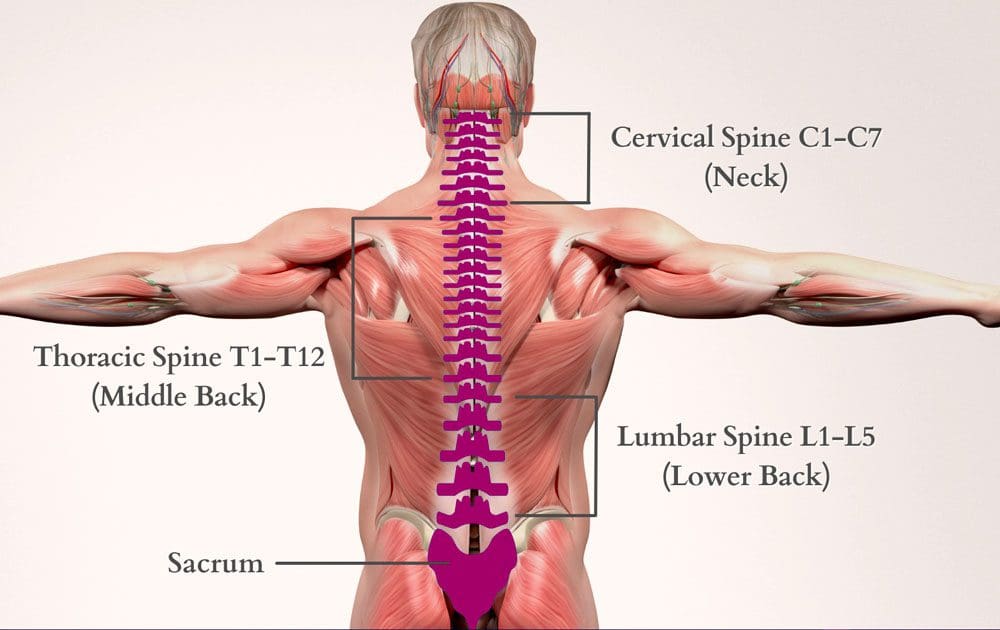
Lumbar vertebrae – lower back
Thoracic vertebrae – middle/upper back
Cervical vertebrae – neck
Each area consists of bones, tissues, muscles, nerves, tendons, and ligaments extending from the neck to the pelvis.
The most common back injuries are to the neck and lower back, where the most movement and shifting occurs, often causing nerve damage.
The central placement and rigid structure make middle back injuries less common.
Upper back injuries that connect the rib and chest region can affect breathing.
Soft tissue injuries might not show up immediately.
Symptoms
After a vehicle collision, it’s common to feel sore all over. The symptoms can range from manageable discomfort to complete immobility. Individuals may experience the following:
Muscle spasms
The muscle may repeatedly twitch, feel like hard knots, and feel tender to the touch.
Muscle spasms can vary in pain levels from mild to debilitating.
Stiffness
Individuals may not feel as flexible because of the muscle tension that activated during the crash to protect the body.
Stiffness can go away after light stretching or continue throughout the day.
Burning or Shooting Pain
A burning or shooting pain may travel down the back and buttocks through the back of one or both legs.
It can be mild, dull aches and pains that go away quickly or last for days.
Changing positions, such as sitting up after waking up or standing up after sitting, can cause sharp acute pain.
Certain physical activities can cause a throbbing sensation or mild pain when attempting to perform various tasks.
Tingling and/or Numbness
Tense muscles can pinch nerves leading to sensations of tingling or numbness in the legs, feet, arms, or hands.
Head Issues
Headaches, dizziness, or disorientation can present.
Spinal Disorders
Back injuries from vehicle collisions can result in a degenerative disc disorder months or years later. It can also speed up health issues individuals didn’t know they had before the crash. As the body ages, previous damage combined with degeneration can result in:
Micro-tears within the muscles and ligaments are common and cannot be found through a standard x-ray.
Spinal adjustments can bring the spine back into alignment, producing natural anti-inflammatory properties to assist with discomfort and heal the tears.
Scar Tissue Breakdown
Muscles can get scarred, causing stiffness and soreness.
Chiropractic massage targets these areas and breaks down the build-up quicker than if it was left to heal on its own.
Less scar tissue means faster recovery.
Range of Motion and Mobility Restored
Back injuries can result in restricted mobility.
It may be difficult to turn or move when the muscles are inflamed.
Mobilizing the spine through adjustments restores the proper range of motion.
Decreased Medication Use
Prescription pain medications can turn into dependency.
Chiropractic adjustments can ensure that the injury is healed and the pain is not just masked.
Long-Term Benefits
Receiving chiropractic care can help prevent minor injuries from worsening into serious and chronic conditions.
Post Whiplash Symptoms
References
Erbulut, Deniz U. “Biomechanics of neck injuries resulting from rear-end vehicle collisions.” Turkish neurosurgery vol. 24,4 (2014): 466-70. doi:10.5137/1019-5149.JTN.9218-13.1
National Spinal Cord Injury Statistical Center. (2020) “Spinal Cord Injury: Facts and Figures at a Glance.” https://www.nspine injurysc.uab.edu/Public/Facts%20and%20Figures%202020.pdf
Rao, Raj D et al. “Occupant and Crash Characteristics of Elderly Subjects With Thoracic and Lumbar Spine Injuries After Motor Vehicle Collisions.” Spine vol. 41,1 (2016): 32-8. doi:10.1097/BRS.0000000000001079
Rao, Raj D et al. “Occupant and crash characteristics in thoracic and lumbar spine injuries resulting from motor vehicle collisions.” The spine journal: official journal of the North American Spine Society vol. 14,10 (2014): 2355-65. doi:10.1016/j.spinee.2014.01.038
Middle back pain is usually caused by unhealthy posture, improper lifting or twisting, and minor injuries like muscle strains, sprains, and herniated discs. Thoracic herniated discs are less common than neck or low back herniations because of the thoracic vertebrae’s size and rigidity, but they do happen. Chiropractic care can treat thoracic herniated discs and prevent future episodes.
Thoracic Herniated Disc
The 12 thoracic vertebrae between the neck and the lumbar spine make up the largest and least flexible area. The rib cage adds:
Protection
Support
Stabilization of the spine
Symptoms
Herniated discs happen when the soft, gel-like layer of the shock-absorbing intervertebral disc bulges into or leaks through the disc’s tough outer layer. Due to the location, a herniated disc can cause various issues to the middle back, chest wall, and/or abdominal areas around the injured vertebrae. This displacement can cause:
Inflammation
Compression to the spinal nerves or spinal cord
Tingling
Numbness
Pain
Weakness
If the lower thoracic region is herniated, symptoms can radiate to one or both lower extremities.
Radiculopathy
If the herniation compresses a thoracic spinal nerve, it can cause radiculopathy or pain that radiates down the nerve and out from the spine into the surrounding muscles. The symptoms can present around the rib cage or upper abdominal area. A large disc herniation can compress the spinal cord inside the spinal canal. This is a condition called myelopathywhich can cause:
Numbness
Tingling
Weakness in one or both lower extremities
Sometimes bowel and bladder dysfunction
In severe cases, paralysis
Causes
Degenerative disc disease and trauma like vehicle collisions or falls are the most common causes of thoracic herniation.
Individuals between 30 and 50 are more likely to be affected.
As the body ages, the disc’s soft inner layer loses hydration, making it less effective as a shock absorber.
The tough outer layer loses elasticity, increasing the risk of disc tears.
Chiropractic Care
A chiropractor or neurologic physical therapist can personalize a herniated disc exercise treatment plan to reduce pain, improve strength and posture, and increase mobility.
Therapeutic massage can be useful in managing pain and decreasing inflammation.
Spinal epidural injections can be used with physical therapy to help manage pain and allow the body to heal independently.
Recommendations
Avoid bending, lifting, reaching, and twisting.
Apply an ice pack or cold compress for 15- to 20-minute intervals every two hours.
Sit in chairs with a firm back to support the spine.
When sleeping, place a small pillow under the head and knees to keep the spine in a neutral position to prevent pressure on the herniated region.
Avoid too much rest, which can worsen the injury.
Gentle physical activity will maintain circulation and keep the muscles strong.
Surgery
Most cases of thoracic herniation do not require surgery. Surgery could be recommended if there is intolerable pain, neurological issues, and conservative treatments are not working. A spine specialist can determine if surgery is necessary based on the injury’s size, type, and location. Spinal surgery will remove all or part of the herniated disc compressing a nerve root. Common surgical procedures include:
Barrow Neurological Institute. “Herniated Thoracic Disc.” Barrow Neurological Institute, August 3, 2022. https://www.barrowneuro.org/condition/thoracic-disc-herniation/.
Court, C., E. Mansour, and C. Bouthors. “Thoracic Disc Herniation: Surgical Treatment.” Orthopaedics & Traumatology: Surgery & Research 104, no. 1 (2018). https://doi.org/10.1016/j.otsr.2017.04.022.
Dydyk, Alexander M, Ruben Ngnitewe Massa, and Fassil B Mesfin. “Disc Herniation – Statpearls – NCBI Bookshelf.” National Library of Medicine, January 18, 2022. https://www.ncbi.nlm.nih.gov/books/NBK441822/.
Yoon, Wai Weng, and Jonathan Koch. “Herniated Discs: When Is Surgery Necessary?” EFORT Open Reviews 6, no. 6 (2021): 526–30. https://doi.org/10.1302/2058-5241.6.210020.
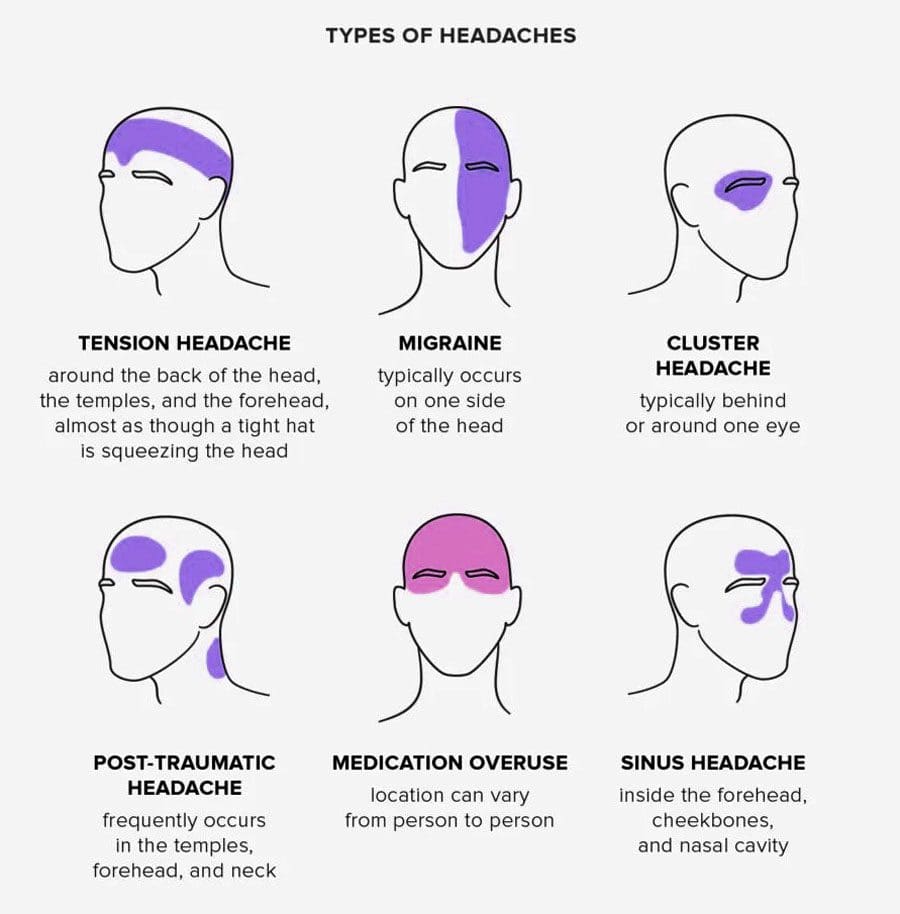
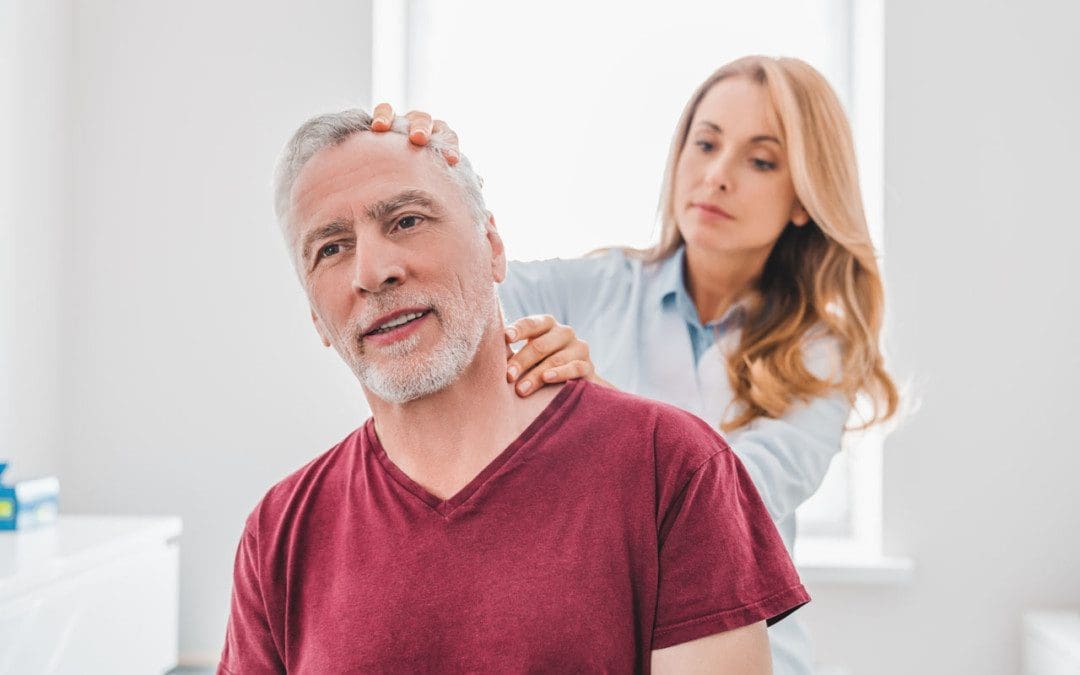
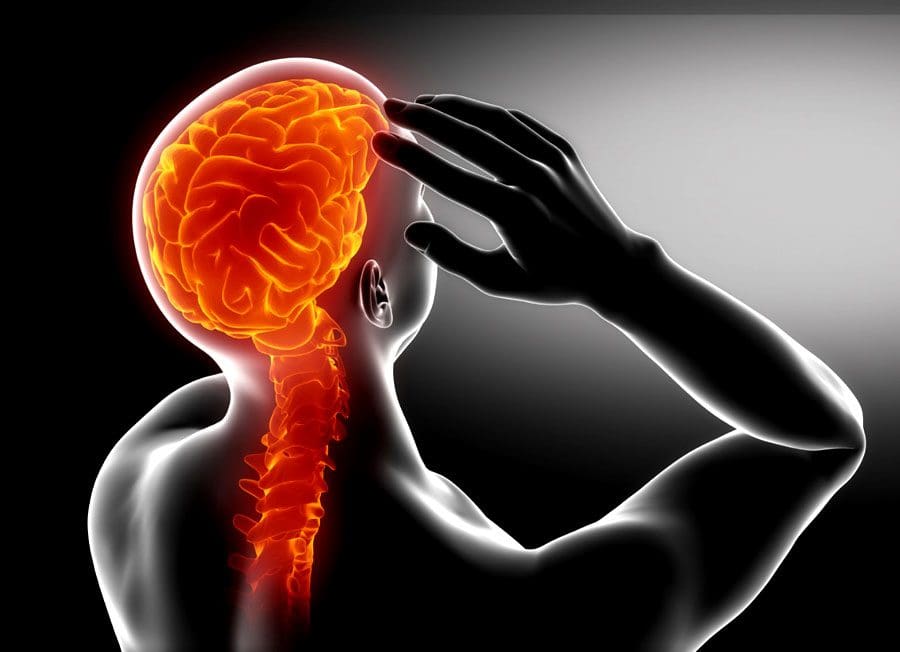
Headaches are a common condition that most experience and can differ greatly regarding type, severity, location, and frequency. Headaches range from mild discomfort to constant dull or sharp pressure and severe throbbing pain. A headache chiropractor, through therapeutic massage, decompression, and adjustments, alleviates the headaches, whether tension, migraine, or cluster, releasing the tension and restoring normal function.
Headache Chiropractor
Ninety-five percent of headaches are primary headaches caused by overactivity, muscle tension, or problems with pain-sensitive structures in the head. These are not a symptom of an underlying disease and include tension, migraine, or cluster headaches. The other 5 percent of headaches are secondaryand are caused by an underlying condition, infection, or physical issue. Headaches have various causes or triggers. These include:
Long hours driving
Stress
Insomnia
Blood sugar changes
Foods
Smells
Noises
Lights
Excessive exercise or physical activity
Individuals spend more hours in one fixed position or posture, like sitting in front of a computer or standing at a workstation. This can increase joint irritation and muscle tension in the upper back, neck, and scalp, causing achiness and discomfort that builds up to throbbing soreness. The headache’s location and the discomfort experienced can indicate the type of headache.
Chiropractic Care
Chiropractors are experts in the neuromusculoskeletal system. Research shows that a headache chiropractor can adjust the spine’s alignment to improve spinal function, release and relax the tense muscles, and alleviate nervous system stress helping decrease the intensity and frequency. Treatment includes:
The Injury Medical Chiropractic and Functional Medicine Teamwill develop a personalized treatment plan for the individual’s specific condition and needs.
Migraine Treatment
References
Biondi, David M. “Physical treatments for headache: a structured review.” Headache vol. 45,6 (2005): 738-46. doi:10.1111/j.1526-4610.2005.05141.x
Bronfort, G et al. “Efficacy of spinal manipulation for chronic headache: a systematic review.” Journal of manipulative and physiological therapeutics vol. 24,7 (2001): 457-66.
Bryans, Roland, et al. “Evidence-based guidelines for the chiropractic treatment of adults with headache.” Journal of manipulative and physiological therapeutics vol. 34,5 (2011): 274-89. doi:10.1016/j.jmpt.2011.04.008
Côté, Pierre, et al. “Non-pharmacological management of persistent headaches associated with neck pain: A clinical practice guideline from the Ontario Protocol for traffic injury management (OPTIMa) collaboration.” European journal of pain (London, England) vol. 23,6 (2019): 1051-1070. doi:10.1002/ejp.1374
Spondyloarthritis is a group of inflammatory, immune-mediated diseases that cause chronic low back pain, inflammation, irritating aches, and pains. The conditions mostly affect the spine but can affect joints in the arms, legs, hips, skin, eyes, and intestines. Spondylitis types can significantly affect daily function, physical activity and compromise bone health.
Spondylitis Types
The main types include:
Ankylosing spondylitis
Psoriatic arthritis
Enteropathic arthritis
Reactive arthritis
Juvenile spondylitis
Undifferentiated spondylitis
Axial Spondylitis vs. Peripheral Spondylitis Types
Axial means relating to the body’s central region, as in the trunk and head.
Axial spondyloarthritis is arthritis and inflammation in the hips and spine.
The condition starts before age 45.
The pain typically starts in the low back but can begin in the neck or other regions.
Characterized by back pain, usually in the lower back and/or buttocks.
Morning back stiffness lasting 30 minutes or longer.
Sacroiliac joint inflammation can also present.
The back pain gradually progresses.
Lasts longer than three months.
Improves with physical movement, not with rest.
Peripheral spondyloarthritis is arthritis and inflammatory pain in the peripheral joints and tendons and does not include the spine.
Individuals can have peripheral and axial spondylitis symptoms simultaneously.
Diagnosis depends on whether symptoms are primarily peripheral or axial.
Spondylitis and Spondylosis
Spondylosis and spondylitis are similar in they cause pain and inflammation in the back and hips. The difference is in each condition’s triggers.
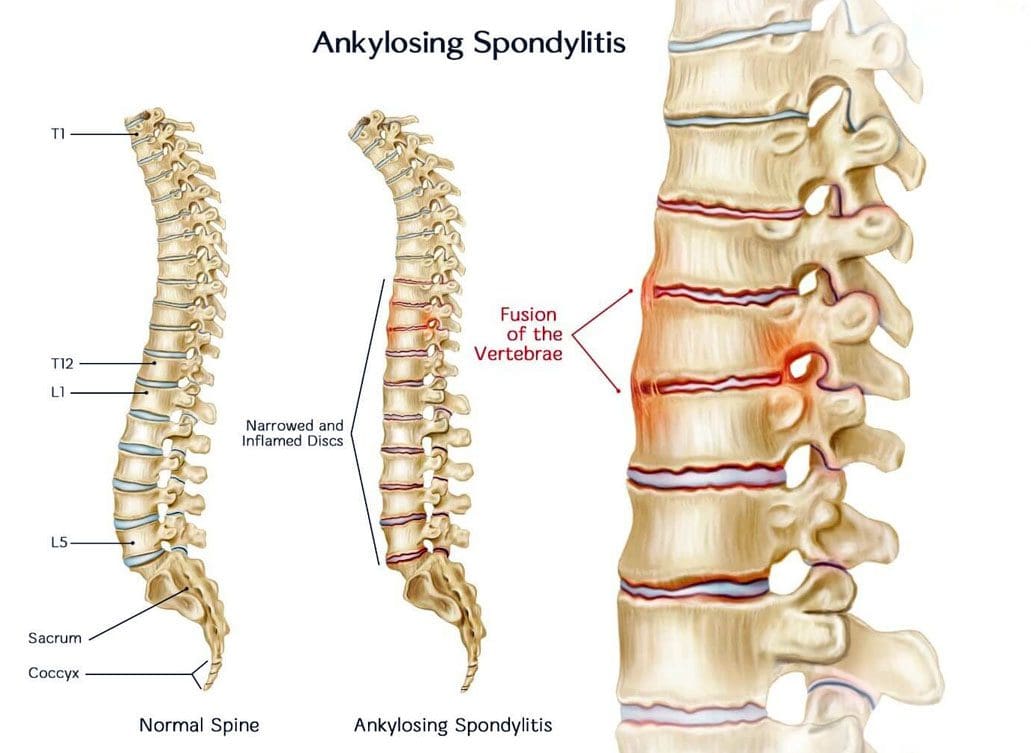
Spondylitis is a disease in which the body’s immune system degrades joints, causes inflammation, overproduces bone formation, and causes bone fusion.
Spondylosis is a category of arthritis that presents as the spine ages from normal wear and tear.
It happens during the degeneration of the spine’s discs and joints.
It also presents when bone spurs develop on the spine’s vertebrae.
Ankylosing Spondylitis
Ankylosing spondylitis is the most common form of arthritis affecting the spine, other joints, and body regions. The condition causes spinal joint inflammation causing extreme discomfort and chronic pain. In some cases, the inflammation progresses to ankylosis, where spine sections fuse and become immobile. Other body areas that can trigger inflammation include:
The ribs
Heels
Shoulders
Hips
Small joints of the feet and hands.
Ankylosing spondylitis symptoms vary from person to person. Common early symptoms include:
There is general discomfort, appetite loss, and mild fever early in the condition.
Persistent stiffness and pain in the buttocks and low back, gradually progressing over a couple of weeks or months.
The pain and stiffness can travel into the neck and spine within months or years.
The pain is usually spread out and dull.
The stiffness and pain are worse in the morning and night and improve with light exercise or a warm shower.
The pain typically becomes chronic, lasts for a minimum of 3 months, and can be felt on both sides.
Tenderness and pain in the hips, thighs, shoulder blades, heels, and ribs may also occur.
Treatment approaches include applications of ice and heat to reduce swelling, increase circulation, and decrease joint pain, posture exercises, stretches, physical therapy, and medication.
Psoriatic Arthritis
Psoriatic arthritis causes swelling, pain, and inflammation in the small joints of the hands and feet; however, the joints of the knees, ankles, and wrists can also be affected. Psoriasis is a rash that causes scaly skin patches.
Individuals can develop dactylitis when a finger or toe swells between the surrounding joints.
Spinal stiffness and pain can present.
Typically the ends of the finger joints are most affected and experience pain and inflammation.
Medications frequently utilized to treat ankylosing spondylitis can be used.
Exercise helps preserve the range of motion and maintain strength.
Isometric exercises work muscles without joint motion reducing the risk of further injury to inflamed joints.
Occupational and physical therapy can significantly assist in optimizing arthritic joint function.
Enteropathic Spondylitis
Enteropathic Arthritis is chronic inflammatory arthritis linked to inflammatory bowel disease. The most recognized are Crohn’s and ulcerative colitis.
The peripheral limb joints and sometimes the whole spine are the most prevalent body areas afflicted with enteropathic spondylitis.
The main symptom is intestine inflammation, including bowel and joint pain and/or inflammatory back pain.
Other symptoms can include weight loss, blood in the stool, abdominal pain, and/or chronic diarrhea.
Managing enteropathic arthritis typically means managing the underlying bowel disease.
Juvenile Spondyloarthritis
Juvenile spondyloarthritis is a group of childhood rheumatic diseases that cause arthritis before age 16 and can continue through adulthood. Juvenile spondyloarthritis encompasses:
Enteropathic arthritis
Enthesitis-related arthritis
Undifferentiated spondyloarthritis
Psoriatic arthritis
Reactive arthritis
Juvenile ankylosing spondylitis
Juvenile spondyloarthritis causes inflammation and pain in joints in the lower body, like the ankles, hips, knees, and pelvis. Other body areas that could be affected include:
The bowels
Eyes
Skin
Spine
Lethargy and fatigue can also present. The symptoms can be unpredictable and episodic, appearing and disappearing without a specific cause. The condition cycles between flare-ups and remission. Common treatment approaches include:
Medication
Exercise
Posture training
Physical therapy, medication
Ice and heat to decrease joint pain and relax muscles.
In severe cases, surgery could be recommended.
Reactive Arthritis or Reiter’s Syndrome
Reactive arthritis is arthritis that causes pain and inflammation in the mucous membranes, bladder, skin, joints, eyes, and genitals.
Reactive arthritis is believed to be a reaction to an infection, usually in the gastrointestinal or urinary tract.
Reactive arthritis does not affect the sacroiliac joints and spine in most cases.
Reactive arthritis is typically treated with nonsteroidal anti-inflammatory medications, steroids, and rheumatoid arthritis medications.
A physician could prescribe antibiotics if a bacterial infection brought on reactive arthritis.
Undifferentiated Spondyloarthritis
Undifferentiated spondyloarthritis is where the signs and symptoms of spondylitis don’t meet the criteria for a specific rheumatoid disorder. Individuals diagnosed with undifferentiated spondyloarthritis will have one or more of the symptoms that include:
Fatigue
Back inflammation
Back pain
Buttock pain that alternates or presents on both sides.
Swollen toes or fingers
Heel pain
Arthritis in the small joints.
Arthritis in the large limb joints.
Enthesitis or inflammation where the ligament or tendon connects to the bone.
Eye inflammation
Individuals can also present symptoms of other spondylitis types, like psoriatic or ankylosing.
Treatment approaches include:
Exercise
Physical therapy
Posture training
Ice and heat to decrease joint pain and loosen up muscles.
Spondylitis Types Diagnosis of Spondyloarthritis
References
Carron, Philippe, et al. “Peripheral spondyloarthritis: a neglected entity-state of the art.” RMD open vol. 6,1 (2020): e001136. doi:10.1136/rmdopen-2019-001136
Gill, Tejpal, et al. “The intestinal microbiome in spondyloarthritis.” Current opinion in rheumatology vol. 27,4 (2015): 319-25. doi:10.1097/BOR.0000000000000187
Rosenbaum, James T. “The eye in spondyloarthritis✰.” Seminars in arthritis and rheumatism vol. 49,3S (2019): S29-S31. doi:10.1016/j.semarthrit.2019.09.014
Seo, Mi Ryoung et al. “Delayed diagnosis is linked to worse outcomes and unfavorable treatment responses in patients with axial spondyloarthritis.” Clinical rheumatology vol. 34,8 (2015): 1397-405. doi:10.1007/s10067-014-2768-y
Sharip, Aigul, and Jeannette Kunz. “Understanding the Pathogenesis of Spondyloarthritis.” Biomolecules vol. 10,10 1461. 20 Oct. 2020, doi:10.3390/biom10101461
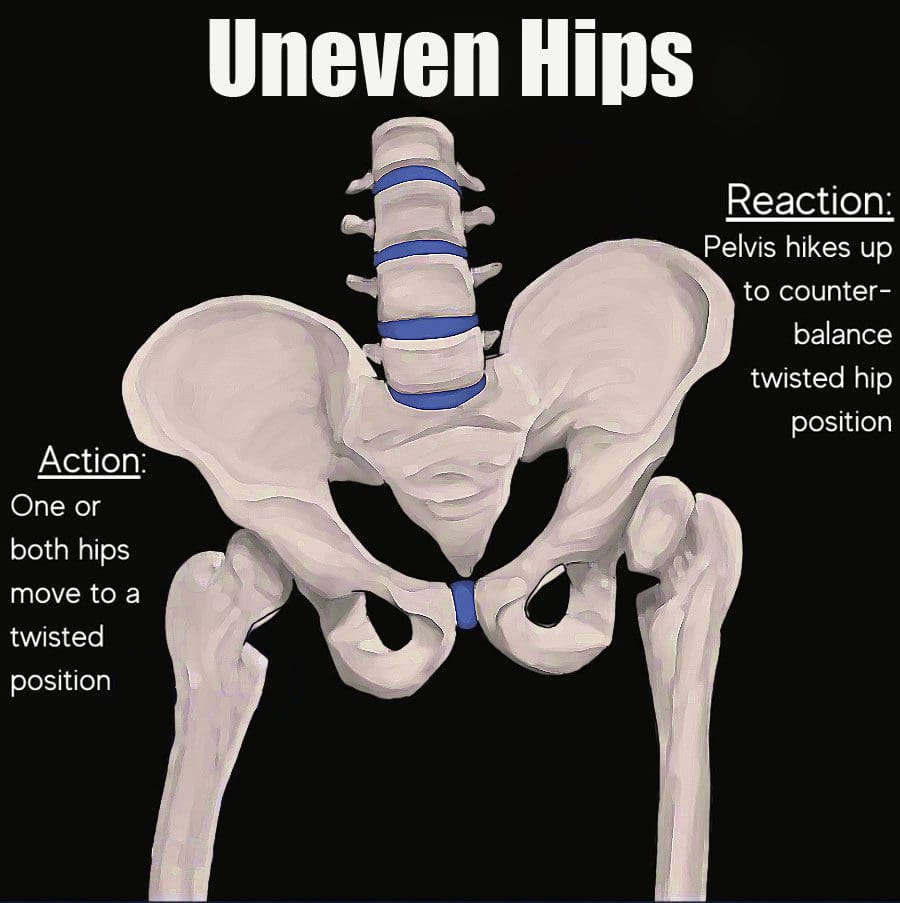
Uneven hips can throw the back out of natural alignment and cause back stiffness, tightness, discomfort, and pain. Hips that are off-balance unhealthily affect standing, sitting, sleeping posture, walking gait, and overall movements. Biomechanics issues cause the core and spine stabilizing muscles to become weakened and fatigued from overcompensating to keep the body up and moving. Over time this can lead to chronic pain in the back, hips, knees, and feet. Chiropractic care can restore proper hip and spinal alignment and wellness.
Uneven Hips
Misaligned hips can be caused by work or sports injury, exercise, vehicle collision, and/or general wear and tear. When hips are out of alignment, they have shifted from their centered position. They could be rotated forward or backward, forcing the spine and the lower limbs to compensate, resulting in the spine tilting that can make the legs appear uneven. Discomfort may be one-sided low back pain near the sacroiliac joint, causing a stiff/tight back, limited motion, and/or pain symptoms. Because the spine and lower limbs have to compensate for the unevenness, the shoulders and upper back, connected to the pelvis through the spine, are also affected and result in:
Back pain.
Hip and gluteal muscle pain.
Uneven leg length.
Knee, ankle, and foot issues and pain.
Uneven shoulders.
The shoulder blades can stick out on the side of the lower hip.
Rib discomfort and pain.
The rib cage could protrude out on one side. However, this could be due to advanced scoliosis.
Therapy
Staying active is recommended and includes stretching and core strengthening. General stretches recommended to optimize hip equity include:
Hamstring stretch
For this stretch, lie on a flat surface with your legs extended straight out.
Bend the right leg at the knee, placing the right foot on the ground.
Use a towel, belt, or band to grab and wrap around the left foot.
Keep the hip/buttock on the left side planted on the floor.
Slowly raise the left leg upward as far as possible until you feel the stretch.
Once you feel a stretch or restriction in the hamstring, hold the position for 30 seconds.
Repeat on the other side.
Perform 2 to3 times.
Hip flexor stretch
Kneel on the affected leg and bend the healthy leg out in front with the foot flat on the floor.
Back straight.
Slowly push the hips forward until you feel the stretch in the upper thigh and hip.
Hold the stretch for around 15 to 30 seconds.
Chiropractic Care
Chiropractic treatment is a highly recommended non-surgical option for uneven hips and pelvic tilt. Depending on the severity of the misalignment, underlying issues, and body scanning images, hip alignment treatment could include:
Soft tissue therapeutic massage
Chiropractic muscle release for tight hip flexors, quadriceps, hamstrings, and glutes.
Kiapour, Ali et al. “Biomechanics of the Sacroiliac Joint: Anatomy, Function, Biomechanics, Sexual Dimorphism, and Causes of Pain.” International journal of spine surgery vol. 14, Suppl 1 3-13. 10 Feb. 2020, doi:10.14444/6077
Lee, Jeong-Hoon, et al. “The effect of Graston technique on the pain and range of motion in patients with chronic low back pain.” Journal of physical therapy science vol. 28,6 (2016): 1852-5. doi:10.1589/jpts.28.1852
Patel, Rikin V et al. “Pelvic Tilt and Range of Motion in Hips With Femoroacetabular Impingement Syndrome.” The Journal of the American Academy of Orthopaedic Surgeons vol. 28,10 (2020): e427-e432. doi:10.5435/JAAOS-D-19-00155
Rivière, C et al. “Spine-hip relations add understandings to the pathophysiology of femoro-acetabular impingement: A systematic review.” Orthopaedics & traumatology, surgery & research : OTSR vol. 103,4 (2017): 549-557. doi:10.1016/j.otsr.2017.03.010
Suits, William H. “Clinical Measures of Pelvic Tilt in Physical Therapy.” International journal of sports physical therapy vol. 16,5 1366-1375. 1 Oct. 2021, doi:10.26603/001c.27978
IFM's Find A Practitioner tool is the largest referral network in Functional Medicine, created to help patients locate Functional Medicine practitioners anywhere in the world. IFM Certified Practitioners are listed first in the search results, given their extensive education in Functional Medicine


 Headache Chiropractor