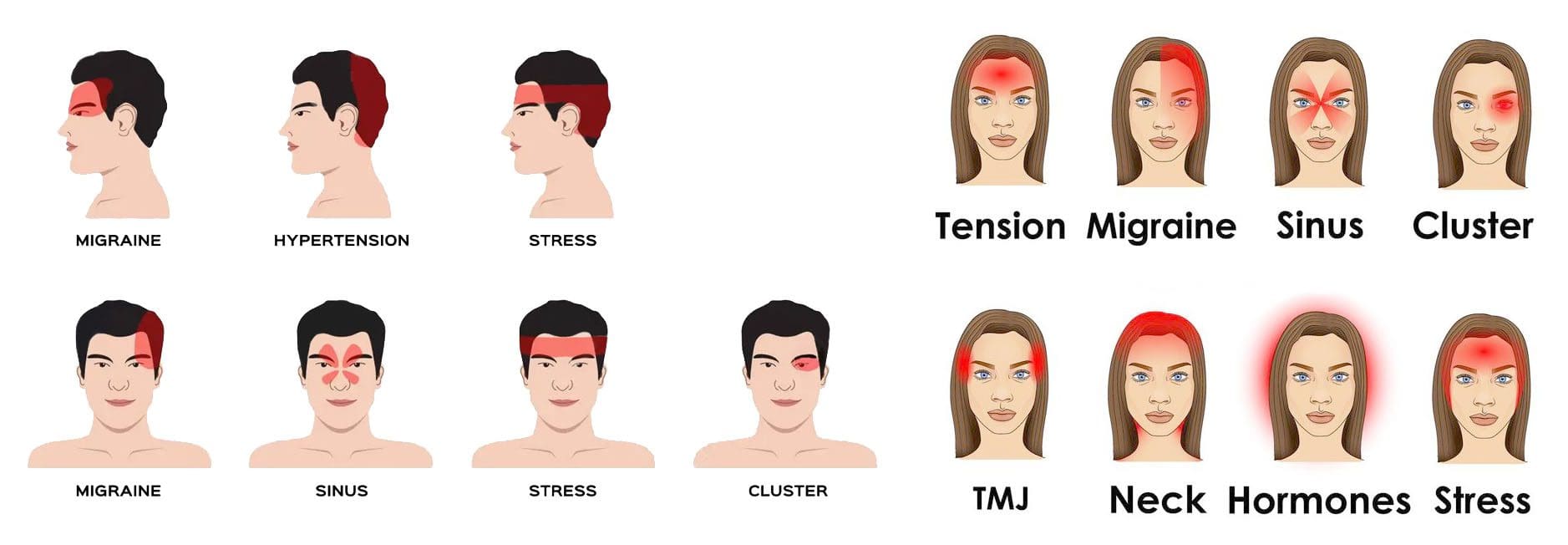
Supplements To Ease Headaches: Individuals dealing with headaches or migraines should consider incorporating supplements to ease headaches’ severity and frequency. Nutrition and food habits affect all systems in the body. Although slower to take effect than medications, if a diet is used correctly to heal the body and maintain health, other treatments may not be necessary or require less. Many health providers understand that food is a medicine that can assist healing therapies like massage and chiropractic care, which makes the treatment more effective when used with dietary adjustments.
Supplements To Ease Headaches
An unhealthy lifestyle and diet are not the only contributing factor to headaches. Others include:
The goal of functional medicine is to help individuals reach their health and wellness goals that, include:
Regularly active lifestyle.
Optimal breathing patterns.
Quality sleep patterns.
Thorough hydration.
Healthy nutrition.
Improved digestive health.
Improved mental health.
Improved musculoskeletal health.
Pain Receptors – Headache
Pain and discomfort symptoms present when various head structures become inflamed or irritated. These structures include:
Nerves of the head and neck.
Muscles of the neck and head.
The skin of the head.
Arteries that lead to the brain.
Membranes of the ear, nose, and throat.
Sinuses that form part of the respiratory system.
The pain can also be referred, meaning that pain in one area can spread to nearby areas. An example is headache pain developed from neck stiffness and tightness.
Causes
Foods
Determining whether food sensitivities cause or contribute to headaches or migraines can be challenging. Nutritionists and dieticians recommend keeping a food journal to keep track of foods, snacks, drinks, alcohol intake, how the body reacts, and how the individual feels.
This process can help recognize foods or eating patterns that may contribute to headaches.
An integrative health practitioner can support this process and help identify sensitivities.
By eliminating and avoiding processed foods, headaches may be alleviated. This includes limited exposure to artificial colors, sweeteners, flavors, and other unnatural additives.
Foods naturally high in magnesium include legumes, almonds, broccoli, spinach, avocados, dried figs, and bananas.
Ginger Root
Ginger root is a natural remedy for nausea, diarrhea, upset stomach, and indigestion.
Ginger root extract can be taken in supplement form or fresh ginger added to meals and teas.
Coriander Seeds
Coriander syrup is effective against migraine pain.
A method to relieve a headache is to pour hot water over fresh seeds and inhale the steam.
To increase the effectiveness, place a towel over your head.
Celery or Celery Seed Oil
Celery can reduce inflammation and lower blood pressure.
However, pregnant women or individuals with kidney conditions, low blood pressure, taking thyroid medication, blood thinners, lithium, or diuretics should not use celery seed.
Peppermint and Lavender Essential Oils
Both have a natural numbing and cooling effect that helps relieve headache pain.
Peppermint oil has also been found to be a natural antibacterial, antiviral, antifungal, antiparasitic, and pain reliever.
Lavender oil can eliminate nervous tension, enhance blood circulation, and relieve pain.
Both are effective pain relief tools for headache and migraine sufferers.
Butterbur
This shrub grows in Europe, some parts of Asia, and North America.
A study found that individuals who consumed 75 mg of the extract twice daily reduced migraine attacks’ frequency.
Feverfew
A herb plant whose dried leaves have been found to relieve symptoms associated with headaches, migraines, menstrual cramps, asthma, dizziness, and arthritis.
Feverfew can be found in supplements.
It can alter the effects of certain prescription and non-prescription medications.
There is plenty of evidence to support the benefits of healthy nutrition. Combined with a healthy diet and lifestyle, these supplements can help relieve headaches. As with any supplement, talk to a doctor before starting a supplement regimen.
Chiropractic Care For Migraines
References
Ariyanfar, Shadi, et al. “Review on Headache Related to Dietary Supplements.” Current Pain and headache report vol. 26,3 (2022): 193-218. doi:10.1007/s11916-022-01019-9
Bryans, Roland, et al. “Evidence-based guidelines for the chiropractic treatment of adults with headache.” Journal of Manipulative and physiological therapeutics vol. 34,5 (2011): 274-89. doi:10.1016/j.jmpt.2011.04.008
Diener, H C et al. “The first placebo-controlled trial of a special butterbur root extract for the prevention of migraine: reanalysis of efficacy criteria.” European Neurology vol. 51,2 (2004): 89-97. doi:10.1159/000076535
Kajjari, Shweta, et al. “The Effects of Lavender Essential Oil and its Clinical Implications in Dentistry: A Review.” International Journal of clinical pediatric dentistry vol. 15,3 (2022): 385-388. doi:10.5005/jp-journals-10005-2378
Maier, Jeanette A et al. “Headaches and Magnesium: Mechanisms, Bioavailability, Therapeutic Efficacy and Potential Advantage of Magnesium Pidolate.” Nutrients vol. 12,9 2660. 31 Aug. 2020, doi:10.3390/nu12092660
Mansouri, Samaneh, et al. “Evaluating the effect of Coriandrum sativum syrup on being migraine-free using mixture models.” Medical Journal of the Islamic Republic of Iran vol. 34 44. 6 May. 2020, doi:10.34171/mjiri.34.44
Pareek, Anil, et al. “Feverfew (Tanacetum parthenium L.): A systematic review.” Pharmacognosy Reviews vol. 5,9 (2011): 103-10. doi:10.4103/0973-7847.79105
Skypala, Isabel J et al. “Sensitivity to food additives, vaso-active amines and salicylates: a review of the evidence.” Clinical and translational allergy vol. 5 34. 13 Oct. 2015, doi:10.1186/s13601-015-0078-3
Sciatica is one of the most common injuries, with as many as 40% of individuals experiencing the condition, and it becomes more frequent as the body ages. The pain originates with the sciatic nerves and can go on for several weeks, months, or years. Staying active is a major recommendation to relieve the pain and prevent future flare-ups. Injury Medical Chiropractic and Functional Medicine Clinic can decompress and release the nerve and educate individuals on an anti-inflammatory diet and staying active to expedite healing.
Staying Active
Sciatica is most commonly caused by a slipped disc, which puts pressure or irritates the sciatic nerve, and causes discomfort and painful sensations. The most common factors for developing sciatica include the following:
As the body ages, the spinal discs wear out and break down, leading to the spine shifting out of alignment.
Job occupations that place added strain on the back, like sitting or standing for extended periods, repetitive heavy lifting, or bending, reaching, and twisting movements.
Doctors and chiropractors have found that only resting with sciatica can worsen the injury.
This is because if it is a slipped/bulging/herniated disc, the disc remains in this state, the nerve stays compressed or irritated, and the muscles that control the low back become weak and unable to provide support.
Recommendations
Don’t Sit For Too Long
Prolonged periods of sitting place added pressure on the discs and ligaments in the low back.
Even when sitting doesn’t make it worse, the muscles can develop unhealthy muscle memory that causes partial contracting when there shouldn’t be any that tightens the gluteal muscles causing added strain.
Individuals with a job requiring a lot of sitting or standing are recommended to take frequent breaks to stretch out their muscles or use a standing desk to change positions.
Posture Adjustments
Slouching, hunching, and continuing to practice unhealthy postures will exacerbate sciatica.
Pay attention to the body’s position when standing or sitting.
To prevent slouching, pull the shoulders down and back.
Imagine the shoulder blades touching.
Individuals working at a desk or workstation should take frequent breaks.
Position the screen to see it without tilting the head down.
Increase Physical Activity and Exercise
Exercise is highly recommended to keep the muscles and nerves moving and circulation flowing.
Aerobics
Walking, light jogging, swimming, cycling, and dancing, increase heart rate without causing added strain or pain.
Strength Training
Exercises using free weights, weight machines, or isometric exercises strengthen the muscles and can help restore their position.
Stretching and Flexibility Training
Yoga, tai chi, and Pilates increase flexibility and strength.
The stretching will keep the nerves and muscles from spasms that can worsen the injury.
Strengthen The Core
A stronger core will improve spinal health. Actively engaging the abdominal muscles protects sciatic nerve roots by minimizing spinal pressure.
The back muscles can become increasingly stressed and tired when they have to do all the work without core muscle support.
A weak core can cause additional back pain and worsen sciatica symptoms.
Stand Up Straight
Keep the head and shoulders straight.
Focus On Breathing
Rhythmic breathing helps keep the mind focused and alert while engaged in an activity.
Core Muscles
The back, side, pelvis, and buttock muscles are also part of the core.
Strengthening all of these muscles helps to support the spine.
Exercises for core strengthening include yoga and Pilates, planks, and bridges.
Nerve Recovery
As the nerve recovers, the area the nerve supplies could experience tingling discomfort.
This could be accompanied by an electric sensation at the level of the healing nerve fibers.
The location of this sensation should move as the nerve heals.
With time the sensations should subside, and the area should begin to feel more normal.
Spinal Decompression Demonstration
References
Jensen, Rikke K et al. “Diagnosis and treatment of sciatica.” BMJ (Clinical research ed.) vol. 367 l6273. 19 Nov. 2019, doi:10.1136/bmj.l6273
Kuai, Shengzheng, et al. “Influences of lumbar disc herniation on the kinematics in multi-segmental spine, pelvis, and lower extremities during five activities of daily living.” BMC musculoskeletal disorders vol. 18,1 216. 25 May. 2017, doi:10.1186/s12891-017-1572-7
Ma, Xiao, et al. “The Effect of Diaphragmatic Breathing on Attention, Negative Affect and Stress in Healthy Adults.” Frontiers in psychology vol. 8 874. 6 Jun. 2017, doi:10.3389/fps.2017.00874
Ramaswami, Ramya, et al. “Management of Sciatica.” The New England journal of medicine vol. 376,12 (2017): 1175-1177. doi:10.1056/NEJMclde1701008
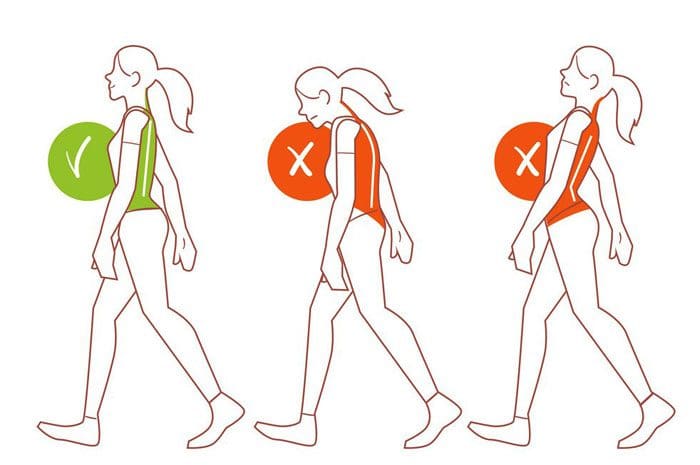
Most individuals don’t think about how they walk or whether they are walking with the correct posture. Knowing how to walk with the proper technique and posture can help:
Ensure the bones and joints maintain proper alignment.
Decrease abnormal wear and tear on the joints, muscles, and ligaments from awkward positions.
Prevent neck, back, hip, and leg pain.
Reduce muscle aches and fatigue.
Reduce injury risk.
Improve balance, stability, and mobility.
Walking with the correct technique and posture is not complicated but requires individuals to stay aware of standing and moving.
Correct Posture
Walking is a physical activity that involves the whole body. It helps to focus on each part of the body to understand how to walk correctly fully.
Head-Up
Focus on standing straight with the chin parallel to the ground and ears aligned above the shoulders.
Imagine the head being pulled gently upwards by an invisible string attached to the sky/ceiling.
This can help prevent dropping the head into the chest while walking.
Maintain eyes forward and gaze.
Focus on an area about 10 to 20 feet ahead when walking.
Straighten and Extend the Spine
Focus on extending the spine while walking.
Avoid slouching, hunching, or leaning forward. This stresses the back muscles.
Relaxed Shoulders Down and Back
The shoulders have a role with posture and technique. Shoulders that are tense or hunched forward can strain the muscles and joints in the shoulders, upper back, and neck. When walking, perform the following:
Raise the shoulders as high as they will go in a shrugging motion, then let them fall and relax.
Shoulder shrugs will help relieve tightness or tension.
This places the shoulders in a natural position that allows for easy arm movement.
Keep the shoulders loose and relaxed.
Shoulder shrugs while walking can help ensure that the shoulders are relaxed and in the correct position.
Swing the Arms
Walking correctly can be helped by gently swinging the arms back and forth at the sides.
Make sure to swing the arms from the shoulders, not from the elbows.
Do not swing the arms across the body.
Do not swing the arms up too high.
Keep them around the midsection, not around the chest.
Engage the Body’s Core
The core muscles have an essential role and help the body move with ease.
To prevent injury or overuse wear and tear on the muscles and joints, it is recommended to avoid the following:
Looking down too frequently
Looking down at the ground or phone too much places unnecessary strain on the neck.
Do not take long strides
The power comes from pushing off of the rear leg.
Overstriding places stress on the lower leg joints.
Rolling or swinging the hips
The hips should stay as level as possible.
Slouching
This will help avoid back and shoulder strain.
Wearing the wrong shoes
Wear the right shoes when walking for more than a few minutes.
Shoes should fit comfortably.
Provide arch and heel support.
Well-cushioned to absorb the shock of the feet hitting the ground.
Benefits of Correct Posture
The physical and mental benefits of proper posture and optimal walking technique include:
Alleviation of muscle and joint pain
Walking properly will avoid placing unnecessary stress and strain on the muscles, ligaments, and joints.
Increased energy
Walking with incorrect/awkward posture can wear out the muscles faster, whereas walking with proper form helps conserve energy.
Improved breathing
Walking with the shoulders back allows the lungs to fill and expand fully. This makes breathing more manageable and efficient.
Improved circulation
When the body is properly aligned and moving correctly, it’s easier for the blood to circulate throughout the body.
Digestion improvement
When the internal organs are not compressed from awkward postures, the body digests food more efficiently and increases blood flow to the digestive tract.
Enhanced core strength
The abdominal muscles gain strength and power from walking correctly.
Reduced headaches
Keeping the head straight, not bending forward, can help reduce neck strain, leading to reduced headaches.
Improved balance
Correct posture improves balance and less prone to falling.
Correct gait and posture are not complicated but do take some practice to develop healthy habits. For any issues with gait or back problems, talk to a doctor, physical therapist, or chiropractor about technique improvement.
Body Composition
Ten-Thousand Steps Speed and Distance
Before deciding to put in the walking distance and time, speed also needs to be considered. Calories burned from walking depend on the intensity, or speed, of the walk. The average walking speed is about 3 miles per hour and the number of calories burned depends on walking speed.
A leisure 30-minute walk at two mph yields a burn of 102 calories
Moderate intensity of 3.5 mph in the same 30-minute walk increases to burn 157 calories.
The faster the pace, the greater the heart rate.
The more calories are burned covering the same distance.
However, reaching 10,000 steps can almost entirely be irrelevant if not careful with a stable caloric intake.
References
Buldt, Andrew K et al. “The relationship between foot posture and lower limb kinematics during walking: A systematic review.” Gait & posture vol. 38,3 (2013): 363-72. doi:10.1016/j.gaitpost.2013.01.010
Common posture mistakes and fixes. (2019). nhs.uk/live-well/exercise/common-posture-mistakes-and-fixes/
The cost of being on your toes. (2010). Archive.unews.utah.edu/news_releases/the-cost-of-being-on-your-toes/
Hackford, Jessie et al. “The effects of walking posture on affective and physiological states during stress.” Journal of behavior therapy and experimental psychiatry vol. 62 (2019): 80-87. doi:10.1016/j.jbtep.2018.09.004
Perfecting your walking technique. (n.d.). health.harvard.edu/exercise-and-fitness/perfecting-your-walking-technique
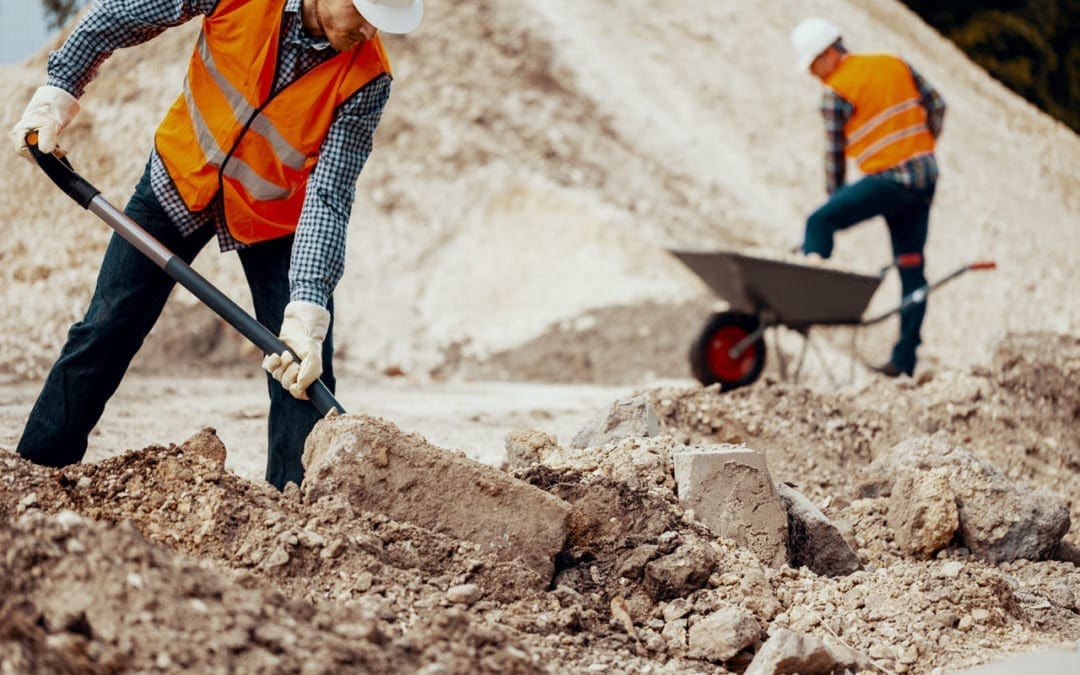
Living in the desert means we don’t have to deal with digging/shoveling through snow and ice, but there are still proper techniques, tools, body mechanics, posture, and core strength that we should pay attention to and apply to guard our spines and general health. It is no surprise that when shoveling many individuals experience muscle fatigue, low back strain, vertebral disc damage (herniated disc), and even spinal fractures.
A great deal of these injuries come from excessive stress to spinal structures by slip and fall accidents. Shoveling is a frequent cause of back pain and injuries. Injuries are not only limited to the musculoskeletal system but excessive shoveling can also place added stress on the cardiovascular system.� Any hint of shortness of breath or chest pain, stop shoveling immediately but if symptoms continue, seek medical attention.
A study published indicated when handling heavy material with a shovel, the L5-S1 disc has been identified as the weakest link in the body. The most severe injuries along with pain are likely to occur in the back. Here are some tips to prevent injury.
Shoveling Basics
Shoveling can be compared to weight lifting and intense aerobic exercise. To help your body function correctly consider the following tips:
Eat long before shoveling so you have fuel but don’t cramp up.
Avoid caffeinated drinks/beverages. Stimulants can increase heart rate and cause blood vessels to constrict.
If you experience pain, stop immediately and get assistance.
Pace yourself when shoveling.
Take plenty of breaks.
Drink plenty of water to rehydrate your body.
For snow, if the ground is icy or slick, throw sand or salt to help create traction. But still be aware that some areas can still be uneven and cause you to slip, trip, or fall.
Proper Clothing
Consider the weather before beginning the job.
When it’s cold dress in layers, wear gloves, and a hat because a good amount of body heat is lost through the head. If icy cold, use a scarf.
Wear clothing that is easy to move around in.
Proper boots are essential for maintaining balance, traction and keeping feet warm/dry.
Choose specialized work/blister-free gloves or thicker gloves, that allow for a good grip on the handle.
The Shovel That’s Right for You and the Job
Shovels come in different materials, purposes, shapes, and sizes.
Choose an ergonomic shovel with a curved handle. These shovels help keep your back straight and reduce spinal stress.
Hardware stores stock ergonomically designed shovels of all types.
For snow maybe try a shovel with a plastic blade instead of metal as it’s lightweight.
Sometimes a smaller blade is the way to go. You don’t shovel as much per load, but it weighs less and puts less strain on the spine.
Don’t go for a cheap model if the job you are doing is heavy-duty. Your body will thank you.
Once you have your shovel take some time to learn the proper technique.
Technique is Key
Take some time to stretch and prepare your body as warm muscles work better.
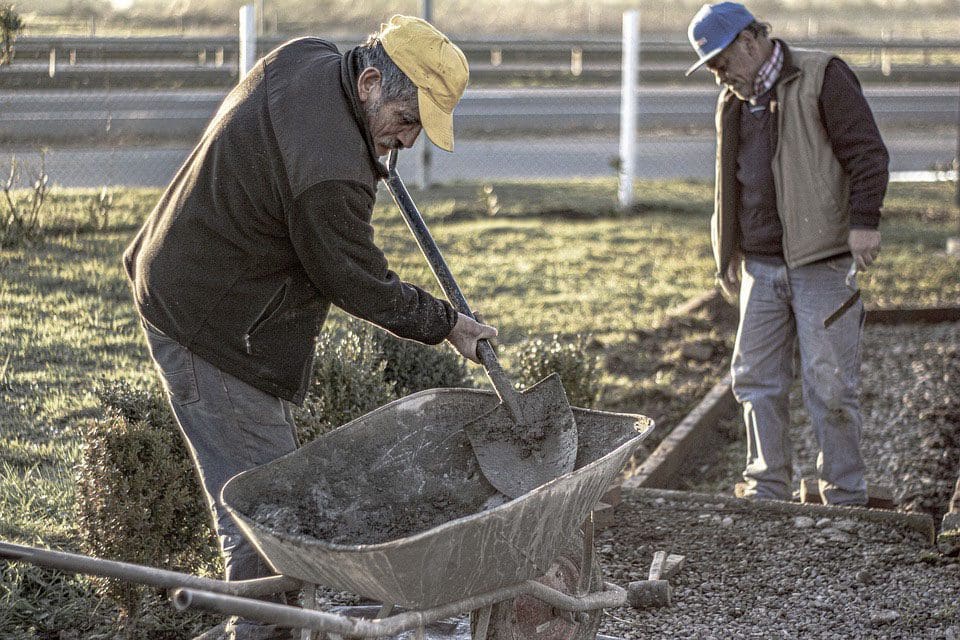
Hand placement on the shovel is very important! Don�t grip with the hands close to each other.
Keep some distance between the hands. This will give you more leverage and make it easier to lift.
Think about proper posture and maintaining the natural curve of your spine.
Address the task directly.
Stand with your feet shoulder-width apart to stay balanced.
Try to keep the shovel close to your body. Holding a shovelful with arms outstretched puts added weight on your spine.
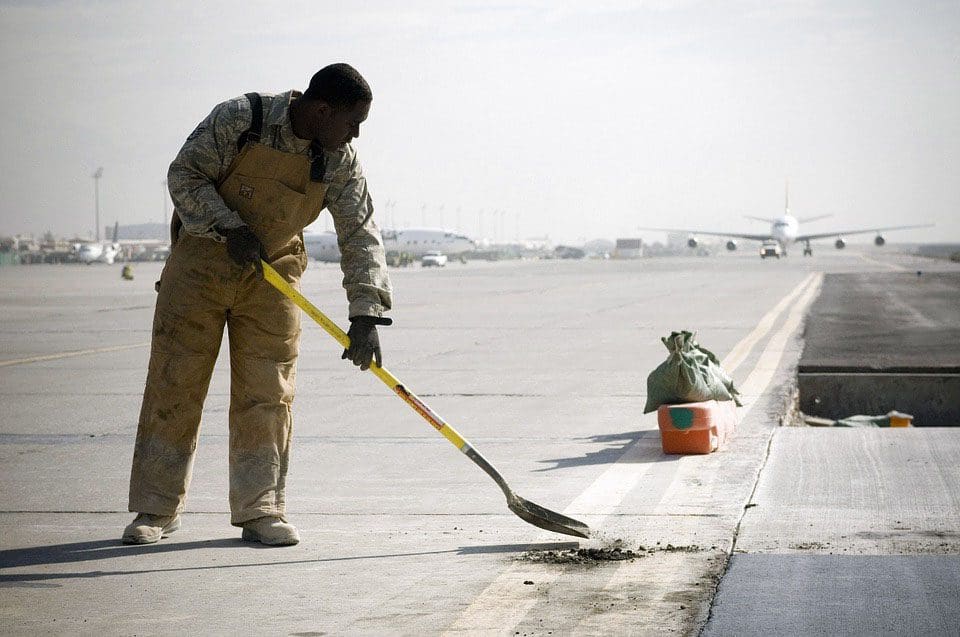
Bend at the knees and not the waist or back.
Tighten your stomach muscles as you lift.
Lift with your legs and not your back.
Dump the material in front of you. If you need to move the material to the side, move your feet.
Do not twist your body.
Scoop small amounts into the shovel
Walk to where you want to dump it.
Do not throw over your shoulder.
Go forward with the material.
Pace yourself. Take frequent breaks and stretch your back and body.
Power Equipment
Power equipment is terrific, but if it’s not used correctly, you can still strain or injure your back.
Example: Snowblowers are designed to remove snow at a certain speed but pushing or forcing the equipment to go faster is defeating the purpose of the machine doing the work for you.
You may not realize that you hurt your back. But that little twinge you felt could change your life forever. Getting back to 100% of where you were before the injury could take time and treatment. So, do not take this activity lightly and remember prevention is the best defense.
El Paso, TX Lower Back Pain Chiropractic Care
NCBI Resources
Injuries that are caused by repetitive movements often develop gradually.�It�s not until the symptoms get very painful and debilitating that the individual realizes that something is wrong. Don�t wait, as soon as you feel a tingle, slight pinch, or a little soreness and feel that it’s from your work, get in touch with a doctor or chiropractor.
All individuals that participate in some form of sports or athletic training, professionals to weekend sports enthusiasts are at risk for back and neck injuries. Common injuries include strains, and sprains, pulls, and tears especially around the low back area. If left untreated these injuries can lead to chronic back pain or more severe conditions.
Although we can’t prevent all sports injuries, here are some sports tips to keep your spine healthy.
1.� Warm-Up and Stretch
Properly warming up with stretching exercises increases blood circulation and improves the flexibility of muscles and ligaments. This is not only for helping enhance athletic performance but prevents injuries by keeping the muscles/ligaments loose so if any type of collision, tear, or pull occurs the stretched muscles stay relaxed and do not tense up or contract, which helps reduce the severity of an injury. To stretch properly:
Stretch time on each part of the body is also 10-30 seconds
Stretch after the game to relieve sore or tight muscles
2. Use Proper Sport Equipment
All sports have a risk of injury. In general, the more contact there is the higher the risk of injury.
To reduce the risk of injury athletes should wear protective equipment that goes with their sport like neck rolls, shoulder, elbow and knee pads.
Well made and supportive shoes combined with custom orthotics are a must.
Other types of equipment include:
Helmet
Pads elbow, wrist, chest, knee, shins
Mouthpiece
Faceguard
Protective cup
Eye protection
3. Stay Hydrated
Injuries caused by heat occur as a result of�high temperatures, humidity and excessive/overdoing it. To avoid these serious injuries:
Drink plenty of water before, during, and after playing.
Try to avoid play or practice during extreme heat and humidity.
Wear lightweight clothing/uniform with maximum ability to allow sweat to evaporate.
Take plenty of breaks or periods of rest to allow the body to recover and recuperate.
4. Don’t Overwork/Overdo it
Repetitive Motion Disorders like tennis elbow, bursitis, and tendonitis, happen when movements e.g. swinging motions that go with the sport like tennis, bowling, golf, etc are repeated over and over and cause injury/damage to those parts of the body. To avoid overuse injury try:
Take plenty of breaks during practice and games. Do not power through it!
Use proper/correct form and techniques. If unsure then take lessons to make sure you are doing it correctly.
See a doctor if any pain or muscle fatigue, inflammation, swelling, or compression of nerve tissue present.
Cross-training can strengthen muscle groups and those areas that take the most force.
5. Stay Ready for Play with a Healthy Lifestyle
Besides sports, try to find ways to improve general health through a healthy lifestyle:
Get plenty of sleep, the body/mind needs to recover from all the activity.
Consult a doctor before beginning any new exercise program.
Staying fit, healthy and ready for play means preventing injuries from happening.� By being aware of how to prevent injuries with these basic tips, which feel free to take it further and raise the probability of avoiding back and all sports injuries.
As El Paso�s Chiropractic Rehabilitation Clinic & Integrated Medicine Center,�we passionately are focused on treating patients after frustrating injuries and chronic pain syndromes. We focus on improving your ability through flexibility, mobility and agility programs tailored for all age groups and disabilities.
*BEST* Heel Spurs Treatment | El Paso, Tx (2020)
NCBI Resources
Extension sports like gymnastics, tennis, swimming, diving, football, volleyball, basketball, track and field, cricket have the most pronounced extension/rotation on the spine. With a normal extension of the lumbar spine (or backward bending), the facet joints begin to approximate each other and compress. This is a normal biomechanical movement. However, if the extension ranges are excessive, the procedures will impinge quite aggressively and damage to the cartilage surfaces within the facet joint can result.
Gardening is a favorite warm-weather activity for many people. Unfortunately, it can often send them straight to the chiropractor with back pain and stiffness. If you enjoy your garden but your back doesn�t take heart. An estimated�80% of the population has experienced back pain�or will experience it at some point in their lifetime.
It is common, but it doesn�t have to keep you from doing the things you enjoy. There are some fairly simple things you can do to make it easier and less painful.
Stretching is a good way to prevent back pain for nearly any activity. The more limber you are and the more warmed up your muscles are, the more comfortable you will be while you are gardening and afterward.
Stretches for gardeners�aren�t all that different from stretches for other activities. You need to address your hamstrings, triceps, and of course your back. Then you will be ready to get in the dirt and do what you love.
Use Back Friendly Tools and Gardening Methods
It may feel wonderful to get close to the dirt as you dig, breathing in its earthiness, feeling at one with nature, but your back likely does not hold the same appreciation. You can mix it up a little, but allow at least part of your gardening time to the use of tools that are �back friendly.�
Long handled and telescopic tools allow you to do your garden work without overworking your back. This is also great for people who don�t have full range of motion in their backs or who have trouble getting up and down.
Another back saver is a raised container garden. This will put your garden within easy reach, saving you from trying to get on the ground or, worse, feeling like you have to forego a garden because you can�t get around like you once did.
You can set the containers at whatever height you choose and include benches and seats for more comfortable gardening. If you do get on the ground, knee pads or a mat can help reduce some of the stress and prevent some pain.
Change Your Position Frequently
It�s easy to get in the zone and lose track of time, only for your body to remind you when you try to move and are met with painful stiffness. Carry a small timer with you and set it so that you are reminded every 30 minutes to stop, walk around, and stretch a little. This not only prevents pain and stiffness, but it also helps with your circulation and blood flow, even digestion.
You can also vary your garden tasks so that you don�t over-tax a single muscle group. You may weed for a while, then move to your potting bench for a while or pruning trees or shrubs. It isn�t good to stay in one position for too long no matter what you are doing. A physical activity like gardening, though, requires more movement.
Take Care when Bending, Reaching, and Lifting
Gardening involves a lot of reaching, bending, and lifting. When you don�t do it correctly you would wind up with a�sore back�� or worse.
To lift:�Don�t bend at your waist. Squat, grasp the object with both hands while pulling it close to your body. Straighten your legs slowly, letting those muscles to the work of lifting. You may also use a dolly, wheelbarrow, or wagon to move heavy items around and minimize the need to lift them.
Push:�Pushing doesn�t strain the back as much as pulling does. Push your seeder, wheelbarrow, and lawnmower and try to avoid pulling as much as possible.
Reaching:�Be careful when you reach, especially if you are reaching to lift. Even something that doesn�t weigh much can throw off your balance or cause you to twist your back. Try to minimize lifting while reaching as much as possible.
Bending:�Keep your knees soft when you bend and try bending from the waist. If you are doing a task that requires bending, take frequent breaks where you can stand upright. If you bend to lift, make sure you use proper lifting techniques.
Gardening can be wonderful for the mind, body, and spirit. It can also be painful if you don�t take the necessary precautions. When you go out to tend your plants, remember these back-saving gardening tips. Your back will thank you.
IFM's Find A Practitioner tool is the largest referral network in Functional Medicine, created to help patients locate Functional Medicine practitioners anywhere in the world. IFM Certified Practitioners are listed first in the search results, given their extensive education in Functional Medicine