Your health is easily one of the most important things in your life. When your health is good, you feel better, are more productive and generally happier. When your health is not good, it becomes difficult to accomplish even the smallest tasks�and your mood and ability to enjoy life suffer. Fortunately, there are some simple steps you can take to lead a healthier life. Read on to learn some of the most important tips for healthy living!
3 Tips for Healthy Living
Magnified Healthy Living word illustration on white background.
1. Keep the body’s alignment with regular chiropractic.
Many times people are unaware of how to move in the best way for their bodies. Poor movement patterns can lead to injuries, which make it impossible to stay as active as you like. If you start to notice any pain caused when you move�like when adopting a new exercise routine�stop doing what you are doing and consult with your chiropractor. Chiropractors are trained to identify movement problems and help correct them. Your chiropractor should be able to help you find a way to exercise that does not cause pain or lead to injury.
2. Keep track of your health.
It is important to get an accurate assessment of your current health on a regular basis. The goals you set for the future will be much more easily achieved if you know where you are starting from. Some of the ways you can keep track of your health include:
Maintain a relationship with your doctor, dentist, and chiropractor. Preventative healthcare is more effective and less expensive than waiting for something to go wrong. By keeping regular appointments with your doctor, dentist, and chiropractor, you can get valuable feedback on your current state of health. They can also help you catch potential problems early on.
Keep a diary of your exercise, diet, and mood. The diary does not have to be complicated or overly detailed. You just need a clear picture of how much you are exercising, what kinds of exercises you are doing, what food you are eating and how you are feeling.
3. Basics�a healthy diet and regular exercise.
Good health is built on a foundation of diet and exercise. The goal is to improve and maintain a regimen where you eat healthily and exercise regularly over the long-term. You do not have to do anything drastic, either. You will have an easier time making changes if you start small and gradually shift towards a lifestyle that you think is best for you.
Some points to remember:
The perfect diet for one person may not be perfect for another, but there are some basics that work well for the vast majority of people. A diet focused on whole foods, including plenty of vegetables, fruits, and whole grains, is ideal. Repeated studies have shown that a Mediterranean style diet is healthy and easy to maintain, making it a good place to start if you are new to healthy eating.
Take baby steps. Extreme shifts in diet can be mentally exhausting and difficult to maintain. Drastic changes in exercise habits risk injury and are also hard to maintain. Focus on taking small, incremental steps to reach your goals.
Contact Us Today to Set up an Appointment
If you would like a personalized plan for improving your health, please contact us. One of our chiropractic team members is ready to assist you!
Reduce *PLANTAR FASCIITIS PAIN* with Custom Foot Orthotics | El Paso, TX (2019)
Foot pronation is the natural movement which occurs during foot landing while walking or running. Foot pronation also occurs while standing, and in this instance, it is the amount in which the foot rolls inward toward the arch. Foot pronation is normal, however, excessive foot pronation can cause a variety of health issues, including bad posture.
Plantar fasciitis: A Perspective In Functionality
Plantar fasciitis is the inflammation of the plantar fascia or aponeurosis. Which can be caused by trauma, e.g. jumping/running activity, or more from longstanding stretching of pronated feet.
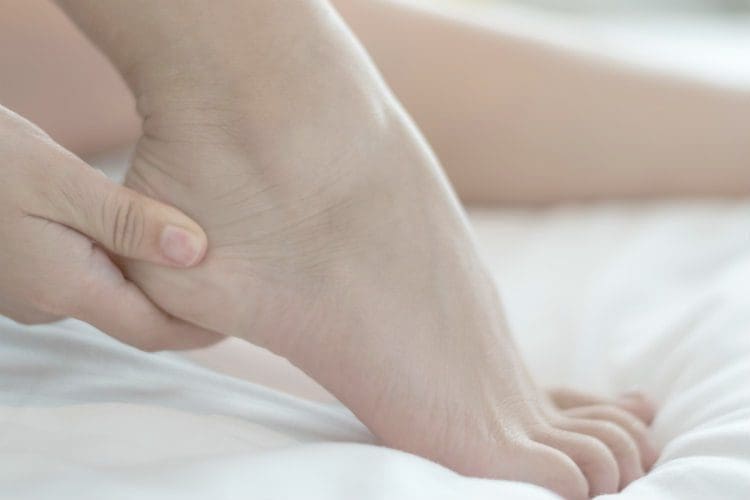
The pain of plantar fasciitis is commonly at its worst when getting out of bed in the morning.
The initial steps cause a painful stretching of the tissue after hours of being in a shortened position.
As a person sleeps, the feet naturally go into a position of plantarflexion and shorten down in a relaxed.
Mild relief is common after moving about for a while.
Treatment options
Treatment options for plantar fasciitis include:
Reduced activity
Cryotherapy
Ultrasound
Taping
Massage
Chiropractic
Orthotics
If the patient is capable of walking without an antalgic gait, look to see how much foot flare occurs during the gait cycle.
Rule of thumb for foot flare:
Both feet should be pointing in the general direction you are walking toward.
Any deviation from a line directly in front involving one foot more than the other is a red flag for dysfunction in the kinetic (moving) chain and may be a contributing factor in the syndrome.
Foot flare is a compensation mechanism to help balance a wobbly pelvis.
If this is detected, remove shoes and socks and look at the medial arch.
Gentle care
Direct palpation of the plantar fascia may reveal painful thickened muscle, especially along the medial longitudinal arch.
This thickened muscle is the result of repetitive tear and repair process.
With the foot relaxed, grasp the toes and gently pull them up into passive dorsiflexion.
Gentleness is essential; as this motion stretches the irritated plantar area.
It often presents with fixations or subluxations of the bones of the feet.
The collapse of any of the three arches of the foot sets the stage for joint fixation.
Mobility & function
Mobility is life to a joint, so don�t overlook the benefit of adjusting the subluxations or fixations of the lower extremity.
Once the acute phase of plantar fasciitis is under control, you can address the factors that contributed to the condition.
Most of the time patients need arch structure to be supported in an optimal functioning position.
Custom-made orthotics support all three arches of the foot provide the necessary support to reduce the tension on the plantar fascia by blocking the excessive pronation stretches.
Improvement through non-invasive treatment
Improvement of muscle function of the kinetic chain through massage or other forms of muscle management can improve muscle compliance, or the ability of the muscle to contract and relax.
Chronic muscle tension creates joint dysfunction and can lead to inflammation in the plantar fascia.
A massaging or mechanical chiropractic compression down the length of the plantar fascia can restore flexibility to that tissue.
Roll the foot over a golf ball or similar device for the purpose of restoring fascia flexibility can have profound effects on foot pain and function.
Patient tolerance is the key to any technique used, so try to understand that the chiropractor/physical/massage therapists are trying their best to bring relief, increasing the pressure and the length of any intervention.
Plantar or Neural
Feet are important. When you consider what your feet go through, taking 8,000 steps over the course of a day, according to the�Illinois Podiatric Medical Association�(IPMA), it�s easy to see how 75 percent of all Americans will have some type of�foot pain�at some point in their lives.�Plantar fasciitis is a common and very painful foot condition that can become chronic if not treated. It is also a condition that responds very well to chiropractic care. As it Reduces Stress in the Plantar Fascia�� When a ligament is inflamed or stressed the tissue can develop very small tears that cause the pain of plantar fasciitis. Chiropractic adjustments made to the heel and foot take the pressure off of the plantar fascia, allowing it to relax.
NCBI Resources
The SMART approach is a guide for setting realistic goals and attaining them. It is an acronym that outlines a success-focused�strategy for goal setting:
Specific
Measurable
Accountable
Realistic
Timeframe
Each step will bring you closer to achieving your goals and improve your health.
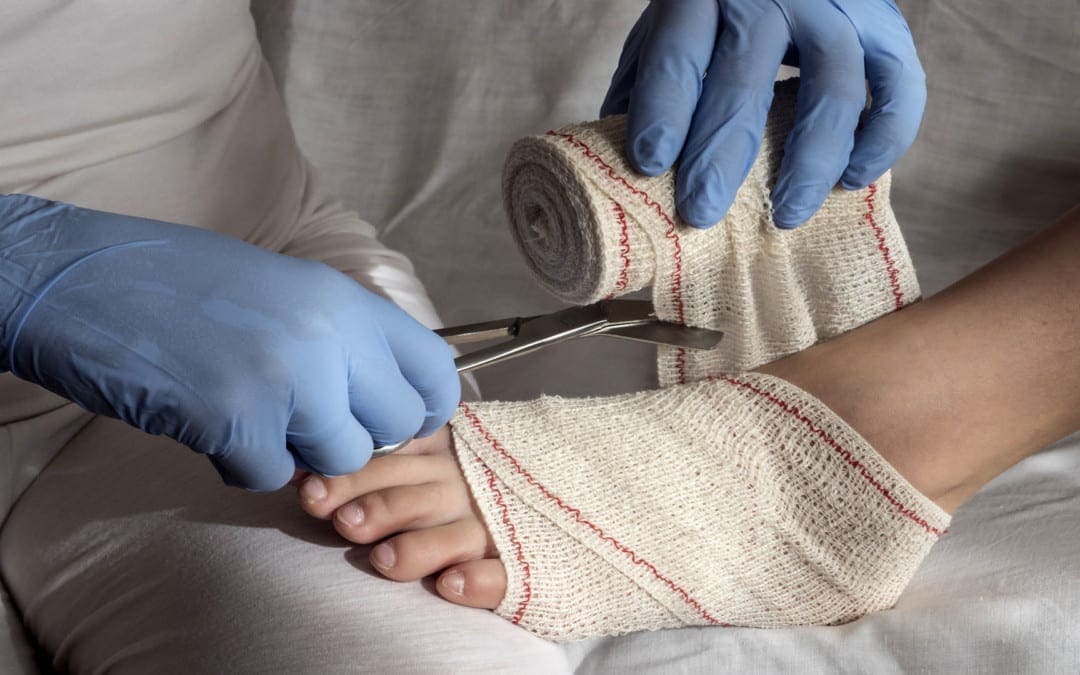
An ankle sprain is always inconvenient, and often painful. But not all ankle sprains are equal in their severity. When diagnosing an ankle sprain, your doctor or chiropractor will classify the injury in one of three ways�first degree, second degree, and third degree. Knowing what each classification means can help you understand the nature of your injury and how careful you need to be with it. For you and your chiropractor, the classification of the ankle sprain degrees will help to direct the best treatment options.
Ankle Sprain Degrees and What They Mean
A sprain is an injury involving the stretching and/or tearing of your ligaments. With the ankle, it is possible to suffer an injury to either side of the joint, the interior or the exterior. You may have an inversion sprain or an eversion sprain. Whichever type you suffer from, it will fall into one of three categories:
Grades of ankle sprains
First Degree
A first-degree sprain is one where the ligaments have not torn, only stretched further than normal. Symptoms of a first-degree sprain include discomfort when jumping, jogging or sometimes walking. Pain is usually mild and swelling is minimal. The joint may be a little stiff and slightly less stable than normal.
Second Degree
A second-degree sprain is the most common type of sprain people seek medical care for. The ligament is partially torn, which can lead to several uncomfortable symptoms. The sprain will make walking difficult, be moderately painful and make it hard to use the ankle. The injury will result in noticeable swelling and often bruising.
Third Degree
A third-degree sprain is the most severe and involves a full tear of the ligament. Pain is often severe and swelling is significant. The torn ligament makes the joint unstable, so it is not only painful but also very hard to use.
How Chiropractic Can Help
Whether you are walking, running, jumping or just standing, the ankle plays a vital role in how you move and use your body. That is why it can be so frustrating when you find yourself with an ankle injury. Fortunately, ankle sprains do heal with enough rest and the right treatment.
Your chiropractor can help you recover from an ankle injury, both reducing pain and speeding up recovery time. There is research to support the use of chiropractic for ankle sprains.�One study showed that patients with ankle sprains experienced less pain when chiropractic was added to their treatment program. Chiropractic also focuses on improving mobility and range of motion, which can be quite beneficial when trying to recover from a sprain and get back to your normal life.
Some of the most common chiropractic treatments for ankle sprains include:
Adjustments
Adjustments can be made to more than just the spine. The bones, ligaments, and tendons in the ankle are designed to work in a certain way. A sprain can knock the ankle out of alignment, something that most traditional doctors and rehabs do not consider. An ankle adjustment will work to put things back into their proper places.
Strengthen Exercises
There are a variety of useful exercises that your chiropractor can take you through to improve strength and mobility in the ankle. Things like a wobble board, where you stabilize yourself on a wobbly platform and drawing on a board with a market held in your toes can be surprisingly effective at strengthening your ankle.
Call Us Today
Please contact us today to schedule an appointment with a chiropractor for your sprained ankle. Let us help you get stronger and heal faster!
According to the American Chiropractic Association (ACA), approximately 31 million Americans deal with some form of low back pain. Fortunately, there are steps you can take to lessen the pain you are experiencing. Taking care of yourself � including maintaining a healthy weight and regular exercise � can help prevent back pain. And when you do experience back pain, chiropractic treatment and stretching can often ease your symptoms.
Prepare for Stretching
Before we get to the stretching, we recommend preparing for your stretching session so you can stretch comfortably and safely. Tips for stretching include:
Ease into it. Stretching should be done gently and smoothly, traveling from stationary to a position slowly and carefully. Avoid bouncing, which can tear muscles.
Stretching should not hurt. You should not feel significant pain when you stretch. As you move into your stretch, listen to your body and stop before you start to feel pain. Stretching should feel good, not painful.
Wear comfortable clothing. Wear loose clothing that will allow you the full range of motion.
Choose an area to stretch that is flat and clean. Choose an area that will be comfortable and well-suited for your activity.
Use padding when necessary. If you are going to be stretching on a hard surface, a little padding can make things much more comfortable.
Hold each stretch 15-30 seconds, and repeat at least 2 times. Holding a stretch lets the muscles elongate, and repeating the stretch improves your results. Repeat the stretch four times for maximum benefit.
Modify to fit your needs. Everyone must work within their limitations. When you try a stretch and you find it is not working for you, try to modify it to suit your needs. You can find modifications to most popular stretches online.
Three Stretches that Are Great For Back Pain
1. Children’s Pose
The name Child�s Pose comes from yoga, where this stretch is often used to begin each session of stretching. Child�s Pose is so popular because it is gentle and effective, and just about anyone can do it.
To do Child�s Pose, get down on your hands and knees. To begin with, place your knees slightly wider than hip-width. Flatten the tops of your feet to the floor, toes pointing behind you. Slowly move your hips back over your feet. Once you have rested your buttocks on your ankles, stretch your arms out in front of you. Feel your lower back stretch out as you hold the pose.
2. Knees/Chest
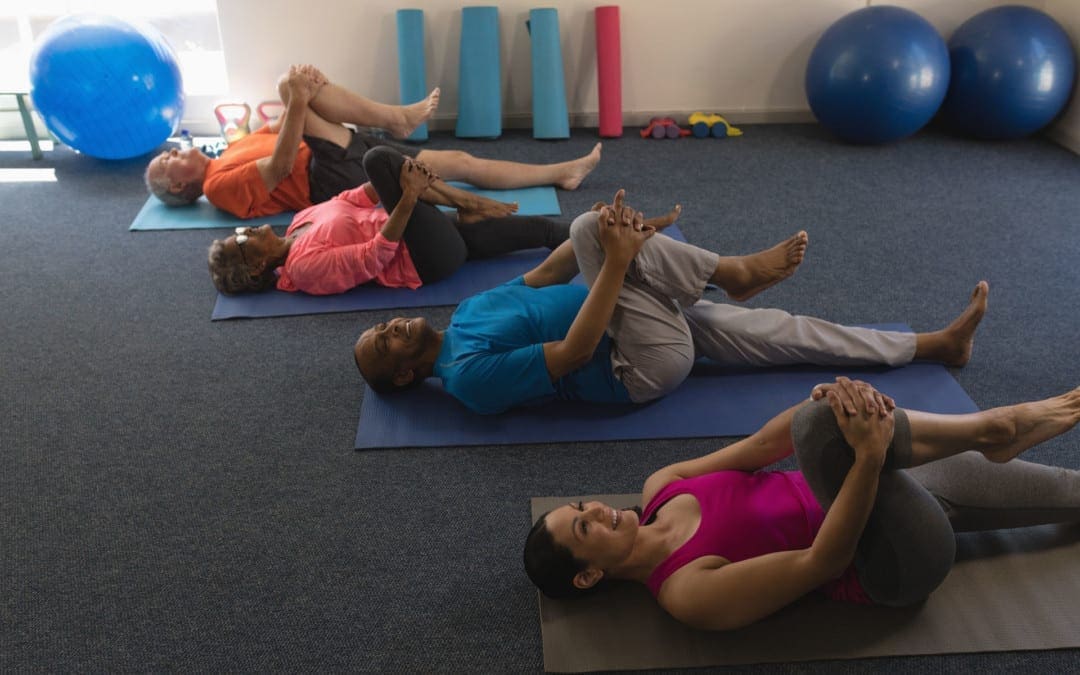
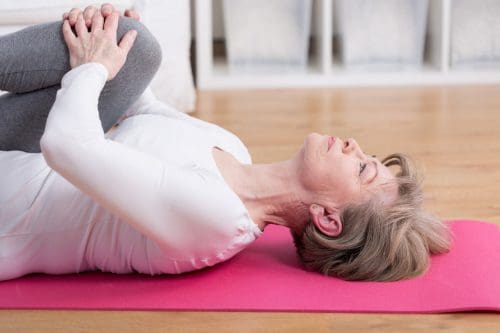
Lying on your back, use your hands to pull your knees up to your chest, rounding out your back in the process. You can interlace your fingers to hold your knees in position. If you like, hug your knees more tightly to your chest and rock left to right. To enhance the stretch, slowly bring your chin towards your chest.
3. Spine Twist
Lying on your back, stick each hand out to the side of your body to create a T shape. Bring the right knee up to your chest while keeping the left leg straight on the floor. Use your left hand to gently pull your knee higher, then pull the knee across your body to the left. Try to keep your right shoulder on the floor. Repeat on the left side.
Contact For Customized Stretches
If you are suffering from back pain, please schedule an appointment to meet with our chiropractic team. We can help design a custom stretching plan to help you ease your back pain.
El Paso Back Clinic Chiropractor Personal Injury Attorney Recommended
Stretching is often an outstanding complement to chiropractic care. Blood flow to the muscles is increased and it helps lower the risk of injury and improves physical performance. More importantly, stretching is good for the joints, helping them function through their full range of motion. Additionally, some studies show that muscles work and move more effectively when they are stretched regularly. These benefits of stretching make it a great practice to incorporate into your daily routine, especially between chiropractic treatments.
The muscles all along the spine respond well to stretching. However, sometimes it is difficult to manipulate specific muscle groups and get a thorough stretch.
The cervical spine is a prime example. Although the neck turns in so many ways, finding positions that provide an effective stretch are surprisingly difficult.
These three stretches effectively work the muscles through the neck and shoulders�and are simple enough to do at home whether you are between chiropractic appointments or if you wake up with a crick in your neck.
Before You Stretch
If you are under a chiropractor�s care, you should check with him or her before you start a stretching program. This is especially important if you have a neck injury or have a spinal condition that causes deterioration or pain.
When you begin stretching, you may feel a little discomfort, but it is important to note that it should never cause pain or worsen it. If this occurs, or if it just doesn�t feel �right,� you should stop immediately and call your chiropractor.
Neck and Trap Stretch
If standing: Stand up straight with your pelvis slightly tucked (not swayback), feet shoulder�s width apart, knees soft.
If sitting: Sit up straight with your feet flat on the floor.
1. Drop your shoulders and roll them slightly back. Let your arms hang down.
2. Reach behind your back and, with your left hand, grasp your right wrist. If you can�t reach to grasp your wrist, grab your fingers. If you can�t reach your fingers, sit in a straight back chair and put your right arm as far behind you as you can and slide your right hand under your right buttock to provide stability.
3. If clasping your hands behind you, gently pull your arm behind you to the left. If unable to reach behind you, drop your right shoulder.
4. At the same time, tilt your head to the left, bringing your ear to your shoulder but don�t raise your left shoulder. You will feel the stretch all along the right muscles of the neck.
5. Hold the stretch for 15 to 30 seconds.
6. Do the same movement for the left side.
7. Repeat the full move 3 to 5 times.
Gentle Neck Extension
If standing: Stand up straight with your pelvis slightly tucked (not swayback), feet shoulder�s width apart, knees soft, hands relaxed and at your sides.
If sitting: Sit up straight with your feet flat on the floor, hands relaxed and at your sides.
If lying down: Lie flat on the floor. If necessary, put a pillow under your knees to take pressure off of the lower back. Stretch your arms down by your side.
1. Push your shoulders down towards your feet.
2. Tuck your chin to your chest but don�t let your shoulders lift.
3. Slowly raise your chin, feeling the stretch along the front of your neck. Hold the position for 20 to 30 seconds.
4. Return your head to its normal, upright position for 30 seconds. Repeat the entire movement 5 to 7 times.
Stretch for Traps
If standing: Stand up straight with your pelvis slightly tucked (not swayback), feet shoulder�s width apart, knees soft, hands relaxed and at your sides.
If sitting: Sit up straight with your feet flat on the floor, hands relaxed and at your sides.
If lying down: Lie flat on the floor. If necessary, put a pillow under your knees to take pressure off of the lower back. Stretch your arms down by your side.
1. Start with your head in the normal, upright position.
2. Bend your neck to the right side, moving your ear towards your shoulder.
3. Raise your left hand to your head and apply gentle pressure to facilitate the stretch while drawing up your left shoulder. Hold for 20 seconds.
4. Return to your starting position.
5. Repeat the same movement on the right side.
6. Do 3 to 5 sets.
Neck Pain Chiropractic Treatment
XYMOGEN 6 Day Detox Kit
6 Day Detox Kit�is designed to renew and enhance the body�s cleansing and detoxification capabilities. It combines four specially selected XYMOGEN formulations: ColonX�, Drainage�, ProbioMax��Daily DF, and OptiCleanse�GHI. When taken together, as recommended within the 6-Day Detox Guide, these complementary formulas work in concert to encourage the various detox-linked systems and organs of the body to process and eliminate waste and toxins.*
6 Day Detox Kit�includes 1 bottle of OptiCleanse GHI Vanilla Delight, 1 bottle of ColonX 60c, 1 carton of ProbioMax Daily DF 30c, 1 bottle of Drainage 1 fl oz, and 1 20 oz Shaker Bottle.
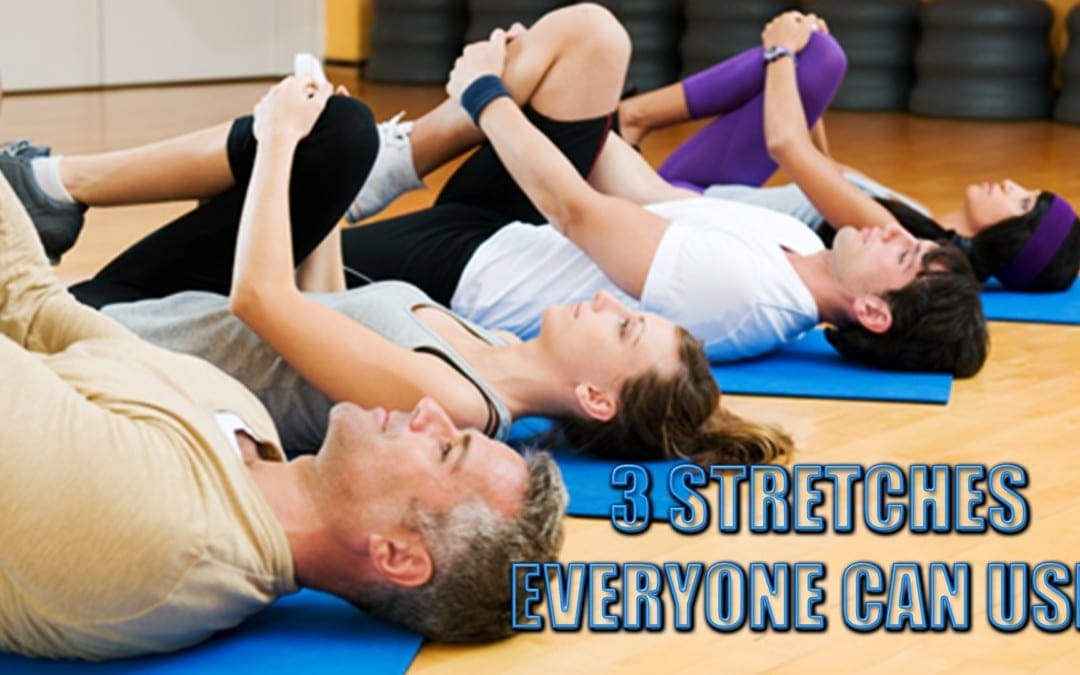
Chiropractic is a very effective treatment for back pain, but what many patients don�t realize is that they can stretch to make it even better. By employing simple stretches, a chiropractic patient can improve his or her range of motion and increase flexibility. These are some great stretches that you can do at just about any fitness level.
Stretch
Knee To Chest
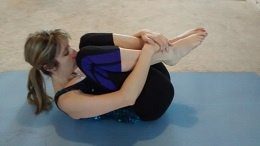
Lie on a firm, flat surface for this exercise. You can place a mat or towel underneath you to make it a little more comfortable. If you aren�t able to flatten your back right away, fold a small towel and place it under the small of your back to provide a little support.
Lie on your back, knees bent so that your feet are flat on the floor.
Press your lower back into the floor.
While keeping your left foot on the floor, inhale, bringing your right knee to your chest, pulling gently just until you feel a stretch. Hold it for 20 to 30 seconds. You can also keep your left leg straight if that is more comfortable. Make sure you keep your back pressed to the floor.
Exhale, releasing your right knee and return to the starting position.
Repeat the movement with the left leg.
Repeat this stretch 3 to 5 times with each leg.
Child�s Pose
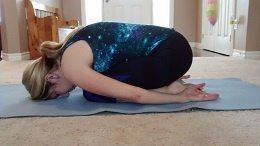
This gives you a very nice stretch all through your back. If you are unable to get on your knees or if you can�t sit on your knees, you can do this while standing.
Hold onto the back of a chair and bend forward. Don�t pull and don�t rest put all of your weight on the chair, just let your body fall gently forward with your neck relaxed and your head drooping. Take baby steps backward until you feel a good stretch, then hold it while breathing normally for 20 to 30 seconds. Walk your feet back in a bit to keep your balance and stand. Repeat 4 or 5 times.
Get on your hands and knees, keeping your knees a little wider than your hips. Turn your toes inward so that they touch.
Bend your knees, pushing your hips back over your heels. Get to a comfortable sitting position.
Slowly slide your arms out in front of you, rounding out your back as you exhale. Keep your neck relaxed so that your head falls forward. Allow yourself to feel the stretch throughout your back.
Hold for 20 to 30 seconds then return to the sitting position.
Repeat the movement 4 or 5 times, keeping your movements slow, fluid, and deliberate.
Cat � Camel
If you can�t get on your knees, stand in front of a chair and place your hands on the seat. Position your feet about where your knees would be if you were on your hands and knees. Relax your neck, allowing your head to droop. Complete steps 2 through 5.
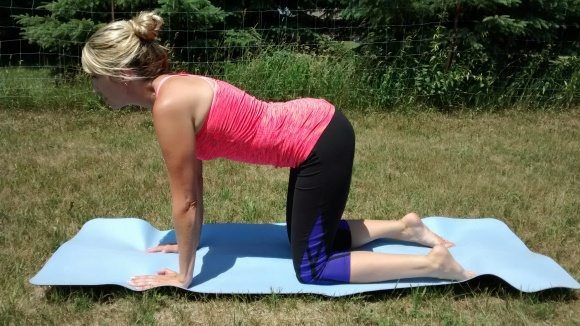
Get on your hands and knees, back straight, your hands shoulder width apart, and your knees slightly apart. Relax your neck so that your head droops. Breathe normally.
Exhale as you round your back up toward the ceiling. Press until you feel a good stretch all along your back. Hold for about 20 to 30 seconds.
Return to the starting position, keeping your back straight.
Inhale as you sway your back, pushing your stomach toward the floor. Tilt your pelvis to get a maximum stretch. Hold for 20 to 30 seconds.
IFM's Find A Practitioner tool is the largest referral network in Functional Medicine, created to help patients locate Functional Medicine practitioners anywhere in the world. IFM Certified Practitioners are listed first in the search results, given their extensive education in Functional Medicine