Contents
When Leg Pain Is Too Irritated for Rehab: What an Epidural Injection Is Actually Trying to Accomplish
Abstract
When radiating leg pain from lumbar nerve-root inflammation becomes so intense that walking, sitting, sleeping, or starting rehabilitation feels impossible, an image-guided epidural injection may be considered. This post explains radicular pain, why the procedure aims to reduce inflammation rather than repair a disc, how fluoroscopic guidance places medication in the epidural space, what patients typically experience, and how temporary symptom relief can open a practical window for decompression, movement, and active recovery. It also explains when an injection isn’t the right first step.
You finish a long Amazon fulfillment shift, a night of data-center rack work, a full day of programming, or a long drive, and the walk to the car lights the leg up so badly that even the idea of starting rehabilitation the next day feels out of reach. Sitting for more than a few minutes becomes a negotiation. Sleep is broken by position changes. Walking the length of a parking lot or a warehouse aisle turns into a calculated risk. For many adults with significant radiating leg pain, the barrier is not motivation. The barrier is that the nerve is too irritated to tolerate the very movements that would otherwise help.
What Radicular Pain Actually Is
Radicular pain travels along the path of a spinal nerve root. In the lumbar spine, it often follows the sciatic nerve distribution or one of its roots, causing burning, shooting, or electric sensations that can reach the buttock, thigh, calf, or foot. Numbness, tingling, or a feeling of weakness in the leg can accompany it.
A herniated disc, foraminal narrowing, or other structural change can mechanically crowd the nerve root. At the same time, biochemical factors amplify the problem. Degenerated or herniated disc material releases inflammatory mediators such as phospholipase A2, cytokines, and prostaglandins. These substances increase local edema, sensitize the nerve, and can cause ectopic firing even with only moderate mechanical pressure (McLain et al., 2005). The result is a nerve root that is both compressed and chemically inflamed. Pain and limited function often exceed what imaging alone would predict.
Why an Epidural Is Not Trying to “Repair the Disc”
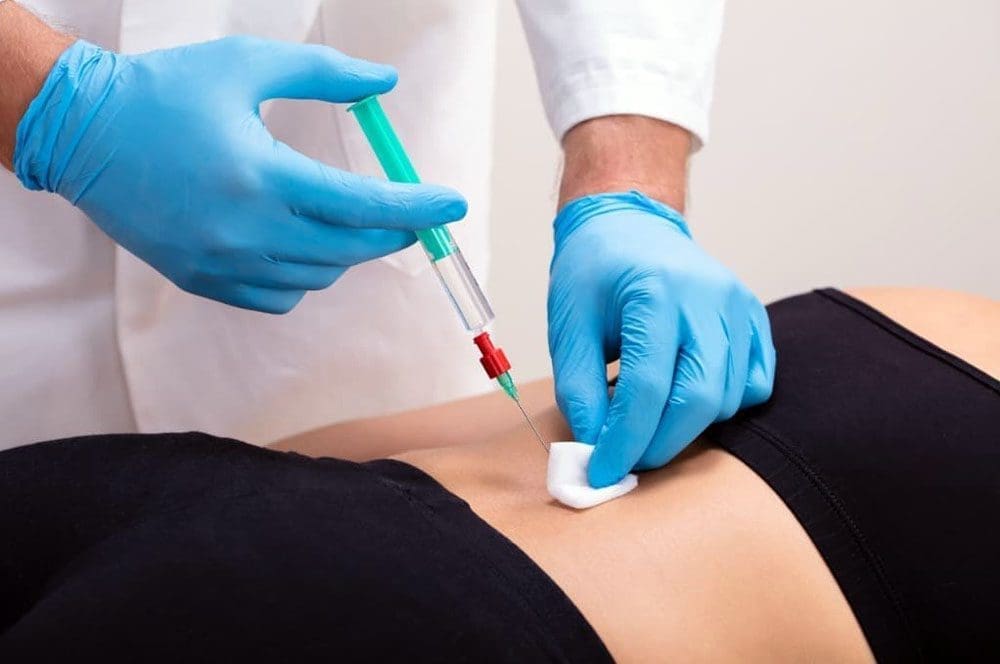
An epidural steroid injection places medication into the epidural space—the area outside the dural sac that surrounds the spinal cord and nerve roots.
- It does not enter the disc.
- It does not shrink, reseal, or surgically remove a herniation.
- It does not enlarge a stenotic canal or reverse degenerative change.
The intended effect is to locally reduce inflammation around the irritated nerve root. Corticosteroids decrease inflammatory mediator production, reduce capillary permeability and edema, and can dampen ectopic nerve firing (Patel et al., 2024). When included, local anesthetic may provide more immediate, temporary relief and help confirm that the targeted root is relevant. The goal is symptom reduction, not structural repair.
Guidelines that synthesize higher-quality fluoroscopically guided trials describe meaningful short- to intermediate-term benefit for lumbar radicular pain associated with disc herniation when the injection is properly placed (Manchikanti et al., 2021). Duration varies widely; some patients get weeks of useful relief, while others experience several months. The injection is best understood as a bridge, not a destination.
Fluoroscopic Guidance, the Epidural Space, and Medication Placement
Modern lumbar epidural procedures are performed under fluoroscopic (live X-ray) guidance. The patient is positioned on a table, the skin is cleaned, and local anesthetic is used at the insertion site. A thin needle is advanced toward the epidural space. Approaches include interlaminar (through the ligamentum flavum between the laminae) and transforaminal (more selective placement near a specific exiting nerve root). The physician injects contrast dye under continuous imaging to confirm the medication spreads in the epidural space and does not enter a blood vessel or the subarachnoid space.
Once the physician verifies correct placement, they inject the corticosteroid (often with local anesthetic). The entire procedure typically lasts 10–20 minutes. Patients remain awake or lightly sedated so they can report unusual sensations. After a short observation period, most people go home the same day.
What Patients Commonly Experience
During the injection, some people feel pressure or a brief reproduction of their usual leg symptoms as the medication spreads. Immediate relief from the local anesthetic can last a few hours. The steroid effect usually begins over the following 2–7 days. A temporary increase in soreness at the injection site or a short flare of familiar leg pain can occur in the first day or two as the medication disperses; this is usually mild and self-limited.
Relief is not guaranteed and varies from person to person. When it occurs, patients often notice that they can sit longer, walk farther, sleep with fewer position changes, or tolerate the early stages of guided movement. The practical value is that these improvements create a usable window.
The Window for Movement, Decompression, and Rehabilitation
When chosen, the central purpose of the injection is to lower nerve-root irritation enough that active care becomes possible. Once leg pain no longer dominates every transition, spinal decompression therapy can be introduced or progressed more comfortably. Chiropractic adjustments and mobilization that respect the irritated root can be applied with clearer feedback. Targeted exercises for hip mobility, core control, and walking tolerance can start without an immediate severe flare.
- For Amazon associates, this may mean returning to a modified floor shift with better standing and walking tolerance.
- For data center technicians, it may mean safer ladder and rack work.
- For programmers and drivers, it may mean longer sitting blocks without the same electric build-up.
- For any adult, it may mean restoring sleep and basic daily mobility.
At Injury Medical Clinic PA, we never view the injection as a stand-alone fix. Dr. Alex Jimenez, DC, APRN, FNP-BC, CFMP, IFMCP, works under the collaborative medical direction of Dr. Maria Guadalupe Cardenas, MD, so the procedure, when indicated, is coordinated with structural care, rehabilitation, and any needed functional medicine support. The aim is beneficence: using the least invasive, effective option that serves the patient’s overall recovery and safety.
When an Injection Is Not the Appropriate First Step
Several situations call for a different sequence or urgent evaluation rather than an elective epidural:
- Progressive motor weakness, saddle anesthesia, or new bowel or bladder changes (possible cauda equina) require immediate medical assessment, not a scheduled injection.
- Active infection, uncontrolled coagulopathy, or allergy to the planned medication are contraindications.
- Pure axial low-back pain without a clear radicular pattern is not a classic indication; other sources (facet, discogenic, myofascial) should be considered first.
- Mild or improving symptoms that still allow basic walking, sleep, and a trial of conservative care often respond to decompression, targeted exercise, and activity modification without injection.
- If the clinical pattern doesn’t correlate with imaging, or if a properly placed prior injection fails, the clinic should re-examine the diagnosis rather than repeat the same procedure.
Non-maleficence guides these boundaries. The clinic prioritizes options that avoid unnecessary procedural risk, prolonged high-dose medication, or premature surgery. Autonomy remains central: patients receive a clear explanation of expected benefits, realistic duration, risks, and alternatives so they can decide in coordination with their existing medical team and any group insurance requirements.
A Practical Next Step
If radiating leg pain is currently blocking rehabilitation, sleep, or basic work and home function, an evaluation can determine whether an image-guided epidural is appropriate or whether a different sequence is safer. Many patients with excellent group insurance coverage can coordinate the integrated evaluation, procedure (when indicated), and subsequent rehabilitation plan efficiently.
Watch a brief discussion of sciatica patterns and recovery approaches:
To schedule a visit at Injury Medical Clinic PA in El Paso, call 915-850-0900 or use the online scheduler. The multidisciplinary team—led by Dr. Alex Jimenez, DC, APRN, FNP-BC, and Dr. Maria Guadalupe Cardenas, MD—will review your history, examination, and imaging to develop a plan that supports lasting movement and function.
References
Manchikanti, L., Knezevic, N. N., Navani, A., Christo, P. J., Limerick, G., Calodney, A. K., Grider, J., Harned, M. E., Cintron, L., Gharibo, C. G., Shah, S., Nampiaparampil, D. E., Candido, K. D., Soin, A., Kaye, A. D., Kosanovic, R., Magee, T. R., Beall, D. P., Atluri, S., … Hirsch, J. A. (2021). Epidural interventions in the management of chronic spinal pain: American Society of Interventional Pain Physicians (ASIPP) comprehensive evidence-based guidelines. Pain Physician, 24(S1), S27–S208.
McLain, R. F., Kapural, L., & Mekhail, N. A. (2005). Epidural steroid therapy for back and leg pain: Mechanisms of action and efficacy. The Spine Journal, 5(2), 191–201.
Patel, K., Chopra, P., & Upadhyayula, S. (2024). Epidural steroid injections. In StatPearls. StatPearls Publishing.
General Disclaimer, Licenses, and Board Certifications *
Professional Scope of Practice *
The information herein on "Epidural Injection for Sciatica: Effective Solutions" is not intended to replace a one-on-one relationship with a qualified health care professional or licensed physician and is not medical advice. We encourage you to make healthcare decisions based on your research and partnership with a qualified healthcare professional.
Blog Information & Scope Discussions
Welcome to El Paso's Premier Wellness and Injury Care Clinic & Wellness Blog, where Dr. Alex Jimenez, DC, FNP-C, a Multi-State board-certified Family Practice Nurse Practitioner (FNP-BC) and Chiropractor (DC), presents insights on how our multidisciplinary team is dedicated to holistic healing and personalized care. Our practice aligns with evidence-based treatment protocols inspired by integrative medicine principles, similar to those on this site and on our family practice-based chiromed.com site, focusing on naturally restoring health for patients of all ages.
Our areas of multidisciplinary practice include Wellness & Nutrition, Chronic Pain, Personal Injury, Auto Accident Care, Work Injuries, Back Injury, Low Back Pain, Neck Pain, Migraine Headaches, Sports Injuries, Severe Sciatica, Scoliosis, Complex Herniated Discs, Fibromyalgia, Chronic Pain, Complex Injuries, Stress Management, Functional Medicine Treatments, and in-scope care protocols.
Our information scope is multidisciplinary, focusing on musculoskeletal and physical medicine; wellness; contributing etiological viscerosomatic disturbances within clinical presentations; associated somato-visceral reflex clinical dynamics; subluxation complexes; sensitive health issues; and functional medicine articles, topics, and discussions.
We provide and present clinical collaboration with specialists from various disciplines. Each specialist is governed by their professional scope of practice and licensure jurisdiction. We use functional health & wellness protocols to treat and support care for musculoskeletal injuries or disorders.
Our videos, posts, topics, and insights address clinical matters and issues that directly or indirectly relate to our clinical scope of practice.
Our office has made a reasonable effort to provide supportive citations and has identified relevant research studies that support our posts. We provide copies of supporting research studies upon request to regulatory boards and the public.
To discuss how these matters can assist in a specific care plan or treatment protocol, please contact Dr. Alex Jimenez, DC, APRN, FNP-BC, or reach out to us at 915-850-0900.
We are here to help you and your family.
Blessings
Dr. Alex Jimenez DC, MSACP, APRN, FNP-BC*, CCST, IFMCP, CFMP, ATN
Email: [email protected]
Multidisciplinary Licensing & Board Certifications:
Licensed as a Doctor of Chiropractic (DC) in Texas & New Mexico*
Chiropractic Licenses:
Texas DC License #: TX5807, Verified: TX5807
New Mexico DC License #: NM-DC2182, Verified: NM-DC2182
Nurse Practitioner Licenses:
Texas APRN License #: 1191402, Verified: 1191402 *
New Mexico CNP License #: 90560, Verified 90560
Florida APRN License #: 11043890, Verified: APRN11043890 *
Colorado License #: C-APN.0105610-C-NP, Verified: C-APN.0105610-C-NP
New York License #: N25929, Verified N25929
Georgia APRN License #: GAA-NP005701
Multi-State Advanced Practice Registered Nurse (APRN*) Texas & Multi-States
Multi-state Compact APRN License by Endorsement (43 States)
Compact Status: Multi-State License: Authorized to Practice in 43 States*
Nursing Licensure Compact: Updated Here
DEA Registration: (Drug Enforcement Agency Registered)
All medical (MDs) and family practice providers (FNP-APRN) are registered and licensed to offer various levels of medication.
Verify Providers Here
License Verification Link: Nursys License Verifier
* Prescriptive Authority Authorized (DEA Registered Providers). Call if Required
Board Certification:
ANCC FNP-BC: Board Certified Nurse Practitioner*
Education:
Graduate with Honors: ICHS: MSN-FNP (Family Nurse Practitioner Program)
Degree Granted. Master's in Family Practice, MSN Diploma (Cum Laude)
Dr. Alex Jimenez, DC, APRN, FNP-BC*, CFMP, IFMCP, ATN, CCST
(Board Certified: Family Practice Nurse Practitioner—Multistate)*
(Licensed Nurse Practitioner & Chiropractor - Multistate)*
Clinical Director
DC & FNP License (Review Above)
Digital Business Card
NPI: 1205907805
Dr. Maria Cardenas, MD
(Board Certified: Internal Medicine)
(Licensed Medical Doctor)
Medical Director, Clinical Director & Collaborative Physician
NPI # 1164426748
MD License #: J2933
Licenses and Board Certifications:
MD: Medical Doctor
DC: Doctor of Chiropractic
APRNP: Advanced Practice Registered Nurse
FNP-BC: Family Practice Specialization (Multi-State Board Certified)
FNP-BC: Family Practice Across Life Span (Neonatal to Geriatrics)
RN: Registered Nurse (Multi-State Compact License)
CFMP: Certified Functional Medicine Provider
MSN-FNP: Master of Science in Family Practice Medicine
MSACP: Master of Science in Advanced Clinical Practice
IFMCP: Institute of Functional Medicine
CCST: Certified Chiropractic Spinal Trauma
ATN: Advanced Translational Neutrogenomics
Family with Primary Care Focus (Family Nurse Practitioner or FNP)
- The Family Nurse Practitioner (FNP) promotes, maintains, and restores health for individuals and families across the lifespan. FNPs also identify health risks, promote wellness, and diagnose and manage acute and chronic illness.
- The FNP focuses on comprehensive primary care, promoting healthy lifestyles for patients across the lifespan in settings such as private practice, physician offices, and community health centers.
Memberships & Associations:
TCA: Texas Chiropractic Association: Member ID: 104311
TNA: Texas Nurse Association: Member ID: 06458222
TNP: Texas Nurse Practitioner Association ID: 2025091511
AANP: American Association of Nurse Practitioners: Member ID: 2198960
ANA: American Nurses Association: Member ID: 06458222 (District TX01)
| Primary Taxonomy | Selected Taxonomy | State | License Number |
|---|---|---|---|
| No | 111N00000X - Chiropractor | NM | DC2182 |
| Yes | 111N00000X - Chiropractor | TX | DC5807 |
| Yes | 363LF0000X - Nurse Practitioner - Family | TX | 1191402 |
| Yes | 363LF0000X - Nurse Practitioner - Family | FL | 11043890 |
| Yes | 363LF0000X - Nurse Practitioner - Family | CO | C-APN.0105610-C-NP |
| Yes | 363LF0000X - Nurse Practitioner - Family | NY | N25929 |
| Yes | 363LF0000X - Nurse Practitioner - Family | NM |
90560 |
| Yes | 363LF0000X - Nurse Practitioner - Family | GA | GAA-NP005701 |
Dr. Alex Jimenez, DC, APRN, FNP-BC*, CFMP, IFMCP, ATN, CCST
(Board Certified: Family Practice Nurse Practitioner—Multistate)*
(Primary Care Across Lifespan—Neonatal / Pediatric / Adult / Geriatrics)
(Licensed Nurse Practitioner & Chiropractor - Multistate)*
Clinical Director
Digital Business Card
NPI: 1205907805
Dr. Maria Cardenas, MD
(Board Certified: Internal Medicine)*
(Licensed Medical Doctor)*
Medical Director, Clinical Director & Collaborative Physician
NPI # 1164426748
MD License #: J2933
📆 Schedule Appointment: Schedule 24/7 (Click Here)