
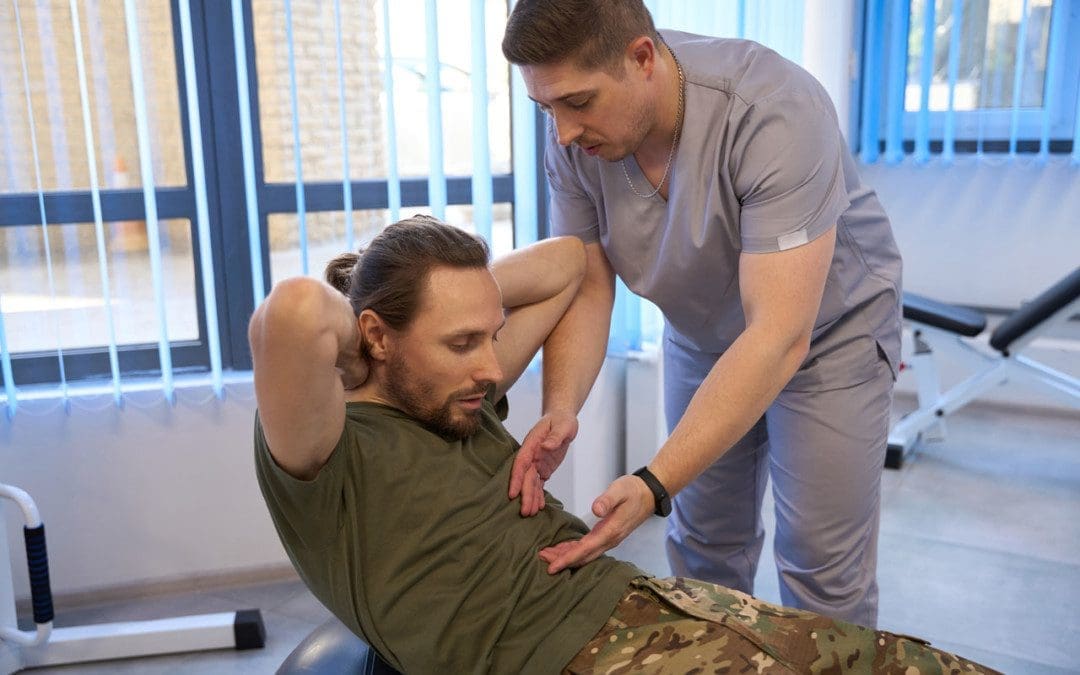
The body’s core muscles are used for stability, balance, lifting, pushing, pulling, and movement. Engaging the core muscles means bracing and tightening the abdominal muscles, which include the latissimus dorsi/lats, paraspinal muscles, gluteus maximus/glutes, and trapezius/traps. When engaged, the trunk muscles help maintain spinal stability, support the spine and pelvis in sitting and resting positions and during dynamic movements, and help prevent injury.
Contents
Engaging The Core
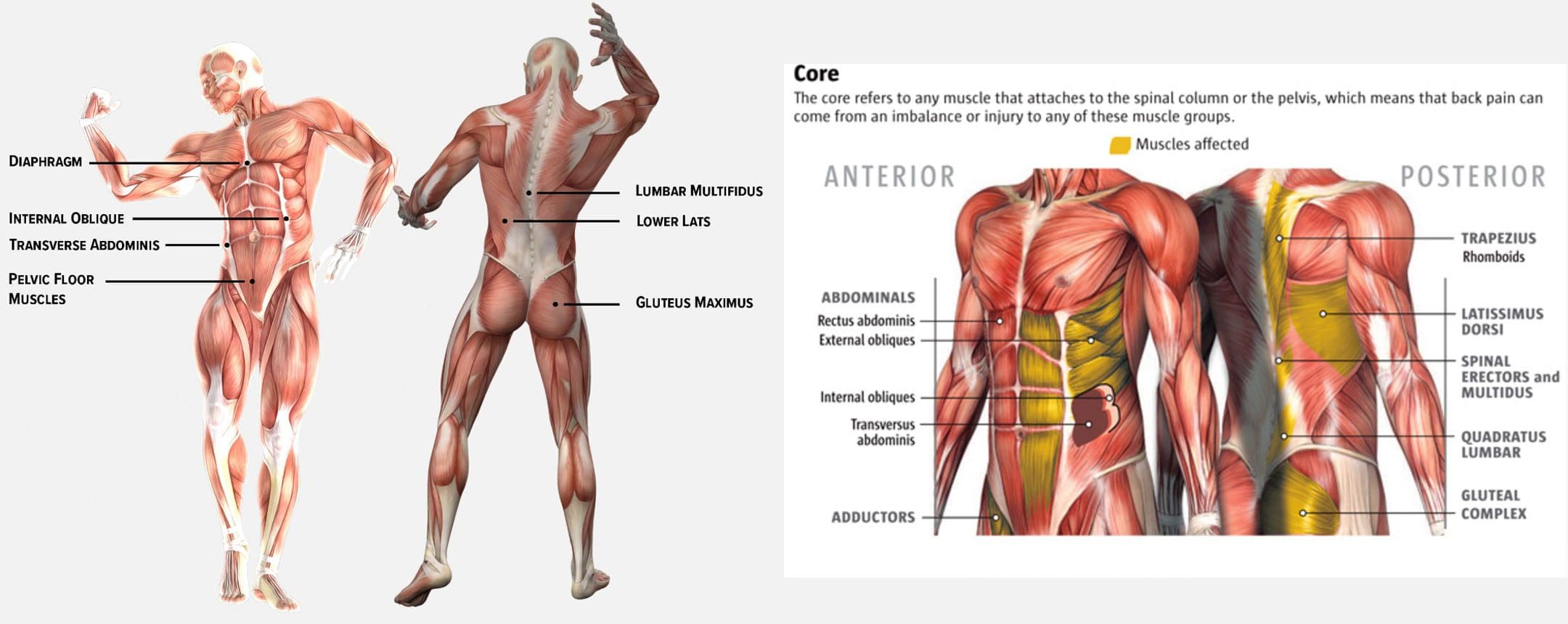
To know how to engage the core, individuals need to understand what the core is. The most important muscles for engaging the core include: These muscles are involved every time the body inhales and exhales, in posture control, and when using the bathroom, they start and stop the process.
Rectus Abdominis
- The rectus abdominis muscle is responsible for the six-pack.
- It’s a long, flat muscle that extends from the pubic bone to the sixth and seventh ribs.
- The rectus abdominis is primarily responsible for bending the spine.
External Obliques
- These are the muscles on either side of the rectus abdominis.
- The external obliques allow the torso to twist, bend sideways, flex the spine, and compress the abdomen.
Internal Obliques
- The internal obliques lie below the external obliques.
- They work with the external obliques in the same functions.
Transverse Abdominis
- This is the deepest layer of muscle in the abdomen.
- It completely wraps around the torso and extends from the ribs to the pelvis.
- The transverse abdominis are not responsible for spine or hip movement but for stabilizing the spine, compressing the organs, and supporting the abdominal wall.
Latissimus Dorsi
- Commonly known as the lats, these muscles run along both sides of the spine from just below the shoulder blades to the pelvis.
- The lats help stabilize the back, especially when extending the shoulders.
- They also contribute to body ability when twisting from side to side.
Erector Spinae
- The erector spinae muscles are on each side of the spine and extend down the back.
- These muscles are responsible for extending and rotating the back and side-to-side movement.
- These are considered postural muscles and are almost always working.
What Not To Do
Individuals learn from mistakes, which might make learning how to engage the core easier by understanding what not to do. Common examples of failing to or not engaging the core correctly.
- The back slumps when sitting down – the upper body lacks strength and stability.
- When bending, the stomach sticks out more.
- Swaying or leaning far to one side when walking – lack of lower body strength causes balance and stability problems.
- The lower abdomen and back present with discomfort and pain symptoms.
Training
Engaging the core decreases the chance of sustaining an injury at home, work, or exercising and can help with chronic back pain. It creates a stable musculature around the spine that keeps the vertebrae from over-flexing, over-extending, and bending too far to one side. Engaging the core muscles can mean different things, depending on what is trying to be achieved.
- For example, if doing bending work, the muscles needed, and the order in which they contract differs from when trying to maintain balance while standing on one leg.
- The muscles engaged will differ in their movement depending on whether an individual is:
- Trying to move the spine or stabilize it.
- Pushing or pulling weight.
- Standing, sitting, or lying down.
For a strong and functional core, the objective is to be able to engage the core in any situation. Engaging the core can be challenging, but with training and practice, the body becomes stronger. Practice engaging the core throughout daily activities that include.
- Bracing the core while standing, sitting at a workstation or desk, and walking.
- Day-to-day activities, like reaching for something from a high shelf, grocery shopping, and taking the stairs.
Injury Medical Chiropractic and Functional Medicine Clinic can create a personalized program to address musculoskeletal issues, core training, targeted exercise, stretching, nutrition, massage, and adjustments to get the body to optimal health and maintain health.
The Non-Surgical Solution
References
Eickmeyer, Sarah M. “Anatomy and Physiology of the Pelvic Floor.” Physical Medicine and rehabilitation clinics of North America vol. 28,3 (2017): 455-460. doi:10.1016/j.pmr.2017.03.003
Lawson, Samantha, and Ashley Sacks. “Pelvic Floor Physical Therapy and Women’s Health Promotion.” Journal of Midwifery & Women’s Health vol. 63,4 (2018): 410-417. doi:10.1111/jmwh.12736
Seaman, Austin P et al. “Building a Center for Abdominal Core Health: The Importance of a Holistic Multidisciplinary Approach.” Journal of gastrointestinal surgery: official journal of the Society for Surgery of the Alimentary Tract vol. 26,3 (2022): 693-701. doi:10.1007/s11605-021-05241-5
Vining, Robert, et al. “Effects of Chiropractic Care on Strength, Balance, and Endurance in Active-Duty U.S. Military Personnel with Low Back Pain: A Randomized Controlled Trial.” Journal of Alternative and complementary medicine (New York, N.Y.) vol. 26,7 (2020): 592-601. doi:10.1089/acm.2020.0107
Weis, Carol Ann, et al. “Chiropractic Care for Adults With Pregnancy-Related Low Back, Pelvic Girdle Pain, or Combination Pain: A Systematic Review.” Journal of Manipulative and physiological therapeutics vol. 43,7 (2020): 714-731. doi:10.1016/j.jmpt.2020.05.005
Zachovajeviene, B et al. “Effect of the diaphragm and abdominal muscle training on pelvic floor strength and endurance: results of a prospective randomized trial.” Scientific Reports vol. 9,1 19192. 16 Dec. 2019, doi:10.1038/s41598-019-55724-4
General Disclaimer, Licenses and Board Certifications *
Professional Scope of Practice *
The information herein on "Engaging The Core: El Paso Back Clinic" is not intended to replace a one-on-one relationship with a qualified health care professional or licensed physician and is not medical advice. We encourage you to make healthcare decisions based on your research and partnership with a qualified healthcare professional.
Blog Information & Scope Discussions
Welcome to El Paso's Premier Wellness and Injury Care Clinic & Wellness Blog, where Dr. Alex Jimenez, DC, FNP-C, a Multi-State board-certified Family Practice Nurse Practitioner (FNP-BC) and Chiropractor (DC), presents insights on how our multidisciplinary team is dedicated to holistic healing and personalized care. Our practice aligns with evidence-based treatment protocols inspired by integrative medicine principles, similar to those on this site and on our family practice-based chiromed.com site, focusing on naturally restoring health for patients of all ages.
Our areas of multidisciplinary practice include Wellness & Nutrition, Chronic Pain, Personal Injury, Auto Accident Care, Work Injuries, Back Injury, Low Back Pain, Neck Pain, Migraine Headaches, Sports Injuries, Severe Sciatica, Scoliosis, Complex Herniated Discs, Fibromyalgia, Complex Injuries, Stress Management, Functional Medicine Treatments, and in-scope care protocols.
Our information scope is multidisciplinary, focusing on musculoskeletal and physical medicine, wellness, contributing etiological viscerosomatic disturbances within clinical presentations, associated somato-visceral reflex clinical dynamics, subluxation complexes, sensitive health issues, and functional medicine articles, topics, and discussions.
We provide and present clinical collaboration with specialists from various disciplines. Each specialist is governed by their professional scope of practice and their jurisdiction of licensure. We use functional health & wellness protocols to treat and support care for musculoskeletal injuries or disorders.
Our videos, posts, topics, and insights address clinical matters and issues that are directly or indirectly related to our clinical scope of practice.
Our office has made a reasonable effort to provide supportive citations and has identified relevant research studies that support our posts. We provide copies of supporting research studies upon request to regulatory boards and the public.
We understand that we cover matters that require an additional explanation of how they may assist in a particular care plan or treatment protocol; therefore, to discuss the subject matter above further, please feel free to ask Dr. Alex Jimenez, DC, APRN, FNP-BC, or contact us at 915-850-0900.
We are here to help you and your family.
Blessings
Dr. Alex Jimenez, DC, MSACP, APRN, FNP-BC*, CCST, IFMCP, CFMP, ATN
email: [email protected]
Multidisciplinary Licensing & Board Certifications:
Licensed as a Doctor of Chiropractic (DC) in Texas & New Mexico*
Texas DC License #: TX5807, Verified: TX5807
New Mexico DC License #: NM-DC2182, Verified: NM-DC2182
Multi-State Advanced Practice Registered Nurse (APRN*) in Texas & Multi-States
Multi-state Compact APRN License by Endorsement (42 States)
Texas APRN License #: 1191402, Verified: 1191402 *
Florida APRN License #: 11043890, Verified: APRN11043890 *
Colorado License #: C-APN.0105610-C-NP, Verified: C-APN.0105610-C-NP
New York License #: N25929, Verified N25929
License Verification Link: Nursys License Verifier
* Prescriptive Authority Authorized
ANCC FNP-BC: Board Certified Nurse Practitioner*
Compact Status: Multi-State License: Authorized to Practice in 40 States*
Graduate with Honors: ICHS: MSN-FNP (Family Nurse Practitioner Program)
Degree Granted. Master's in Family Practice MSN Diploma (Cum Laude)
Dr. Alex Jimenez, DC, APRN, FNP-BC*, CFMP, IFMCP, ATN, CCST
My Digital Business Card
Licenses and Board Certifications:
DC: Doctor of Chiropractic
APRNP: Advanced Practice Registered Nurse
FNP-BC: Family Practice Specialization (Multi-State Board Certified)
RN: Registered Nurse (Multi-State Compact License)
CFMP: Certified Functional Medicine Provider
MSN-FNP: Master of Science in Family Practice Medicine
MSACP: Master of Science in Advanced Clinical Practice
IFMCP: Institute of Functional Medicine
CCST: Certified Chiropractic Spinal Trauma
ATN: Advanced Translational Neutrogenomics
Memberships & Associations:
TCA: Texas Chiropractic Association: Member ID: 104311
AANP: American Association of Nurse Practitioners: Member ID: 2198960
ANA: American Nurse Association: Member ID: 06458222 (District TX01)
TNA: Texas Nurse Association: Member ID: 06458222
NPI: 1205907805
| Primary Taxonomy | Selected Taxonomy | State | License Number |
|---|---|---|---|
| No | 111N00000X - Chiropractor | NM | DC2182 |
| Yes | 111N00000X - Chiropractor | TX | DC5807 |
| Yes | 363LF0000X - Nurse Practitioner - Family | TX | 1191402 |
| Yes | 363LF0000X - Nurse Practitioner - Family | FL | 11043890 |
| Yes | 363LF0000X - Nurse Practitioner - Family | CO | C-APN.0105610-C-NP |
| Yes | 363LF0000X - Nurse Practitioner - Family | NY | N25929 |
Dr. Alex Jimenez, DC, APRN, FNP-BC*, CFMP, IFMCP, ATN, CCST
My Digital Business Card







