Adding a few miles of biking each day to your commute might add years to your life span, new research suggests. The British study found that bicycling to work appeared to halve people’s odds for serious disease and premature death.
Researchers from the University of Glasgow in Scotland looked at the commuting habits of more than 264,000 people in the United Kingdom and tracked their health over five years.
Cycling to work was associated with a 46 percent lower risk of heart disease over five years and a 45 percent lower risk of cancer compared to a sedentary commute. Risk of premature death was 41 percent lower. Walking to work was also beneficial, but not to the same degree.
Hoofing it was associated with a 27 percent lower risk of heart disease and a 36 percent lower risk of dying from heart disease. However, it wasn’t linked with a lower risk of cancer or premature death, the study found.
The study doesn’t establish a direct cause-and-effect relationship between commuting by bike and longevity.
Still, “if these associations are causal, these findings suggest that policies designed to make it easier for people to commute by bike … may present major opportunities for public health improvement,” said researcher Dr. Jason Gill in a university news release. He’s with the Institute of Cardiovascular and Medical Sciences.
Gill suggested bike lanes, city bike-sharing, subsidized bicycle purchases and increased accommodation of bicycles on public transit.
The researchers said cycle commuting may offer greater health benefits than walking because cyclists cover longer distances, get more intense exercise, and have higher levels of fitness than walkers.
For example, cyclists commuted an average of 30 miles a week, compared with 6 miles a week for walkers.
The study was published April 20 in the journal BMJ.
The scope of our information is limited to chiropractic and spinal injuries and conditions. To discuss options on the subject matter, please feel free to ask Dr. Jimenez or contact us at 915-850-0900 .
SOURCE: University of Glasgow, news release, April 20, 2017
Additional Topics: Chiropractic and Athletic Performance
Chiropractic care is a popular, alternative treatment option which focuses on the diagnosis, treatment and prevention of injuries and/or conditions associated to the musculoskeletal and nervous system, primarily the spine. Many athletes, and civilians alike, seek chiropractic care to restore their natural health and wellness, however, chiropractic has been demonstrated to benefit athletes by increasing their athletic performance.
When walking you need your shoes to handle that repetitive heel-to-toe rolling motion. After all, “a 150-pound woman’s body encounters between 900,000 and 1,350,00 pounds of impact over a three-mile walk,” says Paul Langer, DPM, author of Great Feet for Life.
So make sure your kicks are comfy and supportive—a poor fit can lead to injury. And choose ones that are secure across the instep and in the heel, but roomy enough to wiggle your toes. Here, shoes that will protect your feet whether you’re fitness walking or simply commuting.
Running is a simple and efficient way to exercise: all you need is a pair of shoes. It’s been shown to lower a person’s risk for heart disease and cancer, possibly by regulating weight and blood pressure. Now a recent study, published in the journal Progress in Cardiovascular Disease last month, reports that people who run tend to live about three years longer than those who don’t.
The researchers, who have studied the benefits of running in the past, decided to look at available research and investigate whether other forms of exercise like walking and biking provide the same benefits, or if runners have a special advantage.
The study’s authors found that while other types of exercise like walking and cycling were linked to a longer lifespan, it wasn’t to the same degree as running. The researchers calculated that a one-hour run may translate to an additional seven hours added to a person’s life. The benefits capped out at about three years, and the researchers found that the improvements in life expectancy leveled out at about four hours of running per week. More running wasn’t found to be significantly worse for a person, but the researchers say there are no further apparent longevity benefits.
However, the researchers only found an associational relationship between running and longevity. Their data showed that people who run tend to live longer lives, but not that running specifically increases a person’s lifespan. Runners tend to have other healthy lifestyle behaviors like maintaining a healthy weight, not smoking and only drinking low-to-moderate amounts of alcohol, the authors note. Still, the findings suggest running is an especially effective form of exercise.
The study also found that runners who also do other types of physical activity have the same lower risk of early death, though combining running with other exercise is “the best choice,” the researchers write. (Federal guidelines recommend both aerobic exercise, like running, and strength training for optimal health.) They also acknowledge that it’s not yet clear how much running is safe, or if a person can run too much.
“Running may have the most public health benefits, but is not the best exercise for everyone since orthopedic or other medical conditions can restrict its use by many individuals,” the authors concluded.
People who run marathons go through intense training before enduring the physically grueling 26.2-mile event�so it�s little wonder their health can sometimes suffer. But on marathon days, the event can also create unexpected problems for non-runners who need urgent medical care.
In a new report published in the New England Journal of Medicine, researchers found that road closures and traffic disruptions on marathon days can lead to delays in emergency care that can cost people their lives.
Dr. Anupam Jena, from the department of health care policy at Harvard Medical School and Massachusetts General Hospital, and his colleagues analyzed data from Medicare claims for hospitalizations for heart attack in 11 cities that hosted marathons from 2002 to 2012. They compared the death rates of these people on marathon days to those a few weeks before and after the marathon. People who had heart attacks on marathon days had a 13% higher rate of death than people on other days. Ambulances also took 4.4 minutes longer on days marathons were run.
�We were expecting to see there would potentially be delays in care,� says Jena, �but not necessarily increases in mortality. It�s difficult to influence mortality; you would have to have substantive delays in care.�
Road closures, detours and other changes in traffic patterns were dramatic enough to cause delays that could affect a person�s chance of surviving a heart attack, the team found. Over a year, marathons could contribute to an additional four deaths, based on the 30-day mortality rate calculations. The effect remained strong even after they adjusted for the possibility that more people visit a city hosting a marathon, and therefore statistically there may simply be more heart events. The researchers also made sure that hospitals and emergency services were not short-staffed or overburdened with the added volume of requests. All of these factors were similar on marathon and non-marathon days.
The disruption in traffic during a marathon is the primary reason for delays in care, Jena says. That�s good news because it�s a fixable problem; marathon planners can ensure that access to hospitals is not congested and affected by the race route.
The other lesson from the study is useful for people in need of medical attention. A quarter of the people in the study chose not to call an ambulance and instead drove themselves to the hospital�perhaps because they thought that emergency services were tied up with the marathon�and these people seemed to account for most of the higher mortality on marathon days, says Jena. That may be because they were forced to take more circuitous routes to reach the hospital, he says. �They don�t experience the four-minute delays of ambulance transport; they�re experiencing much larger delays because they are trying to drive themselves.�
Even with the delays, ambulances were the best form of transportation to the emergency room. �Anybody thinking of driving to the hospital themselves on the day of a major public event should pick up the phone and call 911,� Jena says.
Yoga can be an effective way to prevent and ease aches and pains—but it can also cause them if you’re not careful. The key is proper alignment. Go from “ow” to “om” in seconds by making simple alignment tweaks to common poses. In this video, Yoga With Kirby founder Kirby Koo shows you quick fixes to take pressure off your knees, wrists, and neck. These basic principles can be applied throughout your practice to help prevent pain before it starts.
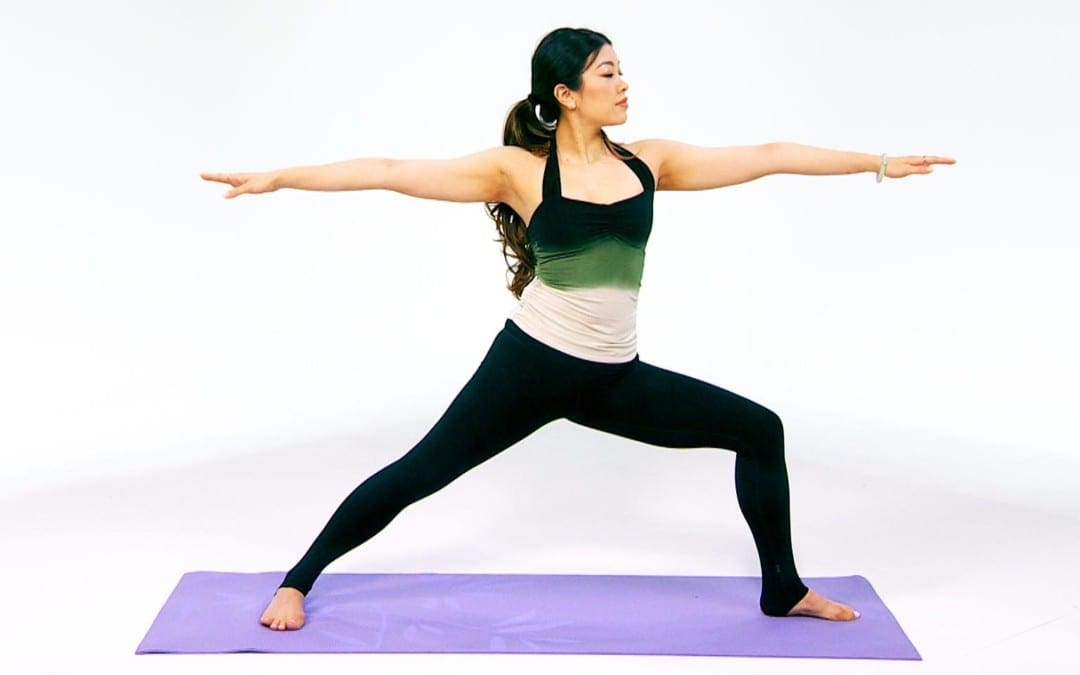
Warrior II
Once you’re set up in Warrior II, pay attention to the position of your front knee. Is it sticking out beyond your ankle? Is it collapsing inward? Pull your knee back into place, so it’s stacked directly above your ankle, and tracking in the same direction as the toes of your front foot. This protects the ligaments in your knee and prevents knee pain.
Plank is a great core stabilizing exercise if you have proper alignment. But if your belly and hips sag in this pose, then your wrists are probably taking on the brunt of your body weight. In plank, engage your core muscles by imagining a zipper running up from your pubic bone to your belly button. This should help raise your hips so your body forms a continuous line from the top of your head to your heels, a more stable position that will help distribute your body weight more evenly and ease the pressure in the wrists.
Cow Pose
Cow pose can feel super satisfying, but it’s easy to go overboard and strain your neck while you’re enjoying the gentle backbend. When you’re in cow pose, it’s important to remember not to tip your head too far back, shortening the back of the neck. You’ll get a lot more out of the pose (and avoid neck strain) if you imagine your neck as an extension of the gentle curve of the spine. Lift your gaze only as far as you can without compromising the curve in your spine and the length in the back of your neck. The same concept can apply for Upward-Facing Dog, too!
Maybe this will be the news that finally jolts you off the couch and into an exercise program. A new study suggests that being physically active increases the chances of survival after a heart attack.
Researchers compared exercise levels among 1,664 heart attack patients in Denmark, including 425 who died immediately. Those who had been physically active were less likely to die, and the risk of death decreased as exercise levels rose. Patients who had light or moderate/high physical activity levels were 32 percent and 47 percent less likely to die from their heart attack, respectively, than the sedentary patients.
The study was published April 12 in the European Journal of Preventive Cardiology.
“We know that exercise protects people against having a heart attack,” said study co-author Eva Prescott, a professor of cardiovascular prevention and rehabilitation at the University of Copenhagen. “Animal studies suggest that myocardial infarctions [heart attacks] are smaller and less likely to be fatal in animals that exercise. We wanted to see if exercise was linked with less serious myocardial infarctions in people,” she added in a journal news release. “One possible explanation is that people who exercise may develop collateral blood vessels in the heart which ensure the heart continues to get enough blood after a blockage. Exercise may also increase levels of chemical substances that improve blood flow and reduce injury to the heart from a heart attack,” Prescott said.
She added this caveat: “This was an observational study so we cannot conclude that the associations are causal [cause and effect]. The results need to be confirmed before we can make strong recommendations.
“But,” Prescott added, “I think it’s safe to say that we already knew exercise was good for health and this might indicate that continuing to exercise even after developing atherosclerosis [hardening of the arteries] may reduce the seriousness of a heart attack if it does occur.”
News stories are written and provided by HealthDay and do not reflect federal policy, the views of MedlinePlus, the National Library of Medicine, the National Institutes of Health, or the U.S. Department of Health and Human Services.
The scope of our information is limited to chiropractic and spinal injuries and conditions. To discuss options on the subject matter, please feel free to ask Dr. Jimenez or contact us at 915-850-0900 .
Additional Topics: What is Chiropractic?
Chiropractic care is an well-known, alternative treatment option utilized to prevent, diagnose and treat a variety of injuries and conditions associated with the spine, primarily subluxations or spinal misalignments. Chiropractic focuses on restoring and maintaining the overall health and wellness of the musculoskeletal and nervous systems. Through the use of spinal adjustments and manual manipulations, a chiropractor, or doctor of chiropractic, can carefully re-align the spine, improving a patient�s strength, mobility and flexibility.
Wondering exactly how much protein you should be consuming each day?�The Recommended Dietary Allowance (RDA), which is the minimum amount you need to be healthy, is 0.8 grams per kilogram (0.36 grams per pound) of body weight per day�46 grams for an average woman. That equals as little as 10% of daily calories. If you’re not super active, that’s likely adequate, and you’ll hit the target effortlessly if you follow a typical Western diet.
To get your personal protein “RDA,” multiple the number 0.36 by your weight in pounds. (For a sedentary 150-pound woman, that would be 54 grams.) Double it if you’re very active or aiming for “optimal protein,” which can help you maintain muscle as you age and support weight loss.
American women already eat about 68 grams a day, according to the latest data from the National Health and Nutrition Examination Survey. “There’s no reason to go out of your way to get protein,” says Dariush Mozaffarian, MD, dean of the Tufts Friedman School of Nutrition Science & Policy. “Just eat a variety of fish, nuts, beans, seeds, and dairy, including yogurt.”�However, increasing your protein well above the RDA may make sense if…
That means getting at least 35 to 40 minutes of moderate exercise four or five days a week, including resistance training two or more times a week. Consider eating 1.2 to 2 grams of dietary protein per kilogram (or about 0.5 to 0.9 grams per pound) of body weight each day, says Nancy Rodriguez, PhD, professor of nutritional sciences at the University of Connecticut. That amount is best for rebuilding muscle tissue, especially if you do a lot of high-intensity workouts, research suggests.
Protein takes longer to digest than carbs, helping you feel full, and also pushes your body to secrete the gut hormone peptide YY, which reduces hunger. “When you bring protein to about 30% of your daily calories, you’ll naturally eat less,” says Lauren Slayton, RD, founder of Foodtrainers, a nutrition practice in New York City, and author of The Little Book of Thin. “Protein decreases appetite and also, in my experience, helps you manage cravings.”
While studies are mixed about whether consuming more protein leads to weight loss, research is pretty clear that protein can help you retain more of your lean muscle as you lose fat. One 2011 study suggests amping up protein to as much as 1.8 to 2 grams per kilogram (roughly 0.8 to 0.9 grams per pound) of body weight per day to stave off muscle loss when restricting calories. Cut back on refined carbs to balance out the extra calories from adding protein.
Eating more protein as you get older may help you maintain muscle and ward off osteoporosis, “so you can stay stronger and more functional,” says Rodriguez. In a 2015 study, adults over the age of 50 who roughly doubled the RDA (eating 1.5 grams of protein per kilogram, or 0.68 grams per pound, of body weight) were better able to rebuild and retain muscle after only four days, compared with control groups eating the RDA.
Doubling the RDA gives you “optimal protein,” a concept that Rodriguez and more than 40 nutrition scientists advanced at a recent Protein Summit, the findings from which were published in 2015 in The American Journal of Clinical Nutrition. Optimal protein works out to be about 15% to 25% of your daily calories, still below the level recommended by many popular high-protein diets. Over a day, that could look like 20-30 grams per meal and 12 to 15 grams per snack, for a total of 90 to 105 grams daily.
IFM's Find A Practitioner tool is the largest referral network in Functional Medicine, created to help patients locate Functional Medicine practitioners anywhere in the world. IFM Certified Practitioners are listed first in the search results, given their extensive education in Functional Medicine